Art Old and New
Comment via blog

Prev

Next


|
Day 3: April 1, 2026 Art Old and New Comment via blog |
Prev Next |
|
|
|
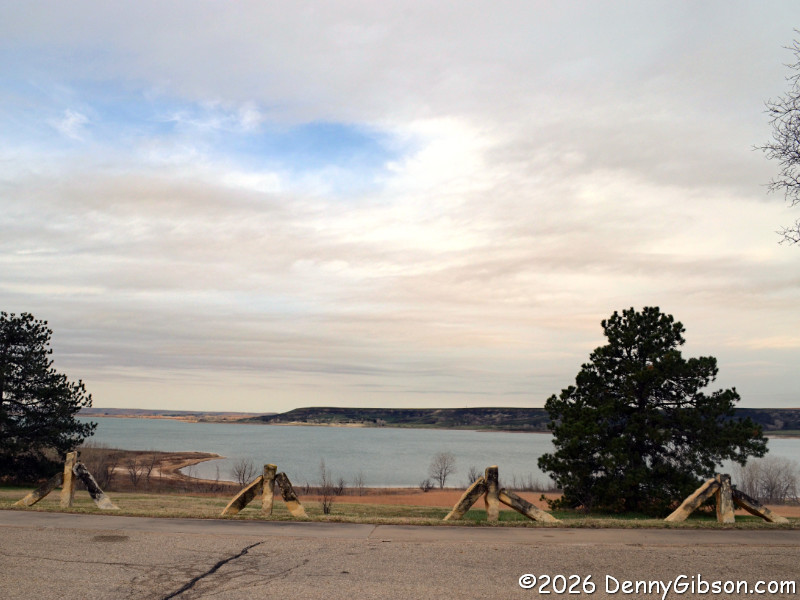
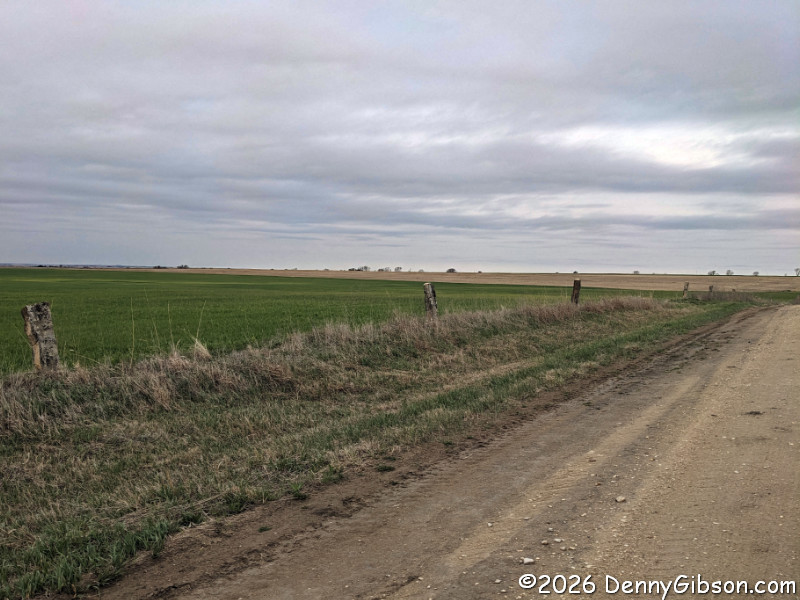 I'd seen a few stone fence posts before, but not in the numbers I saw
driving north out of Wilson. Every fence post I saw was made of rough hewn
stone and there were hundreds of them. About the time I decided I needed
to photograph them, the fences ran out. Planning to turn back, I pulled on
to a side road and there was the line of posts in the first picture. A
short distance later, I excitedly pulled over to photograph a row of
stones standing beside Wilson Lake.
I'd seen a few stone fence posts before, but not in the numbers I saw
driving north out of Wilson. Every fence post I saw was made of rough hewn
stone and there were hundreds of them. About the time I decided I needed
to photograph them, the fences ran out. Planning to turn back, I pulled on
to a side road and there was the line of posts in the first picture. A
short distance later, I excitedly pulled over to photograph a row of
stones standing beside Wilson Lake.
The absence of stone posts that had caused me to almost turn around did not last long. After my pause at the lake, I would see thousands of the posts and would eventually see all sorts of things, including complete buildings, made of the stone. In Lucas, I would learn that the stone was known as greenhorn limestone, and, as evidenced by all those fence posts, is relatively easy to split. |
|
|
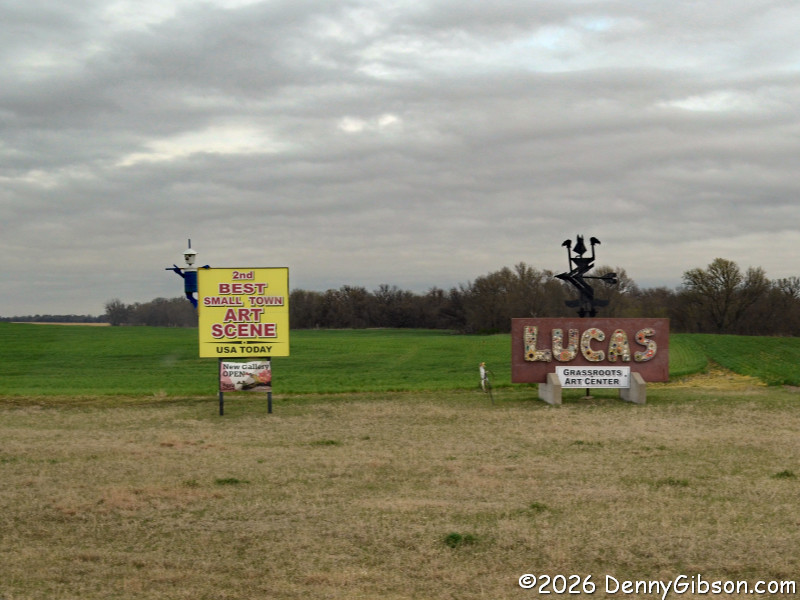
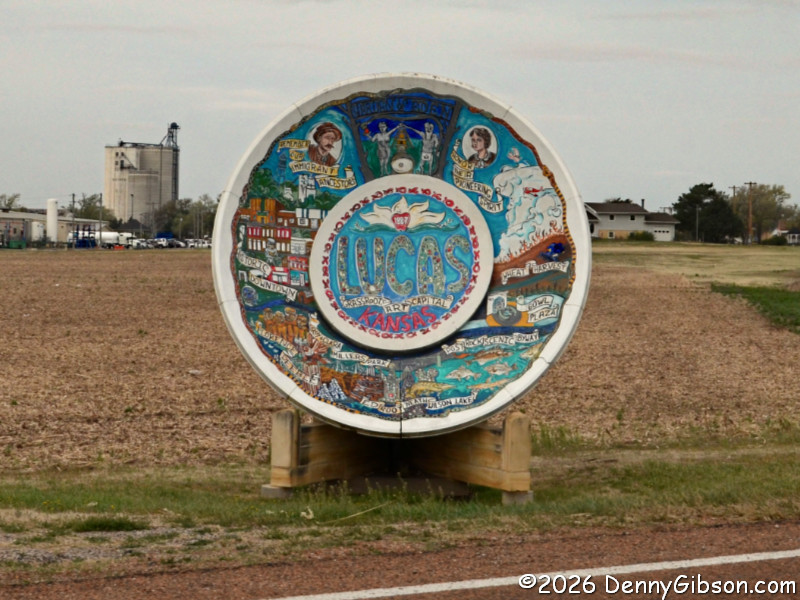 My expectations for Lucas were reinforced by the whimsically decorated
signs announcing the town, and seeing the World's Largest Souvenir Plate
displayed by the road before I even entered it.
My expectations for Lucas were reinforced by the whimsically decorated
signs announcing the town, and seeing the World's Largest Souvenir Plate
displayed by the road before I even entered it.
|
|
|
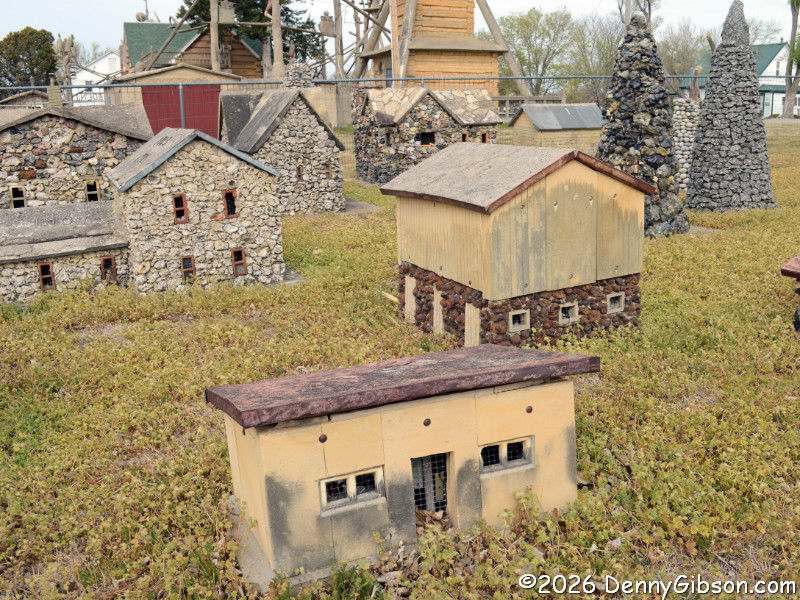
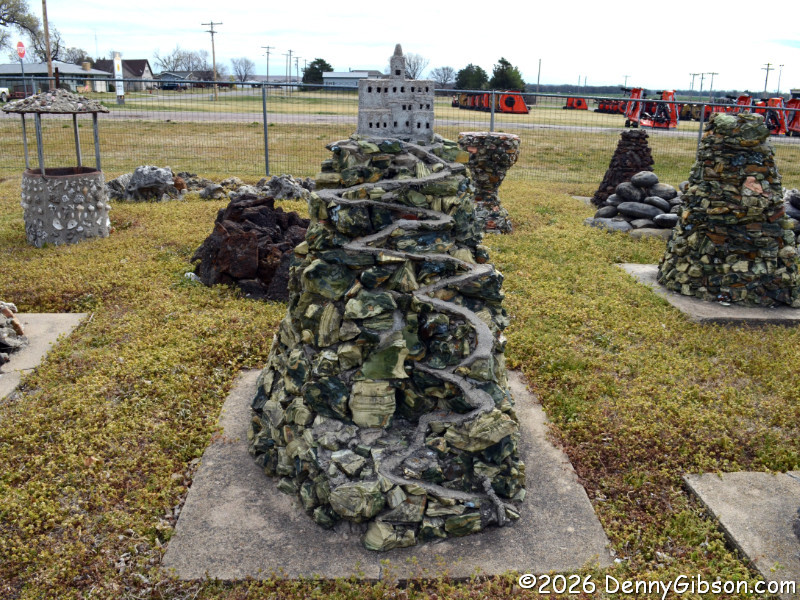
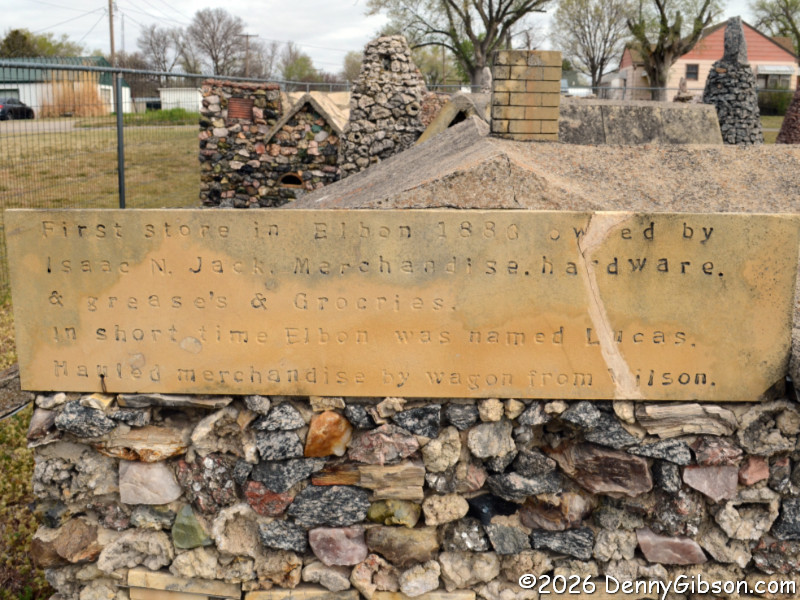
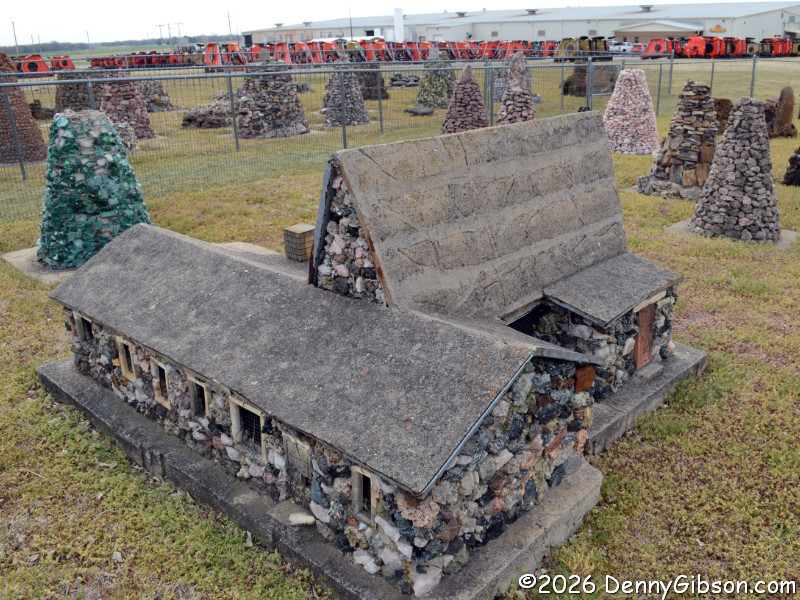 I had intended to immediately head downtown, but I got distracted by a
sign pointing to the only local attraction I knew by name, the
Garden of
Eden. Once there, I was distracted by a cluster of smallish stone
sculptures to the east of Eden. That turned out to be a semi-separate
attraction named Miller's Park. The sculptures were built by Roy and Clara
Miller on the west edge of Lucas in the 1930s. They were moved to Hays,
KS, in 1969 then moved here in 2013. Before there was history on a stick,
there was history on a stone.
I had intended to immediately head downtown, but I got distracted by a
sign pointing to the only local attraction I knew by name, the
Garden of
Eden. Once there, I was distracted by a cluster of smallish stone
sculptures to the east of Eden. That turned out to be a semi-separate
attraction named Miller's Park. The sculptures were built by Roy and Clara
Miller on the west edge of Lucas in the 1930s. They were moved to Hays,
KS, in 1969 then moved here in 2013. Before there was history on a stick,
there was history on a stone.
|
|
|
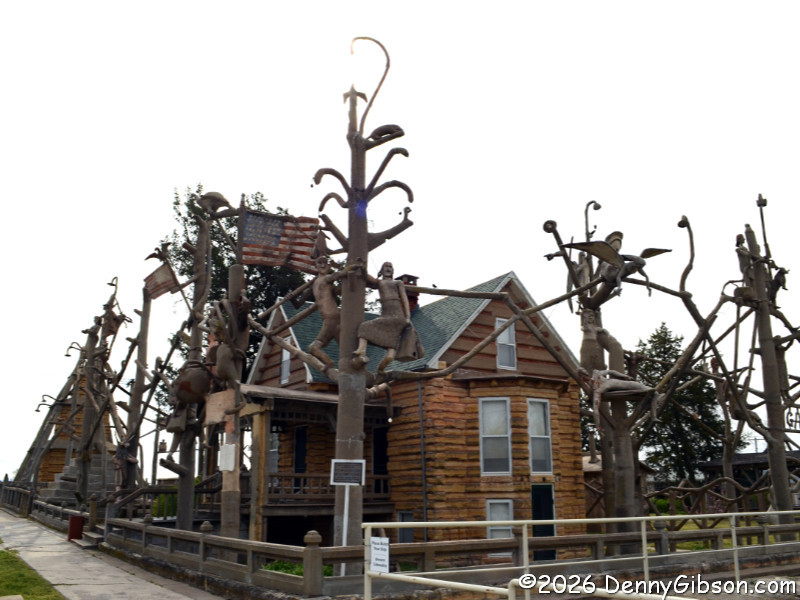
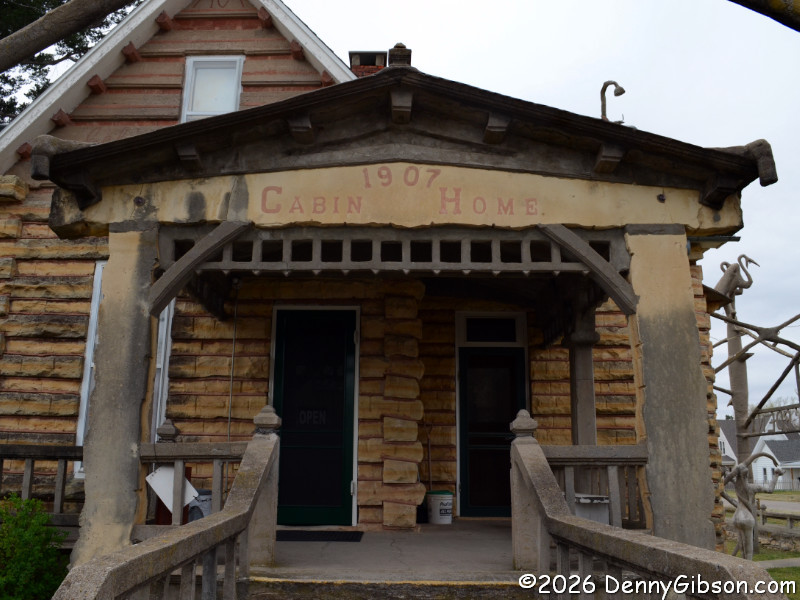
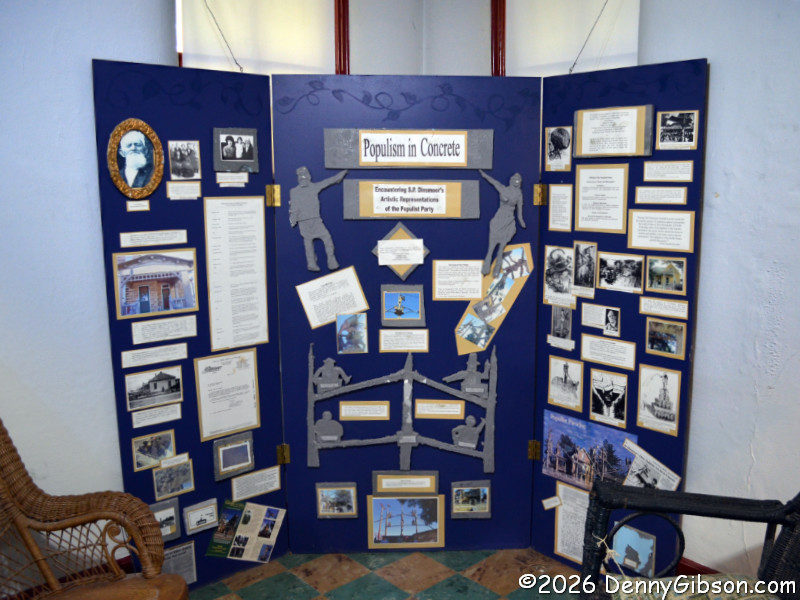
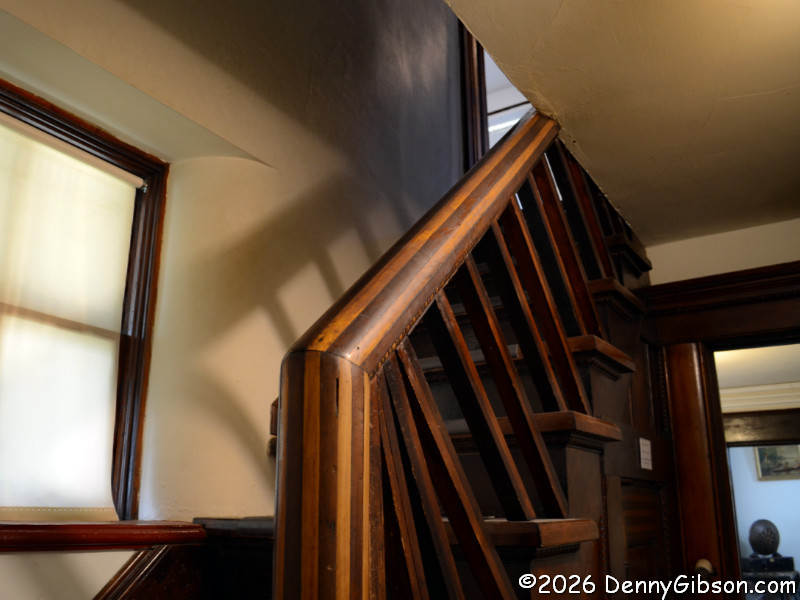
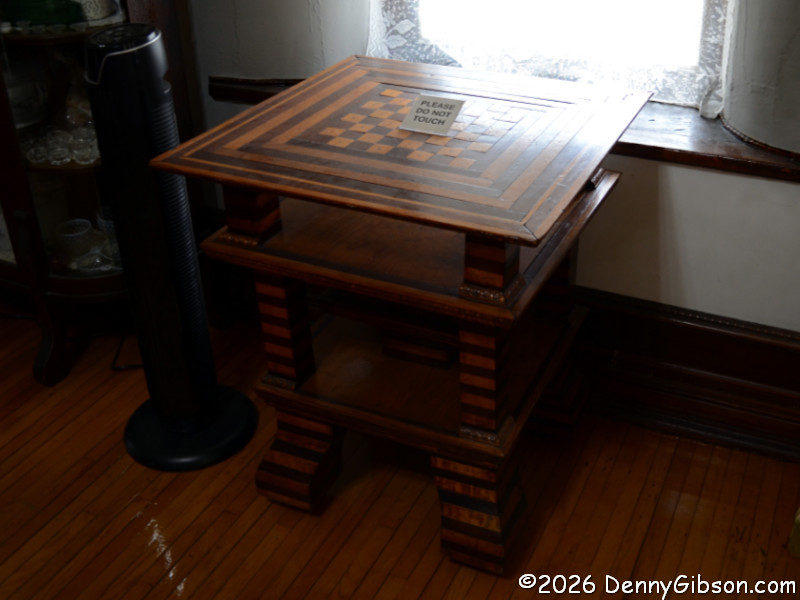 At last I did what I should have done as soon as I arrived and entered the
cabin. Inside I discovered that one of the benefits of being in Lucas
during April Fools-A-Palooza is that pretty much every place, including
the Garden of Eden, waives entry fees. I also learned a whole lot about
the attraction's builder about whom I knew absolutely nothing before
today.
At last I did what I should have done as soon as I arrived and entered the
cabin. Inside I discovered that one of the benefits of being in Lucas
during April Fools-A-Palooza is that pretty much every place, including
the Garden of Eden, waives entry fees. I also learned a whole lot about
the attraction's builder about whom I knew absolutely nothing before
today.
You really need to read a biography of the extremely interesting S. P. Dinsmoor (Wikipedia version here), but here are a few highlights. He was born in Ohio, served in the Civil War, moved to Kansas with his wife and family. He retired from farming and began building the Garden of Eden at the age of 62. When his first wife died in 1917, he retrieved her body from the city cemetery and buried her under concrete in the mausoleum in the back yard where he is also is interred. He married for a second time at age 81 to a woman 59 years his junior. The cabin was built as a tourist attraction to provide income. The gaming table is one of only a few items remaining in the cabin built by Dinsmoor. |
|
|
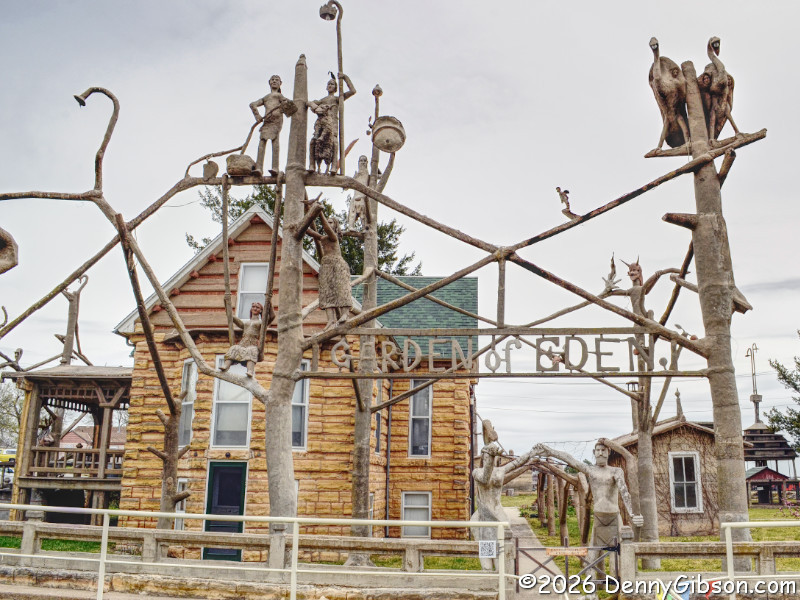
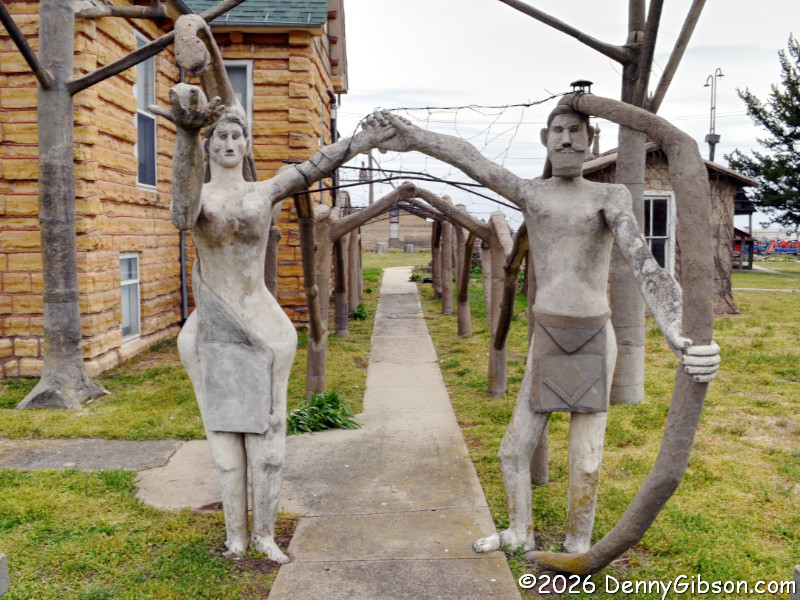
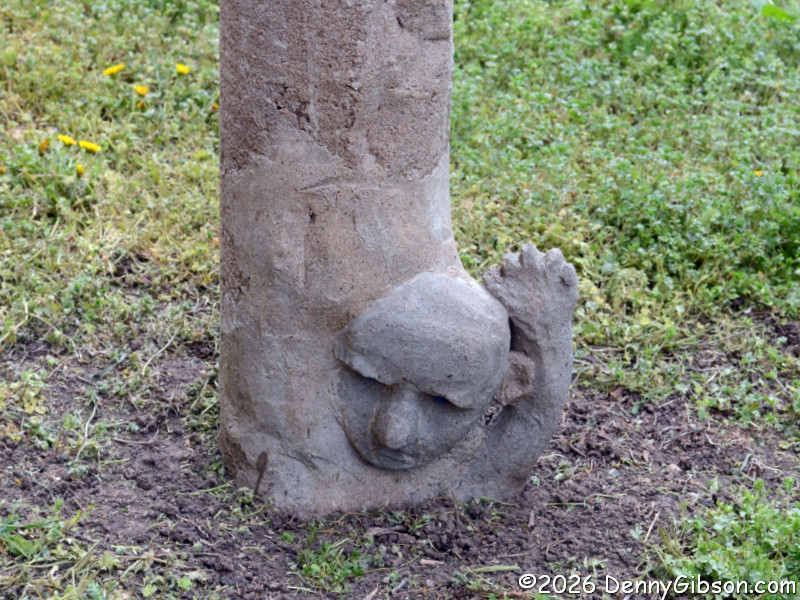
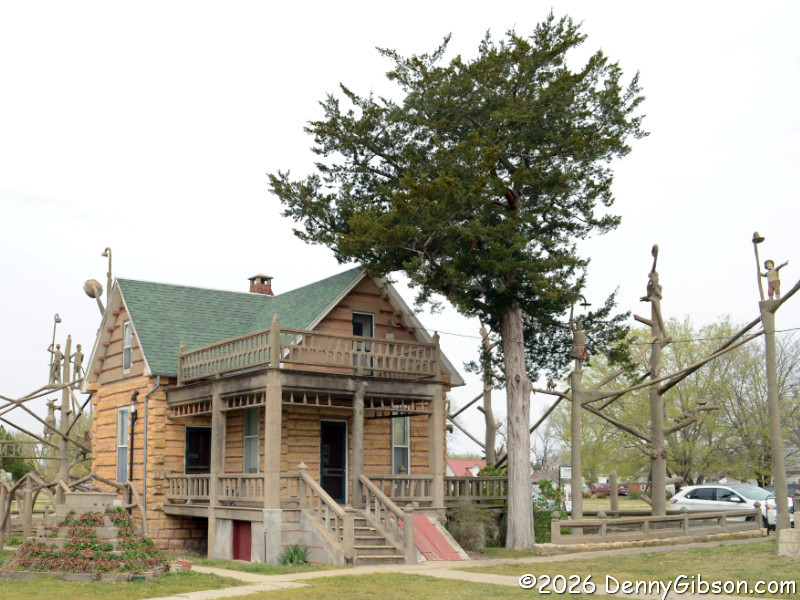
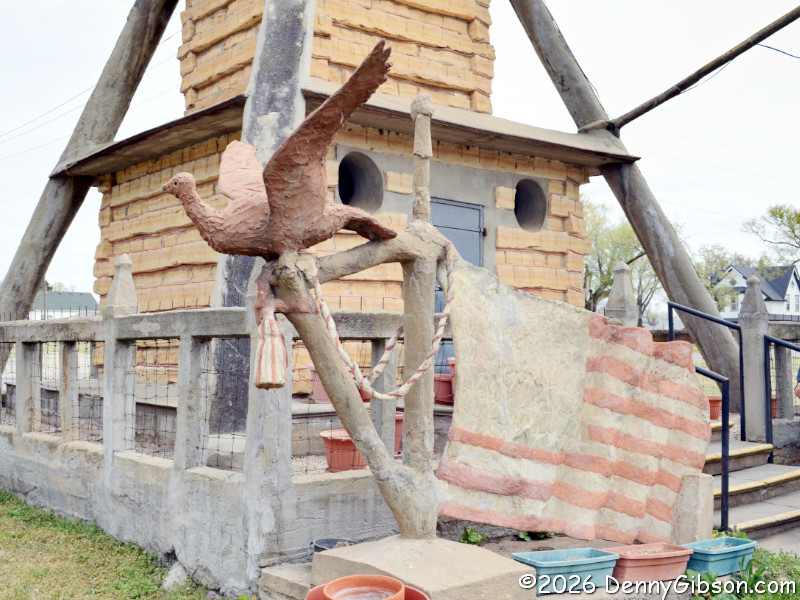
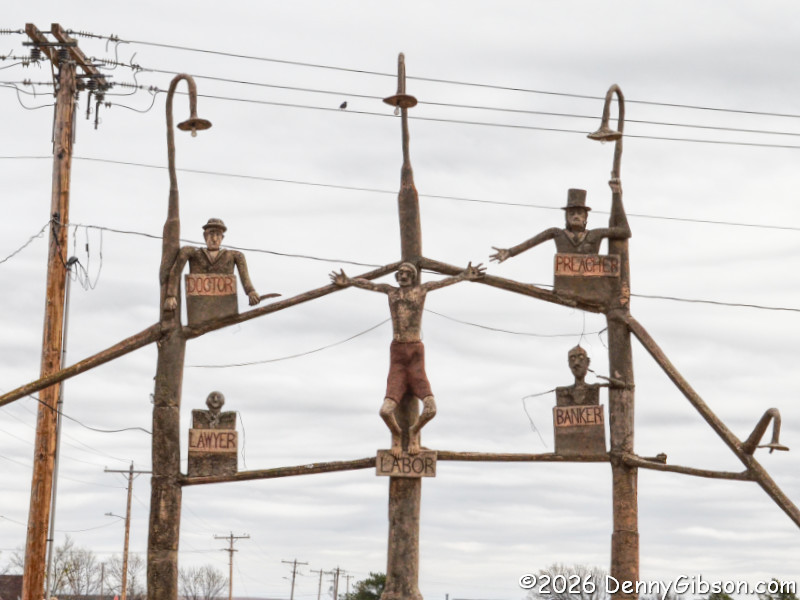 Outside, the property is filled with sculptures that were created in
place rather than being molded on the ground and hoisted up and mounted.
The flag and turkey were originally on top of the mausoleum seem behind
them, but Dinsmoor brought them down when he thought they were in danger
of falling. I've included a picture of the cabin from the rear which
allows its "logs" made of rock to be seen.
Outside, the property is filled with sculptures that were created in
place rather than being molded on the ground and hoisted up and mounted.
The flag and turkey were originally on top of the mausoleum seem behind
them, but Dinsmoor brought them down when he thought they were in danger
of falling. I've included a picture of the cabin from the rear which
allows its "logs" made of rock to be seen.
The story goes that Dinsmoor's wife complained that she rarely saw him because he was always outside working, so he created the waving version of himself that she could see from the kitchen window. |
|
|
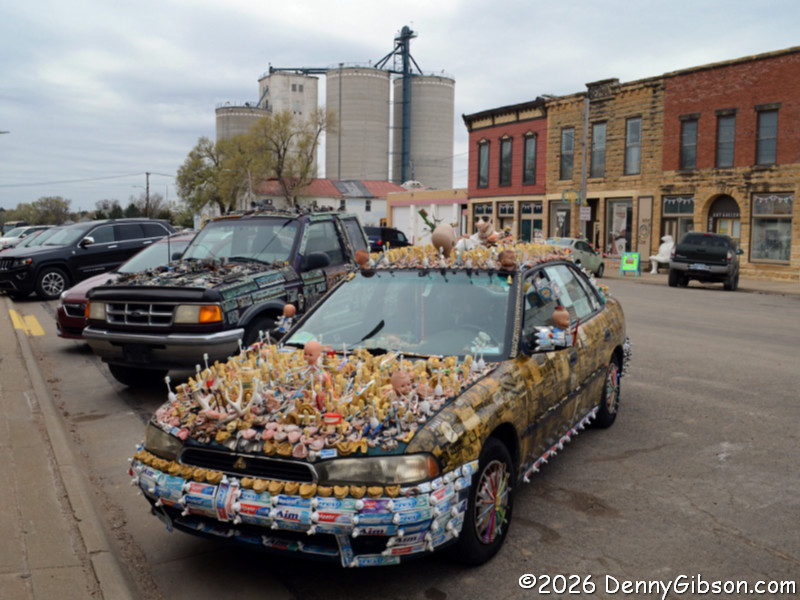
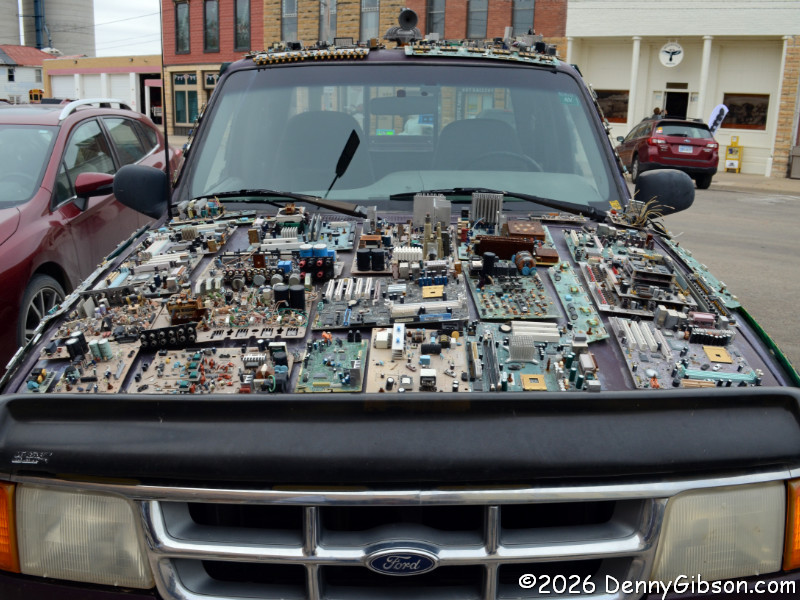 When I moved on from the Garden of Eden, I didn't know exactly where I was
going, but I knew when I got there.
When I moved on from the Garden of Eden, I didn't know exactly where I was
going, but I knew when I got there.
|
|
|
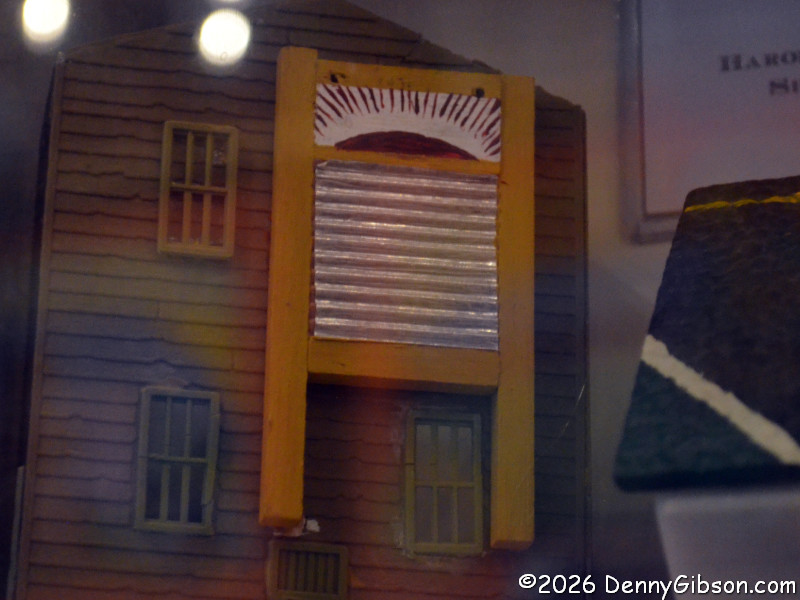
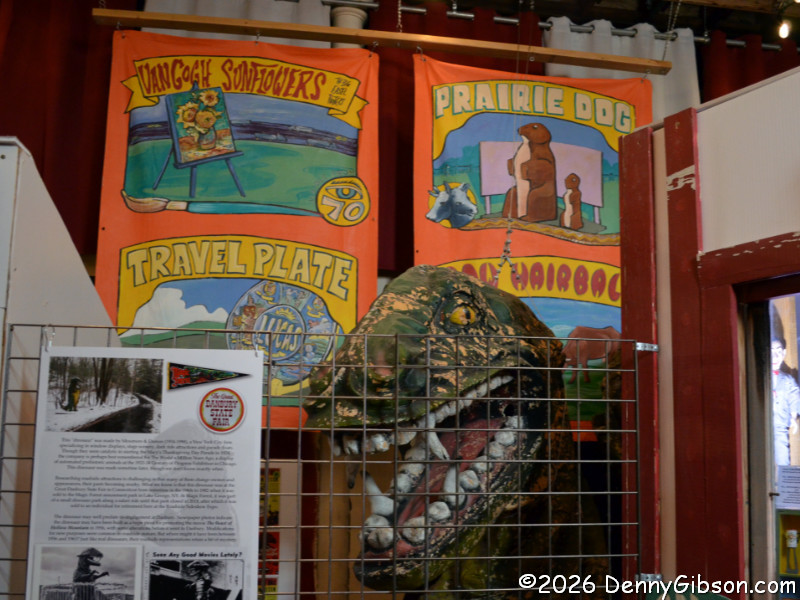
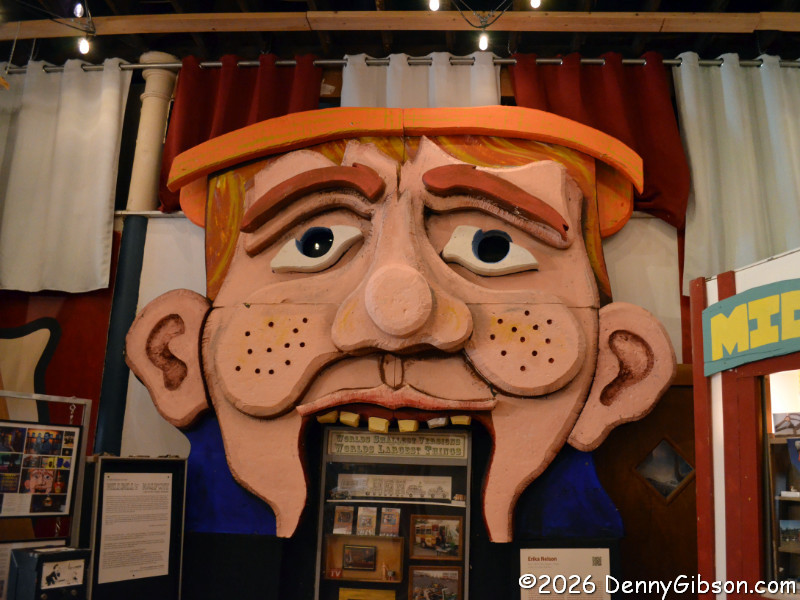
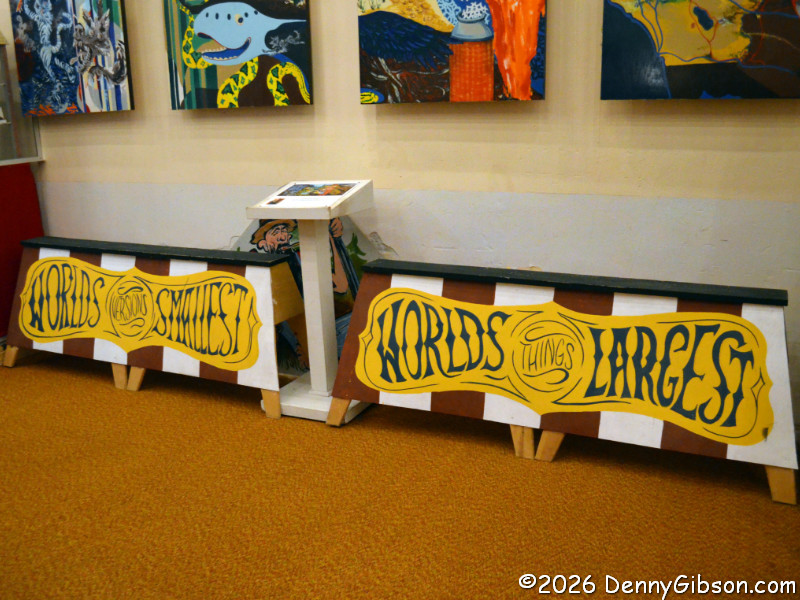
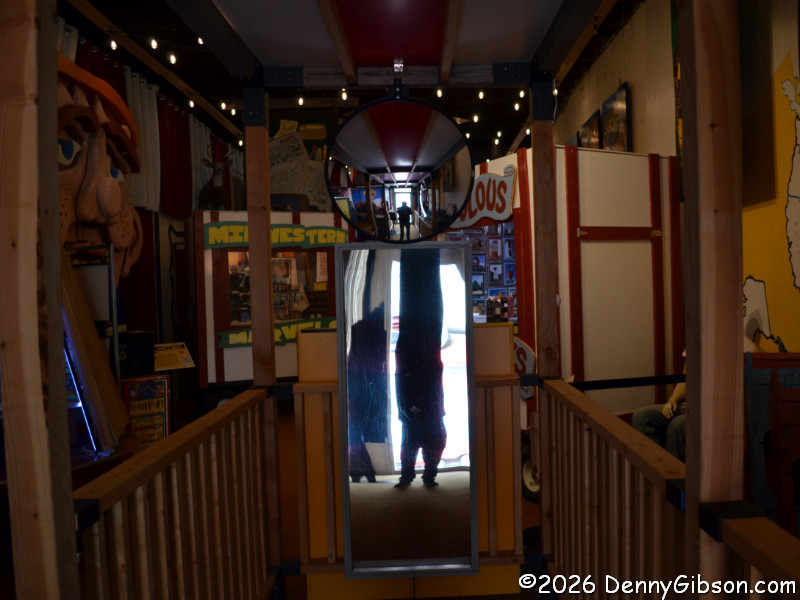
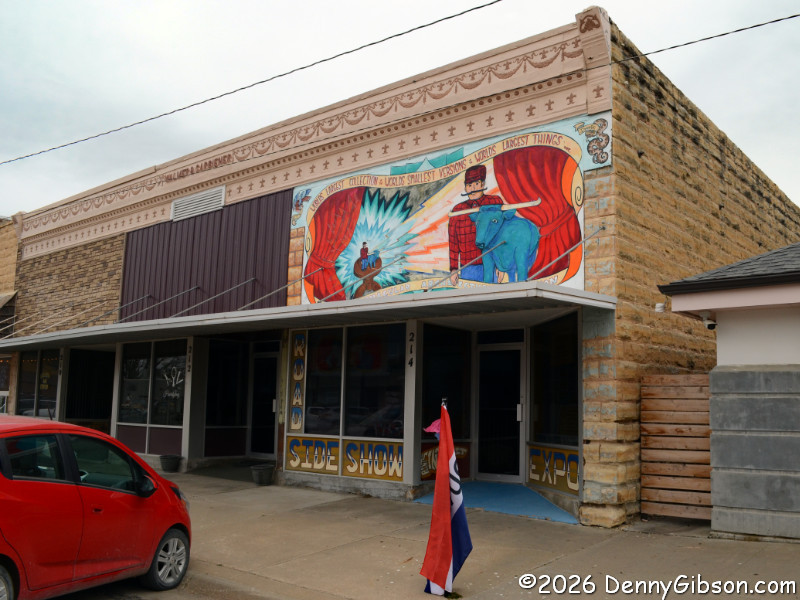 Erika Nelson was not only the person who had made me aware of April
Fools-A-Palooza, she was really the only person in town that I knew. I
headed first to her Roadside Sideshow Expo filled with the
World's
Largest Things. Inside, I tried taking a selfie but it seems I was too
tall. Erika wasn't there (We would connect later.), so I just snapped some
random photos, making sure I captured Ohio's contribution: the World's
Largest Washboard.
Erika Nelson was not only the person who had made me aware of April
Fools-A-Palooza, she was really the only person in town that I knew. I
headed first to her Roadside Sideshow Expo filled with the
World's
Largest Things. Inside, I tried taking a selfie but it seems I was too
tall. Erika wasn't there (We would connect later.), so I just snapped some
random photos, making sure I captured Ohio's contribution: the World's
Largest Washboard.
|
|
|
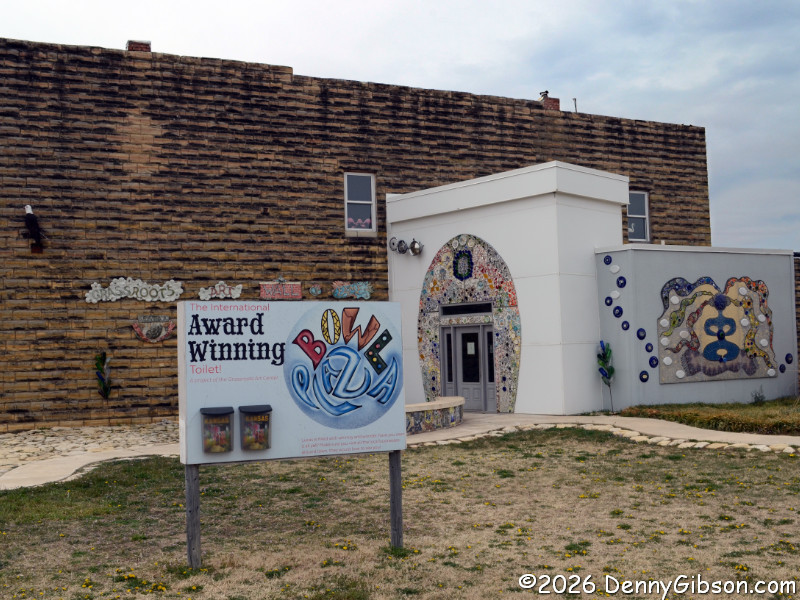
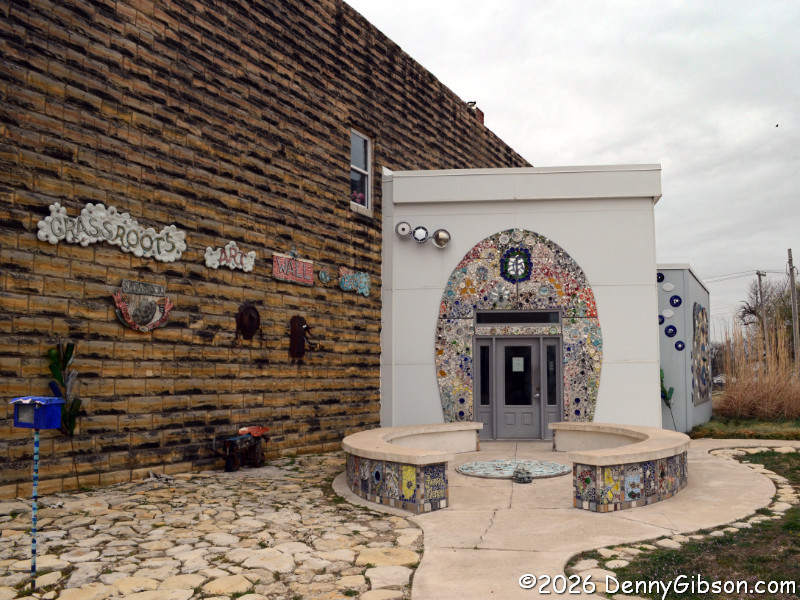
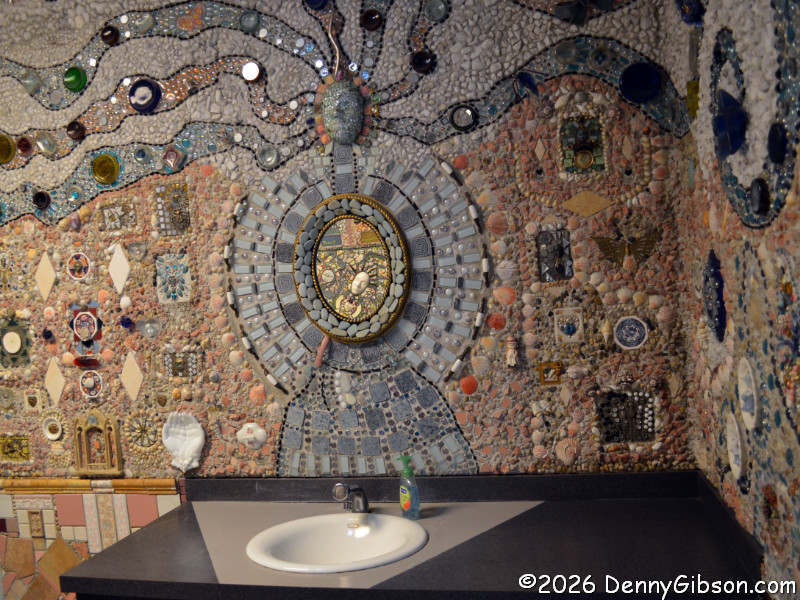
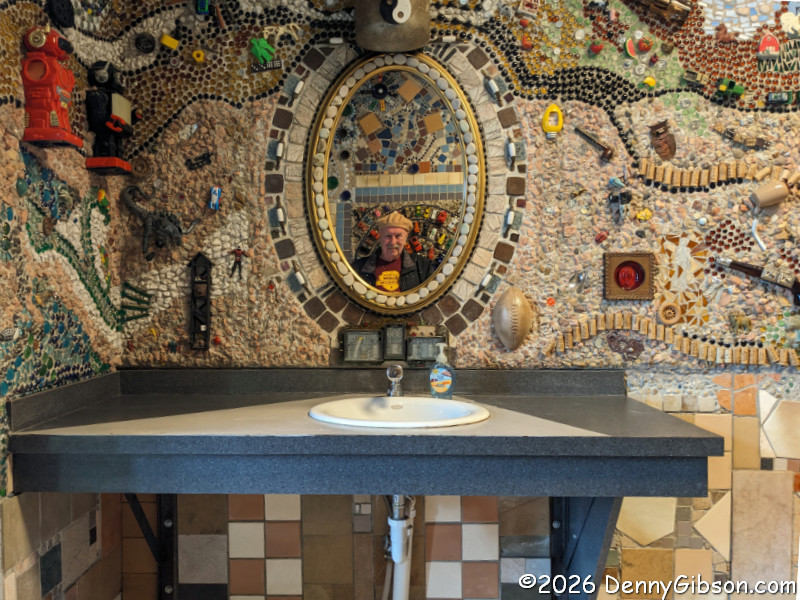
 I did already know about one other spot in Lucas due to its
#2 ranking in the America's Best Restroom contest.
Today I grabbed pictures inside the UNOCCUPIED women's and men's area and
even managed a somewhat successful selfie on the men's side.
I did already know about one other spot in Lucas due to its
#2 ranking in the America's Best Restroom contest.
Today I grabbed pictures inside the UNOCCUPIED women's and men's area and
even managed a somewhat successful selfie on the men's side.
|
|
|
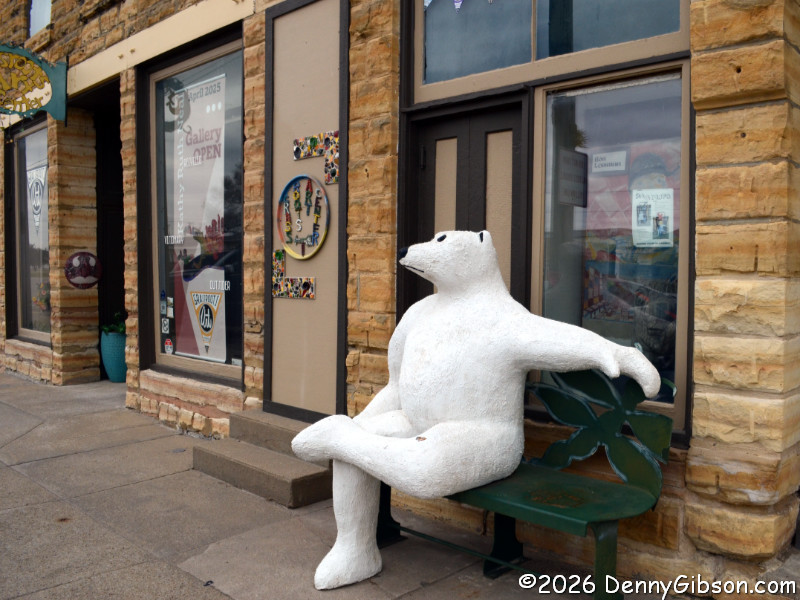
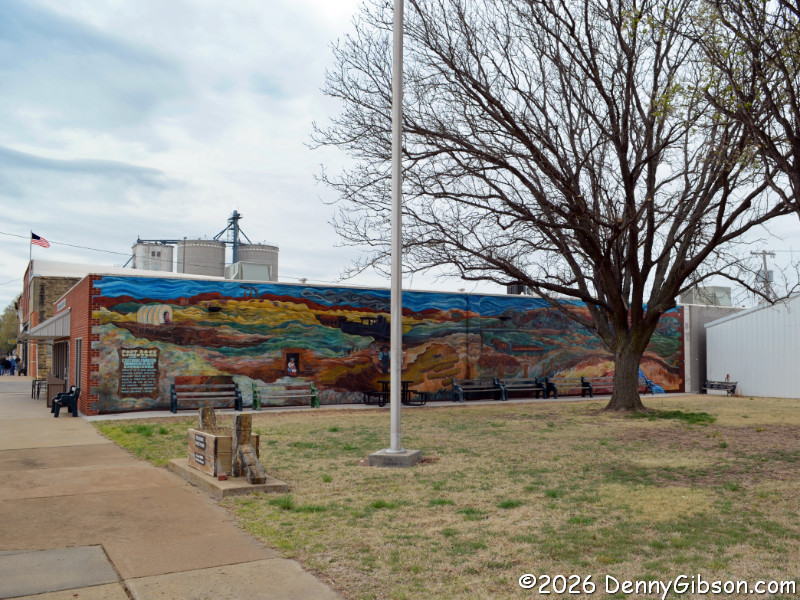
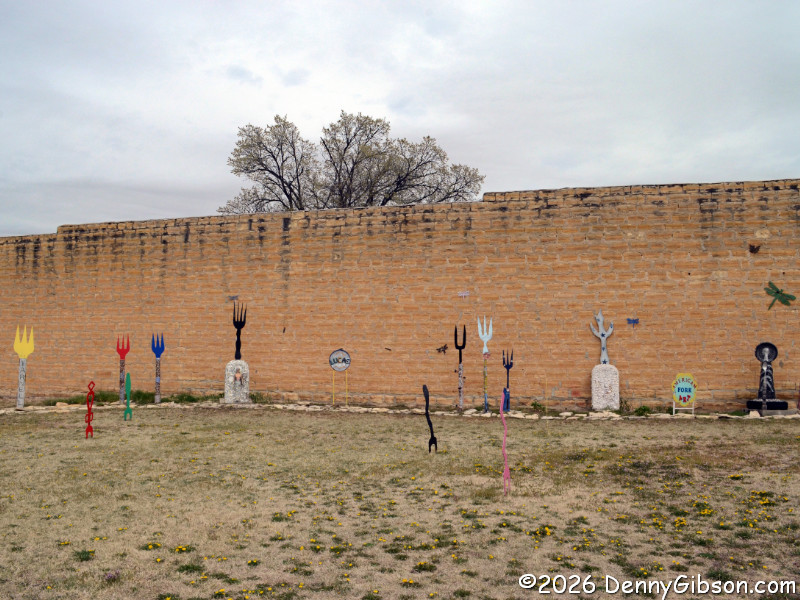
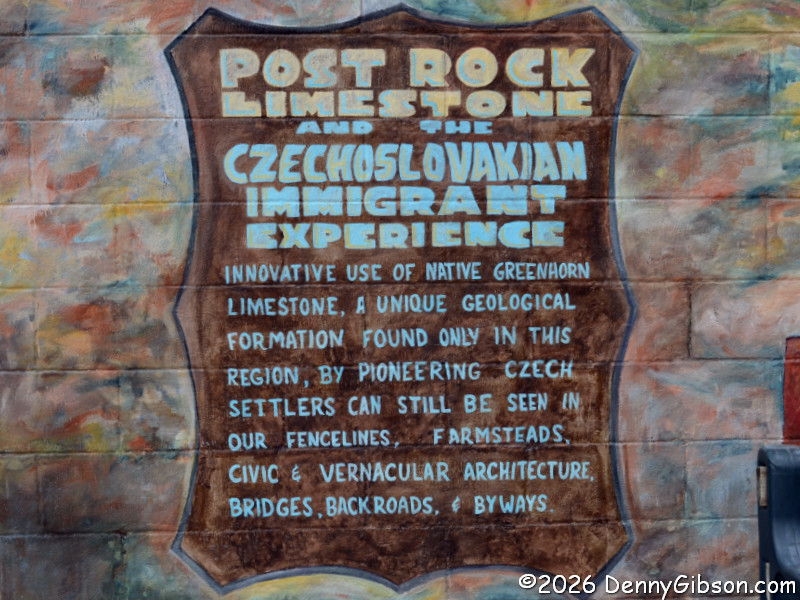
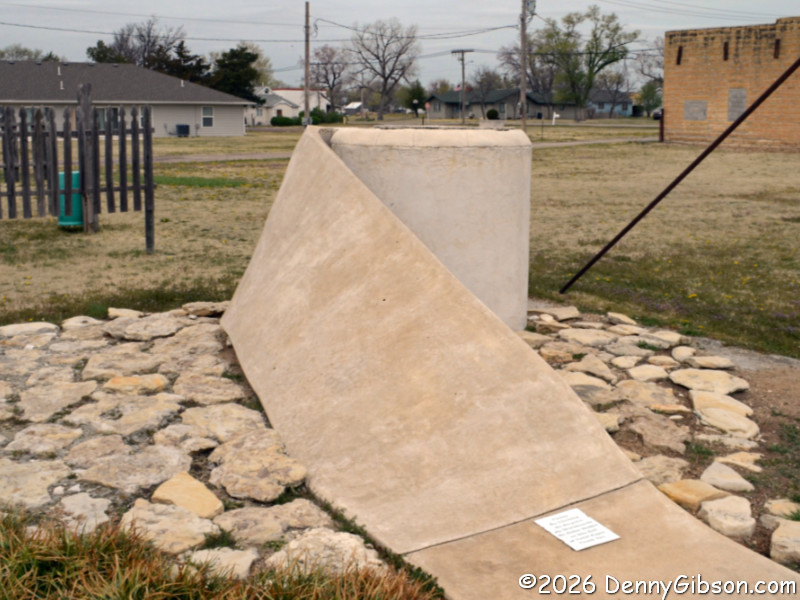
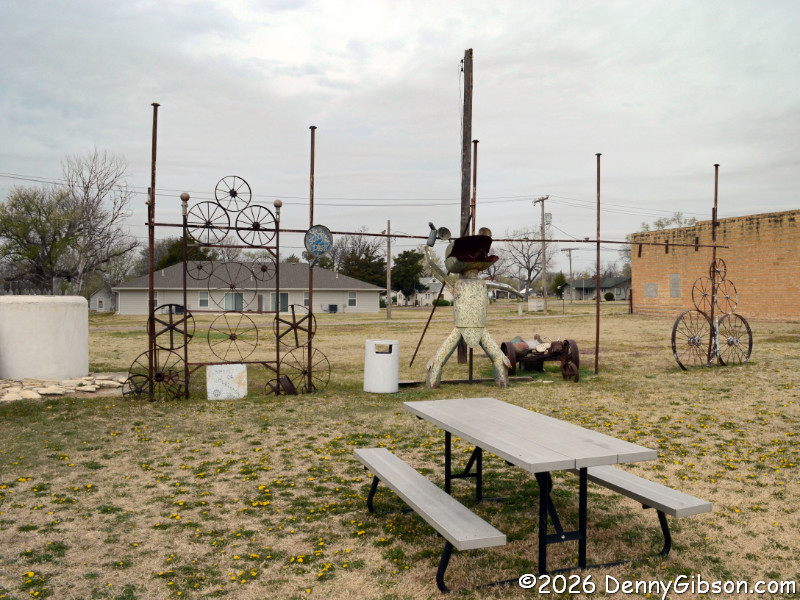 Folk and fork art border the park area next to Bowl Plaza. Up the street,
a mural covers the wall beside another park.
This is where I learned what to call Greenhorn
Limestone. A bit farther up the street, a relaxing polar bear has become a
landmark, and is referenced by locals in giving directions.
Folk and fork art border the park area next to Bowl Plaza. Up the street,
a mural covers the wall beside another park.
This is where I learned what to call Greenhorn
Limestone. A bit farther up the street, a relaxing polar bear has become a
landmark, and is referenced by locals in giving directions.
|
|
|
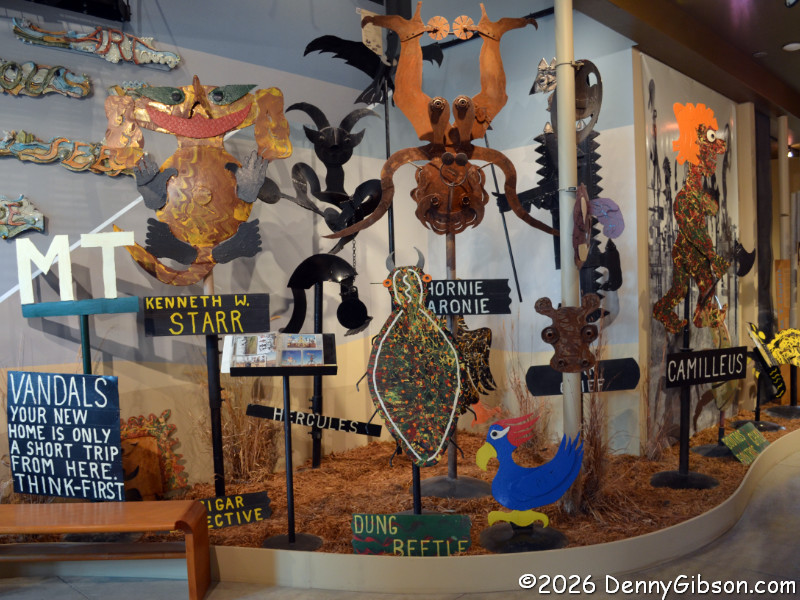
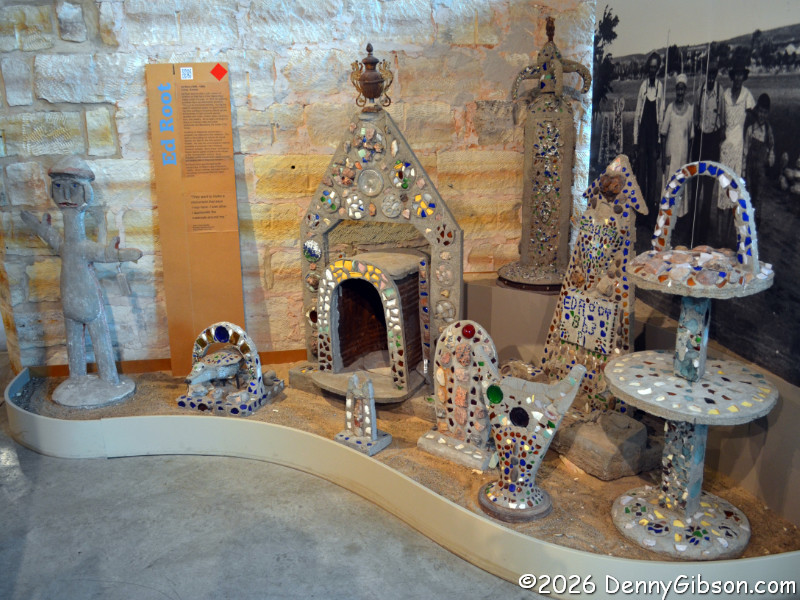
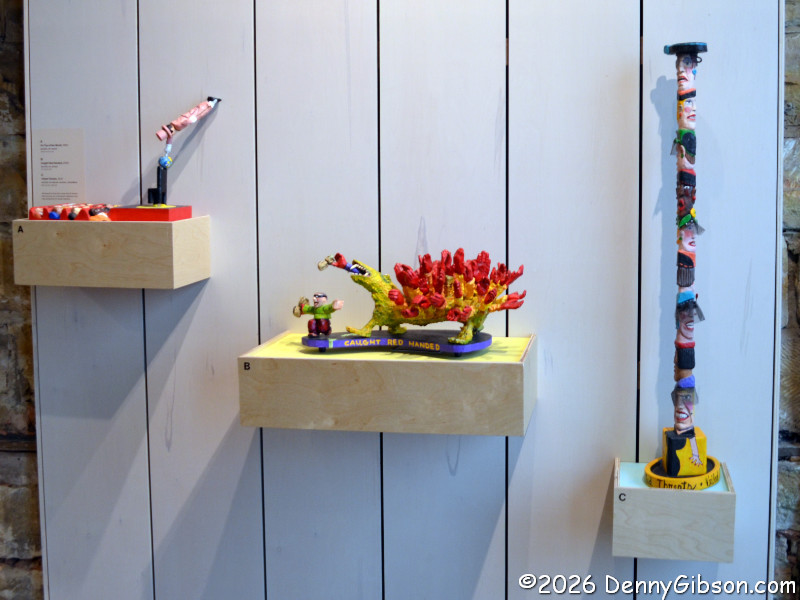
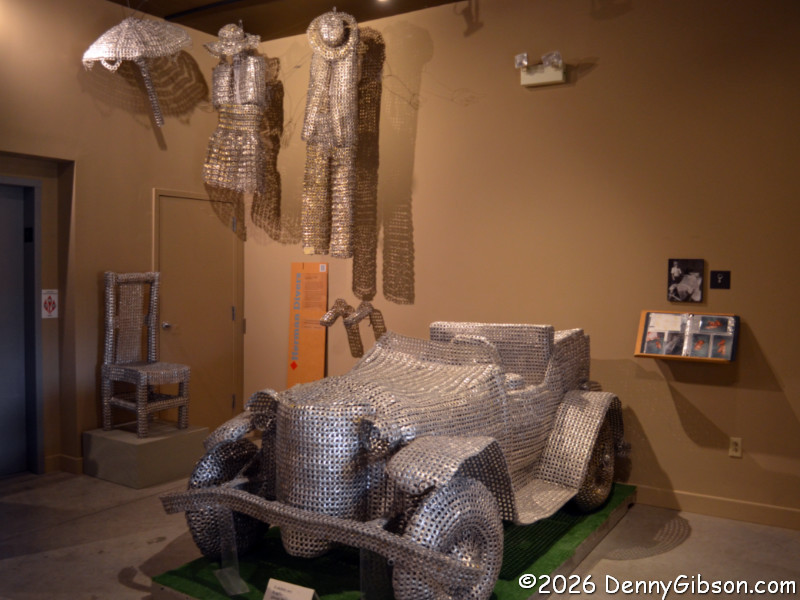
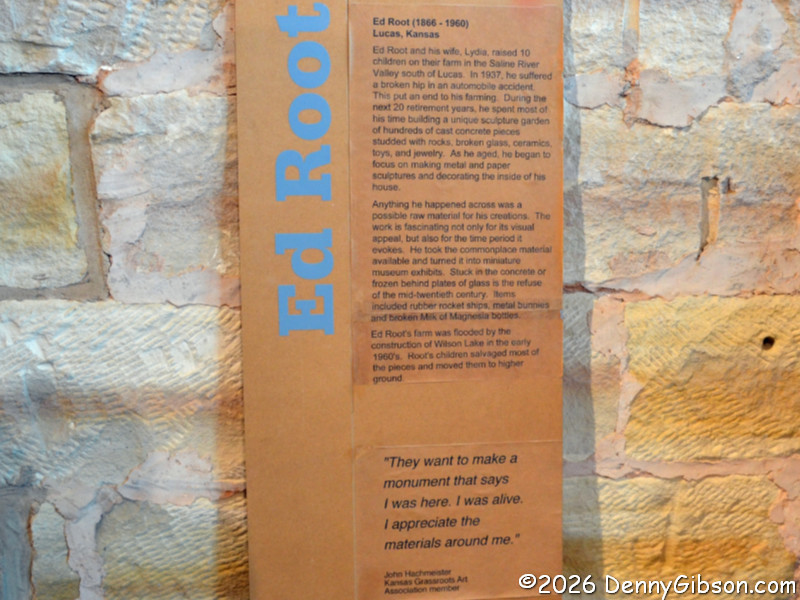
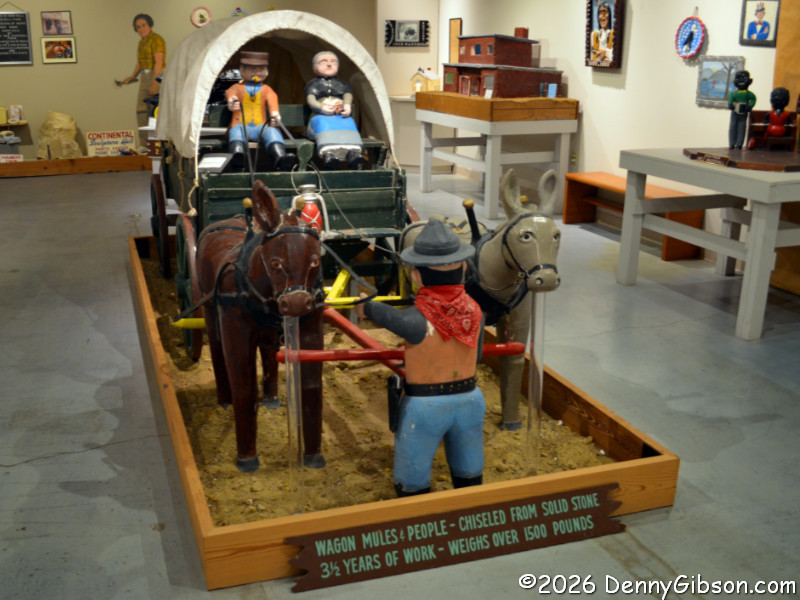 Although the work pictured in this panel is by artists now deceased, most
of the artwork displayed at the Grassroots Art Center is by living artists and is for
sale. The sculptures in the first photo are from M. T. Liggett
(1930-2017). The cast concrete pieces were made by Ed
Root (1866-1960). They were rescued by his children when his farm was
flooded by the creation of Lake Wilson. Kathy Ruth Neal (1945-2009) did
the wood carvings. The delightful pull-tab creations are the work of
Herman Divers (1923-2013). Inez Lucile Marshall (1907-1984) chiseled the
wagon, mules, and all the people from solid rock.
Although the work pictured in this panel is by artists now deceased, most
of the artwork displayed at the Grassroots Art Center is by living artists and is for
sale. The sculptures in the first photo are from M. T. Liggett
(1930-2017). The cast concrete pieces were made by Ed
Root (1866-1960). They were rescued by his children when his farm was
flooded by the creation of Lake Wilson. Kathy Ruth Neal (1945-2009) did
the wood carvings. The delightful pull-tab creations are the work of
Herman Divers (1923-2013). Inez Lucile Marshall (1907-1984) chiseled the
wagon, mules, and all the people from solid rock.
|
|
|
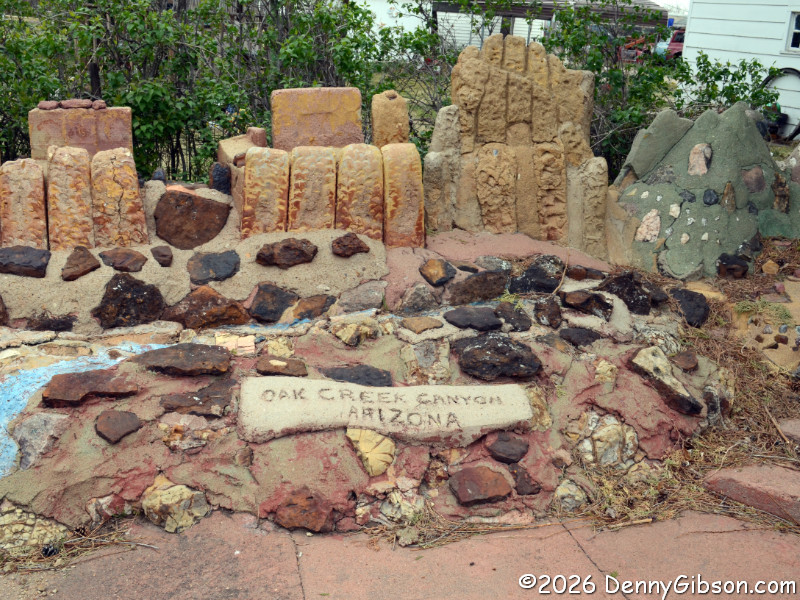
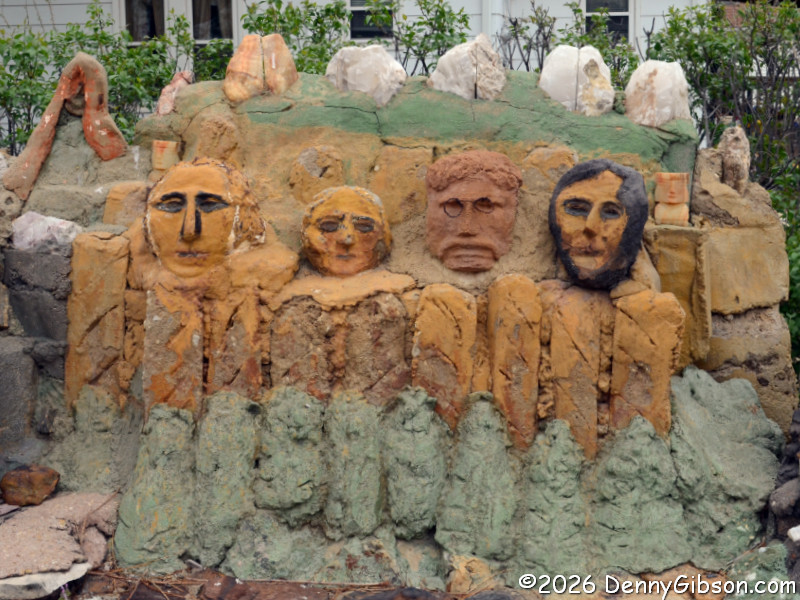
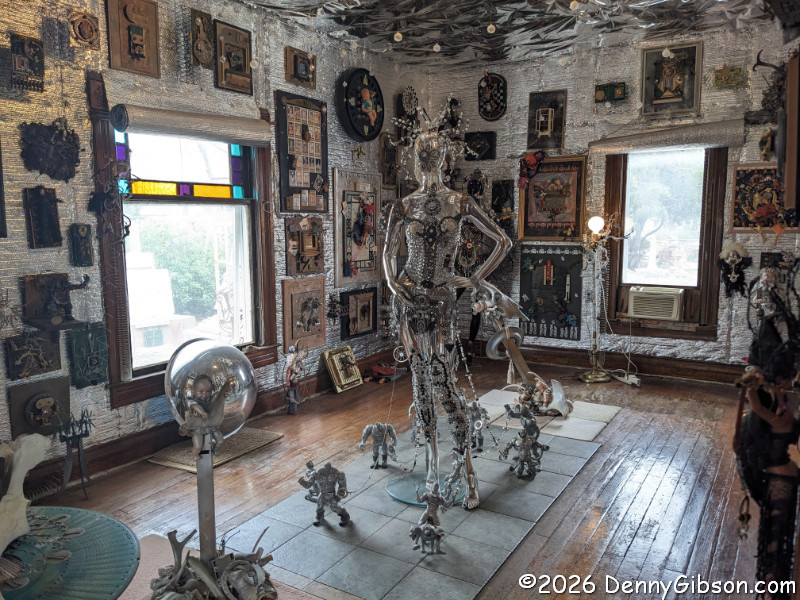
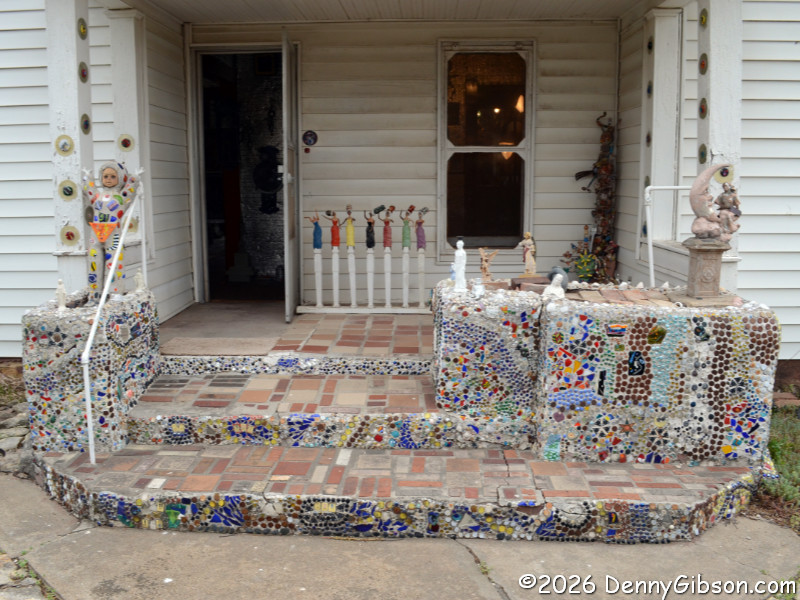
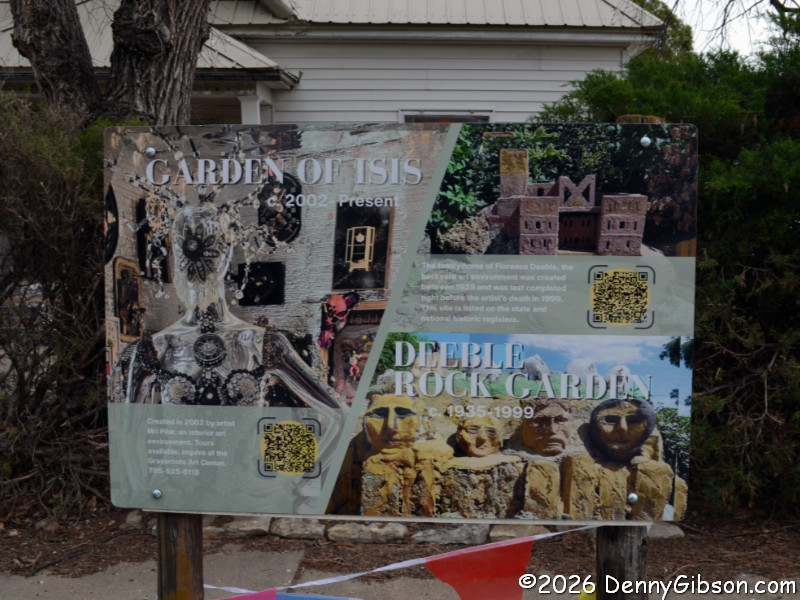 I drove by this place twice before I figured out that the Garden of Isis
and Deeble Rock Garden occupied the same lot.
I drove by this place twice before I figured out that the Garden of Isis
and Deeble Rock Garden occupied the same lot.
|
|
|
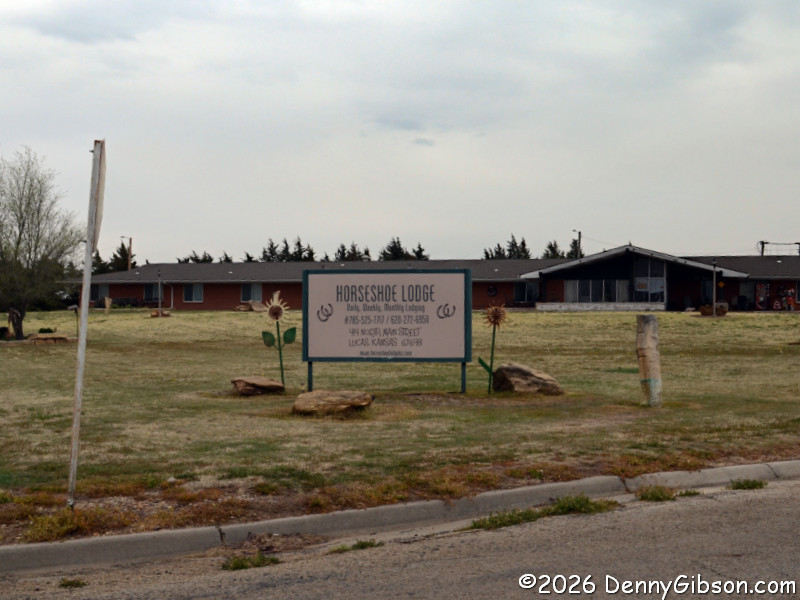
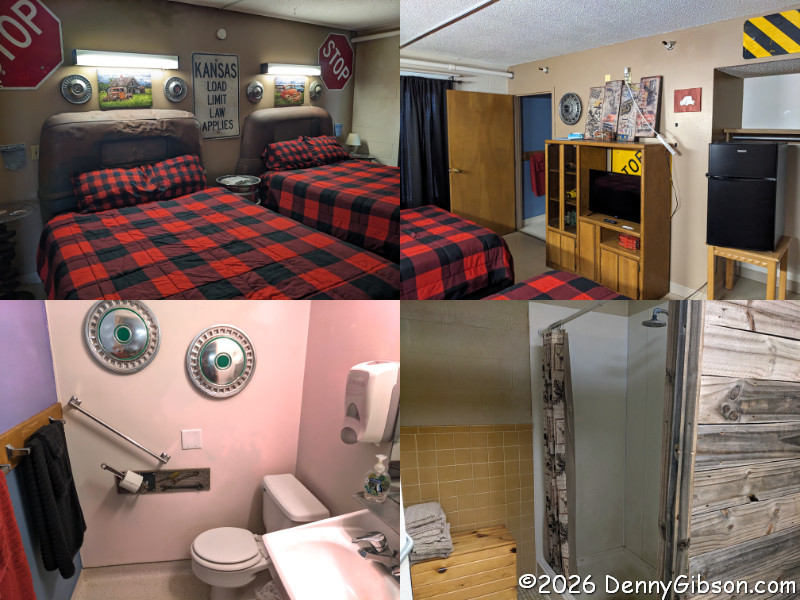
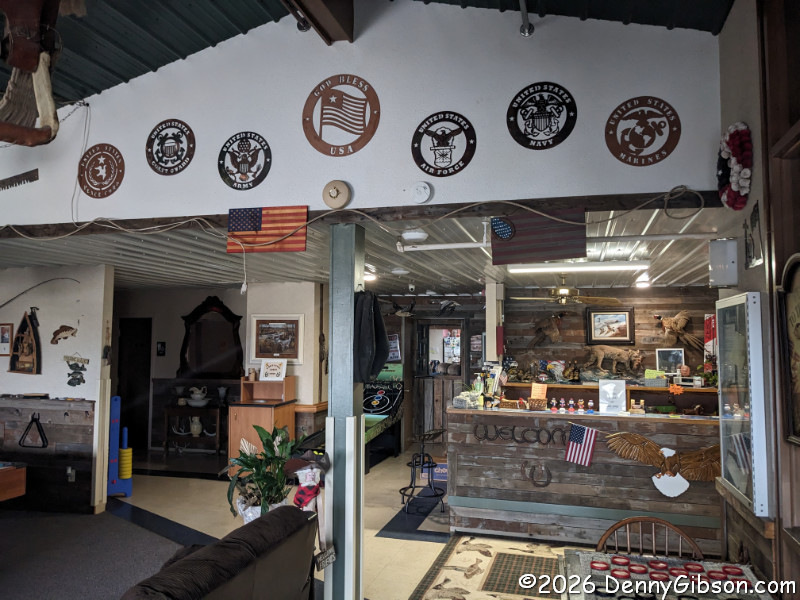 This is where I spent the night.
Horseshoe
Lodge is a former resthome that looks kind of like a motel and is
booked through Airbnb. Here's my room. It
contains the half bath. The shared shower is down the hall.
This is where I spent the night.
Horseshoe
Lodge is a former resthome that looks kind of like a motel and is
booked through Airbnb. Here's my room. It
contains the half bath. The shared shower is down the hall.
|
|
|
| [Prev] [Site Home] [Trip Home] [Next] |