Not Your Average Village
Comment via blog

Prev

Next


|
Day 4: April 2, 2026 Not Your Average Village Comment via blog |
Prev Next |
|
|
|
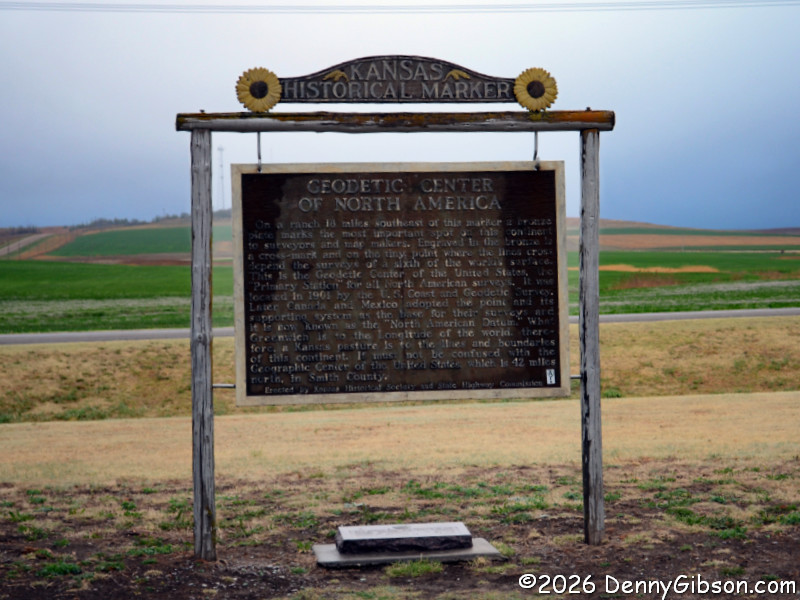 Less than twenty miles west of Lucas, I turned north on US-281. This sign
is about forty miles north where US281 briefly joins up with US-24 near
the town of Osborne, KS. The sign tells us that the geodetic center of the
U.S. is "On a ranch 18 miles southeast". I always smile a little
when I read a sign marking something that is not where the sign is, but
nearby, even though I understand why. They need to be where people are. As
Dirk Hamilton says, "Signs look silly when nobody reads 'em."
Less than twenty miles west of Lucas, I turned north on US-281. This sign
is about forty miles north where US281 briefly joins up with US-24 near
the town of Osborne, KS. The sign tells us that the geodetic center of the
U.S. is "On a ranch 18 miles southeast". I always smile a little
when I read a sign marking something that is not where the sign is, but
nearby, even though I understand why. They need to be where people are. As
Dirk Hamilton says, "Signs look silly when nobody reads 'em."
Many years ago, I read a sign on US-36 telling me that the geographic center of the contiguous U.S. was "In a park" a few miles away. "In a park" sounds inviting, so I went. "On a ranch" doesn't, so this is as close as I got the the nearby spot with geodetic significance. |
|
|
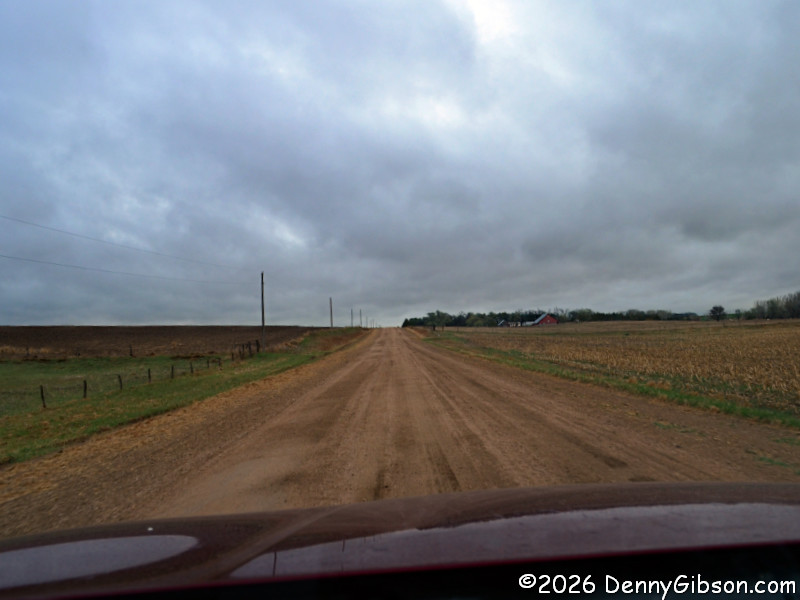
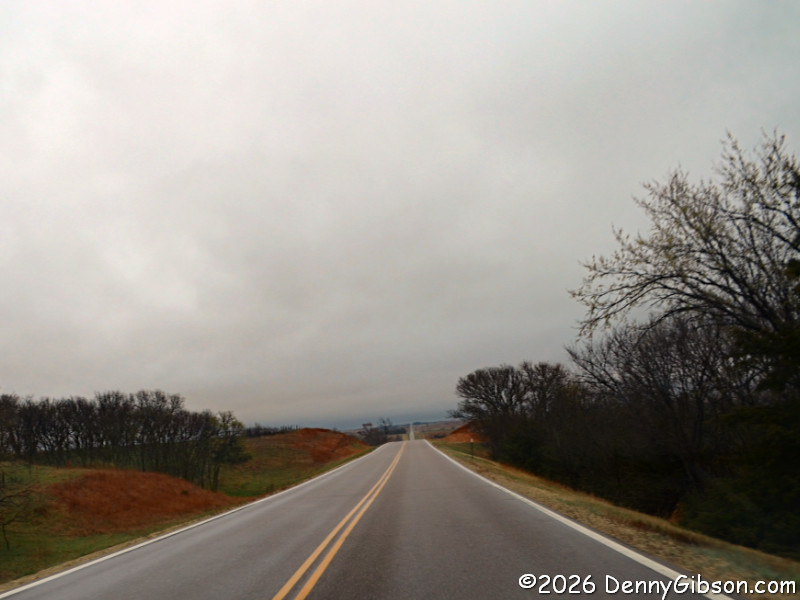 A glance at a map shows that most people heading to Minden, NE, would
continue on US-281 to US-36 before moving onto the nicely paved state
routes that lead directly there. But I had the Garmin set to
"shortest", and it directed me onto KS-9 and up about eight
miles of an unpaved county road to make that transition. A 45 MPH limit
was posted, but the not very dry road had me squirming just a little at
30 MPH.
A glance at a map shows that most people heading to Minden, NE, would
continue on US-281 to US-36 before moving onto the nicely paved state
routes that lead directly there. But I had the Garmin set to
"shortest", and it directed me onto KS-9 and up about eight
miles of an unpaved county road to make that transition. A 45 MPH limit
was posted, but the not very dry road had me squirming just a little at
30 MPH.
|
|
|
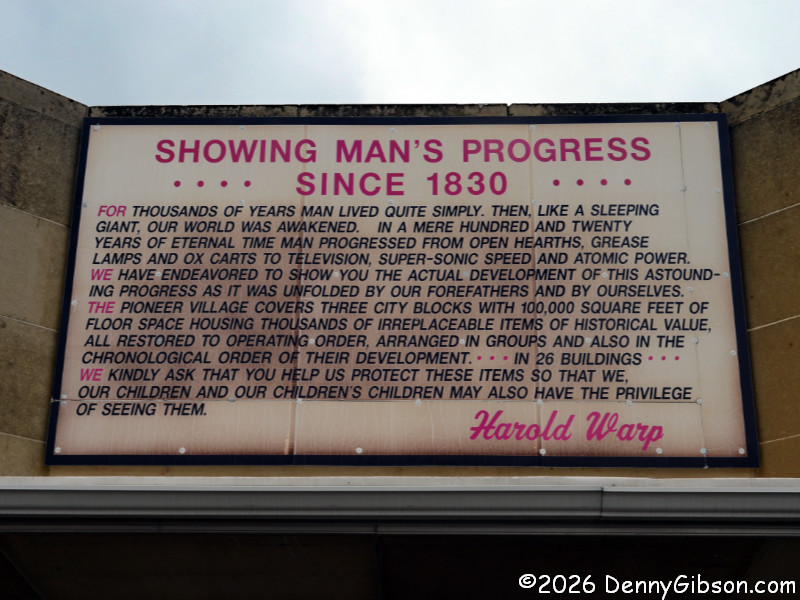
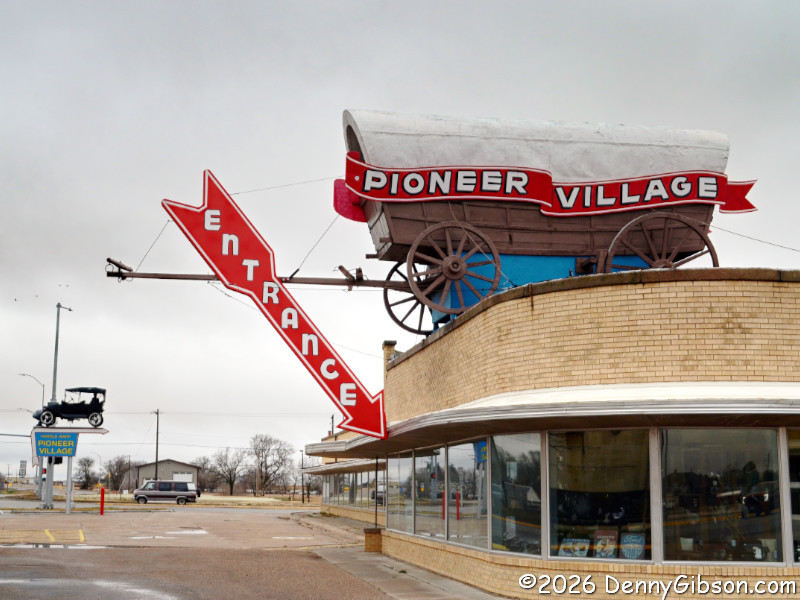 The reason I headed to Minden was to revisit Harold Warp's
Pioneer Village.
I was here in 2012,
and left with the impression of a phenomenal collection that was past its
prime and slowly fading. The foundation managing the village was
restructured around 2020 and there has been promising news. My impression
in 2026 is of a still phenomenal collection that is also still past its
prime but is no longer fading and may have another prime in its future.
The reason I headed to Minden was to revisit Harold Warp's
Pioneer Village.
I was here in 2012,
and left with the impression of a phenomenal collection that was past its
prime and slowly fading. The foundation managing the village was
restructured around 2020 and there has been promising news. My impression
in 2026 is of a still phenomenal collection that is also still past its
prime but is no longer fading and may have another prime in its future.
|
|
|
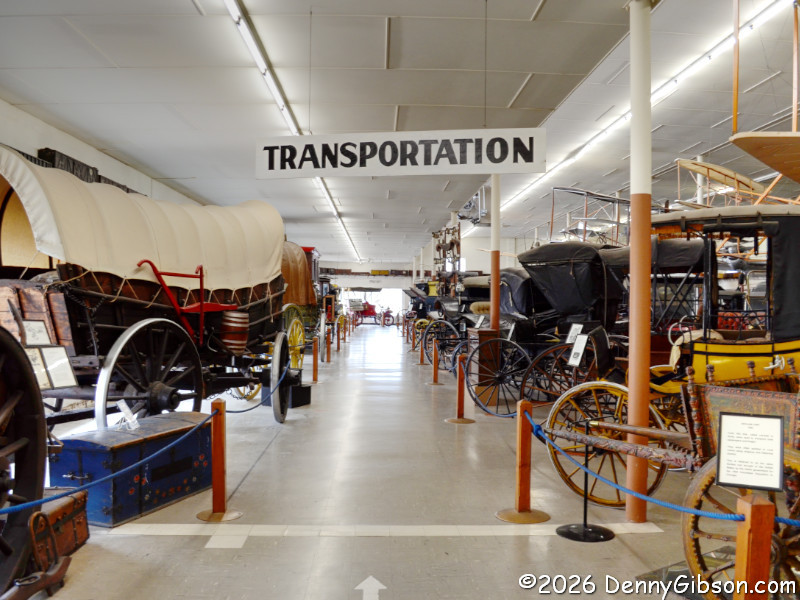
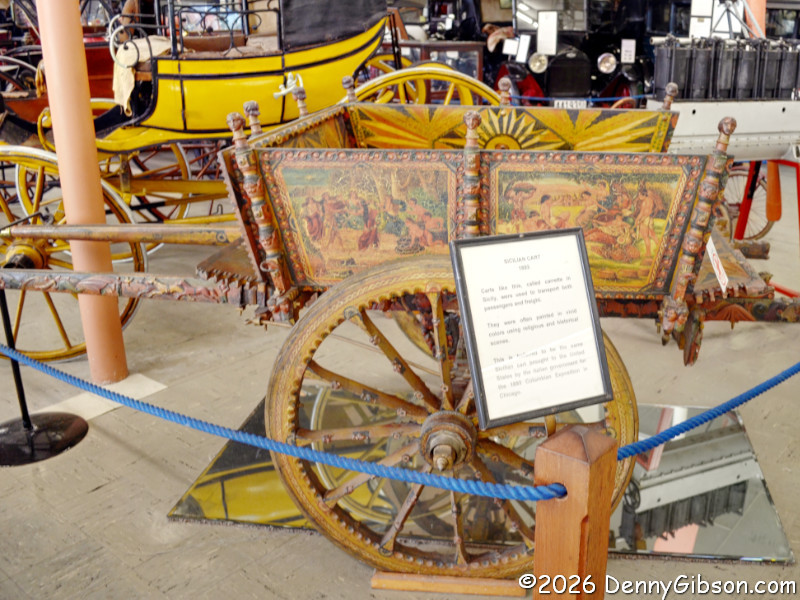
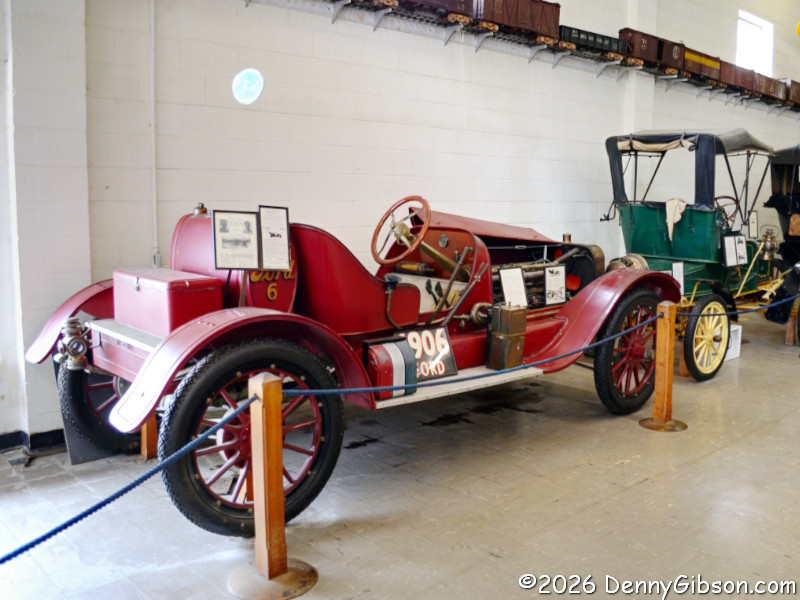
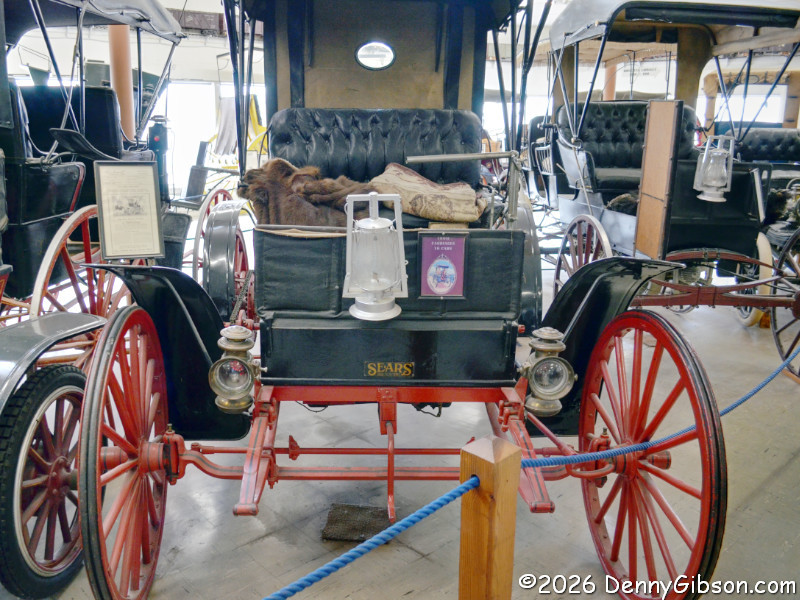
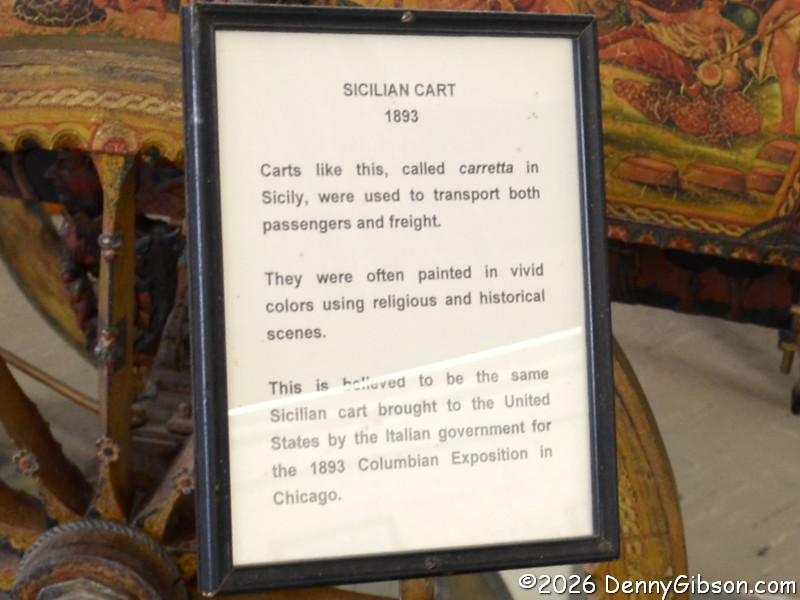
 Entering the museum was just as I remembered. I even remember the
Sicilian cart. Built in 1893, it isn't the
oldest wagon here, but it might be the prettiest. I may or may not
remember the Ford or the Sears. The Ford is a
1906 Model K. I don't no the model or year of the Sears, although it was
undoubtedly one of those years when you could get absolutely anything
through their catalog.
Entering the museum was just as I remembered. I even remember the
Sicilian cart. Built in 1893, it isn't the
oldest wagon here, but it might be the prettiest. I may or may not
remember the Ford or the Sears. The Ford is a
1906 Model K. I don't no the model or year of the Sears, although it was
undoubtedly one of those years when you could get absolutely anything
through their catalog.
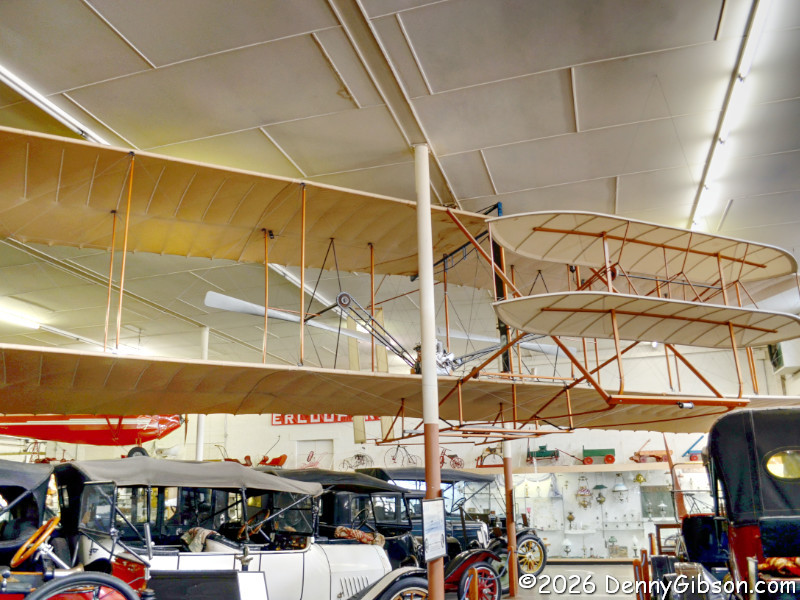
I do not remember the flying machine, and was rather surprised when I saw it and noted that it looked like one of the earliest Wright Brothers' Flyers. It is an exact replica built in 1962. |
|
|
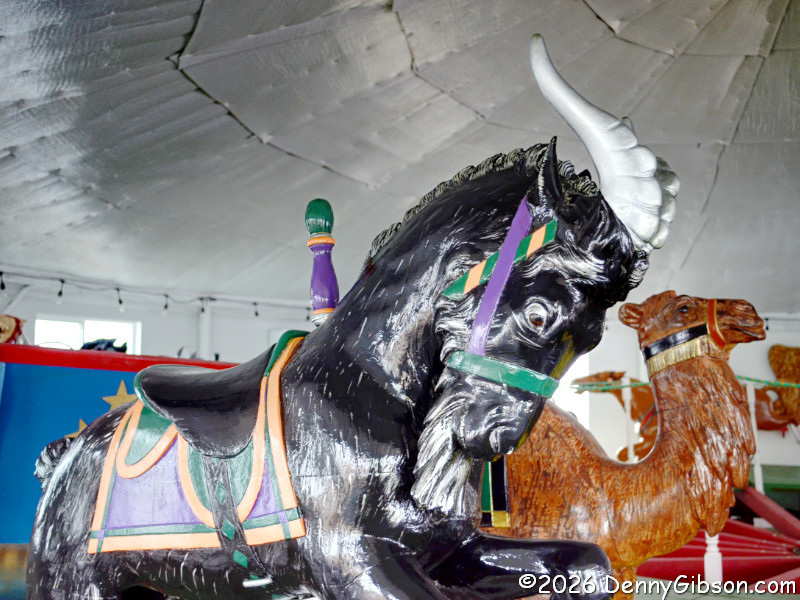
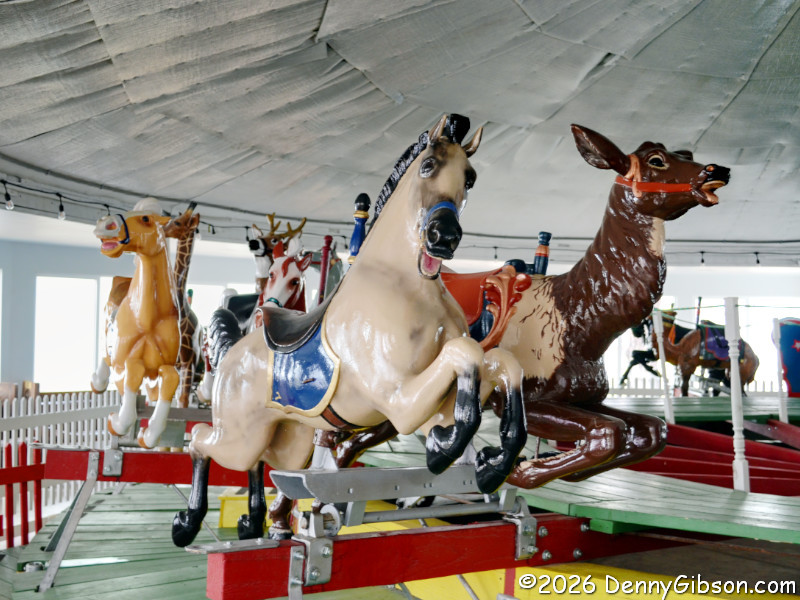
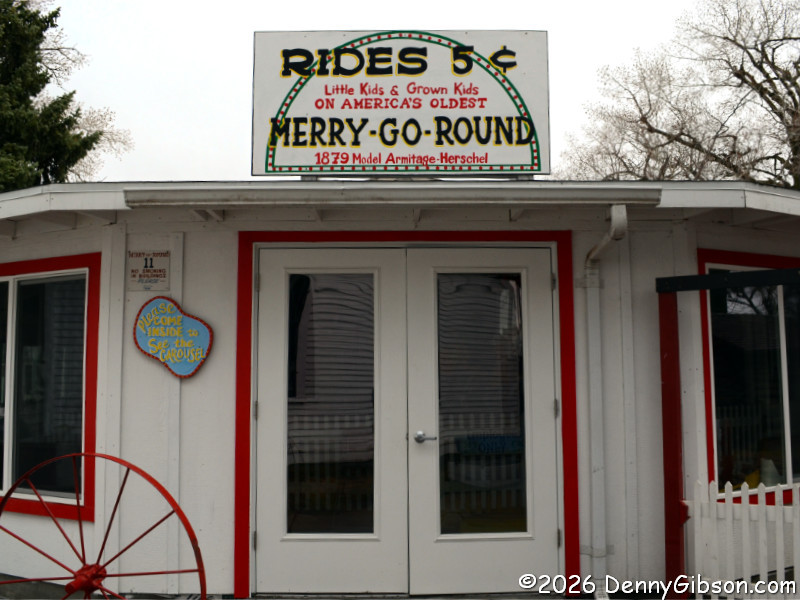 Although no longer operated by steam, the 1879 carousel has been restored,
and can be ridden for a nickel at certain times. On Thursdays, those times
are between 1:00 and 3:00 PM. Guess I should have driven even slower. I
was there at 10:30 AM.
Although no longer operated by steam, the 1879 carousel has been restored,
and can be ridden for a nickel at certain times. On Thursdays, those times
are between 1:00 and 3:00 PM. Guess I should have driven even slower. I
was there at 10:30 AM.
|
|
|
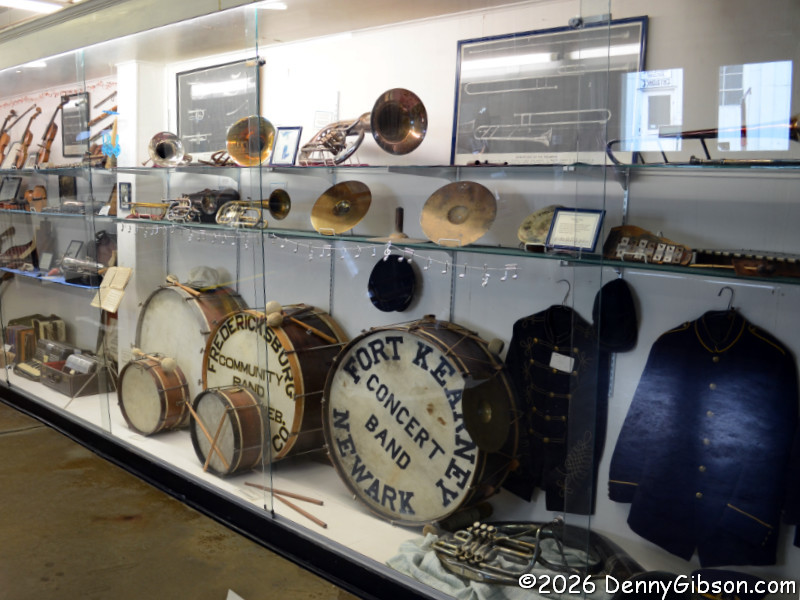
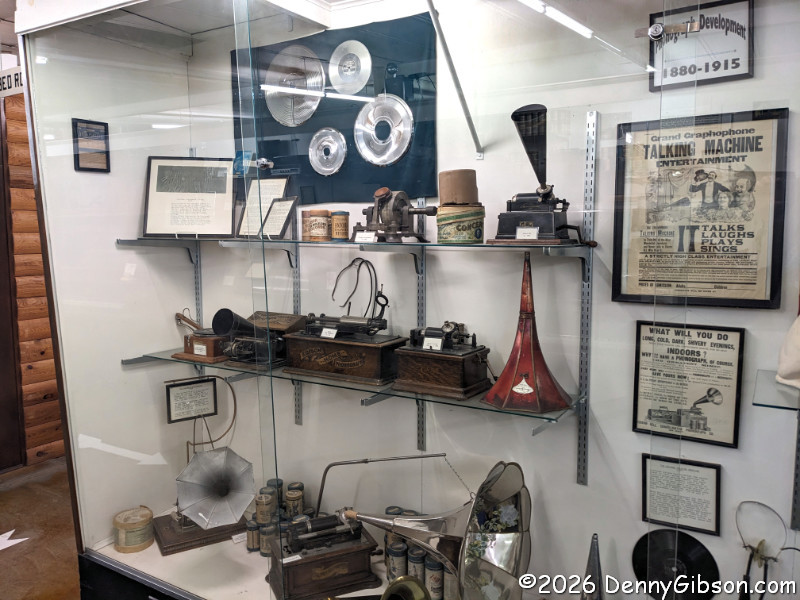
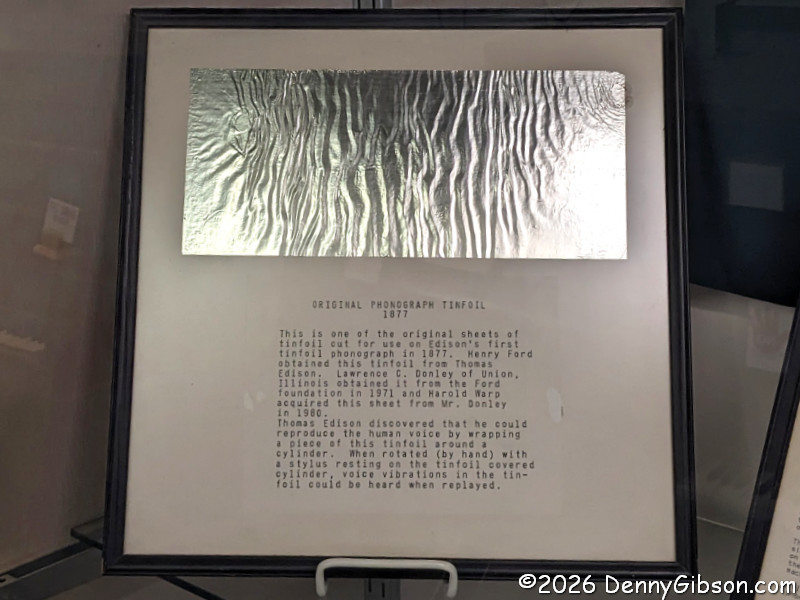
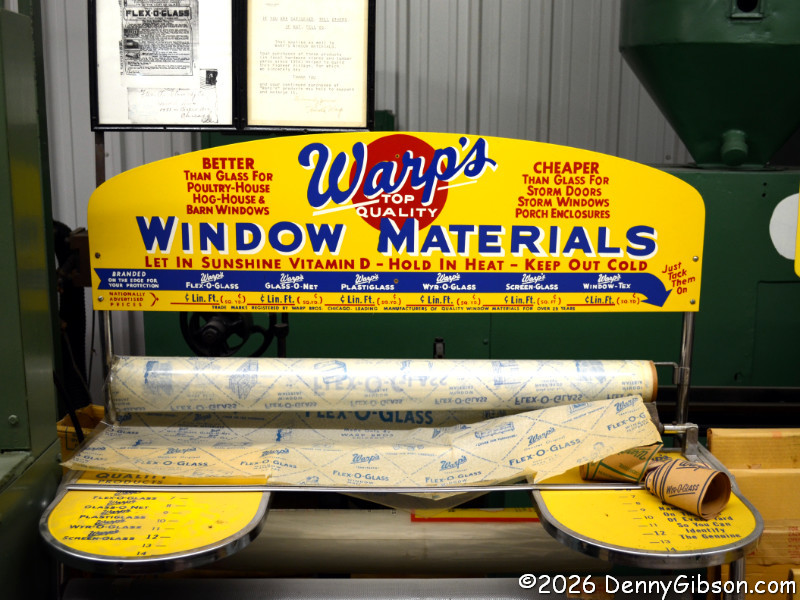
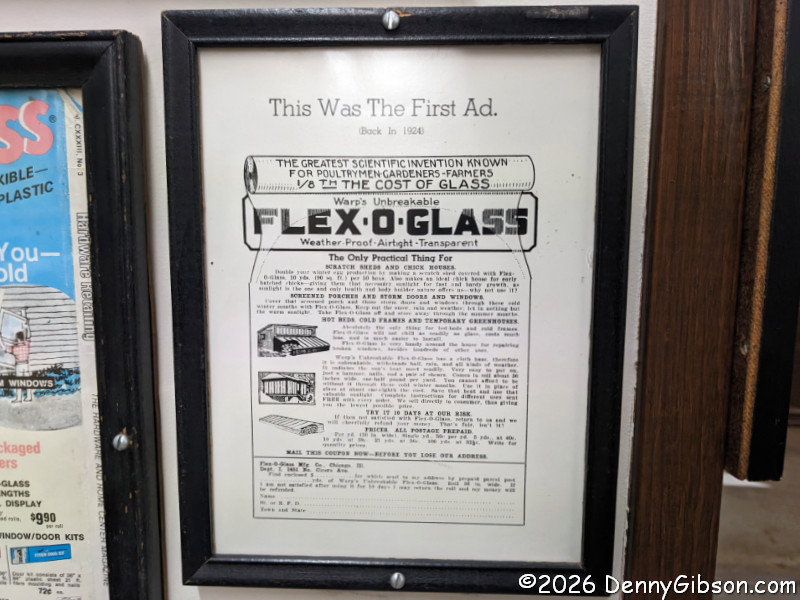
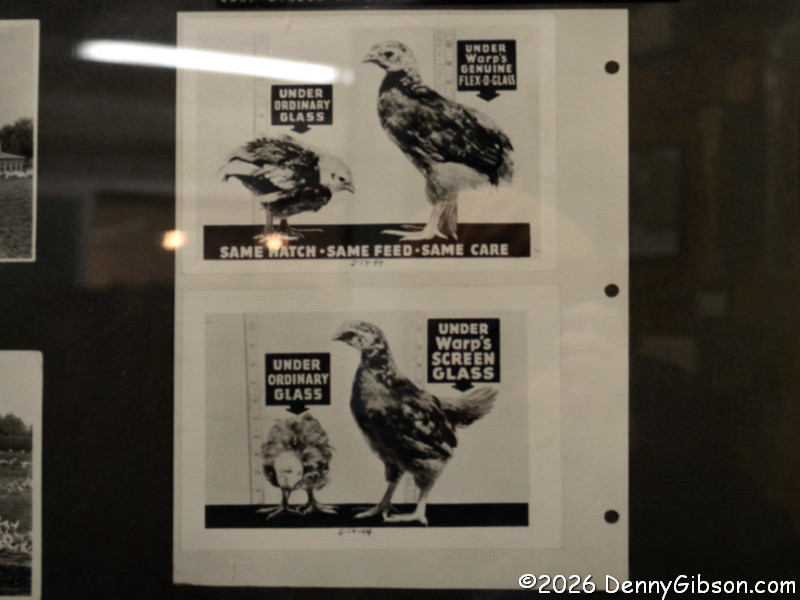 A bunch of bass drums will almost always work to draw me into a building,
but my real interests here were the unused foil I remembered from my first
visit, and the stuff that made the money to buy all the other stuff.
A bunch of bass drums will almost always work to draw me into a building,
but my real interests here were the unused foil I remembered from my first
visit, and the stuff that made the money to buy all the other stuff.
|
|
|
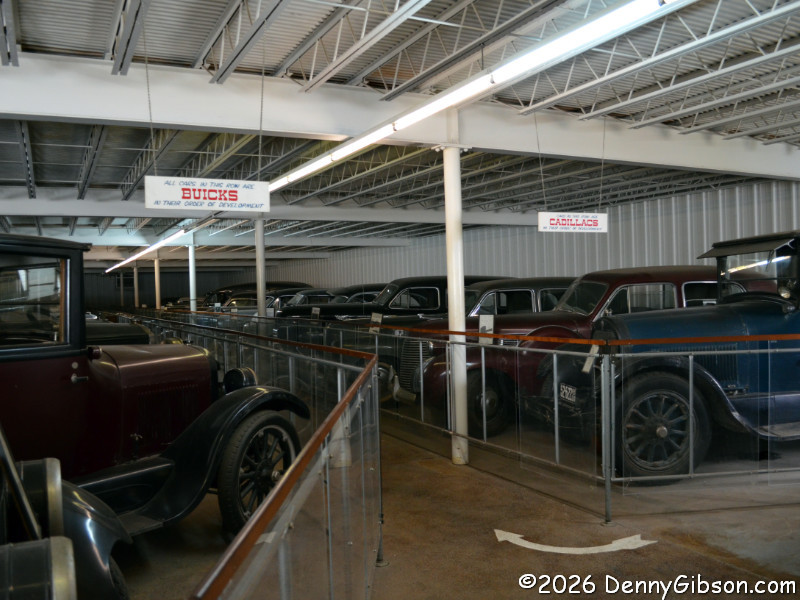
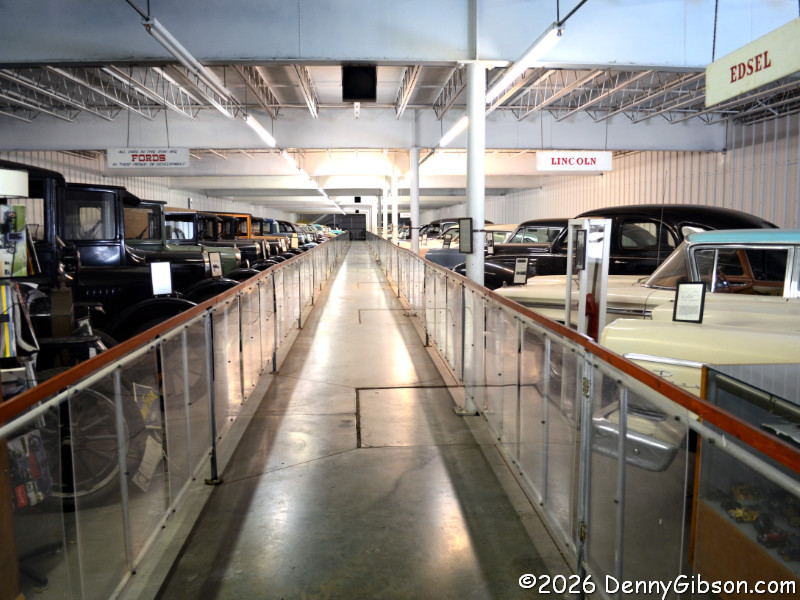 There are several buildings filled with cars including one with all Fords
and one with all Chevrolets. Here's a peek inside the Ford building, and
a build shared by less popular GM products.
There are several buildings filled with cars including one with all Fords
and one with all Chevrolets. Here's a peek inside the Ford building, and
a build shared by less popular GM products.
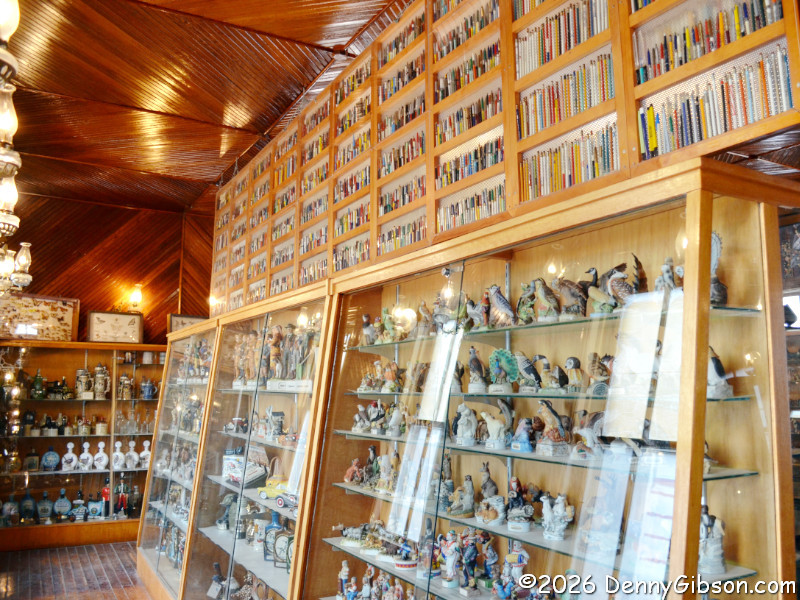
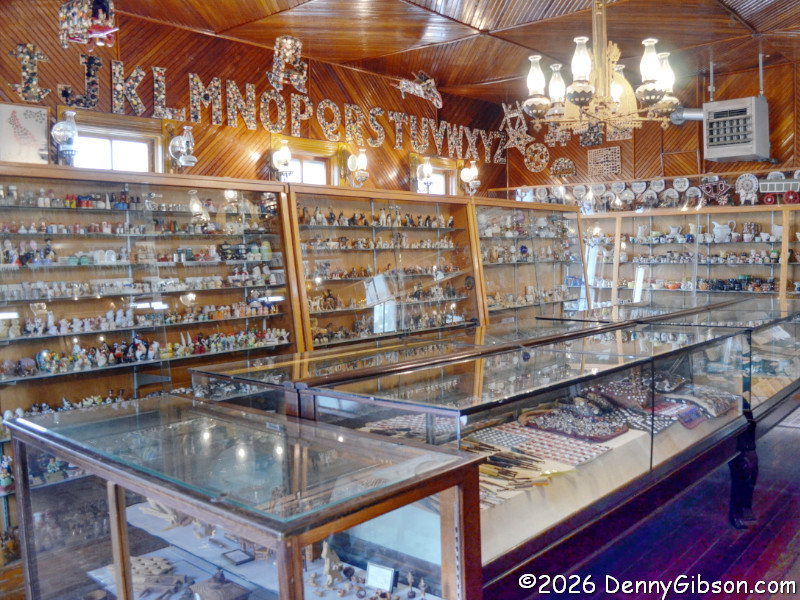
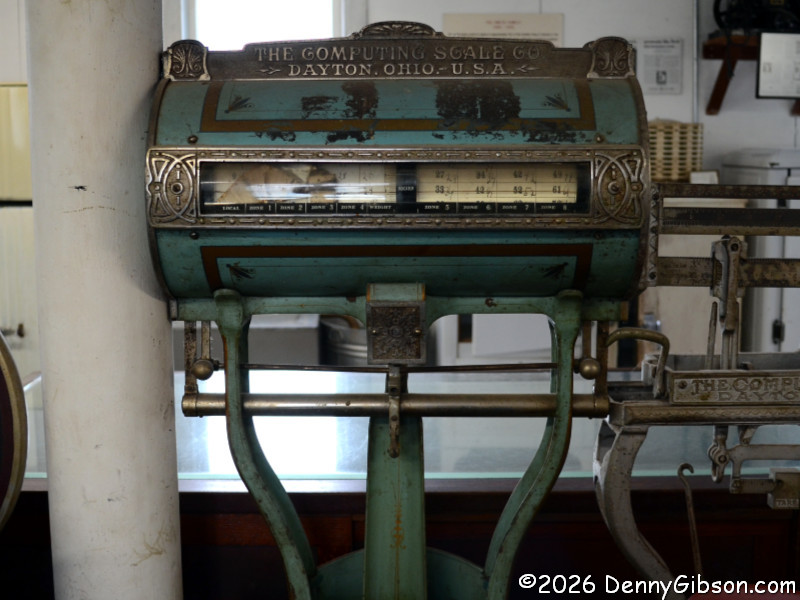
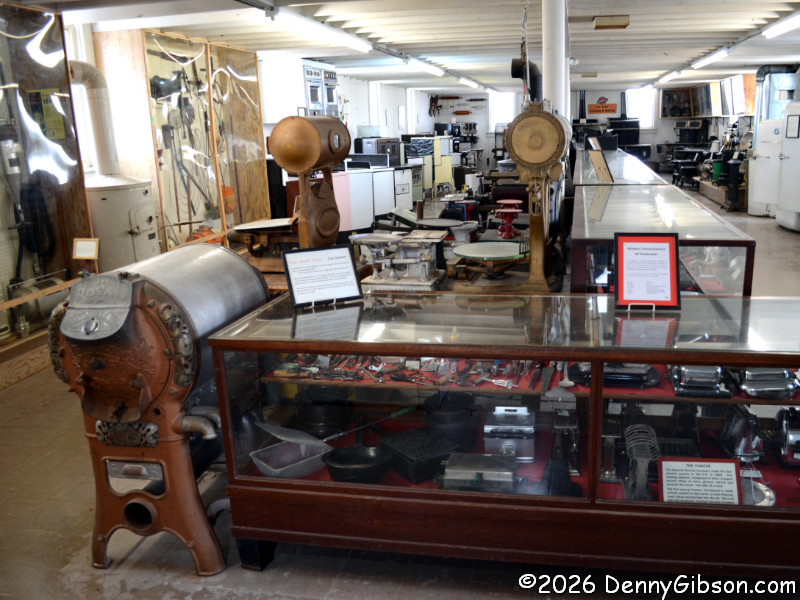
Inside the Home Appliance Building, there is evidence of the inventiveness of Daytonians. In 1911, the Computing Scale Company was part of the merger that formed the Computing-Tabulating-Recording Company, which eventually became IBM. The last two pictures are from the Hobby House, which might be called a collection of collections. |
|
|
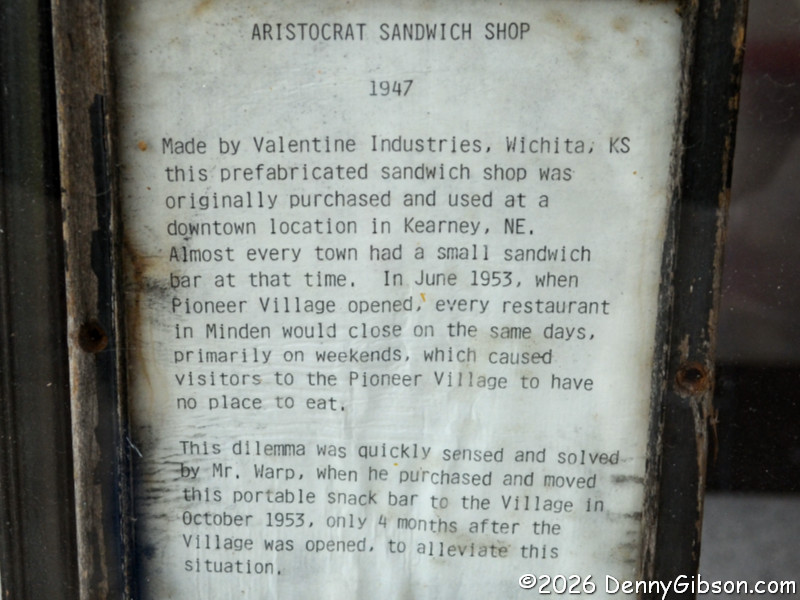
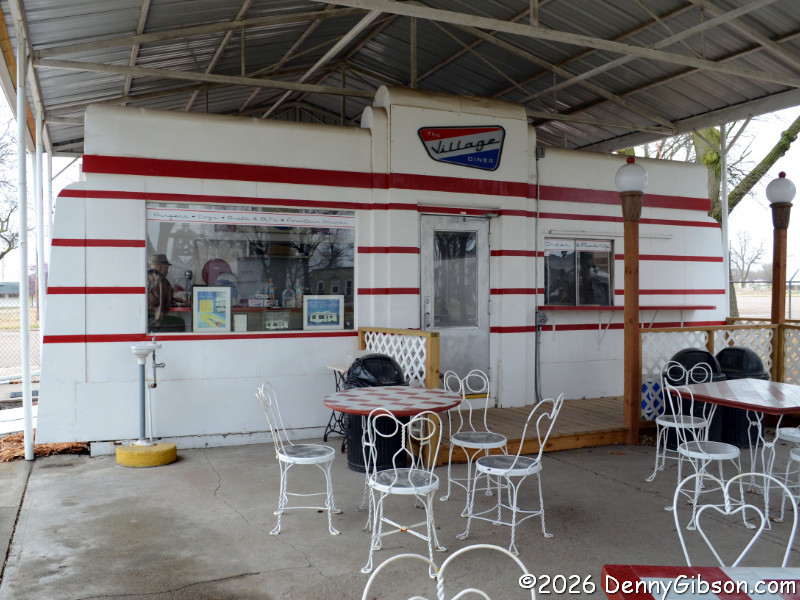 This 1947 Valentine diner was purchases not just for display, but to feed
Village attendees on weekends. I read the here.
This 1947 Valentine diner was purchases not just for display, but to feed
Village attendees on weekends. I read the here.
|
|
|
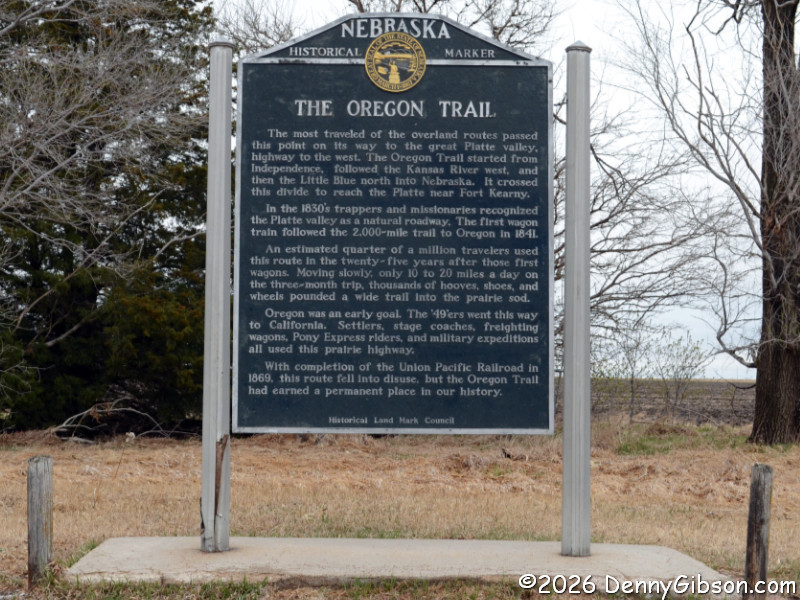
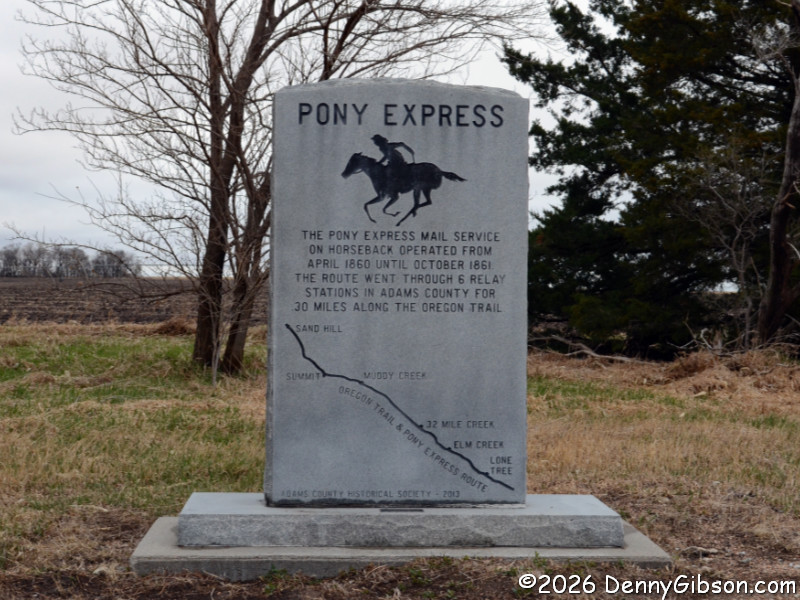
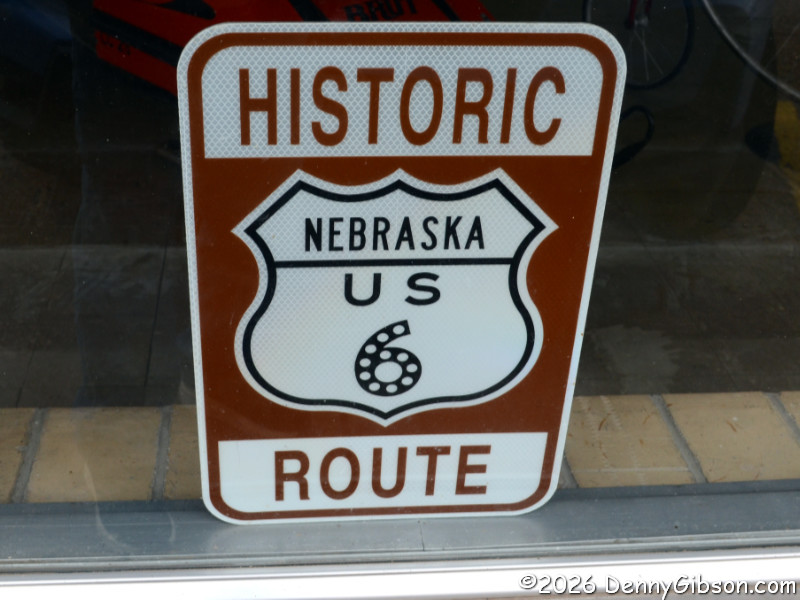 The Historic Route sign is in the window of Pioneer Village's main
building. I pulled directly onto Historic US-6 and headed east. In short
order, I was reminded that lots of people followed this route well before
it was numbered.
The Historic Route sign is in the window of Pioneer Village's main
building. I pulled directly onto Historic US-6 and headed east. In short
order, I was reminded that lots of people followed this route well before
it was numbered.
|
|
|
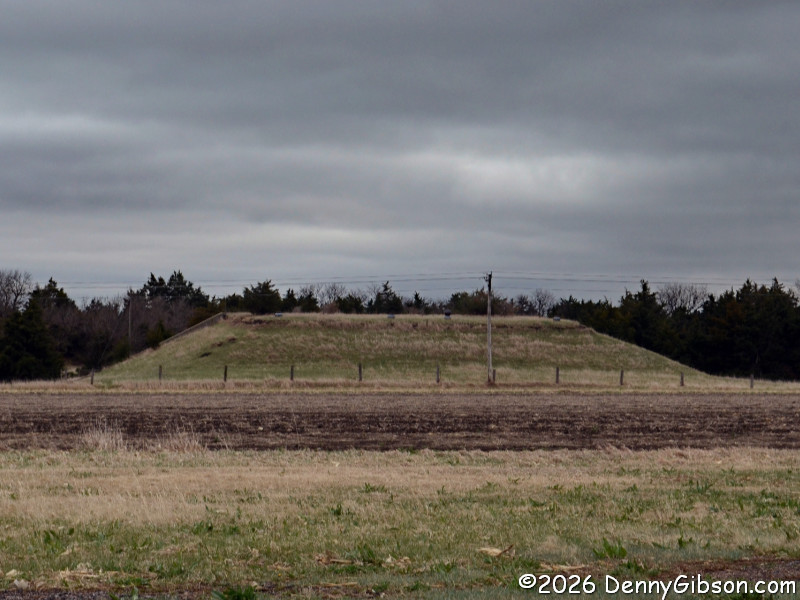
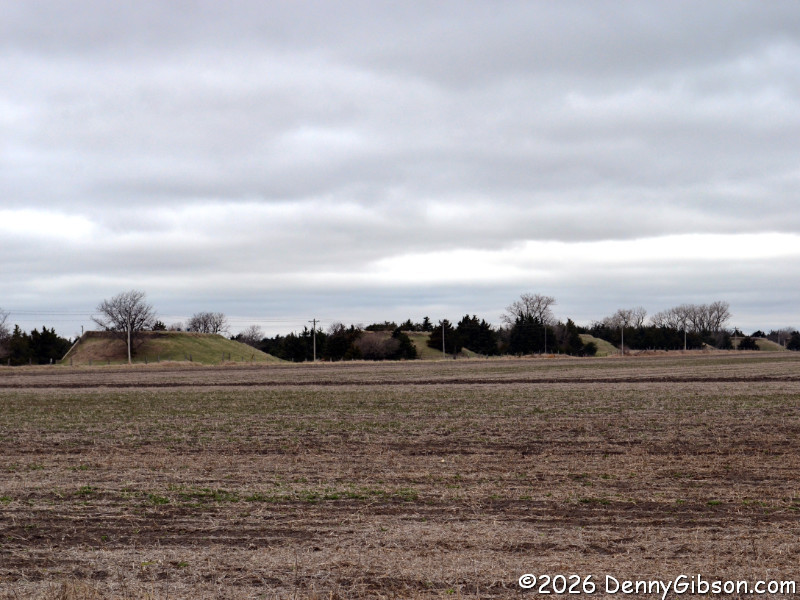 The number and uniformity of these mounds east of Hastings, NE, had me
stumped until the end of the day when the internet told me that this was
the U.S. Naval Ammunition Depot.
The number and uniformity of these mounds east of Hastings, NE, had me
stumped until the end of the day when the internet told me that this was
the U.S. Naval Ammunition Depot.
|
|
|
| [Prev] [Site Home] [Trip Home] [Next] |