Near the end of last summer, my friend Terry, the Wheel Horse collector, sold a tractor to Bill Throckmorten of Grant King Race Shops, and I rode along to deliver it. Bill is Grant King’s nephew. He and his wife Stephanie currently own the shop. Back in the 1960s and ’70s, Wheel Horses were used at the Indianapolis 500 to move race cars in the pits and other areas. There was also a race week event featuring celebrities piloting 33 of the red tractors in a one-lap race known as the Indy 2 1/2. Because of that connection, Bill wanted a Wheel Horse for the museum at what he calls “A Working Race Shop Museum”, and to maybe move a few cars around. There is a pretty good video overview of the shop/museum and the accomplishments of Grant and Bill here.
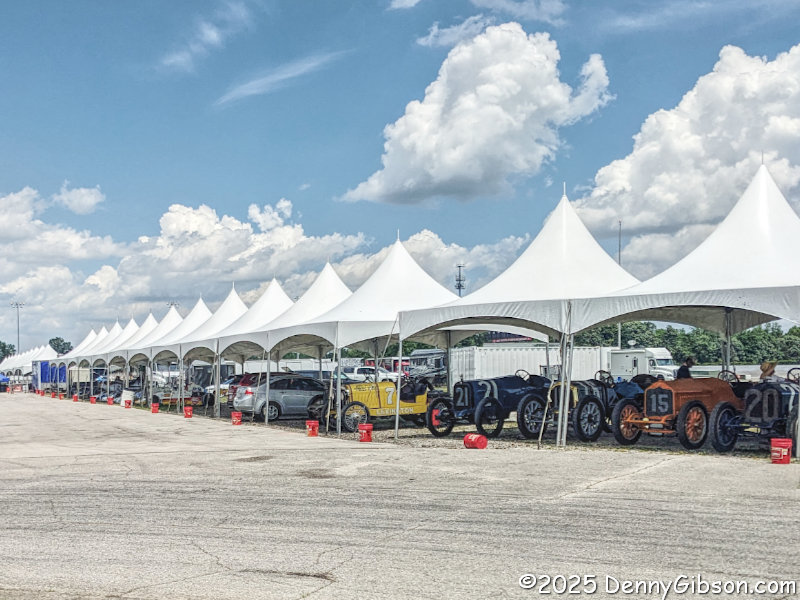
One of Bill’s accomplishments is the cofounding of Indy Legends. After giving us a tour of that really cool museum, he invited Terry to display some of his Wheel Horses at their next event at Indianapolis Raceway Park. That event was last weekend, June 28-29, and I again got to tag along. I snapped the opening photo from where the Wheel Horses were displayed.
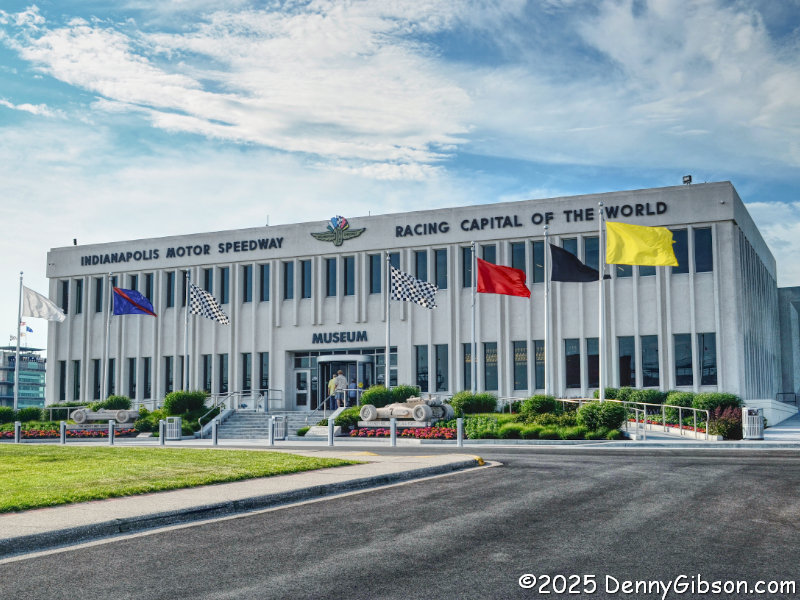
Friday was setup day, followed by an evening reception at the Indianapolis Motor Speedway Museum. Stephanie Throckmorten made sure we had wristbands for both the reception and access to IRP. Setting up in ninety degrees was pretty exhausting for old guys like us, although Terry dealt with it better than I did. We both took advantage of the showers at Lion’s Club Park, where we were staying, before heading to the reception.
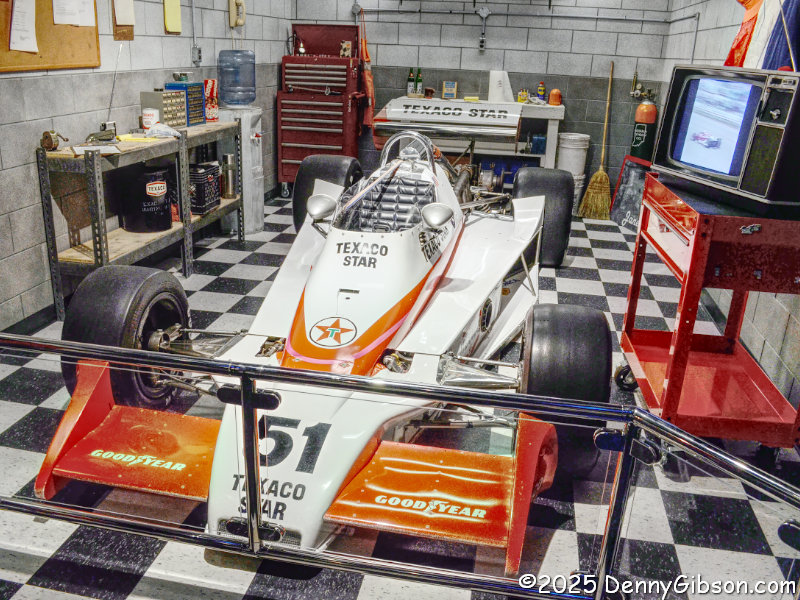
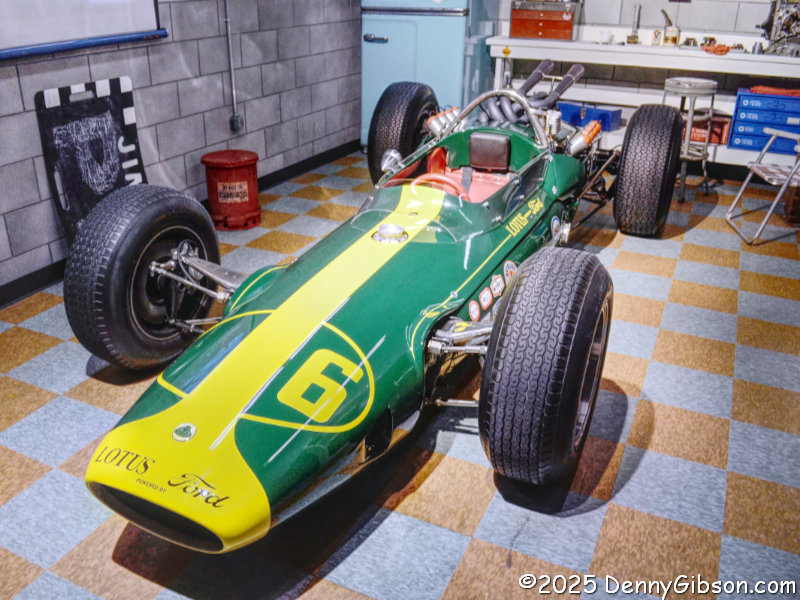
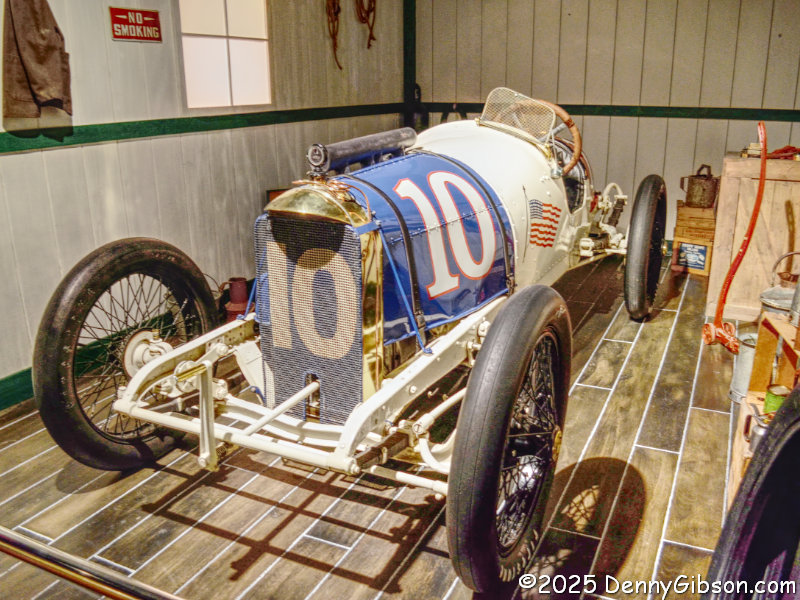
The museum reopened less than three months ago following a year-and-a-half-long closure and $60 million renovation. One of the first areas inside the entrance is a series of simulated garages holding some very significant cars from the speedway’s history. Eddie Rickenbacker drove this 1914 Duesenberg to a tenth-place finish in 1914. Rickenbacker served as IMS President from 1927 to 1945. Jim Clark put this green Lotus on the pole in 1964, but broken suspension meant a 24th-place finish. Parnelli Jones drove the car to 2nd place in 1965. In 1977, Janet Guthrie broke the Indy 500 gender barrier, then drove this Offenhauser-powered Wildcat to a 9th-place finish in 1978.
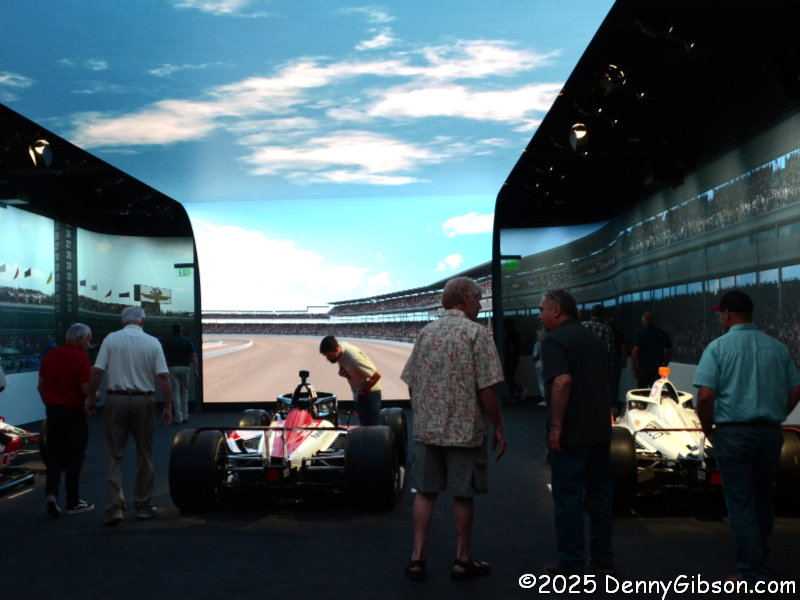
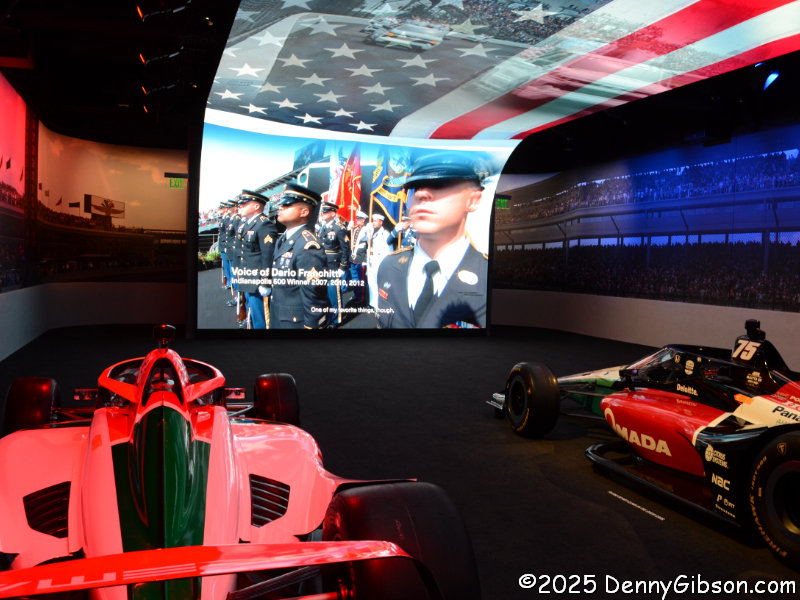
An attendant at the entrance to the next section assures entry between presentations of a video shown on a wrap-around vertical screen. Scenes from parades, pit activity, flyovers, and race starts are combined with exhaust sounds from real cars in the area to generate a semblance of race day anticipation.
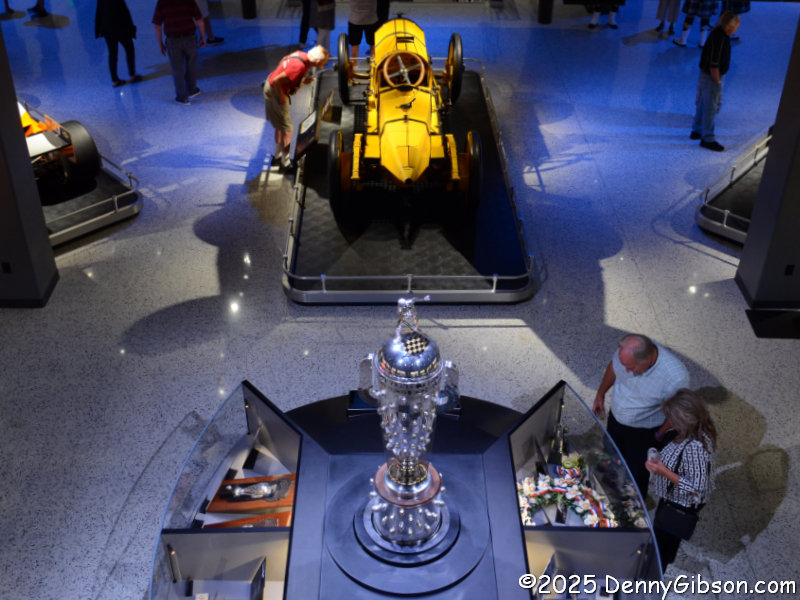
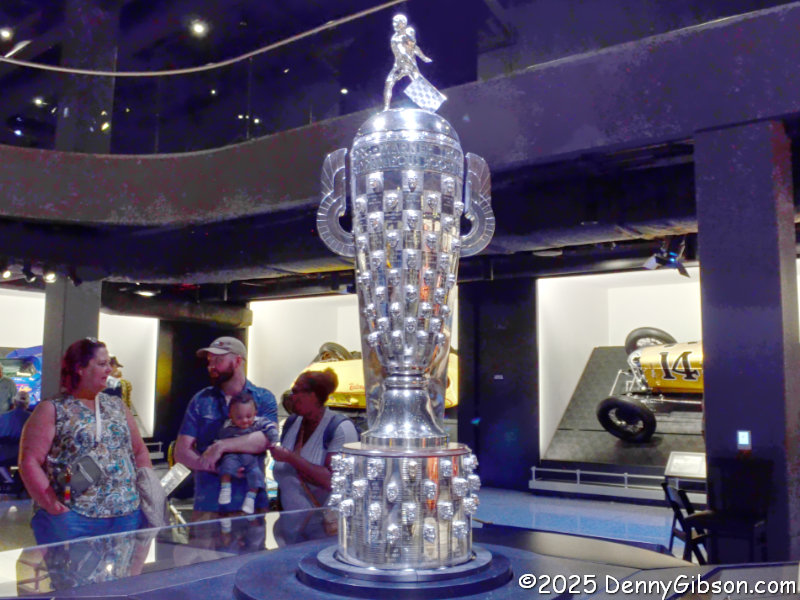
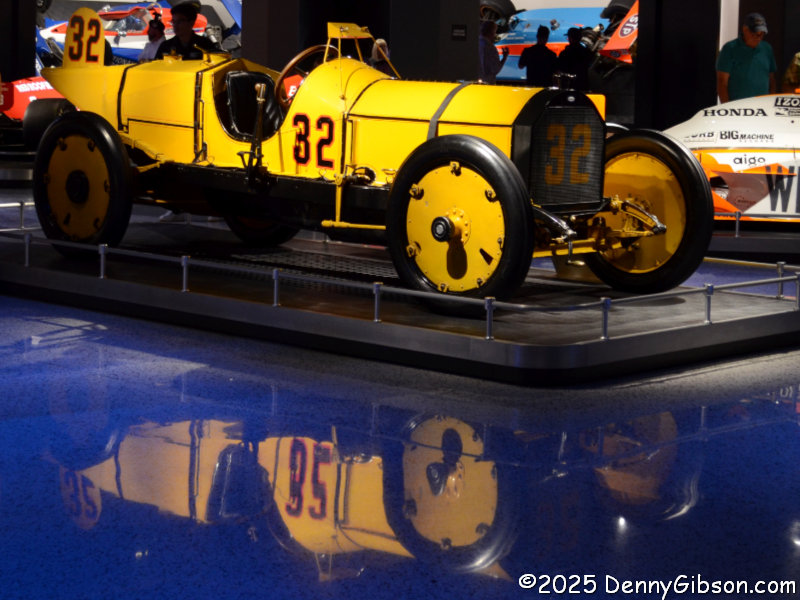
There is a mind-boggling number of cars and artifacts on display in the museum. Of course, I took a ton of pictures, but there is a lot more going on this weekend, so I am really limiting what I’m posting. Here’s a picture of the Marmon Wasp that Ray Harroun drove to victory in that first Indy 500 in 1911, and one of the Borg-Warner Trophy. Although the trophy was first presented in 1936, the winners of every 500 are represented on it. The Marmon and the Borg-Warner appear together in the photo taken from the new mezzanine.
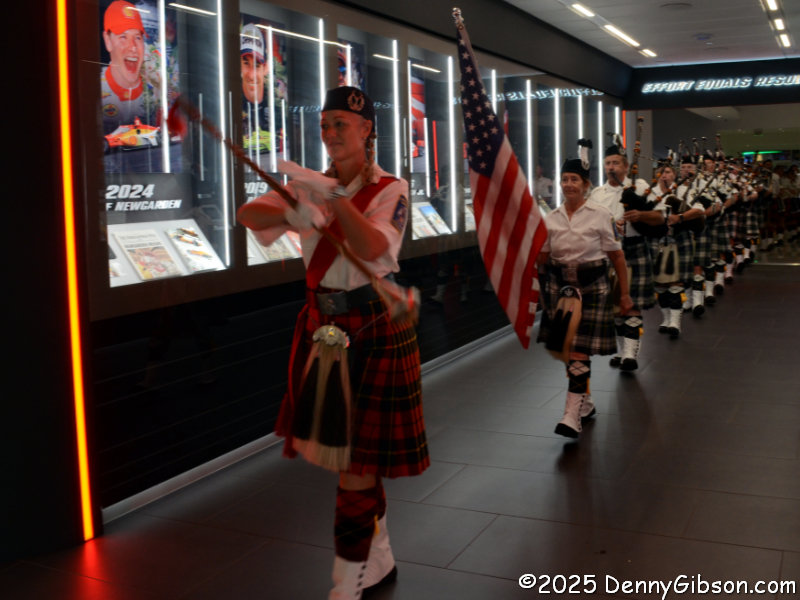
The reception was a first-class affair with hors d’oeuvres, beverages, and opportunities to chat with museum officials and employees. Terry and I missed the first performance by the Indianapolis 500 Gordon Pipers but were there for their second outing as the reception began to slow down. They would also appear at the race track near the end of the day’s activities on Saturday.
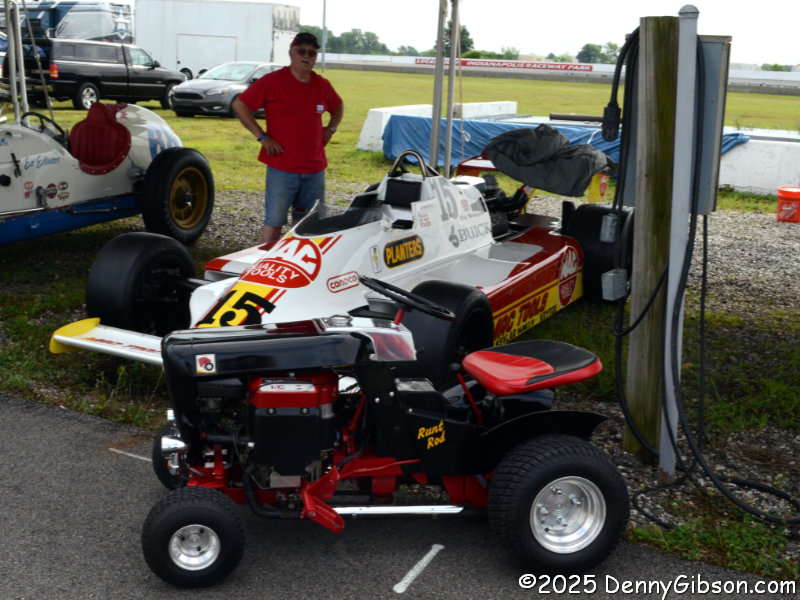
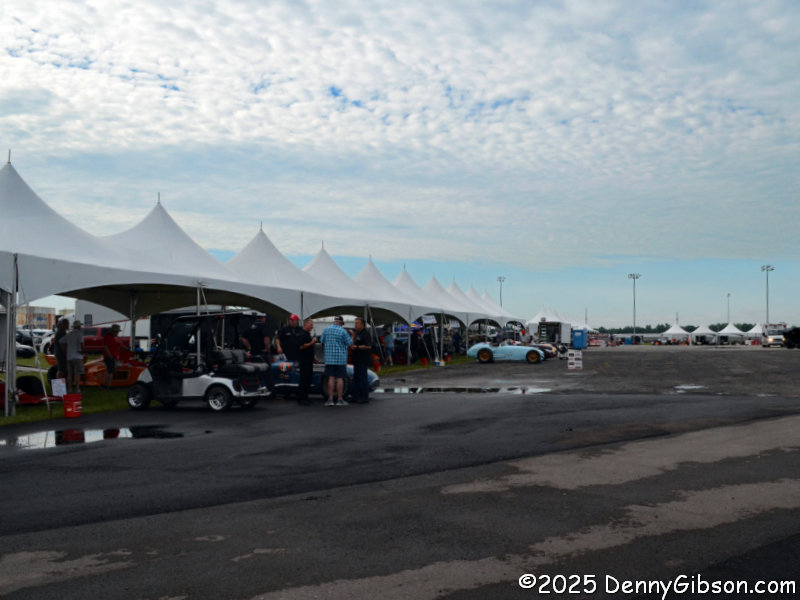
This was the beginning of activities on Saturday. Overnight rain had sounded a lot heavier than it actually was, but some drying out was in order nonetheless. We cleared some water from our canopy, then did a little cruising and car spotting while the track was being dried. Terry posed for a picture with a Mac Tools-sponsored racer and his own “Runt Rod” racer. I believe it is the only non-stock Wheel Horse in his fleet.
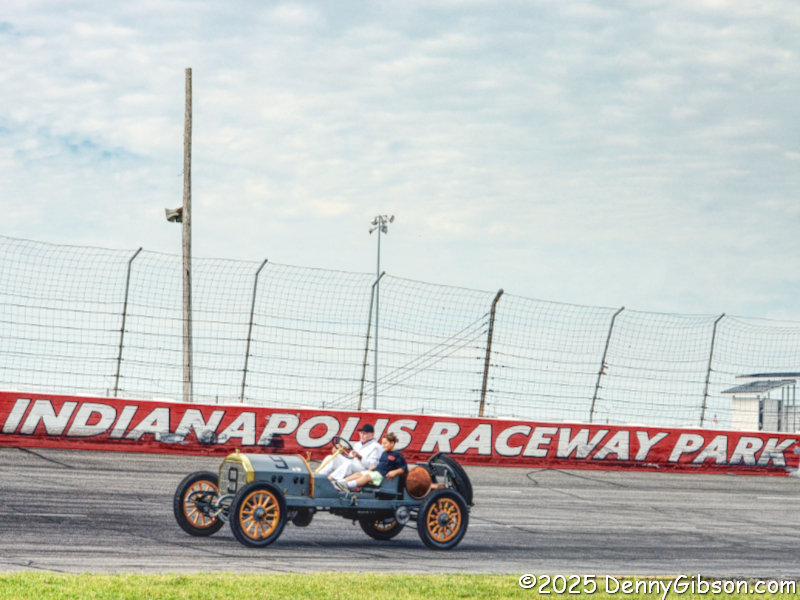
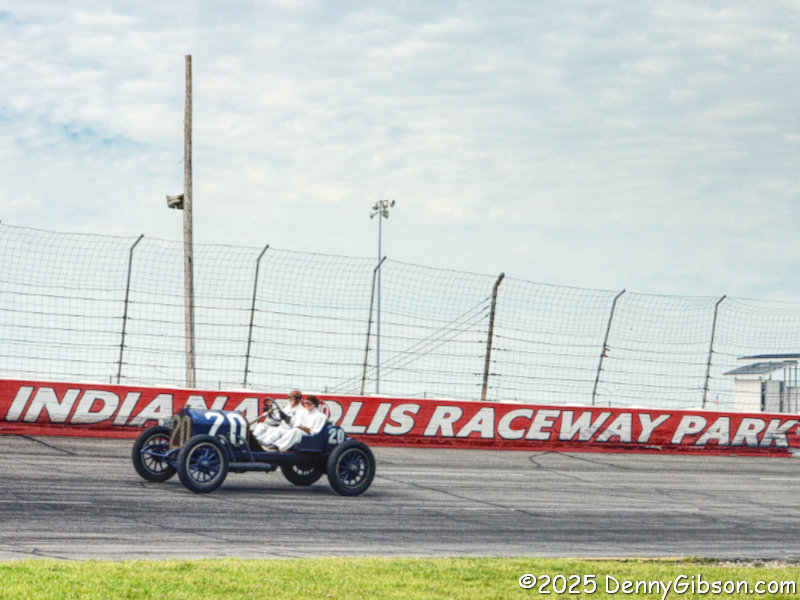
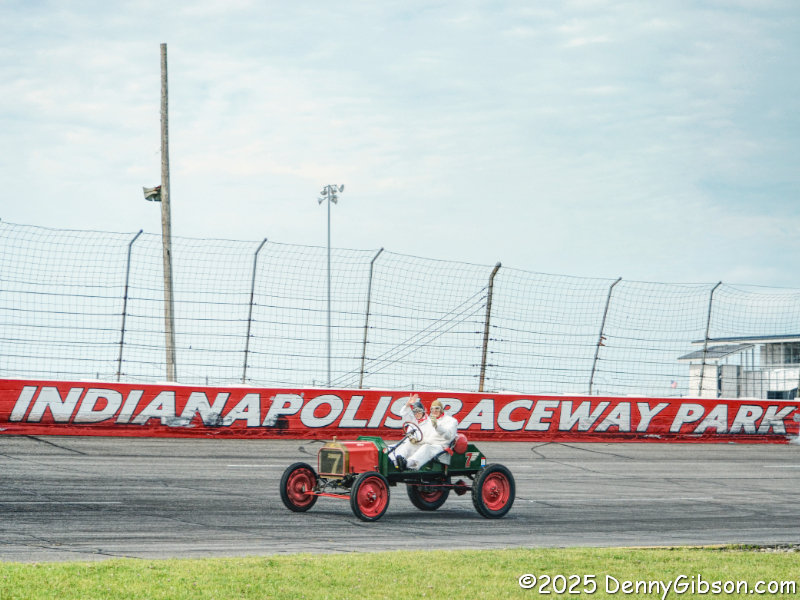
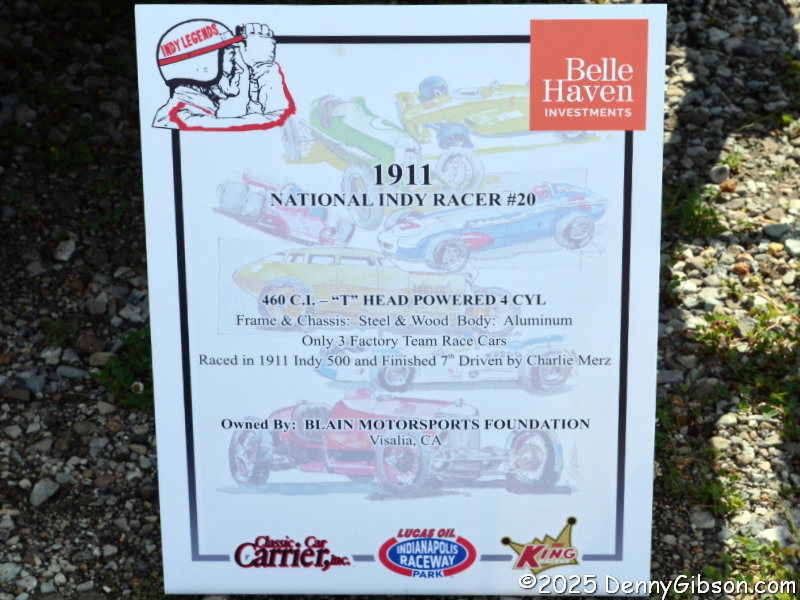
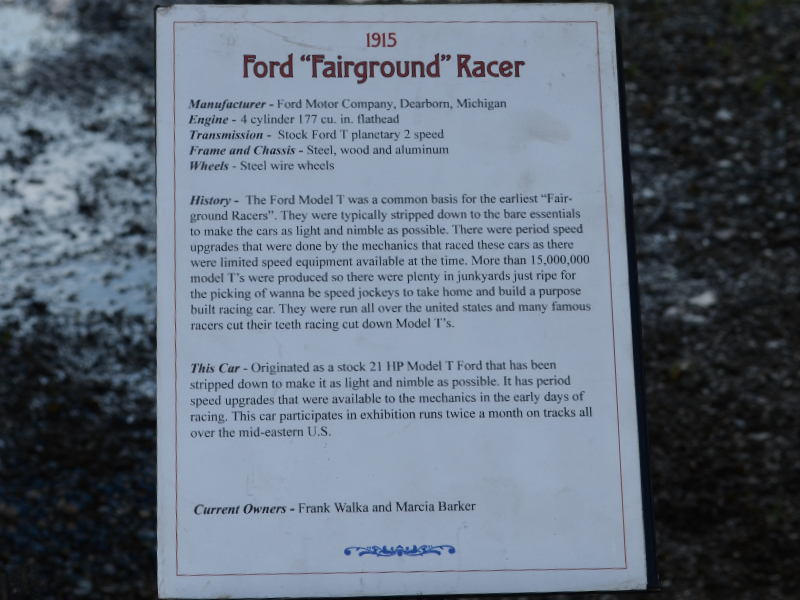
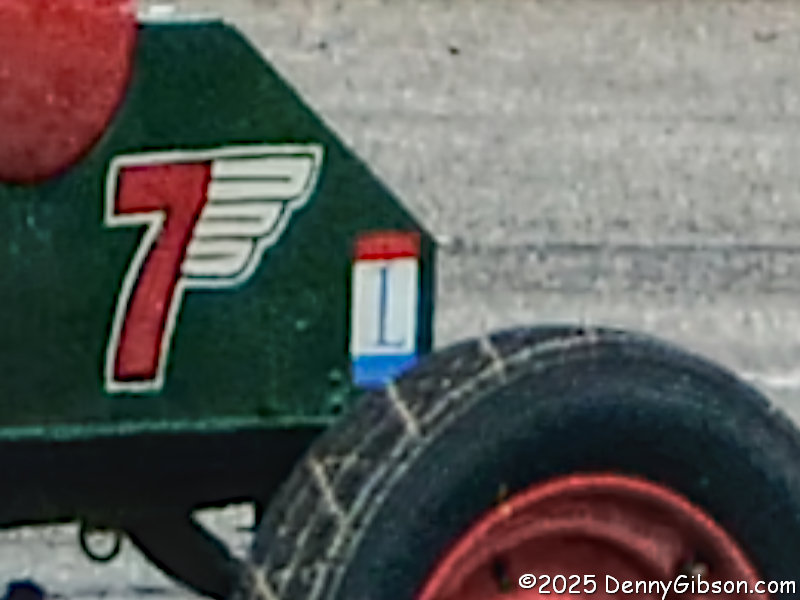
All of the cars had informative placards beside them when parked, and I learned a lot by reading many of them. Only when I started writing this post did I realize how little I remembered and what a poor job of recording I did. I can tell you absolutely nothing about the gray #9 in the first picture. #20 is a 1911 National as described here. I also have a shot of #7’s descriptive information. That is almost certainly because my interest was piqued by this on its rear end. Its owners have driven most of the Lincoln Highway, and the Model T racer has been on a short stretch of the Lincoln Highway in Pennsylvania.
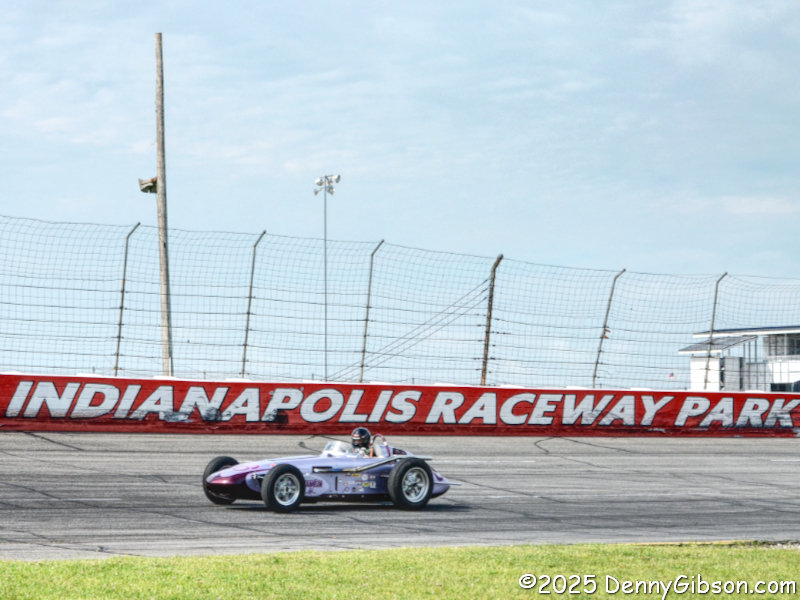
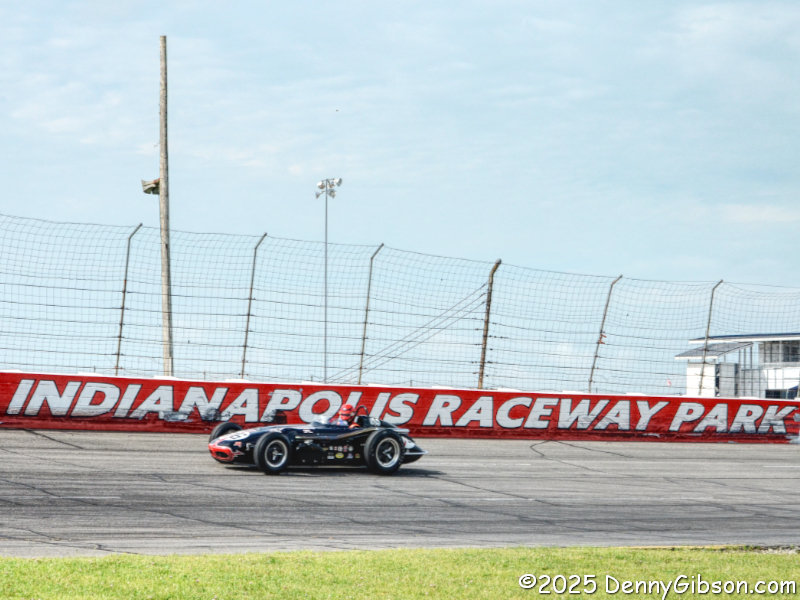
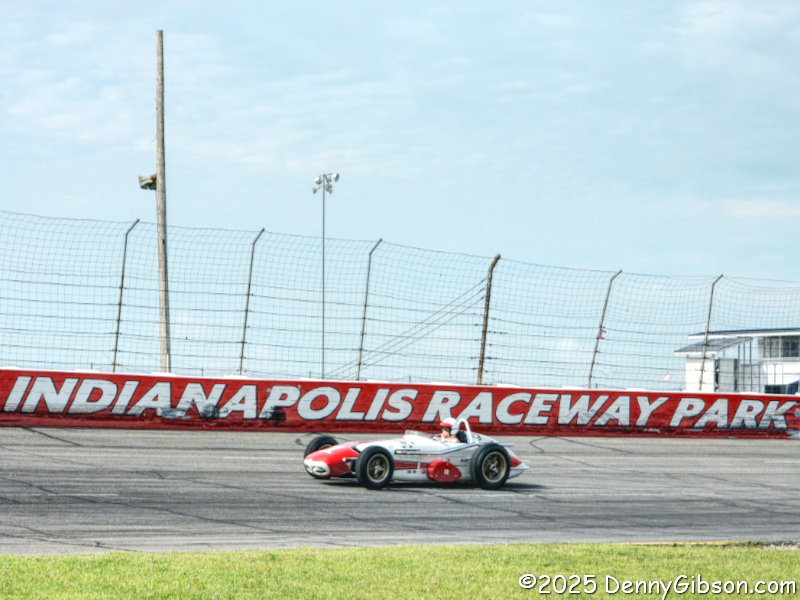
The model years I noted ranged from 1911 to 2000. Although I do not know the actual dividing lines, the on-track groups were separated by age, which also meant they were separated by speed. I have even less information to share about these middle-aged race cars than for the older cars in the previous paragraph.
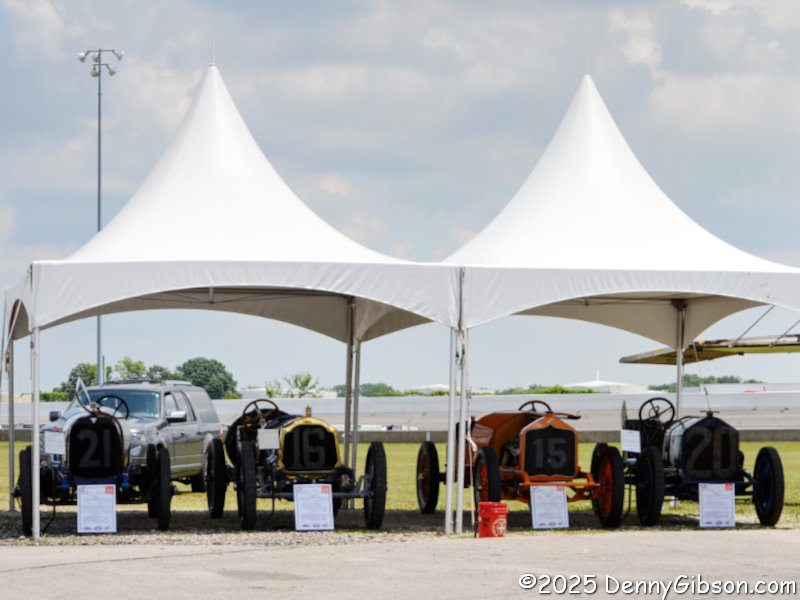
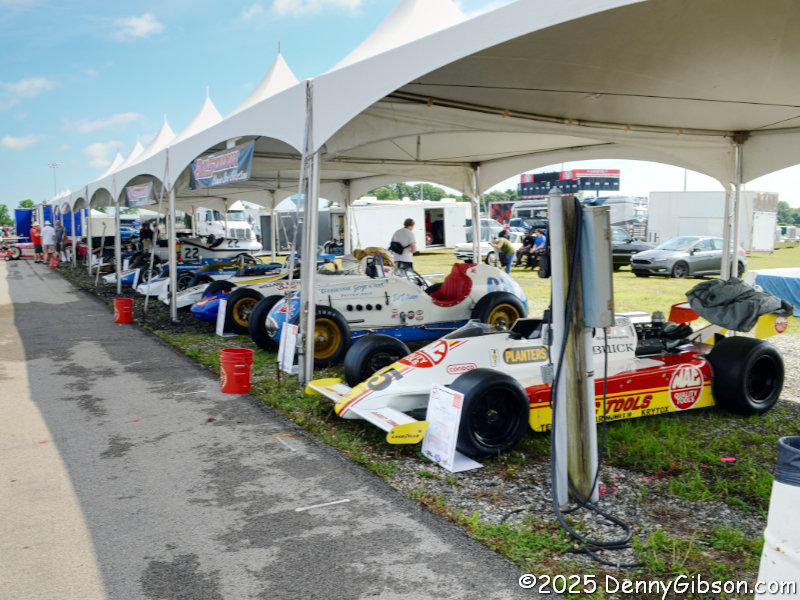
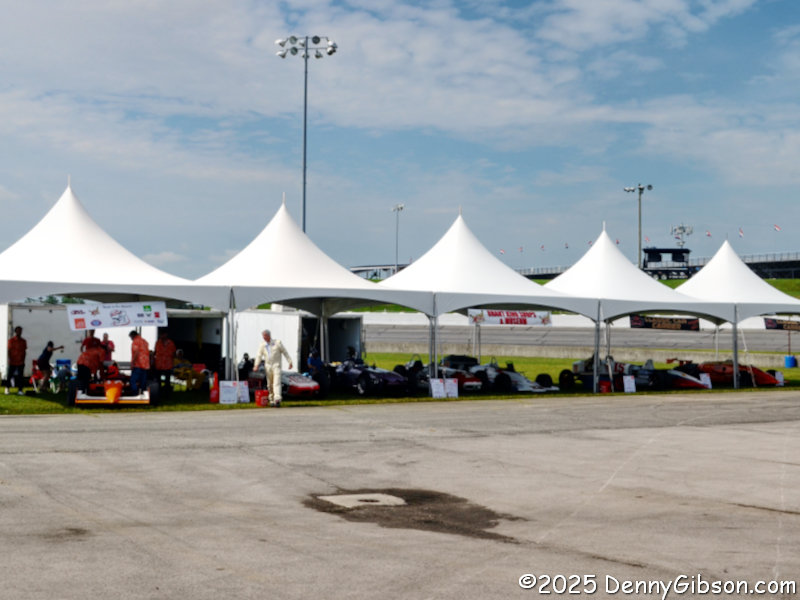
There was ample time to walk around and photograph the many fabulous race cars while they were parked, and if the temperature, the humidity, or my age had been lower, I would certainly have done more of it. Many of the cars were the exact same vehicles that once ran at IMS and other tracks, while some were impressive replicas of famous cars that are probably on display in museums.
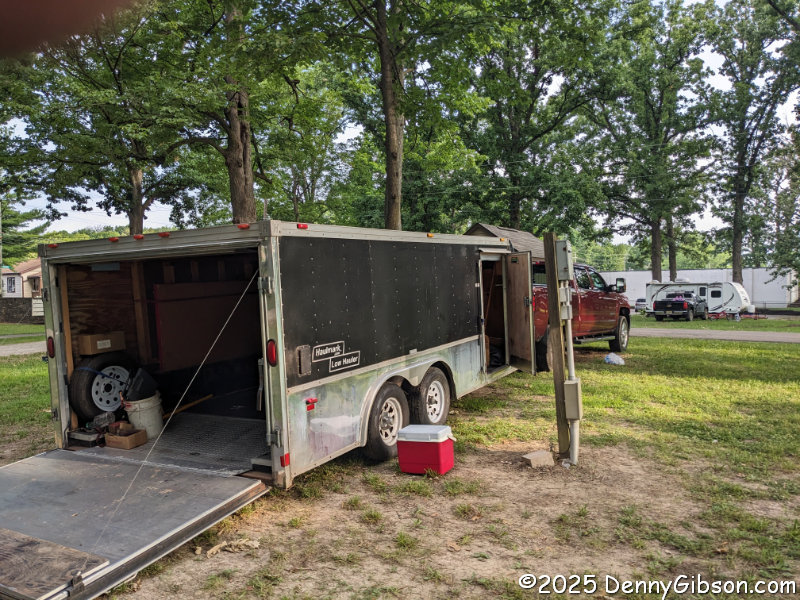
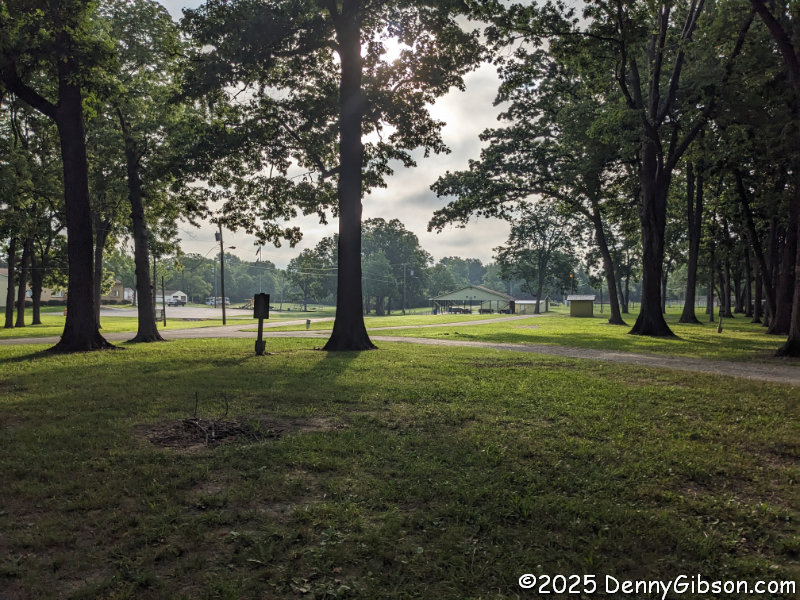
Here are a couple of pictures from the campground just before we pulled out Sunday morning. Showers and restrooms are just beyond the picnic shelter. The trailer, which serves as our bedroom, will be filled with Wheel Horses when the day ends.
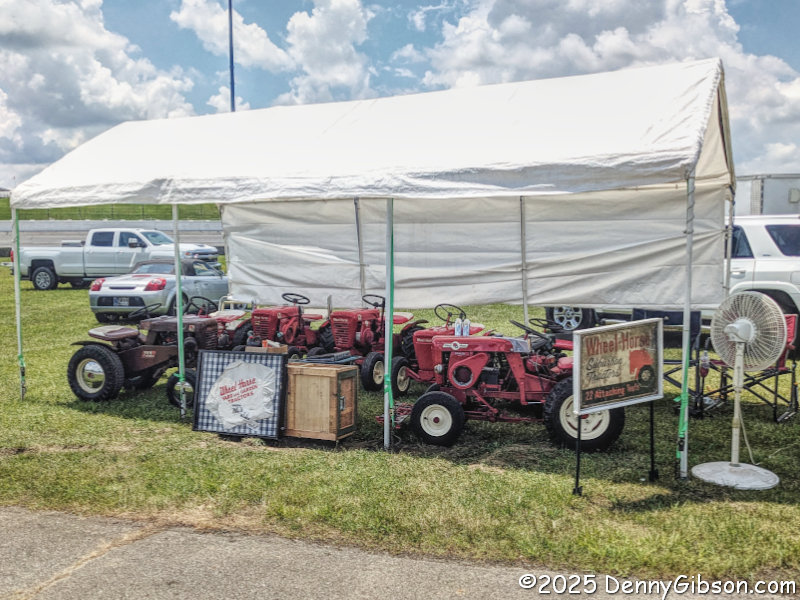
There was a somewhat surprising amount of interest in the tractors. Some came from people who remembered the days when Wheel Horses roamed the pits at Indianapolis Motor Speedway, and some from folks who had heard or read about it. Of course, some came from kids (and adults) who just like little tractors. The tractors were the “half-time show” for both days of the event. At Bill’s request, Terry and I drove them two-by-two through the infield during the lunch break when the track was empty.
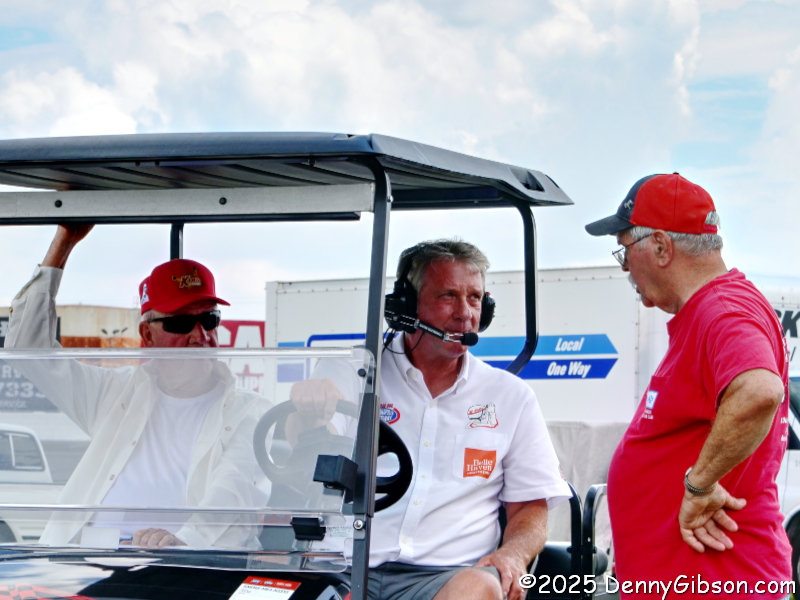
That’s Bill Throckmorten chatting with Terry. Bill was incredibly busy throughout the weekend coordinating action on and off the track, but still managed to stop by several times to say hi and see that all was well. On more than one of those stops, he let Terry know he had an invitation to return next year. Whether that happens is very much a maybe. As we pulled out, I commented that this was one of the most fun weekends I’ve ever had, but it was also one that I was very happy to see end. Terry agreed. Age and temperature are factors, and only time, which doesn’t help with the age thing, will tell.
I have previously been involved in herding the Wheel Horses south and east.
Denny,
As always, your incredibly interesting travel stories are wonderful! Thanks for sharing!
Thanks for those kind words. This was a fun (but hot) weekend, and seeing that LH tag on the Model T was pretty cool.