Loveland Museum Center

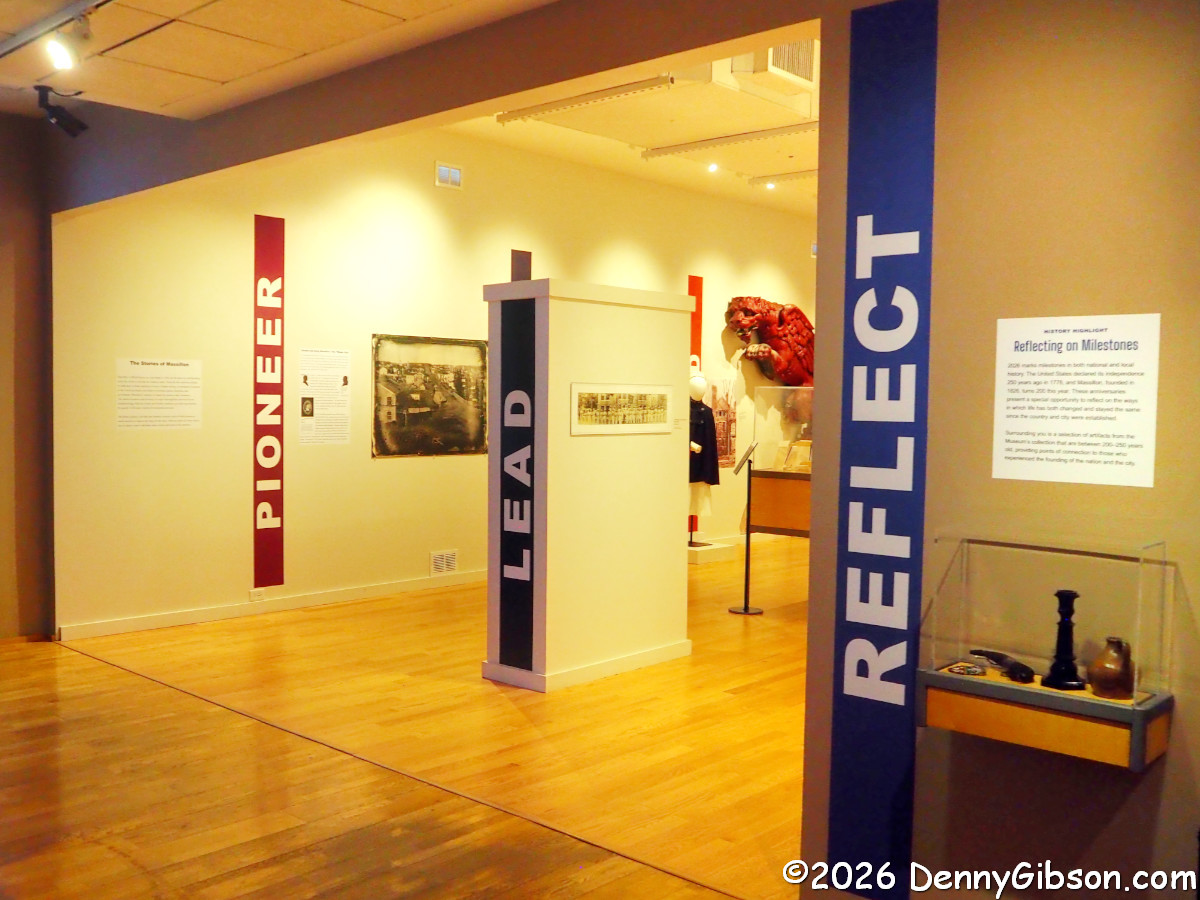
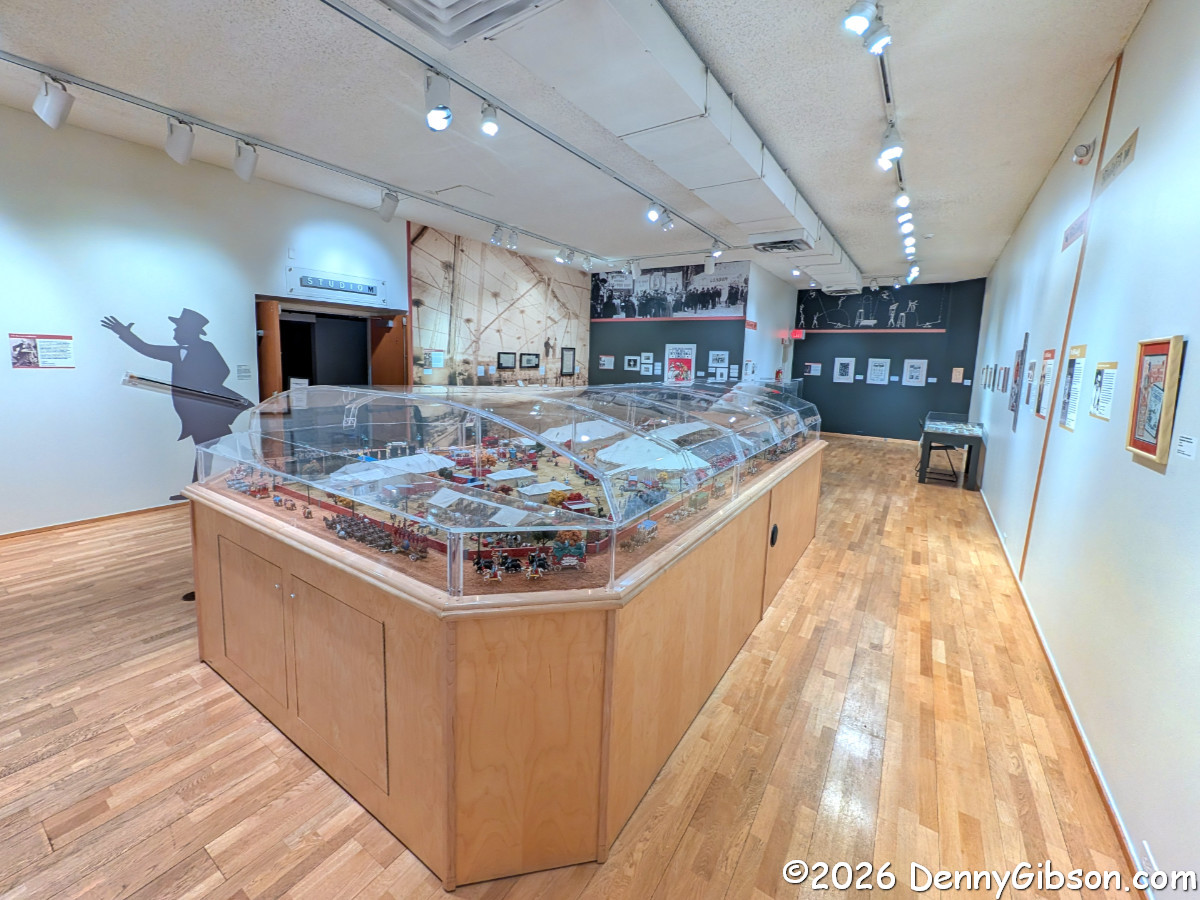
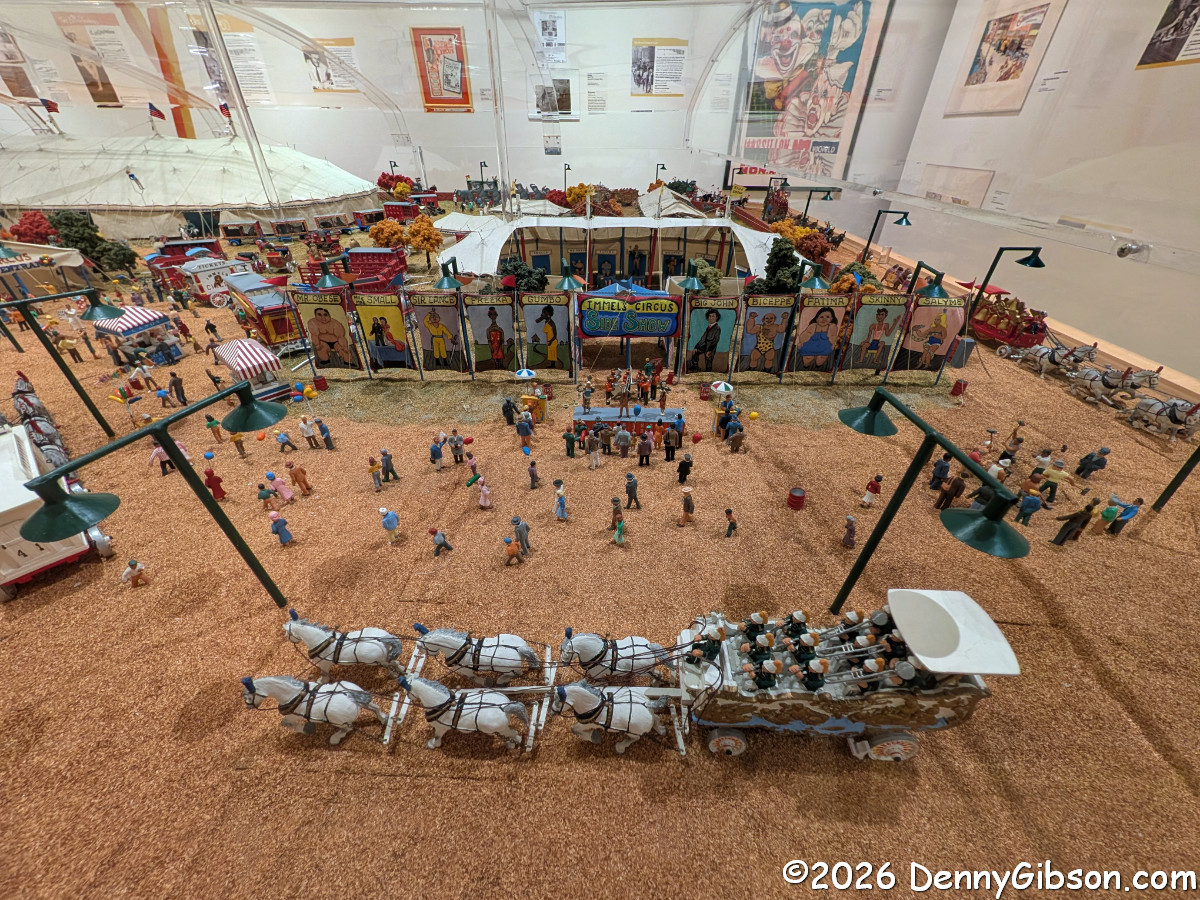
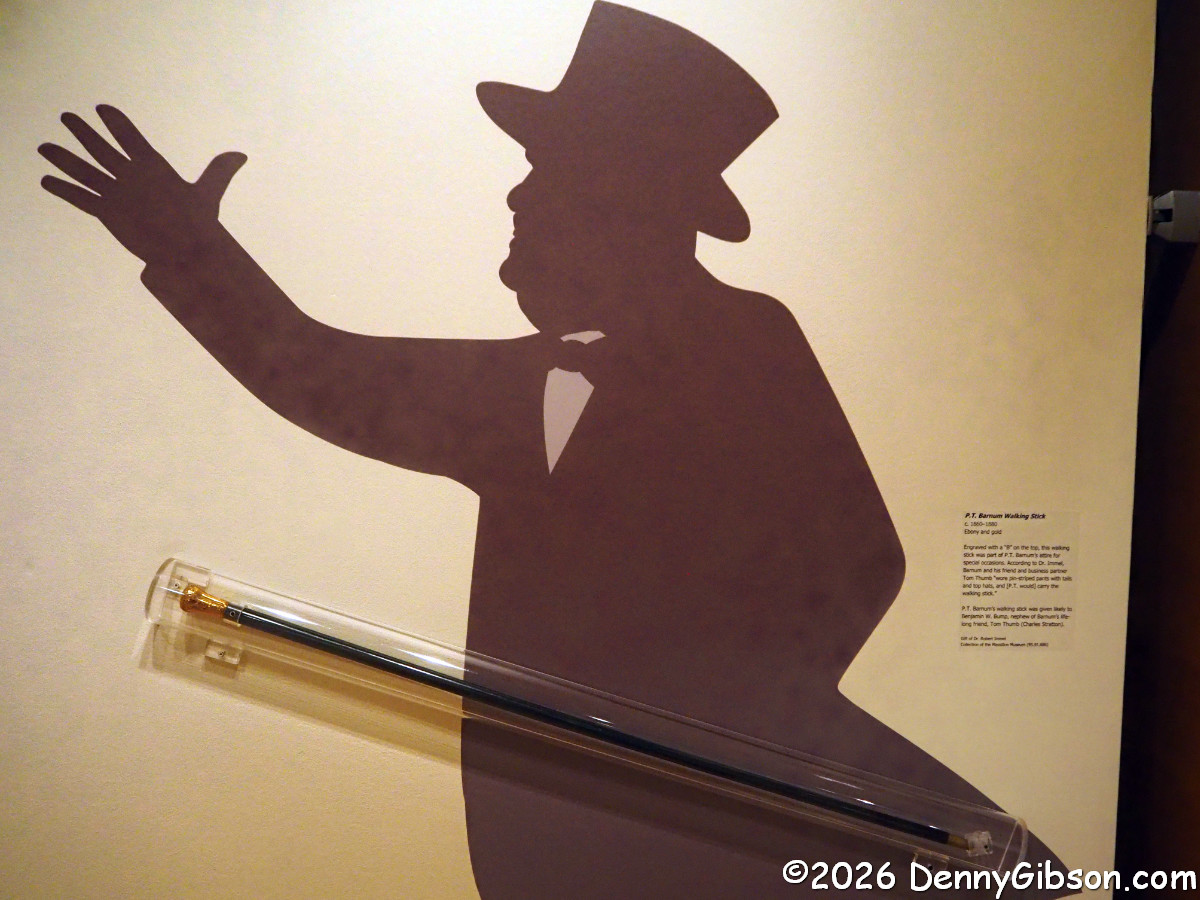
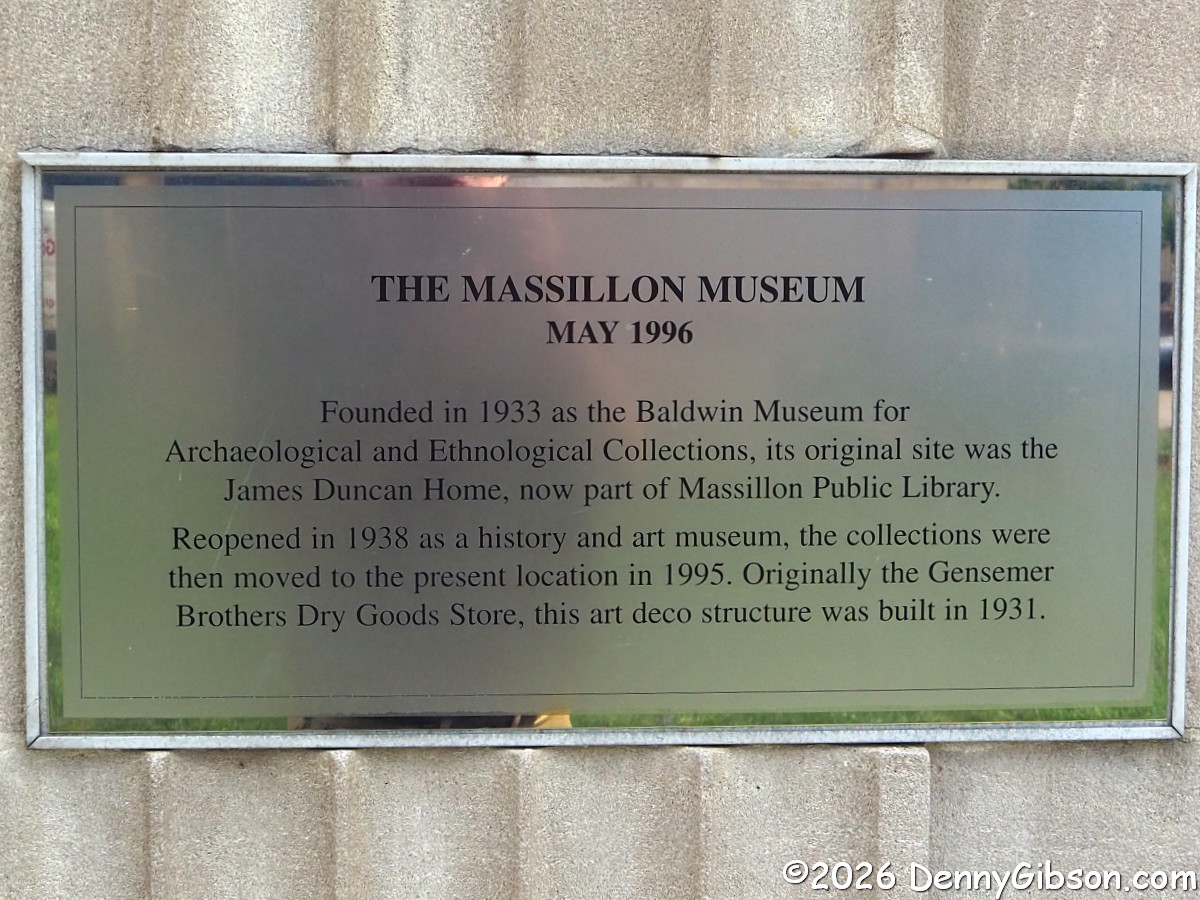
Saturday was not the first time I’ve visited the Loveland Museum Center, but earlier visits happened long enough ago that this website did not exist. They were, in fact, long enough ago that I remember almost nothing about them. To be entirely honest, I don’t remember half as much as I should from Saturday’s visit. To illustrate, I met three extremely friendly and helpful staff members while I was there, but the only one whose name I remember is the lady who guided me through the exhibits and supplied tons of information: Nancy. The main museum building is known as the Bonaventure Hoise. It was built in 1862 by Dr. John S. Law. It was the home and office of Dr. Frank S. Lever into the 1950s. Apparently, Bonaventure was the name of an owner between the two doctors.

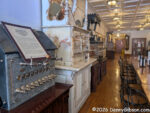
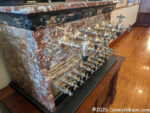
I don’t believe any of the building’s current content is original, but what is there is appropriate and interesting. A placard identifies the refrigerator as a General Electric “Monitor Top”, and says the name came from its resemblance to the gun turret of the Civil War ironclad, USS Monitor. I’d heard the name before, though not the explanation. I had my doubts, but it does make sense, and the internet seems to support it.

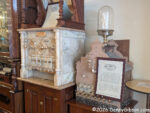
There is an impressive collection of guns and a display about a log cabin that I’ll have more on later. The large document on the left side of the third picture grants eleven hundred acres of land on the Little Miami River to Colonel Thomas Paxton. It is signed by President John Adams. This led to the founding of the village of Paxton, which eventually became Loveland.

During restoration, the name of paperhanger R.W. Prendergast was uncovered and preserved. It was placed there in 1872. It was apparently uncovered and again papered over in 1932 when S.G. Tufts added his name. Upstairs, a bit of wallpaper, thought to possibly be original, is similarly preserved.

That previously mentioned cabin is now on the museum grounds. It was built in 1797, covered over the years with numerous additions, then rediscovered in the 1980s when some remodeling was planned. A placard from that previously pictured display is here, and one from inside the cabin is here. Although they are not directly connected to the cabin, quite a few historic items are displayed inside it. The covered wagon bows against the wall caught my eye, and I snapped a picture, partially so I could mention that I once read that wagon bows were the first commercial product exported from Darke County, OH, my home.

Here is a different view of the cabin and the museum, along with a shot of the modern building containing museum offices and an event space. 

Salty Dog Museum

I have known of the Salty Dog Museum for several years, but had it in my mind that it was open by appointment only. I think it may very well have started out that way. But I recently learned that it is pretty reliably open on Thursdays and Saturdays. On those days, the crew is very likely on site, busy restoring something, with the doors to the two museum buildings unlocked. There’s a decent chance of it being open at other times, and a slight possibility does exist that it won’t be open on a particular Thursday or Saturday. In other words, even though the museum has settled into a fairly consistent two days or more a week schedule, everything on the sign out front remains true.

Had I tried one more door beyond the two I found locked, I’d have been able to step into the museum building filled with cars. As I contemplated my next move, Dan stepped into the sunlight to get a better view of something in his hands. I approached and asked about the museum, and he invited me into the workshop. After casually noting that I was starting at what was the normal end of a museum tour, he told me about the 1917 Cincinnati Fire Department ladder wagon currently being restored along with the “tractor” that eventually replaced the horses that pulled it originally.

Then Dan introduced me to museum co-founder Mark Radtke, who gave me a tour of highlights before letting me loose to wander at will. I’ve seen Mark in a video or two with Ron Miller, the museum’s other founder and the founder of Ron’s Machine Shop. Ron died in 2023, and I really regret not getting here while he was still around. As you can see, Mark graciously agreed to a photo after leading me through the proper door into the auto section. Before we stepped out of the workshop, I got to watch Mark and some of the others dig through a foot-thick catalog, then do some back-of-the-envelope calculations involving IDs, ODs, and probably some other Ds, too, to determine exactly which fitting to order for some piece being restored. Seeing how much that group enjoyed what they were doing, then seeing Ron’s enthusiasm for the collection of vehicles and paraphernalia he and Ron have put together, sure put me in the right mood for looking it over.

We returned to the other building, where Mark went back to work, and I went off exploring. The museum started with cars, with the fire engines coming along later. Apparently, however, once they started coming along, they really came along. The number and quality of the firefighting vehicles here is phenomenal.

Ahrens-Fox was a Cincinnati-based builder of fire engines. That no doubt accounts for many of their vehicles being displayed in the museum.

When there’s that much firefighting equipment around, there’s bound to be more than a few ladders. Many are displayed on engines and trailers, and there is also a wall filled with them. Those not lying flat against that wall could present something of a hazard, but Salty Dog does a good job of making them visible.

I noticed this rock waterer and asked about it when Mark and I were walking between the two display areas. It was their answer to the Genius of Water on Cincinnati’s Fountain Square, he explained. Then he demonstrated its remote control. I snapped this picture as I headed back to the car display building. Ain’t it wonderful what a group of engineers and mechanics can accomplish with just a few spare parts?

You may have spotted this car in the background of the earlier photo of Mark. Although it was not the start of building or collecting cars for either of them, this car might mark the beginning of the Miller-Radtke collaboration that led to the museum. In 2008, the pair went to Bonneville as spectators, but ended up as an impromptu crew. They also ended up hooked. They built this car and captured two Bonneville Salt Flats land speed records with it. There are some details on its Ault Park Concours placard.
There are several more race cars next to the Bonneville car, and a slightly different sort of race car sits a short distance away. It’s the 1915 Ford Model T that Ron Miller drove to victory in the 2001 Montana 500. The 1911 T in the third picture isn’t a race car, but it does look rather racy, and I’m rather fond of the after-market hood ornament.

Looking back from the other end of the building will give you an idea of just how many cars it contains, and it might give you an idea of just how much these guys like Fords. It’s not all Fords, though. Among the “off brands” on display are a 1908 Schacht, a 1902 Holsman, and a 1932 Chrysler. There are even a few motorcycles available for viewing.

Crosby, Stills, and Nash said it first:

Will you come see me Thursdays and Saturdays?
What have you got to lose?
          Suite: Judy Blue Eyes, 1969

Book Review
Aprons Away
Cheryl Eichar Jett

I’ve commented before that “Why another Route 66 book?” is something I sometimes ask. I more or less thought I would be asking that question about Aprons Away: Women’s Work on Route 66, but found it wasn’t really needed. This is not, in my opinion, “another Route 66 book”. It is a book about women who made meaningful contributions to the world and who happen to have a connection to the route. For some, that connection is lifelong and one that defines their contribution. For others, Route 66 is associated with a smaller—sometimes much smaller—portion of their accomplishments. You won’t learn all that much about Route 66 from this book. You will learn a lot about a bunch of women who left their mark on the world. Route 66 is not the subject of this book; it is only the filter for selecting the subjects.

Jett divided those subjects into ten chapters, starting with “Blueprints” and ending with “The Documentarians”. Each chapter begins with a brief introduction of each of the chapter’s subjects, including some hints as to what each of them accomplished. Not so brief, but not overly long, biographies follow. Most are only a page or two, but each one makes it clear just made the woman stand out and what connected her to Route 66.

In interviews, Jett has said that the first stories in her collection about women and Route 66 were of women in “visible roles”. By that, she meant waitresses, motel operators, and others who were visible to travelers on the road. Neither of the categories I’ve mentioned, “Blueprints” and “The Documentarians”, is visible in that sense, but each contains someone quite visible to the world at large. The person whose biography begins the book, Mary Colter, is best known to fans of Route 66 as the architect of La Posada hotel in Winslow, AZ, but is highly visible to others for her wide-ranging design work on and off the route. Dorothea Lange, who appears on the cover of Aprons Away, is undoubtedly the documentarian in the book with the highest level of visibility. Her depression era photographs are some of the most recognized in the world.

“An Apron and a Coffee Pot”, “The Gas Station Girls”, “The Inn Keepers”, and “The Entrepreneurs” more closely match the “visible roles” Jett was referencing. Sometimes women waited tables, pumped gas, registered guests, or collected tickets for a business run by their husband or father, but not always. Lucille Hamons, Lillian Redman, and Ramona Lehman are names that nearly every fan of Route 66 will recognize for their major roles in customer-facing businesses along the route. The other categories, “Public Service”, “The Artists”, “World War II”, and “Design and Engineering” also have stars that are known to many who have traveled or studied the route.

Of course, every one of those chapters has several sections on people much less famous than Lange or Colter or Redman, and that’s why we buy such books. In fact, I’m guessing that it’s pretty much why the book was written. I strongly suspect that Jett would have heard some complaints had she not included Colter and others of equal fame, but there are numerous places we can read about those folks. I did not count them, but understand there are more than eighty women profiled in Aprons Away. Every one of them deserves to be here, and their stories deserve to be told. Jett has uncovered some very interesting women and has done a nice job of sharing their collected stories. I was familiar with well under half, maybe no more than a quarter, before meeting them in this book. New knowledge is a good thing.

Aprons Away Women’s Work on Route 66, Cheryl Eichar Jett, Reedy Press (April 1, 2026), 6 x 9 inches, 224 pages, ISBN ‎ 978-1681066349
Available through Amazon.

History in Bloom at Spring Grove

People I asked while there thought that Spring Grove Cemetery’s History in Bloom was about 15 years old. The earliest reference I’ve found online is from 2012, and it says, “It is one of our most popular events of the year!”, so 2012 wasn’t the first. Apparently, the event I attended for the first time on Sunday, April 19, was at least the sixteenth. My first impulse when something like that happens is to feel embarrassed because it took me so long to discover something so interesting. Of late, though, I’ve taken to being quite happy when it happens since it means there are still cool things to discover even for an old guy like me.

I do, however, regret missing out on previous events for one reason. In the past, I have enjoyed extended walks around Spring Grove Cemetery, and would certainly have enjoyed the guided walking tour available today. But long walks have become problematic for me over the last year or so, and I was happy to take advantage of the horse-drawn carriage rides, which, like the walking tours, were free.

It was nearing 1:00 when I arrived. This was probably near the busiest part of the day, and the line for carriage rides was rather long. My wait was a bit more than an hour, but the weather and surroundings were very pleasant. Neither I nor the others in line were much bothered by the wait. There was a group of five, including an extremely young baby, immediately in front of me. The first of the group had boarded a carriage when it became apparent they could not all be accommodated. When those on board turned to rejoin those on the ground, a couple already seated stepped off — with a smile — so mom and the others didn’t have to wait any longer.

We would get to visit with seven of the cemetery’s residents during the tour. All were important in the development of the city and region, but one was also extremely important in the development of the final home of all seven. Joseph Earnshaw assisted landscape designer Adolph Strauch considerably in creating the parklike layout of Spring Grove Cemetery.

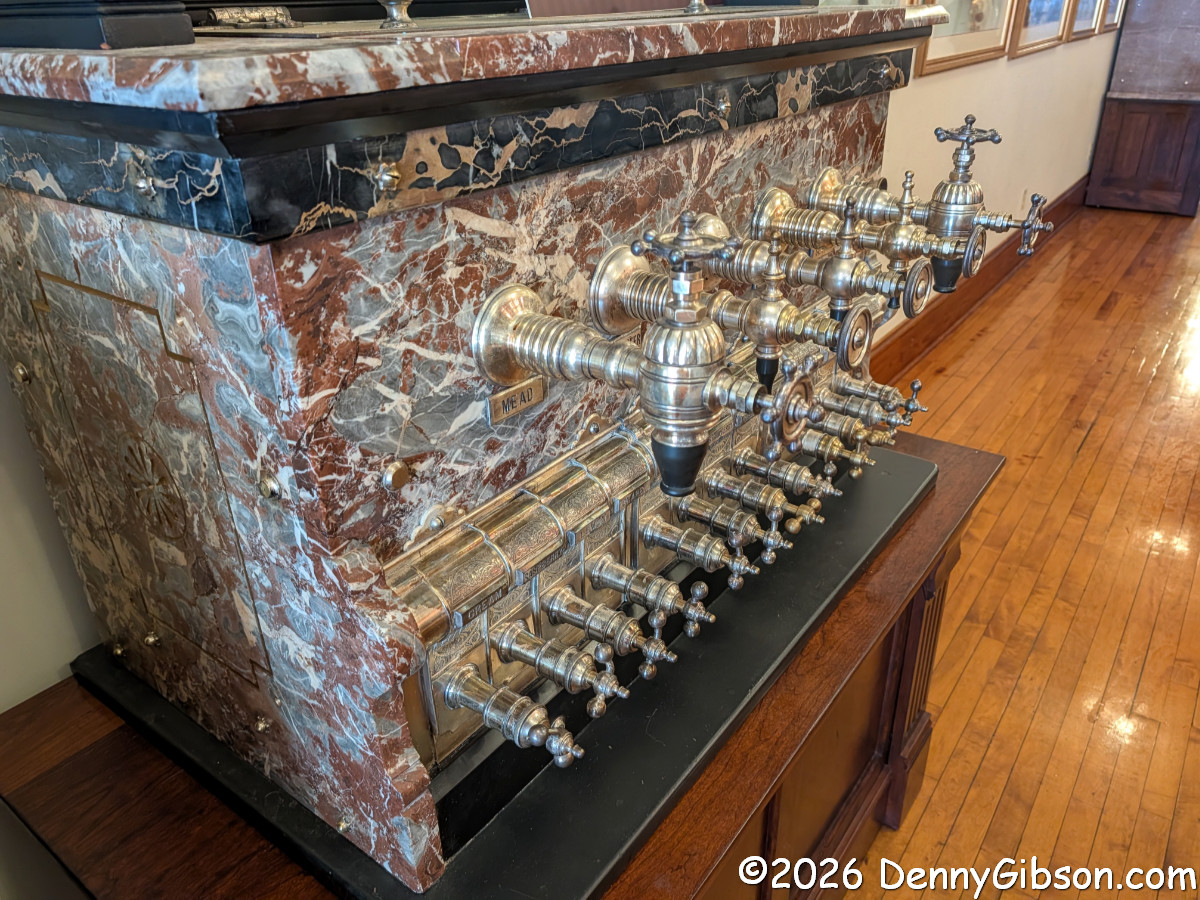
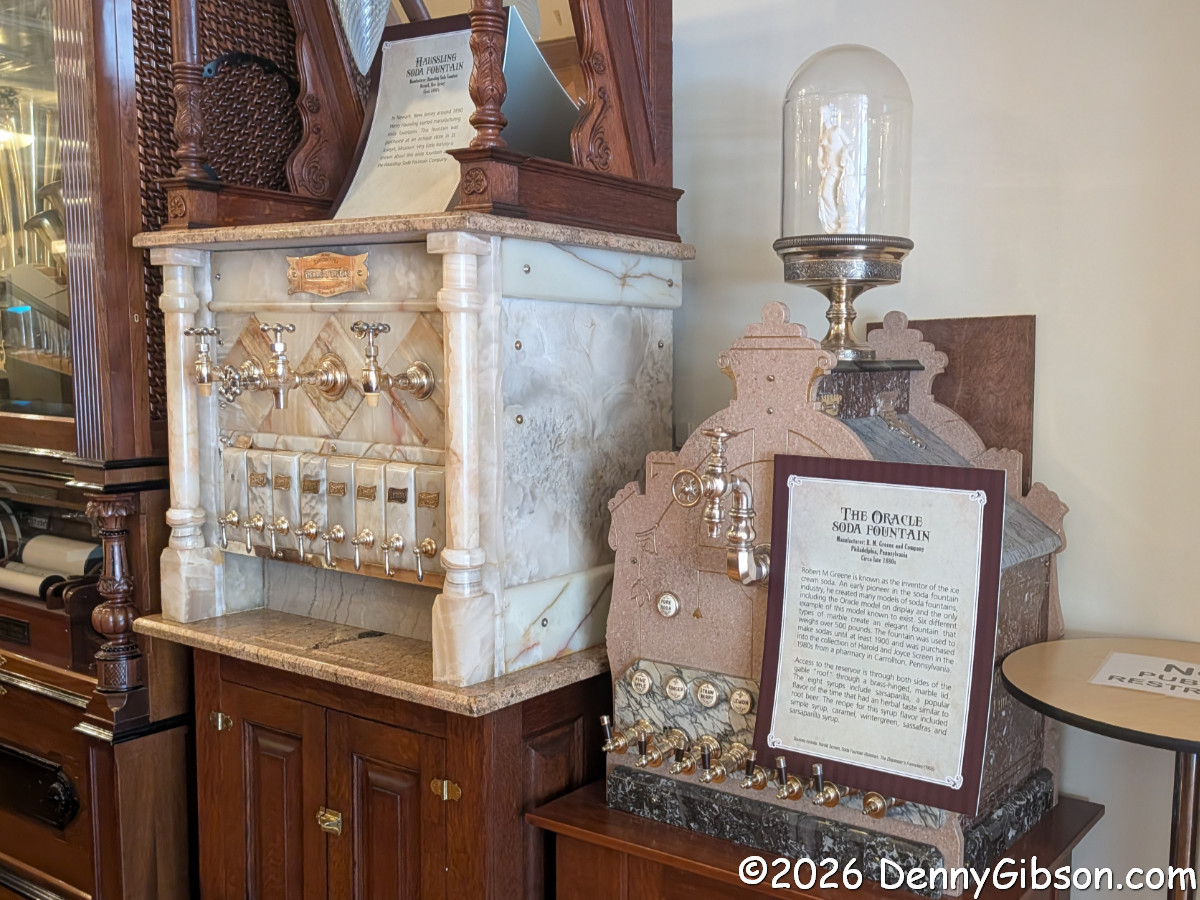
Next up was Susan Pendleton Bowler, who, along with her husband, invited Adolph Strauch to design their gardens, which are now Mount Storm Park. John Robinson spoke to us from in front of the family mausoleum. The Robinson Circus, among the first to own its own railroad cars, wintered in Cincinnati for many years. Clara Dow was the only female in her class at pharmacy school, which she attended in order to take over her father’s drug store. Under her management, the store hired female pharmacists and added a soda fountain to create a place where women and children were welcome—and comfortable.

Thomas Hughes was a successful cobbler who willed his property to the city for the education of poor children. Hughes High School bears his name. Born into slavery, Henry Boyd became a skilled carpenter and was able to buy his freedom. His H. Boyd Company was a respected manufacturer of furniture. When Marianne Kauffman’s husband died, she stepped in to save and operate the John Kauffman Brewing Company. Because of her earlier success in real estate transactions, she was able to bring the company out of the heavy debt her husband had created.

This is Robert, our onboard narrator. He filled the spaces between stops with lots of information and an occasional joke. He also answered a fair number of questions, and it was clear he really knew his history. By tour’s end, we learned he had played several History in Bloom roles over the years. As I mentioned, the earliest History in Bloom references I found online were from 2012, and one of those contained a photo of Robert as Joseph Earnshaw.

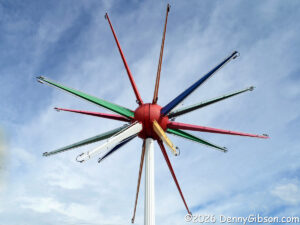
There were three teams of horses pulling visitors around the cemetery. They all deserve to be recognized, and, although I did not get any of their names, I did get their pictures. The pictures near the beginning of the article are of the team that pulled me. Here are the other two teams as they approached the pickup point to load up and move on without me.

A Capitol Encampment

I have already taken advantage of two Ohio Goes to the Movies events, and I doubt those will be the last. But Ohio is doing a lot more than showing movies to mark the semiquincentennial of the signing of the United States Declaration of Independence. One of the many events organized by America 250 – Ohio was something called American Revolution in the Ohio Country, which took place Wednesday on the grounds of the state capitol in Columbus. Ohio was not a charter member of the USA, but we did join up fairly early on. Plus Fort Laurens near Bolivar, OH, was built and occupied during the American Revolution, and the Battle of Picawey, near Springfield, OH, is considered part of that war. Wednesday’s encampment did not attempt to recreate any specific event, but to offer a glimpse at life in the 1770s.

It was a few minutes past the 10:00 start time when I reached the plaza on the west side of the Capitol. I’d parked a couple of blocks to the east, and this was what I saw when the gathering first came into view. I sensed at once that I was late. I heard but did not see cannons or muskets firing, and may have missed some sort of opening ceremony.

Shortly after I reached the open space beyond the tents, the men who, I assume, had been making the booms I heard closed ranks and marched away. I would get to hear and see these fellows and others do a lot more booming before the day was over, but for now, a shot of them passing by was all I got.

But I did get to see the day’s first performance from Heritage Fife and Drums in its entirety. They started at the far side of the plaza lawn, then marched up to the crowd, where their leader enthusiastically introduced each song.

More music followed. This music was recorded and played through speakers so these energetic folks could dance to it. The second picture is of a quadrille (4 couples, 8 people), which Americans in the next century turned into square dancing with cowboy boots and no French accent.

Having read that there would be “samples of food from the revolutionary time”, I anticipated things unfamiliar and bizarre, but the most bizarre thing about the offerings was that stuff that I thought quite modern was being served in the 18th century. When I mentioned my surprise, the lady tending to the “Mini Beef in Crust”, which I picked as one of my two samples, told me that “Swedish Ham Meatballs” had been served at Mount Vernon, and that “Shrimp & Grits”, my other sample, had been popular in the Carolinas back in the day.

Inside one of the tents, a fellow explained 18th-century maps and mapmaking. There were also displays of more common items of the period.

While I was listening to the fifers & drummers, watching the dancers, and sampling the samples, the soldiers had been relaxing and answering questions from the curious. Now they lined up and began marching back to the open lawn. It was about to get noisy.

After marching to the far side of the lawn, both the militia and the uniformed regulars fired several volleys. (Note that the day this is being posted, April 19, 2026, is the 251st anniversary of men dressed and armed much like those in the first photo confronting British troops at Lexington and Concord.) Then the regulars begin moving toward the crowd. Half the group marched several paces ahead of the others and fired. They would then reload while the other half advanced and fired. Then, after crossing much of the lawn in this fashion, they all lowered their bayonets and charged,

Following that bayonet charge, the reenactors marched back to the tents for a bit of a break, but eventually returned to roll out the big guns. Here‘s a better look at the thin white object tucked into the hat of the fellow standing in the center of the third photo. I spotted him smoking the pipe just moments after watching another reenactor semi-stealthily puffing on a cigarette. I approached and commented about how much better the pipe looked. Yes, he agreed, he tried to appear accurate, and, yes, it was clay, and yes, he had made it himself.

Of course, any smoke produced by hand-made clay pipes or machine-rolled cigarettes was nothing to that produced by the battery of 3-pound cannons. Perhaps this, too, is part of trying to appear accurate.


Those samples of delicacies from 250 years ago were not the first things I had to eat on Wednesday. In the not-too-distant past, from a source I can’t remember, I’d heard of a great-sounding breakfast spot in Columbus named Katalina’s. I may or may not have known that Katalina’s had appeared on Diners, Drive-Ins and Dives. In any case, I had not seen the episode. If I had, I would have known that it was recorded at Katarina’s Too. I went to the original on Pennsylvania Ave. There is now a Katarina’s Tres also. I’ll try to keep an open mind, but I can’t imagine that either of the others is anywhere near as cool as the original.

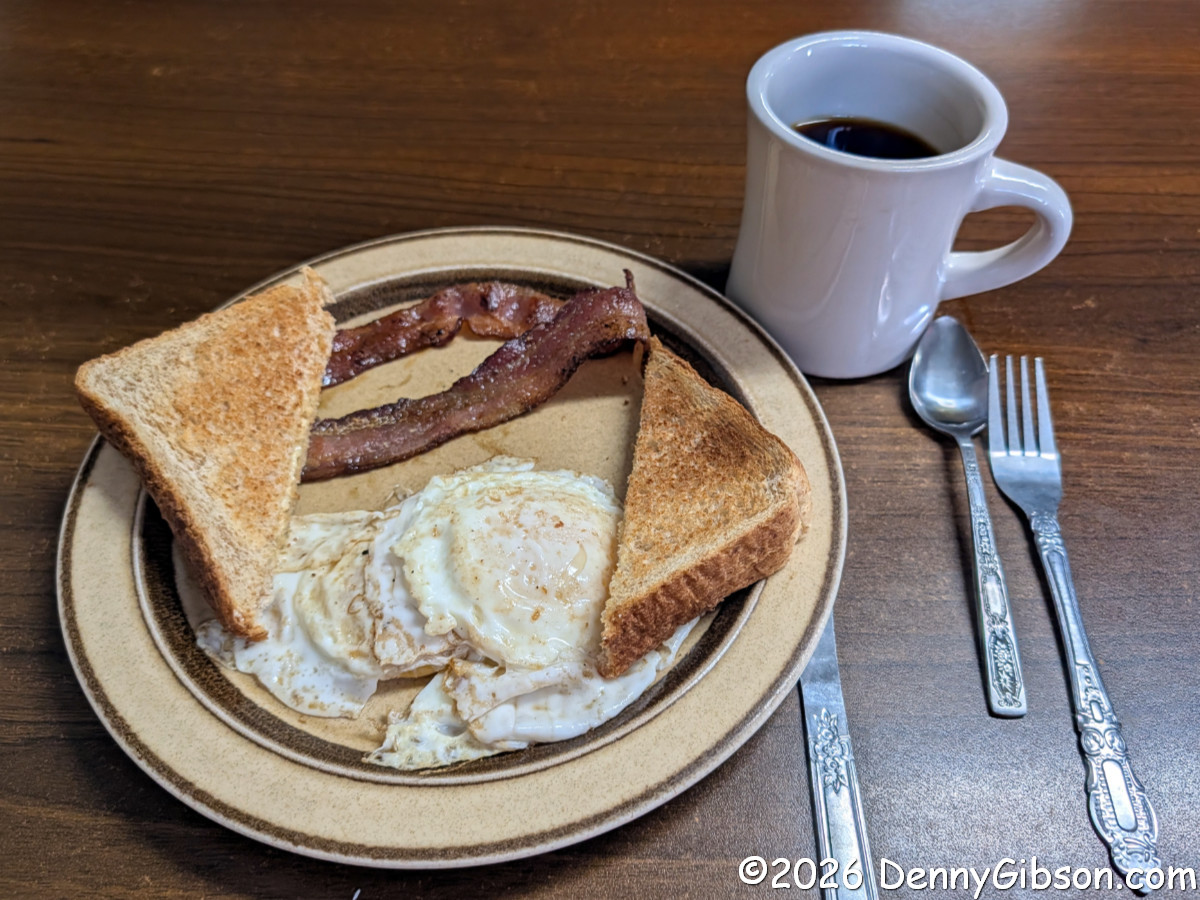
Another thing I could have learned from the D, D and D episode was how to eat the signature and absolutely delicious Pancake Balls. I briefly considered pouring the real Maple syrup on the Nutella-filled balls like I would on a flat pancake, but decided that probably wouldn’t work. I proceeded to tear pieces from the balls with fingers and fork, and dip the impaled pieces into the syrup. I’ve now seen the video and know that holding a ball in your fingers, dipping it into the syrup, then taking a bite, is what the cool kids do. Next time, I’ll be cool, too. I was already cool enough to use my fingers to eat the best bacon I’ve ever met.
Movie Review
Janice Meredith
E. Mason Hopper

Like February’s showing of The Wizard of Oz in Wilmington, this showing of Janice Meredith was part of Ohio Goes to the Movies. And like my review of that event, this post is not really a review of the movie, but of the overall experience. On the other hand, since I’m quite certain that readers are nowhere near as familiar with Janice Meredith as they are with that Oz movie, and because it is pretty impressive, I’ll not ignore the film completely.

The venue for the showing was the Arcanum Opera House, built in 1889. Arcanum is a small town not far from Greenville, where actor Walter Law spent his formative years before moving to Dayton. Law appears in Janice Meredith, which is the connection to Ohio that led to its inclusion in the Ohio Goes to the Movies schedule.

The building served its original purpose until 1928, then played a variety of roles before being put to use housing Arcanum’s village offices. When the village government planned to construct a new building for their offices and move out, the opera house was in serious danger. The construction did happen, and the opera house was vacated in 2020, but a group was formed in 2019 to save it. The Arcanum Preservation Society has plans to restore the building and has made some serious progress in that direction.

Walter Law appeared in more than 40 movies during his career. His earliest film work was with Fox Film in New Jersey. He moved to Hollywood in 1920 and continued his career there. He most often appeared in supporting roles, and that is the case here. Law plays General Charles Lee, one of General Washington’s subordinates. That was essentially the entire description of his character I had on Friday, and I did not spot any reasonable candidates during the opera house screening. Although the quality isn’t nearly as good as what we saw on Friday, the movie is available on YouTube, so, armed with a somewhat better description of the character, I made a serious attempt to find him by picking out and studying scenes with Washington. No luck. I know he’s in there somewhere, but I can’t tell you where. I can tell you where that basket on the left side of the picture ended up. I was there with friends Terry and Sue. Everyone was given numbered tickets when we arrived, and Sue’s number won her a nice movie-watching kit.

Prior to Friday, about all I knew of the film was that it was a romance set during the American Revolution. Just before Friday’s showing, I learned it was “a little longer than most silent films”, and later learned that meant 11 reels or 140 minutes. But it wasn’t just its length that set the movie apart. It was a true epic with scenes of big battles and social gatherings, and extended shots tracking galloping horses, including Paul Revere’s. There is notable comic relief aided by W.C. Fields’ first motion picture appearance. Following the battle at Lexington, three of the wounded — or maybe ghosts of those killed — arise and form the trio of Archibald Willard’s Spirit of ’76 and march toward the camera while subsequent battles appear below them.

By the film’s end, I could not help but think this was the Gone with the Wind of the silent era. Like the Civil War epic released just fifteen years later, Janice Meredith features the beautiful daughter of a wealthy landowner, in love with an unconventional fellow whom her father definitely does not approve of, all while the war rages around her. It’s not entirely the same, though. When Janice Meredith ends, its protagonists are about to be married rather than separated, and this time the rebels win.

Not My Father’s Library

Nor is it my son’s library. The following generation will certainly benefit from Hamilton County’s Building the Next Generation Library project, but it is the one after that which seems poised to take advantage of the full range of library advances being made by the project. For a guy who once saw weekly bookmobile visits and encyclopedia yearbooks as state-of-the-art information access, what I saw Saturday at Symmes Township Branch Reopening was pretty mind-boggling.

The Symmes Township Branch is the one closest to where I live. It was closed and demolished about a year and a half ago so that a new building could be constructed on the site. During that period, this storefront was rented to provide physical access to the branch. Even though the temporary location was even closer to me than the permanent one, I was never inside. To be honest, I haven’t visited the library all that often, but I sure do appreciate it being there.

This is the new library building. I believe it is bigger than the old one, and they seem to have added quite a bit of parking, too. Maybe they bought more land. I’m not at all up on the details. When I arrived around noon, the parking lot was nearly full, but there were a few open spots, and people were coming and going regularly, which kept it in a steady state. Apparently, that had not always been the case because quite a few cars were parked at the nearby school with people walking over the grassy area between the school and library.

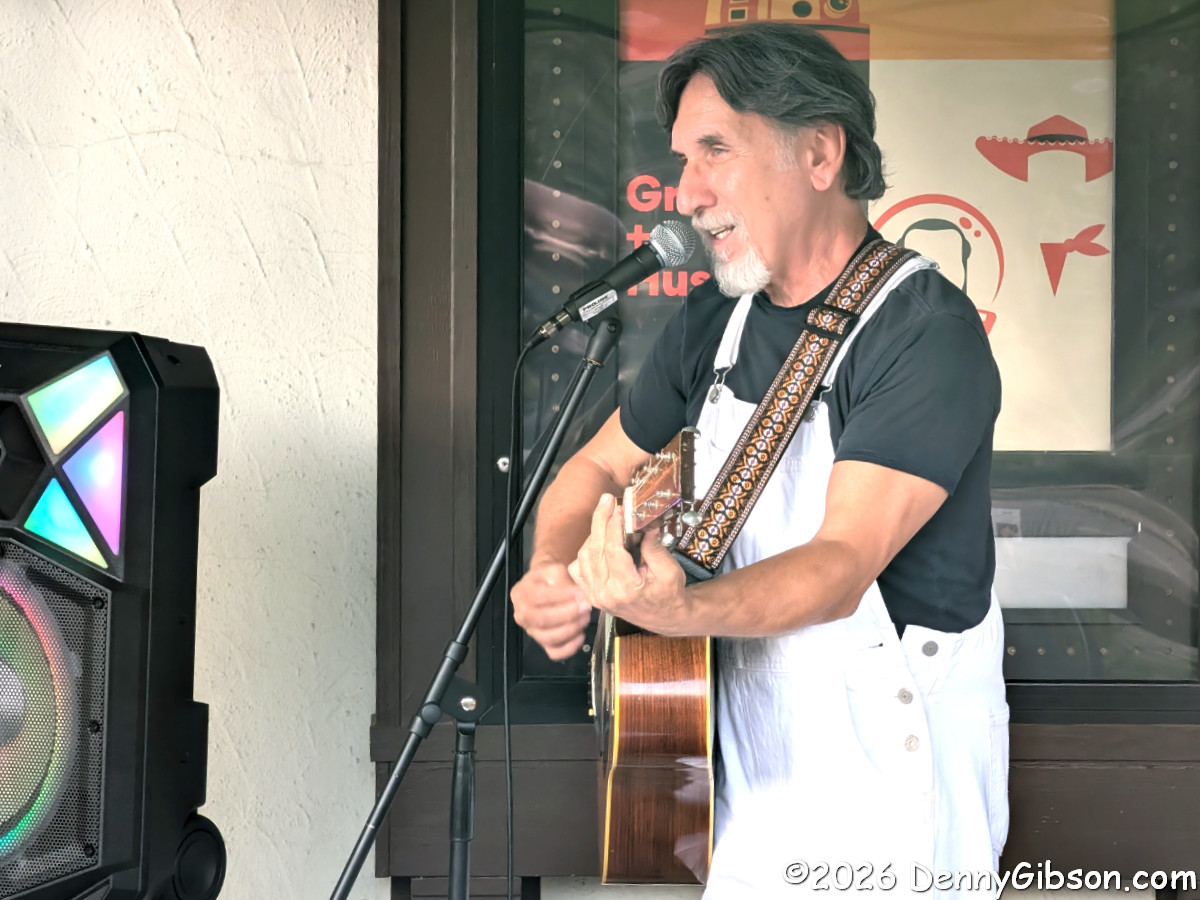
Here are some indicators that this is not a normal day at the library. Although it was not all that loud, Richard Goering was playing live. Additional entertainment was scheduled throughout the day. And refreshments were available in one of the side rooms. There was also a table filled with snacks, but the room was filled with people, so I skipped more photos. As I sipped some lemonade, I commented to a staff member that this blew a big hole in the “no food or drink” rule, and she replied, “Oh, we dropped that a long time ago. We trust people.”

I was familiar with the MakerSpace concept from the main library in downtown Cincinnati and knew that MakerSpaces had been established at a few of the branches. Now my branch has one. A MakerSpace contains various creative tools that patrons can use for just the cost of materials. These pictures show a photo printer, 3-D printer, flatbed scanner, and vinyl printer.

The place was really crowded, which made me reluctant to take many pictures inside, especially since children made up a major portion of the crowd. But I did grab one picture to show that lots of digital media is available in addition to rows of old-fashioned books with paper pages. And how about the cool outdoor reading room? The other exterior photo is an attempt to offer a glimpse of the children’s play area without actually showing the children

I think this Next Generation Library is going to be a hit — even for some whose generation is decidedly previous.

A Sudsy Season of the Fish

I suspect that Lenten fish fries are perceived as having a bigger presence on this blog than is actually the case. And the perceived presence of church fish fries may be off even more. The first “season of the fish” post was in 2014, and it was nine years before the second one came along. I ate fish at quite a few churches between the two, and before the first one, but that 2014 Must Be the Season of the Fish post was the only one completely focused on religious organization fundraisers. It was in the middle of 2023’s Another Season of the Fish that I decided to focus on anything but.

The “season of” posts have appeared in years when I managed a Lenten-related meal on all seven qualifying Fridays. Apparently, that is something I’ve targeted more in recent years, as this is the fourth consecutive such post. In 2014, I indicated I’d started getting serious about fish fries three years prior, and mentioned that it was “a nice break from eating at establishments practicing commercialism full time.” That is something I’ve kept in mind even after moving away from churches. Since then, I’ve targeted American Legion posts, VFWs, and similar organizations. But not this year.

On Ash Wednesday, the first day of Lent, local beer aficionado, The Gnarly Gnome, published a blog post that really caught my attention. That post, Cincinnati Brewery Lent Specials, 2026, listed local breweries with Lenten specials, and that made sense to this old brewery hunter. So this year, I embraced rather than avoided “establishments practicing commercialism full time” — as long as they are makers of beer.

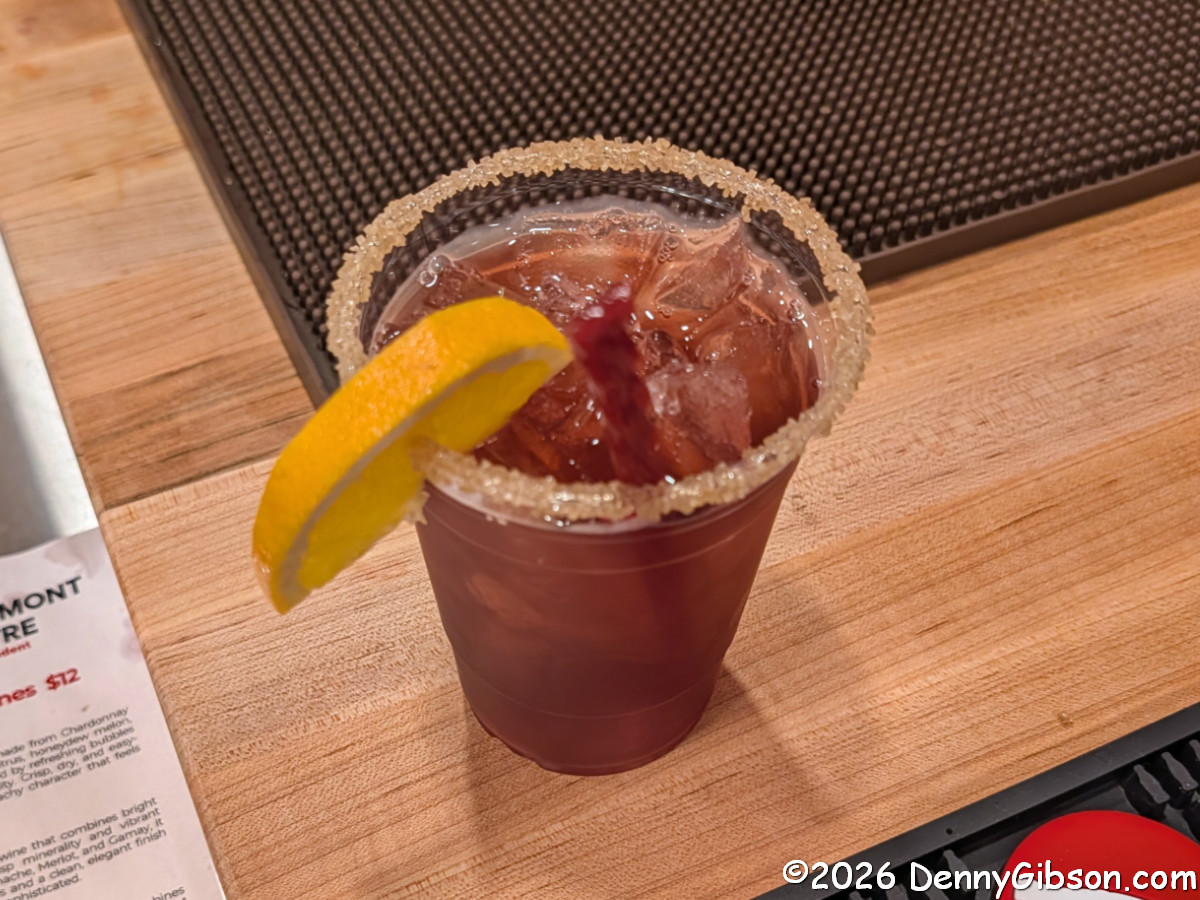
On the first Friday of Lent, I was in Kentucky for something totally unrelated and decided to hit a brewery on that side of the river. Alexandria Brewing Company‘s offering was fried cod on a Cubano roll. The $19.95 price was a rather sobering indicator of what inflation hath wrought. It was quite good, but I eventually decided that there was just too much bread and stripped off the Cabano and downed the last half with a fork. Live Fast, On High oatmeal stout washed it all down nicely.

Week two found me in Greenville, OH, so I stopped at the northernmost candidate on the way home. The $12.00 fish and fries at Lebanon Brewing Company was good, but the Most Best Barrel Aged Coconut Stout was great.

Seventy degrees and sunny was a perfect setting for a drive to the west side of town and the $15 fish basket at 13 Below Brewery. Bock season and Lent always overlap, and I’m sure that the evening’s Bockfest Parade benefited from the glorious weather. Sadly, I missed the parade, but I did not miss out on 13 Below’s Fluss Bock.

Despite it being sunny and not terribly below seventy degrees, plans for the evening ruled out a drive across town, so I chose nearby Cartridge Brewing for this week’s fishy meal. As it turns out, Cartridge has no menu items specifically for Lent, but the always available $22 fish & chips met my requirements. As you can see, it arrived while plenty of my Covert Schwarzbier remained.

Bocce Brewing Company is a nano brewery operating inside an Italian restaurant. I imagine that what is now called the brewery’s taproom was once the restaurant’s bar. Nano brewery offerings are often limited to just one or two varieties, but Bocce seems to always have a half-dozen or so beers available on tap, and I have been impressed with the ones I’ve tried. This time it was 120 Golden Lager, barely visible in the corner of the meal photo. In the center of that photo is the first seafood lasagna I have ever consumed, and it (Four-cheese lasagna with shrimp, cod and crab in a lobster sauce topped with shrimp $21) was delicious.

I went off the Gnome’s list this week. Although there is a brewery slightly closer to my home, I think of The Common Beer Company as my neighborhood beer maker. It’s a true mom & pop operation and a hotbed of friendliness. There is no kitchen or full-time food partner, but they do frequently host food trucks, and when I found out that Cousins Maine Lobster would be there on the final official Friday of Lent, I knew that would work. On one hand, $25.95 makes that a pretty pricey sandwich, but on the other, there is an awful lot of lobster stuffed into that roll. A glass of Dunkellfagus completed the meal.

Lent technically ends on Good Friday, but many of the non-commercial fundraising fish-frying folk keep their operations going, and I have always included it in my “Season of…” posts, and I wasn’t going to let a little roadtripping interfere with that. This week, I had no choice but to go off list since I was not even in the Cincinnati area. It took some online searching and some off-route driving, but I did find a brewery with fish in Cedar Rapids, Iowa. At the Third Base Brewery, I washed down the $13.99 fish and chips with Tilted Kilt Red Ale.


Not only is today Easter, but it is also the end of my 79th year of existence. Easter and my birthday last coincided in 2015, and I noted, after the fact, that it would happen again in 2026. I then forgot it until late February, when my daughter pointed it out and spared me another last-minute surprise. I also celebrated my 6th birthday on Easter and might celebrate my 90th and 101st on the big holiday as well. Of course, any celebration of those two future events will likely be fairly subdued.

Fool’s Errand

The name comes from April Fools-A-Palooza in Lucas, KS, being the first thing in the trip plan with a firm date and location. Things have been added, both before and after April Fool’s Day, and it’s entirely possible that I’ll surprise myself with itinerary additions before it is over. The first day’s journal, which reaches Kansas City, KS, has been posted.

This entry lets blog-only subscribers know about the trip and provides a place for comments. The journal is here.

Warbirds Revisited

I first visited the Tri-State Warbird Museum in the pre-blog days of 2010, when this website used things called odments to deal with non-trip topics. The oddment for that 2010 visit, which is here, attracted a couple of visitors recently, and that prompted me to reread it myself. The first paragraph mentions that both the Warbird Museum and another museum visited the same day, the Railway Museum of Greater Cincinnati, were open only on Wednesdays and Saturdays. That stuck with me so that when I was looking for something to do on a Wednesday, the Warbirds naturally came to mind.

Nearly all the airplanes on display are from World War II, including this unlikely-looking pair. Flying the Boeing-Stearman bi-wing was relatively simple. It was the first airborne step for many new military pilots. The Piper L-4H Grasshopper was the military version of the extremely popular Cub. Its ability to fly low and slow made it very useful in training, observation, medical evacuation, and more.

These three probably more closely match your idea of WWII fighting aircraft. Like the Stearman, the bright yellow North American AT-6D was a trainer, but it was used for more advanced maneuvers, such as aircraft landings. The twin-engined Beechcraft TC-45H Expeditor was originally designed as a civilian craft but was adopted by the military as a versatile transport plane. North American P-51 Mustangs were very effective as bomber escorts and served in every theater of WWII.

This North American TB-25N Mitchell might be the museum’s biggest star. It is my biggest memory, in any case. That could be because about two years after my 2010 museum visit, I saw this and 19 other B-25s in flight at the Doolittle Raiders 70th reunion. The sight of all those big planes was pretty impressive, and the sound was incredible.

ADDENDUM 27-Aug-2014: I somehow failed to mention how friendly and helpful the volunteers at the museum were, but I now get a second chance. As I originally put this post together, I noticed that the nose art on the B-25 had changed since my 2010 visit, and I reached out to the museum via email to see why. I now recall being told that a couple of the museum’s planes had appeared in movies and TV shows, but I had not paid much attention. As I quickly learned, the B-25 name change came from a movie role with another local star. The story is here.

A couple of the museum’s planes were not at home Wednesday, but every plane that was there was capable of flying except one. This Goodman Corsair is in the process of being restored, with some assembly required before it leaves the hangar.

On the way back to the museum’s front door, I climbed to the balcony to get an overhead shot then snapped one of the flight simulator area on the way down.

This isn’t a warbird, but it is the sort of vehicle my Dad piloted during the war. He was a courier. Every time I see a Jeep from that era, I think of one of the few stories he ever told of those days. During the Battle of the Bulge, snow covered the ground, which was where most soldiers slept. He considered himself lucky to have his Jeep to sleep in. He could even lie down on his side between the seats, “but I had to stand up to turn over.”