
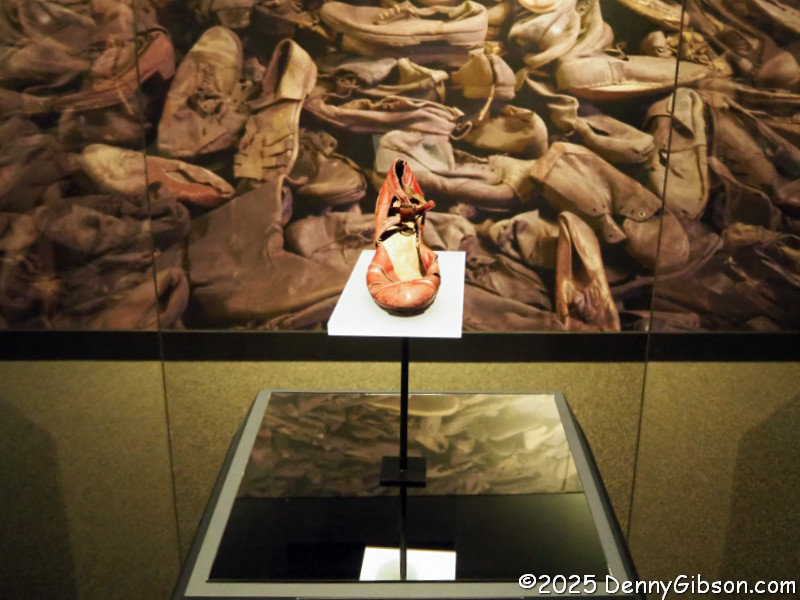
 On Saturday, October 18, “Auschwitz. Not long ago. Not far away.” opened at the Cincinnati Museum Center. I attended on Wednesday. The red shoe pictured at right is one of the first items visitors see when they enter the exhibit. Photos of the shoe, backed by the image of countless other empty shoes, have been used to promote the display. The wall-filling image boggles the mind as the realization that the owners of all those shoes walked into Auschwitz but never walked out slowly forms. The mind nearly breaks realizing that the photo contains just a fraction of such shoes.
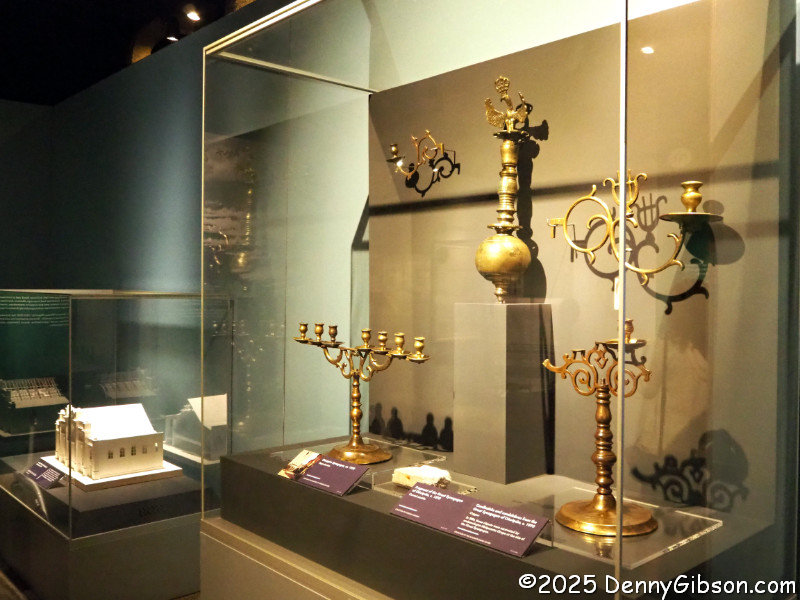 Having seen pictures of that red shoe, and knowing that this was “the largest collection of artifacts from Auschwitz outside of Europe”, I probably could have predicted the question that formed as I moved into the exhibit and listened to the included audio guide. It’s a question that most of us ask ourselves anytime we give much thought to the Holocaust. “How could this have happened?” we wonder. The exhibit doesn’t really explain it, but it does tell some of the history. It describes and displays artifacts from the small Polish village that would become home to the largest of the Nazi concentration and extermination camps.
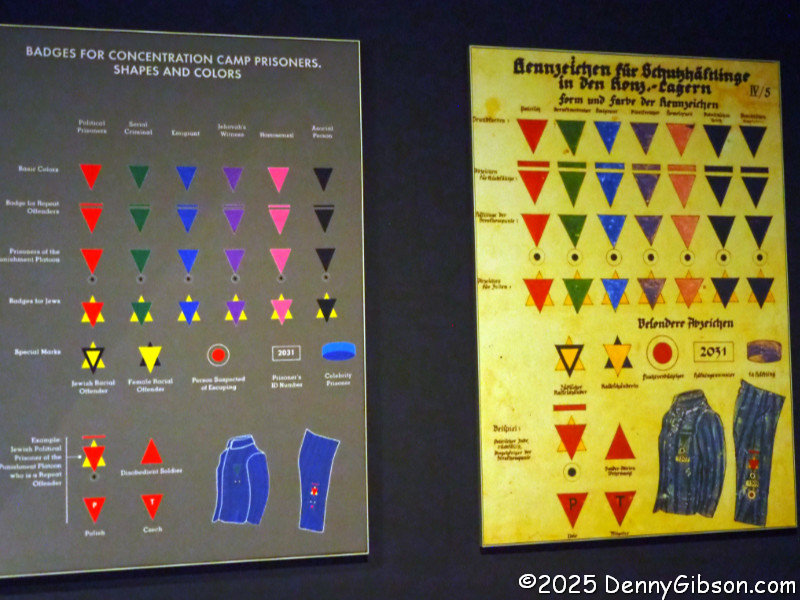
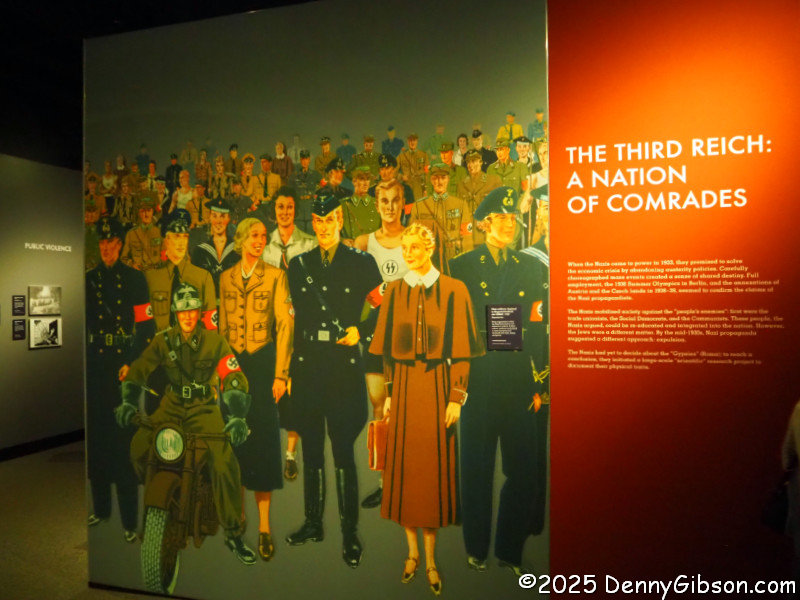 Establishing that the “other” was responsible for all of Germany’s problems was essential. The “other” was mostly, but not exclusively, Jews. Blacks, Roma, homosexuals, and people with disabilities were among those persecuted by the Nazis.
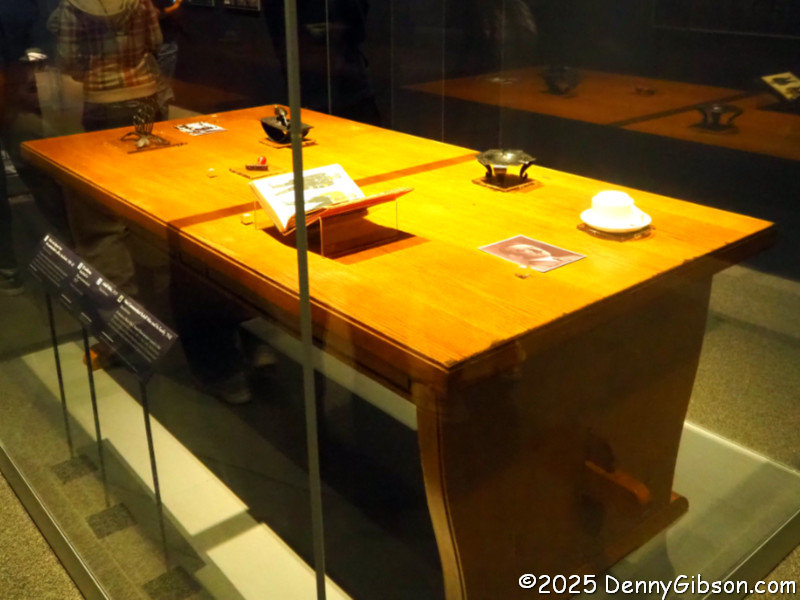
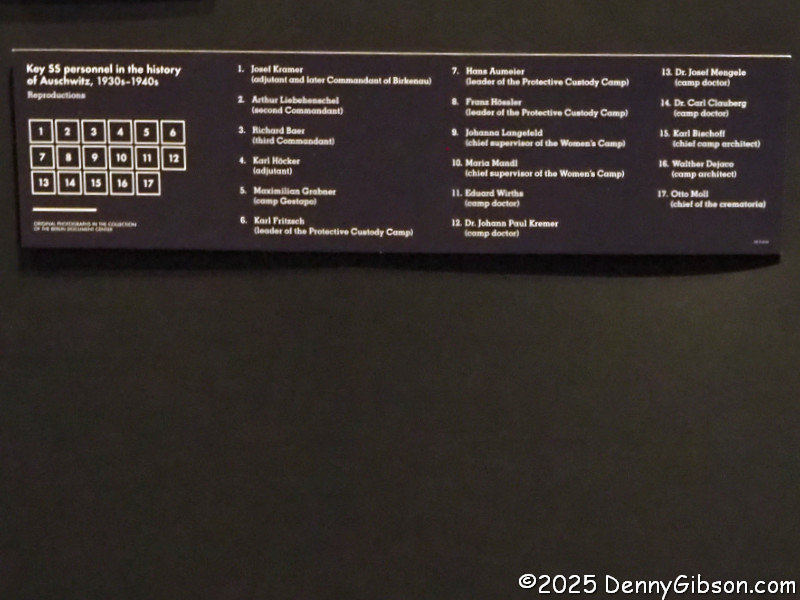
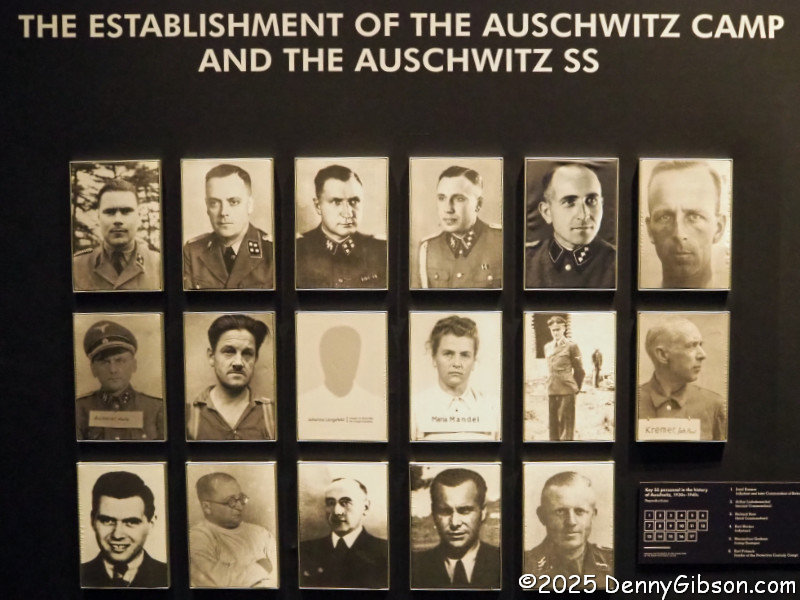 This is the desk of the camp commandant, Rudolf Höss. Photos of key Auschwitz personnel are displayed nearby with an identifying legend.
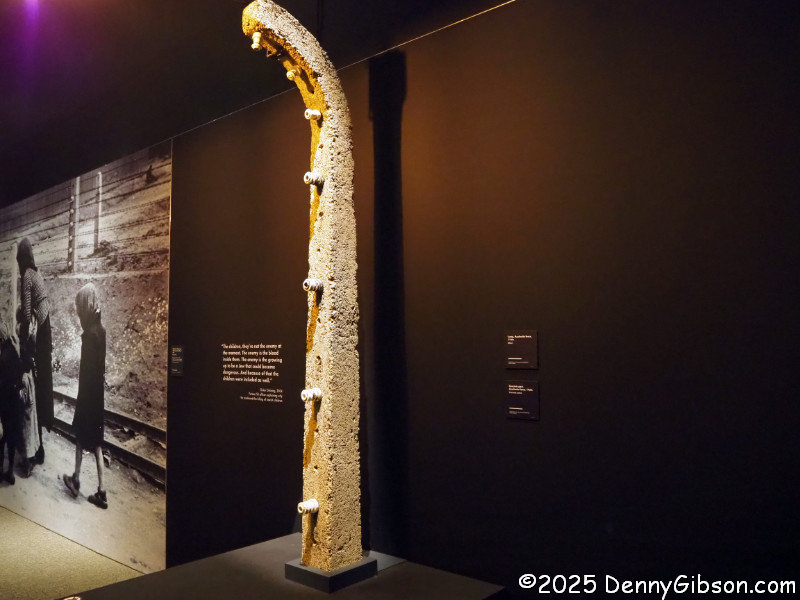
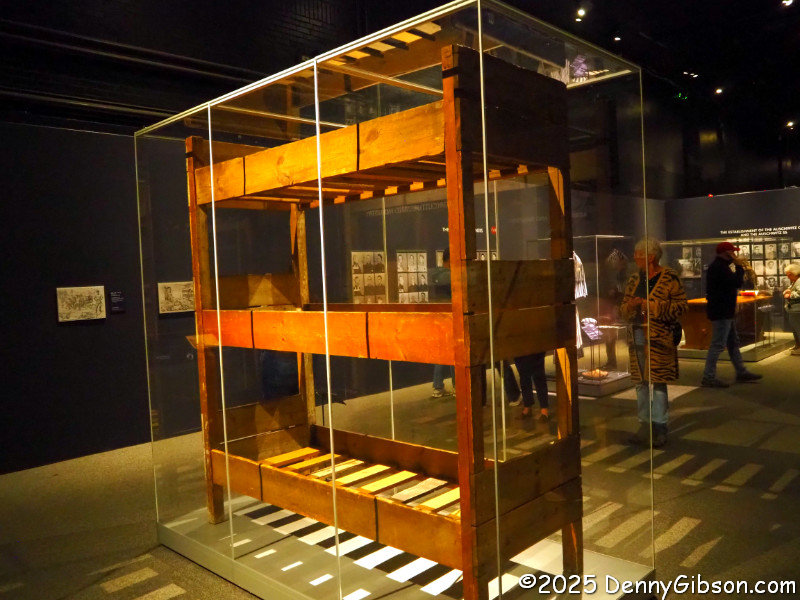
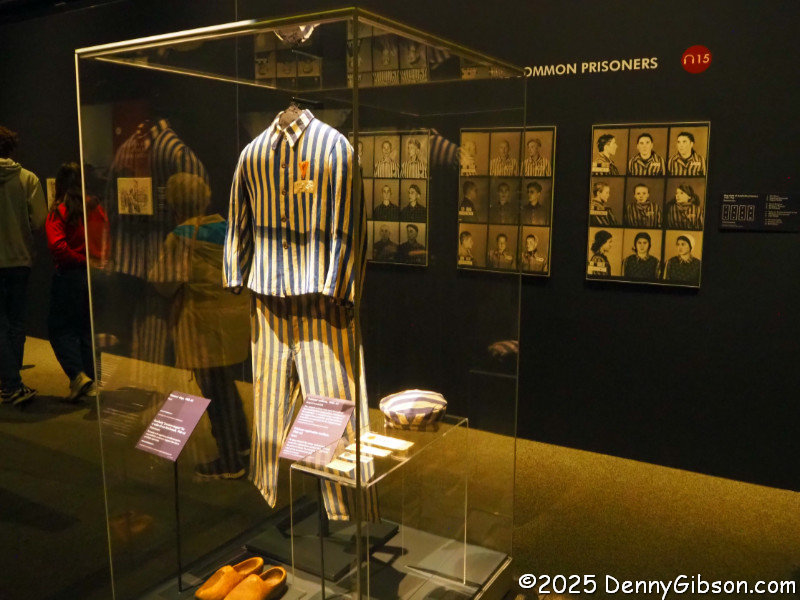 Roughly 80% of those arriving at Auschwitz were sent directly to the gas chambers. The other 20% became slaves, and not many survived the starvation, beatings, and forced labor. Many more than three people occupied the three-tiered bunks. The concrete post held barbed wire, as seen in the photo in the background.
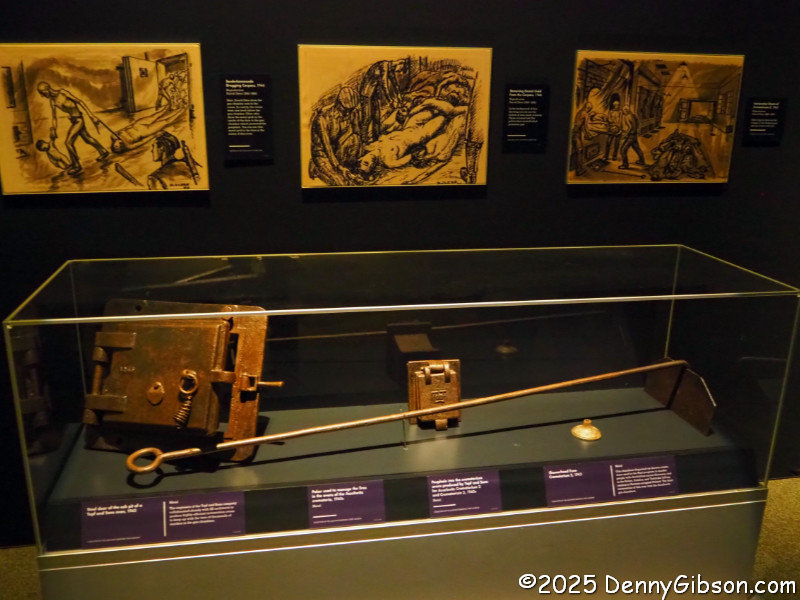
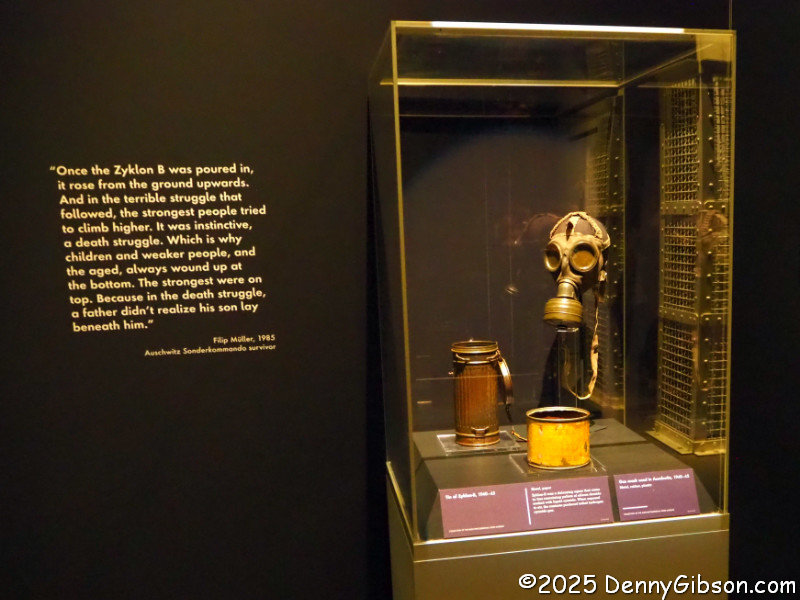
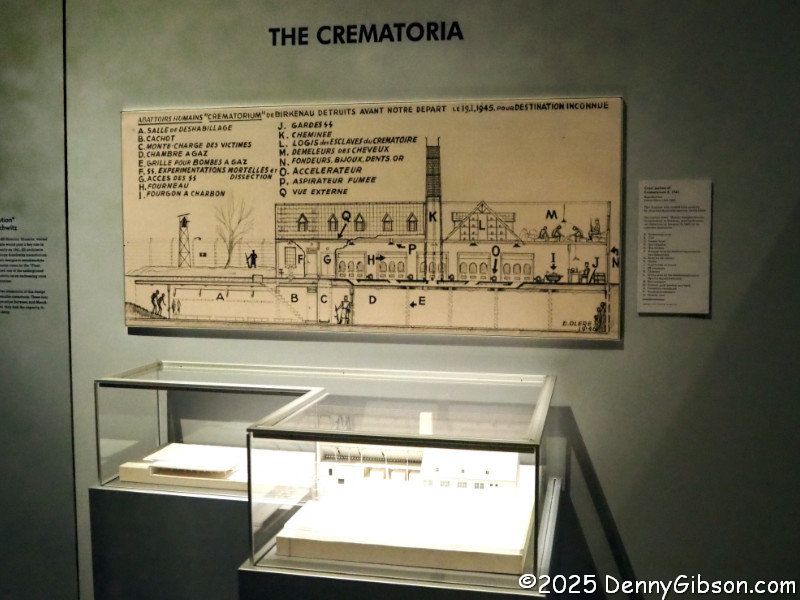 Some of the prisoners were “rented” to various privately held companies, but many were assigned tasks in the camp, such as removing bodies from the gas chambers or moving them through the crematorium. The first photo contains items from gas chambers and crematoriums. There is a “shower head” in the lower right corner. The gas mask in the second photo was worn by a soldier who dropped the Zyklon B once the chamber was sealed.
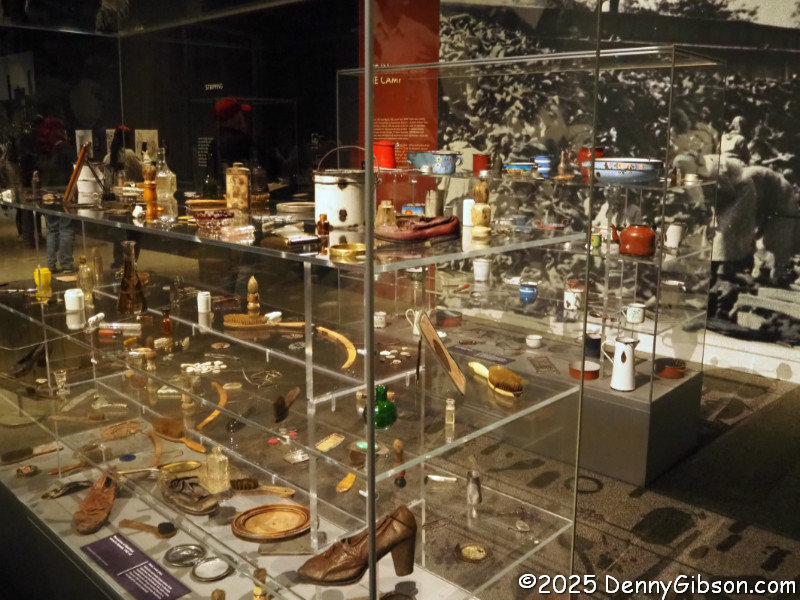
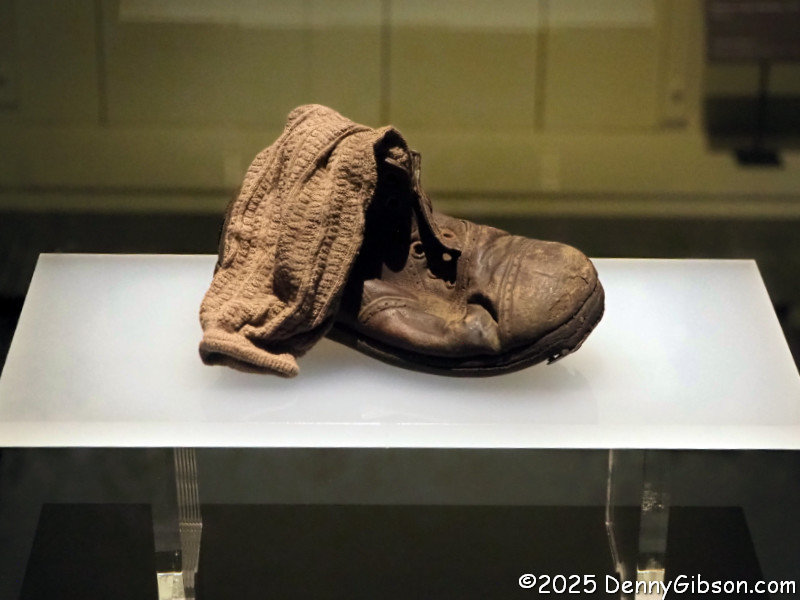
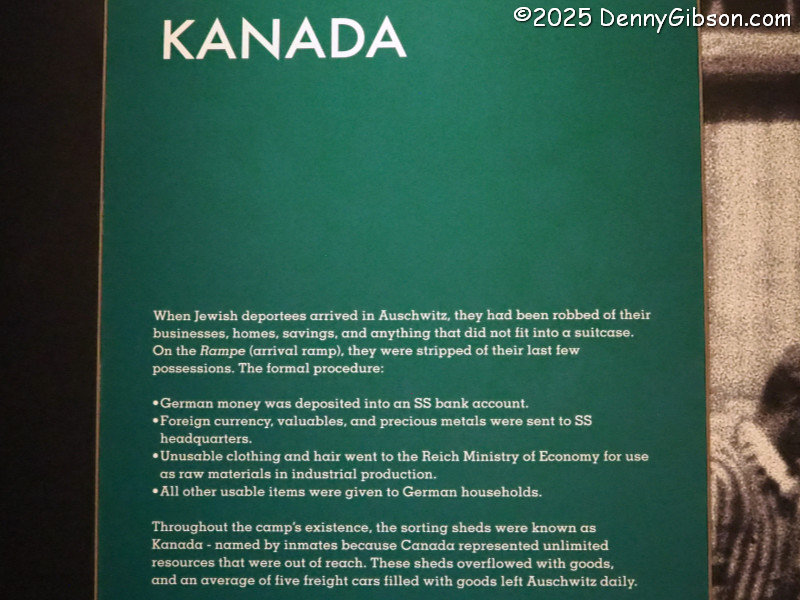
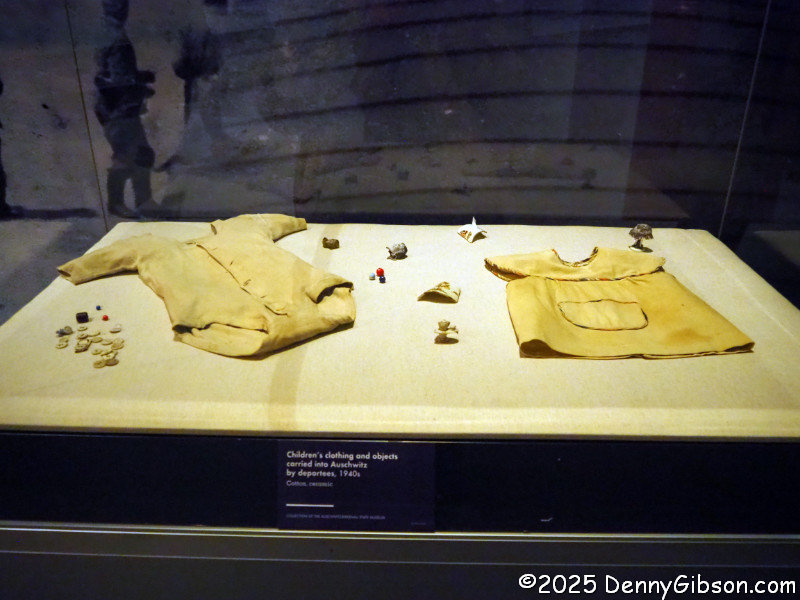 Other prisoners were forced to sort through the few possessions that actually made it to the camp. Prisoners referred to the sorting sheds as Kanada.
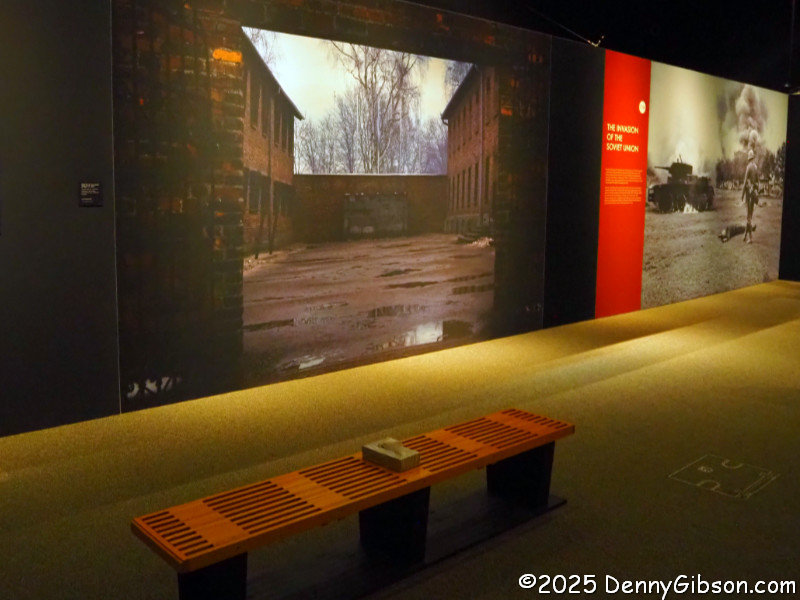
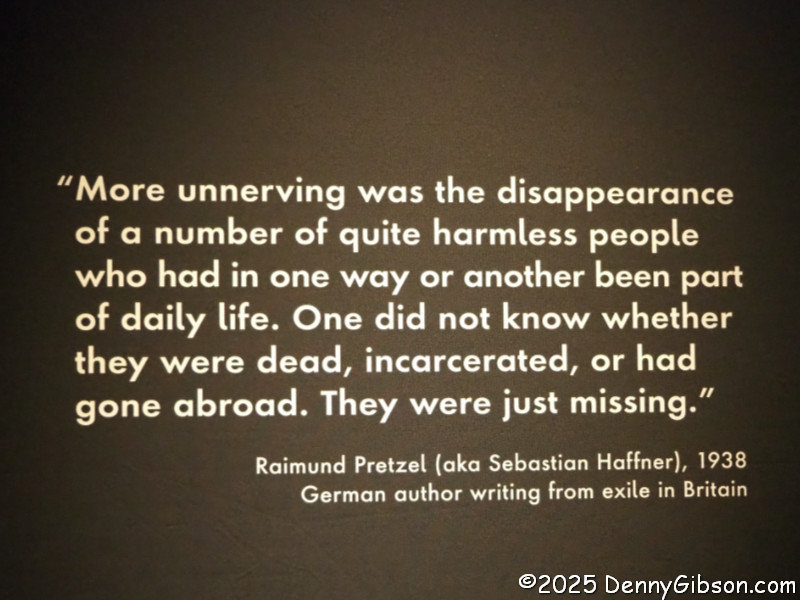
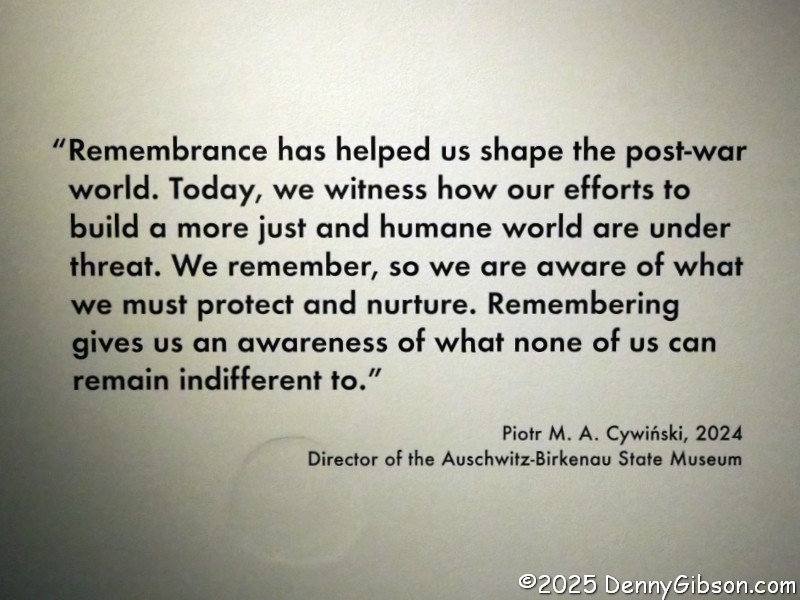 There were several benches placed throughout the exhibit. Many were positioned in front of screens showing videos of scenes related to the camps. All had a box of tissues placed at their center. There was no lack of tear-inducing images, artifacts, and stories in the exhibit. Nearly all of the items on display are from the Auschwitz-Birkenau State Museum. The last picture is of a quote from the director of that museum about remembrance. I immediately thought of Eisenhower’s 1945 command, “Get it all on record now. Get the films, get the witnesses, because somewhere down the track of history some bastard will get up and say this never happened.” He was right, of course. That quote on the wall notes that today “…our efforts to build a more just and humane world are under threat.” Nearer the beginning of this article, there is a photo of a quote about “…the disappearance of a number of quite harmless people…” It’s from 1938 Germany during the Nazi rise to power. As I read it, it occurred to me that it could have easily come from certain Central or South American countries a few decades ago. Or it could have come from somewhere not even that far away or that long ago.
“Auschwitz. Not long ago. Not far away.” runs through April 12, 2026.
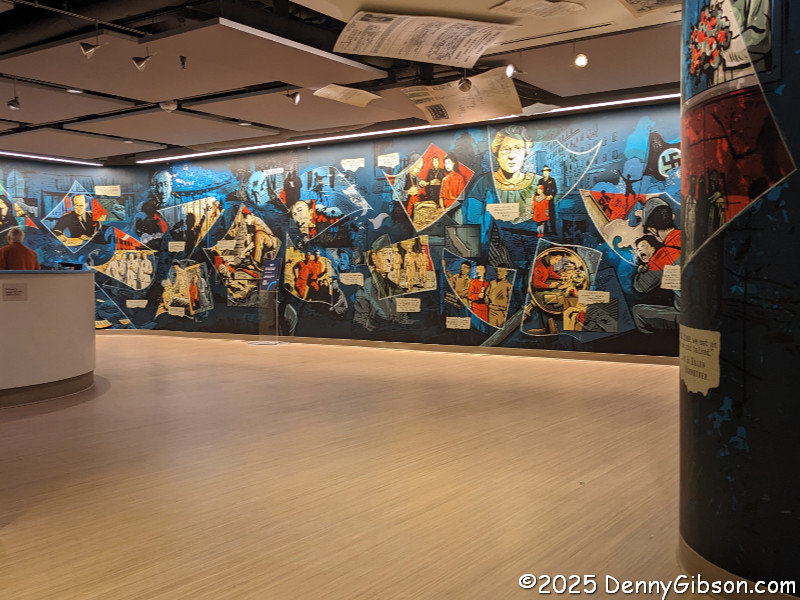 The Holocaust and Humanities Center helped bring the Auschwitz exhibit to Cincinnati. Although a separate operation, it is housed in the Cincinnati Museum Center and throughout the exhibit’s run is offering discounted adult admission of $7.50 to anyone presenting an “Auschwitz. Not long ago. Not far away.” ticket. This rate is available year-round to seniors and military.
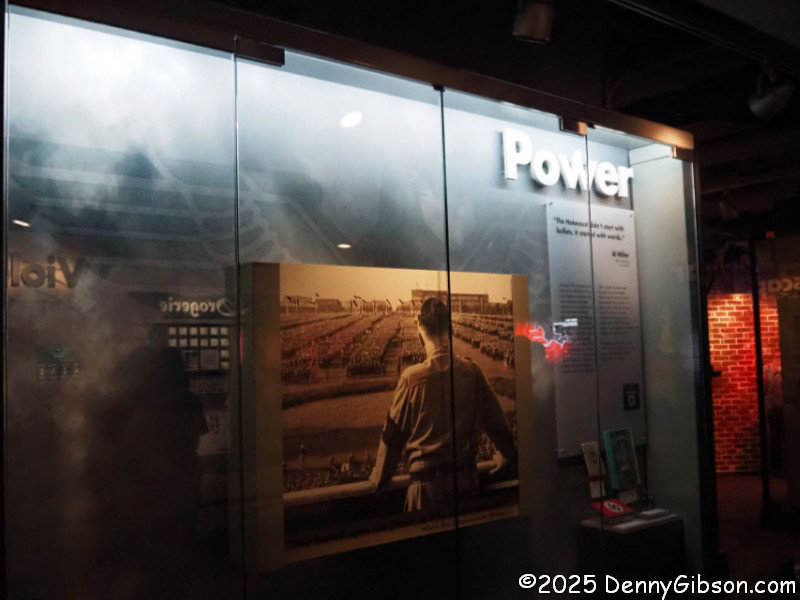
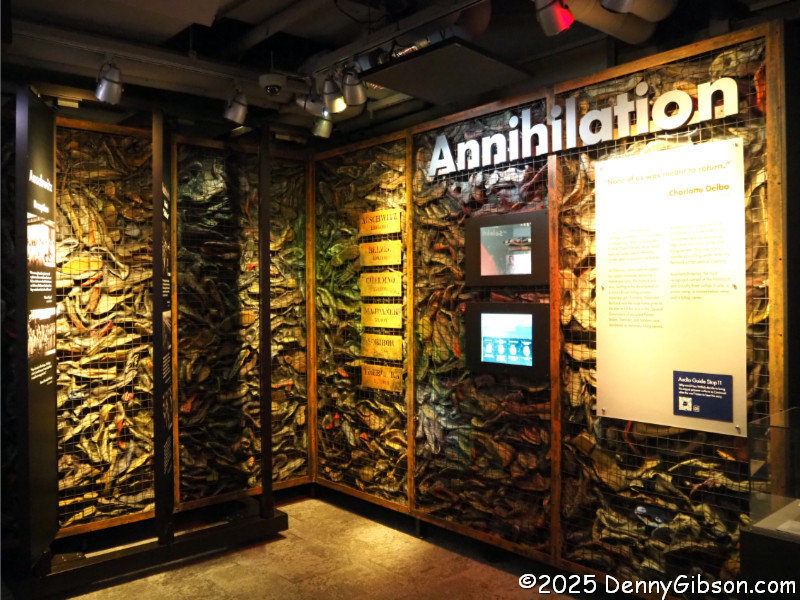
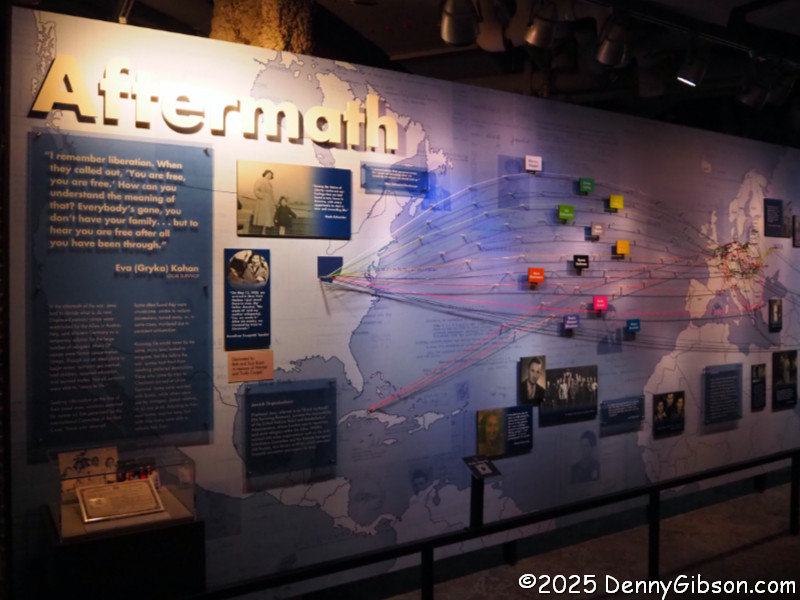 Naturally, there is overlap between the Auschwitz displays and those in the Holocaust Museum. A notable example is this molded wall of abandoned shoes that echoes the red shoe and large photo from Auschwitz. But there are also a lot of differences. The museum has many interactive displays, and the story it tells is broader than the one with a specific concentration camp at its center. In particular, the museum continues the story well beyond the liberation of the prisoners with reporting on the post-war trials and tales of recovery.
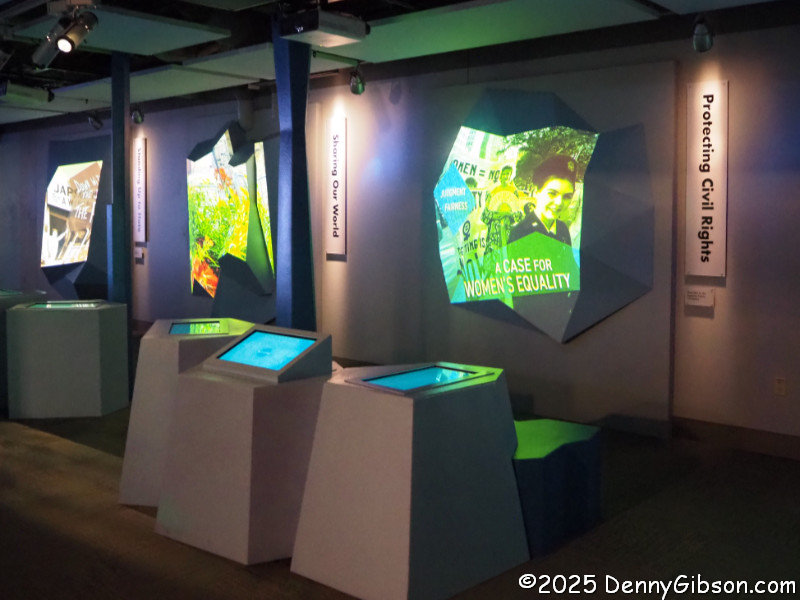 When I spoke with a friend about the Auschwitz exhibit, I encouraged a follow-on visit to the Holocaust Museum, and it wasn’t just because of the broader story. The Holocaust is humanity at its worst. Studying it and acknowledging it is important and necessary, but it is hardly uplifting. The museum offsets that just a little by presenting recent examples of bigotry being defeated and human rights being defended. Your mood probably won’t be exactly celebratory when you leave, but it very well might be hopeful.
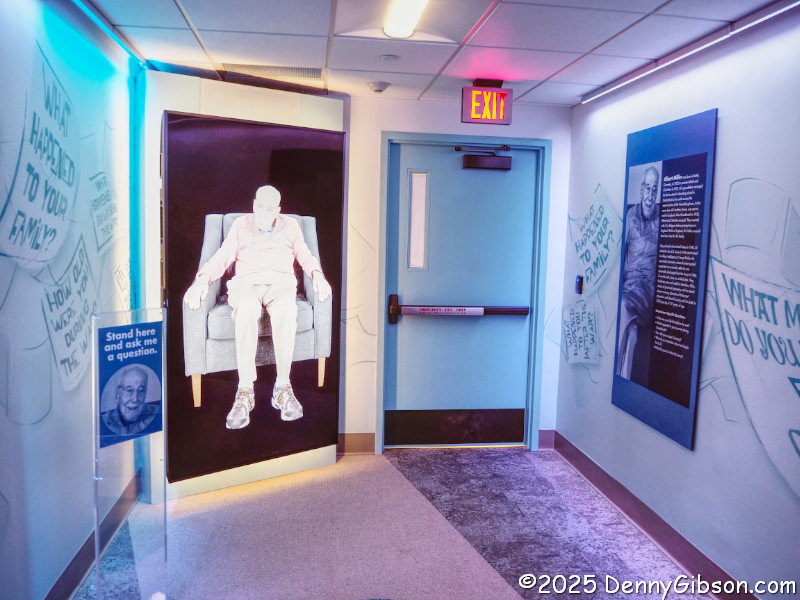
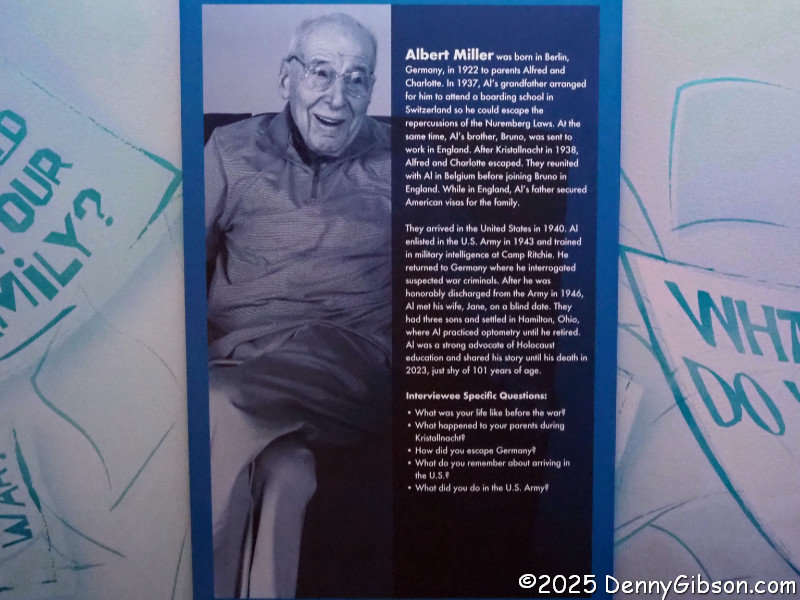 With every museum that exists, it is always possible to see something you’ve previously missed when you revisit. But sometimes that new discovery really is something new. That is the case with this recently installed interactive display featuring Albert Miller (1922-2023). Albert, who escaped Europe with his parents in 1940, then returned as a Nazi interrogator in 1943, tirelessly answers spoken questions about the life he lived.
I documented my first visit to the museum here.