
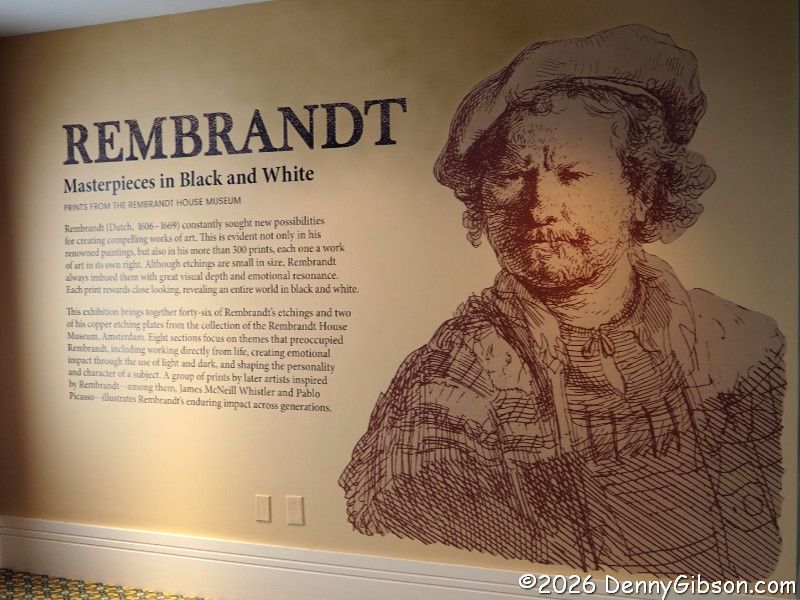
There is currently an exhibit at the Taft Museum of Art called “Rembrandt: Masterpieces in Black and White“. I’m not very knowledgeable about art, but I thought the black and white part of that might not really be necessary. I would not call any of the few pieces of art I connect with the Dutch Master overly colorful. Yes, the fellow at the center of his most famous painting, The Night Watch, has a reddish sash and another fellow is wearing a reddish hat and uniform, but neither is particularly bright, and they are essentially the only splashes of color in the entire scene.
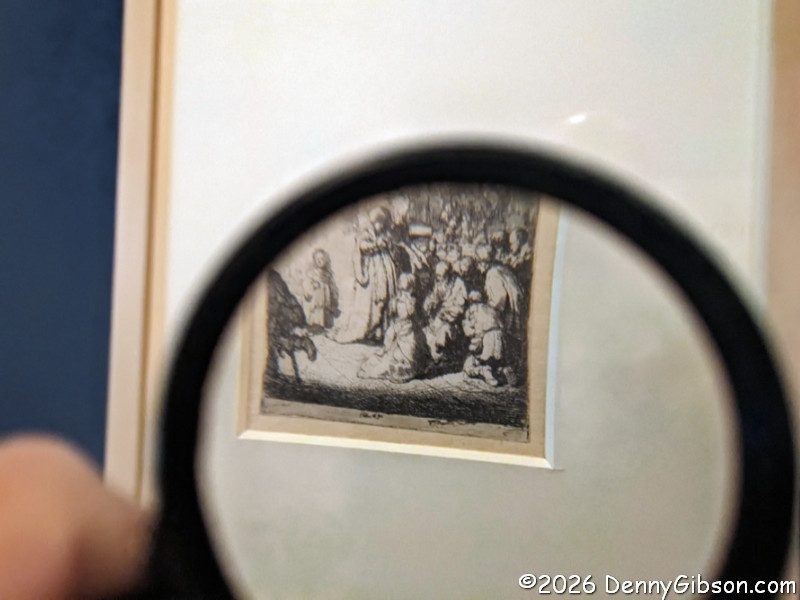
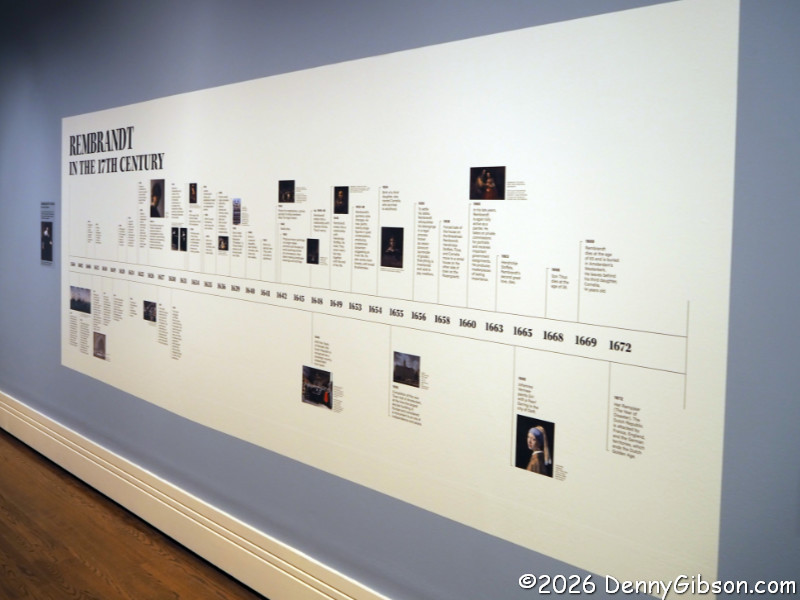
There is, as advertised, even less color in the works in this exhibit. It is made up of monochrome prints from etchings. The etchings are often rather small, and they can be quite detailed. Loaner magnifying glasses are available near the entrance to help make that detail visible. Also near the entrance is a timeline that places Rembrandt’s life (1606-1669) within the context of world events and other artists. The man had quite the impact. Bright colors, it seems, aren’t really necessary.
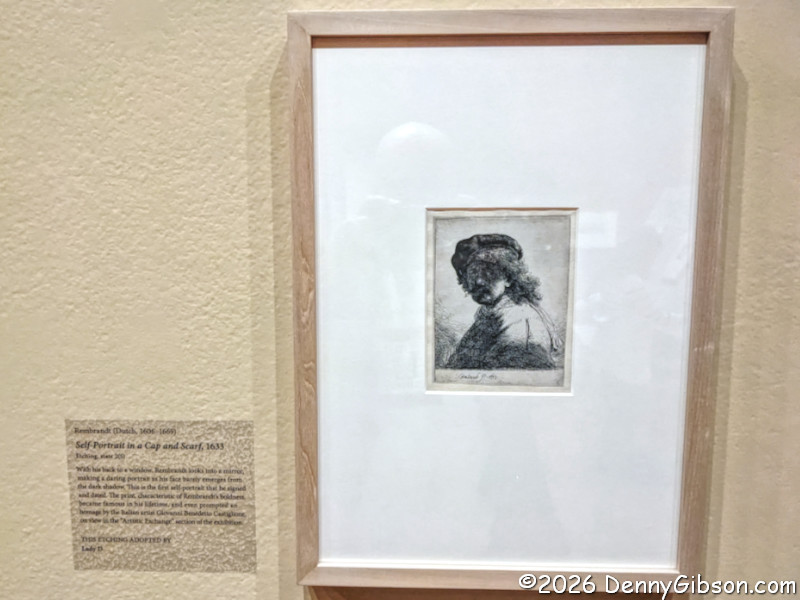
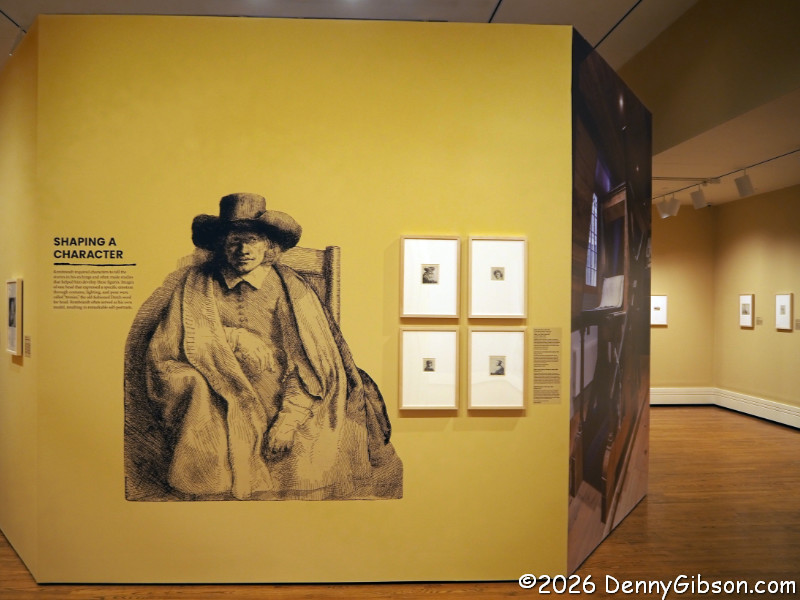
There are 49 prints from Rembrandt etchings on display, and, as noted and as can be seen, most are just a few inches in size. The cost of materials and a desire for portability were both reasons for this. Rembrandt made several self-portraits during his career, but this one from 1633 is said to be the first he signed and dated.
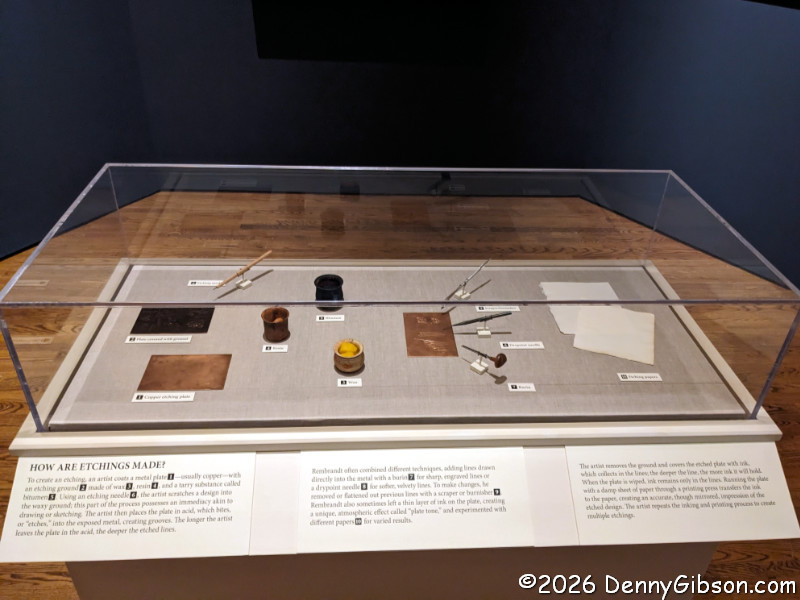

Since I know even less about etching than I do about almost every other art form, I found this display quite helpful. It seems the artist etches into a waxy layer applied to a copper plate, then acid does the etching into the metal.
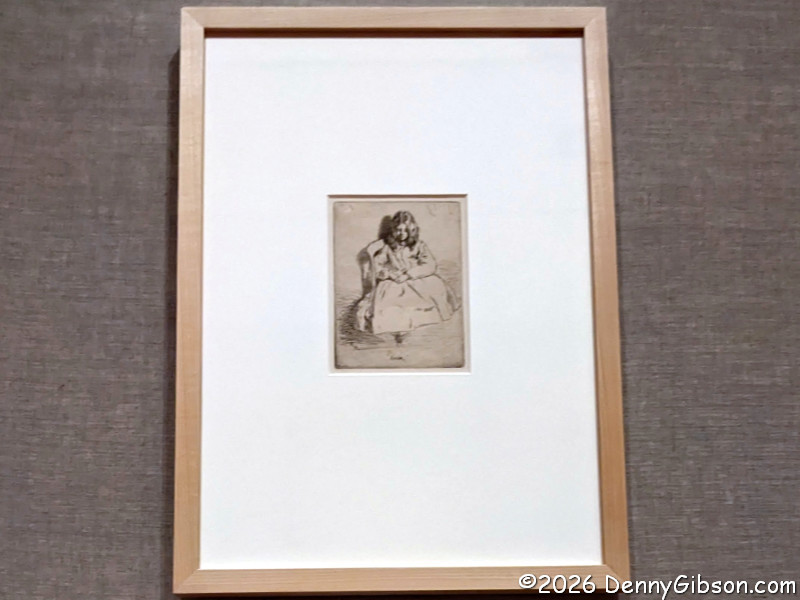
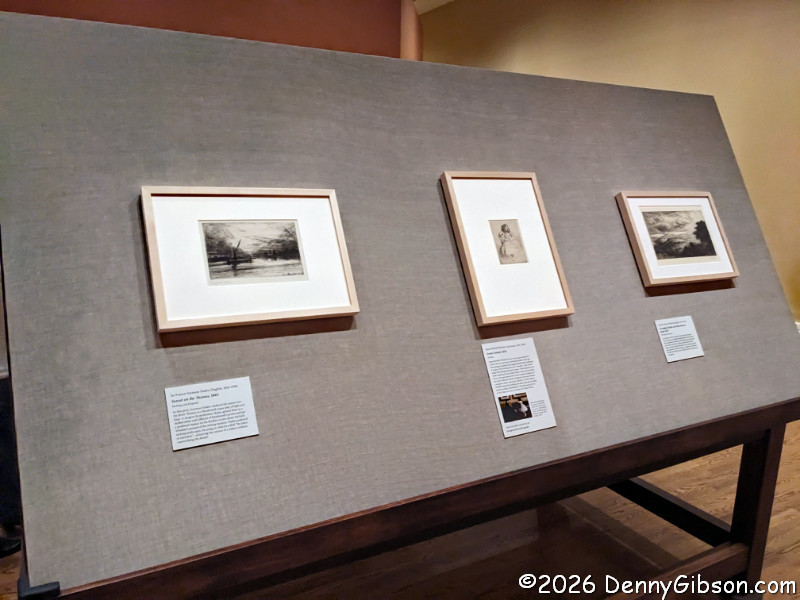
In addition to the 49 Rembrandt etchings, the exhibit includes nine etchings he inspired others to create. One of those inspired was James Whistler, who, as we see here, used his niece as a model in addition to his more famous mother.
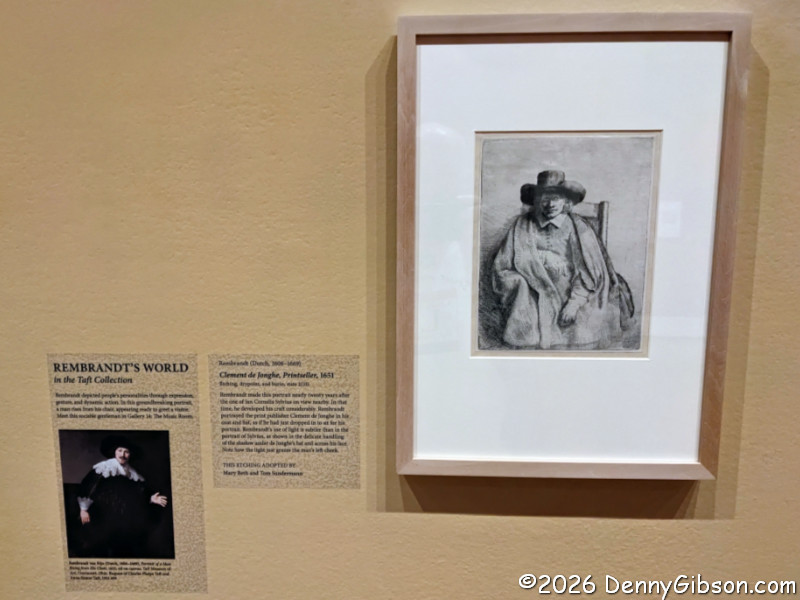
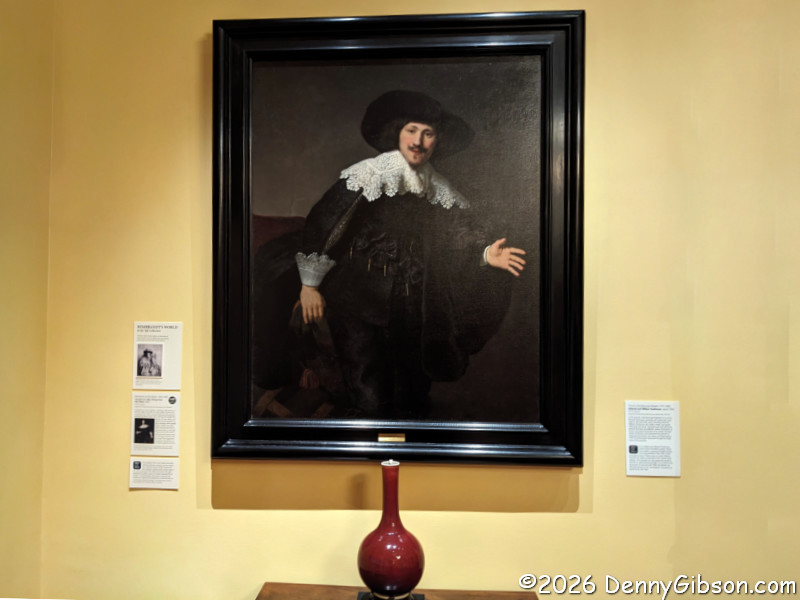
Admission to the Taft Museum of Art includes access to all permanent galleries, as well as this traveling exhibit of etchings from the Rembrandt House Museum in Amsterdam. Here is one of several connections between the two. This 1651 etching of Clement de Jonghe is cited as an example of Rembrant’s mastery of light and shadow and of his use of people’s expressions and gestures. The 1633 Portrait of a Man Rising from His Chair is an even better example of Rembrandt’s use of these.
“Rembrandt: Masterpieces in Black and White” is here through May 17, 2026.
Thanks for sharing, Denny. Very interesting.
Thanks for the comment. The exhibition will be in Naples, FL, next fall for snowbirds wanting to plan ahead.
Pingback: Drawing Board at ASM | Denny G's Road Trips Blog