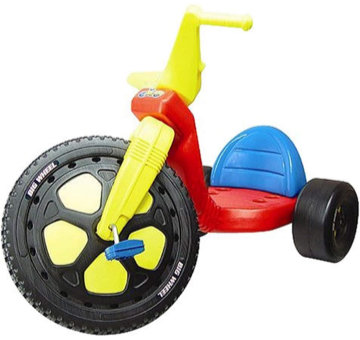
 History does repeat itself. In the early 1970s, I lived with my wife and two sons in a house with a driveway that sloped to a paved area in the back. That driveway was an ideal spot for the four-year-old to give his Big Wheel a workout. While I worked on something on a car behind the house, he repeatedly pushed the three-wheeler to the top of the hill so he could come rocketing down the hill, brace his feet on the pedals to stop the big front wheel, and throw the rear wheels into a perfect 180-degree slide. This was exactly what Big Wheels were designed for. After one of his countless slides, he looked up at me and made an incredibly insightful observation. “Dad”, he said, “I bet you wish you could do this.”
He was absolutely right. What he was doing looked like a fabulous amount of fun but I was too old. What I saw Saturday also looked like a fabulous amount of fun but I was once again too old. Fifty years ago, being too old meant being too big to fit into the seat. Yesterday it meant being too wheezy and too brittle.
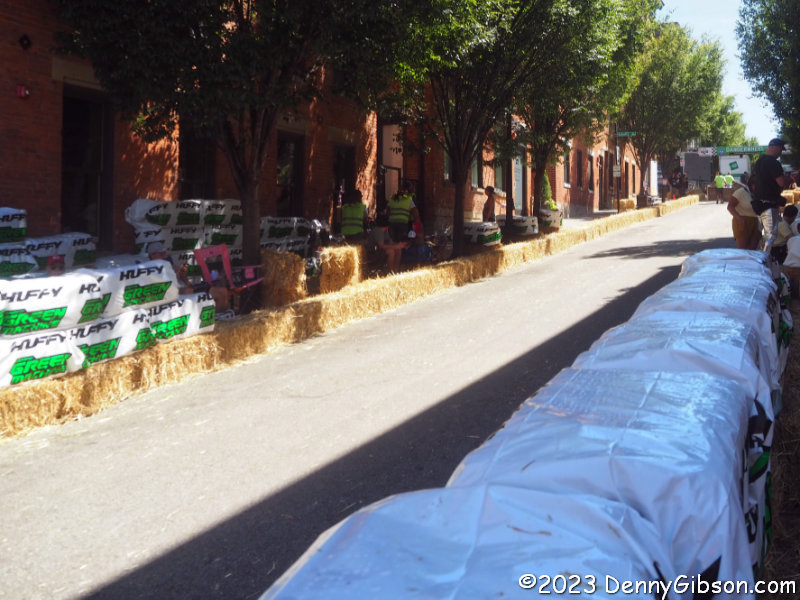
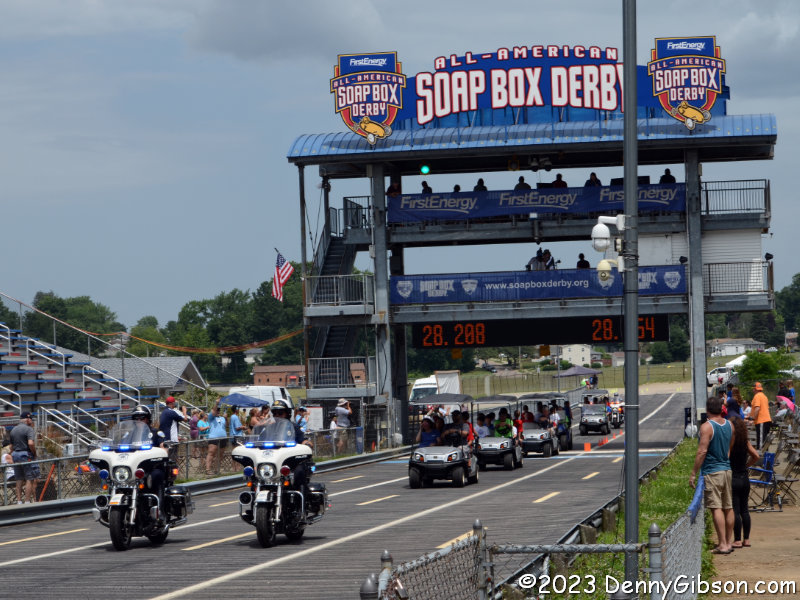
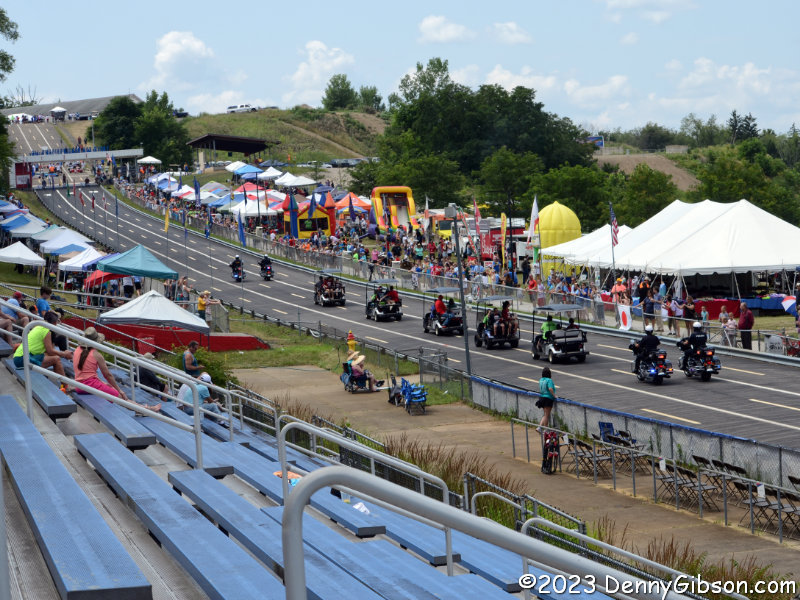
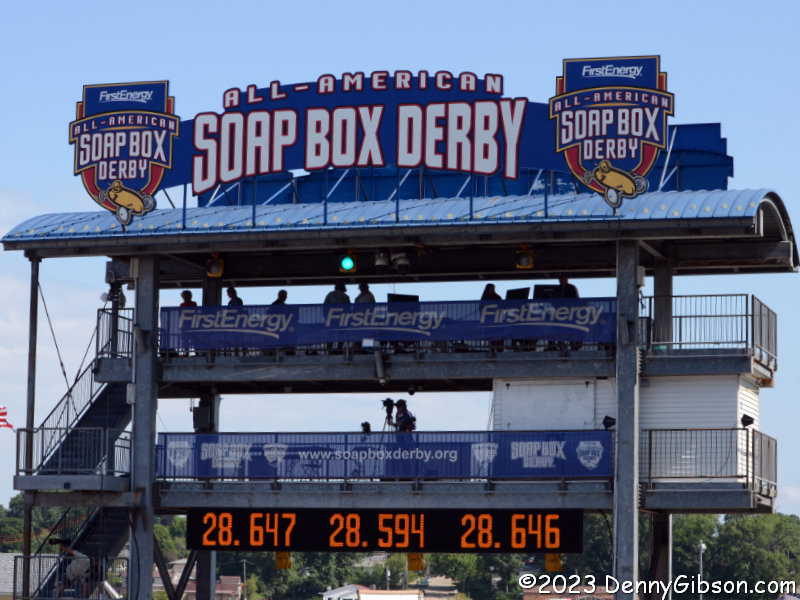
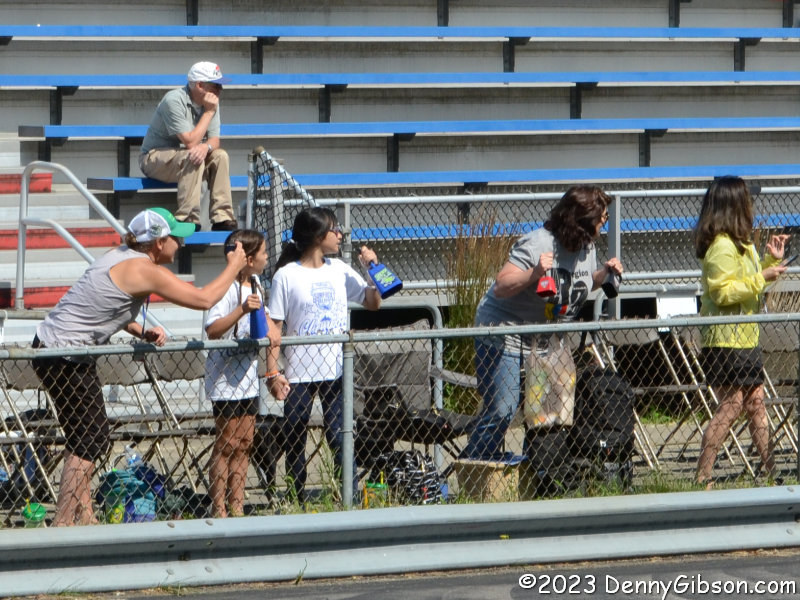
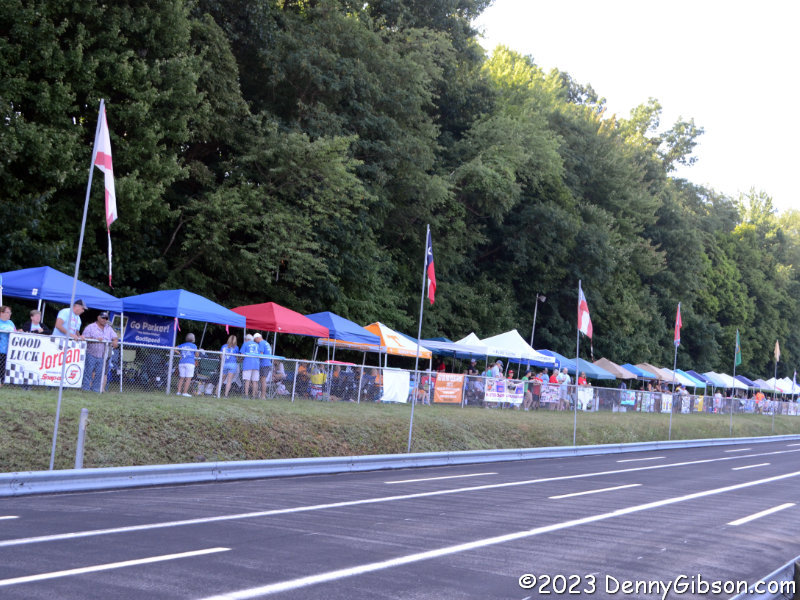
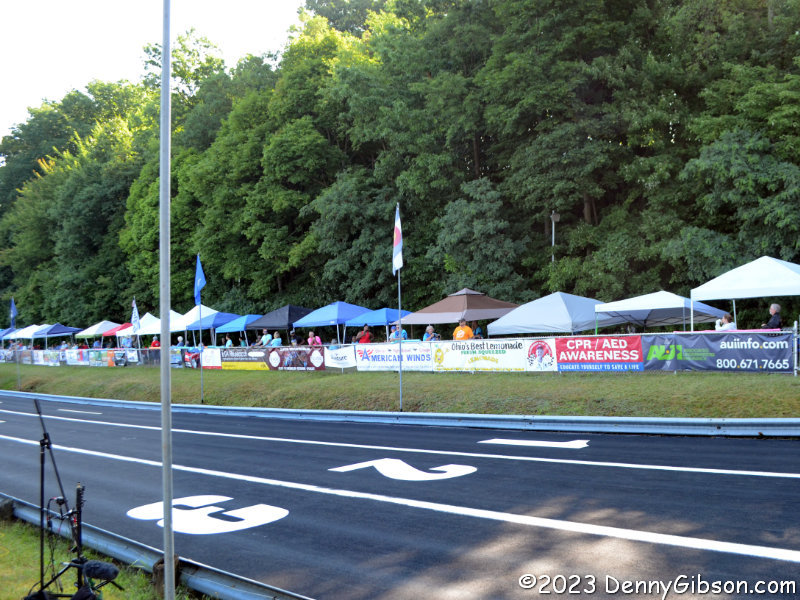
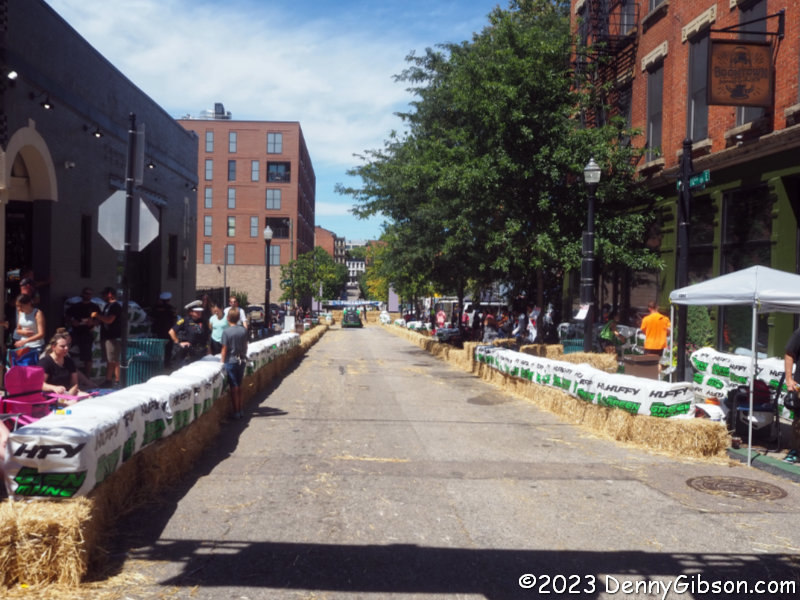 This is Danger Wheel‘s eighth year but it was somehow kept a secret from me until I saw Citybeat’s 7 Things To Do in Cincinnati This Weekend article last Thursday. Realizing almost instantly that this was something special, I made plans to attend and found myself near the midpoint of the course about two hours before race time. There is a starting line at the top of the hill and a finish line at the bottom just like the Soapbox Derby I attended last week (At Speed in Akron). More history repeating itself I suppose.
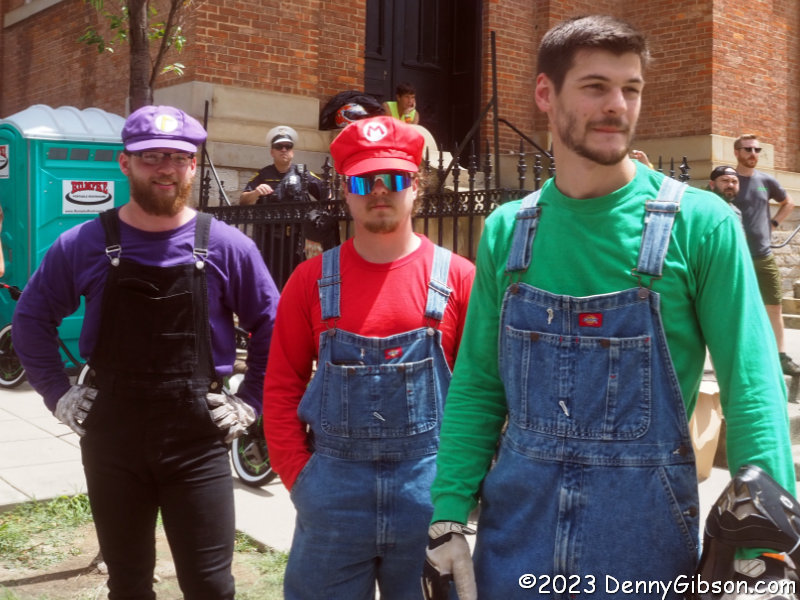
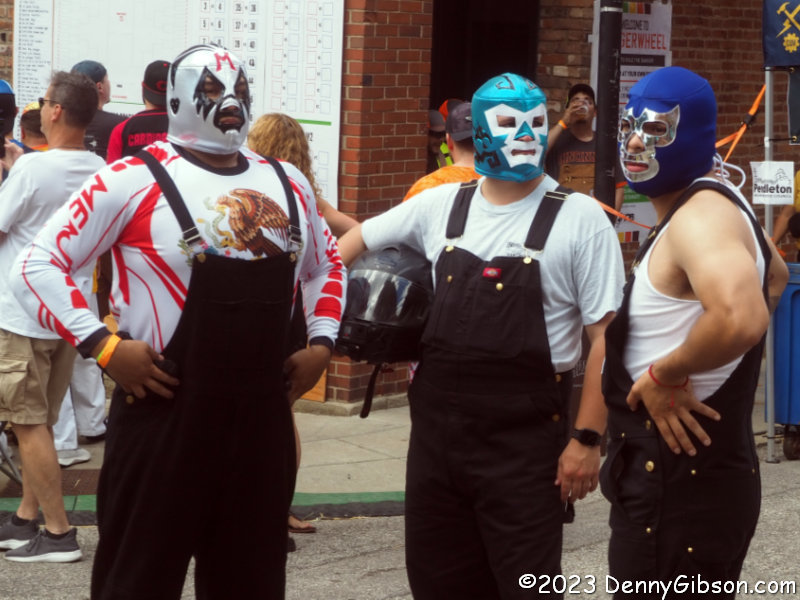
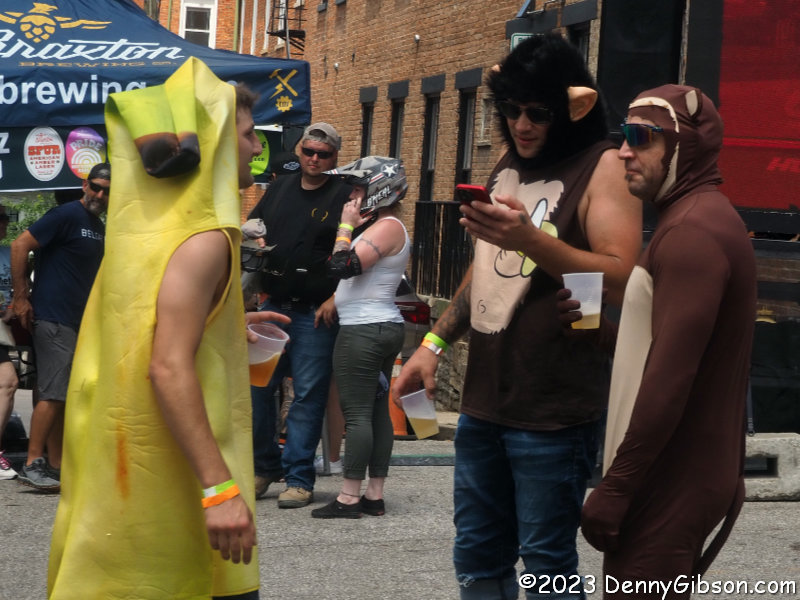
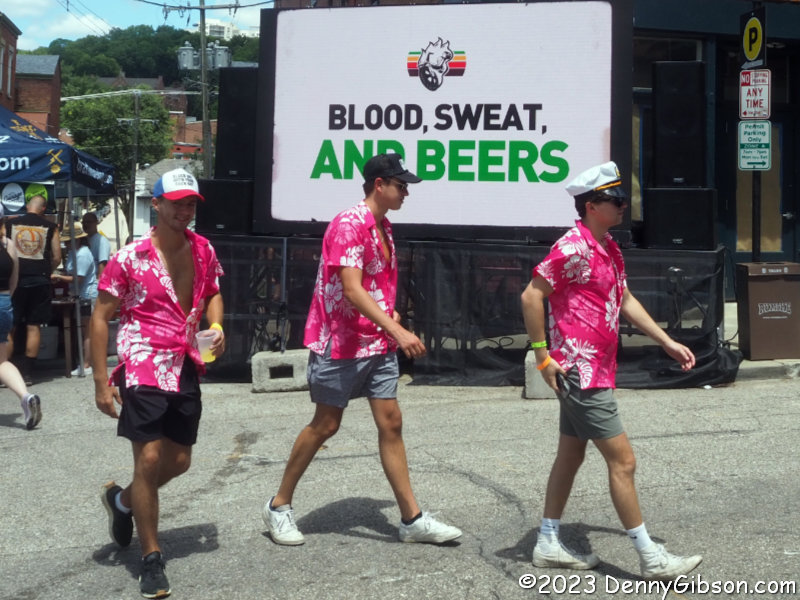
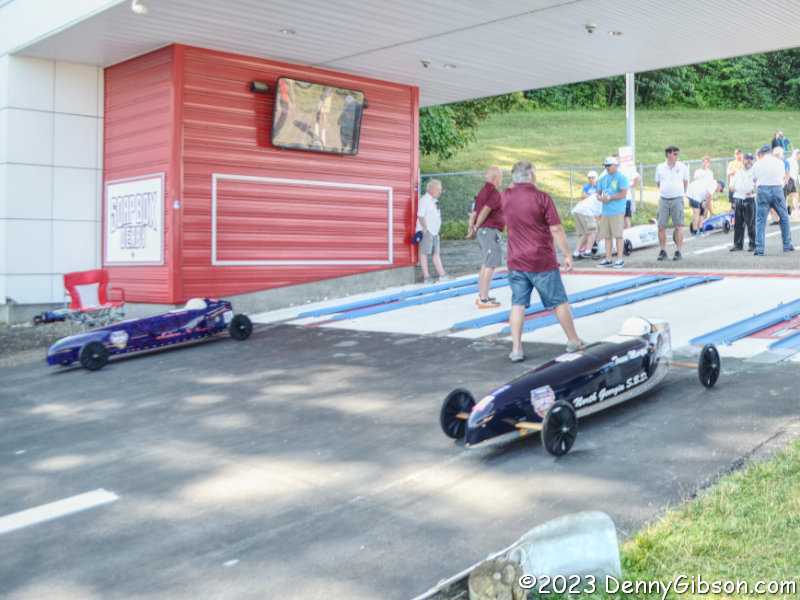
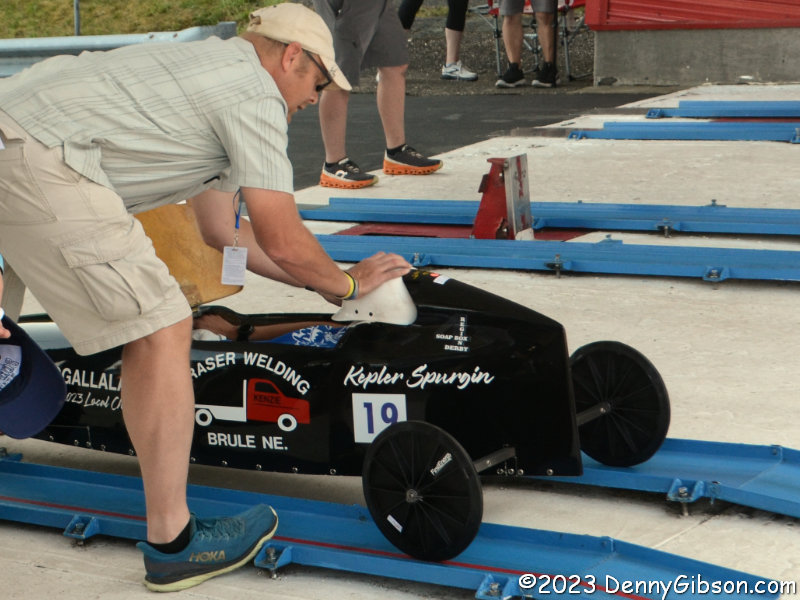
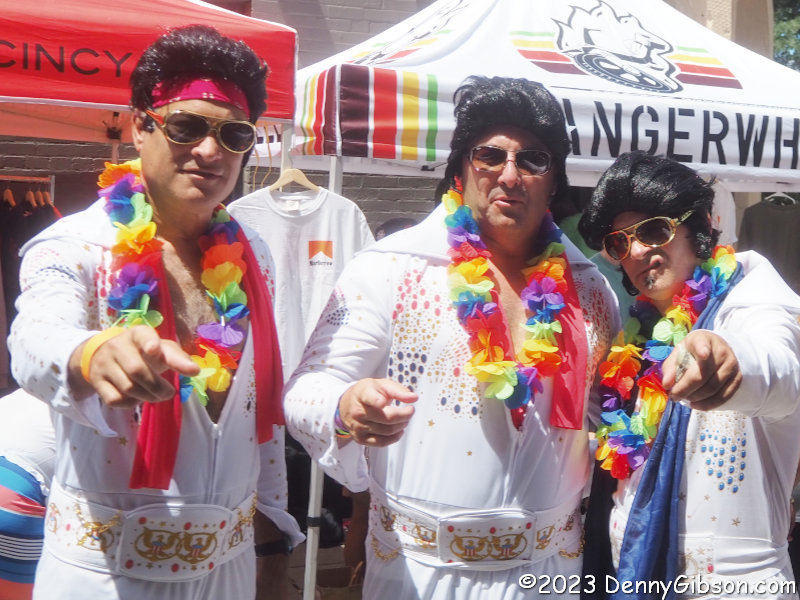 The race takes place in the Pendleton neighborhood of Cincinnati which has two breweries and several really good restaurants. Food trucks are brought in for the event along with tents from breweries outside the neighborhood. I had no trouble filling the time until the competition started. I even had time to check out some of the racing teams and vehicles.
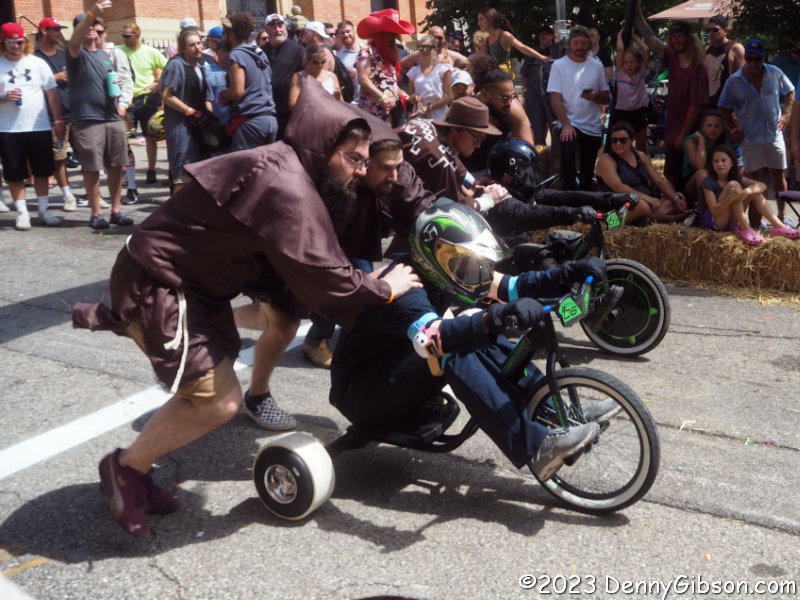
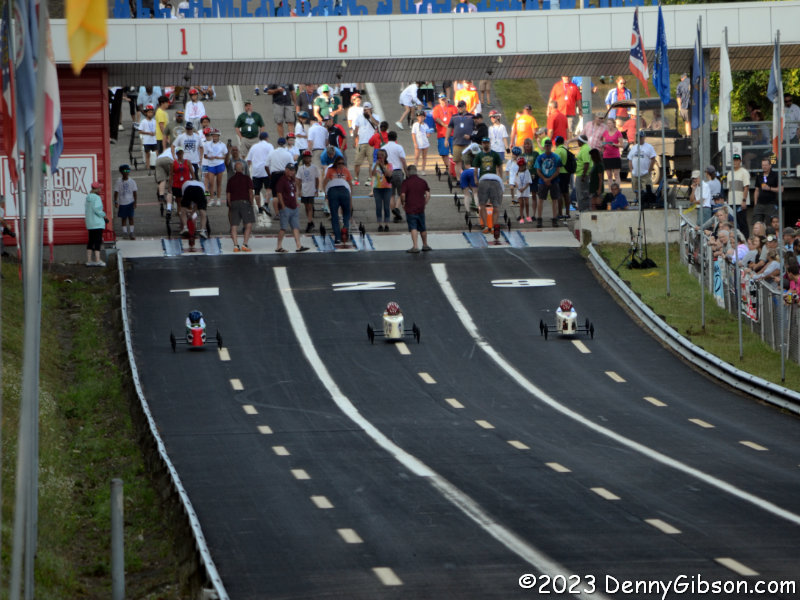
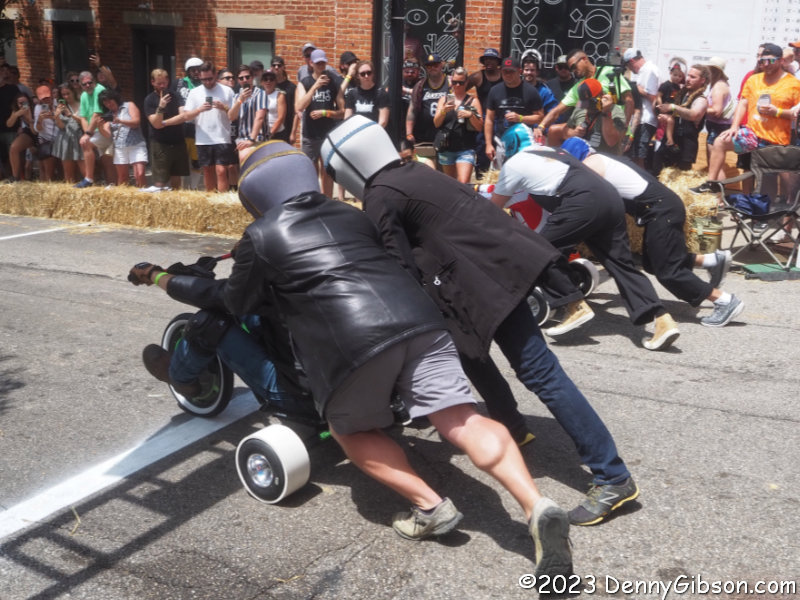 Of course, the two hours between my arrival and the first race also gave other spectators time to arrive and completely line the course. I did somehow manage to get close enough to the starting line to snap a picture of the launch of the first heat. When the starting horn sounds, two team members have ten feet to power the third member off the line.
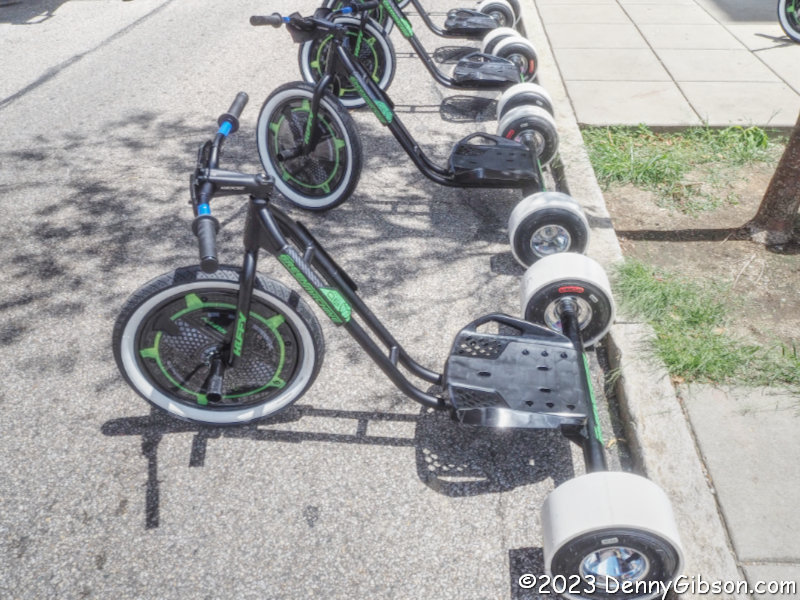
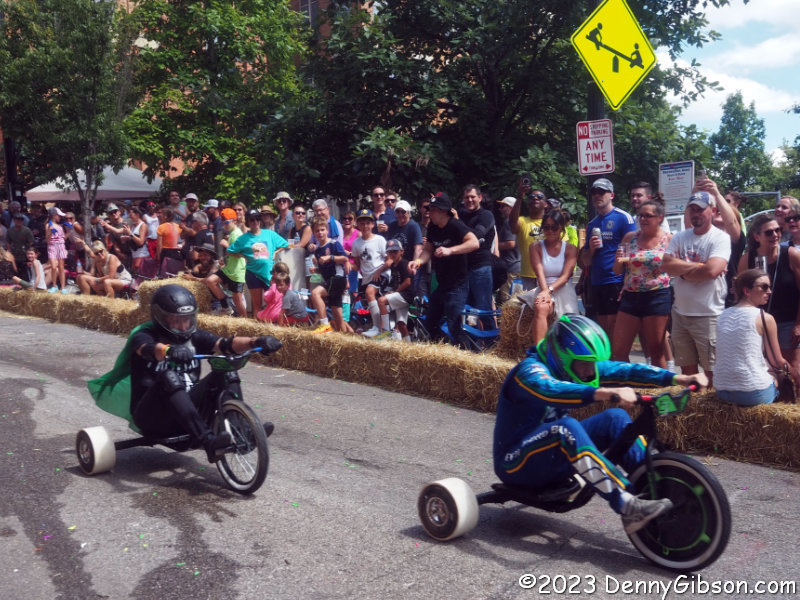
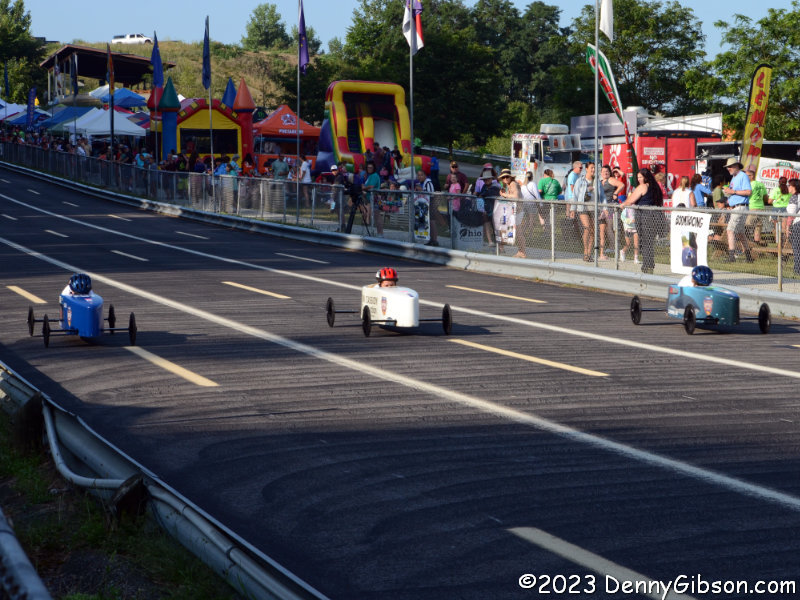
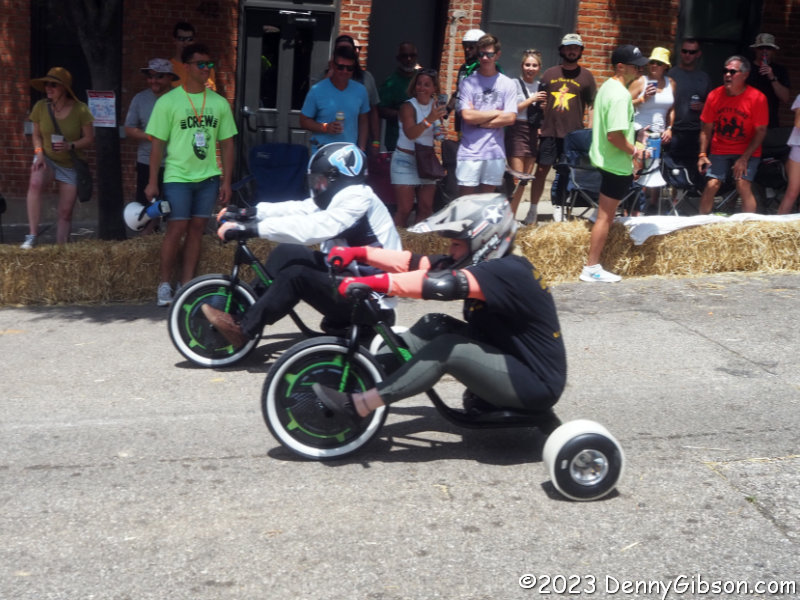 These special built Huffy Green Machines have no onboard means of propulsion so you might think that once the starting line pushing ends, the race is exactly like a Soapbox Derby heat with drivers dealing with nothing but steering until gravity takes them over the finish line. You might think that but you would be really really wrong.
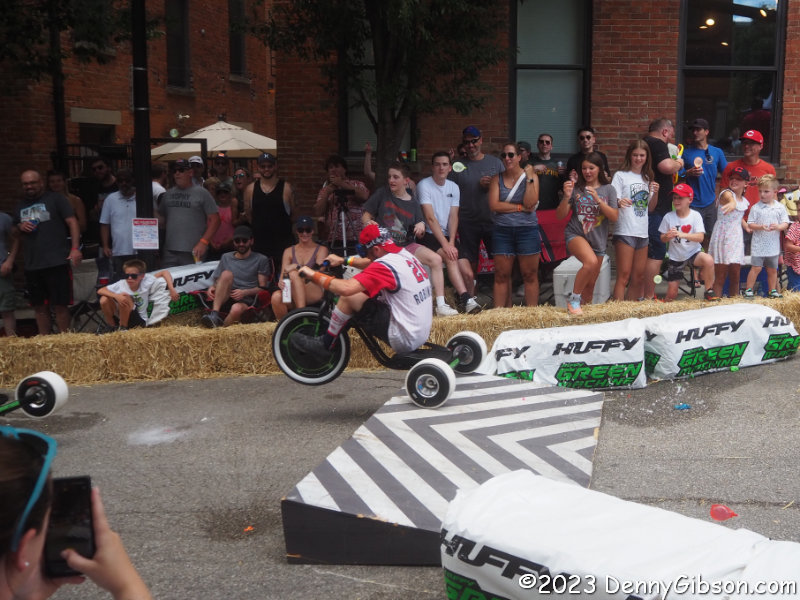
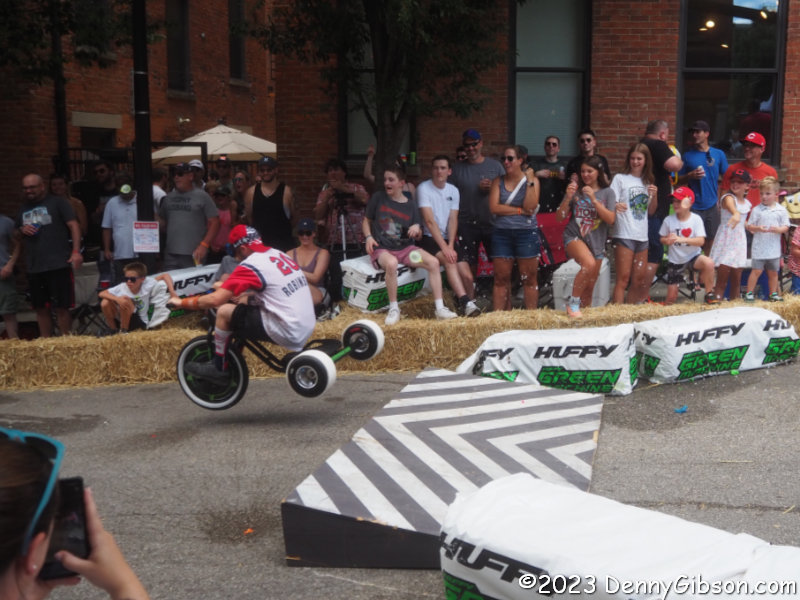
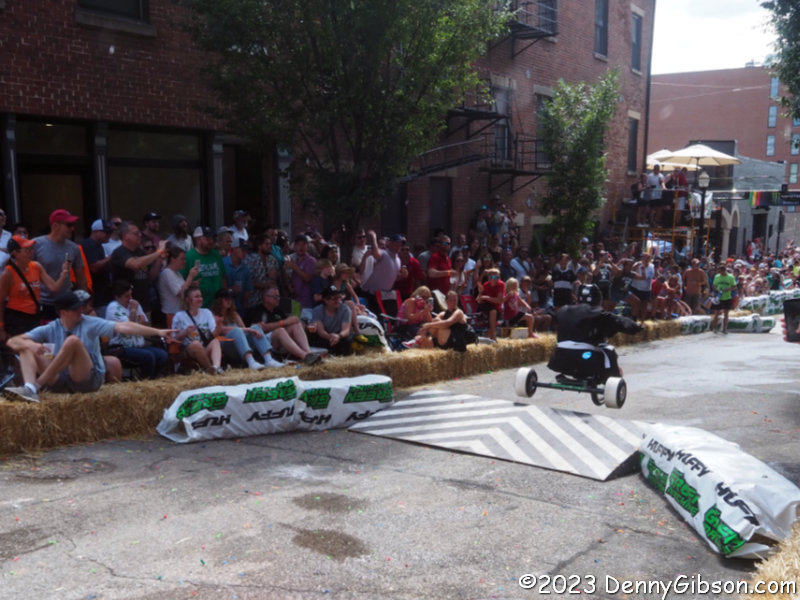
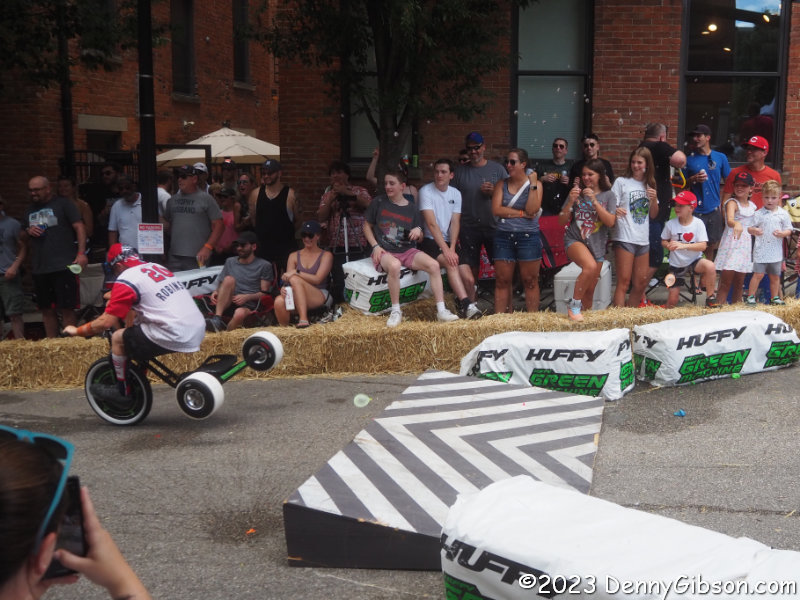 While spectators were packing in trackside, race organizers had placed ramps and speed bumps along the clear street I’d seen when I arrived. In addition, pelting racers with water balloons was a legitimate and quite popular means of fan participation. I overheard the starter suggest to a rookie that he close his face shield all the way because “those water balloons hurt like hell”.
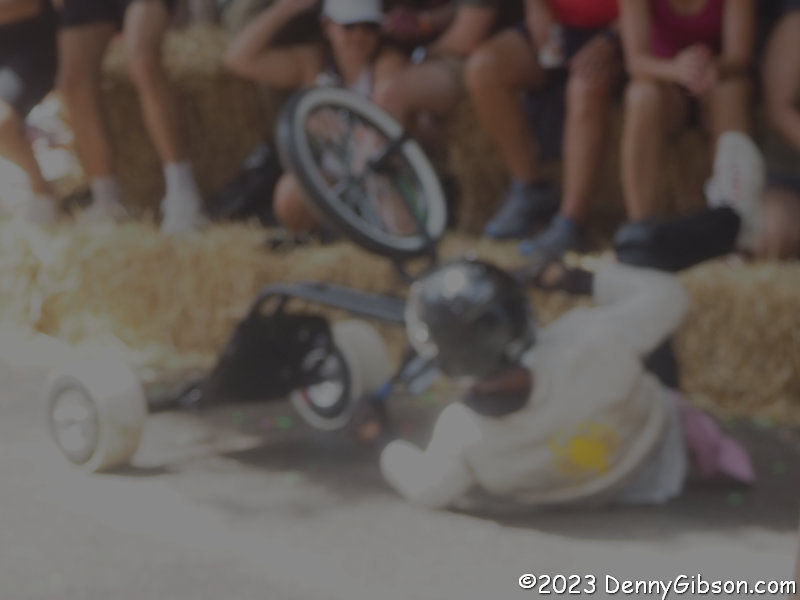
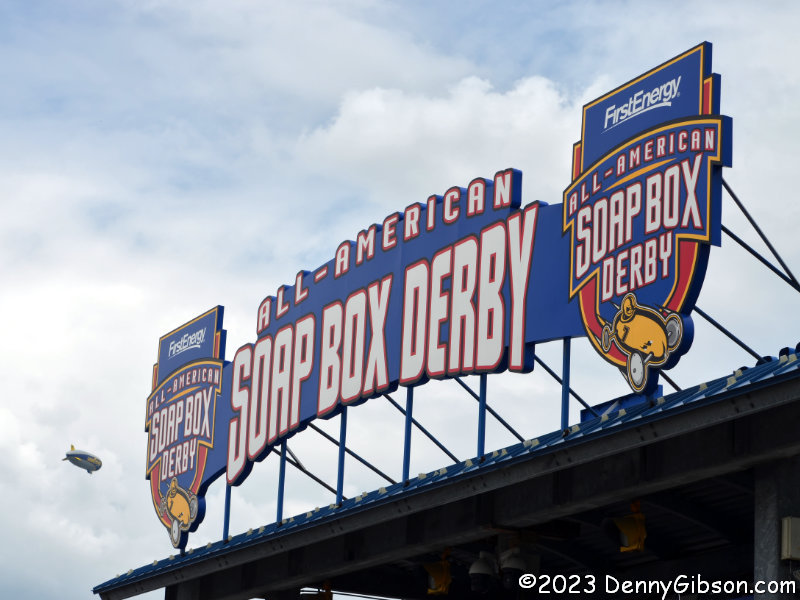
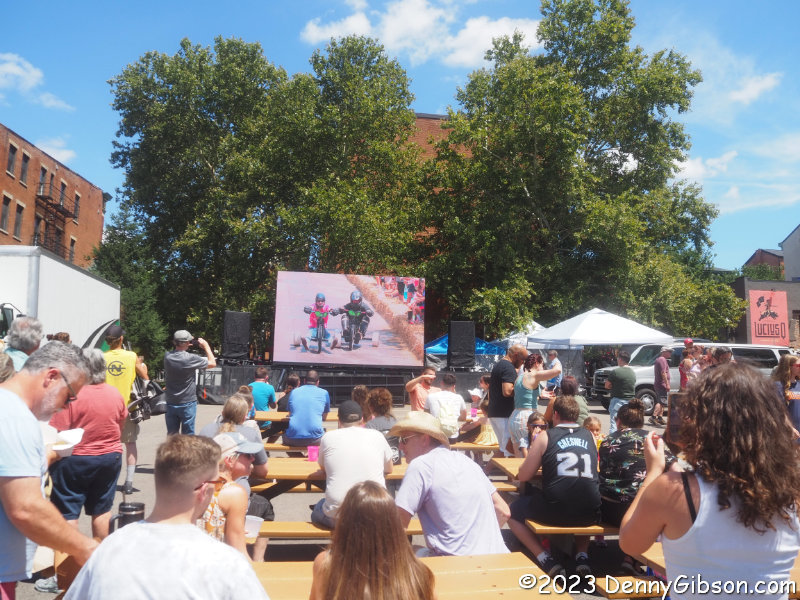 I didn’t feel like forcing my way to the front or staying in one place long enough to move up through attrition assuming that was even possible. I could see some of the action fairly well but had no clear shot for photos. The closest I came to capturing any of the mayhem was this fuzzy shot. The picture at right shows a large video screen in the parking lot where most of the food trucks were. Live racing was shown on this screen and on screens inside most of the businesses in the area. The longest stretch of racing that I actually watched was inside one of the breweries while also enjoying some cool air and cold liquid.
 I did not stay until the champion was crowned. Just like last week at the Soapbox Derby, I had no one to root for. The winner of each heat was announced but the names were meaningless to me and I did not pursue standings.
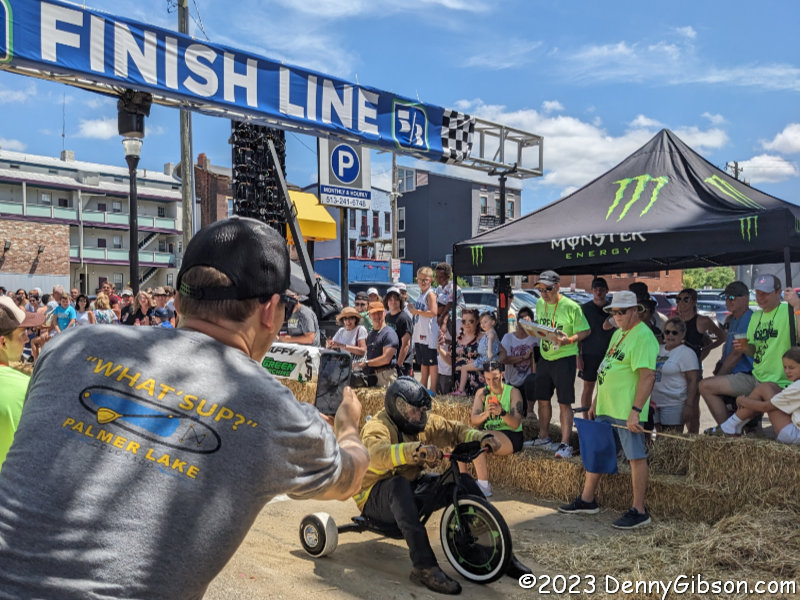 But I still consider it one of the coolest events I have ever attended in Cincinnati. It was absolutely great fun to watch but, once I understood that the helmets and padding were not just for show, I lost any desire to participate. I do still wish I could have spun that low-slung speedster around in the driveway fifty years ago, however.
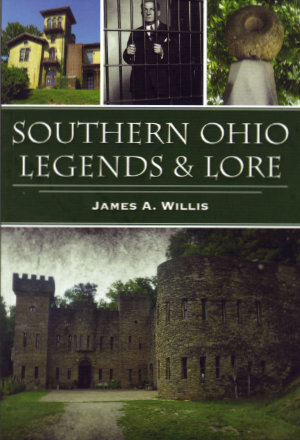
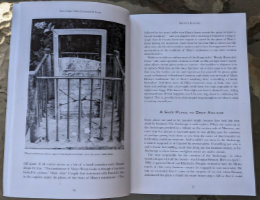 The stories are divided into six sections: “Ghostly Legends”, “Legendary Characters”, “Legendary Villians”, “Legendary Places”, “The Unexplained”, and “Legendary Events”. Having lived my entire life in southern Ohio, I was already at least somewhat familiar with most of them. There are exceptions including all four “Ghostly Legends”. It is the only section where every story is new to me and it is the only section dealing more or less directly with possibly supernatural phenomena. I’m thinking those two facts might very well be related. I’m also thinking that this is the right place to mention that Willis is the founder and director of the paranormal research group The Ghosts of Ohio. I find it somehow reassuring that this is also the only section where that comes into play and even here there is no straying from the “verifiable facts” approach.
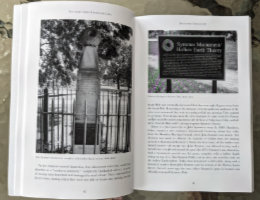 I don’t believe I learned anything new about any of the “Legendary Characters” but I appreciate the concise and complete descriptions. Willis’ reporting on John Symmes and his hollow earth theory is among the most even-handed and comprehensive I’ve read. Likewise, his tale of “Legendary Villian” George Remus where I did learn a few details for the first time.
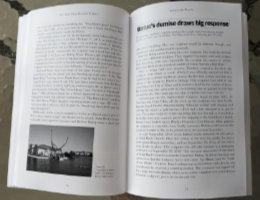 “Legendary Places” combines a place I had never heard of (Athens Pentagram) with three that I am quite familiar with. That somehow makes it my favorite section. One of the three familiar places, the Loveland Castle, was the subject of a blog post here