Book Review
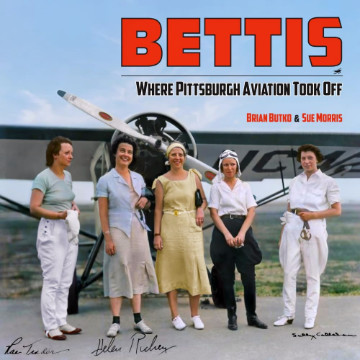
Bettis
Brian Butko and Sue Morris

I was aware of this book when it was published, and I was interested in reading it. But not so interested, it seems, to actually order it. My interest in the book came from a general interest in early aviation history that anyone growing up in the land of Wilbur and Orville, as I did, should come by naturally. The lack of urgency came from the fact that its proclaimed subject was an airport in another state. It was a nearby state, but it wasn’t my state. It took a visit by the authors to a nearer and more familiar airport to finally put a copy in my hands.
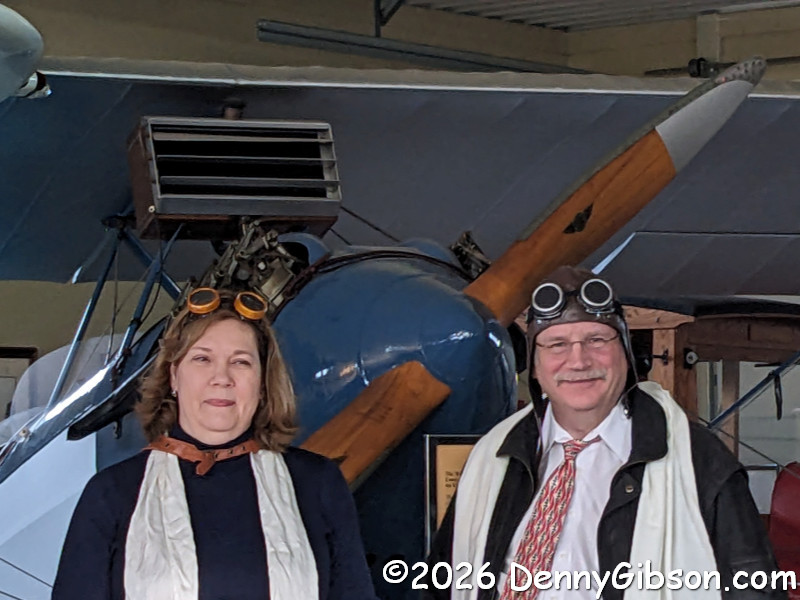
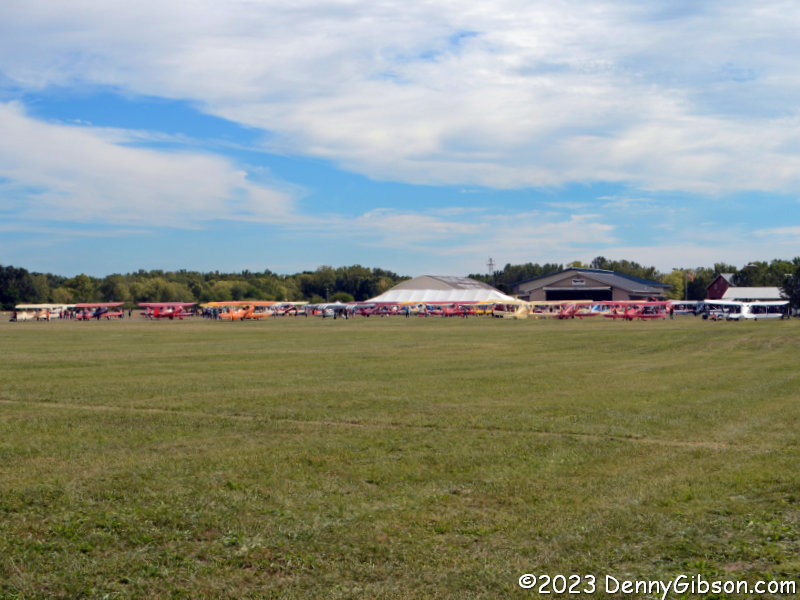
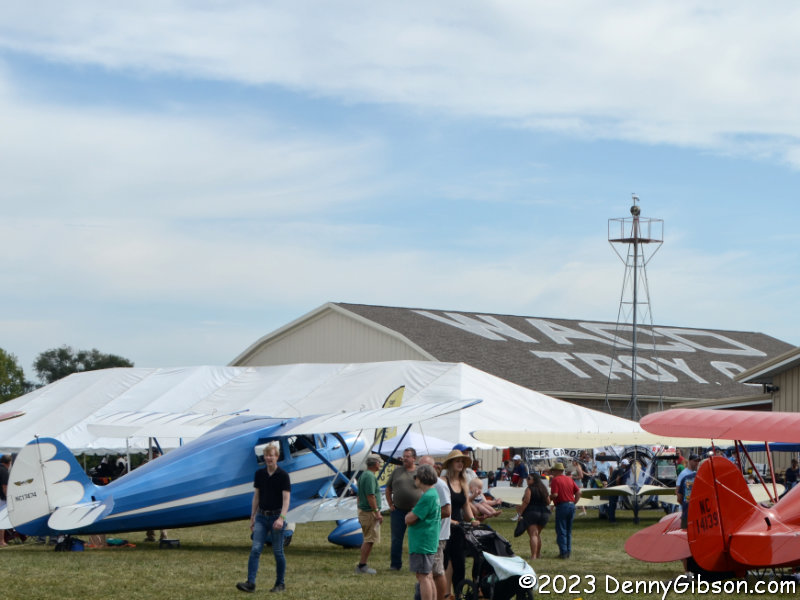
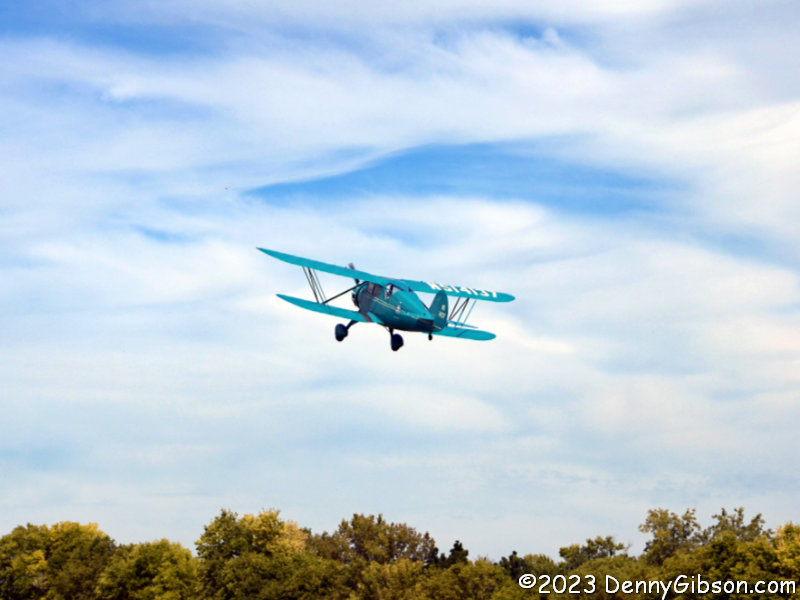
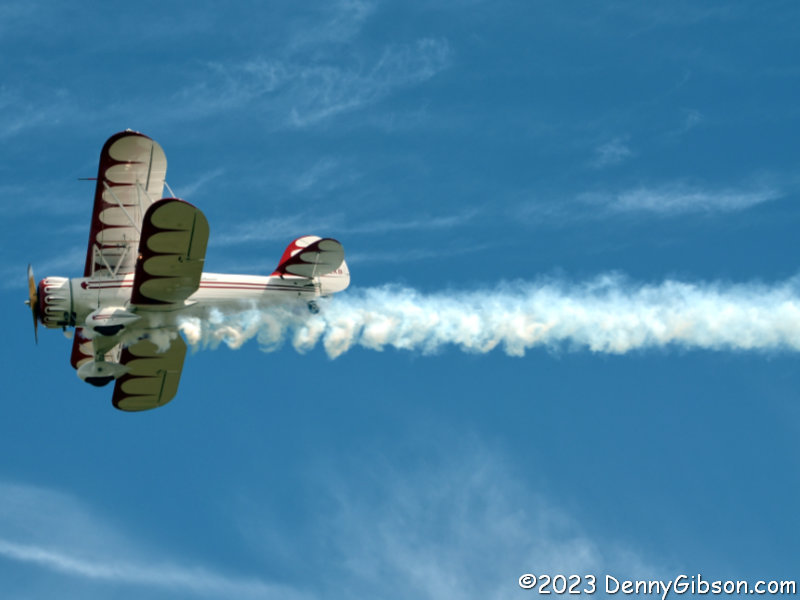
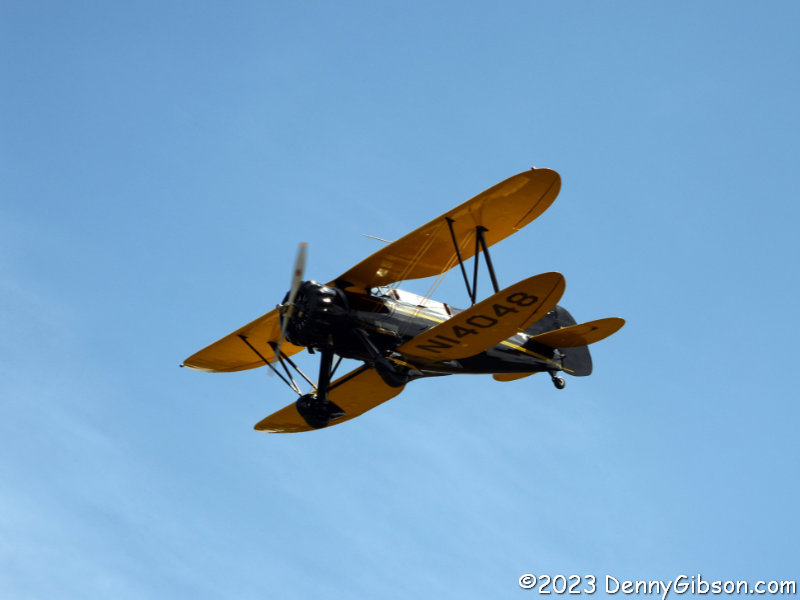
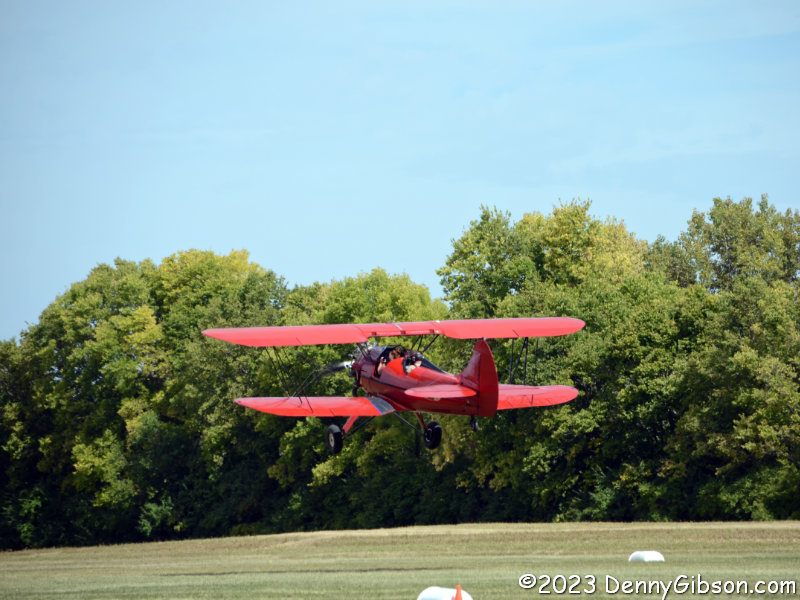
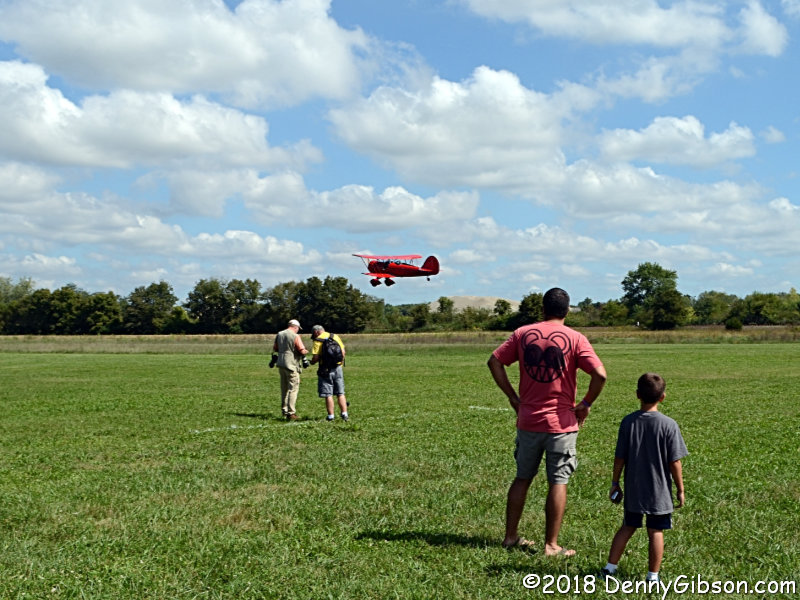
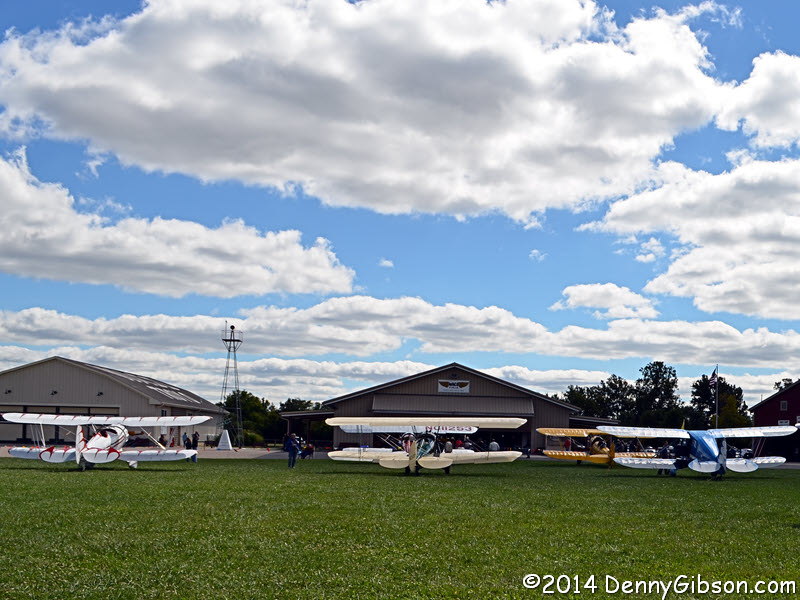
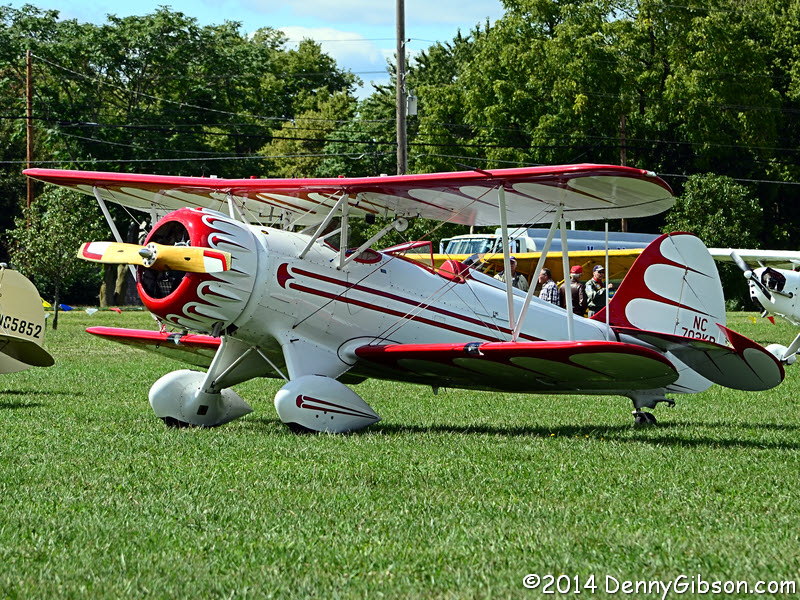
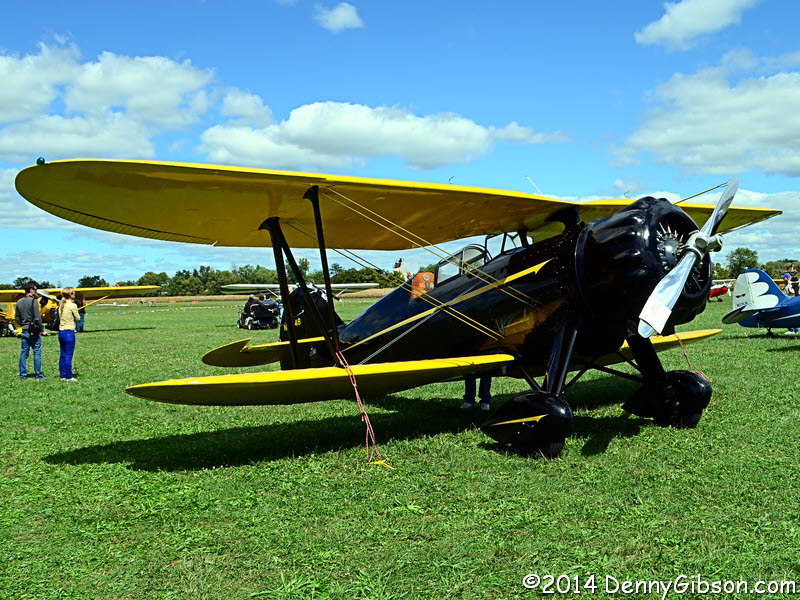
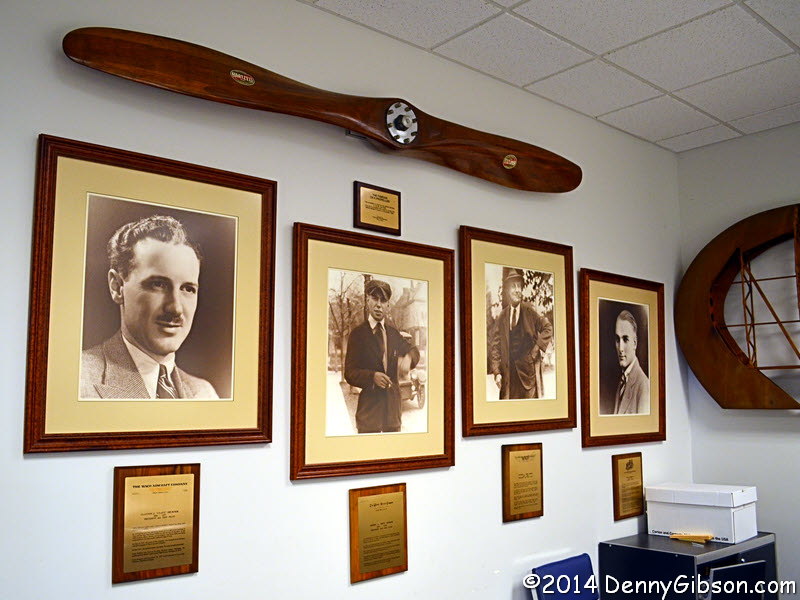
That nearer airport was WACO Field in Troy, OH. WACO airplanes were once manufactured in Troy, and I have attended a few of the annual fly-ins that take place there. The most recent for me was the 100th anniversary of the company’s 1923 move from Lorain, OH, to Troy. Morris and Butko were, as you can see, dressed appropriately. Brian is a friend. This was my first time meeting Sue. Both are from Pittsburgh and passionate about their city. When I first heard of the WACO event, I assumed it was simply to take advantage of a semi-close historic airfield. But even before the presentation began, I learned that there was a much more meaningful connection. More on that in a bit, but I will note that there is a hint in the photo on the left.
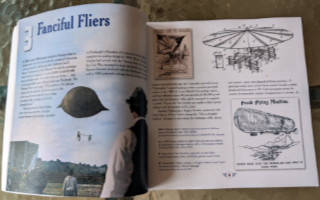
I really was not surprised that Morris and Butkos begin their story long before there were any such things as airports or even airplanes. They do it with a Pittsburgh twist, of course, and tell about early inventors and adventurers connected to the city. I got a chuckle from a quote they share about a 1897 flight by Professor Carl E. Myers and his skycycle. The skycycle appears to be a balloon with a seat and pedals suspended below it. As reported by The Pittsburgh Press, it did fly and eventually floated out of sight while “The professor, if he had any control over the skycycle, did not exercise it.”
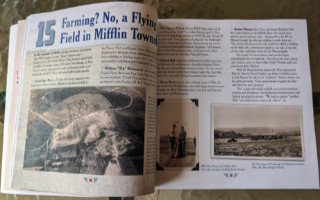
Of course, skycycles and other “Fanciful Fliers” fell out of favor once airplanes came along, and particularly after they were proven practical in World War I. Morris and Butko share the stories of several Pittsburghers involved in wartime aviation and the barnstorming that war-surplus aircraft gave rise to after the hostilities ended. It was a group of Pittsburgh barnstormers that gave birth to the airport that would be named Bettis Field in 1926. One of them, Clifford Ball, provided a slogan that would eventually be modified for a different field and some different dreams: “Build the nests and the birds will come.”
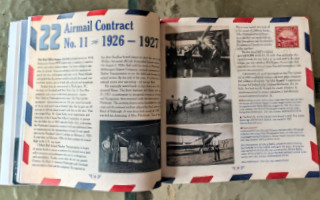
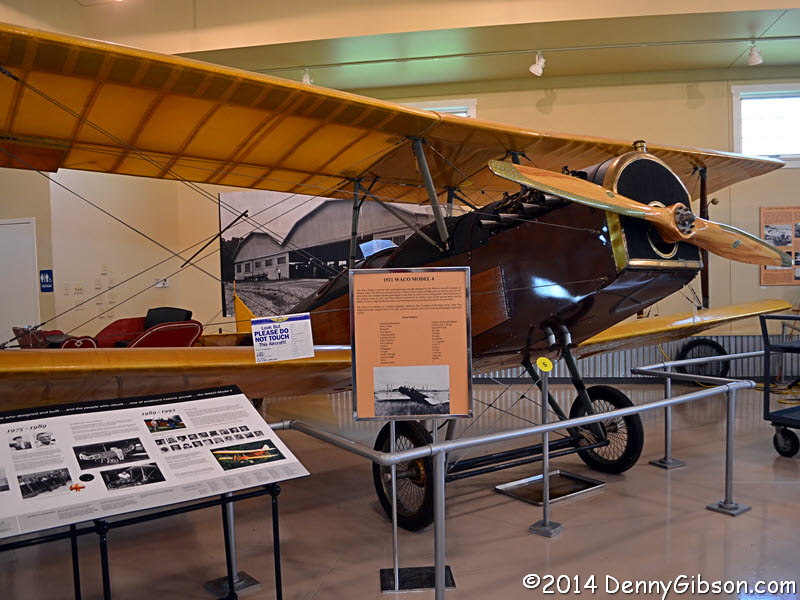
Also in 1926, Ball sold his interest in the airport to form Skyline Transportation to pursue a government airmail contract. He did get the contract and purchased three airplanes to service it. Here’s where that WACO connection mentioned earlier comes in. The three planes were WACOs named Miss Pittsburgh, Miss McKeesport, and Miss Youngstown. Miss Youngstown was destroyed in a wreck; Miss Pittsburgh hangs at the Pittsburgh Airport; and Miss McKeesport is in the WACO Museum, parked behind Sue and Brian in the photograph above. There is another view, sans authors, here.
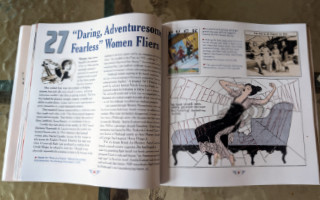
Morris and Butko have uncovered and included an impressive number of stories about people and events connected with Bettis Airfield. It was one of the stops on Charles Lindbergh’s tour following his cross-Atlantic flight, but the Spirit of Saint Louis had to be slid sideways into a hangar because its wings were wider than the door. Quite a few black pilots trained at Bettis, but for a period, had to go to another state to be licensed because the designated federal inspector simply refused to pass them. A fairly large number of female pilots, some of whom were rather famous, were associated with Bettis. Passengers were sometimes flown on airmail flights, sitting on bags of mail; then, in 1929, real passenger service — with seats — was added.

As you can probably tell, all of these stories are well illustrated with period photos and other images. Chapters are short, with an even number of pages (2 or 4), so that each one begins on a left-hand page. That’s something I’ve noted in other Butko books, although I don’t doubt that others do it too. The book is clearly focused on Pittsburgh, and Pittsburgh residents might get a little extra kick from some of the local references, but everyone can enjoy its entertaining look at early aviation. I’m sure glad I went to that Ohio airport to learn about one in Pennsylvania.

Bettis: Where Pittsburgh Aviation Took Off, Brian Butko and Sue Morris, Heinz History Center (December 1, 2024), 8.5 x 8.5 inches, 124 pages, ISBN 978-0936340326
Available through Amazon.
Warbirds Revisited

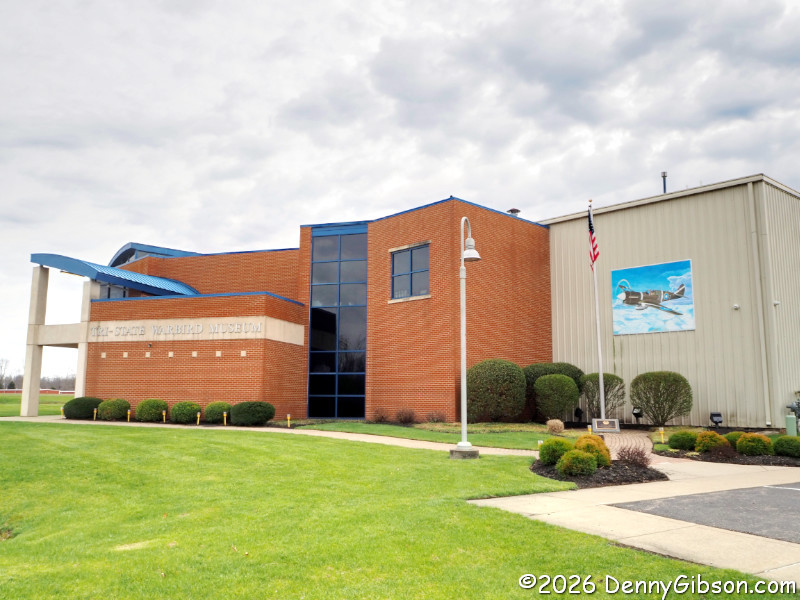
I first visited the Tri-State Warbird Museum in the pre-blog days of 2010, when this website used things called odments to deal with non-trip topics. The oddment for that 2010 visit, which is here, attracted a couple of visitors recently, and that prompted me to reread it myself. The first paragraph mentions that both the Warbird Museum and another museum visited the same day, the Railway Museum of Greater Cincinnati, were open only on Wednesdays and Saturdays. That stuck with me so that when I was looking for something to do on a Wednesday, the Warbirds naturally came to mind.

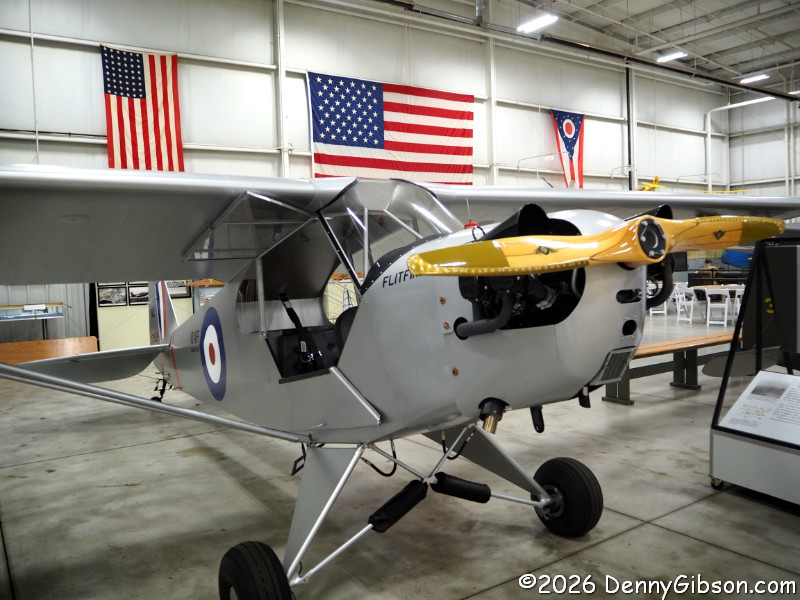
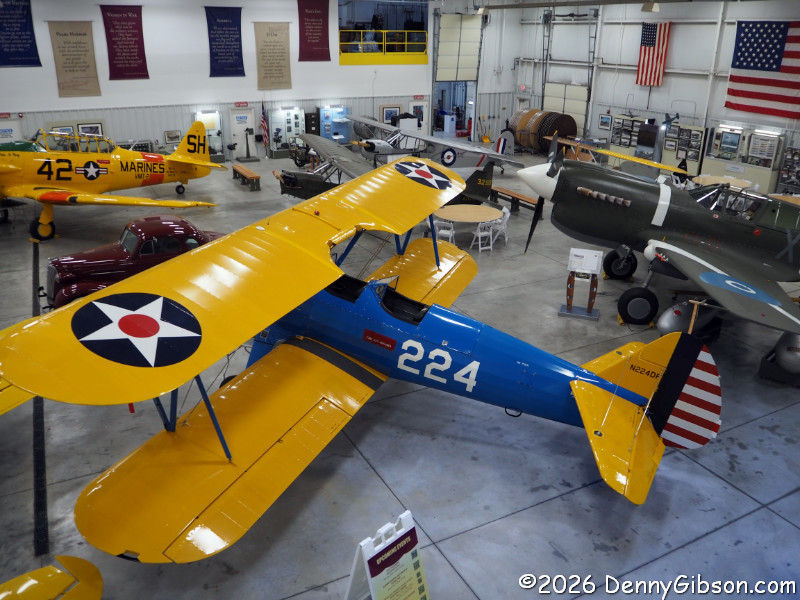
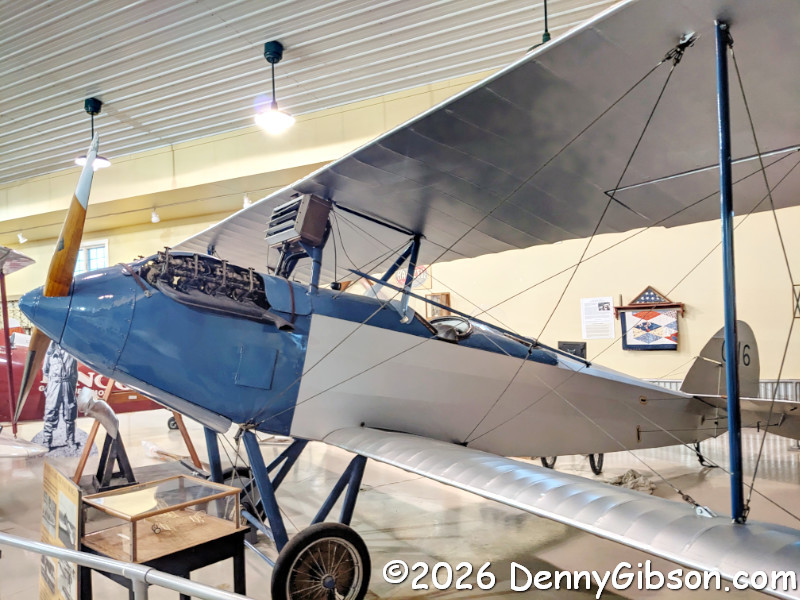
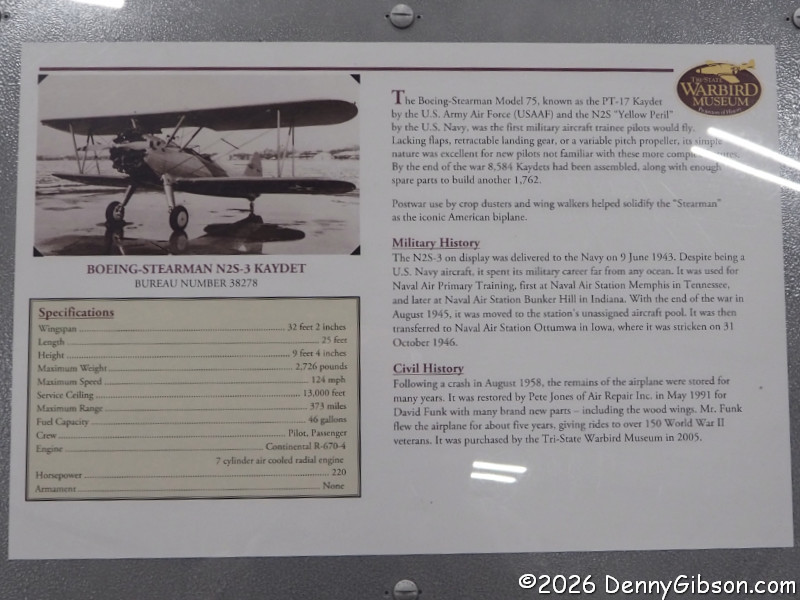
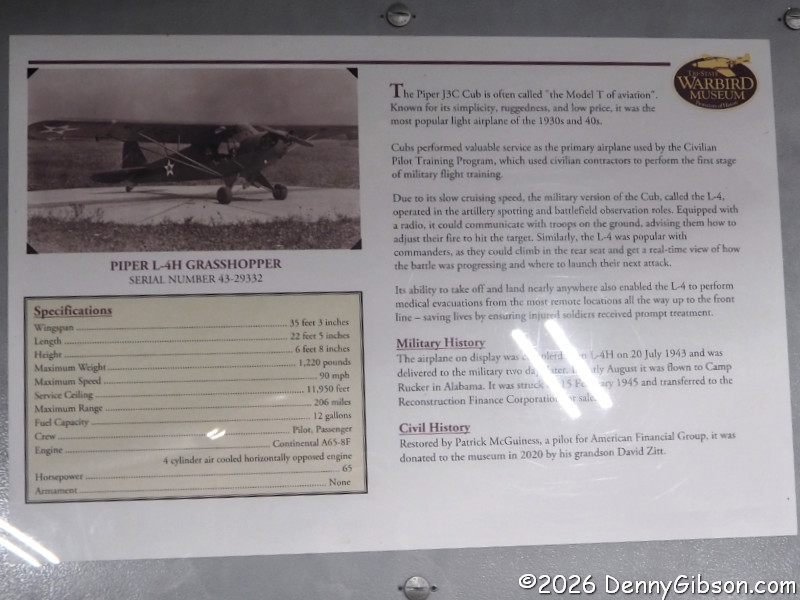
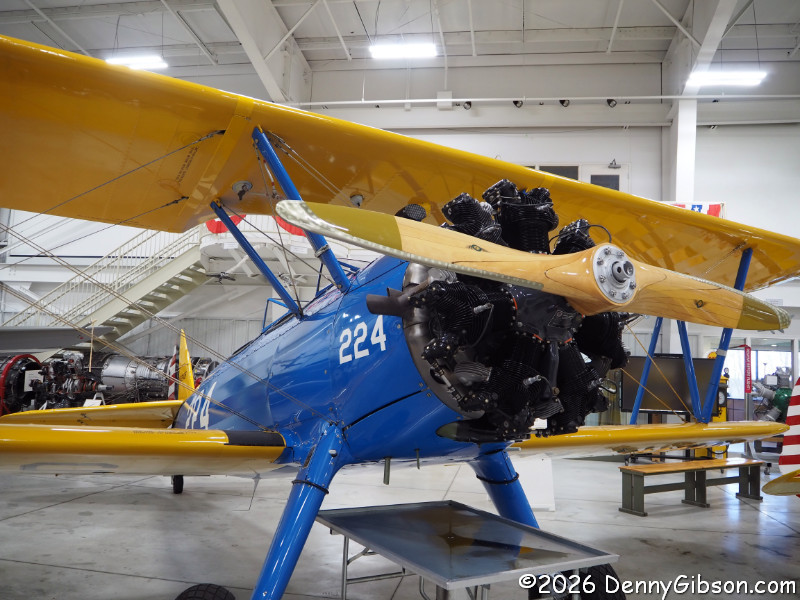
Nearly all the airplanes on display are from World War II, including this unlikely-looking pair. Flying the Boeing-Stearman bi-wing was relatively simple. It was the first airborne step for many new military pilots. The Piper L-4H Grasshopper was the military version of the extremely popular Cub. Its ability to fly low and slow made it very useful in training, observation, medical evacuation, and more.

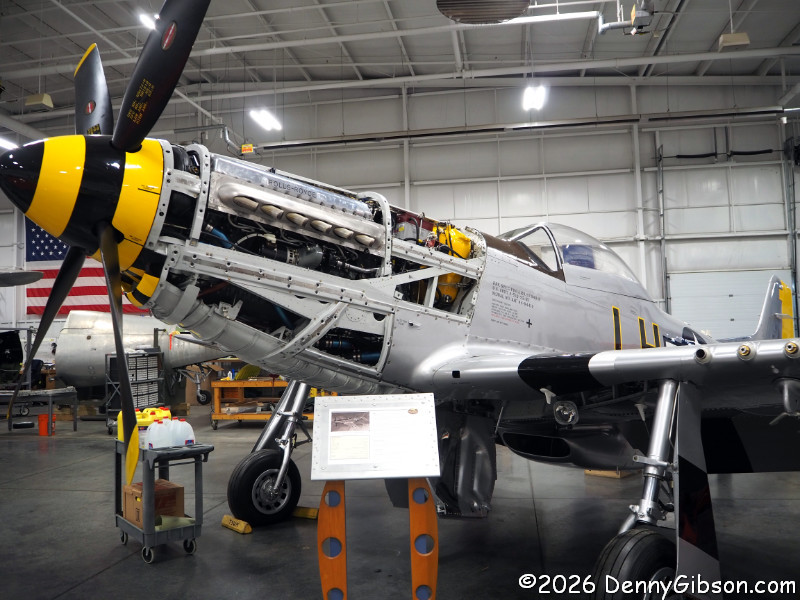
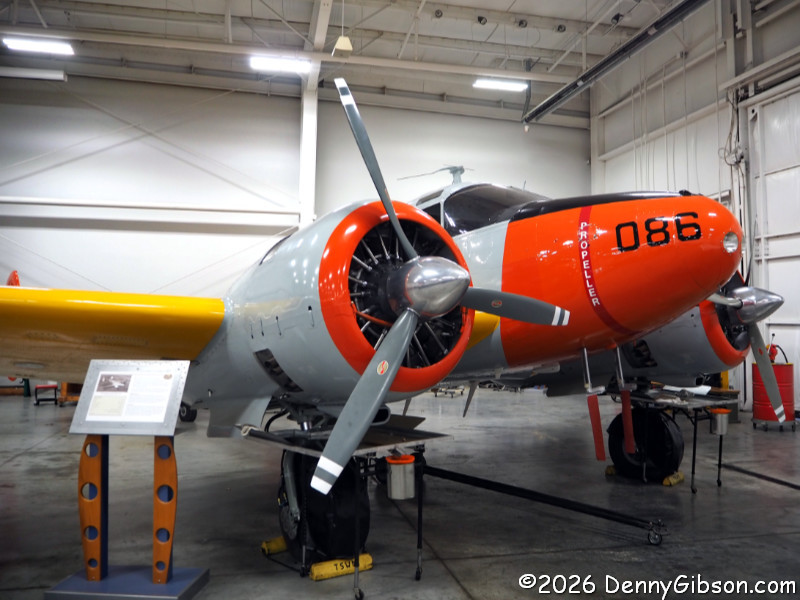
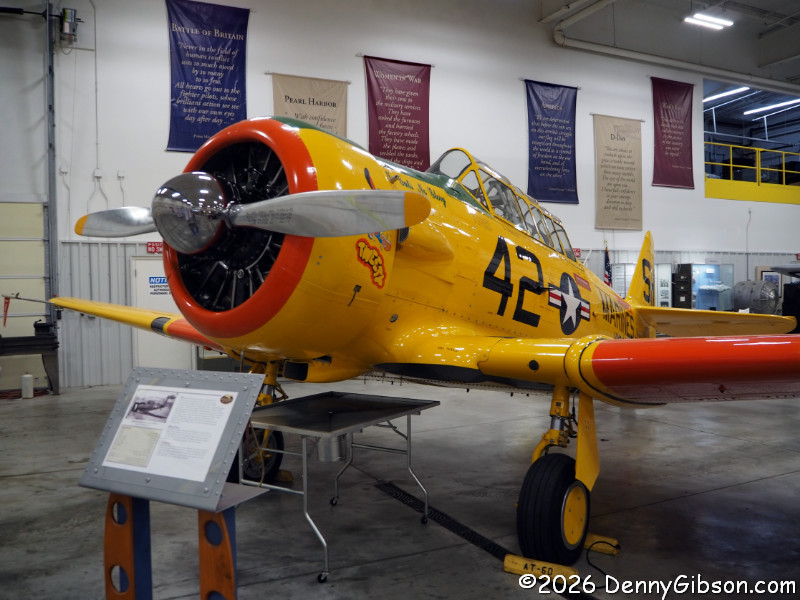
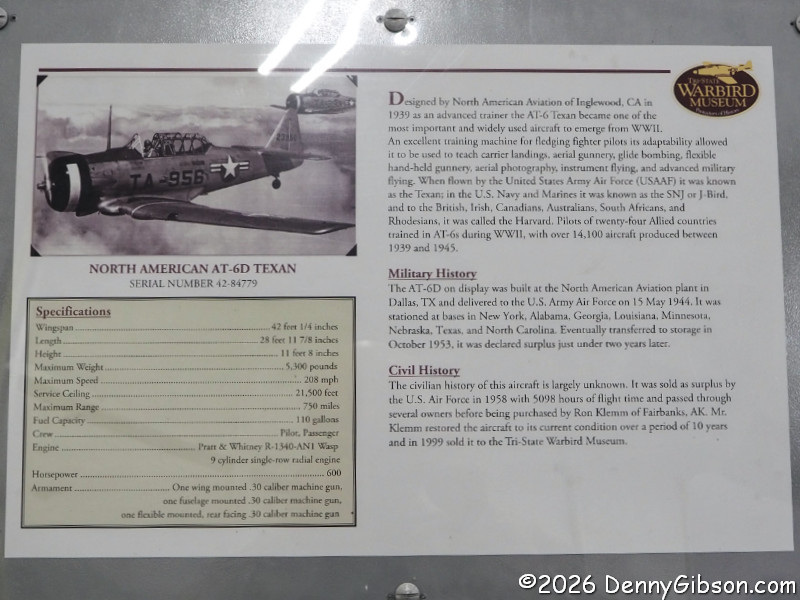
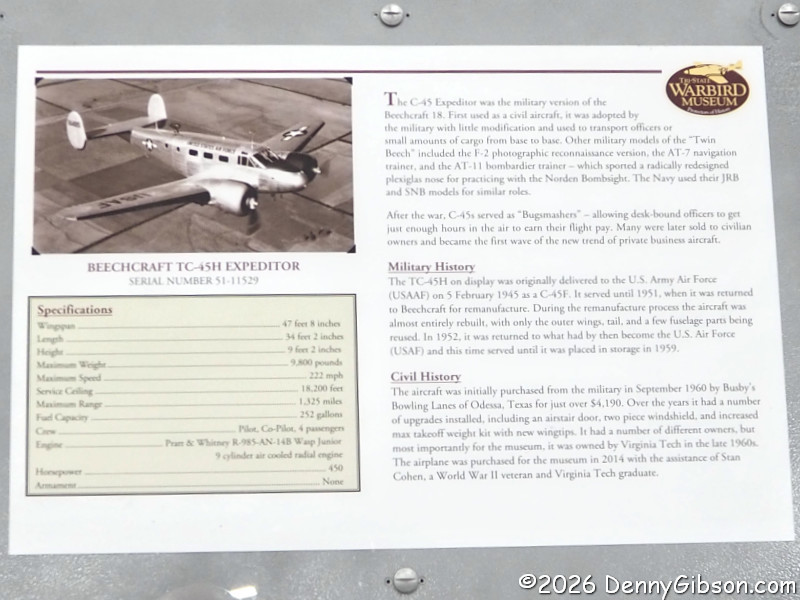
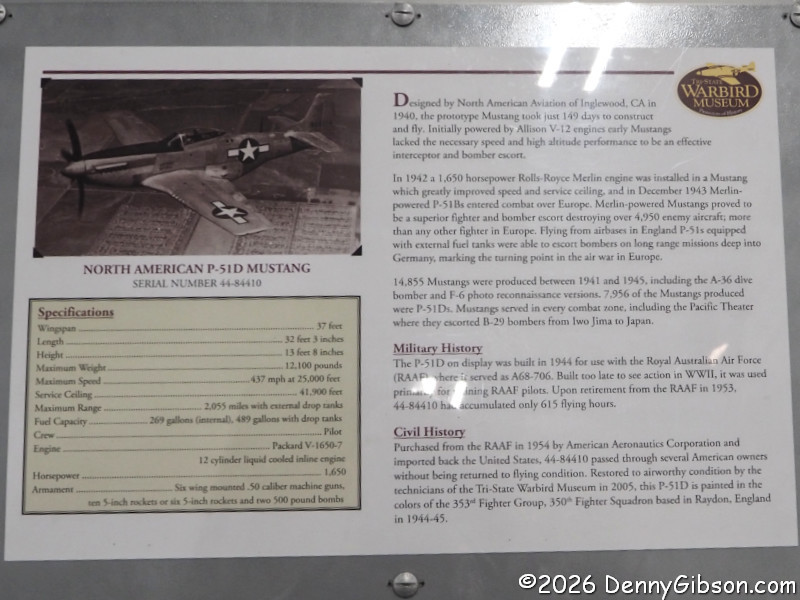
These three probably more closely match your idea of WWII fighting aircraft. Like the Stearman, the bright yellow North American AT-6D was a trainer, but it was used for more advanced maneuvers, such as aircraft landings. The twin-engined Beechcraft TC-45H Expeditor was originally designed as a civilian craft but was adopted by the military as a versatile transport plane. North American P-51 Mustangs were very effective as bomber escorts and served in every theater of WWII.

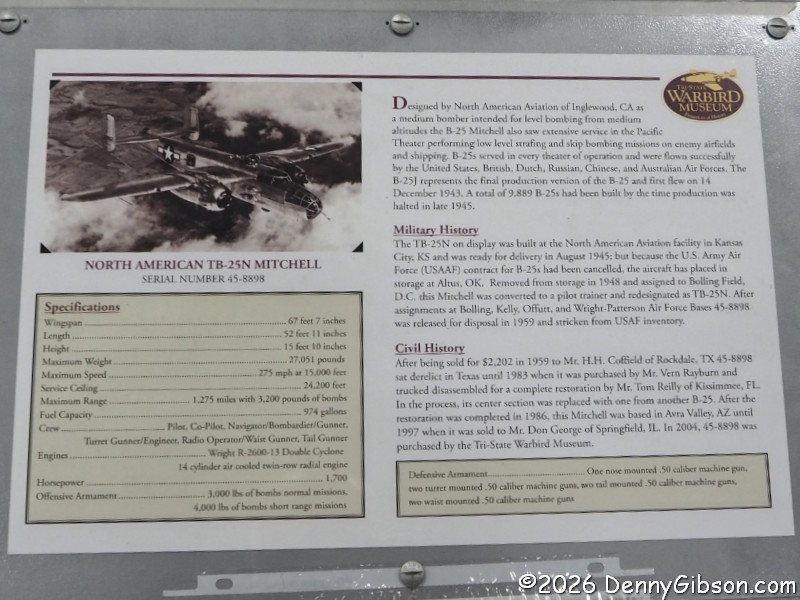
This North American TB-25N Mitchell might be the museum’s biggest star. It is my biggest memory, in any case. That could be because about two years after my 2010 museum visit, I saw this and 19 other B-25s in flight at the Doolittle Raiders 70th reunion. The sight of all those big planes was pretty impressive, and the sound was incredible.
ADDENDUM 27-Aug-2014: I somehow failed to mention how friendly and helpful the volunteers at the museum were, but I now get a second chance. As I originally put this post together, I noticed that the nose art on the B-25 had changed since my 2010 visit, and I reached out to the museum via email to see why. I now recall being told that a couple of the museum’s planes had appeared in movies and TV shows, but I had not paid much attention. As I quickly learned, the B-25 name change came from a movie role with another local star. The story is here.
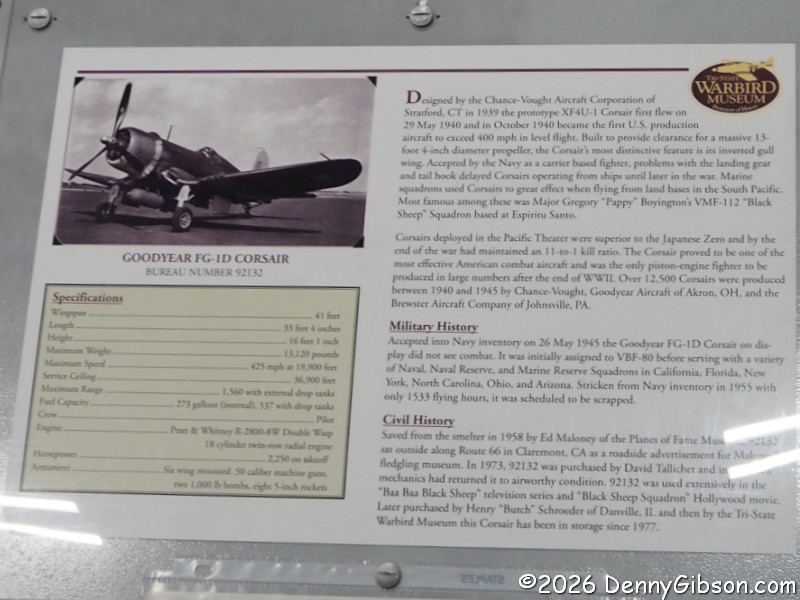
A couple of the museum’s planes were not at home Wednesday, but every plane that was there was capable of flying except one. This Goodman Corsair is in the process of being restored, with some assembly required before it leaves the hangar.

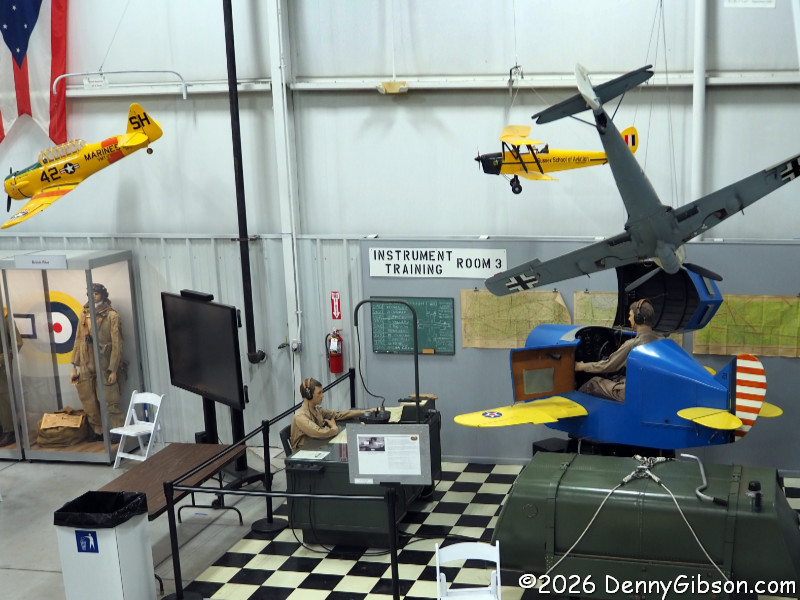
On the way back to the museum’s front door, I climbed to the balcony to get an overhead shot then snapped one of the flight simulator area on the way down.

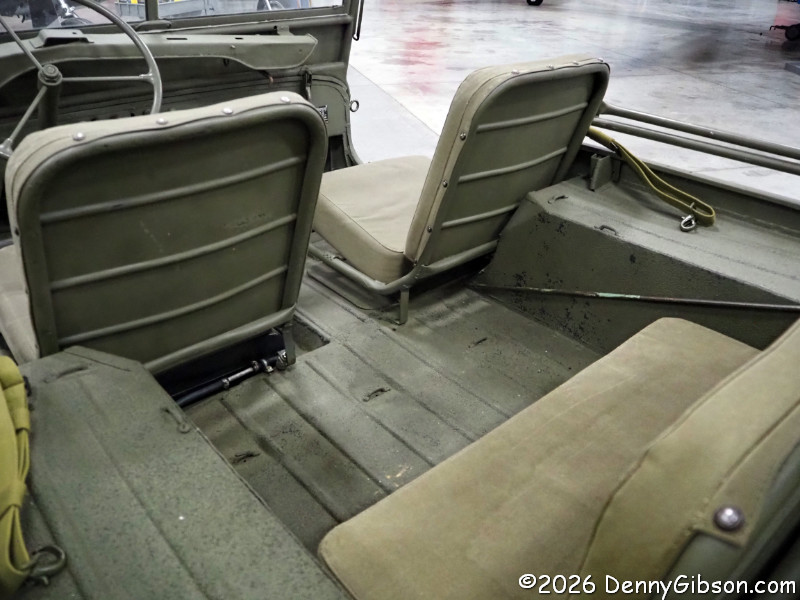
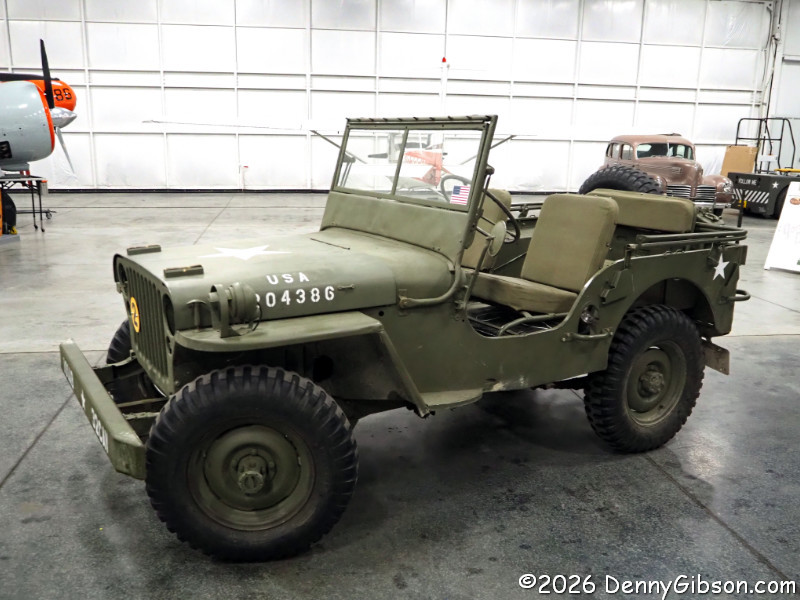
This isn’t a warbird, but it is the sort of vehicle my Dad piloted during the war. He was a courier. Every time I see a Jeep from that era, I think of one of the few stories he ever told of those days. During the Battle of the Bulge, snow covered the ground, which was where most soldiers slept. He considered himself lucky to have his Jeep to sleep in. He could even lie down on his side between the seats, “but I had to stand up to turn over.”

A Big WACO Birthday

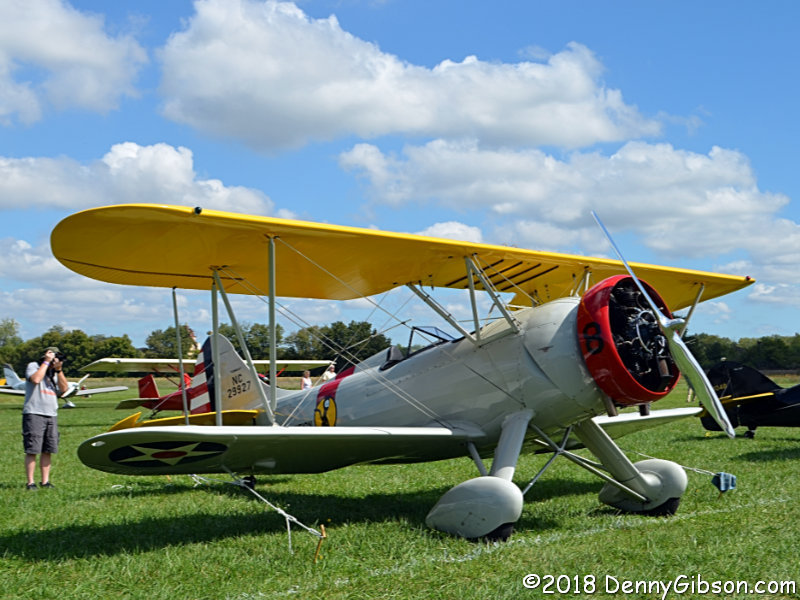
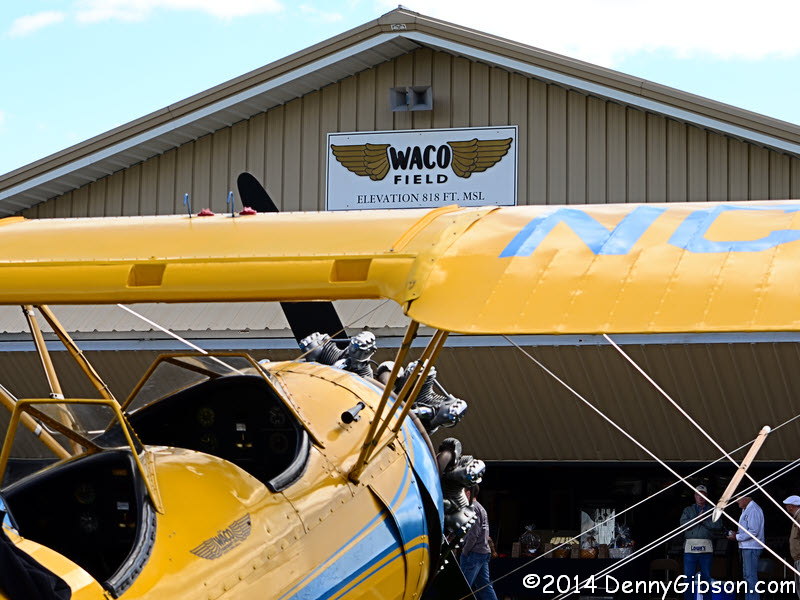
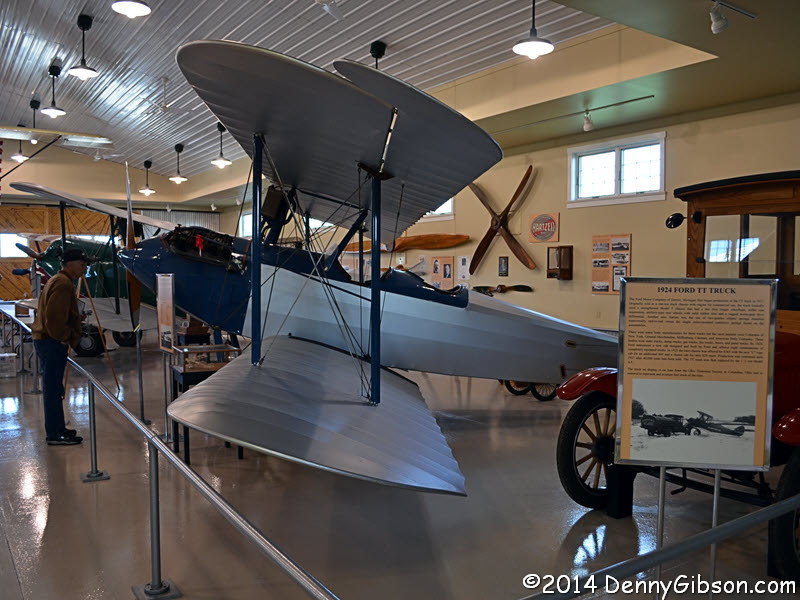
It was one hundred years ago that the Weaver Aircraft Company moved to Troy, Ohio, and became Advance Aircraft Company. The company’s origins were in 1919 and some name changes had already occurred. One more was yet to come. The planes the company built were always known by the Weaver-based acronym WACO and in 1929 the company formally became the Waco Aircraft Company. The company no longer exists but its memory is kept alive at the WACO Museum and Airfield

I have attended the annual WACO Fly-In a few times including last year. My first visit was in 2006 and I also documented a visit in 2014. This year’s event was much bigger than any of those. The normally ample parking near the museum was filled long before we got there. We parked in an area on the other side of the airfield and rode a shuttle back.

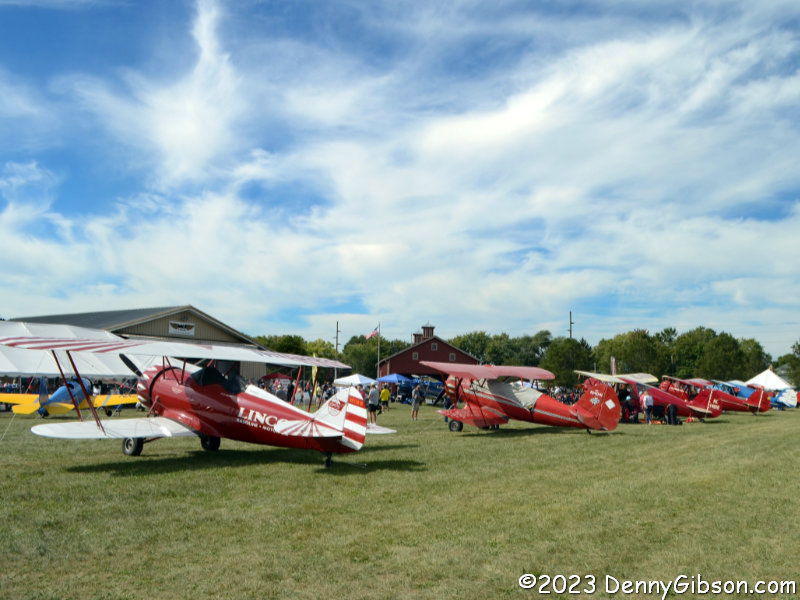
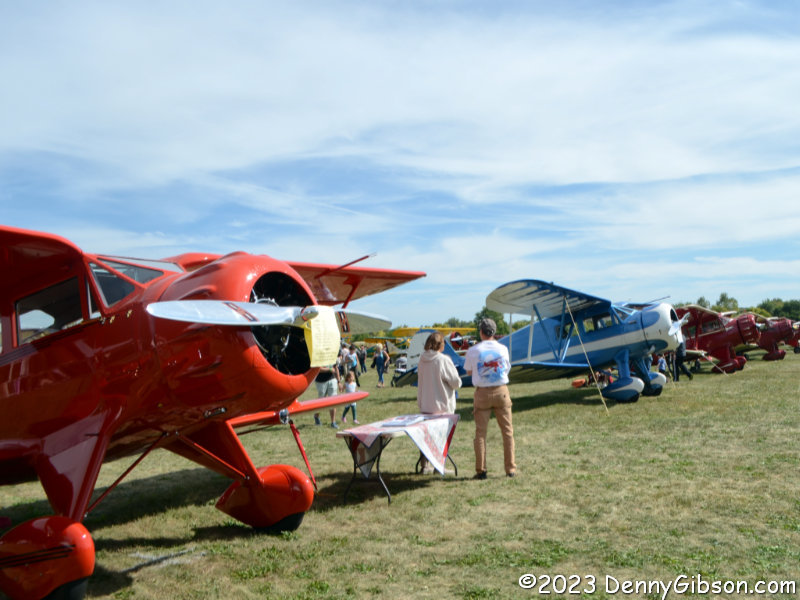
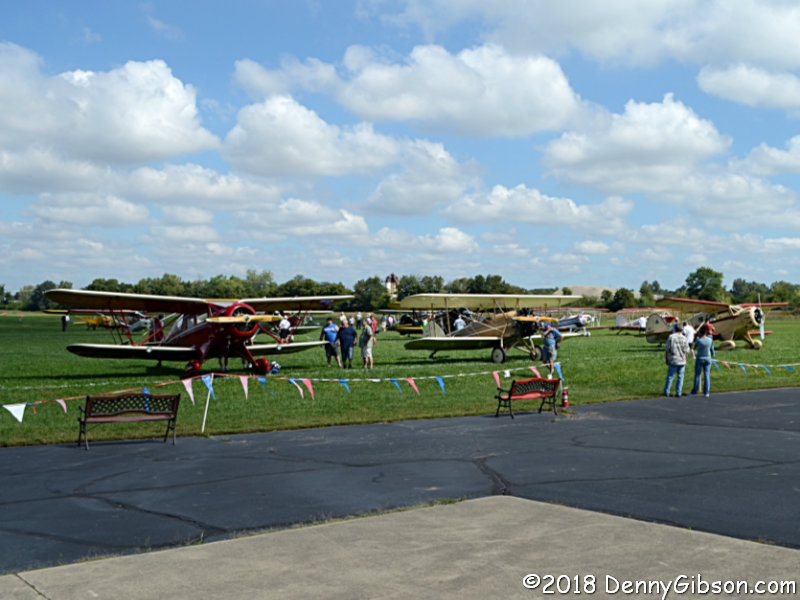
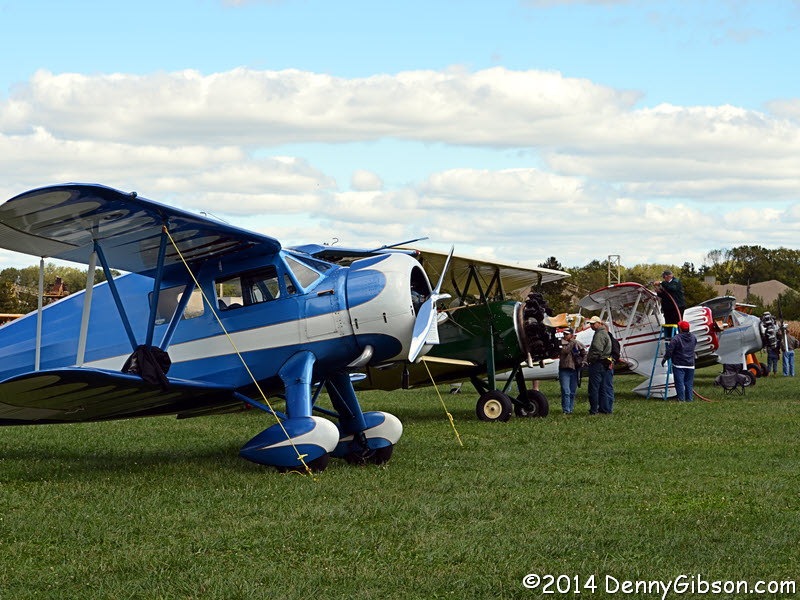
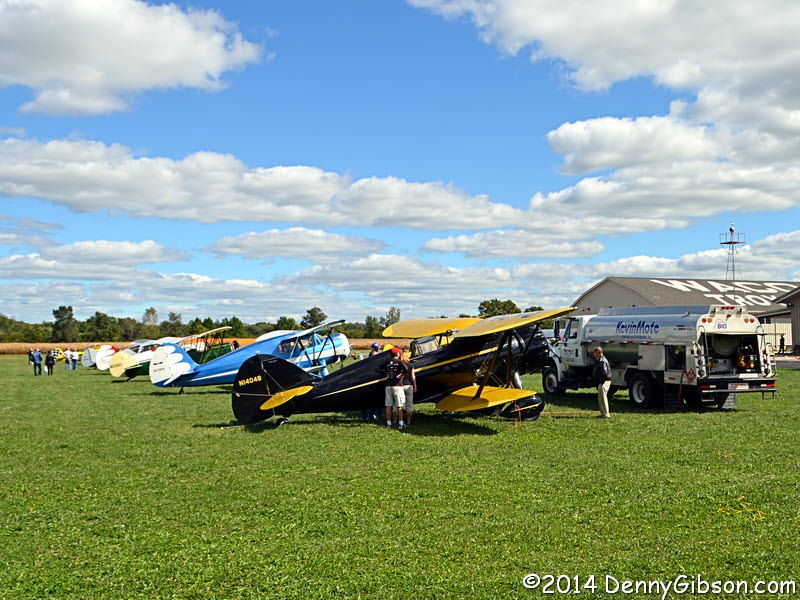
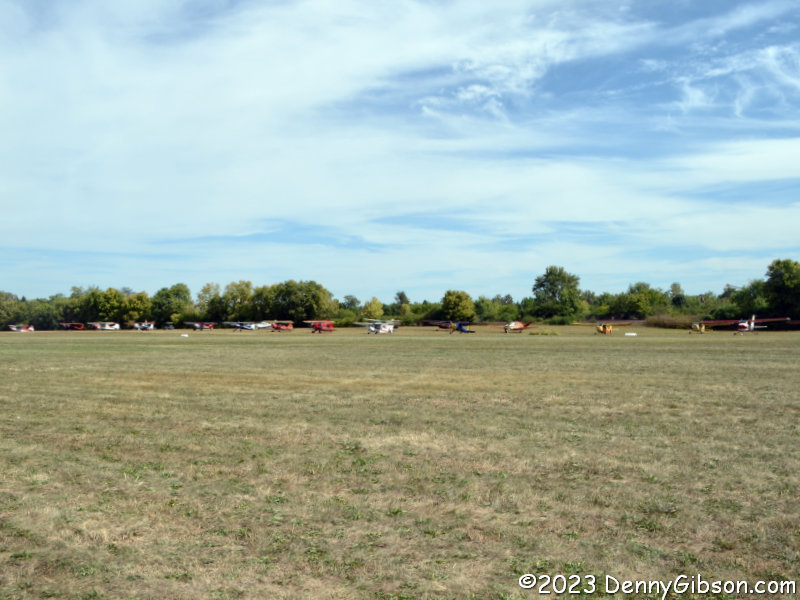
Organizers had hoped to attract 100 WACOs for this 100th anniversary. I’m pretty sure that didn’t happen but there were certainly a lot more there than the twenty or less I’ve seen in the past. I estimated there were 50 to 60 WACOs on the ground. Unlike in previous years, the main airplane parking area was reserved exclusively for WACOs with all other planes relegated to the far side of the airstrip.

In a conversation with another attendee, I learned that this plane was one that I used to watch from the banks of the Little Miami River as it flew over Kings Island in a daily air show. This was in the 1970s when the name WACO would not have meant much to me.

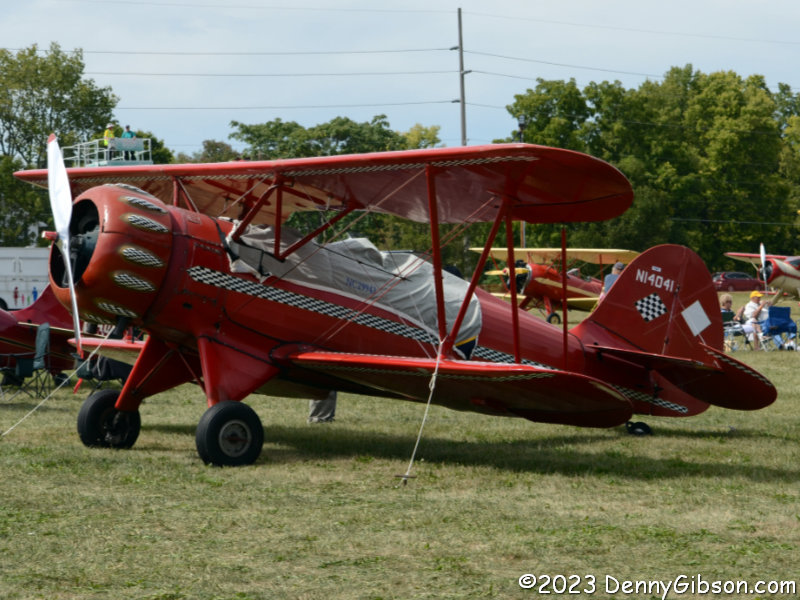
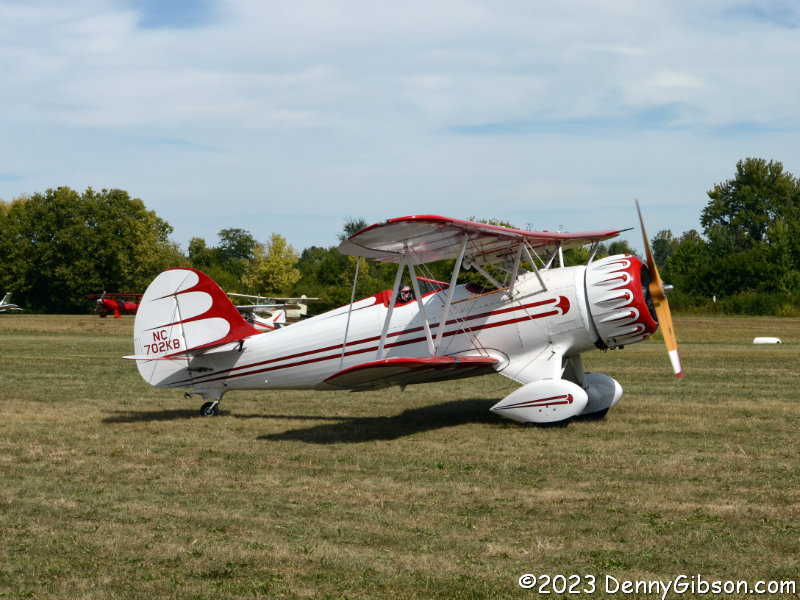
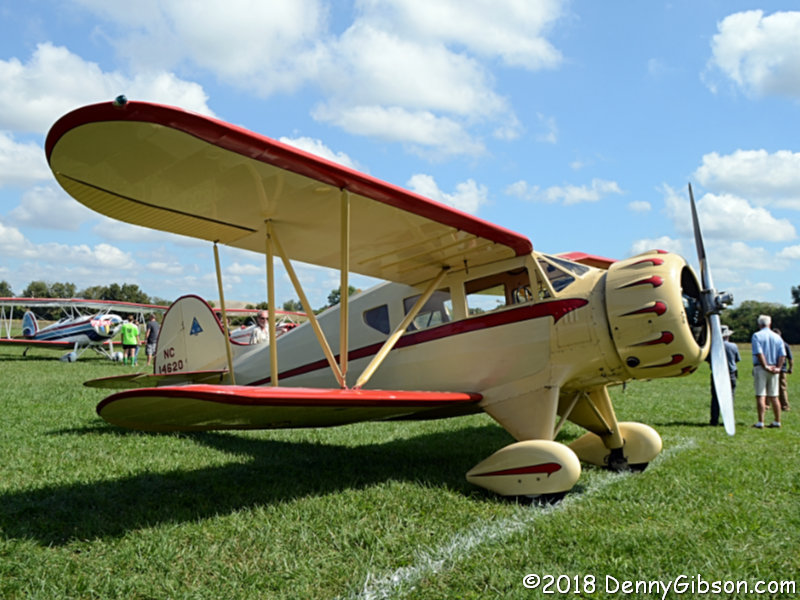
WACOs are beautiful machines whether they are on the ground…

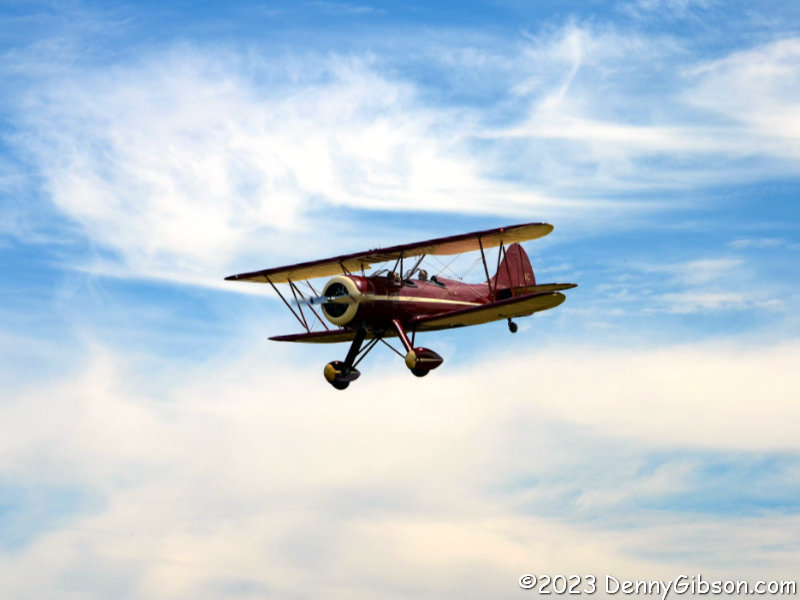
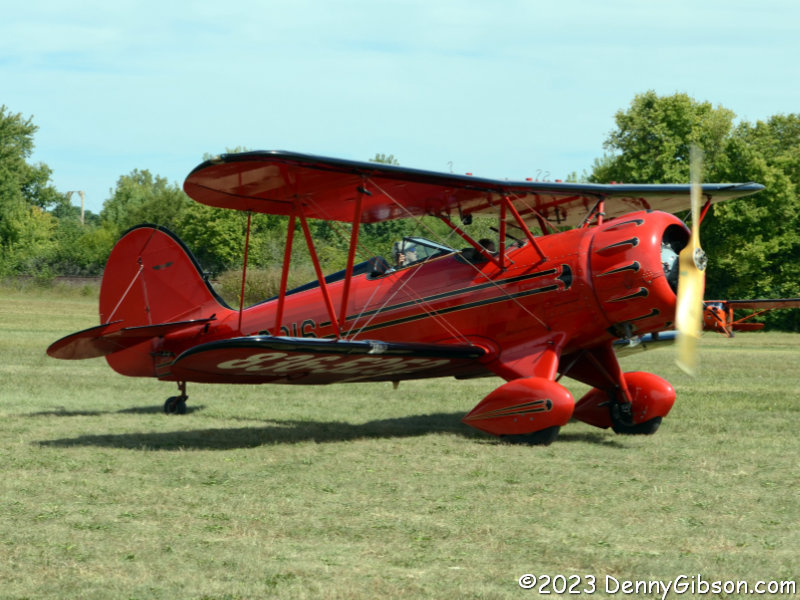
…or in the air…


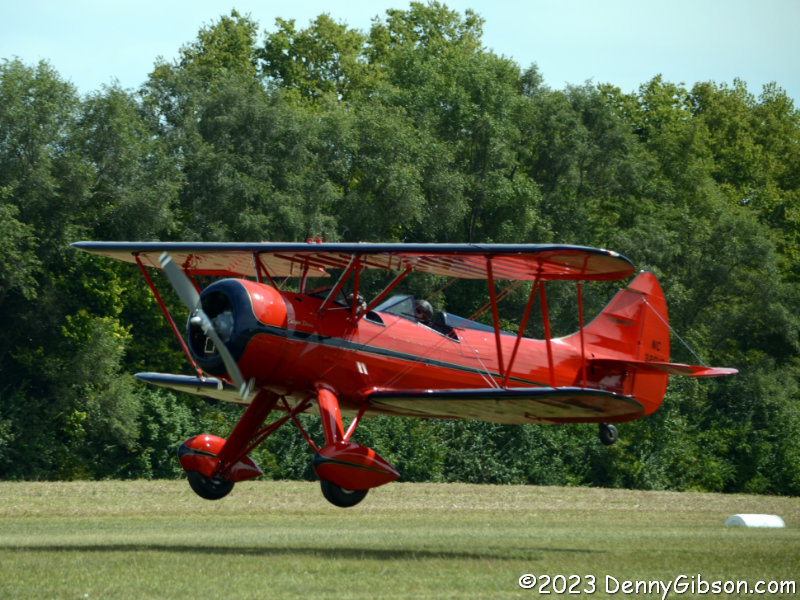
…or somewhere in between.


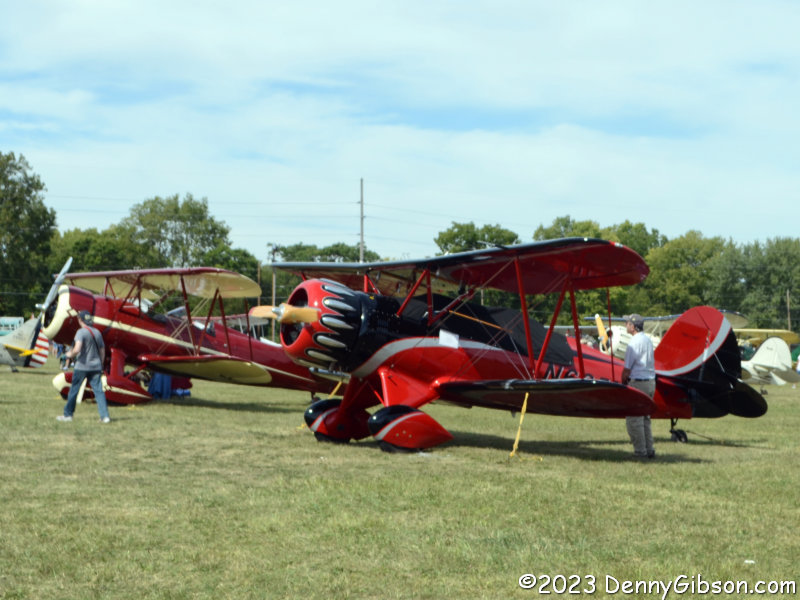
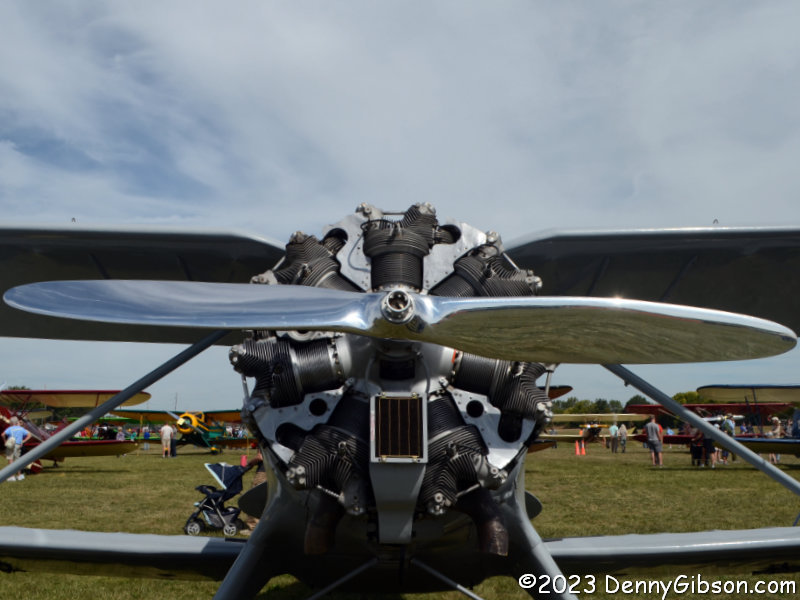
Heck. Even the naked engines can be kind of pretty.

To close, here’s a look at a WACO from every angle: WACO Pirouette

Lunken Airport Days 2023

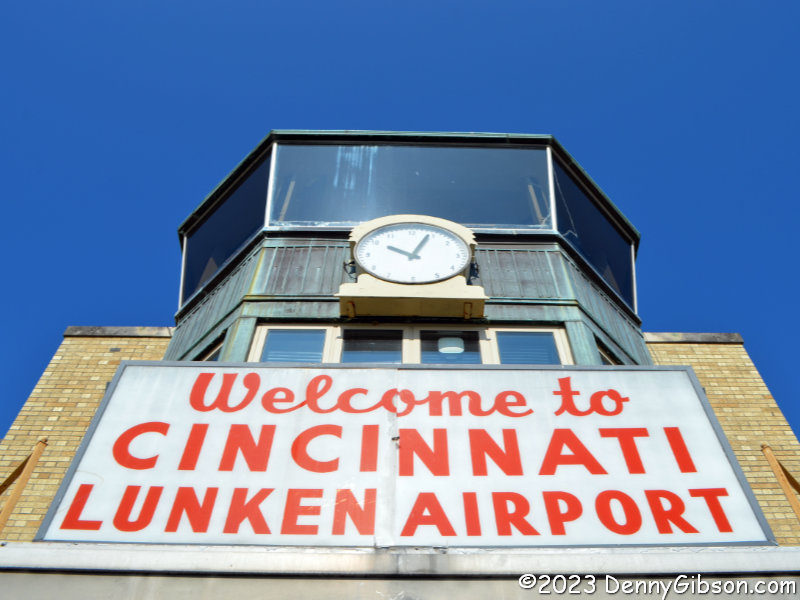
As I imagine the case is everywhere, Labor Day weekend is pretty crowded with activities around here. I picked Lunken Airport Days to fill my Saturday primarily because I had never attended before. It was also the closest of the events I considered and was the only one that was free. Lunken (LUK) opened in the 1920s and was Cincinnati’s principal airport until Cincinnati/Northern Kentucky International Airport (CVG) opened in 1947.

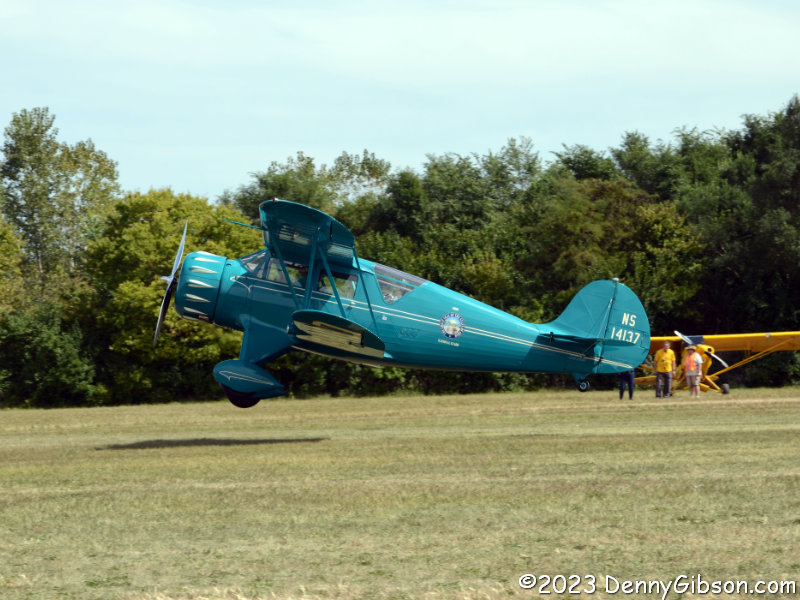
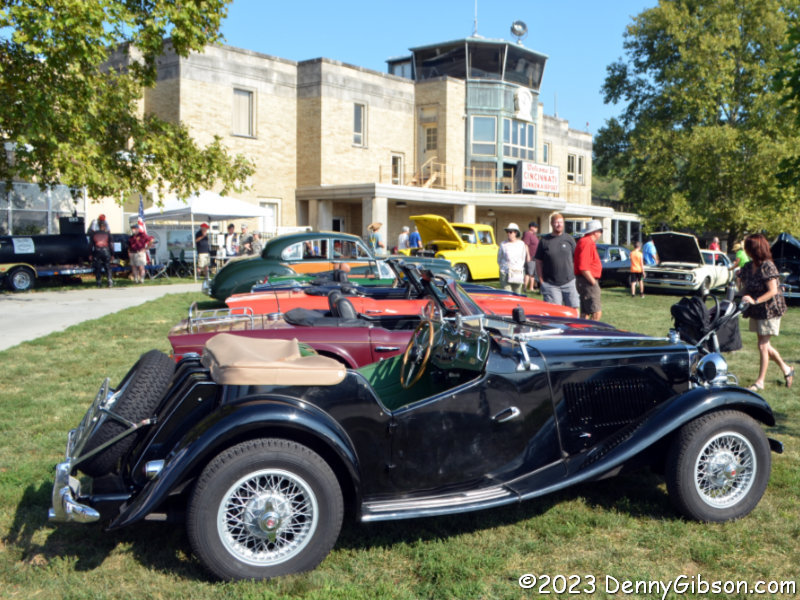
Airport Days is hosted by Cincinnati War Birds so basically features military aircraft. Several classic cars are on display and there are even a few civilian airplanes such as this 1940 WACO. The 100th anniversary of WACO Aircraft Company will be celebrated leter this month at the museum and field in Troy, Ohio.

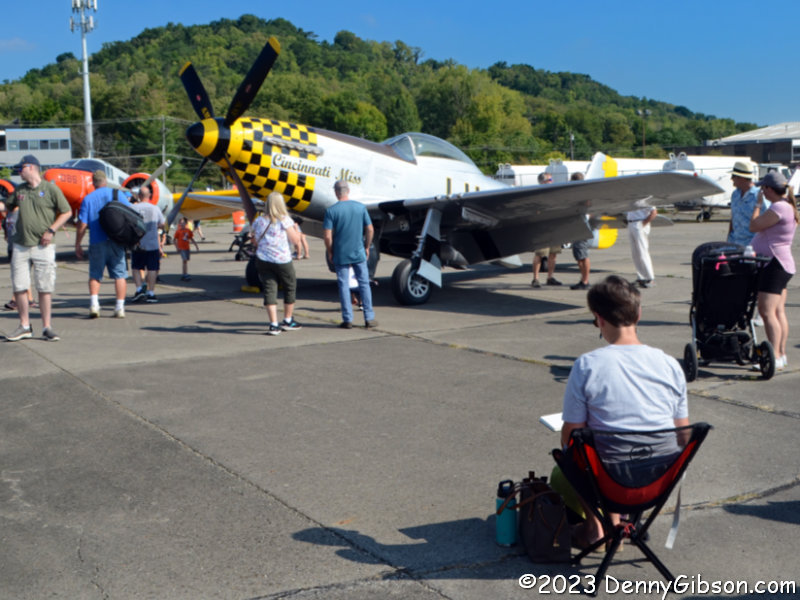
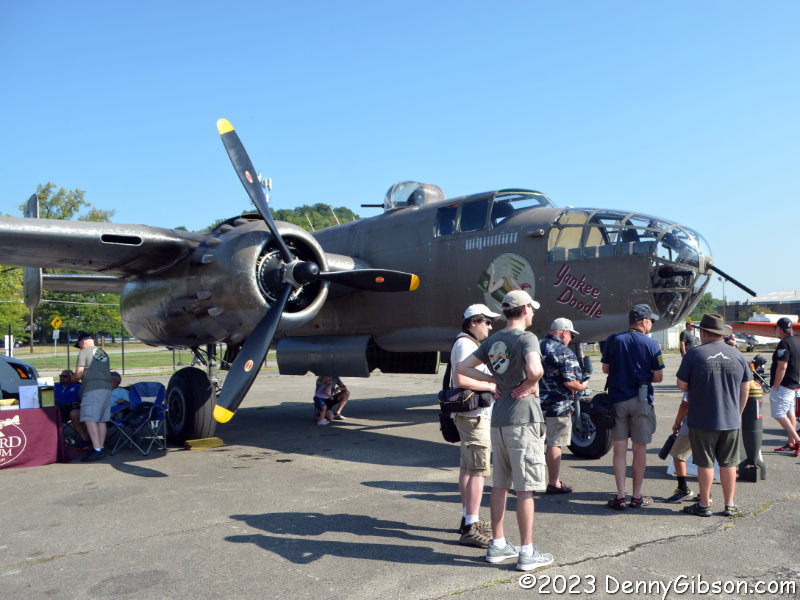
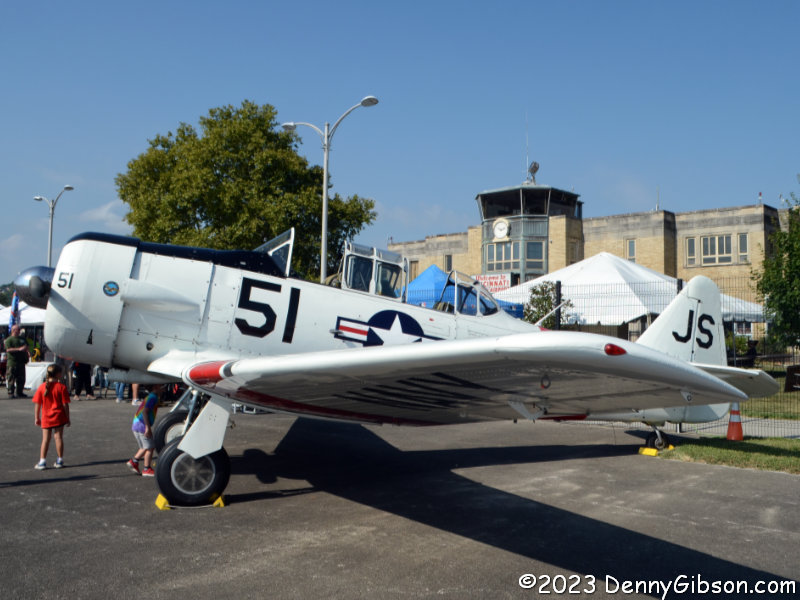
Military planes included a 1942 BT-13A VULTEE, the next to last B-25 ever built, and a 1944 P-51D Mustang. Seated in the foreground of the Mustang phot is one of the local artists participating in an informal “Lunken Days Sketch Outing”.

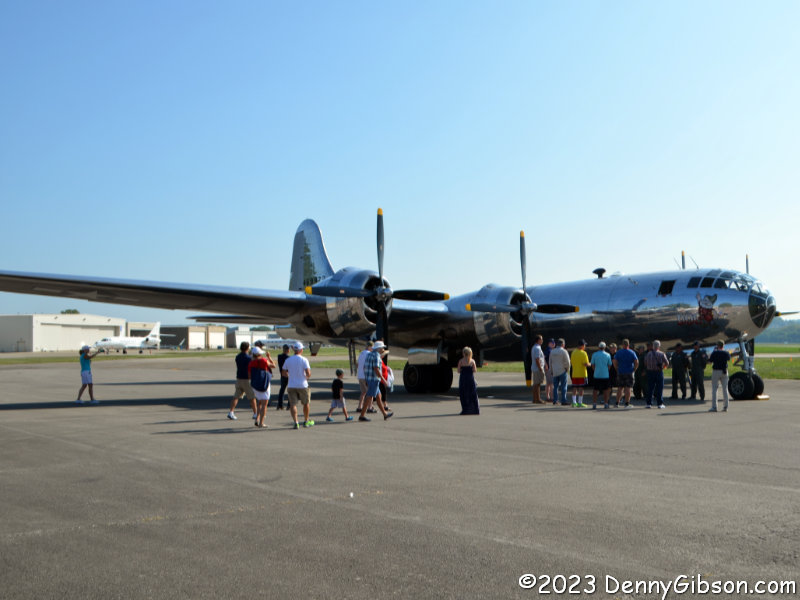
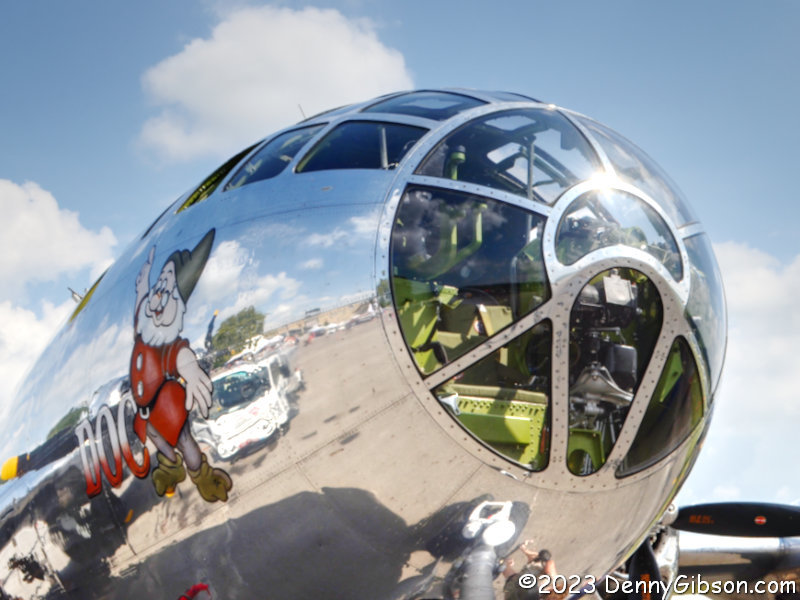
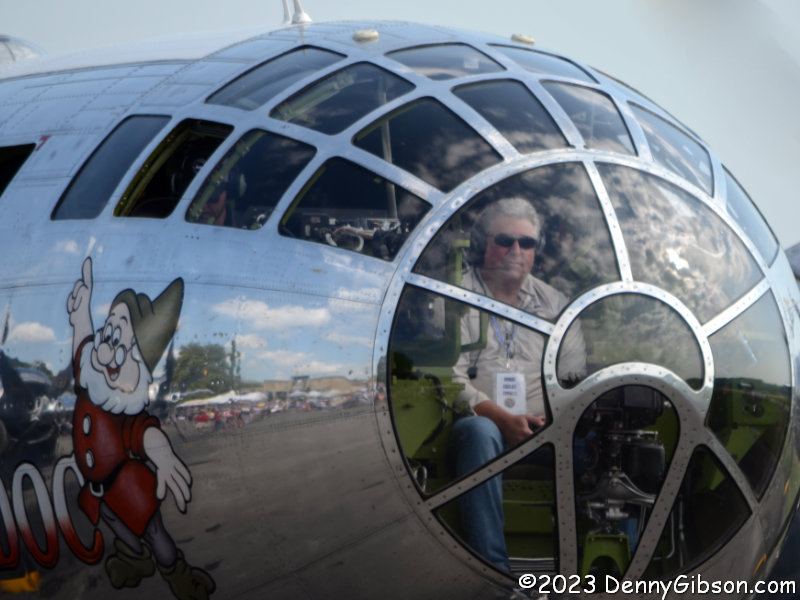
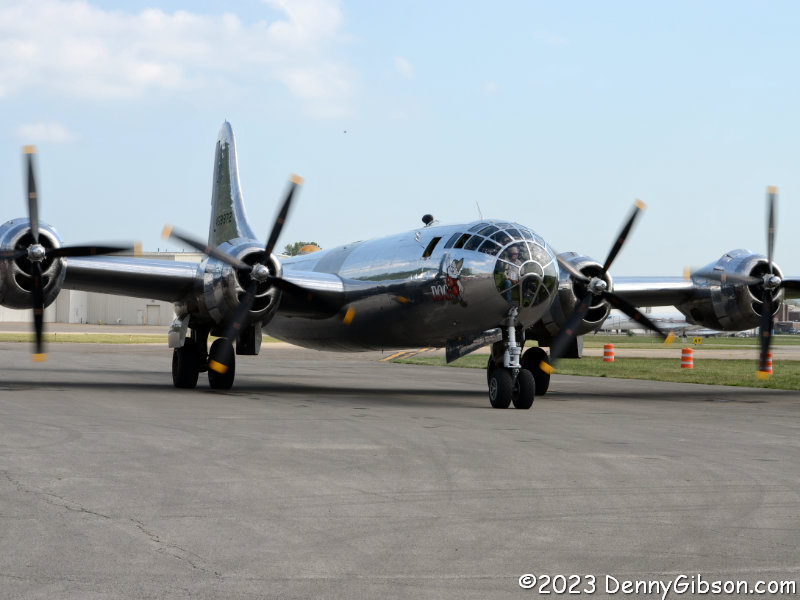
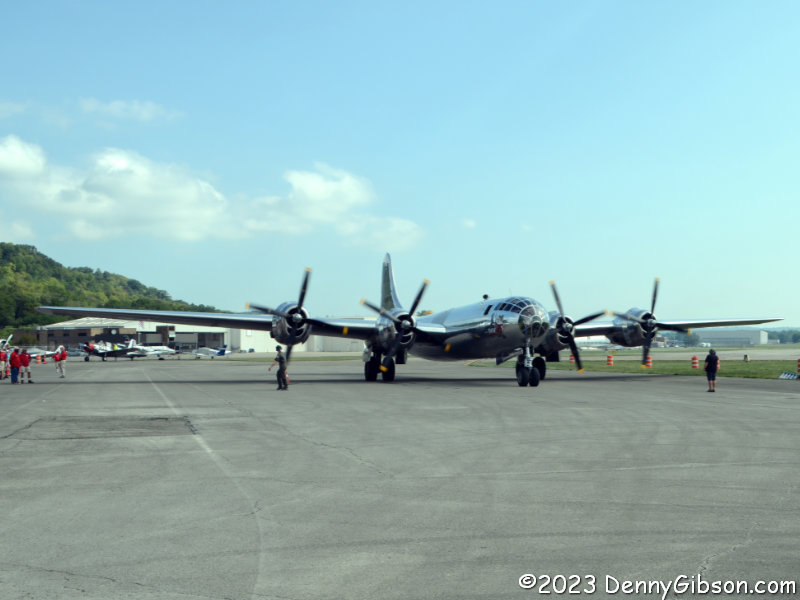
But the biggest plane on campus — actually one of the biggest planes ever built — was the B-29 Superfortress named Doc. 1644 Superfortresses were built during World War II. Only two are flying today. This remarkable airplane has its own website here.

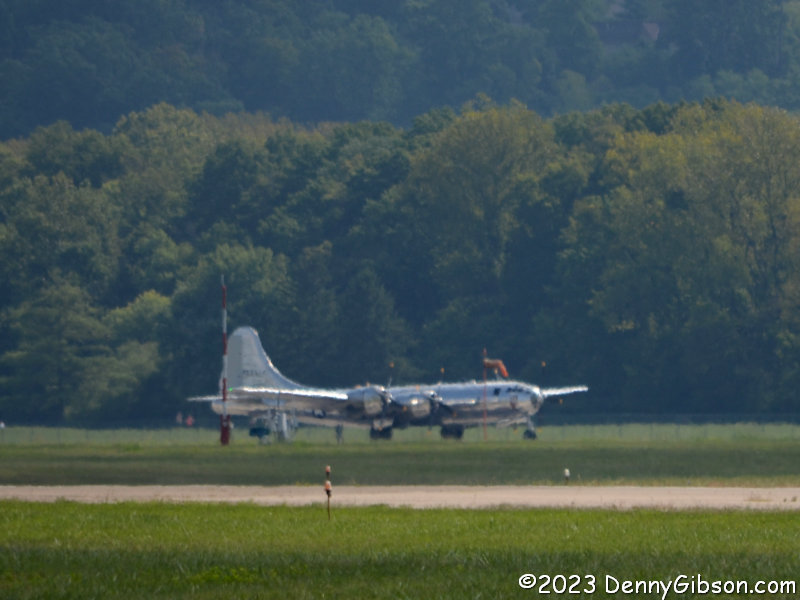
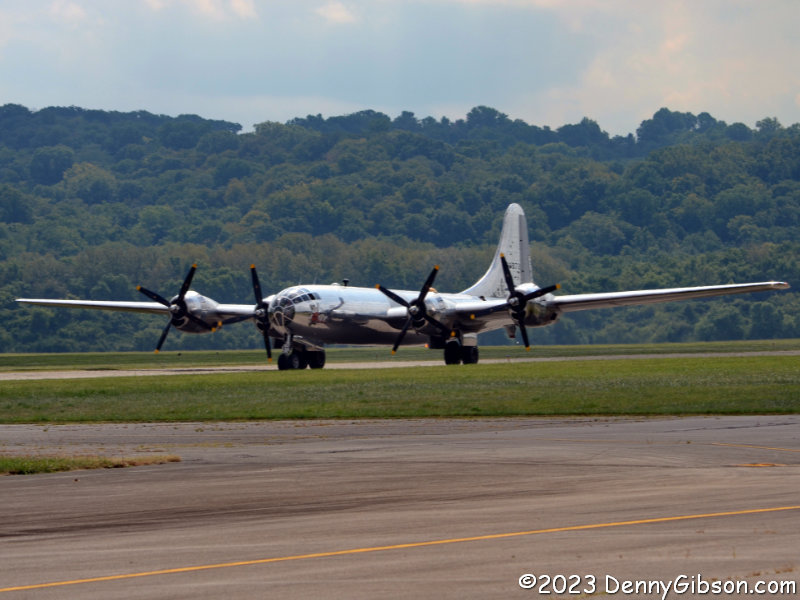
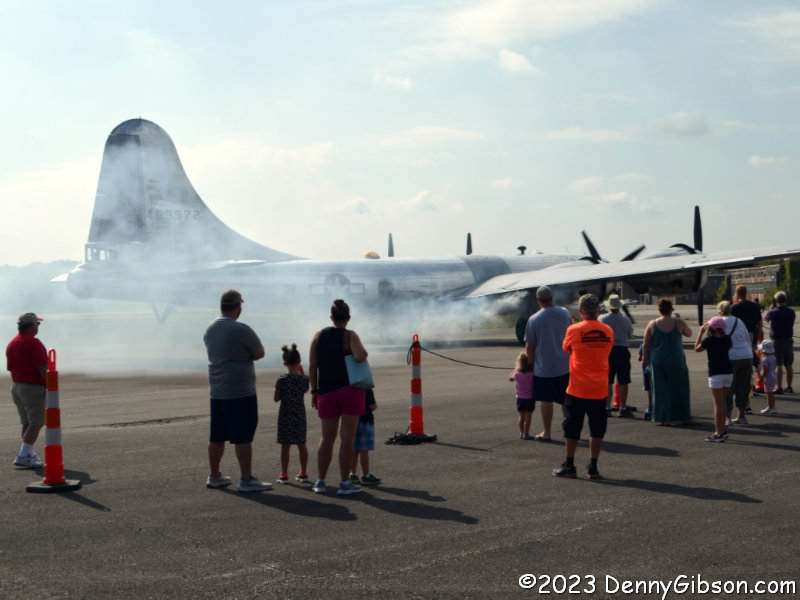
My attention focused entirely on Doc when I heard that first engine begin to turn. That initial bit of smoke was soon gone and soon all four engines were running smoothly. Doc earns his keep by taking paying passengers aloft Some of this flight’s passengers can be seen here and here as the plane taxies.

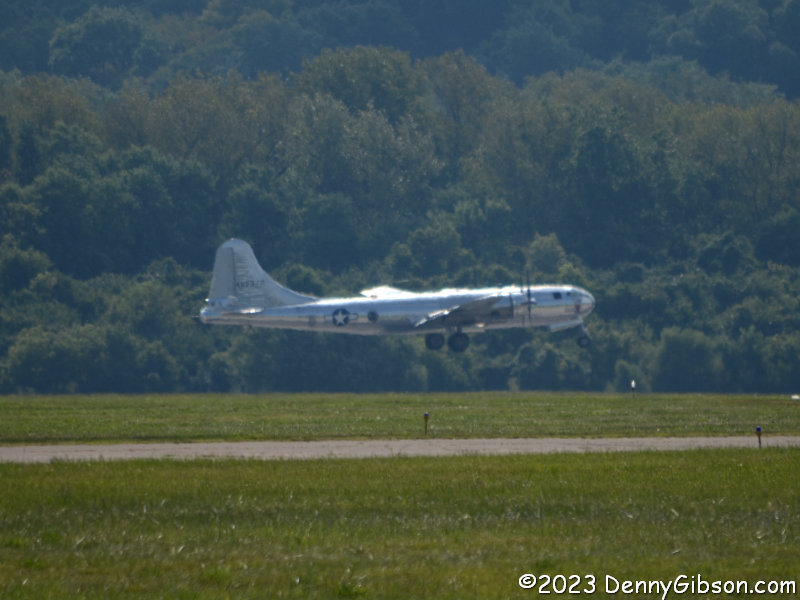
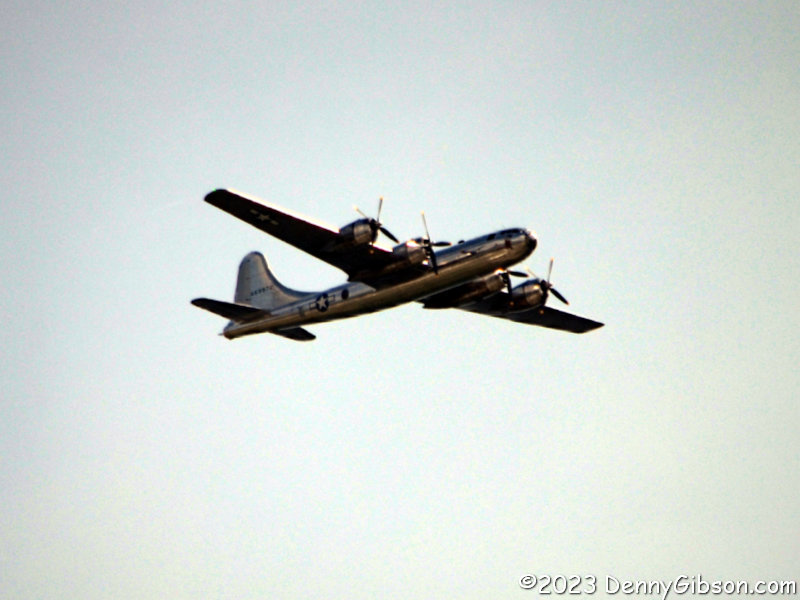
After taxieing to the far end of the field, Doc rumbles down the runway, lifts off, and disappears behind one of the airport buildings. Because of the surrounding trees and the plane’s low flight path, I don’t get a shot of the plane in flight until it returns and circles the field.

It is headed south, just as it was on takeoff, when it returns to the runway.

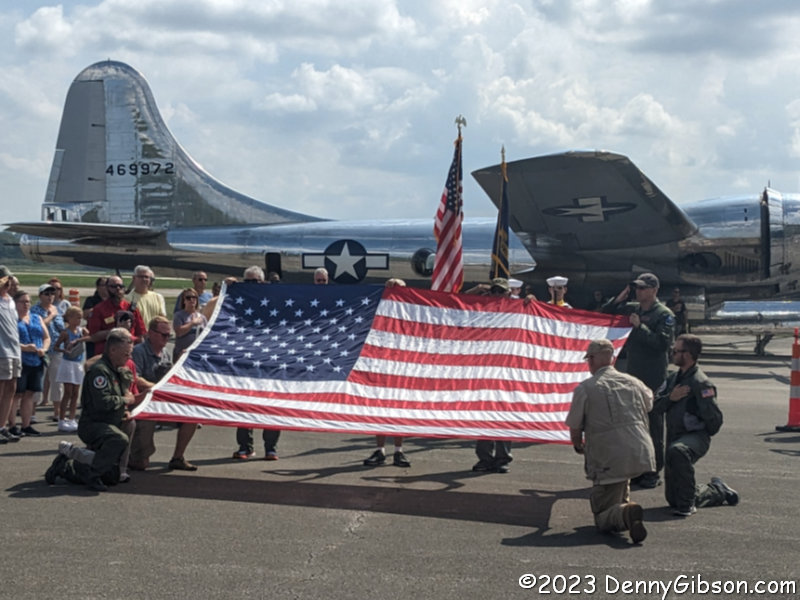
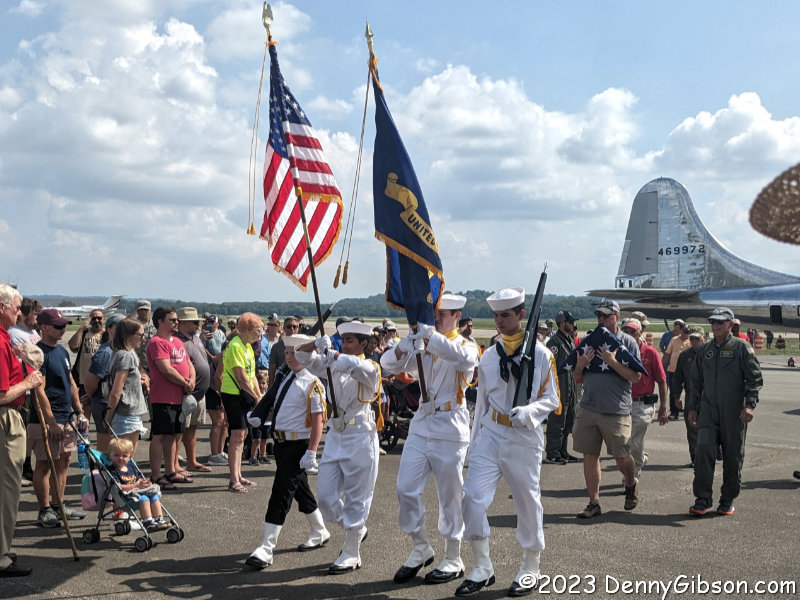
There was just enough time after the flight landed to prepare for the presentation of the flag and singing of the national anthem at noon. I was not able to photograph the color guard as they marched toward the plane but I caught them on the way back.

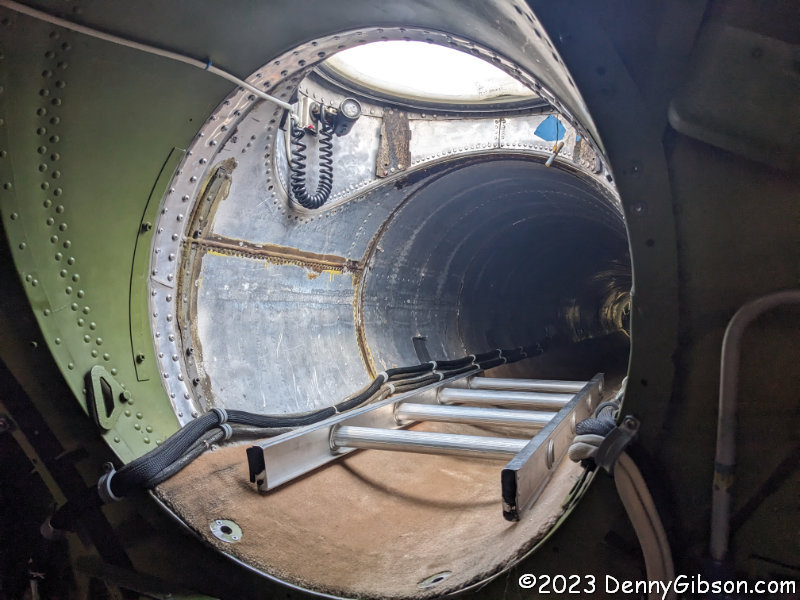
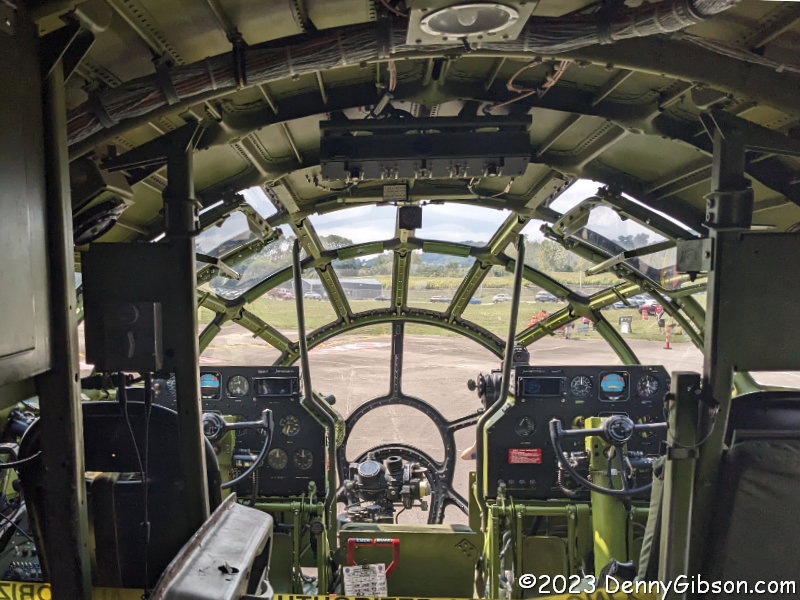
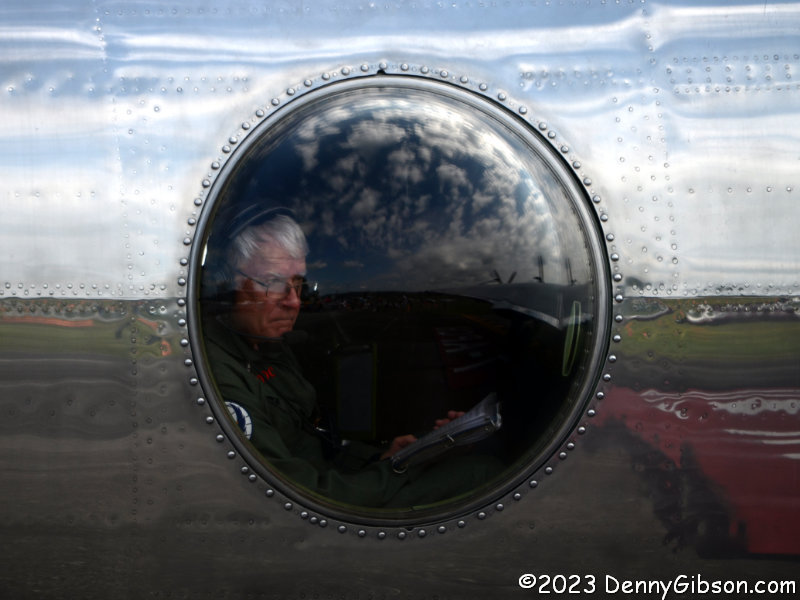
Although we could see everything the guide pointed out, there wasn’t much room in the cockpit for taking pictures. The tunnel to the rear of the airplane went unused as entry and exit were via vertical ladders.

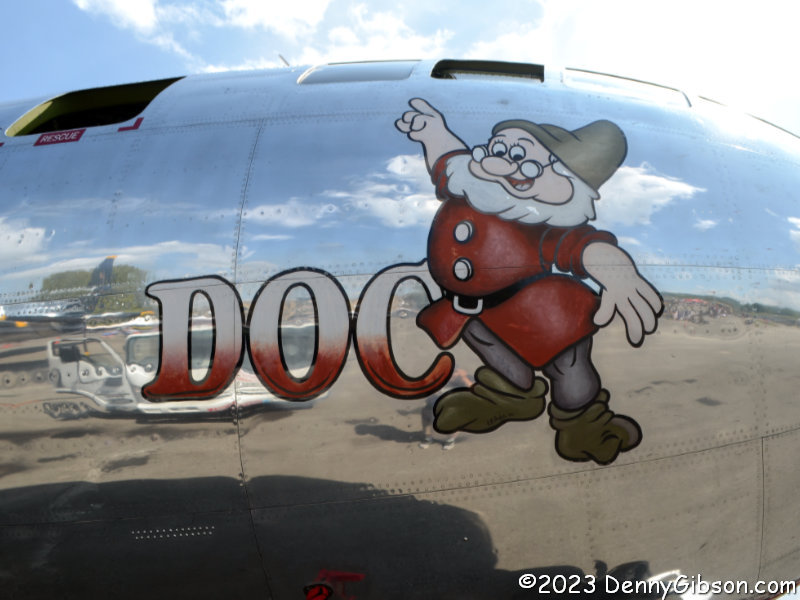
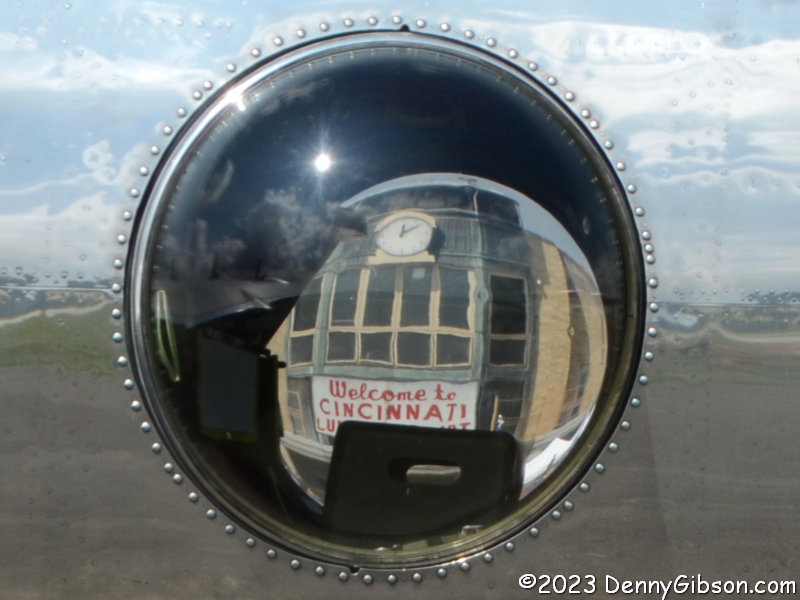
I could now get closeups of the nose art and bombardier’s position. With plexiglass domes in place of gun ports, I could look right through the plane to the historic terminal.

Airport Days is a two day affair so, if you are seeing this shortly after publication, you can easily catch the second half. The weather looks to be just as delightful today as it was yesterday.

Musical Review
Above the Sand
Mason Community Players

When I wrote about my first visit to the Loveland Stage Company, I spoke of the guilt I felt for taking so long to take in a play there. The same sort of guilt surrounds my first time attending a Mason Community Players production. MCP is celebrating its 50th anniversary this year which means it is six years older than LSC. I suppose I could feel extra guilty for ignoring the Mason group even longer than the Loveland group but, although I’ve lived near Mason, I have never actually lived in Mason so feeling equal levels of guilt regarding my being late to the party at both theaters seems more or less OK.

But I also feel another kind of guilt regarding this review. I have no special or early access to plays so my infrequent reviews of them are often near or even after the end of their run when few or no performances remain. I always feel a little guilty about that. That feeling increases when the production is one I want to recommend because it’s extra good or somehow unique. All that is true of Above the Sand meaning I really feel guilty about the timing of this review.

Producing any play is an accomplishment. There are certainly some particular challenges in doing it with amateurs and volunteers and doing a musical must add even more. Performers need to be able to sing and maybe dance a bit, and musicians are needed to accompany them. Community theater productions will never be a match for well-financed Broadway companies but their audiences don’t expect them to be. When a community theater company produces a successful Broadway musical it can benefit from having one or more professional productions as examples without getting dinged for not having Barbra Streisand or Gregory Hines in the cast. The production I attended Thursday night had all of the listed challenges without one of the aids. Amateurs and volunteers did indeed sing and dance accompanied by offstage volunteers playing instruments but they were not copying from anyone. This was the world premiere of Above the Sand so there was no previous production to provide an example. This gang didn’t need one.

The premiere run ended on Saturday. Not knowing how long online information will remain available, I’ve taken the liberty of copying this short description from the Mason Players’ website:

Above the Sand is written and composed by MCP member Tom Davis. It tells of the challenges and triumphs of Wilbur and Orville Wright as they bring the power of flight to the world. The story takes the audience on a journey from a bicycle shop in Dayton, Ohio to Kitty Hawk, North Carolina, Washington, D.C., and Paris, France. Above the Sand is a piece of local history that has affected life around the world. It shines a light on the struggles of those who dream an idea into reality, then ultimately triumph.

As mentioned, any community theater production requires a lot of effort, and a musical production even more. That effort is not wasted with the script Tom Davis has created. With spoken words and lyrics, it touches all key points of the Wrights’ achievement. It avoids sounding like either a science or history lesson while being a little bit of both.

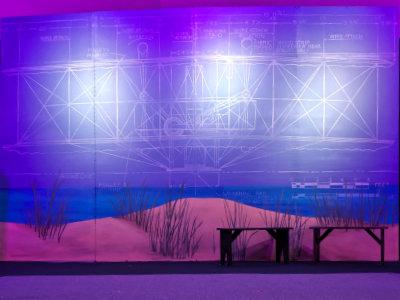
I’m always intrigued by how a single stage of limited size gets used to tell stories involving multiple locations that are sometimes huge spaces. That is another challenge that this production encounters and handles quite well despite not having a Broadway-sized budget. By flipping panels, hanging pictures, and swapping some furniture, the action moves between sand dunes, living rooms, workshops, France, England, and more. In a program note, director Lara Gonzalez talks of collaborating and creating “throughout the rehearsal process”. Much of the collaboration naturally involved Gonzalez and Davis but I’d be surprised if there wasn’t at least one idea contributed by every cast and crew member.

I’ll give a shout out to the actors portraying the Wright siblings although every member of the cast of nearly twenty turned in wonderful performances. Corey Meyer (Wilbur) has the least experience of the three younger Wrights although I certainly would not have known that without a program. Nico Morello (Orville) and Eva Bower (Katharine) have both been on stage quite a bit. I had sort of mentally tagged Eva as the most polished of the cast and learned that I could be right when I read that she was first on stage at age 9.

I have no idea what, if anything, comes next for Above the Sand. I know of no plans for future performances but I sure hope that there will be some. I was entertained Thursday night, and exposed to a little science and history too. I don’t believe any of the science or history facts were really new to me but some of the emotion was. I’ve read numerous articles and books about the Wright brothers and their early flights. I’ve watched more than a few documentaries too. None of them conveyed the sense of awe from the world at large that I witnessed Thursday night. Maybe it came from the music. Or maybe it came from the personal involvement that a live performance requires. At some level, I know I have considered that the existence of powered flight changed the basic way that an awful lot of people looked at the world but it had never registered as strongly with me as it did in that theater. Before December 1903, many people had considered it impossible; others thought it merely quite difficult. The first group was now indisputably proven wrong. The second group was proven right and no longer had to guess at just how difficult it was. It took some time for the news to circle the globe and even more time for some people to accept it but that did not alter the fact. Somehow a group of people singing about something they were witnessing offstage drove that home better than any words on a page or images on a screen. Hooray for music. Hooray for live theater. Hooray for man’s ability to progress and to be amazed at his own progress.

Two Tours in Champaign County

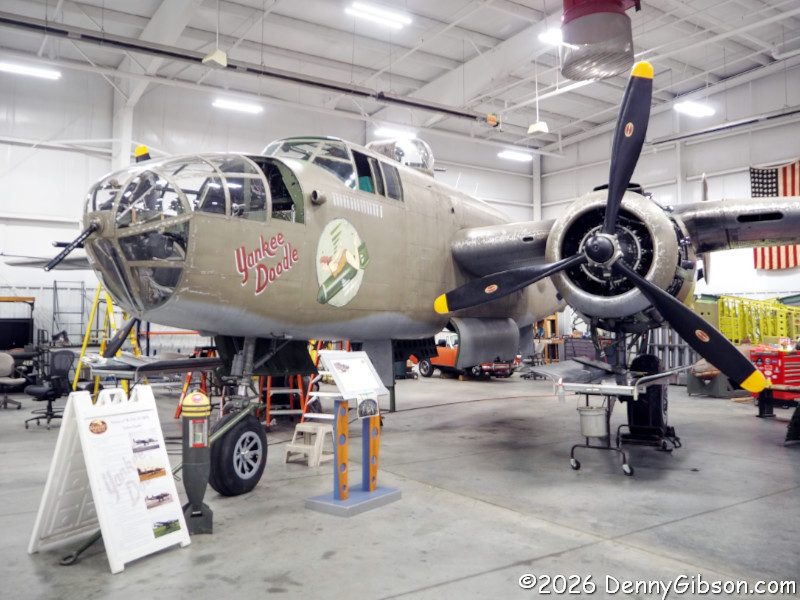
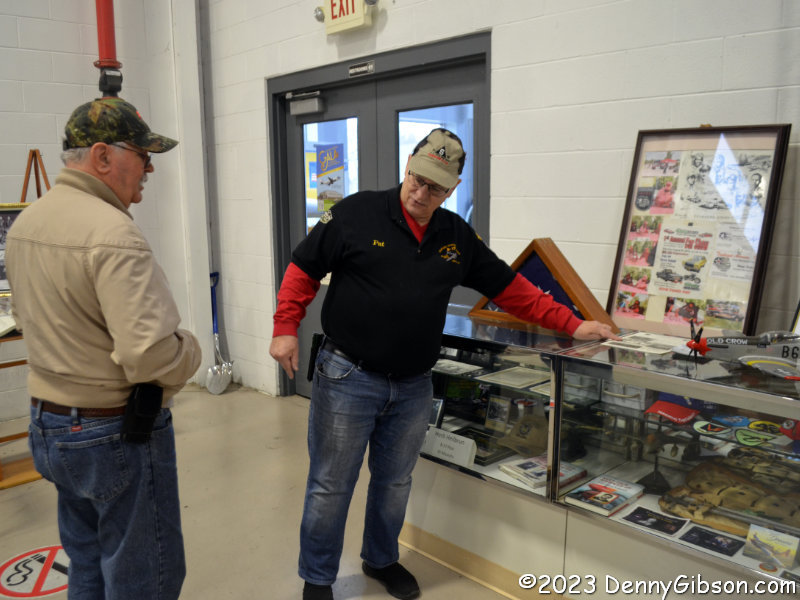
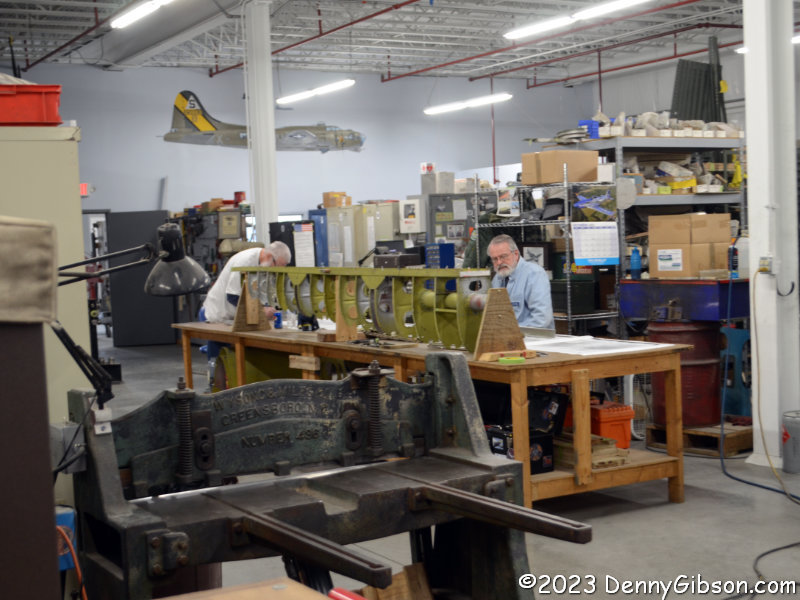
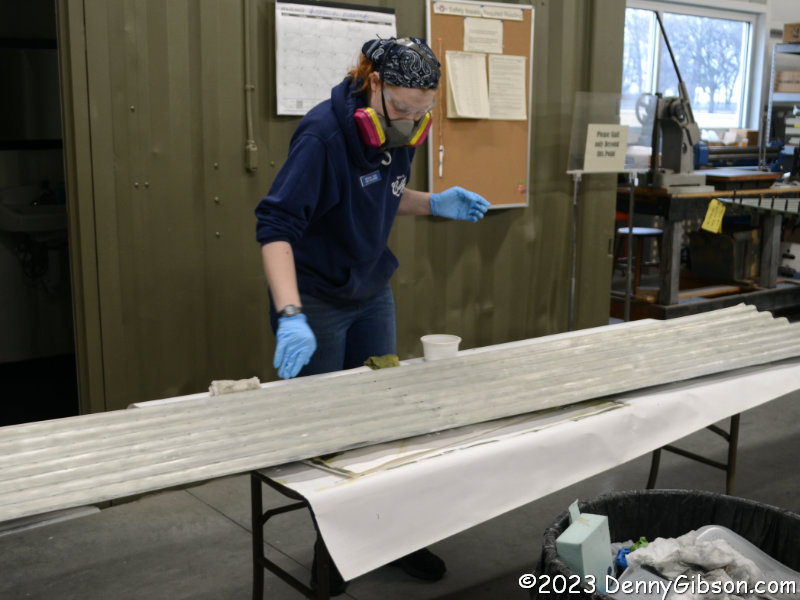
After talking about it for quite some time, my friend Terry and I finally headed off to Ohio Caverns on Wednesday. Since touring the caverns would only take an hour or so, we decided a stop at the Champaign Aviation Museum in nearby Urbana would help make the trip worthwhile. As we looked over items displayed in the lobby, Pat appeared and offered us a guided tour. In addition to filling us in on each of the airplanes on display, Pat explained the extensive restoration work that goes on here and took us into areas where that work was taking place. Later arrivals joined us, and at one point there were six visitors in our little group. What we thought would be a brief interlude turned out to be a two-plus hour stop that was both entertaining and educational.

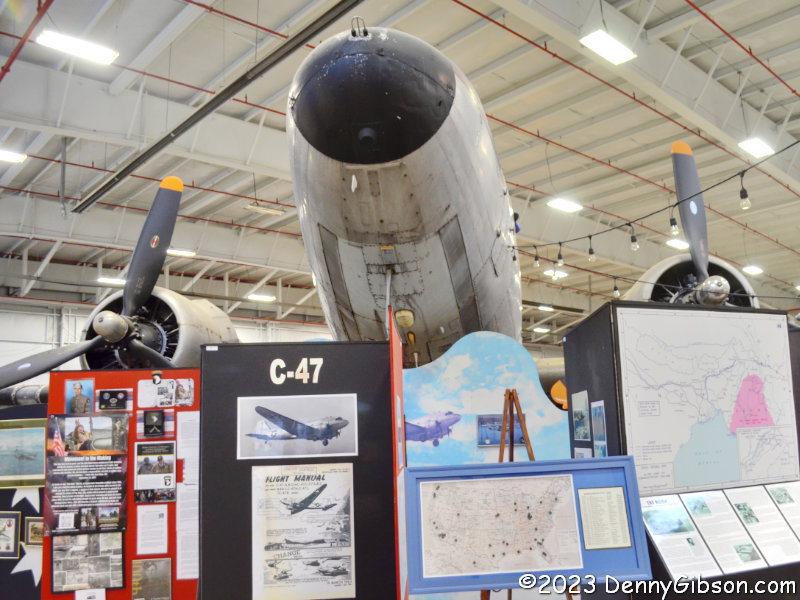
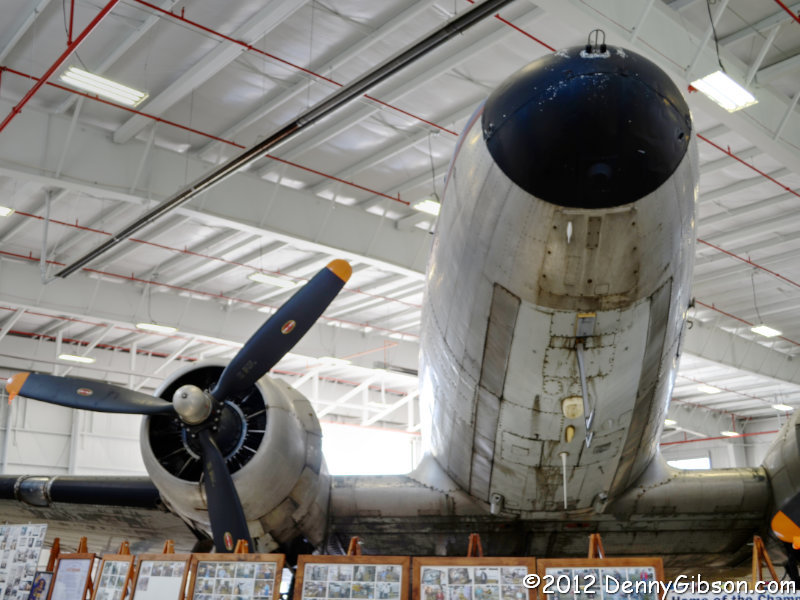
I had visited the museum in 2012 during the Doolittle Raid’s 70th anniversary celebration at the Air Force museum in Dayton. In the blog entry associated with that report, I mentioned that I had taken some pictures here but did not use them because I was more focused on the events in Dayton. At that time, the C-47 pictured at left was a rather new acquisition. Here‘s a picture of it that was taken then.

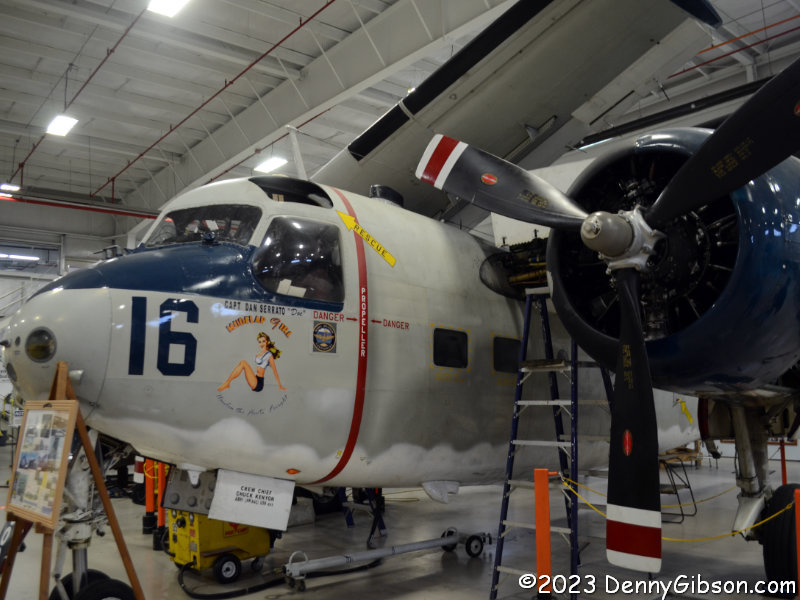
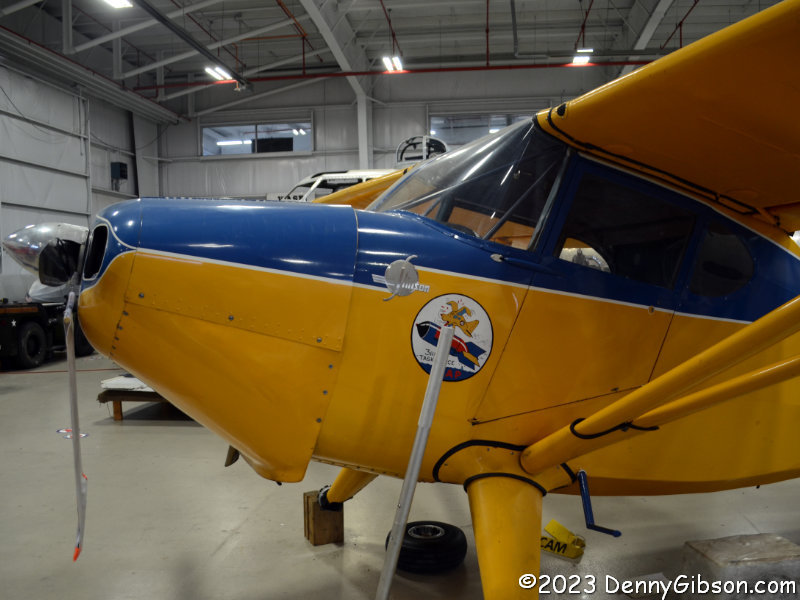
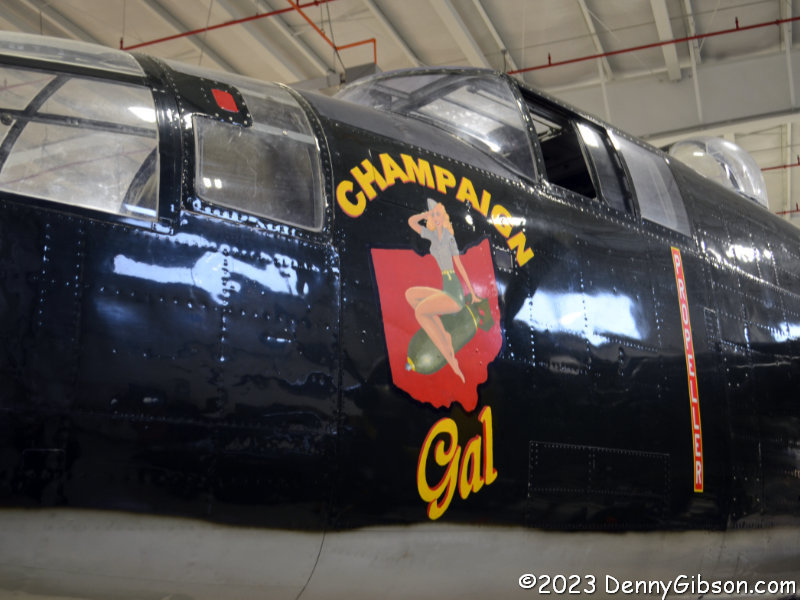
Champaign Gal is the museum’s fully restored B-25. I saw her fly in 2012 along with about twenty others. The Stinson 10A is one of several such planes used to scout for submarines during WWII. Although there is no absolute proof, there is strong evidence that this plane was responsible for sinking a German submarine using the small single bomb that the scout planes carried. The third plane is a Viet Nam era Grumman C-1A from the carrier Lexington.

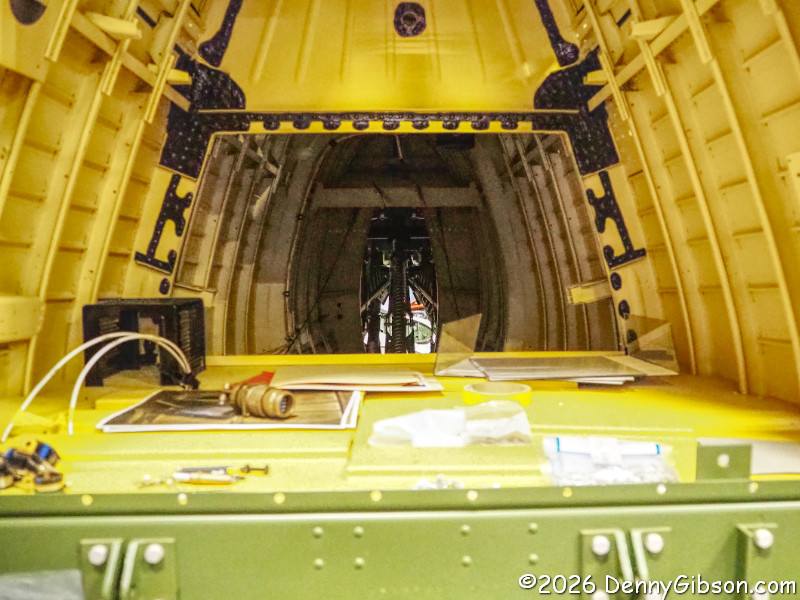
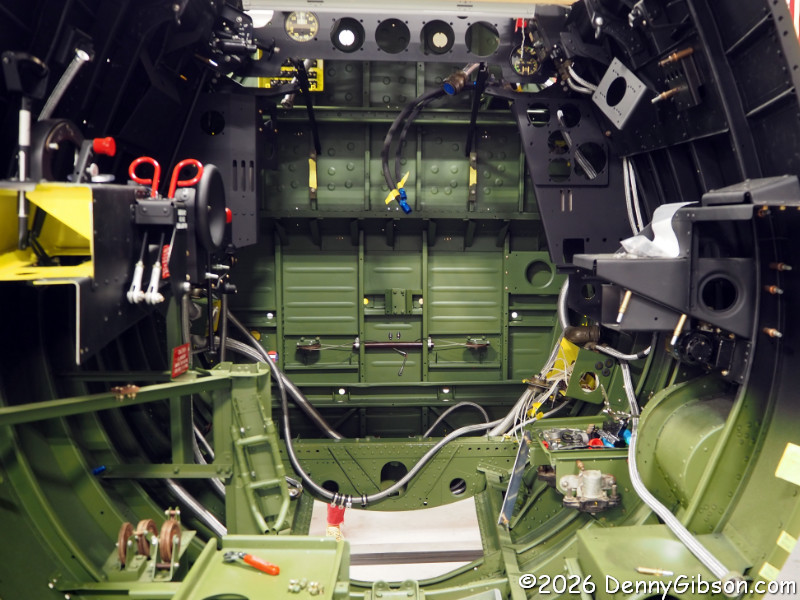
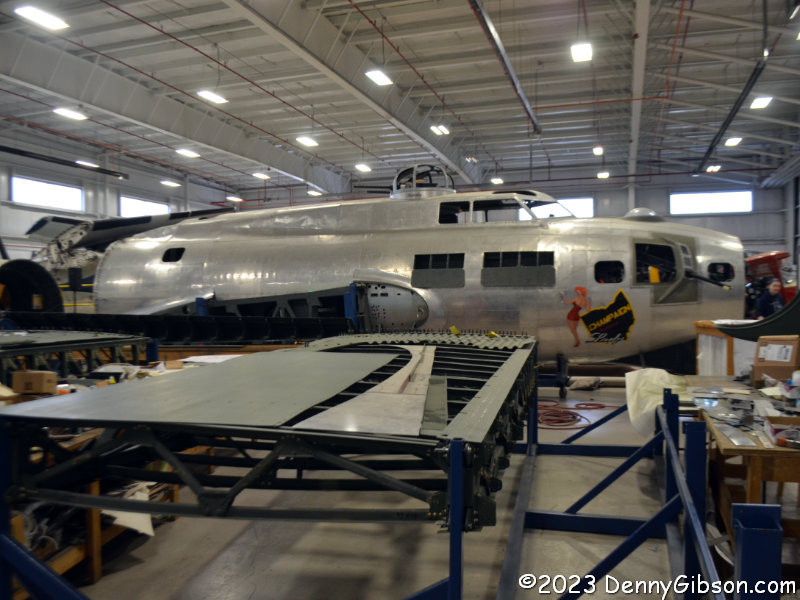
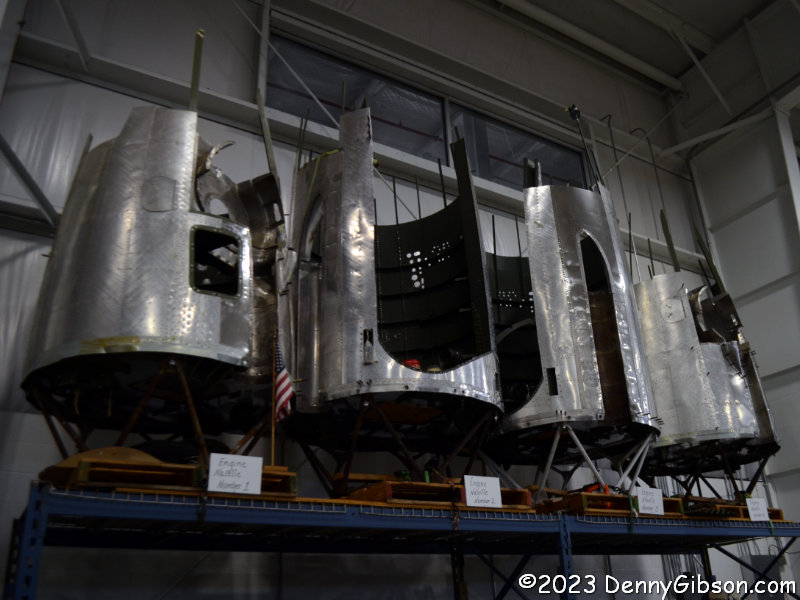
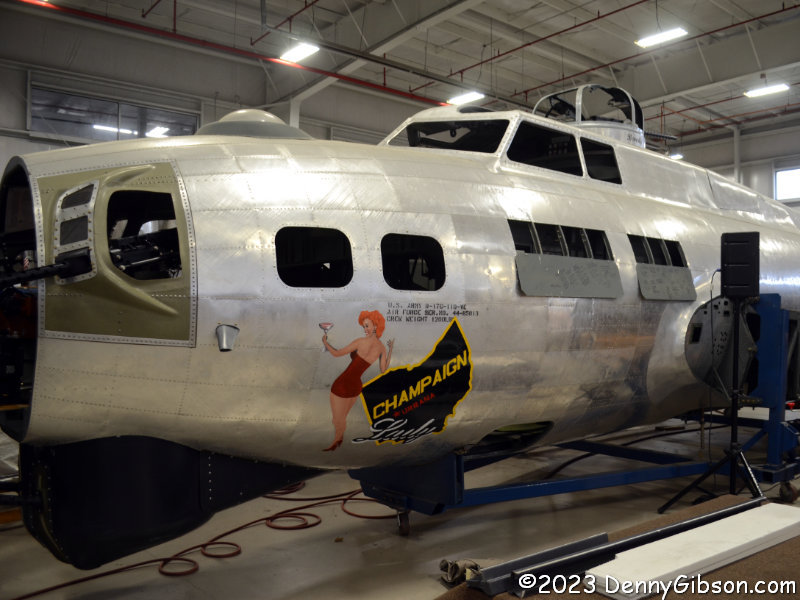
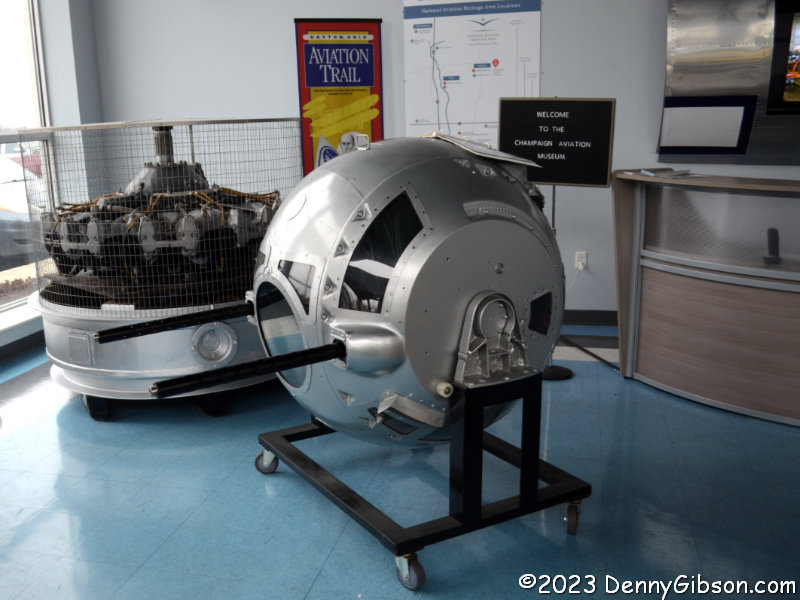
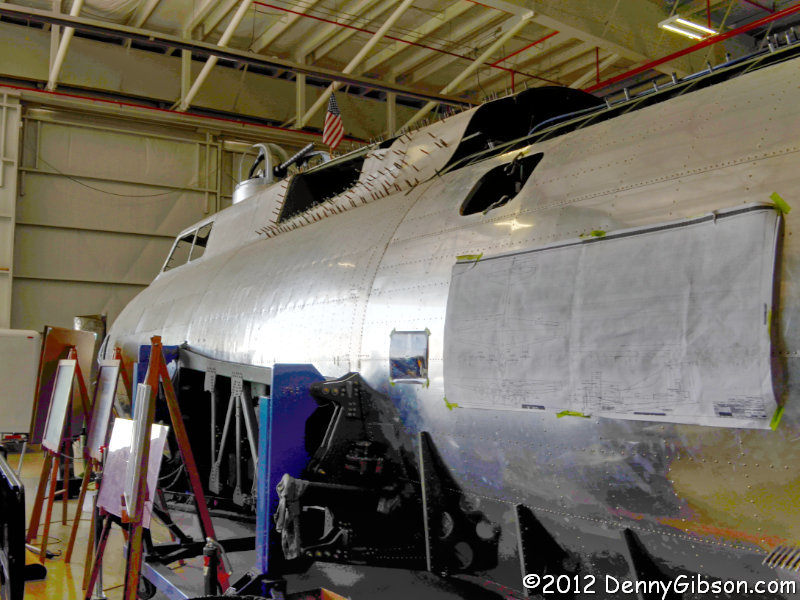
A phenomenal amount of restoration takes place here with the biggest current project being this B-17 named Champaign Lady. The engine nacelles have been completed and are literally waiting on the shelf for future mounting. The ball turret is also ready for installation. It was one of the items we looked over in the lobby. This is a massive project that was begun in 2005. Here is a picture from my 2012 visit.

Restoring an airplane like the B-17 involves salvaging parts from other airplanes, fabricating many other parts, and lots of volunteers working lots of hours. Pat told us that more than 80% of Champaign Lady will have been fabricated here when she is complete.

It didn’t take long to get to the caverns from the museum. They are open year-round but this is not their busiest season. When tour time came around, we were the only paying customers so we basically had a personal guide.

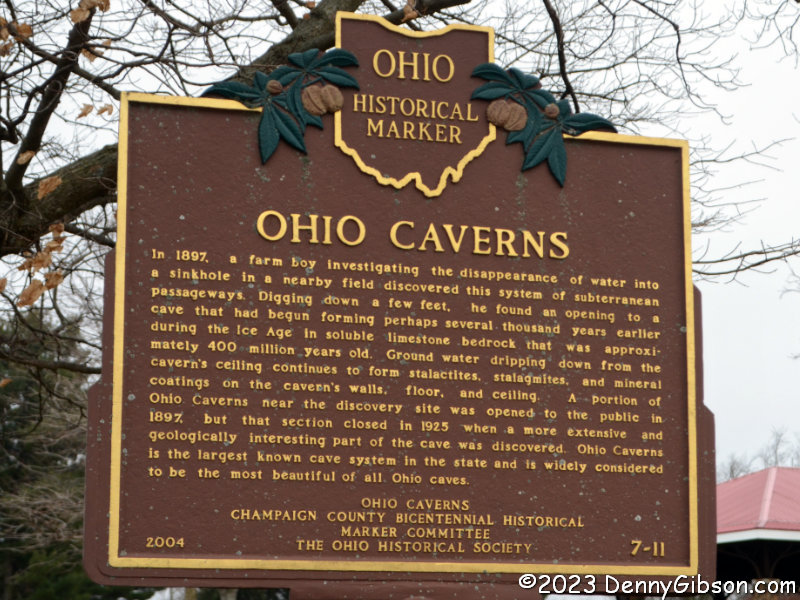
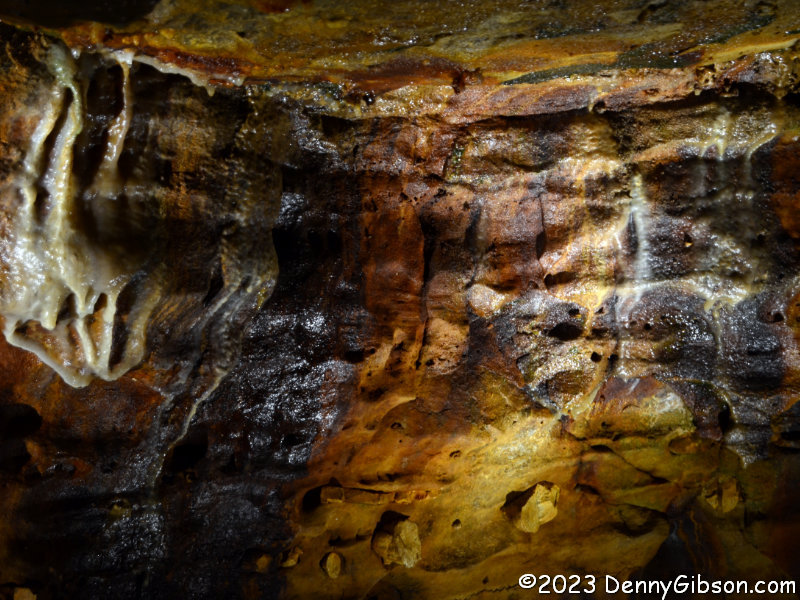
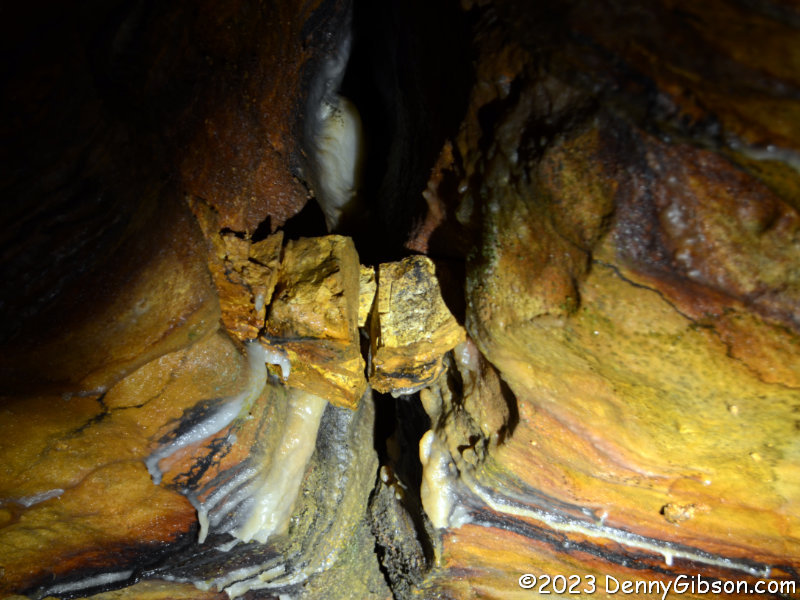
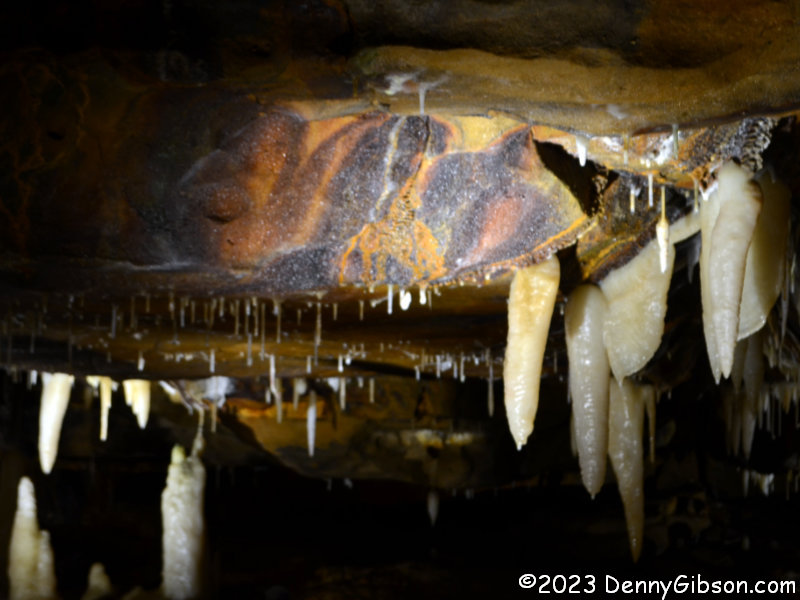
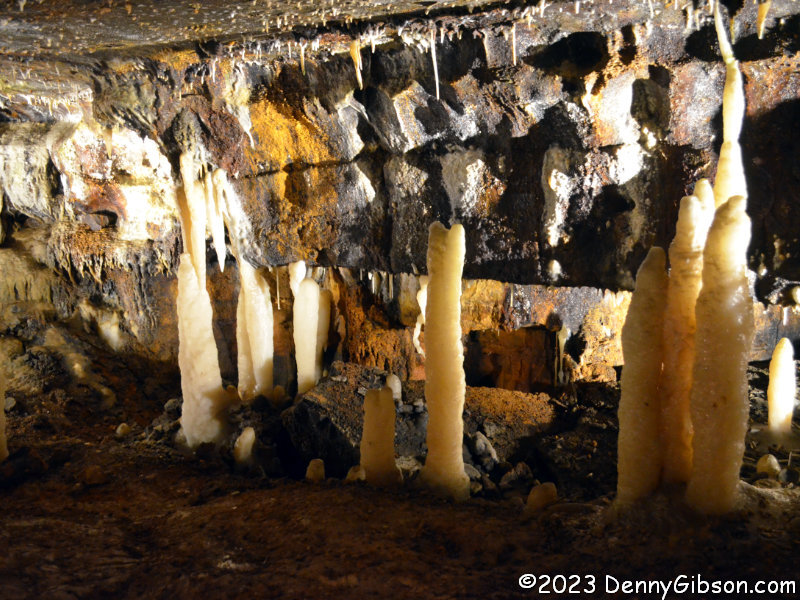
Discovered in 1897, Ohio Caverns is the largest cave system in Ohio and bills itself as “America’s Most Colorful Caverns”. Color does start showing up early in the tour.

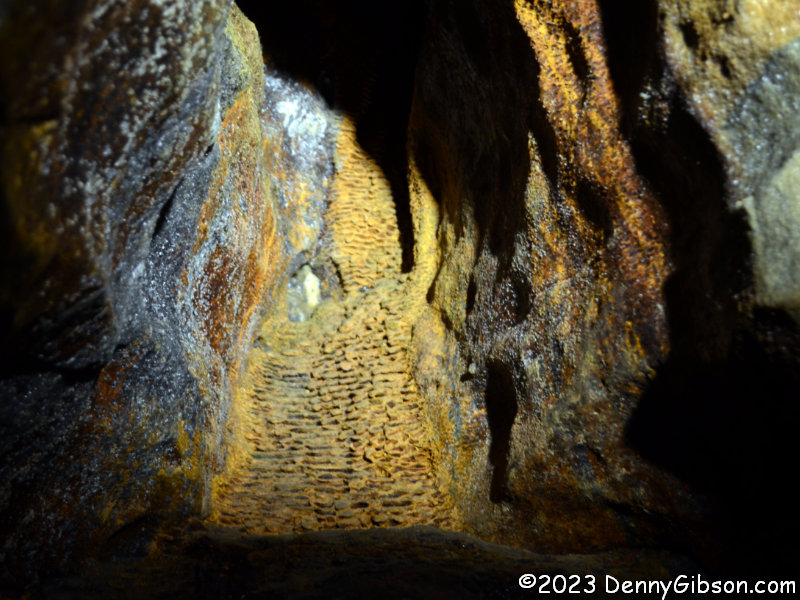
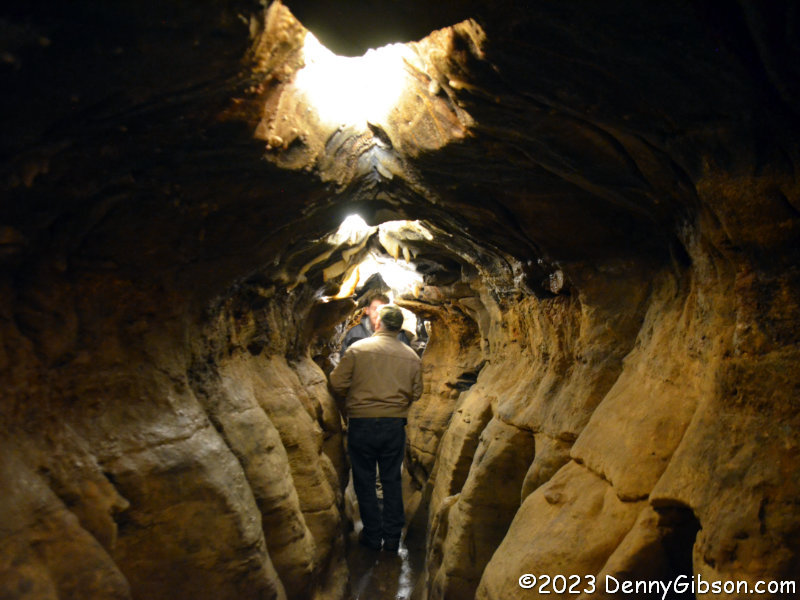
During the summer, a choice of two tours, Historic and Natural Wonder, are offered. The Winter Tour includes highlights of both. We passed many interesting rock and mineral formations before entering this narrow passage but they became more abundant once we were through it.

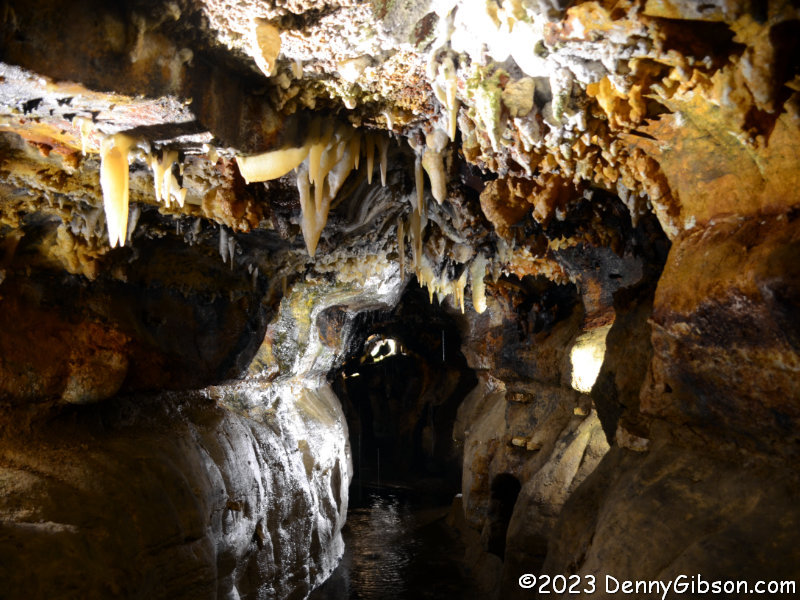
This is the Crystal King, the largest stalactite in Ohio. Our first view of was through a passage blocked by chains then the winding passage we were following passed quite a bit closer to it.

I admit that I was not very attentive and don’t remember the names of any of the “rooms” we passed through or the formations they contained. Names might help with History but they really aren’t required to appreciate Natural Wonder.

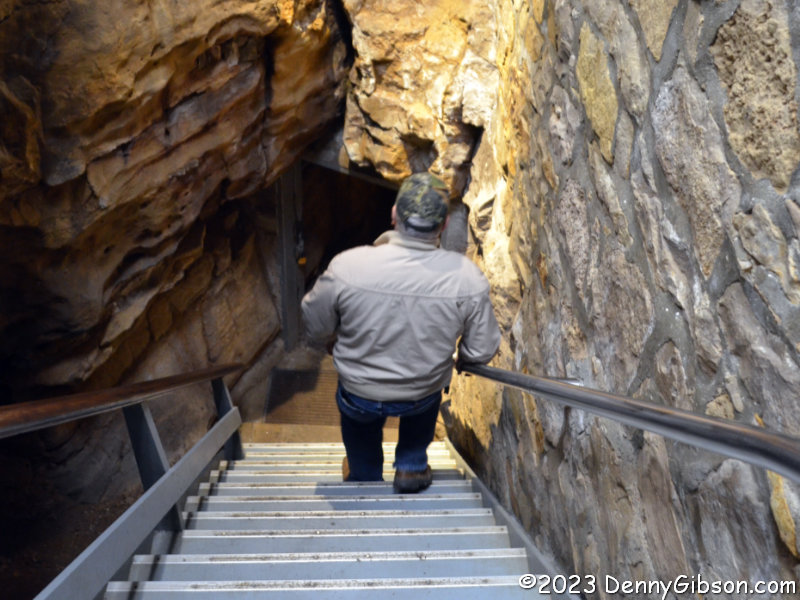
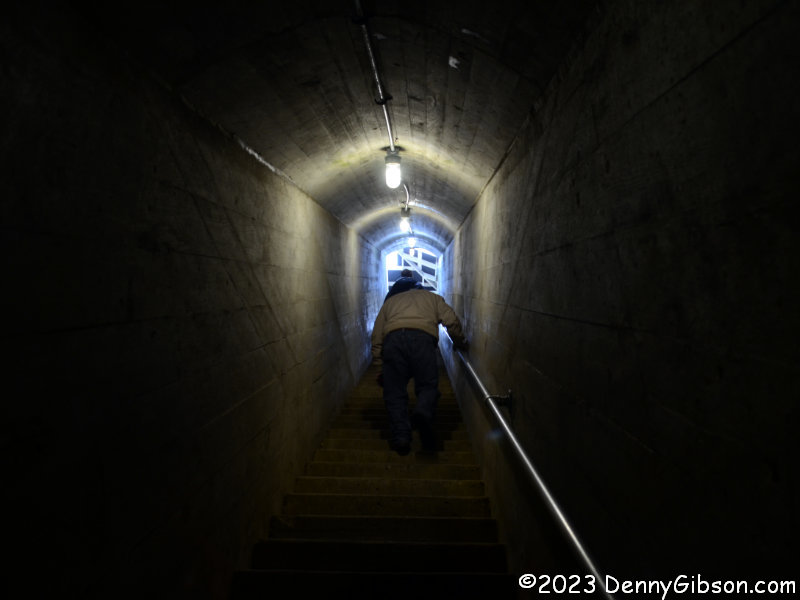
The website says there are 38 steps going in and 60 coming out. The path between them is close to level and the distance below the surface is affected mostly by variations in the height of the hill above the cave. The guide had to tell us when we reached the maximum 103 feet below ground because there’s really nothing distinctive about it. Going down those entrance steps barely registered. Going up those exit steps, however, definitely did. Guys our age just seem to naturally notice things like that.
Big Ol’ Ford Airliner…

…did not carry me too far away but it did carry me nearly a century into the past.

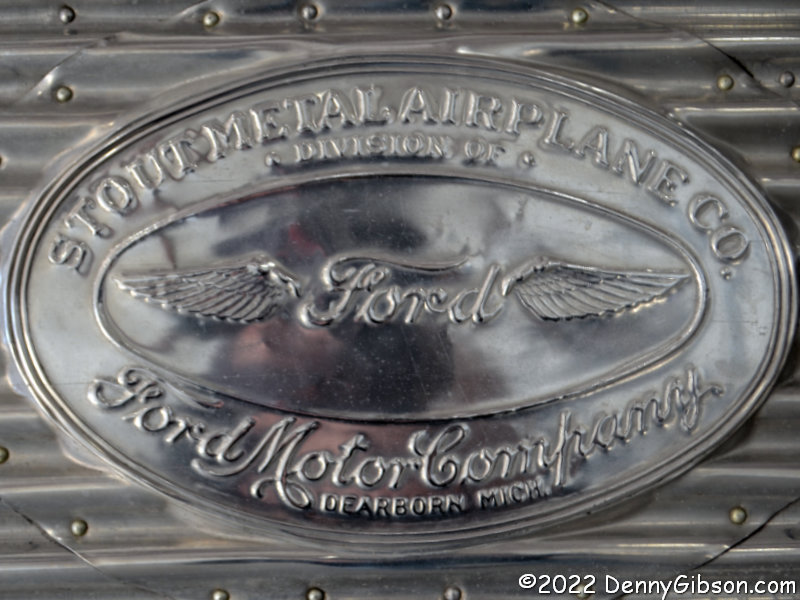
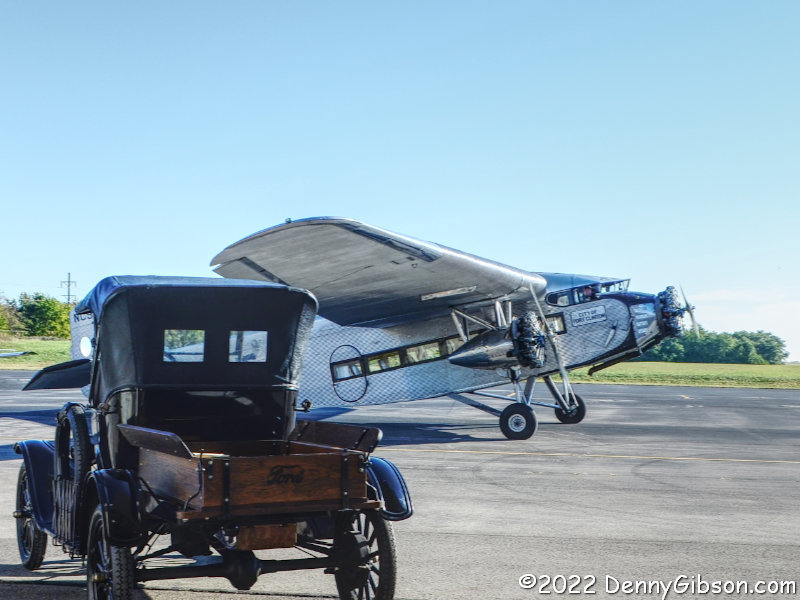
In 1922, Henry Ford invested in the startup Stout Metal Airplane Company then purchased the entire outfit two years later. The most notable of numerous modifications made to Stout’s original design was the addition of two engines. Ford Tri-Motor production began in 1926 and ceased in 1933 which coincided almost exactly with the period when the Waco Model 10 was produced. There were several Model 10s present at the Waco Fly-In I attended a couple of weeks ago.    

Ford produced 199 Tri-Motors in a span of eight years. In one year less (1927-1933), Waco turned out 1,623 Model 10s. Both airplanes were civilian passenger planes and both were icons of the early days of human flight but similarities between the two don’t go far beyond that. The Ford was all metal while the Waco was mostly cloth-covered wood. The Waco was an open bi-wing with a compartment for two passengers positioned in front of one for the pilot. The Ford was totally enclosed with a pilot and co-pilot sitting ahead of, depending on model, up to seventeen passengers. With a stewardess often part of the crew, it is generally thought of as the first airliner. That these two aircraft were contemporaries and both highly successful is certainly food for thought.

As of Friday, I can list another difference between a Waco 10 and a Tri-Motor. I have never flown in a Waco. On Friday, I took a ride in a Ford Tri-Motor 5-AT-B at the Greene County Airport near Xenia, Ohio. As was the case with the subjects of a couple of last year’s adventures (Smooth As Glass and An Airy Plane Ride), I learned of the touring Tri-Motor through Brandi Betts’ Make the Journey Fun blog. Brandi flew in the plane during its Chillicothe stop and reported on it here.

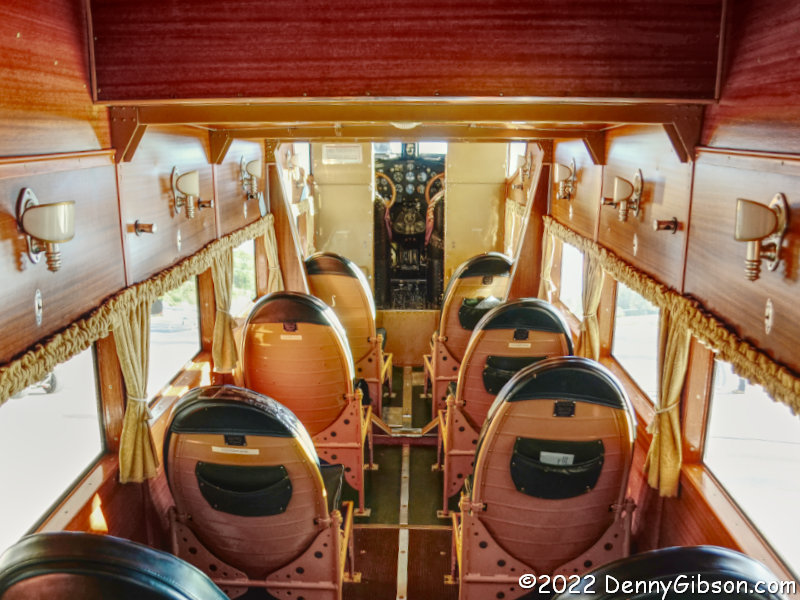
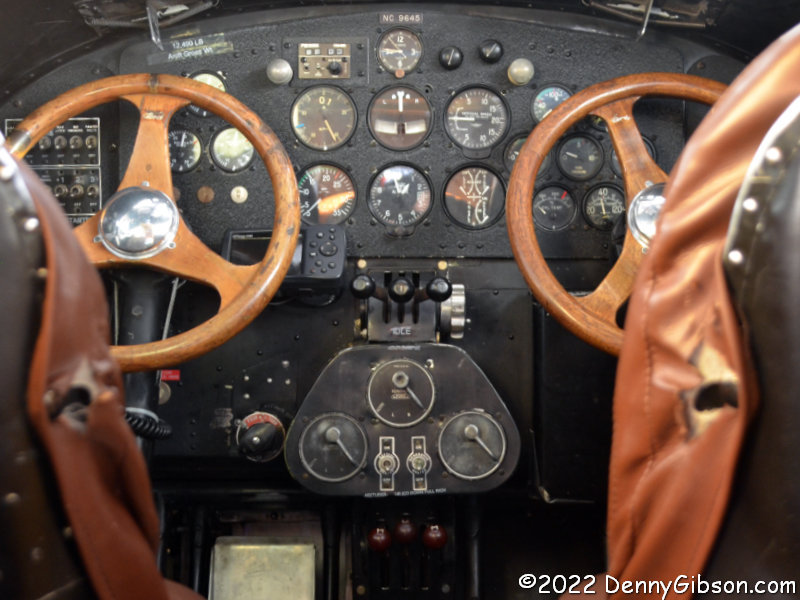
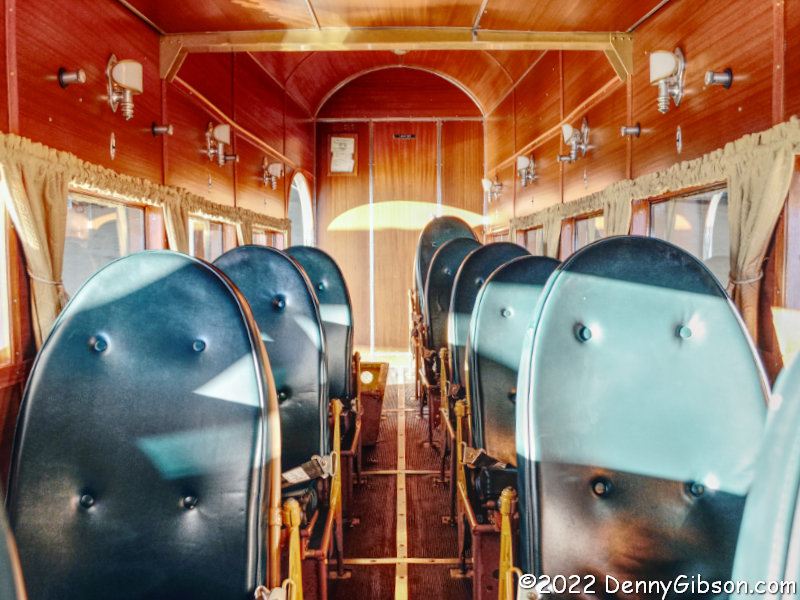
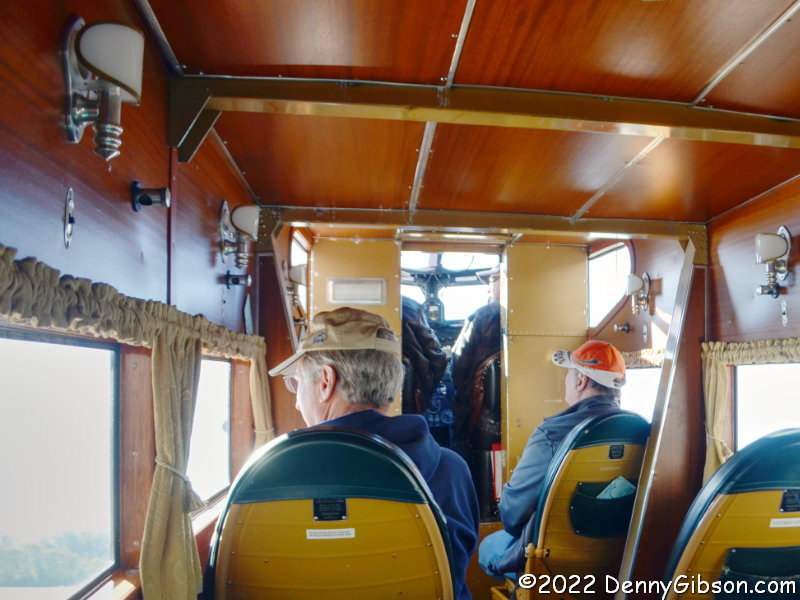
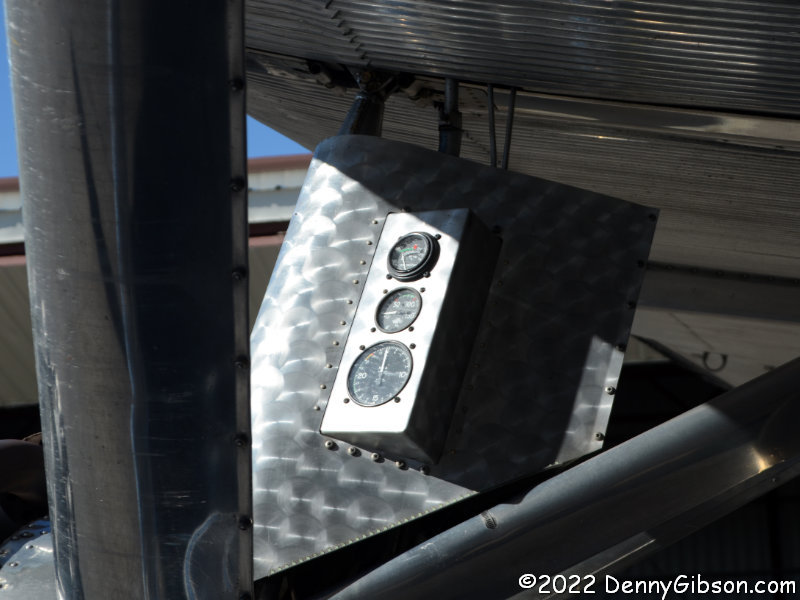
I guess I was eager to fly like it was 1929 and arrived at the airport before the airplane was even rolled out of the hangar. While chatting with some of the event organizers, I was told it was OK to step inside the plane for some photos which is how I got these shots of the empty interior. Sharp eyes might notice that not everything is triplicated in the cockpit. Tachometers plus pressure and temperature indicators for the outboard engines are mounted on wing struts near the engines.

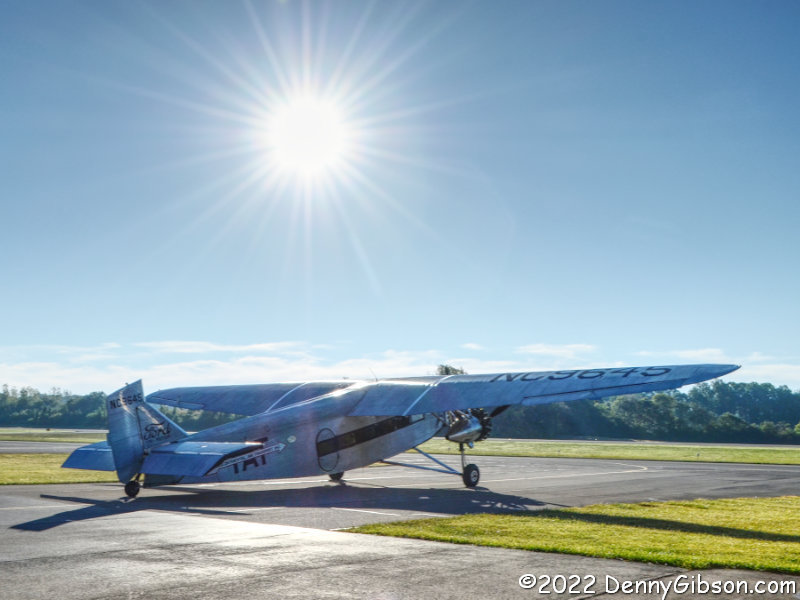
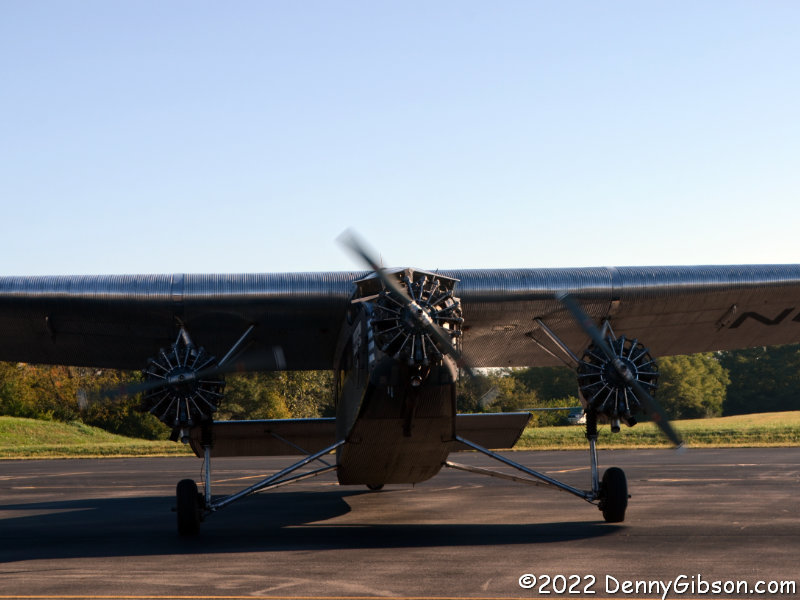
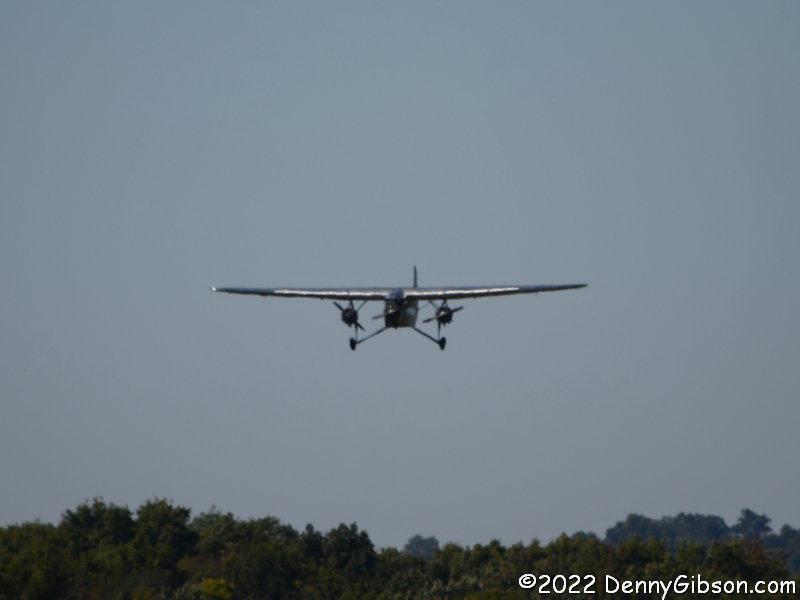
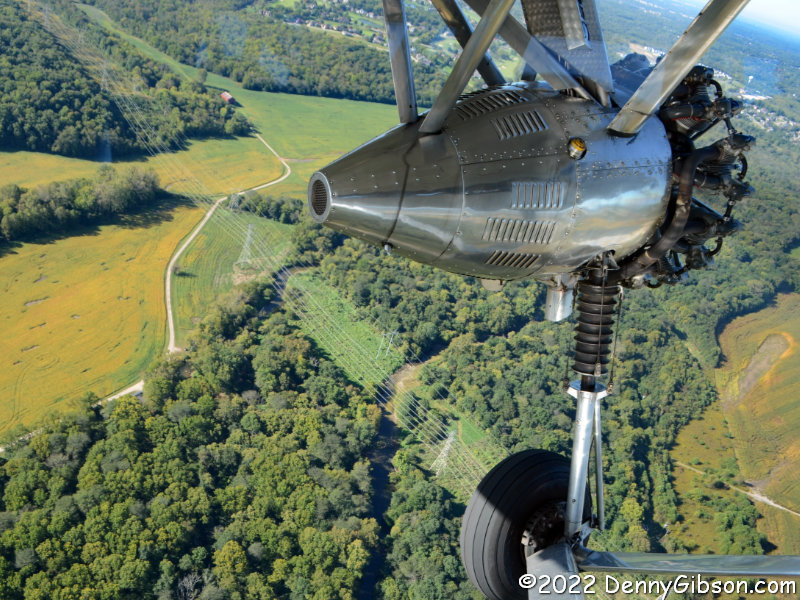
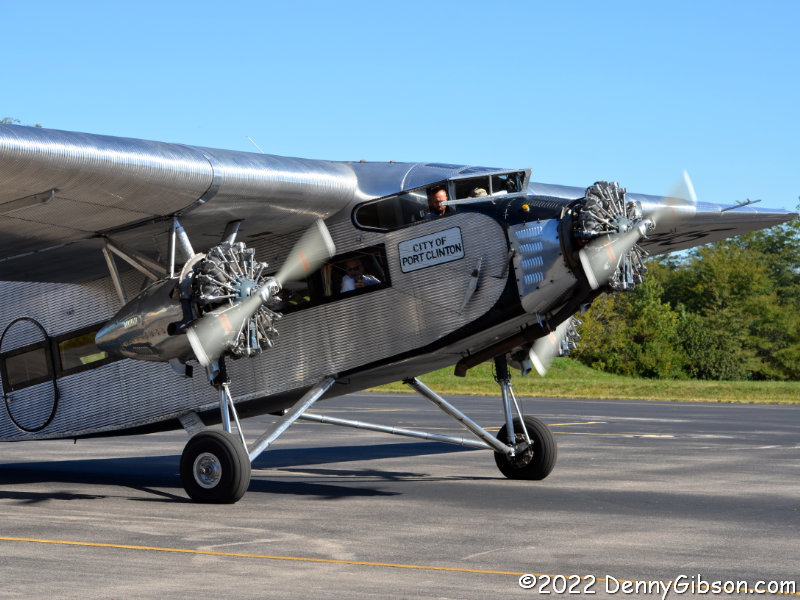
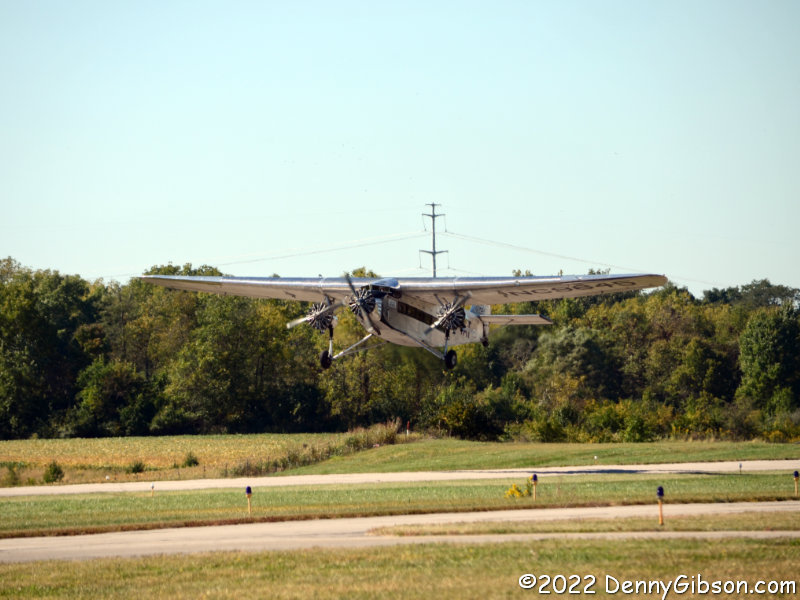
Before the day’s first flight, the Ford was taxied down the runway for refueling and I was able to watch the three radial engines fire up and the propellers start turning. The into-the-sun shot near the top of this post was also taken at the start of the gas run.

Shortly after the plane’s return, the first set of passengers was given a short briefing and permitted to board. Note that every seat is a window seat and every seat is an aisle seat. Six of the ten seats as well as the extra-charge co-pilot’s seat were occupied by males of a certain age. The other seats were empty.

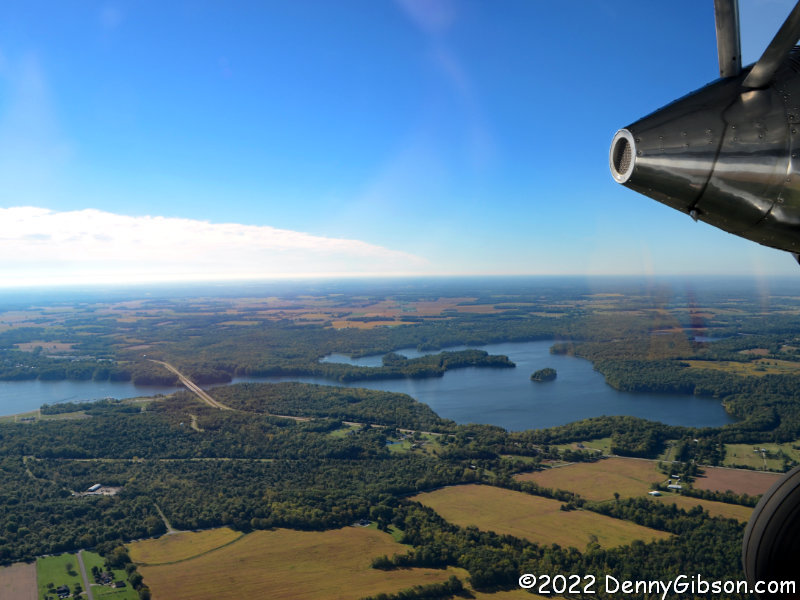
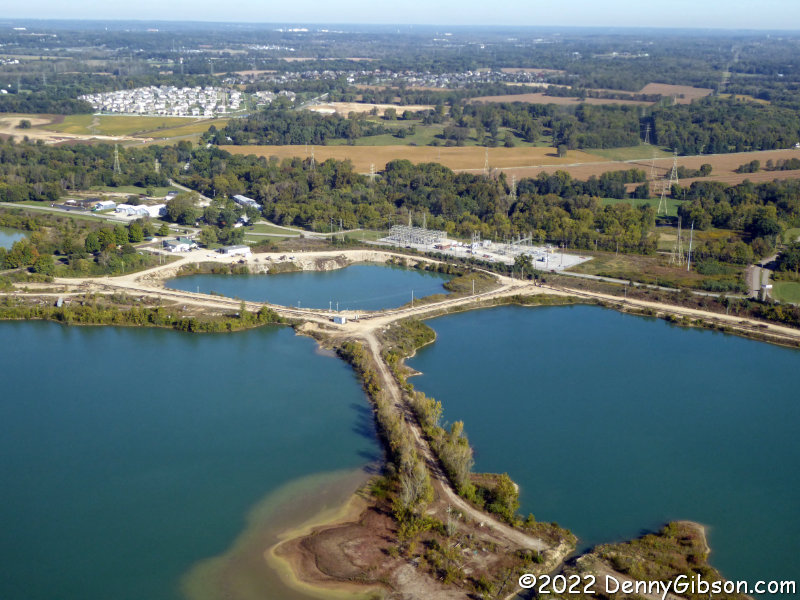
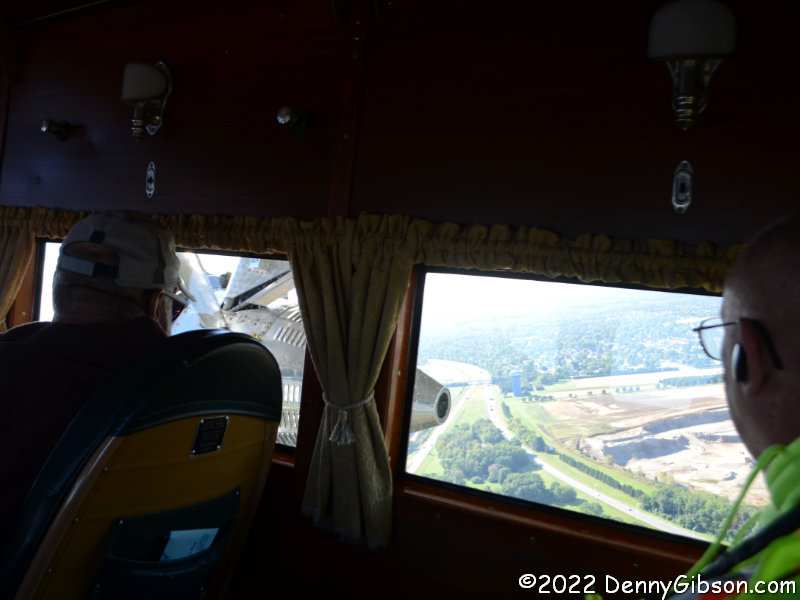
Not only was every seat a window seat, the windows were real windows and not those too-low and too-small foggy portholes found in today’s airliners. It was even possible to look out the opposite side of the plane. Photos here are of the water-filled gravel pits northeast of the airport, OH-73 crossing Ceasars Creek Lake, and downtown Dayton from eight or ten miles away. Plus I got a pretty good look at the ground during our final bank to return to the airport,

Assuming the event is more heavily attended during the weekend, showing up on Friday morning worked out well in avoiding crowds. The downside was that I wanted to take photos of the next flight and I had to wait a while for it to fill. When it did, I again got to see those props start turning then watch the plane head into the sky.

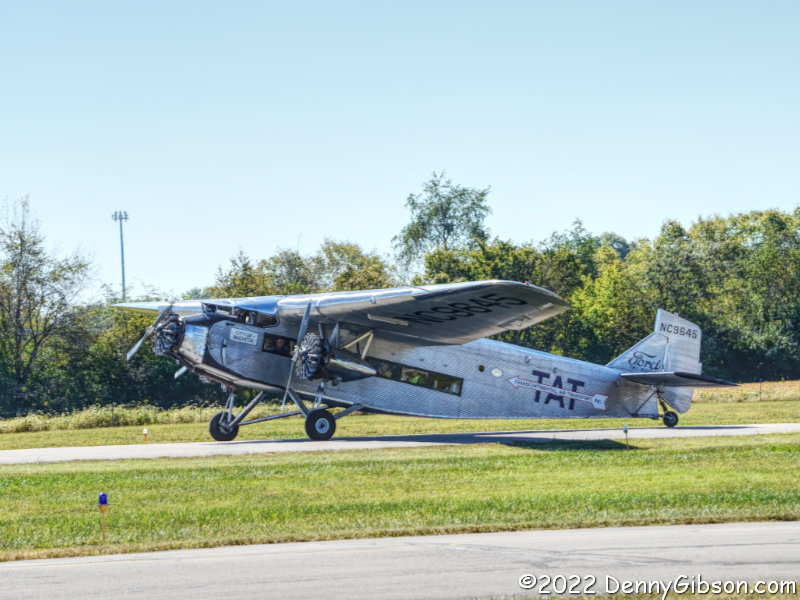
Flights are about half an hour from engines on to engines off with fifteen to twenty minutes of that being airborne. Having waited to see the takeoff, it only made sense to wait for the landing.
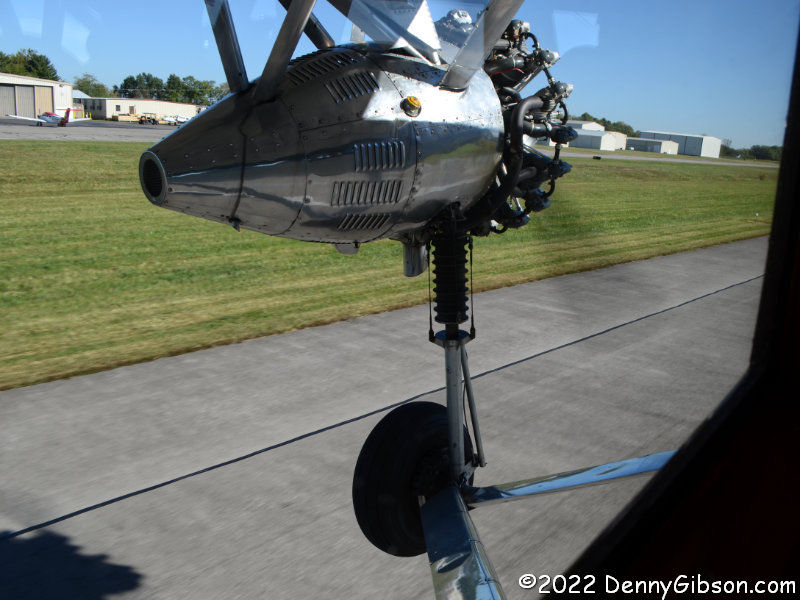
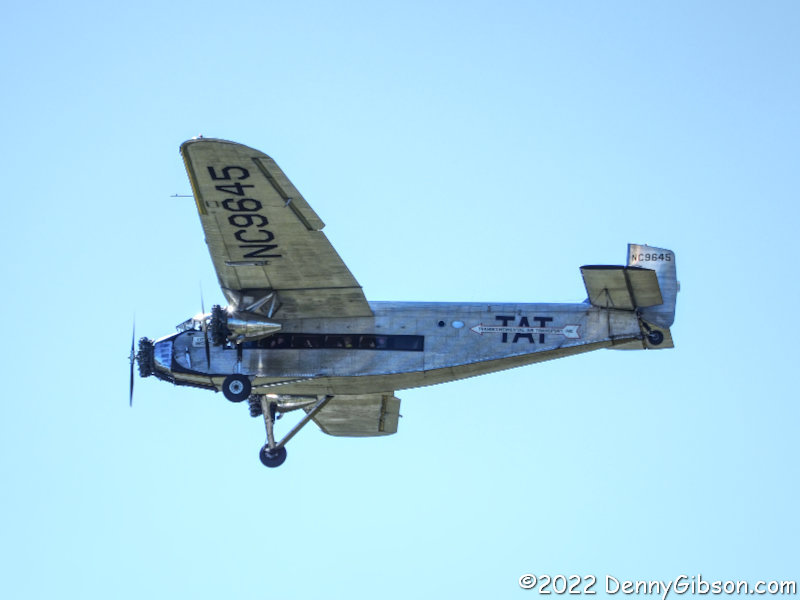
The Transcontinental Ait Transport logo this plane now wears was also the one it wore first. The plane first flew on December 1, 1928, and became the property of TAT in January 1929. Its complete history is told here. The TAT story is a short but important one. Although crossing the continent was not accomplished entirely in the air, the company did put Ford Tri-Motors to work for about a year expediting travel between the coasts. Overnight trains were used to connect New York with Columbus, OH, and  Waynoka, OK, with Clovis, NM. Tri-Motors carried travelers between Columbus and Waynoka and between Clovis and Glendale, CA. The fare for a forty-eight-hour one-way trip was $352.
Rides will be available at the Greene County – Lewis A Jackson Regional Airport until 5:00 PM today (Oct 2, 2022) and at some other spots in Ohio, Indiana, and Kentucky during the rest of October. Check it out here.

Seventy-Seven Years After

On Tuesday, Richard Eugene Cole, the last of the Doolittle Raiders, died at the age of 103. The following post first appeared on April 19, 2012, one day after the seventieth anniversary of the Doolittle Raid. That was long enough ago that Oddments, eventually made obsolete by this blog, were still a thing here. An Oddment page contains the bulk of my reporting on the seventieth reunion. There is a link to it in the blog post as well as here.


Doolittle Raiders Special DeliveryOn April 18, 1942, sixteen B-25s launched from carriers on a one-way bombing raid over Japan. The physical damage it caused might not have been all that significant but it delivered a much needed lift to moral in the United States and prompted some rethinking and altering of plans by the Japanese commanders. Four of the surviving raiders continue their week-long reunion today and tomorrow in Dayton, Ohio. On Tuesday and Wednesday, airplanes like the ones that made the raid were on hand at the reunion. I was there both days and have an Oddment entry here. Pointing to that entry and providing a place for comments are the primary reasons for this blog entry but…


…I also revisited a couple of interesting eating establishments.

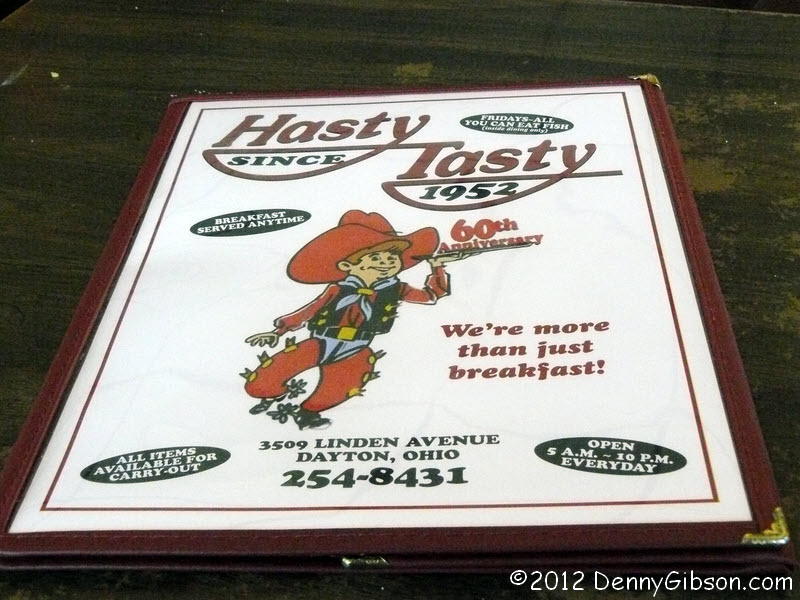
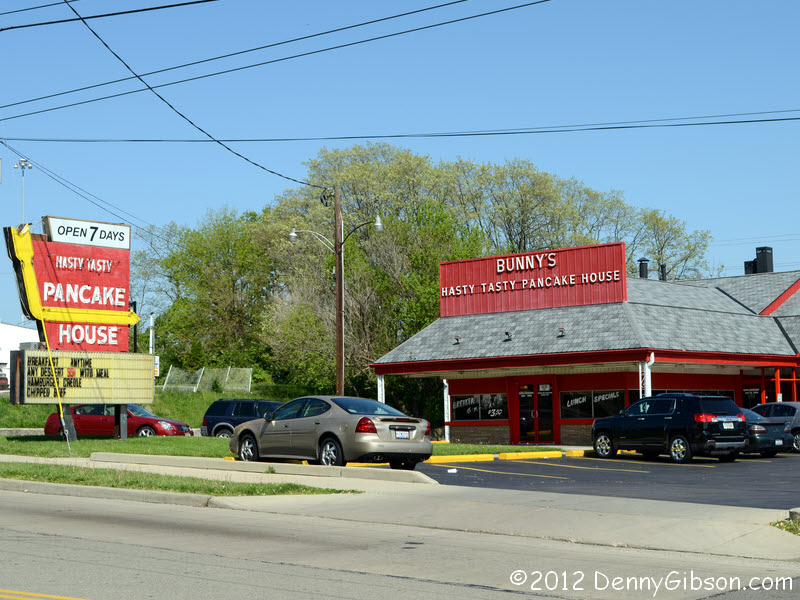
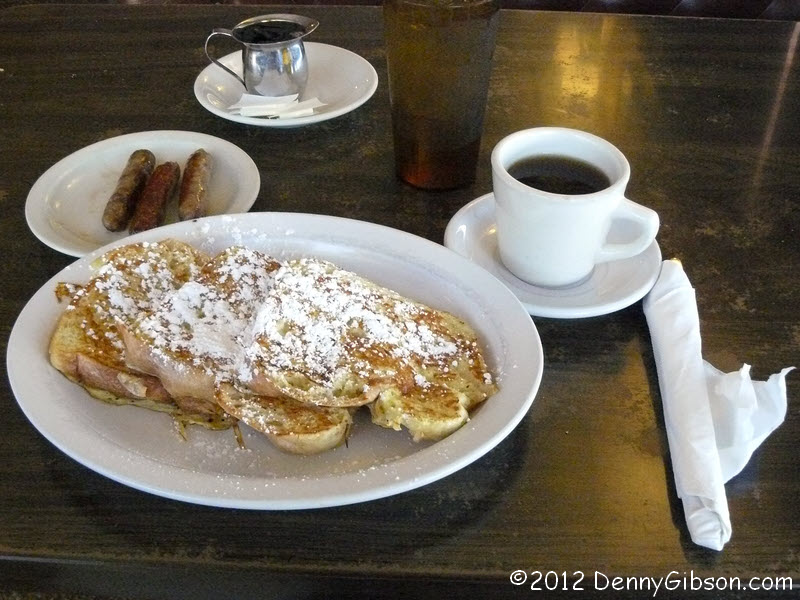
Hasty TastyHasty TastyBreakfast was at the 60 year old Hasty-Tasty Pancake House just a couple of miles from the Air Force Museum. I’ve eaten here before but don’t think I’ve ever mentioned it in either a blog post of a trip journal. A wonderful Dayton eatery where the waitresses that don’t call you “Honey” call you “Sugar”.

Many of the B-25s headed back to Urbana after the flyover and so did I once the memorial service had concluded and traffic cleared a bit. Several of the planes are staying at Grimes Field for a day or two and there is a nice museum that includes a DC3 cargo plane you can climb inside. I took pictures there that could have been included in the Oddment page but I feared that would be overkill.

Crabill's Hamburgers

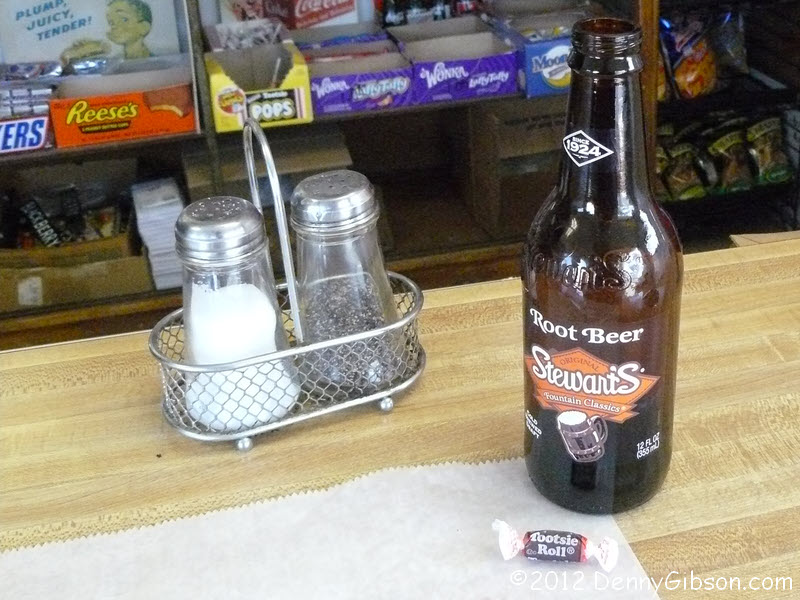
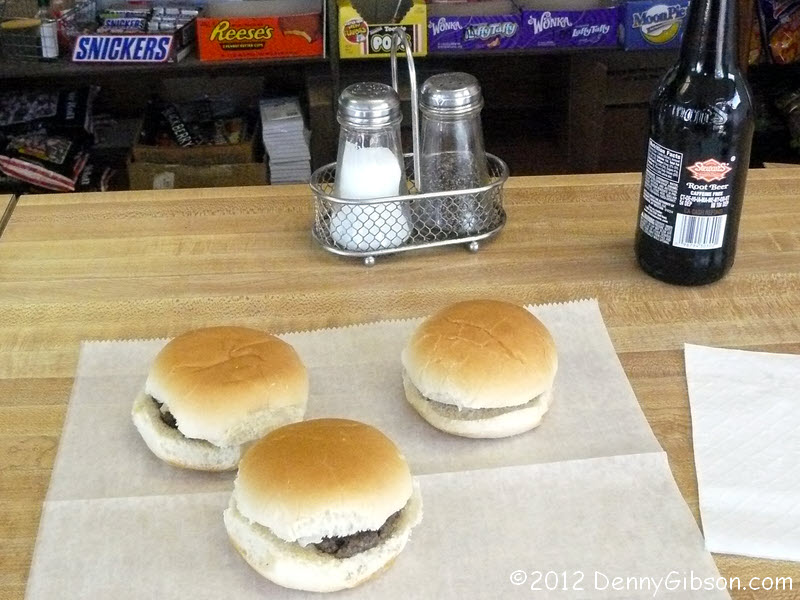
Crabill's HamburgersCrabill’s Hamburgers, at the west edge of Urbana, is even older than the Hasty Tasty although it has moved once. I did mention it when I stopped last summer and none other than David Crabill praised crisp hotdogs. I resolved to try one on my next visit and this was it. Andy cooked the ‘dog just right while I downed my dinner then the friendly but unnamed (Oops, sorry.) waitress obliged me by putting relish on just one half so I could taste it both ways without buying two. The Tootsie Roll is the reward everyone gets for cleaning their plate waxed paper.

Boats, Bikes, and Biplanes

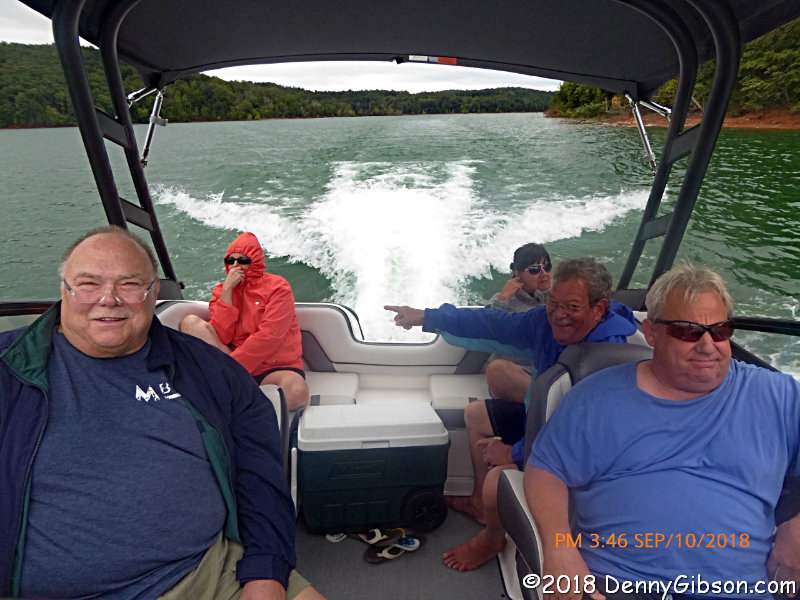
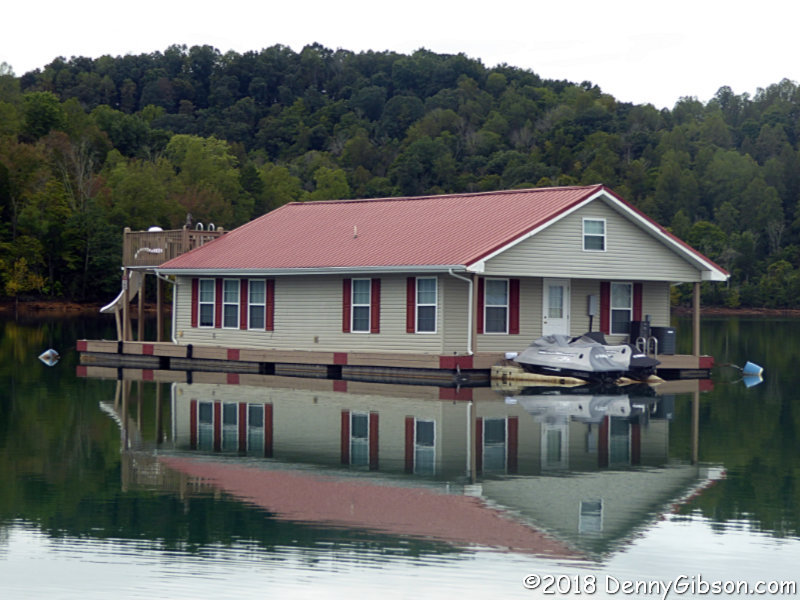
Just about the time that last week’s post was being automatically published, I set out to join some friends at a floating house on Norris Lake in Tennessee. I hit rain shortly after leaving home and it pretty much stayed with me through the first half of the drive. It was dry when I reached the lake although a large portion of the sky was cloud covered. The clouds would be present for almost all of the two days I was there. No so the dry.
But, even though a dry sky was not a constant, neither was it completely absent and we did get in a couple of waterbourne cruises. And we got in plenty of relaxation and scenery study with very pleasant temperatures.

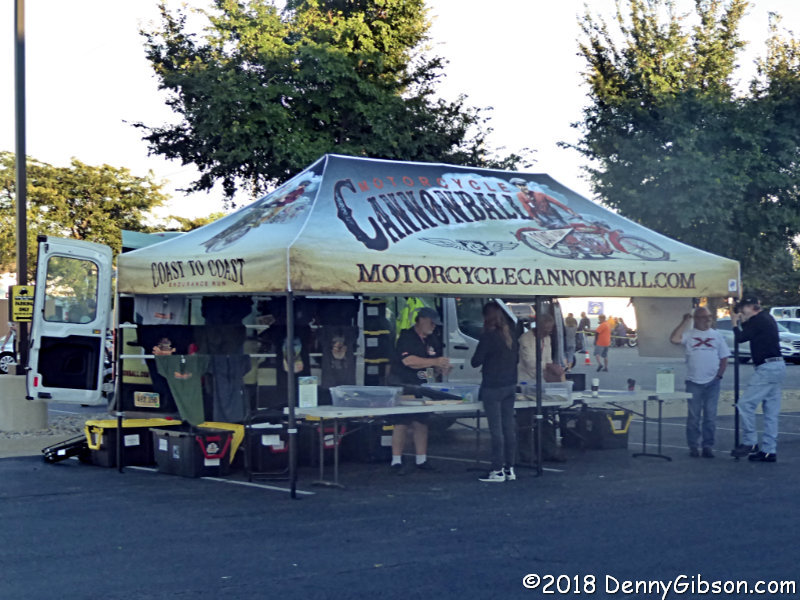
On Tuesday, I left ahead of the others and headed to Bowling Green, Ohio. When the first Motorcycle Cannonball passed through Tennessee in 2010, I was there as vintage bikes carried their riders over the Cherohala Skyway and on to an overnight in Chattanooga. The 2012 and 2014 events eluded me completely, but I did get a look at the 2016 group during its scheduled lunch stop at a Harley Davidson dealership near my home. My drive to Bowling Green was to connect with this year’s group. Timing was tight, but I was on pace to get there during the evening display period — until I hit Cincinnati. Traffic slowed, slowed some more, crept along fitfully, and finally came to a halt. Men appeared about three cars in front of me and began placing cones across I-75 while directing traffic onto Ronald Reagan Cross County Highway. Cars just a few yards ahead of me were trapped on the other side of those cones. I later learned that the closure was triggered by an overturned truck. Heavy traffic and surface street construction didn’t help one bit, but I did eventually make it back to the expressway about four miles and an hour and a half later. I considered simply heading home but didn’t. Of course, none of the Cannonball motorcycles were on display when I reached Bowling Green and even the vendor and organizer tents were being emptied. I found a cheap motel to roost in for the night.
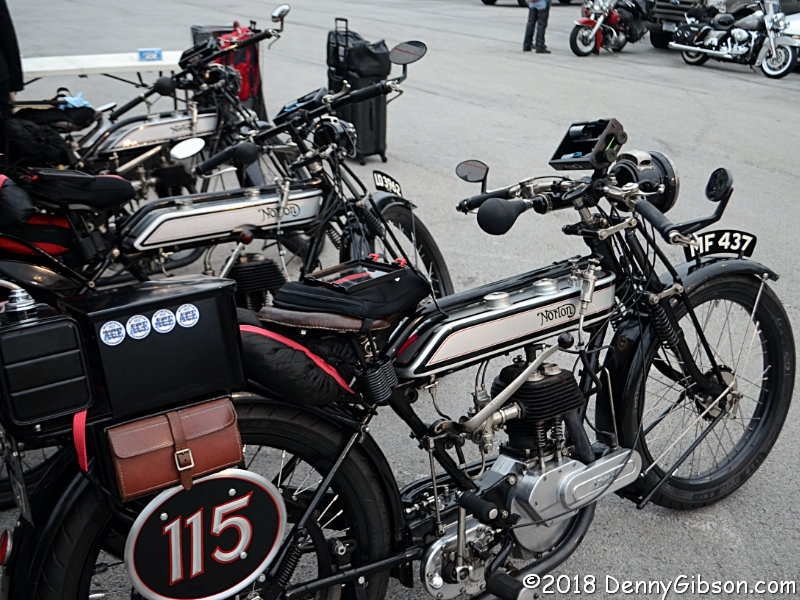
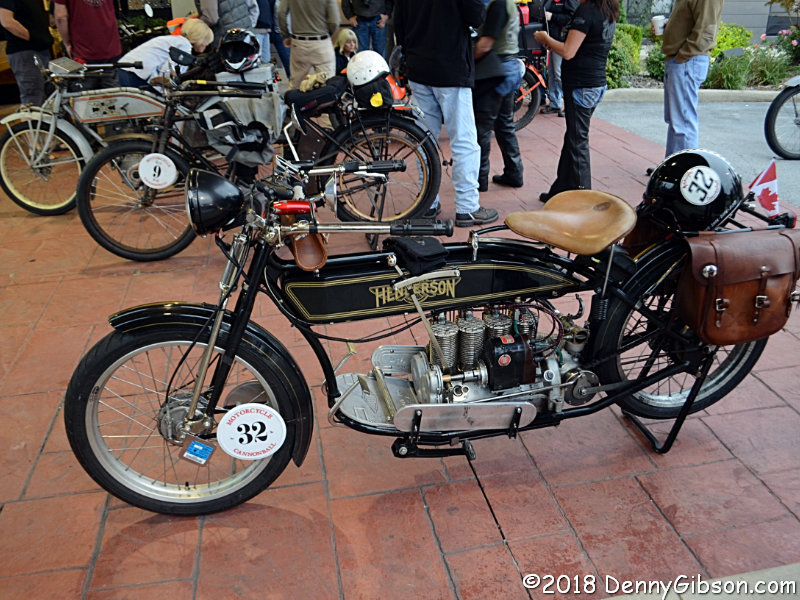
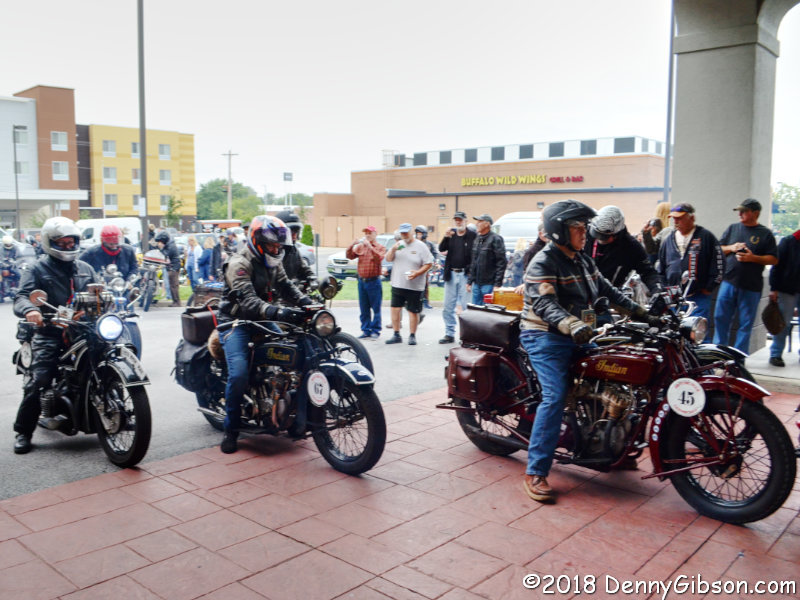
It was an entirely different scene when I returned for the morning launch. The Cannonball website lists 123 entrants and it looked like almost all were ready or getting ready to roll. Only motorcycles built before 1929 were permitted in this year’s event. The trio of Nortons consists of a 1915 model sandwiched between a 1923 (#115) and 1925. The website lists #32 as an Indian but that’s obviously a Henderson in the second picture. Beyond it are two 1911 Excelsiors. The third picture shows 1928 and 1927 Indians followed by a 1928 BMW.

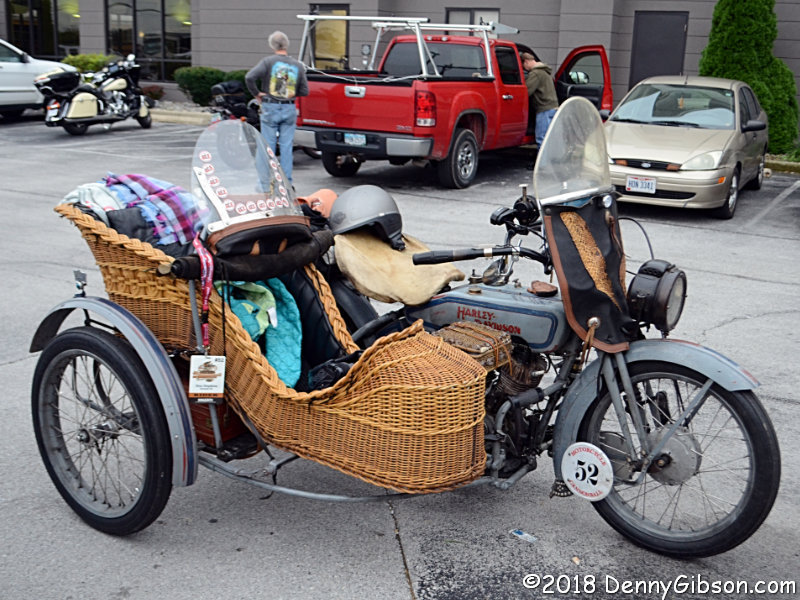
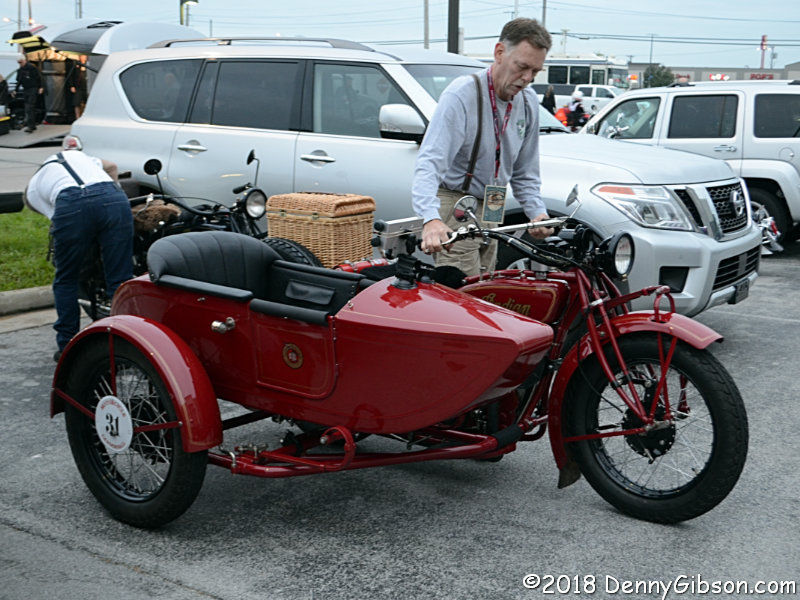
And of course they made sidecars before 1929. Here we have Gene Harper with his 1924 Indian Chief and Doc Hopkins’ 1916 Harley Davidson. You just can’t get much cooler than traveling coast to coast in a wicker basket.

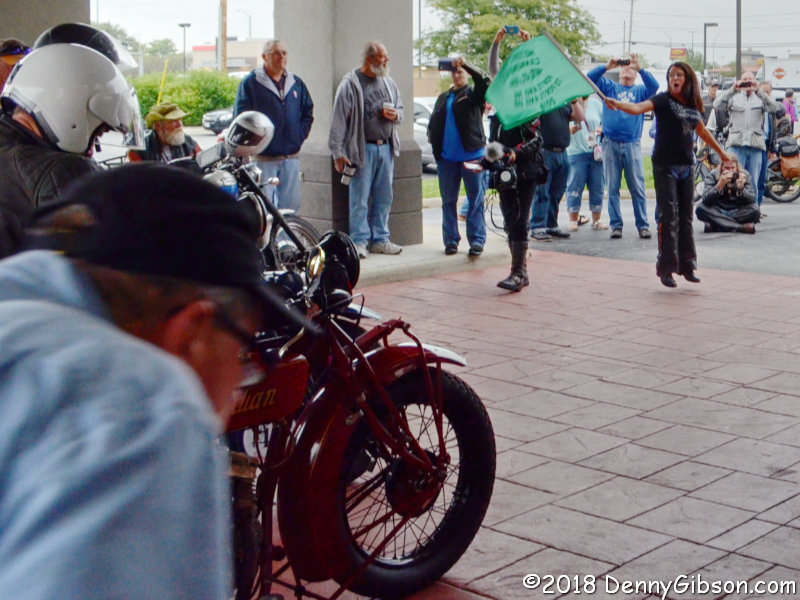
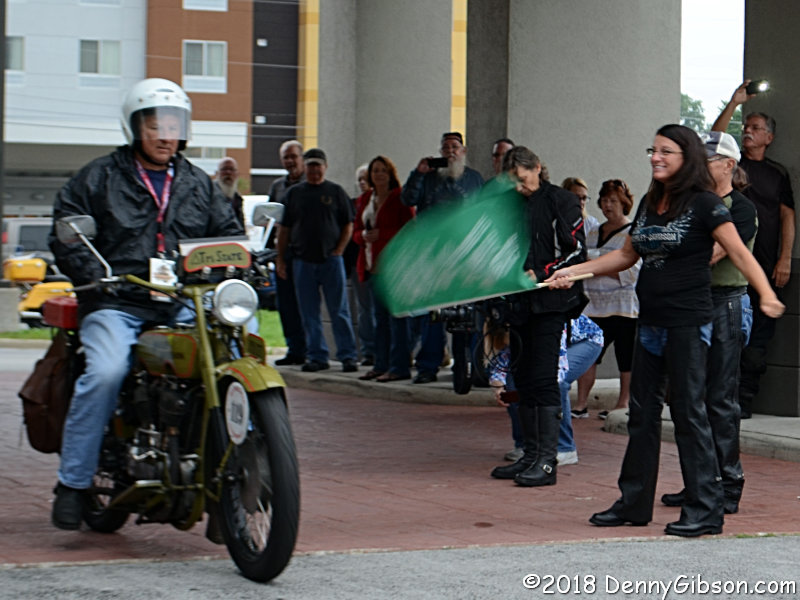
I don’t know who this gal is but I do know that the event simply could not function without her. She jumped in the air, waved the starting flag, and shouted encouragement as each bike departed. This was the beginning of Stage #5 which ends in Bourbonnais, Illinois. The ride will end in Portland, Oregon, on the 23rd.
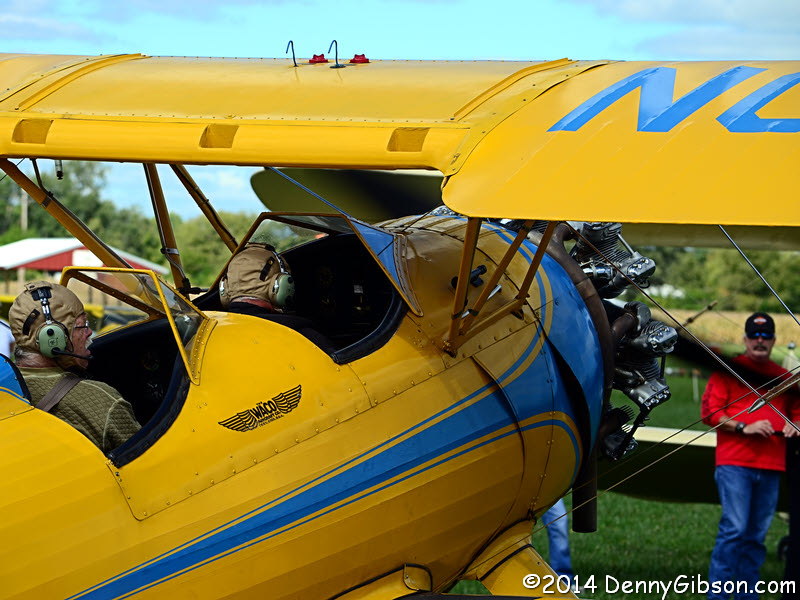
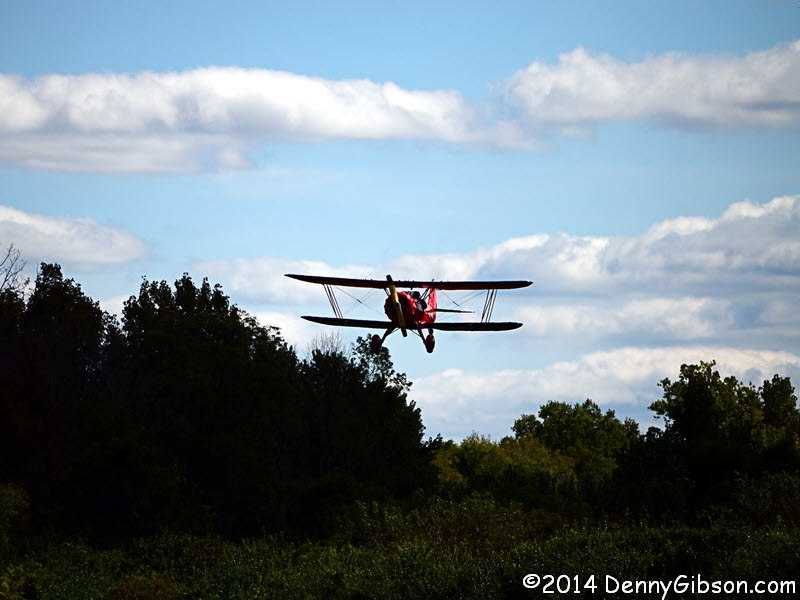
On Saturday I made it up to the WACO Fly-In in Troy, Ohio. WACO airplanes were manufactured in Troy between 1920 and 1947. My first time attending was in 2006. I also documented a 2014 visit and I made a couple of undocumented stops between 2006 and ’14. Both my memory and notes support the idea that there were more WACO airplanes there on my first visit than at any of the others. My memory, without any notes to support it, thinks there might have been more non-WACO airplanes there this year than on previous visits.
But regardless of numbers, seeing these beautiful airplanes up close and watching them fly overhead is always a thrill and the day’s perfect weather made it even better.

WACO Homecoming

waco01Troy, Ohio, was once home to the most successful airplane manufacturer in the world. That manufacturer, WACO Aircraft Company, ceased production in 1947 but the city keeps the memories alive with Historic WACO Field at the south edge of town. A museum, learning center, and runway see action all year long but the annual fly-in brings in quite a bit of extra action, particularly for the runway. I attended this year’s fly-in on Saturday, the middle of its three day run.

waco02waco03waco04The dozen or so WACOs parked on the ground made a colorful and impressive display. I have the feeling that there were more of the planes here on my first visit to the fly-in in 2006 but I can’t quantify that and a dozen WACOs is still a lot of WACOs.

waco06waco05There were plenty of “don’t touch” reminders but attendees were otherwise free to walk among the airplanes for up close viewing. Only after I got home and started to prepare this post did I realize that it is likely that not all of those gorgeous planes I admired were vintage. It had somehow escaped me that the WACO Aircraft Corporation of Battle Creek, Michigan, started building reproductions of the WACO YMF in 1986. The reproductions have the word “classic” in their logo so I should have been able to easily identify them if I’d only known to look. On the other hand, it was probably better not knowing and believing that all those great looking machines were older than me.

waco07waco08waco09A tremendous increase in museum space since I was last here means that several airplanes, including some that were displayed outside in 2006, are now displayed under cover. Maybe that contributed, just a bit, to my sense of fewer WACOs on the field.

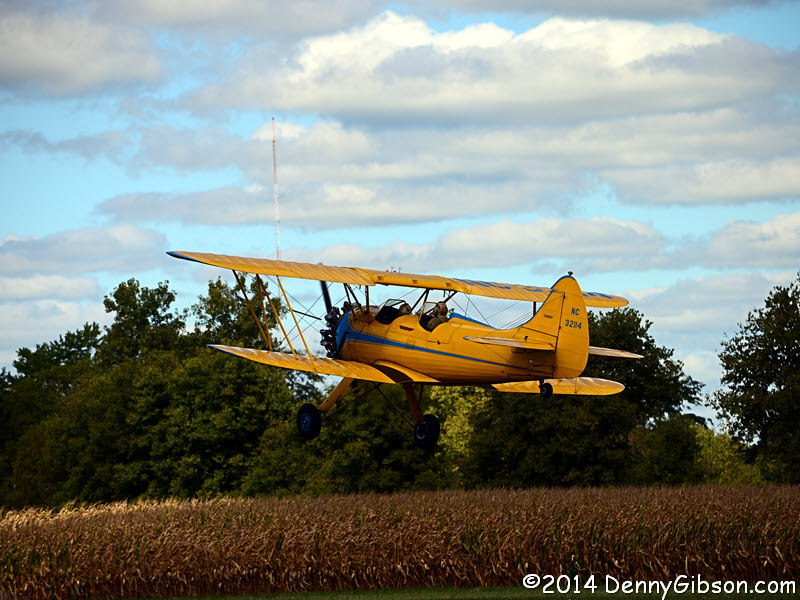
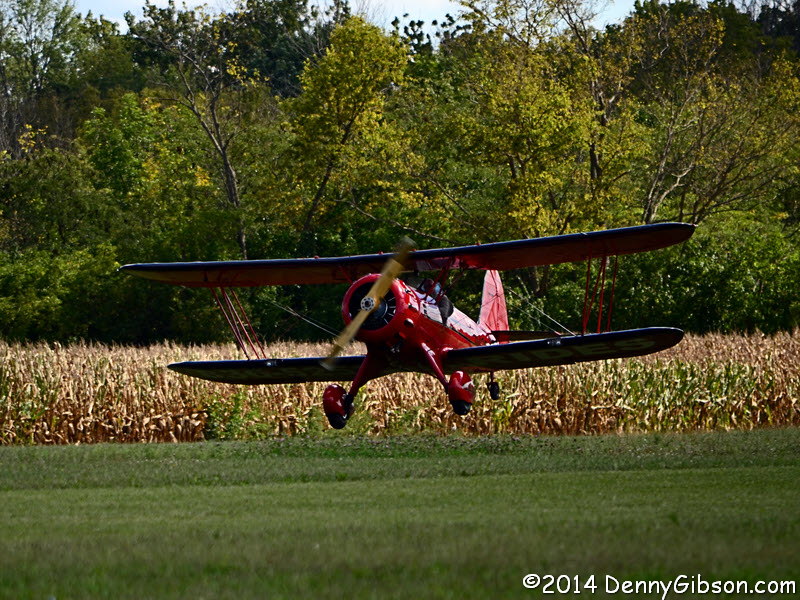
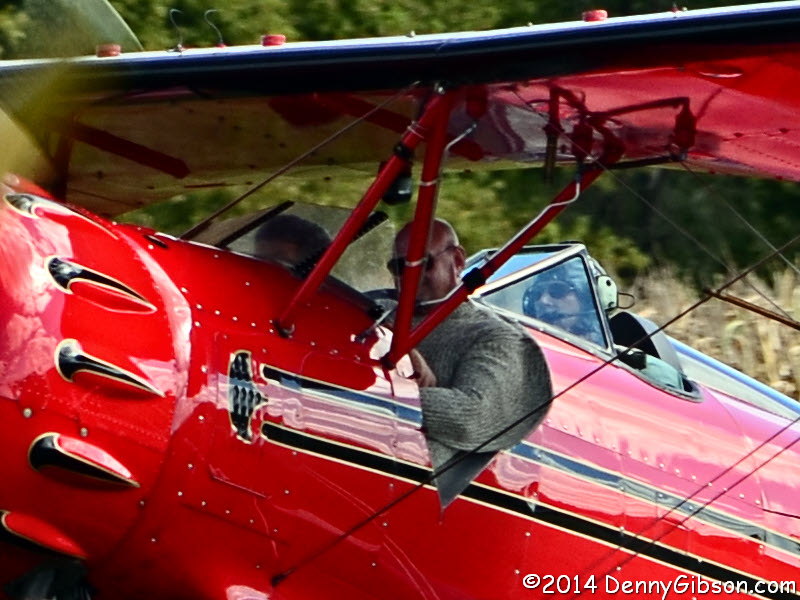
waco12waco11waco10A big attraction is the availability, for a fee, of rides in the open planes. Passengers, two maximum, sit in front of the pilot. These pictures show a vintage (no “classic” in the logo) WACO taxiing from its spot among the other aircraft, gaining speed down the grass runway, then smoothly rising above the corn. My guess is that that’s a buddy and not a paying passenger in the front compartment.

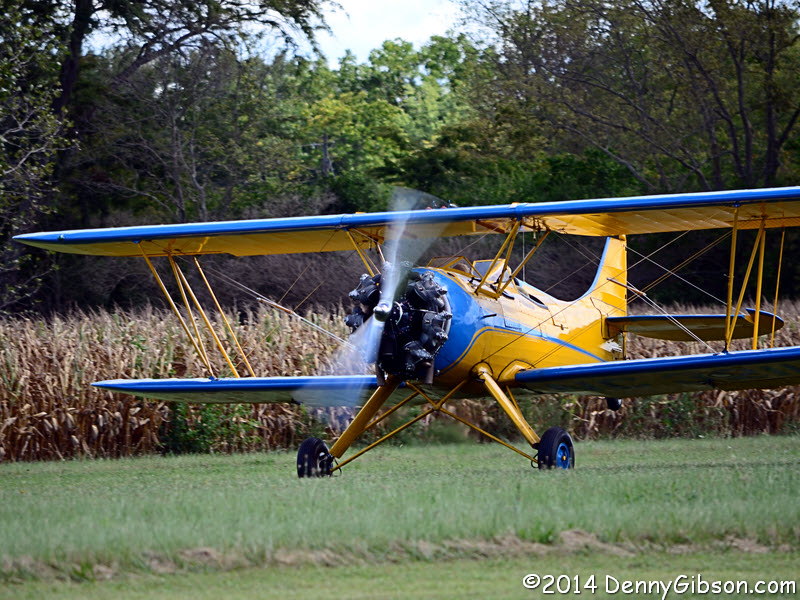
waco13waco14waco15I’ll close with a 1993 WACO Classic YMF (I learned that later.) coming in with a pair of happy customers, seat backs in the upright position, sitting up front.