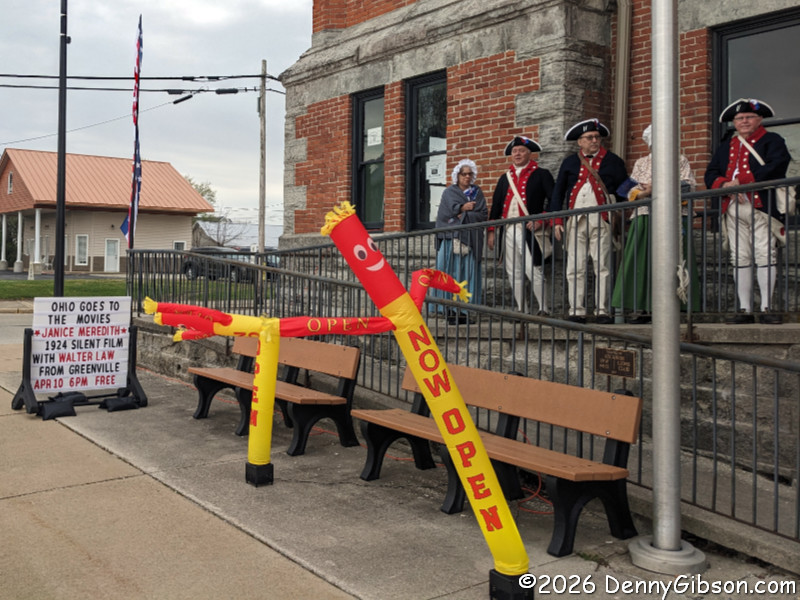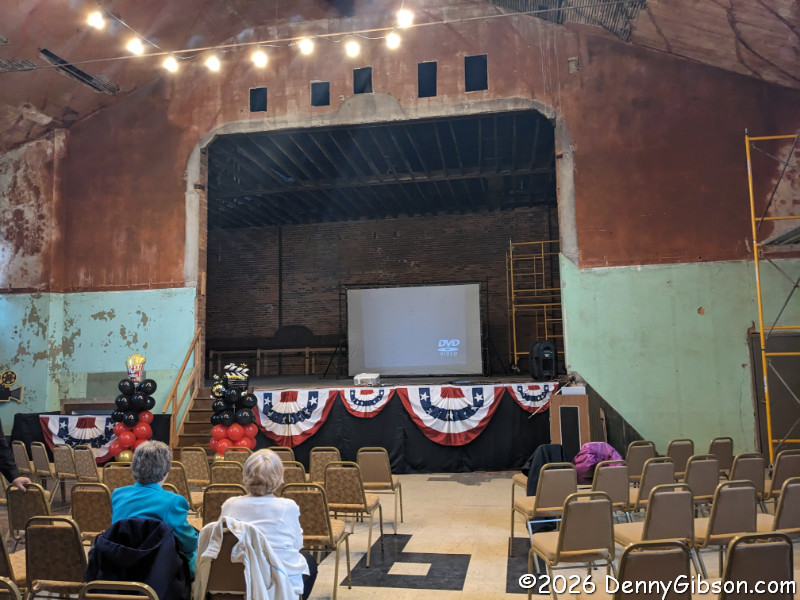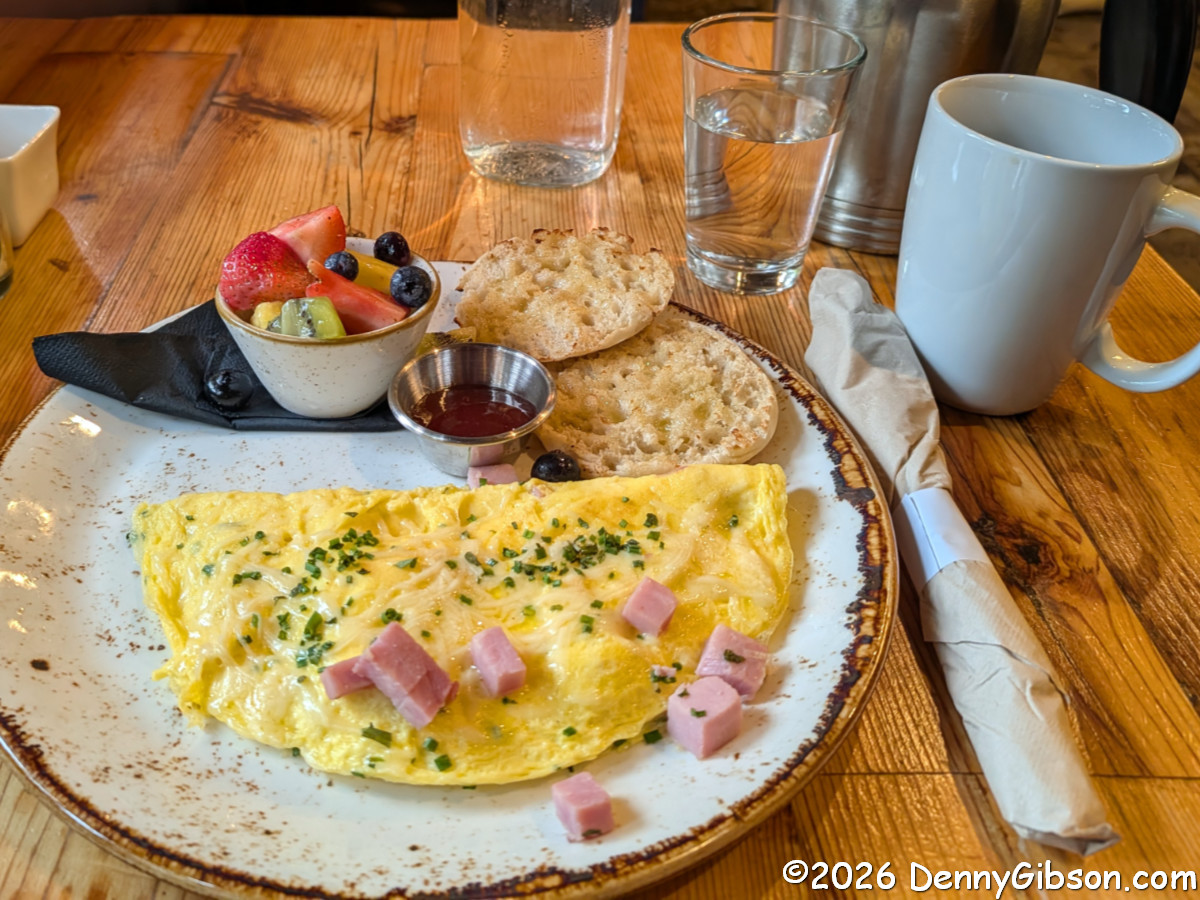
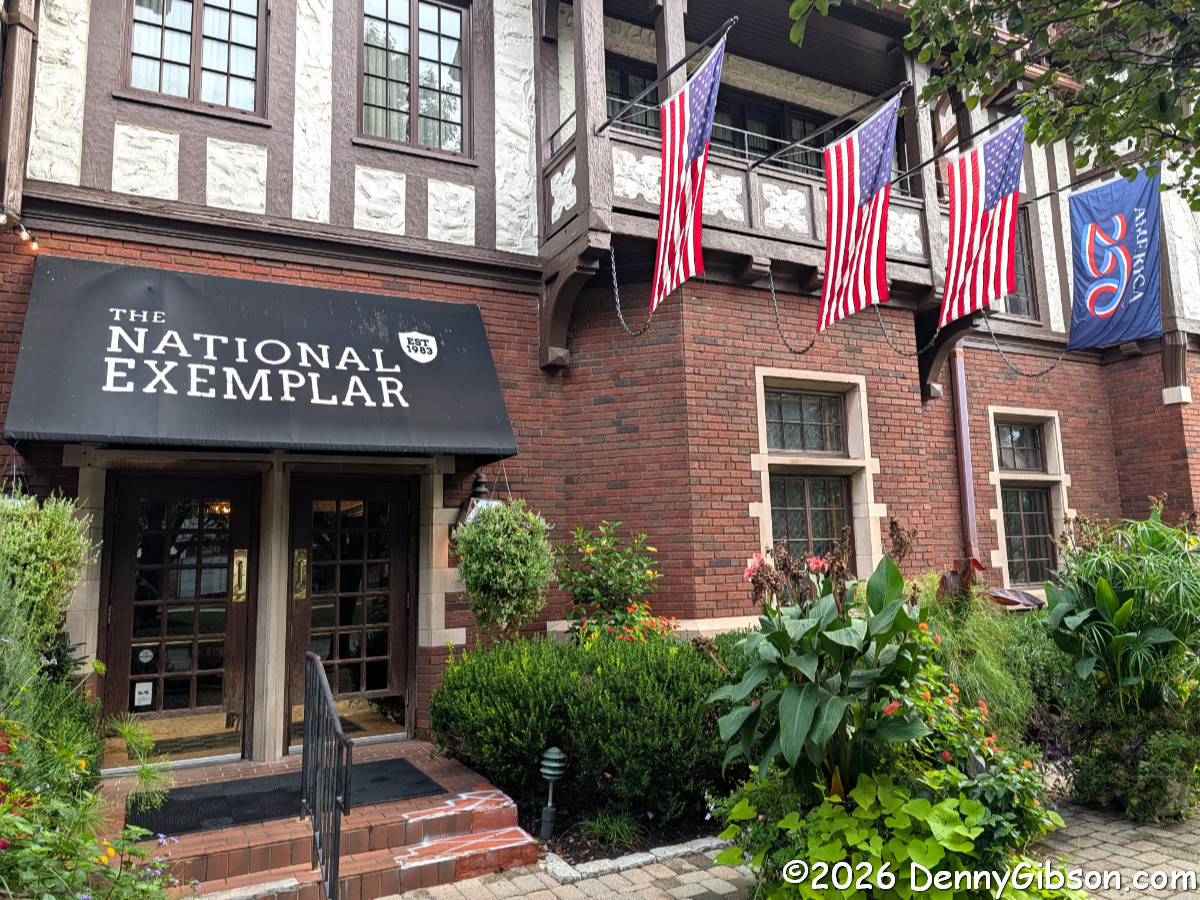
You’re right. That’s not a movie theater in the picture. It is the entrance to the National Exemplar restaurant, where I had a wonderful breakfast before walking to the Mariemont Theater, which is essentially right next door. The rare breakfast-and-a-movie opportunity came about because I was attending a 10:00 AM show. I’ve looked in vain for a pre-noon equivalent to a post-noon matinee, but the only suggestion I found was “morningside screening”. How mundane.
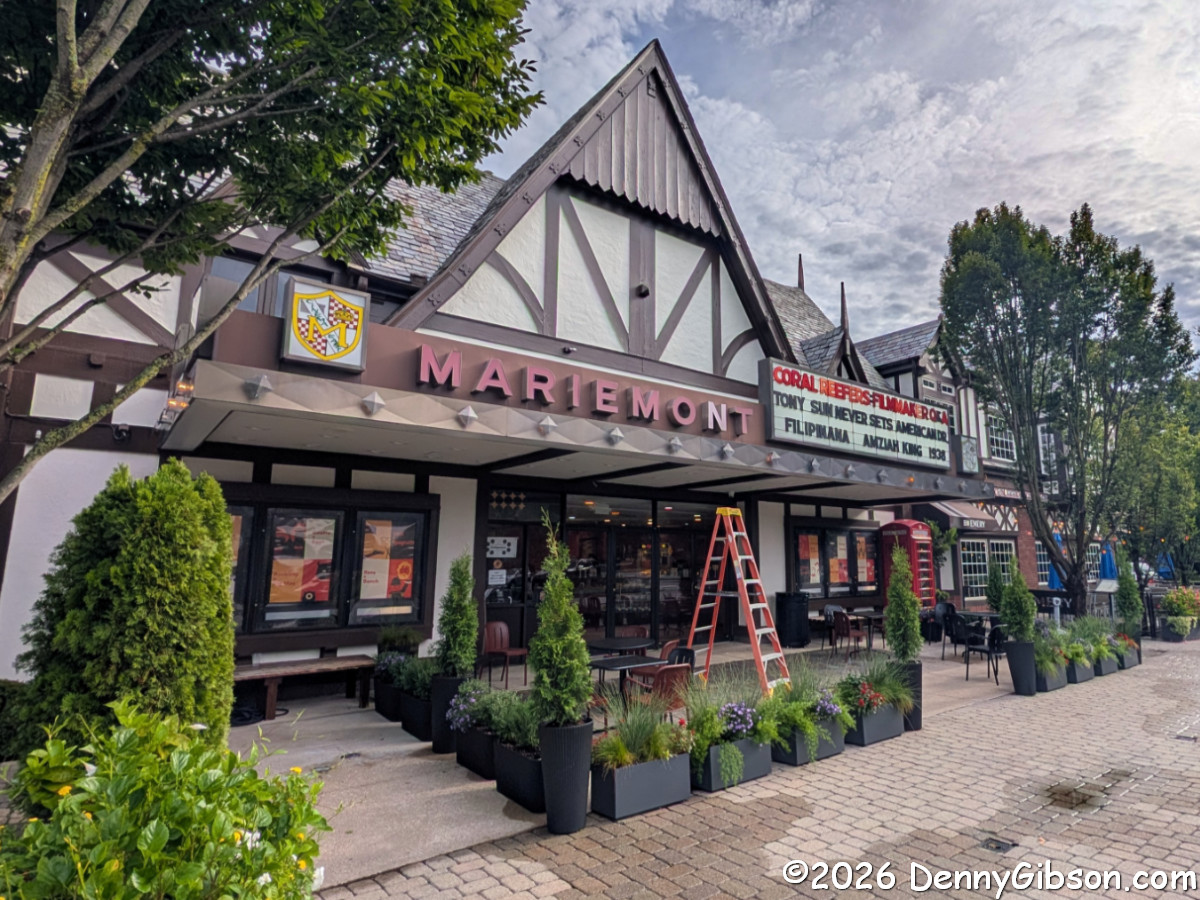
I was here for the first showing of a two-week run of Coyote vs. Acme. It was released more than a week ago and has been playing in other area theaters, but I really like this theater, plus it seemed very appropriate to see a movie that came back from the dead in a theater that did the same. Warner Brothers completed the film in 2023 but planned to shelve it for a tax write off. Thankfully, Ketchup Entertainment bought distribution rights in 2025. I wrote about the Mariemont Theater’s first day back after being shuttered here. Note that (1) the movie was not yet on the marquee when I arrived, and (2) a ladder was poised to correct that.
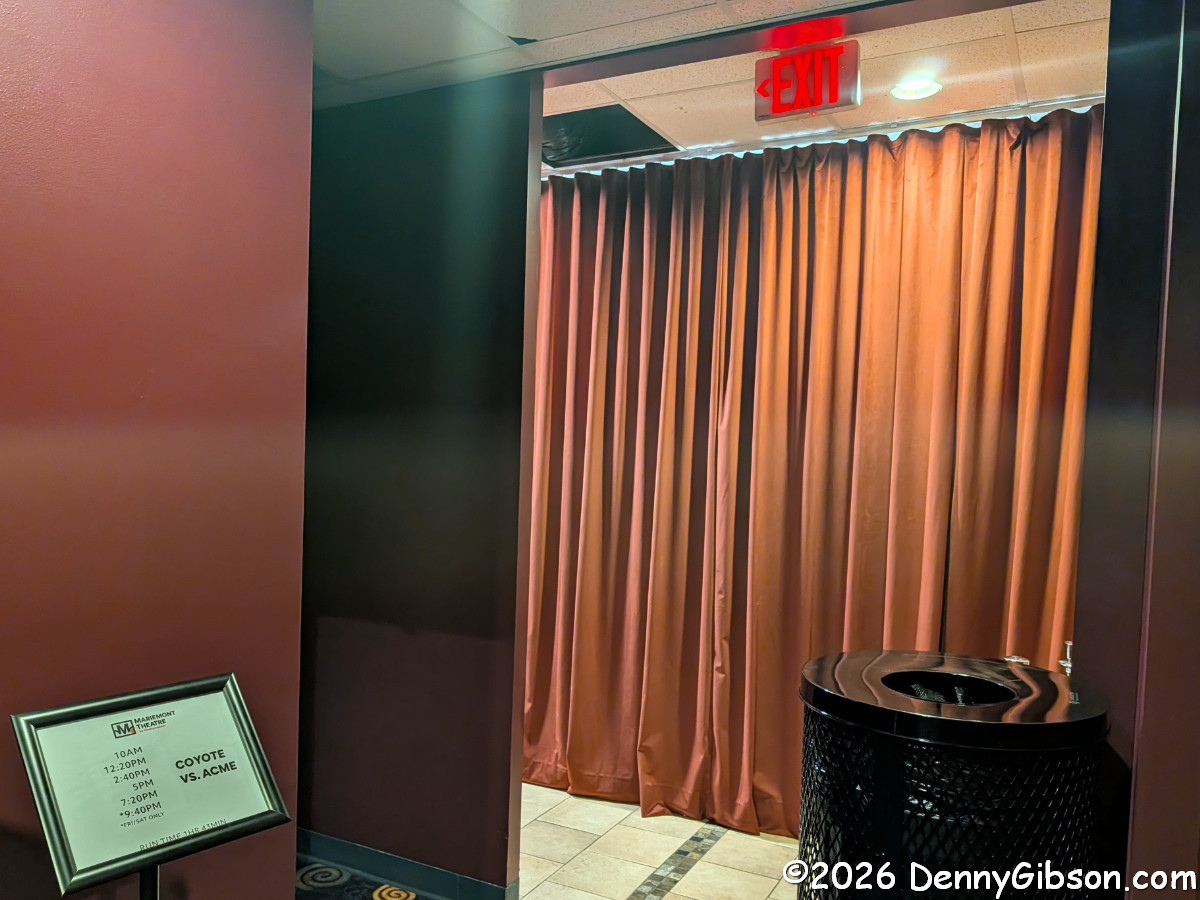
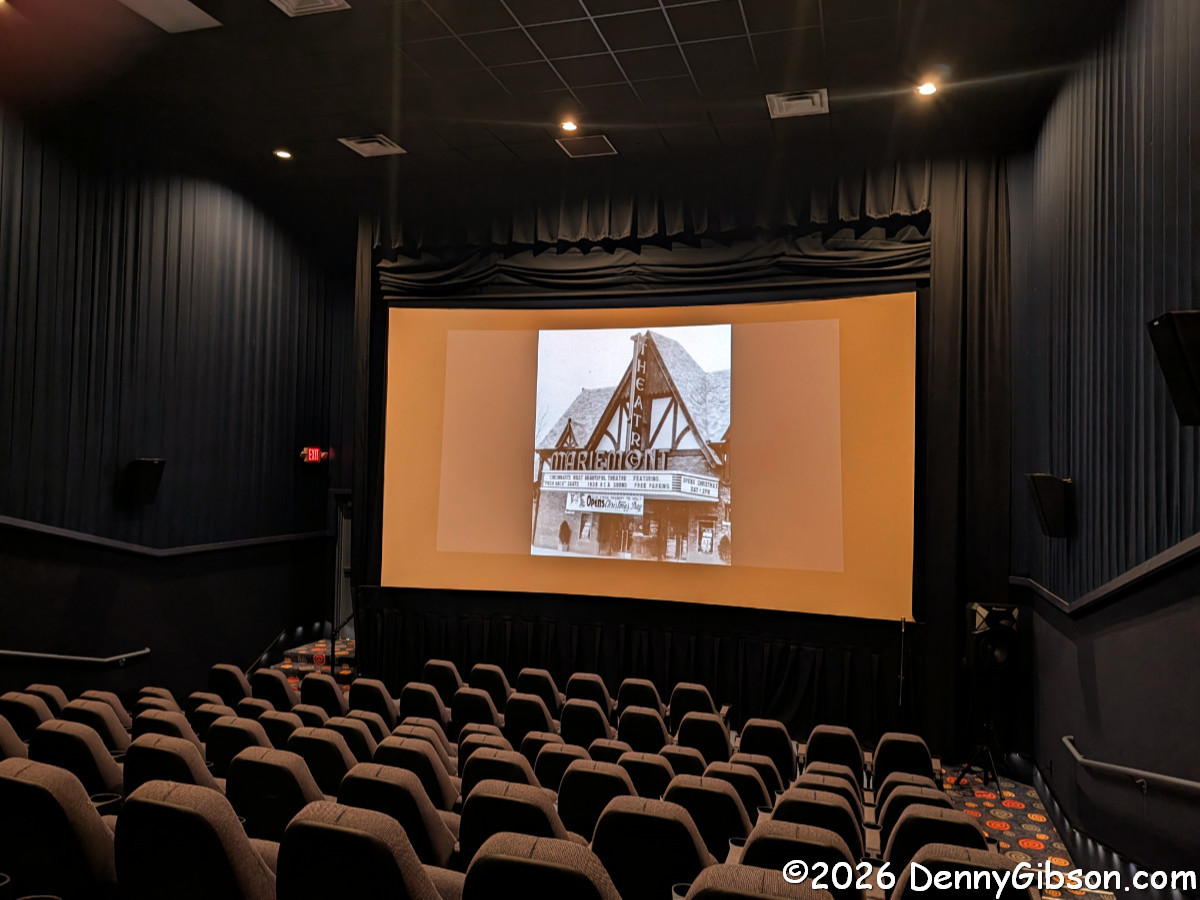
When I purchased my ticket, I could see that it was the first ticket sold for the showing. When the movie started, I could see it was also the last ticket sold. I was treated to what amounted to a personal screening, and what a treat it was.
Unlike the original Road Runner cartoons, the movie has a plot. You can even see it as a tale about the little guy challenging the big evil corporation but please don’t focus too much on that. And don’t let it being a “talkie” distract you from the familiar painted tunnels, falling rocks, and misused magnets. For some reason, I was concerned that Wile E. Coyote might be given a voice, but I need not have worried. Both Coyote and Road Runner communicate via “a limited number of signs”. Same as it ever was. There is plenty of speaking, but it’s all handled by the human actors and what appears to be the entire stable of Looney Tune characters such as Tweety, Bugs, Foghorn Leghorn, Porky, and all the rest.
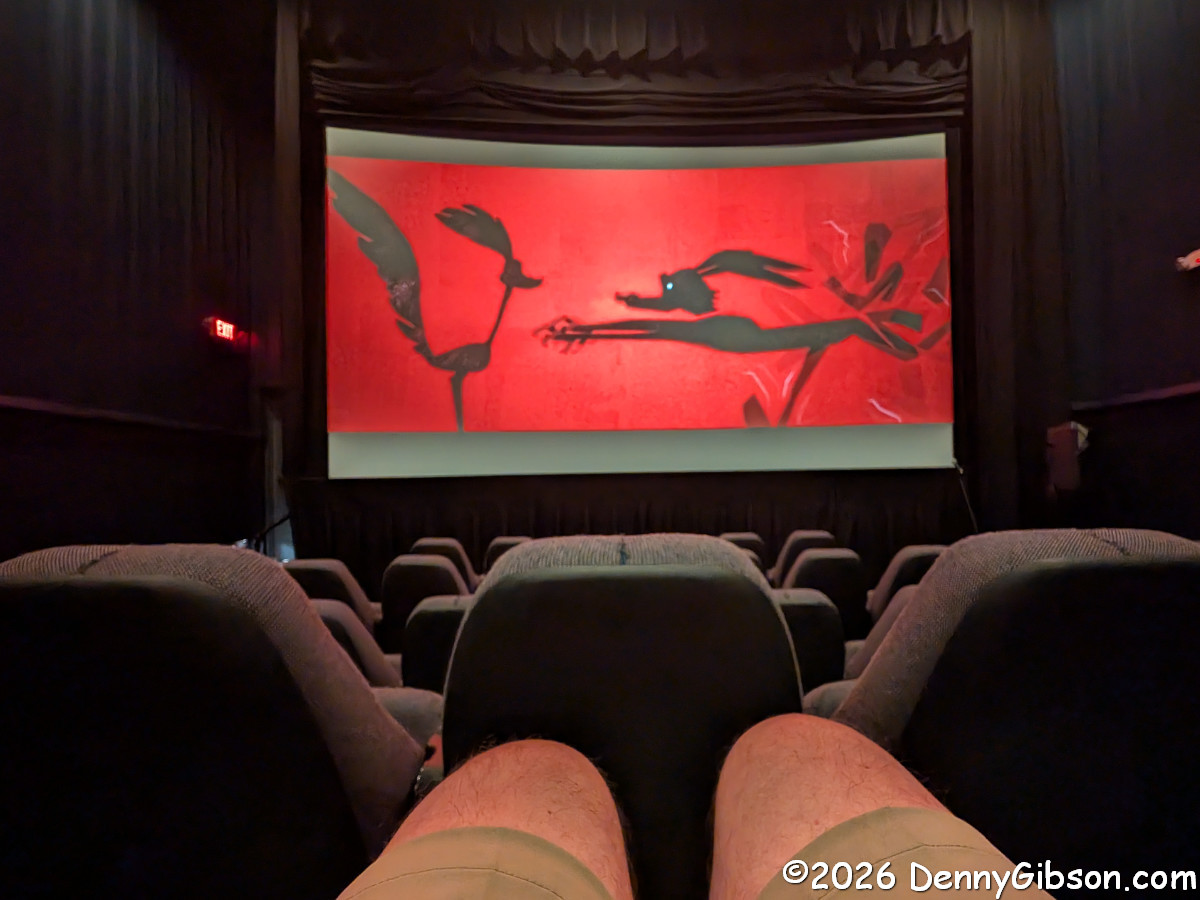
I’m sure I missed some of the more subtle gags and references but I caught enough that I took advantage of having the place all to myself several times by laughing out loud. I know I need to see it again. As might be expected from advances in technology, the real world and the cartoon characters are blended flawlessly. The movie’s real world was filmed in Albuquerque, New Mexico. At one point it struck me that Kevin Avery, one of the human lawyers, was wearing a T-shirt from a real Albuquerque restaurant and I’ve a feeling that is true of the other shirts that just had not registered. And here’s something I only figured out after watching the movie and consulting the internet. In the movie, Avery and Coyote stay at the Prickly Pear Motel. Thinking it might be a real business, I googled the name and learned that the Prickly Pear Festival is a real event that opens for the eighth time in two days (Sep 18, 2026). In the movie, Albuquerque hosts a Carrot Festival. Back in 1953, Bugs was headed to the Coachella Carrot Festival when he “shoulda taken that left turn at Albuquerque!”
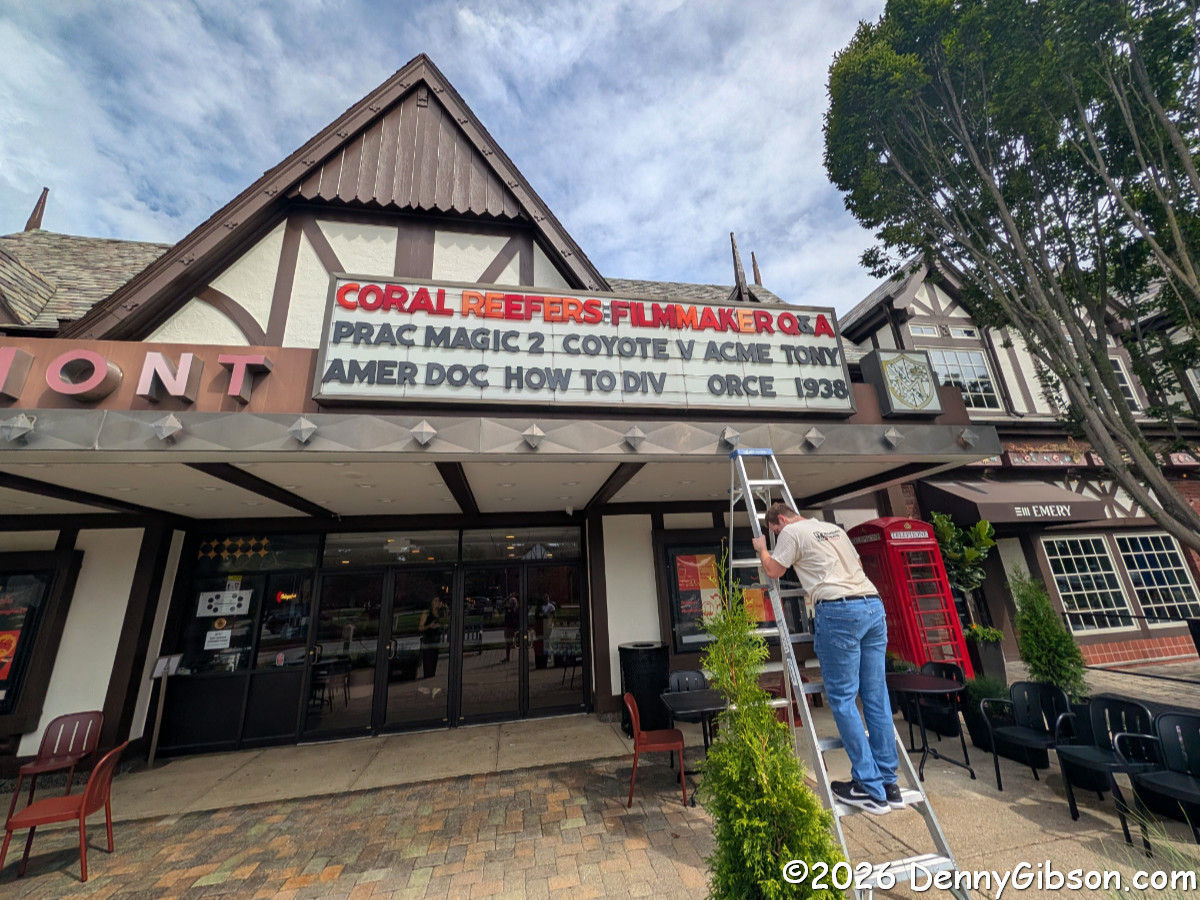
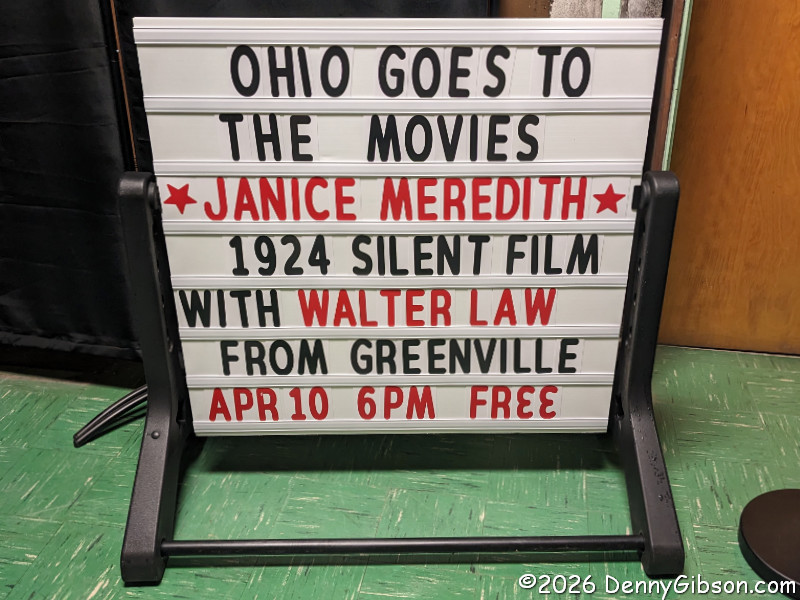
When I walked outside efforts were underway to fit a whole lot of letters onto the marquee. I stopped to chat with a couple of theater employees about the theater and the movie I’d just seen and conversation eventually turned to the red letters at the top of the titles. The first showing of Occupational Hazard was also happening today and it would be preceded by a bit of a party in front of the theater and followed by a Q&A with the film’s director. The movie is a documentary about a time near the beginning of Jimmy Buffett’s career. It all sounded very interesting, and by the time I left, I was a little more than half convinced to return.
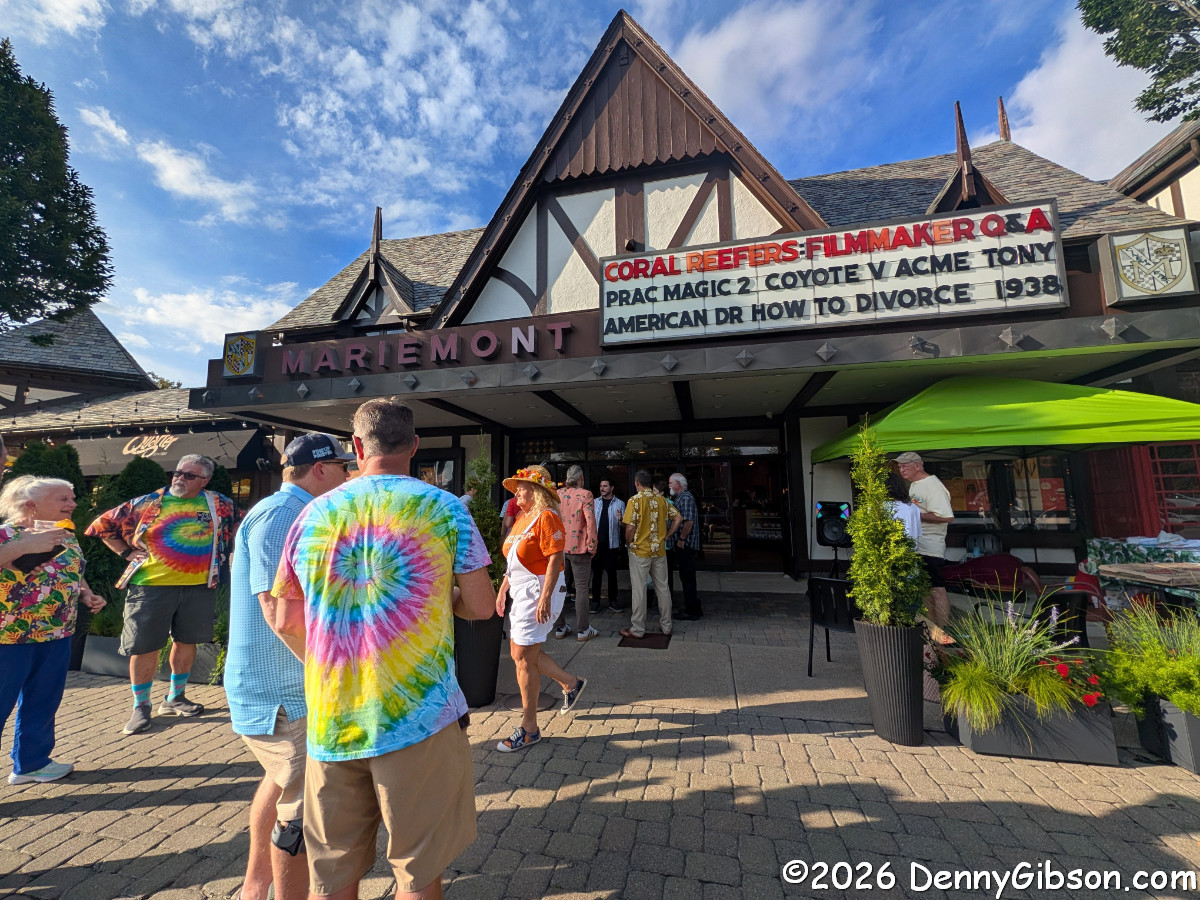
I did return, and started off with this picture that I later learned out sort of featured Cincinnati Parrothead Club president Patty Doak. Cincinnati is where the name Parrothead was coined and I’m guessing the local club is pretty active. After some film festival screenings, the movie had its first theatrical showing last Saturday then moved to Cincinnati for six showings. It looks like Cincinnati might be the only location initially getting multiple showings. Jimmy often did multi-night stands here, too.
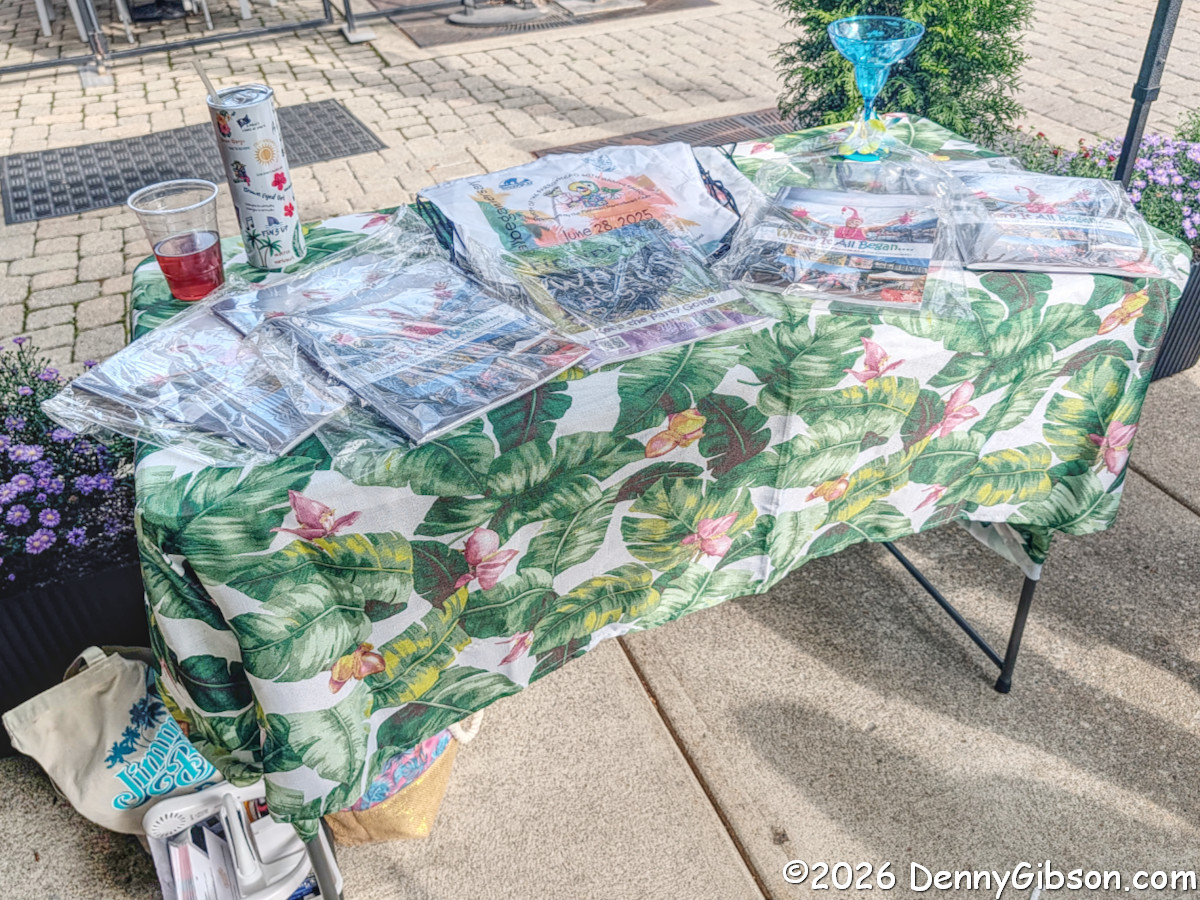
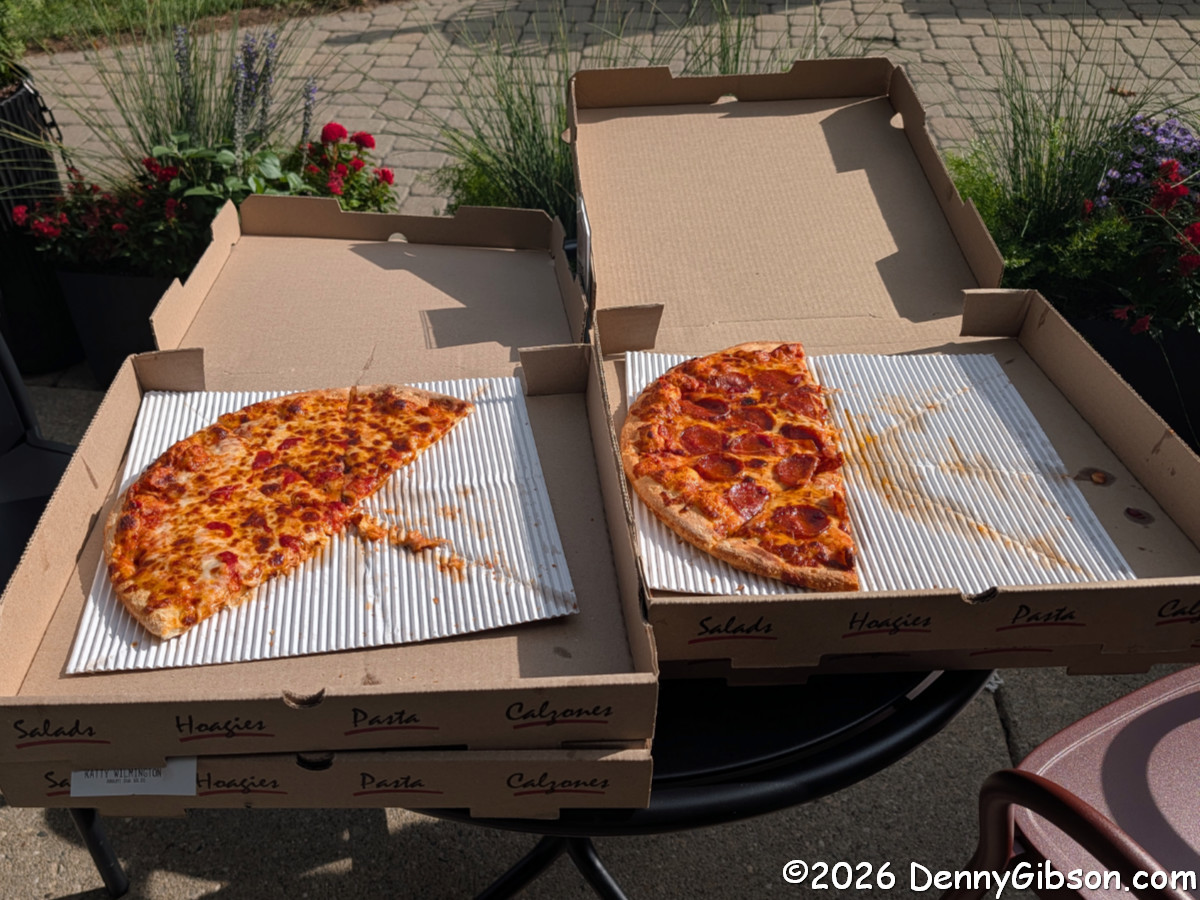
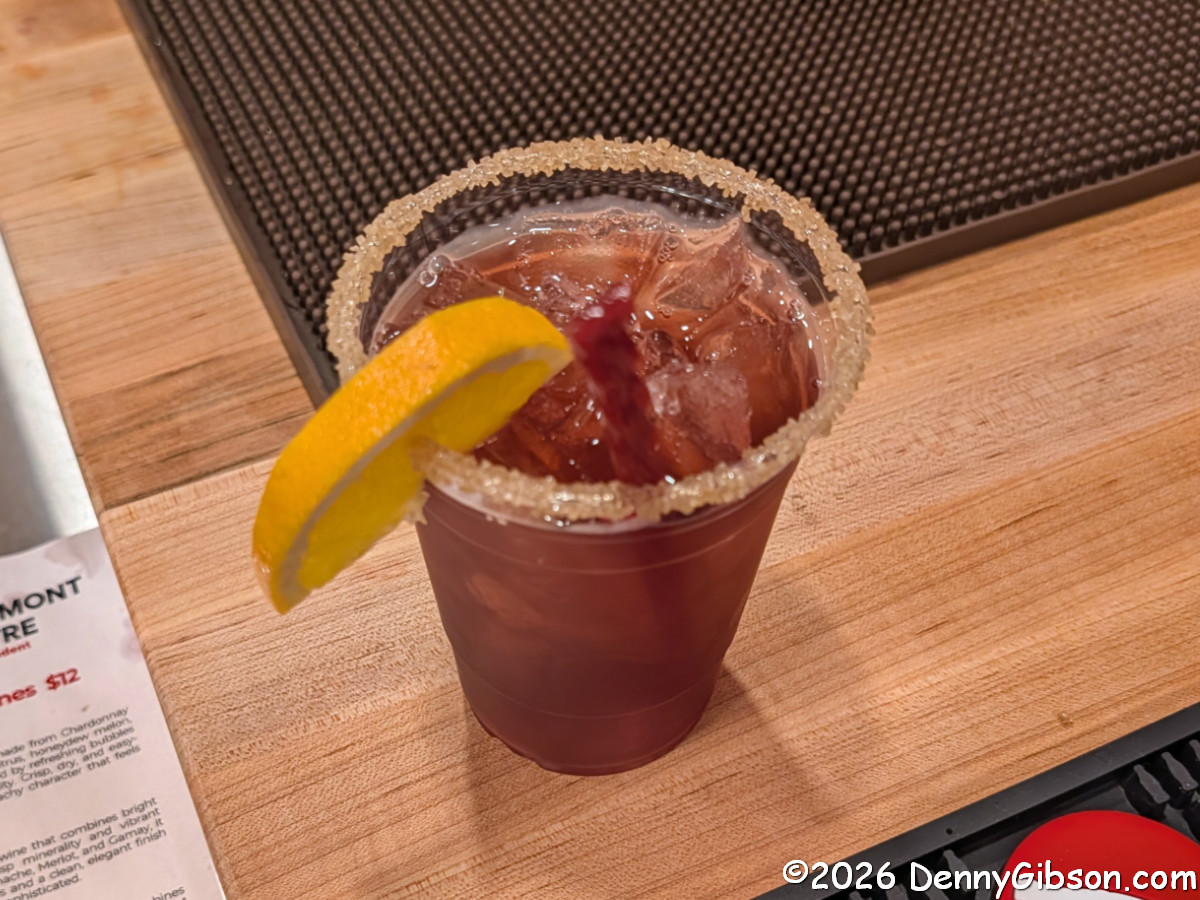
The drink of the day was midnight margaritas which I eventually learned had a lot more to do with the theater showing Practical Magic 2 than any Jimmy Buffett connection. Outside, there was pizza and parrothead paraphernalia.
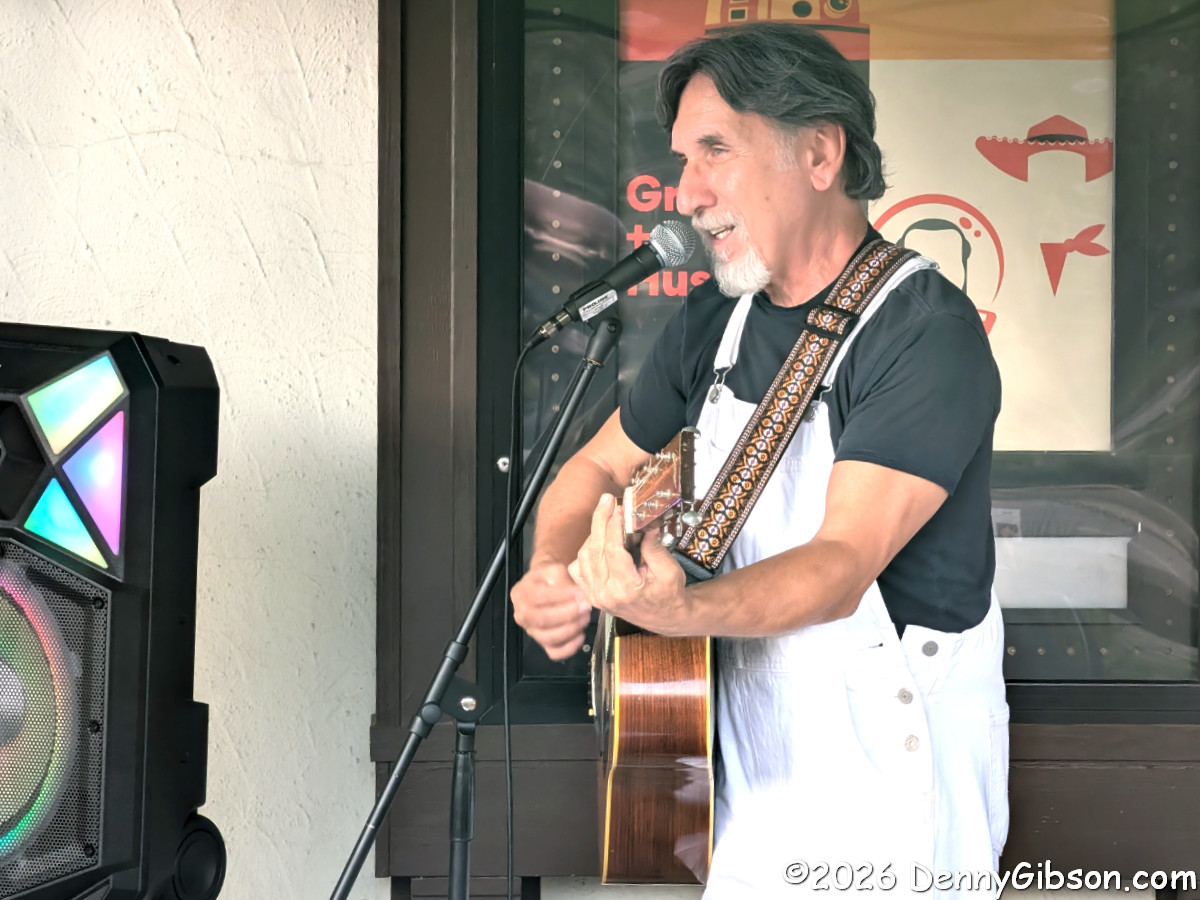
As showtime neared, Josh Leo entertained us with a couple of Buffett songs, a couple of his own songs, and at least one song he co-wrote with Jimmy. Leo wasn’t part of the very first Coral Reefer lineup but was there pretty early and appears prominently in the movie. He also participated in the Q&A the followed the showing.
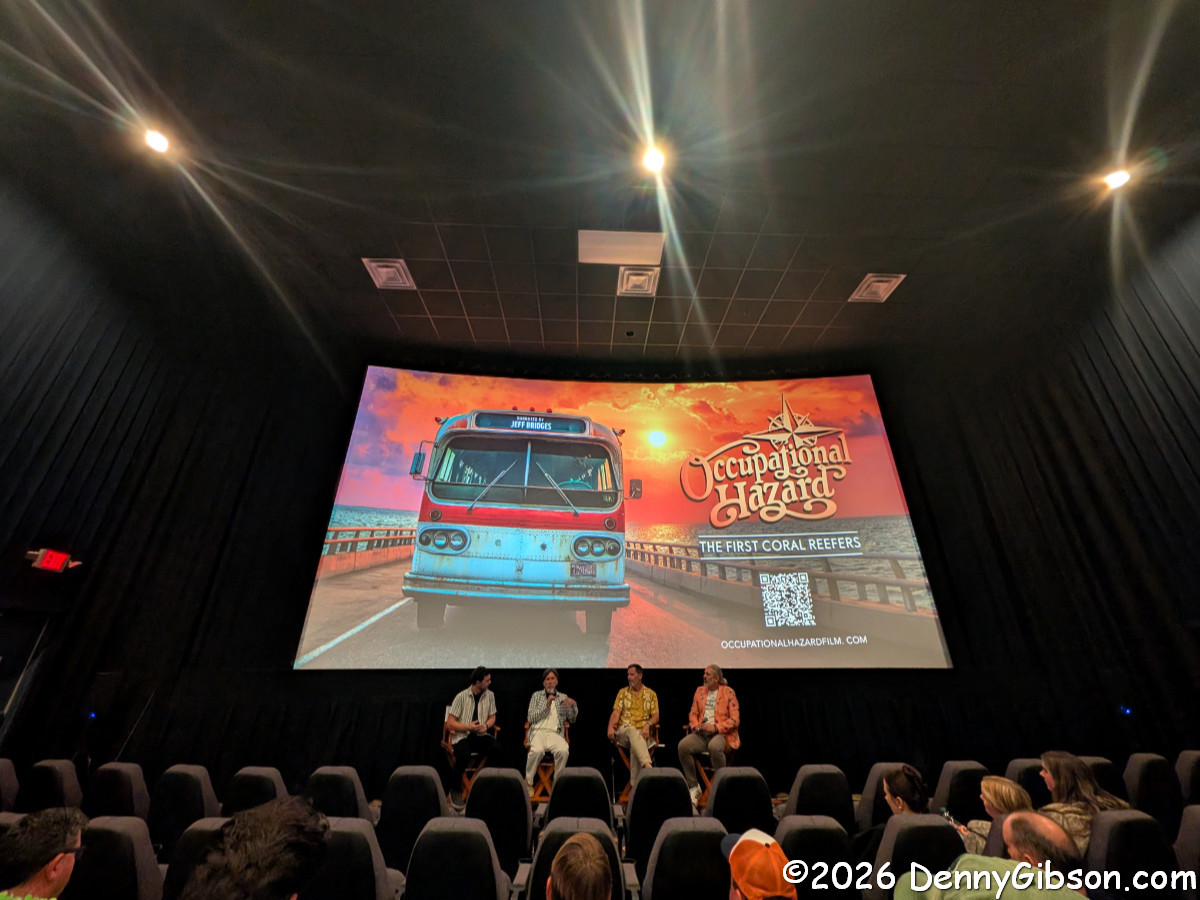
The movie is probably about half vintage photos and video and half recent interviews with surviving band members and others. The period covered ends around 1982, which means that Parrotheads had not yet been invented but they’re on the way and the attitude was well established.
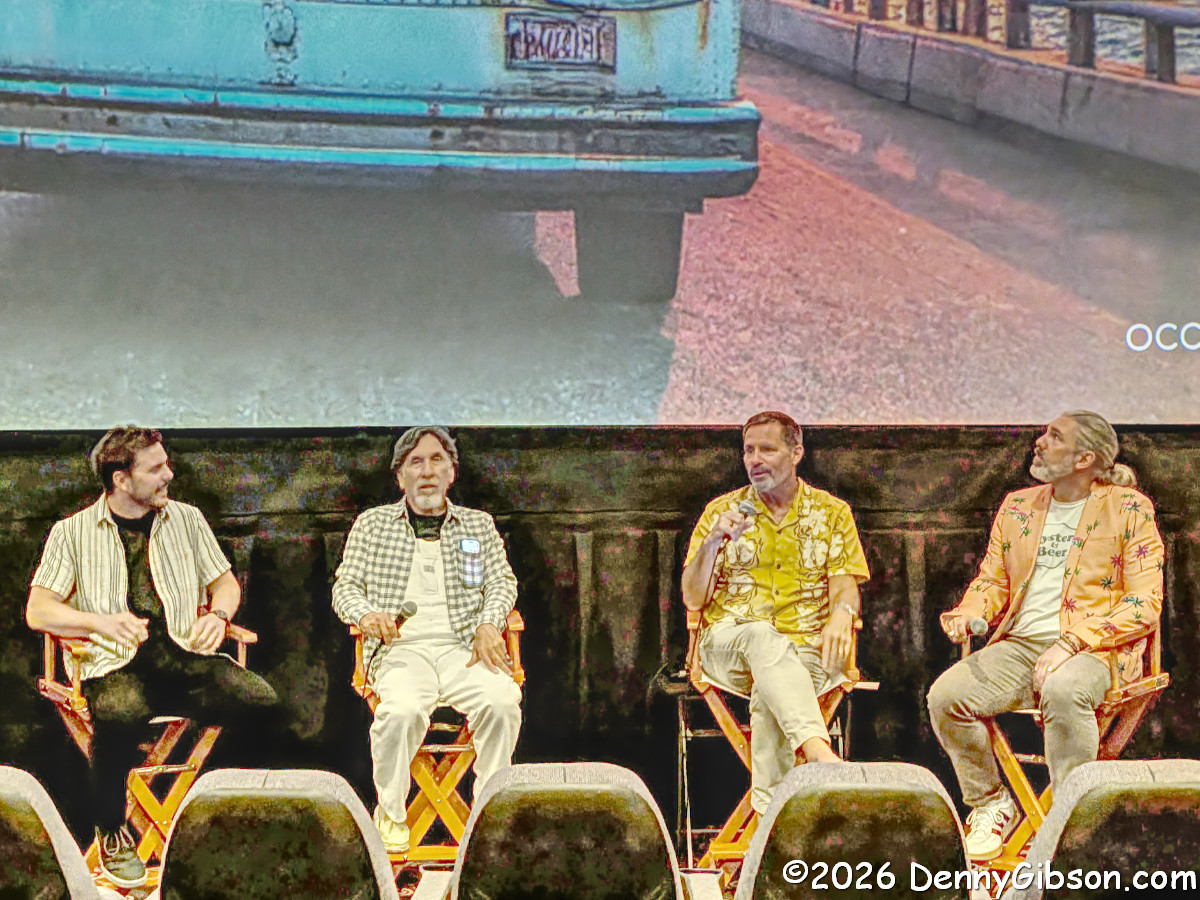
On stage for the Q&A were archivist Adam Lawrence, Coral Reefer Josh Leo, director & producer John Cunningham, and producer Ted Haynes. These guys shared many interesting stories about those early days and about the making of the film.
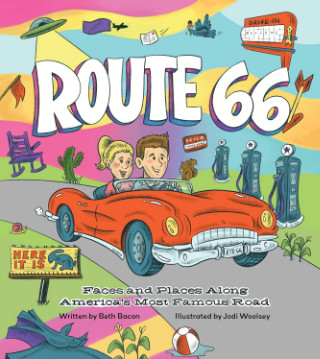 Nearly all the reviews on this blog are organic, meaning they are of things I’ve read, listened to, or attended because I discovered them and chose to review them on my own. This is one of the very few exceptions. The author, Beth Bacon, emailed me and suggested that since my site was about road trips and I did book reviews, I might be interested in reviewing her latest work. Right off the bat, I was impressed that she knew road trips and reviews were involved in the site. Most of the email requests/offers I get seem pretty oblivious to that. Cryptocurrency, miracle medical treatments, and streaming services are popular—the most recent involved ancient coins.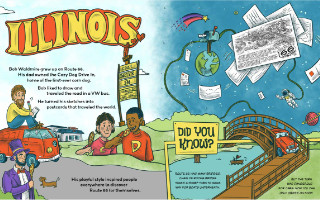
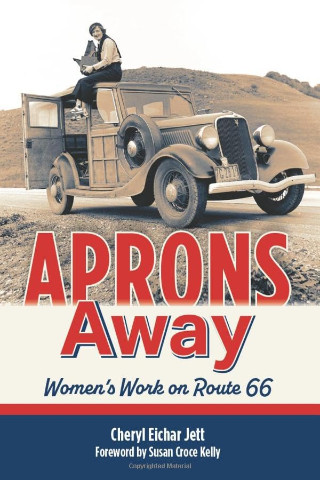
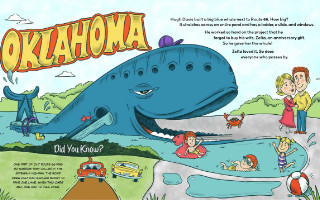 Those names, and the places too, seem carefully chosen. A road that’s 100 years old and nearly 2,500 miles long certainly has plenty of both. It’s easy enough for adults to be swamped and even easier, I imagine, for the 5-10 year olds that are the book’s target readers. Bacon picks subjects likely to interest the 5-10 crowd and doesn’t overwhelm by trying to include everything. The book opens with a few bits of information about the entire road and about Cyrus Avery, who was instrumental in establishing it. That’s followed by one- and two-page sections on each of the route’s eight states. One of the names appearing for Illinois is Bob Waldmire, who traveled the route in a Volkswagen bus. Missouri’s pages include Alberta Ellis, who operated a hotel and other businesses where people of color were welcome at a time when that was often not the case. This brief, casual mention of the topic earns a bonus point from me. The Blue Whale of Catoosa, Oklahoma, is an obvious kid-friendly subject, and Bacon introduces its creator, Hugh Davis, and his wife, Zelta, to her readers. Bacon also identifies more key names and places for these three states, along with a handful for each of the other five. A personal favorite is Bacon’s mention that Snoopy’s brother Spike lives near the Route 66 town of Needles, California.
 I have a hunch that recognizing the publisher had a little bit to do with me wanting to review this book. The list of
  I’ve known Dr.
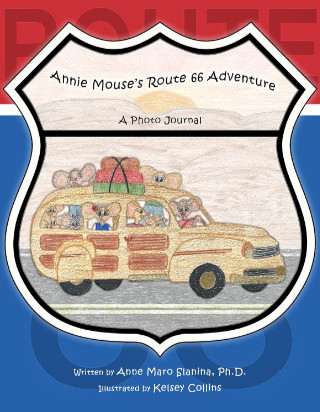
  Three of the Annie Mouse books involve Route 66. The author is a big fan of the road and travels it frequently. That is where, of course, I met her. In Annie Mouse’s Route 66 Adventure, she applies not only the road knowledge she gained through her travels, but also photographs she took herself. The book covers a near full-length drive of the historic route from Joliet, IL, to Needles, CA. Making the journey is the Mouse family. There’s Mommy and Daddy, of course. The Mouse children include Annie’s older brothers, Sam and Bobby; older sister Jenny; and some unnamed younger siblings. The trip’s purpose is to visit Mommy Mouse’s cousins in Needles.
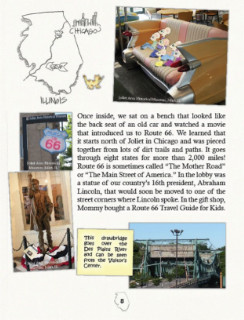
 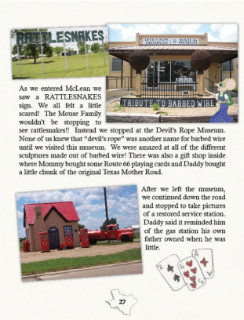 Annie is the journal’s narrator. She is also its photographer. When Annie first learns of the planned trip, her excitement grows even bigger when she is told she would be allowed to take her own pictures. Those pictures appear exactly as you might expect from a young mouse making a scrapbook-style journal of her family vacation. More importantly, they appear exactly as they should to help young humans flesh out the words beside them. Sometimes, with the help of illustrator Kelsey Collins, Mouse family members appear in those pictures just as you would expect in vacation snapshots. There are also plenty of Collins’ delightful drawings in the book outside the frames of the photographs.
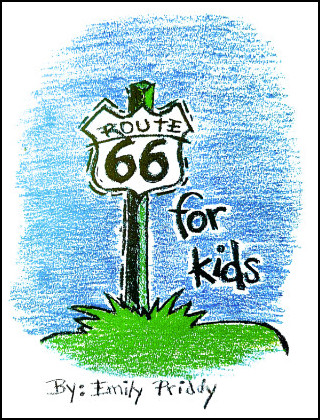 This book first appeared in 2003 as a real paper and ink publication. I got a signed copy in 2004, which, because it was small and easy to stuff between seats or in the glovebox, I kept in the car for quite some time. Based on the copyright dates, it was revised several times, but I never got a newer one, and my copy became increasingly out of date. Prior to February of this year, it looks like the most recent revision was 2016, so even the newer editions might not have been all that trustworthy. The print editions sold for next to nothing (I paid $5 for mine), and when Priddy updated things in February, she went beyond next and made it available for just plain nothing via Google Docs.
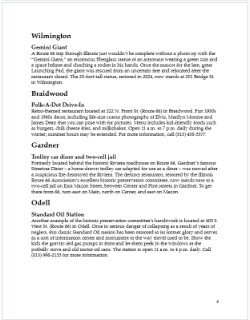 It’s definitely reasonable to ask why someone who is about as far from kidness as it’s possible to get, ever kept this close at hand. I mentioned the size of the hard copy. The size of the entries is another positive, as is their organization. States and the towns within them are listed east to west. The list of attractions associated with each town does not appear to be in any particular sequence. Below each attraction’s identifier is a single paragraph containing a brief description, address, telephone number, and website. The descriptions typically include cost, hours, and any other special considerations. They are not written by AI or someone following a formula who has never been there. Priddy often shares personal insights.
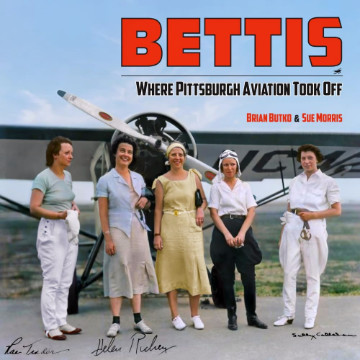 I was aware of this book when it was published, and I was interested in reading it. But not so interested, it seems, to actually order it. My interest in the book came from a general interest in early aviation history that anyone growing up in the land of Wilbur and Orville, as I did, should come by naturally. The lack of urgency came from the fact that its proclaimed subject was an airport in another state. It was a nearby state, but it wasn’t my state. It took a visit by the authors to a nearer and more familiar airport to finally put a copy in my hands.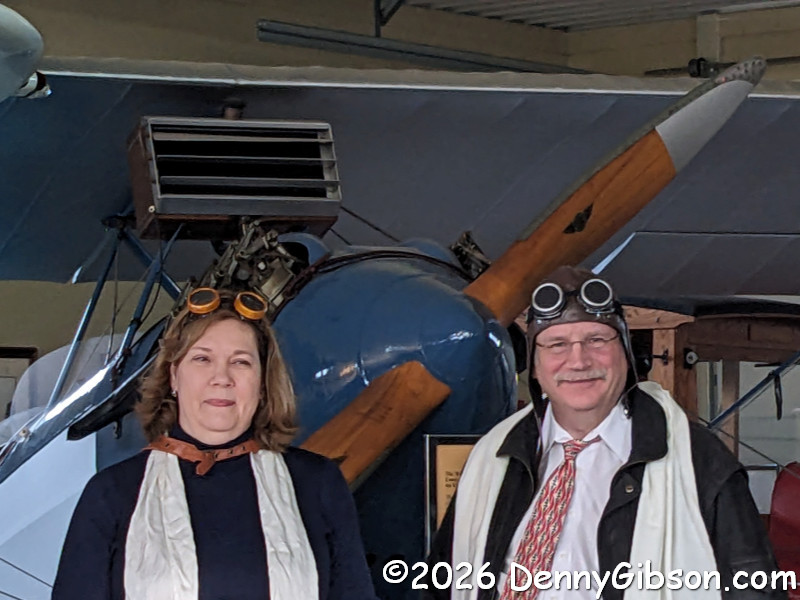
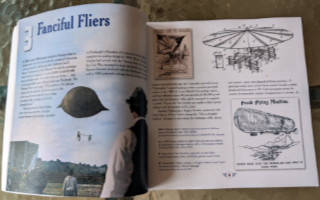 I really was not surprised that Morris and Butkos begin their story long before there were any such things as airports or even airplanes. They do it with a Pittsburgh twist, of course, and tell about early inventors and adventurers connected to the city. I got a chuckle from a quote they share about a 1897 flight by Professor Carl E. Myers and his skycycle. The skycycle appears to be a balloon with a seat and pedals suspended below it. As reported by The Pittsburgh Press, it did fly and eventually floated out of sight while “The professor, if he had any control over the skycycle, did not exercise it.”
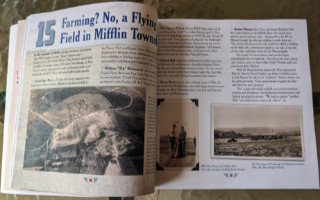 Of course, skycycles and other “Fanciful Fliers” fell out of favor once airplanes came along, and particularly after they were proven practical in World War I. Morris and Butko share the stories of several Pittsburghers involved in wartime aviation and the barnstorming that war-surplus aircraft gave rise to after the hostilities ended. It was a group of Pittsburgh barnstormers that gave birth to the airport that would be named Bettis Field in 1926. One of them, Clifford Ball, provided a slogan that would eventually be modified for a different field and some different dreams: “Build the nests and the birds will come.”
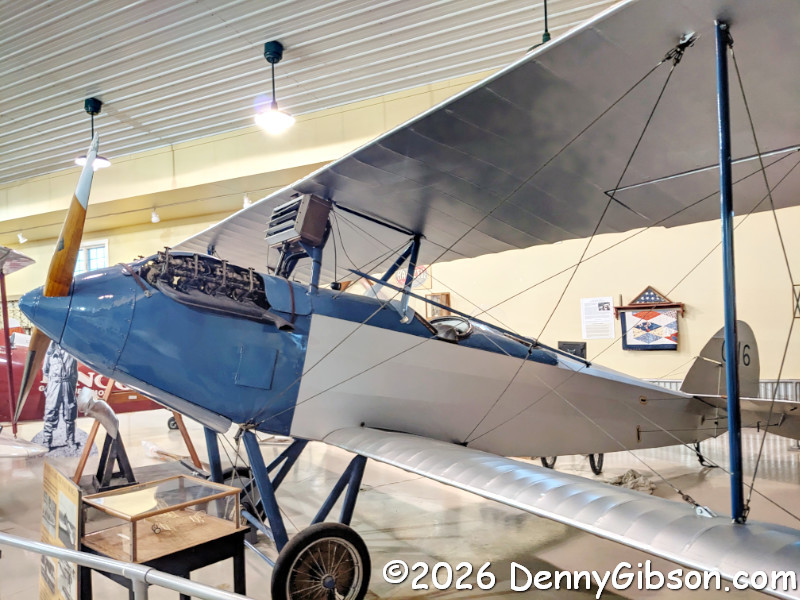
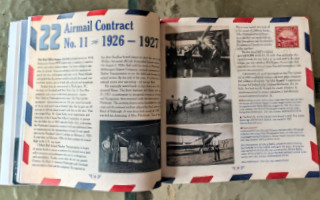 Also in 1926, Ball sold his interest in the airport to form Skyline Transportation to pursue a government airmail contract. He did get the contract and purchased three airplanes to service it. Here’s where that WACO connection mentioned earlier comes in. The three planes were WACOs named Miss Pittsburgh, Miss McKeesport, and Miss Youngstown. Miss Youngstown was destroyed in a wreck; Miss Pittsburgh hangs at the Pittsburgh Airport; and Miss McKeesport is in the WACO Museum, parked behind Sue and Brian in the photograph above. There is another view, sans authors,
 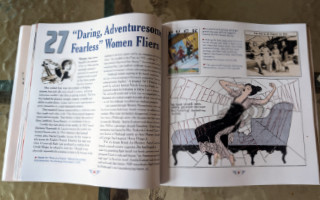 Morris and Butko have uncovered and included an impressive number of stories about people and events connected with Bettis Airfield. It was one of the stops on Charles Lindbergh’s tour following his cross-Atlantic flight, but the Spirit of Saint Louis had to be slid sideways into a hangar because its wings were wider than the door. Quite a few black pilots trained at Bettis, but for a period, had to go to another state to be licensed because the designated federal inspector simply refused to pass them. A fairly large number of female pilots, some of whom were rather famous, were associated with Bettis. Passengers were sometimes flown on airmail flights, sitting on bags of mail; then, in 1929, real passenger service — with seats — was added.
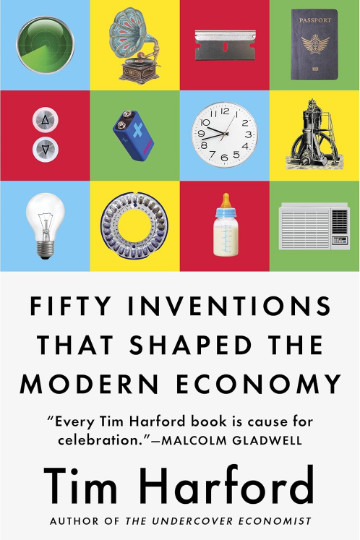 Although I have since figured it out, when I pulled Fifty Inventions That Shaped the Modern Economy from my to-read list, I wasn’t sure how it got there. I was, however, quite certain that beginning it immediately after reviewing
 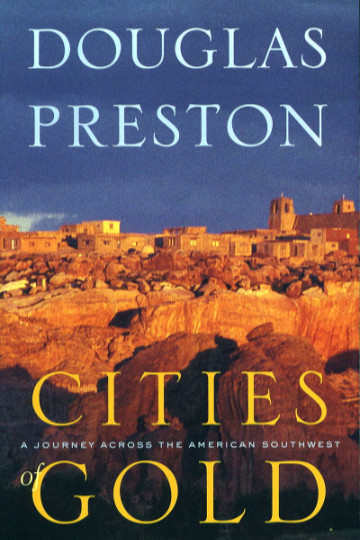 When I published