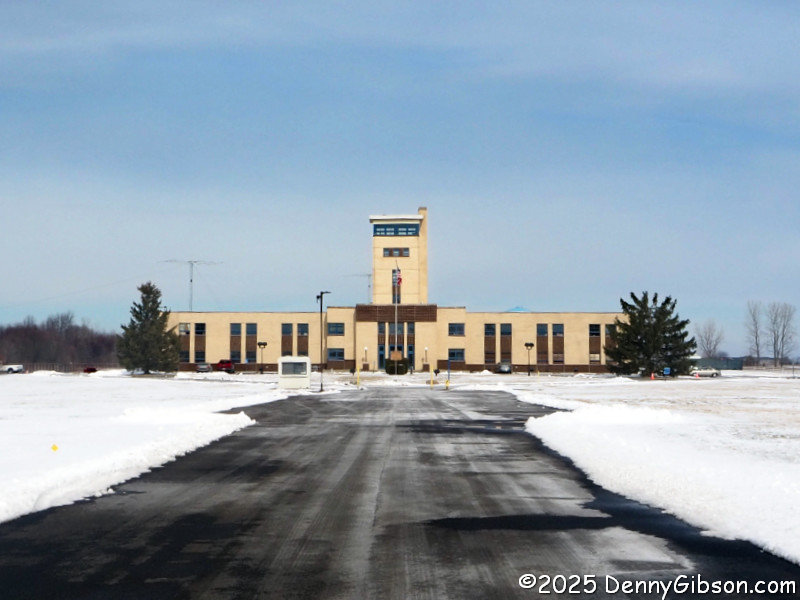
 The nearby National Voice of America Museum of Broadcasting reopened last month after a seven-month closure for refurbishing. I visited the museum back in 2022 but had been hearing about the update and decided to fill an idle Saturday with a return visit. One thing that is different from the last time is noticeable from the outside. Visitors now enter from the side rather than the front. I’m guessing that’s part of the recent rework, but it might have been that way beforehand.

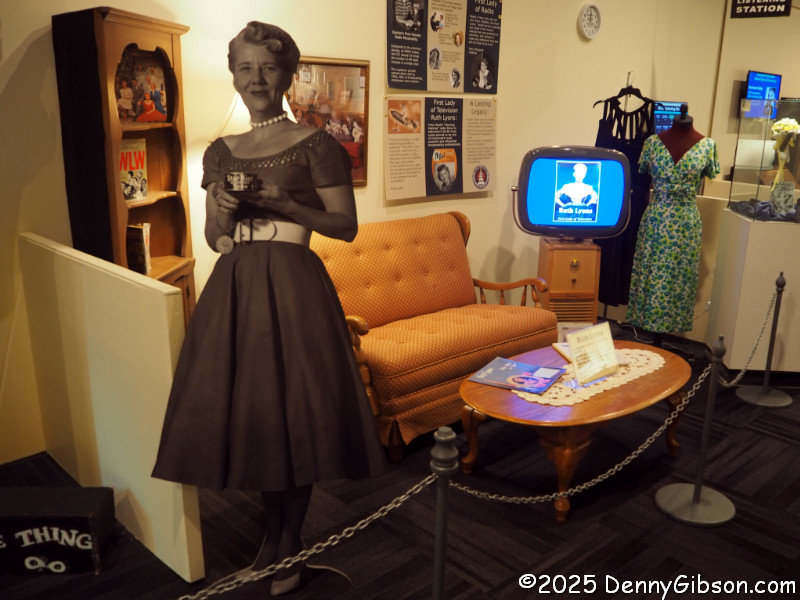 I arrived a few minutes ahead of the day’s first guided tour, and I used those minutes to look over the Cincinnati radio and TV displays near the entrance. Cincinnati was a real leader in the early development of both forms of broadcasting. The pictures are of the Larry Smith Puppets and the Ruth Lyons set. Smith came to fame on the Uncle Al Show and later had a show of his own. Ruth was a true pioneer in daytime talk TV. Note the converted-to-color Predicta TV next to Ruth’s sofa.
When I visited in 2022, the display of Cincinnati’s commercial broadcasting history was kind of like a big attic. These nicely designed exhibits are typical of the improvements made during the recent refurbishing.
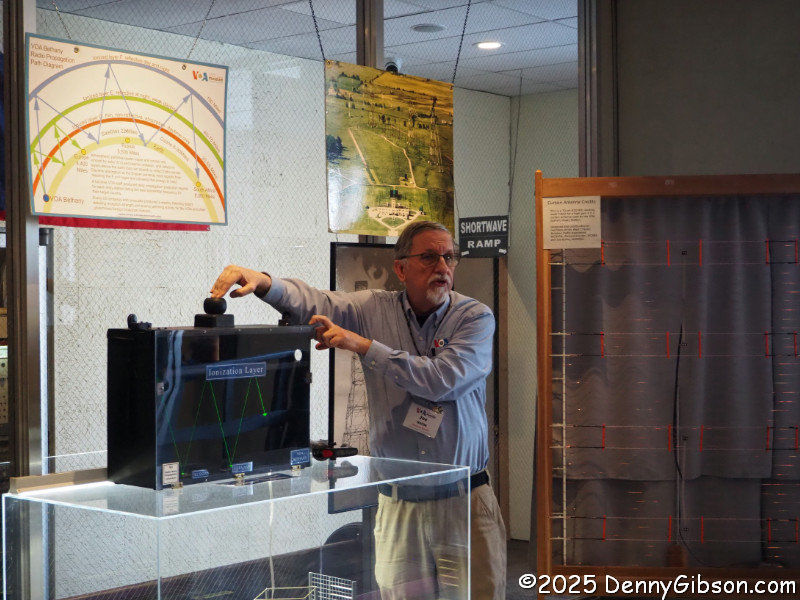
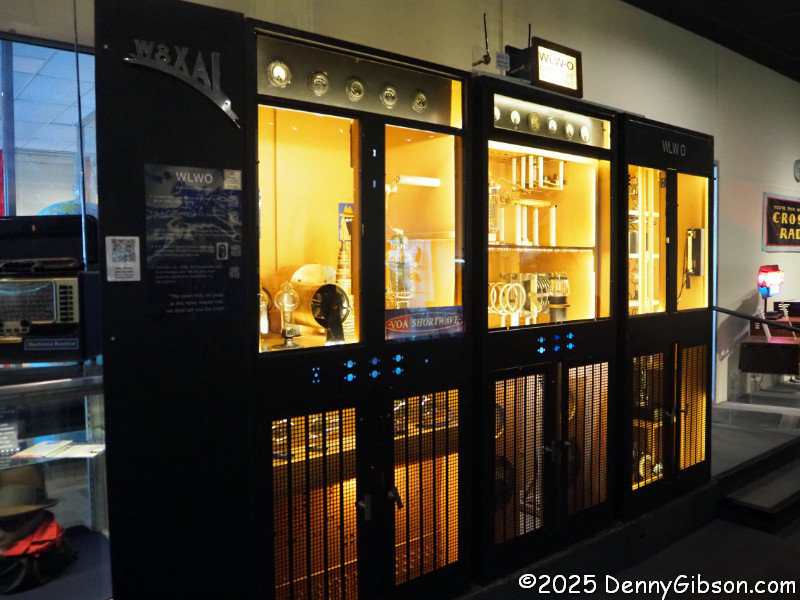 When the United States entered World War II, Cincinnati’s WLW was using this 50,000-watt transmitter to broadcast entertainment to South America via shortwave. The newly created Voice of America initially rented the transmitter and started broadcasting on February 1, 1942, less than two months after the bombing of Pearl Harbor. In the second picture, Joe, our guide, demonstrates how shortwave signals reflect off of the ionosphere and bounce around the globe.
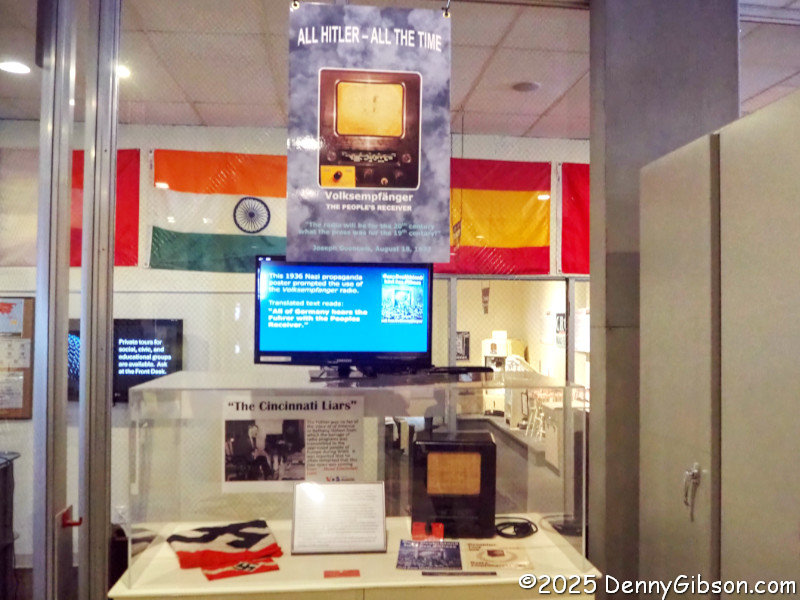
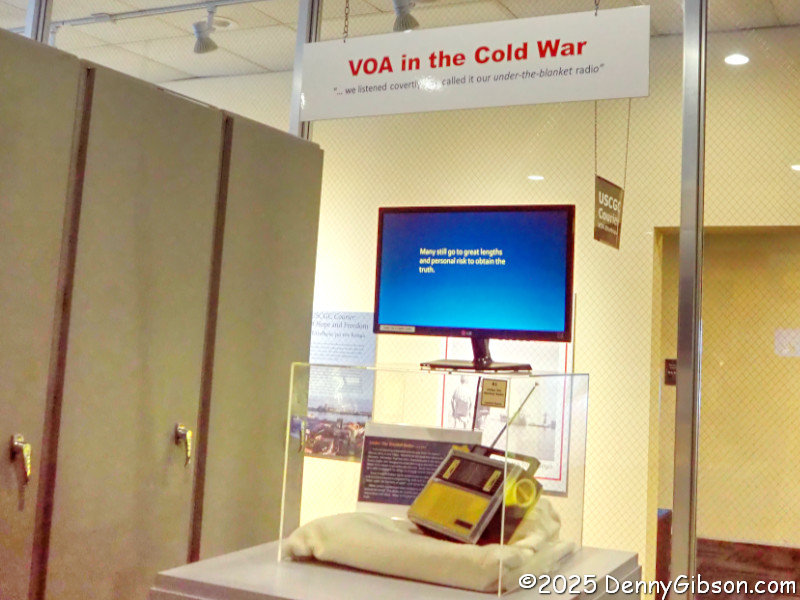 The Volksempfänger (people’s receiver) existed to bring Nazi propaganda into German homes, and USSR-built transistor receivers did the same for the Soviet Block. The VOA never managed to get its programming to the Volksempfängers, but the BBC did. People figured out how to tweak the Soviet radios to pick up both. Incidentally, VOA has never broadcast propaganda, rightfully believing that broadcasting the truth is more effective.
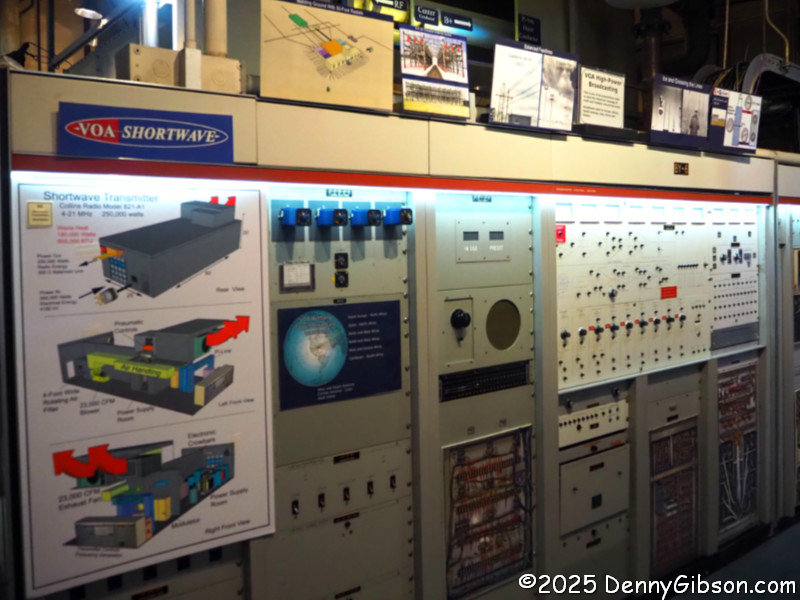
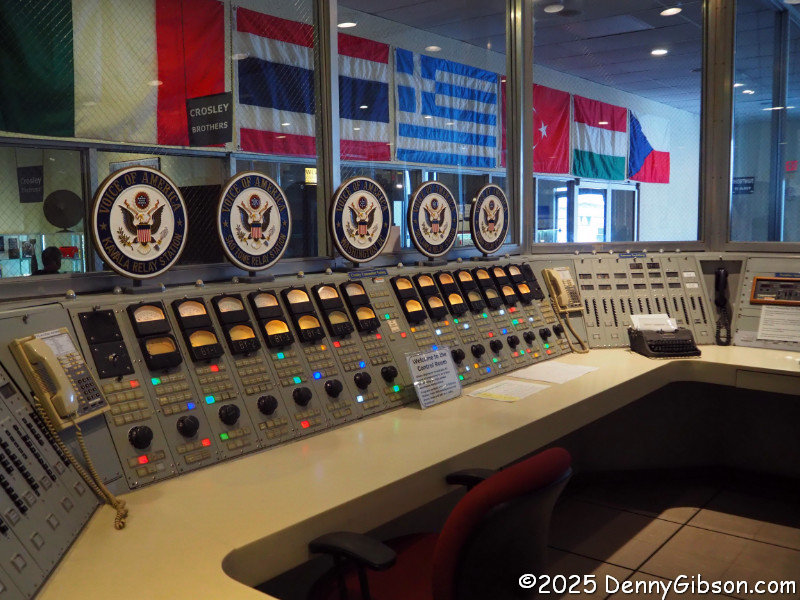
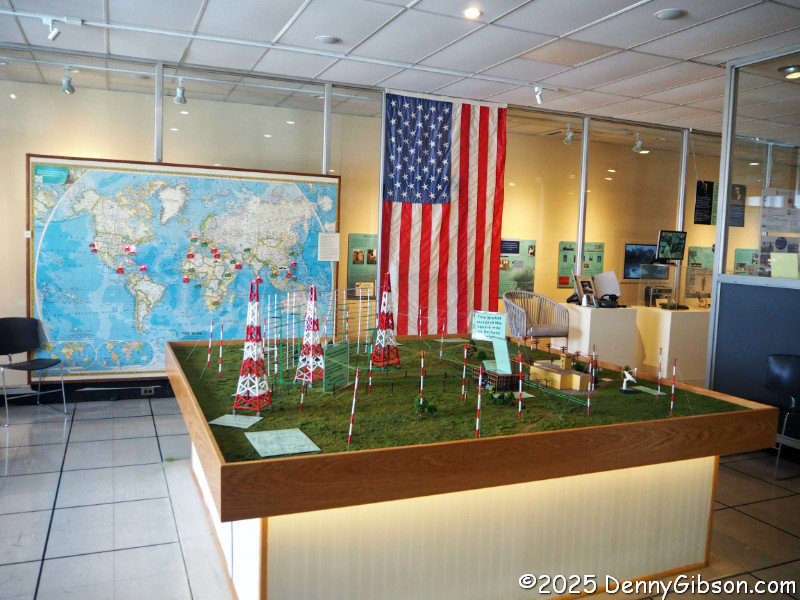 Within about a year and a half, the building that is now the museum was complete, equipment was in place, and a huge array of antennas was erected. The last picture is just the front panels of the 250,000-watt transmitter, which is not just room-sized — it’s a room. I think at least half of our tour group stepped inside at the same time without a hint of crowding.
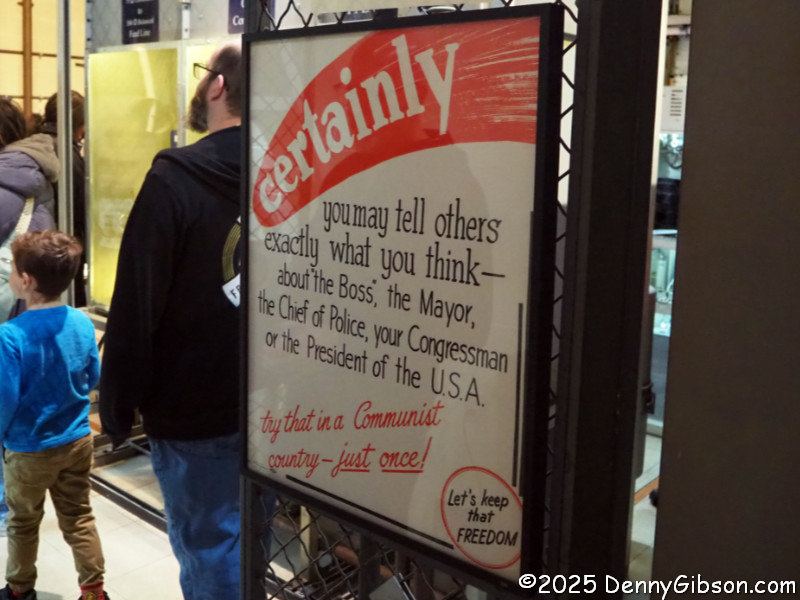 Here is something left over from World War II that is still pretty useful.
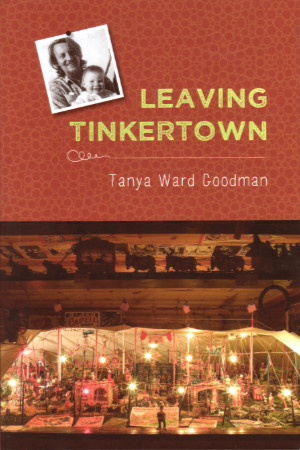 My October Tinkertown visit began with a nice chat with owner Carla Ward. We had exchanged a few emails when I reviewed her 2020 book,
  Tanya was living in Los Angeles at the time but was present in New Mexico when the diagnosis was delivered, and even moved back to the museum that had been her childhood home for a while to help with things as the disease progressed. On the day of the diagnosis, she found herself remembering stories her dad told her as a child and wondering just how the plaques and tangles the doctor tried to describe would affect her father’s brain. She asks herself, “Will he survive this? If he doesn’t, who will tell the story?”
 Tanya’s life wasn’t exactly typical. That her parents divorced and her dad remarried when she was quite young is hardly unusual, but that her mother and stepmother were both important influences as she grew up was a bit so. Even more unusual were occasional trips with her father as he traveled the country, painting rides and signs for carnivals and the like. The house she grew up in had walls made of concrete and empty bottles. It was filled, like a museum, with her dad’s artwork, and part of it was an actual museum open to the public.