US 10

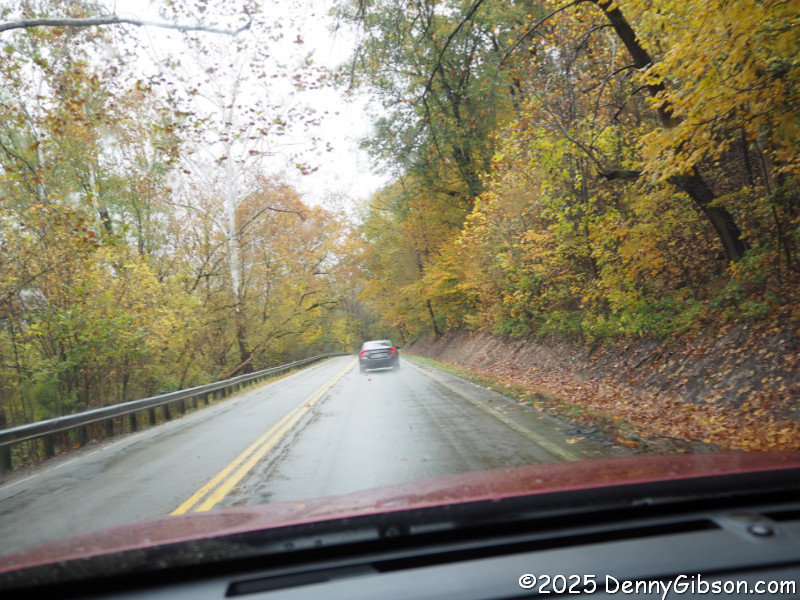
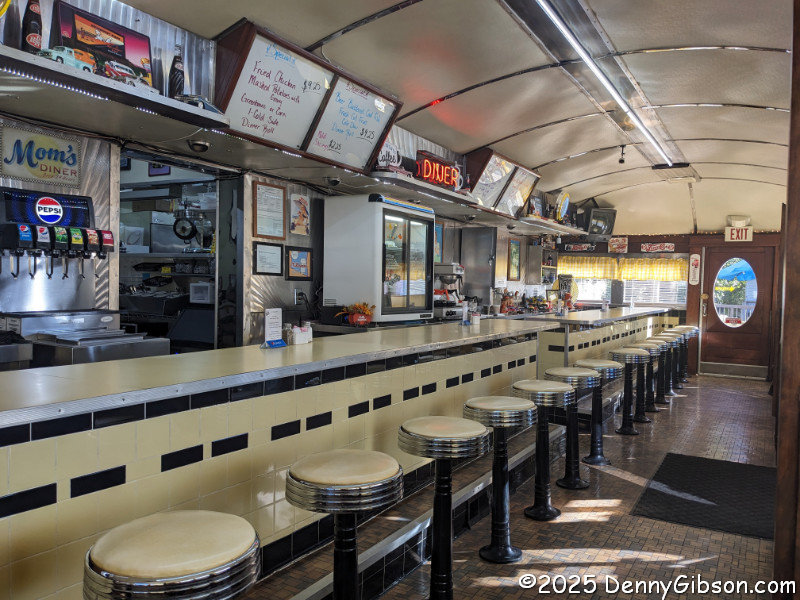
I just started the journal for my first trip of 2025, and yes, I do realize that it is almost the end of July. All of the assorted reasons for the lack of travel during the first half of the year were just normal life happenings, and none were negative. Now I’m about to drive — and float — the full length of the current US-10. The floating part is on a ferry that crosses Lake Michigan as an official part of the US highway. The picture at right is clearly not of any part of a highway. It’s of Patrick Sweany at the Rumba Cafe in Columbus, OH. I bought my ticket to the show a couple of months ago and decided, since Columbus is essentially on the path from home to the east end of US-10, to make it a bon voyage bash. The show was Saturday, I drove to Bay City, MI, on Sunday, and I’m now heading west on US-10. The journal’s first day has been posted.

This entry lets blog-only subscribers know about the trip and provides a place for comments. The journal is here.

Trip Peek #146
Trip #104
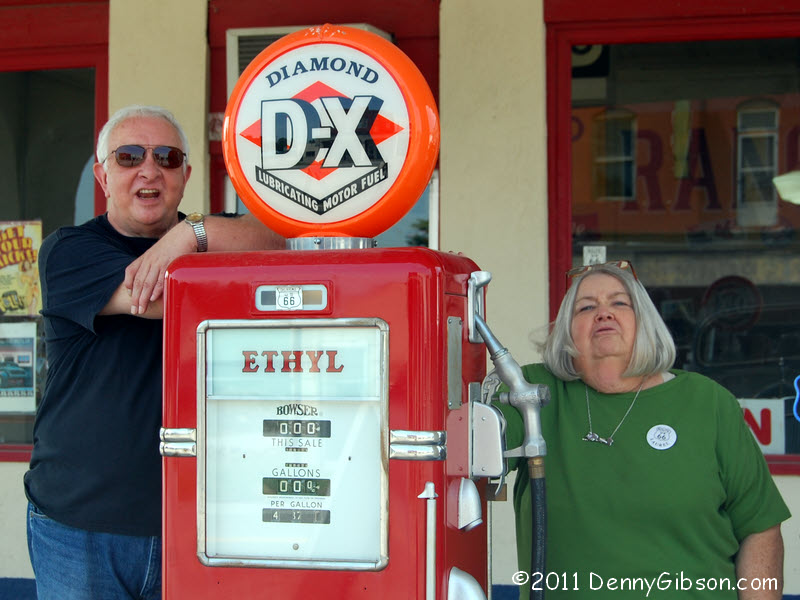
Sweetheart Cruise 2012

This picture is from my Sweetheart Cruise 2012 trip. This was my second time participating in a cruise that a group of St. Louis area road fans frequently organized near Valentine’s Day. I spent the first day reaching Mitchell, IL, to check out the recently relit Luna Cafe sign which I used for the trip’s signature photo. The following day was spent cruising in a nine-car caravan from Mitchell to Carlinville, and the next two days were spent trying to follow a straight line home. A real highlight of the cruise was my one and only meeting with Bill Shea and my only time inside his museum in Springfield, IL.


Trip Peeks are short articles published when my world is too busy or too boring for a current events piece to be completed in time for the Sunday posting. In addition to a photo thumbnail from a completed road trip, each Peek includes a brief description of that photo plus links to the full-sized photo and the associated trip journal.
My Wheels — Chapter 42
2025 Subaru Forester

I’m thinking that we might all know people who buy a new car of the same make every few years. Maybe it’s a string of Cadillacs, or Fords, or Chevys, or something else. How boring that must be, I once thought. Then I bought two Corvettes back to back, then two Foresters. And I have now bought my third. It may look kind of boring, but seven years of advances keep it from being overly so. Even when the new features are in a familiar-looking package, learning the new tricks is not exactly boring to an old dog.

On the plus side of the changes between Foresters two and three is the addition of Android Auto. This supports connecting my phone to the car’s infotainment system. Although I still rely on a Garmin for trip routing and playback, it is really convenient to ask — by voice — for directions to a restaurant and have the route displayed on the built-in screen. That screen is nearly a foot tall and flush mounted in the dash, which I appreciate every time I’m stopped at a light next to someone in a car with what looks like a detached laptop screen stuck to their dashboard. Android Auto also provides easy access to the podcasts I follow and some other goodies, too. What the infotainment system does not provide is a CD player, and I miss that. I’ve substituted a couple of USB thumb drives filled with the content of several CDs, but I’m still thinking of buying a portable CD player.

On the negative side is the continued growth of the Forester from what I thought was its near-perfect size at its 1998 beginning, and the automatic start-stop system. Regarding size, the car is not uncomfortably huge, but it is possible that I would have been more comfortable in a Crosstrek, and that’s probably where I’ll go if and when there is another Subaru purchase for me. My previous Forester missed the addition of auto start-stop by one year. It is a feature around which I have heard the word “hate” used at least as much as with any other. I don’t hate it, but I do find it annoying, and “tolerates” probably best describes my attitude towards it.

Unlike the 2011 to 2018 trade, this move was not triggered by a collision or any other major event. There was nothing wrong with the 2018 car, but it was nearing 150,000 miles, and oil consumption was creeping higher. I knew the time was coming when I would be spending money on something. I decided it would be spent on a new car and went for the first year of a new generation of Forester rather than the middle (as with the 2011) or end (as with the 2018). I bought the car without ever having seen a 2025 model. No exciting colors are available for my desired trim level (Premium), so I went for the red to avoid the blue. They tell me that the Crimson Red Pearl on the 2025 is different from the Camellia Red Pearl on the 2011, but they sure look alike to me. It was the first 2025 delivered by my salesman and the first or second delivered by the dealership.
That was just over a year ago. The car embarked on its first road trip the next month. The opening photo was taken quite recently to mimic similar photos used in the My Wheels posts for my first two Foresters. The photos at left are from that first road trip. The first is a spontaneous snapshot taken as I walked back to the car after taking a picture of something else on the National Old Trails Road near the beginning of the trip. The second was taken near the end of the trip after a blowout ended it just a little early.

On the car’s third road trip, it was “mooed” while parked in front of the Midland Railroad Hotel in Wilson, KS. While I think the Moo Moo Subaru movement is a fun one, I have no plans to become a mooer. As this is the only time this has happened, I have donated the tiny bovine to the menagerie of similarly sized critters at my nearby Le Peep restaurant.

By the end of 2024, the new Subie had been involved in a total of five documented trips, but not a single one since then. That’s certainly not the Forester’s fault. It’s mine, and it is about to be remedied. It and I are off on our first road trip of 2025 in less than a week.

My Previous Wheels: Chapter 40 — 1997 Schwinn
My Wheels Checkpoint: Chapter 41 — The Wheels So Far

Circus Time

When I bought my ticket to the 20th Century Circus, I didn’t realize that it would be held on Renaissance Festival grounds. It wasn’t a secret. The banner on their website’s home page says “at the Ohio Renaissance Festival”, but I just wasn’t paying attention. I saw that the circus would happen in Waynesville, and although I know that is the home of the festival, I just did not make the connection. Only on the day of the show, when I went looking for detailed directions, did I realize what should have been obvious.

The big top is placed in the open field just outside the main entrance to Renaissance Village. The festival associated 1572 Roadhouse Bar-B-Q is open a couple of hours prior to show time, and the empty village (the festiva returns in August) is open if you want to roam around. I splurged and bought a Front Row ticket. Premium Seating and General Admission are also available. Premium, it appears, is row two, and general admission is row three. I’m guessing that if more tickets were sold, more rows would be added.

The 20th Century Circus advertises itself as being set in the 1920s, and some audience members were dressed in period outfits. The acts in a 1920s circus are essentially what I’d expect in a circus of any era. The evening got started with some juggling and tightrope walking, aerial acrobatics, and a little clowning around.

It seems quite possible that I haven’t seen a spinning plates act since Ed Sullivan went off the air, but, as I did then, I enjoyed watching the performer run back and forth to try to add plates while maintaining those already spinning. Although it was only for a few seconds, this guy did get plates spinning on all six sticks, but I missed getting a photo.

Balance and acrobatics are central to a variety of circus acts, and there were several impressive demonstrations of both.

As intermission neared, we were treated to a catchy little tune about that circus and carnival staple, cotton candy. Of course, a little popcorn fits in quite nicely, as well.

There was more juggling in the second half, but flaming hatchets replaced the soft balls. I never did get an in-focus shot of the performers on the rotating ladder, but I did better on the lovely song and dance duo.

The hula hoop competition between volunteers from the audience was close, even if it didn’t last too long. I think the winner made it about 1 1/2 revolutions. The other two competitors were tied at zero. Someone stood up when the knife thrower asked for a volunteer, but cooler heads prevailed. The real winner of the hula hoop contest didn’t even joke about risking an audience member interfering with her swirling balls of fire.

This looks kind of like one of the stunts from the first half of the evening but the chairs are a whole lot bigger and so is the distance to the ground when the handstand is performed. Just assembling and disassembling the tower of chairs is rather nerve wracking to watch.

No troupe members and only a few baloons were harmed during the performance. They will be back every Friday, Saturday, and Sunday for the rest of July and it’s a hoot. The pulled pork (and probably the other stuff) and beer selection at 1572 Roadhouse is pretty good, too.

Herding the Wheel Horses West

Near the end of last summer, my friend Terry, the Wheel Horse collector, sold a tractor to Bill Throckmorten of Grant King Race Shops, and I rode along to deliver it. Bill is Grant King’s nephew. He and his wife Stephanie currently own the shop. Back in the 1960s and ’70s, Wheel Horses were used at the Indianapolis 500 to move race cars in the pits and other areas. There was also a race week event featuring celebrities piloting 33 of the red tractors in a one-lap race known as the Indy 2 1/2. Because of that connection, Bill wanted a Wheel Horse for the museum at what he calls “A Working Race Shop Museum”, and to maybe move a few cars around. There is a pretty good video overview of the shop/museum and the accomplishments of Grant and Bill here.

One of Bill’s accomplishments is the cofounding of Indy Legends. After giving us a tour of that really cool museum, he invited Terry to display some of his Wheel Horses at their next event at Indianapolis Raceway Park. That event was last weekend, June 28-29, and I again got to tag along. I snapped the opening photo from where the Wheel Horses were displayed.

Friday was setup day, followed by an evening reception at the Indianapolis Motor Speedway Museum. Stephanie Throckmorten made sure we had wristbands for both the reception and access to IRP. Setting up in ninety degrees was pretty exhausting for old guys like us, although Terry dealt with it better than I did. We both took advantage of the showers at Lion’s Club Park, where we were staying, before heading to the reception.

The museum reopened less than three months ago following a year-and-a-half-long closure and $60 million renovation. One of the first areas inside the entrance is a series of simulated garages holding some very significant cars from the speedway’s history. Eddie Rickenbacker drove this 1914 Duesenberg to a tenth-place finish in 1914. Rickenbacker served as IMS President from 1927 to 1945. Jim Clark put this green Lotus on the pole in 1964, but broken suspension meant a 24th-place finish. Parnelli Jones drove the car to 2nd place in 1965. In 1977, Janet Guthrie broke the Indy 500 gender barrier, then drove this Offenhauser-powered Wildcat to a 9th-place finish in 1978.

An attendant at the entrance to the next section assures entry between presentations of a video shown on a wrap-around vertical screen. Scenes from parades, pit activity, flyovers, and race starts are combined with exhaust sounds from real cars in the area to generate a semblance of race day anticipation.

There is a mind-boggling number of cars and artifacts on display in the museum. Of course, I took a ton of pictures, but there is a lot more going on this weekend, so I am really limiting what I’m posting. Here’s a picture of the Marmon Wasp that Ray Harroun drove to victory in that first Indy 500 in 1911, and one of the Borg-Warner Trophy. Although the trophy was first presented in 1936, the winners of every 500 are represented on it. The Marmon and the Borg-Warner appear together in the photo taken from the new mezzanine.

The reception was a first-class affair with hors d’oeuvres, beverages, and opportunities to chat with museum officials and employees. Terry and I missed the first performance by the Indianapolis 500 Gordon Pipers but were there for their second outing as the reception began to slow down. They would also appear at the race track near the end of the day’s activities on Saturday.

This was the beginning of activities on Saturday. Overnight rain had sounded a lot heavier than it actually was, but some drying out was in order nonetheless. We cleared some water from our canopy, then did a little cruising and car spotting while the track was being dried. Terry posed for a picture with a Mac Tools-sponsored racer and his own “Runt Rod” racer. I believe it is the only non-stock Wheel Horse in his fleet.

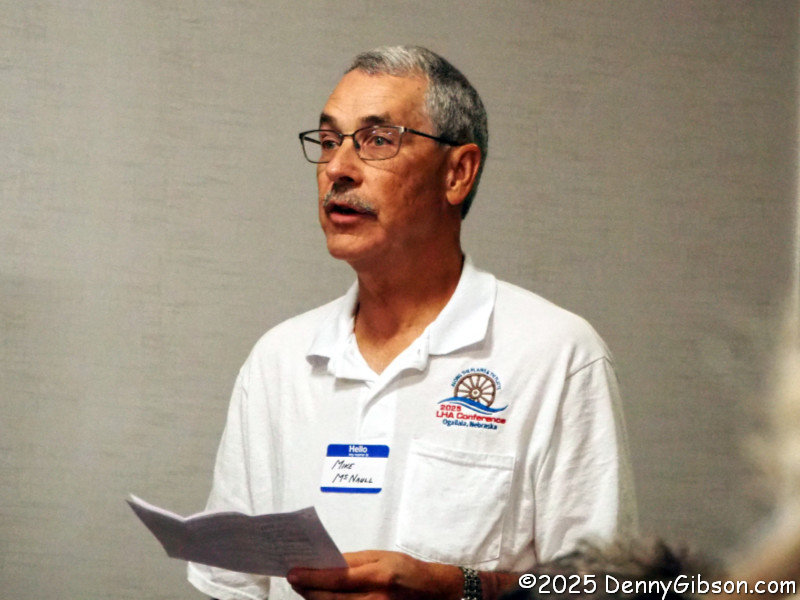
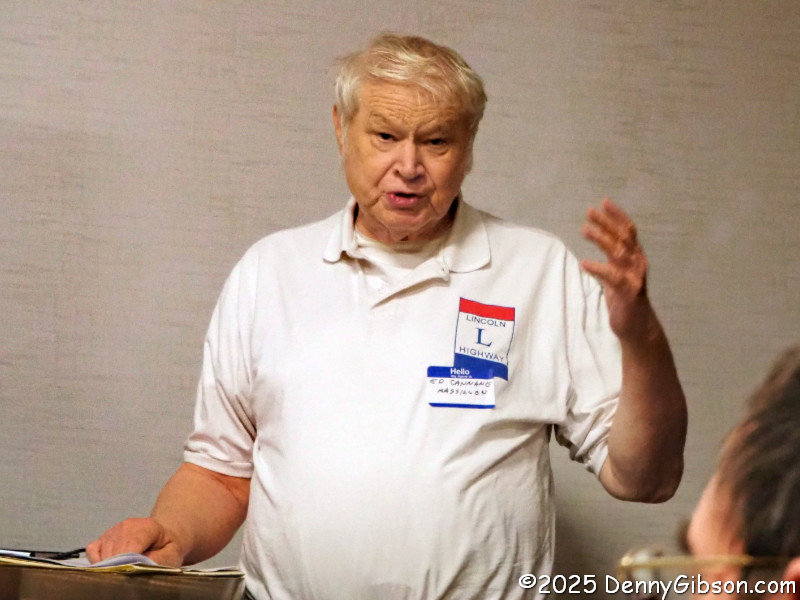
All of the cars had informative placards beside them when parked, and I learned a lot by reading many of them. Only when I started writing this post did I realize how little I remembered and what a poor job of recording I did. I can tell you absolutely nothing about the gray #9 in the first picture. #20 is a 1911 National as described here. I also have a shot of #7’s descriptive information. That is almost certainly because my interest was piqued by this on its rear end. Its owners have driven most of the Lincoln Highway, and the Model T racer has been on a short stretch of the Lincoln Highway in Pennsylvania.

The model years I noted ranged from 1911 to 2000. Although I do not know the actual dividing lines, the on-track groups were separated by age, which also meant they were separated by speed. I have even less information to share about these middle-aged race cars than for the older cars in the previous paragraph.

There was ample time to walk around and photograph the many fabulous race cars while they were parked, and if the temperature, the humidity, or my age had been lower, I would certainly have done more of it. Many of the cars were the exact same vehicles that once ran at IMS and other tracks, while some were impressive replicas of famous cars that are probably on display in museums.

Here are a couple of pictures from the campground just before we pulled out Sunday morning. Showers and restrooms are just beyond the picnic shelter. The trailer, which serves as our bedroom, will be filled with Wheel Horses when the day ends.

There was a somewhat surprising amount of interest in the tractors. Some came from people who remembered the days when Wheel Horses roamed the pits at Indianapolis Motor Speedway, and some from folks who had heard or read about it. Of course, some came from kids (and adults) who just like little tractors. The tractors were the “half-time show” for both days of the event. At Bill’s request, Terry and I drove them two-by-two through the infield during the lunch break when the track was empty.

That’s Bill Throckmorten chatting with Terry. Bill was incredibly busy throughout the weekend coordinating action on and off the track, but still managed to stop by several times to say hi and see that all was well. On more than one of those stops, he let Terry know he had an invitation to return next year. Whether that happens is very much a maybe. As we pulled out, I commented that this was one of the most fun weekends I’ve ever had, but it was also one that I was very happy to see end. Terry agreed. Age and temperature are factors, and only time, which doesn’t help with the age thing, will tell.

I have previously been involved in herding the Wheel Horses south and east.

Trip Peek #145
Trip #146
Thankful in Tennessee

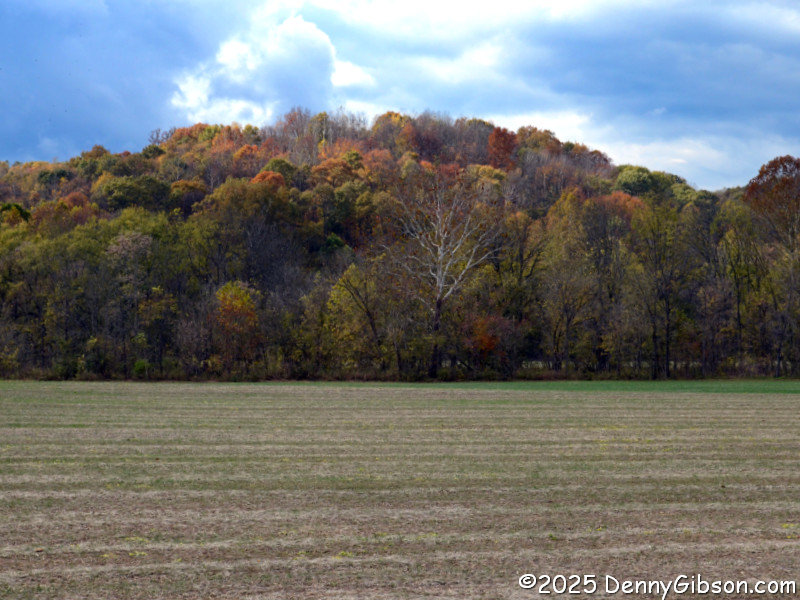
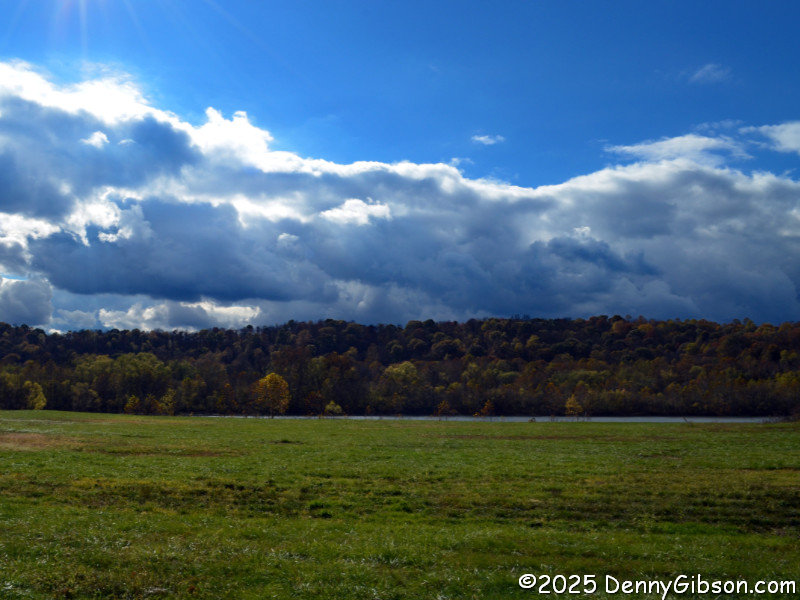
This picture is from my 2017 Thankful in Tennessee trip. This was in the style of my Christmas dinners in state parks but this time the holiday was Thanksgiving and the park was in Tennessee rather than Ohio or West Virginia. On Thanksgiving day, I drove straight to Natchez Trace State Park for the holiday buffet. I spent two nights at the park but drove to Brownsville for dinner and a nighttime peek at Billy Tripp’s Mind Field on the second day. I then spent two days getting home with time on US-45 and US-50 and stops in Paducah, KY, Metropolis, IL, and Vincennes, IN. The picture of Pin Oak Lake was taken near the turnaround point of a ranger-led hike I joined on the second day at the park.


Trip Peeks are short articles published when my world is too busy or too boring for a current events piece to be completed in time for the Sunday posting. In addition to a photo thumbnail from a completed road trip, each Peek includes a brief description of that photo plus links to the full-sized photo and the associated trip journal.

Summer’s Here

Where I live, Friday was the first day of Summer — barely. Summer Solstice, which marks the beginning of astronomical Summer, occurred at 10:52 PM EDT on June 20. Since the 21st was the first full day of Summer, some folks think of that as the first day of the season. But it was the 20th that encompassed the solstice, got Summer started, and counts as the longest day of the year. In Cincinnati, the sun was above the horizon for approximately 916 minutes on Friday versus a little more than 895 minutes on Saturday.

On that 80+ degree first day of Summer, the memory of a recent story about an ice cream stand’s anniversary prompted me to drive to the west side of town, and some sweet coolness. Zip-Dip opened for its 75th season in early March. Regular Summer hours went into effect on May 23. In addition to chocolate and vanilla soft serve, Zip-Dip offers orange sorbet and two rotating flavors of yogurt. I couldn’t have picked a better day for flavor choices.

I got my white chocolate macadamia yogurt with granola and a smile, then headed to the attached picnic area to eat it. Yeah, that cute curl had melted by the time I picked my spot, but I could taste the curl in my first bite, along with a smile and summer and a little neon.

Bones, Butterflies, Bison, Bunnies, and Beavers

I have visited Big Bone Lick State Historic Site a couple of times in the past, but that was many years ago. Since then, I’ve passed it several times, without stopping, on the way to Rabbit Hash. A friend visited both last week, and their description of that visit made me promise myself that I would return. A sunny Thursday almost immediately provided a perfect opportunity.

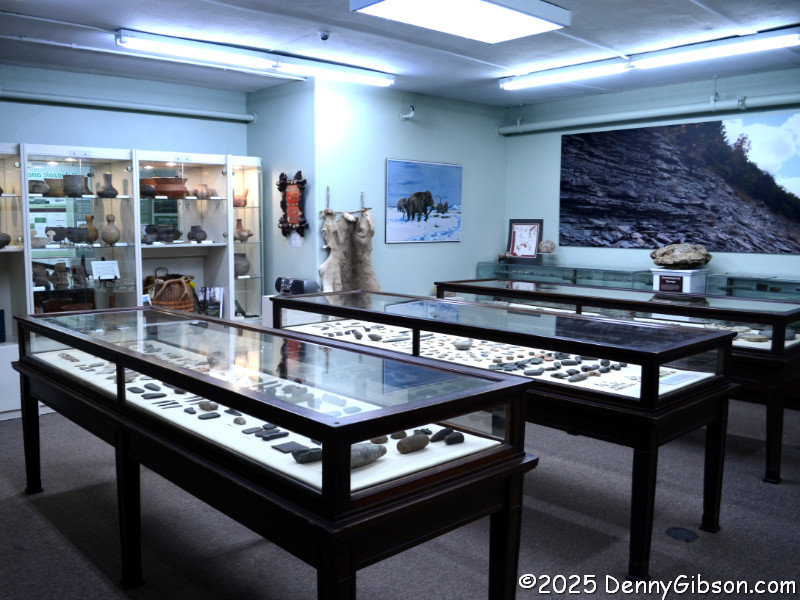
My first stop at the park was the Visitor Center. In addition to having a gift shop, helpful attendants, and a supply of information and maps, the center houses a small but very interesting museum. A panel just inside the door offers a pretty good overview of the park. That big guy in the foreground of the third photo is a Harlan’s Ground Sloth.

At the rear of the Visitor Center is a life-sized diorama depicting how earlier visitors to the salt springs might become trapped in the bogs and involuntarily leave their bones for future scientists. Big Bone Lick is on the Lewis and Clark National Historic Trail, not because the Corps of Discovery stopped here but because both of its captains did. At the urging of President Jefferson, Meriwether Lewis visited the site in 1803 on his way west to join William Clark. The boat carrying the specimens he collected sank on its way to Jefferson. In 1807, after that famous expedition to the Pacific Ocean, Clark made a stop here to collect and ship specimens that did reach the President.

Although they have absolutely nothing to do with vertebrate paleontology, I found the smallish examples of wildlife flitting about in front of the Visitor Center a lot of fun to watch.

A paved path that begins a short distance from the Visitor Center leads to an elevated bison viewing stand. But no bison presented themselves to be viewed there today. Instead, the small herd was lounging in the grass, just out of sight, a short distance away.

Having noted that I’ve passed Big Bone Lick a number of times while driving to Rabbit Hash, continuing on to the one-of-a-kind river town after my stop was rather natural. Besides, if I hadn’t, I could not have put “bunnies” in the title. I grabbed an ice-cold ginger ale at the general store, then sipped it as I watched the Ohio River flow by.

This intersection, just east of US 42 about two and a half miles east of Big Bone Lick, marks the community of Beaverlick. I believe there used to be limit signs here, but I found none today. If I didn’t imagine them, I’m guessing they are hanging on a college dorm wall somewhere. Until a year or so ago, there was a Beaverlick Trading Post at US 42, but it is now an ice cream stand, and almost all of the signage has been changed. They’ve not yet taken care of a couple of side doors, however. Places like Big Bone Lick and Beaver Lick (now Beaverlick) were salt licks where various animals came to get a little salt in their diet. They were named for the lickers, not the lickees.

To complete what has turned into a survey of the area’s smile-inducing place names, I stopped at an establishment that appears to be the last remaining enterprise acknowledging that the community of Sugartit once existed. It’s just a few miles north of those spots made famous by salt-licking beavers and big boned animals.

Book Review
Route 66: The First 100 Years
Jim Ross and Shellee Graham

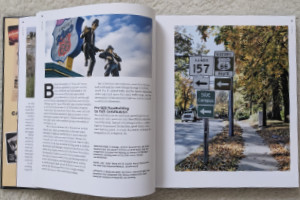
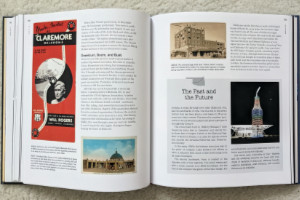
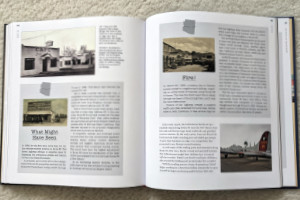
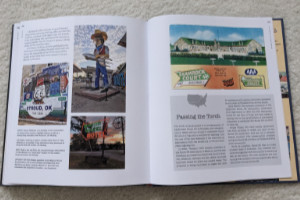
It’s a beauty. That was my initial thought when I first held this book in my hands and flipped it open. I wasn’t surprised, of course. I’ve seen enough of Jim and Shellee’s work to make me expect great photography and writing, a top-tier knowledge of history, and a rock-solid commitment to quality. I’m not quite as familiar with Reedy Press, but what I have seen smacks of the quality targeted in that previously mentioned commitment. My instant declaration of beauty came from seeing great images accurately reproduced on thick glossy pages. Including the text in my appraisal took only a little more time.

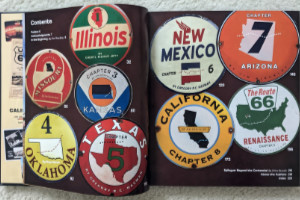
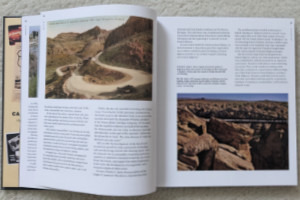
Route 66: The First 100 Years differs from some of the authors’ previous books in that it does not rely almost exclusively on their own photography for the book’s images. It’s a history book, so naturally, historic images are used; however, contemporary pictures from other photographers are also included, with each being properly credited.

Unlike many other Route 66-related books, Route 66: The First 100 Years is not organized geographically. Nor is it organized chronologically as history books often are. There is a slight hint of chronology in discussing the roads that preceded US 66 in Chapter 1, “Revolutionizing Travel”, and covering “Renaissance” and “Preservation” in the last two chapters. In between, chapter subjects might be eras (e.g., “Hard Times”), collections of people (e.g., “Ladies of Legend”) and businesses (e.g., “Trading Posts and Tourist Traps”), or something else. Whatever the subject, a wide-ranging set of examples is included. But 100 years and 2400+ miles cover a lot of space and time, and anyone with more than a passing familiarity with Route 66 will probably come up with a personal favorite or two that didn’t get included. The selection process could not have been easy, but the selections are excellent.

Every chapter, like the vast majority of real-life road trips, has a “Detour”. The book’s detours are deep dives into one of the chapter’s subjects, and not all of them are obvious. The detour for the “Revolutionizing Travel” chapter is “The Ozark Trails”. This was an early named auto trail, or actually a system of auto trails, that, in my experience, doesn’t seem to get enough recognition. The “Hard Times” chapter takes a detour into an area that has been overlooked far too often for far too long: “The Green Book and Threatt Filling Station”.

It’s probably not all that surprising that Route 66: The First 100 Years overflows its twelve numbered chapters. It starts with a full page of Acknowledgments, followed by a Forward written by Route 66’s storytelling king, Michael Wallis. Jim and Shellee follow that with a Preamble, then include an Epilogue, Road Facts, and a few other sections after Chapter 12. One of these sections, titled “Happy Trails”, is a collection of roadside photos taken over the Mother Road’s first 100 years. Many are of unidentified travelers, but there are some real celebrities in the mix. There’s Jack Rittenhouse standing beside a California U.S. 66 sign, Lillian Redman by an Arizona 66 sign, and Cynthia Troup gazing at a U.S. 66 sign in New Mexico. As I said earlier, 100 years and 2400+ miles cover a lot of space and time. Jim and Shellee have done an impressive job of capturing the big picture and quite a few of the small picture details, too.

While writing this, I took a look back at a post from this blog’s first few months of existence. My review of “Route 66 Sightings” by Jim and Shellee, along with their good friend Jerry McClanahan, was one of the first reviews published here. I was surprised to see that its last sentence starts with the exact same words that begin this review: “It’s a beauty”. Maybe I’m in a rut, but at least I’m being honest.

Route 66: The First 100 Years, Jim Ross and Shellee Graham, Reedy Press (May 22, 2025), 11 x 9 inches, 208 pages, ISBN 978-1681065823
Available through Amazon.

Where the Airstream Wheels Start

One reason the Airstream Heritage Center has been on my “someday” list for such a long time is that, while I find travel trailers interesting, they are not something I aspire to, and therefore don’t think about a whole lot. Another is that it’s close enough to my home that I knew it would be a simple day trip when the time came. Early in the week. I briefly followed a long flatbed trailer with three small new Airstreams strapped to it, and that reminded me of just how close to me their point of manufacture is. That reminder, along with an idle Thursday, led to a leisurely drive north. A popular Airstream slogan is “Home Is Where Wheels Stop”. Those Airstream wheels are mounted and start turning in Jackson Center, Ohio.

The Heritage Center is attached to the front of the 750,000-square-foot trailer manufacturing plant. The admissions desk is just out of frame on the right. On the left is a new trailer and a display of Airstream-branded gear. The gift shop, where my museum tour will eventually lead, is on the right. The museum entrance is straight ahead. The online reservations for the factory tour would not let me select a date prior to June 10, so I assumed the tours were full or otherwise not available. Not so, said the girls at the museum desk, and they signed me right up.

First up in the museum is a timeline that begins with the birth of Airstream founder Wally Byam in 1896 and ends with the building of this facility in 2018. Displayed at the timeline’s very beginning is the canteen that Wally’s grandfather, Loren, carried in the Civil War. It is claimed that this whole Airstream thing came to be because Wally really liked to camp, and his wife, Stella, did not like sleeping on the ground.

This is the very first Airstream Clipper ever built. It was hand-delivered by Wally Byam to the President of Mexico in 1936. At some point, it became the property of a traveling circus. It was eventually discovered near Mexico City and, once identified, restored. The placard contains some photos and an abbreviated history.

In the late 1930s, Airstream produced some wooden trailers that resembled large teardrop trailers more closely than the familiar rounded-end models typically associated with the name. The sign explains that this 1938 Airlite “…had an aluminum skin applied over the original Masonite exterior which helped to preserve it”. Airstream halted production during WWII but got the wheels rolling again in May 1947 with the Airstream Liner, which was basically a much improved Clipper. That’s a 1949 Liner pictured. The third photo is of a 1949 double-door Whirlwind model.

Here’s a trio of particularly well-traveled examples. In fact, Oscar and Etta Payne’s 1957 Bubble could be the most travelled Airstream of them all. With a legitimate claim of having gone “Around the World in 859 Days”, it is one of four Airstreams from the 1960 European Caravan to tour Russia in the Soviet Union. Virgil and Grace Golden ordered their 1963 Tradewind specifically for the 1963-64 Around the World Caravan, but it made many more journeys than that. The white 1955 Cruiser was used by Wally and Stella Byam on the 1956 European Caravan. It was painted white to match the Byams’ white Cadillac tow vehicle.

I had driven to Jackson Center thinking I would have no factory tour, and I would have been quite happy with that. Of course, learning that I could tour the factory made me even happier. The picture at right was taken just outside the museum. Corporate offices are upstairs. Trailer manufacturing is through those doors straight ahead. No photos are allowed.

There are approximately 500 employees in this building and about 1200 in all Airstream facilities in Jackson Center. The city’s population is roughly 1450. Our guide, Dan, did an outstanding job of describing every phase of the operation, and the tour does an outstanding job of selling the product. Airstream has a reputation for high quality. That top-tier quality, along with worker safety and satisfaction, is a primary goal is evident throughout the factory. It looked to me like the premium prices these trailers command are justified.

Factory tours are free, and the museum is cheap — $5 or less. Currently, the company’s website (https://www.airstream.com/) appears to be experiencing some issues, including those that prevented me from reserving a tour in advance. Hopefully those are resolved soon. At present, website issues do not interfere with access to a factory tour video that is almost as good as the real thing.