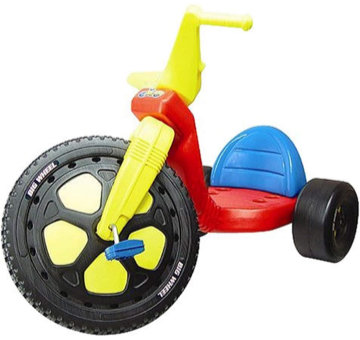
 History does repeat itself. In the early 1970s, I lived with my wife and two sons in a house with a driveway that sloped to a paved area in the back. That driveway was an ideal spot for the four-year-old to give his Big Wheel a workout. While I worked on something on a car behind the house, he repeatedly pushed the three-wheeler to the top of the hill so he could come rocketing down the hill, brace his feet on the pedals to stop the big front wheel, and throw the rear wheels into a perfect 180-degree slide. This was exactly what Big Wheels were designed for. After one of his countless slides, he looked up at me and made an incredibly insightful observation. “Dad”, he said, “I bet you wish you could do this.”
He was absolutely right. What he was doing looked like a fabulous amount of fun but I was too old. What I saw Saturday also looked like a fabulous amount of fun but I was once again too old. Fifty years ago, being too old meant being too big to fit into the seat. Yesterday it meant being too wheezy and too brittle.
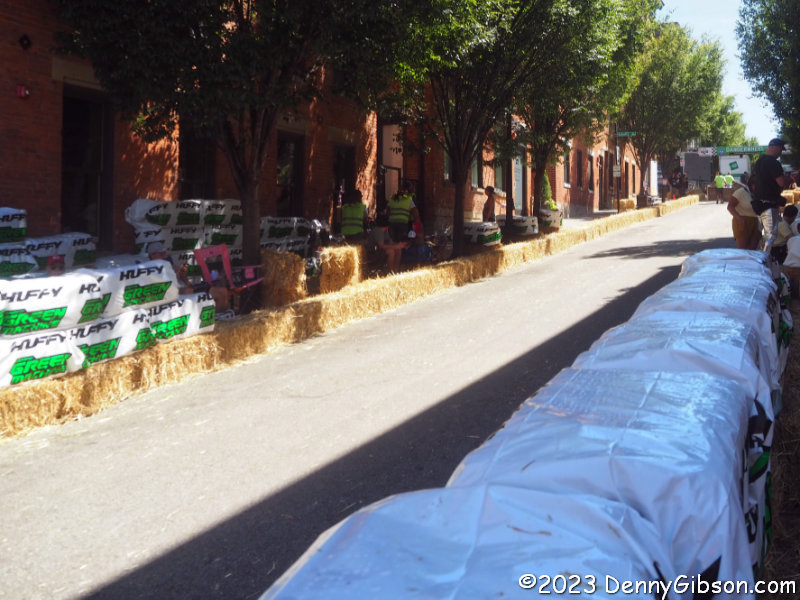
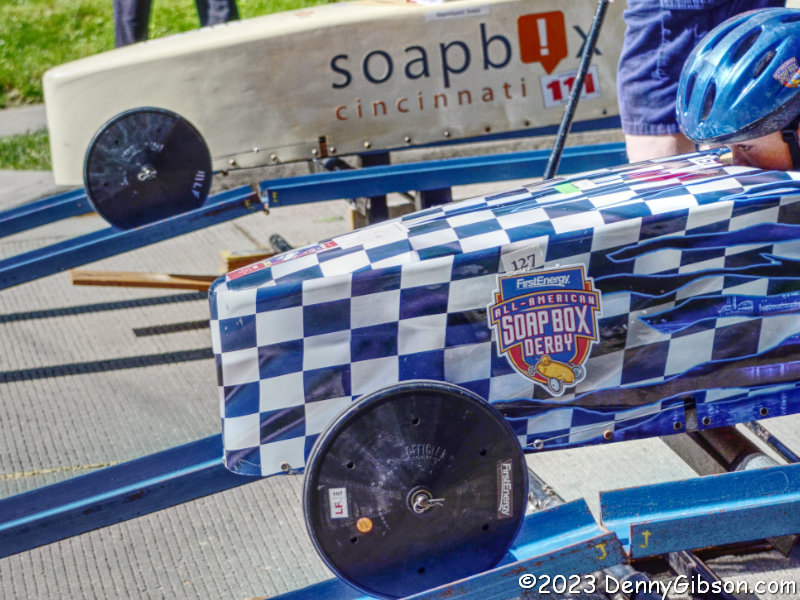
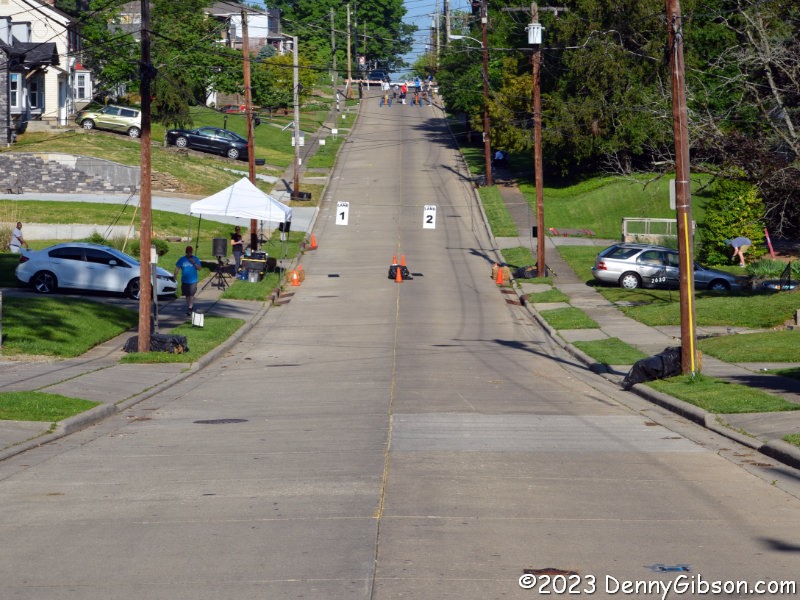
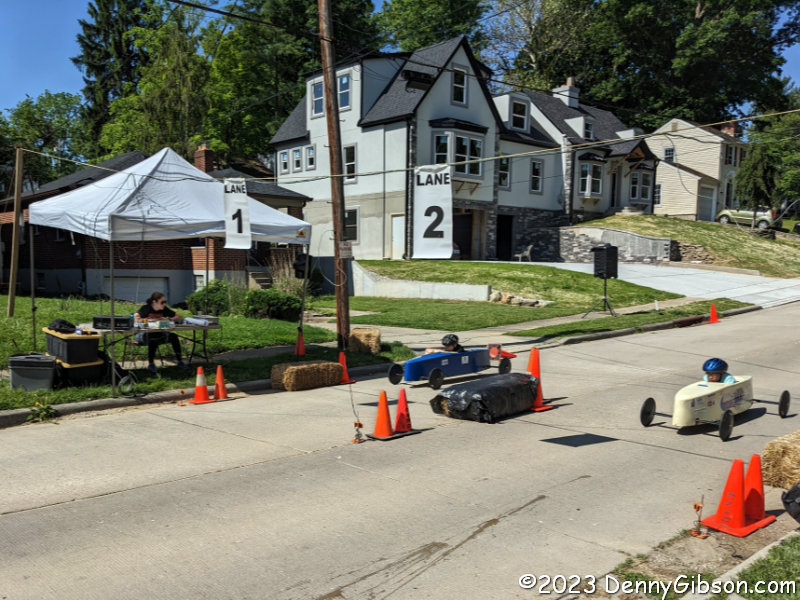
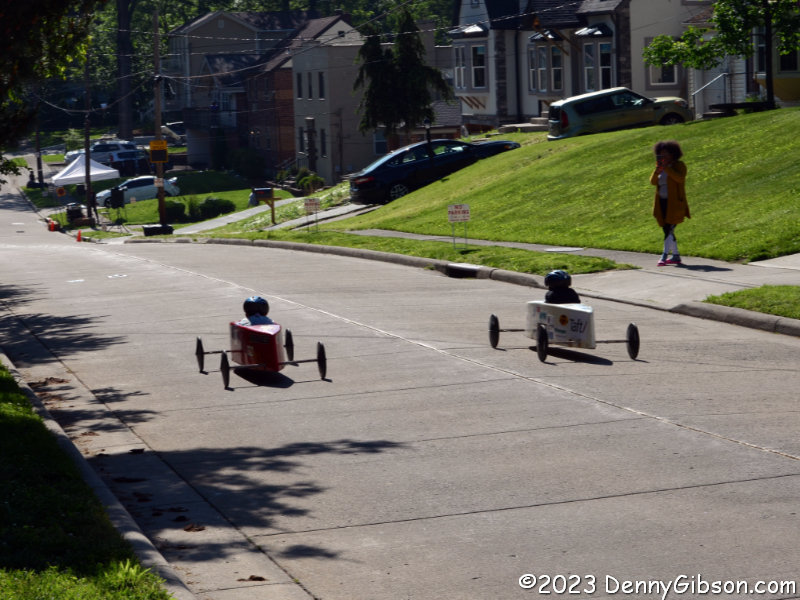
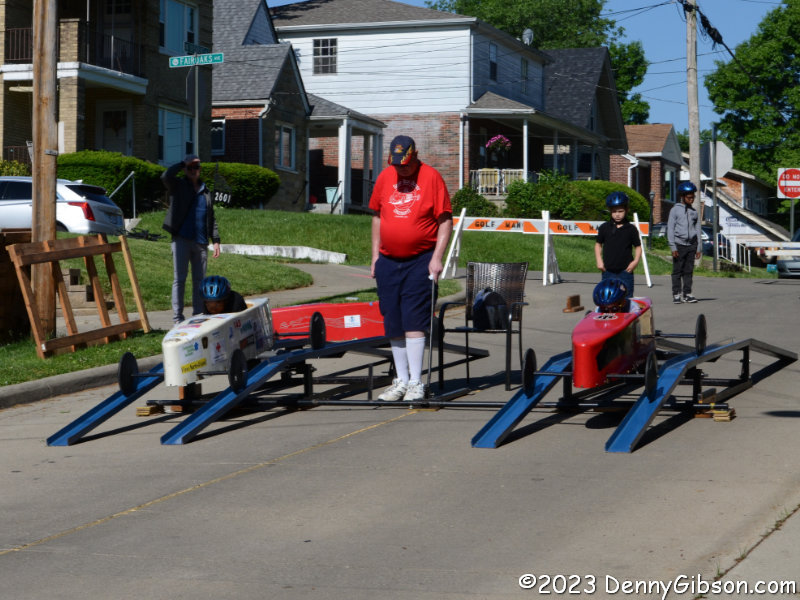
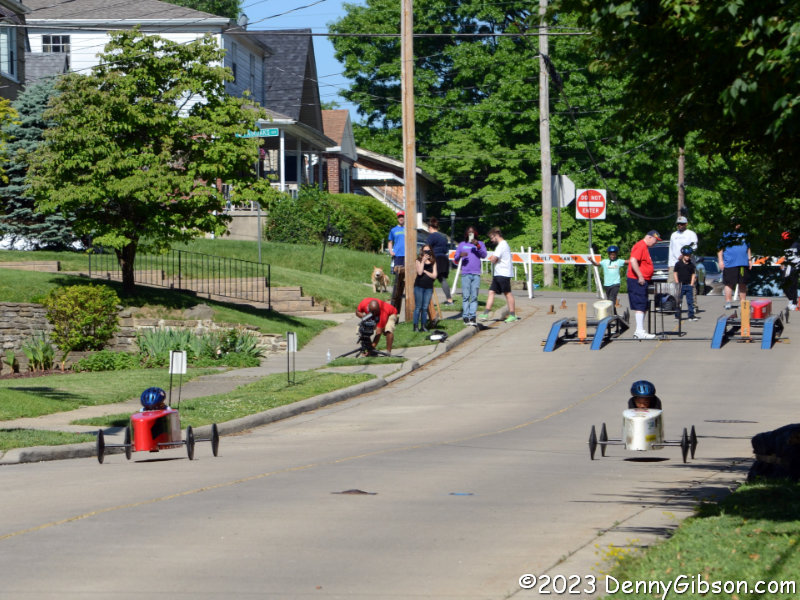
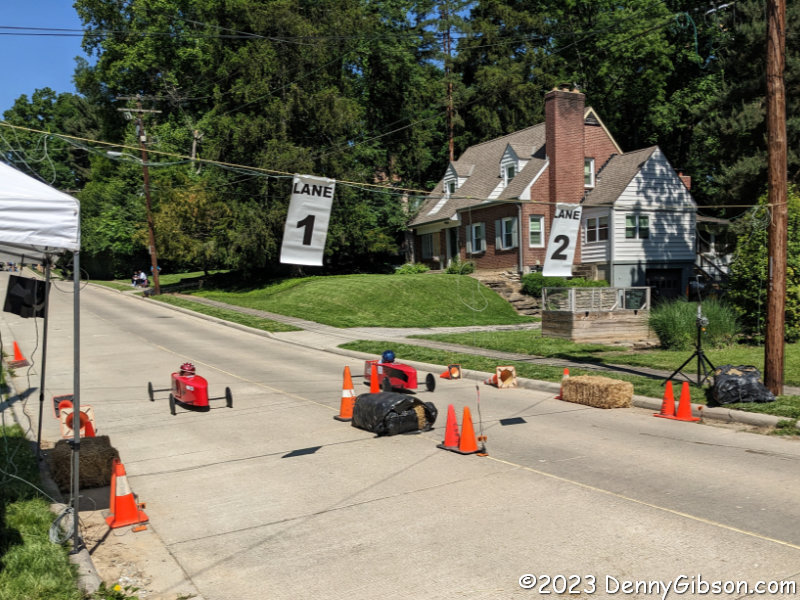
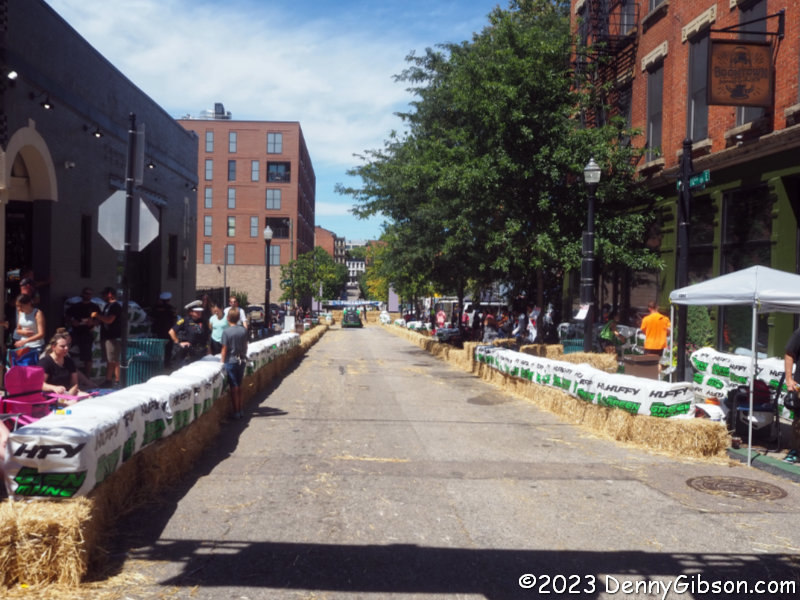 This is Danger Wheel‘s eighth year but it was somehow kept a secret from me until I saw Citybeat’s 7 Things To Do in Cincinnati This Weekend article last Thursday. Realizing almost instantly that this was something special, I made plans to attend and found myself near the midpoint of the course about two hours before race time. There is a starting line at the top of the hill and a finish line at the bottom just like the Soapbox Derby I attended last week (At Speed in Akron). More history repeating itself I suppose.
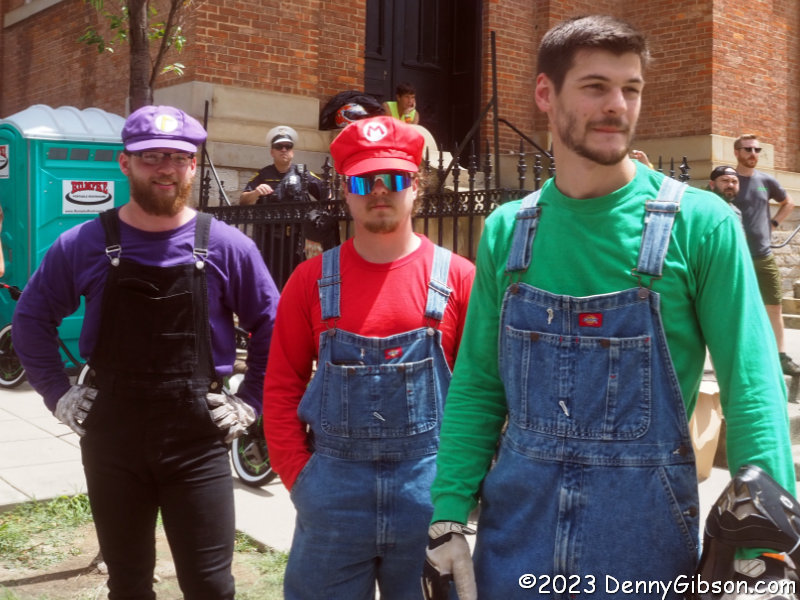
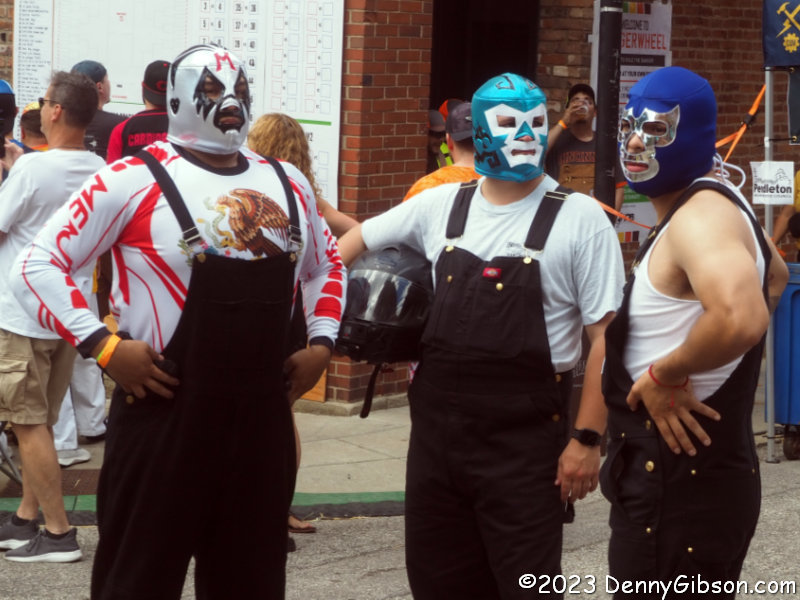
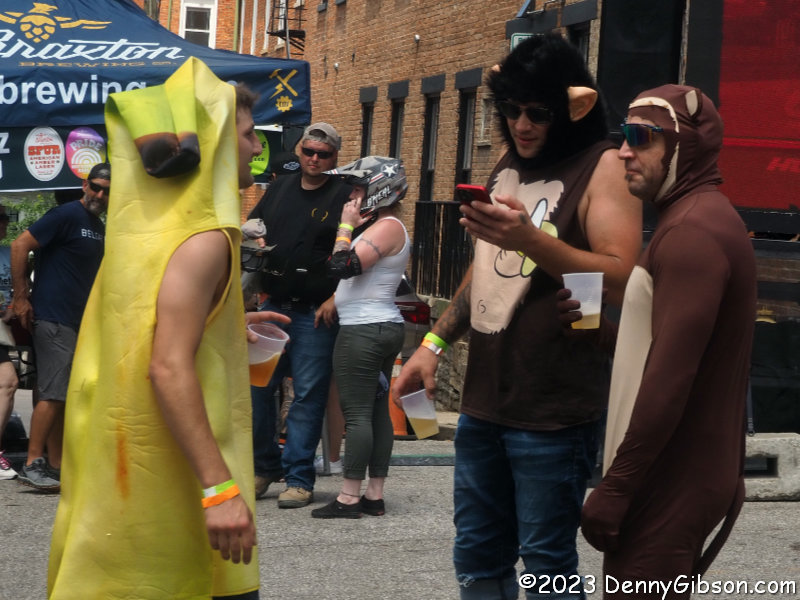
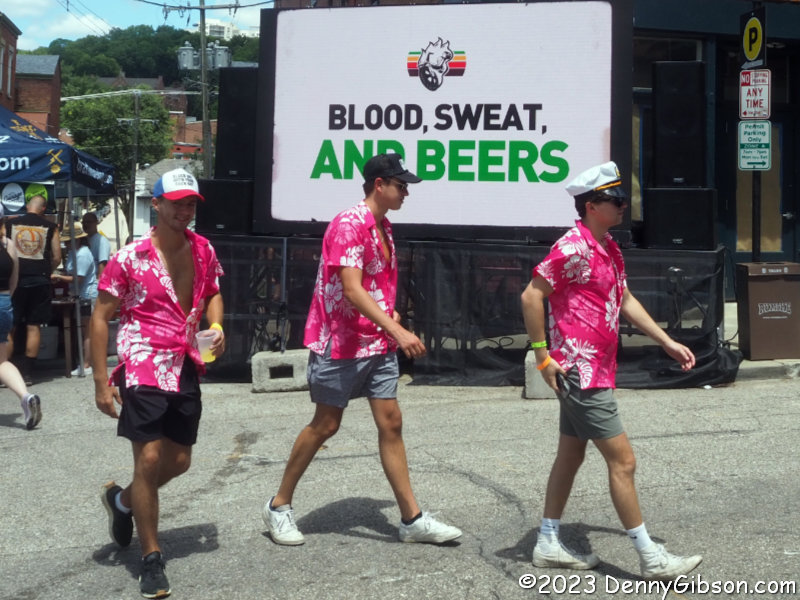
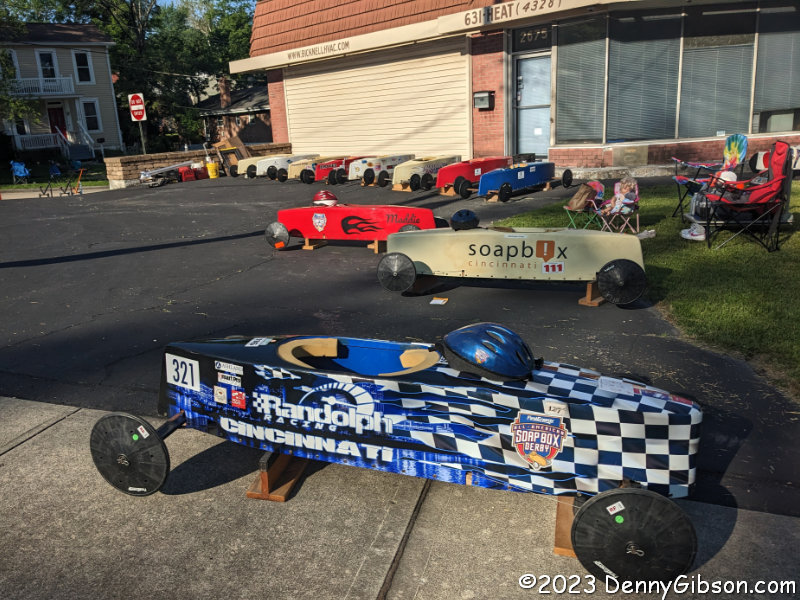
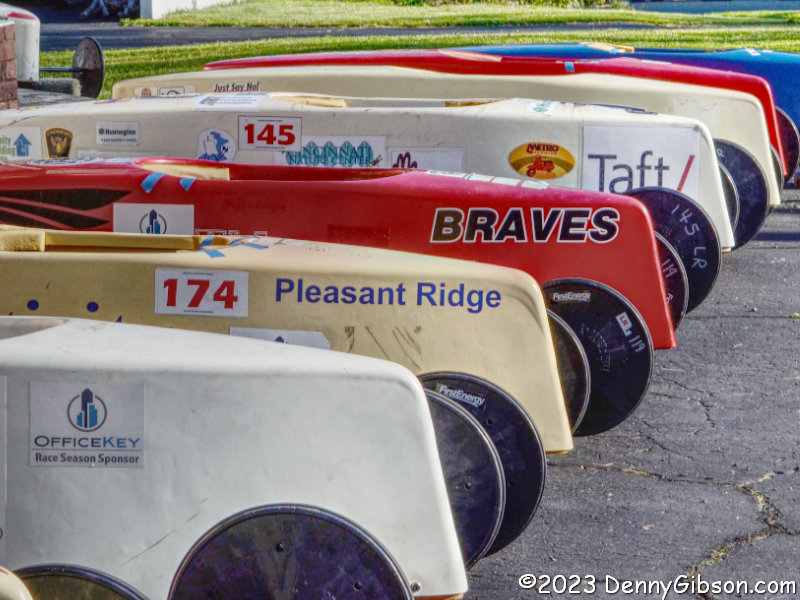
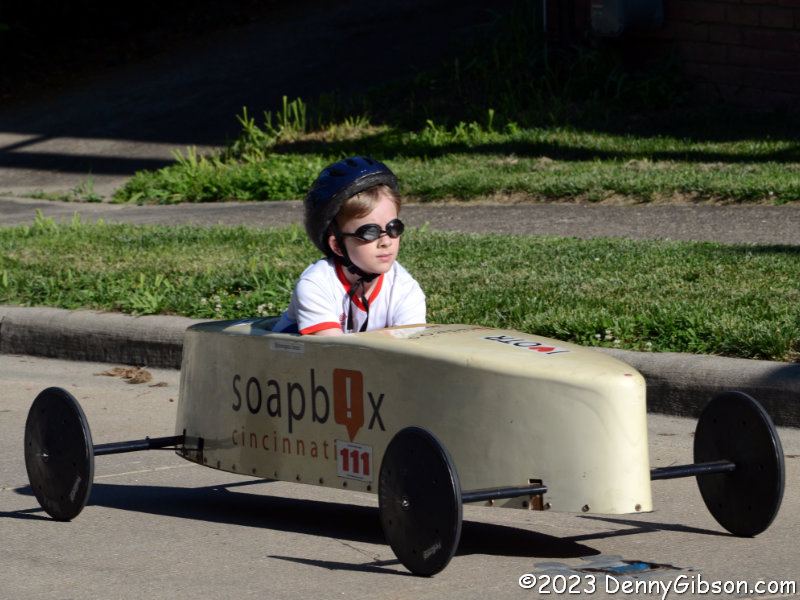
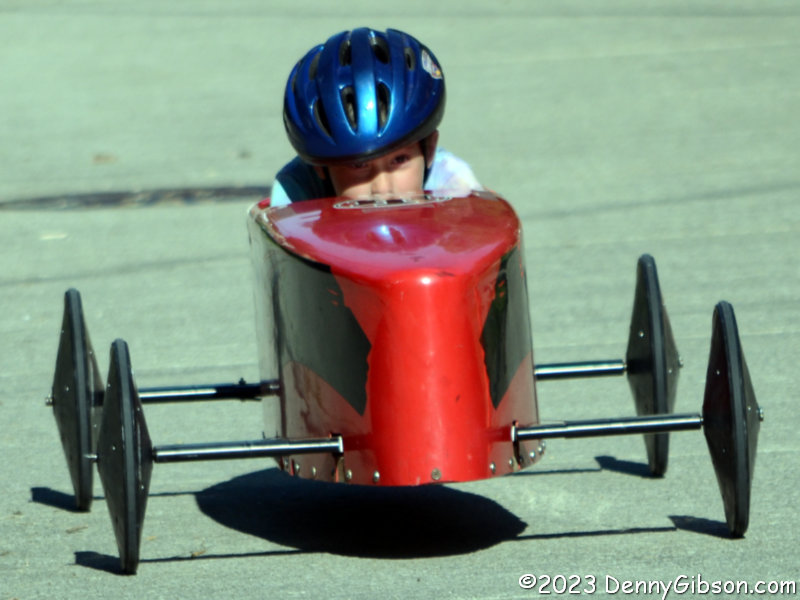
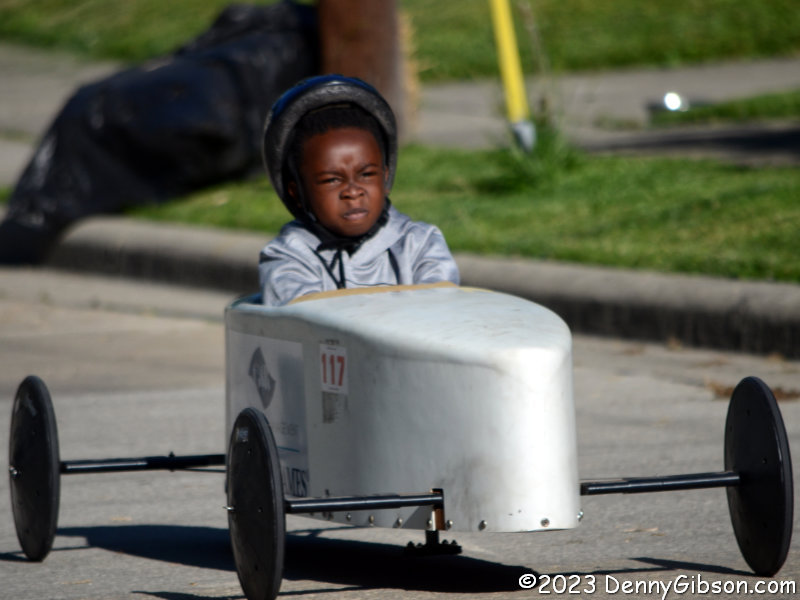
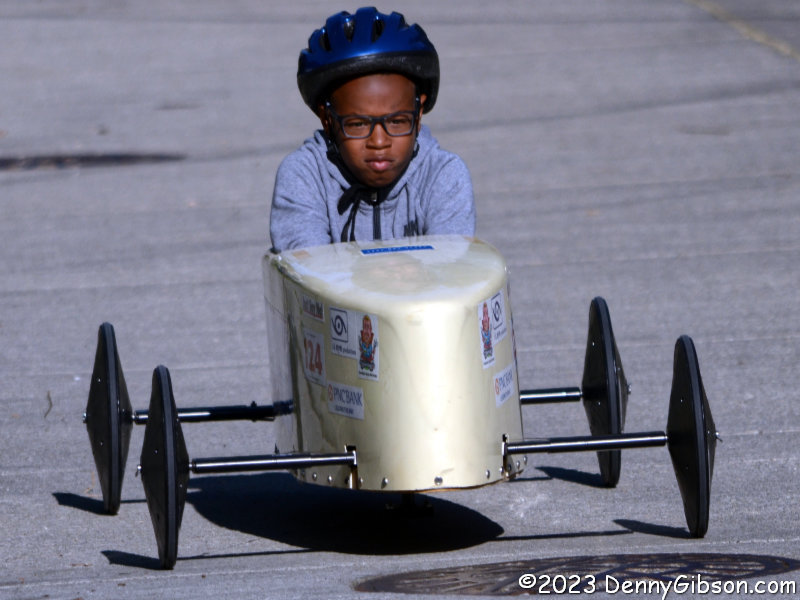
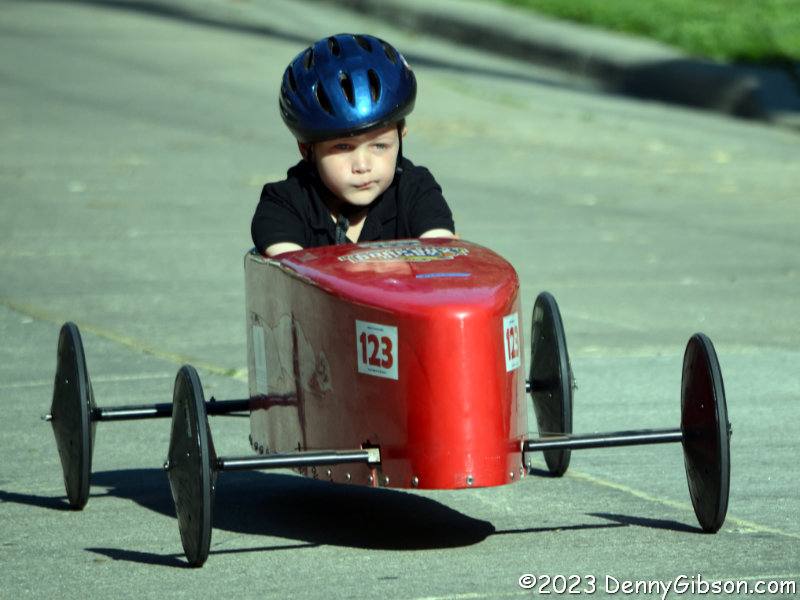
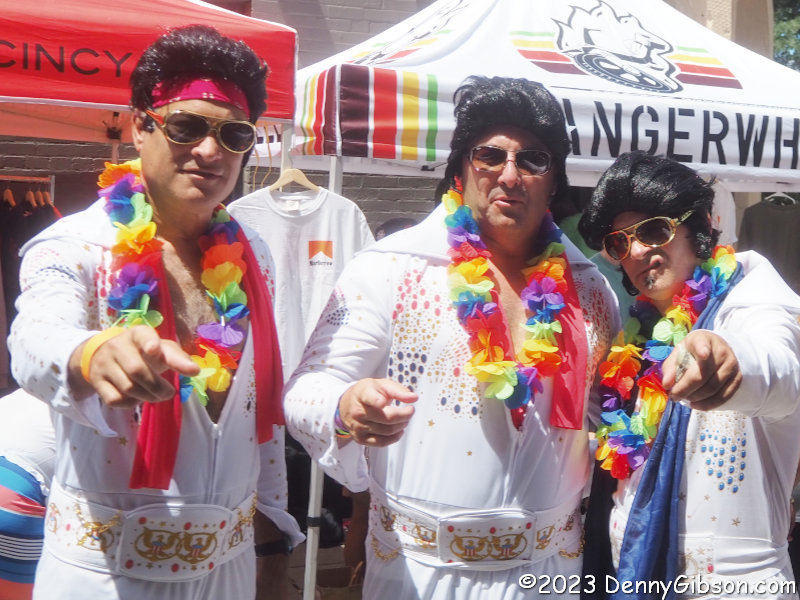 The race takes place in the Pendleton neighborhood of Cincinnati which has two breweries and several really good restaurants. Food trucks are brought in for the event along with tents from breweries outside the neighborhood. I had no trouble filling the time until the competition started. I even had time to check out some of the racing teams and vehicles.
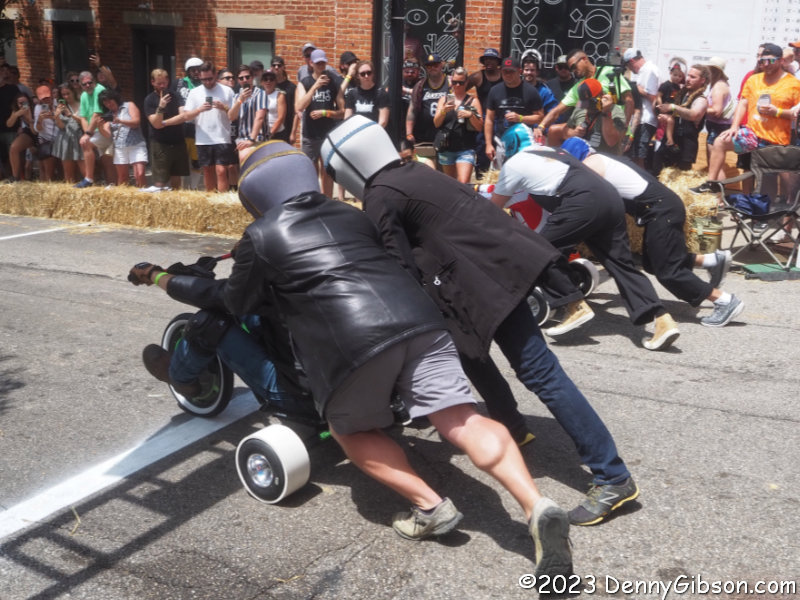 Of course, the two hours between my arrival and the first race also gave other spectators time to arrive and completely line the course. I did somehow manage to get close enough to the starting line to snap a picture of the launch of the first heat. When the starting horn sounds, two team members have ten feet to power the third member off the line.
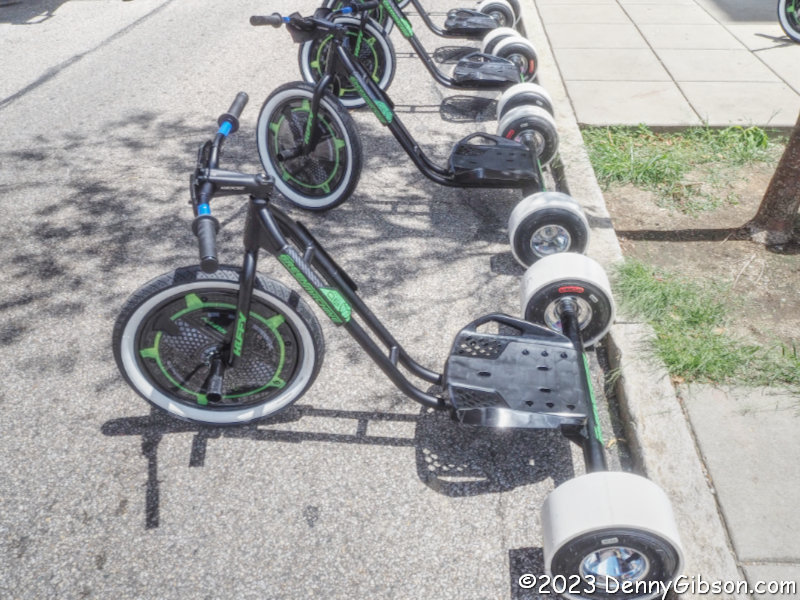
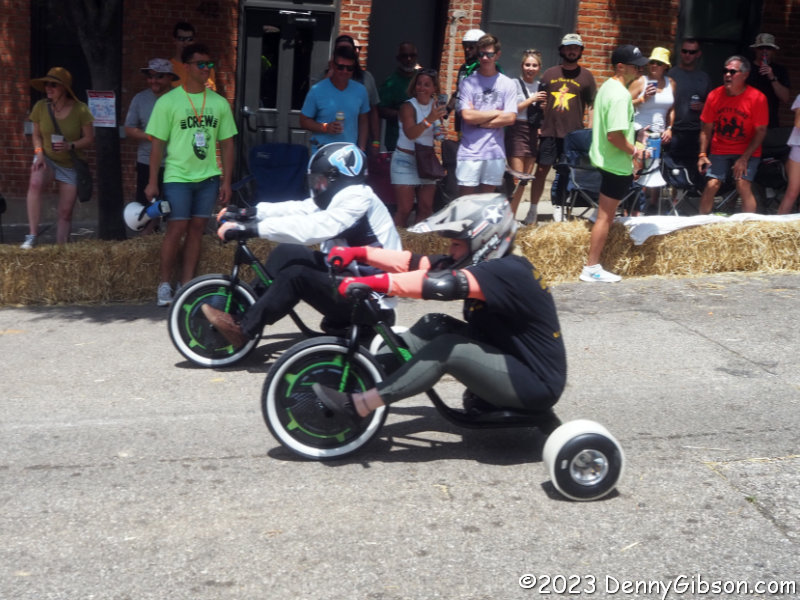 These special built Huffy Green Machines have no onboard means of propulsion so you might think that once the starting line pushing ends, the race is exactly like a Soapbox Derby heat with drivers dealing with nothing but steering until gravity takes them over the finish line. You might think that but you would be really really wrong.
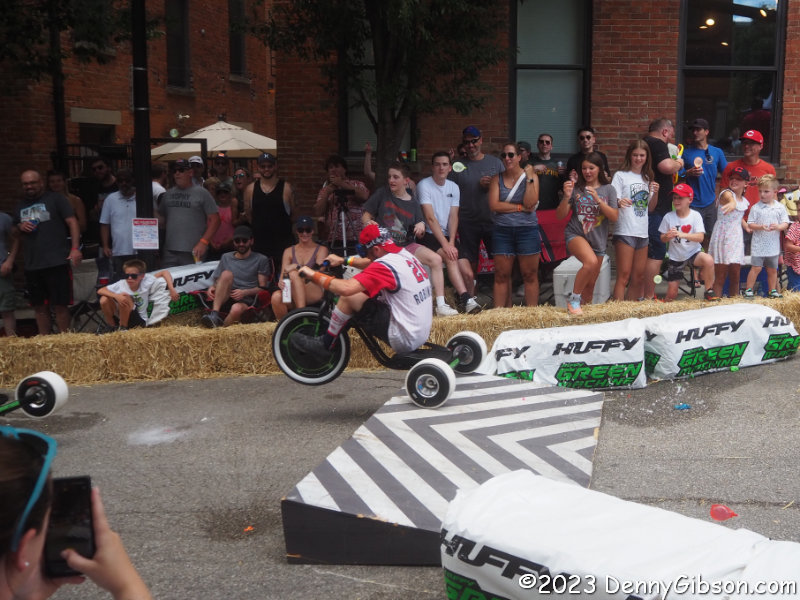
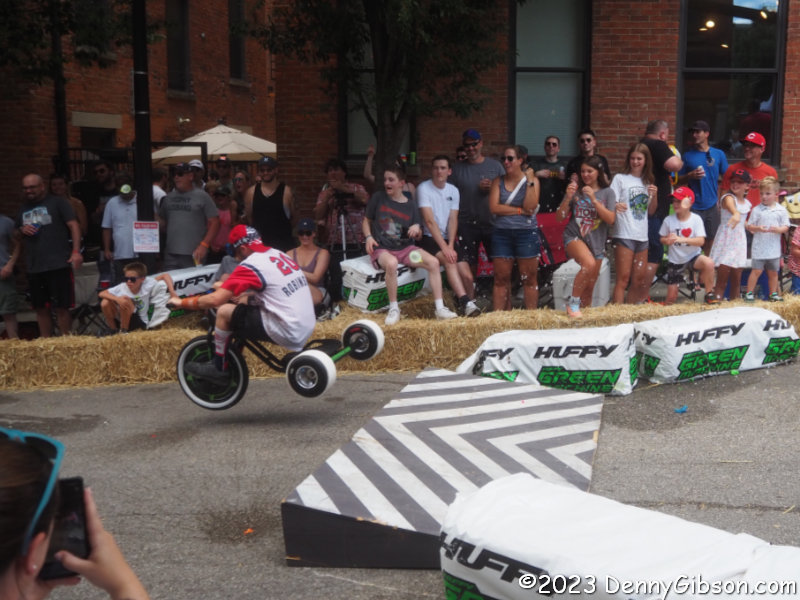
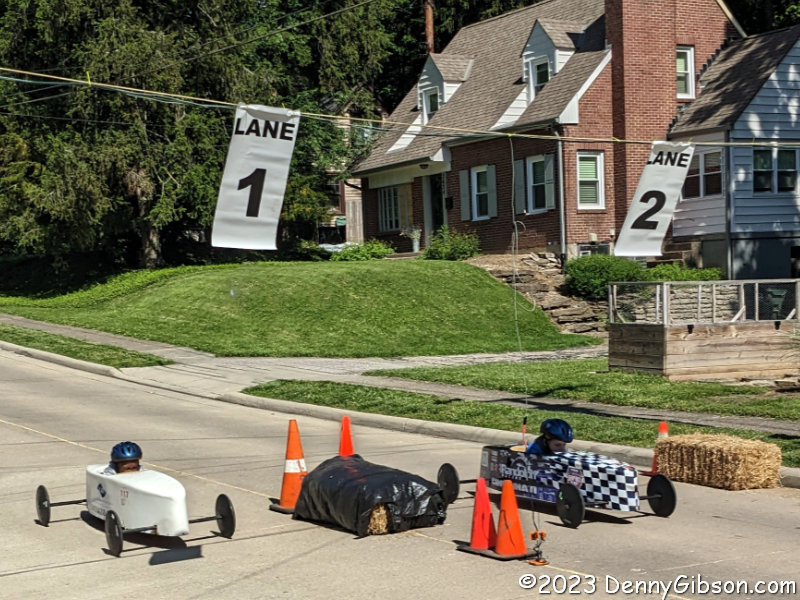
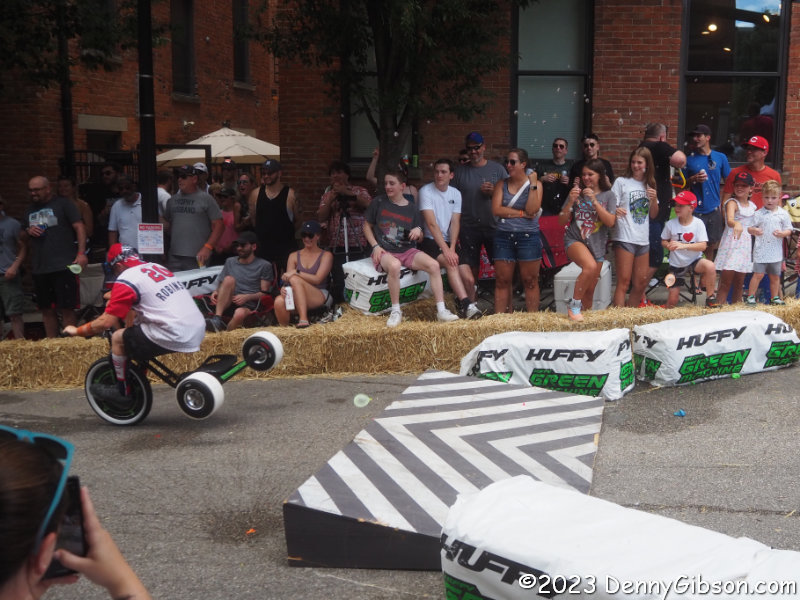 While spectators were packing in trackside, race organizers had placed ramps and speed bumps along the clear street I’d seen when I arrived. In addition, pelting racers with water balloons was a legitimate and quite popular means of fan participation. I overheard the starter suggest to a rookie that he close his face shield all the way because “those water balloons hurt like hell”.
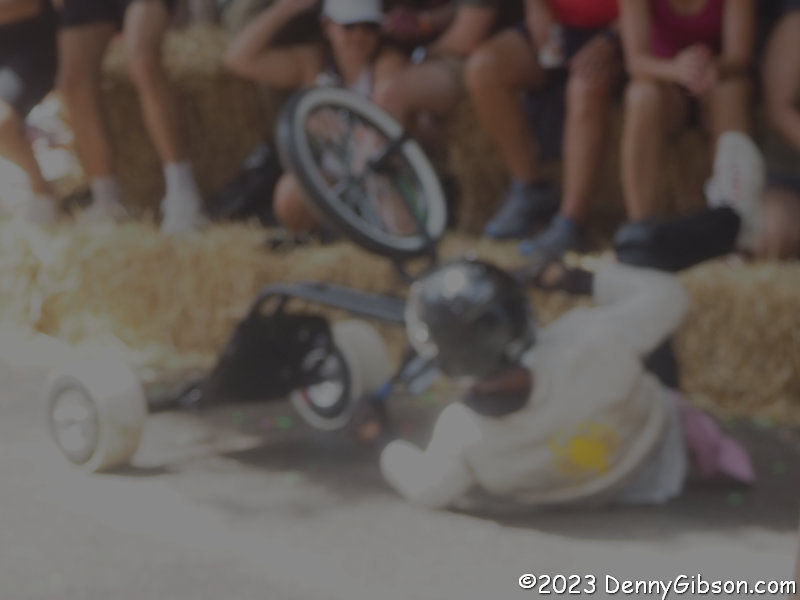
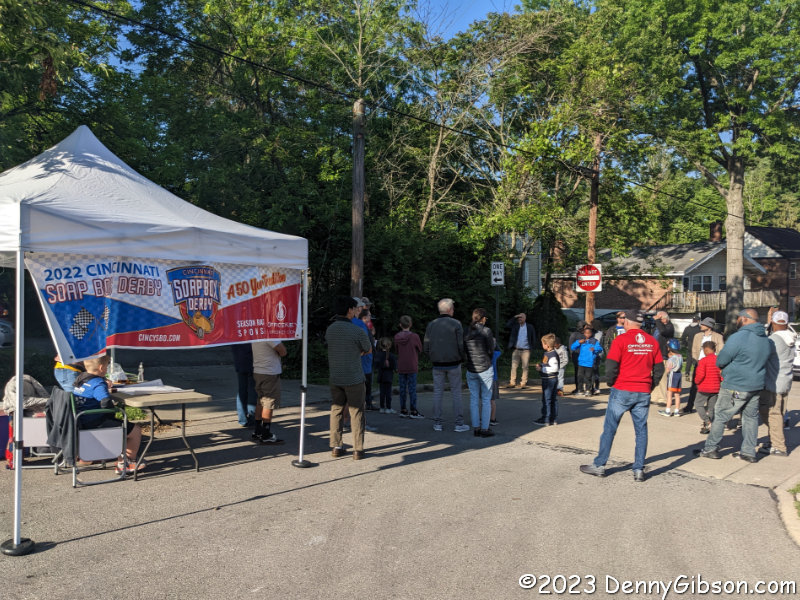
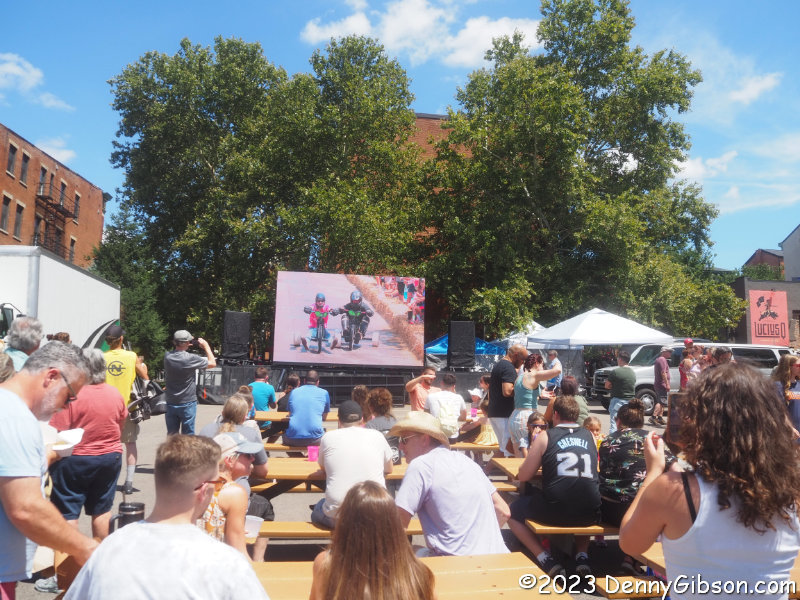 I didn’t feel like forcing my way to the front or staying in one place long enough to move up through attrition assuming that was even possible. I could see some of the action fairly well but had no clear shot for photos. The closest I came to capturing any of the mayhem was this fuzzy shot. The picture at right shows a large video screen in the parking lot where most of the food trucks were. Live racing was shown on this screen and on screens inside most of the businesses in the area. The longest stretch of racing that I actually watched was inside one of the breweries while also enjoying some cool air and cold liquid.
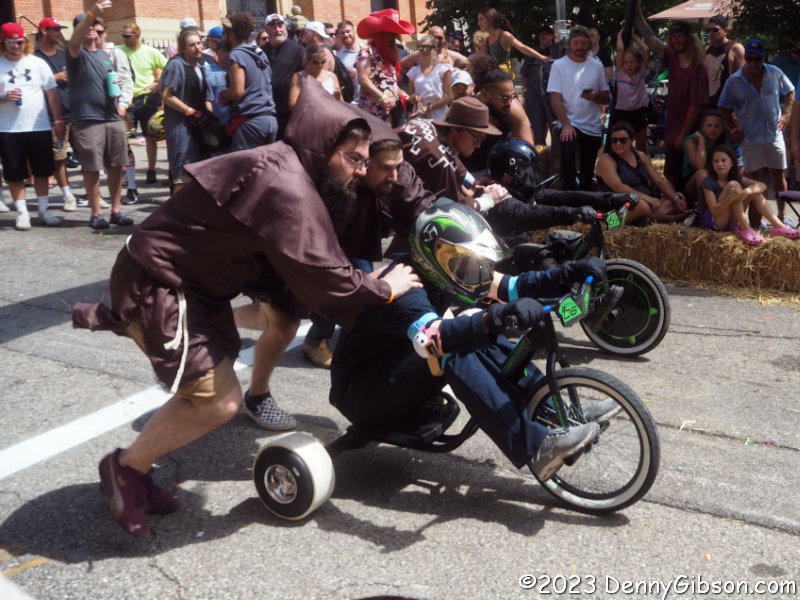
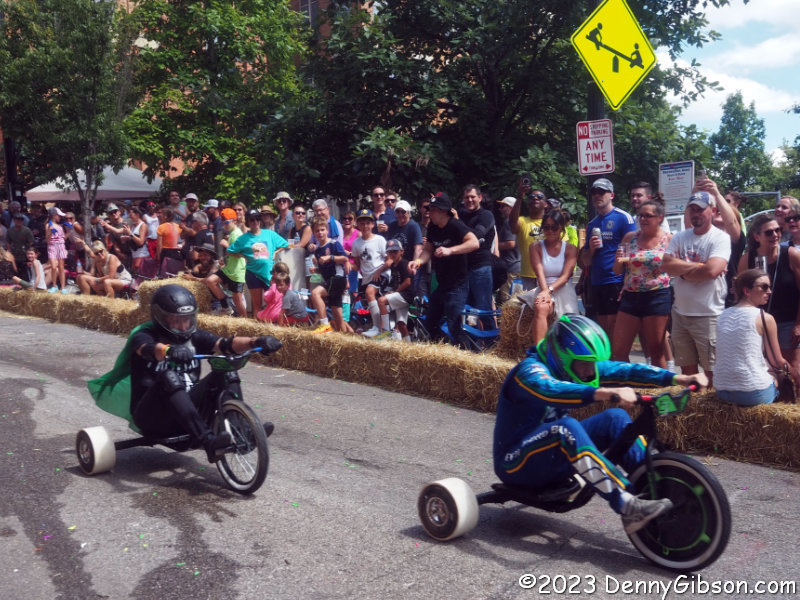
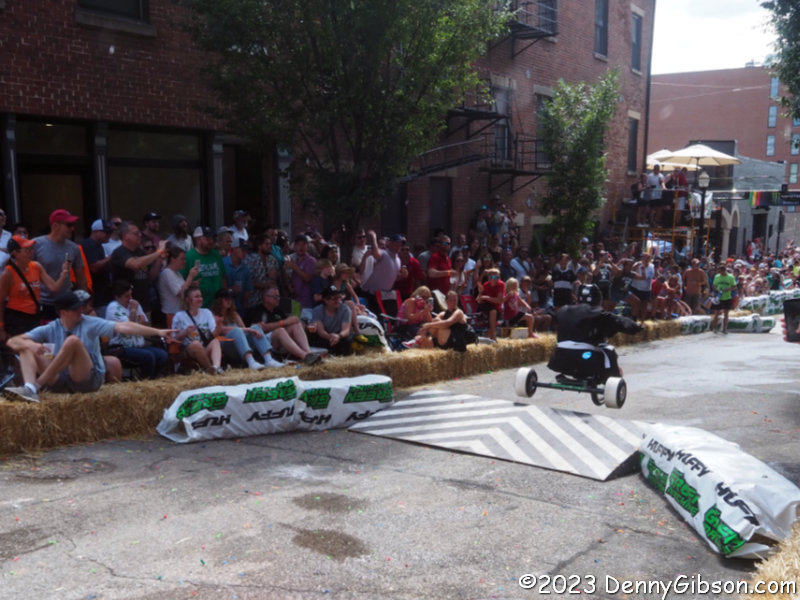 I did not stay until the champion was crowned. Just like last week at the Soapbox Derby, I had no one to root for. The winner of each heat was announced but the names were meaningless to me and I did not pursue standings.
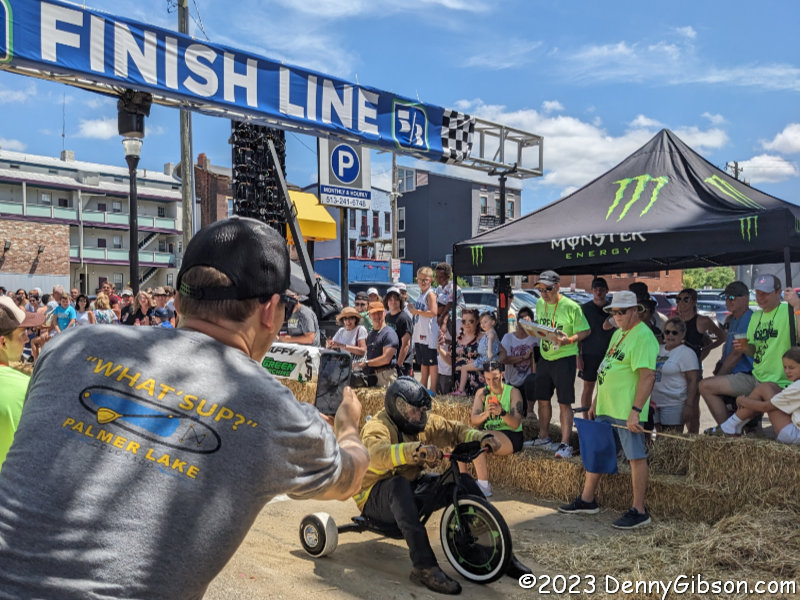 But I still consider it one of the coolest events I have ever attended in Cincinnati. It was absolutely great fun to watch but, once I understood that the helmets and padding were not just for show, I lost any desire to participate. I do still wish I could have spun that low-slung speedster around in the driveway fifty years ago, however.
 I did better this year than last, and last year I did better than in any of the preceding 148. As explained in a blog post (




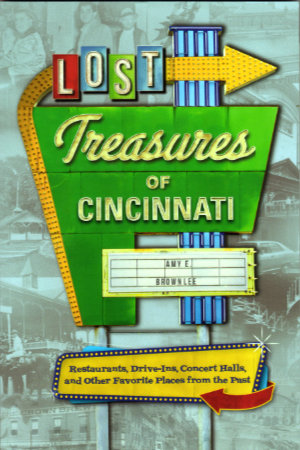 Amy E. Brownlee is a lifelong Cincinnatian. She naturally learned a lot about the city growing up here then used that knowledge and added much more during her ten years at Cincinnati Magazine. An awful lot of the treasures she writes about in Lost Treasures of Cincinnati were lost before she arrived but a rather frightening number have disappeared during her lifetime. Of course, an even larger number have disappeared during mine. Neither of us is responsible for that. I swear it’s coincidence pure and simple.
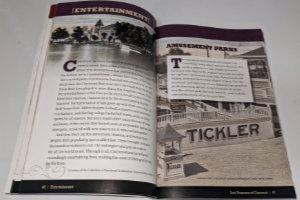 The book opens with “Food and Drink” in Section 1 then covers “Entertainment” and “Retail” in the next two sections. The smallest section, “Media”, is followed by the largest, “Community”. Definitions for those section titles are not particularly rigid and the size of the “Community” section probably indicates that it is the least rigid of all. It is where things like churches and breweries, of which Cincinnati had more than a few, appear.
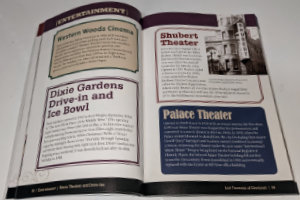 Most, but not quite all, of the breweries mentioned in the book were gone before I got here. Likewise with restaurants and attractions which together comprise the biggest part of things that have disappeared during my lifetime. I caught one show, Hair, at the Shubert (“Entertainment”) before it was torn down. I also saw one movie at the Albee (“Entertainment”) but I don’t remember what it was. I had one meal each at The Gourmet Room and the Maisonette (“Food and Drink”) before they closed. There are quite a few places in this book where I ate one or more meals or watched one or more movies, plays, games, or concerts. Encountering each of them on these pages prompted memories that went way beyond the single paragraph of text. Reading about places that were already gone when I came to Cincinnati didn’t prompt any memories, of course, but it did make me appreciate just how many treasures have been lost.
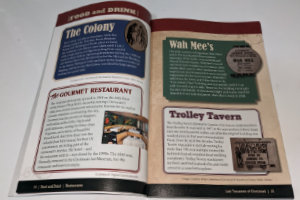 I really enjoyed reading Lost Treasures of Cincinnati cover-to-cover front-to-back but as I did, two other ways of reading the book came to mind. With its fairly short standalone essays, it seems like a natural fit for that popular personal reading room with the porcelain furniture. Its use as a reference book also seems rather natural. I don’t mean an every-last-detail reference book to use in conducting deep-dive research but a great place to answer questions like “What was the name of that boat-shaped restaurant?” or “What happened to our NBA team?”. The full index will help the book play that role.