 Two years ago, I decorated a post about determining the date of Easter with what was claimed to be a new flavor of Peeps. Last year, in the early days of the COVID-19 pandemic, I reused the post after augmenting it with another claimed new Peeps flavor. I once again see those two flavors, Root Beer and Hot Tamales, being touted as new. At best, I think they might be called seasonal. So what, if anything, really is new? Maybe Peeps Giant Bunnies. Everything is relative, of course, and in the world of Peeps, I suppose it is legitimate to call something about five inches tall GIANT. Plus, at about two dollars each, they can be used in that old pirate joke about a buck an ear.
But, as I said up top, the original post was about determining the date of Easter, and the Peeps picture was just decoration. The bunnies serve pretty much the same role in today’s post. The real purpose of today’s post is to reveal just how much ignorance was in the original.
I presented the formula for finding the date of Easter — first Sunday after first full moon after vernal equinox — as something that separated Christian Easter from Jewish Passover, when it is simply calculating the date of Easter pretty much the same way that the date of Passover is calculated. At least that’s what I now think. Although I now know a lot more about the Jewish calendar than I did a few days ago, I am absolutely not an expert.
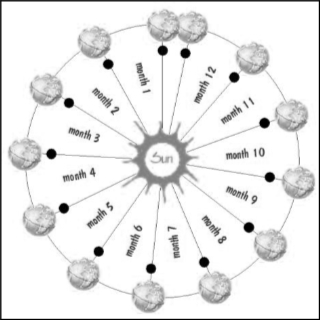 The Jewish calendar is lunisolar, meaning it is based on both the sun and the moon. The more common Gregorian calendar is purely solar with no direct lunar involvement. All months of the Jewish calendar start with a new moon. A new moon occurs approximately every 29.5 days, so that the Jewish calendar can keep the months pretty much in sync with the phases of the moon by alternating 29 and 30-day months. Of course, 12 X 29.5 is a little short of the 365.24 days that it takes the Earth to circle the sun, so every now and then a thirteenth month is added to the year. The timing of these “leap months” is based on a nineteen-year cycle and there are other tweaks as well.
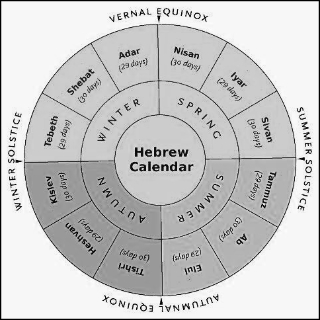 Passover begins on the fifteenth day of the month of Nisan, which is the first month after the vernal equinox. Because every month starts with a new moon, the fifteenth of every month is a full moon. Ergo, Passover always begins on a full moon. Being a week long, it always contains a Sunday. Rather than moving Easter away from Passover in 325, the First Council of Nicaea kept the scheduling just the same as it had always been and simply stopped saying the word Passover out loud. Oh wah, tagoo, Siam.
ERRATUM 1-Jan-2026: My jump to the conclusion that Easter always falls on the Sunday of Passover Week was very wrong. Because of the “leap months”, Easter can fall outside of Passover Week as it did in 2024. Passover was April 22-30 that year, while Easter was on March 31.










































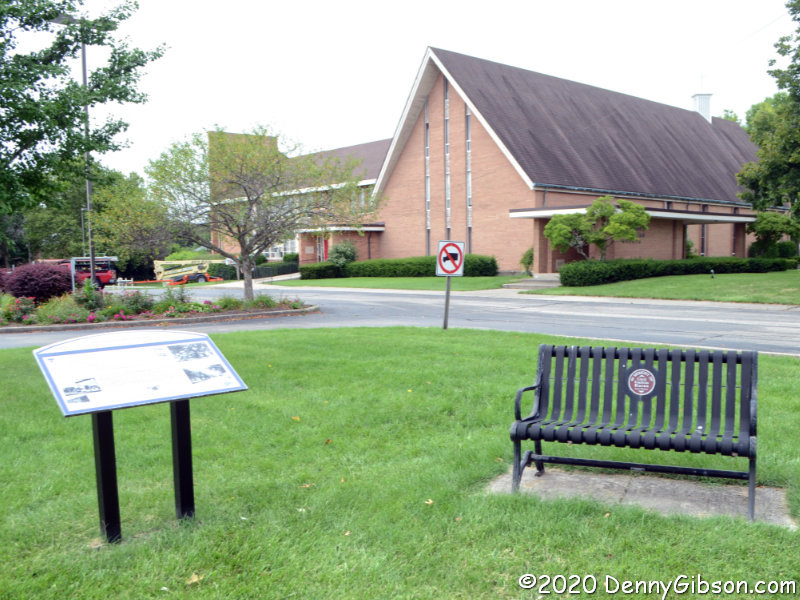

































 References to the Middletown Road of Remembrance often mention a thousand trees lining a mile of roadway. Both seem to have been considerably exceeded. The markers that now stand at the Legion, originally stood at 14th and Main. The southern markers originally stood about a mile and a half away at Oxford and Main. Plans to construct arches over the road where the markers stood were mentioned, but I’ve seen nothing to indicate that ever happened. Middletown’s Road of Remembrance was dedicated on Labor Day, September 6, 1920, and there are possibly legitimate claims that this was the nation’s first Road of Remembrance to be completed. The ad image is from