It Was Twenty Years Ago Today…

…that I got the first trip underway. This blog typically uses Wednesdays for reviews or nothing at all. Calling this post a review is a stretch. It does not evaluate a book or CD that you might consider buying or a movie or concert you might consider attending. It’s a look back at a road trip that not you, nor I, nor anyone else can ever recreate. Calling it a re-view (as in view again) allows me to publish it on a Wednesday without breaking any rules which means it appears on the twentieth anniversary of the first day of travel of the very first of my documented road trips.

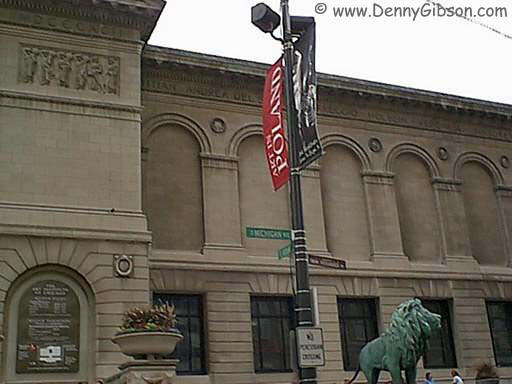
4600 Miles to Bowling Green (a.k.a. Rt66in99) is how this website began. August 21, 1999, wasn’t the first date something had been posted to the site. Besides the trip’s cover page, some auxiliary pages had been created to provide a little background and context. To be entirely honest, the August 21st posting wasn’t even the first daily journal to appear. Circumstances kept the trip from starting on the 20th as scheduled but I called it Day 0 and still made a journal entry. In addition, there had been practice entries for Day -33 and Day-202. (The only way to reach these pages is to click “Prev” on Day 0.) But August 21, 1999, was the day I departed Cincinnati, drove to Chicago, and snapped a picture of the intersection of Adams and Michigan to appear in my first from-the-road journal entry.
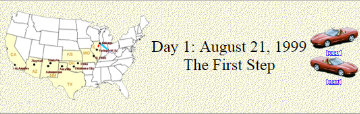
A lot of things about the site have changed over the years but some things begun with that first trip have stuck. The concept of a page for each day with access to the next and previous day has been in place since the beginning as has a cover page with direct access to individual days. The idea of using the daily “Next’ and “Prev” button to (usually) represent the vehicle being used also goes back to that first trip. An animated GIF showing progress has been used on a few subsequent trips but it requires knowing the full route in advance and that’s often not the case. Besides, it’s a fair amount of work.

The organization of trip cover pages and of the site’s home page have changed over the years as features have come and gone and the number of completed trips has increased, but it’s still a clunky 1999 website. At my age and the site’s age, that isn’t likely to change. I’ve done some rework to accommodate things like small screen mobile devices and I’ve incorporated a few third-party tools to support a blog, mailing lists, and RSS feeds but the site is basically good ol’ HTML with the dated appearance and other characteristics that come with it.

Advancements in technology have brought improvements to the site but even more to the road trips documented here. A series of blog articles, My Gear, documents the various hardware used on the trips while another, My Apps, documents the software. The first three My Gear chapters describe the camera, computer, and GPS receiver used on the first trip. Of these, only the camera had a direct effect on the appearance of the website. That camera was a 350 kilopixel Agfa ePhoto 780c. It may be hard to believe there were once digital cameras with sub-megapixel resolution but easy to understand how a camera upgrade could really improve the website. The sluggish (by today’s standards) Toshiba Libretto and dial-up internet left no lasting marks on the website beyond limiting the amount of data uploadable during an overnight stop. The GPS provided some statistics I used on the site but otherwise had nothing to do with it. My Apps – Chapter 1 talks about the website and image editing software used on the first trip. Maybe better image software could have made those 1024×768 (extrapolated) images look better but I have serious doubts. FrontPage Express, the web editing software I initially used, did have lasting impact. The textured beige background that is used on almost all journal pages came from its built-in inventory. My Apps – Chapter 2 is about the software I used to produce printed route instructions which the GPS sort of helped me follow.
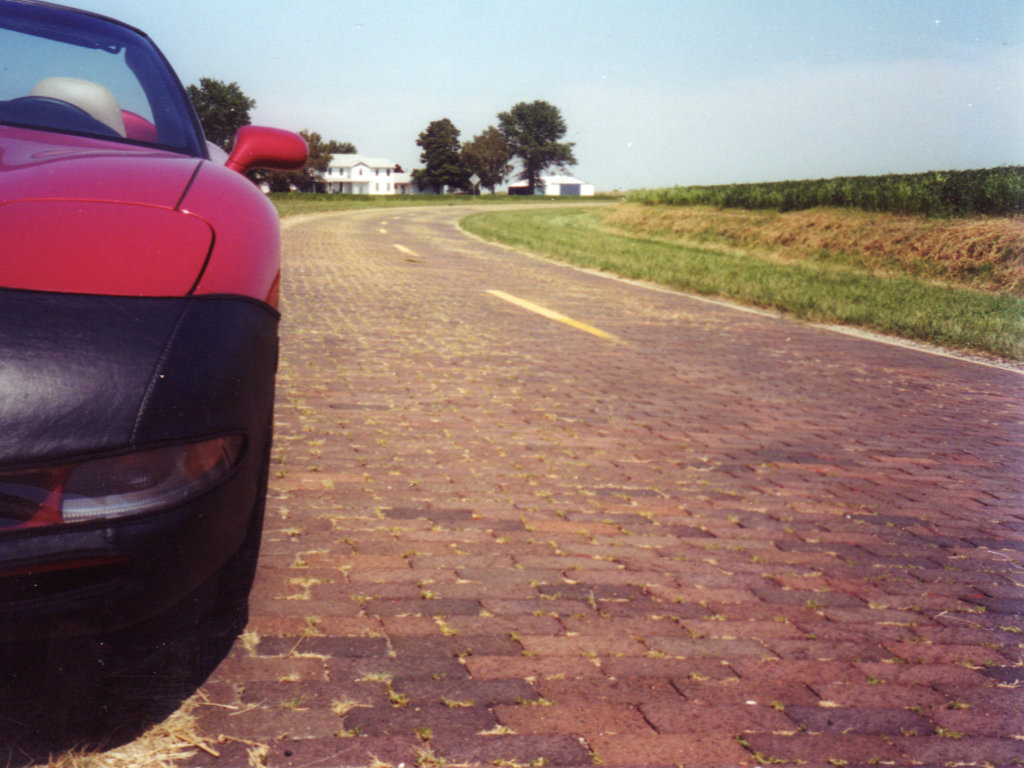
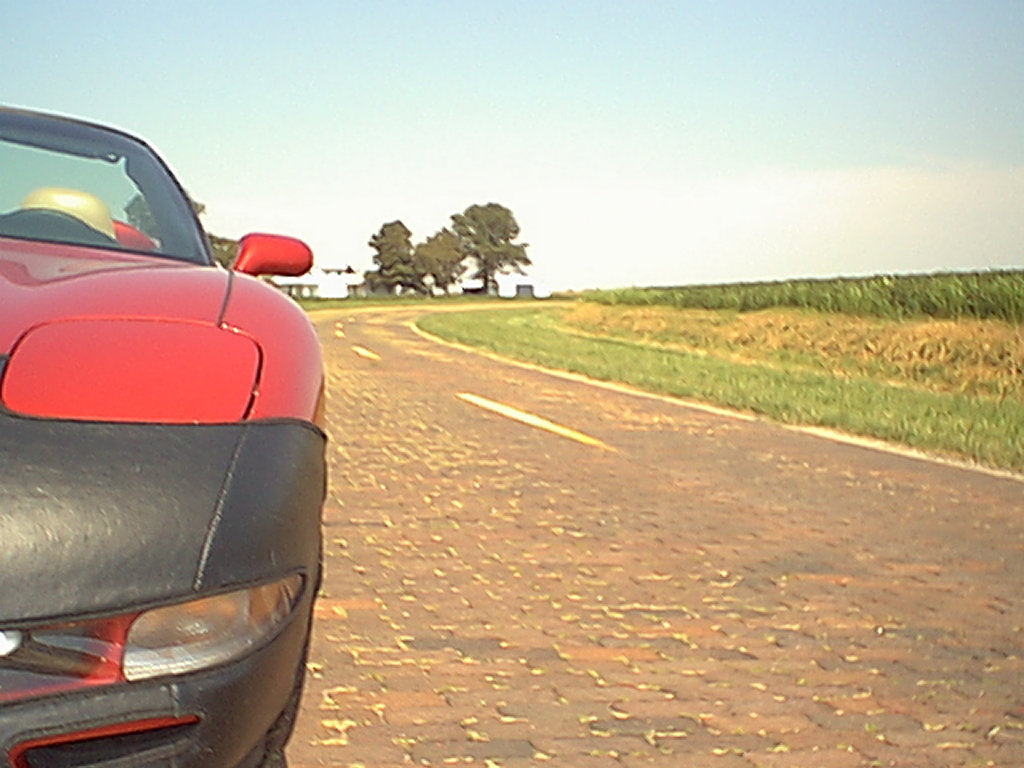
The pictures at right aren’t about advances in equipment but a comparison of equipment I had on that first trip. The picture on the left is one of the few unedited pictures I still have from the Agfa. I also carried a 35mm Nikon pocket camera which took the picture on the right. I have no idea what that proves but there it is.
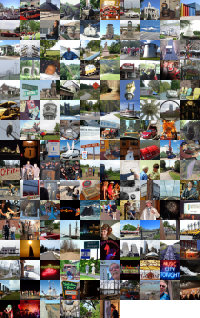
The final cover page for that trip talks about it being temporary. As I said at the time, I expected it to go away because “I’ll need the space or retiring it will just seem right.” Web space became increasingly cheap and apparently retiring it never seemed right. Two decades later that first trip journal is still online and I’ve added 155 more. There is a clickable index of them all as well as a clickable collage. The collage, composed of one image from each of the trips, is a big favorite of mine. Visually skimming over it is a great reminder of what I’ve done with my gas money over the last twenty years. Pausing on any one of those images will always trigger a flood of memories which I can delve into deeper with just a click.

I’m spending this twentieth anniversary at home. I was on the road when the tenth anniversary rolled around. The 1999 trip consisted of following Historic Route 66 to Los Angeles to join a caravan to the Corvette Museum in Kentucky. The 2009 trip was quite similar with the westbound portion being the Lincoln Highway to San Francisco to again caravan to the museum. That was before this blog existed or I might have done a post similar to this one. Instead, I included a brief summary of the day ten years prior in the appropriate daily journals. I began those summaries with the first posting rather than the first day of travel so they begin on the latter trip’s sixth day, August 20, 2009. The summary of the final day of the first trip ended with these words: “It’s really hard for me to imagine a twentieth anniversary for this website but it’s no easier imagining an end. Watch this space.” I’m really happy that some of you are still watching.
Military Vehicle Centennial Convoy

Just months after the end of the First World War, a military convoy of about seventy vehicles spent sixty-two days crossing the United States. Setting out on July 7, 1919, it generally followed the young Lincoln Highway although there were several deviations. One of the most significant was that, rather than starting at the LH’s eastern terminus in New York, it began its westbound journey from a temporary marker near the White House in Washington, DC. A permanent Zero Milestone was erected there in 1923 with the intent that it would be the “POINT FOR THE MEASUREMENT OF DISTANCES FROM WASHINGTON ON HIGHWAYS OF THE UNITED STATES”. It hasn’t quite worked out that way.

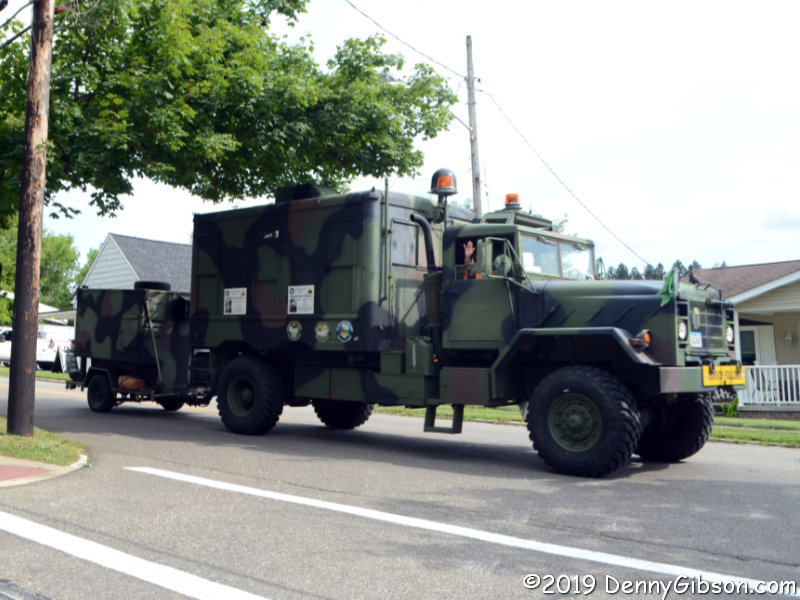
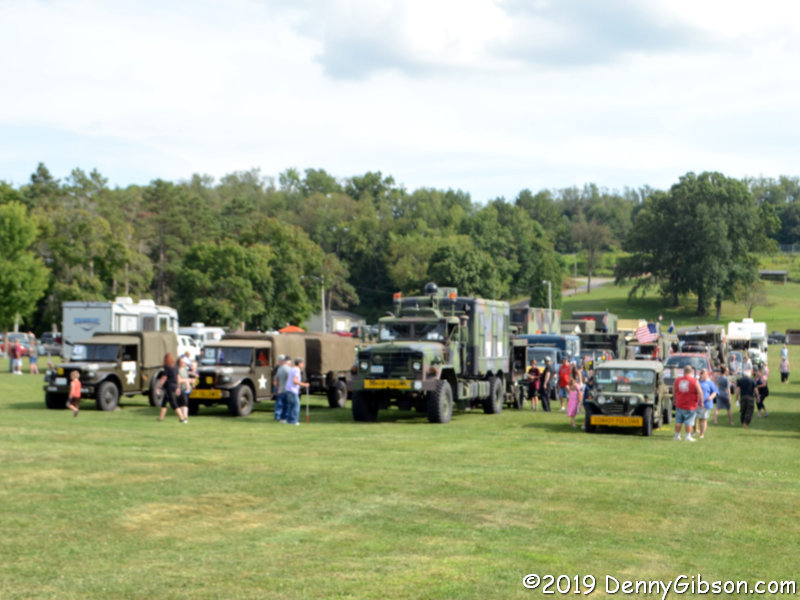
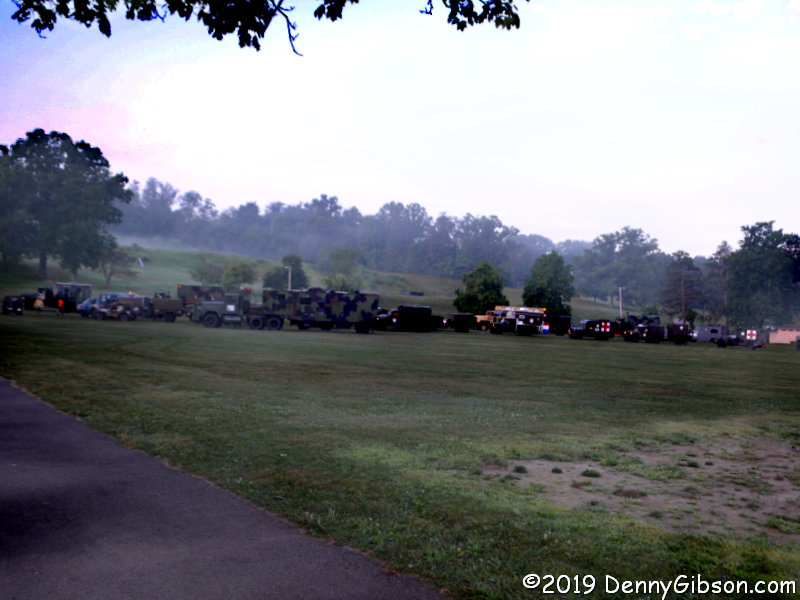
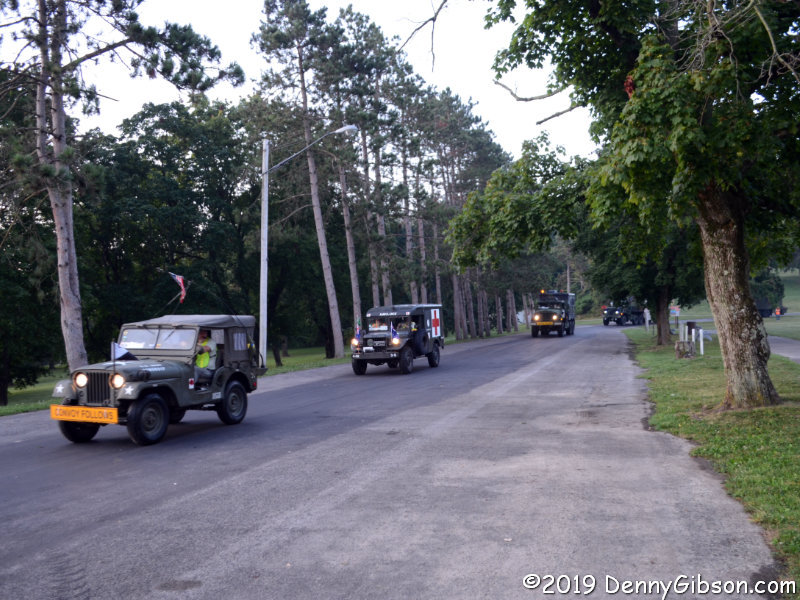
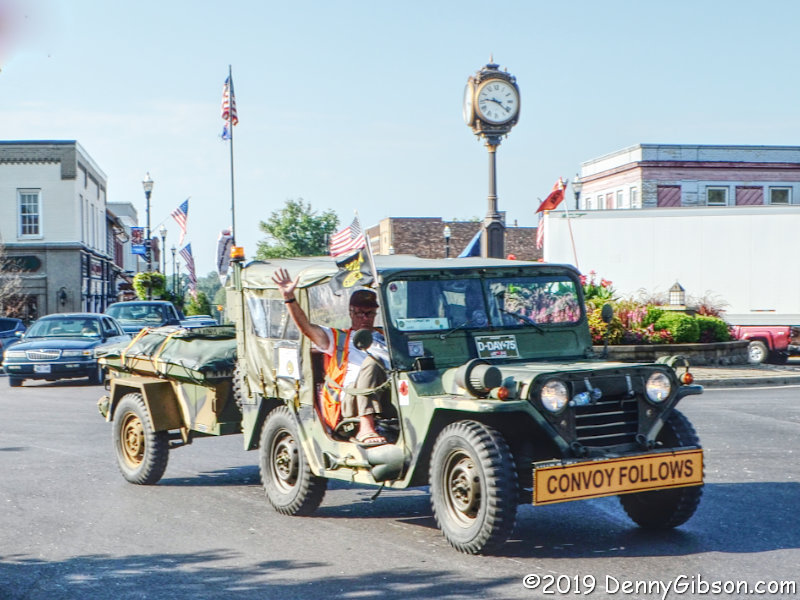
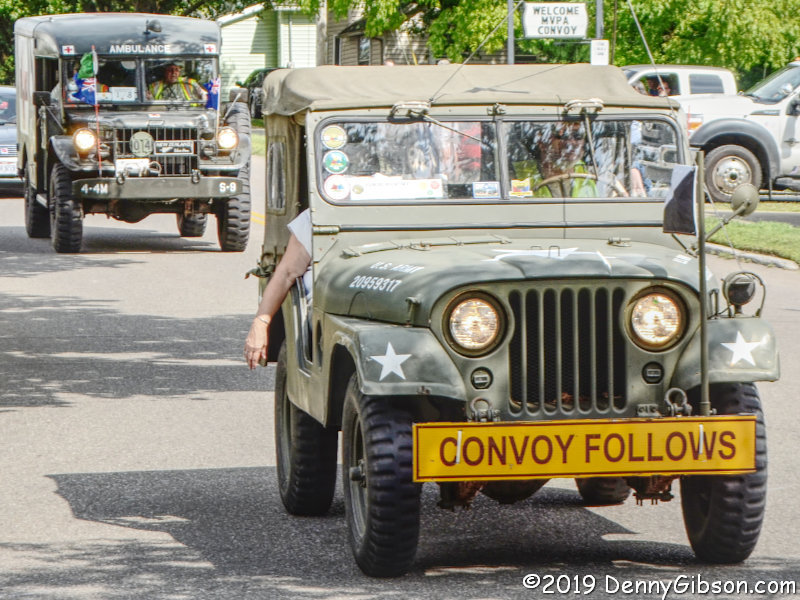
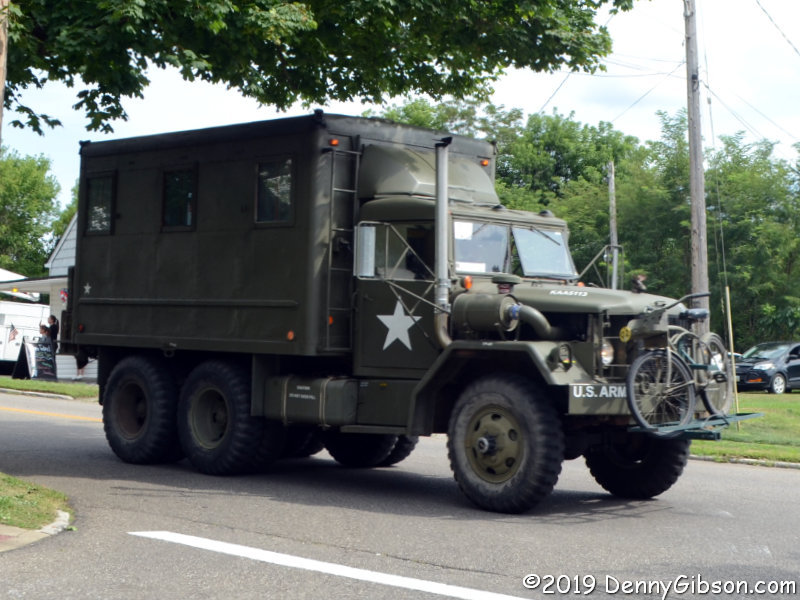
For their observation of the 1919 convoy’s centennial, the Military Vehicle Preservation Association (MVPA) had originally planned on departing from that Zero Milestone but later decided to launch directly from their annual convention in York, PA. That happened on Monday, the 12th. On Wednesday, I caught up with them in East Palestine, Ohio, about a mile after they entered the state. East Palestine was a planned overnight stop and I had expected the convoy to already be in town and parked by the time I got there. It was delayed by an accident, however, and we ended up arriving almost simultaneously. Had I realized this and pulled over at the earliest opportunity, I could have photographed essentially the entire convoy. A few vehicles had already passed by the time I got stopped to grab the opening photo and photos of most of the vehicles following which included some pretty big gear.

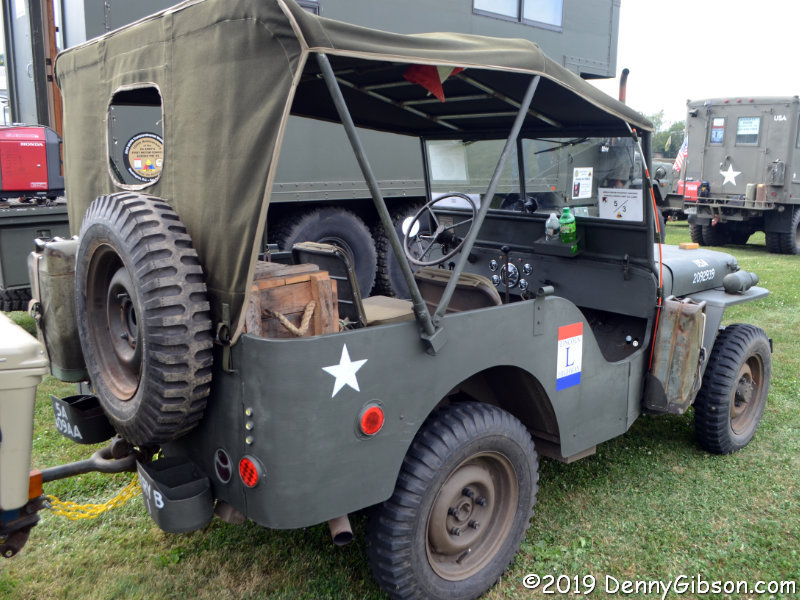
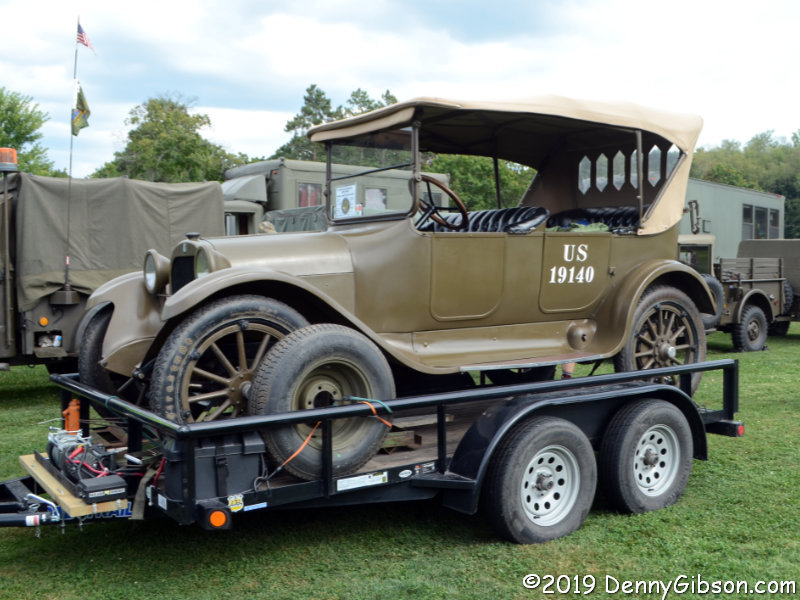
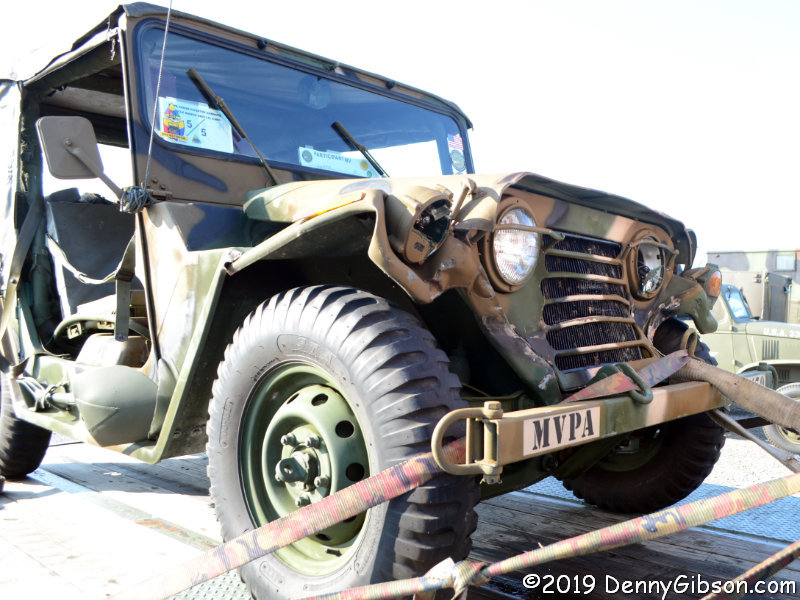
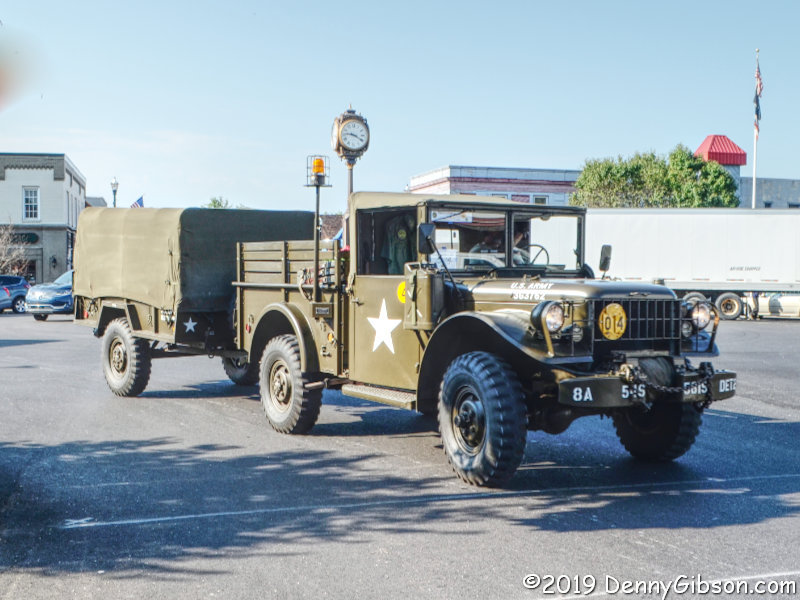
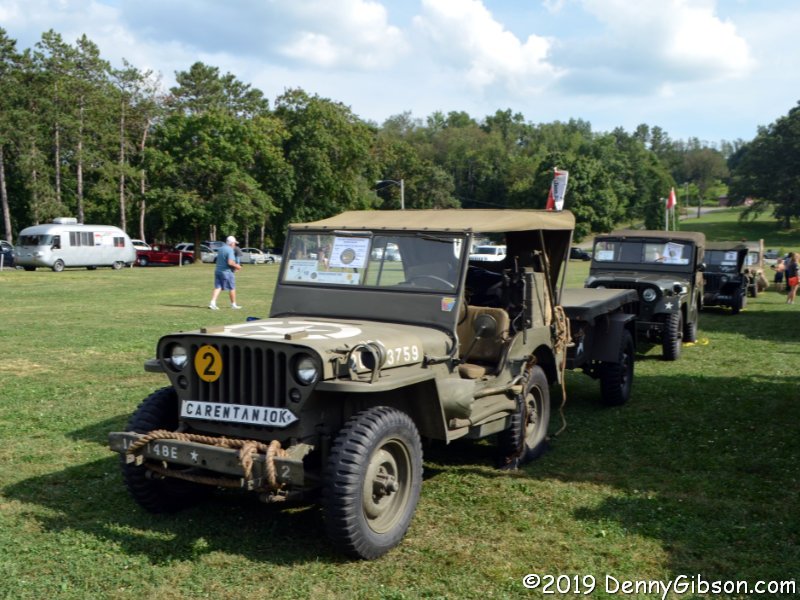
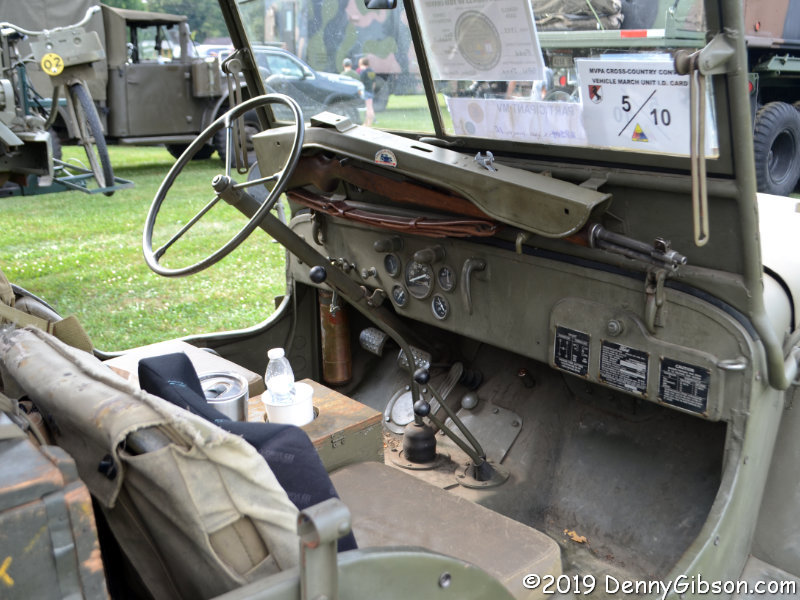
A nearby park would be the convoy’s home for the night and I headed there to look over the vehicles. The trailered staff car is a 1918 Dodge. The Jeep is a 1943 model built by Ford. I imagine it’s a lot like the one my Dad drove around Belgium, France, and Germany in 1944-45. There’s a front view here and an interior shot here.

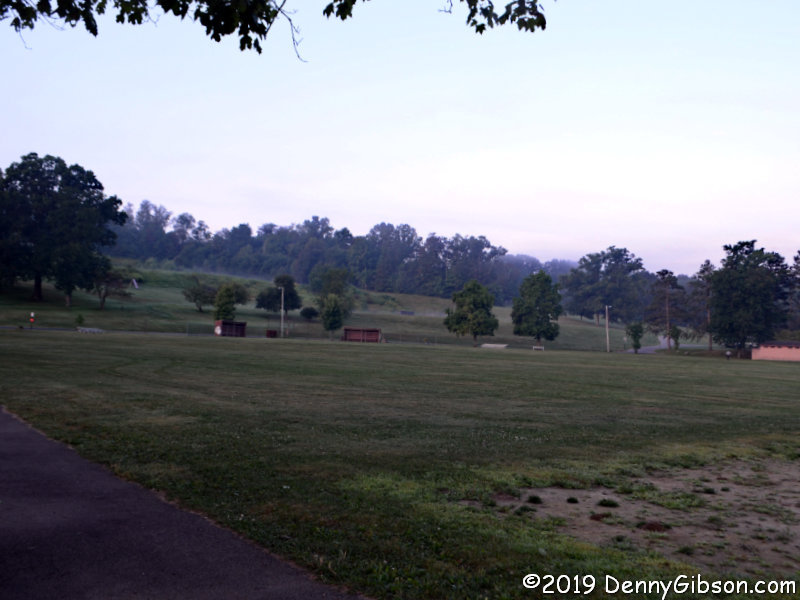
Before leaving, I asked one of the participants when they would be leaving in the morning. I was told between 6:30 and 7:00 but really thought that a bit ambitious. When I returned about 6:40 AM, I kind of expected to be killing time until everyone was awake and ready. Not so at all. The last vehicles were pulling into position when I arrived and the first Jeep rolled by at 6:47. The field was empty at 6:52. This is a military convoy.

That was the end of my planned contact with the convoy. I found an independent restaurant in East Palestine for breakfast (Heck’s, recommended) with thoughts of following it with a leisurely drive home. The path that the convoy was following is identified as an “Auxiliary route” on the online LHA map. Apparently, it was part of the 1913 Proclamation Route and the 1919 convoy likely followed it to dinner at Harvey Firestone’s place. I had never driven it before so decided it would be the first leg of that leisurely drive home. By the time I finished eating, I’d learned that the convoy was stopping along the route for breakfast at a place called Firestone Farms.

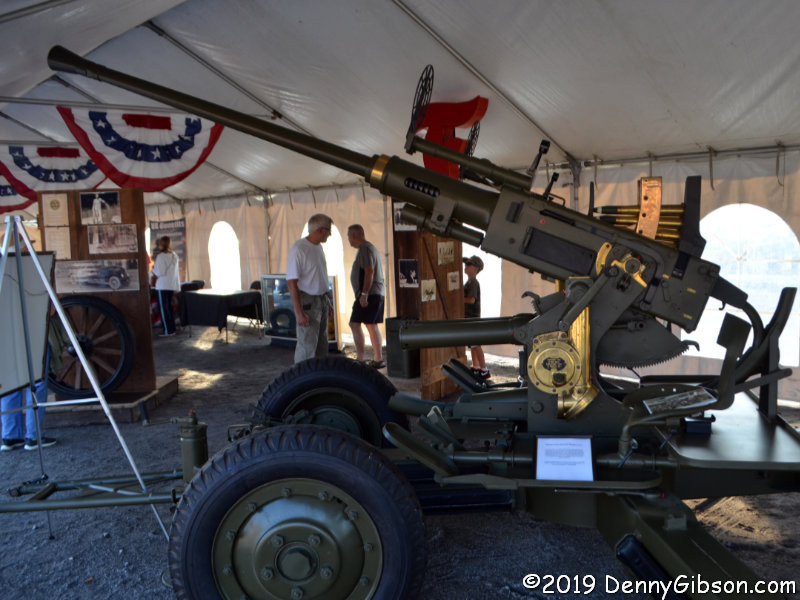
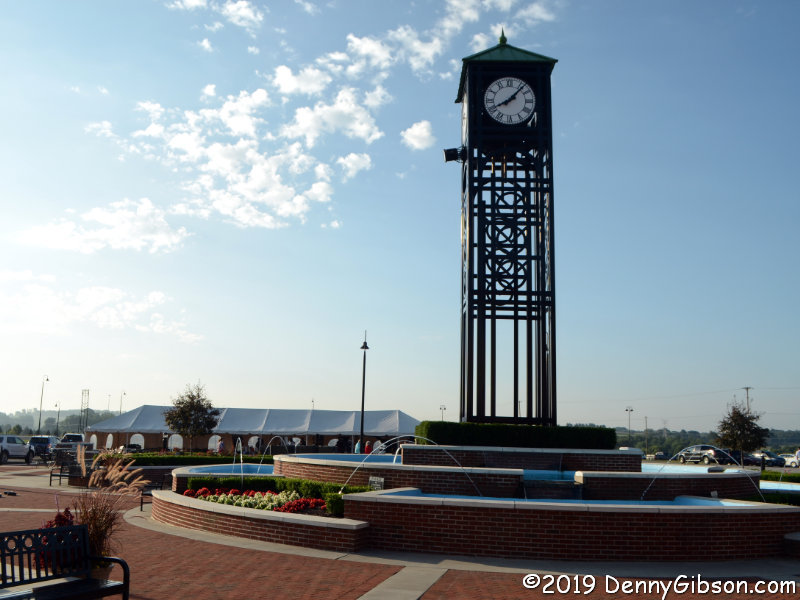
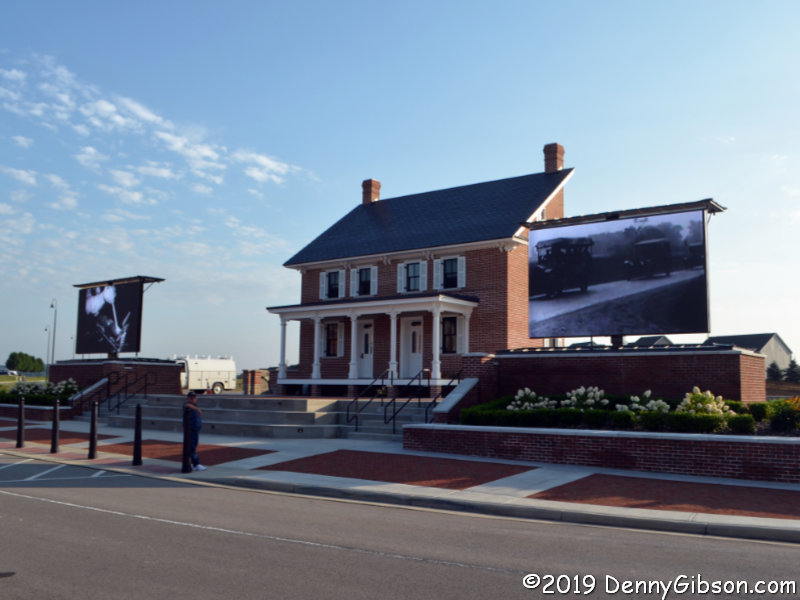
Their breakfast stop was considerably longer than mine which allowed me to catchup. Firestone Farms is a housing and shopping development on what was once Harvey Firestone’s farm. The original 1828 farmhouse was moved to Greenfield Village in 1983. This facade was built sometime later as part of the commercial development. During today’s stop, the screen on the right showed scenes from a movie of the 1919 convoy while the one on the left showed a movie about wartime manufacturing at Firestone. The tent beyond the clock tower contained displays of local history with an emphasis on Firestone.

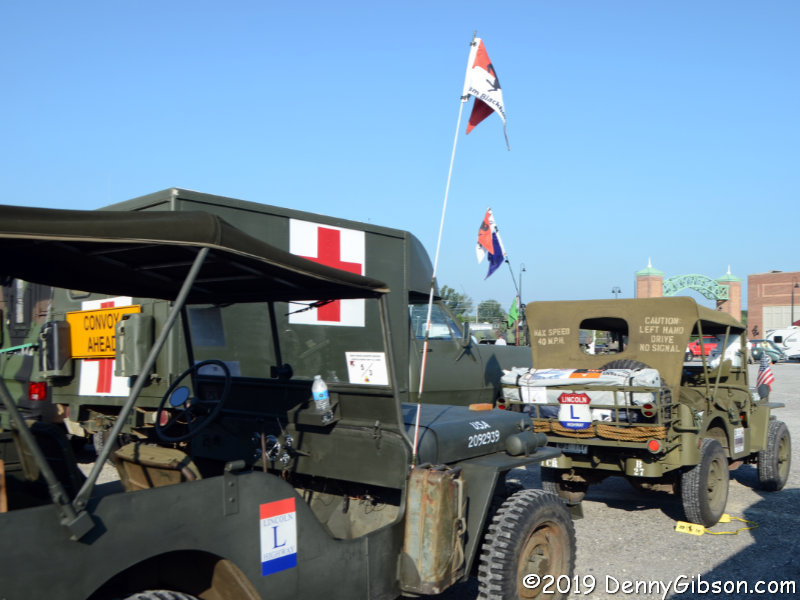
The trailered Jeep was one of the vehicles involved in yesterday’s accident. Both drivers were taken to the hospital but are recovering. One of the participants told me that parts are on the way to repair one of the vehicles and the driver, though sore, expects to finish the trip in it. I’m thinking that this is the vehicle in question but do not know that for certain. The second picture shows how some convoy members proudly display Lincoln Highway signage.

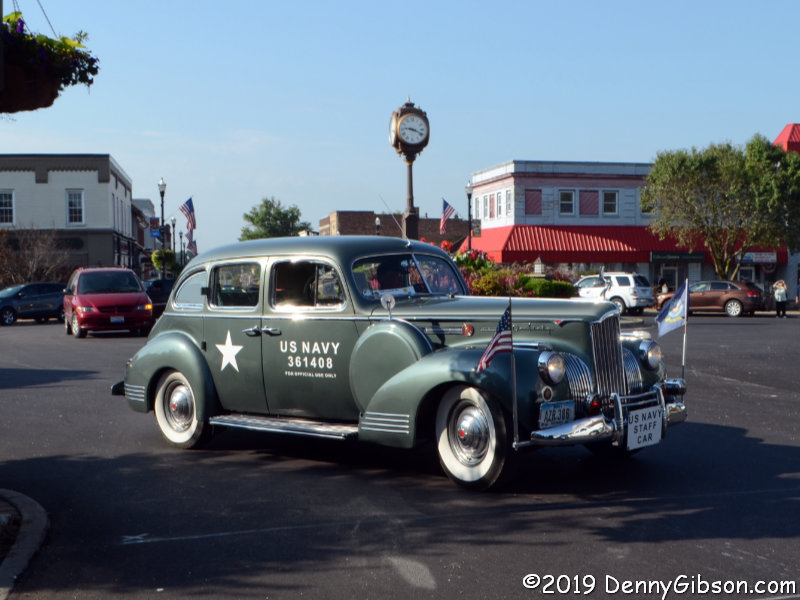
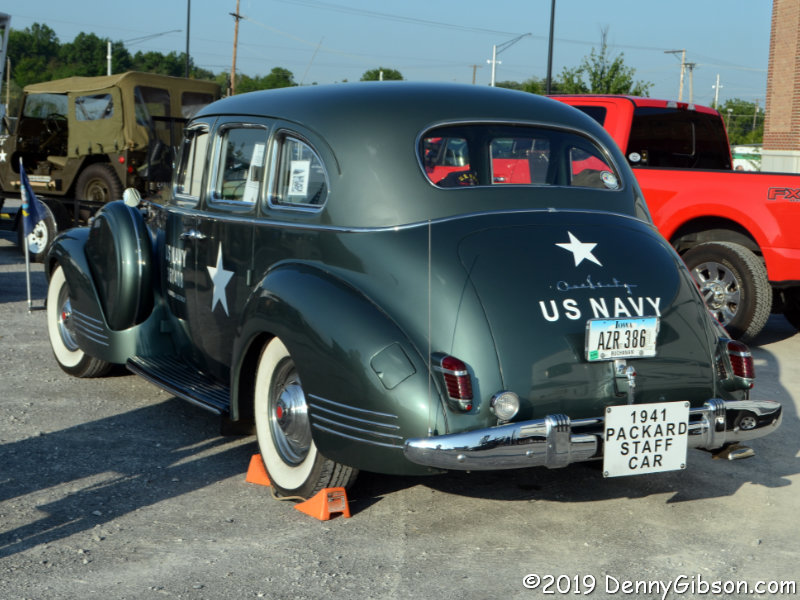
When the convoy started getting ready to pull out, I headed to downtown Columbiana for one last encounter. I counted and snapped pictures of thirty-eight vehicles, including the three on trailers, as they passed through the roundabout. Here‘s a rear view of that Packard staff car I captured back at Firestone Farms.

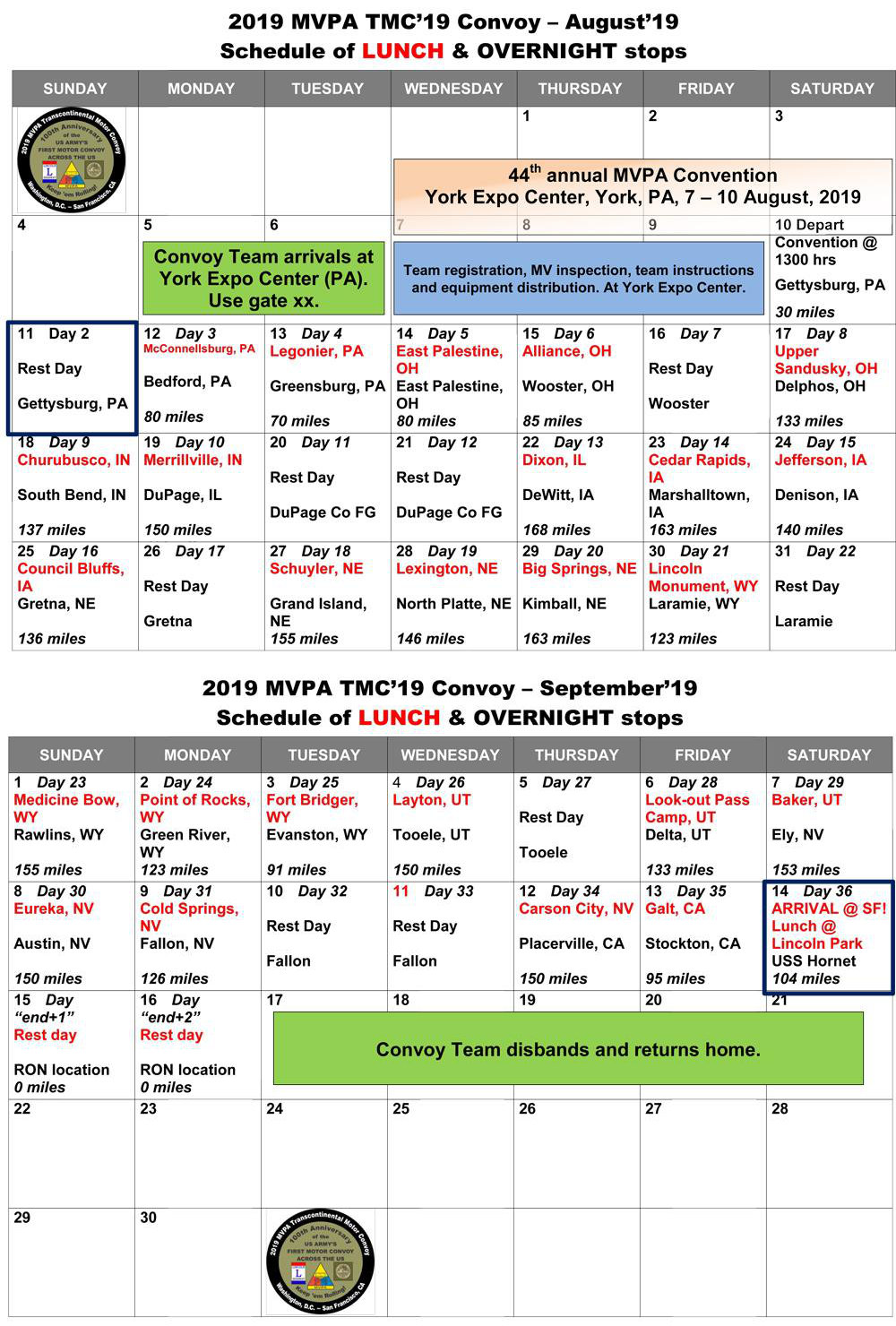
I followed the auxiliary route to Canton and headed home from there. The convoy should be about ready to exit Ohio when this is published. The overnight for today (August 18) is South Bend, IN. A schedule has been posted to their Facebook page but I found it a little tricky to locate so have copied it to share here. Note that this is only a copy and more current information can be obtained through the Facebook page.

The Lincoln Highway Association has a separate centennial tour following the 1919 convoy route. That tour, described here, will be departing from Washington, DC, on August 31.

LHA Conference 2019

This is a big reason why drives involved in the preceding trip were not very leisurely. In the early phases of planning, it seemed like a conference in early June and another in late June would leave plenty of room in between. The devil appeared and the leisure time vanished in the details. The early June conference filled the 5th through 8th. This, the late June conference, filled the 18th through 21st. That left what initially seemed like an ample nine days between the end of one and the start of the other. A two-day drive home from Wisconsin and a five-day drive to Wyoming trimmed all the ampleness from the schedule in a flash. I had time to do laundry and repack and am now on the way to Rock Springs, Wyoming, for the June 18-21 Lincoln Highway Association conference. The first day of the trip is in the books and on the web.

This entry is to let blog only subscribers know about the trip and to provide a place for comments. The journal is here.

My Wheels — Chapter 36
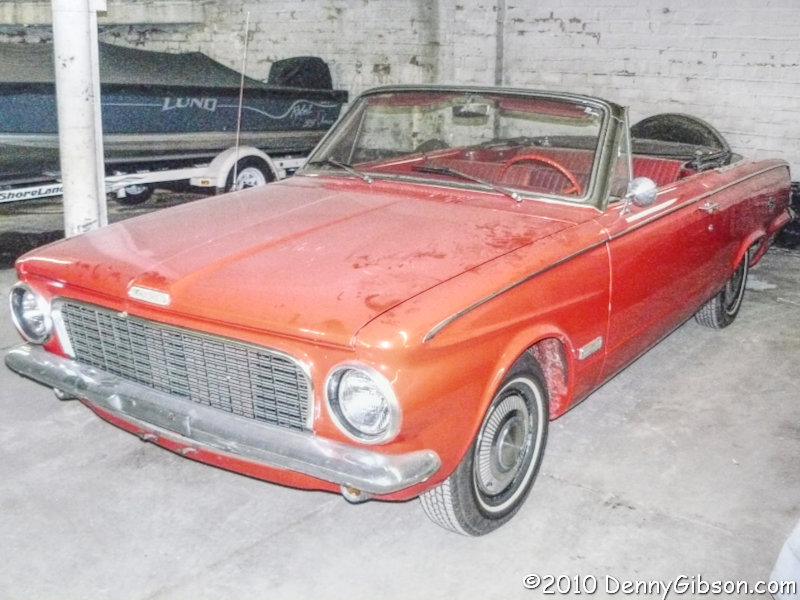
1963 Plymouth Valiant

Among my “road trip cars”, this one holds a very special place. Several special places, in fact. It is the oldest car I ever used on a road trip, and it is the only car acquired specifically for a road trip. It is also the car that participated in the least road trips. I drove it on just one journey other than the one for which it was purchased. It is one of only two “road trip cars” purchased used, and the other one was acquired specifically to replace the Valiant. Despite its limited participation in the activity that is this website’s reason to exist, it’s significance to the site is at least as large as any of the other cars.

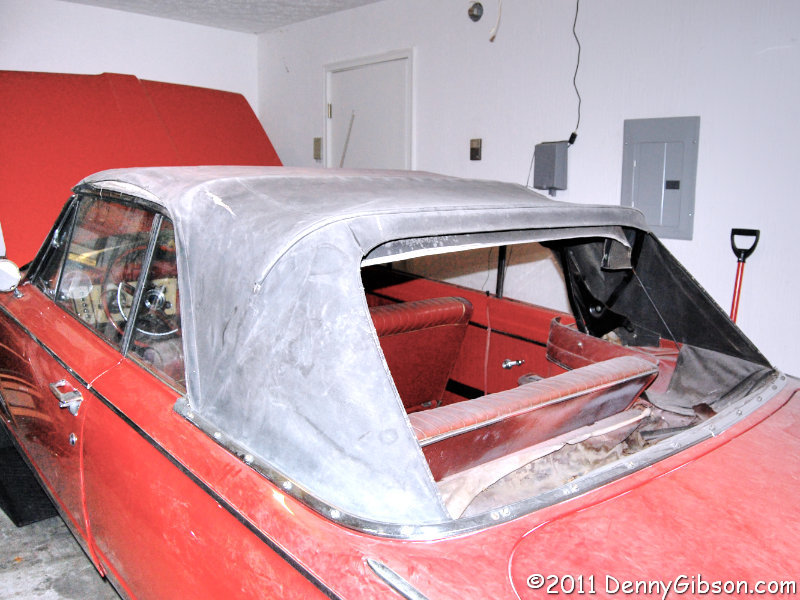
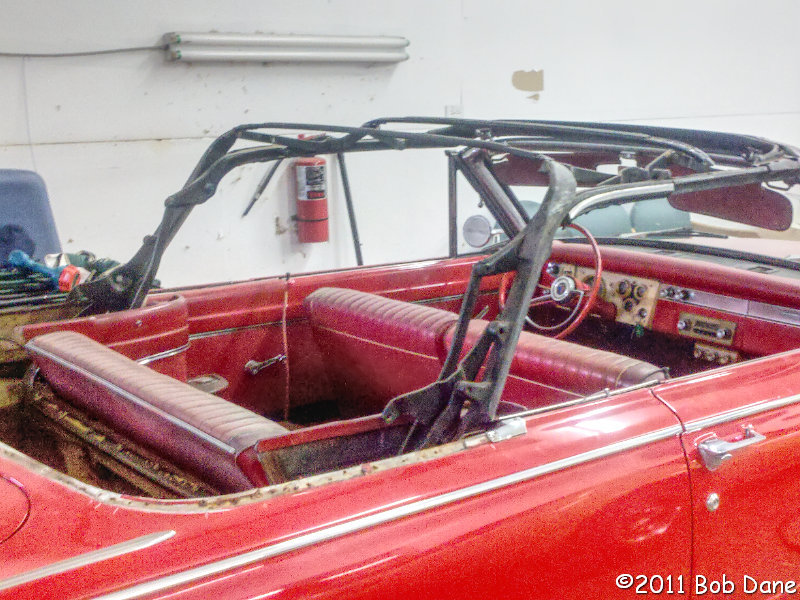
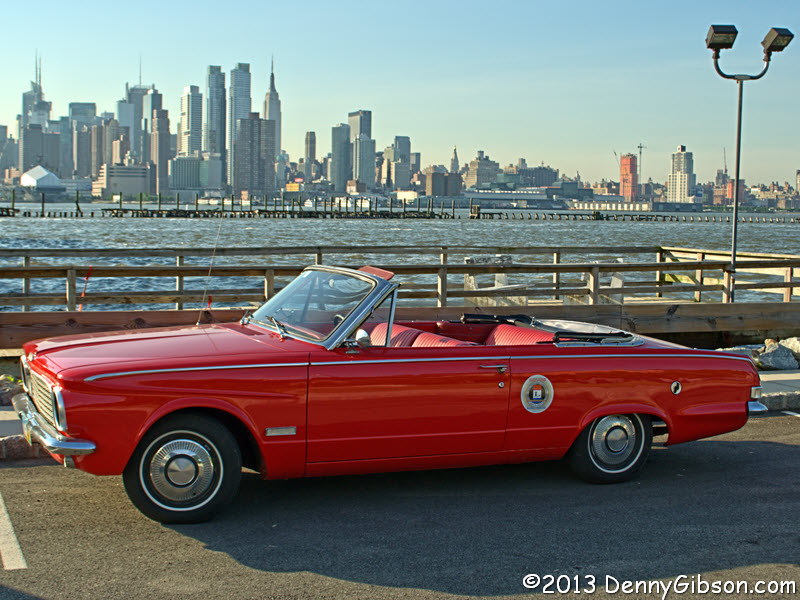
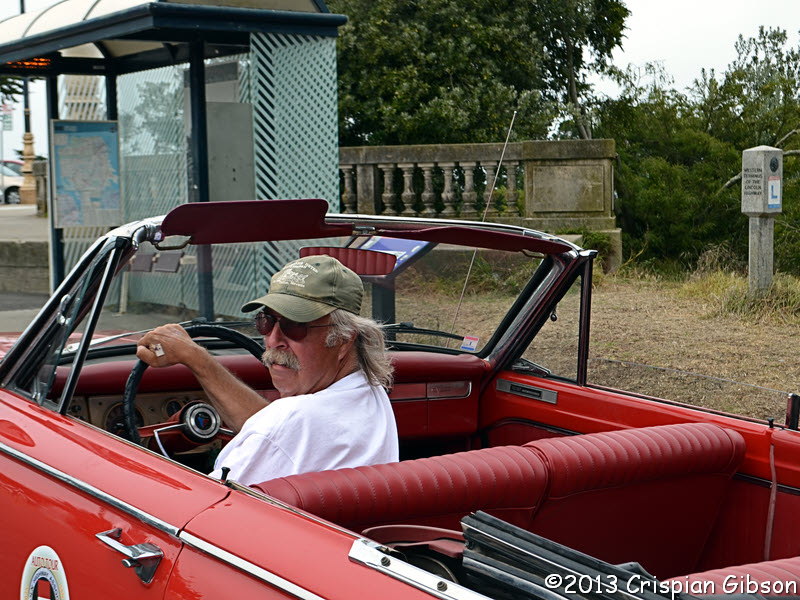
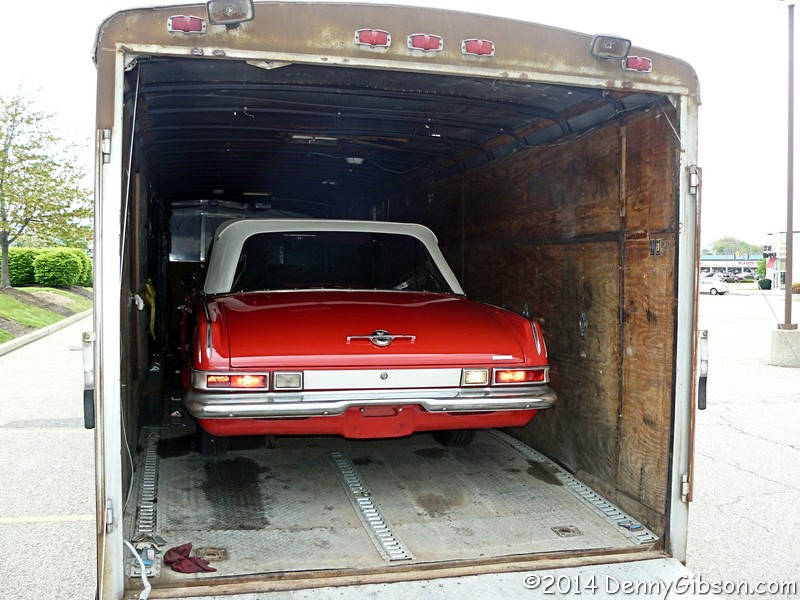
The trip for which the Valiant was purchased was a full-length drive of the Lincoln Highway in its centennial year. The model year was chosen so that it would be exactly half the highway’s age at the time of the drive. The picture at the top of this article is of the car in storage where I saw it initially. The pictures at left show the car when I first got it home and in the shop getting a new top.

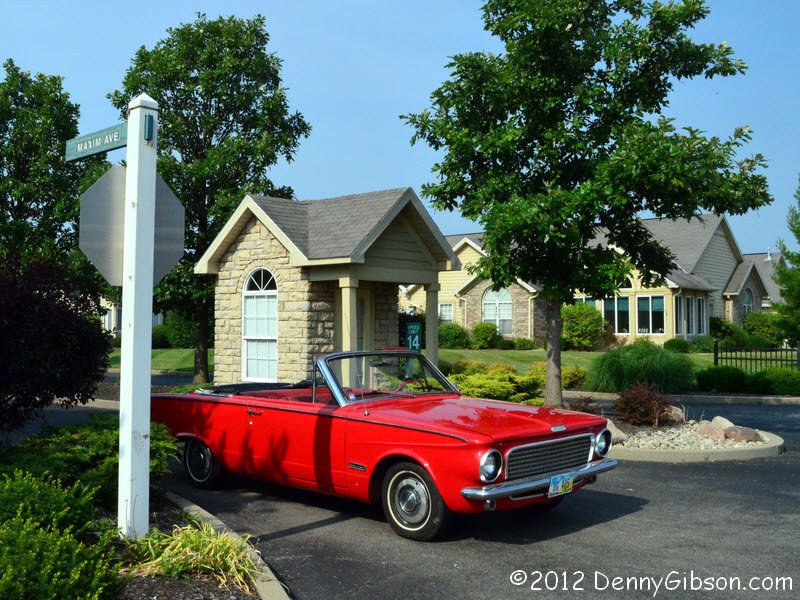
The big Lincoln Highway drive was centered around the 2013 Lincoln Highway Association Conference in Kearney, Nebraska. The 2012 LHA Conference was held in Canton, Ohio, and I used it for something of a shakedown cruise. The picture at right shows the car at the 2012 trip’s beginning. The journal for the seven-day outing is here.

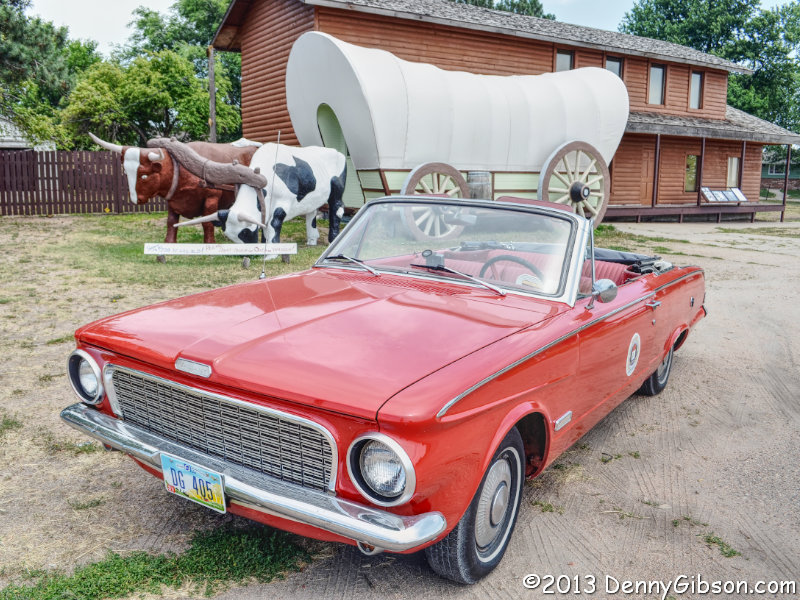
The Lincoln Highway ran coast to coast connecting New York City with San Francisco. The first picture shows the car in Weehawken, New Jersey, where a ferry from NYC would have delivered Lincoln Highway drivers in 1913. The second picture was taken near the highway’s midpoint in Nebraska and the third at its western terminus in San Francisco, California. The journal for that outing is here. It includes a section, The Ride, which covers finding and preparing the Valiant.

The Valiant also holds the distinction of being owned for the least amount of time of any of the “road trip cars” except for (at the moment) my latest purchase. I bought it December 18, 2010, and sold it April 28, 2014. I sure had fun with the car, and pulling up to that marker in San Francisco was one of the most satisfying things I’ve ever done. But I’m not really the sort of guy to keep a car like that running; The Oklahoman who bought it is.

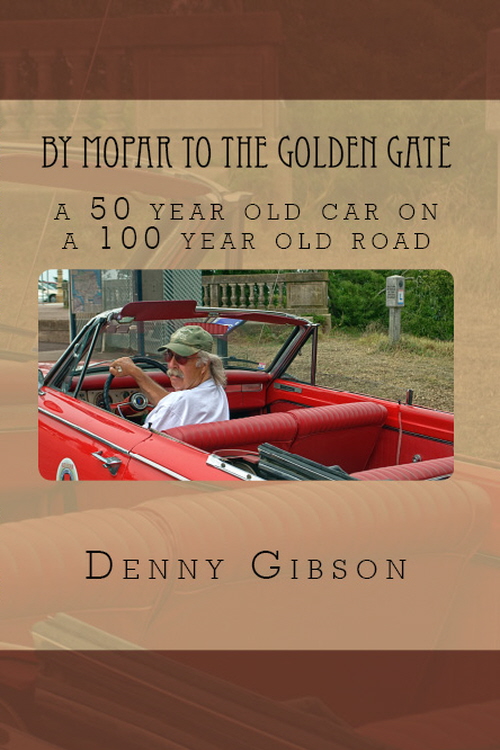
In addition to appearing in those two trip journals (Lincoln Highway Conference 2012 and Lincoln Highway Centennial Caravan), the bright red convertible was the lead character in a book. I had to both write and publish the book to make that happen but it did happen. That book, By Mopar to the Golden Gate, is available through eBay and Amazon.

My Previous Wheels: Chapter 35 — 2006 Chevrolet Corvette
My Next Wheels: Chapter 37 — 2011 Subaru Forester

Trip Peek #79
Trip #97
Lincoln Highway Conference 2011

This picture is from my 2011 Lincoln Highway Conference trip. It’s a trip that was in doubt almost to the day it started. Dad’s health was not good and I worried about traveling for any length of time. I apparently decided I could probably at least dash to and from the conference and sent in my registration just ahead of the deadline. Dad’s health took a bad turn near the end of May and I cut short a St. Louis trip to hurry back. He improved a bit but never really recovered. He died on June 2. When I eventually returned to thinking about the trip, my initial thoughts were to cancel it. Then I realized there was no reason. There was nothing for me to do after the funeral and long solo drives sounded much more useful than sitting at home.

With no reason to dash, I may have gone overboard. I left home on June 9 and drove the full length of US-36. I camped — in a tent! — in Rocky Mountain NP for a couple of nights.I picked up the Lincoln Highway in Utah and drove the unpaved stretch around Dugway to Ibapah. I met a group in Fallon, NV, for a pre-conference caravan. I hooked up with two groups for two different post-conference outings. One was my first visit to Donner Summit and the second an aborted attempt to drive Kings Canyon. Of course there was the conference in Tahoe with a bus tour west into California and another east into Nevada. When all that was over, I followed the Pioneer Trail alignment of the Lincoln Highway on to San Francisco and a visit with my oldest son. Then it was down the coast on the Pacific Coast Highway to Los Angeles. I’d have gone on to visit my younger son in San Diego but I knew he was at sea with his Navy buddies. I had actually visited him and his family in January. I headed home from LA but took in assorted pieces of Route 66 on the way. I reached home on July 3.

And the picture? It’s from the California conference tour. At our stop in Clarksville, a group of local Ford Model A owners provided rides on the 1914 Lincoln Highway Pavement. The picture was taken from inside a 1928 “leather back”.


Trip Peeks are short articles published when my world is too busy or too boring for a current events piece to be completed in time for the Sunday posting. In addition to a photo thumbnail from a completed road trip, each Peek includes a brief description of that photo plus links to the full sized photo and the associated trip journal.

Book Review
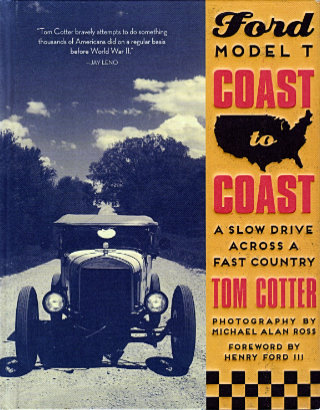
Ford Model T Coast to Coast
Tom Cotter

Old-car guys and old-road guys are hardly one and the same although there is definitely a whole bunch of overlap. With this book, Tom Cotter stakes out a position deep in that overlap. Tom is, however, much more of an old-car guy than an old-road guy so it’s not surprising that his position is closer to the car side than the road side. The story of how plans for the trip came together is telling. The idea that Tom started with was driving an old car across the United States. Over the years, the idea had been refined to involve a particular old car. He called it a dream and admitted that it was unlikely to be realized but the car he really wanted to drive across the country country was a Ford Model T. In his dream the road was secondary.
Before getting too deep, let me point out that this is not my great grandfather’s T. My great grandfather once drove a stock Model T to Florida and back. Granddad’s car might have had a theoretical top speed around 40 MPH but the rugged roads of 1920 kept him running in the 20s when he wasn’t stopped fixing a flat tire, worn out brakes, or something else. The car that took Cotter and company to California had a heavily modified engine, lowered suspension, hydraulic brakes, and other improvements that allowed it to cruise at 50+ — safely.

Most of those improvements had been made by Cotter’s traveling companion who was also the car’s former owner. That was Dave Coleman who had sold the car to Nathan Edwards a few years back. Unable to make the trip himself, Edwards loaned the car to Cotter and Coleman. Photographer Michael Alan Ross, following the T in a modern Ford SUV, completed the team.

Only after an authentic but remarkably capable Model T has been lined up for the trip does Cotter look to the route. Calling it a confession, he notes that “I had not heard of the Lincoln Highway until I began planning for this trip.” The trip starts at the Lincoln Highway eastern terminus in New York City, ends at the western terminus in San Francisco, and most of the miles in between were on or near what was once the Lincoln Highway. It was not, however, a particularly strict following of the old highway. There  was occasional streamlining of the route and a few side trips to visit interesting people and places.

So those are the “disclaimers”. The car was not a high-clearance, 20 HP, nearly brakeless, stock Model T. The route did not follow every bend of the Lincoln Highway or even pass by every attraction associated with the historic road. But the car was a very old, extremely basic, and wonderfully historic vehicle, and the route was close enough to the Lincoln Highway to sometimes serve up glimpses of the legendary road and constantly serve up a true view of coast to coast travel. Together they form the foundation for a really cool and extraordinary adventure.

As noted, not every Lincoln Highway icon appears in the book but many do. There’s Dunkle’s Gulf in Bedford, PA, and Lincoln Motor Court in nearby Mann’s Choice. In the midwest, the travelers stopped at the Lincoln Highway Association Headquarters in Illinois and the famous Reed-Niland Corner in Iowa. Farther west they drove through some great scenery and made stops at the Utah’s Bonneville Salt Flats and the historic Hotel Nevada in Ely. Michael Ross snapped great pictures of all these scenes and more.

The Model T that Nathan Edwards generously loaned out for this adventure could be considered a “late model”. It was manufactured in 1926 during the next to last year of T production. It performed flawlessly for the entire 3,707 mile journey. They even had to fake a flat tire to get a “break down” photo. Cotter acknowledges that they were certainly not the first people to cross the United States in a Model T but it seems at least possible that they were the first to do it without something breaking. That’s partly due to the in depth preparation that Edwards and Coleman made before the trip started, but might be due even more to the attention Coleman gave the car during the trip. Daily or more frequent inspections sought out low fluids and loose bolts before they became problems. There’s a lot of work involved in getting a 91 year old car from one coast to the other — but it sure looks like a heap of fun.

Ford Model T Coast to Coast: A Slow Drive Across a Fast Country, Tom Cotter with photography by Michael Alan Ross, Motorbooks, May 15, 2018, 10 x 7.9 inches, 224 pages, ISBN 978-0760359464

Available through Amazon.

Dirk and Lincoln

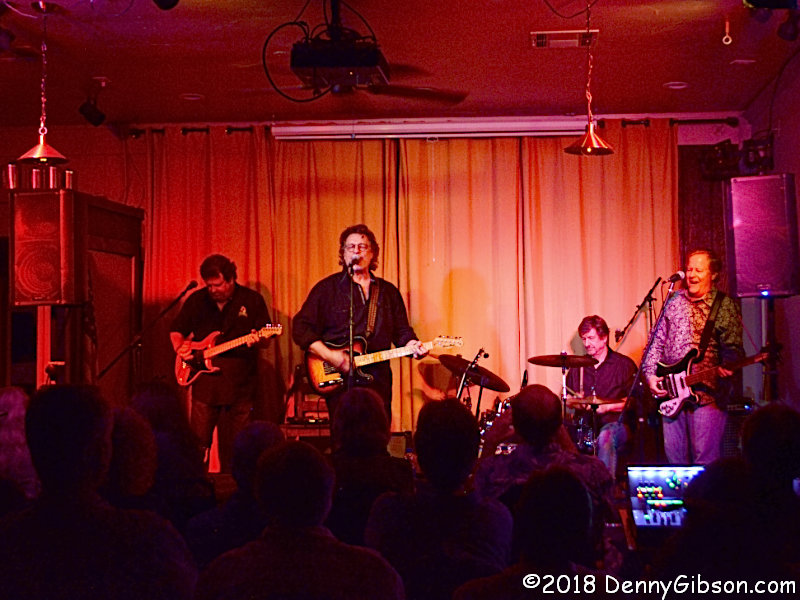
After a short break, it’s on to more rock and roll. This time it’s a Dirk Hamilton Band reunion in Stockton, California, which will be followed by driving some of the area’s Lincoln Highway. The first day, which includes the very successful reunion, is posted. 

This entry is to let blog only subscribers now about the trip and to provide a place for comments. The journal is here.

Trip Peek #76
Trip #52
Blues, Books, & Battles

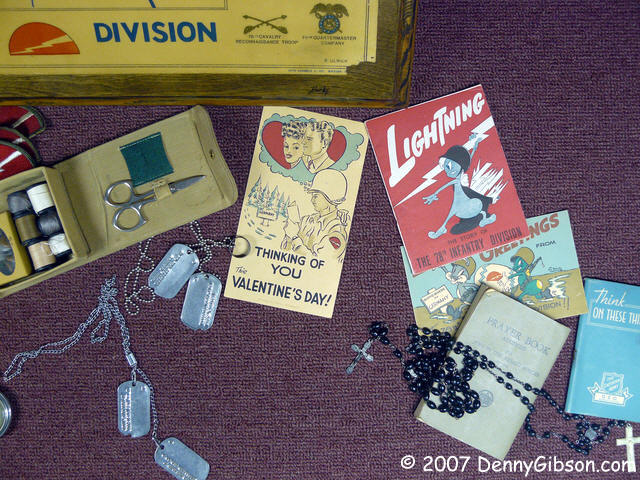
This picture is from my 2007 Blues, Books, & Battles trip. It was, as indicated by the title, a three parter. The blues part was a Patrick Sweany show at The Purple Fiddle in Thomas, West Virginia. I got there on the rather scenic US-50. Following a night in Thomas, I headed to Pittsburgh, Pennsylvania, for the book part. The target was a promotional event for a new book, The Lincoln Highway: Coast to Coast from Times Square to the Golden Gate, from Michael Wallis and Michael Williamson. I’ve met Wallis several times before and since but this was my first and only time meeting Williamson. Although I enjoyed that and wandering through the Heinz History Center, the real highlight was meeting Brian Butko and Bernie Queneau for the first time. I did not charge into battle for part three; I visited the Soldiers and Sailors Memorial where lots of military history is on display. Of particular interest and the reason for my visit, was a section devoted to the 78th Infantry Division. That’s the unit my dad was with in World War II.


Trip Peeks are short articles published when my world is too busy or too boring for a current events piece to be completed in time for the Sunday posting. In addition to a photo thumbnail from a completed road trip, each Peek includes a brief description of that photo plus links to the full sized photo and the associated trip journal.

Trip Peek #73
Trip #67
Lincoln Highway East

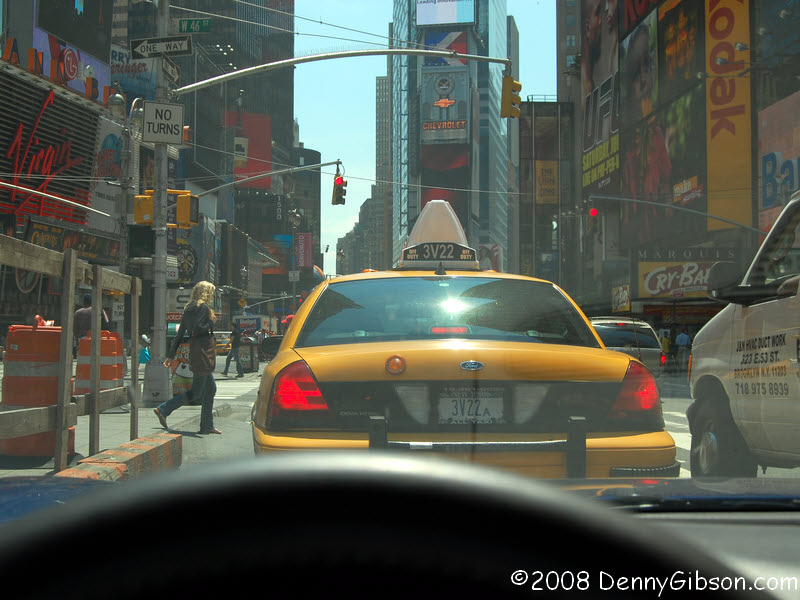
This picture is from my 2008 Lincoln Highway East trip. I used a business trip to the Philadelphia area as the lead-in to a drive on the easternmost portion of the Lincoln Highway. That’s Times Square, where the LH begins, in the picture. After braving Manhattan, I spent the next day in Philadelphia looking over the Liberty Bell and other pieces of history before finally moving beyond the east coast congestion. I stayed with the Lincoln Highway to Greensburg, PA, then shifted to the National Road, which I followed to Zanesville, OH. When I reached Wheeling, WV, on July 5th, I learned that the Independence Day fireworks had been rained out and rescheduled, so I stuck around to see the show that was launched from the 1849 suspension bridge.


Trip Peeks are short articles published when my world is too busy or too boring for a current events piece to be completed in time for the Sunday posting. In addition to a photo thumbnail from a completed road trip, each Peek includes a brief description of that photo plus links to the full sized photo and the associated trip journal.

Trip Peek #72
Trip #111
2013 OLHL Meeting

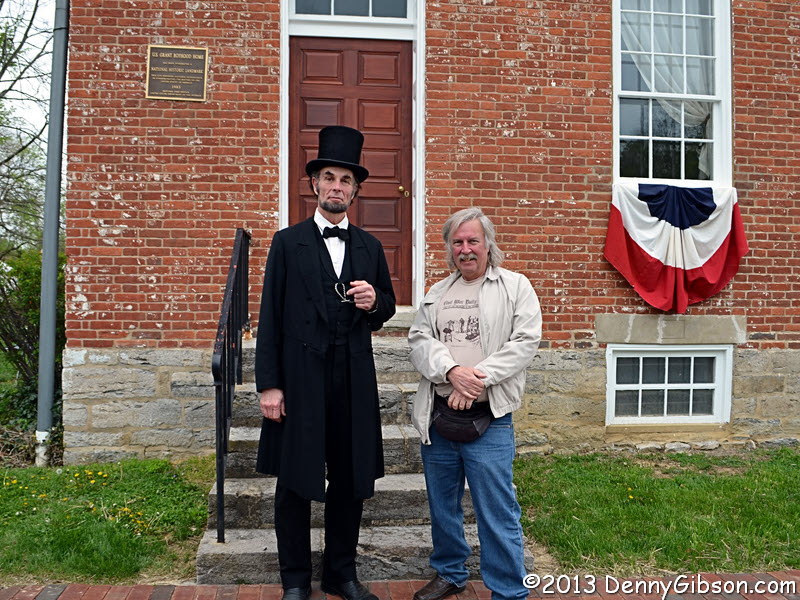
This picture is from my trip to the 2013 Ohio Lincoln Highway League Meeting near Mansfield, Ohio. The meeting itself filled just a few hours in an evening so most of the journal involved the going and coming. On the way there, I spent a night in Columbus so I could see the Lone Bellow in the process of becoming stars. On the day after the meeting, I headed to Georgetown, Ohio, for Ulysses Grant’s 191st birthday. I spent the night at a B & B across the street from Grant’s childhood home where I shared a bathroom with Abe Lincoln. This particular Abe Lincoln’s real name is Fritz Klein and I not only got to chat with him over breakfast, I got this picture taken with him in front of Gran’ts home.


Trip Peeks are short articles published when my world is too busy or too boring for a current events piece to be completed in time for the Sunday posting. In addition to a photo thumbnail from a completed road trip, each Peek includes a brief description of that photo plus links to the full sized photo and the associated trip journal.