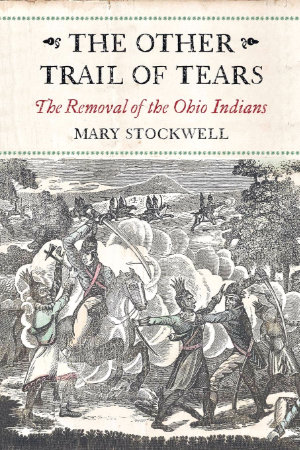
 I read this book by accident and belatedly. The accident comes from a spontaneous purchase. The belated reading comes from me not realizing how good it is. I picked the book up back in June of 2018 when I went to hear Mary Stockwell talk on her just-published Unlikely General about my childhood hero, Anthony Wayne. I knew nothing about Stockwell or any other books she had written but bought a copy of The Other Trail of Tears because it sounded kind of interesting and, perhaps more importantly, I was there. Unlikely General worked its way through the stack in a fairly timely manner; It was read and reviewed by November 2018. I let other books move ahead of this one and even loaned it, along with Unlikely General, to a friend to read. When I eventually did start reading The Other Trail of Tears, I quickly put it aside to accommodate two new road-related books. The second attempt went much better and I quickly regretted not diving in sooner. As is too often the case, my preconceptions were wrong. This is another book that was much more than I expected.
Like most people, I am fairly familiar with the forced removal of Native Americans from the southern United States that caused inconceivable suffering and thousands of deaths during the trek west known as The Trail of Tears. Those were the most horrific of the relocations resulting from the Indian Removal Act of 1830 but there were others.
Several reservations once existed in northern Ohio occupied by Shawnee, Wyandot, Seneca, and others. As an Ohioan, I was somewhat aware of these reservations and even knew a little bit about the forced removal of these people. I assumed that Stockwell’s book was filled with details of that removal. Perhaps that assumption and the accompanying assumption that those details would be terribly depressing contributed to my delay in actually reading the book.
My assumptions were not wrong but neither were they complete. The stories of the actual treks to the west are properly told and they are indeed depressing. But they do not fill the book. More pages are used telling of what preceded the removals than on the actual journeys. Stockwell’s coverage of the treaties and trades that resulted in the removal and the people and policies involved is rather detailed and seems complete. There is a lot of history here that I was quite ignorant of.
Though extremely educational, the pre-removal history is also somewhat depressing, and the whole book can fuel that sense of guilt we descendants of European Americans often feel when contemplating the last few centuries of Native American history.
Stockwell doesn’t stoke the guilt or overly stress the sadder aspects of the treks. Although she doesn’t completely hide her sense that Native Americans got a really raw deal, for the most part she sticks to accurately reporting the facts about an undeniably sad period in U.S. history.
The Other Trail of Tears: The Removal of the Ohio Indians, Mary Stockwell, Westholme Publishing, March 18, 2016, 9 x 6 inches, 300 pages, ISBN 978-1594162589
Available through Amazon.




 Trips, days on the road, and pictures posted are all down and I believe it can all be blamed on that July through September gap when a variety of life’s activities kept me off the road and close to home. The slight uptick in blog posts comes from me doing a couple more reviews this year than last. Two of those new-for-2019 blog posts join three oldies in the top five list. For the second year in a row, all of the top five trip journal entries were for major trips which is the way I always thought it should be. One was even a 2019 outing.

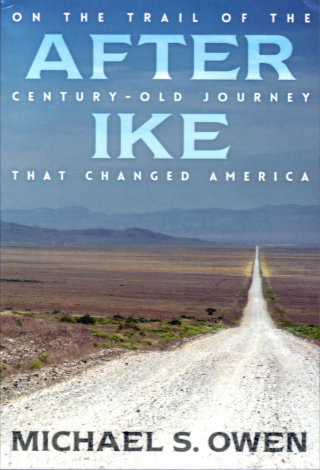 There are things that fans of old roads or of transportation history in general falsely assume that everyone knows about. One such item is the continent crossing Motor Transport Corps convoy of 1919. In the summer following the end of the first World War, a group of military personnel and vehicles set off from Washington, DC, to test the nation’s roads all the way to San Francisco. Although he was primarily an observer on the trip, his future accomplishments make Dwight Eisenhower the member of the convoy best-known today. Michael Owen uses the future president’s nickname in naming this telling of his own retracing of the 3,250-mile-long path that some 300 men and 81 vehicles of all shapes and sizes followed a century ago.