Trip Peek #153
Trip #164
Wild and Wonderful Again

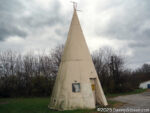
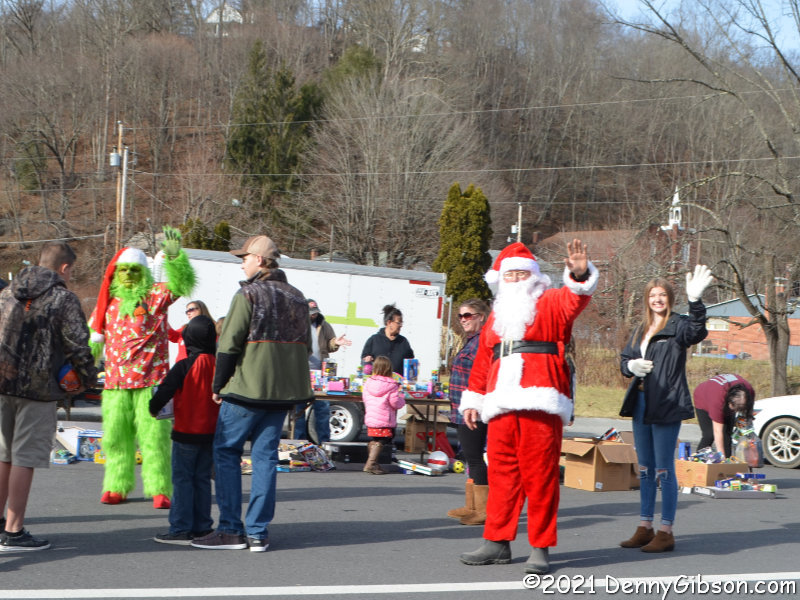
This picture is from my 2021 Wild and Wonderful Again trip. “Wild and Wonderful” is West Virginia’s tourism slogan. When I went there for Christmas in 2013, I called the trip “Wild and Wonderful Christmas”. When I did it again in 2021, “Wild and Wonderful Again” seemed like a rather natural name. Both outings were centered around state parks, but not the same state parks. In 2013, it was North Bend State Park. In 2021, the parks involved were Chief Logan, Pipestem, and Hawk;s Nest. The picture above was taken in the town of Matoaka, which I passed through on my drive from Chief Logan to Pipestem. As I said in the journal, I was getting a little down from the near-poverty I was seeing on the way to Matoaka, and the smiles and waves there put me in a much better mood.  On the way to West Virginia, I spent a night in Marietta, Ohio, and while in the state, paid a visit to New River Gorge.


Trip Peeks are short articles published when my world is too busy or too boring for a current events piece to be completed in time for the Sunday posting. In addition to a photo thumbnail from a completed road trip, each Peek includes a brief description of that photo plus links to the full-sized photo and the associated trip journal.

Happy (Actual) Imbolc

Ten years ago, I wished everyone a Happy Imbolc for the first time. In 2023, I reused that post to wish you all Happy Imbolc Again. I’m doing it once more, and this time, it’s for real.

In 2024’s Happy Imbolc (Again/Exact/Maybe) post, I wrote about Imbolc being the instant that marks the halfway point between the winter solstice and the spring equinox, but in the end admitted that it was almost certainly originally seen as a day, and that that is pretty much how it is seen today. Furthermore, almost all Imbolc celebrants have surrendered to the arbitrariness of man-made calendars and tied the holiday to February 1, regardless of the sun’s position. Ask the internet when Imbolc 2026 is, and the most common answer you get will be February 1, although the actual solstice-equinox midpoint occurs on the third. Defining the holiday as sundown on the first until sundown on the second seems quite popular.

The last time February 1 fell on a Sunday was 2015, which was a year before I knew Imbolc existed. With that one year of ignorance as an excuse, I can say with sincerity that this is the first time in my personally recorded history that the widely recognized day of Imbolc coincides with the weekly publication of this blog. Happy Imbolc and Groundhog Day Eve to all.

ADDENDUM Feb 1, 2016: Almost as soon as this was posted, I realized that “actual” was the wrong word to use in the title. February 1 is more accurately called official Imbolc. Actual Imbolc is February 3.

Cahokia and Beyond

I first ran away for Christmas in 2006, and, with the exception of 2020, have done so every year since. Over time, I have become more conscious of Christmas’ connection with the Winter Solstice and, in recent years, have scheduled my trip at least as much around the natural holiday as around the man-made one. That continues this year with the trip beginning at the Cahokia Mounds World Heritage Site near Collinsville, Illinois. From there, I’ll head west on Historic Route 66 to at least Tulsa. Where I’ll spend Christmas, and what road I’ll be on at the time, will be revealed to me as the day approaches. The journal for the first day (i.e., Winter Solstice 2025) has been posted.

This entry lets blog-only subscribers know about the trip and provides a place for comments. The journal is here.

Merry Solstice to All

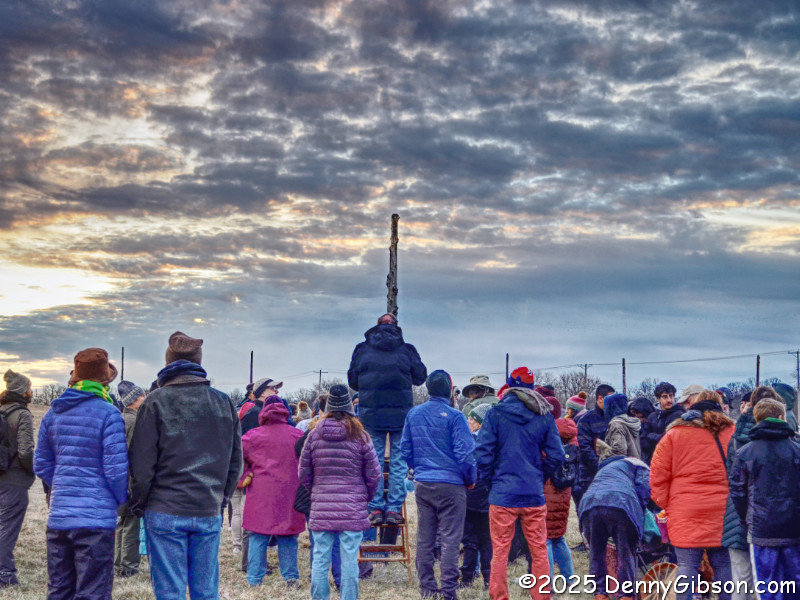
Today is the day of the Winter Solstice. Four hours and three minutes from now, at 10:03 AM EST, the sun will be as far from Earth as it ever gets, and the sunlit portion of our days will start becoming longer. I believe that the first time the mention of Winter Solstice appeared on this website was in 2014, when I attended an event at Serpent Mound one day before departing on my Christmas Escape Run and included it in the journal for the trip.

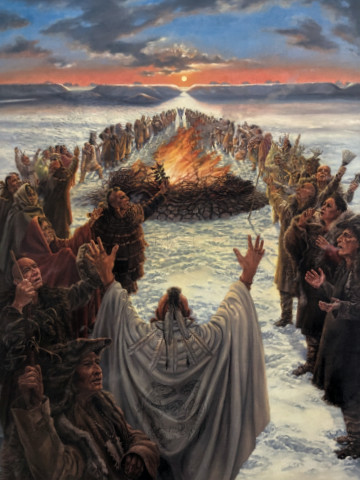
It next appeared in 2019 in a blog post on the day following the Solstice. 2019 was the first year I attended the sunrise gathering at Fort Ancient. The image at right is of a poster I bought that day. It is from a painting by Mary Louise Holt depicting what a Solstice sunrise might have been like back when the Hopewell ran the place we call Fort Ancient.

This blog is published every week on Sunday. That 2014 Serpent Mound Solstice event was on a Sunday, but Solstice wasn’t even mentioned in the day’s blog post. Instead, the post described a quartet of museum visits I had made the preceding week. It is here.

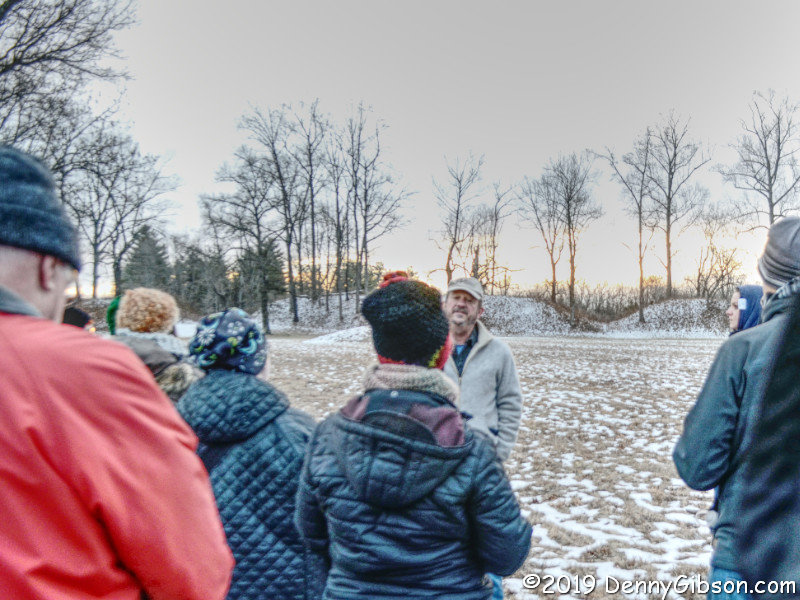
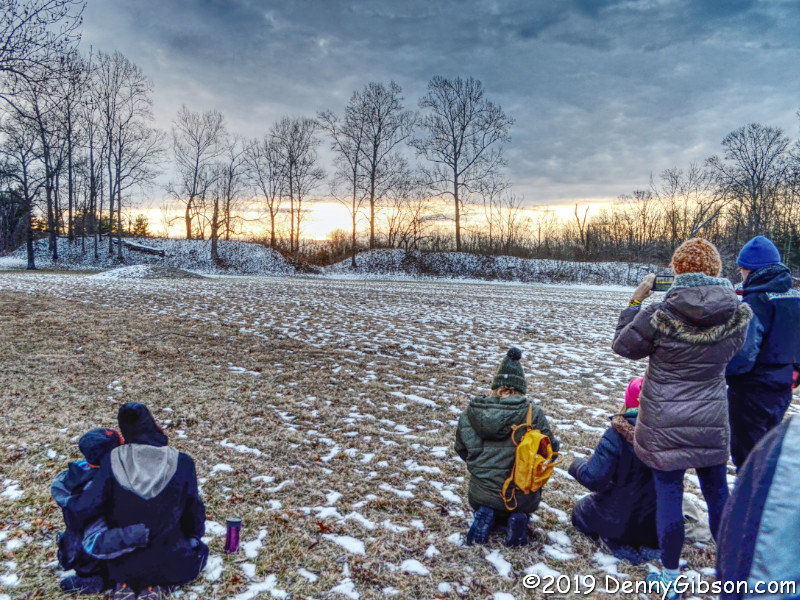
Today is the first time the Winter Solstice has fallen on a Sunday since 2014. I obviously can’t actually report on it since it hasn’t happened yet, and I really don’t have any new thoughts on the event in general since that 2019 blog post: A Cosmic Reason for the Season. I have copied and reused that post twice (2020 and 2021) with new introductions added. This post’s opening image shows what things might have looked like 2000 years ago. The pictures at left show what things actually did look like six years ago.

I hope to post photos of a gathering today at a different mound in the journal of the trip just begun.

TG ’25 – Some Dixie Redux

The two Dixie Highway alignments between Cincinnati and Lexington have been part of my Thanksgiving travels in some recent years.  In 2022, I drove all of them both, plus a little more, in a day trip loop. In 2024, I drove pieces of each as I made my way to or from a Thanksgiving meal at a Kentucky State Park. This year, I again drove all of both, but spread the driving over two days.
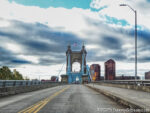
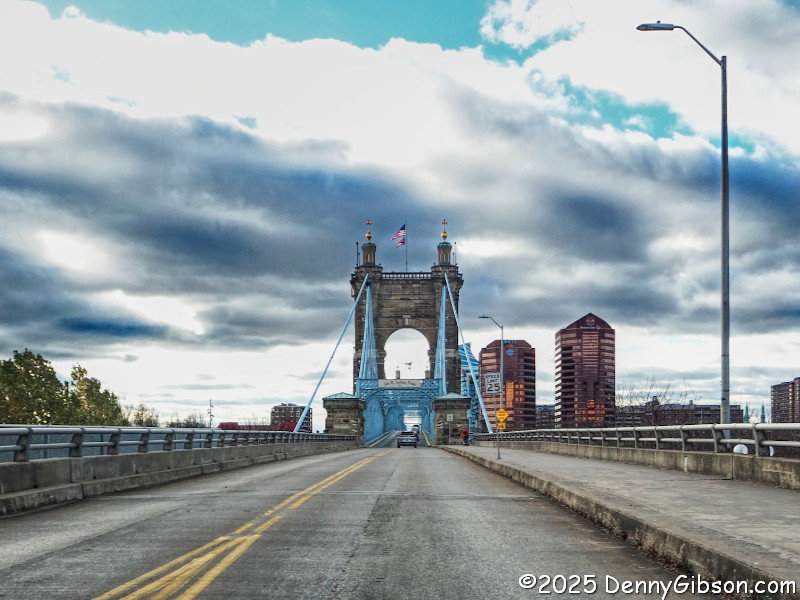
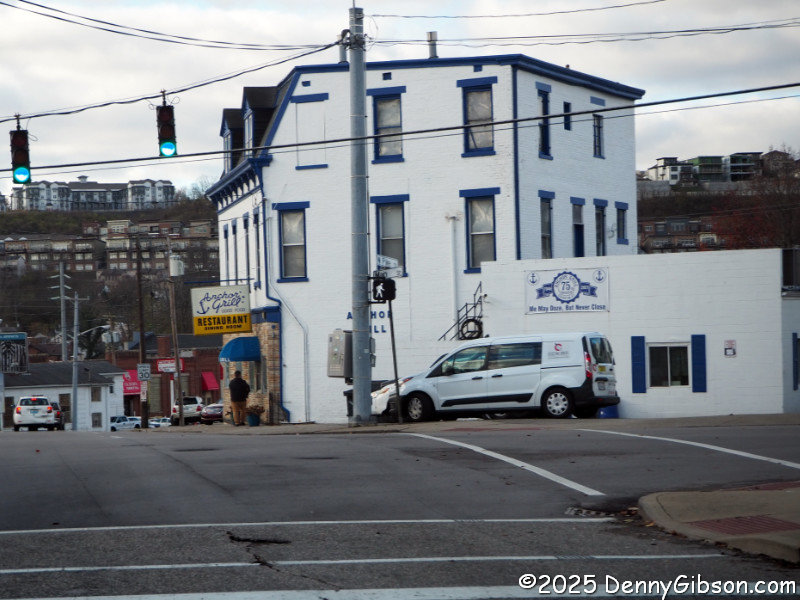
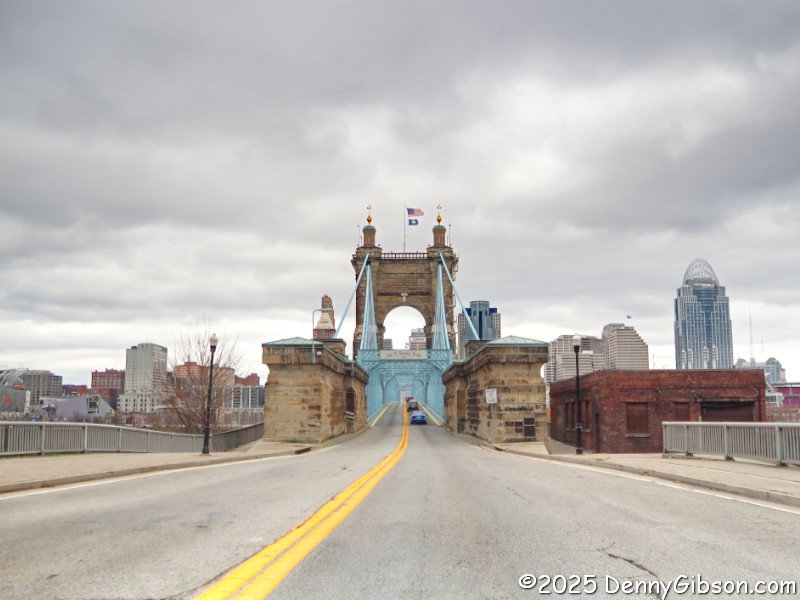
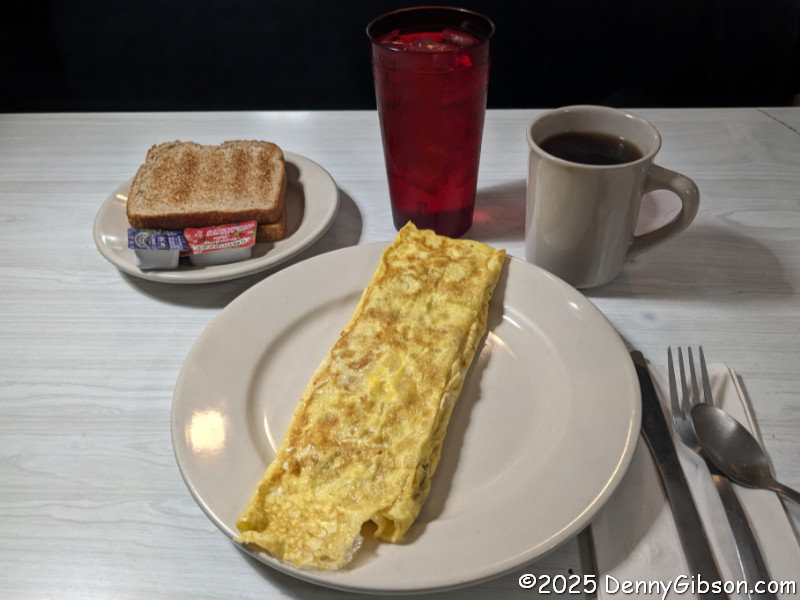
This southbound view of the John A. Roebling Suspension Bridge is probably familiar to some. It has marked the start of quite a few really good road trips. I crossed it on Wednesday morning, then soon turned onto the original (western) alignment of the Dixie Highway. A few blocks later, I pulled into one of my favorite breakfast spots, Anchor Grill, for a goetta and cheese omelette.
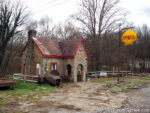
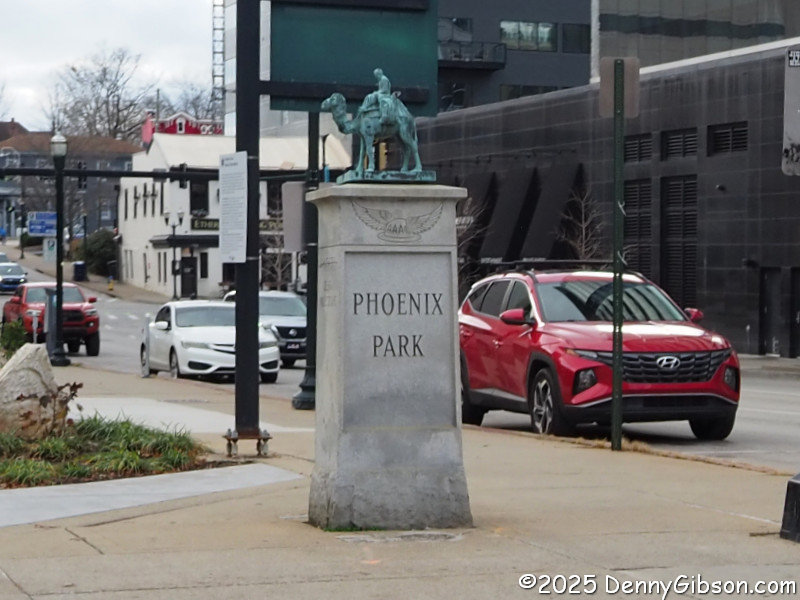
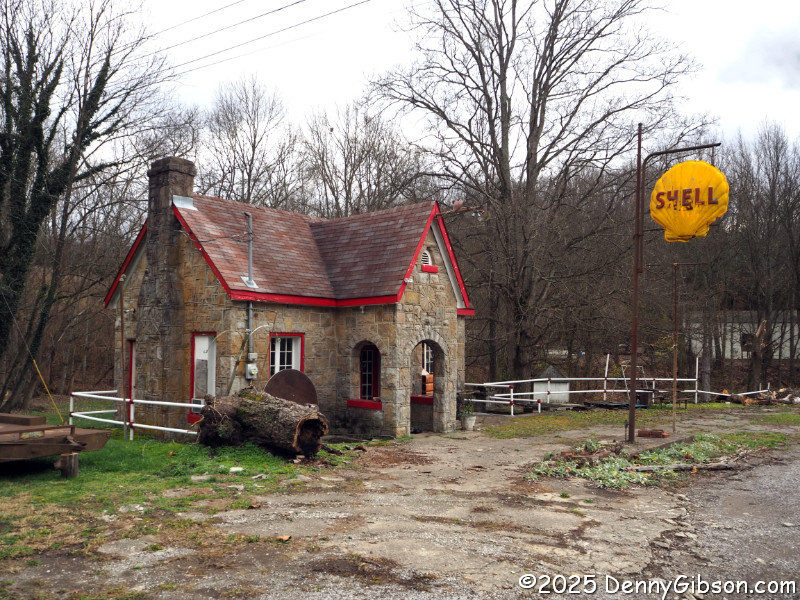
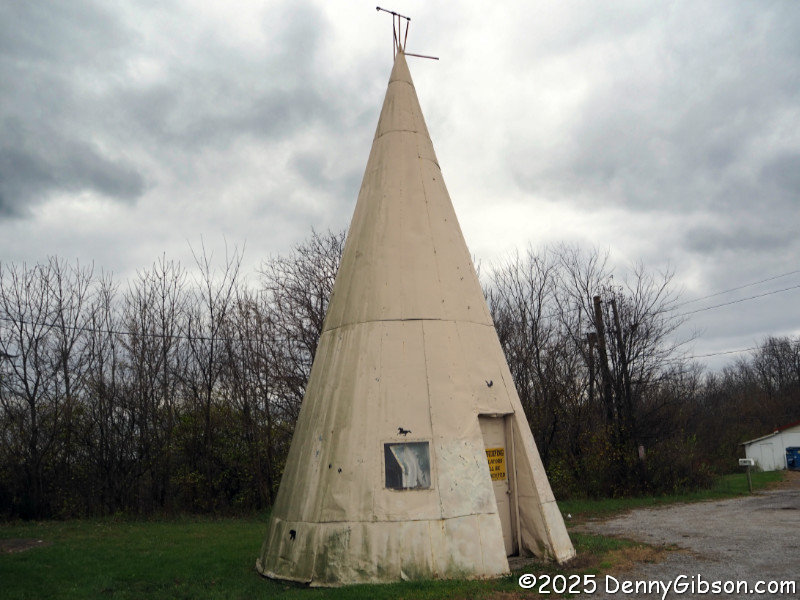
The metal tepee near Williamsburg and Fisher’s Camp near Corinth are familiar roadside attractions on the Dixie Highway. Although not at its original location, the Zero Milestone in Lexington is now where the two Cincinnati-Lexington DH alignments reconnect.

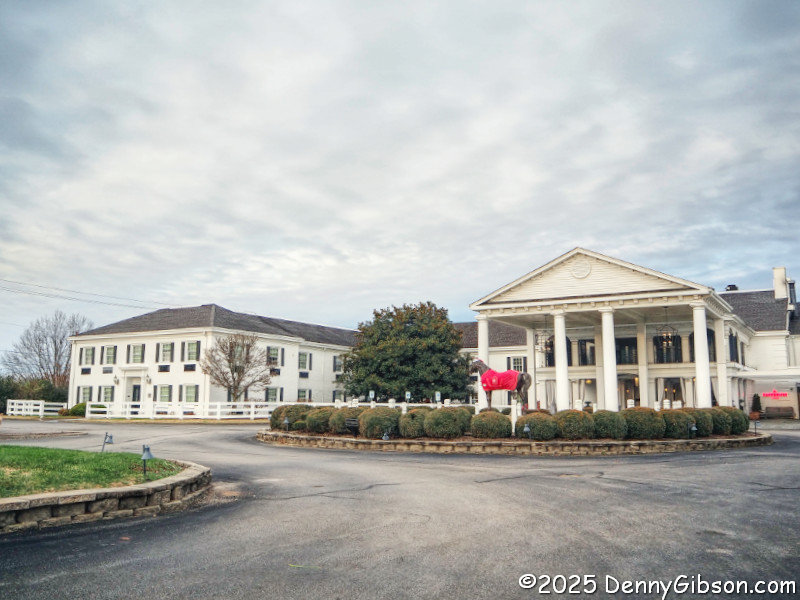
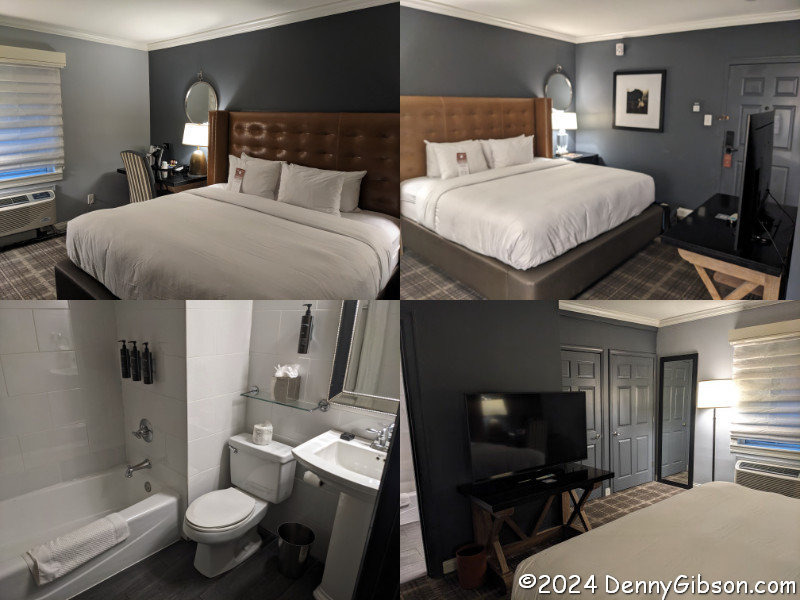
This is probably not on the official Dixie Highway, but Mike Curtis notes in his Dixie Highway Map that some sources, including the Automobile Blue Book, identified the road as a Dixie Highway route between Lexington and Mount Vernon. The hotel might look familiar. It’s the Campbell House, one of My Old Kentucky Hotels from last year’s Christmas outing. It wasn’t the first piece in this itinerary, but once I started thinking of doing the two DH alignments with an overnight, it was a pretty natural fit. There’s not much difference between my Thanksgiving Eve room and my 3 days before Christmas room.
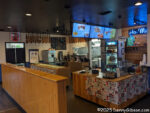
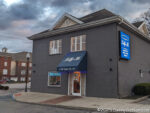
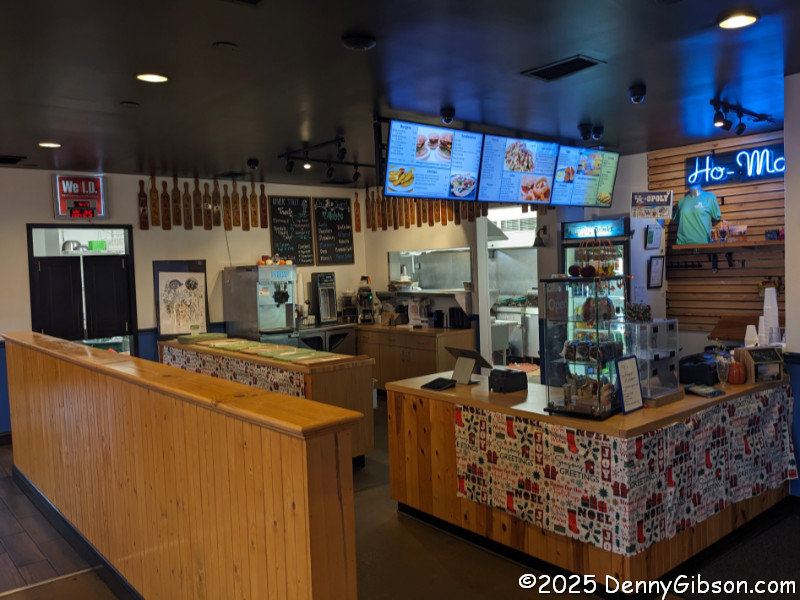
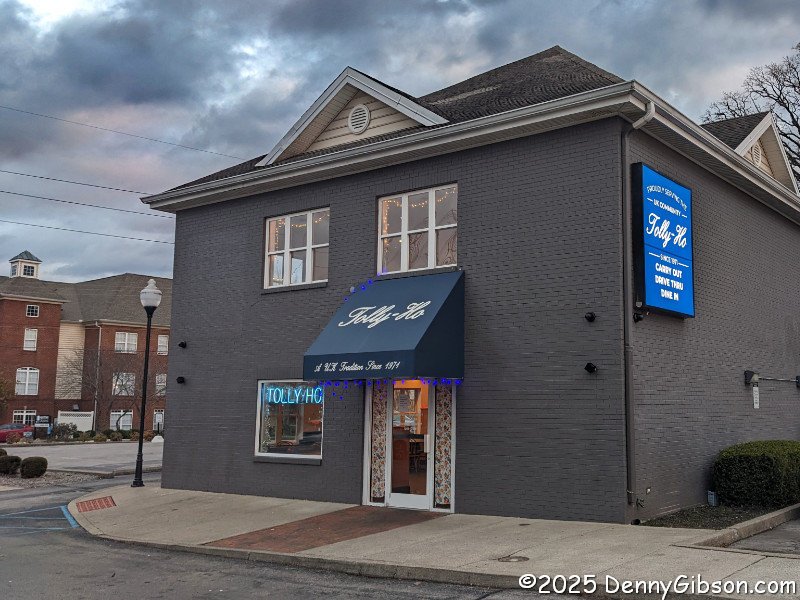
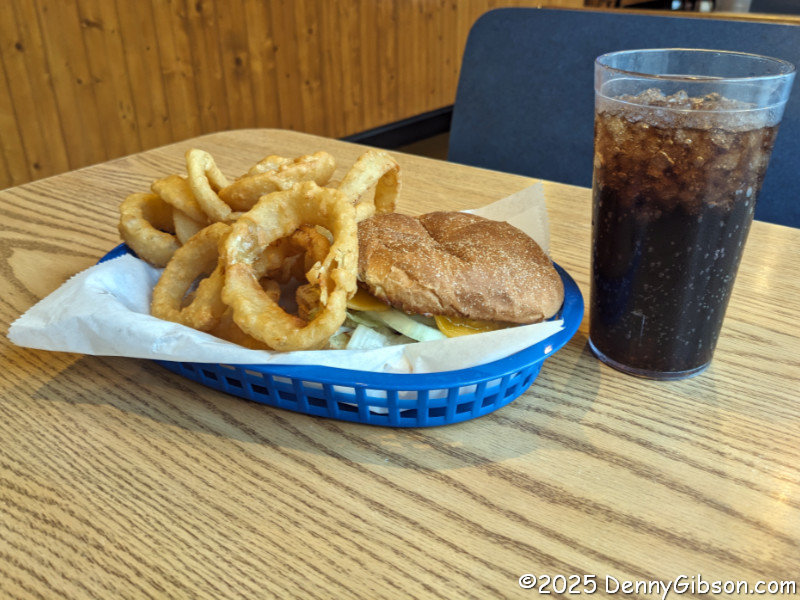
My dinner spot was less than a mile away from the Campbell, just off Broadway, the not-quite-official DH. Tolly-Ho has been serving ‘burgers in Lexington since 1971, although it has only been in this location for just over a year. I have eaten here once before when it was in its second location, a little farther to the northeast on Broadway. I was quite early when I ate at Tolly-Ho in 2017, so, despite it being known for its hamburgers, I had breakfast. Not this time.

ADDENDUM: Dec 31, 2025: As the final hours of 2025 ticked by, I learned that Tolly Ho’s final hours were ticking by, too. The restaurant reportedly will close permanently at midnight. What a shame.
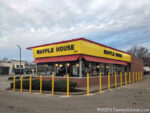
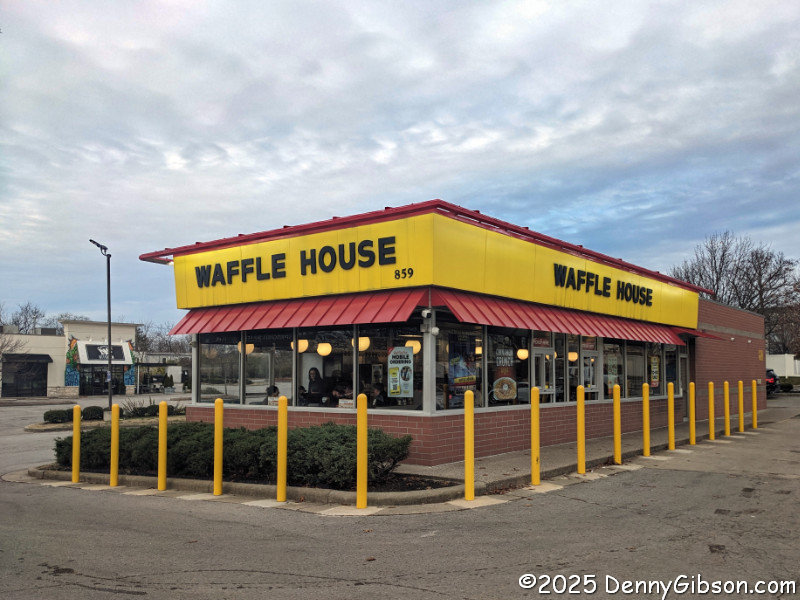
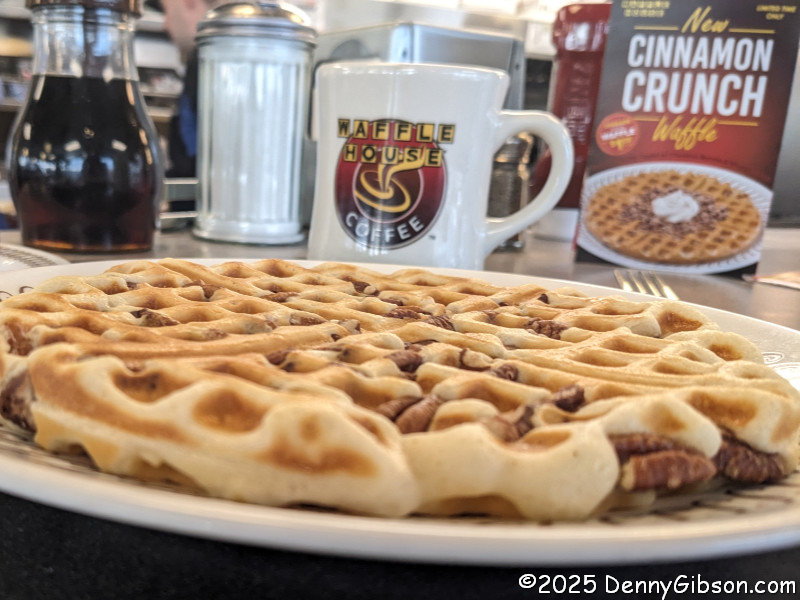
On Thanksgiving morning, it was possible, but not likely, that I would find an open independent breakfast spot further on up the road. It made no sense not to stop at this Waffle House barely half a mile away, directly on my planned path. Not only is Waffle House a reliable source of food on holidays, but it’s also a place where you are almost certain to find a friendly and cheerful staff. That was definitely the case here, where I started my day with a tasty pecan waffle.
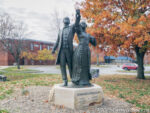
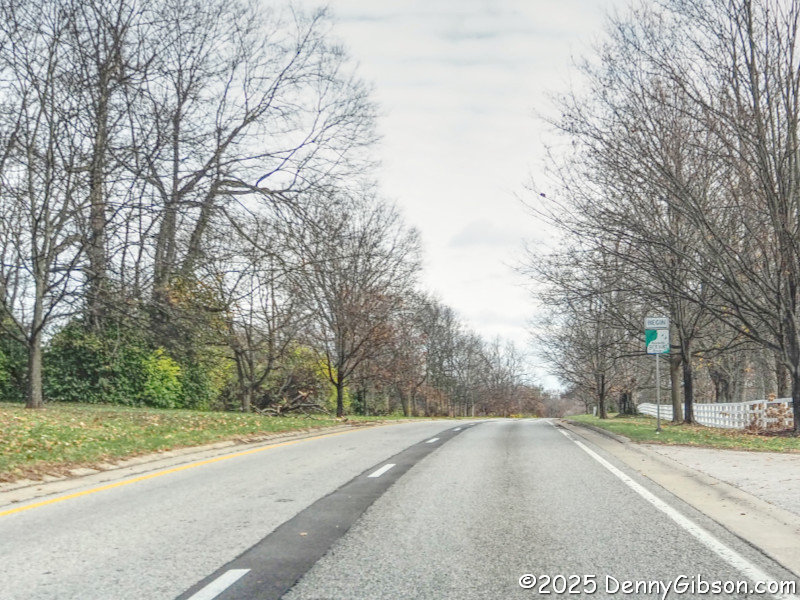
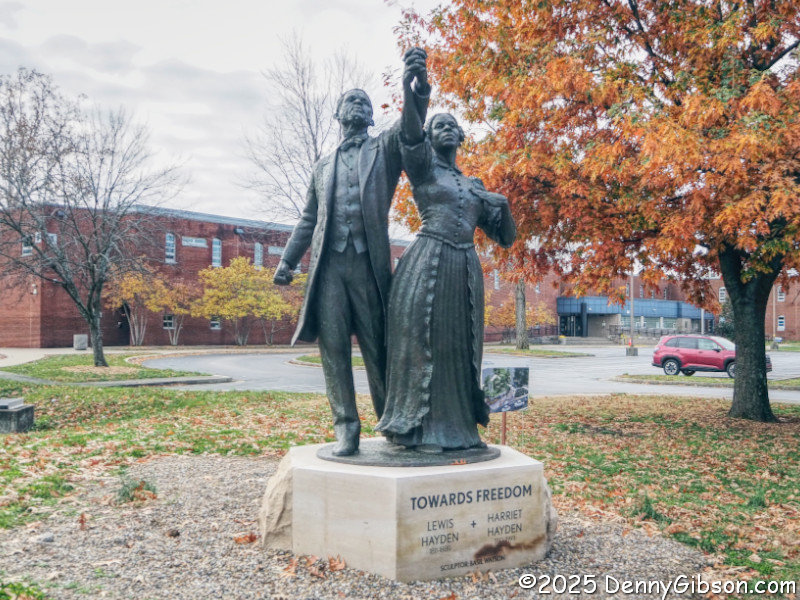
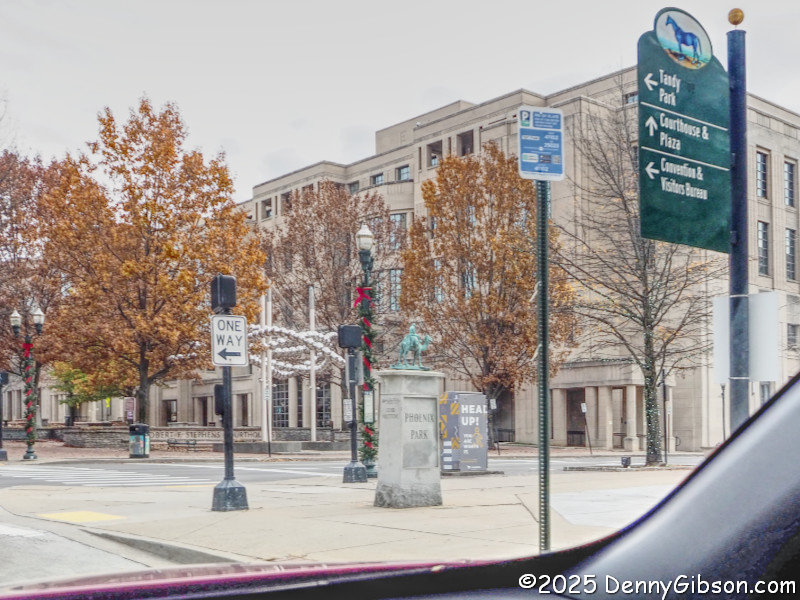
I made my way back to the Zero Milestone, crossed yesterday’s path, and started north on the eastern Cincinnati-Lexington Dixie Highway alignment. The first section is now one-way northbound, so it’s likely that the only time I have driven it was on that 2022 round trip. The statue of Lewis and Harriet Hayden was not here then. The statue of the escaped slaves who became quite active in the Underground Railroad was unveiled on Juneteenth of this year. It is phase one of Lexington’s Freedom Train project. The Paris Pike Scenic Byway begins at the edge of town after the road has become two-way.
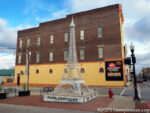
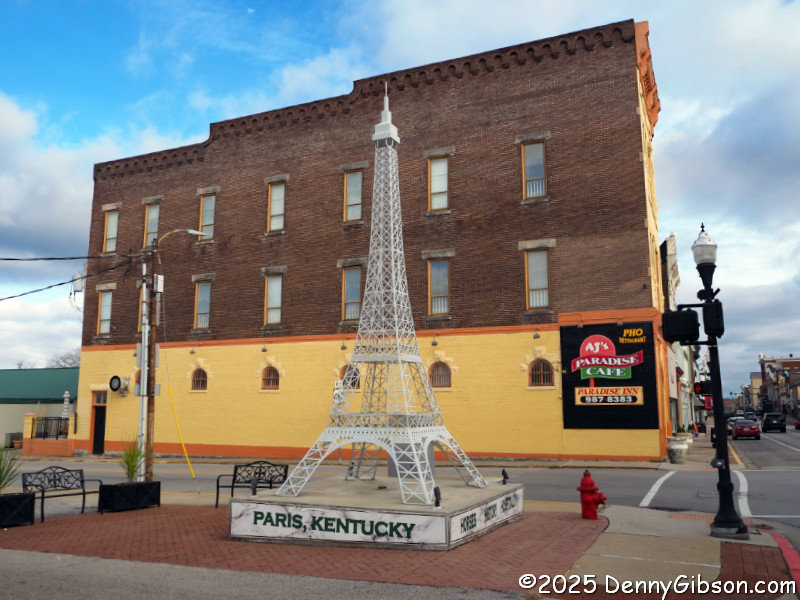
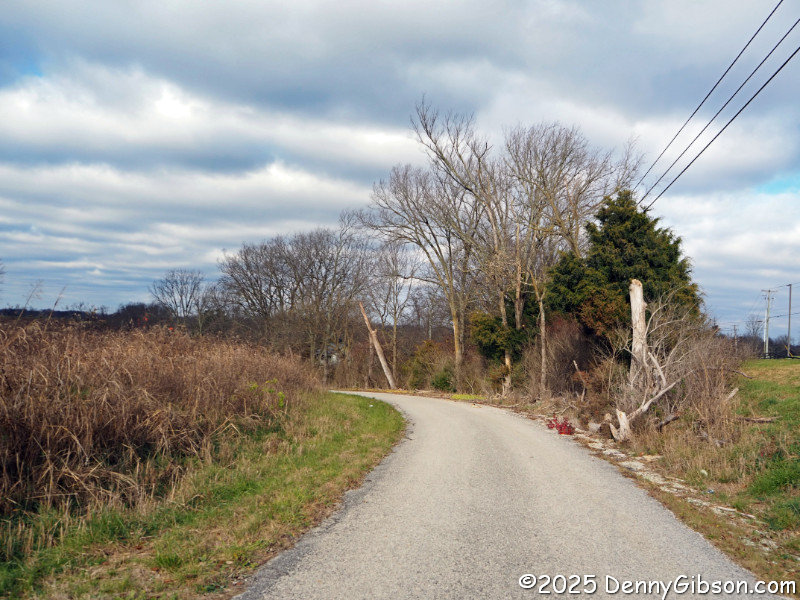
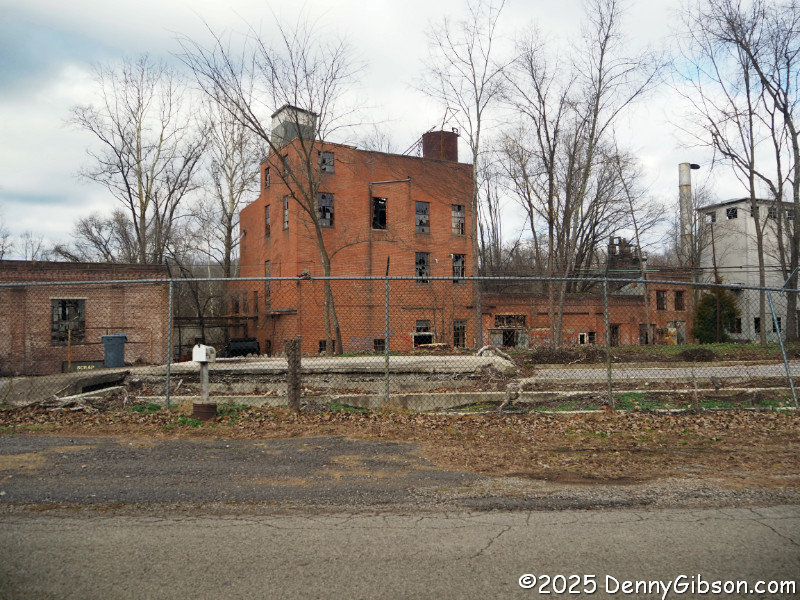
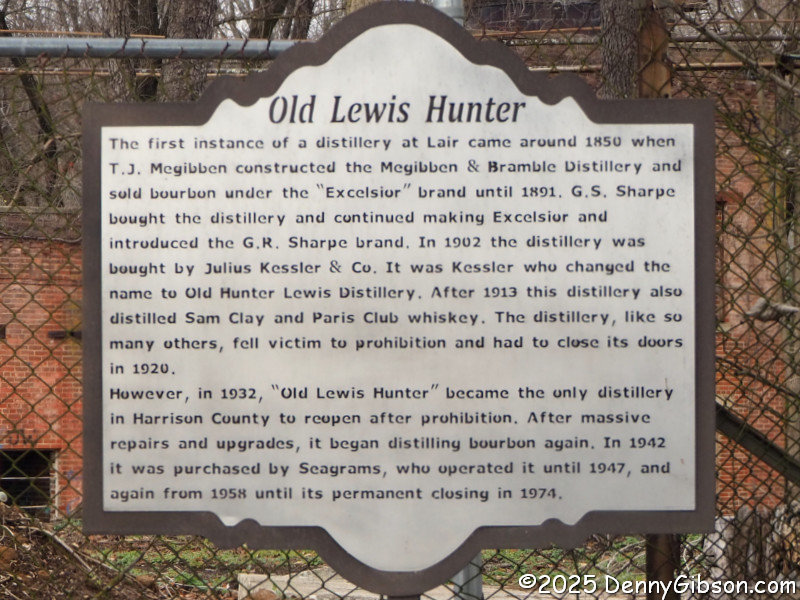
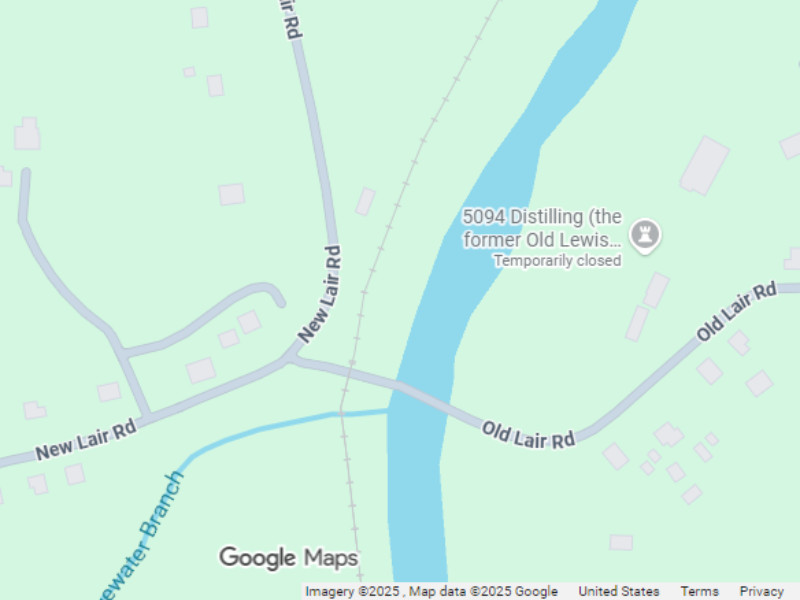
This is the Paris, complete with Eiffel Tower, the byway leads to. Beyond it, there are several bypassed sections of old road that probably look quite a bit like they did in Dixie Highway days. One passes through Blair and past the Old Lewis Hunter distillery. Potential customers are advised that Google Maps shows this as temporarily closed.
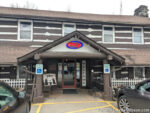
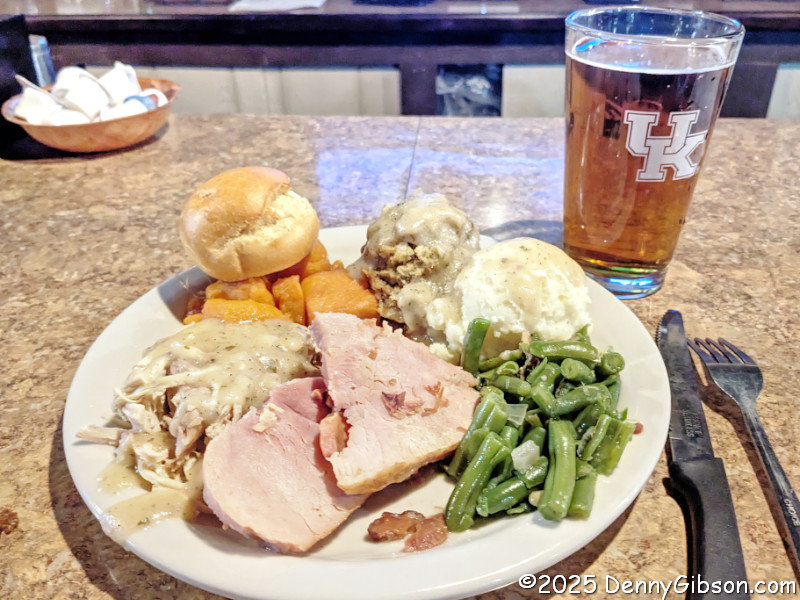
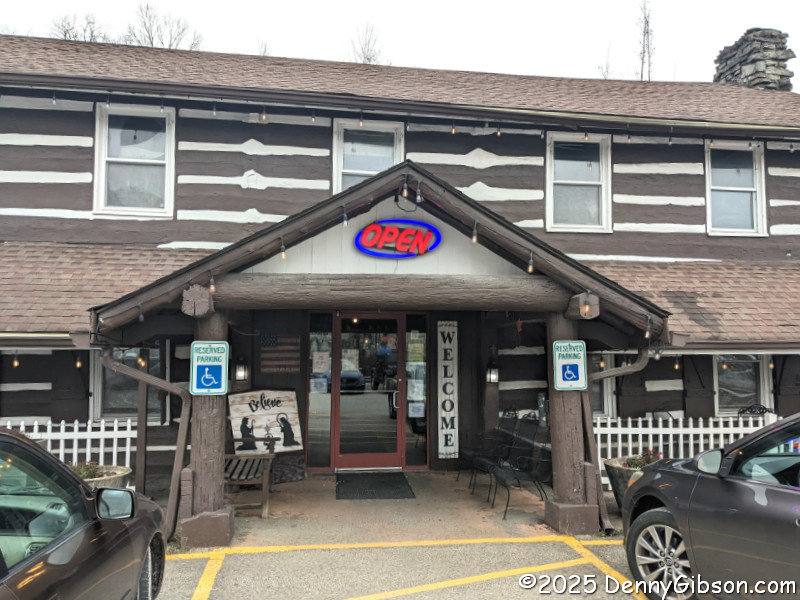
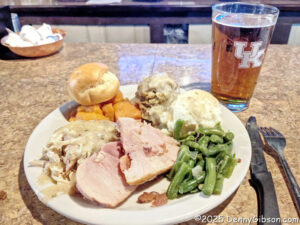
This actually was the first piece in this itinerary. Last year, as I drove south to that park near Hazard, KY, I was surprised to find the closer-to-home Log Cabin Inn open for breakfast. I was less surprised to find a Thanksgiving dinner was planned for later in the day. As the holiday approached this year, I was happy to learn that it was happening again and that reservations were not required. Last year, it had been sold out some days before I stopped for breakfast. I planned to stop on my way north and hope to get in. It was crowded, and a few people were waiting for seats, but I, as a party of one, was given a spot at the bar immediately. The fellow to my left, whom I chatted with later, was drinking from a pretty large mug, but fortunately, the barmaid offered me a choice of large or small. She did not offer a size choice on the meal, and I think I barely made it through half of the feast shown in the opening photo. Although it was too much for me, it was very good, and many customers thought the portions just right.
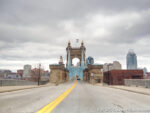
The two Dixie Highway alignments come together in Covington, KY, and cross the Roebling into Ohio as one. I slipped through the city and onto my home with a belly full of turkey, ham, and a complete set of trimmings, and a heart full of gratitude for friends, family, and general good fortune.
Subdued Hues

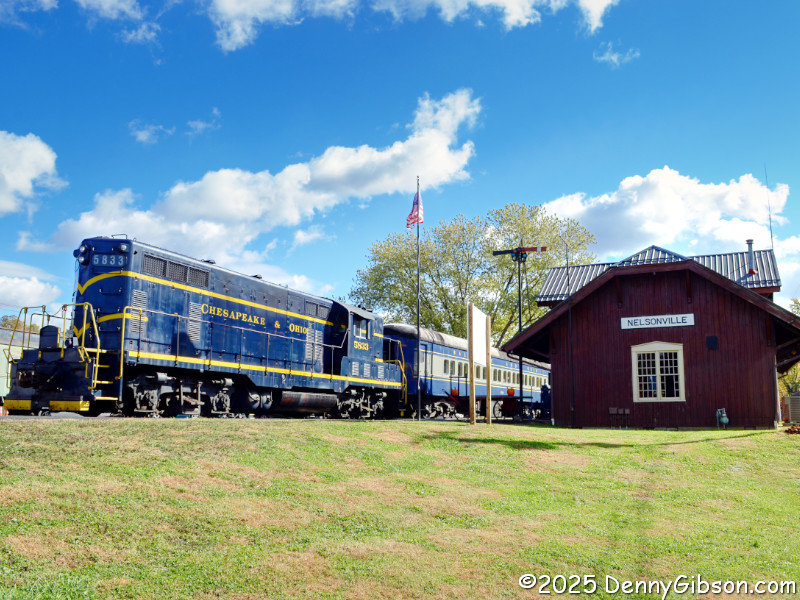
An advertisement for a steam train in Virginia caught my attention, and the autumn foliage outing it promoted sure looked inviting. However, I couldn’t make any of the train’s scheduled dates work for me. It did get me thinking about autumn rail excursions, though, and I found another steam-powered one that I could fit into my schedule. It was even closer in Ohio. However, it only ran on weekends, and weekend lodging in the area was either unavailable or unaffordable. When I saw that very affordable lodging could be had on Thursdays and that the same route followed by the steam locomotive on weekends was followed by a diesel on Fridays, I decided I could make do with a slightly shallower dive into history. I booked the B&B and the Friday afternoon train.

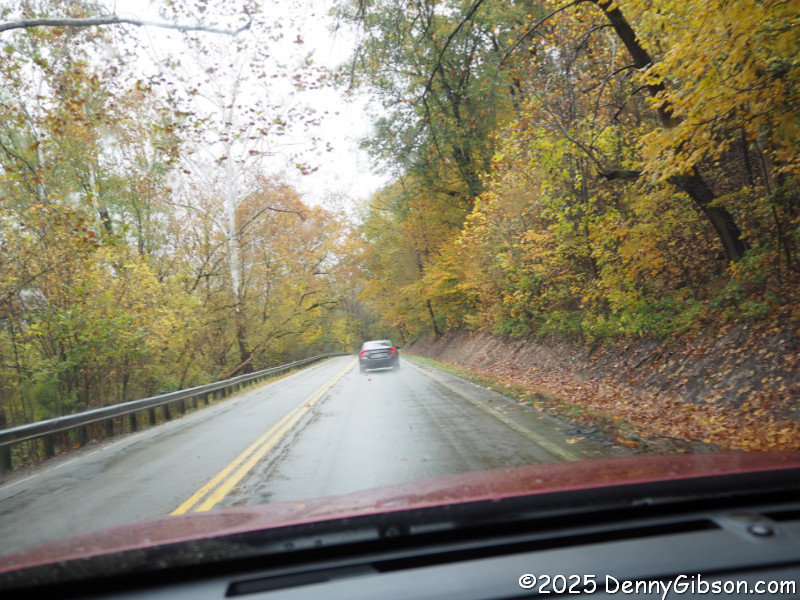
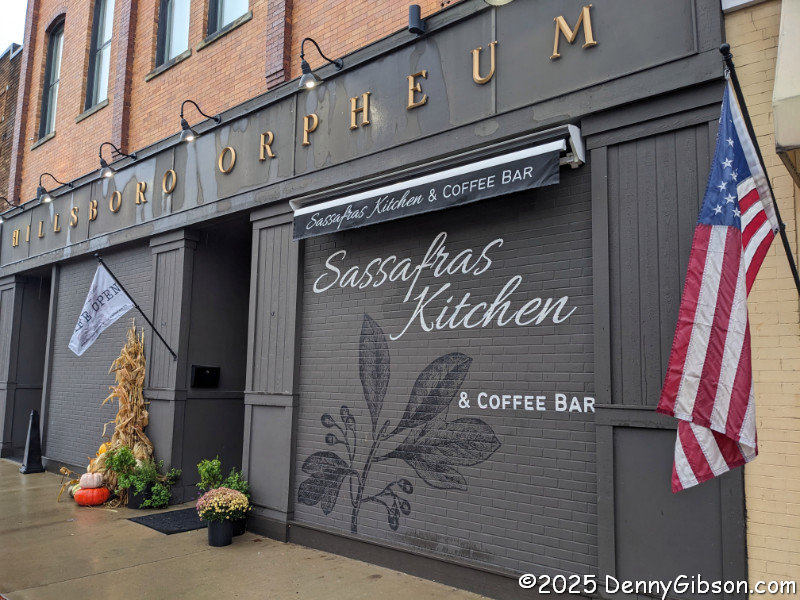
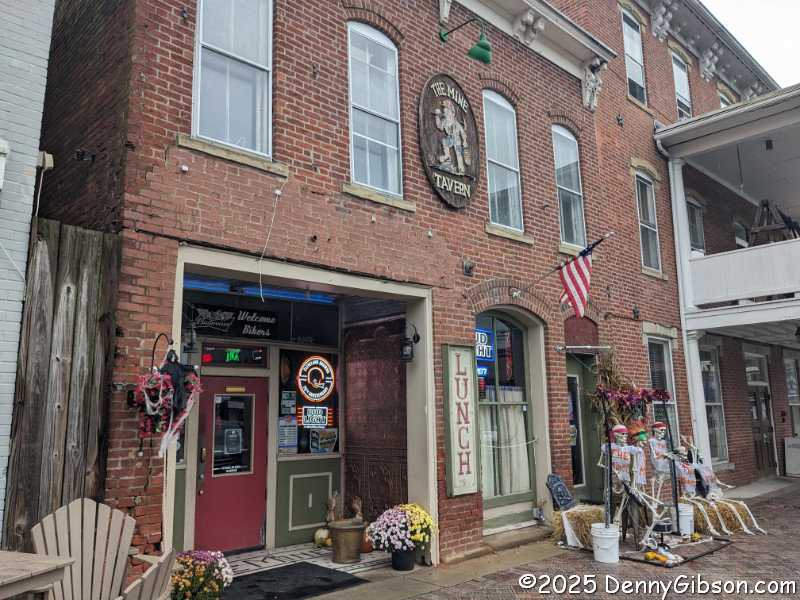
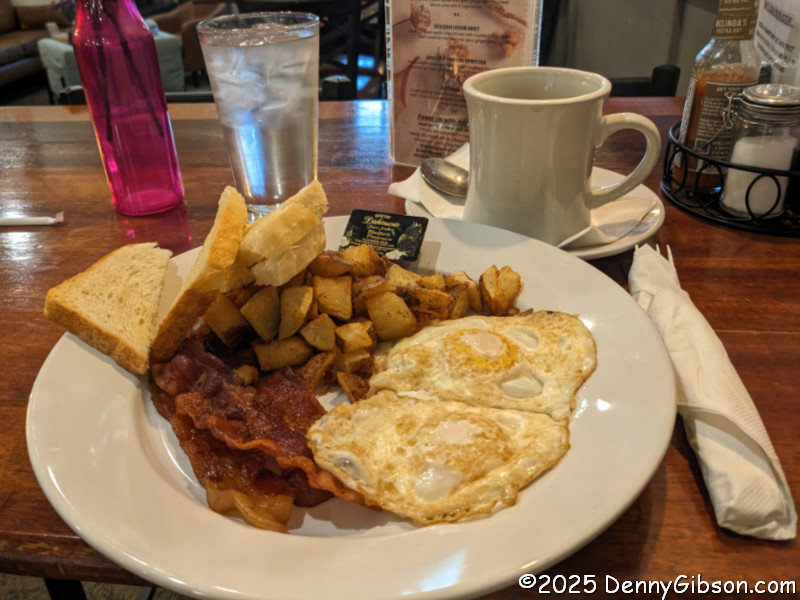
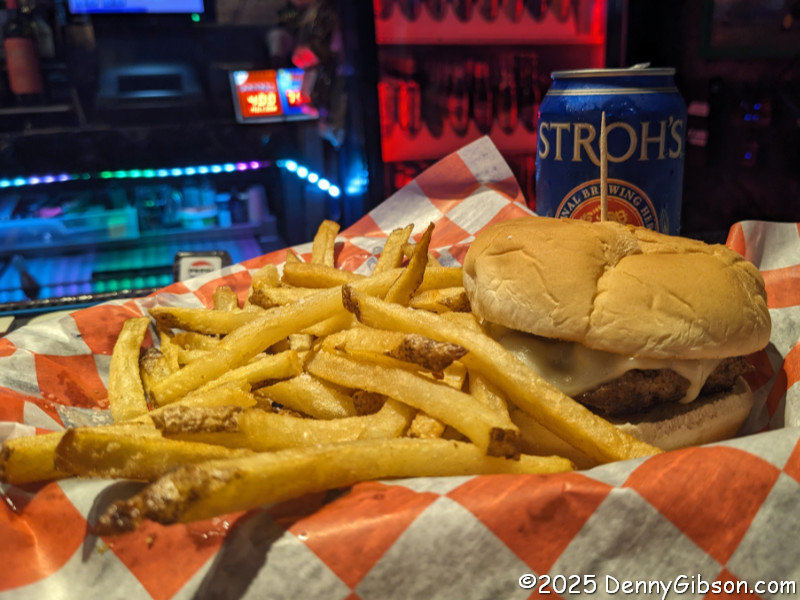
Rain entered the picture as the outing neared. It started on Wednesday and continued as I headed east on US-50 Thursday morning. I stopped for an excellent breakfast at Sassafras Kitchen & Coffee Bar in Hillsboro, and had a really good burger and some fantastic fries at The Mine Tavern in Nelsonville.

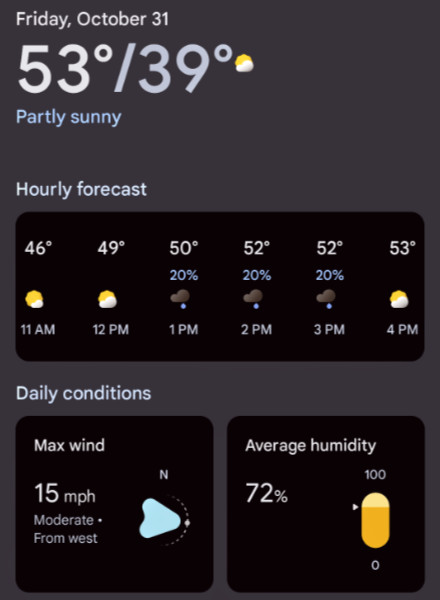
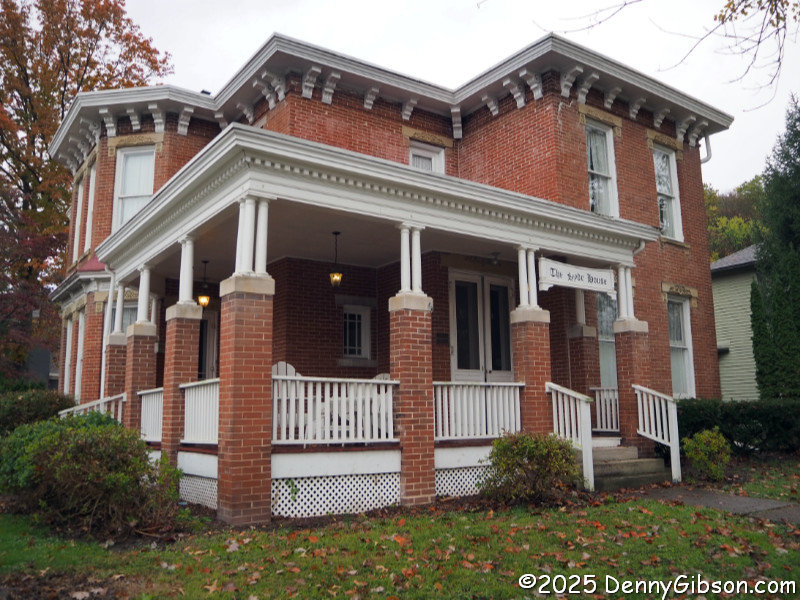
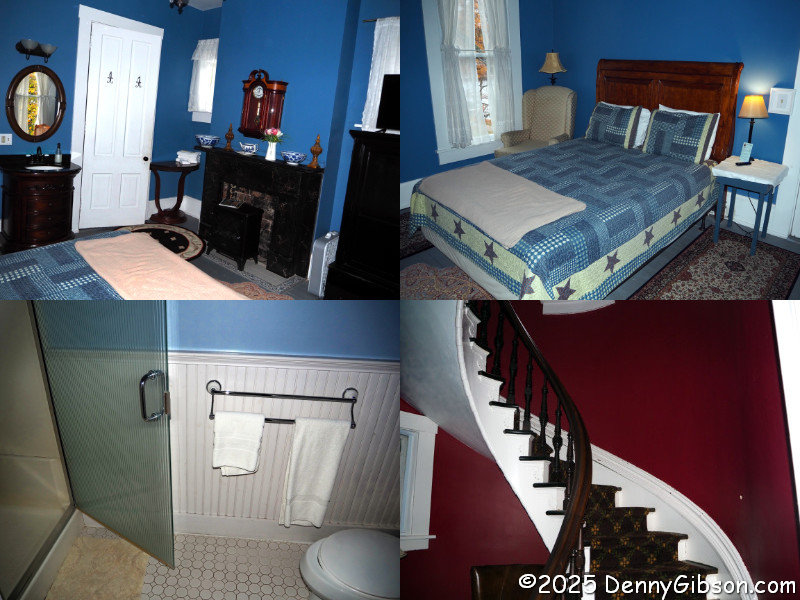
Nelsonville was my destination. I checked into the Tulip Room in the Hyde House, just a couple of blocks from the tavern and not much more than that from the train station. Recent weather predictions had shown the rain ending Thursday night, with Friday being completely dry. I checked one more time before falling asleep and noticed a slight change. My little train ride was scheduled to depart at 1:00 and last for two hours.
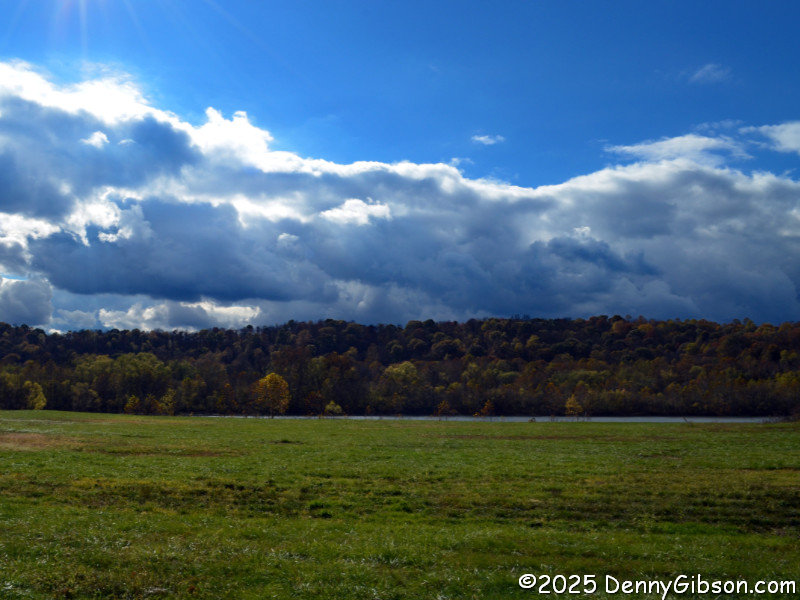
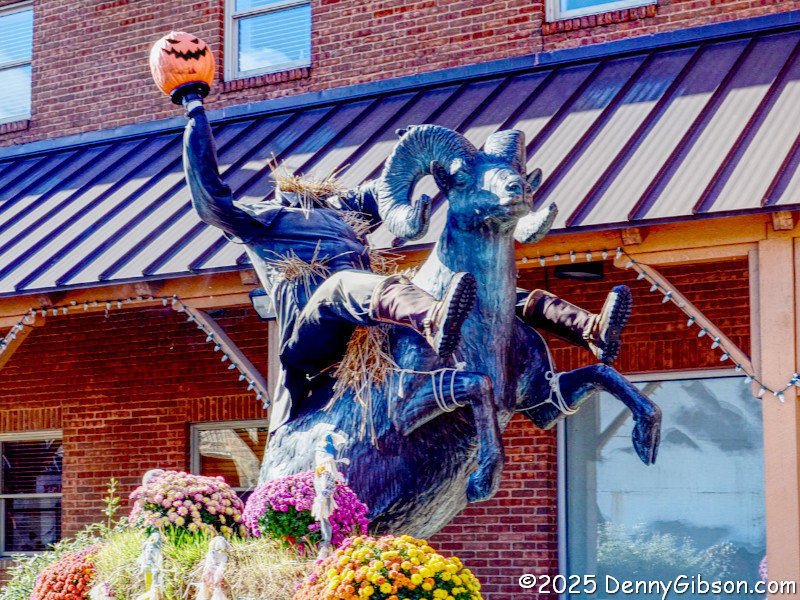
The Hocking Valley Scenic Railway station is right next to Rocky Boots headquarters and outlet. I arrived well before departure time and walked over to Rocky Boots to get the picture of the Headless Sheepman that opens this article. It was, after all, Halloween. Note that, although the sky is hardly cloudless, the sun is shining.
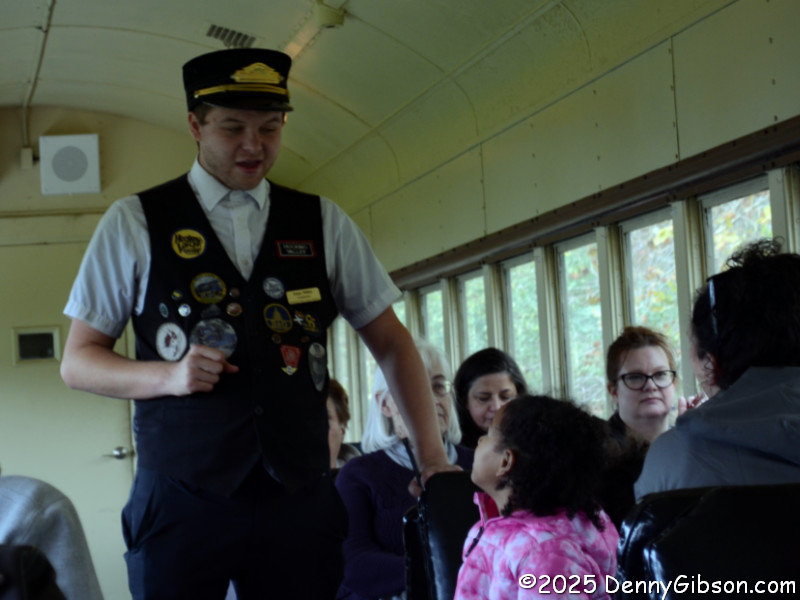
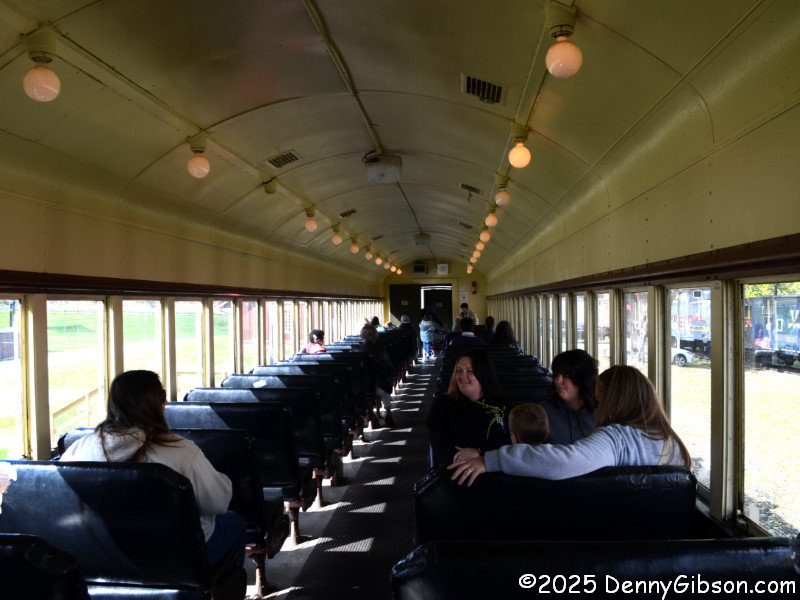
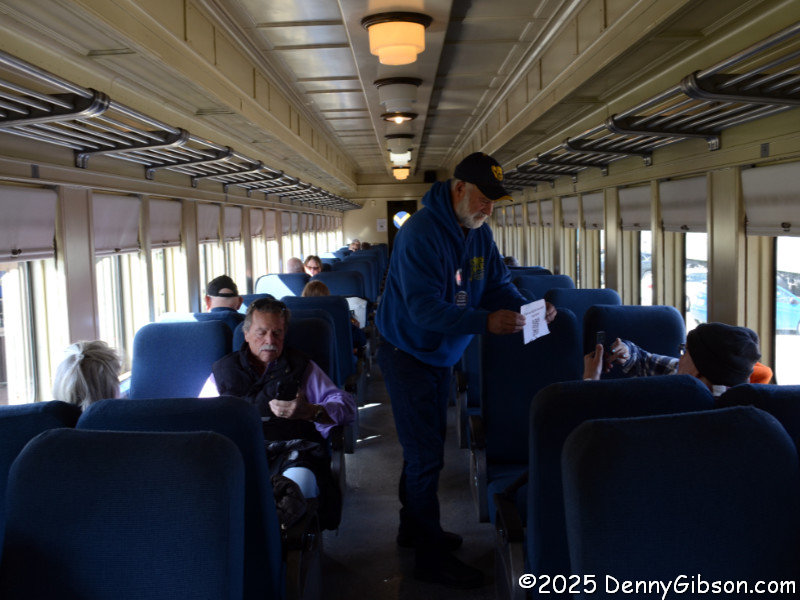
All four cars of the train would essentially be full by the time we pulled out, but I was on board early enough to grab photos of them nearly empty. The car with blue seats was built in 1939 for long-distance travel. It was once used on the Cincinnatian, which ran between Cincinnati and Detroit. The other three cars (I rode the middle one) were built in the 1920s and used by commuters in the Chicago area.

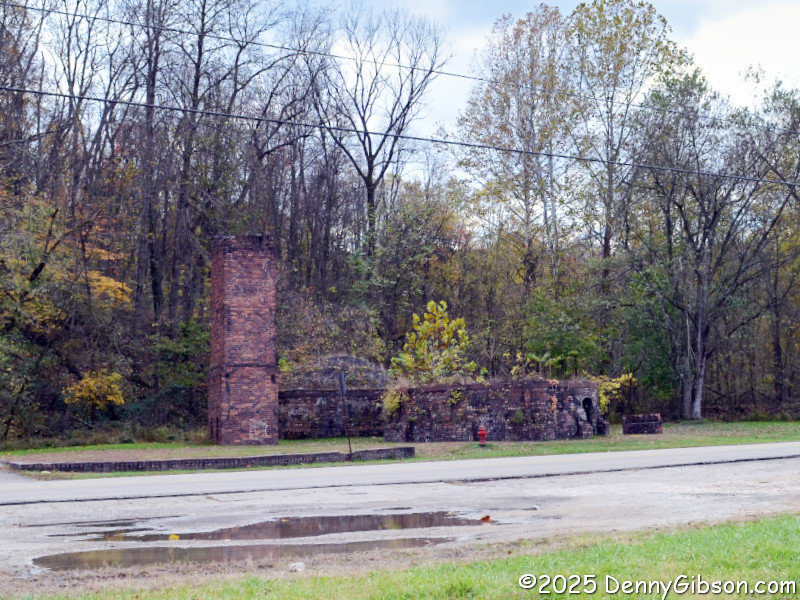
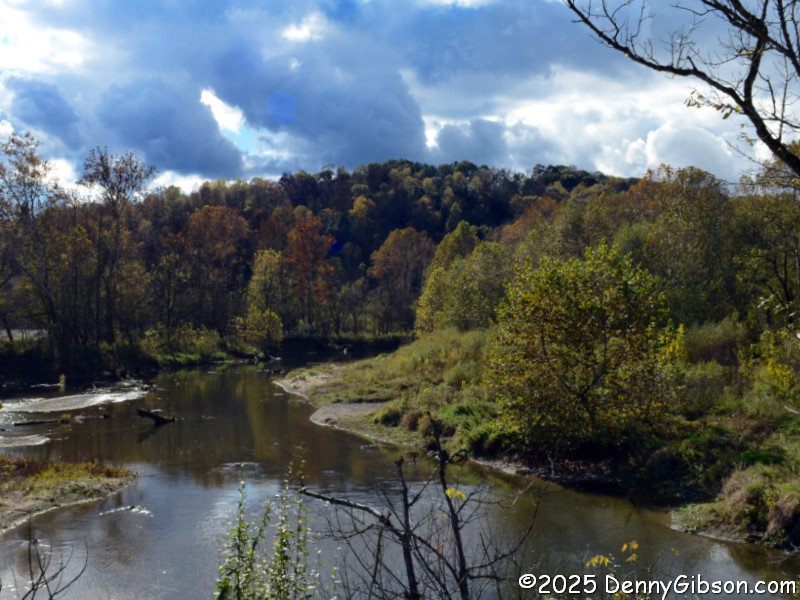
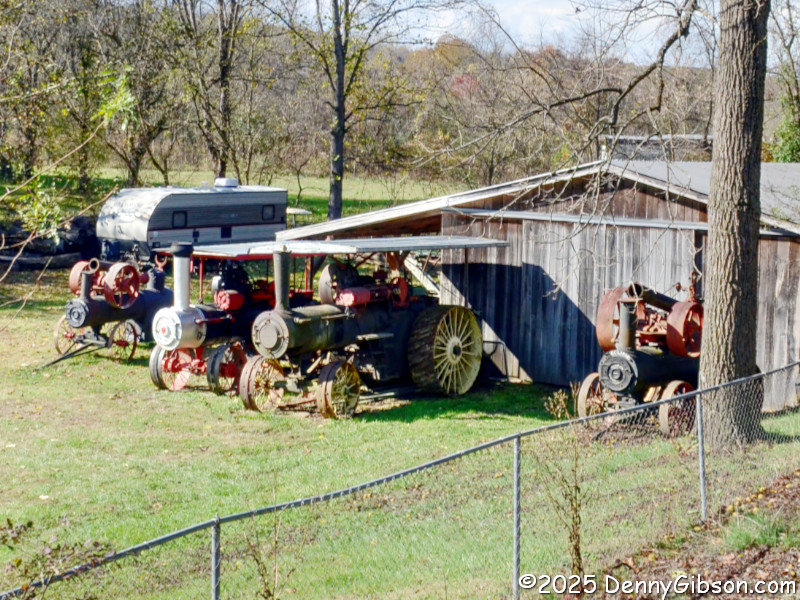
Early in the trip, we passed the remaining kilns of the Nelsonville Brick Company. In addition to plain paving bricks, the company made those very popular decorative star bricks. We were also treated to some nice views of the Hocking River. There was no shortage of front and back yards filled with cars in need of attention, but this was the only yard I saw filled with steam engines. Much classier, in my opinion.

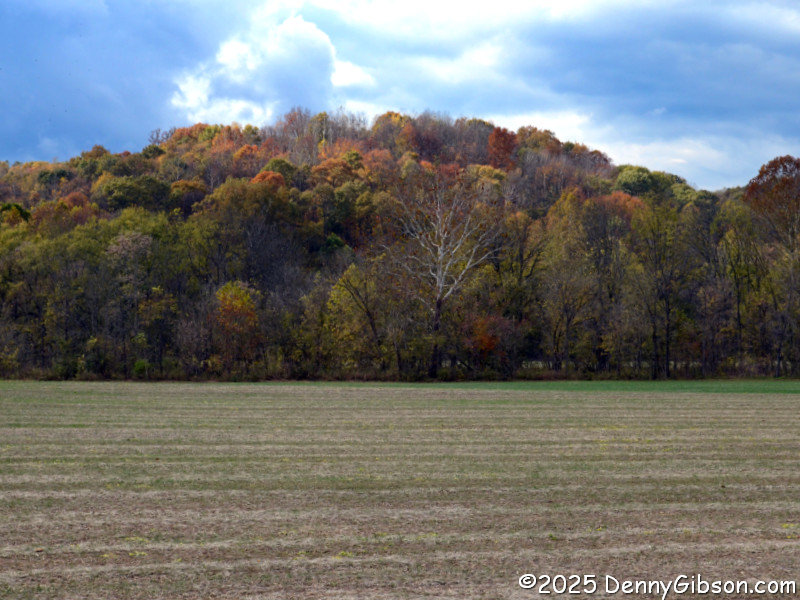
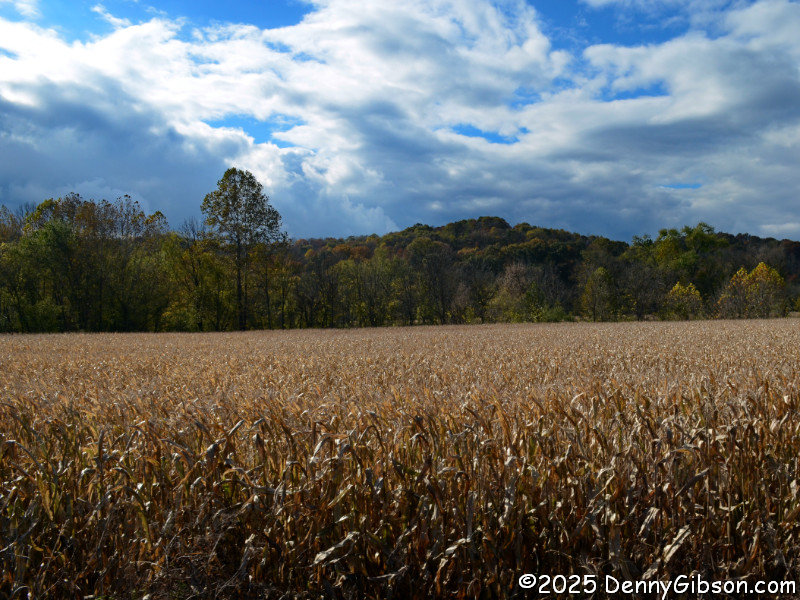
The excursion ran almost to Logan, with much of the route actually inside the Wayne National Forest. There were plenty of trees, and some rather scenic views here and there. Red and orange leaves, however, were few and far between.

Railroad employees passed through the cars frequently, helping with windows, seats, and any other issues passengers might have. At the route’s end point, the locomotive moved from one end of the train to the other via a siding. The seats in the commuter cars had reversible backs, and quite a few riders flipped theirs, so they were facing forward as the cars were pulled “backward”. I was not among them.

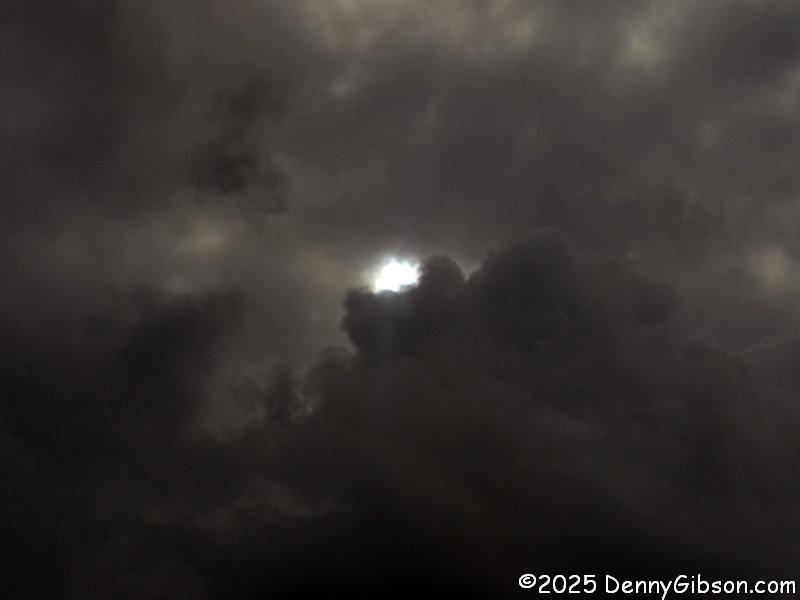
You may have noticed clouds gathering in some of the previous photographs. No rain fell during the ride or during the short time I was in Nelsonville after it ended. However, by the time we returned to the station, the sky looked like this. As we exited the train, I commented to a lady in line that there had not been much color in the trees along the way. “No,” she said, “not this year. It’s been too dry.” Maybe that’s the reason. I don’t know. If so, the dry spell appears to be over, but any rain now will just knock the leaves from the trees. It won’t make them colorful. 

Season of the Clown

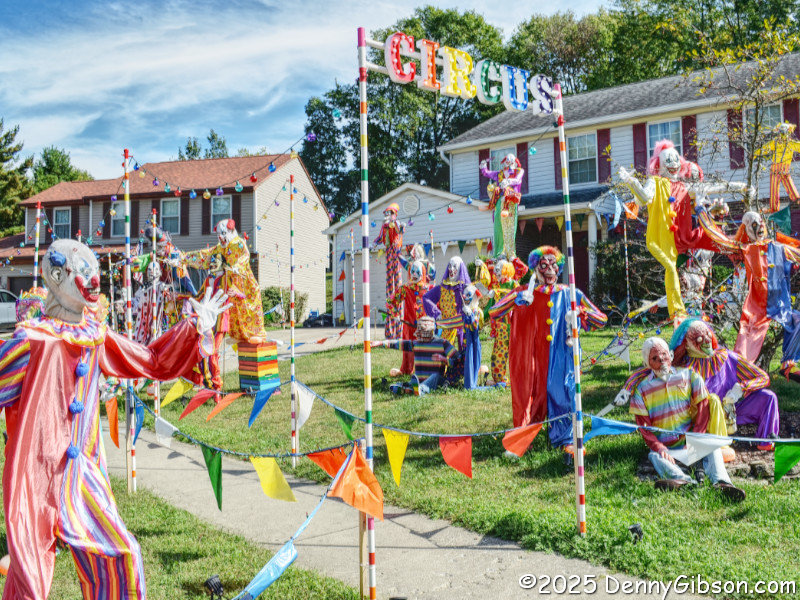
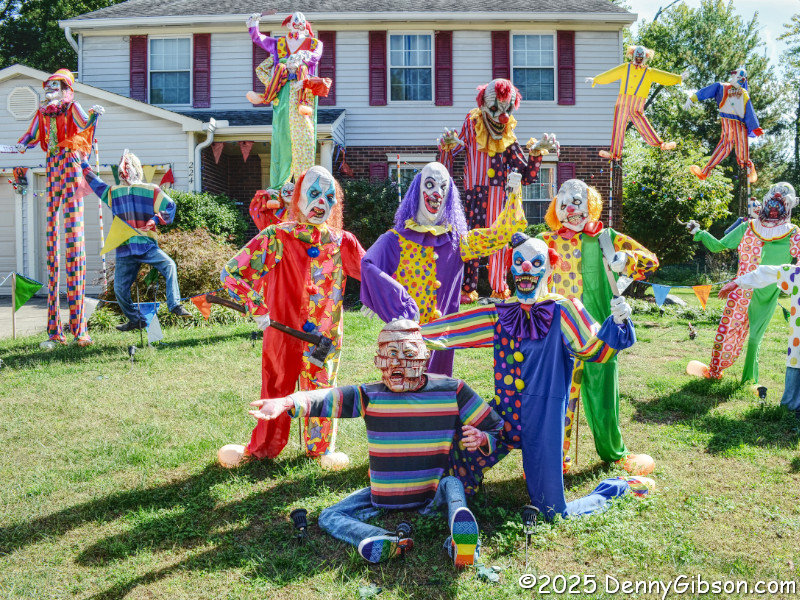
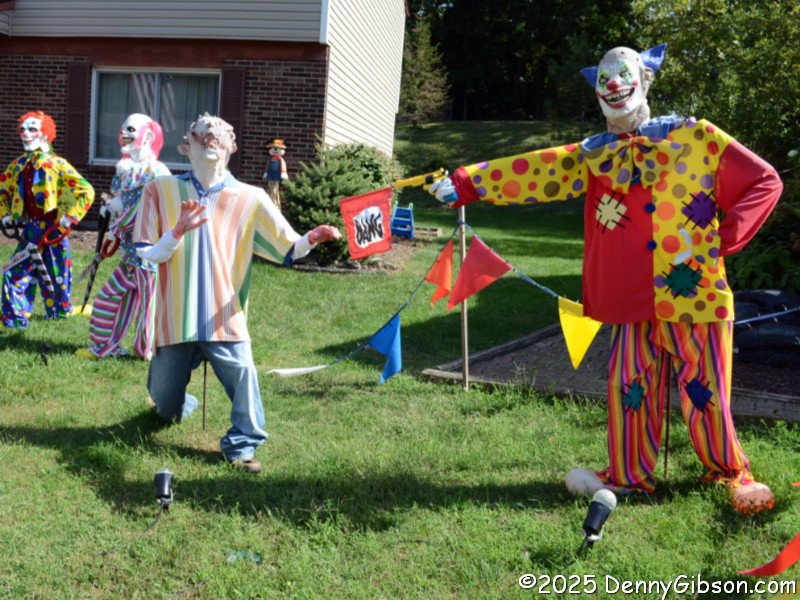
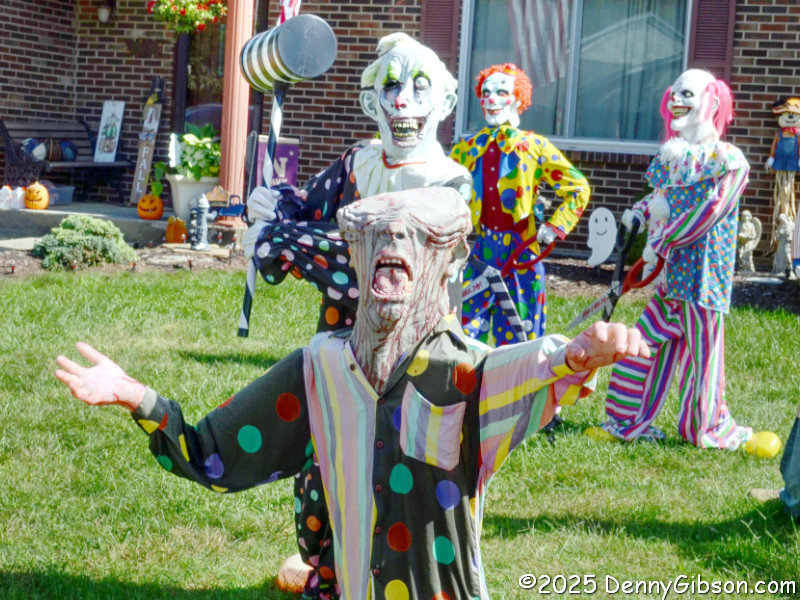
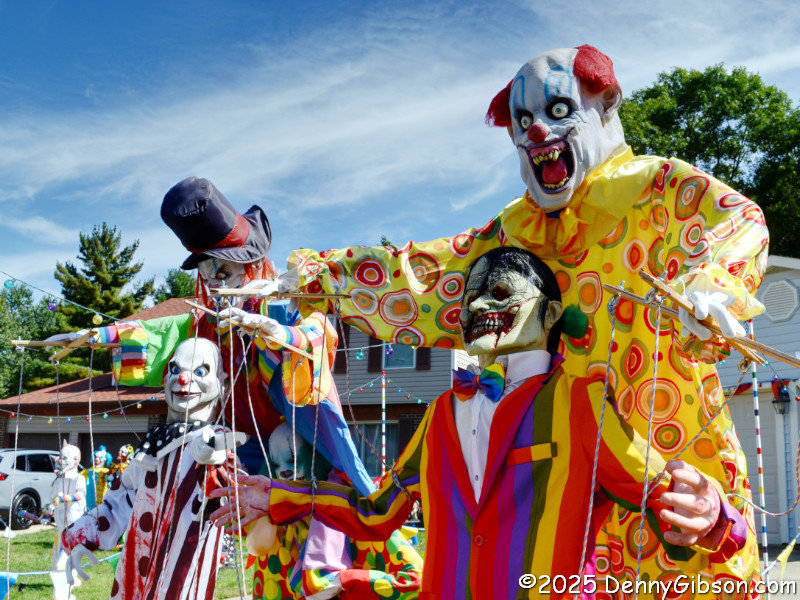
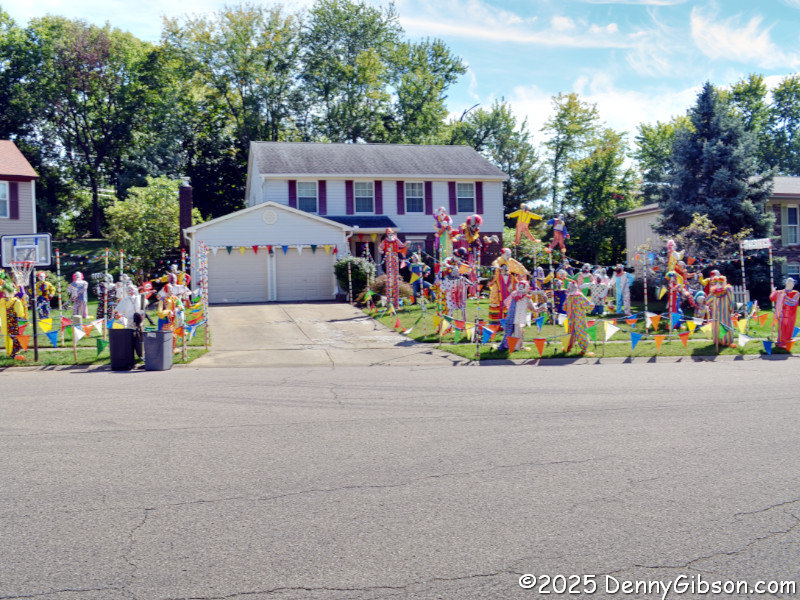
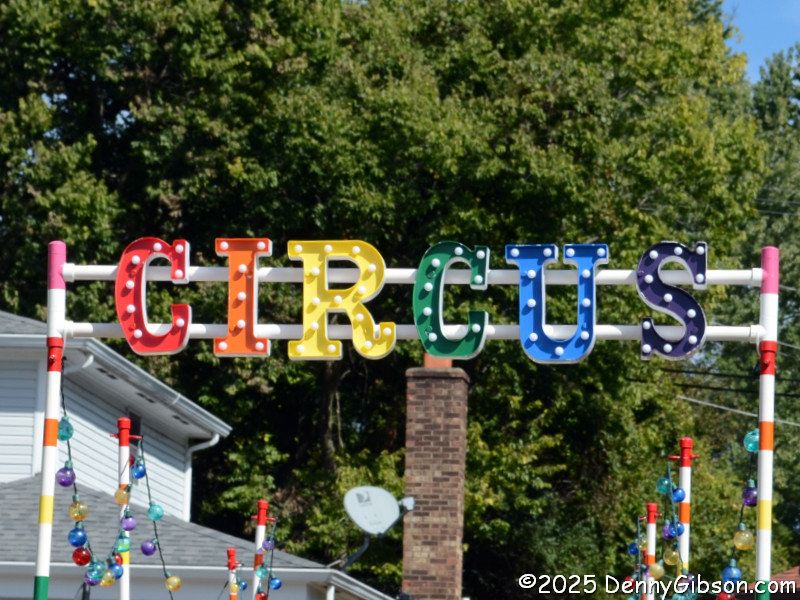
Not everybody decorates for Halloween with store-bought skeletons and inflatable witches. Some people, like this guy in Delhi Township that I just learned of, do it with personal creativity. For the last ten years, Shaun Reynolds has filled his front yard with unique creations based on different themes. This year, it’s clowns.

“I’ve wanted to do this since I was a kid,” Reynolds told TV station WCPO. It was through their article and video that I learned of the seasonal attraction. Check it out here. I didn’t get to meet Reynolds when I visited on Thursday, but I have a feeling that he’s not quite finished with being a kid.

I did get to meet Teresa, a long-time neighbor. I was poised to ask what it was like having a big, spooky attraction in your neighborhood, but I didn’t really need to. Her smile when she greeted me let me know she was loving it. I had thought of counting the figures on display, but had not followed through. Theresa made that unnecessary, too. “38 or 39,” she said. She also tried to describe how great the place looks at night with the lights on, as well as just how crowded and fun it gets on Fridays and Saturdays.

Reynolds makes it very clear that he does this for fun and that sharing it and seeing others enjoy it is part of that fun. Of course, some folks have wanted to contribute something, so the Reynolds family has taken to accepting donations of food and money, which they pass on to the Delshire Elementary School food drive.

I’d sure like to see this place at night, and I’m going to try to make that happen. Maybe you can, too, but it is obviously pretty cool day or night. It’s on Assisiview Court.

Trip Peek #145
Trip #146
Thankful in Tennessee

This picture is from my 2017 Thankful in Tennessee trip. This was in the style of my Christmas dinners in state parks but this time the holiday was Thanksgiving and the park was in Tennessee rather than Ohio or West Virginia. On Thanksgiving day, I drove straight to Natchez Trace State Park for the holiday buffet. I spent two nights at the park but drove to Brownsville for dinner and a nighttime peek at Billy Tripp’s Mind Field on the second day. I then spent two days getting home with time on US-45 and US-50 and stops in Paducah, KY, Metropolis, IL, and Vincennes, IN. The picture of Pin Oak Lake was taken near the turnaround point of a ranger-led hike I joined on the second day at the park.


Trip Peeks are short articles published when my world is too busy or too boring for a current events piece to be completed in time for the Sunday posting. In addition to a photo thumbnail from a completed road trip, each Peek includes a brief description of that photo plus links to the full-sized photo and the associated trip journal.

Second Secular Season of Fish

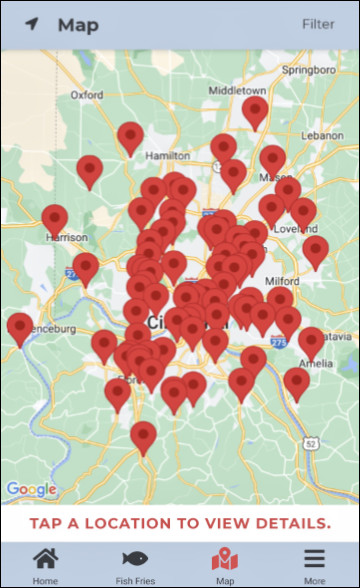
Yes, that image at right looks pretty much identical to the opening image in last year’s Lenten wrap-up post (A Secular Season of the Fish). In fact, this entire post looks about the same as that post, as well as every “season of fish” post I have ever done. It is simply a report on the seven fish fries I attended during the season. Six of them are new to me, and the seventh is a repeat I’ve had planned ever since I ate there last year.
The pictured map comes from the Cincinnati Fish Fry app, which I discovered and started using partway through the 2023 season. Anyone checking in at four or more fish fries through the app is entered into a prize drawing. I met the requirements in both years I have used it, but have won no prizes and expect the same this year. That’s not my goal in the least. I use the app to find fish fries, and it does a mighty fine job. I did not record the number of offerings in 2023, so cannot say whether this year’s drop from 87 to 73 is a trend or a blip. My guess is that, for commercial enterprises, it’s a trend. That is where most of the exits occurred. Participating commercial operations went from 16 to 4, while churches and others only dropped by one each, going to 53 and 16, respectively.

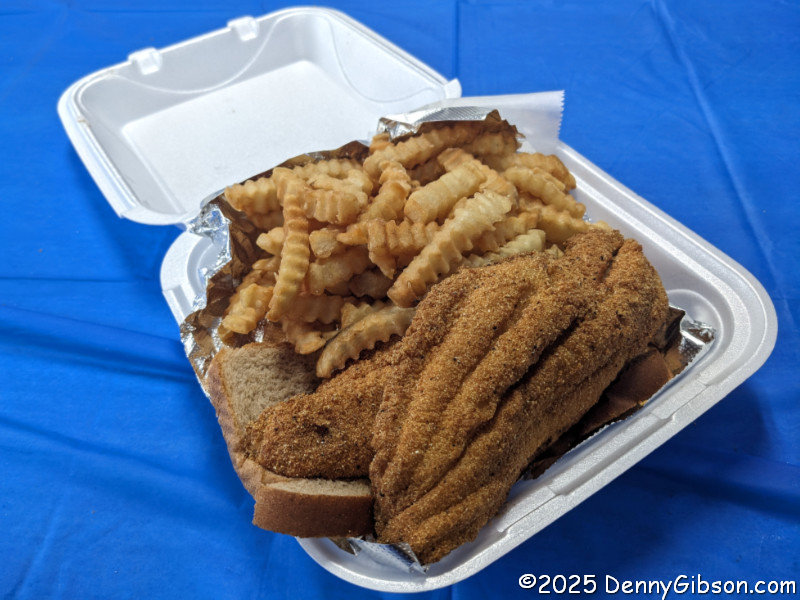
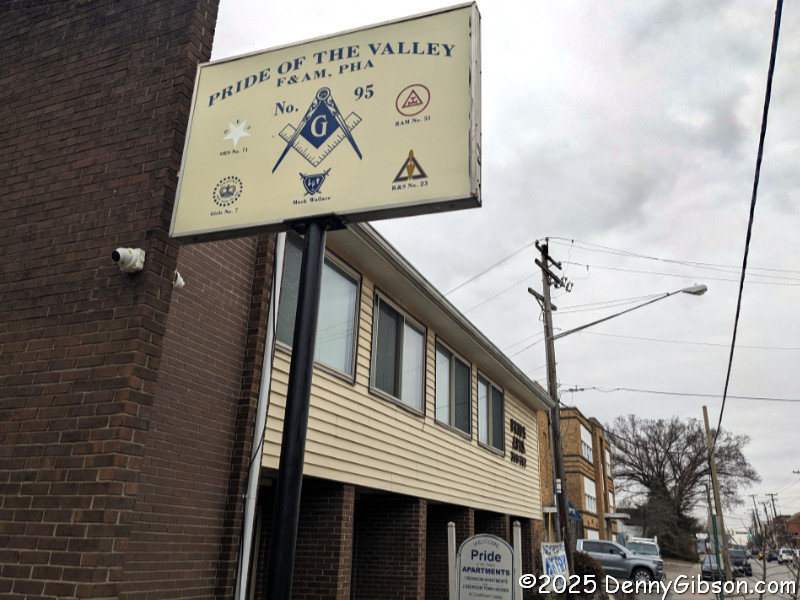
The first Friday of Lent coincided with the first day of Bockfest, and I had plans, weather permitting, to attend the Bockfest Parade at 6:00 PM. What could have been a scheduling dilemma was avoided by Pride of the Valley Masonic Lodge 95 and its 10 to 8 serving schedule. The pictured catfish meal, with coleslaw and a piece of cake hiding under the fries, was $12. Soda and water were $1. Some very good eating. And the weather did cooperate in allowing a dry parade. Check it out here.

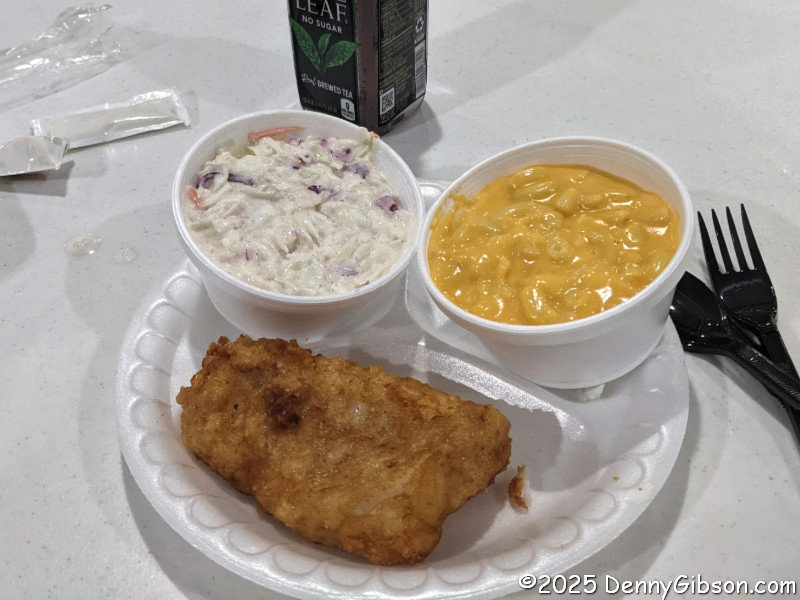
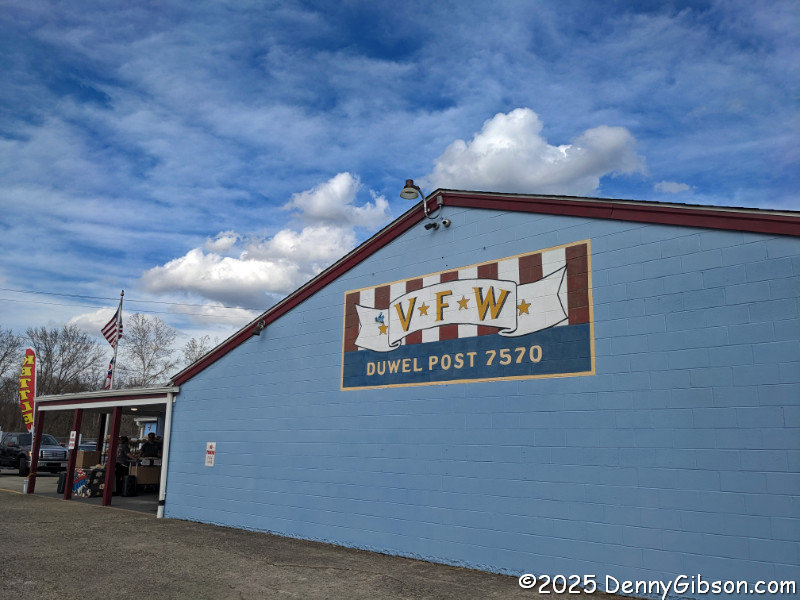
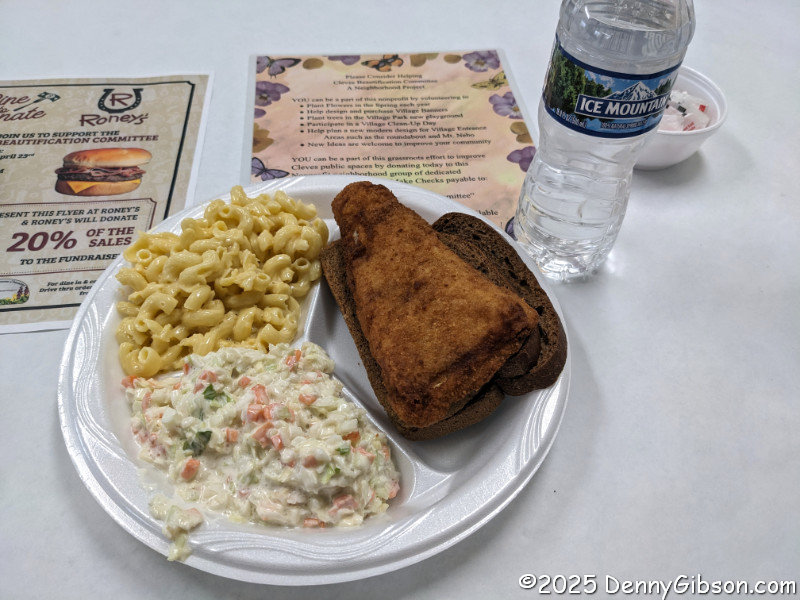
I acquired the next week’s fish fix at Duwell VFW Post 7570 in Harrison, OH. The cod dinner was $15, and the iced tea was $2. Everything about the meal was good, but the standout to me was the inclusion of a human-sized portion of coleslaw. OK, maybe the amounts of both it and the same-sized mac & cheese were more than I needed, but it was a welcome change from restaurants that apparently think a little cup with a couple forkfuls of slaw is a serving.

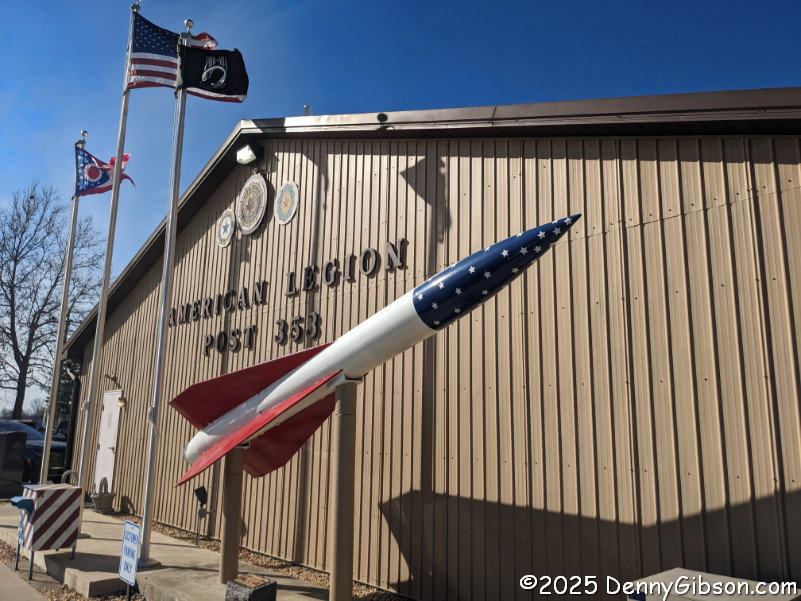
I went outside the fish fry app for week three of Lent. I was in Darke County doing some chauffering for my stepmother, which allowed me to take in the fish fry in my old hometown. When I was five years old, we lived directly across the street from Ansonia American Legion Post 353, although the building has been replaced since then. $10 gets all the fish and fixings (there was applesauce, too) you can eat. Soda and bottled water was $1.

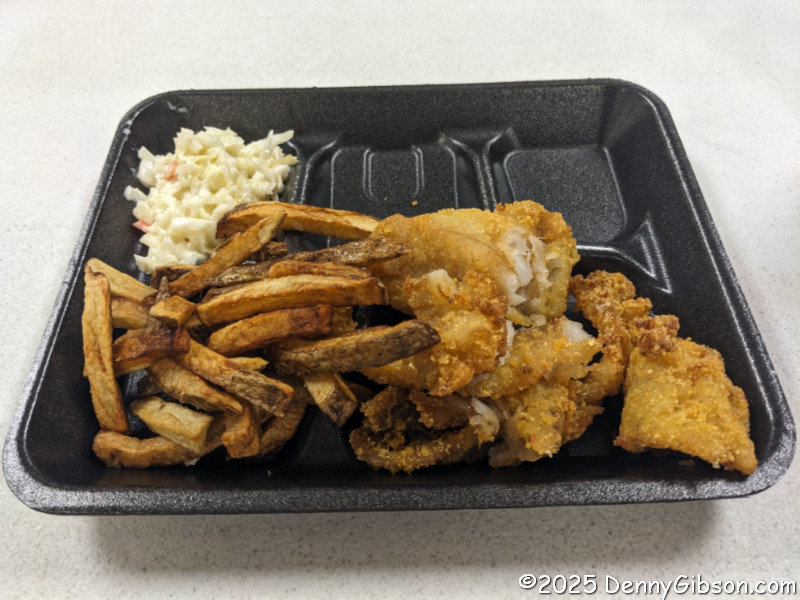
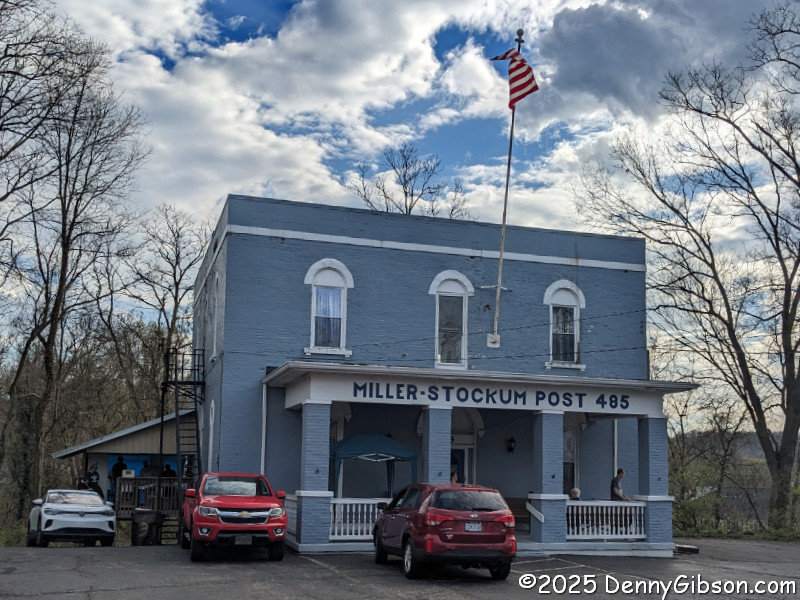
Week four saw me back within range of the app, though once again near its far western limits. Miller-Stockum American Legion Post 485, like the VFW of two weeks before, did not skimp on coleslaw.  This was the $12 cod dinner with a $1 bottle of water added.

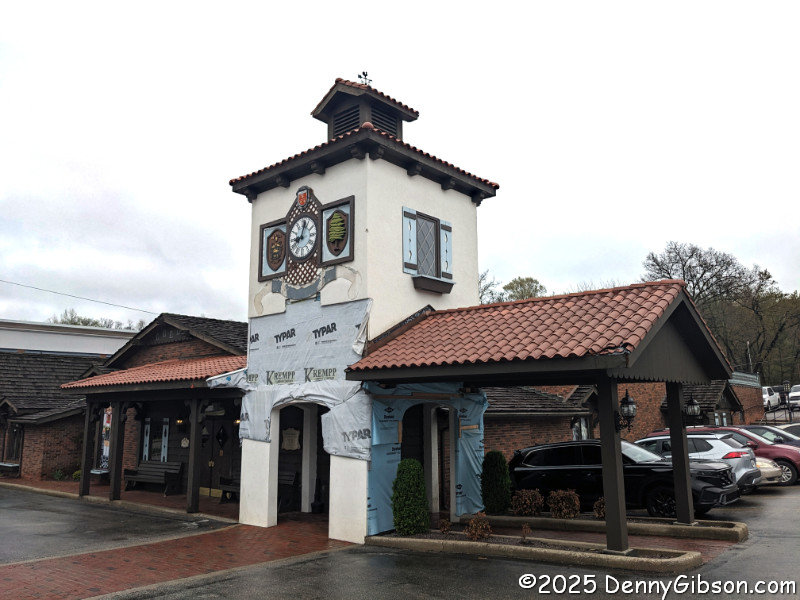
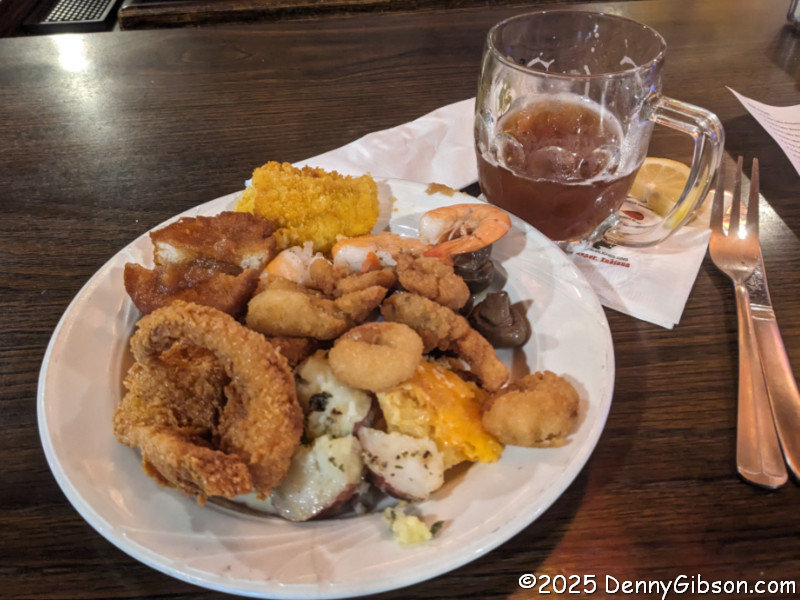
I definitely got outside the lines on the fifth week of Lent. This is very much not a fundraiser for a non-profit. It won’t bother me at all if you count this as a complete fish fry miss. I was in Jasper, IN, and a search for fish fries revealed that one of the town’s most popular Lenten events was the Friday night seafood buffet at one of the town’s most popular restaurants. The restaurant, Schnitzelbank, was already on my radar, so it became my Friday fish find. It was a feast. At $28, it was decidedly outside the normal Lenten Friday budget, but that plate, which followed one from the well-stocked salad bar and preceded one with a couple pieces of fish and a dab of seafood alfredo, contains fried fish, baked fish, fried shrimp, steamed shrimp, new potatoes, scalloped potatoes, mushrooms, a mini crabcake, and a biscuit with apple butter. The Weihenstephaner Hefeweissbier Dunkel was $5.50.

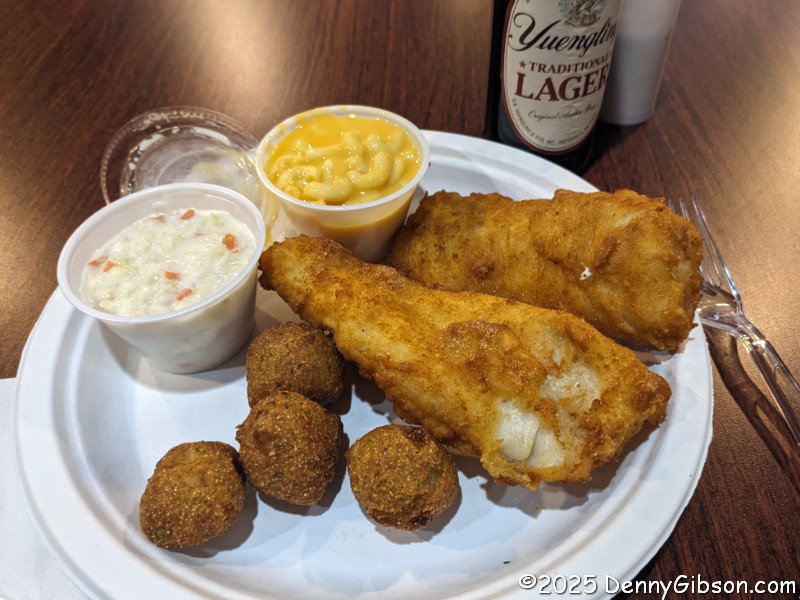
This was my second out-of-state fish Friday adventure for 2025. Florence, KY, Elks Lodge #314 is on the Dixie Highway, so I can claim a few historic auto trail miles this week. The tasty and filling cod dinner was $15, and the Yuengling was $3.25.

Here is the single repeat from last year. Gailey VFW Post 7340 is actually the only 2025 stop that was not entirely new to me. I was also here on Good Friday in 2024 when I ate beside a lady who had recently turned 100. The place was packed last year, but no more than half full this year. I was there very soon after it opened this time, so maybe it was my timing that made all the difference. Unfortunately, neither of the women I asked knew anything about the centenarian I had met, and one of them worked there as a bartender. The meal looked and cost the same — $12 — as last year. This Yuengling was only $2.

Happy Lupercalia

Two weeks ago, I had nothing planned for this blog and was preparing to dust off an old Groundhog Day or Imbolc post when I spotted a notice for a motorcycle show on Groundhog Day Eve. That led to Beer and Bikes, and the Imbolc and Groundhog posts were left on the shelf for another day. When I found myself in the same situation around Valentine’s Day, I got to wondering if Valentine’s Day had the same relationship with older, often pagan, holidays that days like Easter, Christmas, and Candlemas have. After all, its full name is Saint Valentine’s Day.

For me, the answer is probably. Almost all online articles about the history of Valentine’s Day mention the Roman feast of Lupercalia but most stop short of firmly linking the two with phrases like “many believe” there is a connection or that a connection “has been suggested”. Count me among the many who believe.

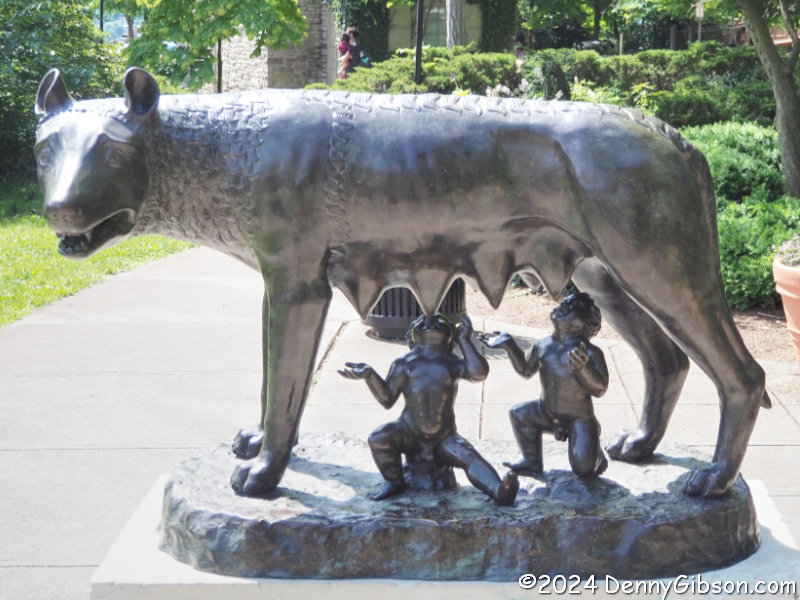
Lupercalia comes from the Latin word lupus which means wolf. Theories about its association with the feast include a deity that protected herds from wolves and the wolf (pictured above) that kept Romulus and Remus alive so they could get Rome started. Some descriptions of Lupercalia imply it was a one-day event held on February 15. Others say it was a three-day affair that filled the 13th, 14th, and 15th.

Regardless of how long they say it lasted, everybody describes it as a quite raucous celebration. Participants were drunk and naked. Men sacrificed goats and dogs then whipped women with strips of the animal’s skins to increase fertility. At some point — which I assume was after the slaughter, skinning, and whipping — men and women were paired up by lot for the duration of the festival. Trysting with a possibly blood-splattered random lady after trying to make her more fertile doesn’t seem all that wise or even fun, but times were different.

That the Christian Church would want to replace that with something more sedate seems natural, but the origins of Valentine’s Day are not well documented. There seems to be no shortage of saints named Valentine. Two are connected to February 14 by virtue of reportedly being executed on that date in different years. The Eastern Orthodox Church celebrates a different Saint Valentine on July 6 and yet another on July 30. One of those guys executed on that special day in February was sentenced to die because he persisted in marrying Christian soldiers when the Roman emperor forbade it. That could be what initially got the day associated with love and romance, but I’m betting it was the Lupercalia lotteries.

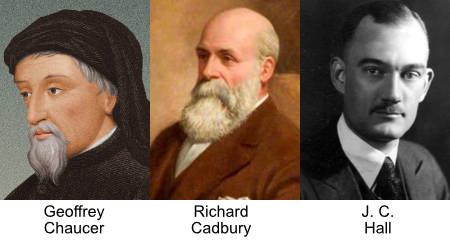
Associating romance with the day really picked up steam after Chaucer published “The Parlement of Foules” in 1375, and a few Valentine cards were sent between lovers during the next couple of centuries. Then Cadbury came up with heart-shaped boxes of candy for the day in 1868, and Hallmark started printing Valentine’s Day Cards in 1913. It is predicted that Americans will spend $2.5 billion on candy this year and $1.4 billion on cards. Throw in jewelry, flowers, and romantic dinners, and the total bill is expected to reach $27.5 billion. I’m sure goats and dogs are also celebrating, but they’re doing it very quietly.


The opening photo is of the Capitoline Wolf in Cincinnati’s Eden Park, taken June 1, 2014. The statue has been admired, denounced, stolen, and replaced. Read about it here.