Seventy Years After

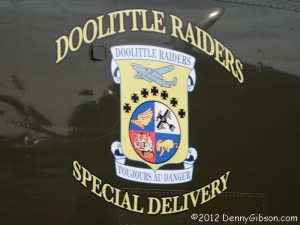
Doolittle Raiders Special DeliveryOn April 18, 1942, sixteen B-25s launched from carriers on a one-way bombing raid over Japan. The physical damage it caused might not have been all that significant but it delivered a much needed lift to moral in the United States and prompted some rethinking and altering of plans by the Japanese commanders. Four of the surviving raiders continue their week-long reunion today and tomorrow in Dayton, Ohio. On Tuesday and Wednesday, airplanes like the ones that made the raid were on hand at the reunion. I was there both days and have an Oddment entry here. Pointing to that entry and providing a place for comments are the primary reasons for this blog entry but…


…I also revisited a couple of interesting eating establishments.

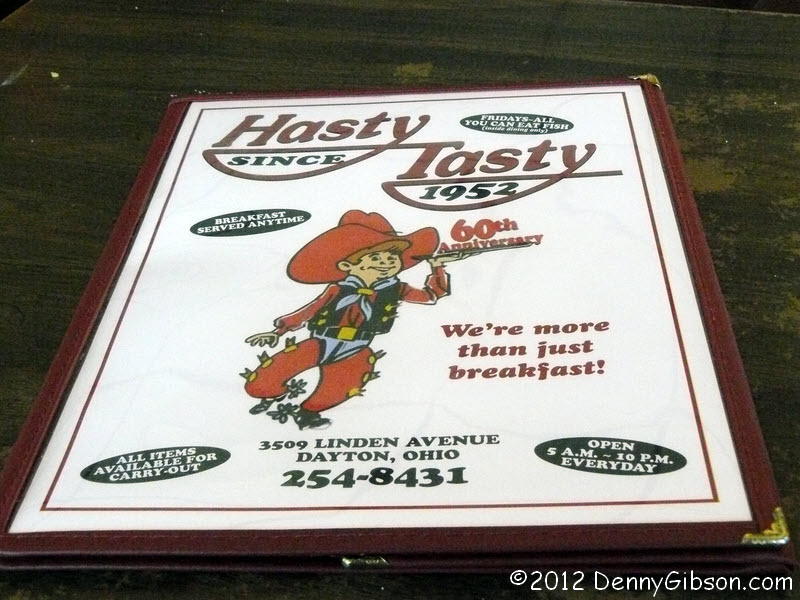
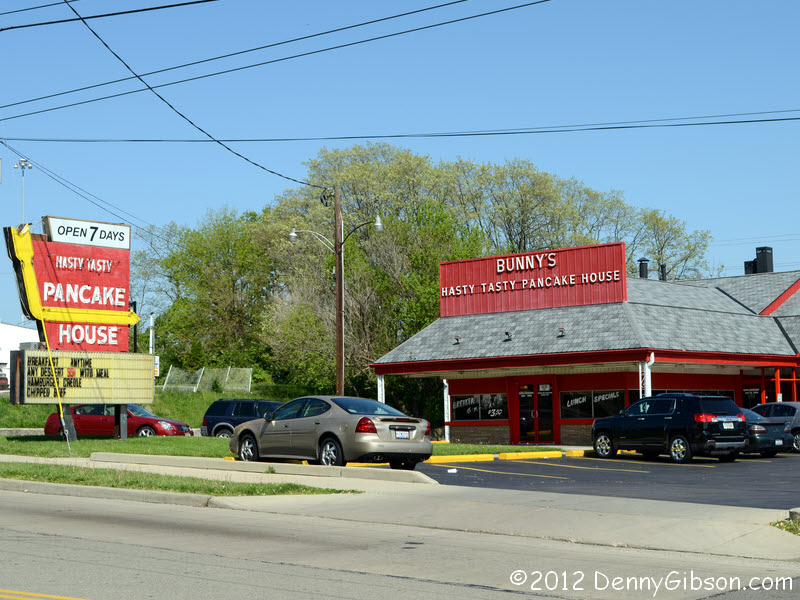
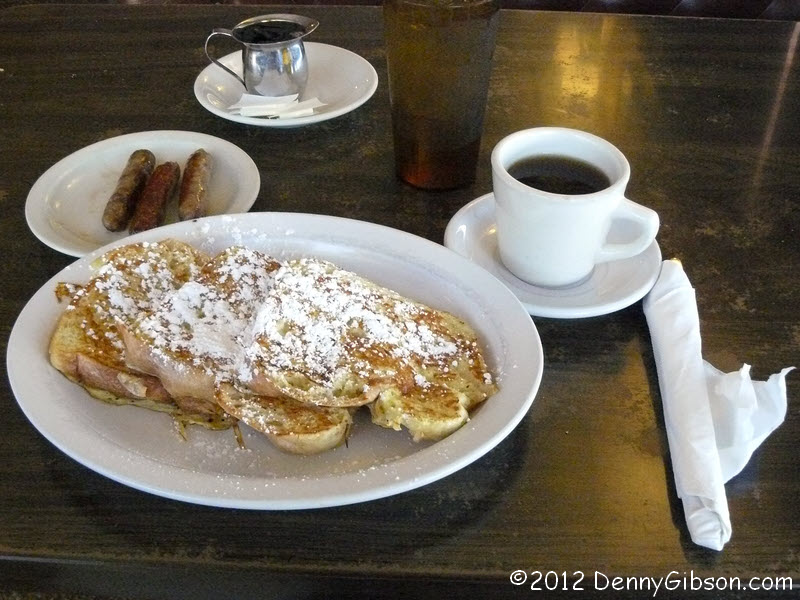
Hasty TastyHasty TastyBreakfast was at the 60 year old Hasty-Tasty Pancake House just a couple of miles from the Air Force Museum. I’ve eaten here before but don’t think I’ve ever mentioned it in either a blog post of a trip journal. A wonderful Dayton eatery where the waitresses that don’t call you “Honey” call you “Sugar”.

Many of the B-25s headed back to Urbana after the flyover and so did I once the memorial service had concluded and traffic cleared a bit. Several of the planes are staying at Grimes Field for a day or two and there is a nice museum that includes a DC3 cargo plane you can climb inside. I took pictures there that could have been included in the Oddment page but I feared that would be overkill.

Crabill's Hamburgers

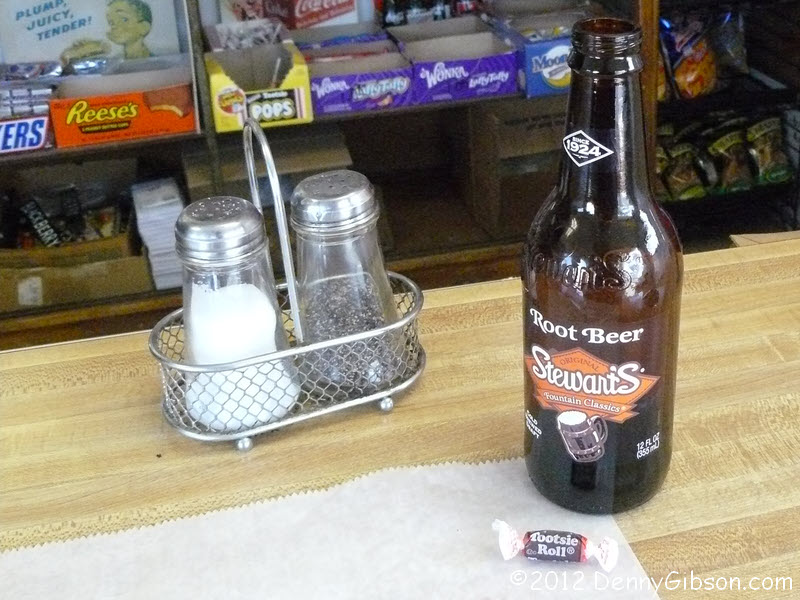
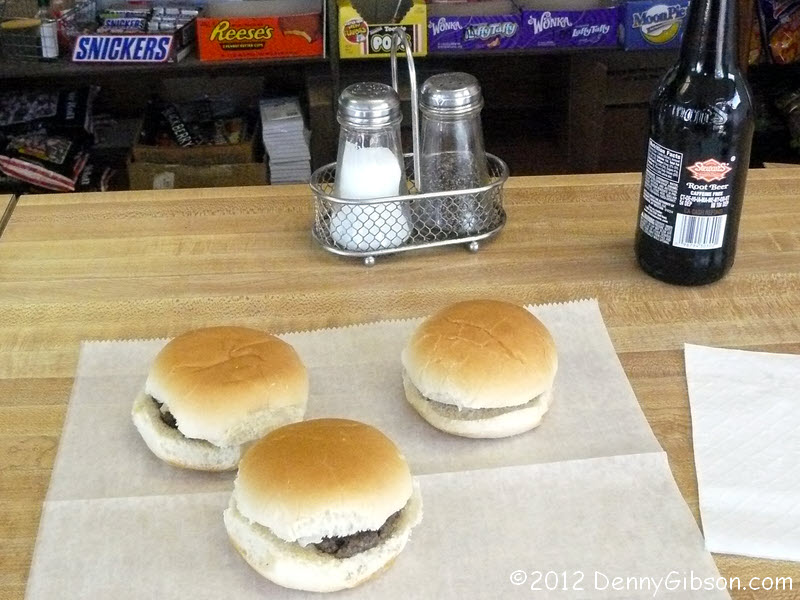
Crabill's HamburgersCrabill’s Hamburgers, at the west edge of Urbana, is even older than the Hasty Tasty although it has moved once. I did mention it when I stopped last summer and none other than David Crabill praised crisp hotdogs. I resolved to try one on my next visit and this was it. Andy cooked the ‘dog just right while I downed my dinner then the friendly but unnamed (Oops, sorry.) waitress obliged me by putting relish on just one half so I could taste it both ways without buying two. The Tootsie Roll is the reward everyone gets for cleaning their plate waxed paper.

Big Music in Small Places

Lisa Biales at MontageIt was double good news when I learned that Ronstadt Generations would be performing nearby. Not only was it a chance to see the talented guys from Tuscon, it was a chance to see a venue I’d only heard — and only heard good things — about. Then, when I began to make arrangements to attend,
I discovered that there was another show happening a couple of nights earlier that I was also interested in.

The Ronstadt Generations performance would be a “house concert” on a Saturday at the home of Marc & Lisa Biales. Lisa would be the opener and would almost certainly be joining RG for a few tunes. When I looked at Lisa’s online schedule, I spotted Greenville, Ohio, listed for the preceding Thursday. Greenville!?!? That’s the big city in my home county. I’m there every couple of weeks. This was big news. I have lots of family there and contacted an aunt who I knew would like Lisa’s music. We made plans to attend and my step-mother surprised me just a little by agreeing to go, too. We got there early and ate some rather tasty sandwiches as we watched a sound check and the arrival of other attendees. My aunt has been to several performances at Montage and told us that the acoustics weren’t great and that the place could get pretty noisy. Lisa and friends proceeded to prove her wrong for at least one night.

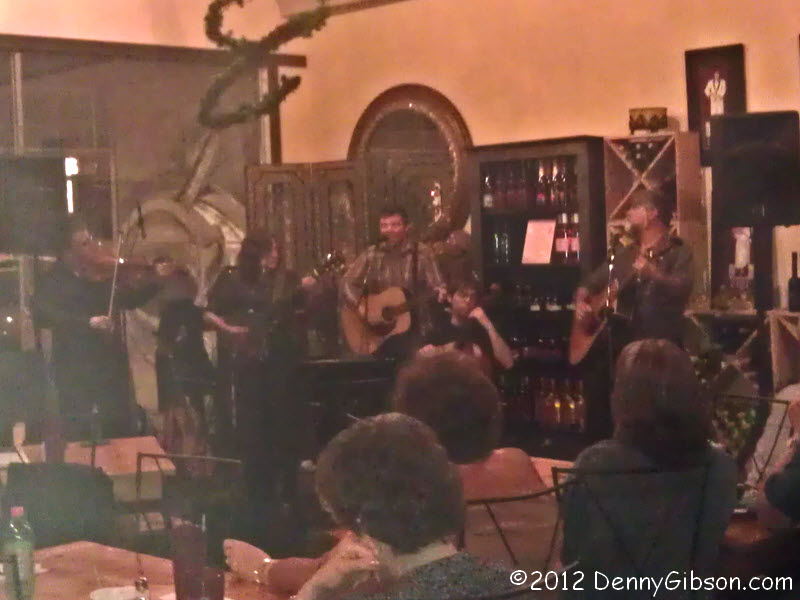
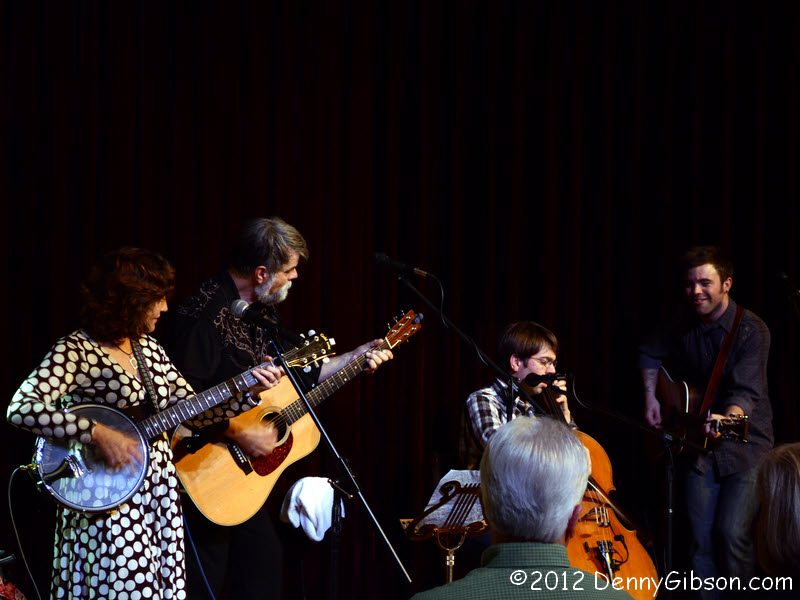
The music held everyone’s attention and everyone held their tongues. A friend who stopped by our table during intermission commented, “That’s a lot of talent to have in Greenville at one time.” The cellphone picture that leads off the post is from that show. Besides fulfilling the claim that “If you want a picture really bad, I’ve got a really bad picture”, it gives a little idea of the intimate setting and you can see all the players if you squint just right. From the left there’s the Lisa Biales Trio: Doug Hamilton, Lisa, and Michael G Ronstadt. Surprise bonus guests are on the right. The other two RG members, Petie and Michael J, (who Lisa settled on referring to as Poppa Ronstadt) came along and sat in for a few songs. A wonderfully unique and unforgettable evening.

The show was part of the Darke County Center for the Arts Coffee House Series. Although this was my first time at Montage, I have attended and enjoyed other DCCA events (e.g., Eric Bibb, Riders in the Sky). They do good stuff.

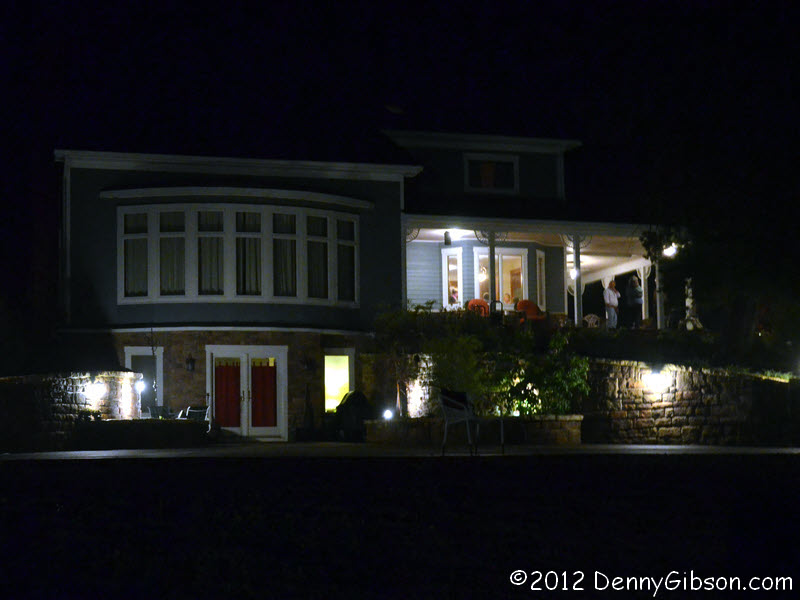
Big Song Music HouseThis is Marc & Lisa’s Big Song Music House. In quiet times, the curved array of tall windows on the left provides a relaxing view of the Oxford, Ohio, countryside. Close the big curtain, however, and the view is replaced by the perfect backdrop for performing musicians. Lisa talks glowingly of the land on which the house sits. There are trails, small critters, and two Lovers Leaps (both regular and “Luke-Warm”). I hope to see some of that on a future visit.

Lisa Biales & Michael G RonstadtLisa BialesLisa stepped to the mic at almost exactly 8:00 to get things rolling. One member of the Lisa Biales Trio, Doug Hamilton, was missing tonight so Lisa and Michael G Ronstadt just delivered a great set as a duo. Knowing Lisa would return now and then to sing with the Ronstadts made letting her go after just three songs at least acceptable.

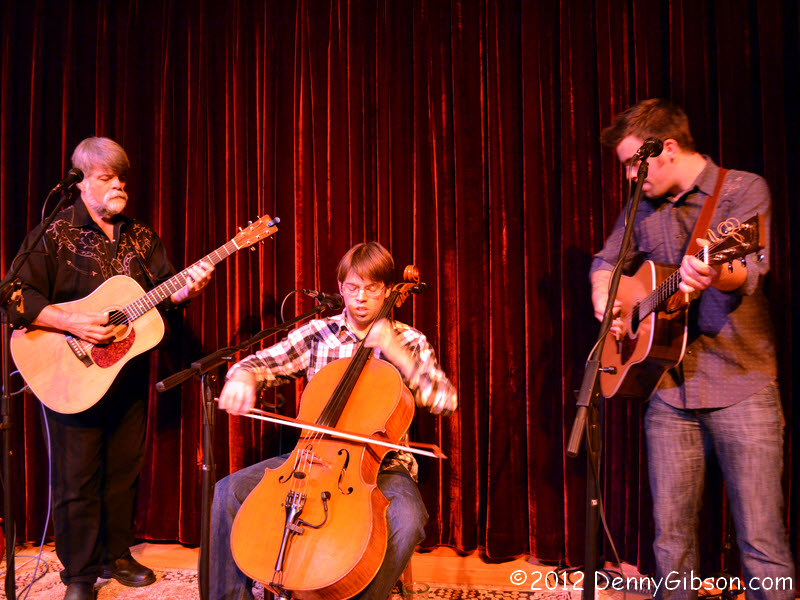
Ronstadt GenerationsThe music was barely paused as Ronstadt Generations took the stage. Not only does Michael G get to sit while everyone else stands (a major cello plus he likes to point out) but he often gets to sit while groups of musicians form around him. Oddly enough, this was the first time I’d seen the official Ronstadt Generations live and in person. I did see them in 2010 but without Michael G. Of course, musicians of this caliber make great music whether they’re in their “official” grouping or not.

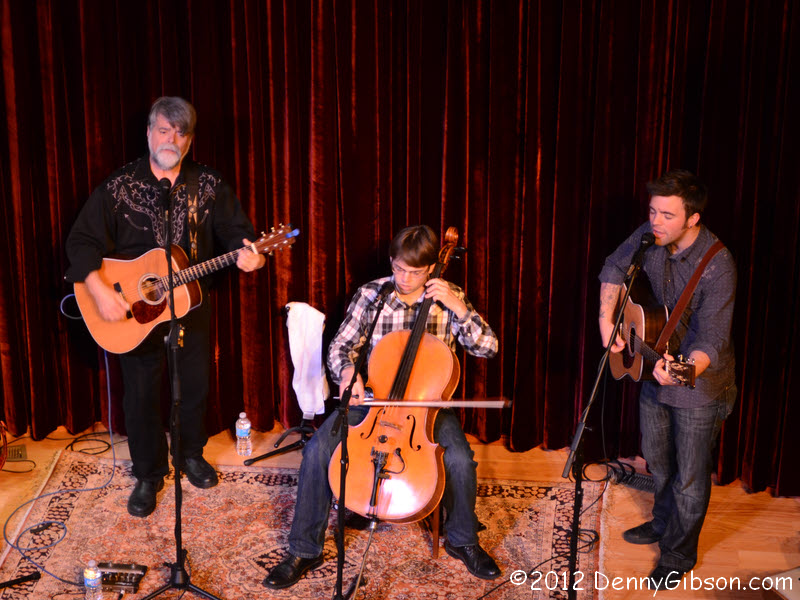
Lisa Biales & Ronstadt GenerationsRonstadt GenerationsSure, there was some overlap between Saturday’s show and what
I heard on Thursday but there were plenty of differences, too. Thursday was Lisa’s gig and the Ronstadts, other than Michael G, were featured guests. The situation was basically reversed on Saturday. But the guests got ample stage time in both concerts. The picture with all four musicians was chosen to give some hint of how much fun the performers were having and of how intimate the setting was. The heads in the front row (where I sat, on the right, for the first half of the evening) show that the audience gets quite close but the room, though fairly full, never felt crowded.

It’s impossible to pick a favorite. Lisa Biales with special guests Ronstadt Generations or Ronstadt Generations with special guest Lisa Biales. Thank goodness those two lineups will never be playing across town from each other on the same night.


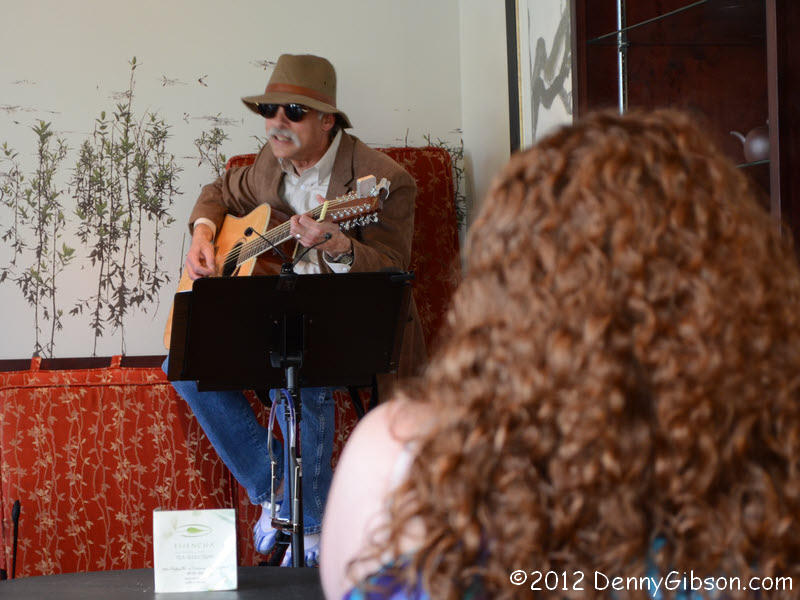
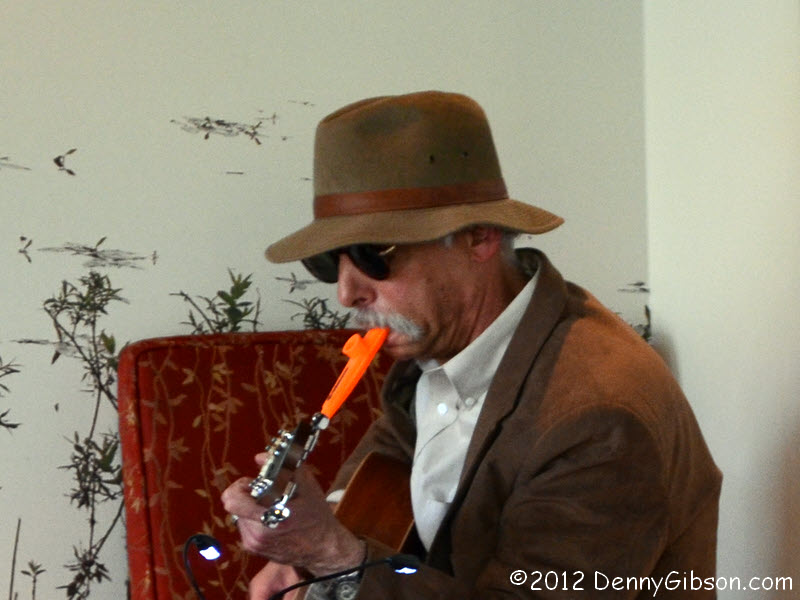
Gary Sugarman at Essencha Tea HouseThis is Gary Sugarman, a neighbor of mine who likes to play guitar and sing. A few years ago, he hooked up with a couple of friends who liked doing that, too, and they had a good time playing and singing and occasionally entertaining small groups. Things changed a little when they added a drummer but they were still having fun. Next came a bassist and that “we’re a band” moment. It was still fun but not quite as much and the fun was sometimes offset with something that felt a little like work. Gary is still part of that band, the Creekyknees, but decided to try performing solo for the first time. He’s approaching it cautiously and debuted today in the small Essencha Tea House. It holds about twenty and was seeded by a half dozen friends. I made it for his second set and liked what I heard. So did his other friends plus some ten or so people who didn’t know him at all. Will Gary be soloing more in the future? Don’t know. Did he have fun? Absolutely.

East, Easter, Eastest

Easter RabbitYes I am one of the sabbath slighting sots of Cincinnati mentioned in the previous post but I don’t slight holidays.
I may not be entirely sold on the religious significance of some of them but days that appear in red on the calendar and give humankind a reason to do something different are OK by me.

May you find all your eggs without stepping on them, your chocolate bunnies before someone else bites the ears off, and your Peeps before they reach the hardness of granite.

Happy Opening Day

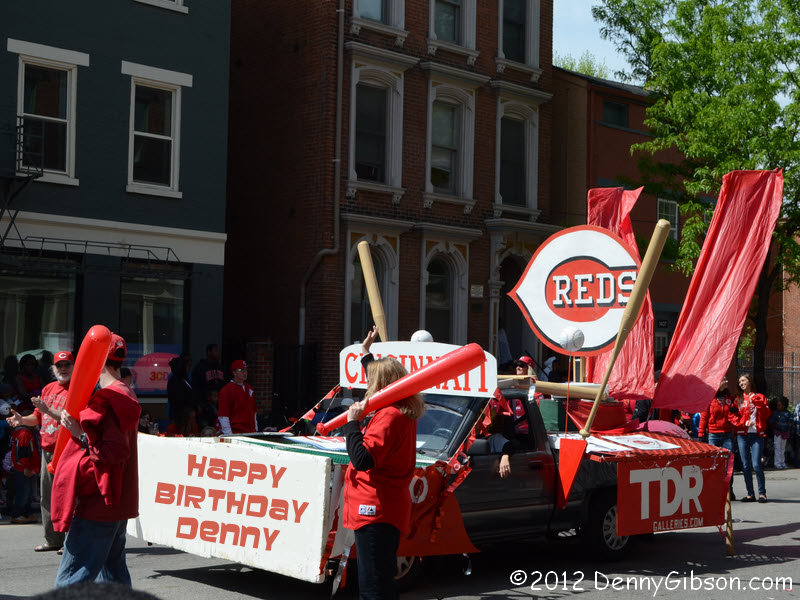
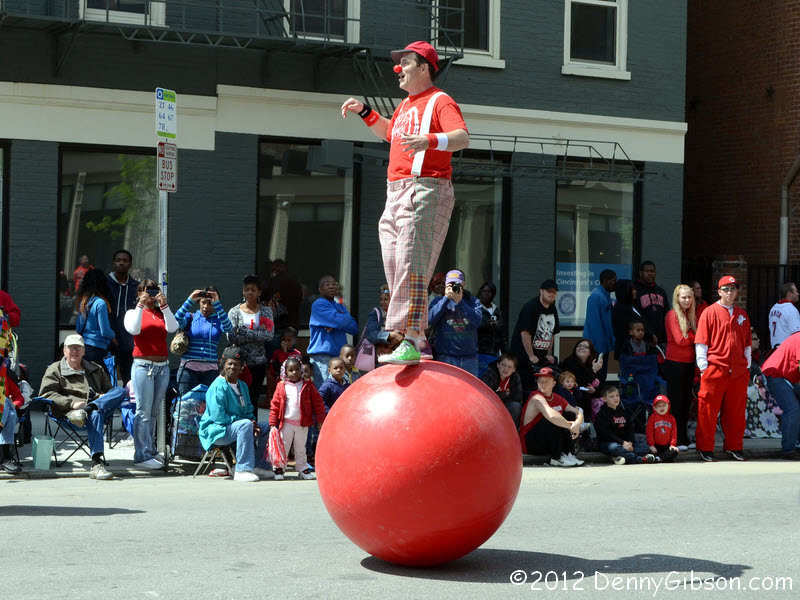
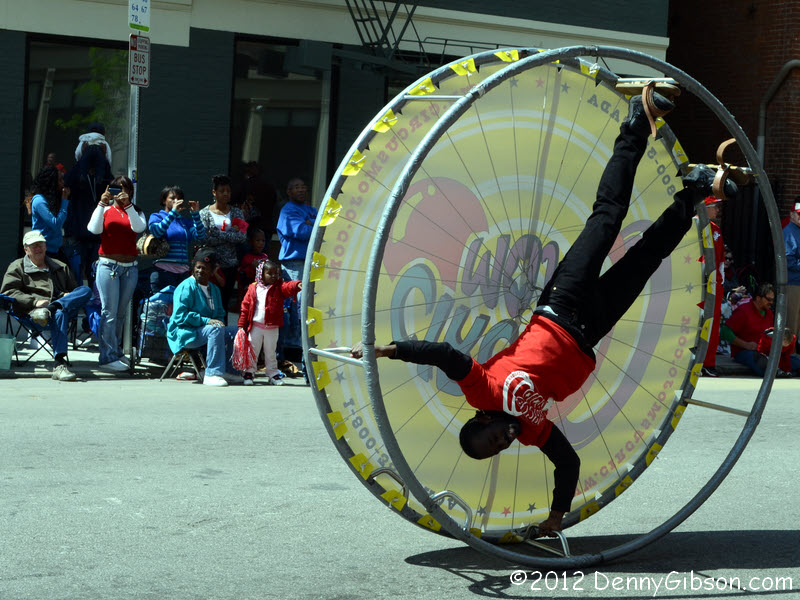
Cincinnati 2012 Opening Day ParadeCincinnati did it again. As they have seven times previously, the fine folks in Cincinnati threw a parade for my birthday. They almost didn’t get it done this year. You see, they don’t have a parade on my birthday every year but they do have a parade on Reds’ opening day every year.

“They” are the folks over at Findlay Market. The market is even more of a Cincinnati institution than the Reds. It opened in 1855 and is the oldest continuously operated public market in the state of Ohio. The Findlay Market website contains some great reading on the history of Findlay and several other Cincinnati markets, too. Merchants from the market have been participating in the parade since 1920 and long ago became its organizers. They are, however, merchants first and paraders second and the original date for this year’s opener presented a problem. The original date was April 6 which is also Good Friday which is also one of the Market’s biggest days. They couldn’t afford to shut down for the day but it was unthinkable to scrap the parade. Fortunately Major League Baseball and everyone else involved agreed and the game was moved to the 5th and I get a birthday parade. There’s a good story about the date move here.

Even when it’s not on my birthday, Opening Day in Cincinnati is something special. The Reds are the only major league baseball team that starts each season at home. With one exception, they always have. The fact that Cincinnati is the birthplace of professional baseball surely has something to do with that but there were also practical reasons involved in the early days when many of the other teams were in cities even further north with even colder and muddier springtimes than Cincinnati.

I suppose I’ve been a Reds fan from the day I was born but my early exposure came from the newspaper and radio with a little TV thrown in as I got older. My first memory of being in Cincinnati for Opening Day was 1967 when I was co-oping with the Cincinnati Water Works. An unwritten rule was that any city employee who proved they were going to the game by showing a ticket could take all or half the day off without pay and without repercussions. I know that wasn’t absolute and that there were many exceptions but I do recall the office being rather sparsely populated that day.

The parade now has its own website separate from the one for the Market. It’s here. Click on that “History of Opening Day” link near the top of the page for some excellent reading. Highlights include the fact that the Reds (known then as the Red Stockings) held their first opening day parade in 1890 which was also the first year the current franchise played in the National League. Another Cincinnati Red Stockings team had been a founding member of the league in 1876 but that club was expelled in 1880 for ignoring a couple of league rules. The NL decreed that games should not be played on Sunday and that no alcohol should be available when they were played. A lot of beer drinkers in Cincinnati thought otherwise. Apparently that original franchise got moved to Detroit where, as the Wolverines, it folded in 1888. The sabbath slighting sots in Cincinnati formed a new team and helped form a new league. The new team reused the Red Stockings name and the new league was officially named the American Association. One unofficial name was the “Beer League”. It was during their time in the AA that the team played that lone opener on the road. In 1888, they traveled a hundred miles down river to play the Louisville Colonels. Financial problems ended the AA in 1891 after just ten seasons. The Cincinnati club had jumped to the NL two years before the end. On April 19, 1890, they promoted their first NL game with their first opening day parade. That inaugural parade consisted of one streetcar for a band, another for the home team, and a third for the visitors, the Chicago Colts (formerly White Stockings, eventually Cubs).

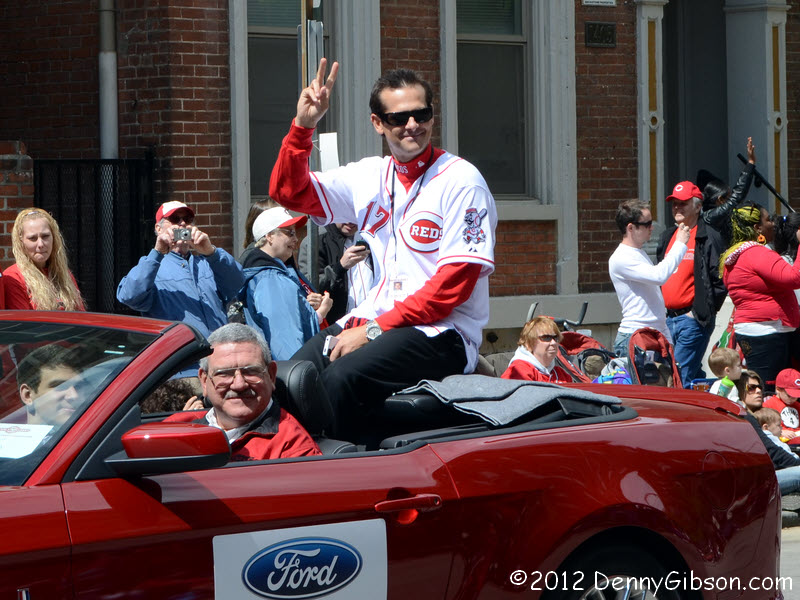
Grand Marshall Aaron BooneAt two and a half hours, today’s parade was significantly longer. Former Red Aaron Boone was the parade’s Grand Marshall. Aaron had a pretty cushy ride compared to Bobby Ball Walker and Ronnie Ring Roller. If these guys walked and rolled their way through the mile plus parade route, they certainly deserved all the Cincinnati beer and chili they could eat — if any. The weather was great, the parade was great, and the Reds finished off a perfect day with a 4-0 win.

That’s not exactly typical. There is a list of all Reds opening day games here. The record isn’t glorious. The tally currently stands at 63-67-1. They last stood even in 1993 and the last time they could boast of a winning opening day record was in 1928 after they beat those Chicago Cubs to bring the record to 24-23.

Opening on my birthday hasn’t helped. Prior to 1961 the shorter season kept the two events from getting close and even after coinciding becoming a possibility it didn’t actually happen until 1971 with the Reds first opening day in Riverfront Stadium. Since then it has occurred in 1973, 1982, 1993, 1999, 2004, 2010, and 2012. The 1993 game was extra special. Prior to today, that was the only birthday on which I could celebrate a Reds win.

Product Review – Dial2Text

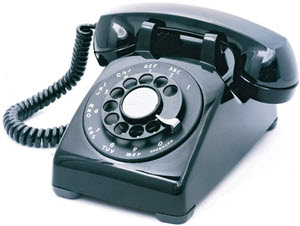
Rotary Dial TelephoneBefore learning of this product, I hadn’t really thought about the fact that texting, something many people take for granted, is not universally available. Dial2Text doesn’t solve that completely but it does open the door to one previously ignored segment: rotary phone users. In 2006 it was estimated that as many as 14% of all phones in the US were rotary. The percentage has no doubt dropped but the folks behind Dial2Text believe the number is still significant. Dial2Text is being rolled out in the Cincinnati area beginning this month and, if all goes well, could be available nationwide by year’s end.

Dial2Text is marketed as a service much like cell phone texting. In fact, proposed rate plans are identical to those available to cell phone users: $0.20/message or $4.99/month for 500 messages. An unlimited plan could be added but Cincinnati Bell feels it is unlikely that many users will have the stamina to go above 500 messages per month.

No phone modifications or attachments are required meaning that, once a line is authorized for Dial2Text, all devices on that line can use it. Doing that may take a little practice, however. Most characters require two inputs. Exceptions are ‘0’ and ‘1’. Dial either of those numbers and you’re done. For any of the other eight, you need to dial a second digit to indicate which of four possible characters (the original number or one of three letters) is desired. For example, the sequence 3-1-4-1 would send my initials. The ‘3’ indicates the finger hole with the number ‘3’ and the letters ‘DEF’. The ‘1’ indicates the first of those letters, ‘D’. A ‘0’ (zero) would indicate the originally dialed number, ‘3’, and the numbers ‘2’ and ‘3’ would indicate the letters ‘E’ and ‘F’ respectively. Similarly, the number ‘4’ selects the ‘4GHI’ finger hole and the number ‘1’ indicates the letter ‘G’. The address of this website can be communicated with the sequence 3-1-3-2-6-2-6-2-9-3-4-1-4-3-2-2-7-3-6-3-6-2-2-3-6-3-6-1 although a dot must be manually inserted in front of ‘com’.

As you can see, it’s all very simple. Even so, it will undoubtedly take some concentration and there could be errors. Something like forgetting to dial that second digit or having your finger slip from the hole before you’ve made it all the way to the little hooky thing could seriously alter the message. The developers claim that this will simply provide Dial2Text users with some of the same fun and humor that auto-correct provides to cell phone users. In fact, anticipating something along the lines of DamnYouAutoCorrect, they have locked up the DamnYouSlippyFinger.com domain name for the next five years.

ADDENDUM 25-Mar-2018: The DamnYouSlippyFinger.com domain has expired but the home page, which contains audio, is preserved here.

Developers similarly downplay the lack of lowercase letters and punctuation. Citing studies of random samples of real text messages that show senders rarely have any concept of either, they say the Dial2Text limitations are actually a boon. The typical rotary phone user might be inclined to use proper capitalization and punctuation and even correct spelling. As one Cincinnati Bell spokesman said, “That would make them stand out like a sore index finger”.

Receiving Dial2Text messages couldn’t be easier. Using the latest text to speech technology, Dial2Text simply calls the user and reads messages aloud. There is no queuing for multiple messages but, after announcing that a text message has been received, Dial2Text pauses for thirty seconds to allow the user to get pencil and paper. Users with answering machines who screen calls can get the messages recorded onto cassette tapes or other media by simply not picking up the receiver.

One member of the local Beta test group who used the answering machine trick is Joe Kerr. Joe really likes actually hearing from his grandchildren now and then. “They never call or visit”, he said, “but they will send a text message.” He smiled as he played back a recent message from a grandson in response to a birthday card. The message can be heard here. Joe admits he doesn’t understand even the tiniest part of the message but says it’s the thought that counts. He also shared a message from a long time friend alerting him to something on TV. That message is here. The heads-up would have been appreciated even more if the show hadn’t been over before the friend finished composing the message. “He’ll get better”, Joe says.

But, like many high tech breakthroughs, Dial2Text fails to impress everyone. Zachery Quinn, another Beta tester, wants nothing more to do with it. “Those greedy bleeping bleepers want twenty cents to send a message I can’t even sign with my initials? Bleep ’em.”

My Gear – Chapter 9
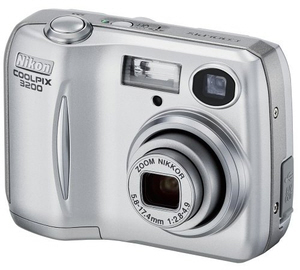
Nikon Coolpix 3200

Nikon Coolpix 3200Unlike most of my camera purchases, the Panasonic DMC-FZ5 was not a replacement but an addition. The Canon A75 was still functioning and I intended it to be my “pocket camera”. That didn’t last long. After the cap popped off of the shutter button, taking a picture required pushing something into the small hole that had been below the cap. Although the camera otherwise functioned quite well, digging up and inserting a paper clip for every picture was a serious impediment to spontaneity. In March of 2006, I gave the A75 away and, still believing I needed a true pocket camera, bought a slightly used Nikon Coolpix 3200 for $70. The model had been on the market for a couple of years with an initial list price around $300. It runs on good old AA batteries, uses SD memory, and even has some built-in memory to store several images if necessary. It has 3.2 megapixel resolution and a a 3X zoom. Particularly endearing to me is the fact that it has something becoming quite rare in small digital cameras: a viewfinder.

I still have the 3200 and it still works. I still carry it in my computer bag but it has been a long time since I slipped it into a pocket. One reason is that the FZ5 and its immediate successor fit comfortably in a belt bag that I wear a lot. A second is that cell phone cameras have long been capable of meeting my “I’d rather have a crappy picture than no picture” requirements. I have a vague recollection of actually using a cell phone photo in a trip report but I can’t remember what it was so maybe I really didn’t.

I have used quite a few pictures from the 3200. In the days before I realized how easy it was to carry the FZ5 in the belt bag, the 3200 was in my pocket a lot and got used a little. Then, on a trip in Missouri, it got a field promotion to Number One Image Recording Device.

It was the third day of a four day outing on Boone’s Lick Road. The FZ5 came with a fairly nice neck strap but that seemed unnecessarily awkward to me so I fitted the lightweight Panasonic with a wrist strap. The strap was around my right wrist and the camera in my hand as I headed down the path to the spring at Boone’s Lick. The path was basically dirt and gravel but there were a few wood fronted steps at the steeper parts. It had been raining, the wood was wet, and I slipped on one of the steps. No prizes will be awarded for guessing which hand I used to catch myself or what I banged against the ground. The lens had been extended and that’s the way it has stayed to this very day. Cycling power on the camera triggers a soft whir as it attempts to retract the lens but it soon gives up and shuts down.

The little 3200 answered the call and performed admirably through the remainder of the trip. Among the images it captured are the only pictures I have of the Missouri Madonna of the Trail Monument in Lexington.

My Gear – Chapter 8 — Panasonic Lumix DMC-FZ5


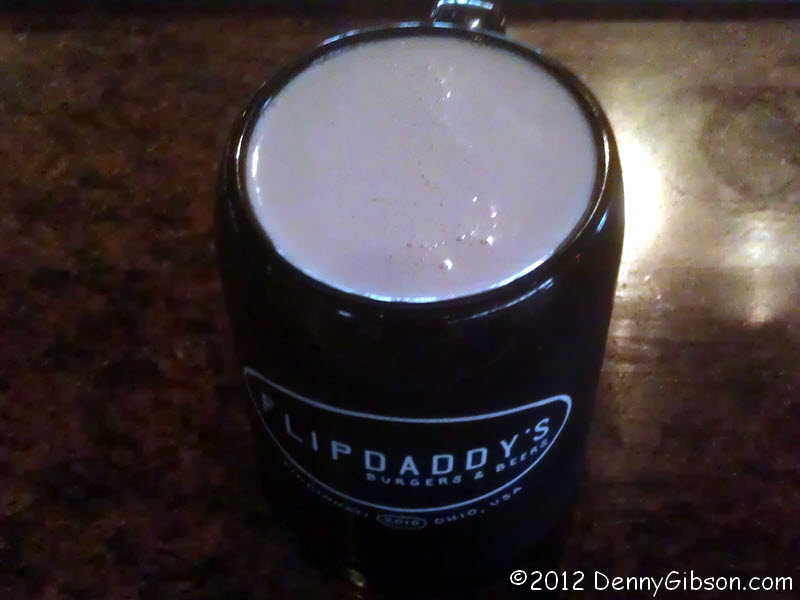
Flippdaddy's MugI acquired some new gear today by joining the Mug Club at the Flipdaddy’s down the street; The one with 36 taps. There’s no price break but member’s mugs are several ounces larger than the standard glasses which means I can now get drunker and fatter at no extra cost.

The Stars: Up Close and Personal

Wolff PlanetariumThis was the first week of the 2012 NCAA basketball tournament. Both local entries, Xavier and the University of Cincinnati, survived their first games and are playing tonight (Sunday). The week also contained Saint Patrick’s Day with temperatures in the 70s and a parade on the actual holiday. However, even amid all the madness, marching, and meteorologic magnificence, the highlight for me was sitting in a folding chair inside a seventy-five year old stone building.

Trailside Nature CenterTrailside Nature CenterThe building was the Trailside Nature Center in Cincinnati’s Burnet Woods. The chair was part of a circle surrounding the oldest planetarium west of the Alleganies. The WPA built the Nature Center in 1939. It didn’t have quite as many walls in those days and there was no planetarium. That arrived around 1950. Planetarium is the name of the precision projector; Not the building. This one, known as the Wolff Planetarium, is a Spitz A-1. The original unit, purchased for about $500, was an A model but somewhere along the line, it was sent in for repairs and came back an A-1. Maybe it was easier to replace rather than repair the broken unit or maybe the update was the best way to fix things or maybe it was a mistake. No one in Cincinnati wanted to chance asking. Another bit of luck seems to be behind the dome. While it is possible that the builders had a planetarium in mind (America’s first planetarium, the Adler Planetarium, opened in 1930.) there is, apparently, no evidence of that. In fact, the dome is just a wee bit short so that some stars get projected on the wall below the “horizon”. The building originally contained even more museum-style displays than it does now and the dome was just part of the ceiling.

I’ve been to a few planetariums but most have been the typical late twentieth century set up with a recorded presentation and automatic/computerized positioning and all had seriously reclined seating that points your eyes to the artificial sky without your neck being involved. There is absolutely nothing wrong with that. Laying back in a nicely padded recliner is one of my favorite “activities” and swiftly stepping through seasons or centuries accompanied by carefully synchronized music and commentary is certainly entertaining and informative. But it’s not interactive and it’s not very intimate and it’s probably not as much fun as I had Friday night.

Trailside Nature CenterA good part of that fun can be directly attributed to Mr. Mike. Mr. Mike does the greeting, reservation list checking, and fee collection. He also pulls the curtain!, operates the projector, delivers the commentary, aims the (definitely not here in 1950) laser pointer, and occasionally punches buttons on a boombox to launch stuff like Also Sprach Zarathustra and Here Comes the Sun. He also encourages and answers questions and prompts attendees to help with sound effects as he tells Greek, Roman, and Native American stories (“…and then the mother bear let out a deep growl.”). Constellations of the Zodiac were a big part of Friday’s show and Mr. Mike shared pointers on how to find several of them.

I don’t know if Friday’s audience was typical but I do know it was one of the most diverse I’ve ever been part of. That this was in a room with a capacity of twenty made it even more impressive. Five of the seats were filled by three rest home residents and their two attendants. They arrived in a lift-equipped van and slowly made their way to the show on walkers. The park borders the University of Cincinnati campus and two seats were filled by a young couple who looked as if they might be students on a date. There was a mom-dad-and-two-kids family. There were two or three mothers with young children. There were black folks, brown folks, and white folks. Everyone was attentive and most contributed comments or questions. The kids did the best sound effects. The people from the rest home showed the most appreciation.

Mr. Mike’s helpfulness continued after the show. Outside, he identified the only star visible in the early evening sky as Sirius. The other two bright spots most of us thought were stars he told us were the planets Venus and Jupiter. You may find information on the internet claiming there are weekly shows with $2.00 admission. At present shows are held once a month and admission is a still bargain $5.00. Call  (513) 751-3679 for the latest information and to reserve your folding chair.


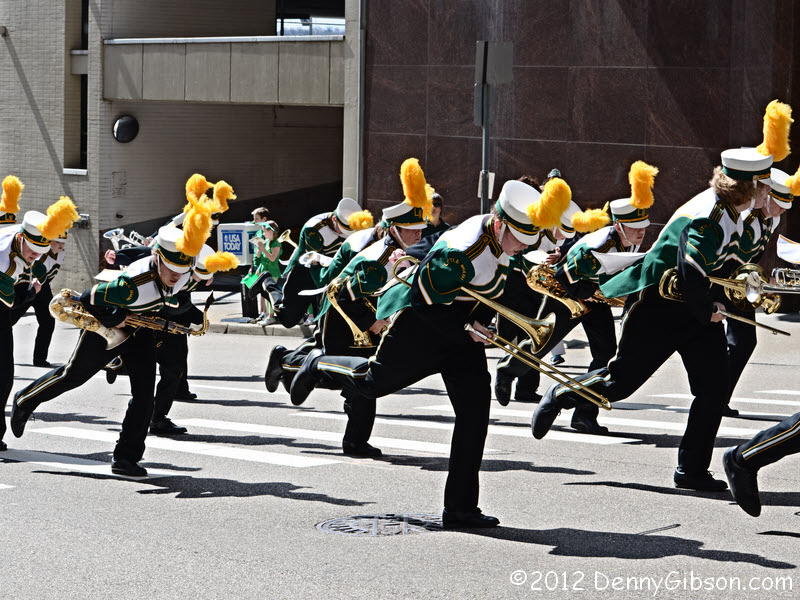
2012 Saint Patrick's Day Parade2012 Saint Patrick's Day ParadeOf course, I can’t just ignore Saturday’s parade. With the temperature at a record-tying 74 degrees, the crowd was huge, and so was the parade. I have not heard attendance estimates or the number of units but getting the parade out of the staging area took well over an hour and a half.

Thomas GriffinFormer Air Force Major Tom Griffin, one of five surviving Doolittle’s Raiders, was the parade’s Honorary Grand Marshall. I’ve always thought that “honorary” meant “not really” and I’ve never figured out what a parade’s Grand Marshall does except ride and wave. In other words, Grand Marshall seems like a rather honorary position so the title Honorary Grand Marshall seems something of a slight. I hope I’m overthinking it. Major Tom was one of the things I was looking for in the parade. I got this so so shot through the crowd at the turn onto Fifth Street then moved ahead in hopes of getting a better picture. After working my way through the crowd at Fountain Square and beyond, I discovered that the car he was in had disappeared and that the real Grand Marshall, whose name I failed to note, had bailed out of his ride. I gave Griffin the benefit of the doubt and thought he might not have felt up to traveling the whole route. But I’ve since seen a photo of him standing at the reviewing stand and I’m guessing that the real GM is there, too. I heard “Where is he?” comments from the crowd beyond the Square so I know that others wanted to see the hero as well. I’ve never studied the subject but this is the first time I’ve been aware of Grand Marshalls of any sort not finishing a parade. If it was Griffin’s decision — if he wanted to see the parade from the front row — I’ve no complaint whatsoever. He has more than earned the right to get out of the car anywhere he pleases. However, if anyone else at all came up with this idea, you should probably apologize for leaving more than half the parade route asking “Where is he?”

Spam, Spam, Eggs, and Spam

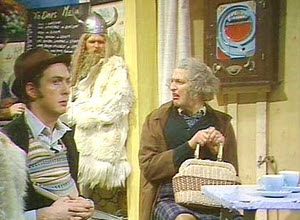
Monty Python spam skitA 2005 survey reported that people were spending an average of 2.8 minutes a day deleting email spam. Whether that was for the entire US population, the 75% of internet users they reported receiving spam messages daily, or some other group is unclear. Regardless of who was doing the deleting, the survey went on to state that the resulting loss in productivity was costing $21.6 billion dollars a year. My search failed to turn up more recent statistics although I imagine they’re out there. Or maybe not. Maybe the statisticians are now too busy deleting spam to conduct surveys.

I believe I’ve deleted my share. There have been times when, between work and personal email, I’ve had 200+ spam messages to deal with each day. Of course I had some filtering in place but the fear of having a critical communique erroneously identified as spam meant scanning the junk folder for messages from colleagues or customers. Eventually, as the quality of and my confidence in anti-spam software increased, I was able to configure things so that the vast majority of those messages were quietly and automatically done in by the software without me hearing the screams or needing to move the bodies. I know the amount of spam email pointed my way didn’t actually decrease but I was protected from the bad-guy software by some good-guy software.

I’m now at a similar point in dealing with comment spam. Comment spam doesn’t come through an email account. It comes, as the name indicates, through comments on blogs and forums and such. Much email spam is just silly but some of it is truly malicious or criminal; intent on doing damage or stealing something. Same thing with comment spam with one big twist. Reader comments can actually become part of the content of the site on which they are entered. This means that any malicious or criminal links contained in the comment are now available to the whole world wide web. They are usually surrounded by such inane drivel that it’s hard to imagine anyone ever clicking on them but I suppose it happens. I’ve little sympathy for any English speaker who clicks on a link surrounded by Russian or Portuguese or even the broken English gibberish that seems to be the norm.

Comment spam, at least in theory, can have value to its producer even if no one ever clicks on embedded links. Search engines do consider links to a website in establishing that site’s rank. Apparently lots of spammers believe that getting a pointer to some site on a blog with absolutely no other connection to the site will boost its rank. I feel that’s pretty much a myth though I don’t really know that. I do know that search engines are not dumb. Spammers, it seems, are.

To date, no comment spam has actually appeared on this blog. It has appeared briefly in the site’s guestbook and in the now deceased forum. In the case of the guestbook, I get email notification and it’s so infrequent that I simply manually delete it ASAP. That is usually within a few hours; Often within a few minutes. With the forum, I initially allowed comments by guests but switched that to members only when spam started to appear. Of course, with the forum completely removed, that’s all just history.

From the blog’s beginning, I’ve employed the simple but effective technique of requiring everyone’s first post to be approved by me. That keeps the spam from appearing on the blog without hampering folks I trust. I recently went one step further by installing the AntispamBee plugin. Without this, I had to manually mark each qualifying post as spam. Not a big job but one I could avoid and avoiding work is always attractive. At present, all suspicious comments are placed in a folder where I can look them over before dumping them down the cyberdrain. The big plus is that my email is not cluttered with requests to moderate every piece of crap that this way comes. It has been in place for about a week and hasn’t misidentified anything so far. Assuming that continues, I’ll probably turn on the automatic disposal in another week or two.

My blog spam snapshotIt was the pending “loss” of these comments that prompted this post. Most are just aggravating but a few are hilarious. They are almost always filled with praise in hopes, I assume, of winning my approval but the typical message is such a jumble that I can’t imagine even the most desperate ego succumbing. Like newspaper horoscopes, the messages never mention anything specific about the post they are supposedly responding to. The majority appear to be from Russia, Eastern Europe, and Brazil. There have been a few bulk posts. A bunch once showed up pushing a particular brand of shoe and there were a couple bursts touting some dress label. At one point I received quite a few from someone in Brazil saying they would “adore to reveal” something (a Portuguese word I’ve yet to find a translation for) “in web cam”.

I’m closing with three of my favorites:

Among the finest to tell a person that i’m simply brand new in order to blogging and definitely liked you are web site. Probably I will save your website . You certainly have outstanding articles. Kudos with regard to sharing around your blog.

I be aware like Im constantly looking by cause associated with inviting things to pore more than close by a number of subjects, but I be successful to include your own set up among my personal reads each and every life time since you give delivery in order to compelling records that I appear forth to.

Thanks for the information, I rarely like it.

Product Review
Route 66 Attractions
with Ready2Go Tours

Route 66 Attractions with Ready2Go ToursMy relationship with Garmin GPS receivers goes back to my first documented road trip in 1999. I haven’t owned a lot of different models and I’m definitely no expert but I’ve used and liked Garmin products for quite awhile. Then, as I traveled with a new unit I bought last April, I began to think that Garmin had completely abandoned me. It took several email exchanges with a fellow named River Pilot to convince me that Garmin still makes products capable of following turn-by-turn routes. Garmin, however, insists on aiming those products at motorcycles. I drive a car.

River Pilot doesn’t work for Garmin. He owns River Pilot Tours, a company offering, among other thing, motorcycle tours of Route 66. They developed the subject of this review. Since River was so helpful in explaining the, in my opinion, warped Garmin product line, I really wanted to like his product but feared I wouldn’t.

I crept up on it. An important thing I learned from River is that there are at least two different types of software inside Garmin GPS units. That inside zūmo®s handles turn-by-turn routing properly; That inside nüvi®s (and other models) does not. By “properly”, I mean the device will not only guide you from point A to point B but will do it along a specific pre-plotted path. The unit I got in April was a nüvi®. I recently bought a zūmo® 220. After a few experiments in the neighborhood, I used it on a trip to Florida and convinced myself that it would indeed follow my routes. Then I bought Route 66 Attractions with Ready2Go Tours.

There are two different River Pilot Tours products available to mate up with the two types of Garmin products. Route 66 Attractions contains more than 800 points of interest (POIs) along Historic Route 66. Each has a description, a photo, and contact information. Almost any current Garmin street product is capable of guiding you to any of the attractions. Then, just as the name implies, Route 66 Attractions with Ready2Go Tours adds turn-by-turn instructions for both east and westbound tours of the route. Both products are published by SpotItOut and both are available for purchase and download at their website. Prices are $30 “with” and $10 “without” although the “with” version is currently on sale for $25.

UPDATE 4-JAN-2014: SpotItOut ceased operation sometime back and River Pilot Tours now sells its products directly on SD cards. The “regular” Route 66 GPS Attractions Guide can be purchased through the online store but the version with Ready2Go Tours cannot. Because not all Garmin GPS units are capable of running the turn-by-turn software, River Pilot Tours requests that potential Ready2Go Tours customers call (307 222 6347) or email (tours@riverspilot.com) so that compatibility can be determined before money is spent.

UPDATE 6-JUL-2014: Both versions of the Route 66 GPS Attractions Guide can now be purchased through the online store. If there is any doubt about compatibility or if there are other questions, just call (307 222 6347) or email (tours@riverspilot.com) for some friendly help. To remove any question of compatibility and avoid the purchase of a high end GPS for one time use, a pre-loaded unit can be rented from River Pilot Tours. Call or email for details.

Purchase, download, and installation were straight forward. The addition to my GPS looked good throughout a bit of playing but it’s really tough to judge a product’s Route 66 turn-by-turn capabilities in a living room in Cincinnati. Last Saturday’s cruise in Illinois provided an opportunity to get a better look.

I was purely a follower on the cruise which meant no one was depending on me and I wasn’t depending on the GPS. At our starting point in Mitchell, I selected the Illinois eastbound tour. I was given a chance to preview the route on a map or read a brief description. When I pressed “GO”, the unit spent a few moments calculating then asked if I would “like to navigate to the start of the Custom Route”. When I pressed “No”, it sat there quietly with a magenta line showing the route on the screen.

Route 66 Attractions with Ready2Go Tours screen shotAs we cruised northeast through Edwardsville and Hamel, the voice from the GPS essentially described the actions of the cars in front of me. It allowed me to anticipate turns just a bit so I might have even looked like I knew where I was going. The unit beeped when we approached Sixty-Six attractions such as Weezy’s and Decamp Junction. Each of these was identified and I could have pulled up a description if I’d wanted.

Things were going along swimmingly when the caravan made a turn to the right, and the voice in the box said nothing. Was this a flaw in the GPS-guided tour? Nope. Not at all. It was just a simple fact of life and roads. Over time, roads get rerouted, and from just south of Staunton to inside the city of Springfield, US 66 had two major alignments. The caravan turned right on the newer, post-1930, alignment while the GPS tour continued on the older, 1926-1930, alignment.

The primary purpose of the Ready2Go tour is to guide a traveler from one end of Route 66 to the other. It does just that, and it keeps the traveler on some alignment of Route 66 all the way. It will not take you over every mile of every alignment that the route ever followed. For that, you will need some maps, some books, perhaps some input from an expert, and a readiness to backtrack and explore. River Pilot Tours had to select one of the two Staunton-Springfield alignments to be part of the “grand tour”, and they chose wisely. The older alignment is the more interesting of the two, and we would be returning on it later in the day. We chose to do the newer one first purely for timing reasons.

I’m fairly confident that River Pilot Tours also chose wisely in the many other instances of multiple alignments. They operate their own guided tours, and they know quite a bit about others. They also consult with some of the route’s best authorities. All of this helps select the route that goes, as River says, “where folks are actually driving”.

Route 66 Attractions with Ready2Go Tours screen shotBut the Ready2Go Tour doesn’t just ignore alternate alignments. For one thing, it is built on top of that extensive database of Route 66 attractions, and not all those attractions are right along the tour path. At any time, a traveler can push “Where To?” to see what attractions are nearby. Click here for a screenshot of the list of attractions near the point where the alignments separate south of Staunton. Some, including Henry’s Rabbit Ranch, are not on the tour route. Selecting an attraction accesses an overview of a drive there. A description is also available, and the location of the attraction can be seen on a map as pictured above. Note the tour route in magenta and the blue triangle showing current position. Even without those maps and books, a traveler can visit an “off-route” attraction, then head back to continue the tour.

Route 66 Attractions with Ready2Go Tours screen shotOne alternate alignment actually appears in the product today. The pre-1937 alignment that passed through Santa Fe, New Mexico, can be selected and followed just like the main tour route through the state. In the future, other major alternatives, such as the one between Staunton and Springfield, will be added.

Without detailing every turn, I can say that the Ready2Go Tour seemed to follow its chosen alignment quite well. In general, after we reached Springfield and started down the 1926-1930 route, the voice in the box and the car in front of me were in agreement. Exceptions were when the caravan occasionally headed off on some obscure and possibly dead-ended section. But then the caravan did have books, maps, and experts, and a readiness to get lost explore. Both the path and the location of attractions presented by the Ready2Go tour seemed right. I’m happy to report, as I’m sure some are wondering, that it nailed the Nilwood turkey tracks perfectly.

I suppose it’s fairly obvious that this is a good fit for someone heading off on all or part of Route 66 for the first time. Then what? As a solo traveler, I basically require voice-in-a-box guidance on a road trip, and getting it usually involves plenty of pre-trip plotting. I’m not throwing away any books, and I’ll still be plotting routes, including some involving Route 66, but there’s a big chunk of that that River Pilot Tours has done for me. Having the big catalog of attractions always at my fingertips is pretty cool, too.

I said I feared that, even after finding the company owner extremely helpful and likable, I wouldn’t like the product. I think my biggest fear was that it would be fragile or that Garmin would mishandle the routing. But Route 66 Attractions with Ready2Go Tours seems to do exactly as it claims, and I do like it. Shouldn’t have worried.

UPDATE 05-SEP-2012: I recently completed an end-to-end east-to-west drive of Historic Route 66 using Route 66 Attractions with Ready2Go Tours as my primary guide. I deviated from the suggested route on several occasions, but the deviations were to visit some attraction or follow some alignment of which I was aware, and not because of a Ready2Go error. As near as I could tell, the suggested route always followed some Route 66 alignment, even though it wasn’t always the one I wanted to follow. In many cases, Ready2Go helped me find those off-route attractions or other alignments.

As I explained in the original review, the product contains information on lots of Route 66 attractions and can be used to find those attractions even when they are not on the tour route. I was well aware of that but was a little surprised to find that some alternate alignments showed up as well. They did not appear as a route with turn-by-turn directions, but the end points appeared as attractions, which made finding them easy. Prime examples are the two “sidewalk highway” segments south of Miami, Oklahoma. The segments themselves are perhaps a bit rough to be included in the main tour, but all four points where one of them intersects the main tour were marked so they could be located and driven if desired.

My deviations were due to personal preferences that came from previous trips, reading, and talking with other travelers. I’ve little doubt that just following the main line Ready2Go tour would provide a full and satisfying Route 66 adventure for the first-timer, and I’ve just proven that it provides a pretty good foundation for the more seasoned roadies (i.e., old farts) among us.

My Gear – Chapter 8
Panasonic Lumix DMC-FZ5

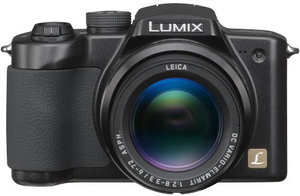
Panasonic Lumix DMC-FZ5This was my 2005 Christmas present to myself. It was clearly a step up in many regards but it was also a step away from some characteristics I’d cherished in my previous digital cameras. The change in form is significant. Although the Lumix DMC-FZ5’s height and width were each but a fraction of an inch larger than the Canon A75, its depth was well over double that of the Canon; 3.3 inches vs. 1.26 inches. This was not a camera to slip into a jeans pocket as was my habit. Another big difference bordered on sacrilege. This new acquisition used box shaped proprietary batteries. No more gas station plastic-wrapped alkaline safety net.
I did not give up these things lightly. Even though my insistence on AA battery powered gadgetry had rarely paid off it did provide peace of mind. Claims that the proprietary batteries were good for 300 pictures on a charge were reassuring and I bought peace of mind by immediately adding two spare batteries and an AC/DC charger.

The size thing, however, meant real compromise. I had found myself wanting a longer lens more and more often. The fairly new class of cameras called compact super zooms tugged at that want. Canon, Nikon, Sony, and others all had them. When a co-worker brought in his Sony DSC-H1 to “show & tell” I was impressed and started shopping. The DMC-FZ5 got my attention right away. With the exception of the one dimension, it was barely larger than my Canon A75 and less than a half ounce heavier. Any one who has seen my trip reports knows that I like to shoot pictures of the road ahead. One handed over the windshield when I can; Through it when I can’t. The lightweight Panasonic was a good fit for that sort of thing and the fact that it had image stabilization was a definite plus.

There was also a change in recording media but it was hardly traumatic. The Agfa 780c had used something called Smart Media. The two Canons used Compact Flash. The Panasonic required SD (Secure Digital). None of these devices are terribly expensive. Buying a couple new cards when you buy a new camera won’t bump the bill significantly and you will probably want to buy a card or two even if your old ones are compatible with the new camera. Why? Because they’ve probably shrunk. They still contain the same number of megabytes or gigabytes but the new camera likely produces larger picture files so that those megabytes and gigabytes fill up faster. Files from the 5 megapixel Panasonic  were considerably larger than those from the 3.2 megapixel Canon so I had no qualms about buying different — and higher capacity — media cards.

A longer lens was the reason I first started thinking about this sort of camera. The 12X zoom on the FZ5 was the 35mm equivalent of 36-432mm. It was made by Leica and that probably sold me as much as anything. A digital camera is made of electronics and optics. Panasonic makes some good electronics. Leica makes some great optics. This could be a decent camera.

It was. I was very pleased with my Christmas present even though it had a price tag right at $400. My faith in digital photography had grown significantly. Like much of the world, I was starting to believe that it might really have a shot at replacing film. I still didn’t have a camera that could do magazine covers but this one could do the stuff between them just fine.

My Gear – Chapter 7 — Canon Powershot A75


The need for spare batteries coupled with my bargain seeking tendencies led me to an independent vendor with whom I continue doing business to this day. He is an eBay merchant named OrphanBiker. The name comes, not from the seller being an orphan himself, but from his being attracted to unusual motorcycles that some call orphans.
“…the more obscure the better” is how he describes his taste in bikes.

My first order, placed the same day I bought the FZ5, was for those two batteries and charger I mentioned. Admittedly, a charge on these batteries did not last quite as long as with the genuine Panasonic version but they otherwise worked just as well and cost considerably less. The charger I liked much more than the one that came with the camera. It was a small cube with a foldaway AC plug and a detached cable for DC operation. I have since gone to OrphanBiker for batteries and chargers for other cameras and chargers for cell phones. The only problems I’ve ever experienced have been internal breaks in a couple of the cables after a year or two of use. People who don’t twist, pull, kink, and pinch their cables like I do probably won’t see even that.