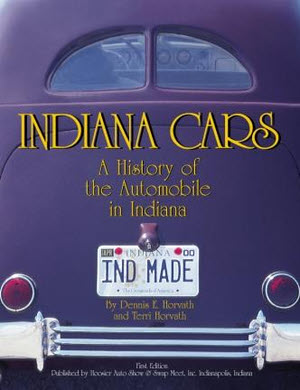
 Yes, I am late to the party. This book on Indiana’s automotive history was published in 2002 but, since it’s about old cars, none of the history has changed and the cars have only gotten older.
I learned of and purchased the book when one of its authors performed guide duty on a tour that was part of the Lincoln Highway Centennial Kickoff in Indianapolis. On that tour, Dennis Horvath took us to many of the city’s automotive landmarks and this book contains all of those and more. Though few might consider Indiana Cars light reading, it is certainly interesting reading. Dennis knows automotive history. And he really knows Indiana automotive history.
There is a tremendous amount of it. At one time second only to Michigan in automobile production, Indiana has been home to more than 400 vehicle brands. Some are still widely recognized — Stutz, Studebaker, Duesenberg. Other, such as Lexington, Flandermobile, and Empire, are pretty much forgotten outside of hardcore automotive circles and the pages of this book. Similarly, Indiana had plenty of automobile pioneers. Louis Chevrolet, Harry Stutz, and Eddie Rickenbacker are fairly well known; Guys like Elwood Haynes, Charles Black, and Louis Schwitzer not so much. They’re all there in Indiana Cars.
There is an introduction and “A General Overview by Decade” to get things started. That overview begins in the 1890s. It talks of the overall automotive industry and Indiana’s role in it. There are lots of numbers. It was this I had most in mind when I said that some folks would not consider the book light reading. Statistics are necessary, of course, in showing growth and relationships. The Horvaths do a good job of presenting them but they are still numbers. Numbers don’t make for exciting reading but they make for a good reference book and that’s a role Indiana Cars plays quite well.
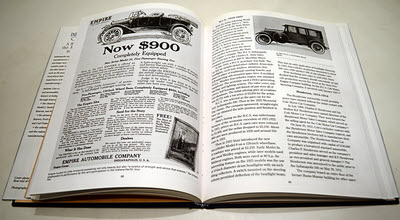 Once the background is set, the book moves onto the various manufacturers. Not every mark ever built in the state is covered but there are sizable sections on what the Horvaths consider “Significant Automobiles”. The reading isn’t so dry now. There are fairly lengthy articles on the likes of Duesenberg and Studebaker and shorter ones on others. The book is well illustrated with photographs and clippings from period literature. Facts are seasoned with entertaining anecdotes. Joe Cole got his first car running and took off without installing the brakes. Lack of fuel finally stopped it after many laps around Monument Circle in Indianapolis. In 1891, Charley Black’s six-block drive in a Benz included crashing into both a surrey and a shop window. Those were the good old days.
Trucks built in Indiana have a section as do military vehicles. Many of those pioneering Hoosiers who put Indiana near the front of the early automotive development are covered, too. Appendices include listings of all Indiana cars, major milestones, and other items.
Indiana Cars excels as a source of information The book most likely contains the answer to whatever questions you may have about the automotive industry in Indiana. Car nuts will find it entertaining. They and history buffs will find it educational. Those in neither group may find it a wee bit dry.
Indiana Cars: A History of the Automobile in Indiana, Dennis E. Horvath and Terri Horvath, Hoosier Auto Show & Swap Meet Inc. (printed by Jackson Press), 2002, hardback, 8.8 x 11.2 inches, 198 pages, ISBN 978-0964436459
Available through Amazon.



 Available blog statistics kind of suck. At least they do for WordPress Jetpack statistics on a self hosted blog that is only a portion of a website. One issue is that the most popular “page” is almost certain to be something called “Home page / Archives” which is a swirling mix of the multiple pages displayed at the blog’s root or the multiple pages that satisfy a search. I have AWStats generated numbers for the entire site, including the blog, but those have some problems, too. For one thing, counts include all of the individual pages appearing in the previously mentioned “Home page / Archives” many of which are not actually viewed. For another, AWStats numbers include blog page references that I’ve made myself in creating and maintaining the blog. I try to keep these to a minimum but eliminating them completely is not possible. In the end, though, I do believe the relationship of the numbers is meaningful even if the numbers themselves aren’t all that precise. So here are the top five blog and non-blog entries and I’ll follow the lists with some overall numbers.
 That’s the steamship Delta Queen pictured to the right. The picture was taken on December 25, 2010 when Chattanooga got its first Christmas Day snow fall in 41 years. I don’t expect to see scenes like that again though I am returning to the Queen for Christmas 2012. Once the holiday is past, I’ll be driving a little Dixie Highway and spending a little time in Atlanta, Georgia. I’m now on the way and spent last night in LaFollette, Tennessee. The short journal for that first day’s drive is
 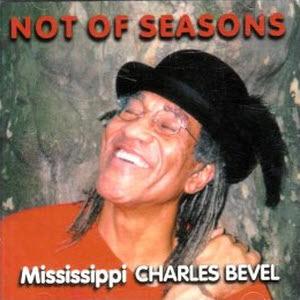 I went to see Hank Williams: Lost Highway last week. The first sound that came from the stage wasn’t the voice of Hank or his mother or the cry of a pedal steel guitar. When the lights dimmed and the play began, it was the pure voice of Mississippi Charles Bevel that came unfaltering from the darkness. Bevel plays Tee-Tot, Williams’ mentor. The CD that this post claims to review is not new. It’s a dozen years old and I don’t recall ever hearing of it or Charles Bevel before last Wednesday.


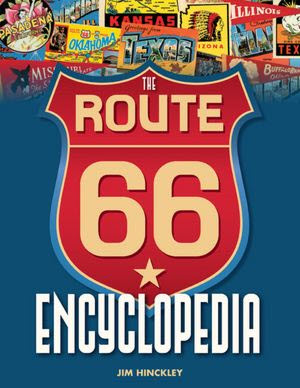 E-N-C-Y-C-L-O-P-E-D-I-A
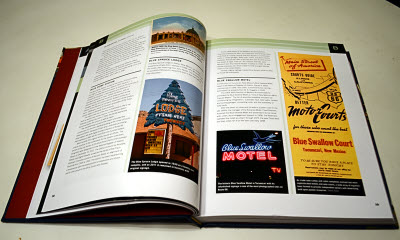 This is not my first exposure to Hinckley’s work and, as I’ve said before, the man does his homework. Of course, everybody knows about the Gemini Giant and it’s not too tough to learn that it was made by International Fiberglass. But learning how many cowboys the company made for Phillips Petroleum and how they managed to make some giants with beards and some without and that the company’s founder once set a world record in sailing? That takes some digging. And practically any book with 66 on the cover will tell you how Cyrus Avery was instrumental in getting the pair of sixes for the route after the desired Highway 60 designation was assigned elsewhere. Hinckley does that and also tells us quite a bit about some of his other activities such as his prior role in creation of the Albert Pike Highway and his subsequent role in helping form the U.S. 66 Highway Association. Incidentally, although I have not read every article in the encyclopedia, that is the only mention of the U.S. 66 Highway Association I found. Its post-WWII spark plug, Jack Cutberth, was one of the names I thought I might see in the book but didn’t.
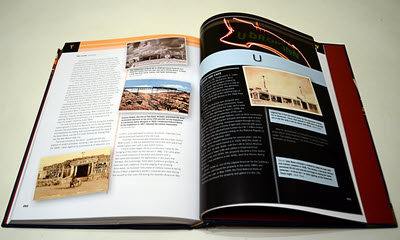 Even without Cutberth, the Route 66 Encyclopedia includes an impressive number and range of articles and many of those articles go into significant depth. The writing isn’t flowery but neither is it terse. It’s lean and efficient. The goal is to get as much factual information between the covers as possible and keep it readable. Hinckley does that rather well. Moreover, I think you’d probably still get your money’s worth if you decided to forgo the text altogether and just look at the pictures.





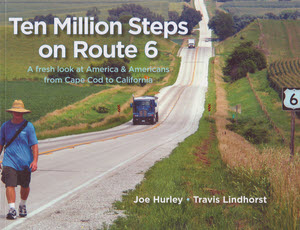 “It’s not the destination but the journey.”
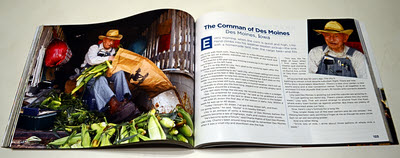 Sometimes Lindhorst’s photos are coordinated tightly with Hurley’s text and sometimes they just represent the general area. Either way they are always wonderful additions to the story. Some would be right at home in a super-wide hardback coffee table book but then I probably couldn’t afford it. The fairly large format paperback with glossy pages serves the photos well in an affordable package.