My Gear – Chapter 5
Toshiba Portege 300CT

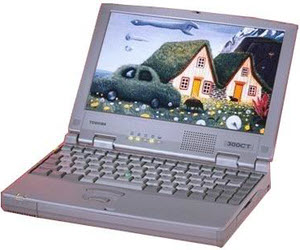
Toshiba Portege 300CTHaving blown nearly 400 bucks on a camera, I returned to the used market for a laptop and picked up a Toshiba Portege 300CT for $251 in June of 2001. A 1.5 GB hard disk was standard for this model but this unit had been upgraded to 4.1 GB. It also contained the maximum 64 MB of memory. The processor was a 133 MHz Intel Pentium. It was running Linux when I got it but I installed Windows 98 almost immediately.

The 12 VDC power supply I had purchased for the Libretto worked just fine with the Portege. I had plotted my version of my great-grandparents’ trip using Microsoft Streets & Trips and planned to actually use the Portege in the car to follow the plotted route. In theory, the Garmin III Plus GPS I owned could be used to drive Streets & Trips (CORRECTION: My recollection was wrong. While Streets & Trips was used in some of the planning, it was almost certainly DeLorme’s Street Atlas that was used with the GPS in the car.) and I had the cables to make all the power and data connections but the result was a tangle of wire that was truly scary in the small cockpit of the Corvette. So, for $167, I bought a Hyperdata GPS unit specifically to connect to the computer. This was a brand new model that was powered through its USB connection thus simplifying cabling just a bit.

The 2001 Florida trip is the only one that really made use of this setup. My girl friend, Chris, navigated the entire trip with the Portege on her lap with a pillow for insulation from the heat of the computer. Chris never complained and even stayed with me for another four years before moving on so the trip didn’t really end our relationship. I’ve a strong suspicion, however, that stunts like that are part of the reason I no longer have a girl friend.

My Gear – Chapter 4 — Canon PowerShot A20

Signs on the Move

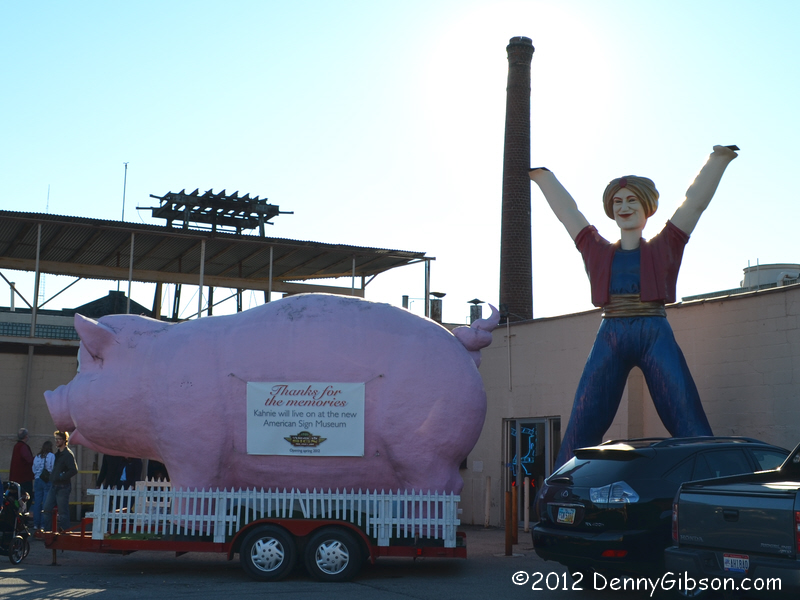
Sign Museum Entrance - pig and genieOne phase of Tod Swormstedt’s dream came true in 2005 when the American Sign Museum moved into a warehouse on Essex Place in the Walnut Hills section of Cincinnati. The next phase is coming true as it gets ready to move out. The warehouse was not the ideal location but it did its job and provided a home for lots of signs and a shrine for lots of sign lovers. Signs come in all sizes and one of the site’s shortcomings was a lack of height for some of the larger specimens. Many sat in a parking lot across the street exposed to weather and vandals. That’s not a problem at the museum’s new home about 2 1/2 miles away in Camp Washington. The former factory’s 42,000 square feet will accommodate many more signs in general and its 28-foot ceilings allow the tall guys to get out of the rain. In addition to “normal” museum exhibits, visitors will get to see the sign restoration shop and a working neon shop. In fact, the neon shop, Neon Works of Cincinnati, is already operating there and has been for roughly two years.

The Camp Washington site was initially acquired in 2007. Renovation of the building and installation of new exhibits progressed while the existing museum operated as usual. No more, though. It’s time to start moving. Yesterday, January 7, was the last hurrah for the Essex Place location and a grand hurrah it was.

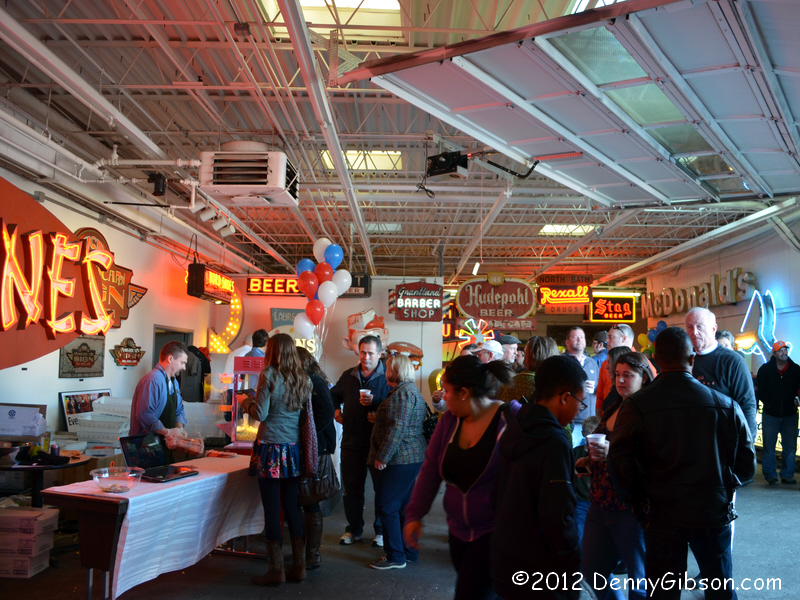
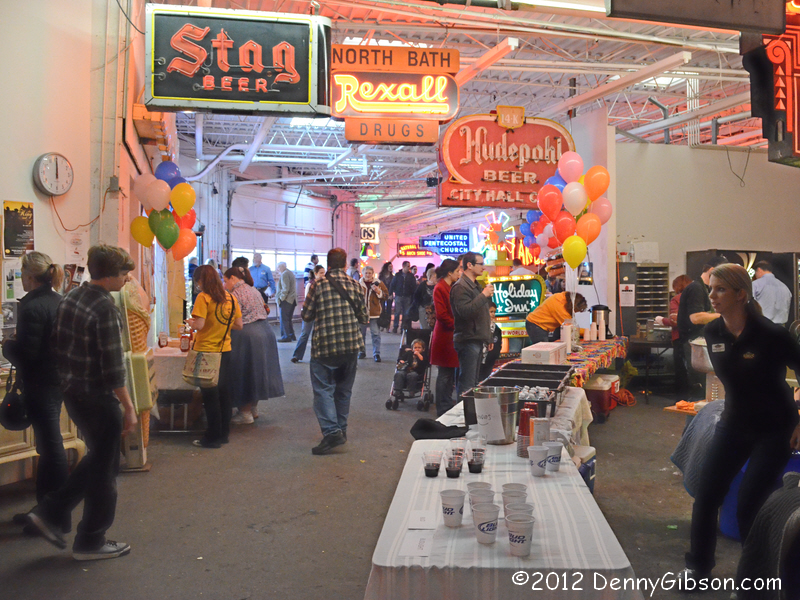
American Sign Museum Open HouseAmerican Sign Museum Open HouseThe museum announced the closing and accompanying “Done with the Old. On to the New” open house about three weeks ago through its email list and a week ago through Facebook. Apparently a couple of hundred people responded by registering for the event. Then, on Friday, the Cincinnati Enquirer ran this article and registrations skyrocketed. Registration was not required and no really accurate counting took place but it’s safe to say that over a thousand people visited what many consider Cincinnati’s best-kept secret on Saturday. These photos were taken after 4:00 when things were thinning out. (The Cincinnati Bengals lost last week but, because some other teams lost, too, backed into the playoffs and a 4:30 game. Football fans left the museum to position themselves in front of a TV. The Bengals backed out of the playoffs by losing again.)

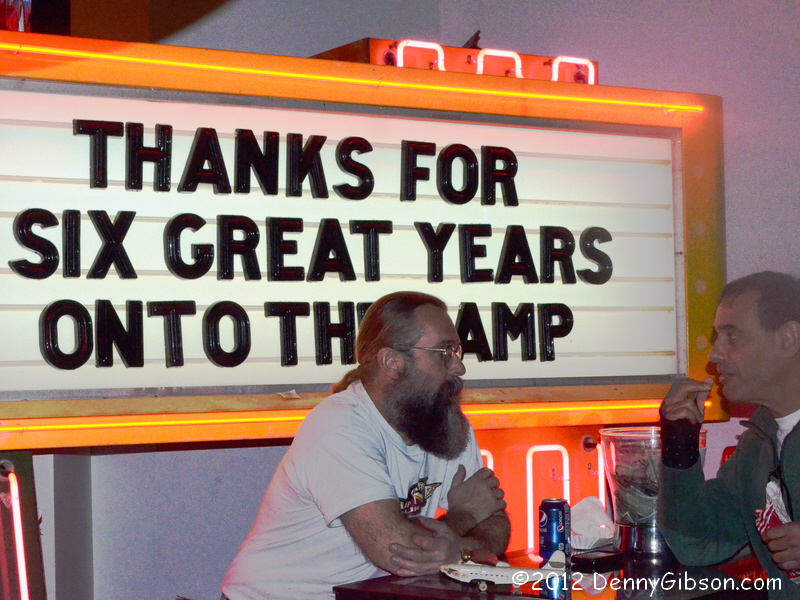
Sign Museum Director Tod SwormstedtIt takes more than two men and a truck and a weekend to move a museum but Tod and crew think a couple of months should be enough. They have targeted April 28 for the Camp Washington Grand Opening which will be exactly seven years after the Essex Place Grand Opening. I was there at the original and I fully intend to be there for the sequel. With the new location, the huge jump in space, and increased hours, I don’t think this place will be a secret much longer.


Even though this was my last visit to the sign museum on Essex Place, I’ll probably be back to the building. The museum’s co-tenants, Essex Studios, remain and their Art Walks will resume in the spring. A large number of talented artists from a wide range of disciplines fill the studios and make the Art Walks a cross between a visit to a museum and a festival. It’s another Cincinnati secret I recommend.

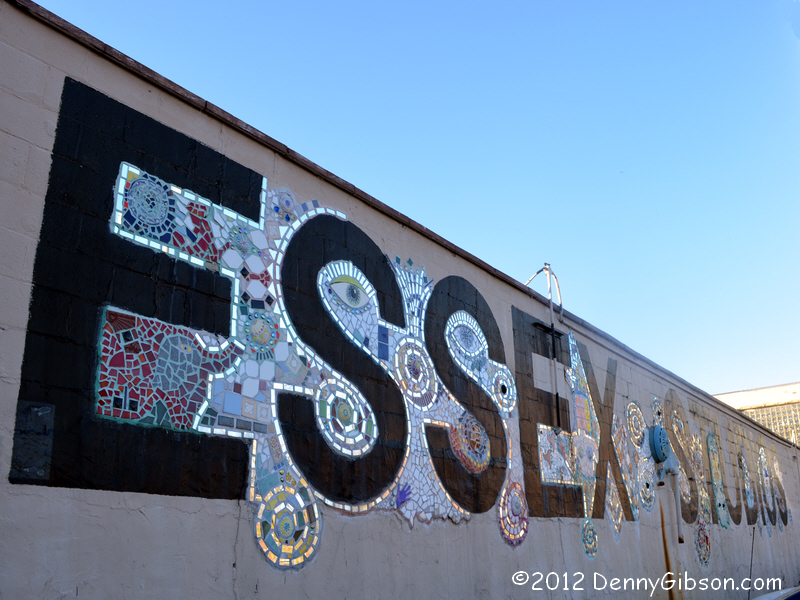
Essex Studios SignEssex Studios SignThe Art Walks are in the evenings, however, so it may be a long time before I again see the building in sunlight. Therefore, I figured this was a good time to present this lesson on how a small difference in perspective can make a big difference in perception.


Me with Karen & Bill McKibbonAfter the museum, I met Canadian roadies Bill and Karen McKibbon for dinner at their hotel. The McKibbons both work in the school system which gives them a great chunk of time off in the summer and a pretty decent one around Christmas. They use that time in well-planned road trips documented here. We’ve followed each other’s travel online for quite a while but had never met. The closest we came was when I chased them out of the country in August but they crossed the border at Sault Ste Marie five days before I did. Today they were passing through Cincinnati on the way home from the sun and sand of South Padre Island, Texas. It’s always good to turn cyber-friends into real friends.

Book Review
Oklahoma Route 66
Jim Ross

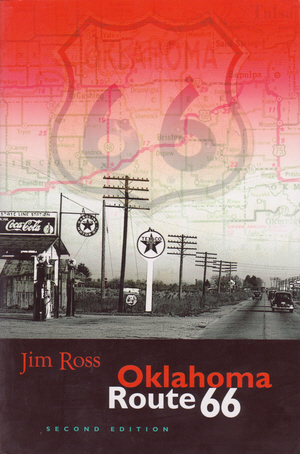
Oklahoma Route 66 coverI like this book so much that I have three copies of it. Well, maybe not three exactly but more than two. I got my first in 2007 in anticipation of an Oklahoma trip. It didn’t take me long to discover that the copy was flawed and it didn’t take much longer for a replacement to be provided. A printing error had caused many pages of that first copy to be omitted, duplicated, or otherwise jumbled. The replacement, with all pages present and in the right place, was quite an improvement. This second edition is also an improvement though not that drastic. With it’s accidental mishmash of pages, that first copy was essentially unusable. Every other copy of first edition Oklahoma Route 66 was eminently usable. The second edition is even more so.

The book’s organization is essentially unchanged from the first edition, Michael Wallis’ “Introduction” has been replaced by a “Foreword” written by Jerry McClannahan and Ross’ own lead in, which was once called a “Foreword”, is now a “Preface”. But, as Shakespeare might say, an introduction by any other name would still introduce and both Jerry and Jim do just that. Jerry helps to establish Jim’s credentials in a fun to read couple of pages then Jim fills in a little of the space between the two editions. He also explains, just as he did in the first edition, that this is literally a book about the road. Roadside attractions and Route 66 personalities are not entirely ignored but they are secondary. The route itself is the book’s focus.

Where did it go and when did it go there?

Jim Ross is really good at digging out answers to that question as well as communicating them. It is in communicating the route’s changing course that this edition’s biggest single change, color, really pays off. As Ross says himself in that preface, it is “…nice for the photos, but especially helpful with the maps.” Photos and other images are used extensively throughout the book. Some are newly acquired and in color though many are the same ones that appeared in the previous edition but now printed in color where applicable.

I don’t believe that any maps have been added to this edition though many have been revised to reflect changes on the ground or better understanding of past alignments. There are, of course, quite a few “past alignments” to be dealt with. In the earlier edition, dealing with them meant annotations on black and white maps. It worked. The information was certainly there and it could be extracted with a little reading and thought but it is so much easier when a green line marks the original alignment and other colors mark later alignments.

The maps appear in a section titled “The Tour”. It follows those introductions and short sections on the road’s history and construction and an explanation of the maps. “The Tour” is the heart of the book and it does indeed serve as a guide for an east to west tour of Historic Route 66 all the way through Oklahoma. Driving instructions are for what Ross calls a “through” route. This means that dead-ended abandoned stretches are not included. They are shown on the maps, however, and described in the text so someone set on finding every possible inch of Sixty-Six can do so. The text also describes the communities along the route and some of the landmarks in between and it usually provides some interesting history on those communities and landmarks including some that no longer exist. The tour is well illustrated with photos and other images and they are not just filler. Ross is as well known as a photographer as he is an historian. His own current photos are mixed with some by others and quite a few historic ones from various archives. “The Tour” of Oklahoma Route 66, even in an armchair, is far from boring.

Oklahoma Route 66 second edition, Jim Ross, Ghost Town Press, October 2011, paperback, 9 x 5.9 inches, 220 pages, ISBN 978-0967748177
Available through Amazon.

2011 in the Rear View

Summarizing a year with statistics is a popular thing to do so here are a few from this site:

  • 1 = Blog added.
  • 1 = Forum deleted
  • 8 = Oddment pages posted
  • 9 = Road trips reported
  • 21 = Weeks of regularly scheduled Sunday blog posts
  • 31 = Total blog posts
  • 69 = Days on the road
  • 2058 = Pictures posted — 96 in the blog, 141 in Oddments, and 1821 in Road Trips

Perhaps conspicuous by their absence are numbers on visits and views and other activities by folks other than me. One reason is that I’m not particularly proud of them or anxious to reveal just how small this website’s reach really is. Another is that statistics for both the blog and the overall website are incomplete. The website is missing some days in November and at least one other period earlier in the year. The statistics package for the blog didn’t get installed until November although the blog itself was launched in August.

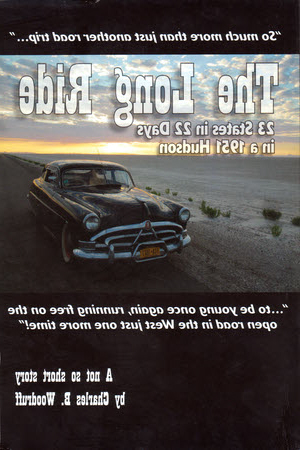
The Long Ride Cover - ReverseSo now that I’ve explained why I don’t like to post viewer stats, here are some hidden in a paragraph for folks who bother to read outside the bullet list. For 2011, the entire website had 43,213 visits with 227,060 page views. The most popular page was the Oddment entry on Tadmor. Its 894 views are undoubtedly the direct result of someone (not me) putting a link to it in the Wikipedia article on ghost towns. The blog has had 685 total views. The book review of The Long Drive was the most popular entry with 123 visits. Ego makes me remind you that the blog numbers are from just two months.

The next to last documented road trip of the year was my 100th. I marked the occasion by making a clickable collage of the teaser images displayed randomly, one at a time, in the upper right corner of the site’s home page. A link to the collage now appears below the teaser image. I meant this as a one time thing when I created it but in the days since have thought about adding subsequent trips to it. Maybe I will. Maybe I won’t.

There was a big change in the stables in 2011. The first road trip documented on this site was at least partially prompted by the acquisition of a red Corvette convertible. Since then, though other vehicles have been used and the convertible became a coupe and turned blue, a Corvette has been my primary road trip vehicle. As 2010 ended, I made a purchase intended to provide me with a fifty year old car for the Lincoln Highway’s centennial in 2013. I brought the 1963 Valiant home on January 3. Before too long, the Pontiac Vibe was sold and, in April, the Corvette was replaced by a Subaru Forester. Capital ‘P’ practicality replaced capital ‘P’ performance. Of course, I sometimes miss that Performance and all around Pizzazz but the AWD Forester is capable of taking me places a Corvette never could like the unpaved Pony Express/Lincoln Highway route around Dugway, Utah, that I drove in June. And I once again have a red convertible.

Merry Christmas

Wow! I had no idea producing a Christmas Day blog entry would be this hard. The schedule I set has Sunday as the day to post a new entry. I also created some guidelines which say that, even though support for road trip comments is one of the blog’s roles, road trips should not impact the blog’s “regular” entries. That guideline came into being after trying to synchronize the two became rather messy. I’m now finding out that consciously not synchronizing them can be messy, too. If I weren’t on a road trip, I could write about anything I’ve done during the preceding week. Since I am on a trip, anything of that sort that I write has the potential for duplicating something in the road trip report. My intent was that a Sunday in the midst of a trip might get a canned “My Gear” style post if no other non-trip-related topic came to mind. I’d do that now but IT’S CHRISTMAS. I can’t just ignore that fact because I happen to be on a road trip. In hindsight, I could have written some sort of essay on the holiday weeks ago but I didn’t and I can’t really do that now — off the cuff — in an hour or two.

So, if I’m not going to write about the current road trip and I consider a “My Gear” too trivial for a Christmas Day topic, what can I do? I can think of nothing so nothing it will be. This blog post intentionally left clear of any real content except to wish everyone a Merry Christmas and suggest taking a look at the road trip I’m not talking about.

My Gear – Chapter 4
Canon PowerShot A20

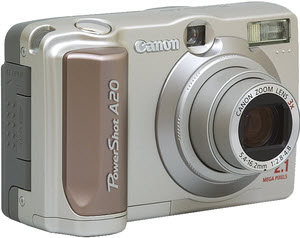
Canon A20As I looked back over my travel gadget purchases, it was immediately obvious that many preceded a major trip. The idea of a long lived website, rather than a one trip experiment, started to form as I got serious about retracing a 1920 Florida trip my great-grandparents had made. Purchases were made during the summer of 2001 in anticipation of making the trip in late August. The first was a real upgrade in the camera department.

Some of the improvement over the Agfa came from a significant increase in price but a lot more came from two years of progress. Even with more than a hundred dollars off the $500 MSRP, the Canon PowerShot A20 cost over twice what I’d paid for the Agfa — $384 vs. $186 — but I now had a real camera. It had auto focus, 3X zoom, and 1.92 effective mega-pixels plus, apparently, 0.18 ineffective ones. This was good enough to convince me that I didn’t have to carry my film camera everywhere but not good enough to make me want to get rid of it. Digital was clearly the only way to feed a website but film was still the way to go for good sharp prints.

I believe it was about this time that a friend asked me to recommend a good digital camera and I answered that I couldn’t. There were some very good digital cameras being made but they cost thousands not hundreds of dollars. Nikon’s first digital SLR, the D1, came out in 1999. The 2.6 mega-pixel wonder retailed for $5580 — body only. The D1X came on the market in early 2001 at about the same time as the A20. With what is now a familiar characteristic of electronics, resolution, 5.4 megapixels, was up and price, $5350, was down. These were professional quality cameras with prices that could only be justified by professionals needing instant product. For an amatuer convinced he needed instant product to feed a website, even the few hundred dollar price of the little Canon wasn’t easy to justify. Of course, if financial justification was a real factor in any of this, there wouldn’t even be a website to feed.

My Gear – Chapter 3 — Garmin GPS III Plus

Book Review
Wabash 1791
John F Winkler

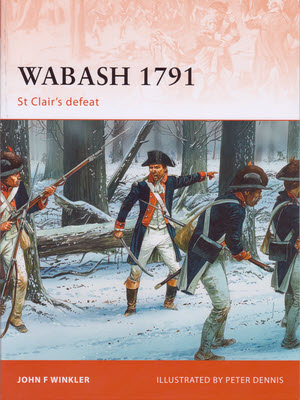
Wabash 1791: St Clair's DefeatBack in November, I stopped at Fort Recovery specifically to pick up a copy of Wabash 1791: St Clair’s Defeat and to hear the author speak. There’s a blog entry about that visit here. John Winkler began his talk that day by briefly describing the circumstances that preceded the battle then, while frequently pointing to a projected map of the battlefield, he stepped through November 4, 1791, by locating key figures and events in space and time. He spoke from memory and it was obvious he knew his stuff. The knowledge he demonstrated in that talk fills the pages of Wabash 1791. In fact, the book could be considered a hard copy version of that talk — with a few thousand-fold increase in detail.

Winkler begins the book, as he did that presentation, by talking of things that led to the battle only here he is not quite so brief. The world at the end of the eighteenth century can be pretty tough for modern-day readers to imagine. When the Battle of the Wabash took place, the United States constitution was barely three years old and our very first president was only halfway through his first term. The Ohio River was the nation’s border. England was still very much a military presence in North America and would officially be at war with the US in another twenty years. In 1791, there were plenty who thought England just might be picking up the pieces of her old colonies once the US collapsed.

After Winkler describes what he calls “The Strategic Situation”, he moves on to describe the opposing forces. The leaders of the two armies were certainly different but all were among the best of their time. St Clair, Butler, and Darke are just a few of the proven officers leading the Americans. On the Indian side, an equally qualified group of leaders surrounded chiefs such as Little Turtle, Blue Jacket, and Buckongahelas and the hated renegade Simon Girty. Also present were some out-of-uniform British officers. At the level of individual combatants, however, different meant unequal.

Recruiting had not gone well and continuing supply problems made it worse. Delays in supplies resulted in expiring enlistments and lack of supplies hampered training. In a sad “For want of a nail the shoe was lost…” style example, a shortage of paper led to a shortage of musket cartridges for training and target practice. As hard as it is to believe, some new recruits marched out of Camp Washington without ever having fired their guns. By contrast, fighting was part of every Indian’s life. Winkler quotes an officer who wrote, “…war is their principal study, in this they have arrived at considerable perfection.”

I hesitate to use the word “scholarly” but it really is appropriate for portions of the book. In particular, some of this early background information reads like a textbook and can be rather dry going. But there’s lots of good information being conveyed and the payoff occurs when the battle begins. Winkler can report the action without the need to repeatedly explain why one side did this and the other that. And report the action he does and it is brutal. Though the two armies were roughly equal in size, approximately 1700 soldiers and militia versus 1400 Indians, most of the experience and all of the surprise was with the Indians.

Two types of illustrations augment Winkler’s battle descriptions. Color-coded diagrams show three stages of the battle and artist Peter Dennis has produced three “snapshots” to help visualize the scene. The one used for the cover shows Captain Henry Carberry shouting at the demoralized soldiers to charge the encircling Indians simply in order to escape. Numerous photographs and drawings illustrate other sections of the book.

More US soldiers died that day than in any battle prior to the Civil War. This battle was the greatest victory American Indians ever achieved over US forces. The loss nearly eliminated all United States military capabilities and had the potential for destroying the young nation. In fact, a proposed investigation into supply chain corruption was abandoned to avoid that very risk. With the passage of time, this clearly significant battle has been largely forgotten by non-historians. How much success Winkler’s book has in reviving the memory is yet to be seen but it seems to contain all of the details needed for filling in the blanks.

Wabash 1791: St Clair’s Defeat, John F Winkler, Osprey Publishing, November 2011, paperback, 9.6 x 7.1 inches, 96 pages, ISBN 978-1849086769
Available through Amazon.


I’ve seen other accounts of St Clair’s Defeat. Allen Eckert’s fairly short one in That Dark and Bloody River is a pretty easy read. Eckert writes in the style of a novel with the factual base of a text book. In my youth, as I was first learning of the battle that occurred just about fifteen miles from where I grew up, I formed the impression that St Clair was a bumbling idiot and was almost single-handedly responsible for the disaster. As I learned more about the supply and equipment problems, my view softened. Eckert blames St Clair for not aborting the campaign in light of the huge recruiting and supply issues but little else. Winkler hardly blames him even for that. That could just be the result of Winkler’s even-handed reporting where he presents facts and holds back opinions.

As I read Wabash 1791 with the internet at my fingertips, I learned of a 1896 Harper’s Magazine article on the subject written by Theodore Roosevelt. This was just over a hundred years after the battle. A slightly edited version was included in volume 5 of Roosevelt’s Winning of the West published in 1905. Roosevelt doesn’t think much of St Clair and describes him as possessing “none of the qualities of leadership save courage.” Perhaps he was a bumbling idiot after all. ‘Tis a puzzlement.


Thumbnails of scans of the Roosevelt article appear in the archives section of the Harper’s website. Accessing full-sized readable copies requires a subscription. However, there is another section of the website, apparently sponsored by Balvenie Scotch whiskey, which contains articles written by folks such as Lewis Carroll, Mark Twain, and… Theodore Roosevelt. Maybe they’re all Balvenie drinkers. The 1896 Roosevelt article is available there. A far-from-full bottle of The Balvenie sits in my liquor cabinet and I poured myself a wee dram to drink a toast in thanks for the article. You can read the article here but you’ll have to supply your own whiskey.

Dickens of a Christmas

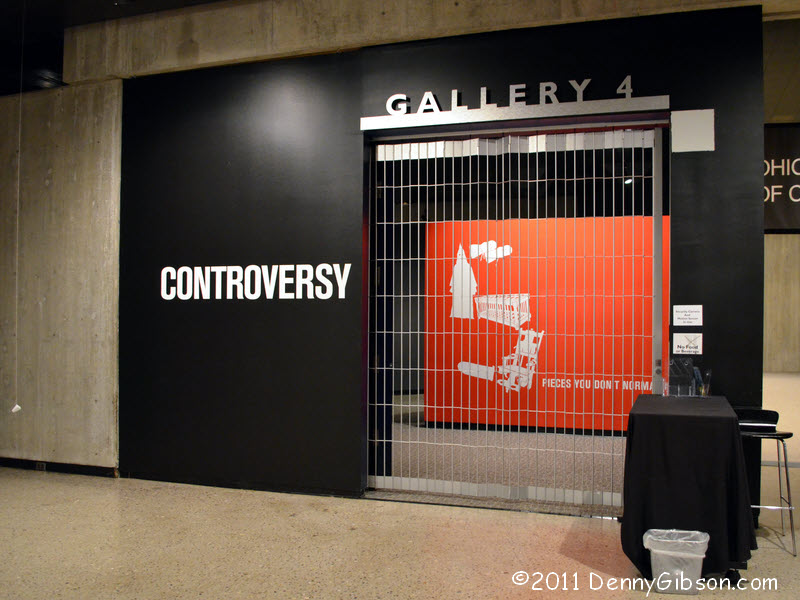
Ohio History Center ControversyI missed it. I missed an exhibit I really wanted to see. From April through November, the Ohio Historical Center had a display entitled Controversy: Pieces You Don’t Normally See. Of the five items it contained, the retired electric chair seemed to be the main attraction with a KKK outfit, a thumb mitt, an adult crib, and a nineteenth century condom rounding out the bill. I’m sure I drove by the building more than once while the exhibit was in place but, as we often do, I assumed there would always be another chance. It wasn’t until I visited the Ohio Historical Society’s website to sign up for Dickens of a Christmas that I realized that I’d blown it.

Dickens of a Christmas is an annual festival sort of thing that takes place in the recreated nineteenth century village adjacent to the Historical Center. I registered to attend the first night of Dickens of a Christmas and, even though there was no electric chair or condom to be seen, headed to Columbus in time to visit the Historical Center in the afternoon. That’s how I got the picture of the entrance to the recently closed Controversy exhibit.

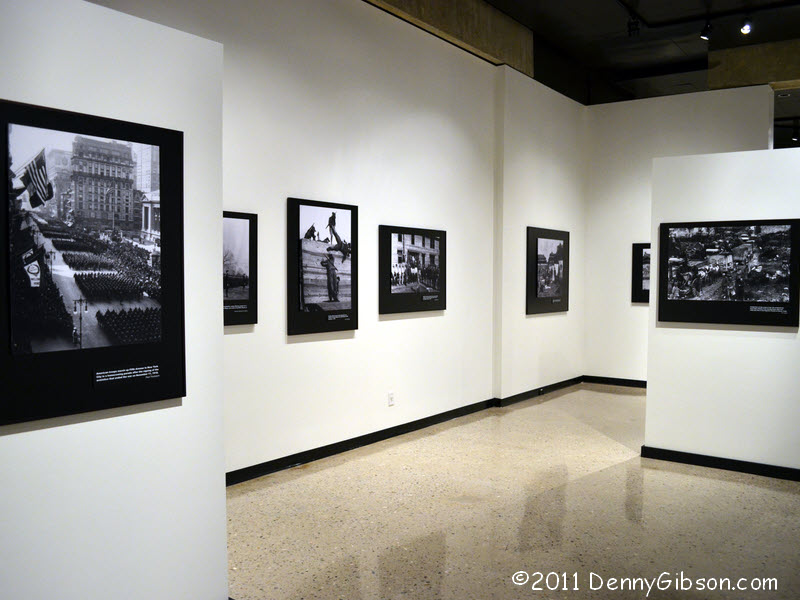
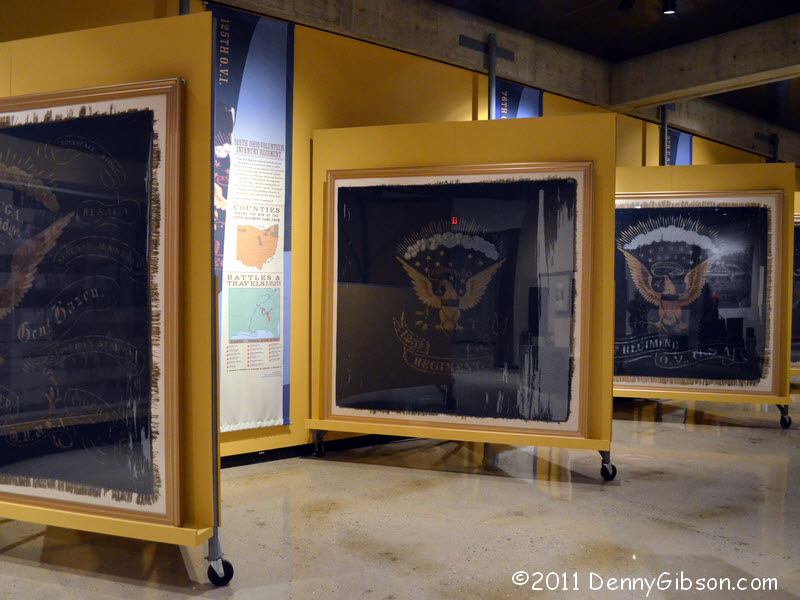
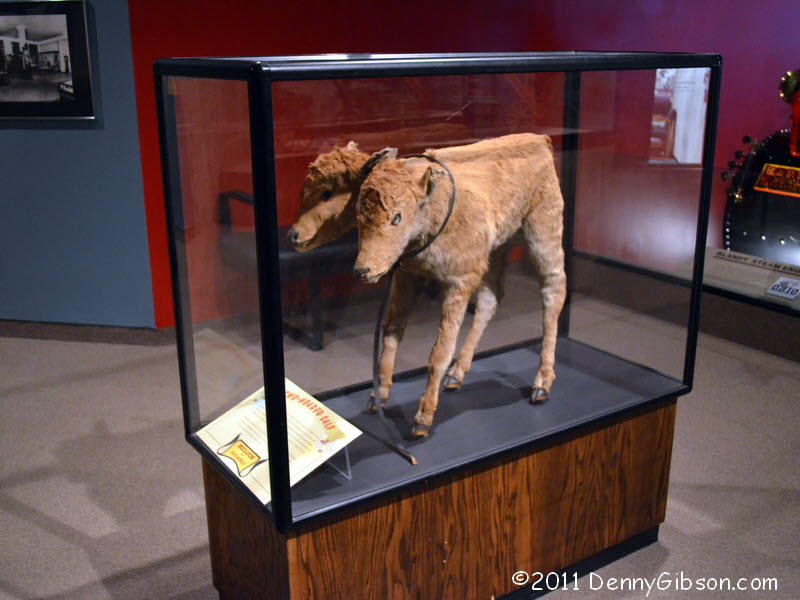
The American Soldier Photographic TributeOhio Battle FlagsIn addition to the many worthwhile permanent exhibits, the Center currently has a captivating temporary exhibit called The American Soldier: A Photographic Tribute From The Civil War To Iraq and several of the 434 Civil War battle flags in the museum’s possession are on display. Plus, although it’s a poor substitute for an adult crib from an insane asylum, there was, once upon a time, at least a little controversy associated with the two headed calf.

Saint Nicholas at Dickens of a ChristmasThe Ohio Historical Center is certainly a cool place to spend an afternoon but the title of this entry is “Dickens of a Christmas”. My evening at Ohio Village is covered in a separate Oddment page here. It is only the second Oddment page added since the start of this blog. While there is no precise definition of what qualifies one subject for an oddment page and another for a blog entry, it seems likely that I’ve completely covered a subject in a blog entry that might have appeared as an Oddment in pre-blog days and it is all but certain that some of the existing Oddment pages would have instead been blog entries had the blog existed at the time they were created. I believe one of the things that helps decide Oddment or blog is number of pictures. I haven’t posted a huge amount of pictures from Dickens of a Christmas but there are more, sixteen, than I feel comfortable with in a blog entry. Look them over at the Dickens of a Christmas Oddment page.


I know some who see this will have heard of Kickstarter but I’m guessing not all. It’s a method for funding projects with large numbers of small contributions. Learn more about it at the Kickstarter website. Kickstarter depends a lot on word of mouth. Friends tell friends, usually in an indirect Facebook/Twitter/newsletter sort of way, about projects they like and that, in case you haven’t guessed, is what I’m doing here. I’ve contributed to a couple of projects that I liked and blown off a couple more that didn’t quite click with me. I recently learned of a documentary project that I like and, since you’re reading about it here, there’s a chance you will too.

I heard of the project from Dirk Hamilton. It isn’t Dirk’s project but he is in it. I was inclined to give it a couple of bucks ’cause I like the general subject and, of course, I like Dirk but I was hooked for sure when I read the “Part music documentary and part road trip movie…” line. The documentary is called Folk. Check out its Kickstarter page here.

Remembering Infamy

A TV commercial has been running for the last several weeks that begins by urging viewers to mark December 7 on their calendars. It grabbed my attention the first time I saw it because I knew the significance of December 7 or thought I did. It is the date of one of the most important events in our country’s history. I anticipated some news about a Pearl Harbor Day observance or maybe just a PSA about the attack’s upcoming 70th anniversary. But the spot went on to explain that December 7 marks the end of open enrollment for Medicare.

Medicare enrollment is certainly important and I’m not faulting the ad in any way. It stresses the need to do something by a certain date and stresses what that date is. Although I’m sure it’s entirely accidental, the fact that the date is December 7 may really increase the ad’s effectiveness. The majority of people who need to be concerned with Medicare are exactly the same people for who December 7 is a date which continues to live in infamy. The full date is December 7, 1941 but just December 7 is enough. To my generation and one or two on either side of it, December 7 means just one thing.

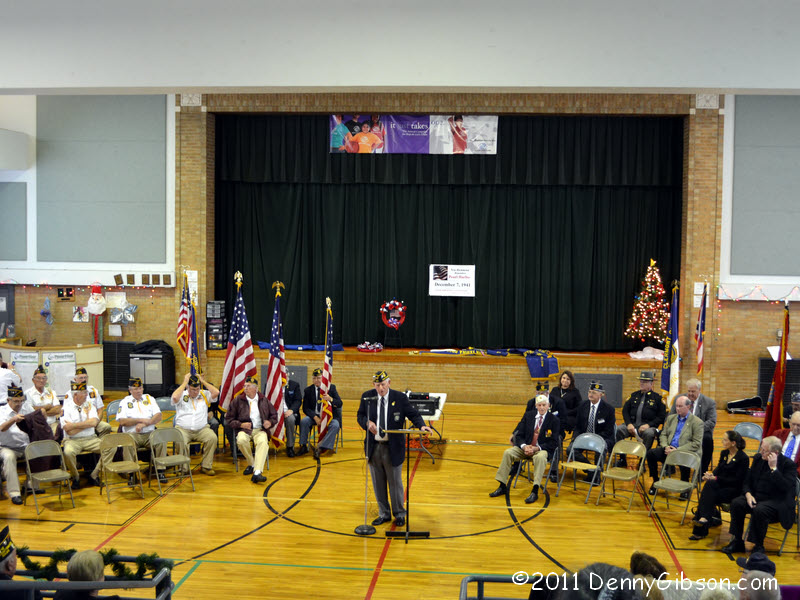
New Richmond Pearl Harbor RemembranceI wasn’t around in 1941 but I showed up just as soon as I could after the war. December 7 and June 6 were two of the very first dates I learned about. However, despite an almost instinctive connection between December 7 and the Japanese attack on Pearl Harbor, I don’t believe I’ve ever attended any sort of commemorative service for the day. I don’t recall even seriously considering it until a few years ago when I became aware of a ceremony conducted in New Richmond, Ohio. New Richmond is an Ohio River town that I tend to visit fairly often. Just about everything I learn about the town, which is home to that cardboard boat race I wrote about here, makes me like it more. So I’ve thought about going for a couple of years but this is the first time I actually made it. This year’s New Richmond Pearl Harbor Remembrance was held on Sunday, December 4.

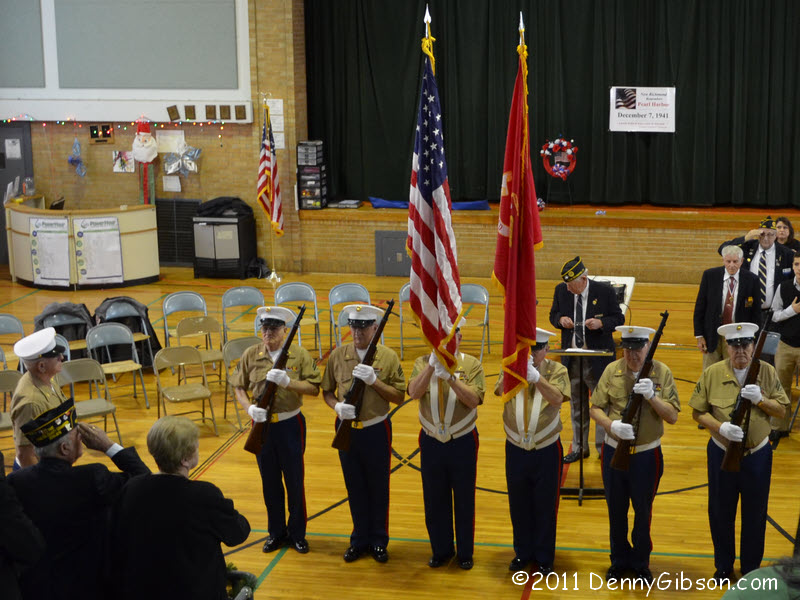
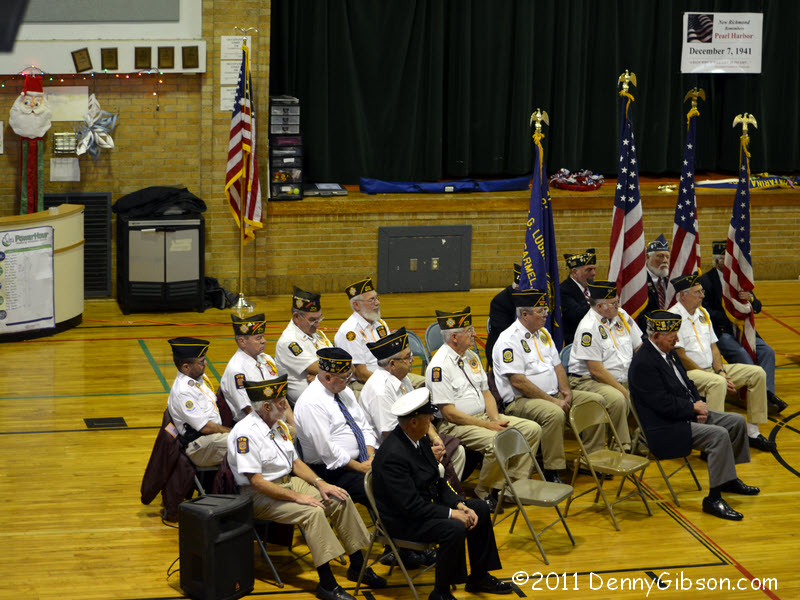
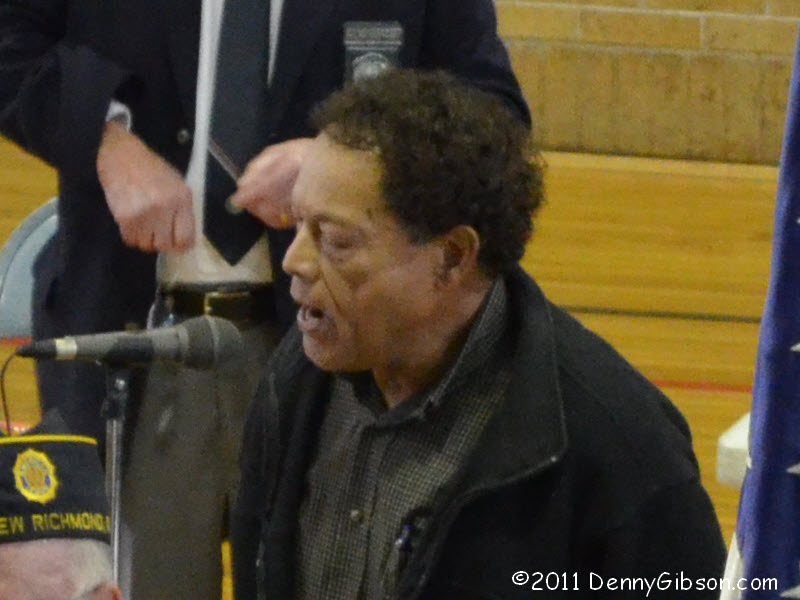
New Richmond Pearl Harbor RemembranceNew Richmond Pearl Harbor RemembranceNew Richmond has been doing this for twenty-plus years. In the past, it has been held at the park near the river and may still be on dry days. Today wasn’t one of them. Things began with the entrance of a sizable color guard followed by the singing of the national anthem and the pledge of allegiance to the flag. The anthem was sung solo by a fellow who I know nothing about beyond his name. John Hale‘s a cappella performance of The Star Spangled Banner was right up there with many big-name auto-tuned renditions I’ve heard. A very nice job. There were speeches, of course, but all were brief and pertinent. More nice jobs. Then we came to a point in the program labeled “Introduction of Pearl Harbor Survivors”.

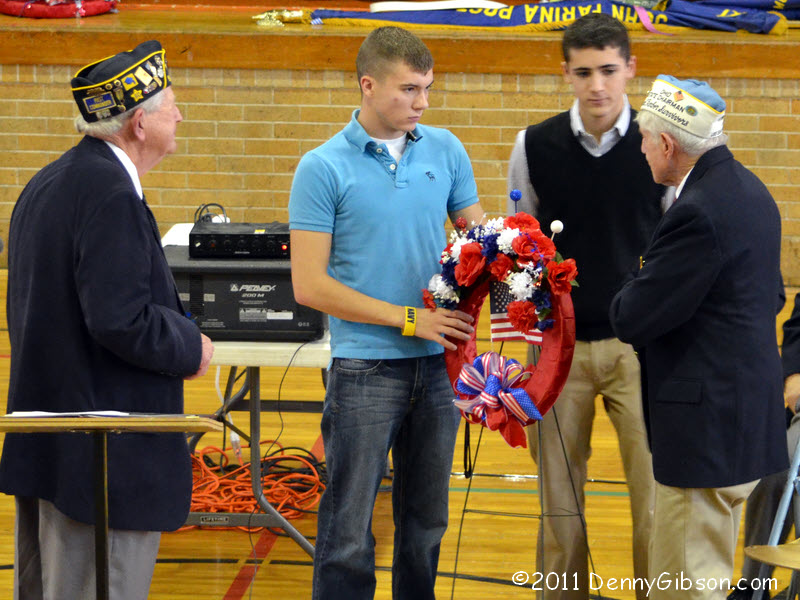
Pearl Harbor Survivor Joe WhittWhen New Richmond began holding this remembrance, it was attended by approximately twenty-five area residents who had survived that horrible day in Hawaii. Just three remain. Two are in nursing homes and unable to attend. Joe Whitt stood alone. Joe enlisted when he was seventeen and turned eighteen just a couple of months before the attack. People familiar with pictures of Joe from that time say that he looked fourteen. The math is fairly simple. This is the seventieth anniversary. Joe is eighty-eight. He stood straight and recounted events of that day with frightening clarity. He and others fired at the planes with rifles. Because his ship, the USS San Francisco, was stripped for maintenance, these were the only weapons available to them. One of his shots, which he doesn’t believe did any real damage, was at a pilot whose face was clearly visible at “about the height of the ceiling” of the high school gymnasium. Even though Joe went on to fight in seventeen battles and do a lot more shooting with much bigger guns and a lot more impact, there is no doubt that his memory of that pilot’s face is vivid and crystal clear.

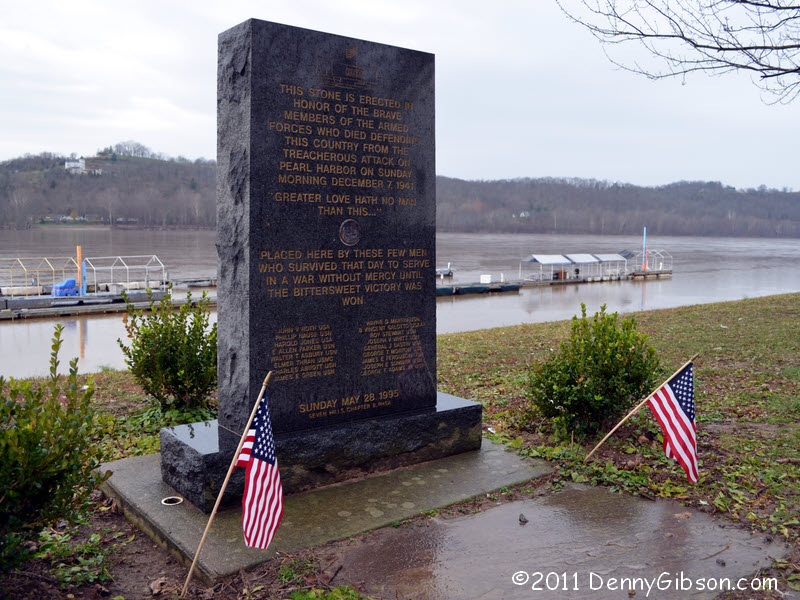
New Richmond Pearl Harbor RemembranceNew Richmond Pearl Harbor MonumentThe left hand picture shows local Buckeye Boys State representatives presenting a wreath to Joe Whitt as Ralph Shepherd of the American Legion looks on. Today, the actual anniversary of the attack, it will be placed at the riverside monument and another will be cast into the Ohio River.

As far as I know, this is the only Pearl Harbor observance in the area. Someone said that Addyston, on the west side of Cincinnati, may still have one but I could find nothing online. In some respects, having the horrible events of December 7, 1941 recede in our collective memory is a good thing. Unfortunately, they are not receding so much on their own as being pushed back by more recent and equally horrible events. Yes, we should never forget events such as the attack on Pearl Harbor but it would sure be nice if all such memories were really really old ones.


With the Remembrance scheduled for a Sunday, my first thought was to make it the subject of the blog post for that same day. As Sunday approached, I realized that I would not have a book review ready for Wednesday and that I had a small herd of electrified horses trotting about my brain. It would be better, I surmised, to post the horse parade stuff on Sunday, the Remembrance stuff on Wednesday, and hope to have a book review by next Wednesday. Sorry to disillusion anyone who thought this was all carefully planned weeks in advance.