Spam, Spam, Eggs, and Spam

Monty Python spam skitA 2005 survey reported that people were spending an average of 2.8 minutes a day deleting email spam. Whether that was for the entire US population, the 75% of internet users they reported receiving spam messages daily, or some other group is unclear. Regardless of who was doing the deleting, the survey went on to state that the resulting loss in productivity was costing $21.6 billion dollars a year. My search failed to turn up more recent statistics although I imagine they’re out there. Or maybe not. Maybe the statisticians are now too busy deleting spam to conduct surveys.

I believe I’ve deleted my share. There have been times when, between work and personal email, I’ve had 200+ spam messages to deal with each day. Of course I had some filtering in place but the fear of having a critical communique erroneously identified as spam meant scanning the junk folder for messages from colleagues or customers. Eventually, as the quality of and my confidence in anti-spam software increased, I was able to configure things so that the vast majority of those messages were quietly and automatically done in by the software without me hearing the screams or needing to move the bodies. I know the amount of spam email pointed my way didn’t actually decrease but I was protected from the bad-guy software by some good-guy software.

I’m now at a similar point in dealing with comment spam. Comment spam doesn’t come through an email account. It comes, as the name indicates, through comments on blogs and forums and such. Much email spam is just silly but some of it is truly malicious or criminal; intent on doing damage or stealing something. Same thing with comment spam with one big twist. Reader comments can actually become part of the content of the site on which they are entered. This means that any malicious or criminal links contained in the comment are now available to the whole world wide web. They are usually surrounded by such inane drivel that it’s hard to imagine anyone ever clicking on them but I suppose it happens. I’ve little sympathy for any English speaker who clicks on a link surrounded by Russian or Portuguese or even the broken English gibberish that seems to be the norm.

Comment spam, at least in theory, can have value to its producer even if no one ever clicks on embedded links. Search engines do consider links to a website in establishing that site’s rank. Apparently lots of spammers believe that getting a pointer to some site on a blog with absolutely no other connection to the site will boost its rank. I feel that’s pretty much a myth though I don’t really know that. I do know that search engines are not dumb. Spammers, it seems, are.

To date, no comment spam has actually appeared on this blog. It has appeared briefly in the site’s guestbook and in the now deceased forum. In the case of the guestbook, I get email notification and it’s so infrequent that I simply manually delete it ASAP. That is usually within a few hours; Often within a few minutes. With the forum, I initially allowed comments by guests but switched that to members only when spam started to appear. Of course, with the forum completely removed, that’s all just history.

From the blog’s beginning, I’ve employed the simple but effective technique of requiring everyone’s first post to be approved by me. That keeps the spam from appearing on the blog without hampering folks I trust. I recently went one step further by installing the AntispamBee plugin. Without this, I had to manually mark each qualifying post as spam. Not a big job but one I could avoid and avoiding work is always attractive. At present, all suspicious comments are placed in a folder where I can look them over before dumping them down the cyberdrain. The big plus is that my email is not cluttered with requests to moderate every piece of crap that this way comes. It has been in place for about a week and hasn’t misidentified anything so far. Assuming that continues, I’ll probably turn on the automatic disposal in another week or two.

My blog spam snapshotIt was the pending “loss” of these comments that prompted this post. Most are just aggravating but a few are hilarious. They are almost always filled with praise in hopes, I assume, of winning my approval but the typical message is such a jumble that I can’t imagine even the most desperate ego succumbing. Like newspaper horoscopes, the messages never mention anything specific about the post they are supposedly responding to. The majority appear to be from Russia, Eastern Europe, and Brazil. There have been a few bulk posts. A bunch once showed up pushing a particular brand of shoe and there were a couple bursts touting some dress label. At one point I received quite a few from someone in Brazil saying they would “adore to reveal” something (a Portuguese word I’ve yet to find a translation for) “in web cam”.

I’m closing with three of my favorites:

Among the finest to tell a person that i’m simply brand new in order to blogging and definitely liked you are web site. Probably I will save your website . You certainly have outstanding articles. Kudos with regard to sharing around your blog.

I be aware like Im constantly looking by cause associated with inviting things to pore more than close by a number of subjects, but I be successful to include your own set up among my personal reads each and every life time since you give delivery in order to compelling records that I appear forth to.

Thanks for the information, I rarely like it.

Product Review
Route 66 Attractions
with Ready2Go Tours

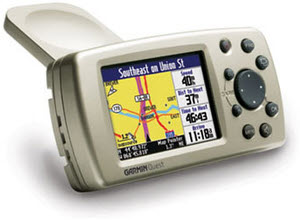
Route 66 Attractions with Ready2Go ToursMy relationship with Garmin GPS receivers goes back to my first documented road trip in 1999. I haven’t owned a lot of different models and I’m definitely no expert but I’ve used and liked Garmin products for quite awhile. Then, as I traveled with a new unit I bought last April, I began to think that Garmin had completely abandoned me. It took several email exchanges with a fellow named River Pilot to convince me that Garmin still makes products capable of following turn-by-turn routes. Garmin, however, insists on aiming those products at motorcycles. I drive a car.

River Pilot doesn’t work for Garmin. He owns River Pilot Tours, a company offering, among other thing, motorcycle tours of Route 66. They developed the subject of this review. Since River was so helpful in explaining the, in my opinion, warped Garmin product line, I really wanted to like his product but feared I wouldn’t.

I crept up on it. An important thing I learned from River is that there are at least two different types of software inside Garmin GPS units. That inside zūmo®s handles turn-by-turn routing properly; That inside nüvi®s (and other models) does not. By “properly”, I mean the device will not only guide you from point A to point B but will do it along a specific pre-plotted path. The unit I got in April was a nüvi®. I recently bought a zūmo® 220. After a few experiments in the neighborhood, I used it on a trip to Florida and convinced myself that it would indeed follow my routes. Then I bought Route 66 Attractions with Ready2Go Tours.

There are two different River Pilot Tours products available to mate up with the two types of Garmin products. Route 66 Attractions contains more than 800 points of interest (POIs) along Historic Route 66. Each has a description, a photo, and contact information. Almost any current Garmin street product is capable of guiding you to any of the attractions. Then, just as the name implies, Route 66 Attractions with Ready2Go Tours adds turn-by-turn instructions for both east and westbound tours of the route. Both products are published by SpotItOut and both are available for purchase and download at their website. Prices are $30 “with” and $10 “without” although the “with” version is currently on sale for $25.

UPDATE 4-JAN-2014: SpotItOut ceased operation sometime back and River Pilot Tours now sells its products directly on SD cards. The “regular” Route 66 GPS Attractions Guide can be purchased through the online store but the version with Ready2Go Tours cannot. Because not all Garmin GPS units are capable of running the turn-by-turn software, River Pilot Tours requests that potential Ready2Go Tours customers call (307 222 6347) or email (tours@riverspilot.com) so that compatibility can be determined before money is spent.

UPDATE 6-JUL-2014: Both versions of the Route 66 GPS Attractions Guide can now be purchased through the online store. If there is any doubt about compatibility or if there are other questions, just call (307 222 6347) or email (tours@riverspilot.com) for some friendly help. To remove any question of compatibility and avoid the purchase of a high end GPS for one time use, a pre-loaded unit can be rented from River Pilot Tours. Call or email for details.

Purchase, download, and installation were straight forward. The addition to my GPS looked good throughout a bit of playing but it’s really tough to judge a product’s Route 66 turn-by-turn capabilities in a living room in Cincinnati. Last Saturday’s cruise in Illinois provided an opportunity to get a better look.

I was purely a follower on the cruise which meant no one was depending on me and I wasn’t depending on the GPS. At our starting point in Mitchell, I selected the Illinois eastbound tour. I was given a chance to preview the route on a map or read a brief description. When I pressed “GO”, the unit spent a few moments calculating then asked if I would “like to navigate to the start of the Custom Route”. When I pressed “No”, it sat there quietly with a magenta line showing the route on the screen.

Route 66 Attractions with Ready2Go Tours screen shotAs we cruised northeast through Edwardsville and Hamel, the voice from the GPS essentially described the actions of the cars in front of me. It allowed me to anticipate turns just a bit so I might have even looked like I knew where I was going. The unit beeped when we approached Sixty-Six attractions such as Weezy’s and Decamp Junction. Each of these was identified and I could have pulled up a description if I’d wanted.

Things were going along swimmingly when the caravan made a turn to the right, and the voice in the box said nothing. Was this a flaw in the GPS-guided tour? Nope. Not at all. It was just a simple fact of life and roads. Over time, roads get rerouted, and from just south of Staunton to inside the city of Springfield, US 66 had two major alignments. The caravan turned right on the newer, post-1930, alignment while the GPS tour continued on the older, 1926-1930, alignment.

The primary purpose of the Ready2Go tour is to guide a traveler from one end of Route 66 to the other. It does just that, and it keeps the traveler on some alignment of Route 66 all the way. It will not take you over every mile of every alignment that the route ever followed. For that, you will need some maps, some books, perhaps some input from an expert, and a readiness to backtrack and explore. River Pilot Tours had to select one of the two Staunton-Springfield alignments to be part of the “grand tour”, and they chose wisely. The older alignment is the more interesting of the two, and we would be returning on it later in the day. We chose to do the newer one first purely for timing reasons.

I’m fairly confident that River Pilot Tours also chose wisely in the many other instances of multiple alignments. They operate their own guided tours, and they know quite a bit about others. They also consult with some of the route’s best authorities. All of this helps select the route that goes, as River says, “where folks are actually driving”.

Route 66 Attractions with Ready2Go Tours screen shotBut the Ready2Go Tour doesn’t just ignore alternate alignments. For one thing, it is built on top of that extensive database of Route 66 attractions, and not all those attractions are right along the tour path. At any time, a traveler can push “Where To?” to see what attractions are nearby. Click here for a screenshot of the list of attractions near the point where the alignments separate south of Staunton. Some, including Henry’s Rabbit Ranch, are not on the tour route. Selecting an attraction accesses an overview of a drive there. A description is also available, and the location of the attraction can be seen on a map as pictured above. Note the tour route in magenta and the blue triangle showing current position. Even without those maps and books, a traveler can visit an “off-route” attraction, then head back to continue the tour.

Route 66 Attractions with Ready2Go Tours screen shotOne alternate alignment actually appears in the product today. The pre-1937 alignment that passed through Santa Fe, New Mexico, can be selected and followed just like the main tour route through the state. In the future, other major alternatives, such as the one between Staunton and Springfield, will be added.

Without detailing every turn, I can say that the Ready2Go Tour seemed to follow its chosen alignment quite well. In general, after we reached Springfield and started down the 1926-1930 route, the voice in the box and the car in front of me were in agreement. Exceptions were when the caravan occasionally headed off on some obscure and possibly dead-ended section. But then the caravan did have books, maps, and experts, and a readiness to get lost explore. Both the path and the location of attractions presented by the Ready2Go tour seemed right. I’m happy to report, as I’m sure some are wondering, that it nailed the Nilwood turkey tracks perfectly.

I suppose it’s fairly obvious that this is a good fit for someone heading off on all or part of Route 66 for the first time. Then what? As a solo traveler, I basically require voice-in-a-box guidance on a road trip, and getting it usually involves plenty of pre-trip plotting. I’m not throwing away any books, and I’ll still be plotting routes, including some involving Route 66, but there’s a big chunk of that that River Pilot Tours has done for me. Having the big catalog of attractions always at my fingertips is pretty cool, too.

I said I feared that, even after finding the company owner extremely helpful and likable, I wouldn’t like the product. I think my biggest fear was that it would be fragile or that Garmin would mishandle the routing. But Route 66 Attractions with Ready2Go Tours seems to do exactly as it claims, and I do like it. Shouldn’t have worried.

UPDATE 05-SEP-2012: I recently completed an end-to-end east-to-west drive of Historic Route 66 using Route 66 Attractions with Ready2Go Tours as my primary guide. I deviated from the suggested route on several occasions, but the deviations were to visit some attraction or follow some alignment of which I was aware, and not because of a Ready2Go error. As near as I could tell, the suggested route always followed some Route 66 alignment, even though it wasn’t always the one I wanted to follow. In many cases, Ready2Go helped me find those off-route attractions or other alignments.

As I explained in the original review, the product contains information on lots of Route 66 attractions and can be used to find those attractions even when they are not on the tour route. I was well aware of that but was a little surprised to find that some alternate alignments showed up as well. They did not appear as a route with turn-by-turn directions, but the end points appeared as attractions, which made finding them easy. Prime examples are the two “sidewalk highway” segments south of Miami, Oklahoma. The segments themselves are perhaps a bit rough to be included in the main tour, but all four points where one of them intersects the main tour were marked so they could be located and driven if desired.

My deviations were due to personal preferences that came from previous trips, reading, and talking with other travelers. I’ve little doubt that just following the main line Ready2Go tour would provide a full and satisfying Route 66 adventure for the first-timer, and I’ve just proven that it provides a pretty good foundation for the more seasoned roadies (i.e., old farts) among us.

My Gear – Chapter 8
Panasonic Lumix DMC-FZ5

Panasonic Lumix DMC-FZ5This was my 2005 Christmas present to myself. It was clearly a step up in many regards but it was also a step away from some characteristics I’d cherished in my previous digital cameras. The change in form is significant. Although the Lumix DMC-FZ5’s height and width were each but a fraction of an inch larger than the Canon A75, its depth was well over double that of the Canon; 3.3 inches vs. 1.26 inches. This was not a camera to slip into a jeans pocket as was my habit. Another big difference bordered on sacrilege. This new acquisition used box shaped proprietary batteries. No more gas station plastic-wrapped alkaline safety net.

I did not give up these things lightly. Even though my insistence on AA battery powered gadgetry had rarely paid off it did provide peace of mind. Claims that the proprietary batteries were good for 300 pictures on a charge were reassuring and I bought peace of mind by immediately adding two spare batteries and an AC/DC charger.

The size thing, however, meant real compromise. I had found myself wanting a longer lens more and more often. The fairly new class of cameras called compact super zooms tugged at that want. Canon, Nikon, Sony, and others all had them. When a co-worker brought in his Sony DSC-H1 to “show & tell” I was impressed and started shopping. The DMC-FZ5 got my attention right away. With the exception of the one dimension, it was barely larger than my Canon A75 and less than a half ounce heavier. Any one who has seen my trip reports knows that I like to shoot pictures of the road ahead. One handed over the windshield when I can; Through it when I can’t. The lightweight Panasonic was a good fit for that sort of thing and the fact that it had image stabilization was a definite plus.

There was also a change in recording media but it was hardly traumatic. The Agfa 780c had used something called Smart Media. The two Canons used Compact Flash. The Panasonic required SD (Secure Digital). None of these devices are terribly expensive. Buying a couple new cards when you buy a new camera won’t bump the bill significantly and you will probably want to buy a card or two even if your old ones are compatible with the new camera. Why? Because they’ve probably shrunk. They still contain the same number of megabytes or gigabytes but the new camera likely produces larger picture files so that those megabytes and gigabytes fill up faster. Files from the 5 megapixel Panasonic  were considerably larger than those from the 3.2 megapixel Canon so I had no qualms about buying different — and higher capacity — media cards.

A longer lens was the reason I first started thinking about this sort of camera. The 12X zoom on the FZ5 was the 35mm equivalent of 36-432mm. It was made by Leica and that probably sold me as much as anything. A digital camera is made of electronics and optics. Panasonic makes some good electronics. Leica makes some great optics. This could be a decent camera.

It was. I was very pleased with my Christmas present even though it had a price tag right at $400. My faith in digital photography had grown significantly. Like much of the world, I was starting to believe that it might really have a shot at replacing film. I still didn’t have a camera that could do magazine covers but this one could do the stuff between them just fine.

My Gear – Chapter 7 — Canon Powershot A75


The need for spare batteries coupled with my bargain seeking tendencies led me to an independent vendor with whom I continue doing business to this day. He is an eBay merchant named OrphanBiker. The name comes, not from the seller being an orphan himself, but from his being attracted to unusual motorcycles that some call orphans.
“…the more obscure the better” is how he describes his taste in bikes.

My first order, placed the same day I bought the FZ5, was for those two batteries and charger I mentioned. Admittedly, a charge on these batteries did not last quite as long as with the genuine Panasonic version but they otherwise worked just as well and cost considerably less. The charger I liked much more than the one that came with the camera. It was a small cube with a foldaway AC plug and a detached cable for DC operation. I have since gone to OrphanBiker for batteries and chargers for other cameras and chargers for cell phones. The only problems I’ve ever experienced have been internal breaks in a couple of the cables after a year or two of use. People who don’t twist, pull, kink, and pinch their cables like I do probably won’t see even that.

Twenty Mile’s Last Stand

Twenty Mile House, Cincinnati, OhioThe first time I entered the Twenty Mile House it was smaller and younger and so was I. I was in my twenties so perhaps could even be considered young in absolute terms. Not so the building. The part on the right was built in 1822. Some or all of a building that stood here in 1804 might even be included in there somewhere. The road was smaller then too. It was small enough that cars parked between it and the building where those shrubs are now. The main entrance was through a street facing door that has long been locked and sealed. Some details of the first time I stepped through that door remain clear. The bar was against the far wall. I’m not entirely sure what was to my left; Probably some tables and chairs. I don’t recall the huge fireplace that I now know fills the east wall so am guessing that it was covered at the time. To my right was a jukebox and a hardwood dance floor that sat on top of the “normal” floor. Les Paul & Mary Ford’s version of How High the Moon was playing. That recording is almost as old as me.

Twenty Mile House, Cincinnati, OhioThe building started out as an inn and stagecoach stop some twenty miles from the center of Cincinnati. It seems to have been successful in that role. And it must have been somewhat successful as some sort of road side stop as the stage route became Montgomery Road and Ohio Route 3 and the 3C Highway and US Route 22. I don’t really know whether the outside of the building changed much during its first century and a half. I do know it hasn’t changed in any material way in the many years since. The inside, however, has changed considerably and additions have been made until the structure I remember from the early 1970s makes up maybe a third of the total. A recent sales flyer includes a diagram of the building in which I believe the area labeled “Bar & Lounge” is the original structure. Perhaps there is a version of the “Peter Principle” that applies to restaurants. Something like: “A successful eating establishment will expand to a size just beyond what the customer base can support.” This was an extremely successful restaurant and night spot through the seventies and eighties. That’s when the additions were made and every occupant since then has had that huge capacity — and overhead — to deal with.

Twenty Mile House, Cincinnati, OhioIn my mind, the sprawling additions have been a factor in the failure of various restaurants to make a go of it but it’s hard to say just how big a factor. The most recent tenant may have actually found all that space attractive. That was a business called Red Rock Tavern and it advertised itself more as a music venue than as a restaurant. It didn’t last long but it left its mark. They painted the building red. Some previous tenant had mounted a scrolling electric sign board on the corner of the building. It’s still there in the picture in the real estate flyer. The Red Rock folks painted around it so that removing it left a scar like stripe. Rumor has it that the kitchen was pretty much stripped at the same time.

The red paint and the grey “scar” provide an ugly building to go along with an ugly situation. Speedway, the gas station chain, found the location, if not the building, attractive. They want to demolish the building and put in a gas station and convenience store. An offer was made but there was a hitch. The property is at the corner of Columbia Road and US 22. There is an entrance on both roads but Speedway stated that it needed an entrance from Columbia much closer to the corner than the existing one. That would be a violation of Warren County access management regulations. The existing entrance is, in fact, closer than current regulations permit but was grandfathered in. This is truly a safety concern in the minds of many and the county engineer has refused to grant an exception.

Beyond this it gets pretty muddled. Apparently the county commissioners and possibly even the Deerfield Township commissioners have the power to overrule the engineer. They haven’t done so and have become the target of a lawsuit by Jeff Black, the building’s owner. They have also become the target of many local residents who feel they should buy the building to preserve it or somehow otherwise firmly block the development. I have no idea how all this fits with the fact that, late last year, Speedway submitted plans that omitted the entrance change.

I’ve come to the game embarrassingly and frighteningly late. I heard of the situation months ago but did nothing other than sign an electronic petition. I marked my calendar for a zoning committee meeting a couple of weeks ago but blew it off for something else. On Tuesday I did attend a township commissioner meeting but it was almost immediately apparent that the meeting was rather meaningless in regards to the fate of the Twenty Mile House. It was a chance for residents to relate how much they liked the old building and tell how its destruction would be a great loss but the commissioners had already come out firmly against buying the property which seemed to be the only method available to them to actually prevent the proposed demolition. For the record, I am not a resident of the county or township involved. I live at the edge of Hamilton County. Warren County and Deerfield Township are two streets and 300 yards from my front door.

Twenty Mile House, Cincinnati, OhioI can’t even guess at what might happen next. I only know that I’ll be watching. I suppose that part of the reason for making this post is the hope that it might get a few more people watching, too. Several articles here offer glimpses of what has already transpired and the post and replies here offer glimpses of what once was. The petition I mentioned is here though, like almost all online petitions, it has no legal standing. I am aware of two Facebook connections. One is a fan page which may signal its attitude in its title, Save 20 Mile House – Boycott Speedway. The fact that there has so far been only something to be against and nothing to be for can be seen in the name. The other is a group whose name, Friends of 20 mile house, is less abrasive. Fans of the page and members of the group overlap heavily. Hopefully someone will come up with a better plan than lying down in front of bulldozers. On the other hand, I attended that commission meeting with a sixty year old Deerfield Township resident whose mother, knowing his feelings on the matter, cautioned him to “not get arrested”. It could happen.

UPDATE: 27-Mar-2012 – As reported here, Speedway has withdrawn its offer to purchase the 20 Mile House. That is merely a short reprieve as the historic building is still for sale and financial pressures on the current owner have not gone away. Taking advantage of the breather, the previously mentioned Friends of 20 mile house Facebook group has formed a non-profit corporation using the name Friends of The Twenty Mile House. This will allow fund raising and provide focus for locating and assisting preservation minded purchasers.

UPDATE: 1-May-2013 – Time ran out for the Twenty Mile House. The property was sold in March, a demolition permit issued, remaining fixtures were sold in an online auction, and, on April 16, the building was leveled. A blog entry on the demolition was posted here the next day. The order for destruction came from Henkle Schueler & Associates who plan to build a Big Mike’s Gas n Go at the location. In justifying the unpopular action, the company has used silly phrases like “its historical significance can be measured in the physical location, not in its structure” and referred to the gas station as “a place for those traveling through the area to refuel and gather provisions” and called this a continuation of past use. I think they may have invented the phrase “functionally demolished” to describe a building with furniture and fixtures removed. The idea that Henkle Schueler thinks people who cared about the place believe this is insulting. The idea that they may actually believe it themselves is frightening.

UPDATE: 20-Jan-2018 — Two years after the demolition, a third post (Twenty Mile Stand Two Years On) was written that includes a look at how the new structures relate to what was destroyed.

Air Force Museum

C-141 Starlifter and YC-125B Raider at Air Force MuseumThe National Museum of the US Air Force is about 35 miles away from my home. I drive by it at least a couple of times a year. Almost the instant I retired I told myself I’d get up there soon on a weekday and avoid those weekend crowds. So, over two years after telling myself that and well over two decades after my last visit, I made it to the museum on an unseasonably warm February Friday. I’ve posted an Oddment page here. Comments may be made to this blog entry.

Music Review
No Agenda
Ryan Kralik

No Agenda CD coverI was pretty much prepared to not like this. I only became aware of Ryan Kralik when he recorded a cover of Neil Young’s “Ohio” with Josh Hisle but I’ve certainly heard of him a lot since then. Actually, heard from him a lot would be more accurate. In order to download that “Ohio cover, I signed on to his mailing list and that led to becoming Facebook friends. Down these two funnels, Kralik has poured a steady stream of promotional messages. The first were about the “Ohio cover, then they were about this album, and now they are about an in process tour. I’ve no particular problem with guerrilla marketing of this sort. It may lack the punch of a full page ad in Rolling Stone but, for cash strapped artists, it beats a blank and can be fairly effective. But the primary goal of Kralik’s messages seemed to be connecting his name with the better known musicians who had helped with the recordings. The basic idea is no doubt good but when that seemed to be about the only thing Kralik had to tout and I’d heard it too many times, it became off-putting. There seemed to be far too much grasping at coattails involved. I became irked rather than piqued.

So I kind of hoped to just ignore the album but knew that wouldn’t be easy. In an idle moment a few days after a streaming preview became available, I gave it a listen. It didn’t suck. It sufficiently didn’t suck that I ordered it under some special edition half price offer. That was in late November. It arrived sometime between January 27 and February 6. I was out of town so can’t really nail down the delivery date but I clearly had a couple of months for negative thoughts to grow. This was not the result of simple laziness. The delay was caused by production problems but it was still a delay and it did nothing to endear Mr. Kralik to me. Some of that guerrilla marketing talked about the packaging so I kind of knew what to expect. The CD itself is made to look like a vinyl record complete with (printed non-spiraling) grooves. It is inside a standard cardboard CD sized sleeve. That sleeve is in one side of what looks like a folding double LP jacket (for 7 inch LPs) along with some stickers, tickets, and such. The other side of the jacket holds a very nice booklet with lyrics, pictures, personnel, and most of the other things you want to know about a CD but aren’t always told. That booklet, all by itself, counterbalanced a whole bunch of the negativity I’d developed. The remainer was knocked off by the music.

Those names that Kralik dropped with wild abandon early on are all here. Dave Krusen (Pearl Jam) is on three tracks. Rick Rosas (Neil Young, Joe Walsh) is on two. Michael G Ronstadt appears three times and Josh Hisle once. Josh and Michael I know from their solo stuff along with their work with Lost in Holland and Ronstadt Generations. Some of these guys and a couple of others get the occasional music credit but the lyrics are all Kralik’s. So are the vocals.

The music begins and ends with ukulele tunes. Another resembles something the Ramones might have done. That’s quite a range though No Agenda does not hit much of the space in between. The two uke songs and another tune, “Me and You”, which might actually be a love song, are kind of slow and kind of quiet. The remainder are all driving rockers. Kralik is no opera singer but he doesn’t try to be. He doesn’t push his range in delivering the topical and witty words he has written and it sounds right. “The Egypt Riot”, that Ramonish tune I mentioned and which is my favorite on the CD, could almost be too topical. The big time protests in Egypt came and went while No Agenda was being birthed but songs that capture a moment, like the aforementioned “Ohio”, are often good things. Maybe “The Egypt Riot” does that. I’m not sure.

When Rosas and Krusen aren’t around, Keith Lowe and Jeff Strainer do admirable work on bass and drums and Pete Jive contributes some nice guitar to those two ukulele pieces. Kralik’s guitar can be heard on almost every track and it’s solid but it is James Holsapple who adds the bright work here. I particularly liked what he does on “The Setting Sun” where he deservedly gets co-writer credit.

I’ve named three songs and there are five more. Yep, eight songs, totaling about thirty-two minutes of music. Maybe that’s not unusual today. I really don’t know. I certainly wouldn’t mind if there was more music here and that would not be the case if the music sucked. It doesn’t.

Check it out here.

Scoring the Dixie

1923 Dixie Highway with my scoreTraveling a scenic old road is indeed its own reward but keeping track of which ones you’ve traveled is kind of fun, too. In most cases that’s pretty easy. Very easy, in fact, if you start at one end or the other. If you don’t make it all the way, just remember where you left the road and pick it up there next time. Starting your first drive in the middle complicates that just a bit as do alternate alignments but even piecemeal drives and multiple alignments seem rather simple when compared to the web that is the Dixie Highway.

The original idea may have been to connect Chicago and Miami but not much more than a month after the Dixie Highway Association’s first meeting, the route was split at Indianapolis, and approval of a route connecting Detroit, Michigan, with Dayton, Ohio, soon followed. The “highway” had two mainlines essentially from the very beginning. Routes connecting the two mainlines also existed from the get-go and more were added over time along with loop routes to pass through or attract traffic from cities not otherwise on the Dixie. Robert V Droz, whose excellent US Highways site I reference a lot and praise as much as I can, identifies ten connectors, four loops, and a bypass. By my count, the 1923 Dixie Highway Association map on the right (which I originally obtained from the Droz site but which appears elsewhere on the web including Wikipedia) shows just seven connectors and two loops.

This discrepancy somehow escaped me when I decided to use the map for scorekeeping. It slapped me in the face when I started planning my most recent road trip. That trip was to visit an uncle in Lake Alfred, Florida, and DeLorme identified a road a few hundred yards from his driveway as Old Dixie Highway. This was clearly part of the Tampa – Saint Petersburg Loop described by Droz but was just as clearly not shown on the 1923 map. That didn’t affect my trip taking but would affect my scorekeeping.

I plotted the entire loop before I left home but didn’t have much hope of driving any more of it than the section east of Tampa. As things turned out, I was able to drive the full loop on my way home but didn’t know how I was going to record this fact. On that map at the top of this article, sections of the Dixie Highway that I’ve driven are marked in green. It shows my “score” through the end of 2011. The section between Orlando and Haines City was new for me and I could mark it on the map but not the also new-to-me big loop between Haines City and Ocala.

My Dixie Highway MapSo I abandoned my short-lived experiment with scorekeeping via the old Dixie Highway Association map and, using DeLorme Street Atlas, drew up my own “map” of the Dixie. I put “map” in quotes because, although all the important connections are shown, there are a lot of straight lines and skipped cities. I believe the polite term is “streamlined”. This is what I now intend to use to record what portions of the Dixie Highway I’ve driven. As part of the journal for any trip involving some new-to-me Dixie Highway, I’ll include an updated version with all the sections I’ve driven shown in green. The current “score”, through the Lake Alfred trip, is here.

ADDENDUM 17-Nov-2015: On July 22, 2015, I wrapped up the described scorekeeping by completing at least one pass of all known segments. On November 5, I published a book chronicling those passes. A brief “review” of that book, A Decade Driving the Dixie Highway, is here.

ADDENDUM 21-Feb-2020: Over the last few weeks, there has been a small but noticeable uptick in visits to this post which I believe is due to coverage of activity in south Florida regarding the name of the highway. If that’s what brought you here, you may also be interested in a more recent post, A Dixie by Any Other Name, prompted by that activity.

ADDENDUM 8-Dec-2020: During preparation of a year-end summary, it was discovered that there were numerous visits to this post and that the search term “Dixie Highway map” brought numerous visitors to the site. While it is possible that these are unrelated, it seems more likely that they are. Neither of the two maps appearing in the post, the 1923 DHA map and my own streamlined map, provide much help in actually following the route. However, in the years since this post was published, road scholar Mike Curtis (a.k.a. Two Lane Traveler) has produced a Google-based map that is quite useful. That map is here.

My Gear – Chapter 7
Canon Powershot A75

Canon Powershot A75Late in the spring of 2004, the lens on my A20 zoomed its last. As I recall, it was stuck somewhere in the middle of its range. It still took pictures but the lack of zoom was irritating and the permanently protruding lens made it awkward to pocket. Besides, there had been three years of progress since my last camera purchase and I was ready to take advantage of it.

I had been quite happy with the A20 so I went for what was essentially the current model equivalent. But those three years had not only added about a million pixels, available manual controls, and video recording to the camera, they also shaved more than a hundred bucks off the price. The A20 had cost $384 in 2001. The A75, in June of 2004, was $276.

The lens was the same 35mm-105mm zoom and the recording media was still Compact Flash. More importantly, power still came from standard AA batteries. I owned several gadgets — GPS, voice recorder, FRS radios — that used AAs and I owned a couple fist fulls of rechargeables along with an AC/DC charger. Plus, in my mind, it was crucial to use standard batteries so I could grab fresh ones at any gas station if necessary. In my five years with the Powershots and seven years with an AA powered Garmin, I think I did that maybe twice with the cameras and once with the GPS. Of course, the GPS was usually powered directly from the car so one set of batteries was almost always being charged.

I guess it was this camera that got me to thinking that digital photography might actually have a future. Until now, I figured digital cameras were great for pictures to post on a website or email to friends and relatives but film was still needed for any kind of printing. The A75 couldn’t produce magazine cover images but a 3×5 or 4×6 print looked just fine.

My Gear — Chapter 6 — HP Pavilion ze4000


My Gear – Chapter 6
HP Pavilion ze4000

HP PavilionDespite this seeming to be the most expensive computer I’ve ever owned, I remember very little about it. Oh, I definitely remember owning it and its painful demise. I just don’t remember any technical details about it. I do remember that its purchase was triggered by the need to replace a desktop PC.

Prior to buying this for what is now an unbelievable $1369 dollars in February of 2004, I did all my heavy lifting on some sort of relatively bulky desktop unit. I recall a Compaq and an Acer and there were other forgotten workhorses on my desk over the years. (The first was a Radio Shack IBM XT clone but that’s a whole different story.) The small size and low power consumption required for portability come at a price and a big crude tower offered a lot more compute power than a laptop at a lot less cost. Though the old Portege remained adequate and would still see action after the HP arrived, it was straining. When the current desktop developed some major problems, I decided to invest in a machine capable of handling everything.

I know that model number in the title isn’t exactly right. ze4000 was the designation for a family of computers with many members. I think mine might have been a 41xx but I’m not even sure of that. I’m relatively certain that it had a Pentium 4-M running Windows XP but at what speed I don’t know and I have no idea on the hard disk or memory size, either. Whatever the numbers were, they were big enough to handle all of my needs. Since the purchase of the HP, no desktop computer has entered my home.

Saying that I did all of my heavy lifting at home isn’t entirely true. I did do some of my day job at home and used my own computer for some serious word processing and software development. I also did all of the route plotting and as much photo editing as possible at home. But, of course, the bulk of the photo editing had to take place in motels as I traveled. Resizing a photo is pretty processor intensive. So is rotating one. Compared to the Portege, which was OK at both jobs, the HP was lightening fast. Lugging around the relatively heavy HP seemed justified by the difference in time spent prepping pictures for upload.

But all that lugging took its toll on the HP. In the fall of 2005, it began shutting down at inopportune times. In what was a sort of last hurrah for the Portege and a definite testament to its portability, I took both computers along on a west coast fly-and-drive trip in case the HP became unusable. After determining that it was motion that killed the HP, it became a tabletop rather than laptop computer. The Portege did see some use on that trip but most of the photo work was handled by the HP on a hard surface using light keystrokes.

Back home, I babied the HP through a few more months but finally went for some professional help. Even the pros were initially stumped but a second visit turned up a crack in the motherboard. Curing it would require replacing the board at a price approaching that of a new machine. The HP ze something-or-other was done.

My Gear – Chapter 5 — Toshiba Portege 300CT