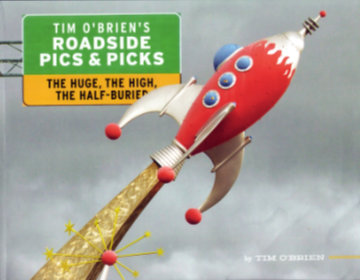
 The subject of my most recent book review was also a photobook and it also included things at roadside, but the similarity doesn’t go much further. That other book (A Matter of Time) dealt with a specific highway. This one features stuff beside a bunch of different highways and exactly which highway is hardly ever important. Maybe that hints at the basic difference between the two books. (And before I write it out loud let me say I’m a big fan of both approaches.) One book is serious; The other is fun.
To continue my comparison of the two books just one gratuitous step further, one identifies with fine art and proceeds to deliver. The other book also mentions fine art but it’s really just in passing. Here’s what O’Brien says:
I am not a studio photographer. I am not a fine arts photographer. I am here to document something.
There aren’t all that many more words in O’Brien’s book. There’s a foreword from RoadsideAmerica.com’s Doug Kirby and an introduction of sorts, titled “Prelude to an Exhibition”, from O’Brien. I lifted the quote from there. The rest is almost all images. Collections of similar items and sites with multiple photos get a few descriptive paragraphs. Individual photos are captioned with their location only. There is no narrator.
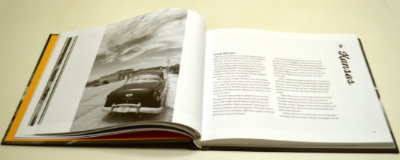
I’ve probably milked all I can from the coincidental reviewing of two photobooks in a row so let’s take a serious look at this fun book. It is softcovered. All images are printed in full color which allows them to “document something” quite well. It is divided into sections for the three categories promised by the subtitle plus a bonus fourth.
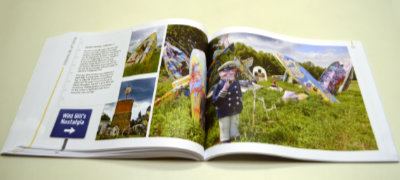 The bonus section comes first. “Roadside Art Parks” documents seven of the more famous examples of the genre with quite a few pictures of each. I got an exaggerated opinion of my own worldliness when I counted two of the first three as ones I’d visited. I was put back in my proper place when I ended the section with a score of 3 out of 7.
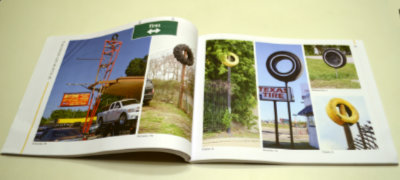 The “high” of the subtitle appears next in “Things-On-A-Pole”. I’d quickly learned my lesson and made no attempt to count and compare what I’d seen. In addition to tires, there are pictures of elevated fish, airplanes, cars, trucks, boats, etc. Et cetera includes a category labeled “Stuff”.
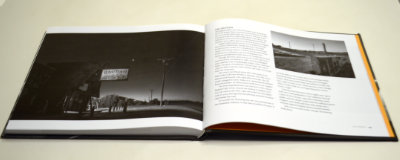
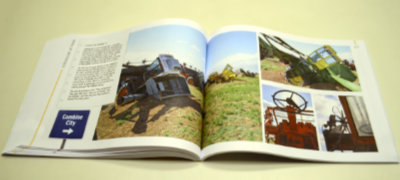 In addition to famous installations such as Cadillac Ranch, Carhenge, and the sadly vanished Airstream Ranch, “Half-Buried” includes quite a few of the not so well known examples of things poking out of the ground. The pages pictured at left show a personal favorite. When I visited Combine City in 2007, there were ten retired machines planted in the Texas field. There are fourteen in O’Brien’s description so it apparently kept growing for at least a while. On the other hand, the dedicated website that existed in 2007 has gone missing.
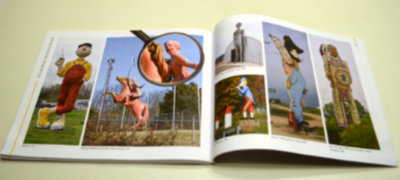 Section four, “Roadside Giants” fulfills the promise of the subtitle’s “huge”. There are subcategories like animals, donuts, people, and the ever-popular stuff. The donuts category offers a find-the-bagel challenge you can play at home.
I met Tim O’Brien at the 2019 Society for Commercial Archeology conference where I learned just enough about his career as a photojournalist to become jealous. He spent years in public relations for Ripley’s Believe it or Not!, more years editing Amusement Business magazine, and even more years free-lancing and authoring his own books. Those years were often overlapping. Maybe some of the photos in Roadside Pics & Picks are outtakes from past projects. Maybe some are from side trips slipped into totally unrelated assignments. In fact, both situations seem rather likely. Something that seems absolutely certain, regardless of how he came to photograph each of these huge, high, and half-buried pieces of roadside art, is that he was having fun doing it. Also certain is the fact that I had fun looking at the pictures regardless of whether they brought back memories, triggered an addition to my To-Do list, or made me mourn something that’s gone. And it made me jealous again.
Tim O’Brien’s Roadside Pics & Picks: The Huge, the High, the Half-Buried, Tim Obrien, Casa Flamingo Literary Arts, April 24, 2020, 11 x 8.5 inches, 174 pages, ISBN 978-0996750455
Available through Amazon.

 I started off my recent
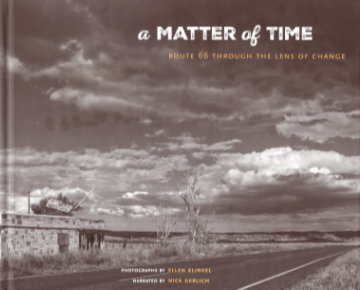 There’s not much point in counting the number of books published about Route 66; The likelihood that the count would increase before you were done is just too great. An Amazon search simply says “over 2,000”. So why review this one? What sets it apart from the others? The most obvious reason for reviewing it is a simple one: I know one of the people whose name is on the cover. The things that set it apart are not as obvious (or benignly biased). In fact, I’ve only found one thing about the book that I think is actually unique, and I’m not really sure about that. The book has no author; It has a narrator.
 The photos are black and white, which is unusual but not unique. What may be unique is how they came to be at all. Klinkel tells that story in the book’s preface. It begins in 2013. She lives in Germany and was in the western U.S. with her husband for a four-week vacation which she describes as “the first time I ever had a serious camera in my hands”. Planned visits to several national parks fell victim to the sixteen-day government shutdown in October of that year and driving a portion of Route 66 was substituted. Klinkel credits this very first time on the historic highway coupled with the “serious camera” as having “instantly sparked my passion for photography”.
 Most, but far from all, of the photos are of places I recognize from my own travels on Sixty-Six, and some of those nearly reproduce visions I’ve had myself. There are plenty of pictures of places I do not recognize. Sometimes that’s because they are from a location where I’ve never stopped or maybe even passed, but sometimes it’s because Klinkel sees and shares a vision that never occurred to me even though I’ve stood at or near the very spot she did. I don’t mean to imply that I expected anything else. It’s great to be shown something you’ve never seen, but it can be even better to be shown something known in a new way. Although it is a place I instantly recognized, a favorite example of being shown something in a new way is the early morning shot of the Bagdad Cafe with the coming sun just a tiny but significant twinkle. Another is the low-level shot of a protective wall of tires at a long-abandoned gas station at Texas Exit 0 of I-40.
 However, something clicked on a rereading of that preface that hadn’t quite registered on the first pass. Klinkel explains the title quite clearly:
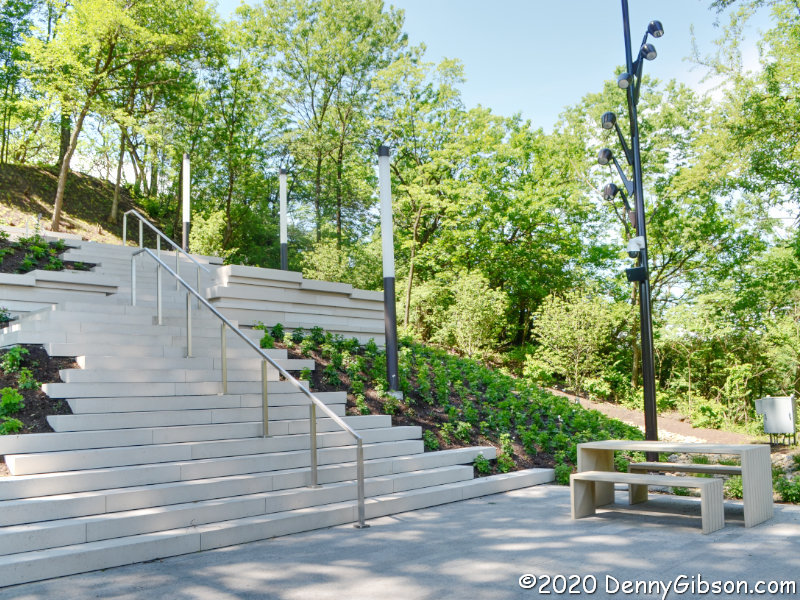
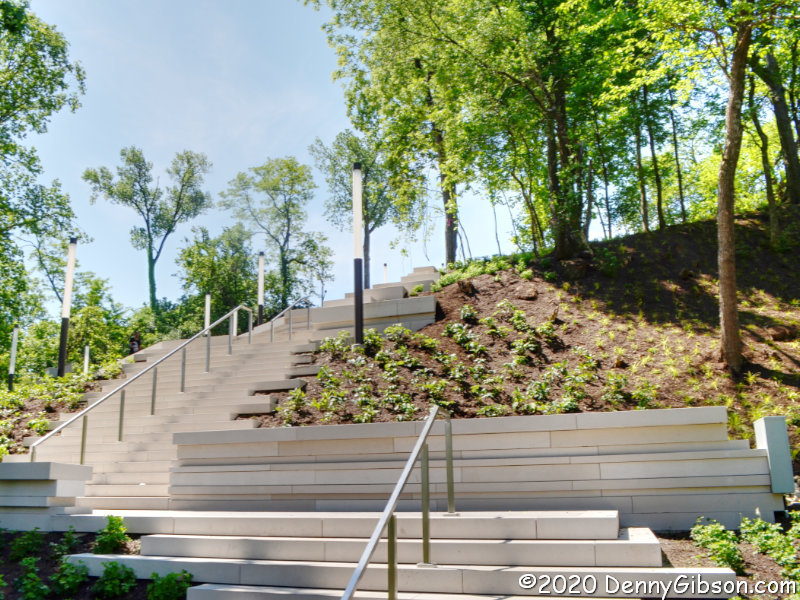
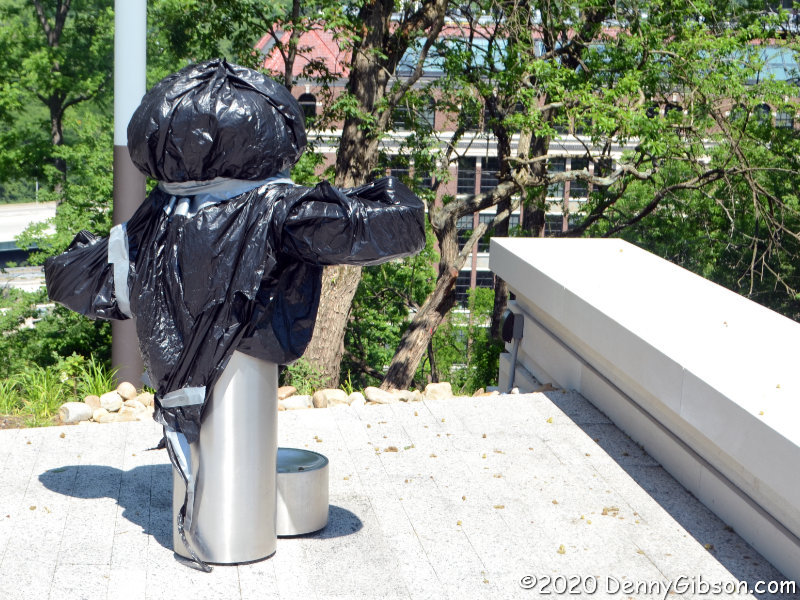
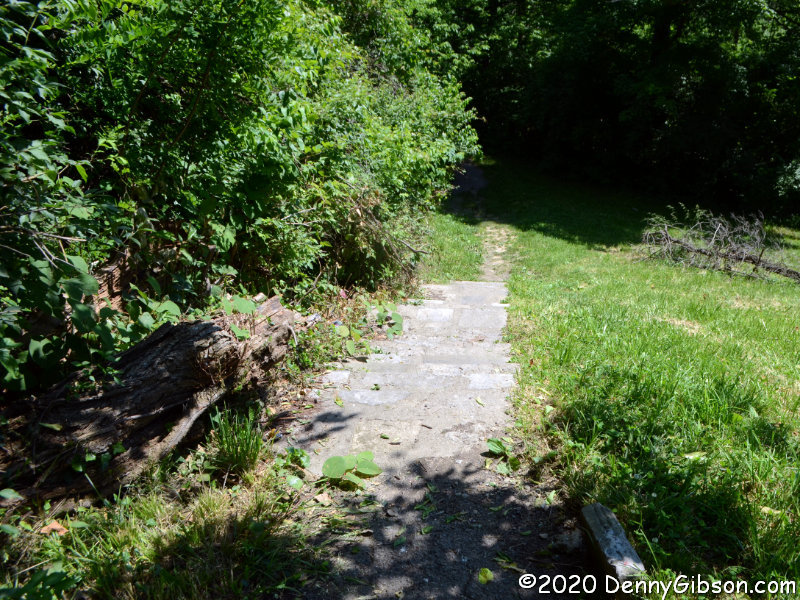


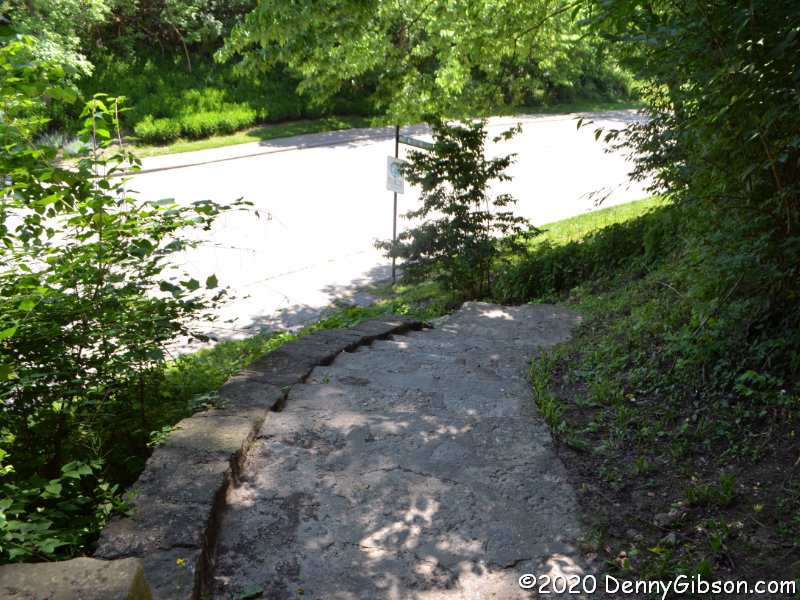
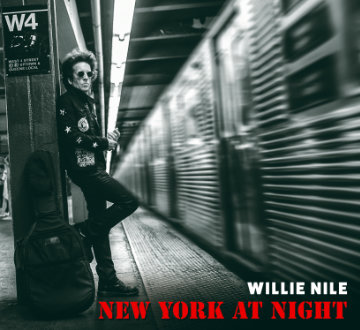 I didn’t actually try to produce a flashback last week but I thought about it. Because I’d pre-ordered the CD, when Willie Nile released World War Willie back in 2016, I got a digital copy before the actual CD arrived. It was early spring and I took a nice walk around the neighborhood with the new music playing in my ears. The walk and the songs both made an impression. A similar situation existed with New York at Night. A digital version became available before the physical version arrived. My World War Willie introductory walkabout was powered by a 2011 vintage iPod. It still works fine but I no longer have any way to maintain its contents. This time I downloaded the music to my phone and set out to enjoy some fine weather and new music.