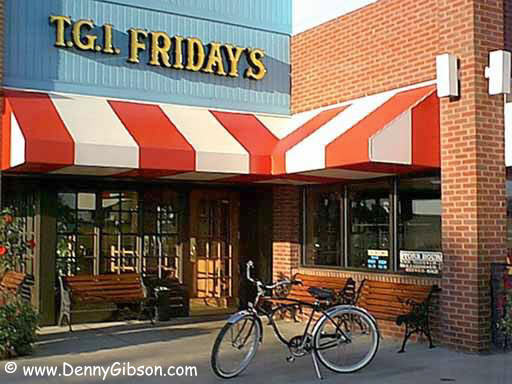
 Since this vehicle is still a part of my fleet, I’m claiming that it’s OK to cover it now although it should have appeared in My Wheels Chapter 33. It arrived as a birthday gift about a year ahead of the 1998 Corvette that actually was the subject of Chapter 33. In conjunction with the Forester and Miata, it provides me a full range of passenger capacities: 4, 2, or 1. The photo at right was taken when the start of my first documented road trip, in the aforementioned Corvette, was delayed, and I pedaled to the nearest watering hole to pass some time.
The bike was quite a surprise. My girlfriend and best buddy combined forces to select and purchase it. My girlfriend knew me and my buddy knew bicycles and the gift was exactly what I would have bought on my own had I been more familiar with the modern bicycle world. I had no desire to go racing or take long-distance slogs up the sides of mountains so the twenty-speed skinny-tired models I’d been seeing did not appeal to me. More importantly, the skinny seats that always seemed to sit too high above those skinny tires appealed to me even less.
The gift bike had none of that. It had fat tires and a fat seat on a frame that would have fit right in during the 1950s of my youth. Chrome fenders and white sidewall tires were perfect mates for the black and brown frame with the brown bearing a sort of faux wood grain pattern. As cool as all that sounds, there’s more. There is real magic in that bike. It’s in the rear axle. It’s a Shimano Nexus 7 Speed Hub with the workings all internal and controlled by a small handlebar-mounted shifter. The biggest magic of all, however, is the genuine pedal-backward-to-stop coaster brake. It wasn’t exactly a Pee Wee Herman bike, but it was closer than most. When I rode my new bike past a nearby playground, a young boy shouted out, “Nice bike, mister.” Nothing could be finer.
I moved into my current home when the bike was just a couple of months old. The pictured Fridays was more or less across the street, and there was a Kroger grocery not far beyond. There was a Walmart at one end of the street, and a convenience store and some restaurants at the other. Behind the Kroger was Kings Auto Mall, which was basically a 3/4 mile loop lined with about a dozen auto dealers. In the other direction, my office was less than a mile away. I frequently used the bike to reach the restaurants and occasionally did some shopping on it with the aid of a small backpack. I rode it to work several times but not as much as I should have. Days that were warm enough to allow riding the bike were usually warm enough to work up a sweat, which didn’t seem like a good way to start a day at the office. My favorite place to ride was the auto mall. Traffic was fairly light, and I could easily pedal through the lots to look over cars and window stickers. Conversations with salesmen happened now and then, but they were never quite sure whether or not I was actually a potential customer.
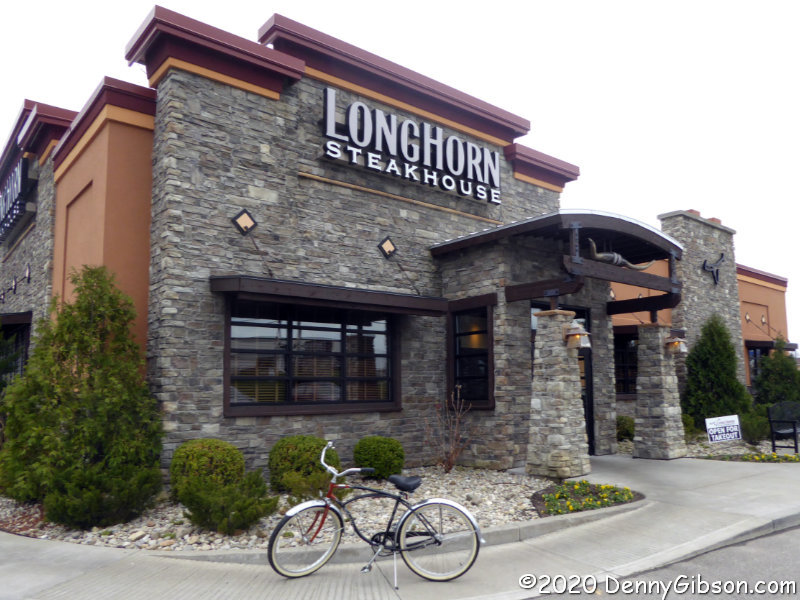 The picture at left shows the Schwinn in roughly the same spot as in the opening photo. The Fridays was demolished and replaced by a LongHorn Steakhouse. The Walmart turned into a JCPenney, and the convenience store has been replaced by a fast-food restaurant. The auto mall is doing well as evidenced by a Toyota dealer having taken over the Kroger store. Actually, the whole neighborhood is basically doing well. Naturally, some businesses have closed over the years, but they’ve been quickly replaced. There is overall growth in both the commercial and residential aspects of the community. And in the traffic.
I ride the Schwinn very little these days. There are many reasons but traffic is one of the biggest. The Fields Ertle exit of I-71, where I live, is often cited as one of the most congested spots in the Cincinnati area, and much of that congestion has developed during my time here. On top of the gradual increase from the population and business growth, there was a major step input from a new Procter & Gamble complex about two miles north of me. Major highway improvements have helped the flow of trucks and autos but not bicycles. Even the once rather quiet auto mall loop now has significant traffic and is no longer very relaxing. Getting there isn’t relaxing at all.
So I usually pump up the tires in the spring, as I did this week, and cruise through a few parking lots before returning the bike to its spot in the garage and letting the tires again go flat. There is a bike trail not far away, and it’s certainly fair to ask why I don’t use it more often. The truth is, the only reason I have is laziness. It is often overcrowded on weekends but not so much during the week. I have a cheap rack that takes some effort to mount on the car and more effort to get the bike secured on it. Maybe if I had a better rack that was easier to use, I’d hit the trail more often, but I’m too cheap to buy one. So maybe I have two reasons for avoiding the bike trail: I’m cheap and I’m lazy. But I’m honest.
My Previous Wheels: Chapter 39 — 2018 Subaru Forester
My Next Wheels: Chapter 42 — 2025 Forester
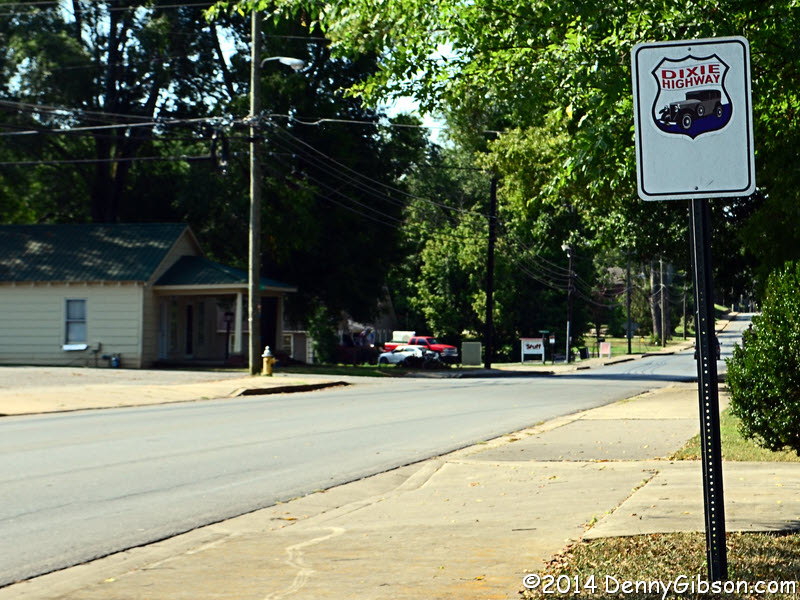
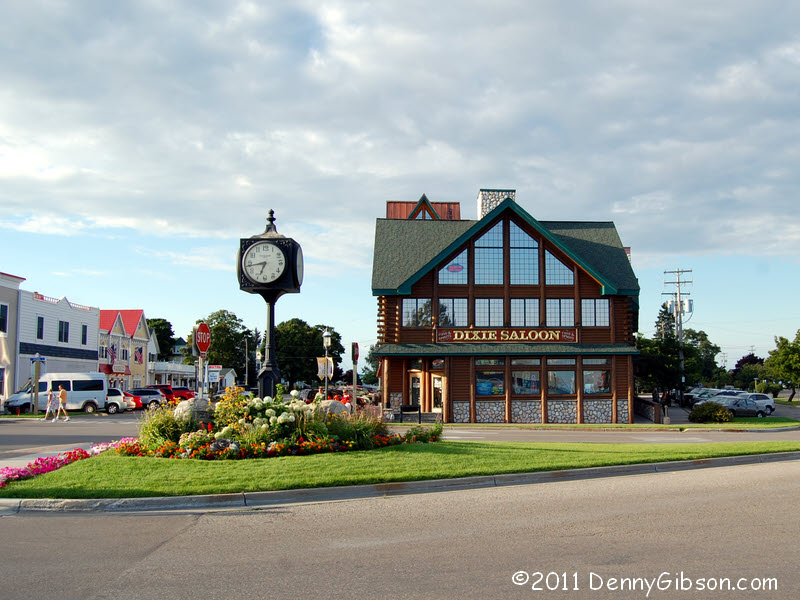
 Seeing things like signs, banners, and menus for local businesses bearing the logo of some large corporation is quite common. Details vary but the basic model is that the big corporation shoulders some or all of the cost and the small business gets some advertising for little or nothing. The idea is hardly new and the concept has never been restricted to purely commercial enterprises. During the last half of the 1920s, a pairing of this sort existed between a major highway and an American hereditary association. The major highway was, of course, the Dixie Highway. The hereditary association was the
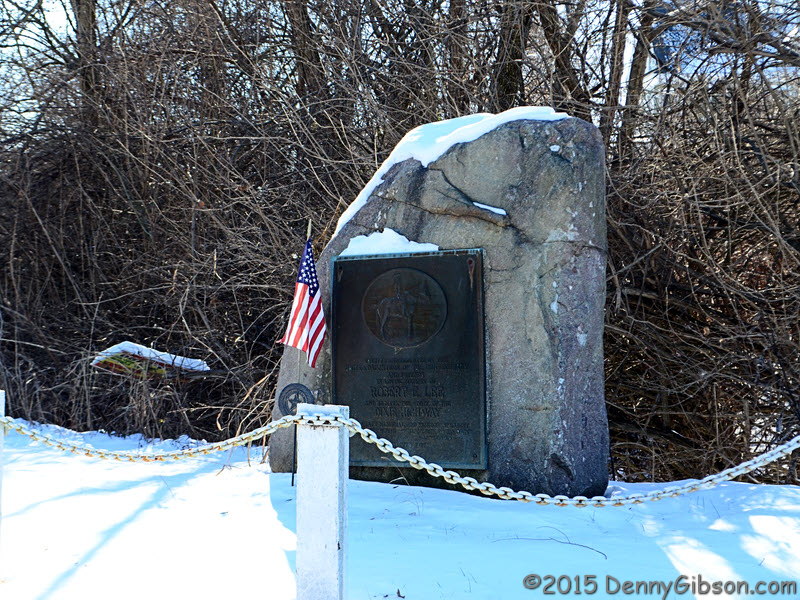
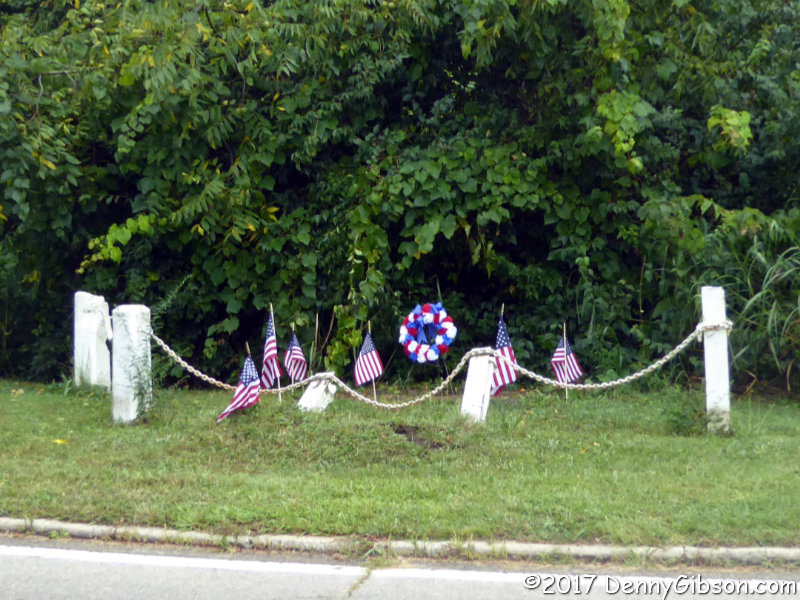
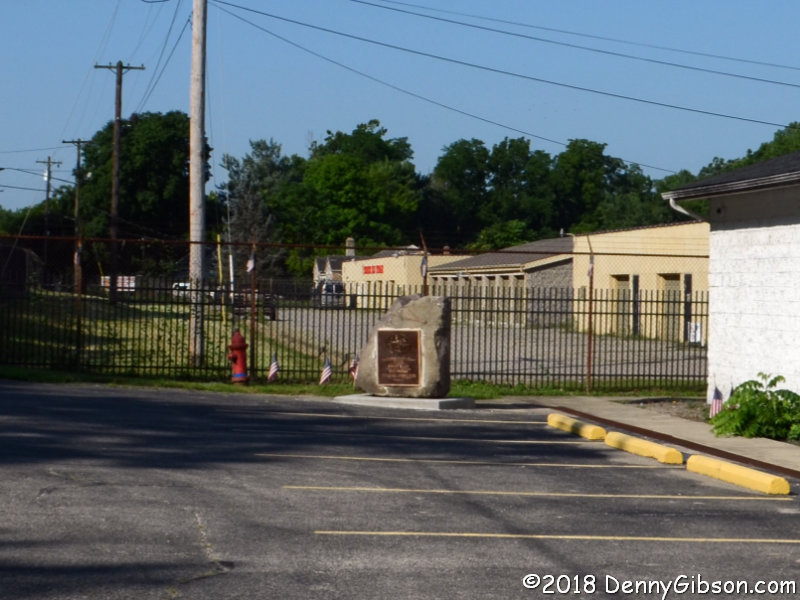
 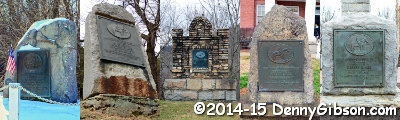 The UDC was the “advertiser” in this instance. Between 1926 and 1935 the organization was responsible for at least ten plaques being erected beside the highway. It’s unclear whether or not the Dixie Highway Association was an active participant in this arrangement. Because the 1926 creation of the United States Numbered Highway System brought an end to all of the named auto trails, the DHA was not very active at this point.
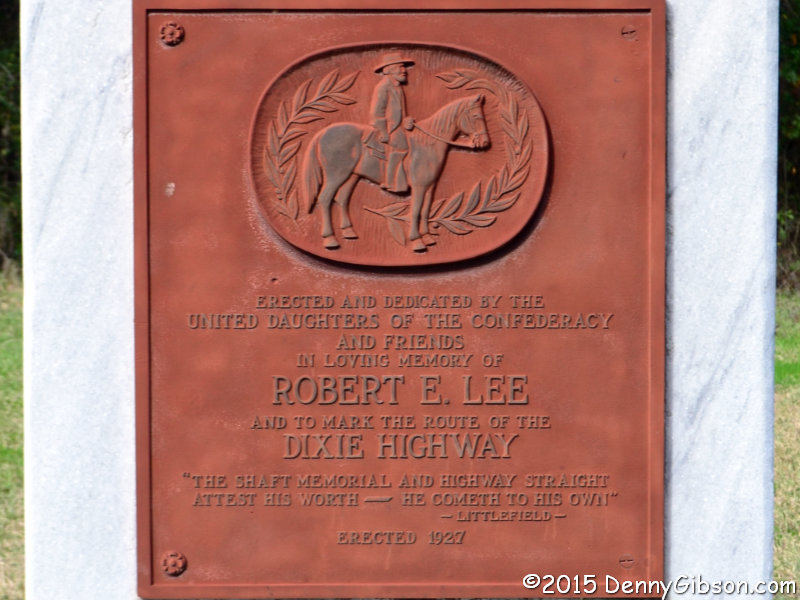
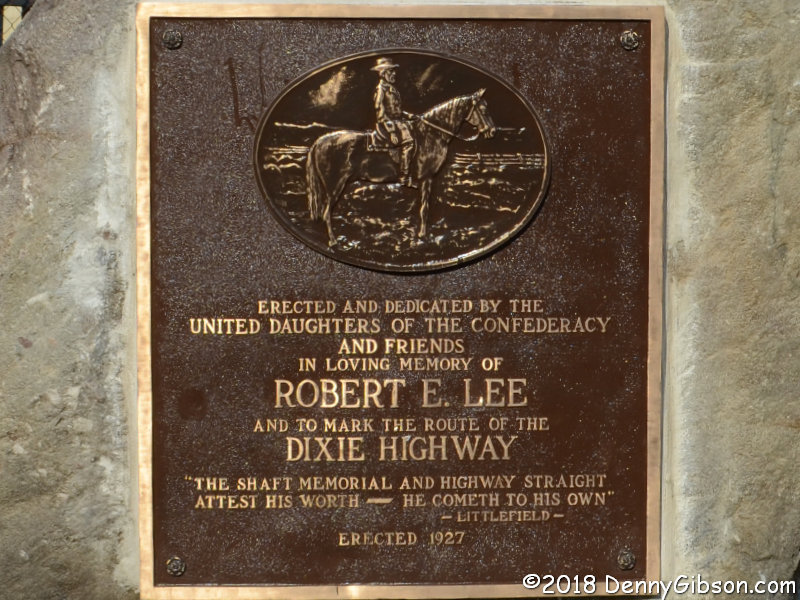
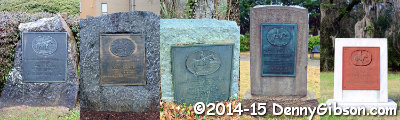 Combined, the previous picture and the one at right show the ten plaques in north to south sequence. The northernmost marker is in Ohio, the southernmost is in Florida, the one preceding it is in South Carolina, and the others are in North Carolina. Except for the date erected, eight of the plaques are identical. The one in Florida contains the same text as those eight but has a different image of Lee. The one in South Carolina contains different text but has the same image as the bulk of the plaques.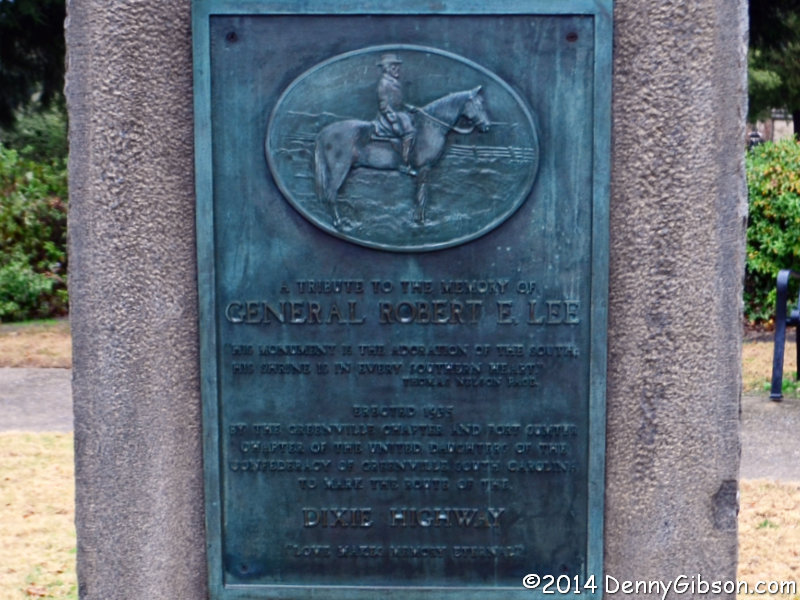
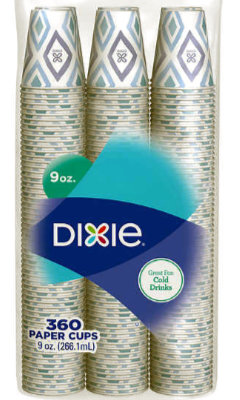 If something called a dixie existed, I have little doubt that we could refer to it differently without changing its aroma, but the word “dixie” doesn’t really identify anything. It is not, in other words, a common noun. As a proper noun — with a capital ‘D’ — it is used as both a surname and a given name and to identify a wide variety of things including a region of our country. People with a first, last, or nickname of Dixie surely outnumber things bearing the name but there are certainly plenty of those. It has been used to identify buildings, songs, currency, music groups, towns, counties, movies, beer, boats, ships, taverns, race tracks, waterways, restaurants, mountain ranges, athletic conferences, grocery stores, airports, schools, universities, and much more. With an ‘X’ made of a stylized flower, Dixie is a registered trademark of Georgia-Pacific for a brand of paper products.