Book Review
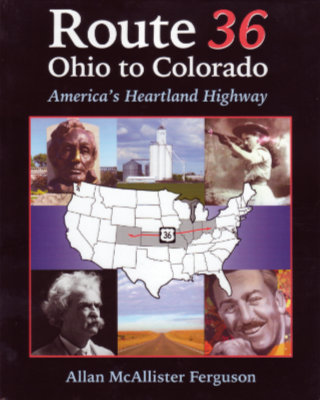
Route 36 Ohio to Colorado
Allan McAllister Ferguson

US-36 is kind of special to me. It is one of just a handful of US highways with an endpoint in my home state and one of just two that pass through my birth county. It’s even more special to Allan Ferguson. He grew up near the route in Illinois, has ancestral connections to the eastern end in Ohio, and currently lives near its western end in Colorado. It has had a role in much of his life from childhood vacations and visits to relatives to business trips and drives between old and new homes as an adult. Not all of his travels between Colorado and Illinois have been on Route 36. Not surprisingly, his early trips back home were on expressways. At some point, he tried US-36 and came to realize three things. The first was that it took no more time than driving the interstates. Between Denver and central Illinois, the US-36 is quite straight and about 100 miles shorter than either I-70 or I-80. Secondly, it was relaxing rather than stressful. The third thing he realized was that the drive was actually interesting and that realization eventually led to this book.

Ferguson stresses that this is “a book about today’s Route 36″ (italics his). He delivers plenty of history and even describes a few older alignments, but the subject of this book is the Route 36 shown on current maps and marked by modern signs. That means there are no turn-by-turn directions that fans of historic routes such as the Lincoln Highway or Route 66 might expect in a guide to a road. And there is another possible expectation that Ferguson intentionally does not meet. There are no lists of restaurants or places to stay. This sort of information is, he points out, ever-changing and available elsewhere.

Today’s US-36 runs through six states in connecting Uhrlichville, Ohio, with Estes Park, Colorado. There is a chapter for each of those states. Following an overview, which provides some history, geography, and geology, a drive through the state is described. Both the chapters and the drives are sequenced east-to-west. The basic organization is by town. Each town entry begins with some common items such as population and a website address. Museums, parks, and libraries are also listed where they exist. Descriptions of various well-researched points of interest, often with photographs, follow.

I know that all sounds rather formulaic, which it probably is, and maybe dry and boring, which it decidedly is not. Good writing makes for easy reading and the quality of Ferguson’s writing makes even this fact-heavy subject matter go down smoothly. In particular, I found the state overviews a very pleasant way to be informed.

A Section II, titled “Background,” follows the guide. A very well-done history of land transportation across the United States, its two chapters divide the story more or less at the appearance of the automobile. This history is not specific to US-36 and reading it is not at all necessary for enjoying a drive along the route. Depending on your own background, it can be a very nice introduction or a very nice review.

Naturally, many of the place names in the guide were familiar to me and I was pleasantly surprised to see a familiar “people name” in there, too. Road fan Jim Grey has documented a number of roads at JimGrey.net. Of course, Ferguson’s interest and recommendation was aimed at Jim’s photo-rich report on US-36 between Indianapolis and the Illinois border. I’ll second Ferguson’s recommendation and add that Jim’s reports on several other old roads — and lots of old cameras — are also worthwhile.

Some of those familiar place names come from the fact that I’ve driven certain bits of Thirty-Six hundreds of times. I have, however, driven the whole thing only once. This book’s east to west order matched the direction of my single full-length pass which made it easy to compare the book with my own memories and journal. I’m glad it wasn’t a competition. I documented very little that Ferguson didn’t, while he identified many points of interest that I missed entirely. I’ll do better next time.

The book has its own website at US36GuideBook.

Route 36: Ohio to Colorado – America’s Heartland Highway, Allan McAllister Ferguson, WFPublishing, August 1, 2019, 10 x 8 inches, 264 pages, ISBN 978-0971032668
Available through Amazon.
Dynamic Traditions

The ways I have experienced Thanksgiving are many. Early in my life it was as the large family gathering typically presented as the ideal. I don’t disagree. There were seldom seen relatives bringing an astonishing assortment of edibles; Some you’d been craving for a year while others you just hoped your parents wouldn’t make you eat. But we could never put together that Norman Rockwell scene with everyone sitting around a single table. Instead, Grandma’s house was filled with happy people eating in the kitchen, at folding tables, and from full plates balanced on knees. Marriage triggered a switch from celebrating the day with the large family in Darke County to the small but growing family in Cincinnati. Divorce changed things, too.

As a single, I shared Thanksgiving with friends and friends’ families. Some gatherings had a real “Alice’s Restaurant” feel though without the court appearance. That phase ended when three kids moved in. The “head of household” period saw some awkward attempts at feast making by me and some much more successful efforts by girlfriends. A shortlived second marriage included a new family to celebrate with. My current solo period began when the last of the young ‘uns moved out.

It was a little different than it had been before the family period. I was invited to join friends for holidays but everybody was a little more mature now. There was no question of me being genuinely welcome but I saw myself as more of an add-on than I once had. I dealt with the situation by running away. I first ran away for Thanksgiving in 2005. I started running away for Christmas in 2006.

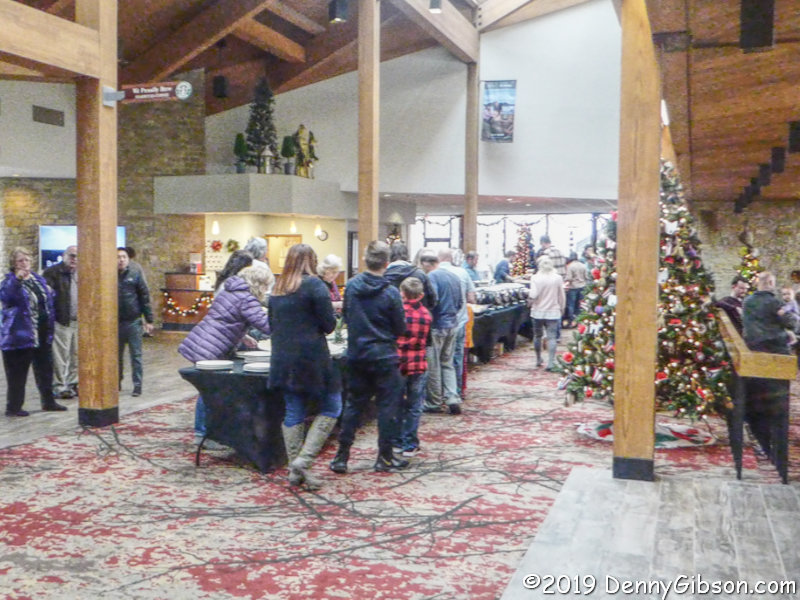
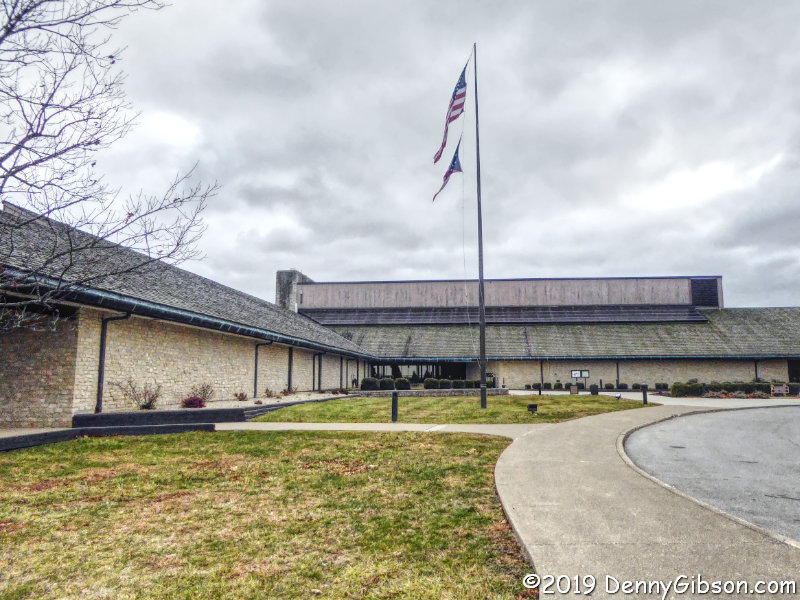
I have left home for every Christmas since then. My Thanksgiving escapes have been less consistent. Since 2009, Thanksgiving has been a mix of home and away for me. Somewhere along the way, I realized that many state parks offer buffets on holidays. It’s something I’ve taken advantage of for both Thanksgiving and Christmas. Last year, my daughter and I enjoyed a traditional Thanksgiving meal at a local restaurant. This year we borrowed from my “away” experience and took in the buffet at Deer Creek State Park.

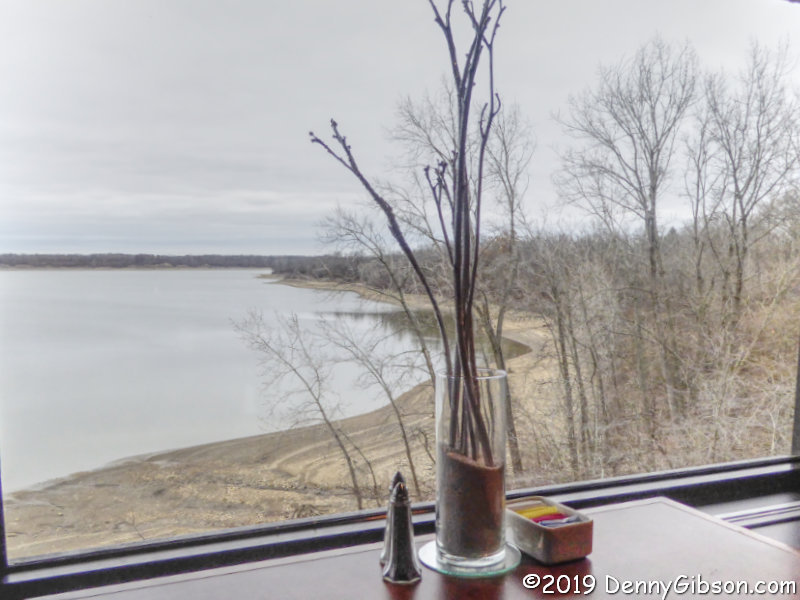
The place was absolutely packed and they were running behind schedule. That wasn’t much of an issue for us as there was a bar area in the lodge where we could pass the time with beer in hand. Our name was called about forty-five minutes after our scheduled time and we were seated at what we considered a primo spot overlooking the lake.

We joked about the possibility of there being nothing left to eat for us but that wasn’t the case at all. The only thing that ever seemed to get depleted was the stack of plates but even that shortage didn’t last long as the staff hustled to get clean ones to the table as soon as they were ready. The food was quite good and included all the standards like turkey, ham, stuffing, and potatoes along with some nice cold shrimp and baked salmon.

I realize that none of the pictures here are very good. They were taken with little care with my pocket camera. But more important than the quality is the absence of any pictures of my daughter or me with full plates. Heck, there aren’t even any pictures of the full plates and that’s just about unheard of in a Thanksgiving Day post. The truth is I had no intention of posting anything about the day and only snapped the few pictures I have because that’s what I do. In hindsight, I do wish I’d asked our waitress to snap a picture of us at our table but accept the fact that I’m lucky to even have a picture of the table.

I was also lucky in spending time with my daughter. I didn’t actually speak with either of them, but I did exchange text greetings with my sons in New York and California. There’s a meme bouncing around the interwebs with the observation that “Happiness is when you realize your children have turned out to be good people.” I realized that a long time ago but the fourth Thursday of November is a very good time to remember it and to be thankful for it.

Book Review
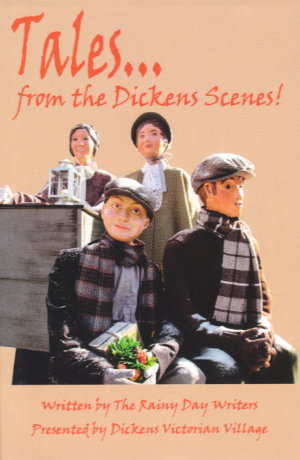
Tales… from the Dickens Scenes!
The Rainy Day Writers

This book is unusual and unusually good. The Dickens Scenes of the title are those in Cambridge, Ohio, that starred in this blog’s most recent regular weekly post. There are currently 94 of those scenes and each began life as a sketch by a fellow named Bob Ley. Bob is one of a group of writers, known as The Rainy Day Writers, who help each other practice and improve their craft and occasionally collaborate on projects. Ten of them contributed to Tales… from the Dickens Scenes.
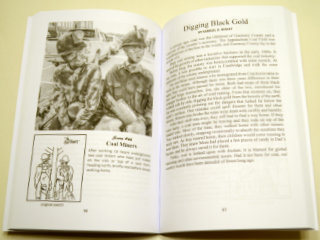
The book’s organization is simple. Each of the scenes is the subject of a two page spread. On the left-hand page is a black and white photo of the scene along with the Bob Ley sketch on which it is based. Text that appears on a sign placed by the scene completes the page. Each sign contains an identifying number and the scenes appear in the book sequenced by those numbers.

The individual photos are not credited but acknowledgments at the front of the book identify Tom Davey and Lindy Thaxton as the photographers. The photos are all quite good and do a nice job of capturing each scene from its best vantage point. Together, the book’s even-numbered (i.e., lefthand) pages make up the sort of catalog often prepared for a museum display. The village really is such a display with the sidewalks of Cambridge forming the museum.
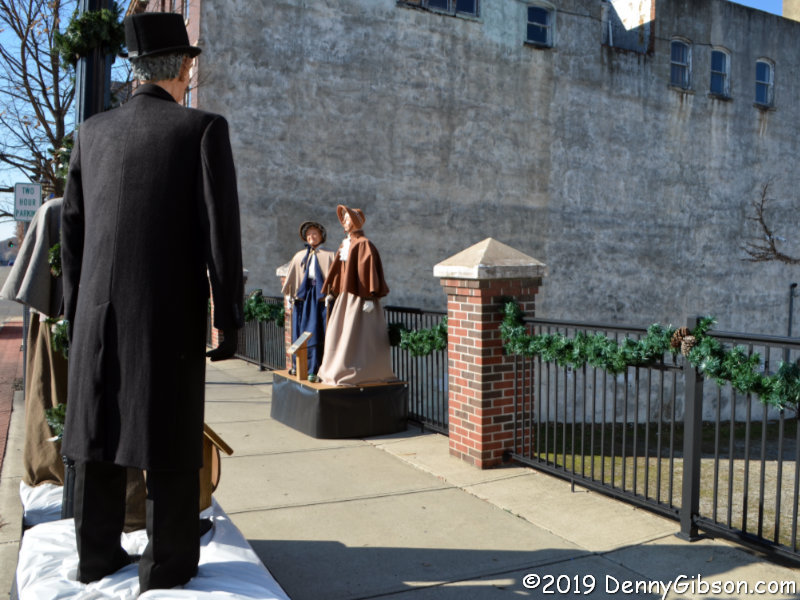
Filling the righthand pages is handled with skill and creativity by The Rainy Day Writers. The text on each page was created for the scene it is associated with. There are works of fiction that imagine a day or a minute in the lives of the figures in the scene, and there are factual essays with subjects such as Victorian England, modern Cambridge, or Charles Dickens himself. Some are thought-provoking, some are educational, many are both. Simply noting the great difference between life in the late nineteenth century and today is thought-provoking and educational.

I’m sure that tailoring a story or an essay to a single page was often a challenge for the writer, but their small size helps make reading them about as non-challenging as it gets. Reading the odd-numbered pages in an easy chair makes sense and so does having the even-numbered pages at hand while walking around downtown Cambridge during the Christmas season. The book is available online but I suggest getting it at the source if possible. At least “while supplies last”, copies sold at the Dickens Victorian Village Welcome Center (647 Wheeling Avenue) have been signed by all ten of the contributing writers plus you can put the book to work as soon as you step through the door.

The first paragraph of this article contains a link to The Rainy Day Writers website. The site contains quite a bit of good information but appears to be less current than the group’s Facebook page.

Tales… from the Dickens Scenes!, The Rainy Day Writers, Independently published, September 21, 2019, 6 x 9 inches, 198 pages, ISBN 978-1691098804
Available through Amazon.

Cambridge Spirit(s)

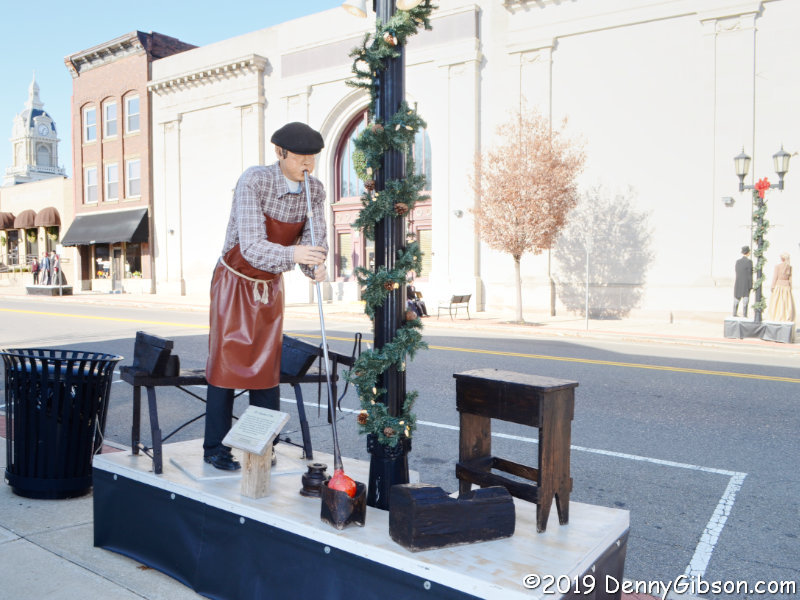
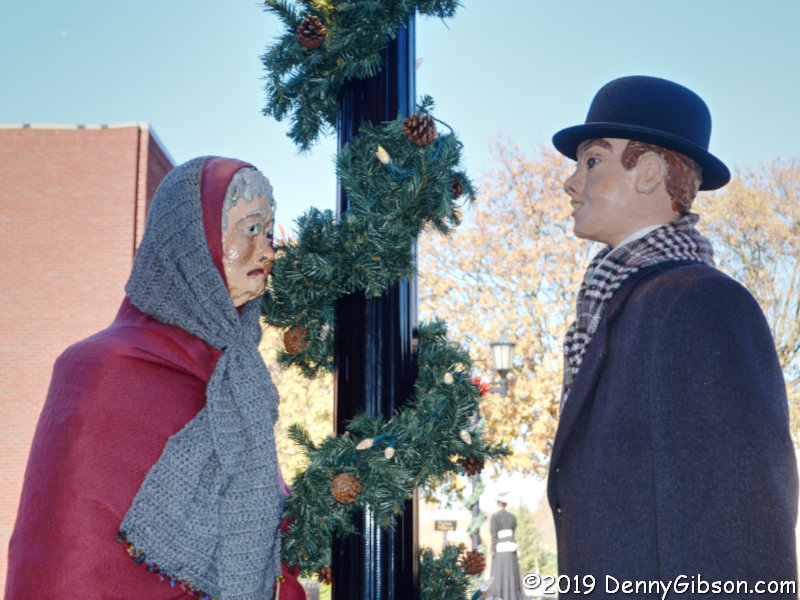
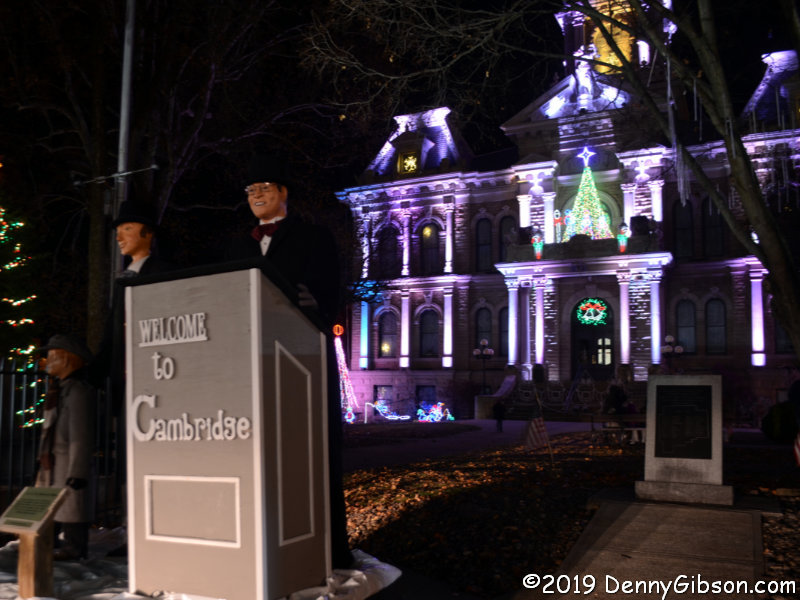
Like the one a fortnight earlier, last Sunday was preceded by a very blog-worthy Saturday that just had to wait because the weekly blog slot was already filled. Again, I’m calling that good since it gave me all week to produce this post rather than trying to put it together overnight. If I had, it’s certain that it would contain fewer pictures and more mistakes. The actual target of my trip was Zanesville, Ohio, but that’s close enough to Cambridge that I drove over to visit the annual Dickens Victorian Village. As things turned out, Cambridge and the figures that line its streets during the holidays get almost the entire post.

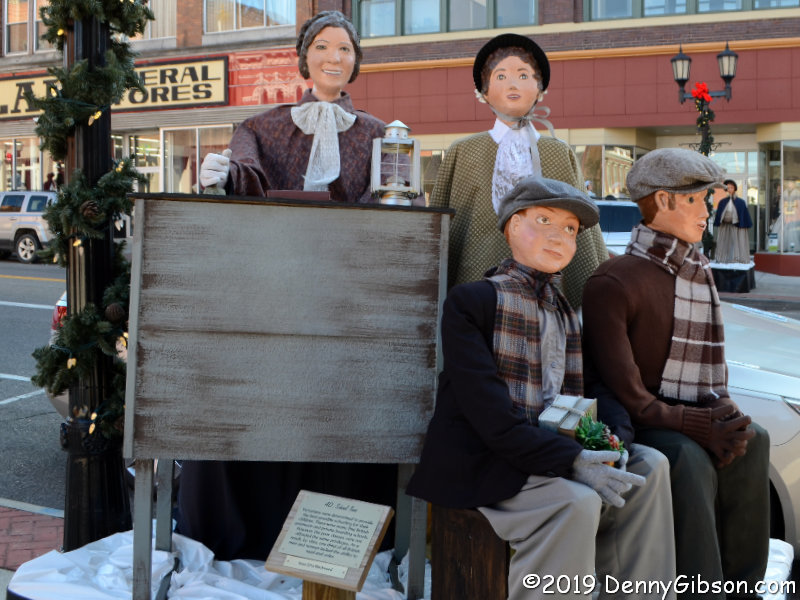
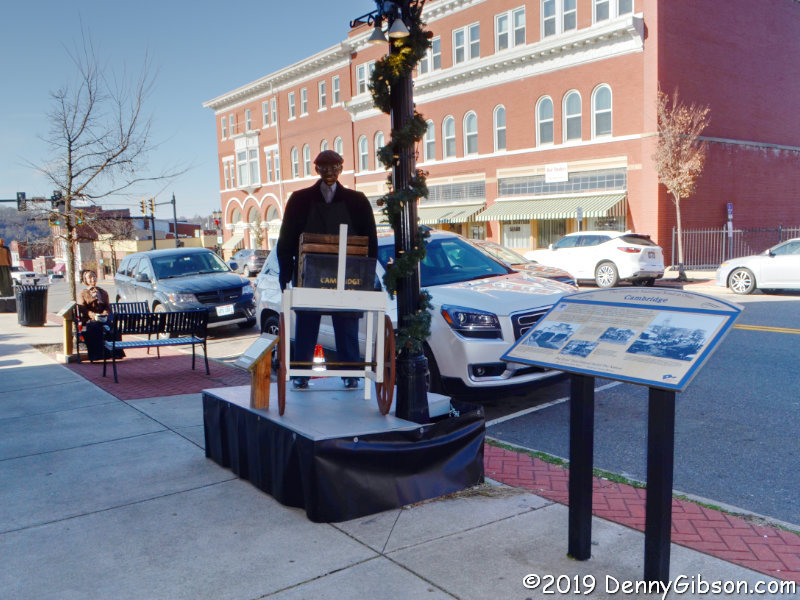
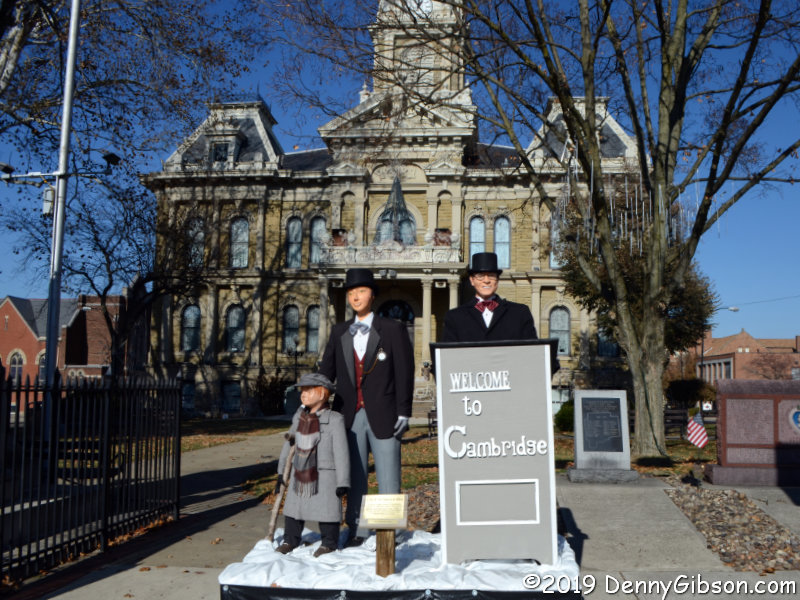
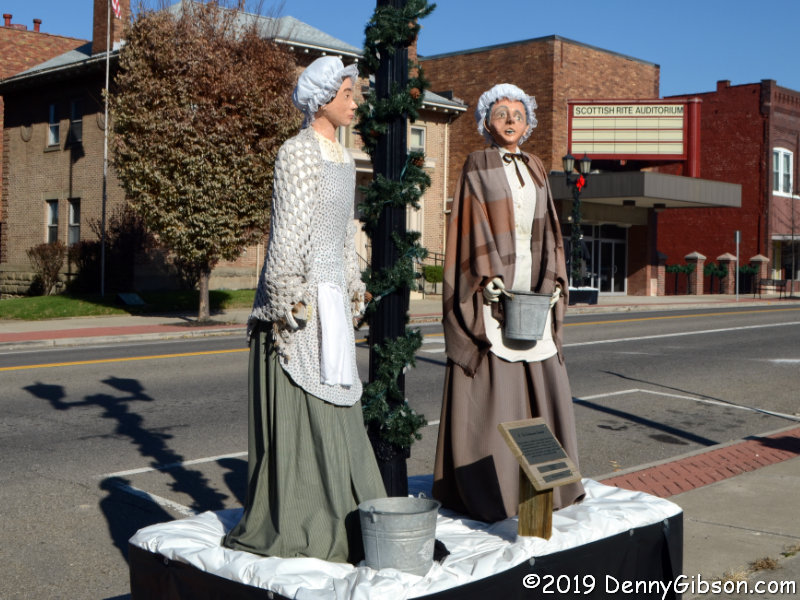
There are nearly 200 of the life-sized figures. Each is unique and dressed in Victorian-era clothing. They are grouped into 90-some scenes. Some come directly from a Charles Dickens story while others represent sights the author might have encountered walking around nineteenth-century England.

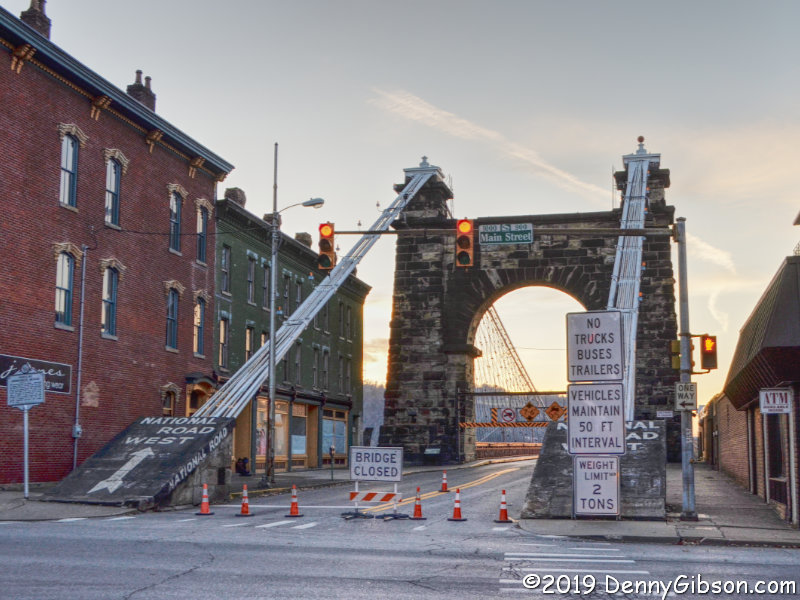
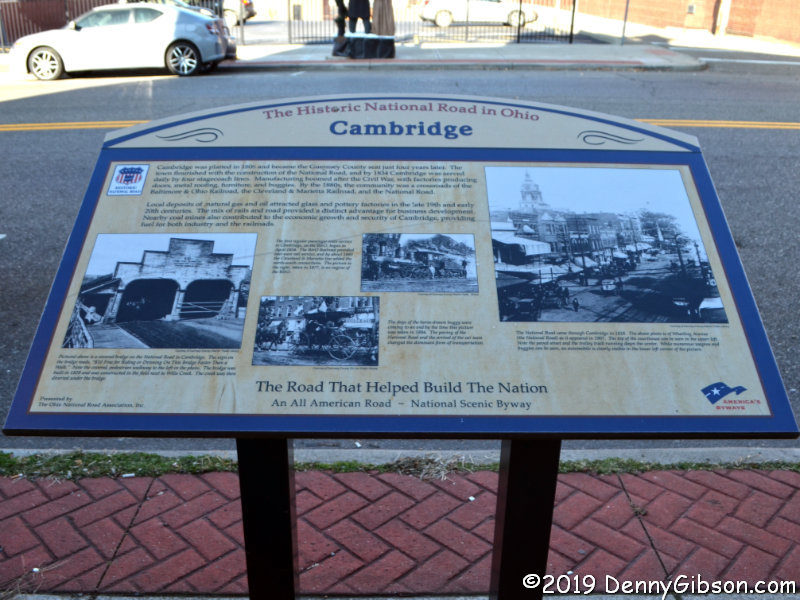
This is the village’s fourteenth year, and I believe this is at least the fourth time I’ve visited. The bulk of the figures are placed along Wheeling Avenue which once carried the National Road. The road and a bridge pictured on that panel will be mentioned again before this article ends.

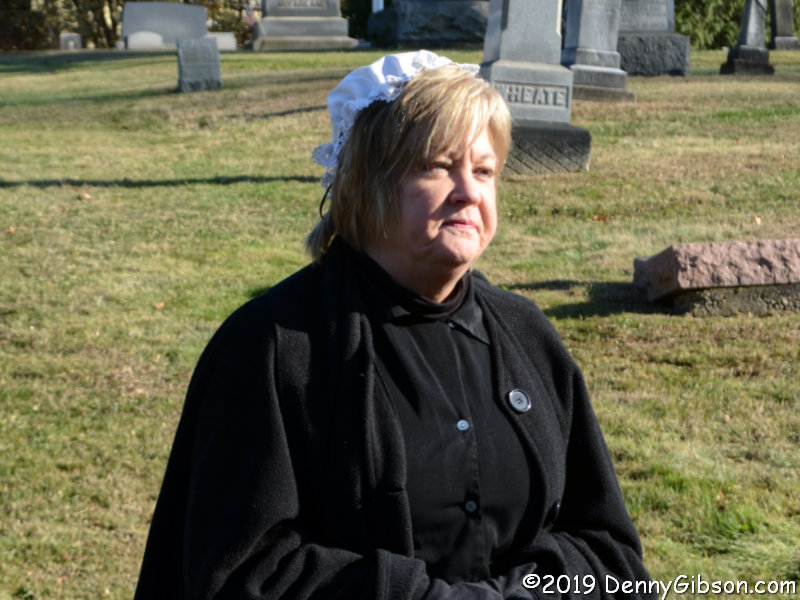
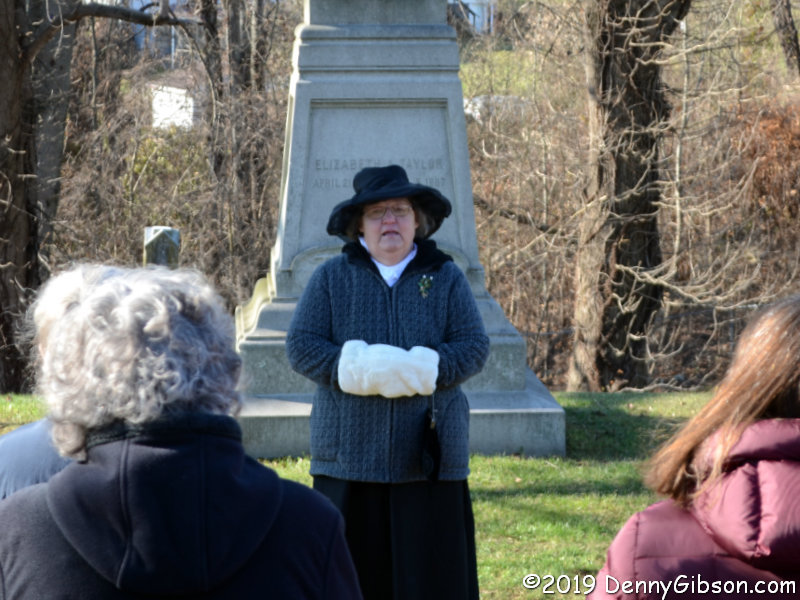
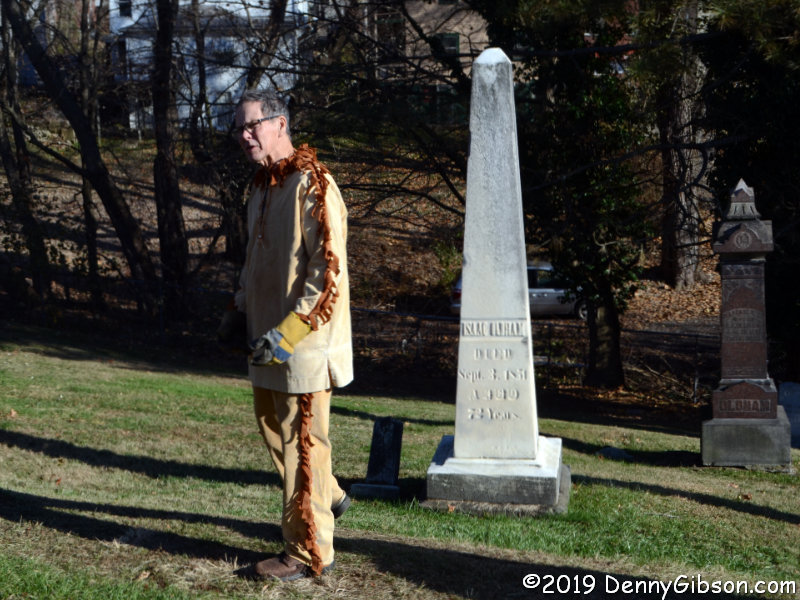
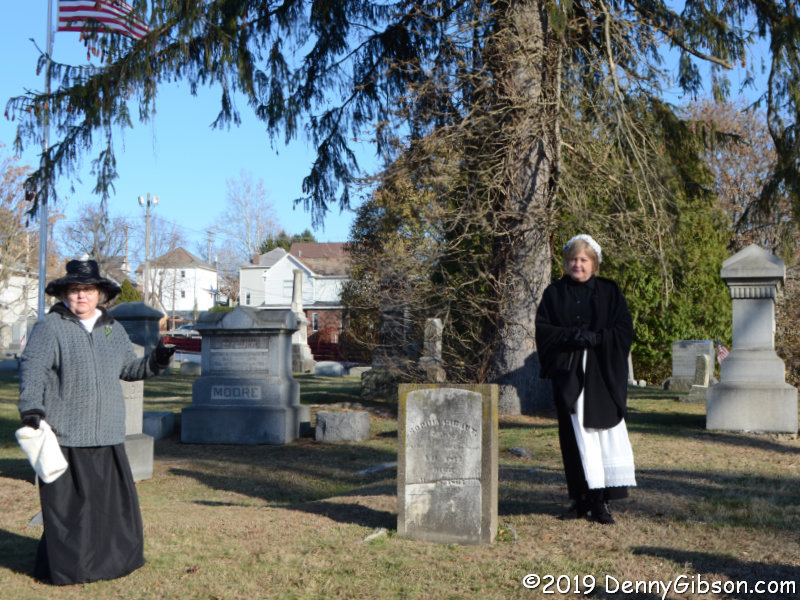
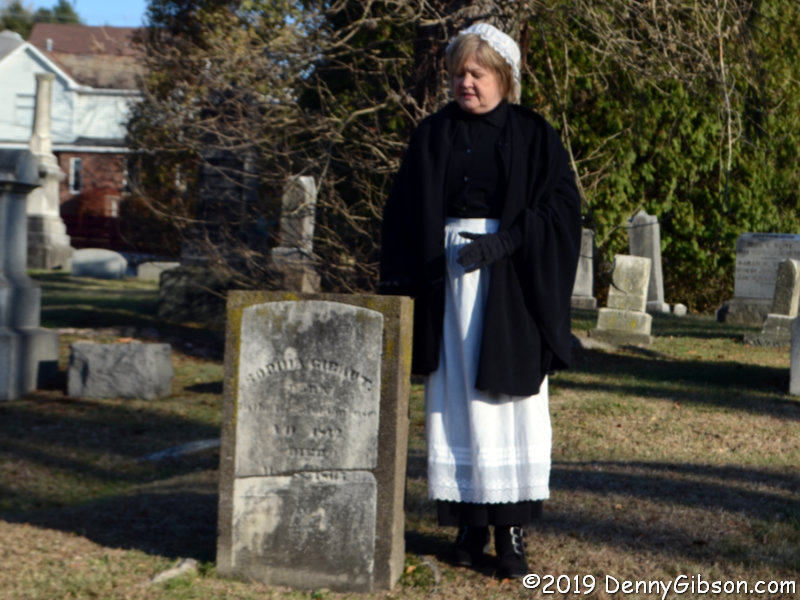
The Guernsey County Historical Society offered two “living” tours of Cambridge’s Old City Cemetery and I made it to the second one. The first resident we met was Sophia Gibout, Sophia was a washerwoman who died in 1865 after living in Cambridge for many years. Being familiar with other residents — both before and after their move to the cemetery — she accompanied us as a guide. The lady with the white muff is Elizabeth Taylor, wife of Joseph Taylor. The Taylors figured prominently in Cambridge’s early history. A newspaper and hotel were among their contributions and Joseph served in the U.S. House of Representatives. Isaac Oldham, the fellow in the third photo, settled in the area before Cambridge was established.

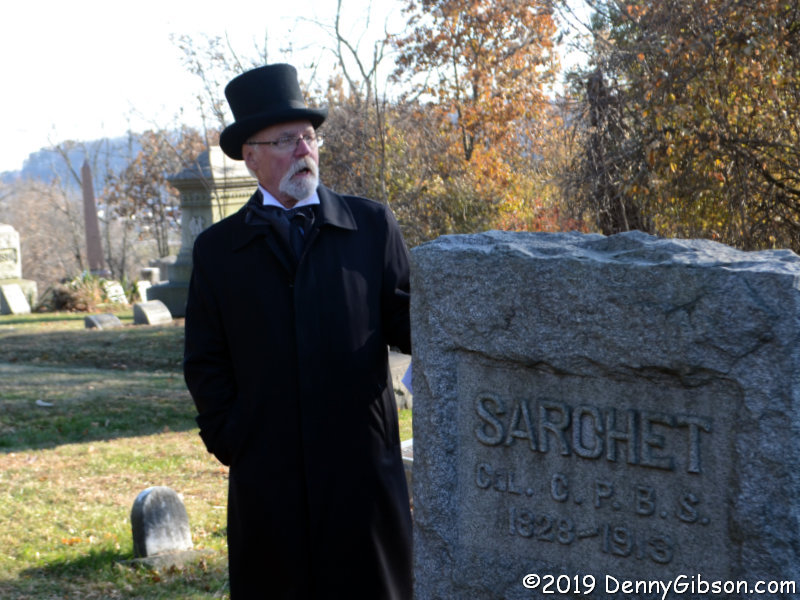
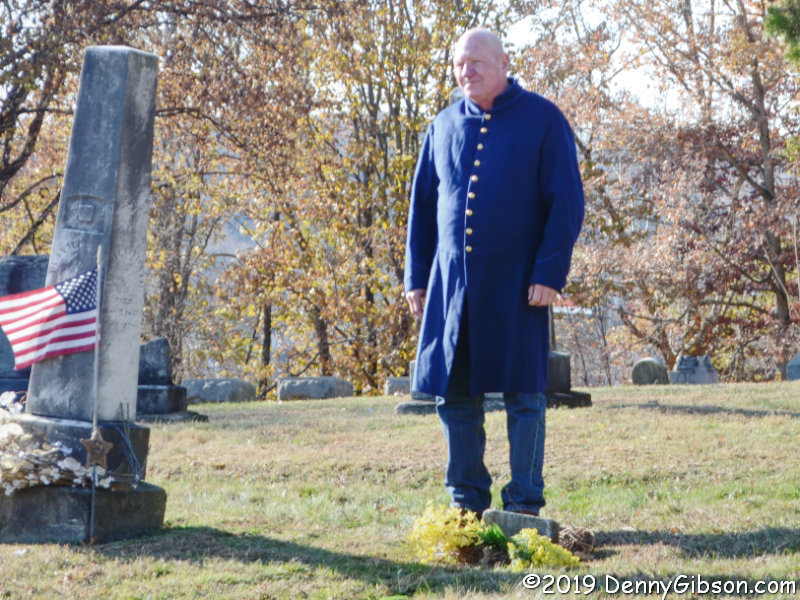
The American Civil War was naturally a major chapter in the history of Cambridge and these three figures have some interesting personal connections to it. Before serving in the war, James Adair walked to California to join the gold rush of 1849, made his fortune in the goldfields, then returned to Ohio by taking a ship south to the isthmus of Panama, traveling across it, and heading north on another ship. Captain Adair was killed in Virginia in 1962 and his body returned to Cambridge for burial. John Cook was killed by an unknown assailant in March of 1865. The murderer and an accomplice were eventually tracked down and a major trial, which overlapped that of Lincoln’s assassins, resulted in both being hanged. The gentleman in the tophat is C.P.B. Sarchet. He survived the war after reaching the rank of colonel then developed a reputation as a great historian. He was born in 1828 which he proudly pointed out was the same year that the National Road came through and that double covered bridge on the panel downtown was built. The bridge stood until washed away by the flood of 1913. Colonel Sarchet died a few weeks later.

We walked back to where we had first met Sophia and where Elizabeth was waiting. Like Paul Harvey, Elizabeth wanted to make sure we knew the rest of Sophia’s story. She was well-liked in the town and at her death friends arranged for a proper burial. It was then that the undertaker discovered that the washerwoman was physically a man. That simple revelation ended the “living” tour and started some personal brain activity. I’ve read of nineteenth-century women disguising themselves as men in order to join the military, drive a stagecoach, or participate in some other activity otherwise denied them. This was something different. There are essentially no reasons that would justify choosing to live as a lower-class female in the early 1800s. Sophia Gibout’s story should make anyone who believes that questions of gender identity are a 21st-century phenomenon think just a little deeper.

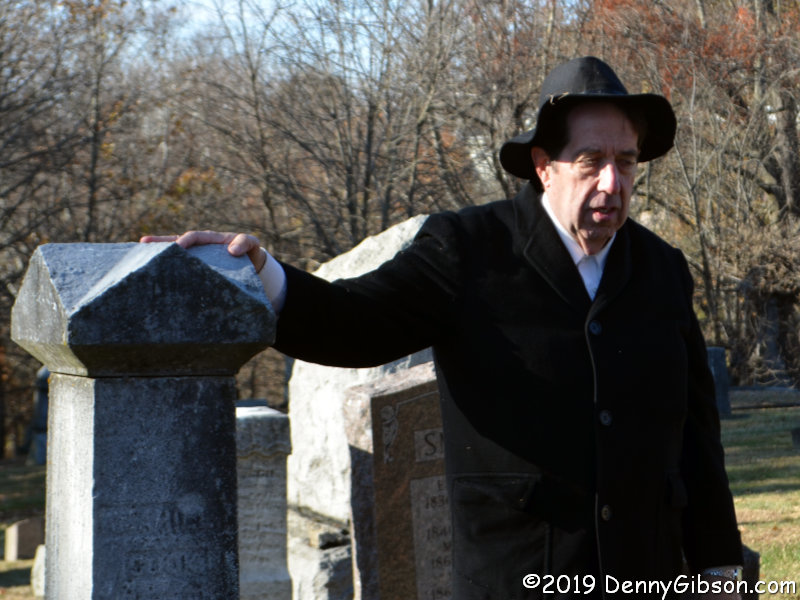
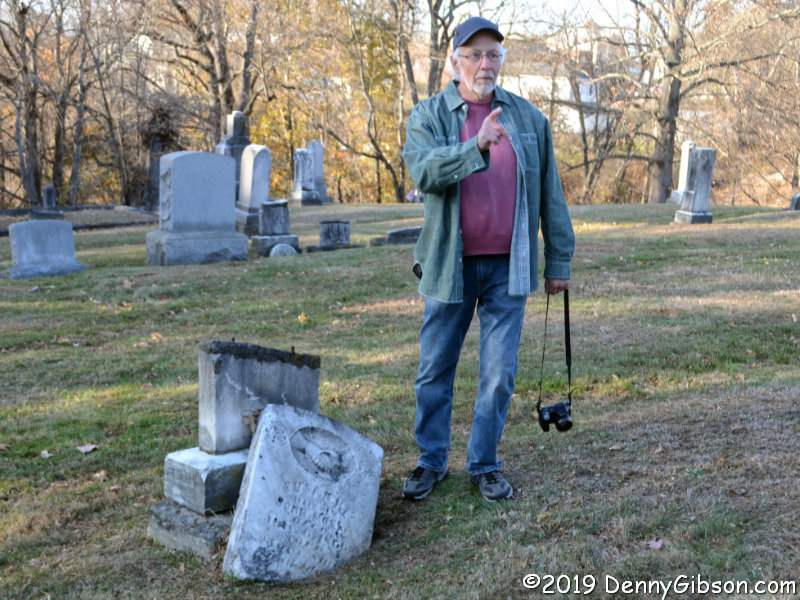
Following the “living” tour, a presentation on tombstone symbols was provided by Randy Neff of the Guernsey County Genealogical Society. In the photo, Randy is standing beside a tombstone showing a pair of hands. The hand on the viewer’s left represents the deceased. It is always stiff and lifeless and is gripped by the other hand which may represent an already deceased spouse or other relative. A hand coming from a cloud represents the hand of God himself pulling the newly deceased into Heaven.

It was now that l realized my great blunder. I had driven to the area for the purpose of attending a gathering of the Ohio National Road Association. It was on my phone calendar for 7:00 PM. As I left the cemetery, I considered driving the short distance east to Wheeling, West Virginia, where one of my favorite bridges had recently been closed. I can’t explain why I only now double-checked the phone calendar with the original ONRA mailing, but that’s what I did. My intent was to determine with certainty whether or not if I had time to drive to Wheeling and back to Zanesville. What I discovered was that the information on my phone was terribly wrong. The gathering was a 12:00 lunch, not a 7:00 dinner. I had plenty of time to drive to Wheeling because I had already completely missed the event.

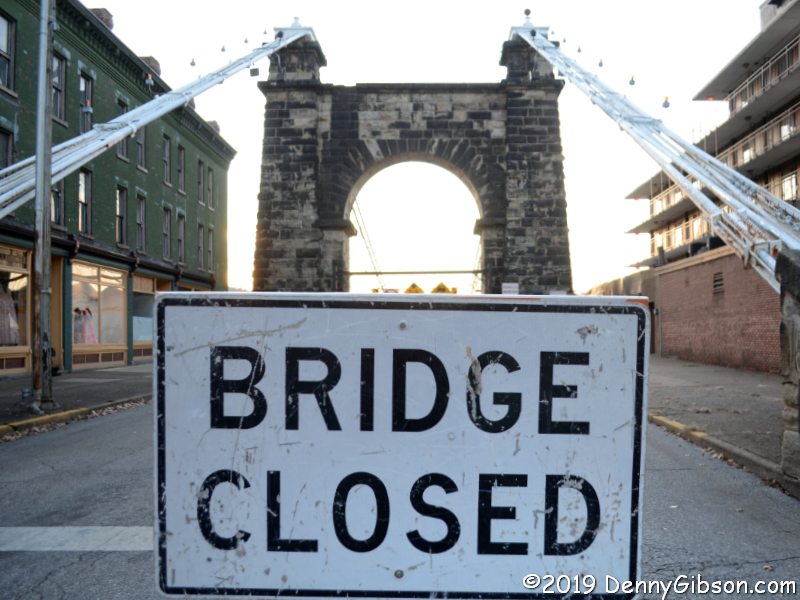
The 1849 Wheeling suspension bridge was closed in late September due to continuing violations of weight limits. I didn’t expect to discover anything new but my basic curiosity prompted me to take a look since I was fairly close. The result is a picture of a bridge closed sign.

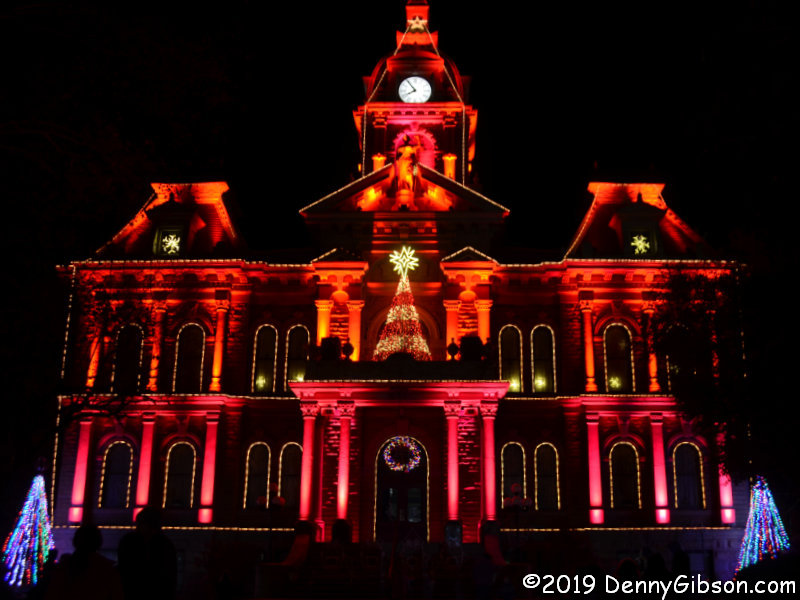
Anticipating an evening spent with National Road fans near Zanesville, I had a motel reserved nearby. The sun set while I was in Wheeling which gave me an opportunity to stop in Cambridge for a look at the wonderful light show at the Guernsey county courthouse. 

A Decade Driving and Such

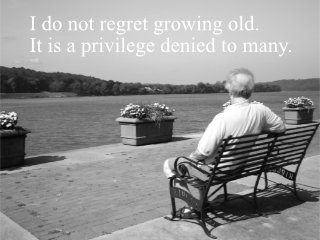
I’ve long considered myself a winner in the game of life. I don’t mean that in a collect-all-the-marbles king-of-the-hill sort of way or a made-all-the-right-moves hit-all-the-right-notes sort of way, either. No, I mean it in the way implied by the quote in the image at right. I have known far too many good people who just never got a chance to grow old. That I have that chance is certainly enough, but I’m also appreciative of having pocketed a few marbles, climbed a few hills, made the right choice now and then, and nailed a few high Cs even if I went painfully off-key a beat later.
Thursday the 14th was the first day of my second decade of retirement. That’s hardly a record, but it’s a fact that some retirees I’ve known didn’t make it to the second year; Some barely made it into the second month. I recognize that being able to develop my talent for doing nothing over a whole decade is very much a privilege denied to many and I appreciate it deeply. Even though I declared myself a winner in the opening sentence, I hope to keep playing for quite a while. As I’ve said many times, this retirement thing is the best idea I’ve ever had.
Abandoned Delaware County Roadmeet

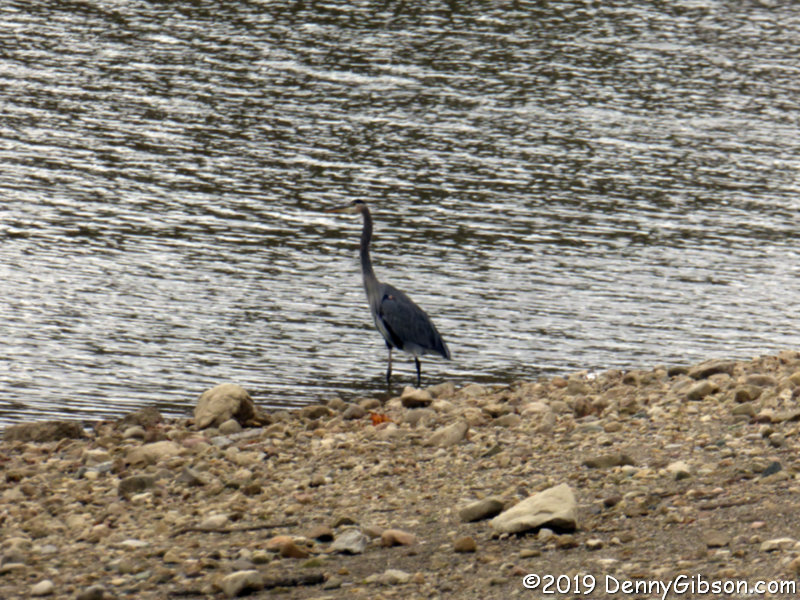
This happened a week ago yesterday and would have been a fine subject for last week’s post if that slot hadn’t already been taken. Last Tuesday was Election Day which means the preceding Sunday was filled by my annual screed on voting. I don’t see that as a bad thing since it spared me working in Sunday’s wee hours (one of which went missing) to get this post together. The opening picture is not of one of the meet’s scheduled attractions but of one of the locals who joined us in looking out over Hoover Reservation from the Oxbow Road Boat Ramp.

The Delaware County of the title is in central Ohio directly north of Columbus. The roadmeet differed from others I’ve attended in multiple ways. In my experience, roadmeets tend to focus on new or recent developments. This time, as the name implies, the focus was on older and often abandoned structures. Timing was another difference. Previous meets I’ve attended were in warm summer months. Autumn was intentionally selected for this meet in hopes of improved visibility through trees that had shed many of their leaves. The cooler weather many have also been a factor in turn-out. There were just five attendees with one of those dropping out early in response to a message from home. The Facebook event entry is here.

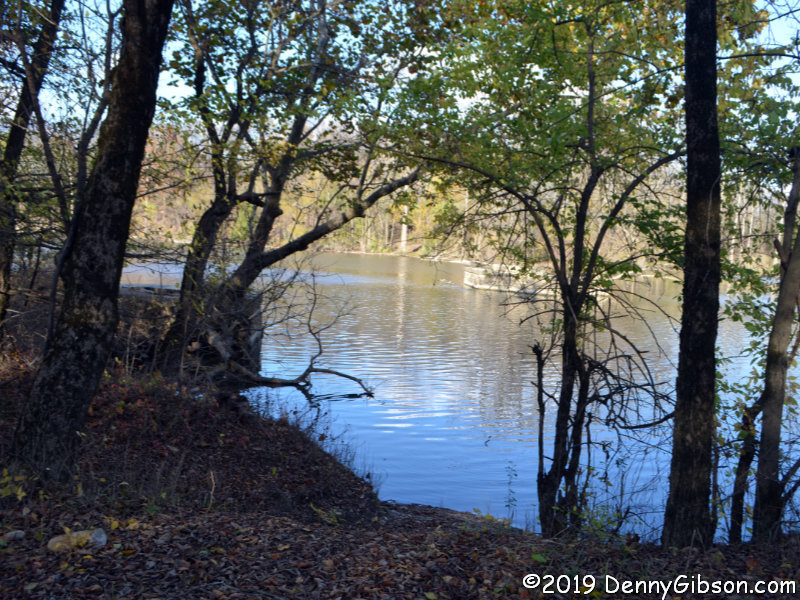
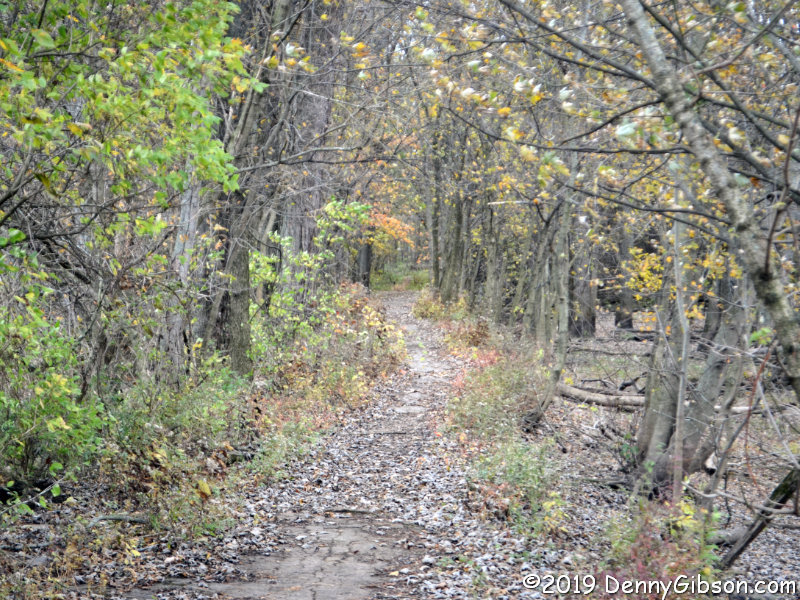
One other way this meet differed from others was in the amount of off-road travel involved. The pictured trail hadn’t always been off-road, however, and patches of old Sunbury Road pavement can be seen here and there through the leaves. Bridge abutments where the road once crossed Big Walnut Creek are at the end of the trail.

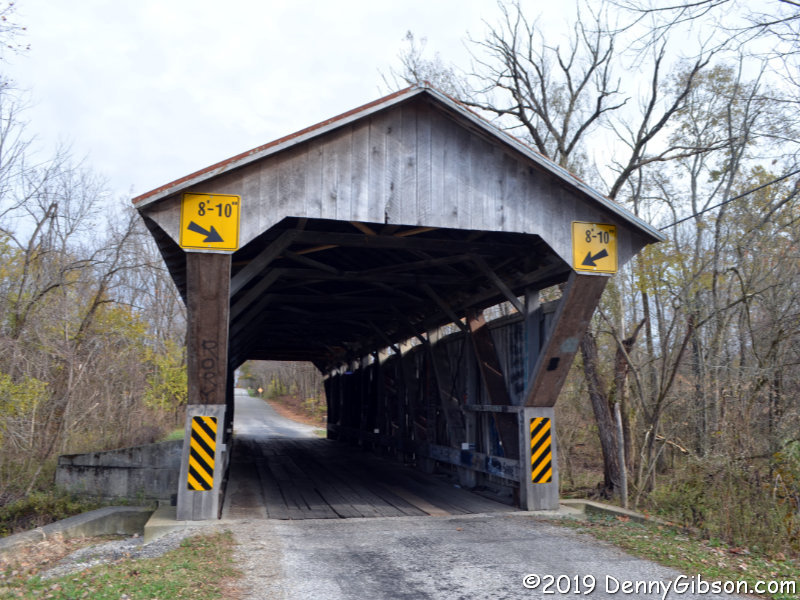
Not everything we looked over was actually abandoned. This covered bridge on Chambers Road is still in use. Originally constructed by E.S. Sherman in 1883, it has been rebuilt at least twice. It is the last of its kind still standing in Delaware County.

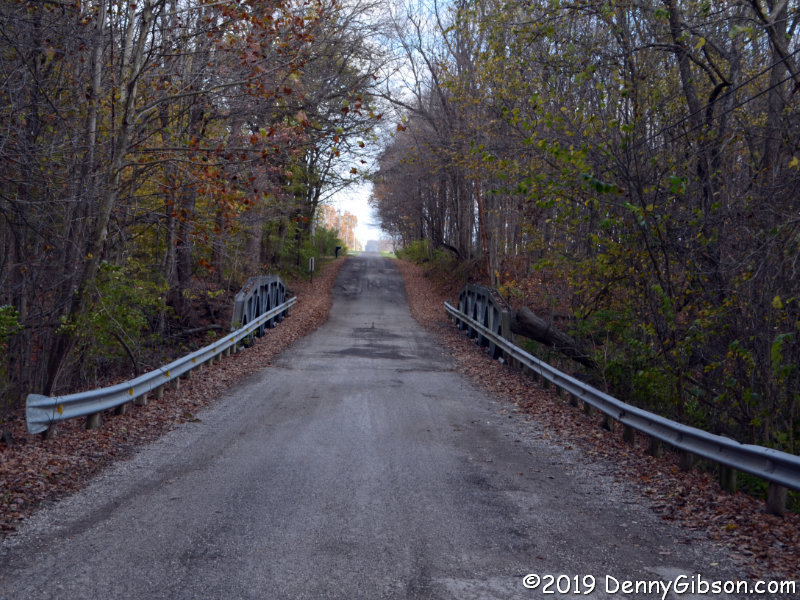
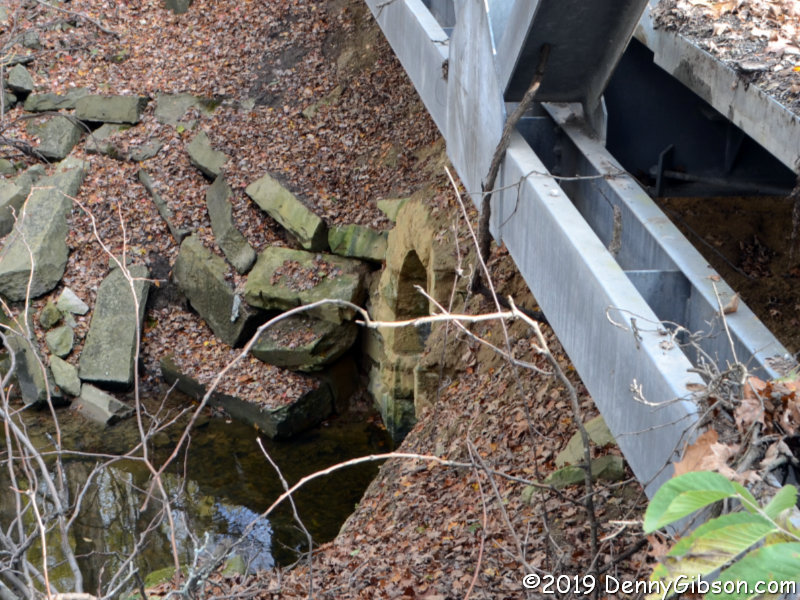
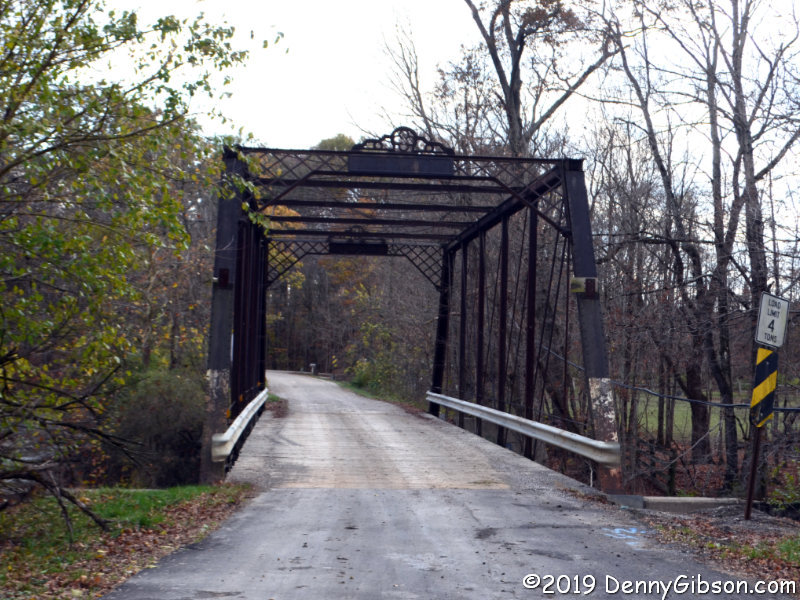
Not only was not everything abandoned, some things weren’t even in Delaware County. These two bridges are within about half a mile of each other on Morrow County Road 225. The pony truss bridge was built in 2000 across an unnamed tributary of Alum Creek. What makes it interesting is what it was built on top of. That stone arch has been there for a very long time. The through truss bridge hasn’t. Built in 1876, its original location was near the Morrow County Fairgrounds. It’s unknown when it was moved to its current location on Alum Creek. One possibility is during major rehabilitation in 1942.

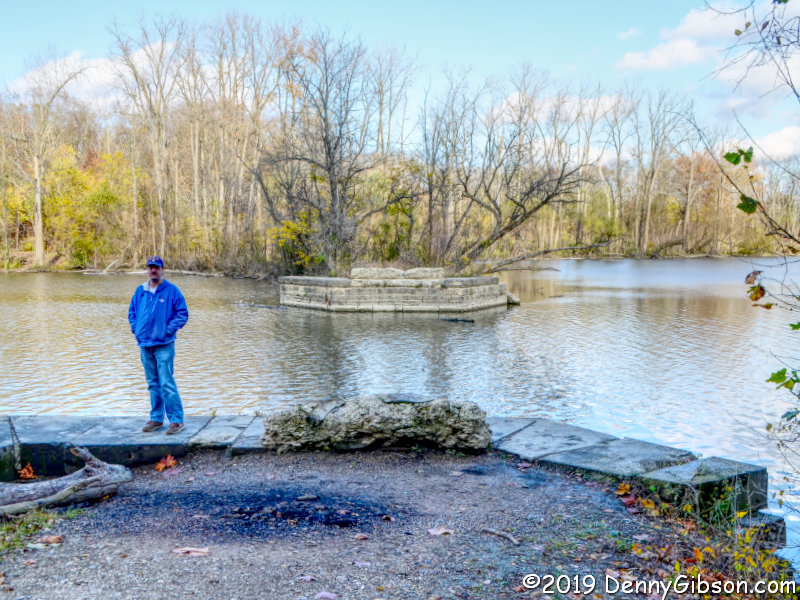
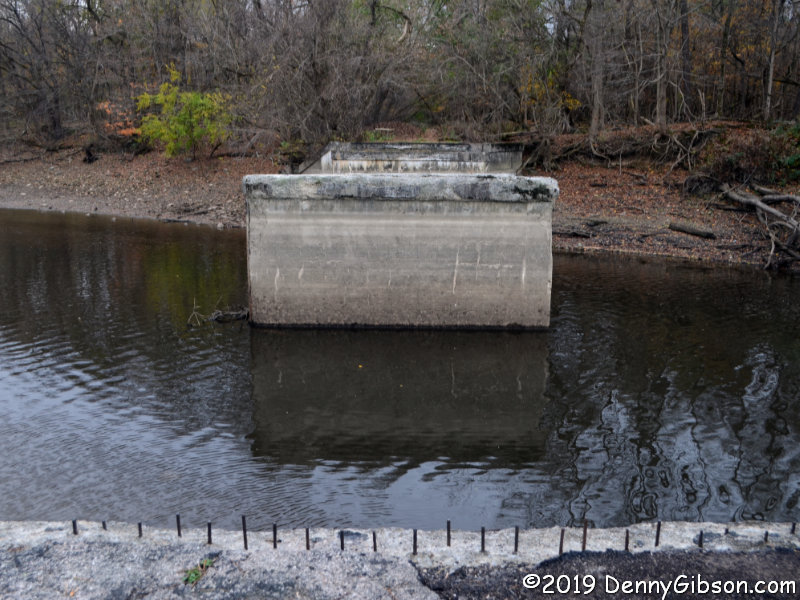
We got back on message with a stop at these abandoned bridge abutments in Delaware County. Before the Delaware Reservoir flooded the area, the Water Hill covered bridge crossed Whetstone Creek here. That’s roadmeet organizer Sandor Gulyas standing on the nearside abutment. Not only did Sandor provide a detailed map and overview, he shared lots of additional information at every stop.

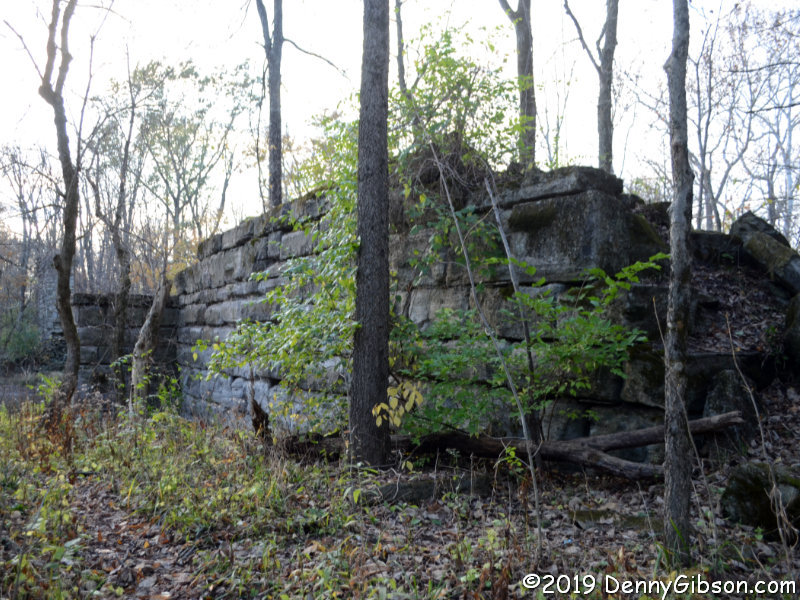
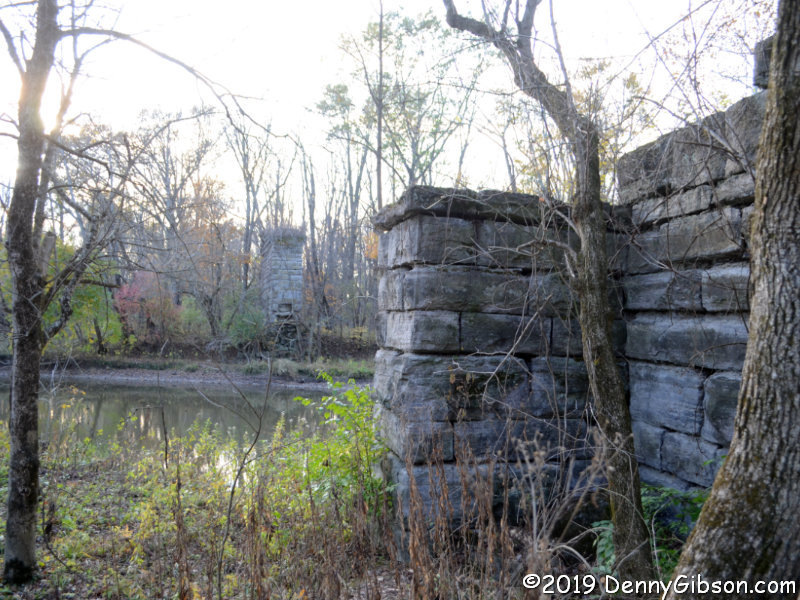
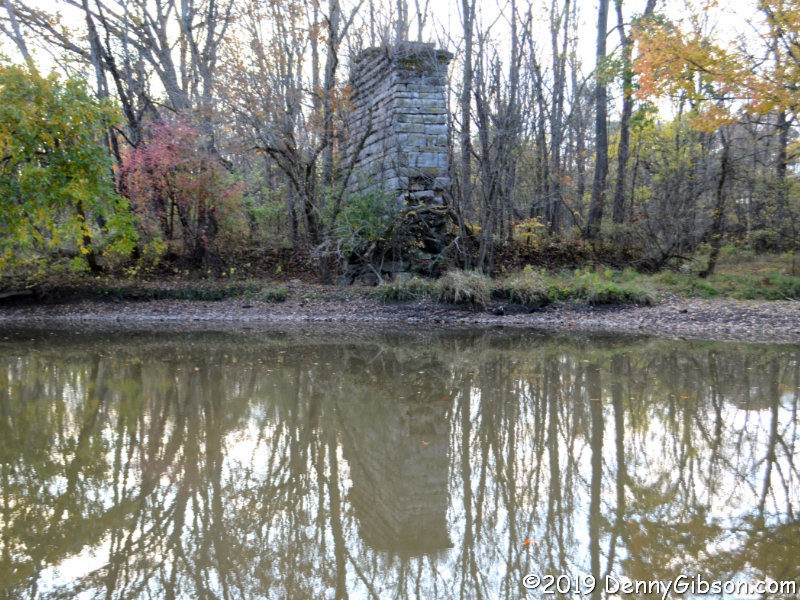
Technically, these stone bridge piers aren’t abandoned; They were never used. They were built in the 1850s as part of a proposed Springfield-Mt. Vernon-Pittsburg Railroad that was only partially completed. One more stop was planned but the sun was rapidly approaching the horizon and we decided not to even try. Recent rain had scared us away from a couple of other planned stops but we got to nearly all of them. And I really enjoyed each one.

———-

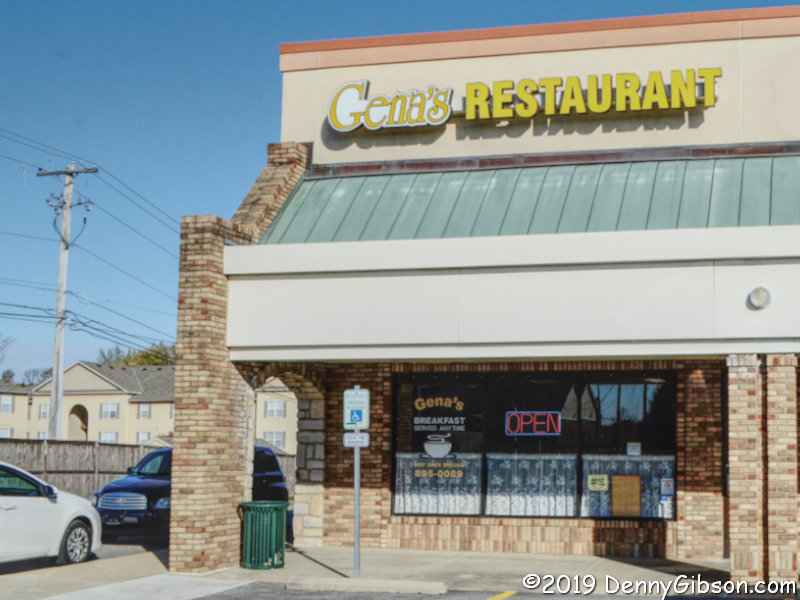
I spent the night in the Columbus area with thoughts of taking in a little music somewhere but found nothing that fit my desires. Breakfast was a different matter. Some online research turned up several places that sounded interesting and tasty, but it was Gena’s Restaurant that got my business. I once drove for days to reach the “Cinnamon Bun Centre of the Galactic Cluster” so I could surely drive a few miles to the “Home of the Greatest American Pecan Roll”.

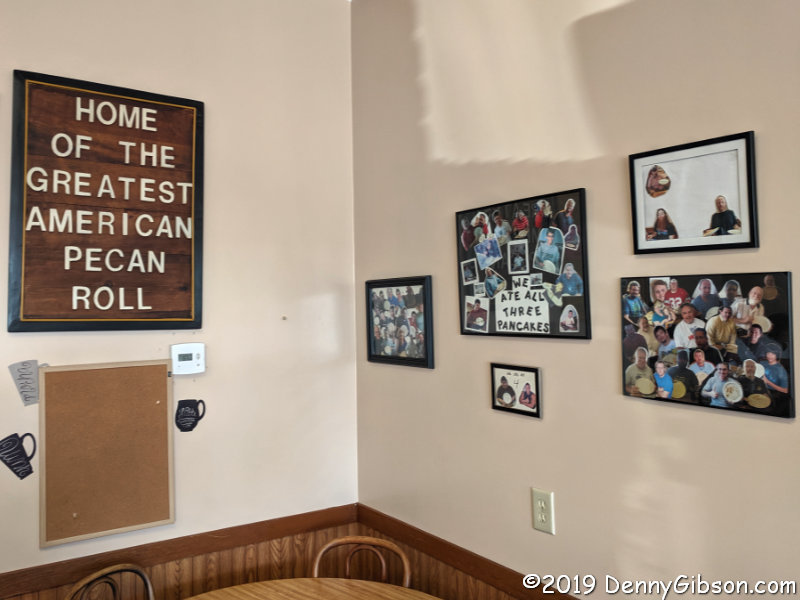
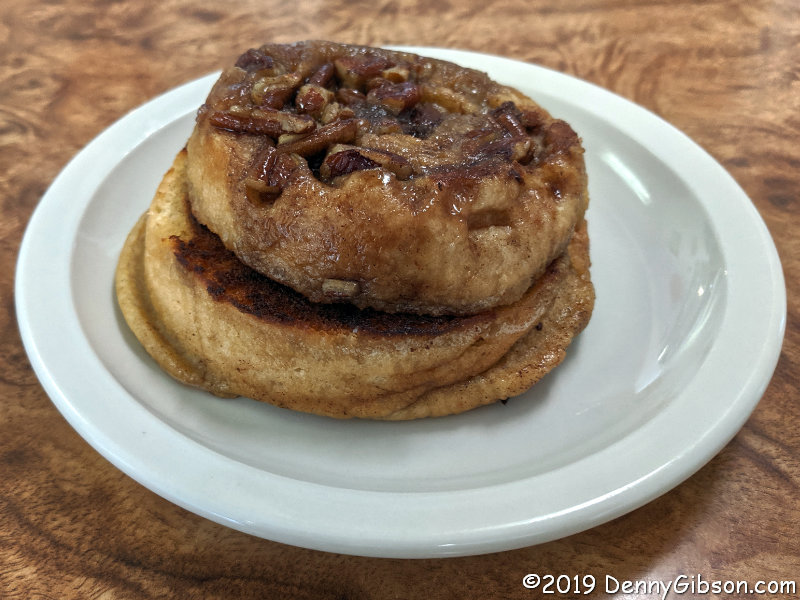
Inside, some wall space is devoted to the pecan roll boast and to their “Three Pancake Challenge”. There are photos of those who have downed three one-pound pancakes in forty-five minutes along with a few who have downed four and fewer who have downed five. Downing the pictured pecan roll was no challenge at all, and I will not challenge its claim to being the “greatest”.

I Care Less About How You Vote Than If. (2019)

yvyvWe fought a war to get this country going then gave every land-owning white male above the age of twenty-one the right to vote. A little more than fourscore years later, we fought a war with ourselves that cleared the way for non-whites to vote. Several decades of loud, disruptive, and sometimes dangerous behavior brought the granting of that same right to non-males a half-century later, and another half-century saw the voting age lowered to eighteen after a decade or so of protests and demonstrations.
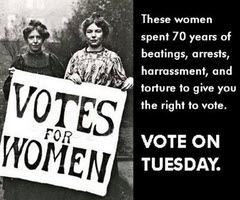
dftv1Of course, putting something in a constitution does not automatically make it a practice throughout the land and I am painfully aware that resistance followed each of those changes and that efforts to make voting extremely difficult for “the other side” are ongoing today. I don’t want to ignore partisan obstructions and system flaws but neither do I want to get hung up on them. I meant my first paragraph to be a reminder that a hell of a lot of effort, property, and lives have gone into providing an opportunity to vote to a hell of a lot of people. Far too many of those opportunities go unused.

A Wikipedia article I have referenced in years past has been updated and a table showing voter turnout in a number of countries for the period 1960-1995 has been removed. Sadly, the point being made by the inclusion of that table, that the United States trails most of the world’s democracies in voter turnout, continues to be supported by more recent statistics such as those cited in a Pew Research article. We may be getting slightly better, however. 2018 turnout set a record for midterm elections as reported in this Vox article. Let us hope that continues. I noticed something in the Pew Research article that I simply hadn’t realized previously. The United States has the greatest difference between the percentage of voting-age population (VAP) actually voting and registered voters actually voting. In many countries, there is no difference at all since to be a citizen is to be allowed to vote. In other countries, the difference is trivial. In the U.S. presidential election of 2016, it was a whopping 31.1% (86.8-55.7). I found that startling. I think that means only 64.1% of the VAP is registered which rather clearly shows the importance of voter registration efforts.

dftv2I first posted the core of this article in 2014. In the original title, I claimed to not care how anyone votes. That was never entirely true, of course. I have my favorite candidates and issues. I’ll be disappointed in anyone who votes differently than I do but not nearly as disappointed as I’ll be in anyone who doesn’t vote at all. I’m reminded of parents working on getting their kids to clean their plates with lines like, “There are hungry children in China who would love to have your green beans.” I’m not sure what the demand for leftover beans is in Beijing these days but I’m pretty sure some folks there would like to have our access to ballots and voting booths.
Touch of Autumn

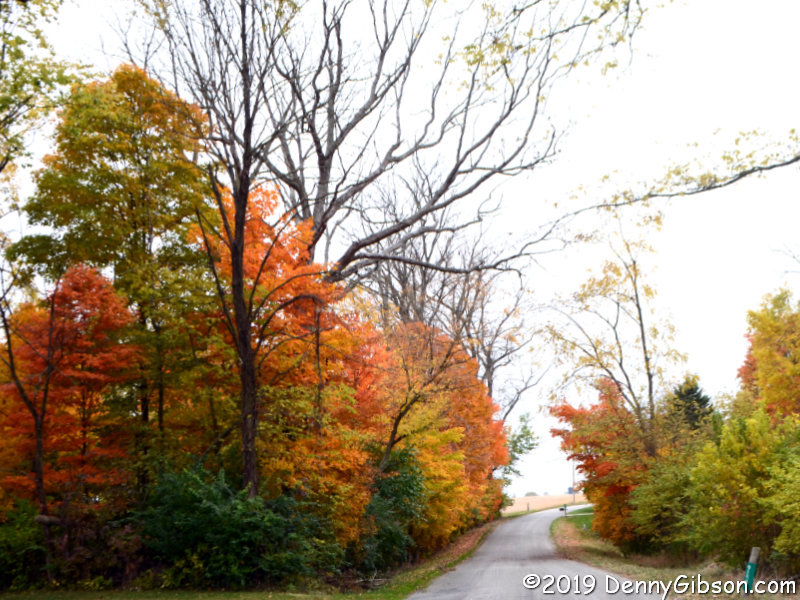
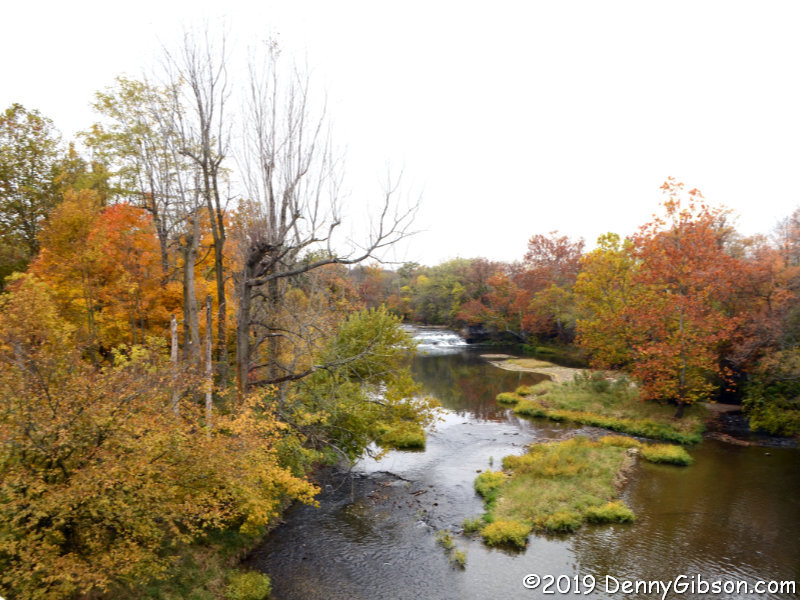
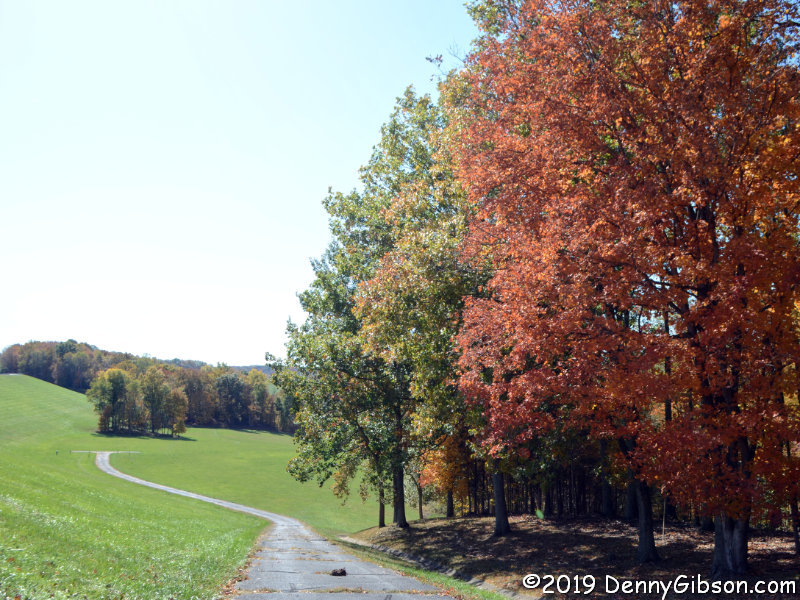
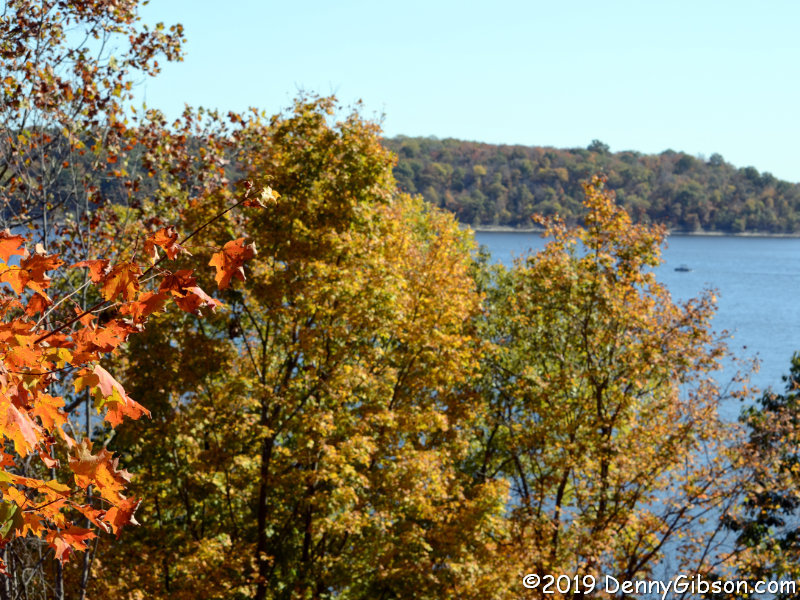
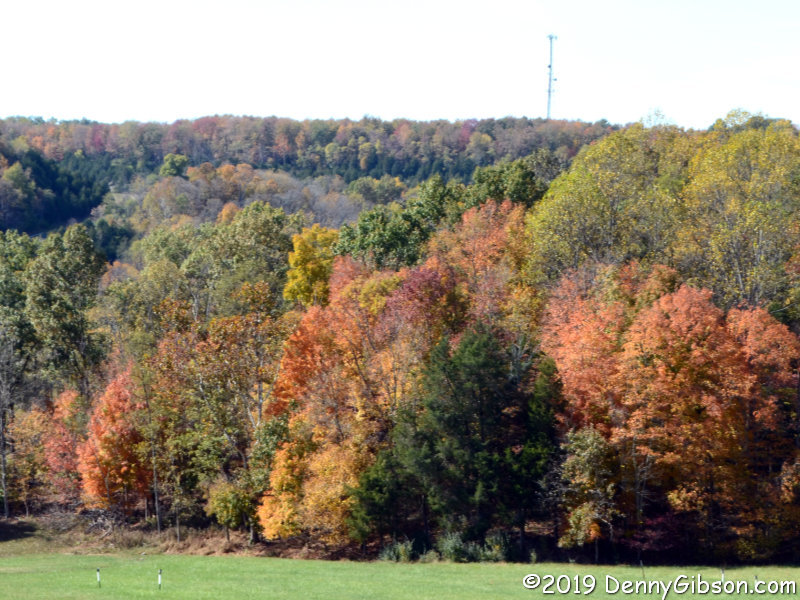
They are not quite at their peak, but trees in southern Ohio are rapidly becoming more and more colorful. I grabbed a few pictures this week ahead of the rain that moved in Saturday. I did not find any huge walls of color. Lots of trees hanging onto the green leaves of summer still surround spots of red and orange, but those red and orange spots really do make things look good.

I drove to the east on Thursday to poke around East Fork Lake and nearby areas.

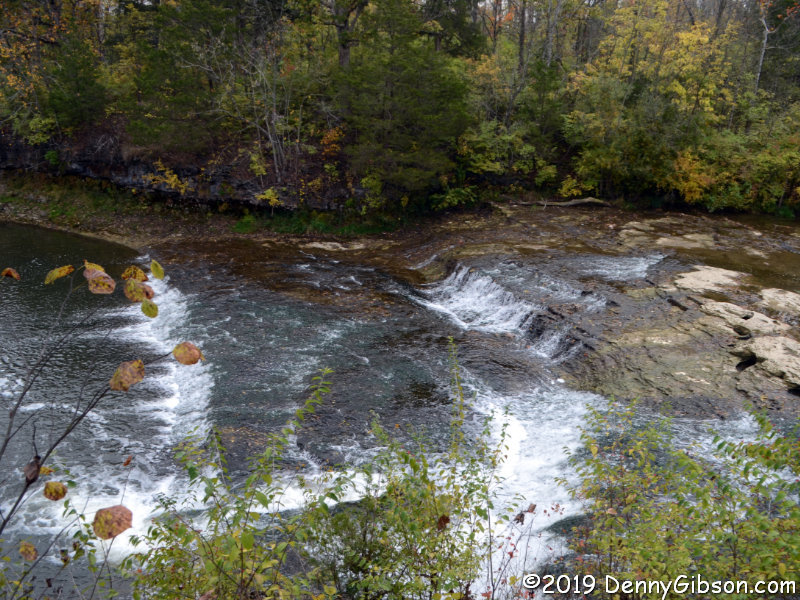
On Friday, I headed north to Darke County where I grew up. I stopped on the way in neighboring Miami County to look in on Greenville Falls. Trees at the falls are still quite green although there are a few more colorful ones not far away.

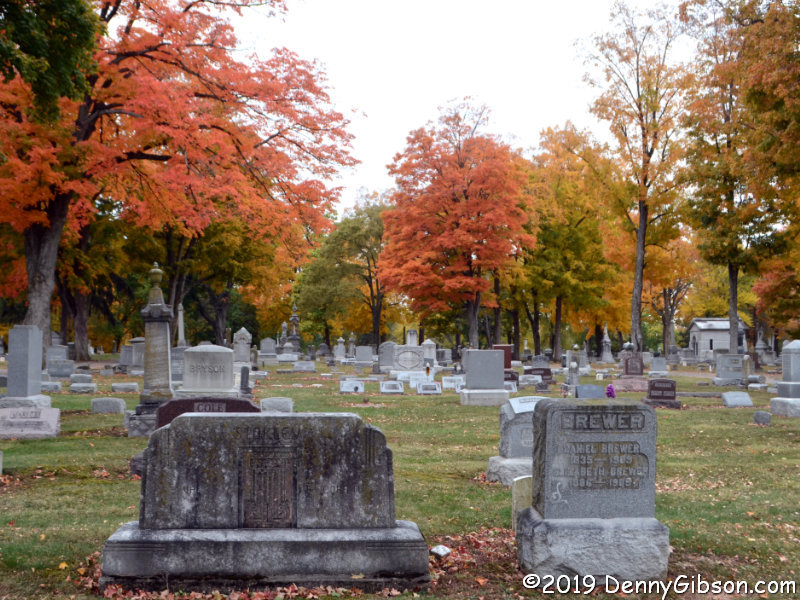
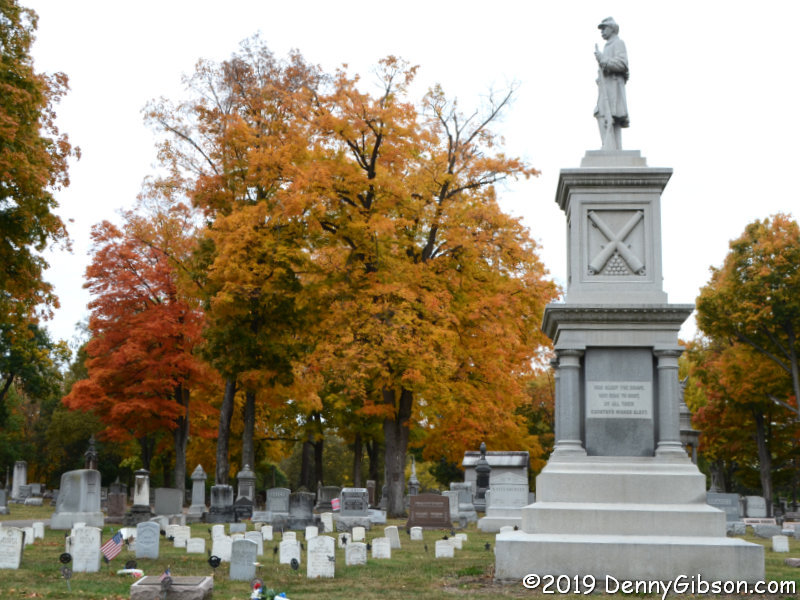
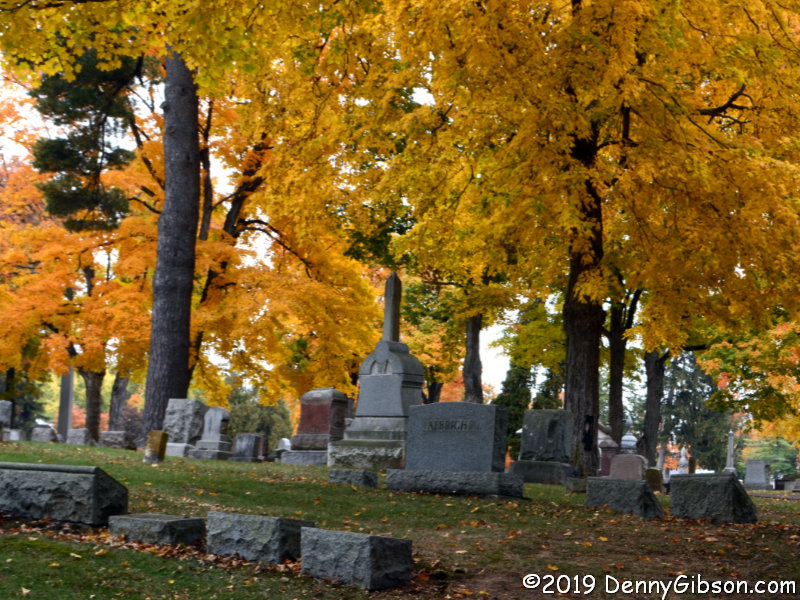
Some of the more colorful scenes catching my eye were in Greenville Cemetery. Gold and yellow make a very nice background for the gray markers.

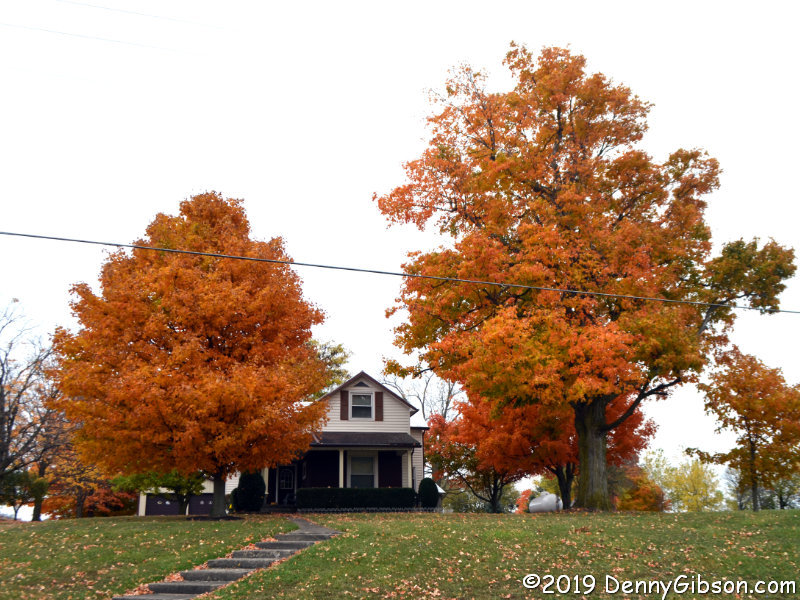
I spotted these two big splashes of orange several miles north of Greenville from some distance then realized, as I got nearer, they stood in front of a house where my grandparents lived in the 1960s. 

Willie and Beyond

Recent road trip plans have been thwarted including some anticipated meandering on the outbound leg of this concert outing. But I made it to the Memorial Opera House in Valparaiso, IN, for the concert, and hope to do some meandering on the way home. The first day’s journal is up and I expect another two, three, or more days to roll by before I get home.

This entry is to let blog only subscribers know about the trip and to provide a place for comments. The journal is here.

Trip Peek #89
Trip #33
The New Kid

This picture is from my 2005 trip to see The New Kid. This was a working trip that I extended with some vacation time and a weekend. I also extended the journal backward a little bit by including a few pictures from working days. The new kid was grandson Noah who had been born barely a month previous to my sailor son who was stationed in Norfolk, Virginia, at the time. Most of the drive home was on US-60 with stops at Colonial Williamsburg and in Richmond to visit friends. I even got in a few miles of Blue Ridge Parkway.


Trip Peeks are short articles published when my world is too busy or too boring for a current events piece to be completed in time for the Sunday posting. In addition to a photo thumbnail from a completed road trip, each Peek includes a brief description of that photo plus links to the full-sized photo and the associated trip journal.