Book Review
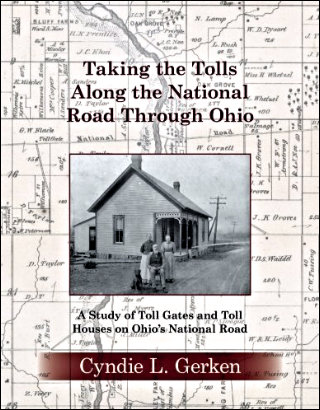
Taking the Tolls Along the National Road Through Ohio
Cyndie L. Gerken

The question was never if there would be another book, just when and what. The answers are “now” (actually February) and “toll gates”. In my review of Cyndie L. Gerken’s first book, Marking the Miles Along the National Road Through Ohio, I noted that the huge amount of information presented in that book was only a portion of what Gerken has collected and that we would probably someday see “a Gerken penned treatise on bridges or taverns or toll houses or something else” which shows that taking three or four guesses really improves one’s chances of being right. Nailed it!

Taking the Tolls Along the National Road Through Ohio: A Study of Toll Gates and Toll Houses on Ohio’s National Road duplicates the form of Gerken’s first book. Both are rather large paperbacks. Both books are also filled with accurate and precise information, but that part’s not duplication; That’s just what Gerken does.

Federal funds for building the National Road dried up somewhere around Springfield, Ohio. Federal funds for maintaining it seem to have never existed. The “Gates Bill” of 1822 was a valiant attempt to finance ongoing maintenance through federally operated toll gates, but President Monroe vetoed the bill. At the time, the role of the federal government in internal improvements was a hotly debated topic. Regarding the power to establish and collect tolls, Madison was “…of the opinion that Congress does not possess this power…” The Feds solved the problem by giving the road to the states. The states solved the problem by charging to use the road. Sometimes the state charged the users directly by collecting tolls. Sometimes the state leased sections of the road to counties or even privately owned companies who then collected tolls.

In Ohio, things got started with seventeen toll gates which were soon augmented by three half gates. One thing this book taught me is that half gates are not, as I convinced myself, gates where a toll is charged in only one direction (Hey, it’s not that dumb!), but gates placed between full gates to catch traffic entering and leaving the road without paying any toll at all. Over the years, individual gates were moved and closed and new ones added.
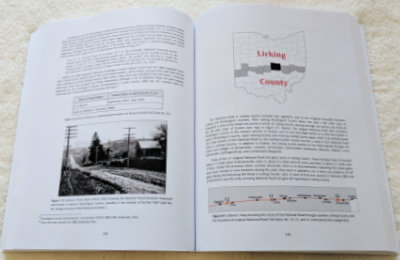
As she did with her first book, Gerken details her subject in a chapter per county moving east to west. However, before that happens, there is an introduction filled with information about the road and toll gates in general, then chapters on vehicles, toll house architecture, and bridges. Each of these, and the county chapters too, contain numerous photos and stories that color in the detailed information and keep things from becoming boring.
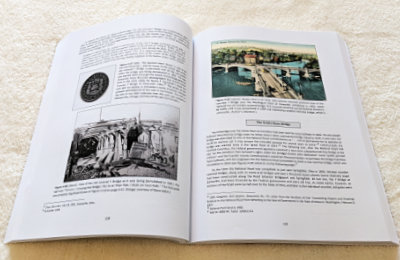
Pictures of gate houses and gate keepers are to be expected, but they are not the only photo subjects presented. This might be the only book available with pictures of the world’s longest bar, grave robbers, a two-headed calf, a Spanish dime, Hopalong Cassidy, and the author’s mother riding in a goat cart. And every one of them belongs.

People almost always keep things from being boring, and Gerken didn’t just compile data on buildings and locations. She dug up facts and stories on the people who occupied those buildings. Although much of that information is sprinkled throughout the book, even more is concentrated in a chapter titled “Meet the Gate Keepers” that follows the county chapters.

At this point, the book could be called boring without triggering a big argument from me. It is here that Gerken lists her numerous references and places several appendices of source material for rates, dates, and so on. Because of Gerken’s thorough research, the entire volume is certain to find work as a reference book but that is especially true of the last fifty or so pages. Three hundred pages of a nice blend of information and entertainment followed by fifty pages of “just the facts” is a pretty good mix.

Taking the Tolls Along the National Road Through Ohio: A Study of Toll Gates and Toll Houses on Ohio’s National Road, Cyndie L. Gerken, CreateSpace Independent Publishing Platform, February 8, 2018, 11 x 8.5 inches, 366 pages, ISBN 978-1981653515
Available through Amazon.

Trip Peek #72
Trip #111
2013 OLHL Meeting

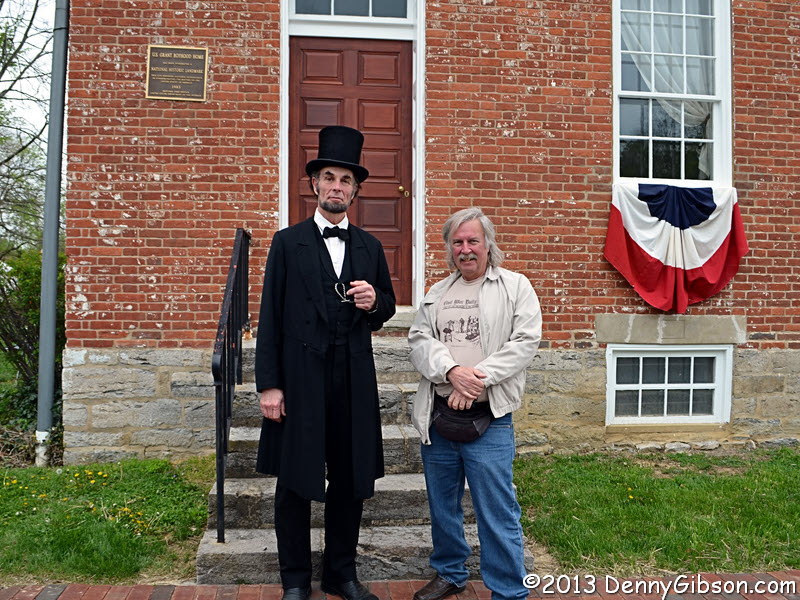
This picture is from my trip to the 2013 Ohio Lincoln Highway League Meeting near Mansfield, Ohio. The meeting itself filled just a few hours in an evening so most of the journal involved the going and coming. On the way there, I spent a night in Columbus so I could see the Lone Bellow in the process of becoming stars. On the day after the meeting, I headed to Georgetown, Ohio, for Ulysses Grant’s 191st birthday. I spent the night at a B & B across the street from Grant’s childhood home where I shared a bathroom with Abe Lincoln. This particular Abe Lincoln’s real name is Fritz Klein and I not only got to chat with him over breakfast, I got this picture taken with him in front of Gran’ts home.


Trip Peeks are short articles published when my world is too busy or too boring for a current events piece to be completed in time for the Sunday posting. In addition to a photo thumbnail from a completed road trip, each Peek includes a brief description of that photo plus links to the full sized photo and the associated trip journal.

Some Subtle Stuff

A long time reader recently suggested I do a post on the various cars I’ve used on road trips. That’s not a bad idea and I’m thinking about it. This blog does have a series of posts on some of the hardware I’ve used in making and documenting the trips (My Gear) and another on the software (My Apps). There is also a series on vehicles I’ve owned (My Wheels). That series, however, is not just about cars used on documented road trips. In fact, not one vehicle from those trips has yet appeared. But it’s close. The series is just two chapters away from featuring the car used on my first documented trip in 1999. The 31 My Wheels chapters published so far have been spread over 65 months which suggests that it will be well over a year before the seven owned cars used in documented trips get their chapters. So maybe it makes sense to do a single post with a brief mention of each of the seven. Maybe not. That’s what I’m thinking about.

Regardless of whether or not I do a post on those road trip cars, that suggestion did lead directly to this post. Technically, it wasn’t the suggestion itself that triggered this post; It was the conversation that followed.

When I mentioned it, I learned that the fellow who suggested the car post wasn’t aware that the “Prev” and “Next” buttons on the journal’s daily pages usually reflect the car I’m driving on the trip. I wasn’t overly surprised; It’s rather subtle and has never been spelled out anywhere. But it reminded me of another long time feature that another long time reader had been unaware of until quite recently. This particular reader didn’t realize or had forgotten that a map is part of each trip journal. That’s really easy to understand on the multi-day trips since the map button appears on the trip cover page and not on the daily pages that are the subject of RSS entries and most email notifications. So here we go, with “Five Things You Might Not Know about DennyGibson.com”.

Prev & Next Buttons

All daily pages for multi-day trips have text links for the previous and next day with buttons made of left and right facing vehicles above them. That has been true from the very beginning. That first trip was made in a red Corvette convertible and that’s what formed the buttons. They were static on that first trip but started “popping” when the cursor hovered over them on the second multi-day trip and they had done that ever since.
It’s possible that the concept of the buttons exactly matching the car used on the trip wasn’t yet firmly established, but I think I just intentionally broke from it for the third and fourth multi-day trips. That third multi-day trip was a retrace of one my great-grandparents had made in a Model T. I couldn’t get a suitable picture of the car they actually drove but I did get one of a Model T they owned later and which an uncle owns now. The next trip requiring buttons involved a caravan of Corvettes of every year and I used a picture of the inaugural 1953 model. For the 2004 Tiger Cruise with my sailor son on the USS Enterprise, I used a silhouette of the aircraft carrier. For a couple of Amtrak trips, I used a picture of a toy train. For rental cars, I’ve mostly used generic sedans although I did use a red Jeep, which matched two of the three cars I rented, on the 2017 Hawaii trip. Other than that, those buttons have accurately shown the model and color of the car being driven if not the actual car.

Locator Maps

Although a locator map wasn’t initially part of a trip journal, I did start doing it fairly early on then retrofitted one to journals already posted. A small button shaped like the contiguous US accesses the maps. For multi-day trips, the button is at the top of the cover page next to the trip title. For single day trips, it’s next to the trip title on the only page there is. The general model is a map of the route “zoomed” to fill the available space sitting atop a map of the US with a red rectangle marking the area involved.
To date, DeLorme Street Atlas has been used to produce these maps. With Street Atlas no longer supported, how long that will continue is naturally in question. I do own the final (2015) version of Street Atlas and the resolution of locator maps is not at a level to be affected by minor undocumented changes in the real world. I expect locator maps to continue to be part of future journals although it’s quite possible the tools used to produce them, and therefore their appearance, will change.

The most recent journal has a second map button. For my full length drive of the Jefferson Highway, I imported my planned route to Google Maps and made it available. A big advantage of this over the static locator map images is the ability to zoom and otherwise interact with the map to see details as well as the high level overview. A big disadvantage is that it makes a feature of DennyGibson.com dependent on the functioning of another website. While this is something I try to avoid, it’s not the first. For example, the site search feature utilizes Google’s search capabilities. The Jefferson Highway map was shared with very little manual intervention so it’s possible, but not guaranteed, that I will continue the practice.

Trip Collage

The journals of all completed trips are available through either a list or a collage of photos. Both are accessed under “Done Deeds-All Trips”. I’m mentioning the collage here because it is a personal favorite and something I’ve received almost no feedback on. The collage consists of a single thumbnail from every completed trip. The images are displayed in chronological order and clicking on one leads to the associated journal. I’ve said that one of the reasons this website exists is to eventually feed me my own memories. The collage already does that to some degree which probably explains why I like it while others aren’t so impressed.

Random

A “Random” selection is also available under “Done Deeds-All Trips”. Clicking it presents a single picture from the collage which can be clicked to get to the associated journal. It’s useful when you are really really bored.

FAQ

A link to the Frequently Asked Questions page appears on the site’s home page so maybe it’s not all that subtle. But there are lots of other letters on that page so I’ll grab this chance to mention it. It’s a little like a larger version of this post with the obvious exception that everything in this post answered an unasked question while only part of the FAQ page does that.

Another Sesquicentennial

The American Civil War began with the shelling of Fort Sumter on April 12, 1861, and for the last several years we have been commemorating the 150th anniversary of events that led up to it, were part of it, and were precipitated by it. There are many theories about the origin of what we now call Memorial Day, and, while specifics vary, almost all place the roots in that devastating conflict. The most recognized story of a formal beginning places that beginning a hundred and fifty years ago on May 30, 1868.

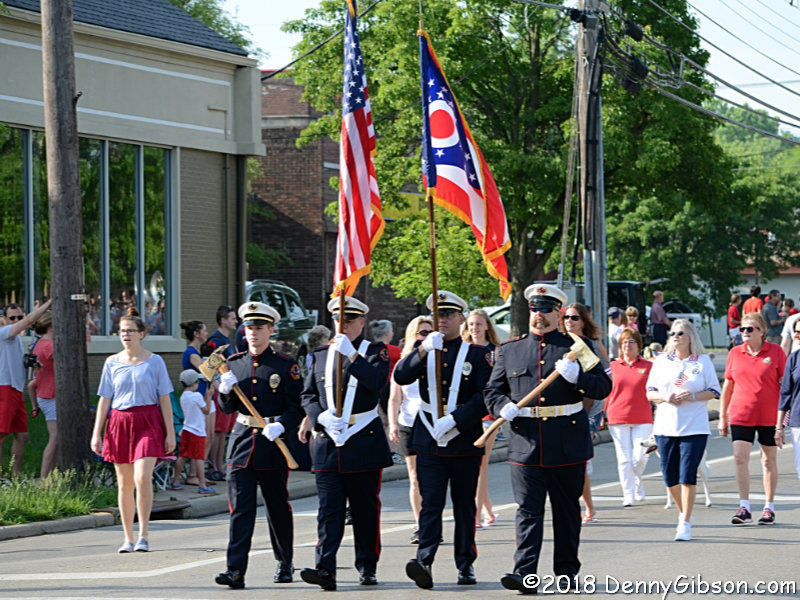
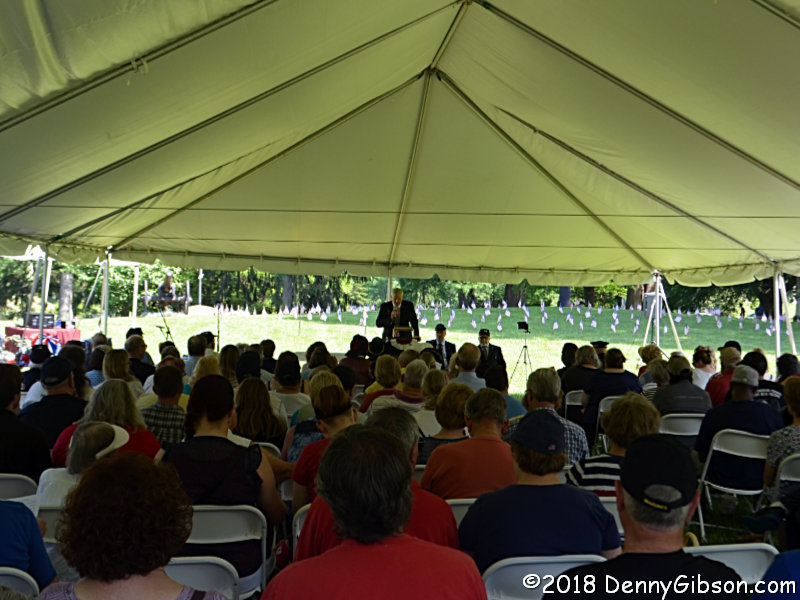
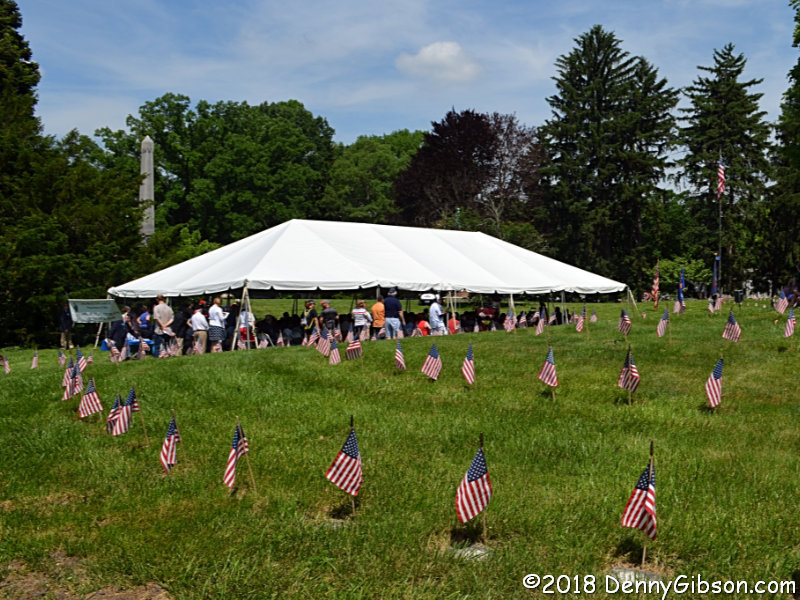
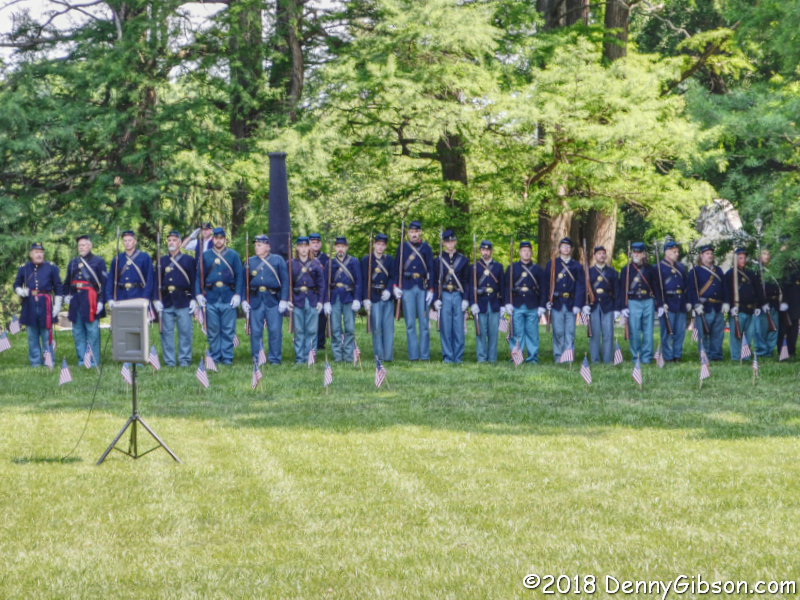
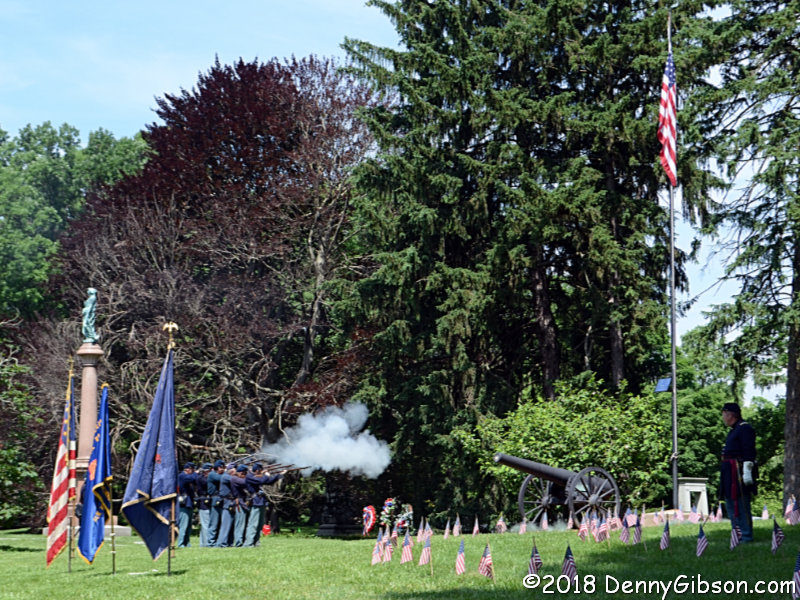
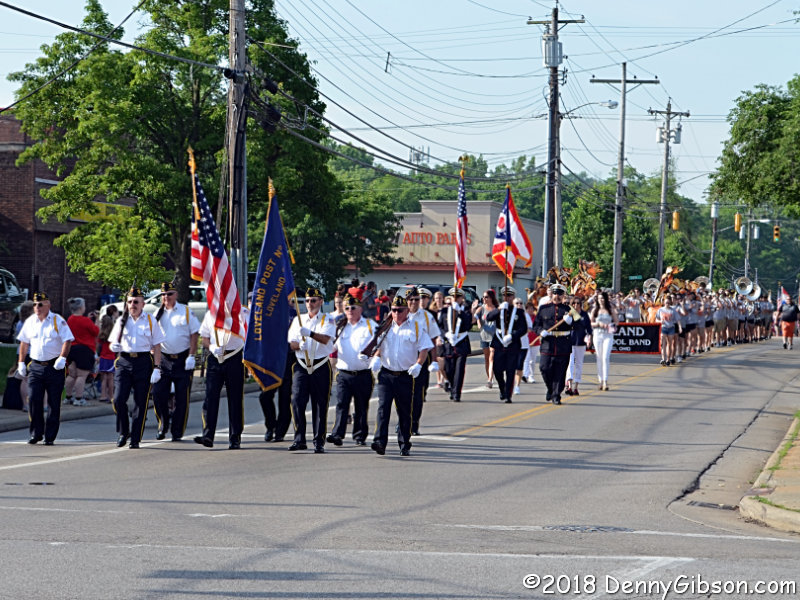
I attended two Memorial Day events this year. The first was a parade in nearby Loveland, and the second a gathering at Ohio’s largest cemetery, Spring Grove.

In Loveland, a police cruiser with flashing lights cleared the way with members of the local American Legion Post leading the actual parade. A group of firefighters, looking exactly like I’d want my fire department to look, was close behind. Love the mustache.

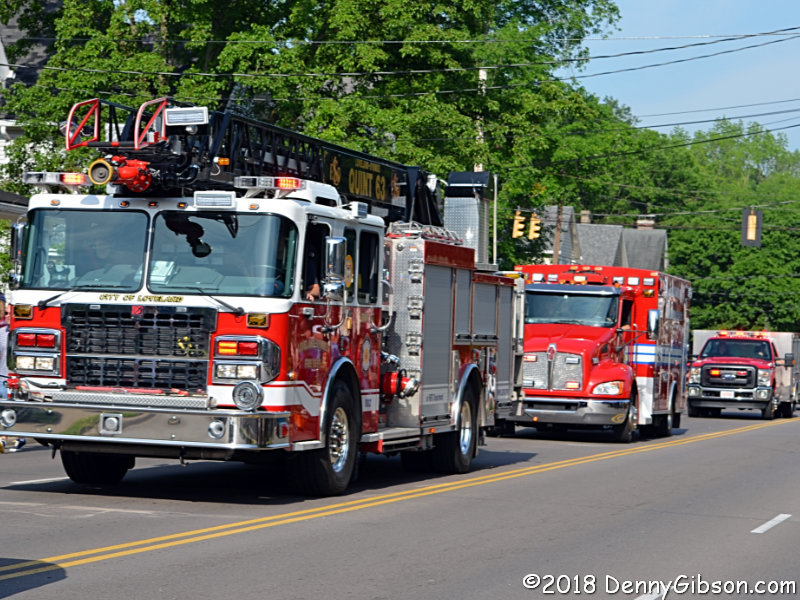
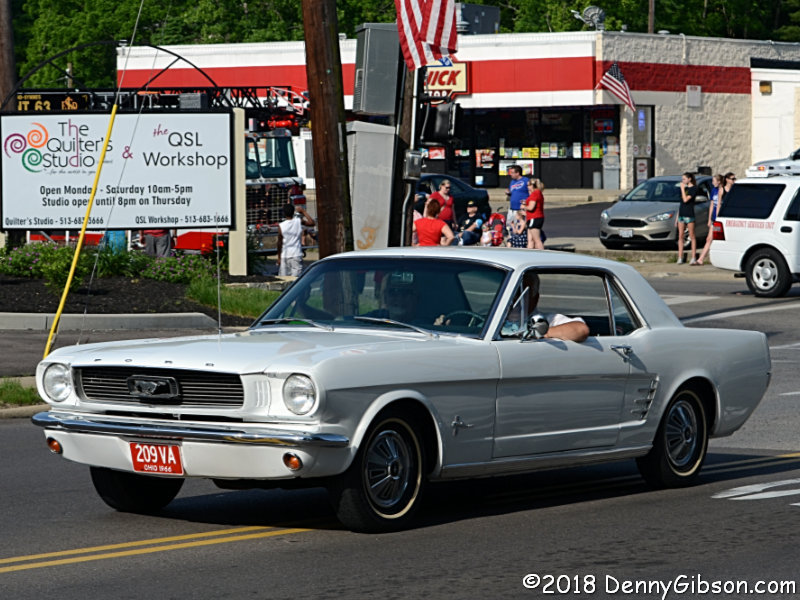
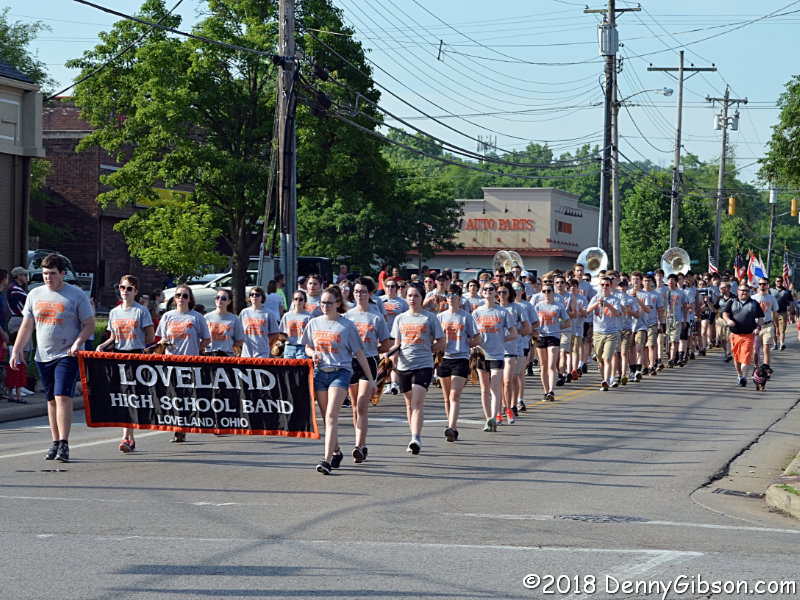
What followed was everything a parade should have: high school marching band, classic cars, and freshly polished fire trucks. The parade ended near Veterans’ Memorial Park where ceremonies were to take place. I was watching the time, however, and left just as they were getting started.

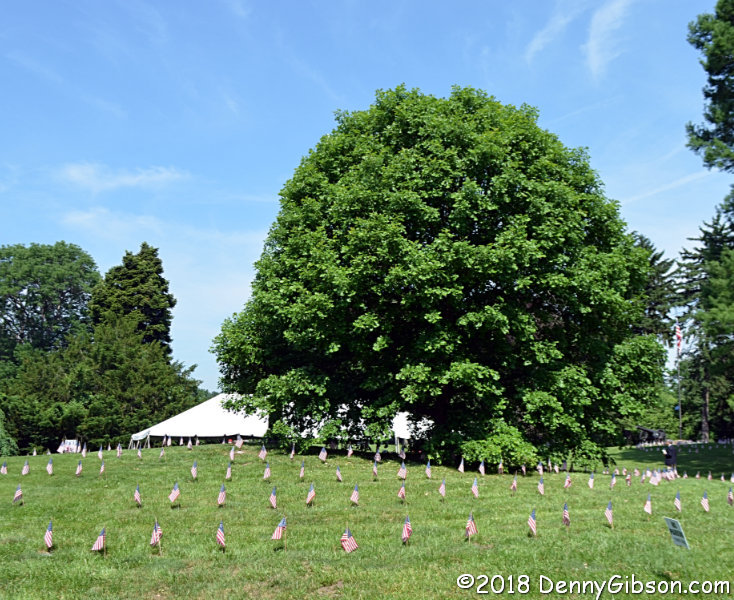
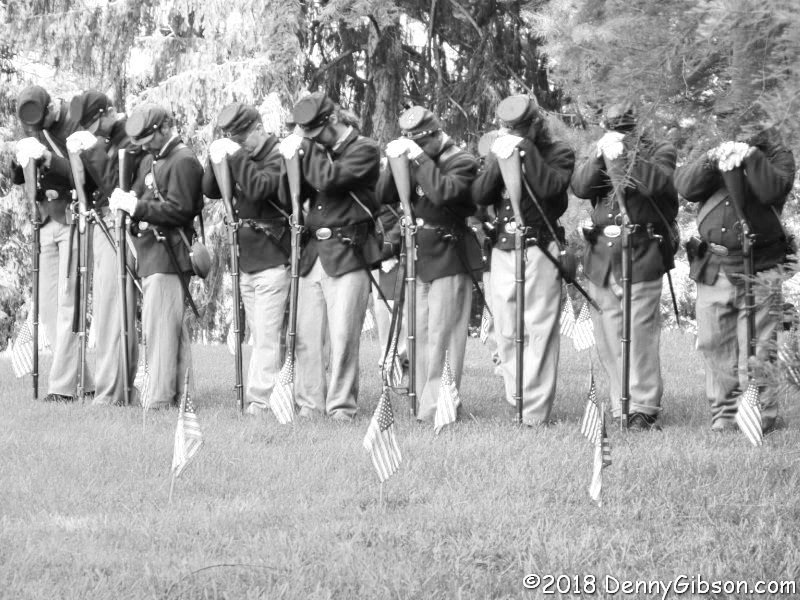
The setting for the Spring Grove ceremonies was the Civil War section where 999 Civil War dead are buried in three circular plots containing 333 graves each. These are not, of course, the only Civil War soldiers buried in the cemetery. There are 41 Civil War generals buried at Spring Grove. For the majority, however, it is an honorary (brevet) title. The cemetery’s website has some words about the war’s impact and a link to a list of those generals here.

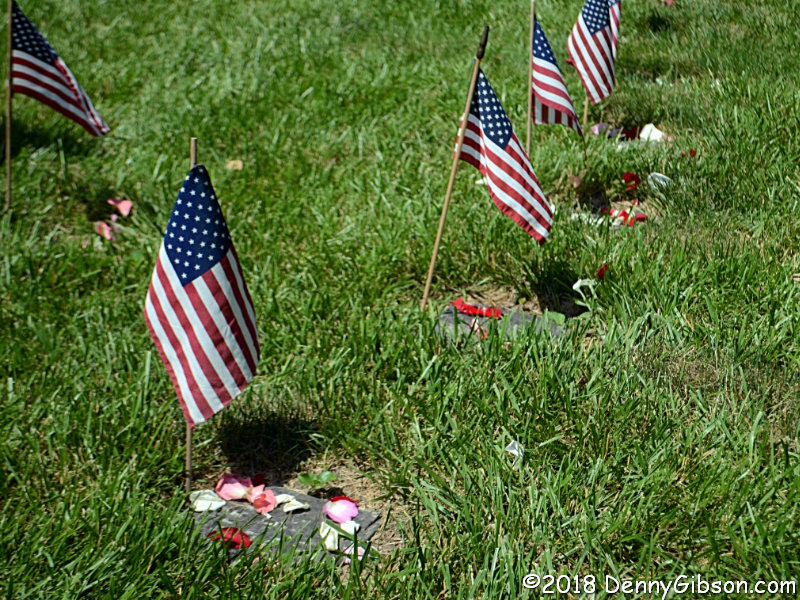
Although individual events were certainly held earlier, 1868 is the year that the observation of Decoration Day was wide spread and coordinated. That was when Grand Army of the Republic Commander, John A. Logan, issued an order calling for gatherings on May 30 “…for the purpose of strewing with flowers or otherwise decorating the graves of comrades…”. Spring Grove was one of 183 cemeteries participating that first year. There were 336 in 1869. Michigan made Decoration Day a state holiday in 1871 and other states were not far behind. It was made a federal holiday in 1888. I was unable to find a date for an official change from Decoration Day to Memorial Day. It seems to have happened somewhat naturally shortly after the first World War.

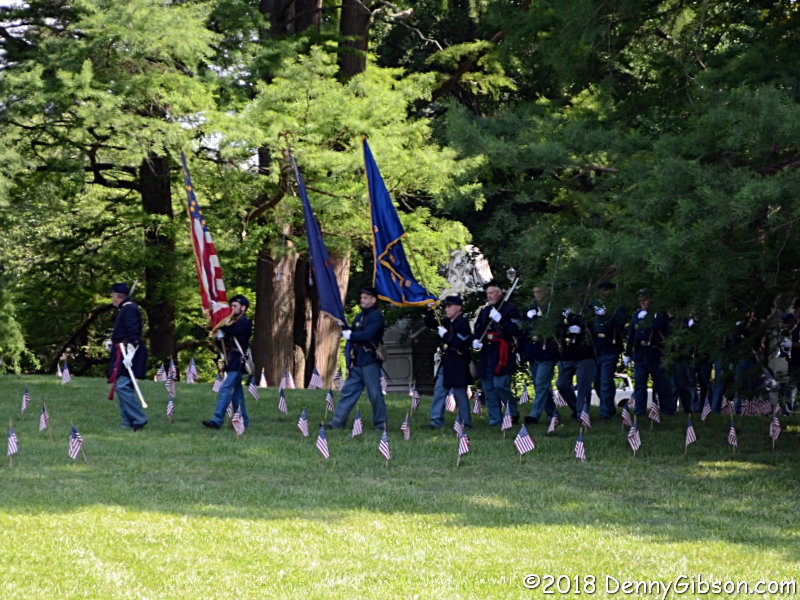
The G.A.R.’s successor, The Sons of Union Veterans of the Civil War, played a major role in the day’s activities and the 6th Ohio Volunteer Infantry helped maintain an awareness of the holiday’s Civil War era roots. They presented the colors at the beginning of the services and fired a twenty-one gun salute near their end.

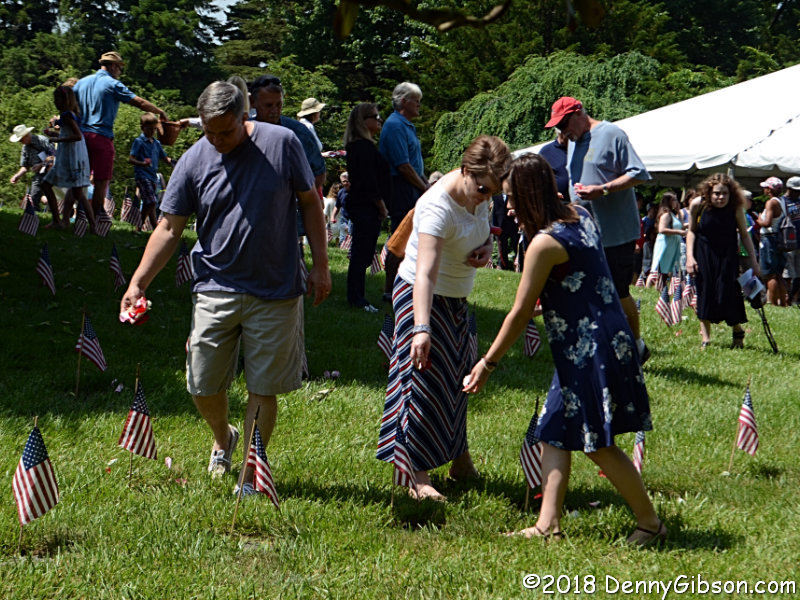
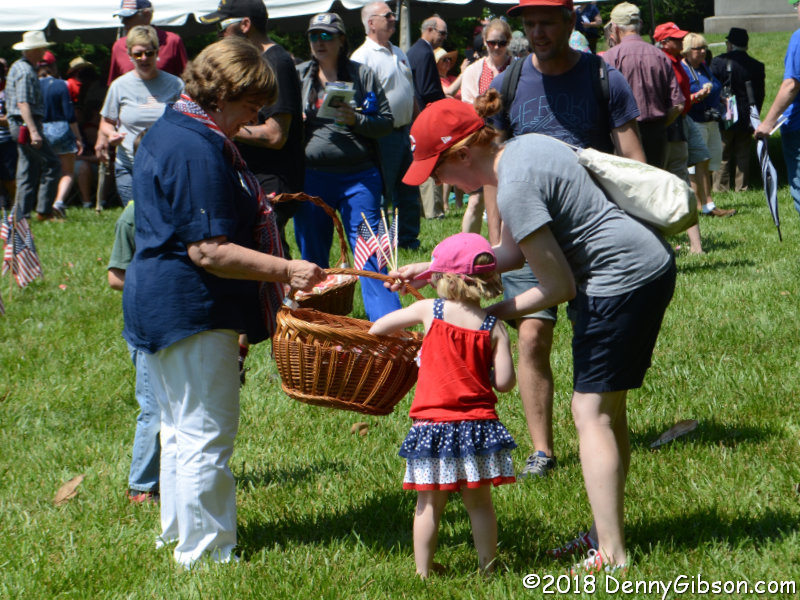
Spring Grove Cemetery was barely sixteen years old when the Civil War broke out.  An excerpt from Spring Grove: Celebrating 150 Years talks about the war, the cemetery, and those early Decoration Days. In describing the very first, it states that “To end the program the Ladies of the Floral Committee led the crowds around the mounds of graves, strewing them with flowers.” Today, The Auxiliary to the Sons of Union Veterans of the Civil War filled the role of the Floral Committee in helping everyone present reenact that ritual from 150 years ago.

The Mighty Qin… and Friends

I can’t really explain how the word Qin got turned into China, but it did. Some oriental linguistic transformations, such as Peking to Beijiing, are fairly recent but Qin has been China for a very long time. During a period actually called the Warring States Period, Qin was merely one of the states that warred. But it was better at it than most. In 221 BCE, under the leadership of Ying Zheng, Qin conquered the last of those other states to unify Qin/China. Although the Qin Dynasty was short lived (221-206 BCE) it gave the world its most populous country, biggest wall, and most mind boggling tomb.

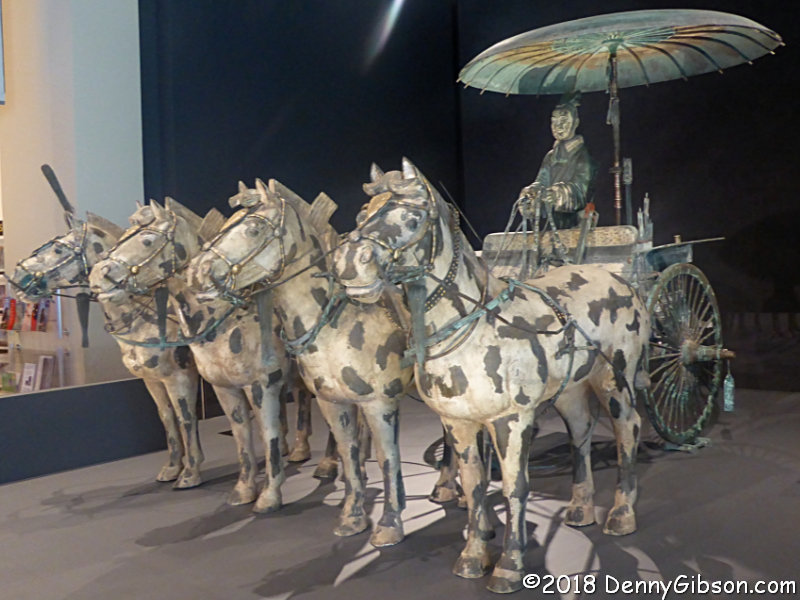
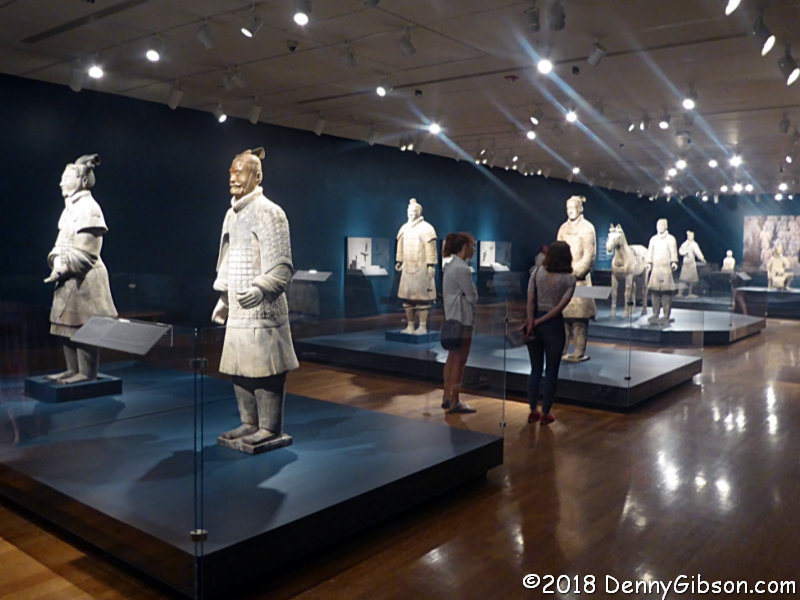
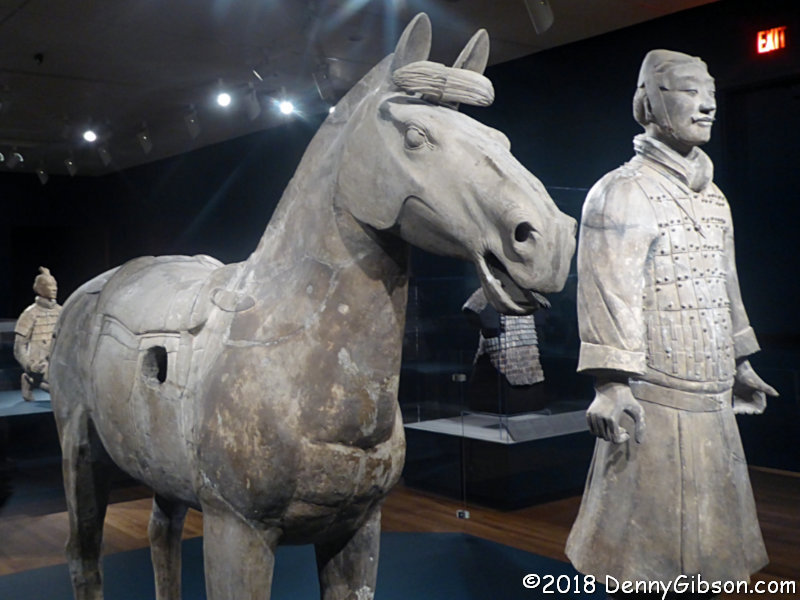
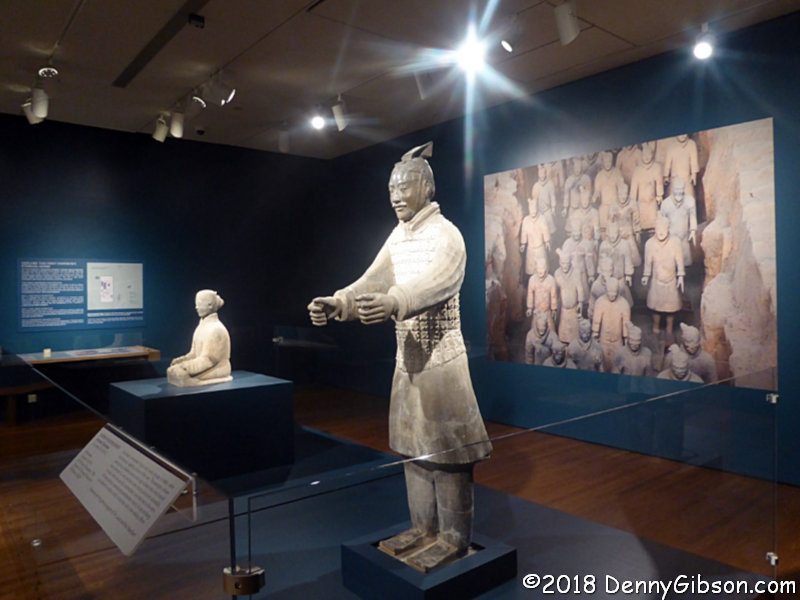
Construction of that tomb, a 38 square mile complex clearly deserving of the name necropolis, began before China’s unification. Ying Zheng launched the project in 246 BCE after becoming ruler of Qin following his father’s death. He was thirteen. One of the best known of the many astounding aspects of the site is the army of nearly 8,000 life sized terracotta figures populating it. Ten of those figures are among the 120 items currently on display at the Cincinnati Art Museum. The chariot in the opening photograph is a replica of one found at the burial site. It is on display near the museum entrance separate from the actual exhibit.

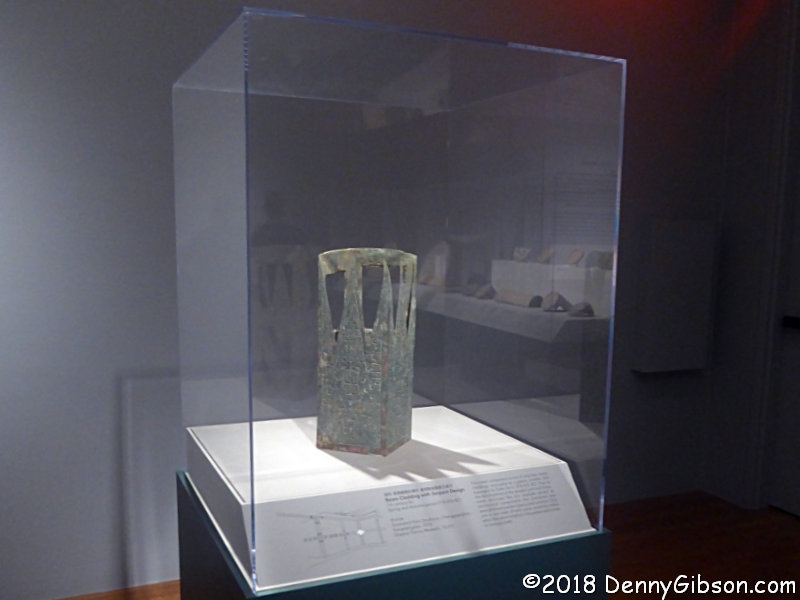
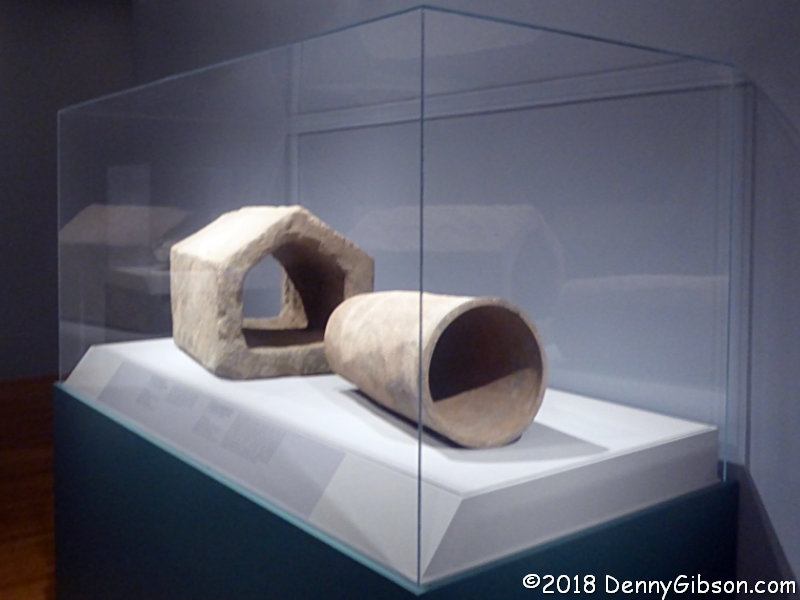
The majority of items in the exhibit are much smaller than those soldiers and some predate the Qin dynasty  Many of the smallest are jewelry or other decorative items. A lot of the mid-sized items are more practical. The earthenware mask, believed to have been used by an exorcist, dates from 4000-3000 BCE. The metal cladding in the second picture was used to join construction timbers. The Chinese have long used ceramic tile for roofs and other construction needs. Both items in the third picture are tiles used in water supply systems.

This was the third time I’ve been able to gaze upon some of the twenty-two century old figures. The first was in 1980 at the Field Museum in Chicago; The second just two years later at the 1982 Knoxville World’s Fair. In Chicago, six soldiers and two horses were part of a large “Great Bronze Age of China” exhibit. In Knoxville, two soldiers and a horse accompanied a tiny piece of the Great Wall in China’s first World’s Fair exhibit since 1904. Both were remarkable in that the figures had been discovered just a few years prior in 1976. I find the fact that they were forgotten for more than two millennia as extraordinary as the fact that they existed at all.

The terracotta army contains a broad range of ranks and duties and every member is unique in some way. This exhibit includes a representative sample ranging from general to stable hand with foot soldiers, a couple of archers, and a charioteer. The cavalryman in the first photo does look like the one whose thumb was broken off in Philadelphia last December by some jerk from Delaware, but it’s not. That set of figures has returned to China. The Cincinnati exhibit was organized by the Cincinnati Art Museum and the Virginia Museum of Fine Arts where it had been displayed until mid-March. Those and other details are found in a press release here.

Terracotta Army: Legacy of the First Emperor of China runs through August 12.


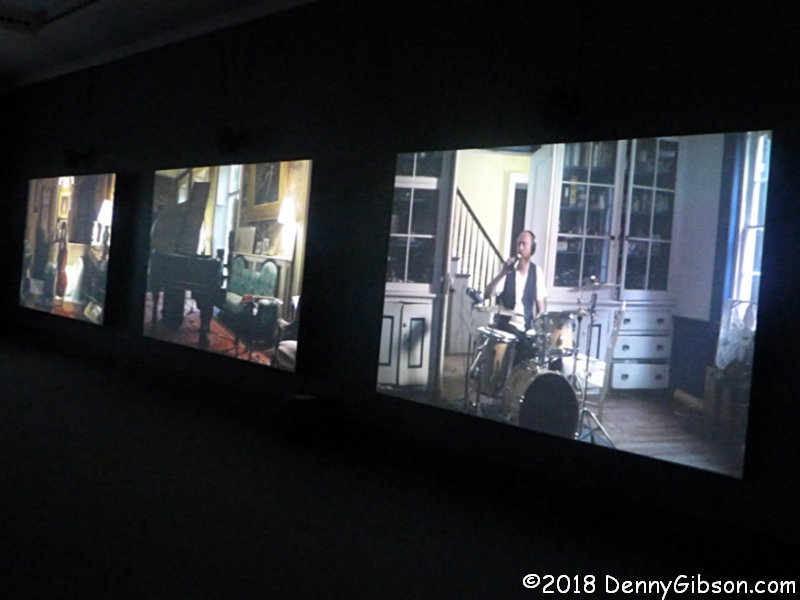
There is another traveling exhibit at the Cincinnati Art Museum currently. It’s one I failed to do any homework on at all and I regret that — maybe. The main part of the exhibit is called The Visitors which is described as a “multi-channel video installation”. It’s the work of Ragnar Kjartansson. His Scenes from Western Culture is also on display. It’s possible to find descriptions of both of these works elsewhere but this is the only place to get a description of how I experienced them. Lucky you.

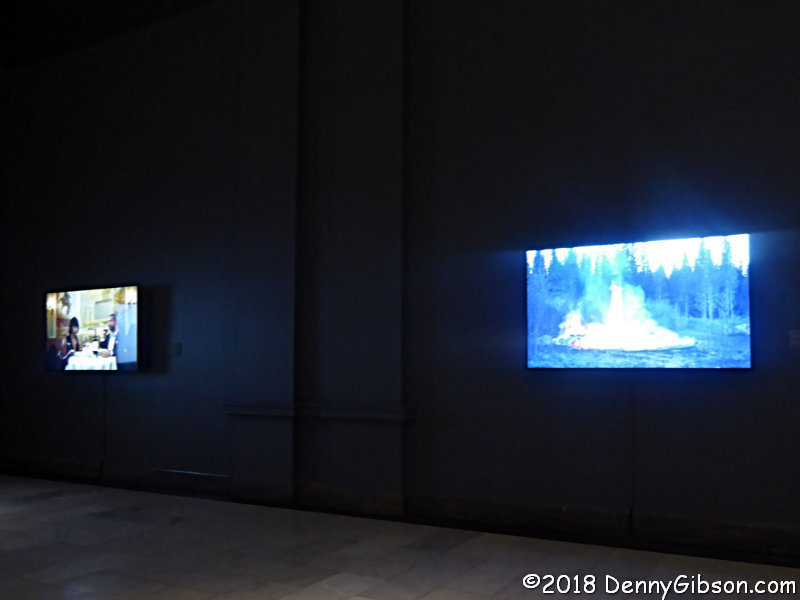
Ragnar Kjartansson’s name was on the entrance to a fairly large room that often holds traveling exhibits with several large video screens on the walls of the approaching hallway. I’d seen the name when visiting the museum website but I hadn’t been interested enough to do any reading and I really had no idea what to expect. I scanned a blurb on the wall about short movies that set a mood rather than telling a story before watching a couple kissing on a dock by a boat and a group of kids playing almost sedately in a park. A screen with a fire burning in what looked like the foundation of a house triggered a memory. I’d recently seen a similarly framed image of a cabin ablaze and realized it must have been on the museum’s website. The blurb next to the screen mentioned a 32 minute running time. I needed to kill some time and the cabin, if that’s what it was, had completely collapsed so maybe it was near the end. I sat down across from the screen to see if it would cycle to the remembered image of a cabin.

I checked email and Facebook and verified that City View Tavern, where I planned to eat, was open. The fire was still going pretty good within the outline of the building, so I decided to go on into the main room. Even bigger screens lined those walls with little activity on any of them. I studied each of them briefly then went back to the hallway to check on the “fire”. The flames didn’t hold my attention very long this time and I soon decided to walk on through the main room and exit. A couple of the screens were now dark but the others showed the same motionless scenes as before. As I paused near one of the screens, a man appeared and walked toward the camera. The screen went black when he presumably switched it off. I waited long enough for the same thing to happen to another screen. The pause gave me time to rethink things and realize that I still had time to kill and doing it here was probably my best option. I returned to my seat near the fire video.

I now noticed a blurb on the side if the door away from the “fire”. I learned that the installation inside, The Visitors, involved musicians, in different rooms of a mansion, playing and singing a song. The fire in the video didn’t seem to be progressing much, so, when I heard voices singing on the other side of the doorway, I went in and, for the first time, considered that Ragnar Kjartansson might not be a full on con-artist.

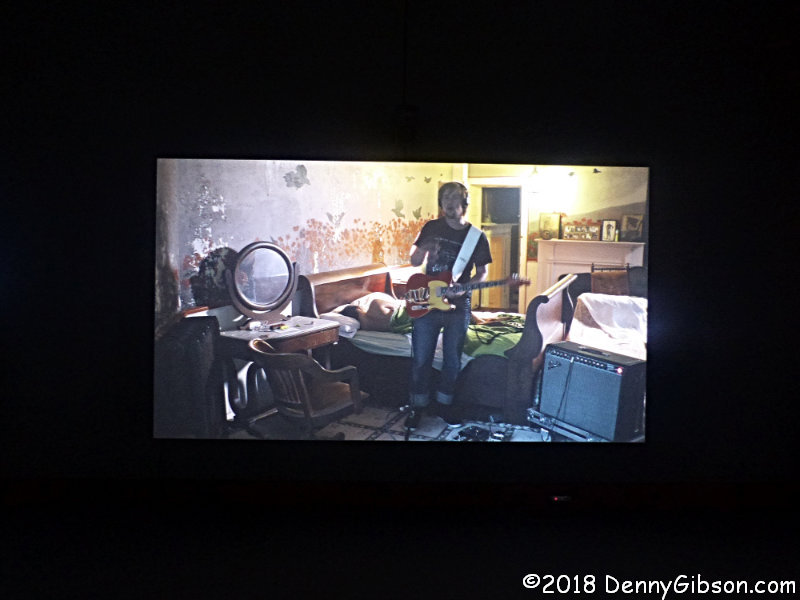
All the screens were lit and all the rooms occupied: a cello, a couple of grand pianos, an accordion, a banjo, several guitars. The show — I mean installation — had become interesting. Though the music wasn’t gripping, it was quite pleasant. It swelled and softened. In some of the mellowest spots, the drummer sipped a beer. After a while I noticed the bare shoulders of a young woman lying in the bed one of the guitarist sat on. The run time was given as 64 minutes, and, as far as I know, she didn’t move for the entire shoot. If so, that’s almost as impressive as her roommate contributing to the performance guided only by earphones.

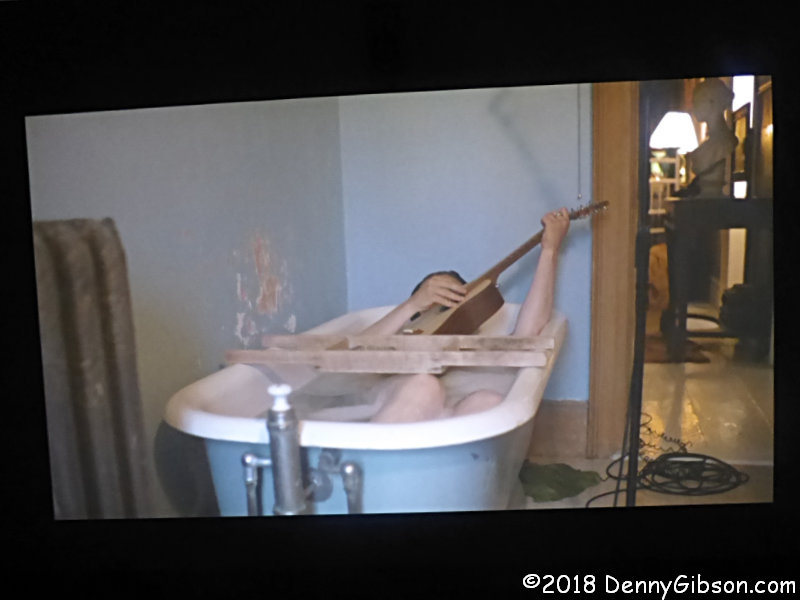
The museum is free and so is this. I’m really thinking of returning to watch the whole thing in the proper sequence now that I know what’s going on. Through some belated homework, I learned that Ragnar’s the guy in the bathtub. A quite remarkable selfie.

The Visitors and Scenes from Western Culture run through June 17.

Welcome Back Belle

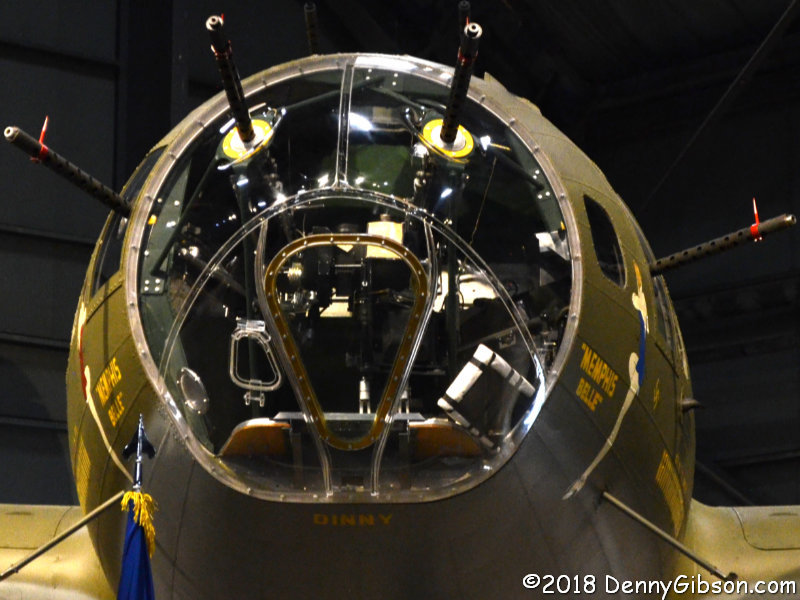
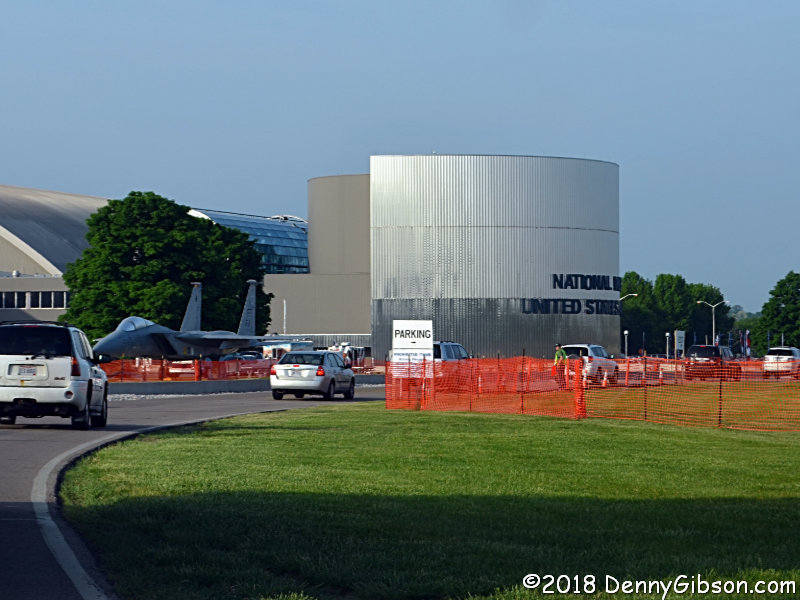
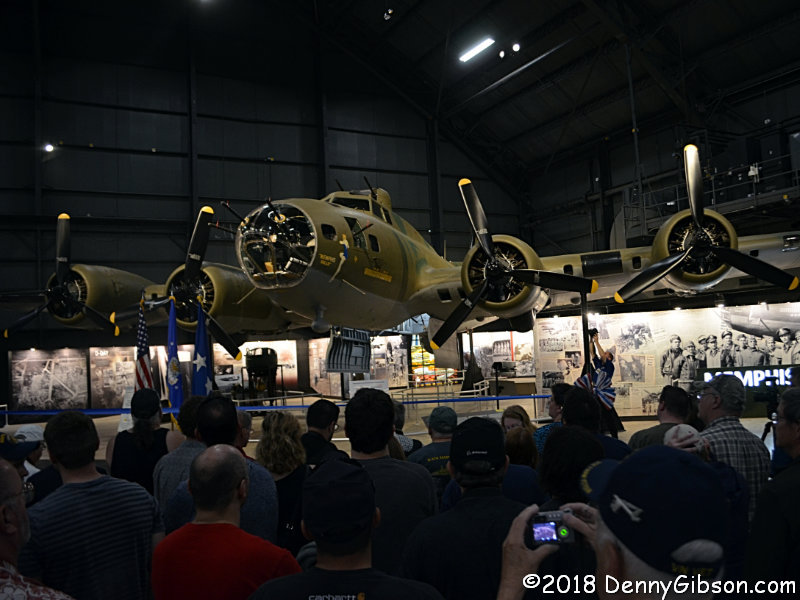
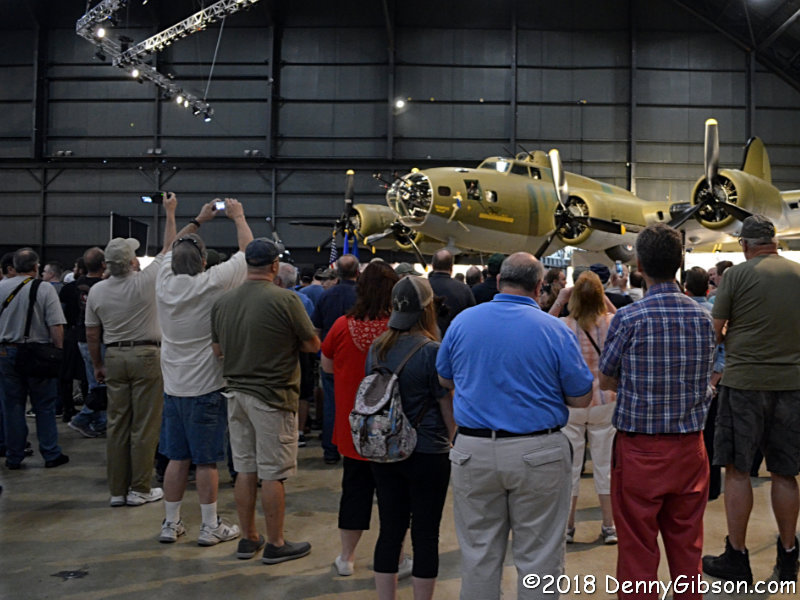
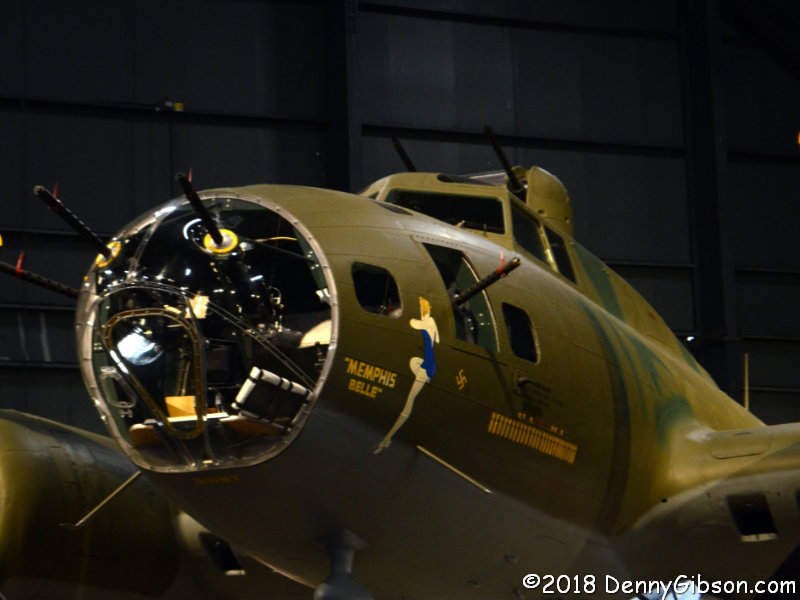
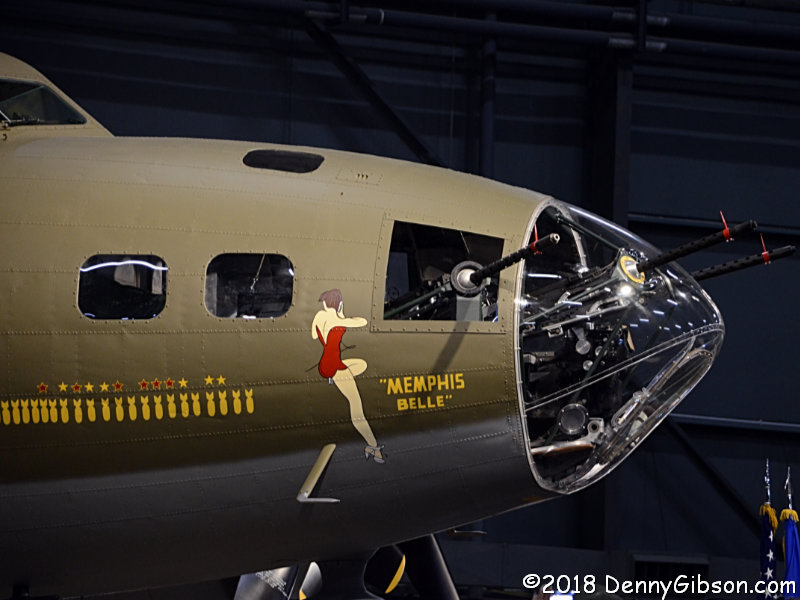
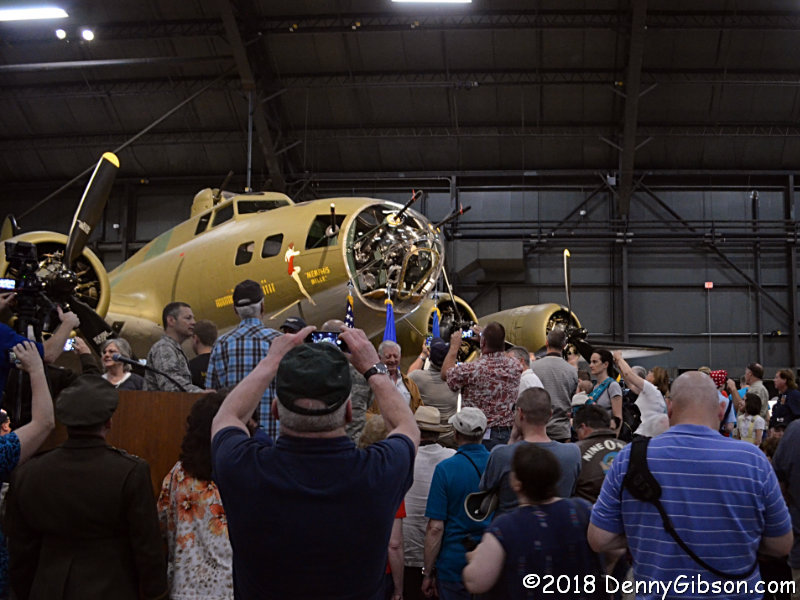
This week the Memphis Belle came home to a place she’d never been before. And the Belle has been a lot of places. She was born in Seattle, Washington, on July 2, 1942. She flew to England in September and completed her first bombing mission over Europe in November. By May of 1943, she had completed her 25th mission and was sent “home”. She then toured the United States promoting War Bonds. After the war, she spent a little time in an Oklahoma airplane graveyard then a lot of time at various locations in Memphis, Tennessee. Since 2005 she’s been undergoing major restoration in Dayton, Ohio, and on Wednesday she was moved to the National Museum of the US Air Force. On Thursday, the exhibit was officially opened to the general public. That’s me.

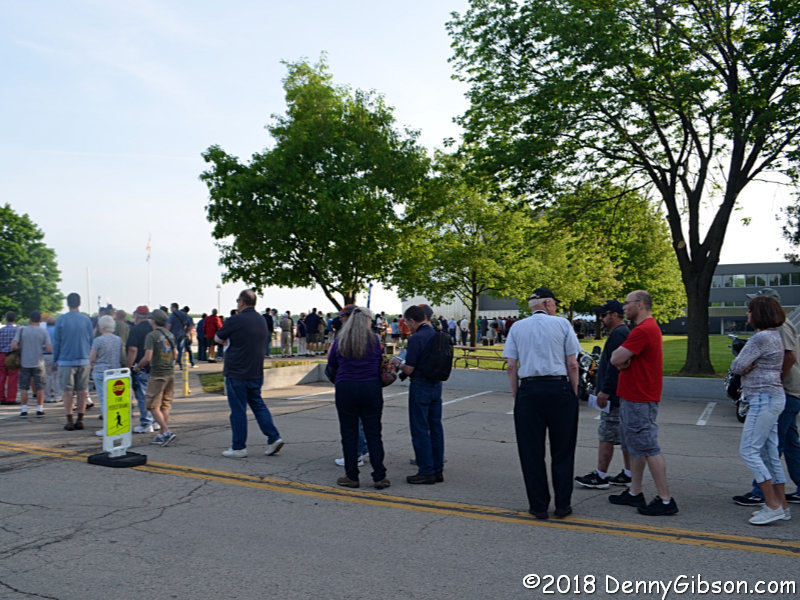
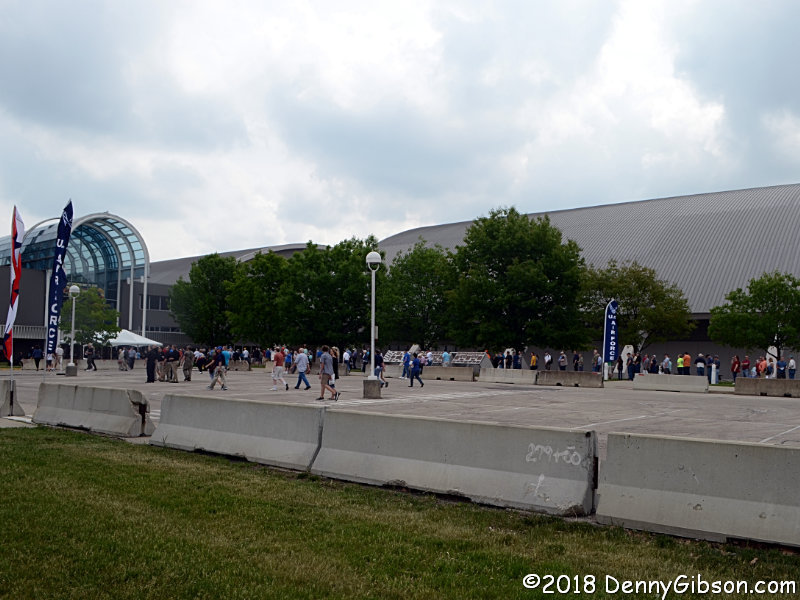
I arrived about an hour before the scheduled ceremony and was happy to see that traffic was not as bad as I had feared. There were plenty of people there, though. By the time I made it through the line and security, only about a third of that one hour wait remained.

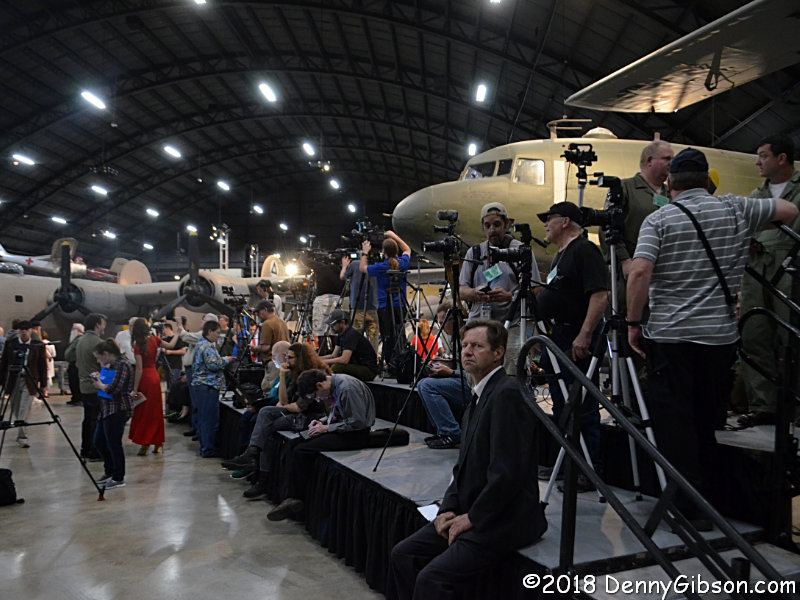
My first view of the restored airplane was somewhat obscured by some of those people who had been in line in front of me. I got a reasonably clear view by heading to the back where the media risers were.

The Memphis Belle is often referred to as the first B-17 to complete 25 bombing missions but that honor actually belongs to Hell’s Angels which accomplished the feat about a week before the Belle. But the Memphis Belle was the first to return to the States. It seems likely the the romance behind the name had a lot to do with the selection. Memphis, Tennessee, was the home town of Margaret Polk who was the fiance of Robert Morgan, the plane’s pilot. Although Margaret broke off the engagement before the war ended, I don’t doubt that it helped sell more than a few war bonds.

At war’s end, the Belle was designated surplus. In 1946, the city of Memphis bought her for $350 from an airplane graveyard near Altus, Oklahoma. They didn’t spend much more on her for a long time. She was initially parked outside at the Memphis Municipal Airport. In 1950, she was moved to the National Guard Armory and placed — still outside — on a concrete pedestal. In 1987, helped along by some noise from Air Force people, a covered pavilion was built for the plane on Memphis’ Mud Island. It was here I first saw her in 1990 and it seems like I should have some pictures around but a Friday afternoon search came up empty. The plane was moved to a Navy hangar in Millington in 2002 where the deterioration was reined in and restoration begun before the 2005 move to Dayton.

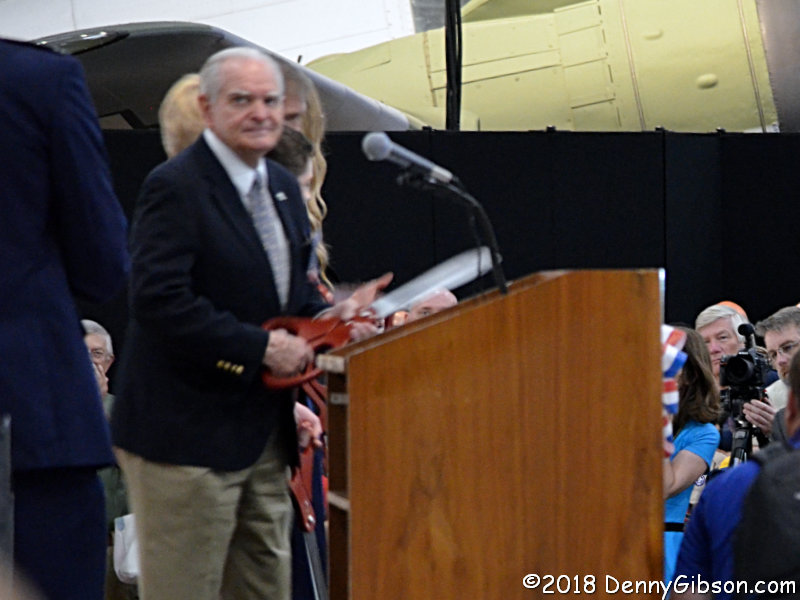
A formal unveiling had taken place the night before for the family of crew members and other VIPs. Today’s ceremony consisted of just a couple of short speeches and a symbolic ribbon cutting. I did not have much of a view of the ribbon cutting although it didn’t really matter. The participants’ names had been announced but I could not have put a single name with a face. The ribbon cutting was the signal to remove the ropes that had blocked the plane and the many displays around it. It quickly became apparent that this was not going the be a good time to leisurely read placards and study pictures.

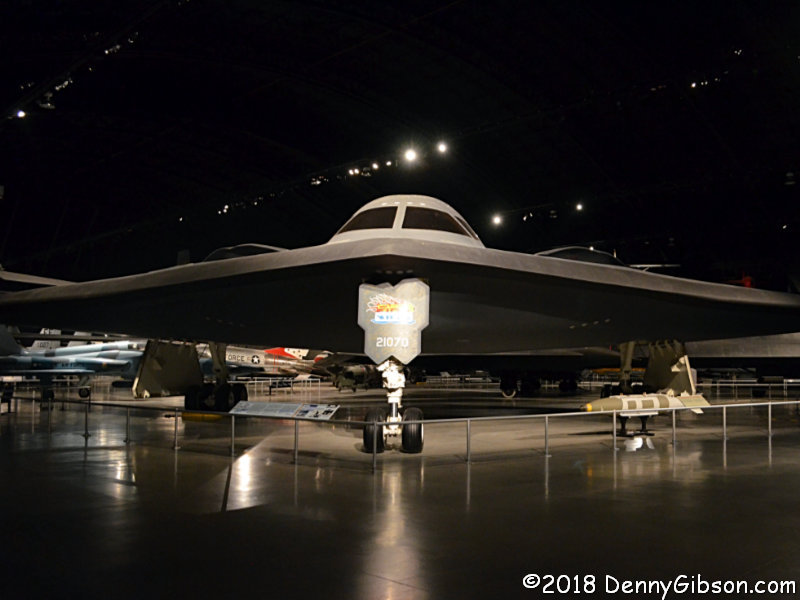
It was, however, a good time to visit the new building that opened last year. On the way I paused to snap a picture of the B-2 and a man walking a few steps behind me caught up with me. “It won’t show up”, he said. I was too slow to get it but must have looked sufficiently quizzical for him to spare me the embarrassment of asking a truly dumb question. “Too stealthy”, he explained.

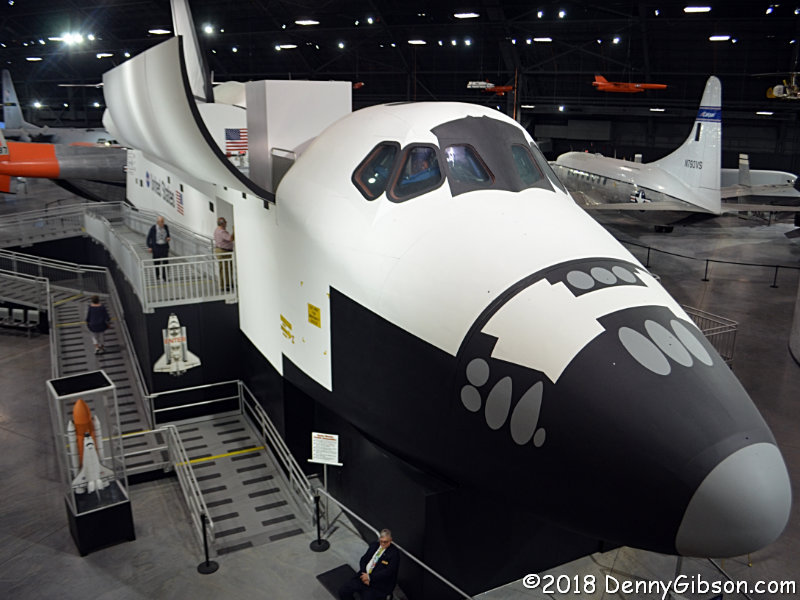
The closest thing to a space shuttle at the museum sits at the entrance to the new building. It is one of three NASA Crew Compartment Trainers. This is CCT-1 which was used in training more than 300 shuttle bound astronauts. Mock structures surround it so that it appears to be part of an actual shuttle.

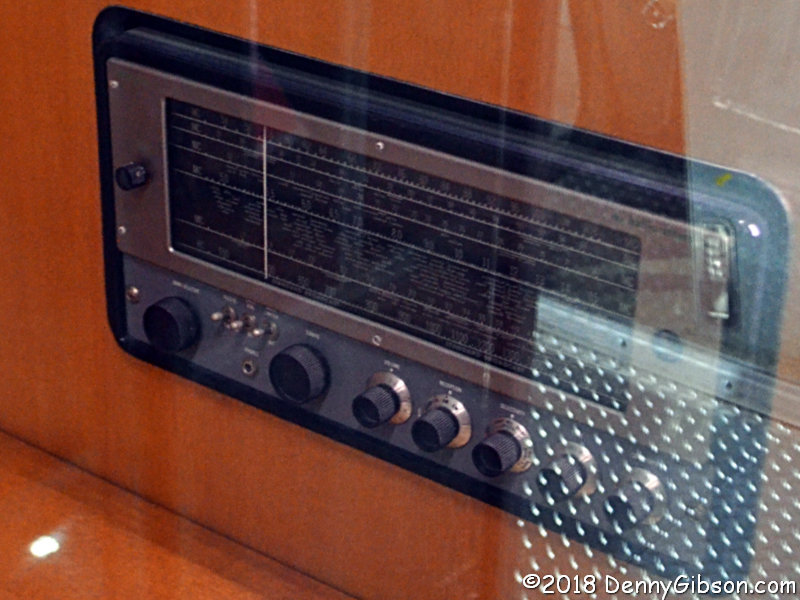
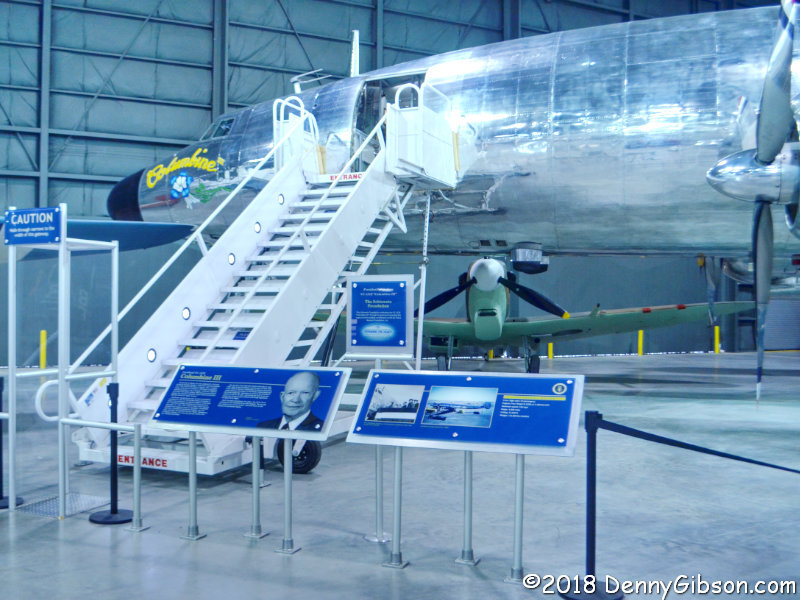
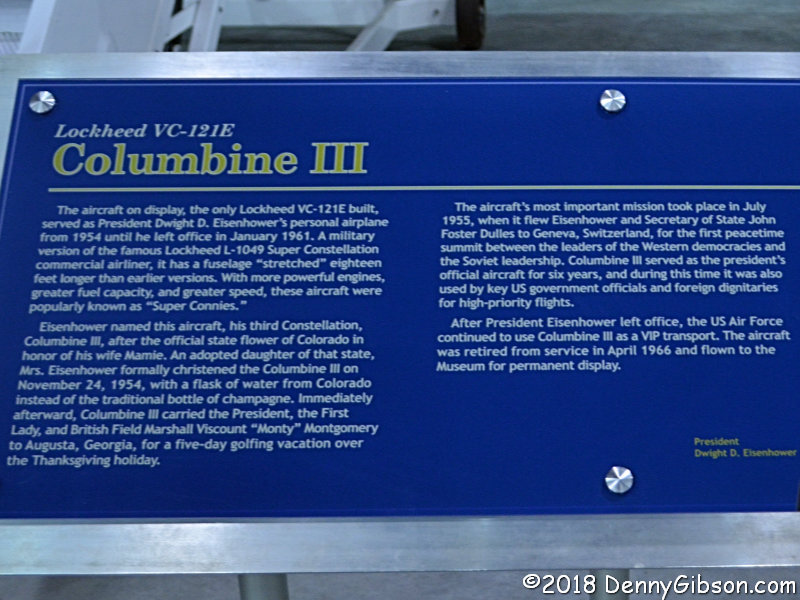
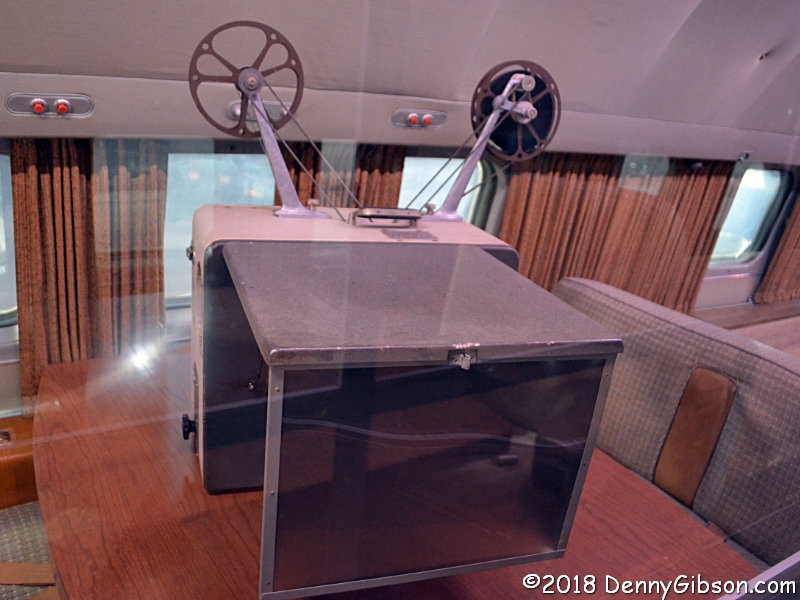
A good portion of the new building is used to display the presidential aircraft that used to be in a building actually on the Wright-Patterson Air Force Base with a bus ride and additional security check required. I’ve seen them before but that didn’t keep me from walking through all of them again. Since I recently visited Ike’s birthplace, I picked his Columbine III to represent the exhibit and to show 1950s state-of-the-art audiovisual gear.

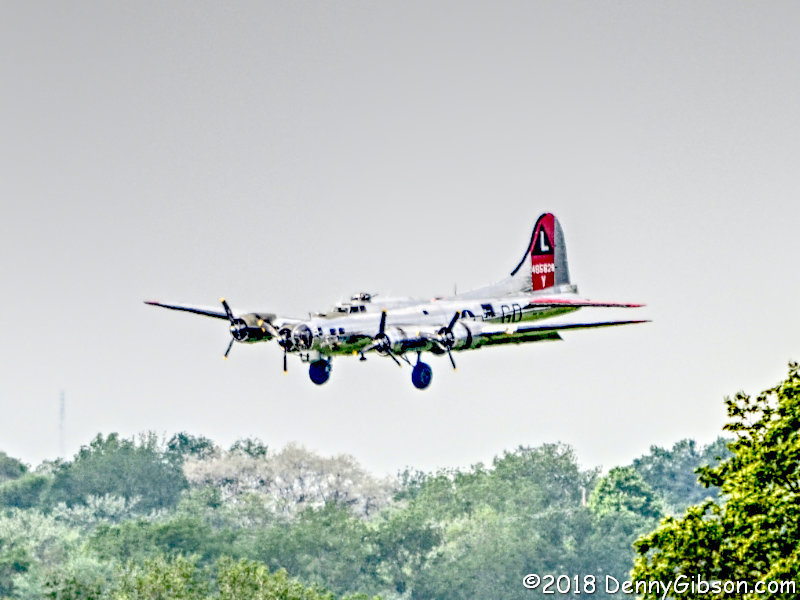
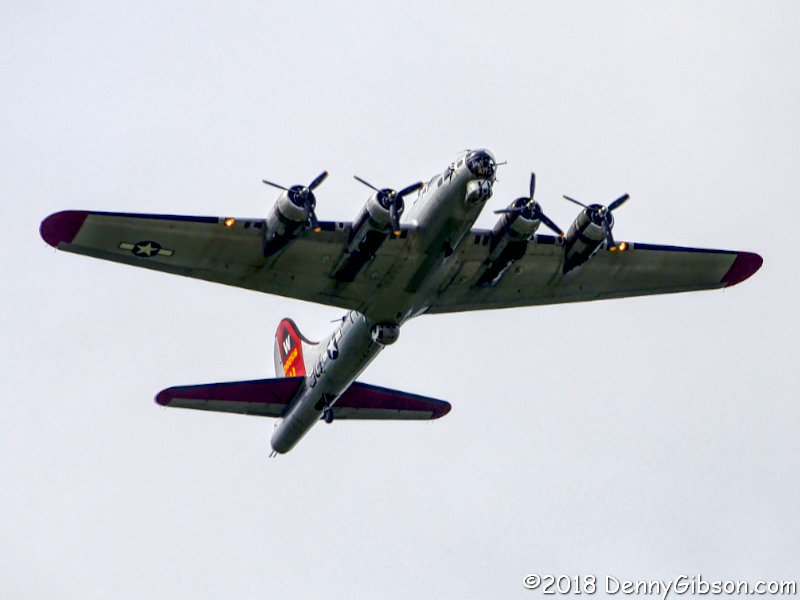
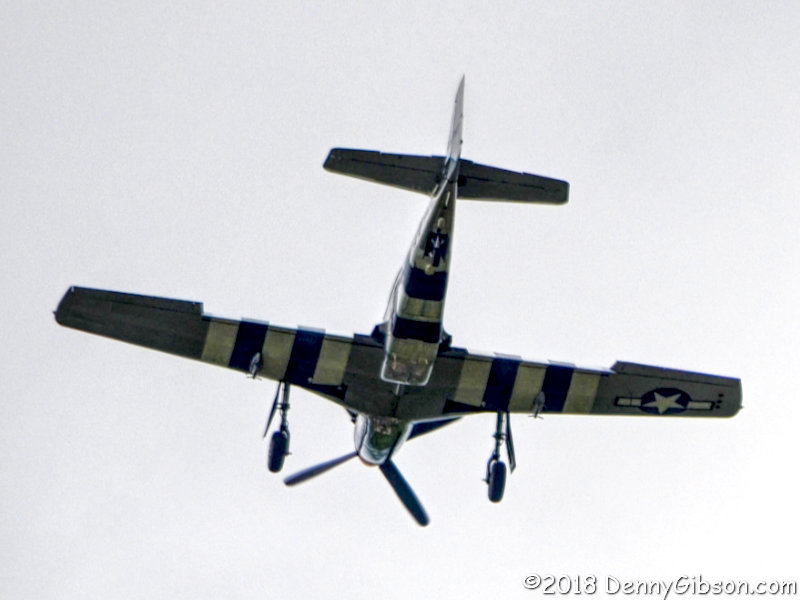
Weather had cancelled yesterday’s planned landing of other World War II vintage aircraft. Earlier, as I stood in that long line getting in, it was announced that they would be landing at 11:00 today. I misjudged the time but did get outside just in time to see the first B-17 approach the field through an opening in the trees. I caught the second one overhead, and thought I’d positioned myself for a better view of the landing but found out I’d positioned myself to pretty much miss seeing it at all. I had read that three B-17s were to be flying about this weekend , but I only saw the two. There were, as advertised, several P-51 Mustangs (3rd picture) in the air.

One reason I nearly missed the landings completely was that I tried to make sure there was nothing I needed to go back inside for. The decision was reinforced by seeing the line outside. It was just about as long as it had been when I arrived and now the museum was nearly full. I promised myself I’d return before long to read the placards and headed to my car.

Trip Peek #71
Trip #6
Bikes & Stuff

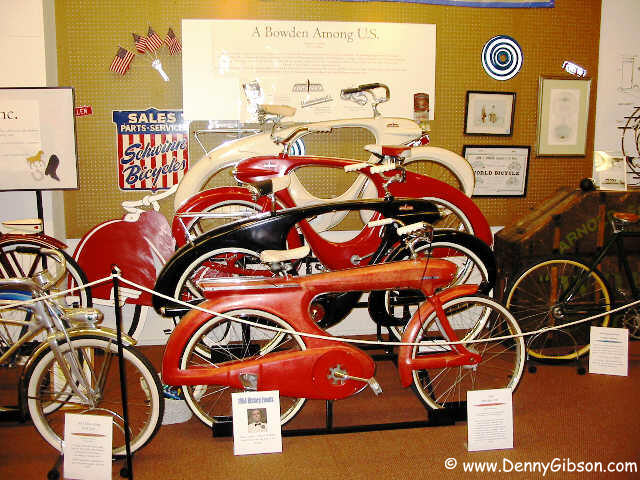
This picture is from my 2002 Bikes & Stuff day trip. It shows the target of the trip which was the Bicycle Museum of America in New Bremen, Ohio. I made a few interesting stops along the way with the most interesting to me personally being a funeral home in Centerville, Ohio. My g-g-g-great grandfather, Benjamin Robbins, was a co-founder of the town and the funeral home is built around the stone house he constructed in the early 1800s. I’d stopped by the house before but this time was different. As I approached the building taking pictures, a door opened and I was invited inside.


Trip Peeks are short articles published when my world is too busy or too boring for a current events piece to be completed in time for the Sunday posting. In addition to a photo thumbnail from a completed road trip, each Peek includes a brief description of that photo plus links to the full sized photo and the associated trip journal.

My Wheels — Chapter 31
1994 Chevrolet Camaro

In the previous My Wheels chapter, I mentioned that the price of the Lumina was improved by the dealer’s need to “make room for the ’93s”. These included an all new fourth generation Camaro and I was instantly smitten by what I still consider one of the most attractive automotive shapes ever. The extremely clean wedge reminded me of futuristic dream cars my friends and I would sketch in the margins of our note books in high school. A new Pontiac Firebird naturally appeared at the same time and many were attracted to the performance oriented Trans Am model but not I. As was common with Pontiacs of the time, the Trans Am distinguished itself with various bits of cladding. There was also what I considered an awkward looking spoiler. In contrast, the Camaro’s simple blade-like spoiler was smoothly integrated into the body. I irritated some Trans Am admirers of my acquaintance by describing the car as “Camaro meets Mr. Potato Head”.

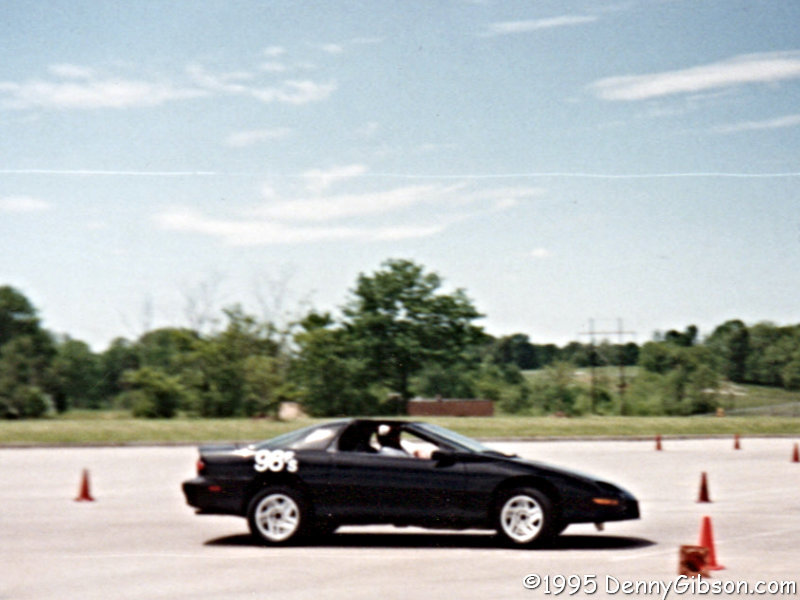
When, two years after buying the Lumina, the time came to “make room for the ’95s”, I was back to buy my third car from the same dealer. Ideally I’d have found a leftover green manual 6-speed Z-28 but I settled for a black 4-speed automatic. It was a Z-28, however, and a test drive of the 275 HP V8 told me that this would be a fun car even with the automatic transmission. It was also great looking. When clean and shining, this was one of the best looking cars I’ve had the pleasure of owning. But, as is well known, black cars are dust magnets and its clean and shining periods were usually rather short lived. This is — and I’m sure it will remain — the only black car I’ve ever owned.
As seen in the photo, I autocrossed this car quite a bit. It was much better suited to the job than the Z-34 Lumina and I did considerably better with it although I was never a real threat. I sure had a lot of fun, though.

Of course I still had some daughter chauffeuring responsibilities. The Camaro wasn’t as roomy as the Lumina but neither was it as confining as the Storm. Hauling two, and on occasion even three, flexible teenagers, was never much of a problem. Maybe the kids like the tasteful rumbling. I know I did.
My previous Wheels: Chapter 30 — 1992 Chevrolet Lumina
My Next Wheels: Chapter 32 — 1986 Ford Bronco II

Trip Peek #70
Trip #139
Road Crew Redo

This picture is from my 2017 Road Crew Redo trip. I’d seen the Road Crew perform their Route 66 themed songs at Route 66 events but never in their home state of Tennessee. I tried in January of 2016 but a snow storm played havoc with my plans. This time I was successful. The trip’s first day was spent getting to Nashville, doing some honky tonking, and attending the Grand Ol’ Opry in Ryman Theater. The picture is of a modern neon sign inside Robert’s Western World.  On the second day I moved on to Franklin and did some sight seeing before catching the Road Crew at Jack and Jameson’s Smokehouse. A leisurely drive home filled the third day.

Trip Peeks are short articles published when my world is too busy or too boring for a current events piece to be completed in time for the Sunday posting. In addition to a photo thumbnail from a completed road trip, each Peek includes a brief description of that photo plus links to the full sized photo and the associated trip journal.

Trip Peek #69
Trip #91
Motorcycle Cannonball Plus

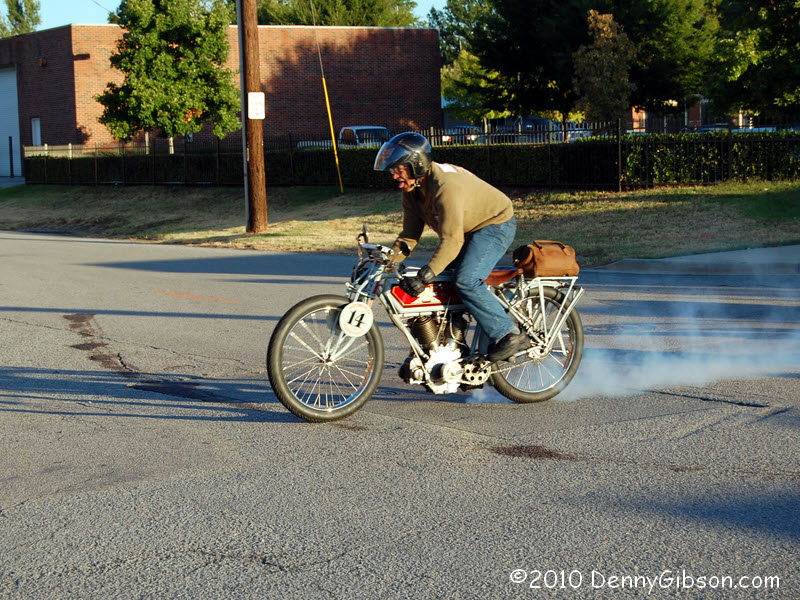
This picture is from my 2010 Motorcycle Cannonball Plus trip. The full name of the event it was centered on was the “Pre-1916 Motorcycle Cannonball Endurance Run”. It was the first of what has become an  established biennial event. Subsequent runs have involved motorcycles of various vintages but all have been rather aged. The 2018 event is for pre-1929 motorcycles and will run from Portland, Maine, to Portland, Oregon. The bikes will start rolling September 8.

In 2010 the run’s closest approach to Cincinnati was Cherohala Skyway near Chattanooga, Tennessee. I got there in time to see many of the ancient two-wheelers pass by, then headed onto their end of day stop at Coker Tire. The picture was taken the next morning as the riders set out on the next leg. Once the first groups were on their way, I drove south to Little River Canyon then back the check out Ruby Falls. I spent the night in Chattanooga and had a wonderful time at the city’s aquarium the next day.after breakfast at Aretha Frankenstein’s. This was my first visit to the quirky restaurant which became an instant favorite. I made it to Nashville in time for a show at the Bluebird Cafe then stopped at a couple of car museums the next day as I headed home sort of on the Dixie Highway.


Trip Peeks are short articles published when my world is too busy or too boring for a current events piece to be completed in time for the Sunday posting. In addition to a photo thumbnail from a completed road trip, each Peek includes a brief description of that photo plus links to the full sized photo and the associated trip journal.