Clinching the Dixie

Dixie Highway MarkerAlthough the impetus for this trip is a Greater Cincinnati Miata Club visit to Indianapolis, the more exciting thing for me personally is completing a drive of the full Dixie Highway. On Saturday and Sunday, members of the Cincinnati club will hook up with members of the Indianapolis club for a couple meals, a couple driving tours, and a couple museum visits. On Monday, I’ll depart Indianapolis to follow the Dixie Highway to Chicago.

The journal for the trip is here. This entry is to let blog subscribers know of the trip and to provide a place for comments.

All-Star (and more) Week

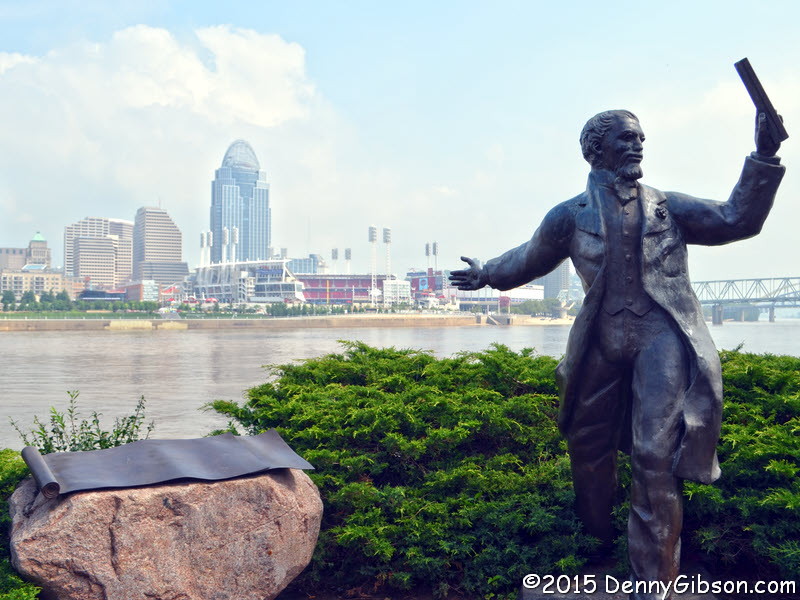
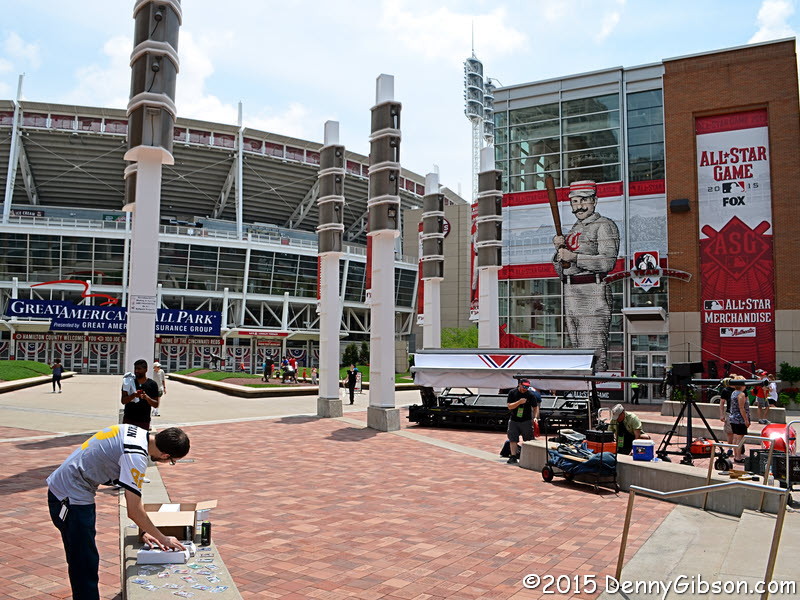
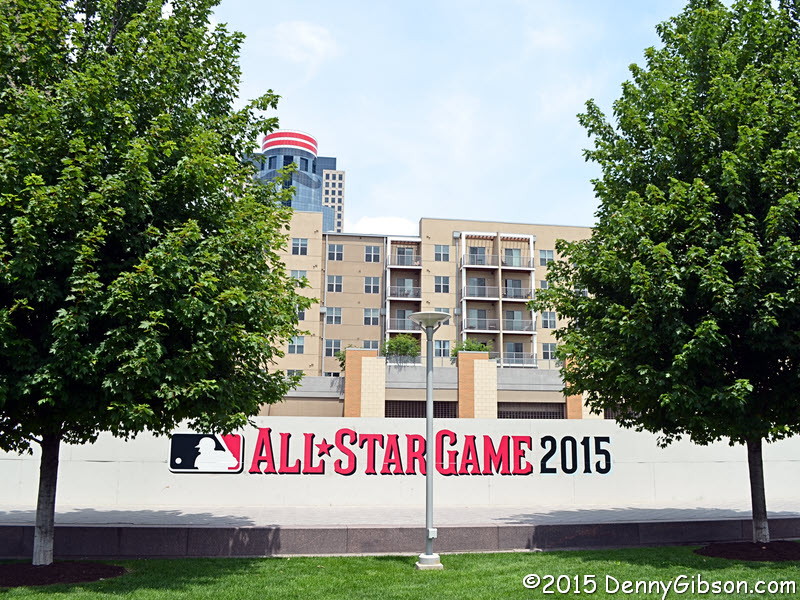
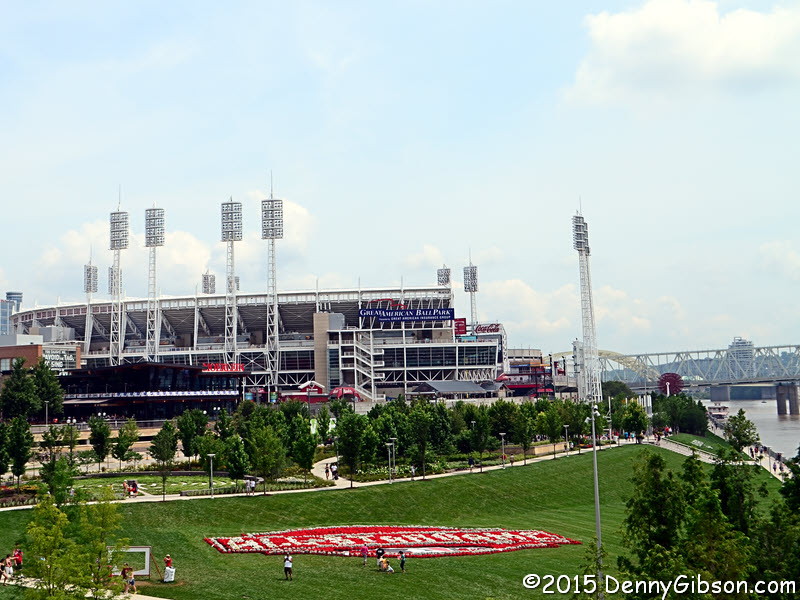
asg-01Behold the Great American Ball Park. On Tuesday, Cincinnati hosts its fifth Major League All-Star Game. There were two (1938 & 1953) in Crosley Field and two more (1970 & 1988) in Riverfront Stadium. This is the first in what would be the best named stadium in the country if that name weren’t bought and paid for by the Great American Insurance Company. I remember both the 1970 and ’88 games and I attended the latter. Neither of those games had anything even remotely comparable to the hoopla and pre-game activities of this one.

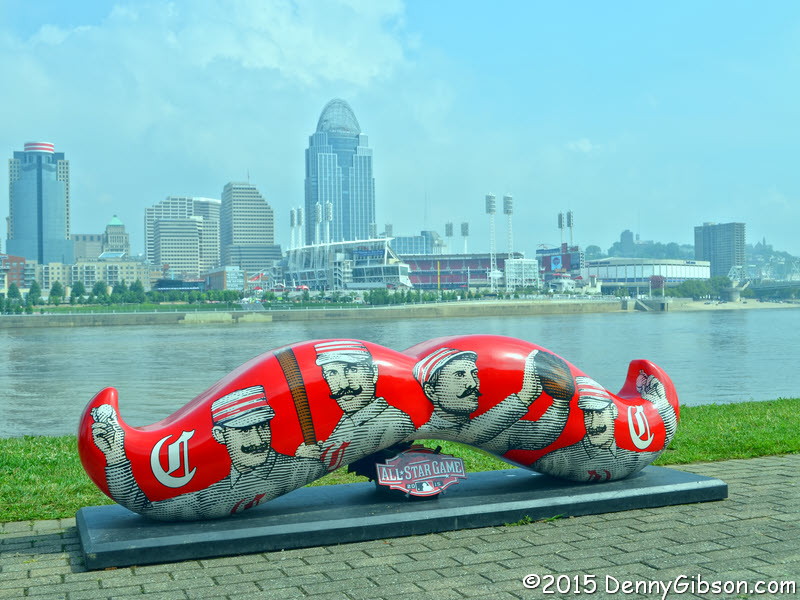
asg-02That hoopla includes twenty bench sized moustaches scattered around the area and many other marked photo ops, too. A multi-day Fanfest started Friday in Convention Center and there are game related events throughout the weekend including many in communities fairly distant from downtown and the stadium.

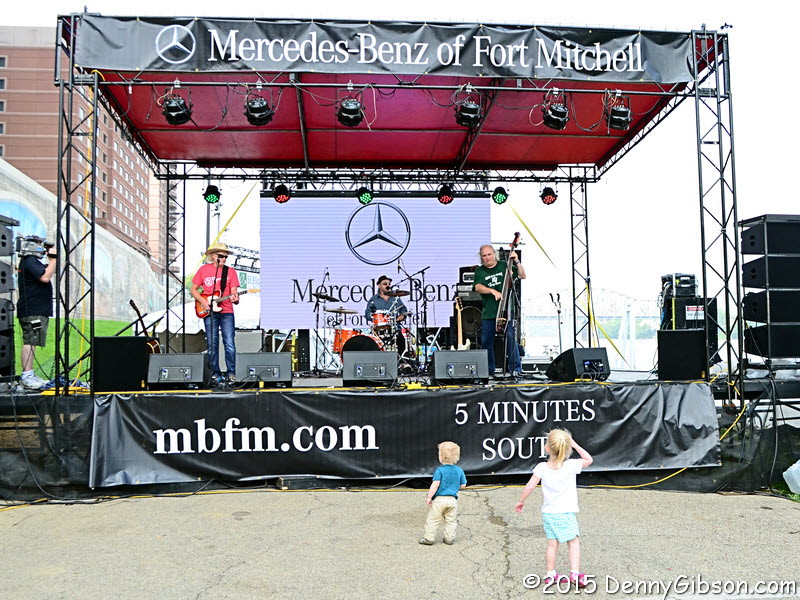
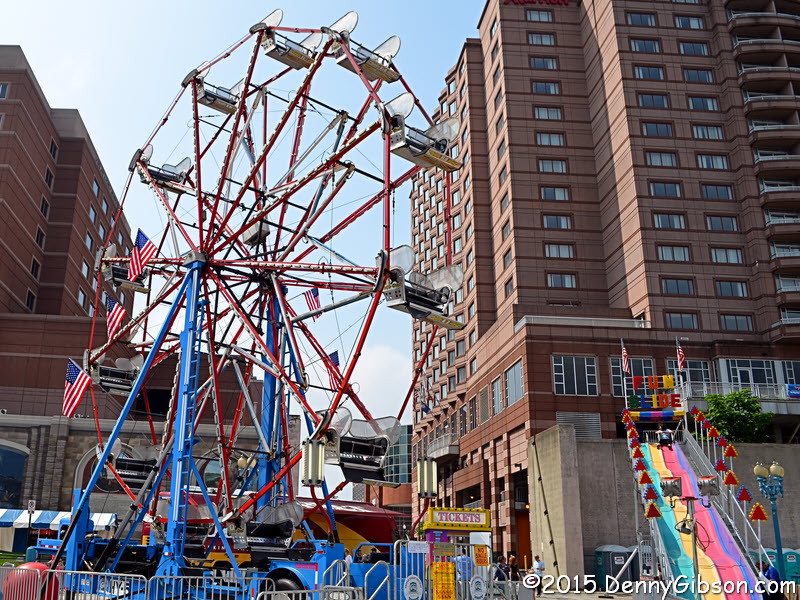
asg-04asg-03And even in the stadium’s neighborhood, the All-Star Game isn’t the only reason for celebration. I’m on the Kentucky side of the river not only so I can afford to park my car ($20 to $30 is currently the going rate in downtown Cincinnati) but also because there is a riverside party there as part of Covington’s bicentennial. It was just opening when I was there so it wasn’t overly raucous yet but Bucket (Lee Rolfes, Bam Powell, & Bob Nyswonger) had the crowd dancing with their first song.

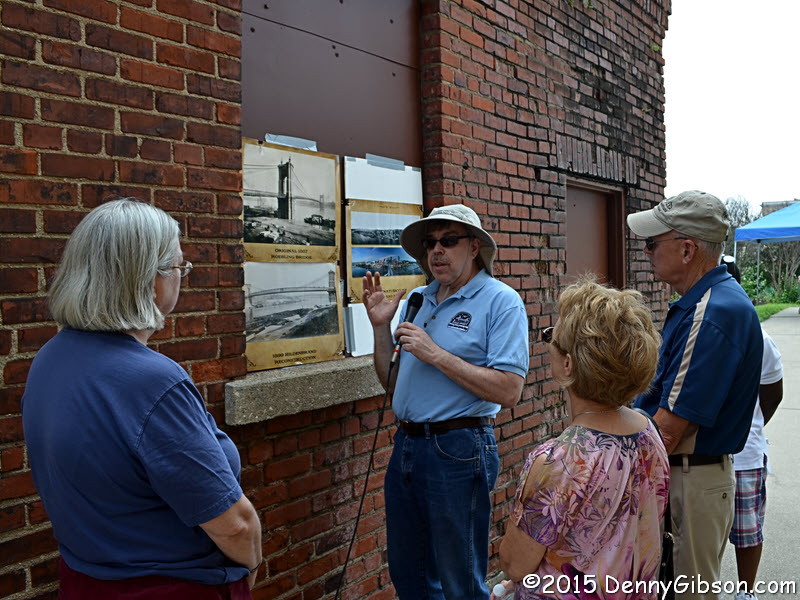
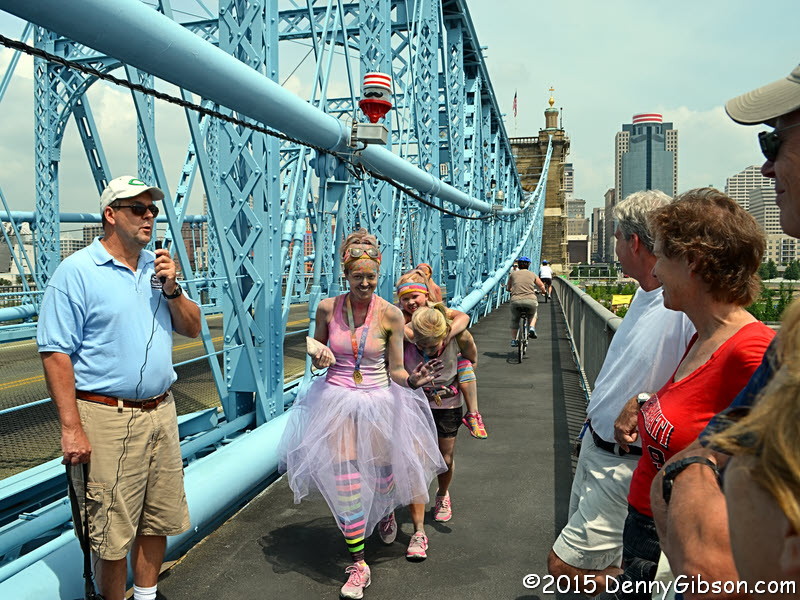
asg-05asg-06John Roebling may appear to be directing attention to the ball park in this article’s first picture but he is really gesturing toward the first bridge to connect Ohio and Kentucky (and the one featured in this blog’s banner). He was responsible for the design and construction of this engineering marvel in the 1860s. This is also the weekend of the 11th annual Roebling Fest which this year has been somewhat blended into the bicentennial celebration. Covington-Cincinnati Suspension Bridge Committee members offer tours of the bridge, the nearby murals, and a number of riverside statues during the festival and, yes, I did learn something. The family in the center of the second photo have just finished a Color Run in which participants become very colorful by the end of the 5K event. Just one more piece of the All-Star party. In the picture’s background, a Roebling Bridge light and the Scripps-Howard building can be seen in their All-Star get-ups.

asg-09asg-08asg-07I had planned on visiting Cincinnati later but, since the bridge tour ended in the middle of the river, decided that I might as well complete the crossing now. Signs of the approaching game are everywhere and preparations continue.

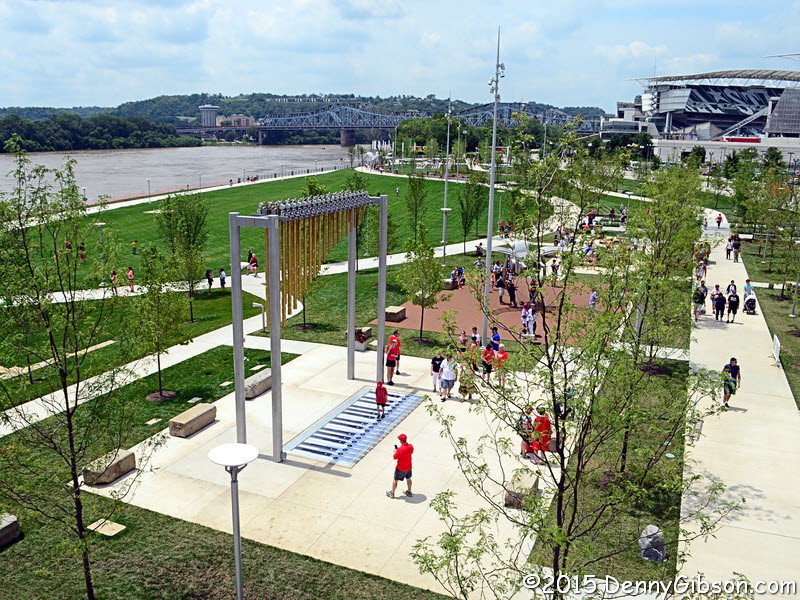
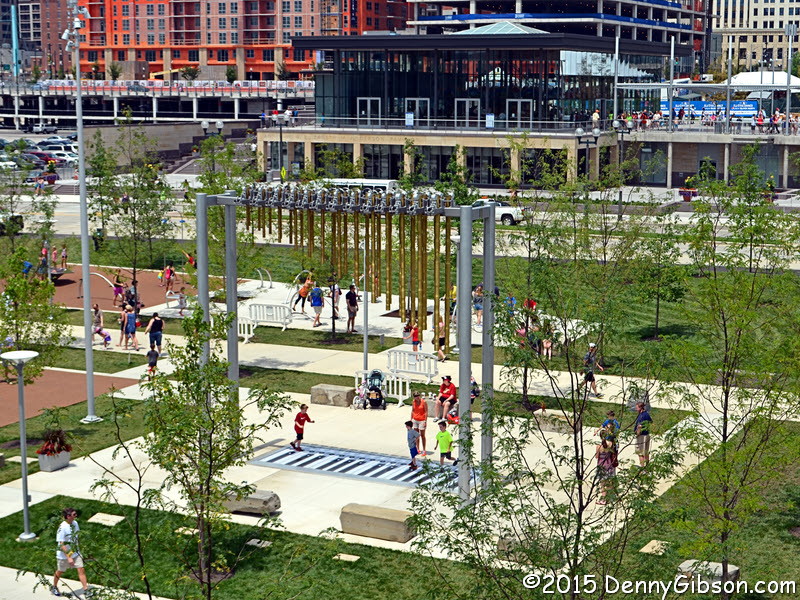
asg-10asg-11I have yet to visit the river level portion of Smale Park but something new catches my eye every time I walk past/over it. Today it was the recently completed chimes. Operated by the big keyboard below them, they have been called the “Riverfront Foot Piano” though I don’t know if that name will stick. The building above and behind the chimes contains Carol Ann’s Carousel which I rode at its official opening. Don’t you wish your city was cool like mine?

Broadside, Northside, Riverside

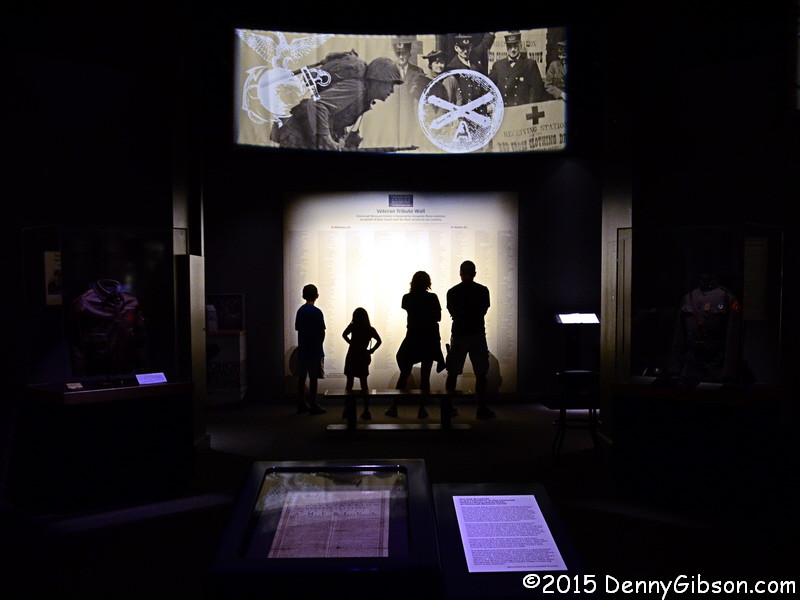
id2015-01There’s something in that display case that is 238 years 11 months and 26 days old. Twelve of America’s thirteen British colonies voted to adopt the Declaration of Independence on July 4, 1776. The thirteenth, New York, had not authorized its Continental Congress delegates to vote on the declaration. On the night of the fourth, Philadelphia printer John Dunlap produced at least 200 copies of the document with one of those copies reaching the New York Provincial Congress on July 9. Before the day was over, New York had joined the other colonies in approving the Declaration of Independence and ordered another 500 copies from New York printer John Holt. The Holt Broadside, as the second printing is known, contains the text of the New York resolution along with the full text of the declaration. Some copies were sent to the Continental Congress back in Philadelphia where it seems they somehow helped in getting the official parchment copy of the Declaration prepared. The signing of that official copy commenced on August 2.
id2015-02A copy of that second printing made it to Cincinnati. One of four copies known to survive, it is in the pictured case. It is believed to have been brought to Cincinnati in 1810 by Richard Fosdick who, in 1815, was a member of Cincinnati’s first town council. The copy has been in the history library’s possession since at least the 1870s but was not recognized for what it is until about five years ago. The Holt Broadside is the centerpiece of the temporary Treasures of Our Military Past exhibit at the Cincinnati Museum Center.

Yesterday was the 239th anniversary of that day when men of courage and vision agreed to “mutually pledge to each other our Lives, our Fortunes and our sacred Honor” in the creation of a new country. The day before was the 239th anniversary of the writing of a letter by John Adams in which he anticipated the happenings of the next day and told his wife that he expected it to be celebrated “with Pomp and Parade, with Shews, Games, Sports, Guns, Bells, Bonfires and Illuminations from one End of this Continent to the other from this Time forward forever more.”

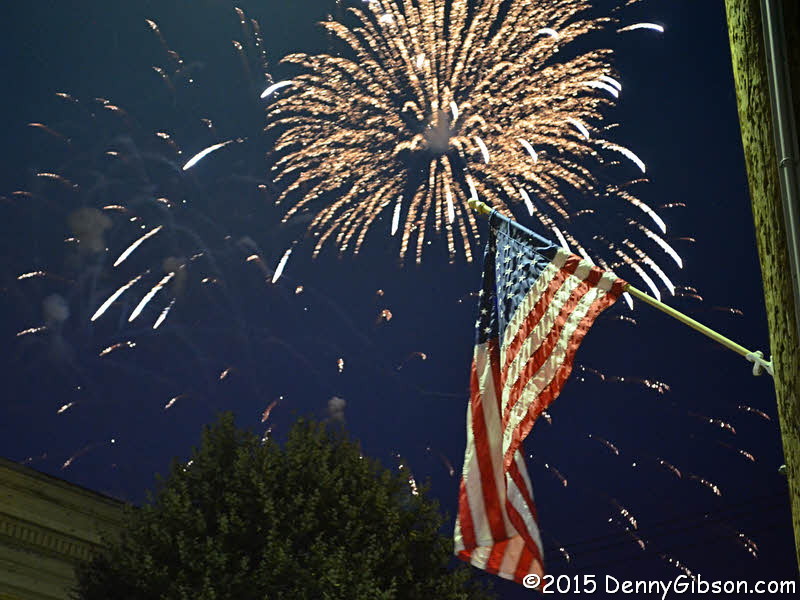
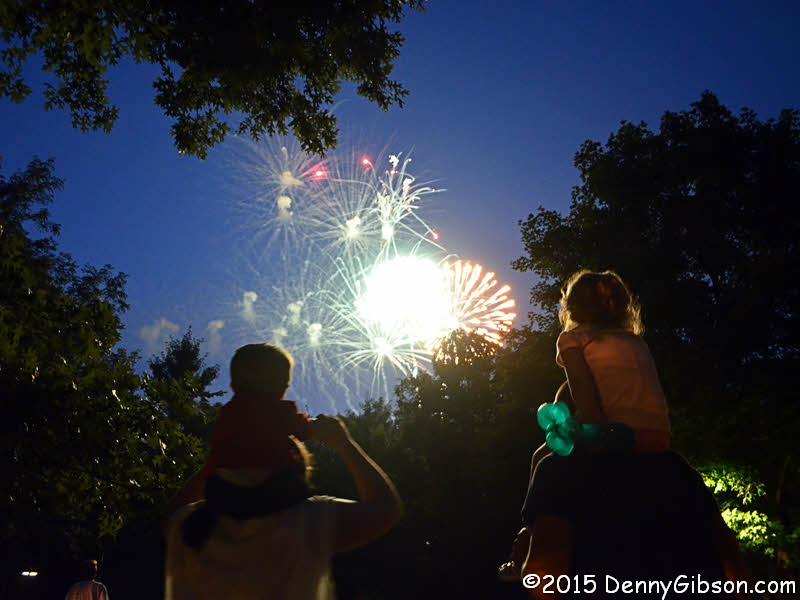
I tried to do my share. I’ll admit that I didn’t actually go looking for guns and I gave up quickly on finding any bonfires. It’s even possible that the only bells I heard were electronic but I saw plenty of games, sports, and shews. I saw two parades, a fine set of illuminations, and there was pomp everywhere.
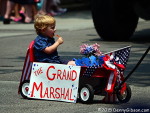
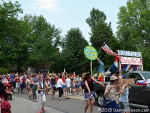
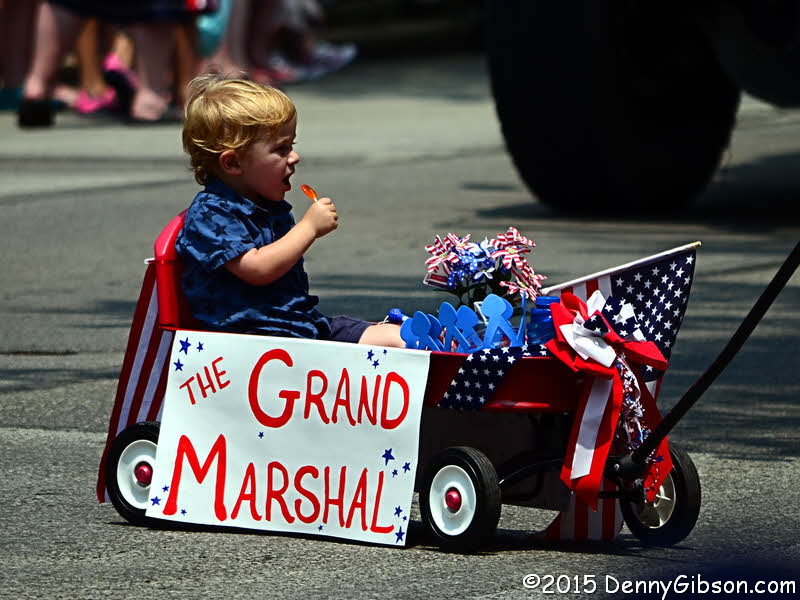
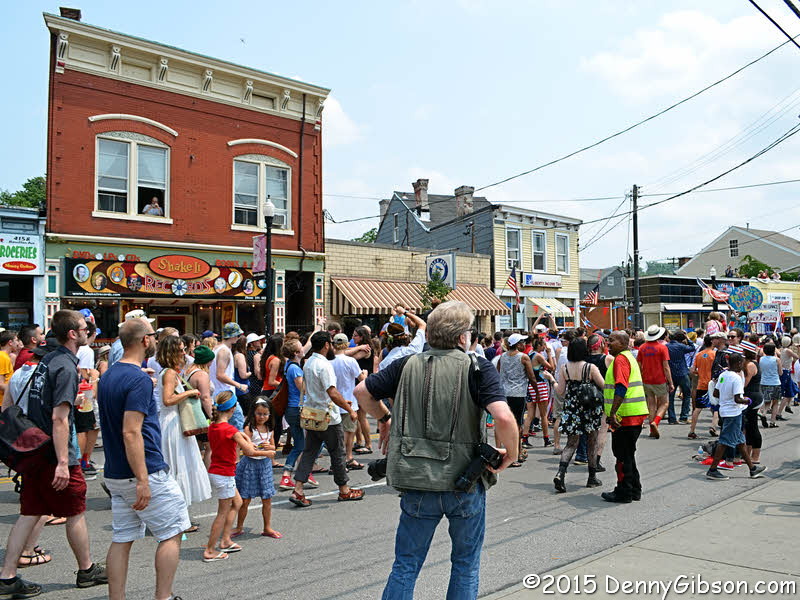
nsp2015-01There was no shortage of parades in the area. Picking one wasn’t easy but I have absolutely no doubt that I picked the right one. Northside’s first 4th of July parade happened in 1864 when orphans were moved from downtown to a new orphanage by canal boats with members of the Turners, Oddfellows, Butchers Association, Bricklayers Society, and the Catholic Orphans Society marching alongside. The parade developed into a fundraiser that continued until the 1960s when the orphanage again moved. It was restarted in 1970. This year’s Grand Marshall was two-year-old Quincy Kroner who received some national attention after meeting the garbage collectors he admired. The event website is here.
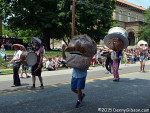
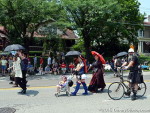
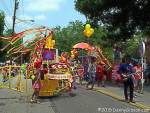
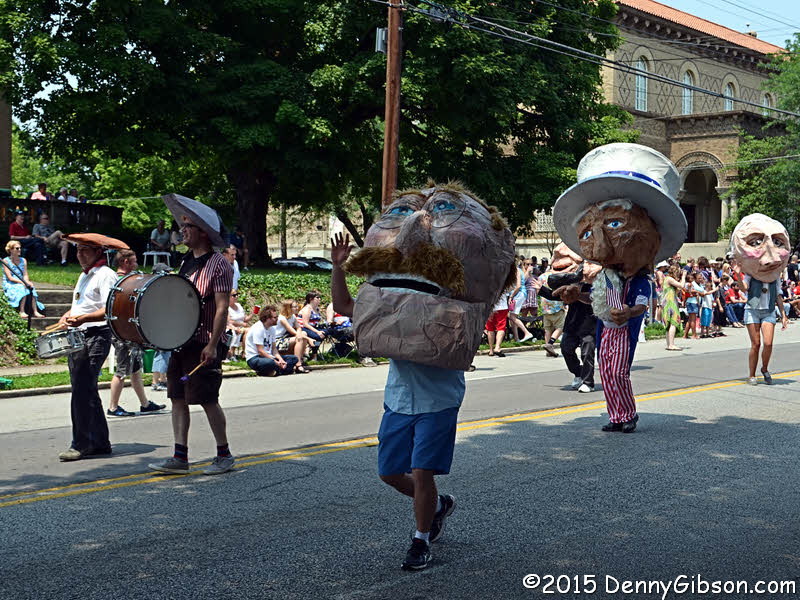
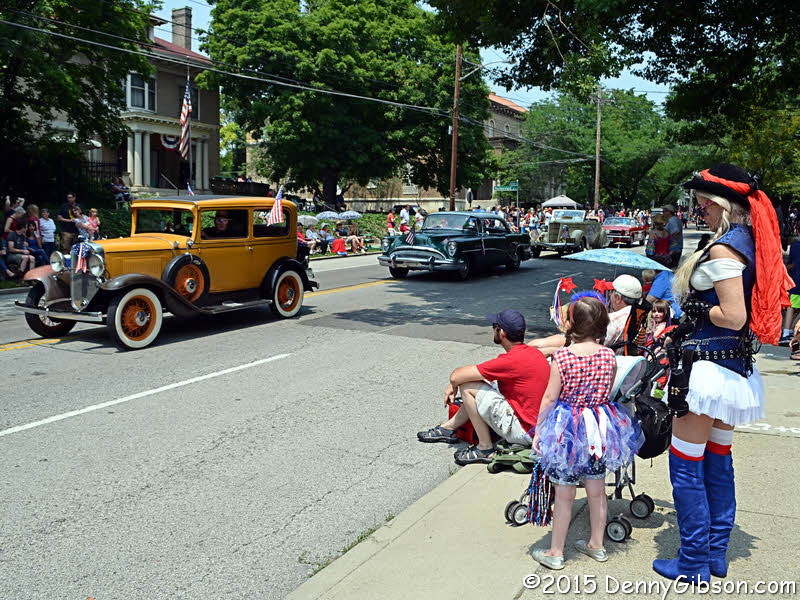
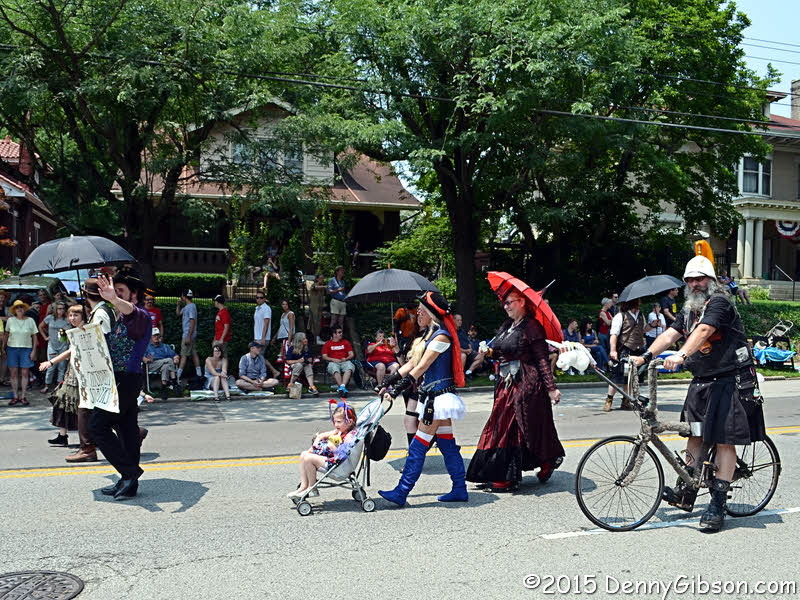
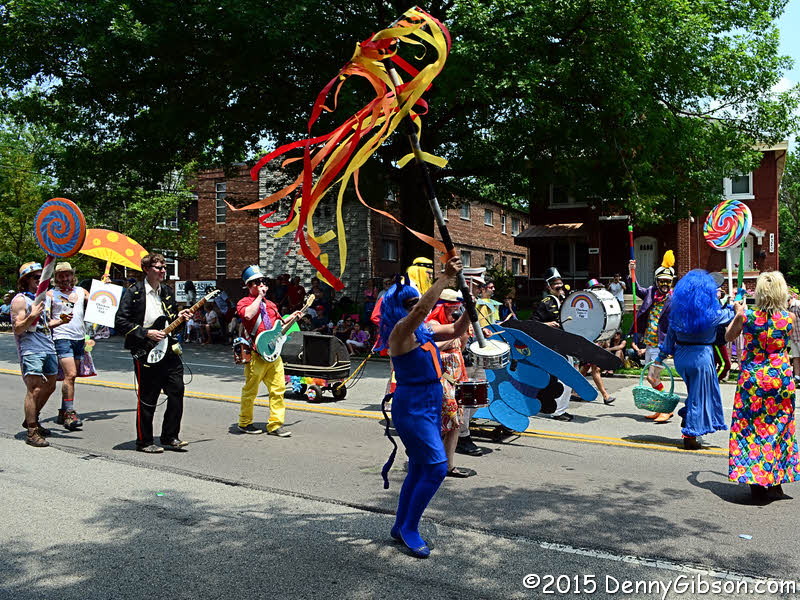
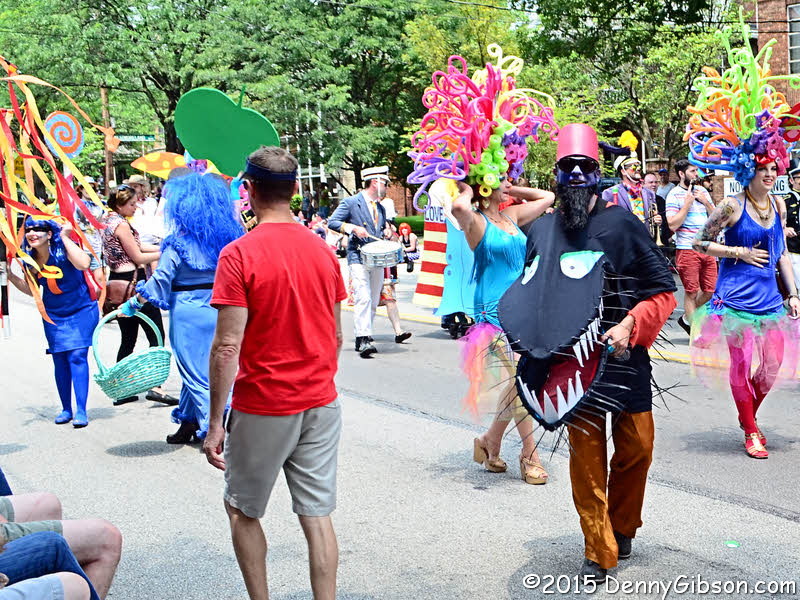
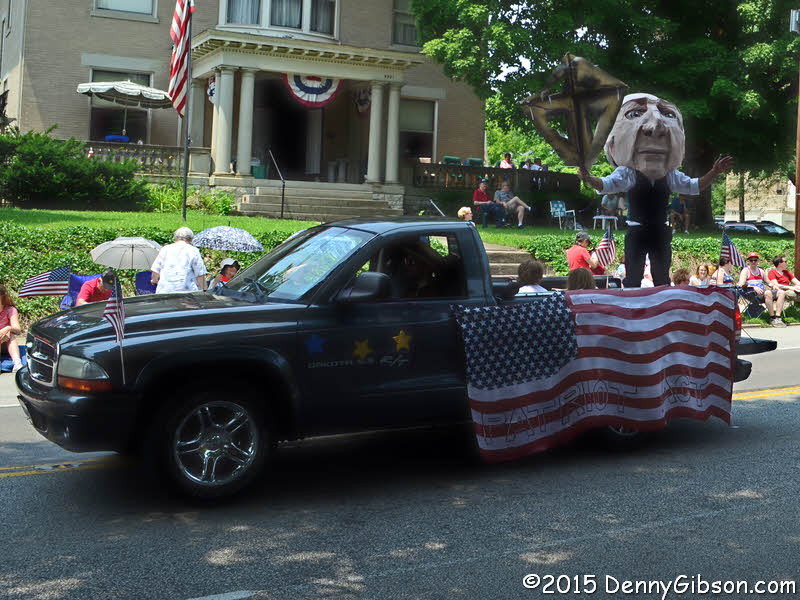
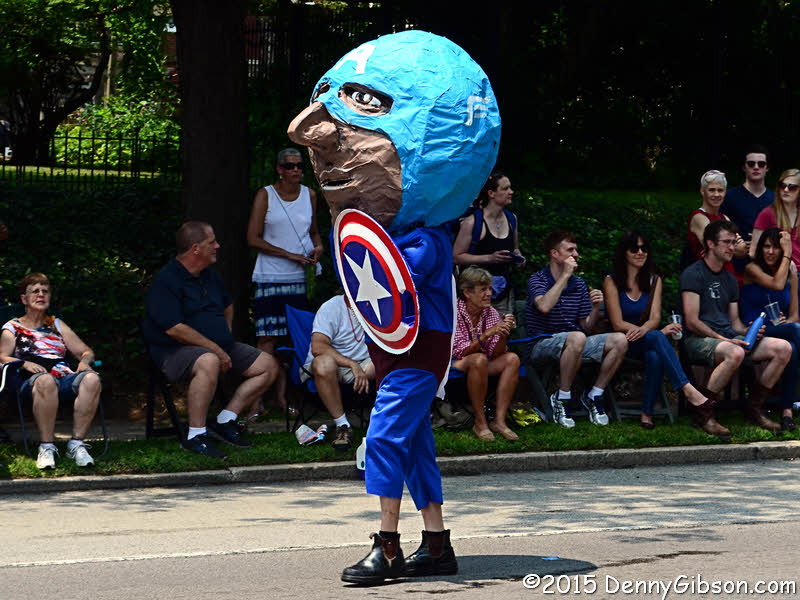
nsp2015-02nsp2015-03nsp2015-04Picking parade pictures from my 200+ was even tougher than picking the parade. I didn’t quite manage to trim them down to a reasonable number so here’s the start of an unreasonable number. I liked the big headed Spirit(s) of ’76 and Ben and Captain America, too. The patriotically attired lady next to me was not at all out of place as a spectator but she was there for a higher purpose. When the local steam punk group came by, she pushed the stroller forward and stepped right in.
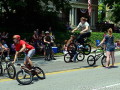
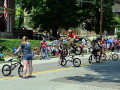
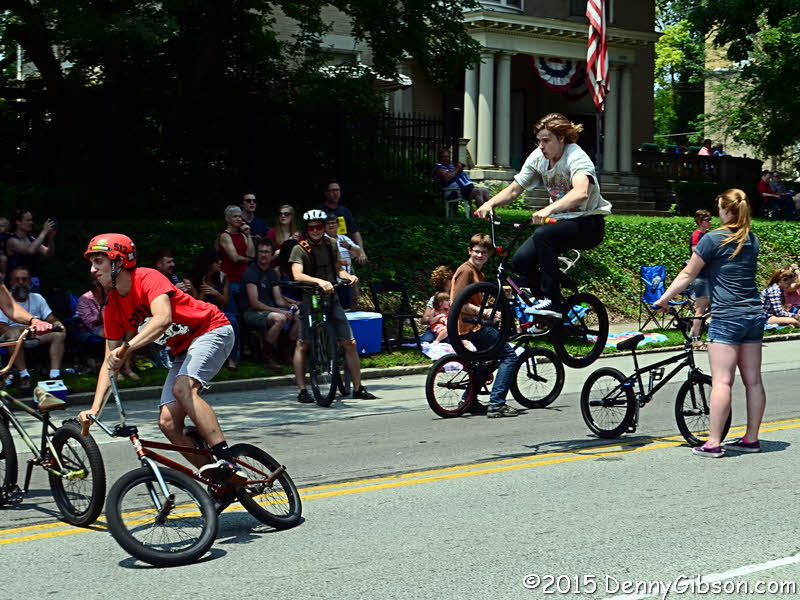
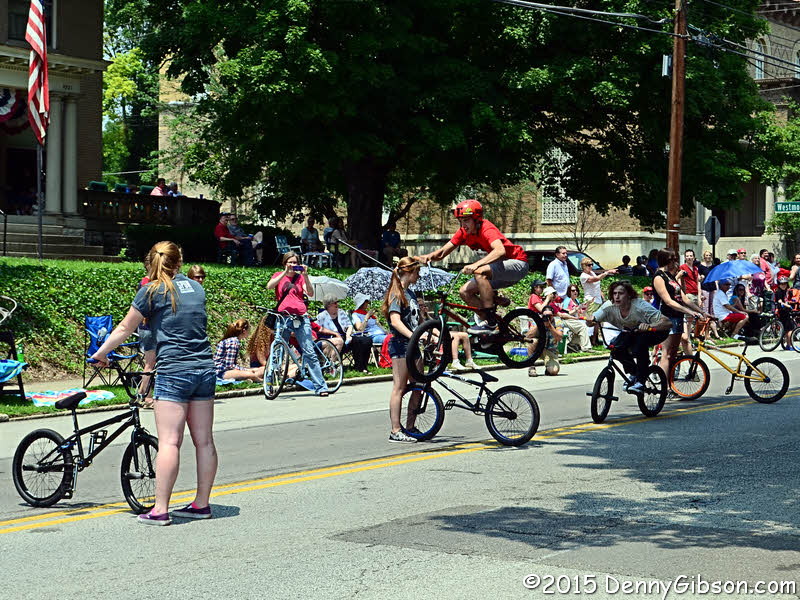
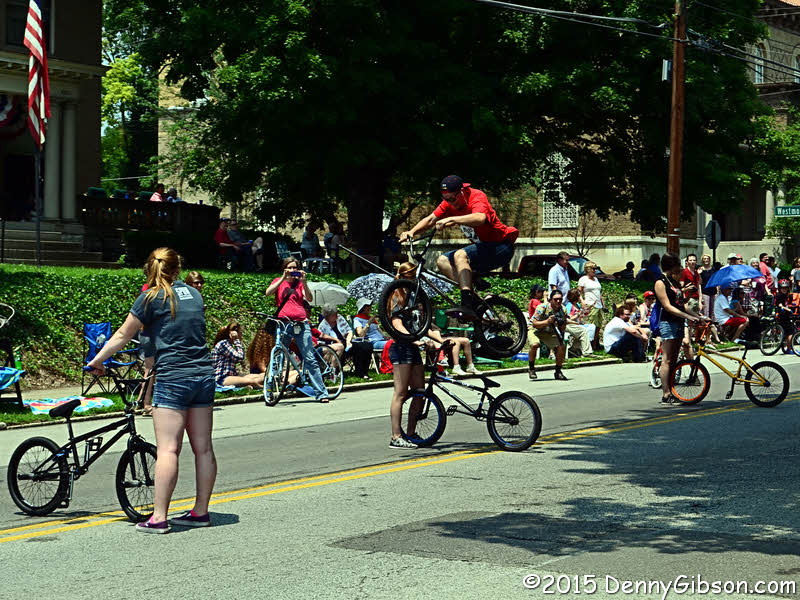
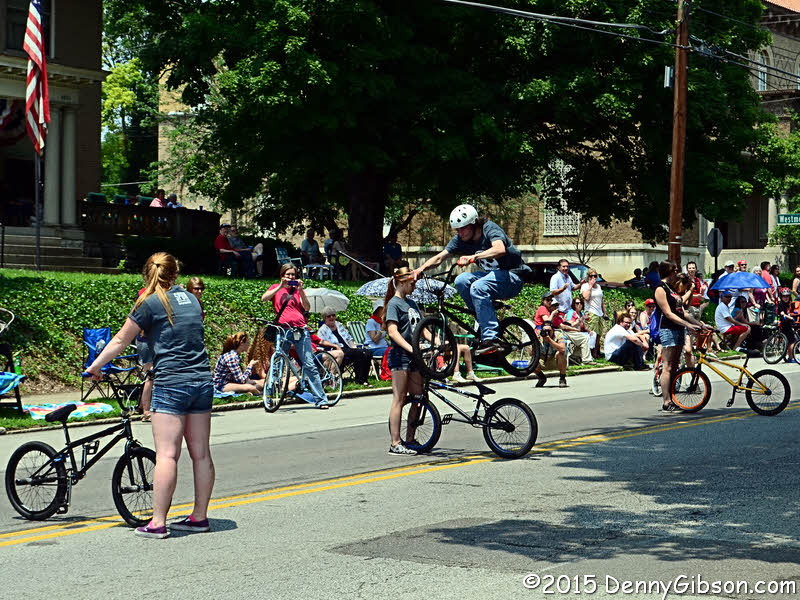
nsp2015-08nsp2015-07nsp2015-06nsp2015-05When a portion of this cycling group started placing their bikes sideways down the center of the street, I expected some sort of slalom maneuver but noooo.
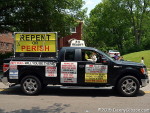
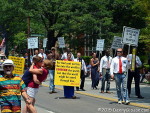
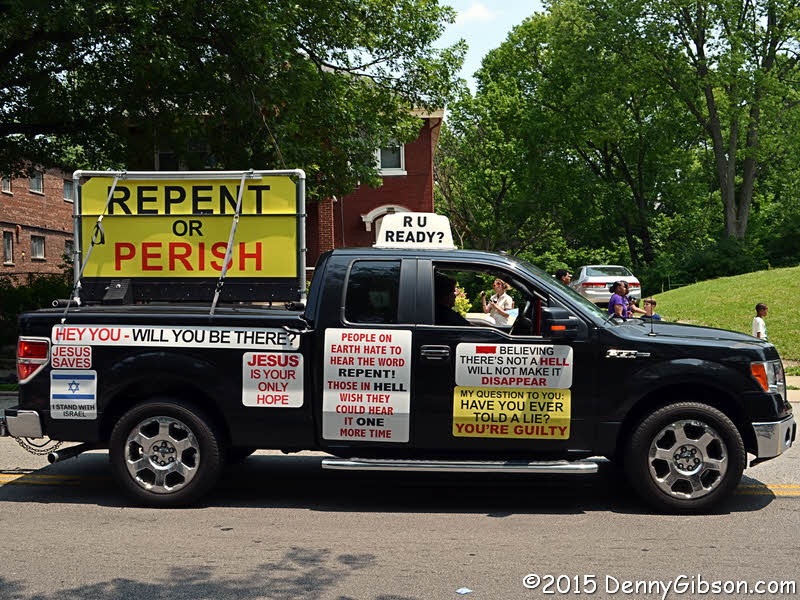
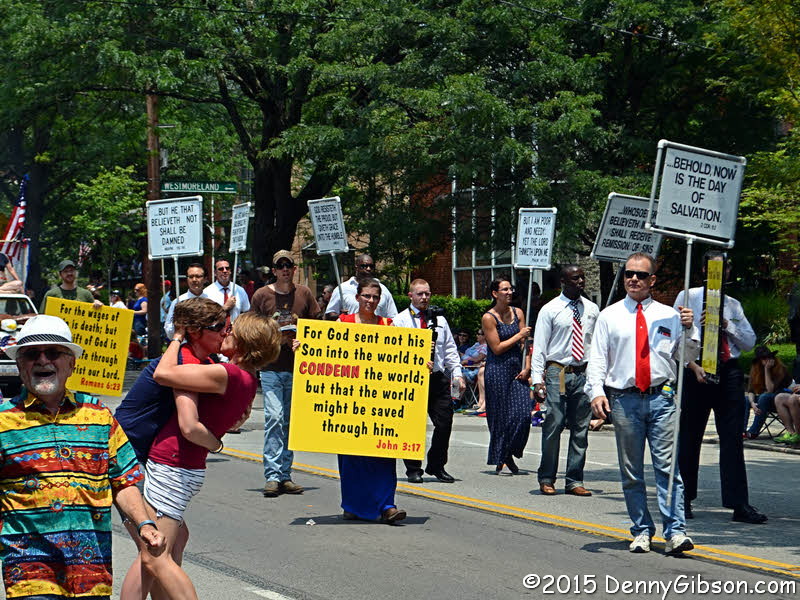
nsp2015-09nsp2015-10Someone told me that this same group marched in Cincinnati’s Gay Pride parade last month and much of the crowd simply turned their backs as they passed. It seemed that few did that today and, in my case, by the time I’d read all the signs, there was little point in turning. “I STAND WITH ISRAEL”, JESUS IS YOUR ONLY HOPE”, “…BEHOLD, NOW IS THE DAY OF SALVATION”.
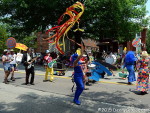
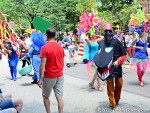
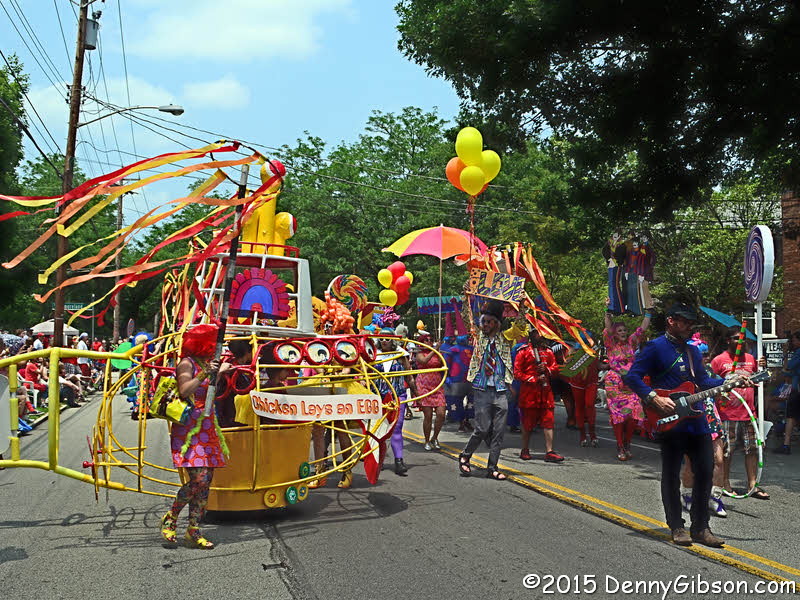
nsp2015-13nsp2015-12nsp2015-11I believe this was my favorite parade entry. Essentially a live performance of Yellow Submarine with a Beatles soundtrack, it seemed to have it all. “Full speed ahead, Mr. Parker, full speed ahead!”
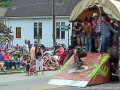
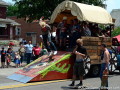
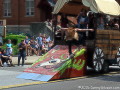
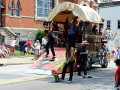
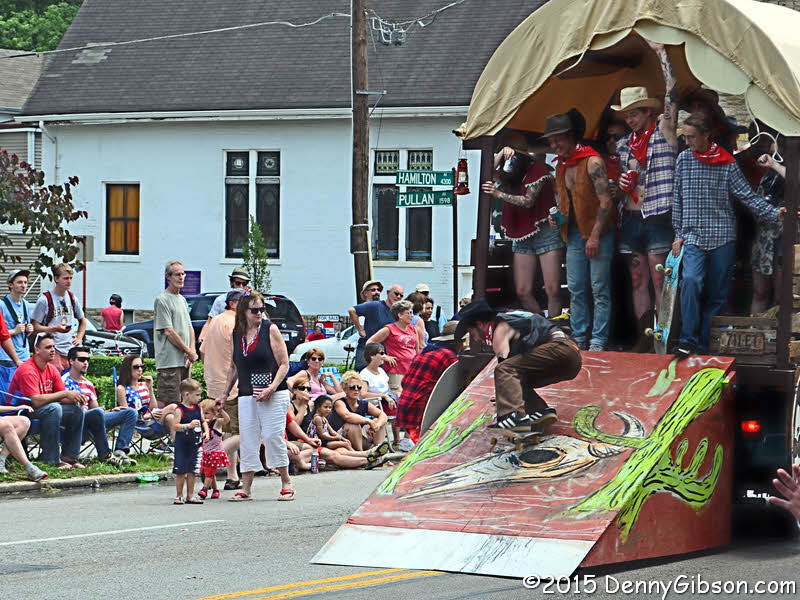
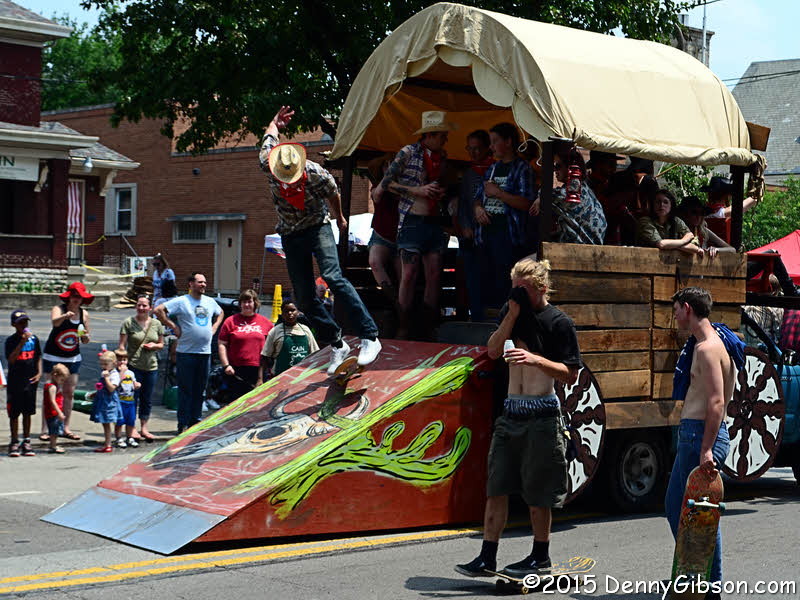
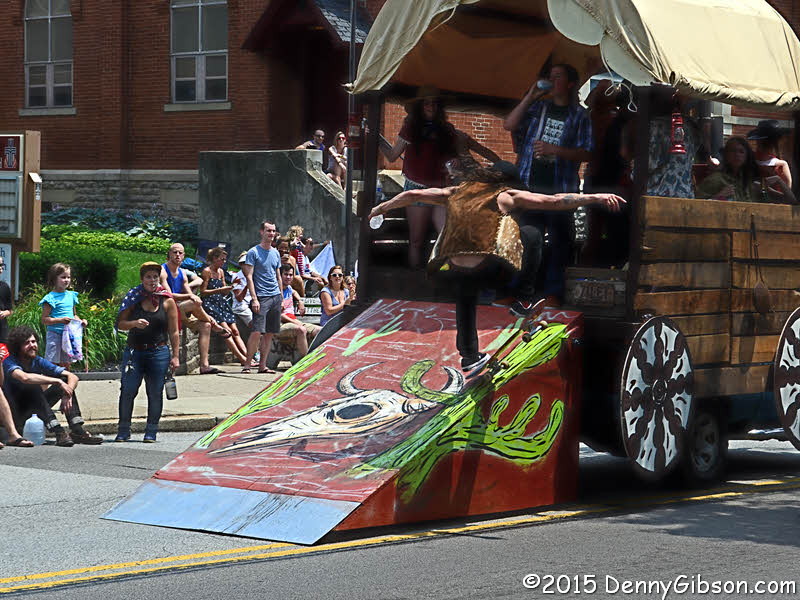
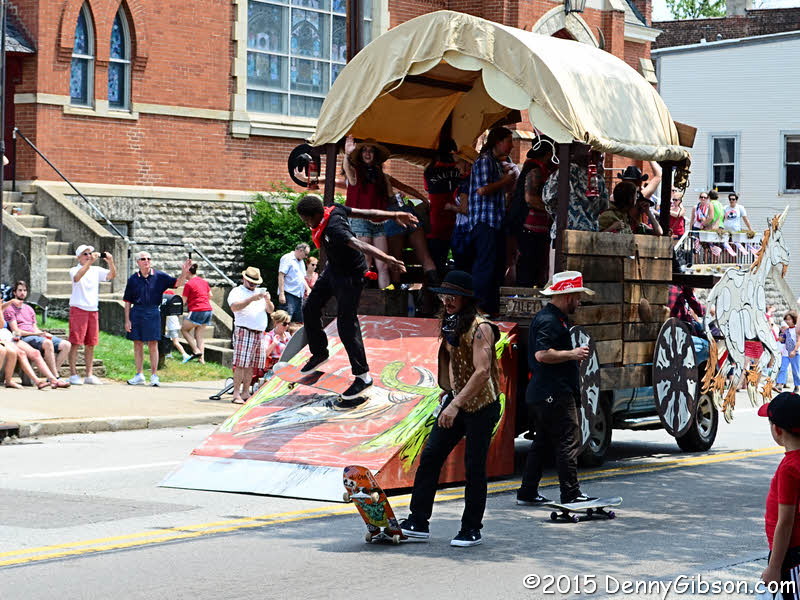
nsp2015-14nsp2015-15nsp2015-16nsp2015-17It might not have been quite as thrilling as the folks jumping over each others’ bikes, but these skateboard cowboys still put on a pretty exciting show with their moving ramp.
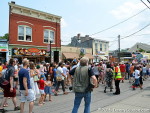
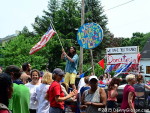
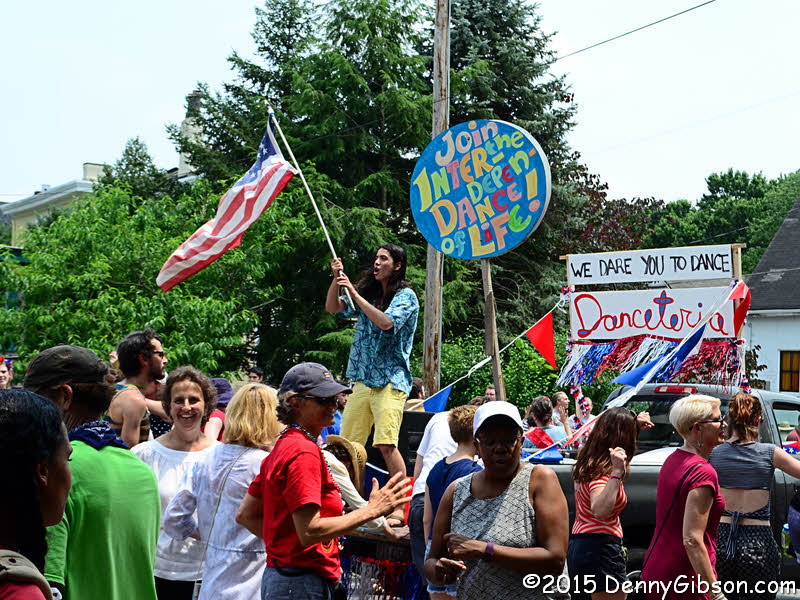
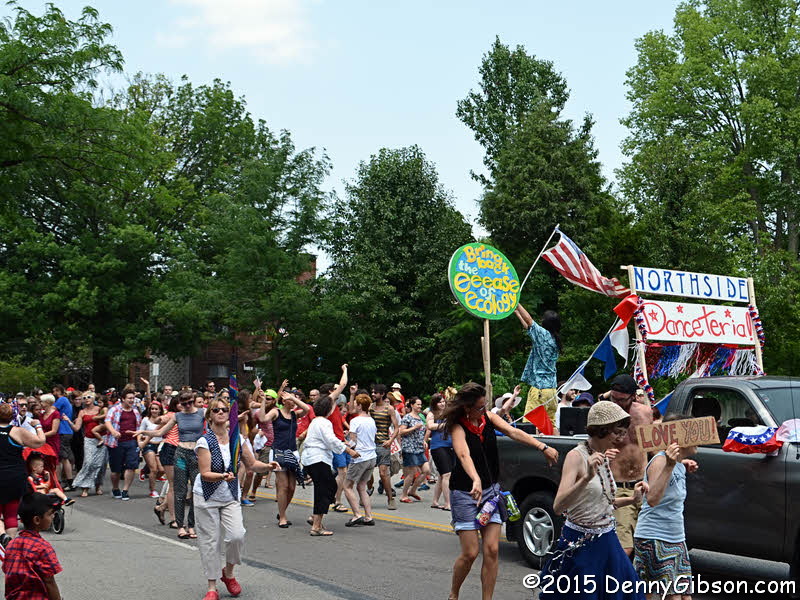
nsp2015-20nsp2015-19nsp2015-18Lots of people accepted the “Dare to dance” challenge of the parade’s last float. Dance music blared as a street full of happy folks danced and smiled their way to the end point.
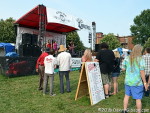
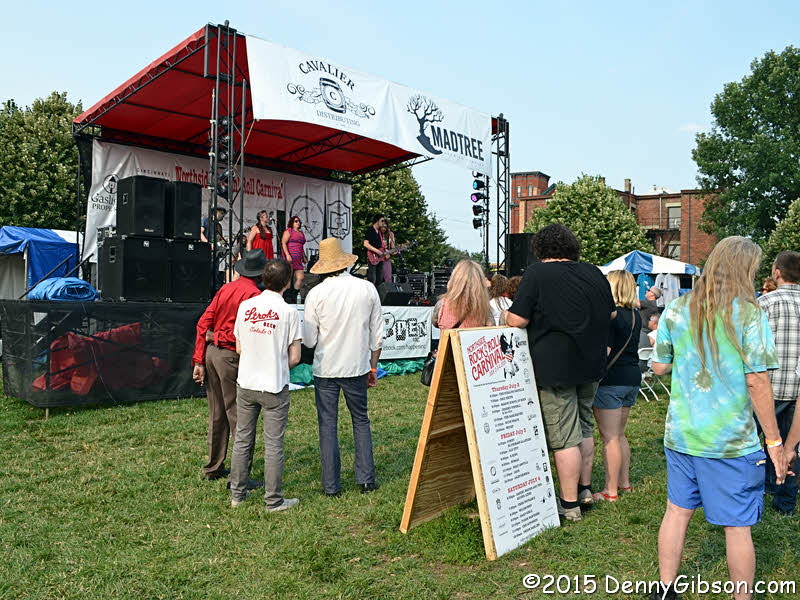
nsp2015-21The end point was at the Northside Rock n’ Roll Carnival in Hoffner Park with twenty-one bands over three days. That’s “Daniel Wayne and the Silver Linings” on stage. The Stroh’s shirt is a bonus. As a similarly aged friend observed, the parade and carnival do sort of have a ’60s feel. It’s not a “we’re wearing beads and tie-dye” feel but a “we’re having fun and caring about stuff” feel.
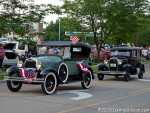
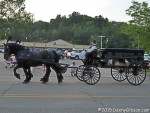
lff2015-03lff2015-02lff2015-01I headed to Loveland for some fireworks and was pleasantly surprised to get there in time to catch part of another parade. It’s a little smaller and a bit more traditional than the one in Northside but it was still quite cool in its own way.
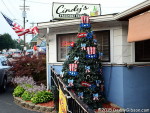
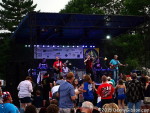
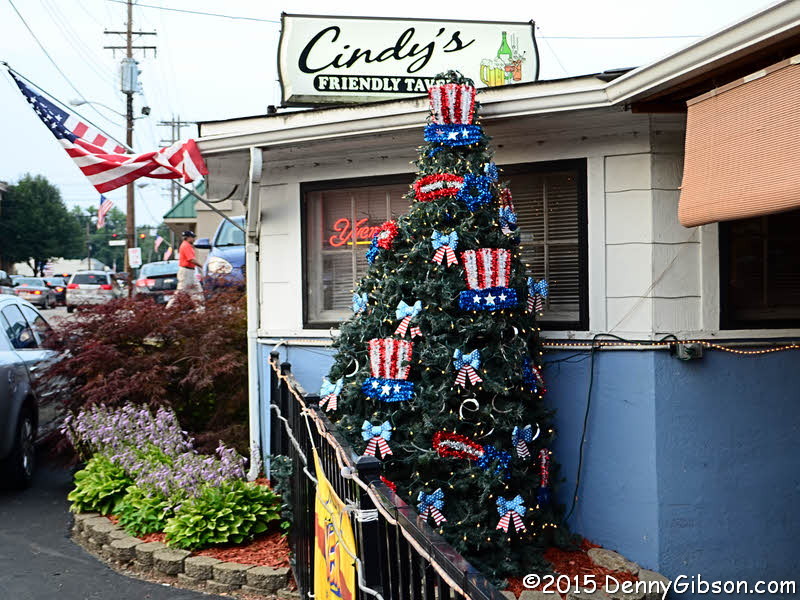
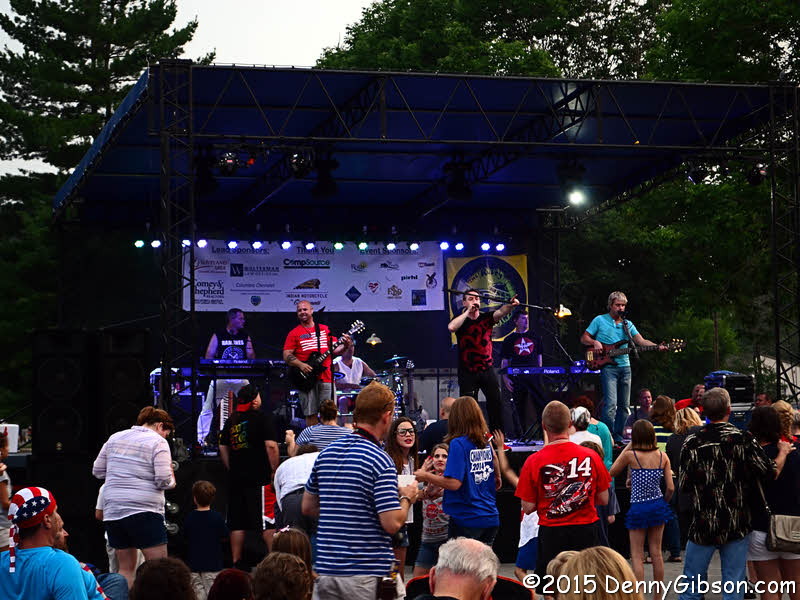
lff2015-04lff2015-05lff2015-06On the way to a fireworks viewing spot, I snapped a picture of Cindy’s holiday tree and the festival stage. Entertainment for Loveland’s Firecracker Festival included the Rusty Griswolds.
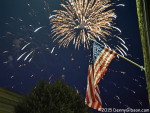
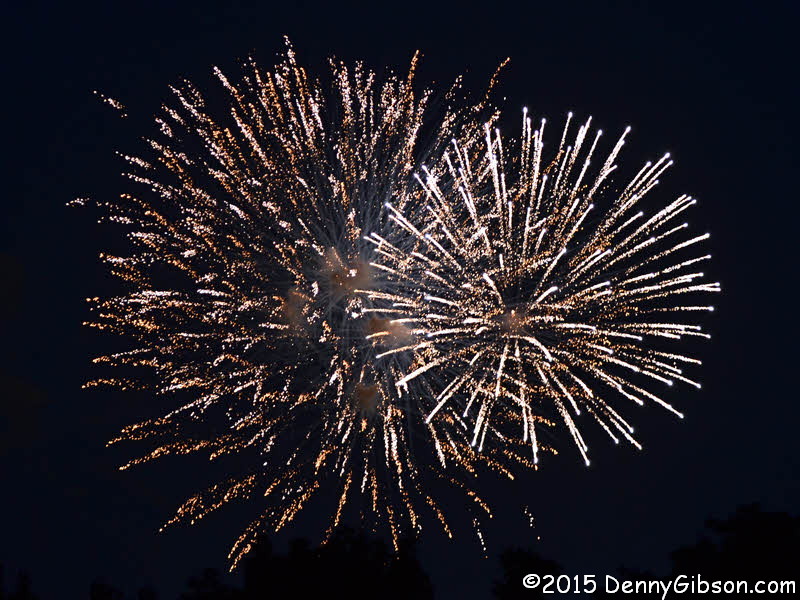
lff2015-09lff2015-08lff2015-07Loveland is the home of Rozzi’s Famous Fireworks so the city usually has a pretty decent “illumination” above the Little Miami River. This year’s grand finale didn’t seem all the grand but the overall show was quite good. Mr. Adams, I’m happy to report that we appear to still be observing this most important day pretty much the way you envisioned. I’m even happier to report that, at least in Cincinnati’s Northside, a little independent thinking can still be observed on Independence Day.

If the Phone Don’t Ring

avf1Nobody sees the trouble I’ve known. Maybe not nobody, exactly, but not many. There are two primary RSS feeds published by this site. One is for this blog. The other is for the trip journal. Among the many ways of subscribing to these feeds is a service called Feedly. It is well done and popular. It is the RSS reader I use. If I didn’t, I wouldn’t have seen the trouble myself.

People subscribe to feeds through Feedly and Feedly periodically fetches current copies and makes them available in a convenient and personalized manner. Feedly users can read and manage dozens or hundreds of uniformly presented feeds without dealing directly with the individual providers. It’s a fairly common producer to broker to consumer arrangement.

Back in March, I noticed that some of my posts were failing to show up in Feedly even after several days. A fairly convoluted email exchange between me, Feedly, and Arvixe, my hosting provider, followed. It was eventually discovered that Arvixe was blocking Feedly and the block was removed. Because of the asynchronous nature of Feedly’s polling and of RSS in general, things were not instantly fixed but caches, buffers, clouds, and other nebulous cyber-things eventually worked through their stockpile of bad-stuff and started working properly again.

Unless you were paying close attention to dates and time stamps, you might not have realized there was any sort of problem at all. The screen capture at the top of the article is from an attempt to subscribe to a blocked feed through the Feedly Google Chrome plugin. Existing subscribers would have seen nothing; No new posts and no error messages. For those unfamiliar with RSS, think of the problem as somewhat similar to a friend trying to call you with a broken phone or service. Your phone doesn’t ring but you don’t know that it should so see no problem. Even the friend may not see a problem if the failure shuttles them to a voice mail system. You only become aware of the issue when the friend confronts you in a bar about never returning their calls.

The problem resurfaced during the first half of June and this time, after about a week of that convoluted email three-way, I learned of a fourth player in the game. Arvixe uses a security product called BitNinja. Something about Feedly’s access tripped BitNinja’s defenses and a block was activated. Unknowing Arvixe technicians repeatedly removed the block only to have it reappear a few hours later. Once in awhile, the short-lived removal and Feedly’s polling lined up so that posts would slip through. They might appear in a clump and they would have the current rather than publication date but they could be seen by subscribers.

When I first learned of BitNinja’s role, I urged Arvixe to configure their installation to have the security service treat Feedly as a good guy. They, for valid reasons, declined. I also pressed them for a description of what specific aspect of Feedly’s access raised BitNinja’s hackles. Near the beginning of the episode, Feedly had suggested they might be able to alter their behavior if specifics were available. Not being privy to BitNinja’s inner workings, Arvixe could not supply those specifics. Although it was Arvixe who first mentioned it, I suspect all of us thought of it about the same time. Feedly needed to deal with BitNinja directly. The problem might not be limited to my website or even to all Arvixe hosted websites. The risk of Feedly being blocked could exist everywhere BitNinja was being used.

Feedly did contact BitNinja directly and, while I don’t know the details of the exchange, I do know that it resulted in BitNinja removing “a too strict log analyzing rule” about a day later. That was just over a week ago and since then my feeds seem to be flowing through Feedly as they should.

Maybe we should have dug a little deeper in March and it would have been nice if we had not thrashed about for a week in June. There were times when I thought Arvixe could have been more cooperative and Feedly more responsive. I don’t think anyone involved is a candidate for Trouble Shooter of the Year but neither do I think anyone screwed up horribly. I can’t be certain that the same problem won’t pop up again in a couple of months though I’m positive that some problem will pop up someday. This episode has increased my confidence that, when it does, these vendors — Feedly, Arvixe, & BitNinja — will get it sorted eventually. It would be nice is the next problem is as invisible to readers as this one was but I’m not going to count on it.

Incidentally, this post’s title comes from a Wheels song that, in case you don’t remember it, is here.

Concours Caravan

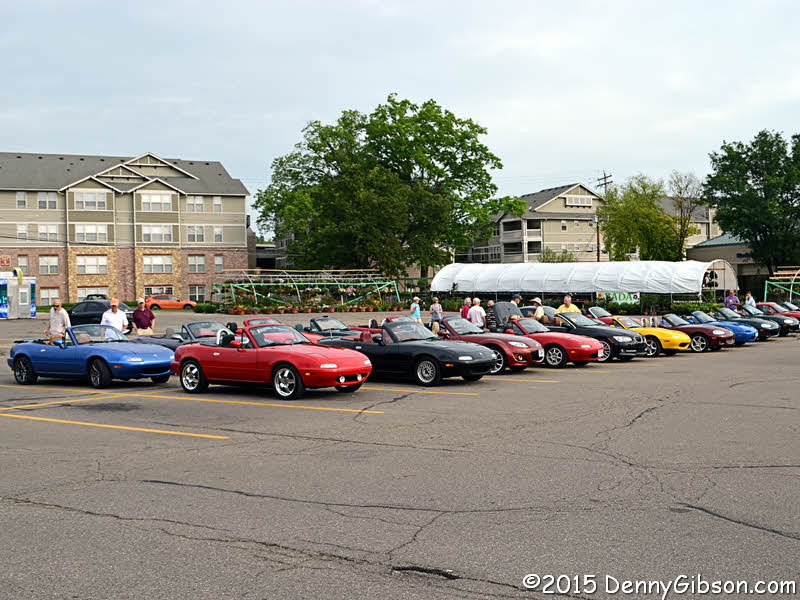
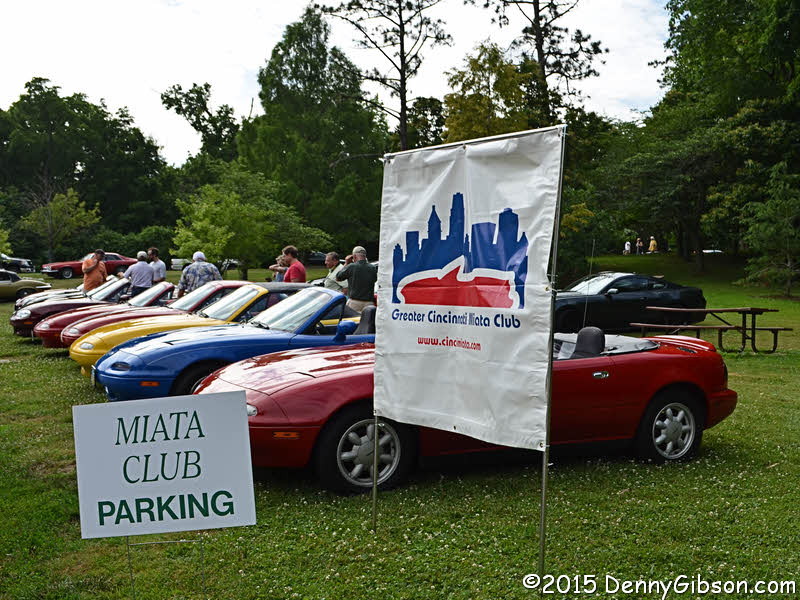
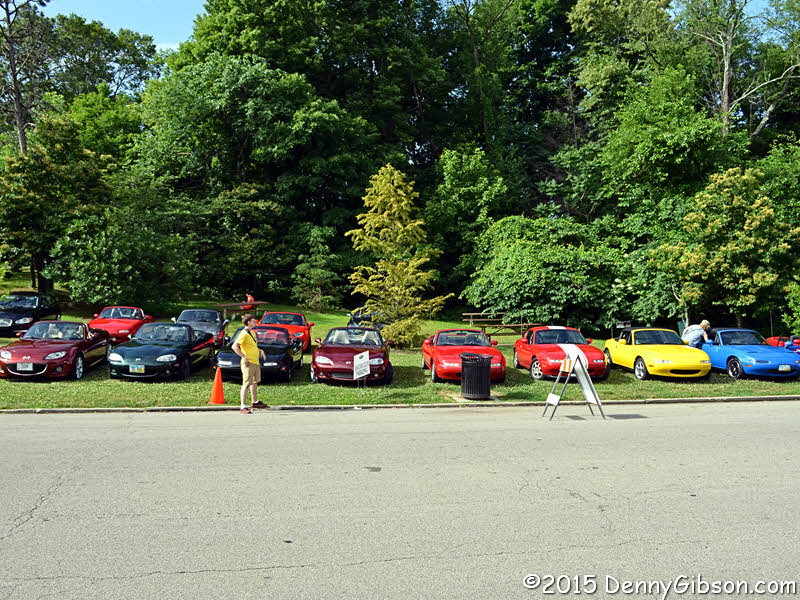
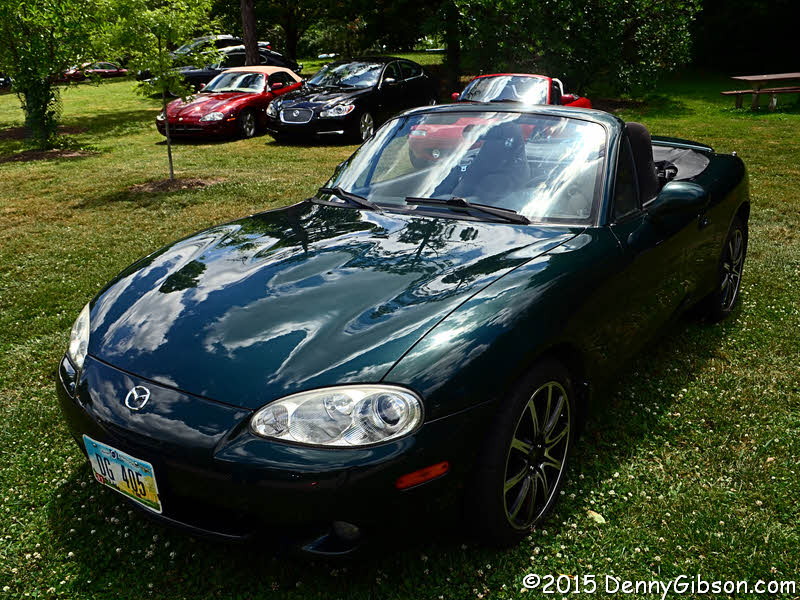
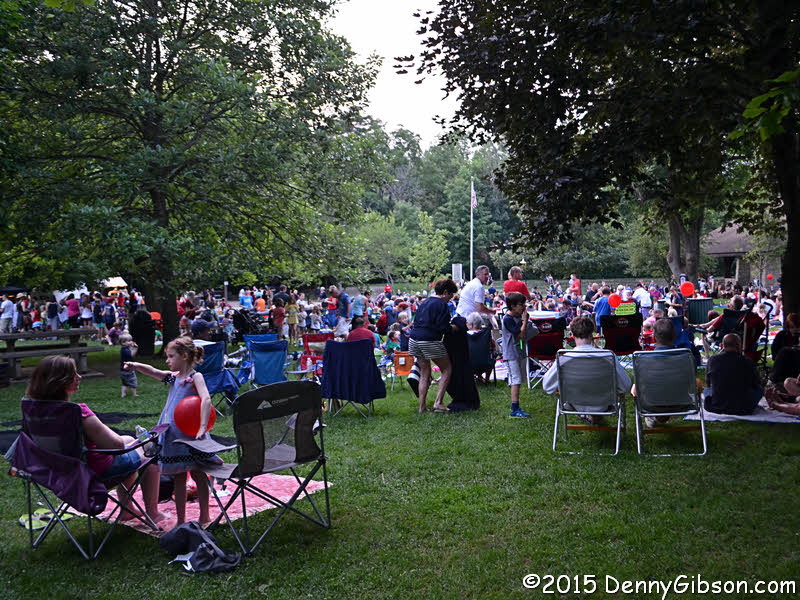
concours15_01I became a Mazda Miata owner in May of last year and joined the Greater Cincinnati Miata Club almost immediately. I was a member in time for the club’s 2014 Ault Park Concours d’Elegance outing but missed it because I was already on the way to the Lincoln Highway Association conference in Tooele, Utah. I attended a couple of meetings during the year but other activities kept me away from club outings until the concours rolled around again. This year my friend Clyde and I were able to meetup with another twenty GCMC Miatas plus seven more from the Dayton area Miami Valley Miata Club for a colorful caravan to the June 14 show.

concours15_02concours15_03Benefits of attending with the club include discounted admission and a group parking area very near the main entrance. Everyone arrived pretty much on time, we departed on schedule, and cruised to the park without incident. Hmmm… Wonder if that’s typical Miata behavior. As a result, we had time to spare before the gates opened.

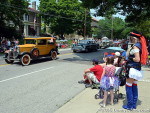
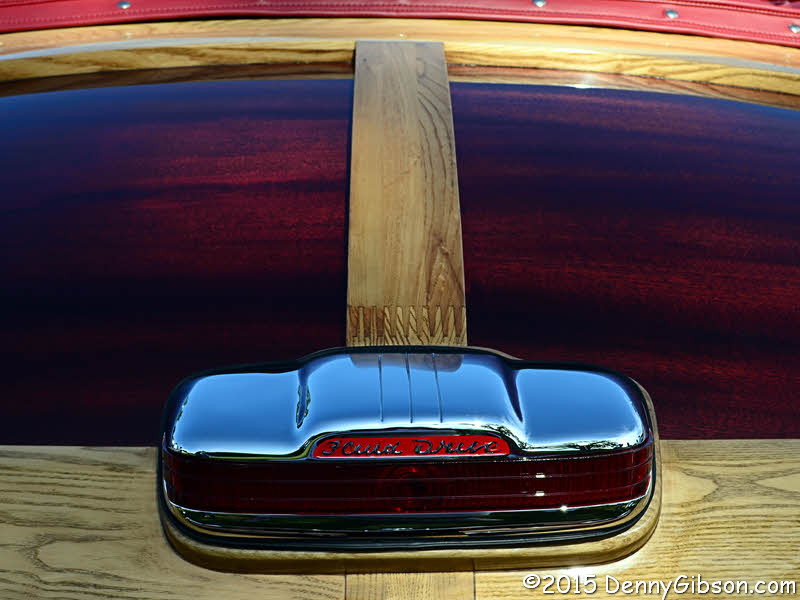
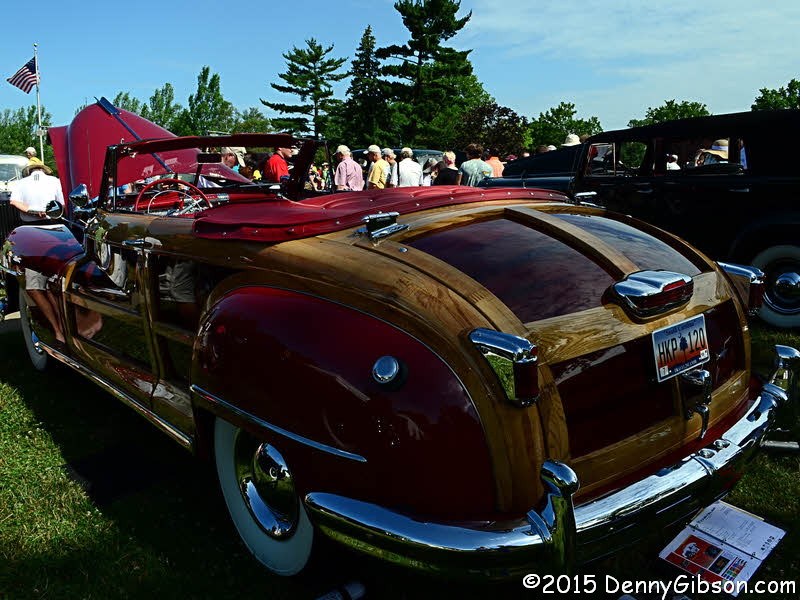
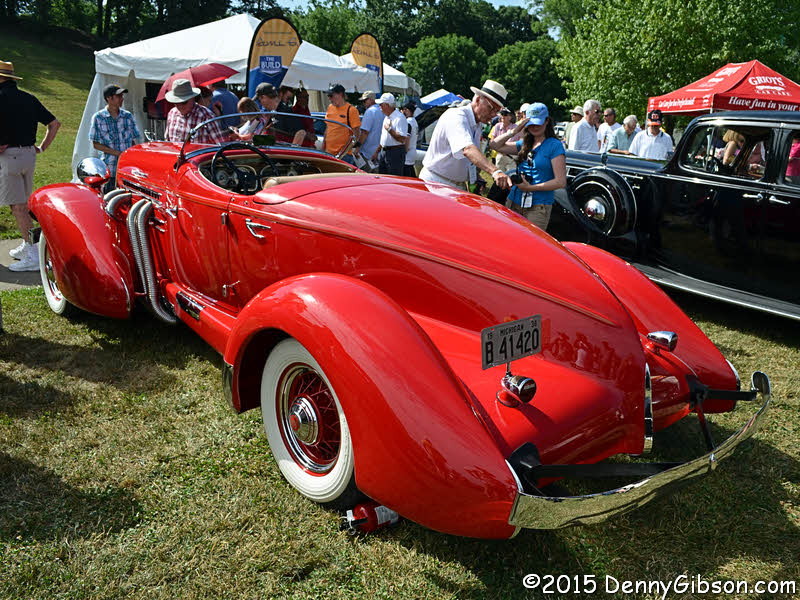
concours15_06concours15_05concours15_04There were ten “must see”s identified in the program and — due to show layout and not our careful planning — we saw two of them almost immediately. The bright red beauty is a 1936 Auburn 852 Boattail Speedster. The 1947 Chyrsler Town & Country Convertible not only has wood trim but there is wood veneer on the metal trunk panels. The Chyrsler and I are the same age but it sure looks a lot better than I do.
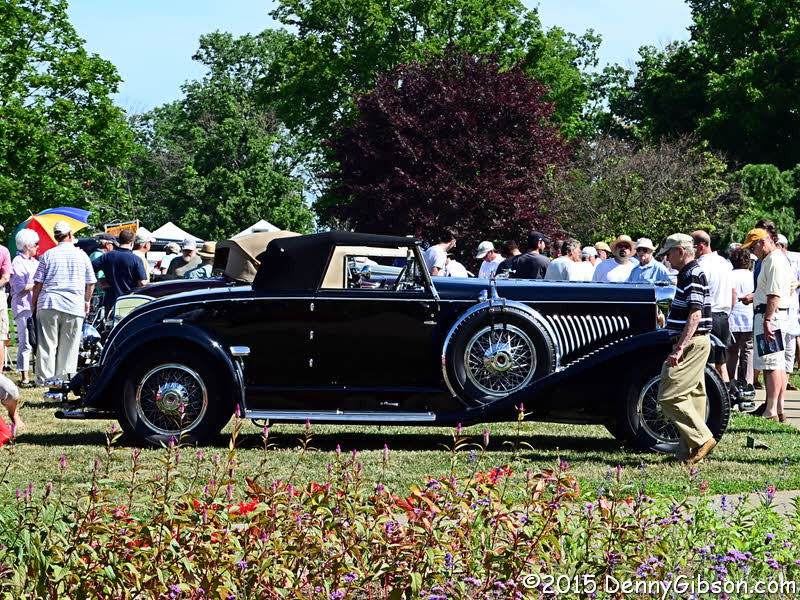
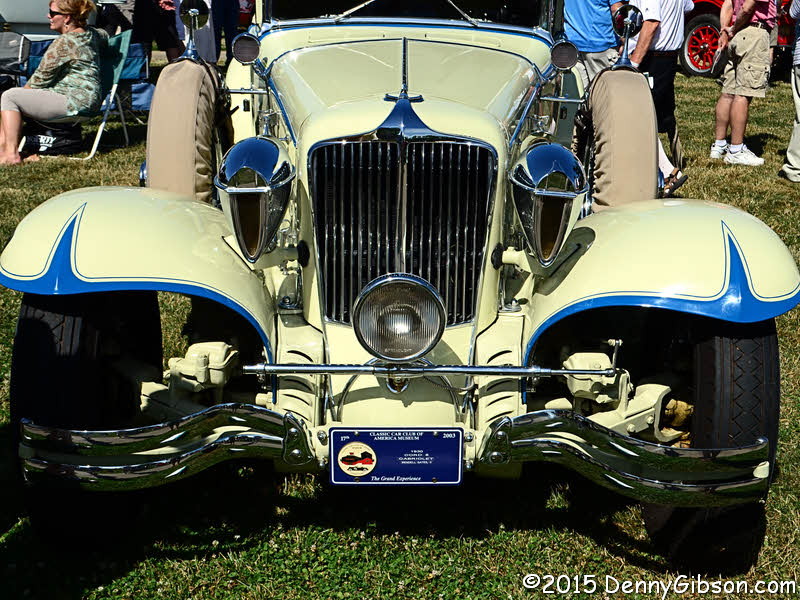
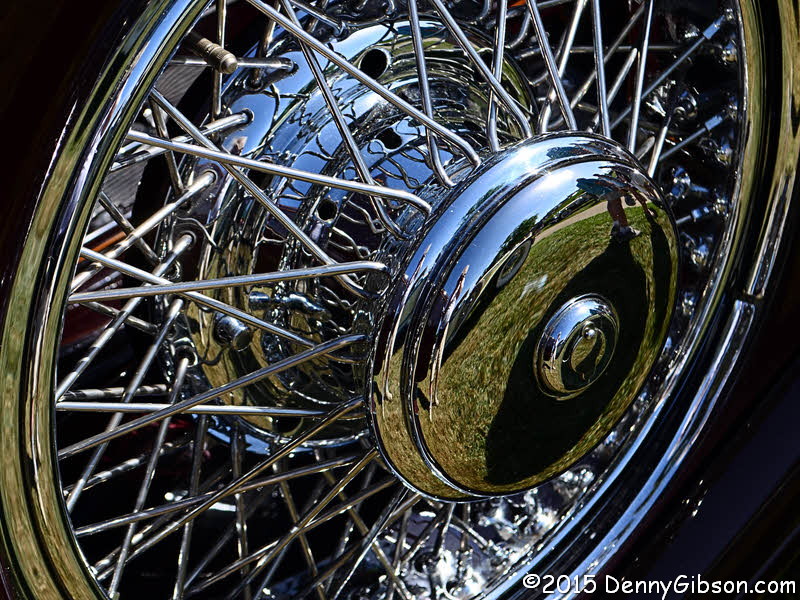
concours15_07concours15_08concours15_09I was hardly diligent in either my picture taking or in identifying what it was that I did take pictures of. The imposing black car is a Duesenberg though I don’t know what year or model. Likewise, I know the yellow car is a Cord but that’s about it. I don’t even recall the make of the car that the pictured wheel belongs to. I believe it was one of two spares and there were four identical wheels on the ground. There were many other cars with a half dozen spoked wheels as well as some with five or four. I took the picture of the wheel because it was while looking at it gleam that I was struck by just how much spoke polishing a concours requires.
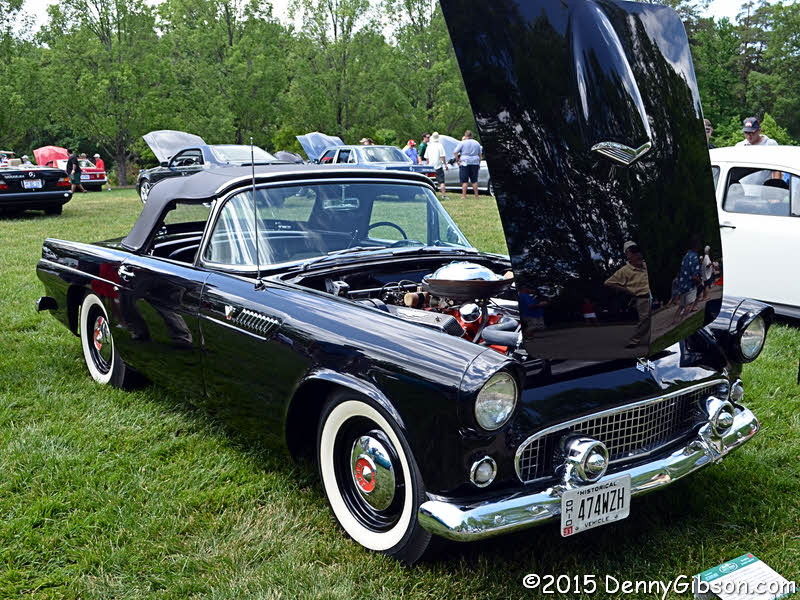
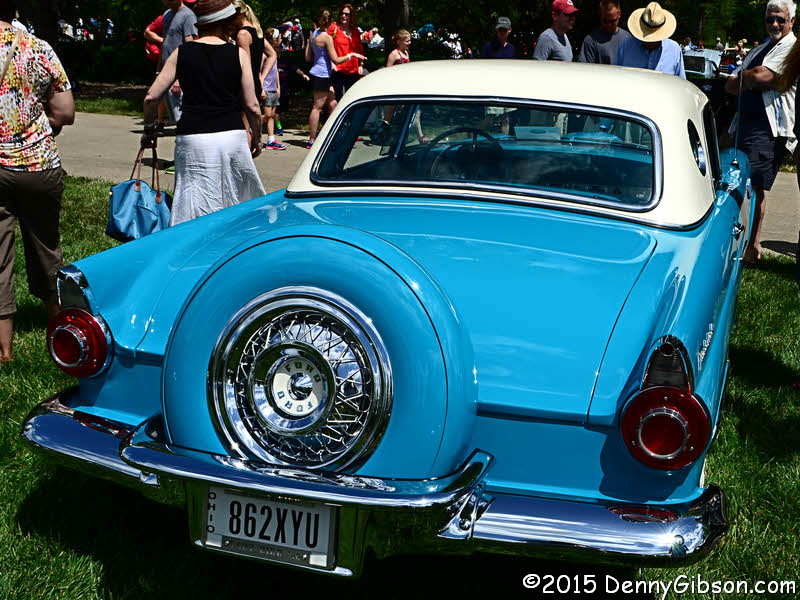
concours15_11concours15_10This year’s featured marque was Mercedes-Benz but 70 years of the Volkswagen Beetle and 60 years of the Ford Thunderbird were also being celebrated. One of those ten “must see”s was a 1963 Thunderbird Landau Tri-Power. We saw it but I didn’t photograph it. I actually like the 1961-63 “bullet birds” better than many of the nameplate’s wildly different incarnations but I’ve included photos of a couple of pre-rearseated T-Birds to show that in the beginning it really was a cool car.

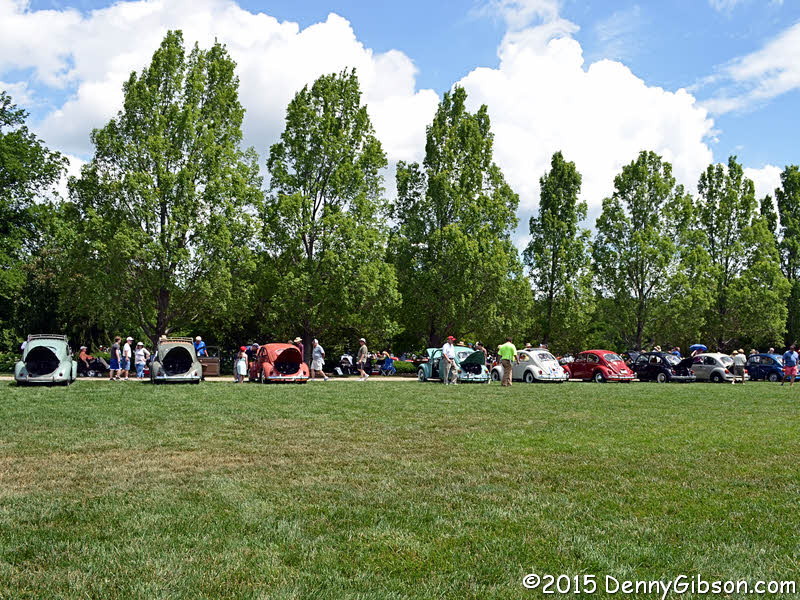
concours15_12We walked by a long line of Beetles and even stopped to look over one or two but I took no pictures. I guess these cars, including the 1956 Type 1 Sedan listed among the “must see”s, were just too familiar to snag our attention. It was only after we had reversed course at the end of the field and were headed back toward the cluster of Mercedes-Benz on the other side that I grabbed this shot of the line on Volkswagen rears. Maybe I was already feeling a little guilty about not studying them more closely. I know that I did feel some regret when I scanned through my pictures and realized how little time we had spent on that line of iconic people haulers.

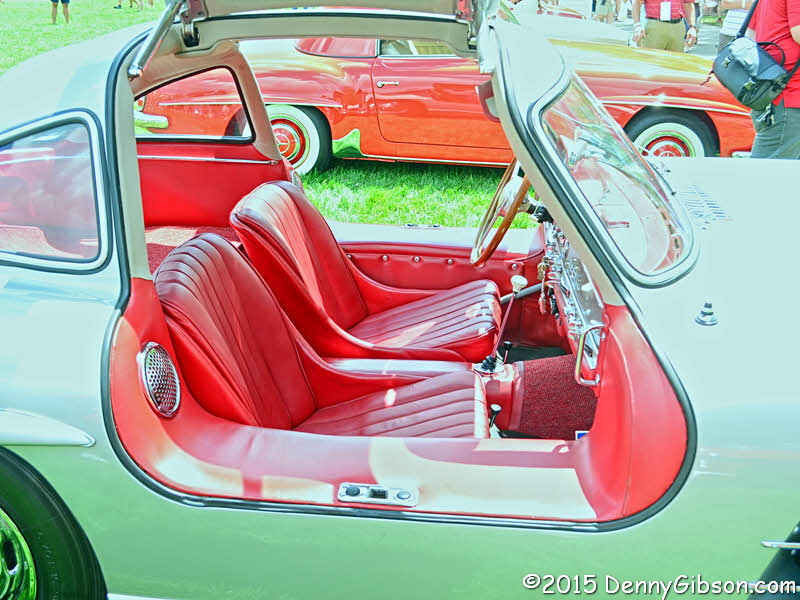
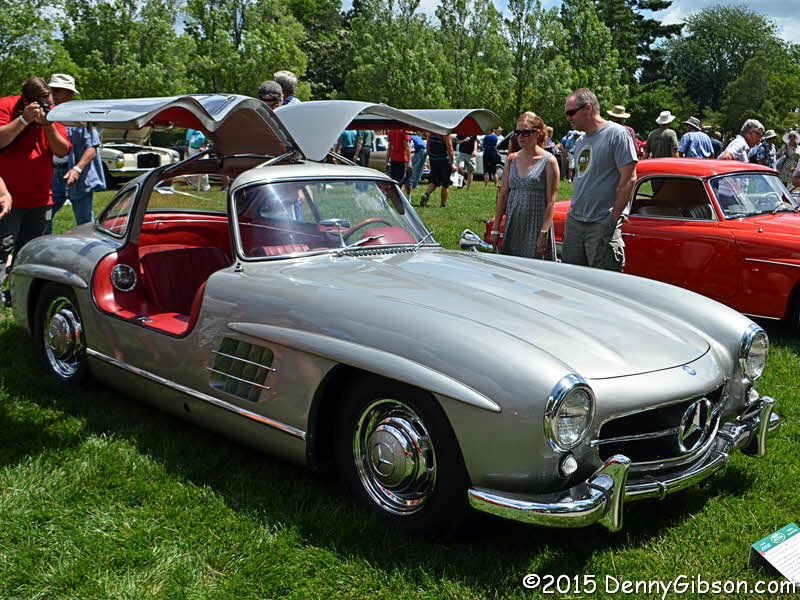
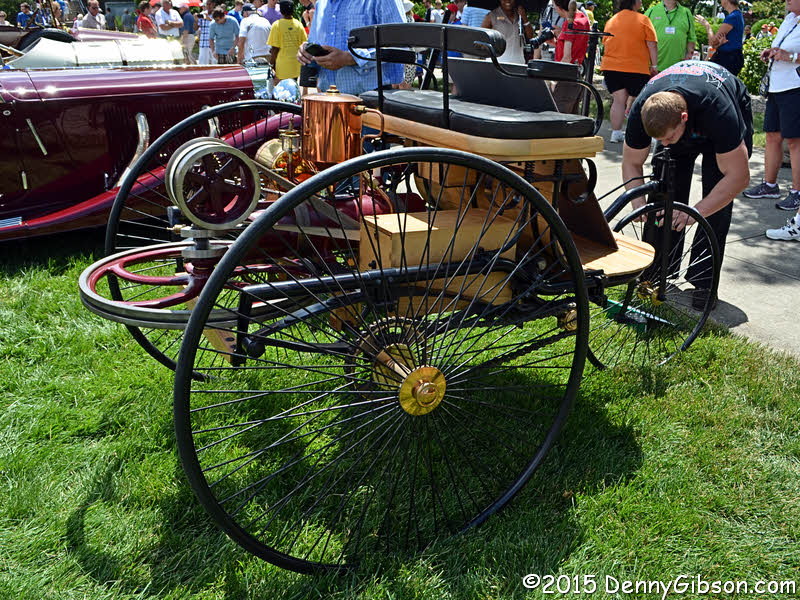
concours15_15concours15_14concours15_13These are the head-liners. It was 130 years ago, in 1885, that Karl Benz built the three-wheeled “motor car” for which he would be granted a patent the following year. This is a replica. Because of its unusual “gull wing” doors, the 300 SL Coupe is probably the most recognizable Mercedes in the world. It was the car’s lightweight tubular space-frame that made the top-hinged doors and super wide threshold necessary. This 1954 model was another of the show’s “must see”s.

concours15_16Due to the special parking arrangements and the desire to do a little parading, our arrival time had been fixed. Viewing the show and departure were “on your own”. It was a little before 2:00 when we got back to where we’d parked and I was kind of surprised to see that, despite our short-circuiting of the Beetles, my little car was among the last of its breed in the area. We settled into the non-optional heated seats and there was soon one less Miata in the park.

My Wheels — Chapter 16
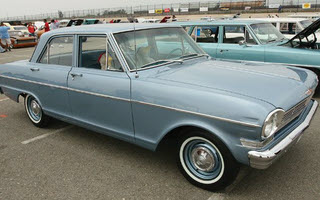
1962 Chevy II

chevyii1962This car came and went while the Opel served as primary transport. I believe it was a 1962 model but it might have been a ’63. It was powered by a straight 6 mated to a two-speed Powerglide. It is the only car I’ve ever owned that I made money on.
This was my work car for several months. I got it from my mother-in-law who bought a new Chevelle (which will appear in a future installment) about the time the Barracuda expired. It spent its entire life outside and, in all the time I knew it, never looked half as shiny as the car in the photo. Somewhat surprisingly, there was no major rust although there were some small spots and there were dings everywhere. As I recall, transmission failure was what ended its mobility but the wheezing engine probably wouldn’t have lasted much longer anyway. It had not been pampered.

One day on Madison Road (Which wasn’t on the way to work so I must have been out joyriding.) a fellow pulled out in front of me. I couldn’t quite stop and hit him, at fairly low speed, with the right front. The fellow admitted his error and I believe he was cited. I got an estimate or two on the damage and that got me a $150 check. Investing in this car in any way did not seem wise and investing in bodywork doubly so. A little work with a crowbar got the headlight aligned properly (for day time driving) which gave me a 50% return on my $100 purchase price. Plus I think I got another ten bucks at the junk yard.

Previous Wheels: Chapter 15 — 1969 Opel Kadett
Next Wheels: Chapter 17 — 1965 Corvair

Celebrating King Records

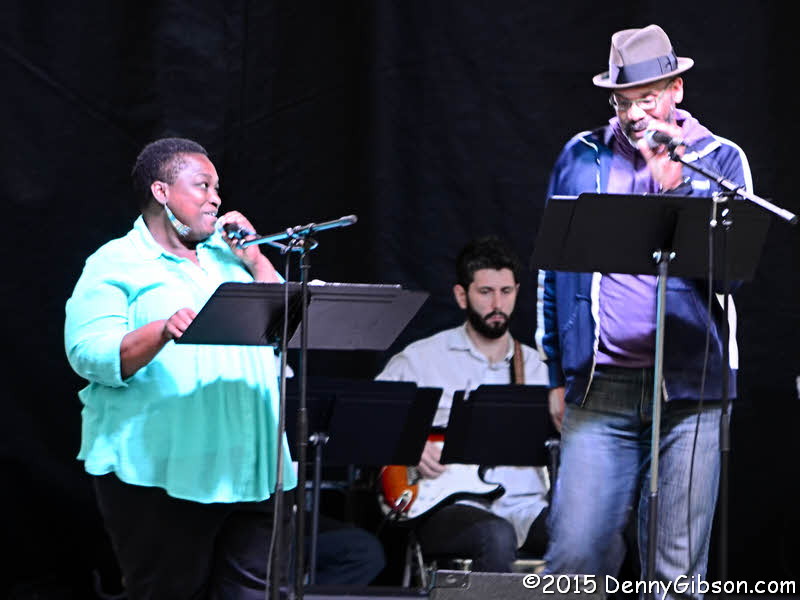
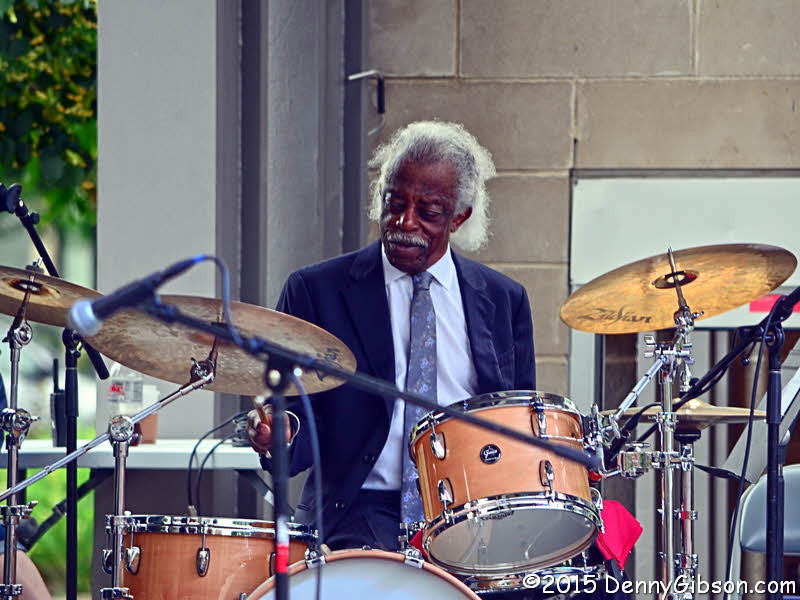
ckr01Remember The Twist? How about Chubby Checker? Hank Ballard? Just about everybody will recognize the first two and two out of three ain’t bad — unless you’re from Cincinnati. Cincinnatians should know it was Hank Ballard and the Midnighters who first recorded the song that made Chubby Checker famous. They should know because that version was released by Cincinnati’s King Records. The Twist was a regional hit for the Midnighters and it got them booked on Dick Clark’s American Bandstand. They didn’t make it and Clark got a fellow named Ernest Evans to lip-synch to Ballard’s recording then recorded and released an identical version with Evans using the name Chubby Checker. Why did Ballard miss his Bandstand session? Various stories have been told but the man in the photo above says Hank was in Atlanta with a lady. He should know. He’s Phillip Paul who played drums on The Twist and 400 or so other King recordings.

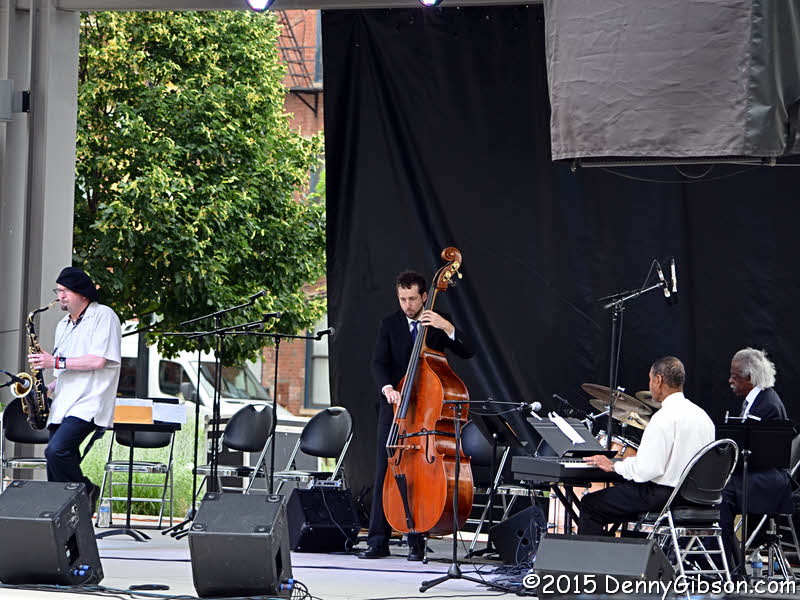
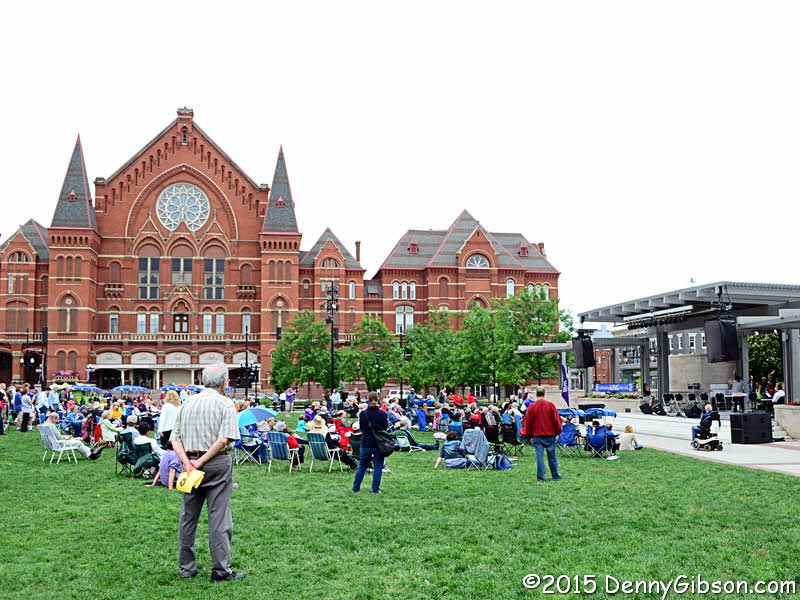
ckr02ckr03Not all of those were hits but many were. Several, in fact were major milestones on the route of rock and roll. Paul drummed on Little Willie John’s Fever, Tiny Bradshaw’s Train Kept a Rollin’, Wynonie Harris’ Good Rockin’ Tonight and Freddie King’s Hide Away. Today those song titles are more familiar than the artists’ names because they have all been covered over and over but, as he was with The Twist, Phillip Paul was there at the beginning; There when the originals were recorded. And he’s still “there” today, playing every Friday and Saturday at The Cricket in downtown Cincinnati. He was there Sunday, May 31, in Washington Park providing some “good rockin'” and good stories as the opening act for a reading of a new play about King Records.

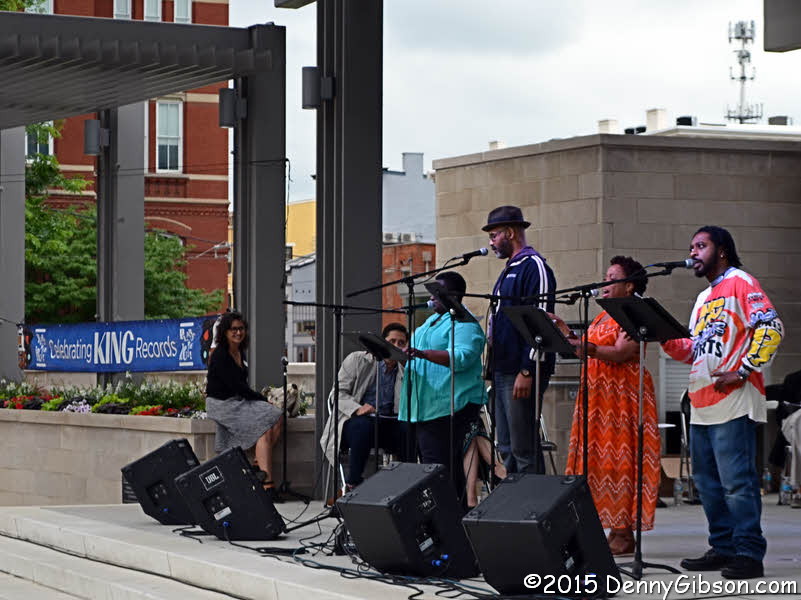
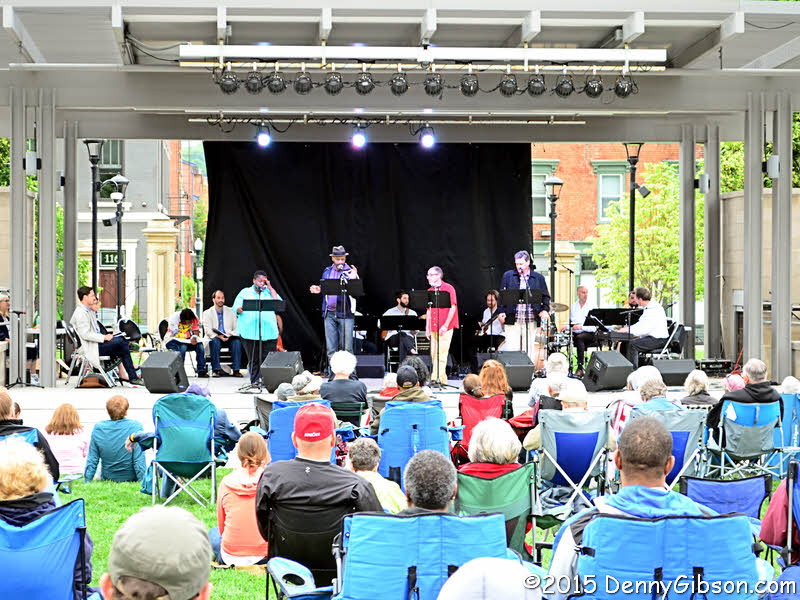
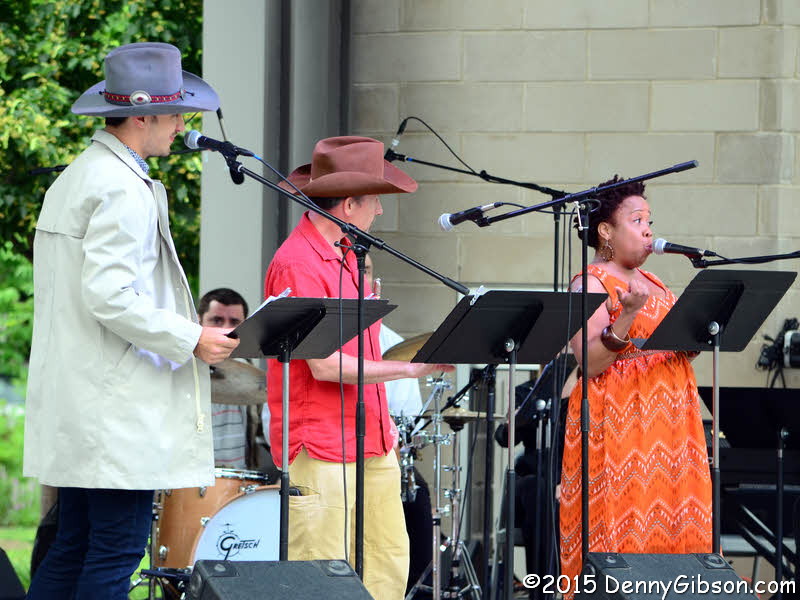
ckr04That play, Cincinnati King by KJ Sanchez, tells the story of King Records largely in the words of people, including Paul, who were part of it. Many of the words are from the nearly fifty interviews conducted by Sanchez. Others come from recordings and printed material. The story of King Records is really the story of Syd Nathan. Nathan owned King and ruled it with an iron fist that usually held a cigar when it — the cigar not the fist — wasn’t in his mouth. He did things his own way and, more often than not, he did them himself. He started with a record store. When labels started gouging him for records, he started his own. When his “style” created problems with recording studios, he built his own. When pressing plants sent inferior product, he built his own. Eventually King did it all including designing and printing its own packaging.

ckr05ckr06Partly because of Cincinnati’s half-north half-south location, Nathan’s store did a good business in “hillbilly” and “race” records and that’s what his record company initially made. Those names have been replaced by country, bluegrass, blues, rhythm & blues, and a few other genres. King’s stable included Grandpa Jones, the Stanley Brothers, Cowboy Copas, Bill Doggett, the Delmore Brothers, Moon Mullican, Charles Brown, and on and on. Of course, the biggest star ever at King was James Brown. Nathan’s independent and demanding ways irritated just about everybody at some point and “The Godfather of Soul” was just as independent and just as demanding. The two were like oil and water but they made each other a lot of money and even managed to occasionally look like great friends at an award ceremony or some such.

ckr08ckr07Just as the musicians that King recorded were a mix of black and white, so, too, were the other employees. In time, King’s employment application included a question about whether working with a person of another race would be a problem. It’s said that Nathan would sometimes hire someone who answered “yes” then make a point of assuring that the new employee was put in the situation they thought would be a problem. Syd Nathan didn’t solve all the race issues in the world but maybe he did his share.

This concert and reading was part of the OTR Performs Series and a Cincinnati Fringe Festival Special Event

Phillip Paul turns 90 on August 11. The city of Cincinnati has proclaimed the preceding Saturday “Phillip Paul Day”. Look back at this article’s first picture. To me, that sure looks like a man who is enjoying himself.

Stone Pony Picnic

stoneplogoI’m off to at least one concert, maybe two, and there’s a pretty good chance I’ll also get to see a parade. The for-sure concert is Willie Nile’s 35th Anniversary Show at the Stone Pony in Asbury Park, New Jersey, on Friday night. The maybe is a Bruce Springsteen tribute band playing the same place on Saturday. The parade is a gay pride event on Sunday.

The journal for the trip is here. This entry is to let blog subscribers know of the trip and to provide a place for comments.

Trip Peek #31
Trip #90
Skyline and Blue Ridge

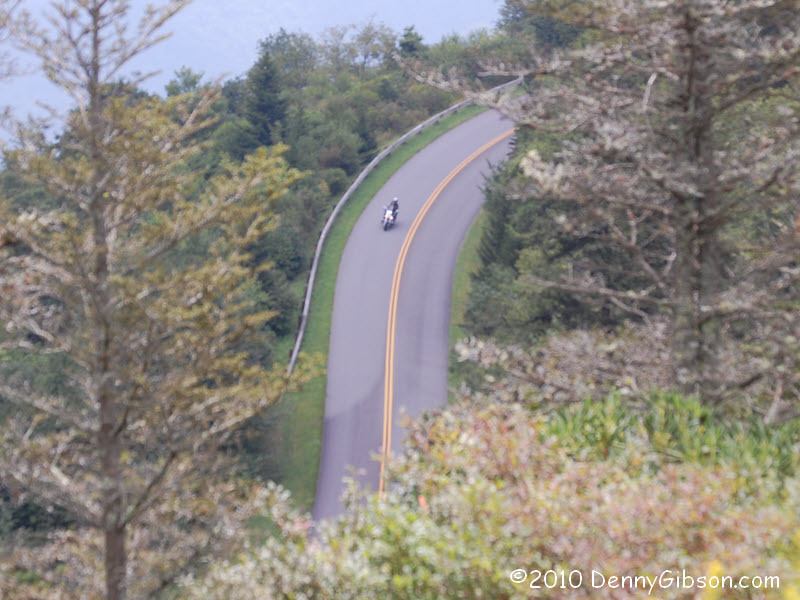
pv70This picture is from my 2010 Skyline & Blue Ridge trip along Skyline Drive and Blue Ridge Parkway. The two more or less connect a little west of Charlottesville, Virginia, to provide a nearly 575 mile long scenic drive. The picture was taken near the southern end of the Parkway looking down from Waterrock Knob. I prefaced starting down Skyline Drive with a touch of Darke County Fair, some cardboard boat racing, and a goodly amount of scenic roadway in Ohio and West Virginia. I paused between Drive and Parkway to tour Thomas Jefferson’s Monticello.


Trip Pic Peeks are short articles published when my world is too busy or too boring for a current events piece to be completed in time for the Sunday posting. In addition to a photo thumbnail from a completed road trip, each Peek includes a brief description of that photo plus links to the full sized photo and the trip journal it is from.