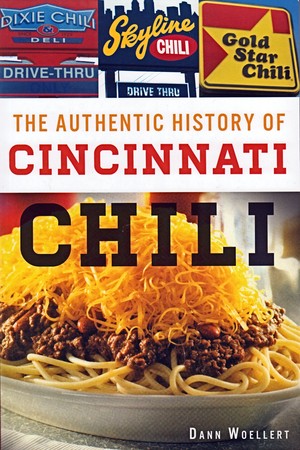
 There is definitely a lot of information in this book. That’s why it’s here. I’ve often said that all my reviews are positive not because I like everything I read but because I see no reason to spend time reviewing something I don’t like. The Authentic History of Cincinnati Chili had me wavering. The subject matter is clearly in my strike zone. History? Check. Cincinnati? Check. Chili? Are you kidding? This looks like a book that could have been written specifically for me, right? Digging into it, however, was not quite as tasty as I thought it would be.
As I read, I noticed some repeats and the occasional oddly formed or slightly out of place sentence. There were many tiny details, like the address of a parlor owner’s home or the what movies played in nearby theaters, that pushed the too-much-information boundary. I was about halfway through the book when I had an epiphany. I’m not sure it was a real epiphany in which truth was revealed or a pseudo-epiphany in which i concocted a theory that made things make sense to me but it suddenly struck me that I was reading somebody’s notes. Not completely raw notes but notes that had been jotted down to record every bit of information that an interview or newspaper article provided then wrapped in enough conjunctions, adverbs, adjectives, and punctuation to turn bulleted lists into paragraphs. There are exceptions. The introduction and a chapter called “Unlocking the Flavor Secrets”, perhaps because they are overviews of multiple chili operations and recipes, manage to avoid the just-the-facts but all-the-facts style of most of the book.
All-the-facts is a lot. Woellert obviously did extensive research and interviewed several members of Cincinnati Chili’s founding families. Founding family members also supplied several photos from the early days of Cincinnati chili for inclusion in the book. There is a family tree type chart showing how it all goes back to Empress. If you have a question about the history of chili in the Queen City, chances are the answer is in this book; maybe more than once.
I did not have a question but I did have a suspicion that was validated by this book. Tradition has it that Skyline Chili’s name came from the view of downtown Cincinnati from the chain’s original restaurant. Some versions of the story claim it was the view from the kitchen. I readily accepted that until I visited the site on Glenway Avenue last year. The original building is gone but I couldn’t imagine how anyone could see down town from the ground floor of any building at that location. Bill Lambrinides, one of the founders, tells a different story which, since it’s one of the few “revelations” in The Authentic History of Cincinnati Chili, I won’t retell beyond saying that Bill confirmed that the view was not from the restaurant.
There are some errors in the book but I’ve a feeling that all the dates and addresses associated with actual chili parlors are not among them. In my most recent book review, I used the phrase “well researched and well written”. I can’t use it here. One out of two it is. I found myself scratching my head or chuckling at some of of the writing but still ended up believing the collection of information made this book worth keeping around.
The Authentic History of Cincinnati Chili, Dann Woellert, The History Press (April 16, 2013), paperback, 9 x 6 inches, 176 pages, ISBN 978-1609499921
Available through Amazon.








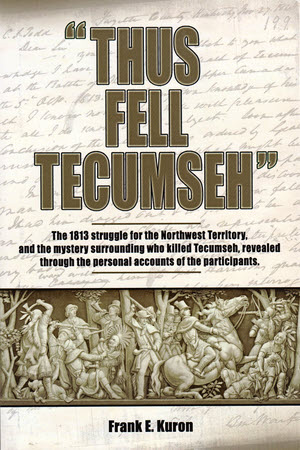 One of the few undisputed facts of Tecumseh’s life is the date of his death. The date of his birth is only known approximately and there are multiple possibilities for its location. He was born about March 1768 somewhere in the Ohio territory. It’s pretty much accepted that he met his end at the Battle of the Thames but that statement isn’t quite as precise as it might appear. While it is generally believed, as most reports indicate, that he died as a combatant in the battle, reports do exist that describe his death as an accidental shooting some distance away from the actual fighting. What no one questions is that Tecumseh was alive on the morning of October 5, 1813, and dead at the end of the day.
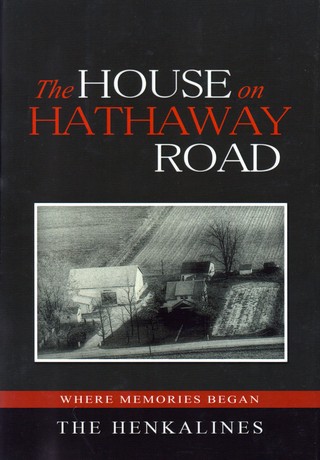 Not only did I graduate from high school smack dab in in the middle of the ’60s, it was smack dab in the middle of the Henkalines, too. There were four of them; a girl and three boys. The girl was a few years older than the boys. The oldest boy graduated a year before me and the next a year after. Though I was most familiar with the two boys closest to me in age, I knew them all. It was a small school in a small town in rural Ohio. Everybody knew everybody.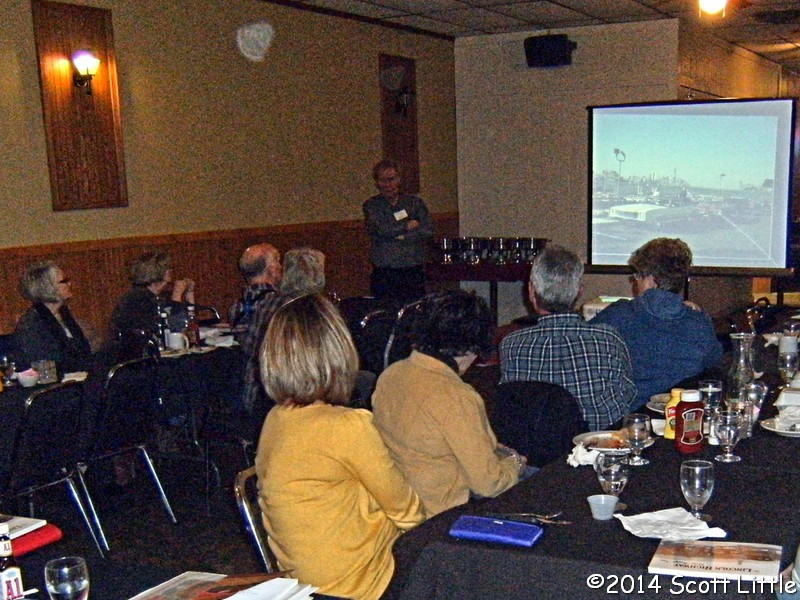
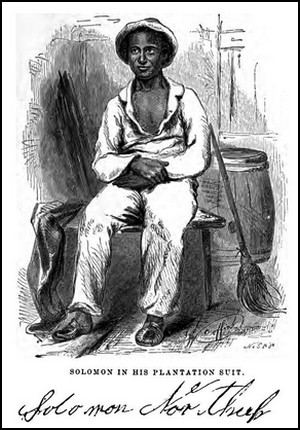 Like most of the world, I had no idea this book even existed before the movie about the New Yorker kidnapped into slavery came out. When I saw the movie, I was moderately less impressed than some but I left the theater with two basic questions: was the book an actual memoir and how close did the movie track it? As I poked around the internet, I encountered no suspicion that either Solomon Northup or the story he told were fiction which made the answer to the first question “yes”. I then located a free PDF copy of the book and set out to answer the second question myself. I had my doubts as I read the book’s early pages but it became apparent before too long that that answer was “very close”.
 I thought of reviewing this ebook when it came out last March but it didn’t happen. There were actually multiple items, including a couple of CDs, that were review candidates about that time which got pushed aside by stuff like preparations for the coming summer. By releasing this second edition, Terri Weeks combines a reminder that I missed posting a review last year along with a second chance.
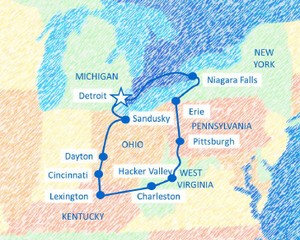 The book is not large, 40 pages, 4.5 KB. There are no detailed directions. There is a general map, like the one at left, for each trip followed by a daily itinerary. Itinerary entries are usually one-liners with any details provided through a web link. Being an ebook, How to Visit All 50 States in 12 Trips can assume some connectivity that paper books can’t. That means web links for many attractions. Sometimes the links lead directly to an attraction’s website and sometimes, for attractions already visited, to a Travel 50 States with Kids blog entry which often contains a link to the attraction’s website along with a report on the family’s visit.
 By coincidence, the first review of my own book, By Mopar to the Golden Gate, appeared yesterday. Written by Ron Warnick at Route 66 News, the very positive in depth review can be read