 The title of this post is how I imagine Ron Popeil hawking some magic weight loss device on a late night infomercial.
I already have such a device. Well, it’s not really magic and it won’t work for everybody but my smartphone did actually help me lose a few pounds.
First off let me say that I have not tried every weight loss trick in the world.
I have, in fact, tried almost none. I’ve weighed far too much for far too long but sugar and cholesterol and other levels have been fine so my doctor hasn’t beaten me up about it. I didn’t, and still don’t, beat myself up about it either even though I wasn’t happy about it. Every now and then I might scan an article on weight loss but they tend to be about various diets to follow, groups to join, or people to pay to tell you what to eat. Then, somewhere along the way, I saw an article claiming that simply tracking consumption was one of the most effective aids to losing weight and that clicked with the geek buried — ever deeper — inside me.
In my head, I somehow managed to relate computerized calorie counting with Quicken. I’ve been a Quicken user since about 1994. Entering numbers into a computer program felt natural to me and sometimes even fun. I’ve never used Quicken’s budget management features though I’ve no doubt they are wonderful. Simply tracking my money helped me get most of my bills paid on time and allowed me to see when a tight spot was approaching. That “tracking helps lose weight” claim seemed perfectly legit to me.
That getting my phone involved made sense was no doubt due in part to a recent addition I’d made to my money tools. I try to track cash expenditures but I’m not terribly good at it and have learned to accept a fair sized miscellaneous expense at the end of each month. Not long ago I installed a free app, Cash2QIF, that lets me enter the cost of my breakfast while I’m still sipping coffee then electronically transfer the data to Quicken later. The miscellaneous expenses have not gone to zero but they’re smaller. Entering calories at the same time seemed like something that might work.
So I picked up a free “calorie counter” app and set out to track what I ate. In hindsight, it’s pretty obvious to me that things would have fallen apart rather quickly if, as was my assumption, I really had to determine and enter a bunch of numeric values. Fortunately the app provided access to a database of foods so it was easy to determine the calories in the three 16 ounce glasses of carrot juice I was drinking everyday. Just kidding. Carrot juice can indeed be found (I just checked) but so can things like Smithwick’s and half pound ‘burgers. Find the food, tap to enter, and the appropriate calories are recorded along with other nutritional data like fat, carbs, vitamins, etc.
Even better is the app’s use of the phone’s camera to read bar codes. As a kitchen challenged single male, I eat a goodly amount of packaged foods. With dinner in the microwave, I can point the phone at the package before pitching it and the calories, carbs, and calcium I am about to consume are instantly recorded. I also eat out a lot and menu items from many restaurants are available in the database.
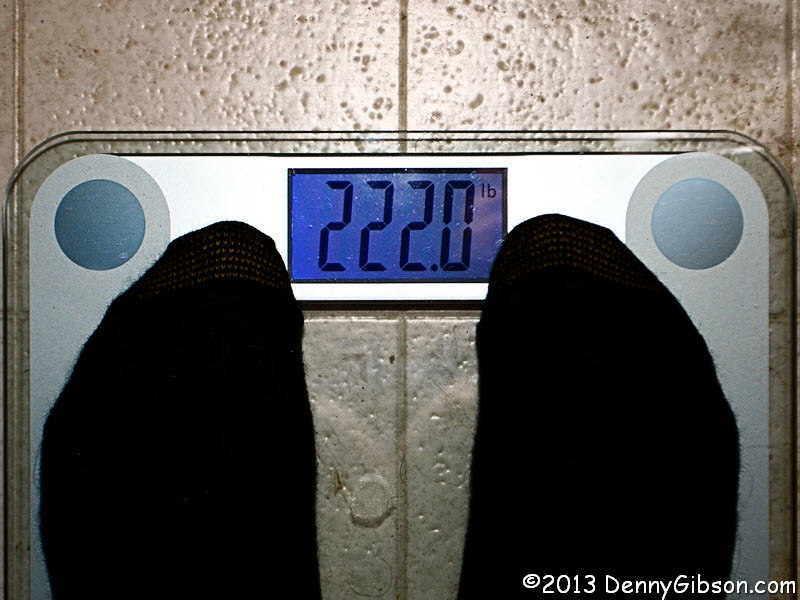
My rate of reduction is a long way from remarkable. Twenty-two pounds in twenty-weeks. Barely a pound a week. A friend who went on a low-carb diet a while after I started recording calories has lost more than twice that in less time. I like his results but I’m pretty sure I wouldn’t stick to that or any other real diet. I haven’t really cut out anything in particular. I have a target number of calories per day. I don’t panic if I miss it but I’m aware of it and try to do better the next day or the next one or the one after that. Most, but not all, weekly totals have been below the target.
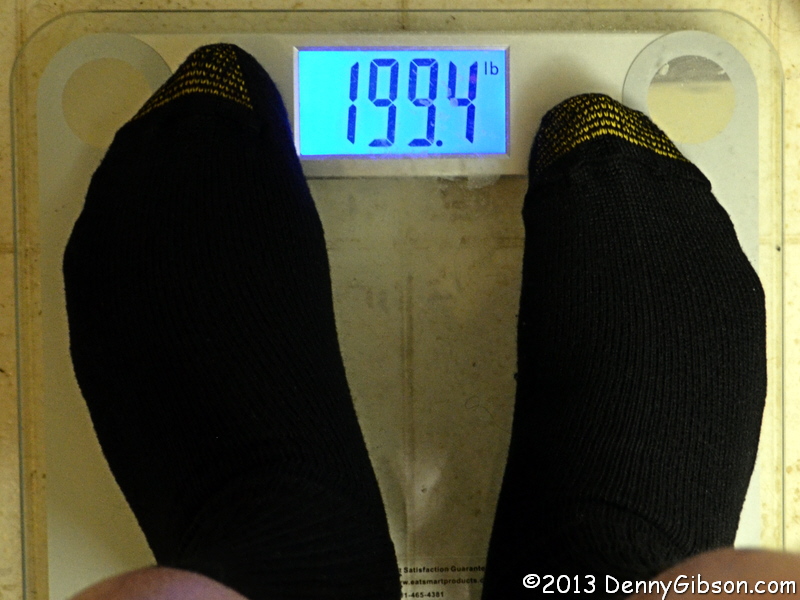 The number on that scale is significant for a couple of reasons. First off, I think it may be the first time I’ve been below 200 this century. Secondly, it’s near a halfway point of sorts. The most generous of guidelines puts my “ideal weight” around 175 pounds. When I started counting calories on January 19, I was 47 over. Half of 47 is 23.5 and the 22 pounds that I’ve lost is within a large smidgen of that. I don’t know that I’ll ever make it to that “ideal” but it no longer seems completely impossible.
The app I’m using is the Android version of MyFitnessPal. I didn’t do much research so I don’t know that it’s the best available. I do know that it has the features I was looking for plus some I wasn’t but which have proven key to my continued use. It also has features, such as counting vitamins and connecting to scales, armbands, and other devices, that I doubt I’ll ever use.
A significant boundary was crossed about halfway between the two pictures. During the middle of some night in April, I went from being officially obese to being officially overweight. Yeah, that’s a lot like learning that your checking account isn’t overdrawn as much this month as last but I’ll take it.
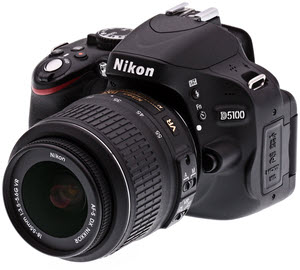 I didn’t need this camera. My three year old D40 was working just fine and was all the camera I really needed. But, while facts and logic may have slowed me down, they didn’t stop me. Although I can’t entirely deny the attraction of more pixels, that was not the the primary or even secondary reason I wanted this camera. The main attraction was the supposed superiority of the D5100’s CMOS sensor over the D40’s CCD. Secondly, I desired vibration reduction (VR) lenses. Yes, I could have simply bought VR lenses without the camera but I had convinced myself that putting money into lenses then attaching them to the lowly D40 was not wise. As I said, facts and logic only slow me down.
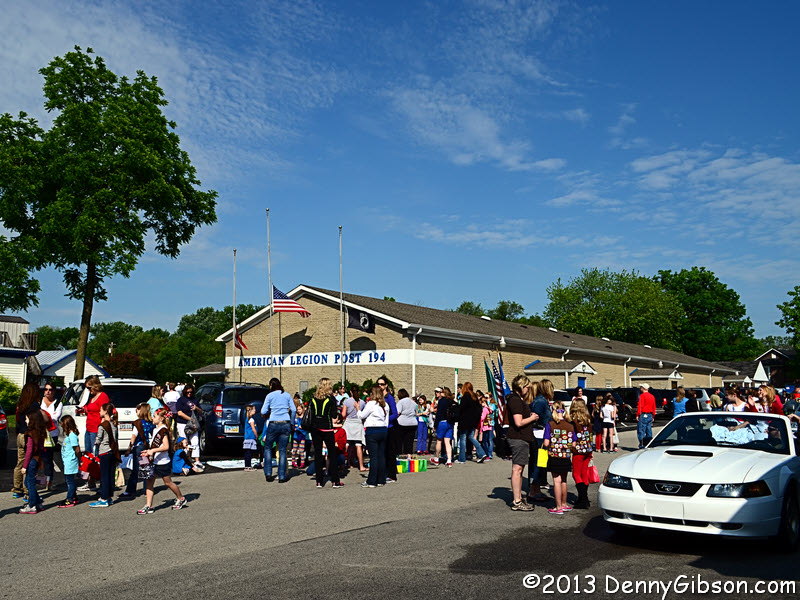
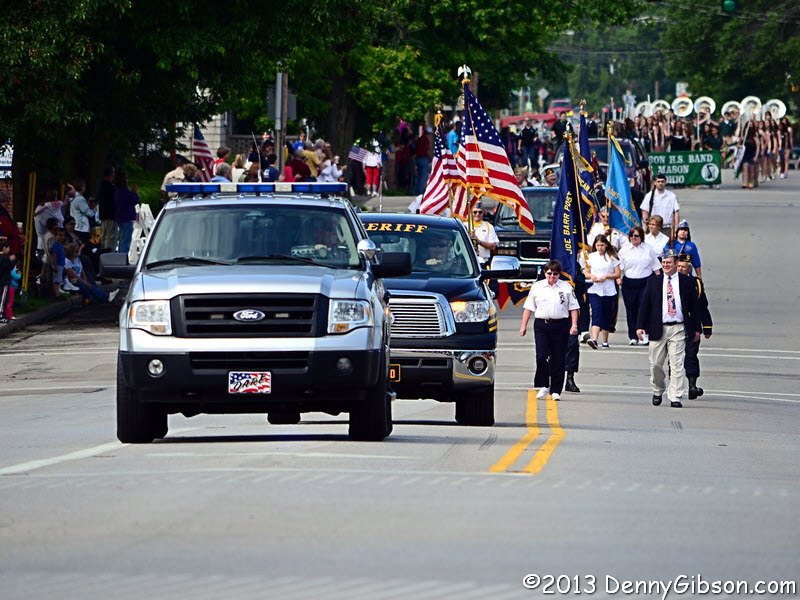
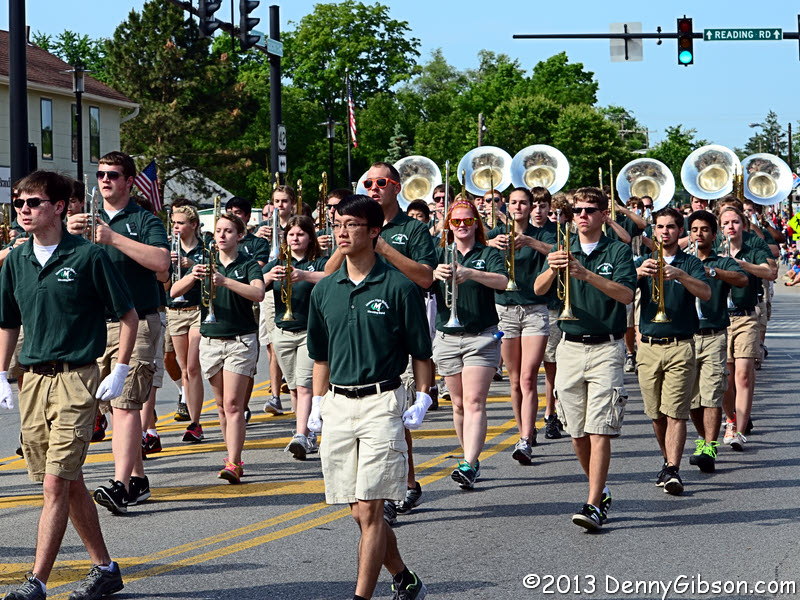















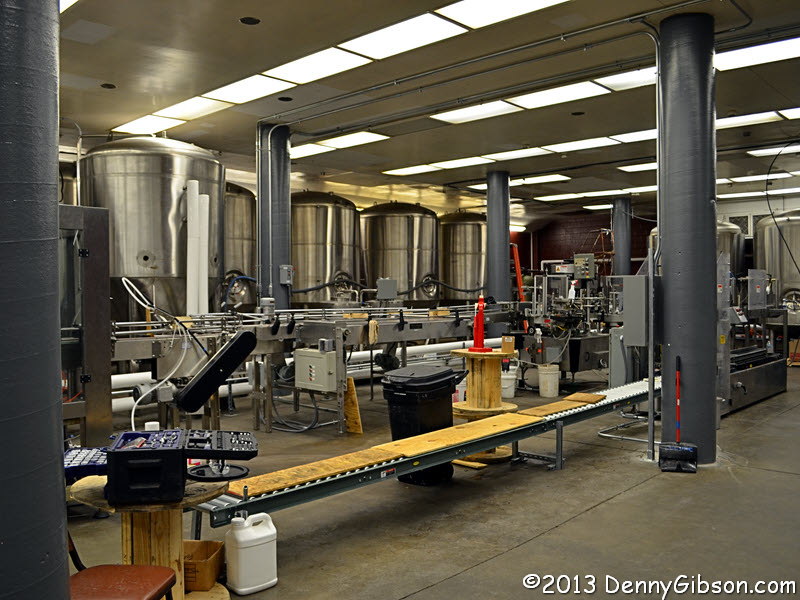


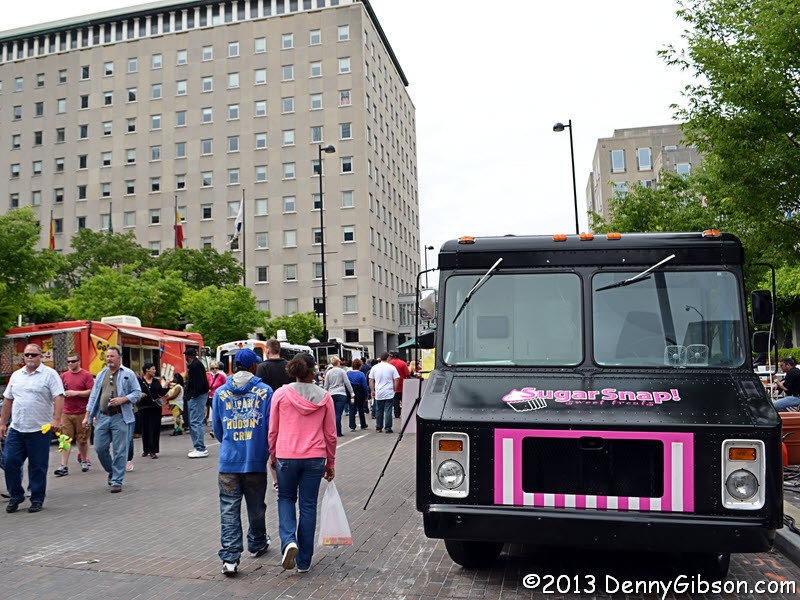
 My first attempt at writing this post got all bound up in explaining why I do thumbnails the way I do. As I rearranged the second paragraph for the third or fourth time, I heard my own echo from long ago, “If it’s this hard to write, it’s going to be a bitch to read.” That’s usually a pretty good signal that a basic rethink is in order. When I stepped back, I quickly realized two things. One, some of my reasons are truly arbitrary and naturally hard to explain, and two, nobody cares. There aren’t many who care if I do something, fewer care how, and the number who care why has to be near zero. If someone does want to know why, just ask and I’ll be happy to explain and ‘fess up to the arbitrary bits. For now, I’m just going to talk about how I do them and how Easy Thumbnails fits in.
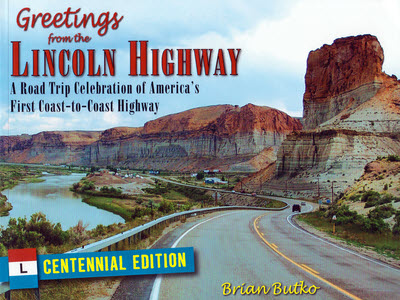 The Lincoln Highway turns a hundred this year. Brian Butko’s Greetings from the Lincoln Highway turns eight. At first glance, the 2013 Greetings… looks an awful lot like the 2005 Greetings… with a soft cover and a “Centennial Edition” banner on the front and it’s a fact that, in many ways, it is the same. It has the same organization with an introductory chapter and a chapter, with map, for each state the highway passed through and a very high percentage of the words and pictures in those chapters are the same, too. Another thing that remains the same and which accounts for the small in percentage but large in number changes is the care and attention to detail. Butko probably didn’t catch everything in the book that the passage of time has altered but he sure tried and he sure got a lot.
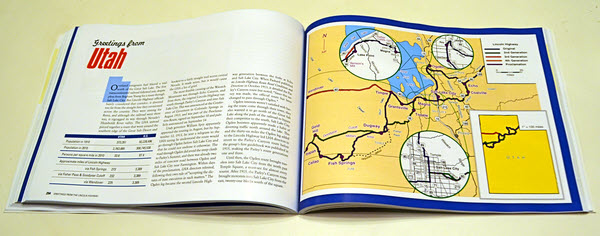 Aside from the occasional new photo, the most visible changes may be in the statistics and maps at the front of each state chapter. Here population numbers from the 2010 census replace those from the 2000 census and the maps get a line for the Proclamation Route. The Lincoln Highway Proclamation Route was a list of cities published by the Lincoln Highway Association on September 14, 1913. Shifts started happening almost immediately and a detailed route was never signed or published that matched the September 14 announcement. But several of the cities dropped in 1913 fought unsuccessfully to return and many have fought more recently and more successfully to be recognized. Butko acknowledges that by including the ephemeral route. All of the quotes from postcards and other period communication that appeared in the margins of the original are still there and a few more have been added.
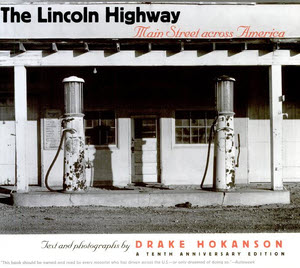 I’m reading this book for the third time. I read it around 2005 when I was dabbling with short drives on the Lincoln Highway to my east. I reread it in 2009 when I was getting ready to drive the Lincoln from the east edge of Illinois to the west coast. My current read is in anticipation of another long, hopefully full length, drive of what Drake Hokanson calls Main Street across America. I never read the original, only the pictured Tenth Anniversary Edition which is now fifteen years old itself.
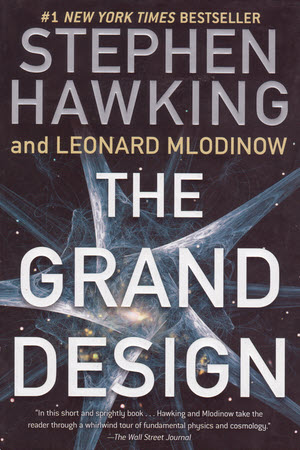 If you think this looks like it belongs here, you haven’t been paying attention. No, books about cosmology, quantum physics, and beyond aren’t what I typically read and I’m clearly not qualified to review them. I was given the book as a gift, I read and enjoyed it, and I intend to tell somebody about it.
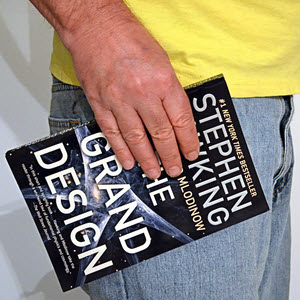 I started off admitting that this book was really out of place here. I do a lot of my reading over meals in restaurants and it was rather out of place in some of the joints where I eat, too. I quickly worked out a way to carry the book that cut down considerably on the funny looks aimed my way.