My Gear – Chapter 12
Panasonic Lumix DMC-FZ8

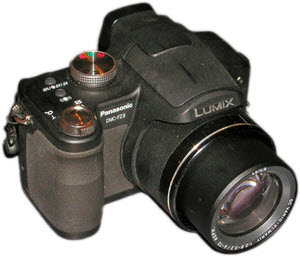
Panasonic DMC-FZ8In the year and a half between my buying the DMC-FZ5 and banging it against the ground in Missouri, Panasonic had been improving the line and dropping the price. In June of 2007, I was able to buy the latest model, the FZ8, for $340 or roughly fifty dollars less than I’d paid for the FZ5. Resolution was up from 5.0 MP to 7.2 MP and manual focus was added. Overall, the changes were more evolutionary than revolutionary, the size was up just a smidgen, and the weight was still under eleven ounces. I had an even more capable camera and I didn’t have to be completely retrained.

The FZ8 has something called “extended optical zoom” that moves the upper end from 12X to 18X when a smaller picture size is used. I’ve always shot at the highest resolution so have never used this extended mode. Maybe I should try it. That’s a whopping 648mm (35mm equivalent) at maximum zoom.

I use past tense to talk about acquiring the FZ8 but present tense to talk about using it. This five year old camera still sees a lot of action although its service hasn’t been entirely uninterrupted. About six months into its life, it got dropped onto the concrete floor of the garage. The distance was only a few inches but the concrete didn’t give at all. The result was an FZ8 whose functionality matched my FZ5. The lens was jammed and powering on the camera was futile. There was one big difference between the two, however. The FZ8 was still in warranty.

I believe I had to pay for shipping to the repair center and there was no guarantee that repair would be covered or even possible. The camera was gone for several weeks and. for a variety of marginally valid reasons, I bought a replacement while it was in the shop. But it did come back with a note about something with a big name being replaced and it has worked flawlessly ever since.

The premature “replacement” was an SLR which will appear in the next My Gear installment. It was a relatively small SLR but it was still considerably heavier and bulkier than the Panasonic. The FZ8 is small and light enough to use easily with one hand and its image stabilization may even help a little with those one-handed driving-down-the-road shots. That is also one of the few situations where being able to switch from the viewfinder to the 2.5 inch LCD is useful. Like the FZ5, the FZ8 fits into a belt bag and it often goes with me, quite unobtrusively, into restaurants and such. Many of the food filled plates that appear in the trip journals were captured with the Panasonic. A few were even captured on the built in memory. It’s only about 27 MB but that’s enough to record a few pictures and save me a walk to the car when I’ve forgotten to check that a memory card is in place.

My Gear – Chapter 11 — Garmin Quest
 

Sixty Six:
End-to-End and Friend-to-Friend

Route 66 decalTomorrow, July 26, I start down Historic Route 66 for the third time. The reason, or excuse, for this trip is to attend the 2012 International Route 66 Festival in Victorville, California. For the first two trips, in 1999 and 2003, I didn’t even know there was such a thing as an International Route 66 Festival but since then I’ve attended six. The journal for the drive and the festival will be here. It will include the drive home which I expect to be largely on US-70 and US-80.

As I prepped the website for the trip, I added an FAQ page which might help in understanding the site. That page is here.

This blog entry is here to handle comments and questions regarding the trip.

RoadDog Day Afternoon

Don Hatch at American Sign MuseumI get to be part of somebody’s road trip again. Don Hatch is a roadie whose nickname and online handle is RoadDog” and that is the source of my not particularly clever title. He stopped in Cincinnati today on his way back from relatives in North Carolina to his home in Illinois. Unlike Fred Zander, whose road trip I got to be part of last month, Don has been to Cincinnati before and even visited the American Sign Museum in its original location. In spite of that, or more likely because of it, seeing the new and improved set up was high on his list of goals for the visit.

American Sign MuseumTo save time and make sure we didn’t miss the four hour (noon-4:00) Sunday window, we met at the museum. We arrived a little after 1:00 and roamed the museum on our own for awhile then hooked up with about a dozen others for the 2:00 tour. This was my first “official” tour of the museum in the new location. Museum founder Tod Swormstedt did his normal excellent job job while RoadDog took notes.

Neonworks at American Sign MuseumNeonworks at American Sign MuseumNeonworks at American Sign MuseumI experienced another first by going inside Neonworks, the independent sign shop that occupies some of the museum’s space. The shop can be seen from the museum proper through large windows but is usually idle on weekends. Today craftsman Tom Wartman showed up near the end of the tour and we were allowed into the shop for an up-close look and a little demonstration. As we watched, Tom sealed and filled then brought to life a length of neon text.

Zip's CafeRoadDog and ZipburgerAnother of Don’s Cincinnati goals was grabbing some chili but, as I’ve noted before, all the independent chili parlors are closed on Sundays. The two big chains, Skyline and Gold Star, have plenty of stores open and both turn out some very fine Cincinnati chili but I talked Don into waiting until Monday for his chili fix and trying out a ‘burger joint today. Probably the currently best-known Cincinnati ‘burger joint is Terry’s Turf Club and that’s where Fred and I went. However, Don has experienced — and loved — Terry’s in the past so I led Don to someplace “new”. That “new” is in quotes because, while Zip’s Cafe may be new to Don, but it has been turning out award-winning “Zip Burgers since 1926.

Aglamesis ice creamAglamesis ice creamFor dessert, we did exactly what Fred and I had done and ate delicious ice cream at one of the 98-year-old marble tables at the Aglamesis Brothers shop on Madison Road. Most people who think of Cincinnati ice cream think of Graeter’s and I don’t want to demean it in anyway. Like Skyline and Gold Star chili, it is an excellent product and I’m proud to live near its source. All three brands are Cincinnati to the bone, if any of them had bones, but they can now be found in other cities in the region. Camp Washington and Blue Ash Chili (which is in tomorrow’s plans) are among a number of independent one-location Cincinnati-only chili dispensaries. Aglamesis does have two stores but all of their ice cream is made on Madison Road. Fred actually had Graeter’s on his list when he arrived but I steered him to Aglamesis. I was happy to learn that he did get to sample their product in Columbus, Ohio, and sent this picture to prove it.

Jake Speed and the FreddiesOver the RhineWe wrapped up the day at Washington Park. The park, which originally opened in 1855, had become a somewhat scary place in recent years but an extensive makeover has just been completed. The ribbon cutting was July 6 and tonight a sort of grand reopening celebration took place with a free concert featuring Jake Speed & the Freddies and Over the Rhine. You can’t get much more Cincinnati than that.

The reverse road trip continues tomorrow with stops planned for Blue Ash Chili, Pompilio’s, and Mansion Hill Tavern.

It Is Balloon!

Middletown Balloon Festival - performerJust as I can no longer hear The Banana Boat Song without seeing a certain dinner party, it’s nearly impossible for me to see a hot air balloon and not think of F Troop.

OK, now that I have that out of the way, I can move on to the 2012 MidUSA Ohio Challenge Balloon Festival that I attended on Friday. The official opening ceremonies were scheduled for 6:00, the gates opened at 4:00, and I arrived a little after 5:00.

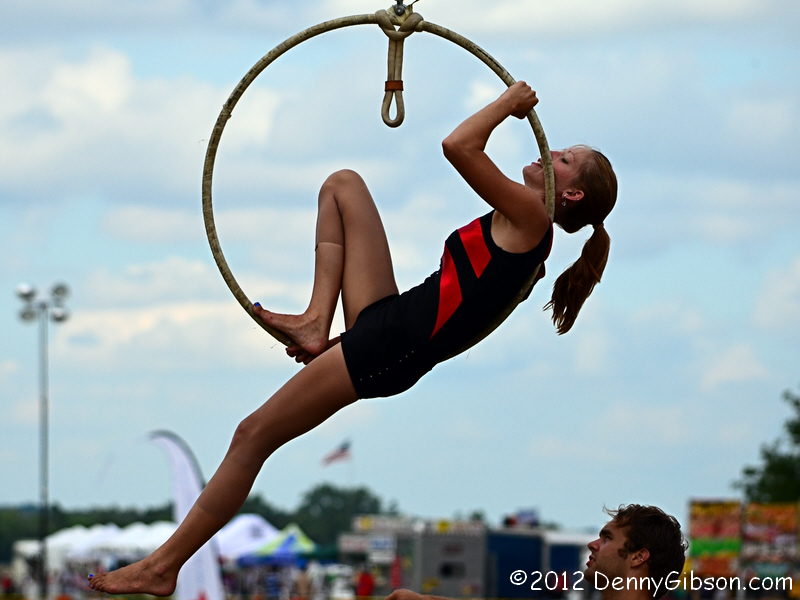
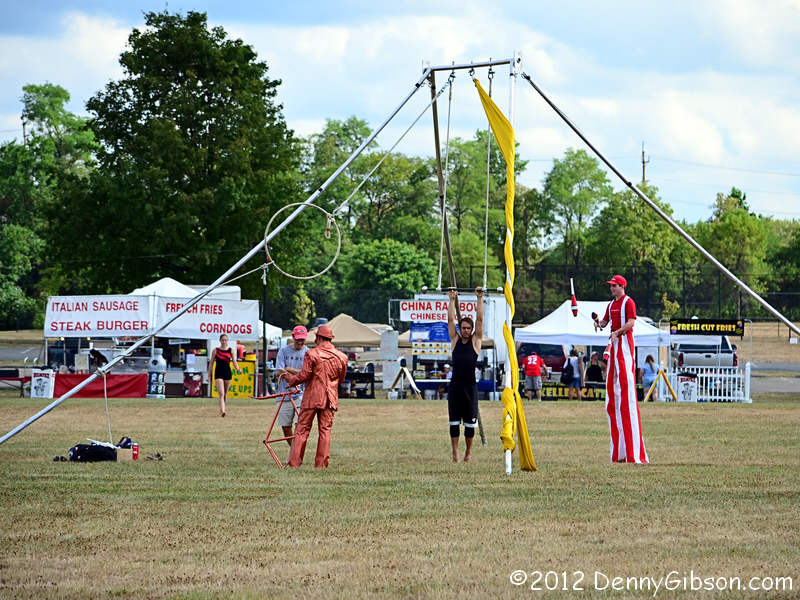
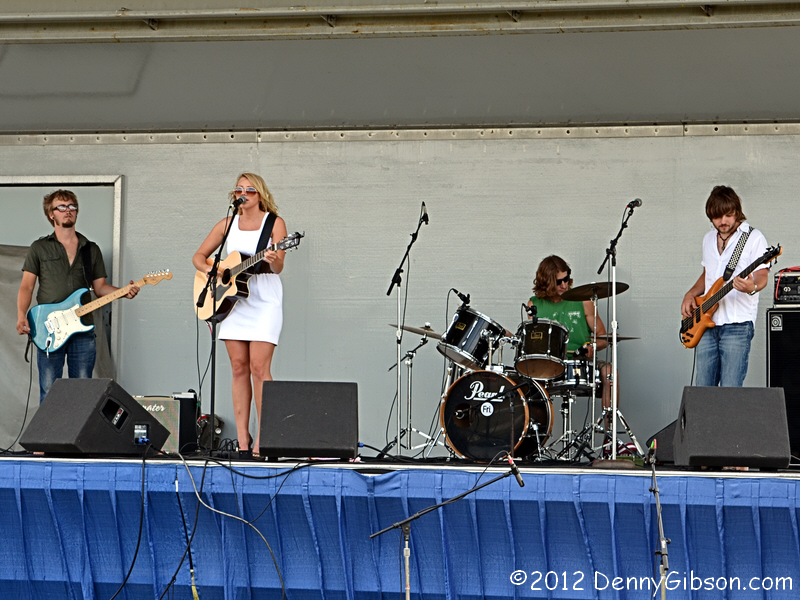
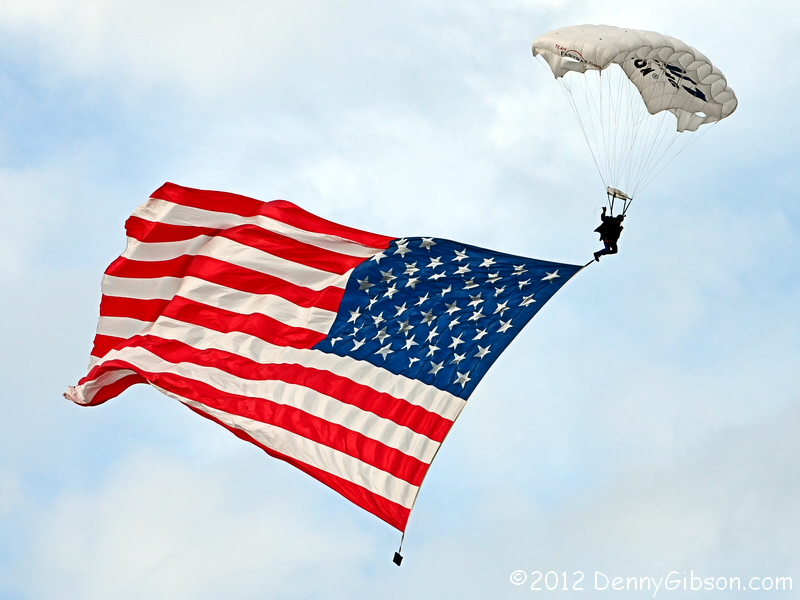
Middletown Balloon Festival - performersMiddletown Balloon Festival - performersThe early crowd was naturally sparse but things were happening well ahead of the opening ceremonies. Food, crafts, and other vendors lined the big spectator field and virtually all were open. A small troop of acrobats warmed up near the middle of the field and an Indiana band, The Skallywags, completed their sound check and immediately stepped into their first set on the main stage. Several skydivers rather casually fell out of the sky. There seemed to be just about everything needed for most festivals but this was a hot air balloon festival and there was not a balloon in sight.

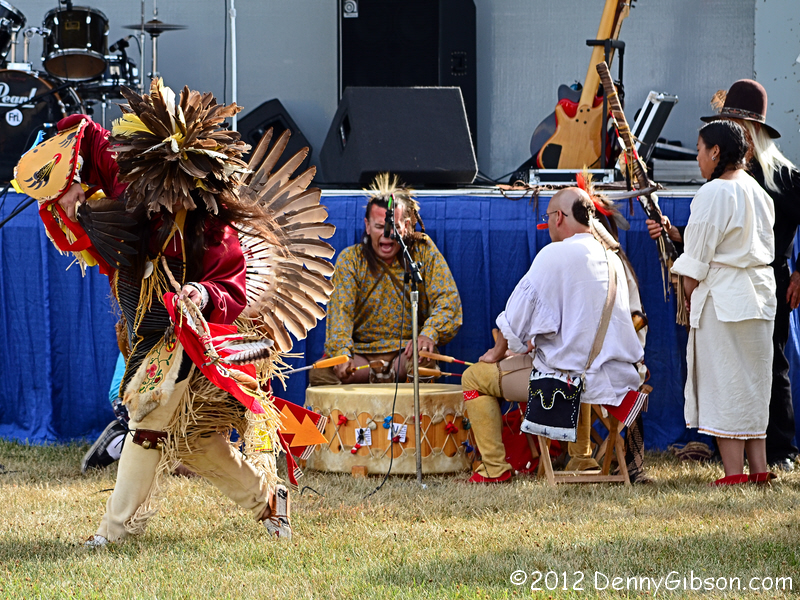
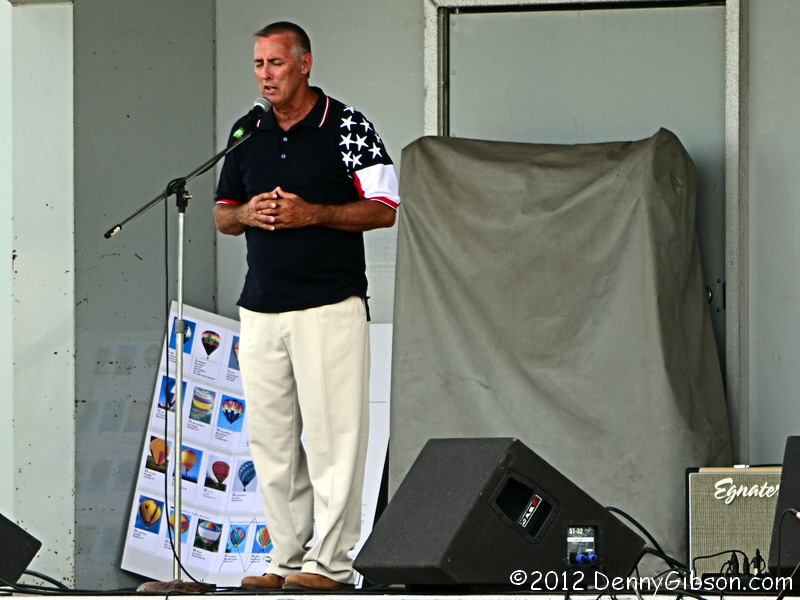
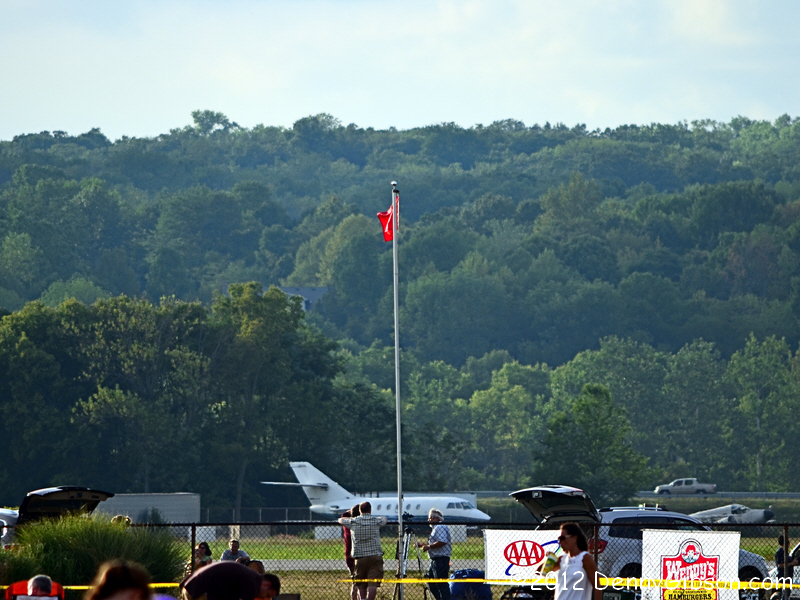
Middletown Balloon Festival - opening ceremoniesMiddletown Balloon Festival - opening ceremoniesMiddletown Balloon Festival - opening ceremoniesOne reason for the lack of balloons would be explained during the opening ceremonies. They started with a fellow named Rick Gibbs singing the national anthem. Then Team Fastrax jumped in with gigantic U.S. flags and a group of Native Americans provided a prayer, some music, and some dancing. A small Indian village with a huge tepee is part of the festival and dancing and other activities would take place there throughout the weekend. There were also a couple of short speeches and announcements. One of the announcements  was that there was just too much wind for safe ballooning. The announcer pointed out a pole with a red flag flying from it on the far side of the field. No launches could take place under a red flag. A window of opportunity could open later but, instead of a 7 o’clock launch, there would be a 7 o’clock pilots meeting. The red flag might turn green after that.

Middletown Balloon Festival - red flagBy 7:20, I was convinced that there would be no balloons flying tonight and started for the gates. At that exact instant, a car with a trailer in tow pulled onto the field; Then another and another. The red flag was still flying but balloonists were at least getting into position. Some unloading was also occurring through at a pace that indicated a complete lack of urgency.

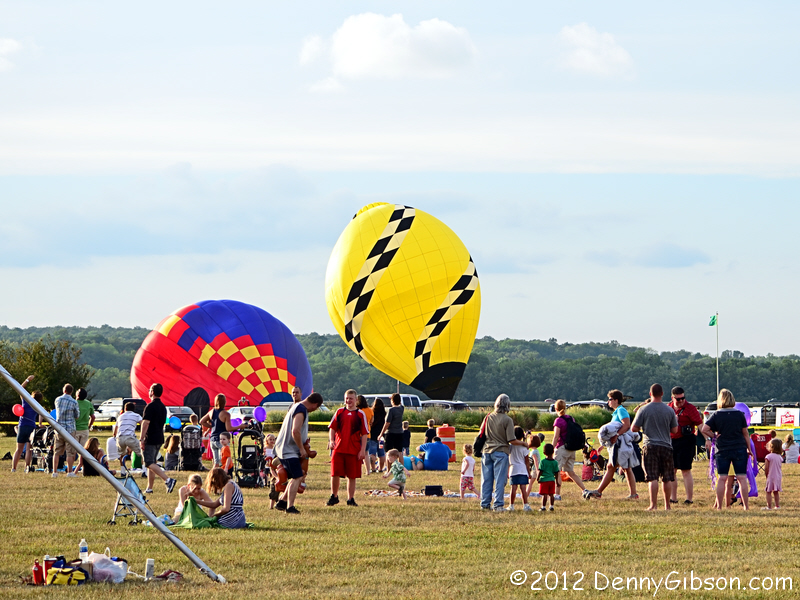
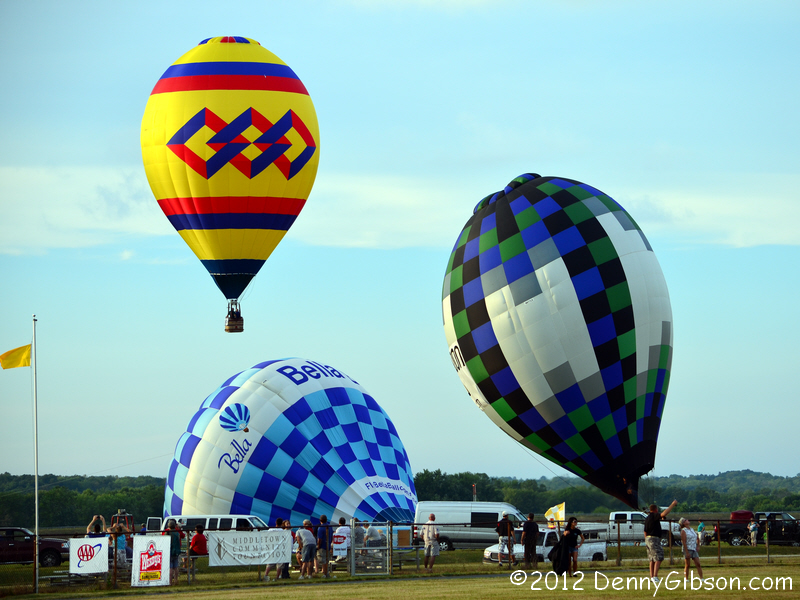
Middletown Balloon FestivalMiddletown Balloon FestivalThe original plan had been for all of the balloons to take off around 7:00, fly for about an hour, then land and return for a “balloon glow” shortly after 9:00. As I thought about that, I once again became convinced that there would be no balloon flying tonight. I theorized that the balloons had come onto the field in anticipation of the “glow” with no intention of taking off. Again I started for the gate and again action on the field stopped me. Balloons were starting to inflate. Some fellows hauled down the red flag and ran up a green one.

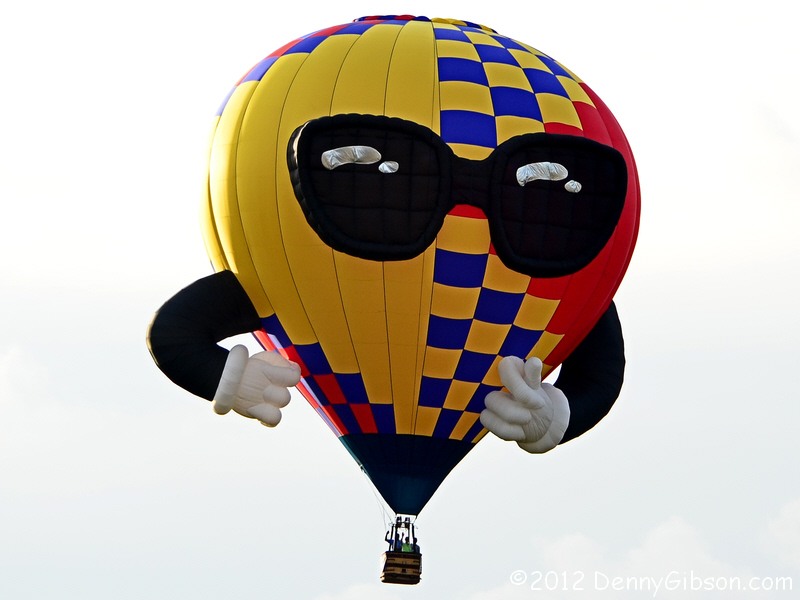
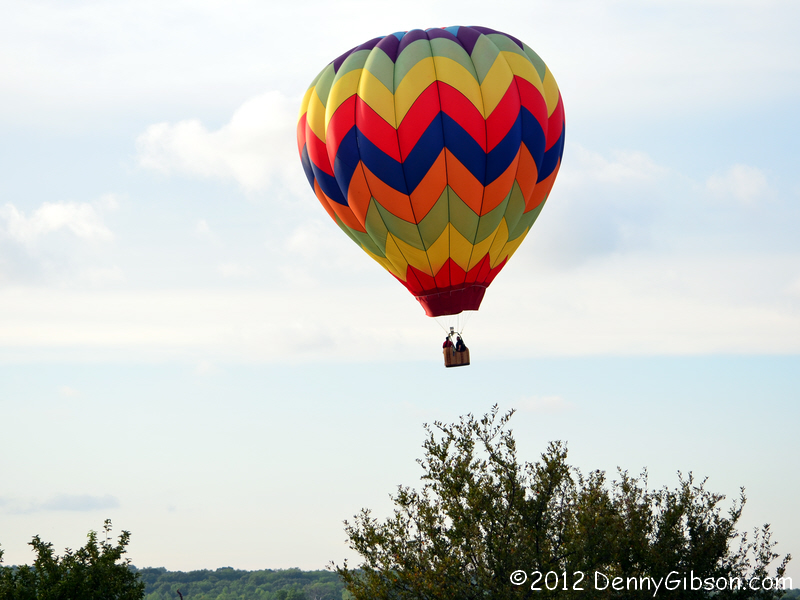
Middletown Balloon FestivalMiddletown Balloon FestivalSoon the announcer was describing a “Hare  & Hounds” competition where one balloon, the hare, lands somewhere and marks the spot and the other balloons score points by dropping a bag of sand as close as they can to the mark. The hare and the first hound, a sunglasses wearing cutie named Lindy, got off in quick succession. A few others followed but it wasn’t long before a yellow flag was raised and a red one soon followed.

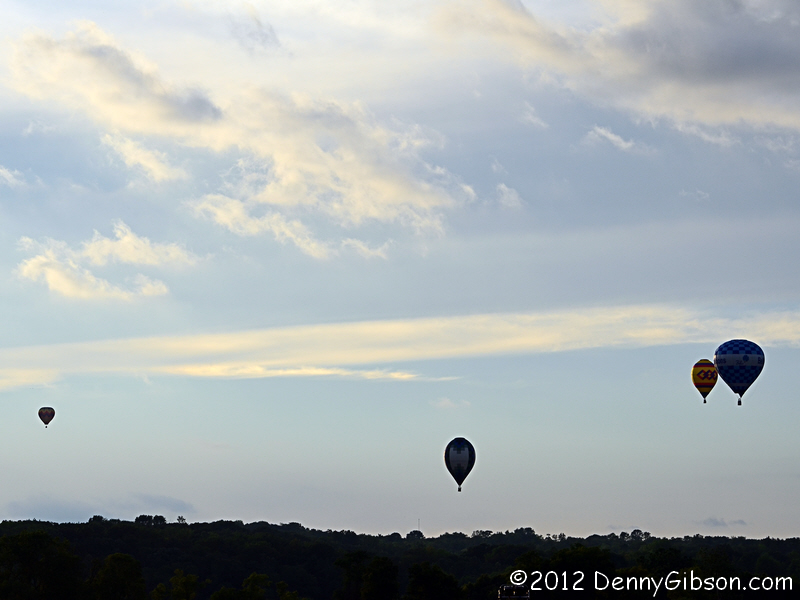
Middletown Balloon FestivalFrom photo time stamps, It appears that the green flag flew for barely fifteen minutes. I believe that about a half-dozen balloons slipped through that small window. That’s but a fraction of the thirty-five competitors listed in the program and I have no idea whether the flight will count for scoring points or not. I suspect it will since the competition appears to be anything but cutthroat and balloonists are somewhat used to being grounded by winds. So this is as close to as I got to the picture I’d envisioned of a balloon filled sky. But it’s a nice little group floating serenely into the sunset and it certainly looks inviting.

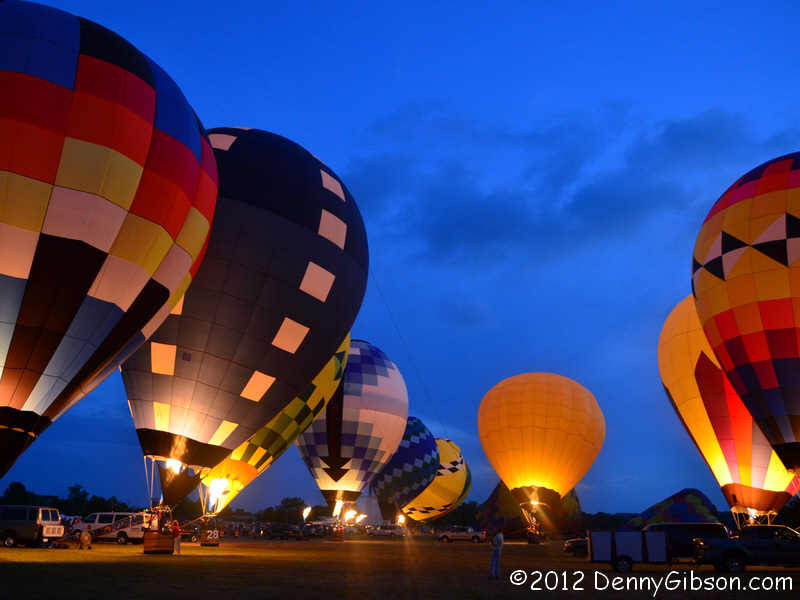
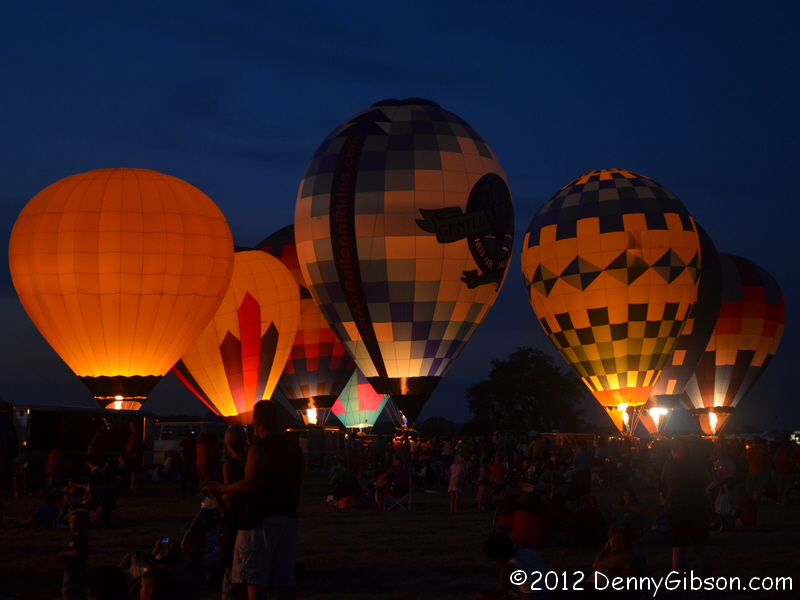
Middletown Balloon FestivalMiddletown Balloon FestivalWith the late launch, it was a fairly short wait for the glow preparations to begin and I suspect some of those hounds were still in the process of being loaded and trailered back when the glow took place. A laser light show and fireworks were to follow but neither interested me all that much and I left after the glow peaked. This was the event’s tenth year and I’ve wanted to come several times. I’m glad I finally made it and consider a return quite likely. It’s definitely a worthwhile event and I still want to see that balloon filled sky.


I did not make it back to a World Choir Games Champions Competition as I wanted to. Thursday would have been good but it was sold out. I decided to settle for a free Friendship Concert that was to be held on Friday in a park not too far from my home. It was moved, however, and by the time I learned of that and reached the new location, the parking lot was filled to overflowing and I’m sure everything else was, too. I drove on by and on to the balloon festival instead. I had planned on attending the festival on Saturday so this was just a little time shift. It all worked out well except for that Champions Competition thing.

The World is Singing in Cincy

The Seventh World Choir Games are happening in Cincinnati right now. Austria, South Korea, Germany, and China have previously hosted the biennial event but this year it’s our turn. The opening ceremony was Wednesday, competition started Thursday, and I got a small taste of the event on Friday. I could have prepared for my visit a little better but I had a great time anyway.

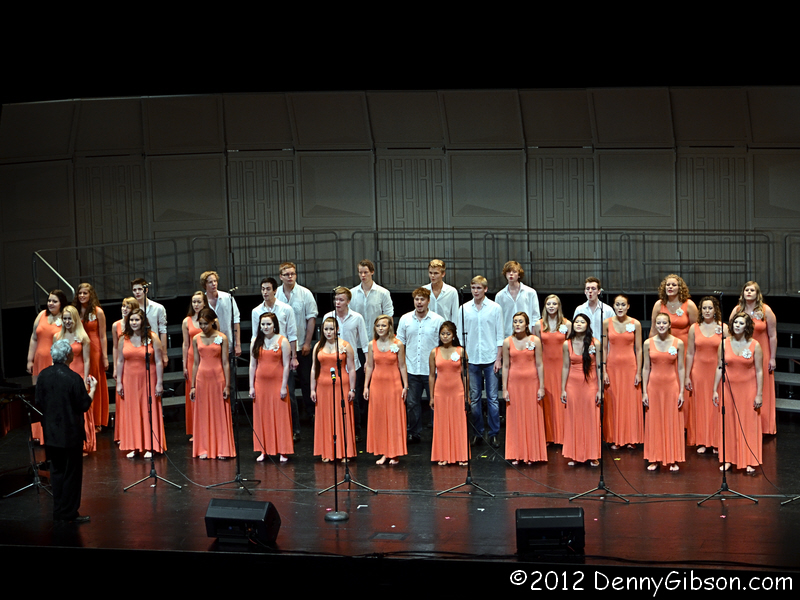
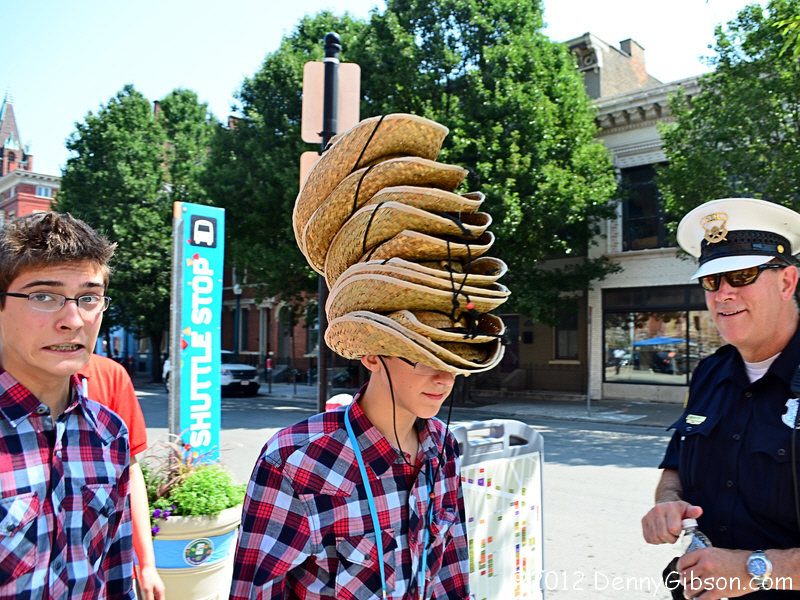
World Choir Games CincinnatiThere are ticketed events, which include the big opening and closing ceremonies, and there are free events. The competition is divided into Open and Champions. The Champions participants are selected by a panel while any choir that meets certain requirements can enter the Open competition. Tickets can be (or at least could have been) purchased for specific events and there are daily Competition Flex Passes available. A Flex Pass will get you into any of the competitions “as seating is available”. Part of my poor planning included deciding on Friday that I was going on Friday. For some reason I thought I had to get my Flex Pass at the Aronoff Theater ticket office which opened at 10:00 or exactly the same time as the day’s first concerts. I had picked a Folklore Champions Competition to attend first. By the time I got my pass and walked to the venue (and discovered that I could have bought my pass there), the choirs and been performing to a packed house for half an hour. The doors opened briefly between each performance, a few people exited, and their replacements were allowed in. I evaluated my chances of getting in before it was over and they weren’t all that good. I slipped away and sought out the shuttle running between the venues. The shuttle stop was near where the choirs entered and exited. A group from the Czech Republic came by then some stragglers from a group that had apparently included some “down on the farm” material in their performance. One trustworthy member had been entrusted with an abundance of their props.

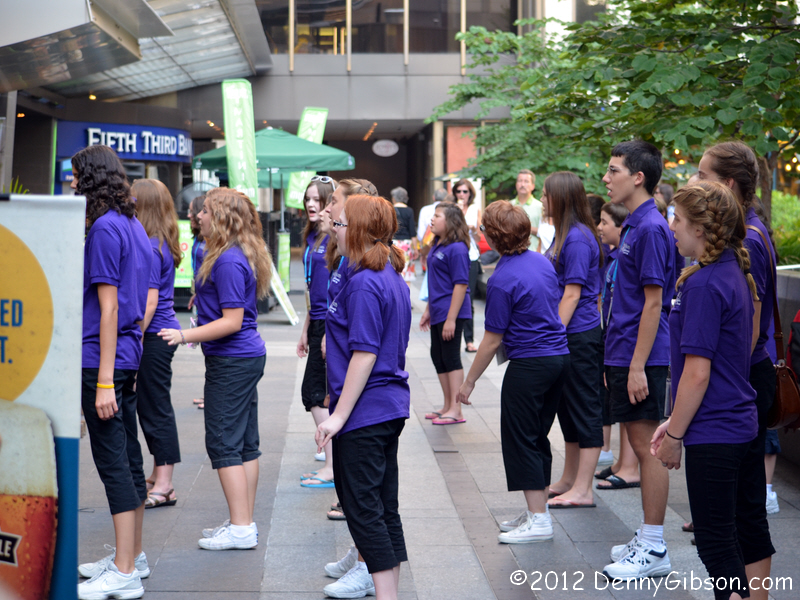
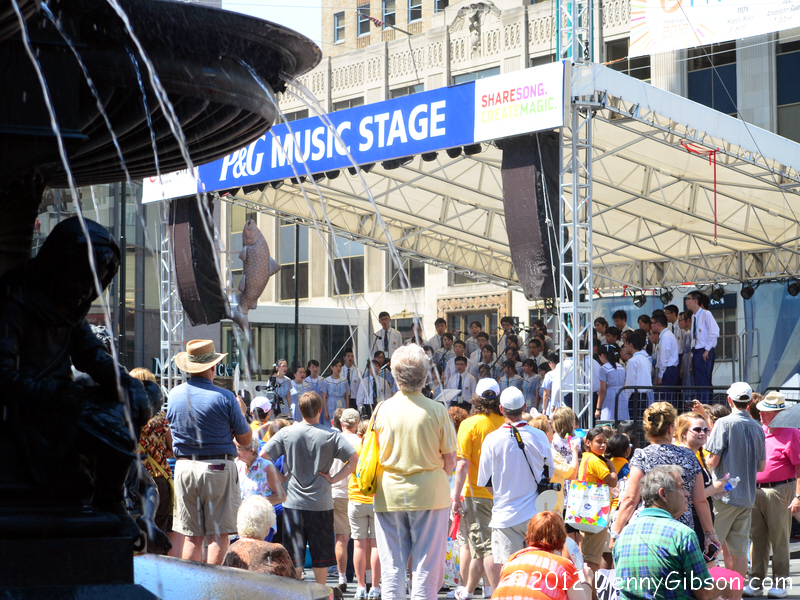
World Choir Games CincinnatiWorld Choir Games CincinnatiI rode the shuttle to Fountain Square where a free Global Village concert was in progress. That’s a choir from China on stage in the picture. In addition to the full slate of scheduled activities, impromptu musical outbursts can occur just about anywhere at anytime. The energetic group performing in front of the Rock Bottom Brewery is the Bel Canto Children’s Chorus from Red Hill, Pennsylvania.

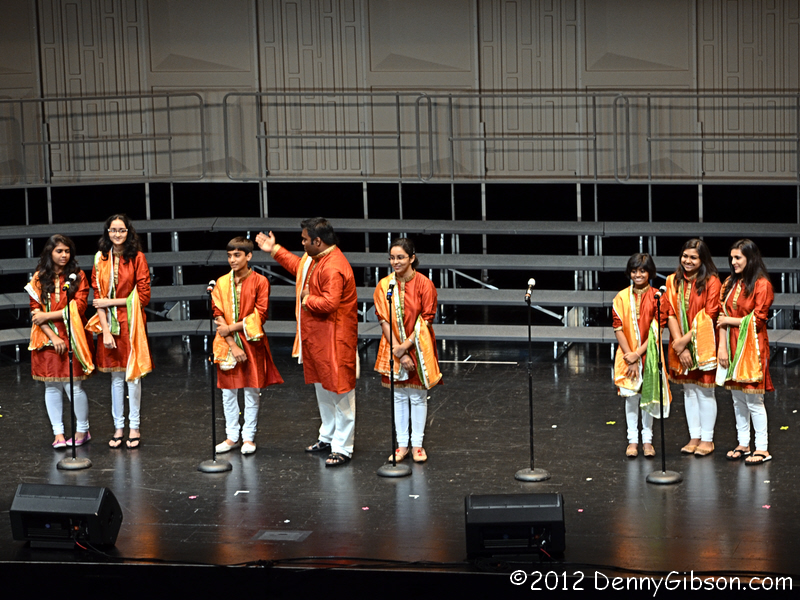
World Choir Games Cincinnati - India

Bombay Cambridge School Choir, India

World Choir Games - Norway

EDTChoir,
Norway

World Choir Games - Wisconsin

Vocal Point, Galesville, WI, USA

World Choir Games - Poland

Vox Juventutis, Poland

World Choir Games - Australia

Hunter Singers, Australia

World Choir Games - Denmark

Morten Boerup Choir, Denmark

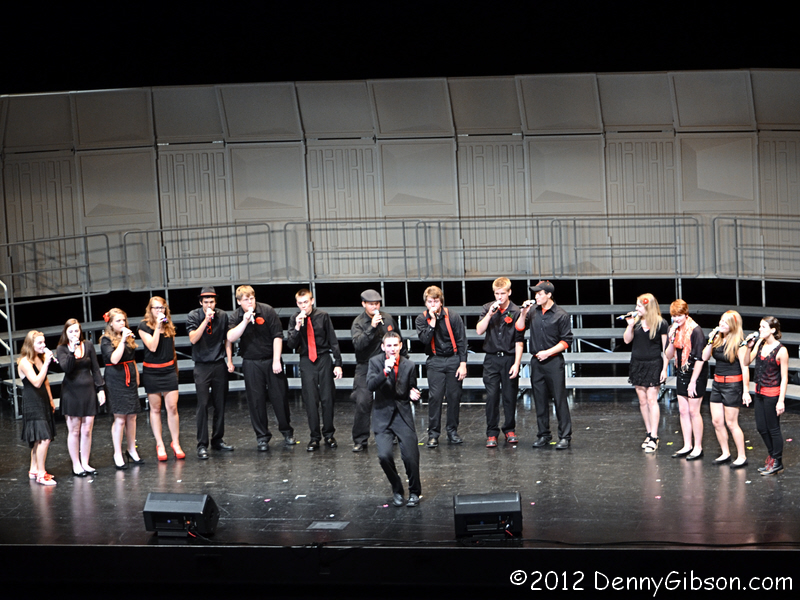
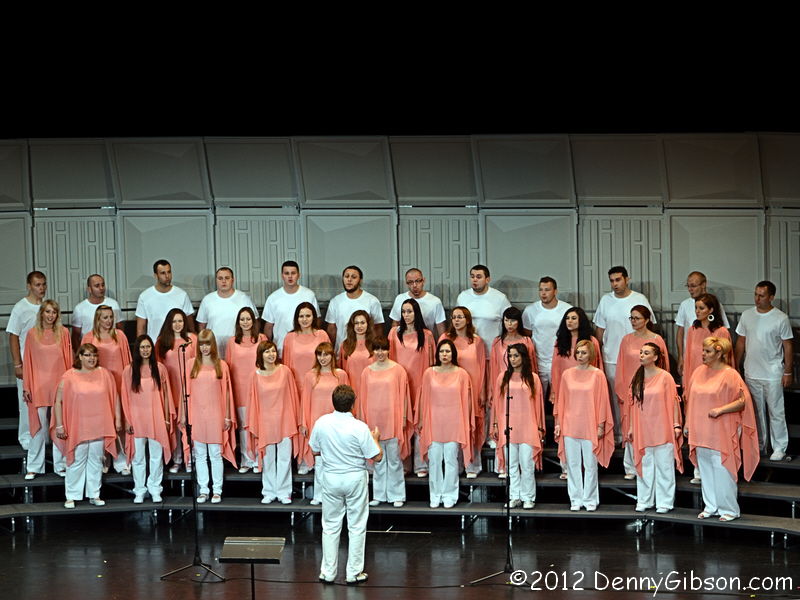
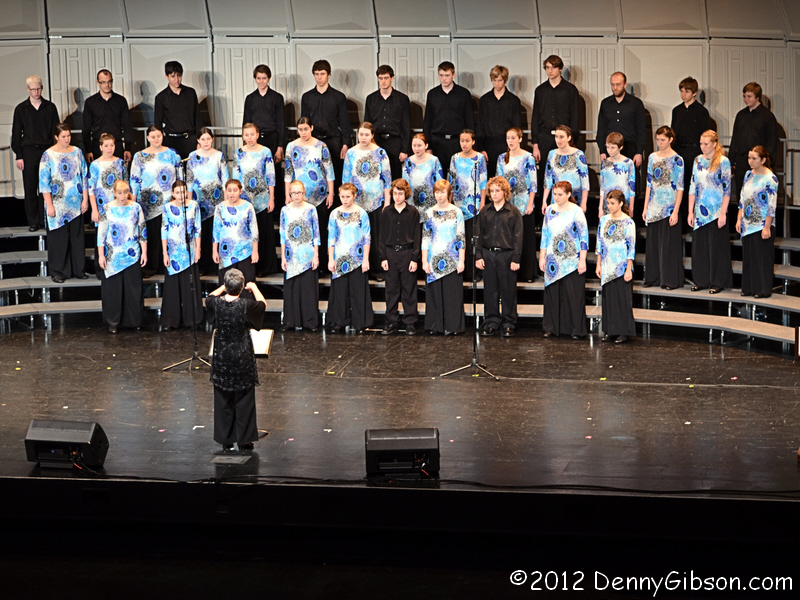
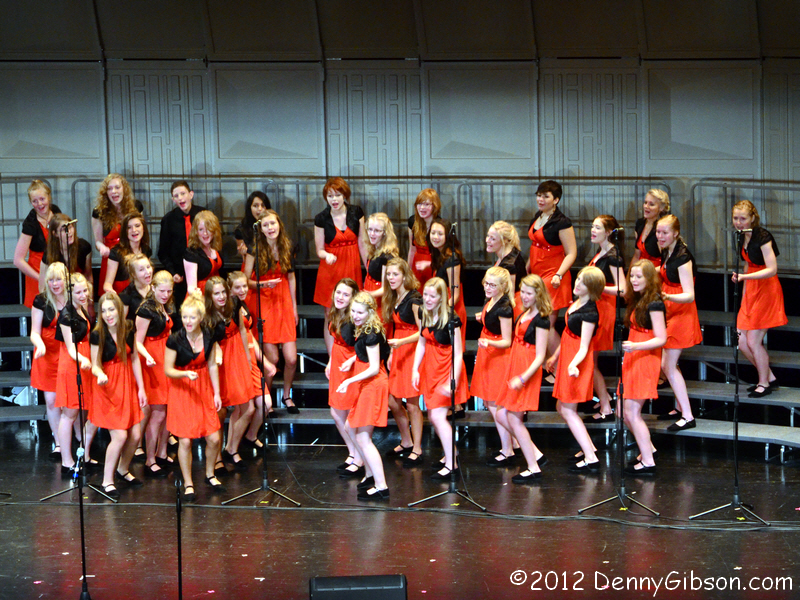
In the afternoon, I easily made it inside for a Popular Choral Music Open Competition at the Aronoff. The theater’s size might be partly responsible for the large number of unfilled seats but I’m sure that the perceived quality has much more to do with it. These may not be the hand-picked cream-of-the-crop choirs of the Champions Competition but they’re pretty darned good. I thought that all six choirs I heard were very good, four were great, and that outfit from Poland was something above excellent.

I have, of course, absolutely no qualifications for offering anything close to a real evaluation of these groups.  I can’t even make an untrained comparison between the Open and Champions Competition since the Popular Choral Music Open Competition was the only competition of either sort I actually saw. It started at 1:00 and ended about 3:15. I wandered back to Fountain Square and even popped into Rock Bottom Brewery for a cold one. Yes, I had just been sitting in air conditioned comfort for a couple of hours but at 100+ it doesn’t take long to get hot. As I sipped, I did something I should have done much earlier and looked a little more thoughtfully at the schedule. A Champions Competition was slated for 3:30 just a few blocks from the Aronoff. Had I headed there when the Popular Choral Music thing ended, I could have at least been in line when the doors opened. I walked on over but the line that existed at 4:15 was clearly enough the keep the event filled and then some.

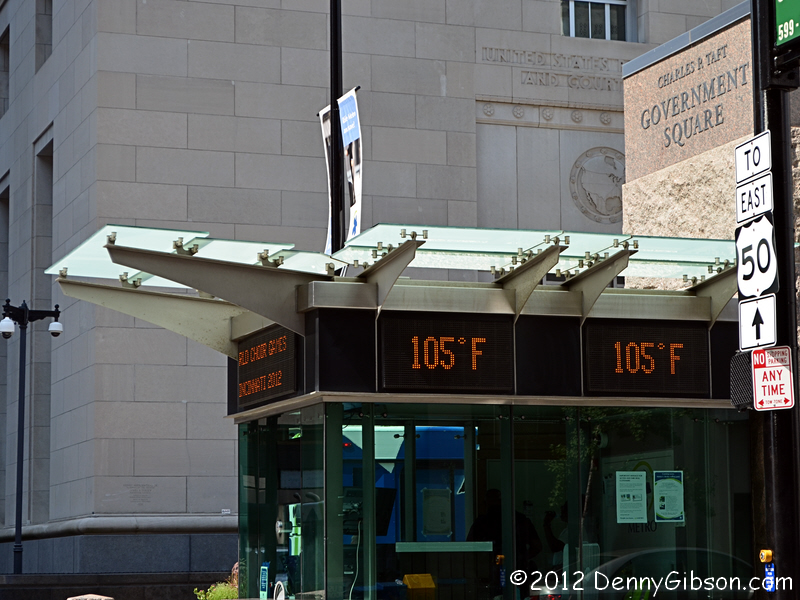
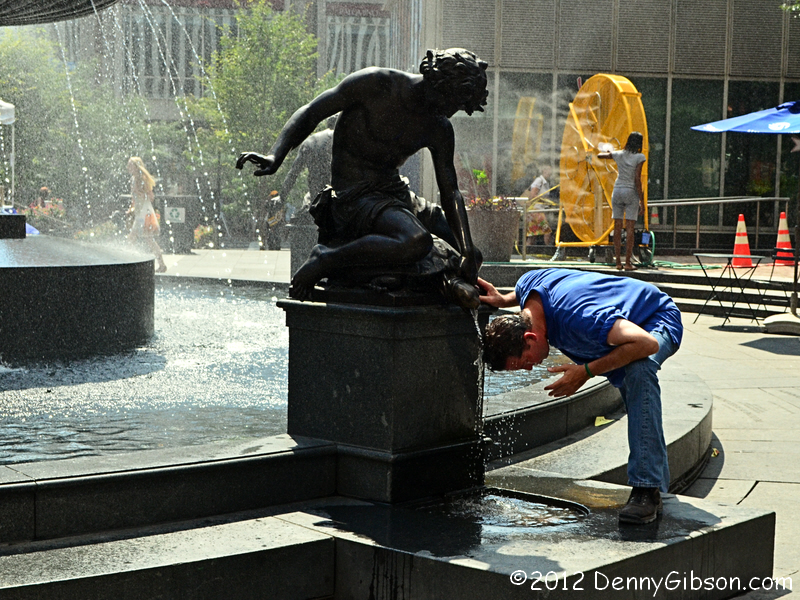
Cincinnati 105 degreesThe official temperature in downtown Cincinnati was a record breaking 104 Fahrenheit. As I walked back to Fountain Square, I snapped a couple of pictures of the kiosk at the bus plaza. It showed a solid 104 and I got a picture of that. Then, just as I was lowering the camera, a 105 appeared and I grabbed another shot. On the next cycle it was back to 104. Maybe it was just showing off for the camera. I have evidence of a 105 reading but, to be honest, I couldn’t tell the difference.

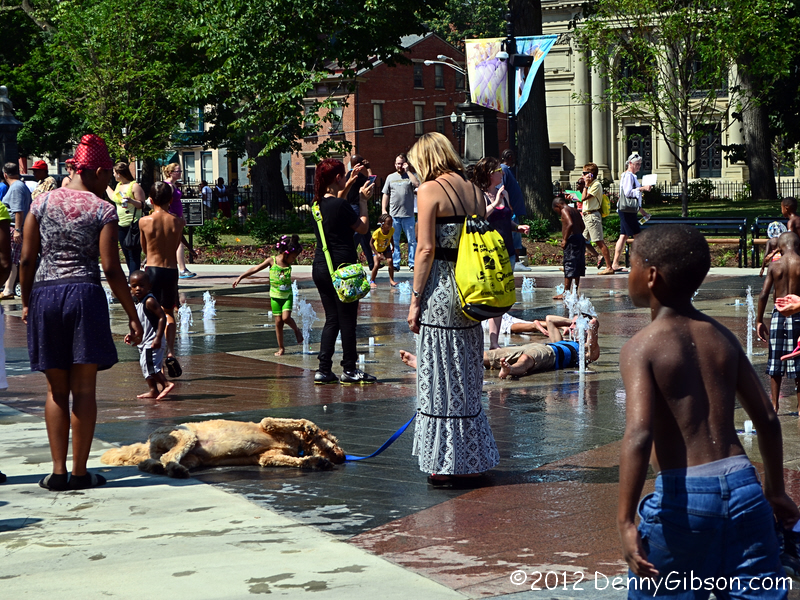
Fountain Square - CincinnatiWashington Park - CincinnatiTemperature has certainly been a big story around here lately. Keeping residents and visitors safe is a real concern that Cincinnati is taking seriously. Although a big reopening celebration is a couple of weeks away, there was a ribbon cutting and dedication at the totally reworked Washington Park and its several fountains were clearly appreciated. The park is near Music Hall and the School for Creative & Performing Arts which are both being used for the Choir Games. Some large misters are operating on Fountain Square and, of course, there is always the Tyler-Davidson Fountain itself.

Maybe it was the heat that kept me from thinking clearly and organizing my day better. The Games are here through next week so maybe I’ll try again. Haphazard bouncing around was certainly enjoyable but actually hearing at least one Champions Choir seems like a worthwhile goal.


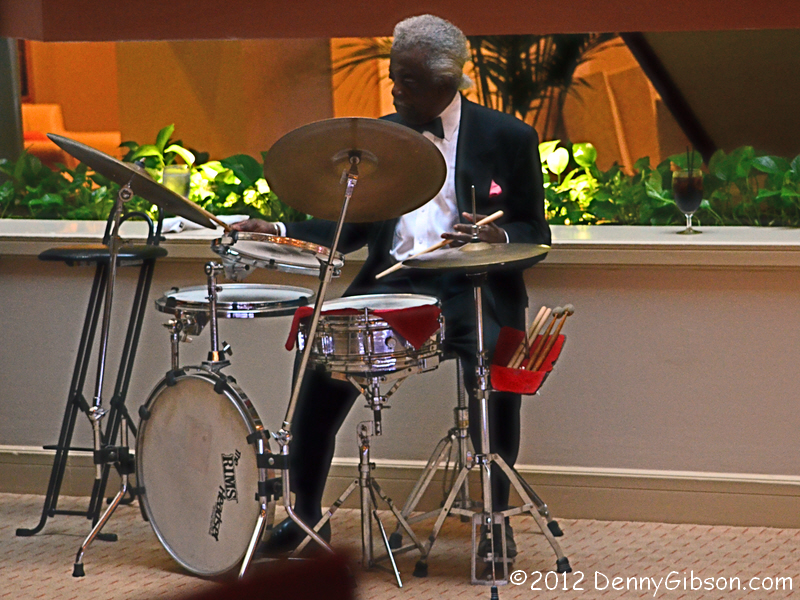
Philip PaulOddly enough, the World Choir Games were not the reason I first marked July 6 on my calendar. I marked it when I heard that a favorite musician would be visiting Cincinnati and playing on the square. This isn’t him. This is a favorite musician but he doesn’t have to visit Cincinnati; He lives here. This is 86 year old Philip Paul. Remember Tiny Bradshaw’s Train Kept a Rollin’ or Hank Ballard’s The Twist or Freddie King’s Hideaway? All those recordings and a whole lot more had Philip Paul’s drums on them. He was pretty much the session drummer for King Records during their heyday. He still performs on weekends at the Cricket Lounge. When I realized that hanging around to see that out-of-towner would keep me in the area and that actually seeing him would keep me from the late Choir events, it seemed a perfect time to see the Phillip Paul Trio again. It’s good jazz from a rock ‘n’ roll and blues legend who happens to be a really nice guy, too.


Patrick Sweany - Fountain Square - CincinnatiThis is the guy I’d marked my calendar for and was hanging around to see. Patrick Sweany is originally from Ohio but now lives in Nashville, Tennessee. In a way, I think the move may have been good for Cincinnati fans. Patrick occasionally returns to the Alliance, Ohio, area to visit family and play a few gigs in the ‘hood. Since Cincinnati is along one of the possible routes, we get to see him now and then, too. His music is a little bit blues, a little bit roots, a little bit soul, and a little bit rock ‘n’ roll.

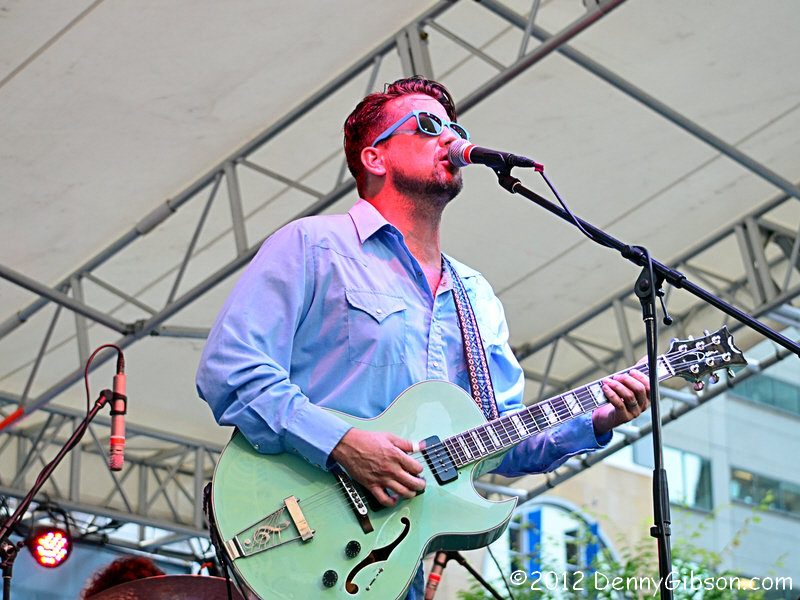
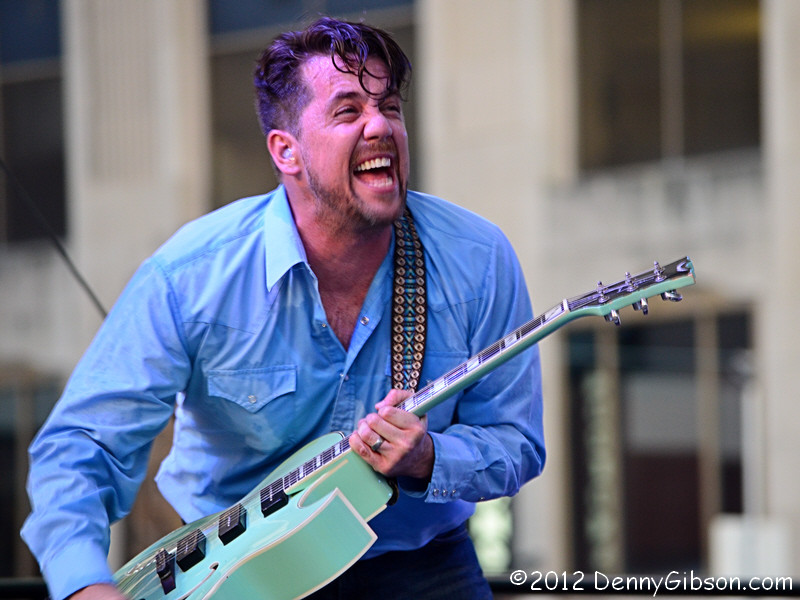
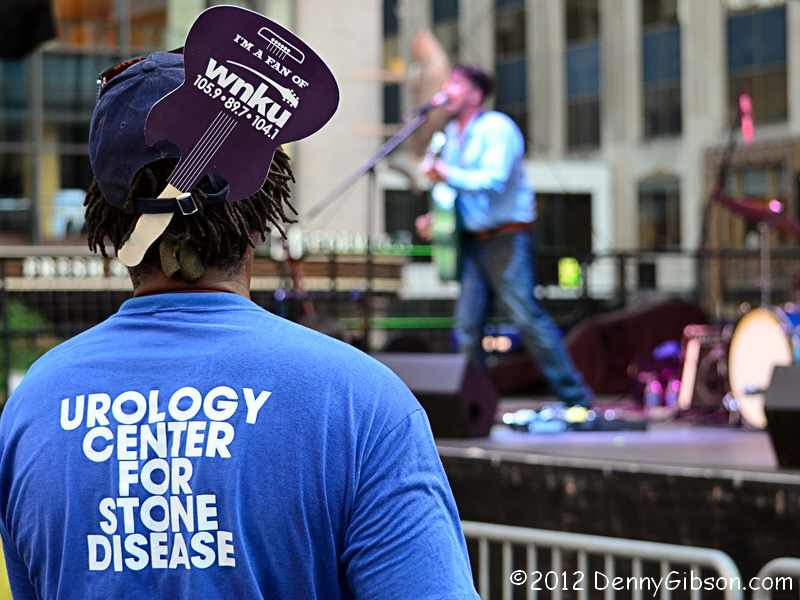
Patrick Sweany - Fountain Square - CincinnatiPatrick Sweany fan - Fountain Square - CincinnatiStrangers may have been fooled by the perfectly combed hair and the shades that you can only buy in Nashville and then only with a prescription from your manager but us regulars know what happens when the music starts. And it looks like those great tunes and nothing-held-back performances may be winning over some new Cincinnati fans, too.

My Apps – Chapter 2
First Routing Programs

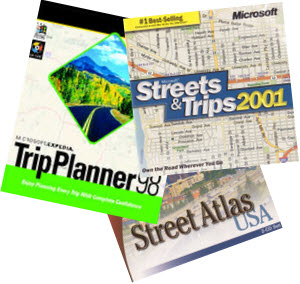
Trip Planner - Streets & Trips - Street AtlasI really don’t remember it but there is hard proof that I used Microsoft Expedia Trip Planner 98 to plot a drive to Florida even before my first documented trip on Route 66 in 1999. In January of that year, my girl friend, Chris, and I drove to Daytona for the Rolex 24 Hour Race then to Pass Christian, Mississippi, to visit my daughter. The photos used in that first practice page I mentioned in the first My Apps installment were taken on that trip. If you had asked me a few days ago whether I had ever used Trip Planner for anything “real”, I’d have said no but there are a couple of maps and pages of turn-by-turn instructions for that trip which are clearly the product of Trip Planner 98.

My memory is just as bad regarding the other two pictured products. In a My Gear entry I described using Streets & Trips software to plot a trip then following the route with a laptop and a GPS receiver toward the end of 2001. That’s what I remembered but it’s wrong. There is no doubt that I owned Microsoft Streets & Trips 2001 and there isn’t much doubt that I used it during the summer of 2001 when I was plotting that trip but, when the rubber met the road and the GPS met the ‘puter, it was DeLorme Street Atlas 9.0 that was in play. Proof of that comes from the printed and posted maps and turn-by-turn directions with “Street Atlas USA® 9.0” in the upper right corner. I vaguely recall that something sometime caused me to switch to DeLorme but I thought that “sometime” was after the autumn 2001 trip. My best guess on the “something” is that it had to do with waypoint limits but my memory is clearly not to be trusted and moving to DeLorme may have eased limits but it certainly did not eliminate them.

I obviously don’t remember much about these programs. My memory of why I switched from Microsoft to DeLorme is vague and my memory of when was wrong. But, whatever the details of the battle, DeLorme Street Atlas emerged as my favorite routing tool pretty early and it remains my favorite. Of course, familiarity plays as big a role as anything in identifying favorites and that’s certainly a factor here. I have looked at some Garmin routing software and will talk of that in future My Apps posts but I don’t remember looking at Streets & Trips since 2002. Apparently I haven’t looked at it since 2001.

My Apps – Chapter 1 — PhotoWise & FP Express


Reverse Road Trip

American Sign MuseumI was part of a road trip today but it wasn’t mine. Roadie Fred Zander from Topeka, Kansas, is in Ohio visiting family north of Dayton and came down to Cincinnati for the day. Like many others, Fred has wanted to visit the American Sign Museum but its limited hours made him put it off. The ribbon cutting was yesterday. Today was the first “normal” day and Fred was among the first “normal” customers.

Although it was the Sign Museum that prompted the trip and Fred even commented that the museum alone would have made the trip worthwhile, this was also Fred’s first visit to the Queen City and an opportunity for me to do a little boostering. I think I did OK in that regard but really fell down in the picture-taking department. I had good intentions and almost always had a camera nearby but, presumably since everything was familiar to me, whatever it is that makes me want to click rarely appeared. So, while I showed Fred what I believe is some Cincinnati “good stuff”, I’m going to have to tell about it with few visual aids.

Fred Zander at Roebling BridgeI met Fred at an I-75 exit a little north of the city where he could leave his car. We headed directly downtown from there and drove by Music Hall, Fountain Square, P & G headquarters, and Cincinnati’s oldest bar, Arnold’s. On the way to the 1867 Roebling Suspension Bridge, we got a glimpse of the football and baseball stadiums and the National Underground Railroad Freedom Center. On the Kentucky end of the bridge, we pulled into a small lot beneath it that offers a good view of the bridge, the river, and the Cincinnati skyline. I even thought to get a picture of the skyline in addition to the picture of Fred backed by the Roebling Bridge. Before moving on, we took a look at the scenes from area history captured by large murals painted on the flood wall.

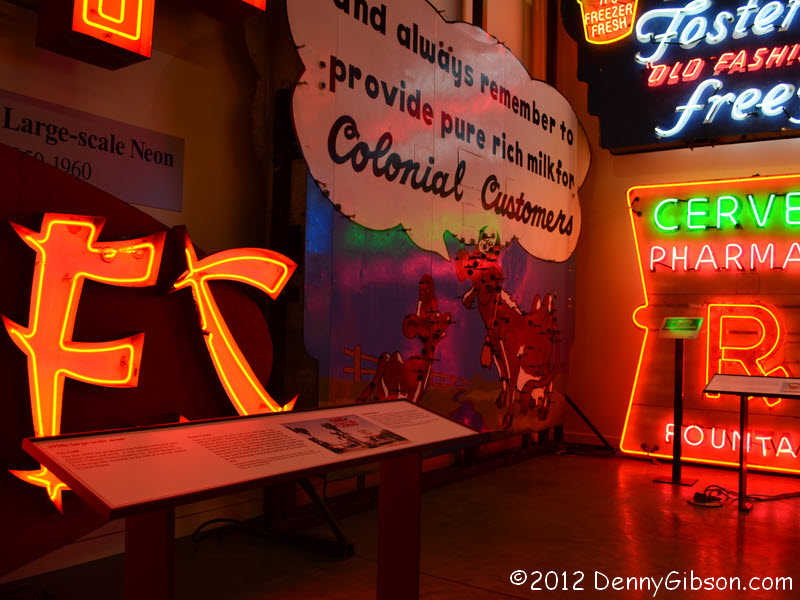
Fred and Tod at American Sign MuseumInformation panel at American Sign MuseumThen it was time for the sign museum to open so we headed back to Ohio. I actually remembered to take some pictures there. One reason may have been that the explanatory panels that stand near most signs were new to me. The text had been ready for the sneak previews but not the stands. I wish I had taken a picture of the face of one of the panels as an example. Tod wrote most or all of these and it’s no surprise that they are quite informative. Sharp eyes may have noticed the American Sign Museum sign at the museum entrance in the photo at the top of this article. That’s also been added since the previews as have some plaques and section signs inside. We were not on an official tour but Tod was always nearby answering questions and pointing out things so it was an “almost tour”.

First Sign Museum tourReal tours, which are free, are given at fixed times. Space permitting, walk-ups are welcome but tours may be scheduled and tickets purchased through the museum’s website. The picture is of the first official tour at the new location. Most of the group is on the other side of the wall.

Fred and his favorite signFred's favorite signI also got a picture of Fred’s favorite sign and a picture of Fred taking a picture of Fred’s favorite sign.

After a couple of hours at the sign museum we drove a couple of miles south to the Cincinnati Museum Center. The museum center is in the 1931 Union Terminal and the art deco building with its murals and other decorative features is something of a museum itself. We did not visit any of the three real museums there.

It was beginning to get a little hungry out so we headed over to Terry’s Turf Club. I had originally wanted to stop at Camp Washington Chili which is just a few blocks from the Sign Museum but it’s closed on Sunday. Terry’s is known for its fantastic hamburgers and huge collection of working neon signs. It’s definitely a fitting place to eat after an American Sign Museum visit. Dessert was ice cream at the 1913 Aglamesis Brothers shop just a few miles north.

Although I didn’t do a very good job of recording the reverse road trip, I did enjoy the chance to show someone a little bit of my town. Fred clearly enjoyed his first visit here and declared his intentions to return. I’m looking forward to it.

My Gear – Chapter 11
Garmin Quest
My relationship with GPS receivers took a whole new direction when I got my a Garmin Quest. Some may recall that Garmin described my previous unit, the GPS III Plus, as having “cartographic capabilities”. It did not do routing of any sort. Before buying the Quest in June of 2006, I “test drove” a friend’s GPS V which Garmin called a “versatile navigator”. I believe it was. It did routing and may have served my purpose but it had been discontinued in January and getting current maps for it was already a bit of a problem. That could only get worse. At the end of the day, I opted to spend $345 for a new Quest.

The Quest had appeared in late 2004 and there was already a Quest 2 model when I made my purchase. The difference was memory. The Quest 2 had enough of it to hold the detail map for the whole USA. In fact, that detail map, City Select North America, was preloaded onto the Quest 2. The Quest came with a CD and enough memory to hold something on the order of Ohio or Indiana, or a strip crossing two or three states. The Quest was noticeably cheaper and I wanted the CD for off-GPS routing anyway. It seemed the obvious choice.

The Quest did require feeding when on a long trip and it was possible to overdrive whatever maps were loaded but it was otherwise ideal. It had a small color screen and a speaker. Its push-button controls were very similar to the familiar ones of the GPS III Plus. I could “Find” something with it then request that it “Route to” what I’d found. It would then guide me to my destination with visual and spoken directions. It did not speak street names, as some units were doing at the time, but street names were displayed. The voice (female and always calm no matter how many times I ignored her) might say “Turn right in 500 feet” and a glance at the screen would show the street name along with the zoomed in map. Even better than the Quest telling me how to get somewhere was me telling it how I wanted to get somewhere and it telling me how to do that in real-time.

I typically don’t merely want to get somewhere. I want to get there along a specific, perhaps historic, route. I don’t want the “quickest” or “shortest” route. I want “my” route. The one I carefully plotted on my PC. In this, the Quest was a willing and capable partner. There were some issues in getting my chosen path to the unit in a form that matched its maps but the complications came from the way I chose to do things and not from any Quest shortcomings. Once a route was properly tweaked and downloaded, the Quest would visually and verbally guide me along. As a more-often-than-not solo traveler. I appreciate this deeply.

Popping the Quest from its cradle was extremely easy and sliding it into a pocket just as easy. Its twenty hours of battery meant you really could do a serious walkabout and not lose your car. Even though I eventually bought an external antenna to boost reception on rainy days, the built in one was generally more than enough. In short, the Garmin Quest was as close to perfection as any GPS receiver I’ve had contact with.
It was maps that prompted me to replace it. In 2008 I bought a factory refurbished Quest because it came bundled with the latest detail map and was priced below buying just the map from Garmin. As it turned out, not only was this the latest City Select Map; It was the last. Current model Garmin GPS receivers use a map product called City Navigator. To an outside and somewhat casual observer, Garmin appears to abandon one line of development for another more often than seems necessary or wise. Since the Quest was so close to perfect, I assumed that newer models would be evolutionary and even closer. I was shocked and a little angered to discover that current models seem to be totally new developments that in some areas are much less capable than the 2004 model Quest. In my heart I know it’s doomed to fail but if anyone wants to start a “Bring Back the Quest” petition, I’ll sign.
My Gear — Chapter 10 — Toshiba Satellite A105


Pathways and Presidents
2012 Lincoln Highway Conference

I started toward Canton, Ohio, today. That’s where the 2012 Lincoln Highway Association National Conference begins on Monday. The conference actually gets rolling — literally — on Tuesday with the first bus tour but the opening banquet is on Monday evening and I’ve signed up for a pre-conference tour that launches from Niles, Ohio, at 9:15 Monday morning. Since that’s near the far corner of the state, I figured  I ought to leave home on Saturday morning. Two full days to drive across Ohio sounds about right don’t you think?

The journal for the trip, with the first day posted, is here. This blog entry may be used for comments and questions concerning the entire trip.

Book Review
Fips, Bots, Doggeries, and More
Tracy Lawson

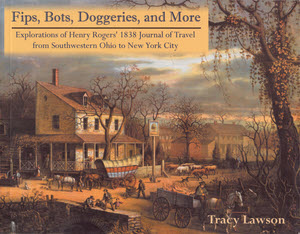
Fips, Bots, Doggeries, and More coverIn 1990, Tracy Lawson’s parents gave her a stack of twenty-one photocopied pages as a Christmas present. Transcribed onto the typewritten pages was the journal of her third great-grandfather’s 1838 trip from a Cincinnati suburb to New York City. In 2012, Lawson is sharing those pages and the experiences they triggered, in Fips, Bots, Doggeries, and More. The book is comprised of two sections. “Section I — 1838” contains the journal along with Lawson’s illuminating comments and notes. “Section II — 2003-2009” contains accounts of the author’s own trips along the route. Both sections are liberally illustrated with black and white photos and drawings.

The writer of the 1838 journal was Henry Rogers, who operated a successful mill in Mount Pleasant (now Mount Healthy), Ohio. Traveling with the 32 year old Henry were his wife and her parents. The miller was both literate and observant and he sets out to record “…all interesting subjects and things that come under my observation”. The journal provides a most interesting look at nineteenth century road-tripping. Henry recorded expenses and named names so we know, for example, that the group spent a night at Winchester’s hotel in Jefferson (now West Jefferson), Ohio and paid $2.50 for the privilege. That $2.50 covered bed and board for four people and two horses. Along the way, he records expenses for tolls, horseshoes, wagon tyres, and “face barbering”, etc..
The travelers picked up the National Road in Jefferson, Ohio, and followed it and its extensions to Hagerstown, Maryland. As a fan of the National Road, I enjoyed reading Henry’s descriptions and found his pre-bridge entry to Wheeling, Virginia, which required a ferry over each of the two Ohio River channels at costs of 25 and 37.5 cents, especially interesting. They passed through Brownsville, Pennsylvania, during construction of the first cast iron bridge in the United States. It doesn’t appear as if Henry realized that the bridge that would soon carry the National Road over Dunlap’s Creek was the first of its kind but he described it as “splendid” while being forced to cross on an “..old narrow bridge that looked as though it would scarcely bear its own weight.” At Hagerstown, the group turned northeast and headed toward Gettysburg, Pennsylvania, then through Abbottstown and York to Lancaster. Roadies will recognize the Gettysburg to Lancaster route as the future path of the Lincoln Highway. From Lancaster, they continued northeast to Trenton, New Jersey, where they spent a little time and made a visit to Philadelphia before moving onto New York City.
The 1838 journal is accompanied by sidebars that explain unfamiliar terms or provide background for certain passages. The journal’s text is cross referenced to a set of end notes. A subsection titled “Expansions” contains short dissertations on subjects that were part of Henry Rogers’ world. These include mills, finances, politics, medicine, fashion, and more.

The author made three trips specifically to experience and research the route her great-great-great-grandparents had followed. Two were driving trips with her daughter and one was a solo fly-and-drive outing. These trips are covered in “Section II” with a blend of genealogy, personal discovery, and general history. It’s fun reading that mirrors Henry’s journal in the sense that both are straight forward reports of some relatively unscripted travel. Henry’s journal held my interest more but there is a good chance that this was because his travel was so much different from today’s. Lawson describes some of the places she stayed and ate much as Henry did and there is even an encounter with a less than savory character that is reminiscent of some of the “scoundrels and topers” encountered by Henry. But Ramada and Cracker Barrel don’t have the same zing as names like Sign of the Bear and Cross Keys Tavern.

Lawson does locate and visit several of the places mentioned in the journal including a few, such as Pennsylvania’s 7 Stars Inn, that are still operating. She also picked up some information at libraries and local historical societies though the trips were not as rich in field research as she had hoped. They were more successful, it seems, on a personal level. She was able to familiarize herself with the path her ancestors traveled and the world they lived in. The mother-daughter time was, as the ads say, priceless.

That personal connection won’t be there for most readers of Fips, Bots, Doggeries, and More, but it is still an entertaining and informative look at a road trip back when thirty-one and a half cents fed a family of four and two horsepower was plenty.

There are some minor errors. Perhaps I’m just sensitized to this sort of thing but referring to US 36 as State Route 36 and saying the Madonna of the Trail Monuments were “erected … on US Route 40 and US Route 66” with no mention of the National Old Trails Road bothered me. Aside from increased knowledge of her own ancestors and the world of 1838, it seems Tracy Lawson gained some insight into heritage road trips. In the Epilogue she says “And if I were driving the National Road again, I would eat at all the restaurants that were once taverns Henry mentioned in his journal!” I hope she makes that happen.

Fips, Bots, Doggeries, and More, Tracy Lawson, The McDonald & Woodward Publishing Company, April 2012, paperback, 9.1 x 7.1 inches, 156 pages, ISBN 978-1935778196
Available through Amazon.