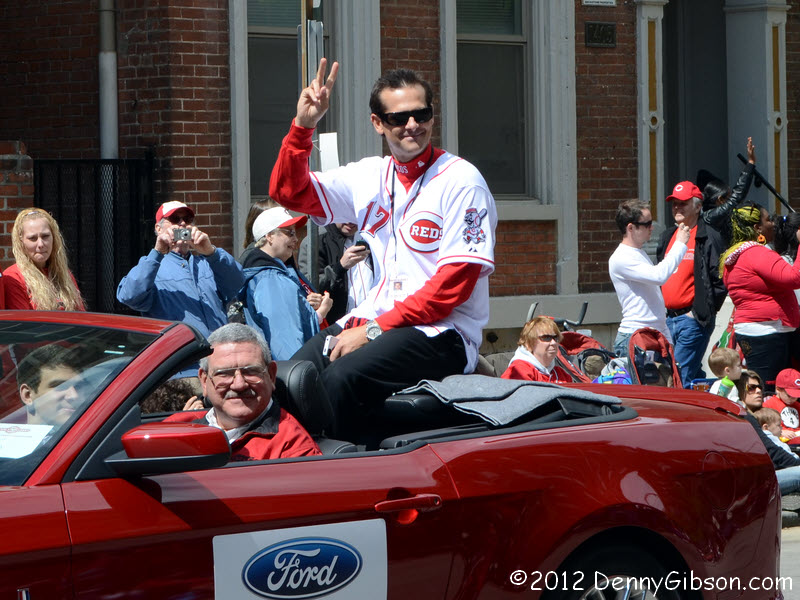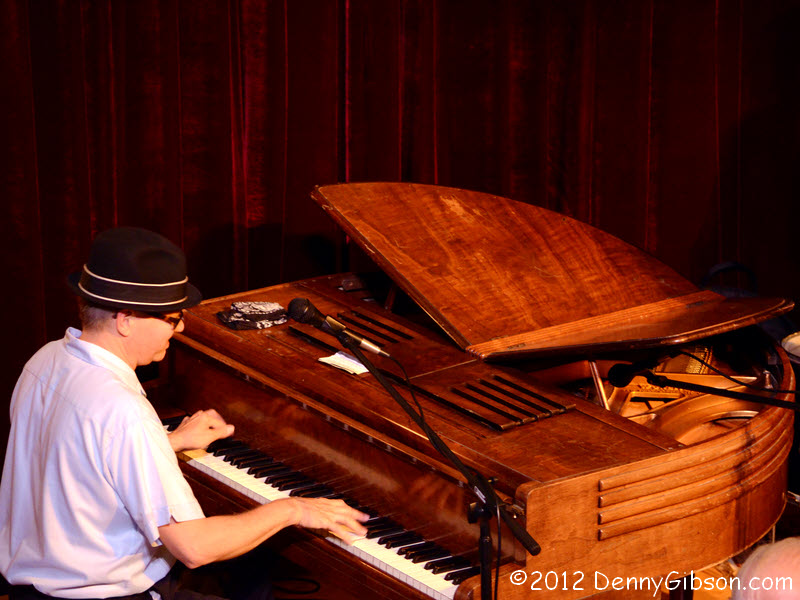
 The fountain in front of Union Terminal, a.k.a., Cincinnati Museum Center, runs all summer and is turned off all winter. Therefore, one sure sign of summer in Cincinnati is the turning on of the fountain. That happened Friday at 10:30 AM. I had kind of hoped to see the stepped pools below the fountain go from bare concrete to a series of waterfalls right before our eyes but it wasn’t quite that dramatic. Whether the pools were primed in the interest of time or whether the standing water was simply left over from some secret testing I cannot say, but they started the day ready to overflow at the slightest provocation.


I still think bare concrete morphing to cascading waterfalls would have been cooler but watching the fountain go from zilch to a spurt to a full spray wasn’t bad.

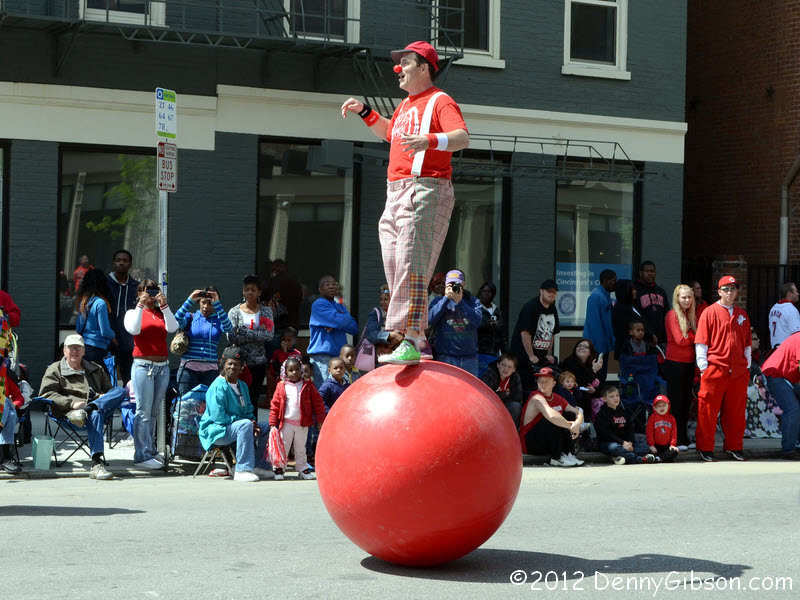
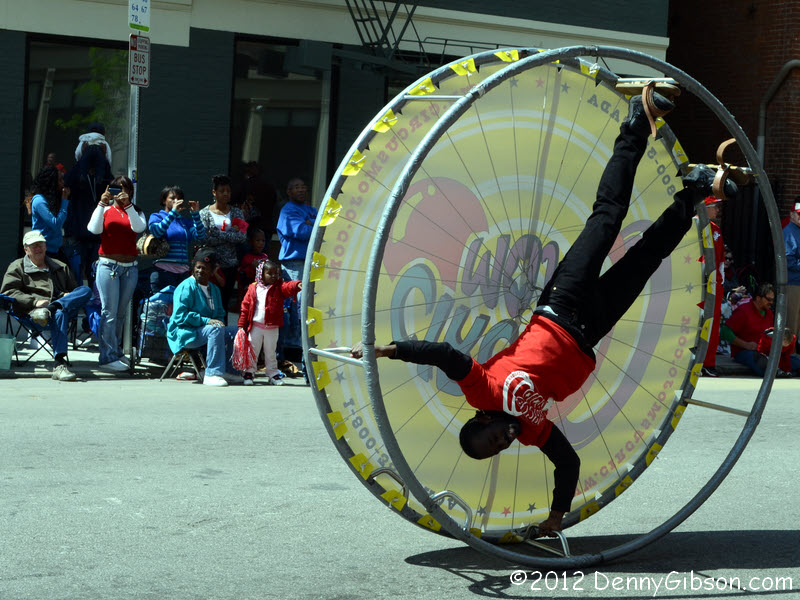
 All the kids, and there were plenty, were properly wowed and they also enjoyed the characters on hand to promote the ongoing A Day in Pompeii exhibit. I’ve seen the exhibit and it’s a duesy. University of Cincinnati Professor Steven Ellis, along with several UC students, has been instrumental in the current excavations in Pompeii and that was instrumental in making Cincinnati one of only four US cities hosting the exhibit. As you can see, security was tight.
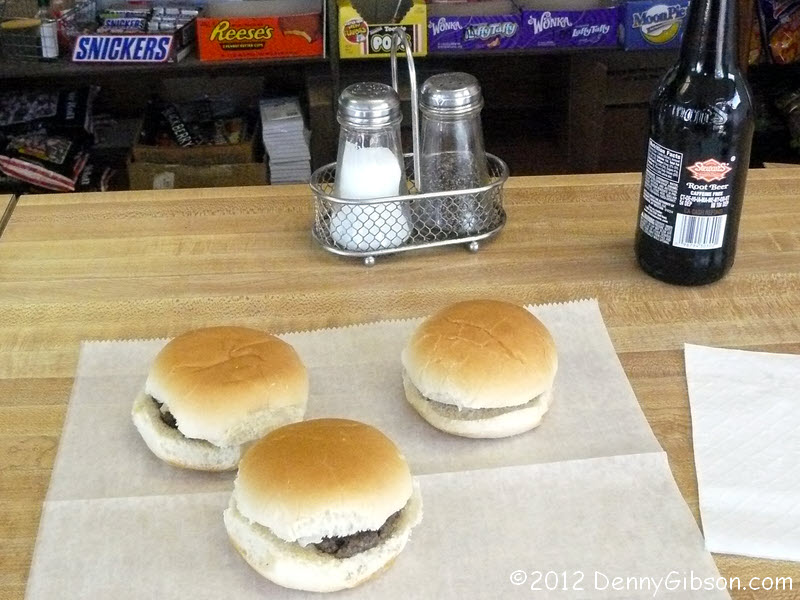
The weather was obviously quite nice for the events at the fountain but Friday was just one of several consecutive near-perfect days. Perfect not only for fountains of water but for fountains — or taps — of root beer. I made it to three different root beer stands on three of those near-perfect days.

 On Thursday it was the Jolly’s on the west side of Hamilton, Ohio. Back in 1938, Vinny Jolivette opened an A&W Root Beer franchise in Hamilton. He built this place in 1967 and, casting off the A&W identity, used the family name to inspire a new one for the restaurant. It’s west of the Great Miami River on Brookwood. Somewhere along the line, they added another on the east side of town on Erie. That one has a cooler sign but this one still makes its own root beer and that trumps the sign. The two remain officially connected (The car side signs carry both telephone numbers.) but are managed somewhat separately by two brothers. There is a third Jolly’s in Tiffin, Ohio, that was started, also as an A&W, in 1947 by Vinny’s brother, Roy, and it seems there was a fourth somewhere in Indiana (possibly Bloomington) but I know very little about it.

 I stopped by The Root Beer Stand in Sharonville, Ohio, on Friday afternoon. It started life in 1957 as an A&W then went independent in 1982. It stopped using carhops in 1972. Originally built and operated by the Rideour family, it moved on to its second and current owners, Scott & Jackie Donley, in 1990. The Donleys have kept everything pretty much the same and that definitely includes making the root beer using water from their 280 foot well. Claims that “it’s something in the water” may very well be true here.

 I got my Saturday root beer fix at the A&W in Union City, Ohio. Despite this being a place I frequented as a teenager, I know few details of its history. I do recall that is was owned by a fellow named Smith in the 1960s and that he operated a used car lot right next door. I have vivid memories of sipping root beer and drooling over a black 1956 Thunderbird that sat in that lot when I was about seventeen. At some point, it became Neil’s A&W Drive In and so it remains today. Curiously, this place doesn’t show up on the official A&W website nor does it have its own site but it does have a FaceBook page.
All three of these places make their own root beer using at least some of the original A&W equipment. Guess that stuff was made to last. All of them taste great and I’m guessing that the recipes are all the same or similar. The Root Beer Stand has its special water and both it and Jolly’s serve their brew in chilled glass mugs. I love ’em both and I do tend to dislike chains but “real” A&Ws (Not stuffed-into-a-corner-of-a-gas-station A&Ws.) are pretty cool and it’s hard to beat an ice-covered mug.

 I’m guessing that some noticed the slightly red convertible in the center of the Root Beer Stand photo. That’s my 1963 Valiant and plans to drive it to Darke County and the A&W at the border led to the warm-up visits to Hamilton and Sharonville. The 200-mile round trip was the car’s longest outing since the cold drive home from Cambridge in early 2011. She done good. These pictures show her at Jolly’s and Neil’s.
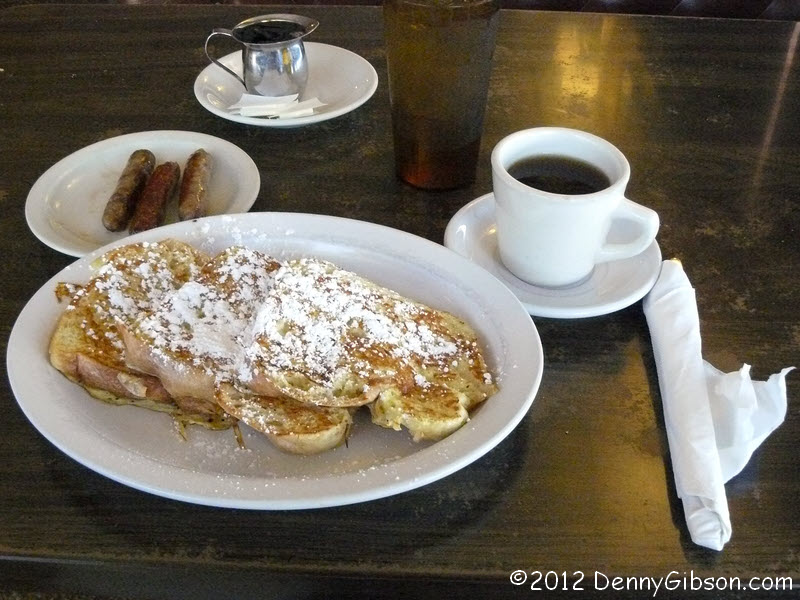
 I recently learned that the neighborhood Flipdaddy’s does brunch on Sundays so I walked over this morning to check it out. It was quite good. I’m always dismayed but rarely surprised to find myself alone on a restaurant’s patio. But, with the thermometer at 74 degrees, I was a little bit surprised today. Lots of people just don’t like any temperature I guess. To be fair, one couple and their home from college daughter did venture outside to eat. That was it. The restaurant was fairly busy inside but just one other outside table was ever used all the while I leisurely worked through my bacon & eggs and slowly sipped my Magic Hat dessert.






 In
In  Like its big brother, FrontPage Express was a WYSIWYG (What You See Is What You Get) editor that allowed you to lay out a web page and position various elements on it without knowing HTML (Hyper Text Markup Language). It differed from full blown FrontPage in the type and number of elements supported and some other capabilities which, for the most part, were beyond me anyway. As with most editors of this sort, it also allowed access to the HTML behind the page.
 PhotoWise seemed to be exactly the program I needed to prepare pictures for the web. I could crop, resize, and rotate and there were adjustments for many image attributes including color and hue and saturation. About the only things I ever played with were contrast and brightness. Apparently I decided to post 512×384 pixel pictures for that first trip. That was half the resolution of the Agfa camera which meant I could trim away a fair amount of garbage if necessary. Pictures could be saved in four different quality levels. I used Medium (which was probably better than the pictures deserved) rather than High for smaller files. Once the full size picture was ready, I did some more cropping and shrinking to make thumbnails.
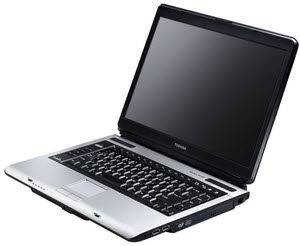 My HP Pavilion was misbehaving by September of 2005 but I somehow put off buying a replacement until April of 2006. The problem was a motherboard crack that affected the power. I could minimize its surprise shut-downs by keeping it stationary so I nursed it through the winter by doing just that and using the aged but trusty Toshiba Portege from time to time. Because both the Portege and the Libretto had served me well, when I finally I went shopping it was specifically for a Toshiba. For $850 I got a Satellite A105 with an 80 GB hard drive and a 1.7 GHz Intel Celeron processor running Windows XP. I believe it might have come home with 512 MB RAM but I soon brought that up to the maximum 2 GB. This was a pretty nice machine.