Remembering Infamy

A TV commercial has been running for the last several weeks that begins by urging viewers to mark December 7 on their calendars. It grabbed my attention the first time I saw it because I knew the significance of December 7 or thought I did. It is the date of one of the most important events in our country’s history. I anticipated some news about a Pearl Harbor Day observance or maybe just a PSA about the attack’s upcoming 70th anniversary. But the spot went on to explain that December 7 marks the end of open enrollment for Medicare.

Medicare enrollment is certainly important and I’m not faulting the ad in any way. It stresses the need to do something by a certain date and stresses what that date is. Although I’m sure it’s entirely accidental, the fact that the date is December 7 may really increase the ad’s effectiveness. The majority of people who need to be concerned with Medicare are exactly the same people for who December 7 is a date which continues to live in infamy. The full date is December 7, 1941 but just December 7 is enough. To my generation and one or two on either side of it, December 7 means just one thing.
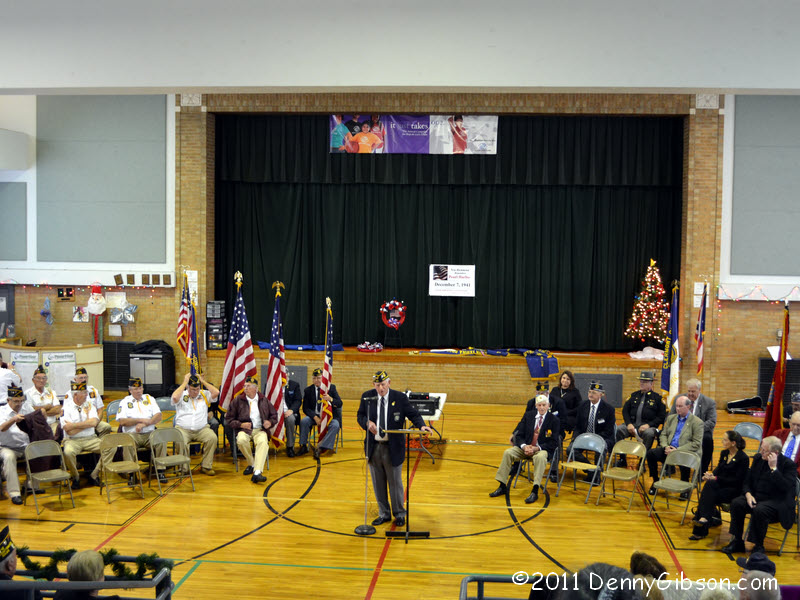
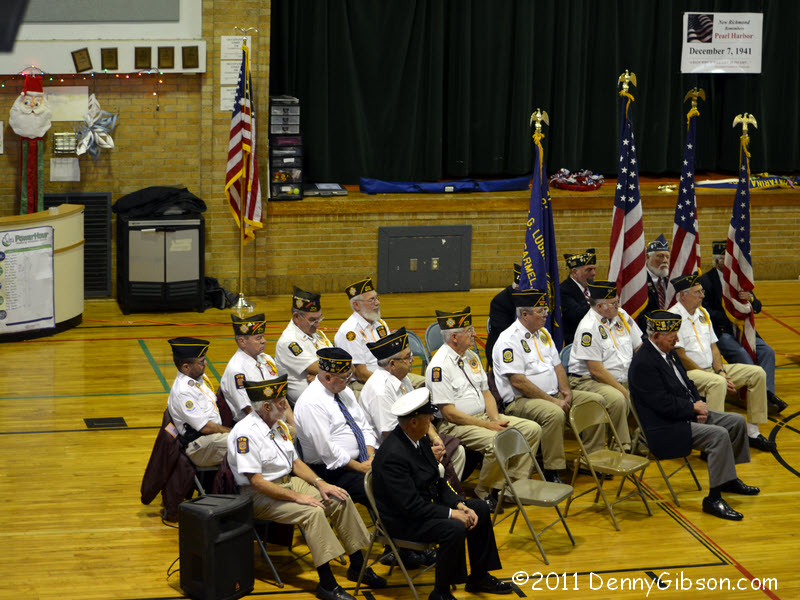
New Richmond Pearl Harbor RemembranceI wasn’t around in 1941 but I showed up just as soon as I could after the war. December 7 and June 6 were two of the very first dates I learned about. However, despite an almost instinctive connection between December 7 and the Japanese attack on Pearl Harbor, I don’t believe I’ve ever attended any sort of commemorative service for the day. I don’t recall even seriously considering it until a few years ago when I became aware of a ceremony conducted in New Richmond, Ohio. New Richmond is an Ohio River town that I tend to visit fairly often. Just about everything I learn about the town, which is home to that cardboard boat race I wrote about here, makes me like it more. So I’ve thought about going for a couple of years but this is the first time I actually made it. This year’s New Richmond Pearl Harbor Remembrance was held on Sunday, December 4.
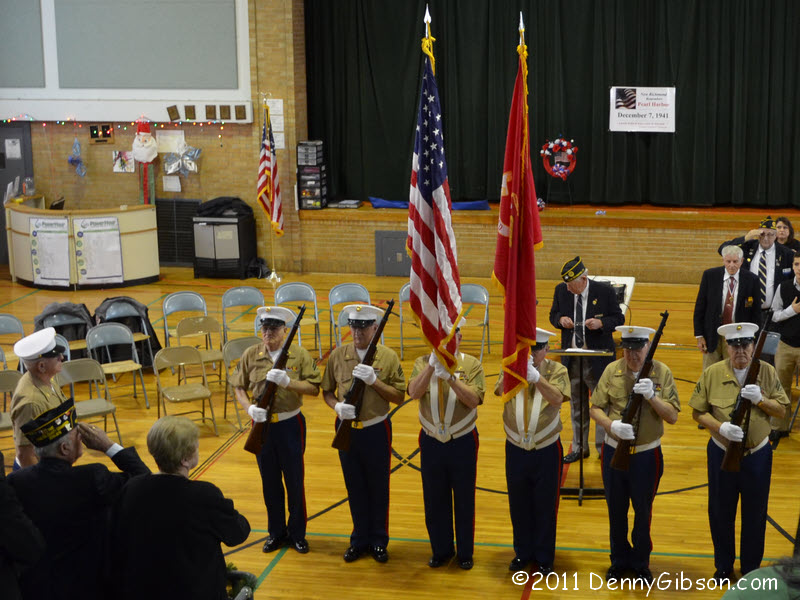
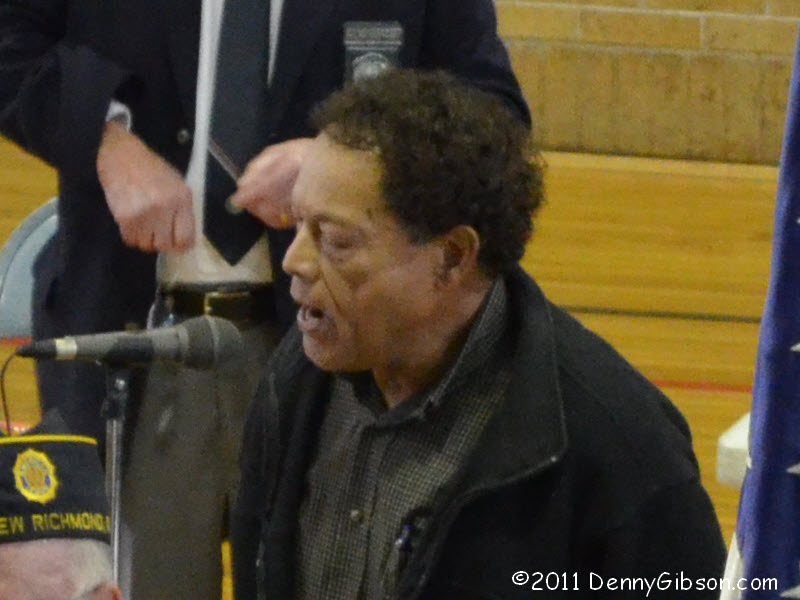
New Richmond Pearl Harbor RemembranceNew Richmond Pearl Harbor RemembranceNew Richmond has been doing this for twenty-plus years. In the past, it has been held at the park near the river and may still be on dry days. Today wasn’t one of them. Things began with the entrance of a sizable color guard followed by the singing of the national anthem and the pledge of allegiance to the flag. The anthem was sung solo by a fellow who I know nothing about beyond his name. John Hale‘s a cappella performance of The Star Spangled Banner was right up there with many big-name auto-tuned renditions I’ve heard. A very nice job. There were speeches, of course, but all were brief and pertinent. More nice jobs. Then we came to a point in the program labeled “Introduction of Pearl Harbor Survivors”.
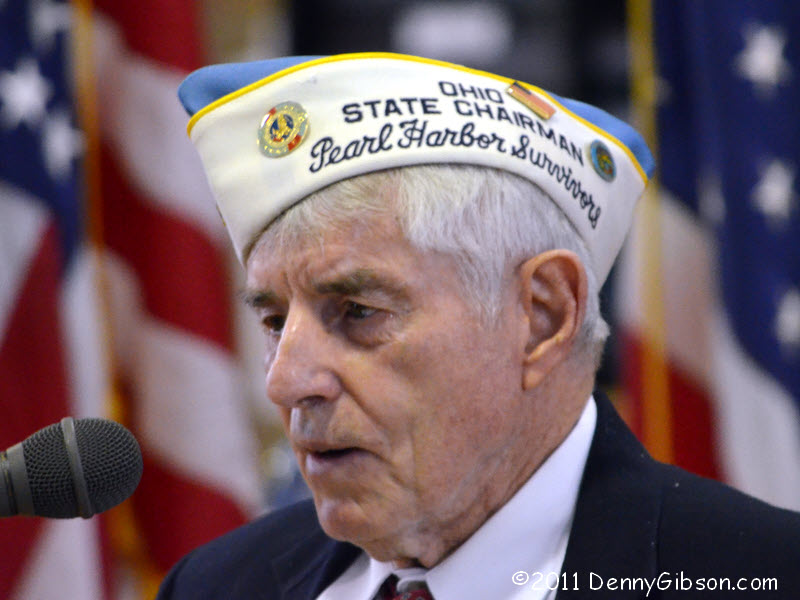
Pearl Harbor Survivor Joe WhittWhen New Richmond began holding this remembrance, it was attended by approximately twenty-five area residents who had survived that horrible day in Hawaii. Just three remain. Two are in nursing homes and unable to attend. Joe Whitt stood alone. Joe enlisted when he was seventeen and turned eighteen just a couple of months before the attack. People familiar with pictures of Joe from that time say that he looked fourteen. The math is fairly simple. This is the seventieth anniversary. Joe is eighty-eight. He stood straight and recounted events of that day with frightening clarity. He and others fired at the planes with rifles. Because his ship, the USS San Francisco, was stripped for maintenance, these were the only weapons available to them. One of his shots, which he doesn’t believe did any real damage, was at a pilot whose face was clearly visible at “about the height of the ceiling” of the high school gymnasium. Even though Joe went on to fight in seventeen battles and do a lot more shooting with much bigger guns and a lot more impact, there is no doubt that his memory of that pilot’s face is vivid and crystal clear.
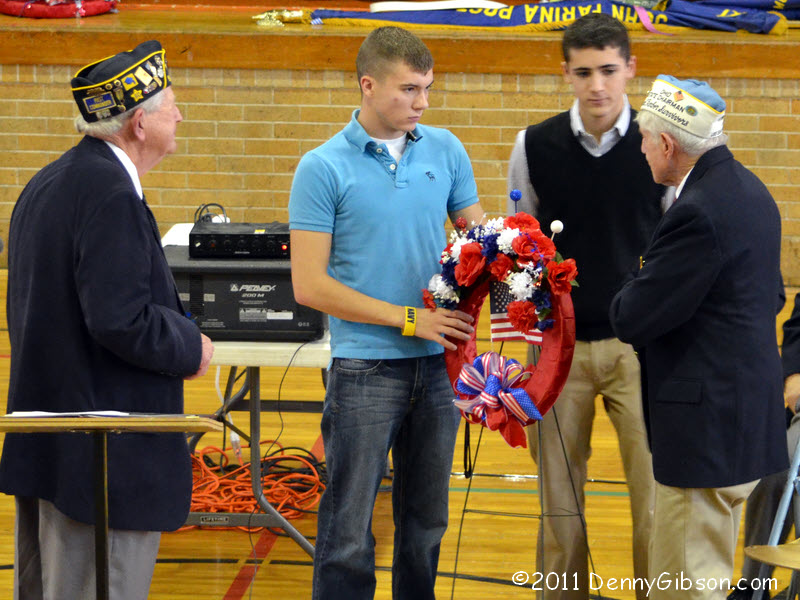
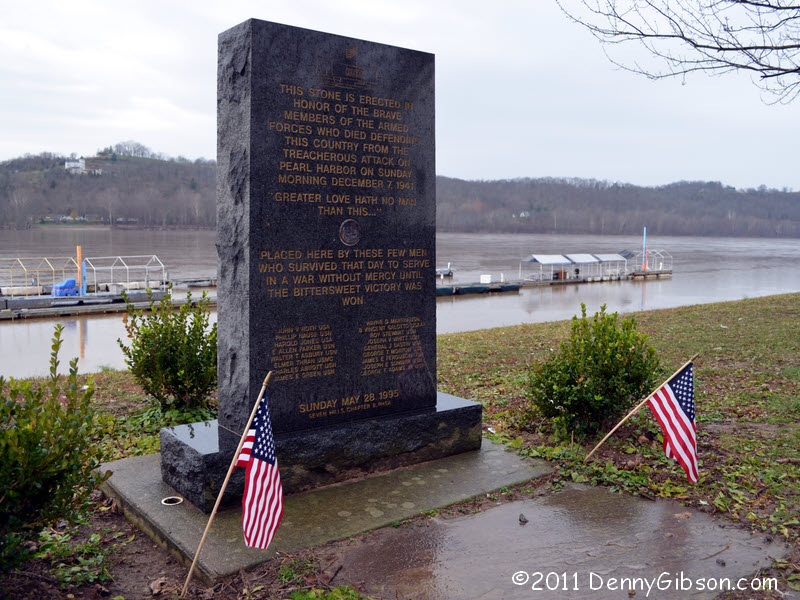
New Richmond Pearl Harbor RemembranceNew Richmond Pearl Harbor MonumentThe left hand picture shows local Buckeye Boys State representatives presenting a wreath to Joe Whitt as Ralph Shepherd of the American Legion looks on. Today, the actual anniversary of the attack, it will be placed at the riverside monument and another will be cast into the Ohio River.

As far as I know, this is the only Pearl Harbor observance in the area. Someone said that Addyston, on the west side of Cincinnati, may still have one but I could find nothing online. In some respects, having the horrible events of December 7, 1941 recede in our collective memory is a good thing. Unfortunately, they are not receding so much on their own as being pushed back by more recent and equally horrible events. Yes, we should never forget events such as the attack on Pearl Harbor but it would sure be nice if all such memories were really really old ones.


With the Remembrance scheduled for a Sunday, my first thought was to make it the subject of the blog post for that same day. As Sunday approached, I realized that I would not have a book review ready for Wednesday and that I had a small herd of electrified horses trotting about my brain. It would be better, I surmised, to post the horse parade stuff on Sunday, the Remembrance stuff on Wednesday, and hope to have a book review by next Wednesday. Sorry to disillusion anyone who thought this was all carefully planned weeks in advance.
More Horses (and a bit on a madonna)

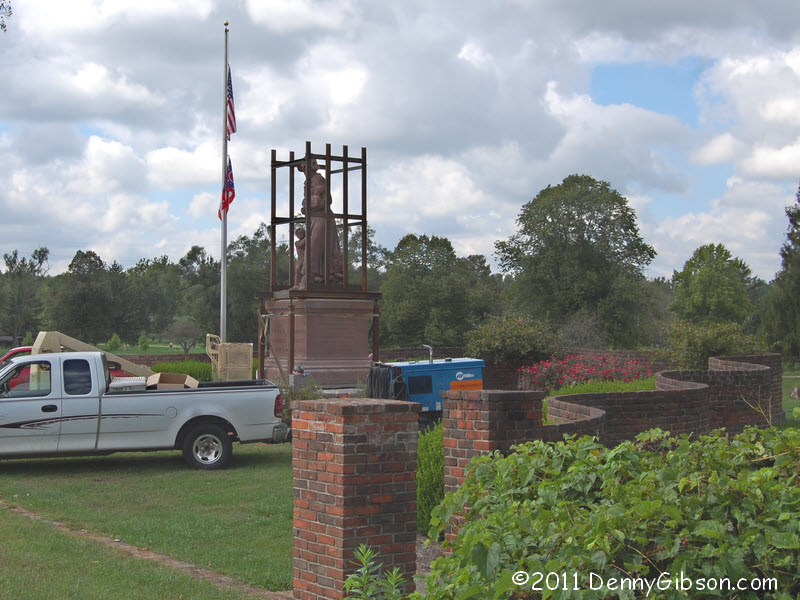
Last night I completed the trifecta of southwest Ohio horse parades. I just happened to be in Greenville on the occasion of their parade two weeks ago. I blogged about it here. Last week I was again in Greenville and came home through Springfield with a goal of getting some pictures of the recently relocated Madonna of the Trail statue. (More on that later.) I was surprised to see downtown Springfield blocked off and more surprised to learn that it was for the city’s first ever horse parade. I certainly had to stick around for that.

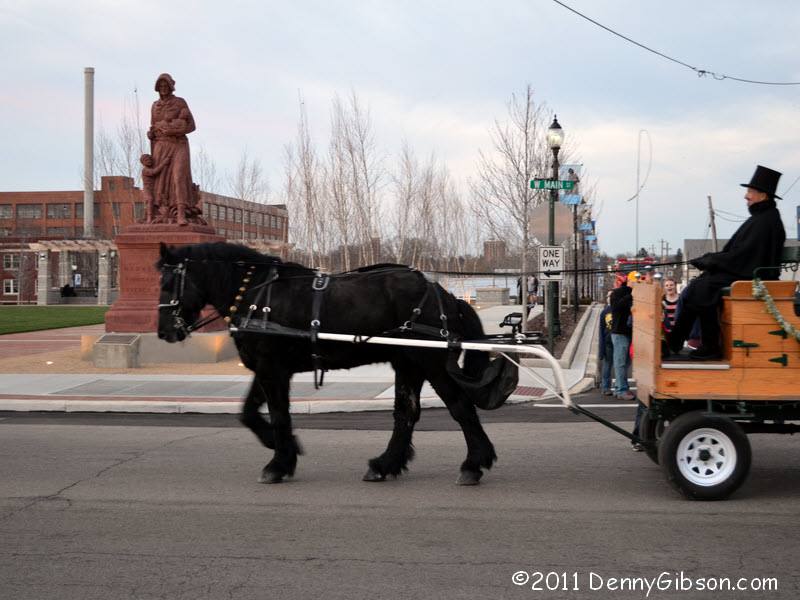
Springfield Horse ParadeCarriage rides were available before the parade and, yes, I took one. Neither the carriage rides nor the parade actually passed the Madonna. The picture at right shows one of the “public” carriages leaving the blocked off area in anticipation of the parade itself. The parade formed behind where I stood to take the picture and turned right to reach the parade route proper.

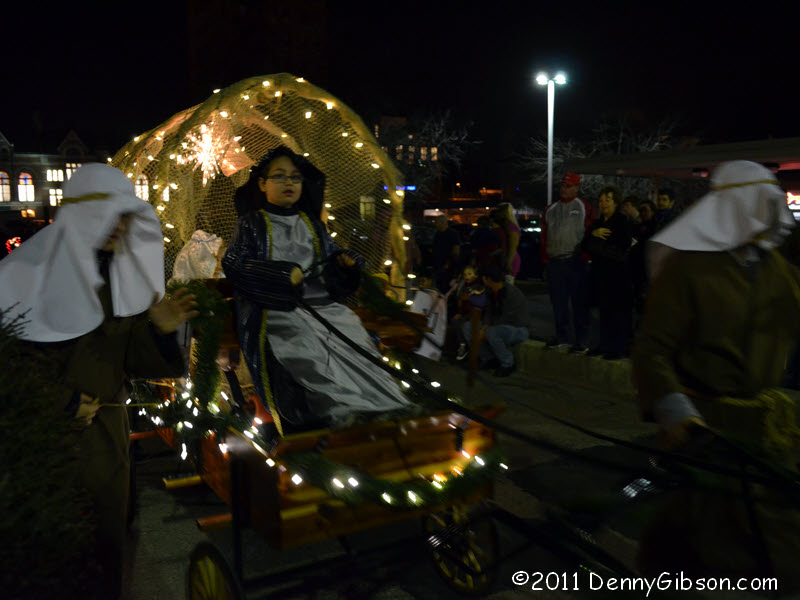
Springfield Horse ParadeSpringfield Horse ParadeAs mentioned, this was Springfield’s first year for a parade and there were just fourteen entries. All were “hitches”. In other words, there were no horseback riders. The portrayal of the Christmas story in a setting where eighteenth and and nineteenth century covered wagons (albeit with pneumatic rubber tires) was the norm was simultaneously shocking and 100% fitting. I liked it. Future generations of Springfieldians may have a very unique take on the whole Christmas-pioneer-Madonna-covered-wagon thing.

Black Horse Tavern at the Golden LambSo, after attending Springfield’s first and Greenville’s eighth more or less by accident, I felt almost obligated to attend Lebanon’s twenty-third horse parade. It’s not only the oldest of the three but, with 122 entries, far and away the biggest. It’s also the only double header. There is a daylight version at 1:00 and an in-the-dark illuminated-carriage version at 7:00. Other commitments kept me away from Lebanon until something after 1:00 but I headed there anyway thinking I might catch the tail end of the matinee. I couldn’t even get close. I whiled away the afternoon on the far side of town then returned thinking it entirely possible that I would just pass through again and head home. But I found a parking spot about three blocks from the Golden Lamb. In the Lamb’s Black Horse Tavern, I ran into some friends I hadn’t seen in quite awhile and managed to while away another couple of hours until parade time was near.

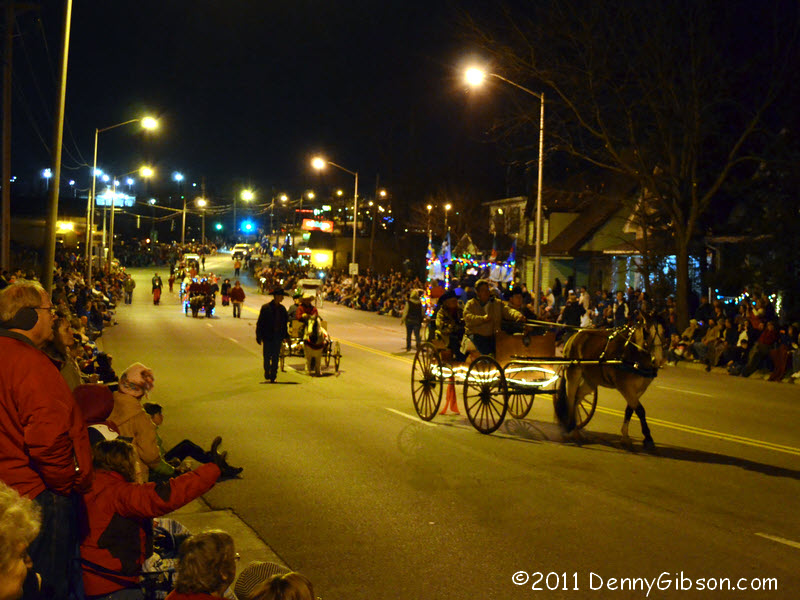
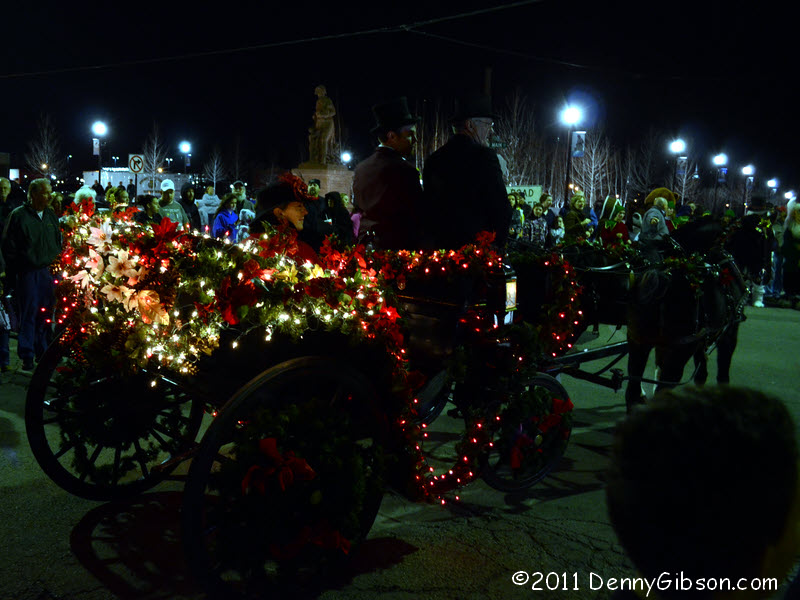
Lebanon Horse ParadeLebanon Horse ParadeI’ve attended both light and dark versions of the Lebanon parade before but it’s been a long time. Both the parade and attendance have had time to grow and they certainly have. All of downtown Lebanon was pretty much shoulder to shoulder and withers to withers.

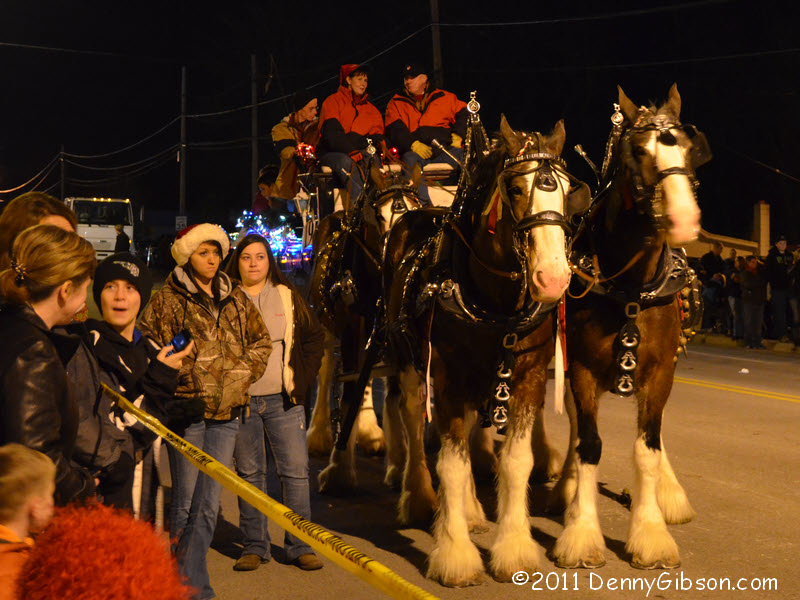
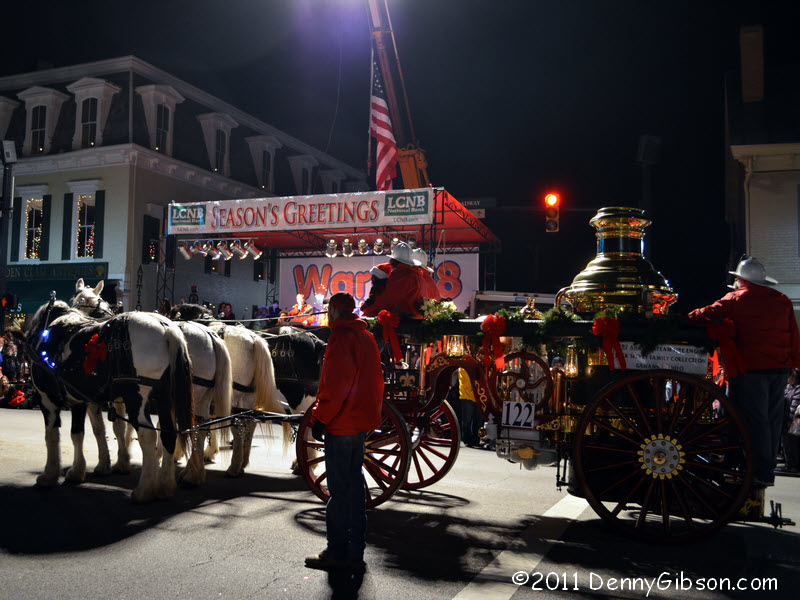
Lebanon Horse Parade ClydesdalesLebanon Horse Parade Fire EngineSeveral of the parade participants had been at Greenville and a few had been at Springfield but with more than eight times Springfied’s entries and nearly double Greenville’s, Lebanon obviously had some exclusives. Foremost among these were a nineteenth century fire engine and a team of Clydesdales. Both of these actually brought cheers from the crowd when they charged down the street.

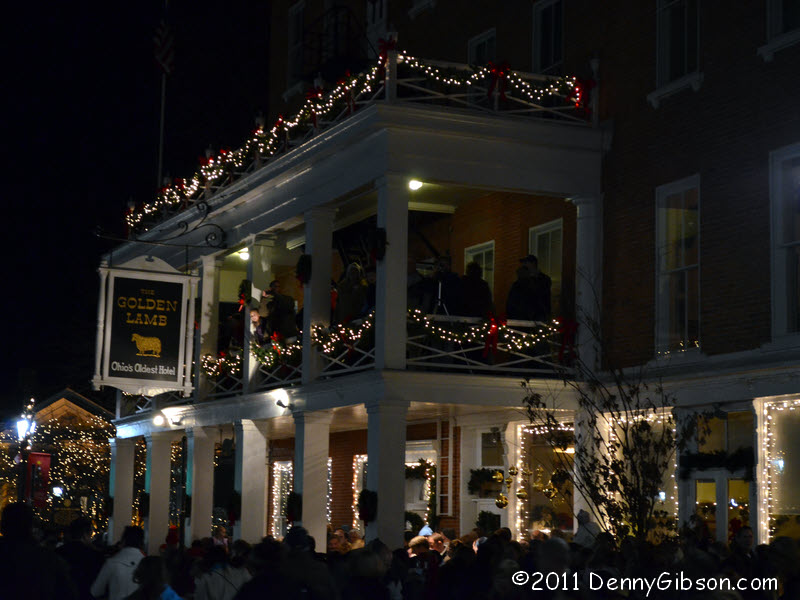
Golden LambDuring the parade I managed to somehow walk to it’s origin and back. Some of it was pretty awkward but in the end I just stepped into the street and paced the parade. I recall my father once telling me that the secret to getting around a military base is to carry a clipboard and walk briskly. The same technique works with parades using a camera. The friends I had met in the bar told of past success in watching the parade from the balcony at the Golden Lamb. Even though that appeared to be a bit more challenging than in prior years, they were going to give it a try. As the parade wrapped up, I snapped this picture of the hotel’s balcony just in case they were up there. No, I later learned, they had been blocked from the balcony but found an empty third floor dining room where they and another couple watched the parade in relative privacy. The only intruder was a hotel employee who stopped by now and then to take drink orders.


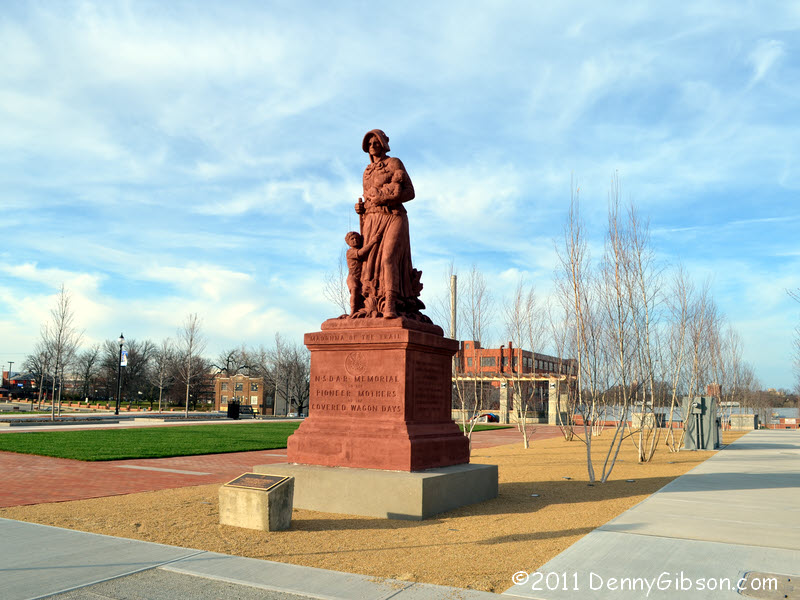
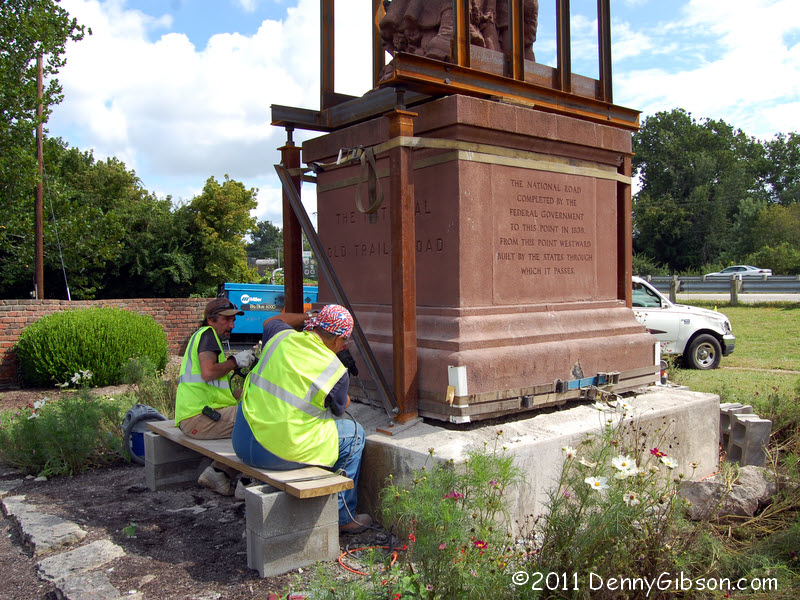
Ohio Madonna of the TrailNow, about that Madonna. In 1928 and ’29, as the era of named auto trails came to an end, the Daughters of the American Revolution placed a Madonna of the Trail statue in each of the twelve states through which the National Old Trails Road passed. The one for Ohio was placed in Springfield. Two of the four sides on each statue’s base were inscribed with information specific to the statue and its placement. On Ohio’s Madonna these concerned the end of federally funded construction, which was quite close to the statue’s original placement, and George Rogers Clark victory at Peckuwe which was about three miles from the original placement as noted in the inscription. In the mid 1950s, highway construction caused the statue to be moved about a half mile east. The inscriptions were no longer as accurate as they had been but they weren’t off too much. A bigger problem with the move was that, once US-40 became four lanes wide, there was no convenient access to the statue. Reaching it involved either pulling over on the busy highway or parking in a safe spot and walking along the busy highway.

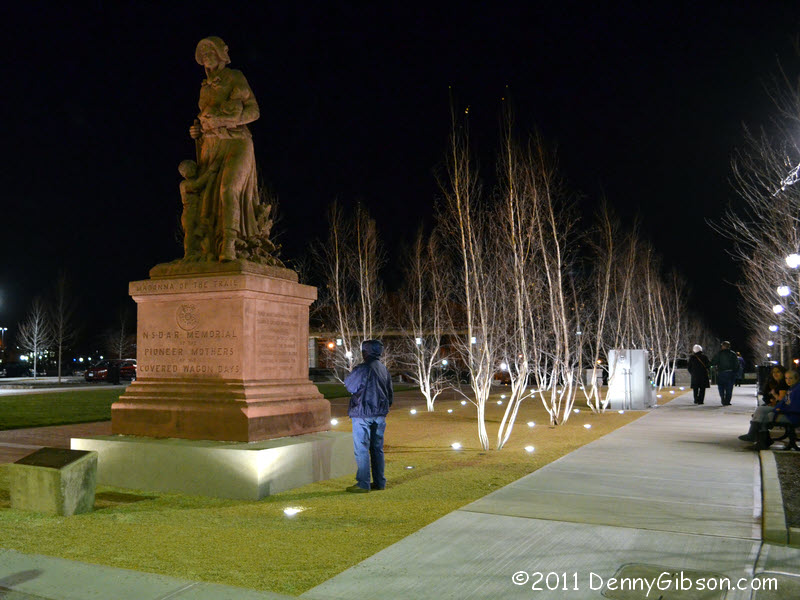
Ohio Madonna of the TrailIn September, the statue was again moved. This move was about two miles distance to a park in downtown Springfield. The setting makes the statue much more accessible while making the inscriptions much less accurate. Some consider this a net win; Others don’t. During the hour or so I hung around the statue last Saturday, I saw about twenty people take note of the statue in some way. There was a lot of foot traffic in the area Saturday and the majority seemed oblivious to both the new park and the relocated statue. Of those that noticed it, about half recognized it including one fellow who arrived with camera and tripod to photograph the old gal in her new home. Quite a few of those who had no idea what it was did read at least one panel. Several read them all. Whether or not any of them develop even the slightest interest in any aspect of the history that this Madonna of the Trail represents is anybody’s guess.

A newspaper article about the September 22 move is here. The Madonna can be seen thirteen days before the move here and here.

Thanksgiving

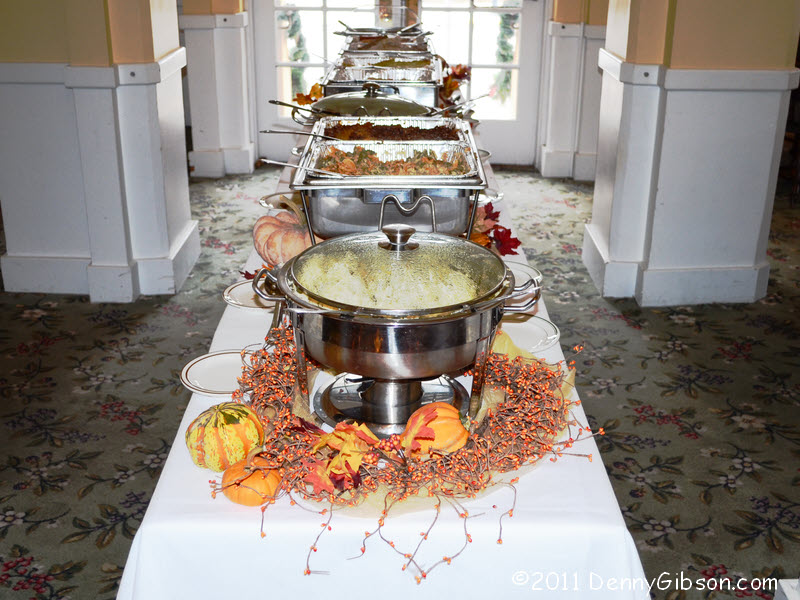
General Denver Thanksgiving BuffetThere’s no doubt that Thanksgiving and road trips go together. One of the most wonderful trips in the world is a drive home for a meal with family. As a kid, I remember riding in the backseat as we traveled to my grandparents for the big day. The  distance wasn’t much but the presence of seldom seen aunts, uncles, and cousins made it an exciting outing. After moving to Cincinnati, I returned to my grandparents’ Darke County home several times for Thanksgiving. The distance was now greater and so were the odds that I hadn’t seen those aunts, uncles, and cousins since the previous Thanksgiving or Christmas. The excitement, though subdued by the adult me, was still there.

Hosting Thanksgiving sort of skipped a generation in my family. By the time my grandparents passed on, I was married and participating in my wife’s family events and my sister was on her way to a sizable family of her own. She became a Thanksgiving host pretty much without even thinking about it. I even made the trip there a couple of times while my parents joined the group at my sister’s or visited other relatives. My sister’s brood reached seven with six being girls who inherited her mothering and cooking talents. Somewhere along the line, Sis moved into a hostess emeritus role and spends the day stopping by meals hosted by her offspring for their offspring. Her itinerary this year included three different households.

While I was between wives and significant others with cooking skills, I managed to fumble my way through a couple of Thanksgiving meals. All three of my kids moved out almost as soon as they could and I’m thinking those meals might have had something to do with that.

There was never a shortage of invitations to spend the holiday with friends though I think they may have increased just a bit when I went from head of household to sole occupant. Nature abhors a vacuum. Wives and mothers abhor a bachelor. Not abhor in a we-don’t-like-you sort of way but abhor in a we-can-fix-that sort of way. Friends and coworkers who were wives and/or mothers along with the wives and/or mothers of friends and coworkers who were neither wives nor mothers assured me I was more than welcome at their celebration. I like to think I was polite while declining most invitations.

In 2005 I hit upon the idea of a road trip to avoid the drama and trauma of turning down invitations without a note from my doctor. I suspect I was partially driven by the desire for a break from a heavy work schedule but the whole world seemed simpler once I could honestly tell people I’d be out of town for Thanksgiving. I hit the road early on Thanksgiving day and had pulled pork for dinner in Nashville. I repeated the escape in 2006 by going to Bryson City, North Carolina. This was also the first year I went on the lam for Christmas. I returned to Nashville for Thanksgiving 2007 then drove the Dixie Highway to Asheville, North Carolina, in 2008.

Things changed in 2009. I retired in the middle of November, drove to Illinois a week later, and found myself in the unusual position of driving toward home as Thanksgiving approached. The Nawrockis, close friends who I had actually enjoyed a few past Thanksgivings with, had some changes, too. Their two daughters had moved out and the idea of a big at home feast was not as attractive as it once was. I’m not entirely certain that ’09 was the Nawrockis’ first time at the buffet in the old hotel but I believe it was. In any case, it was my first. For the unemployed, the need to wring pleasure from a four day weekend doesn’t exist. In fact, four day weekends don’t exist and you have to watch carefully to pick out weekends at all. Though I continue to scurry out of town for Christmas, Thanksgivings since 2009 have found me home and at the buffet. My daughter and son-in-law live nearby and they attend too so I even have some real family there.

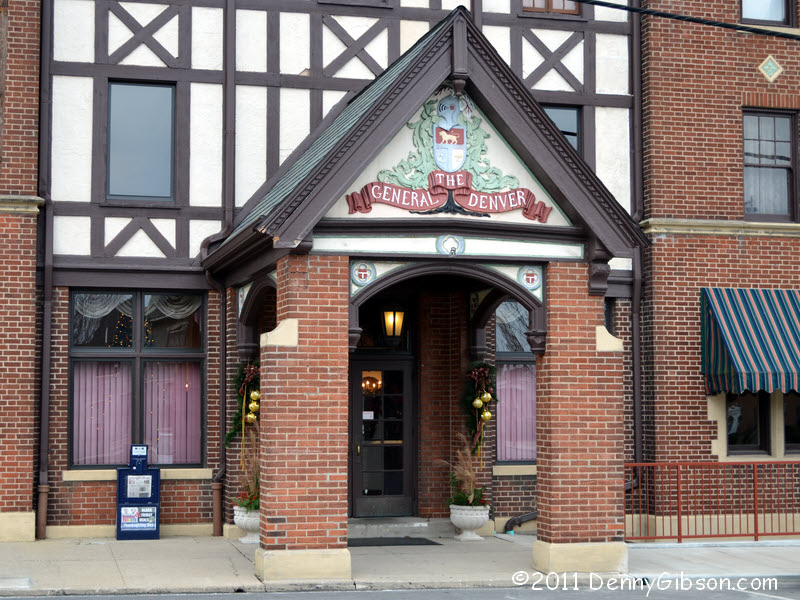
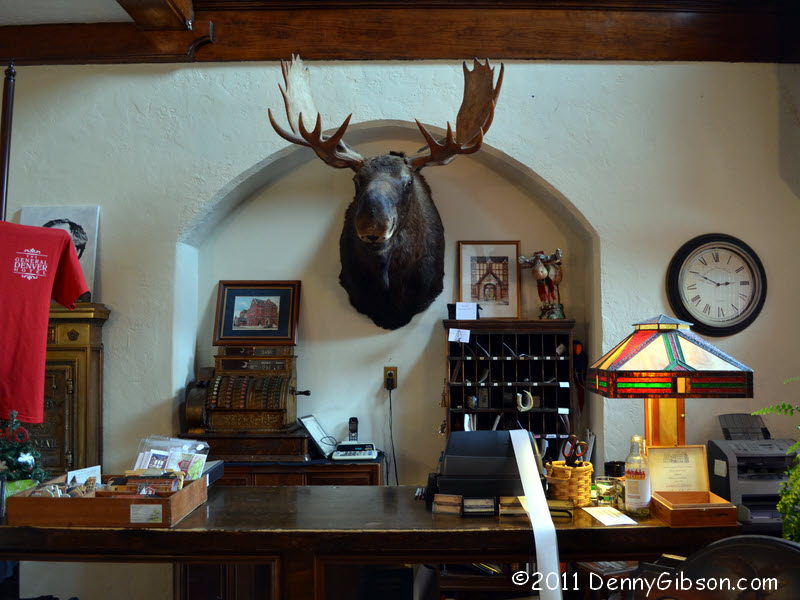
General Denver HotelThe old hotel I mentioned is the General Denver in Wilmington, Ohio. If it wasn’t for that city in Colorado, the hotel might be the best known namesake of a fellow who left Wilmington to become, among other things, a California Representative to the US Congress, the US Commissioner of Indian Affairs, and Governor of the Kansas Territory. The hotel is named after James W Denver. His son, Matthew R Denver headed up the group that built the first-class four-story hotel in 1928.

General Denver HotelMark and Molly Dullea own the place now and live on the top floor. It has an abundance of old time charm which makes it the perfect place for Thanksgiving dinner and the buffet table is filled with all the appropriate goodies. For motherly cooks responsible for feeding a family every day, orchestrating a holiday dinner might be no big deal. For empty nesters and others who don’t feed even a small flock on a regular basis, it can be stressful. I’m quite happy leaving the orchestrating to professionals, eating my fill of turkey, stuffing, and pie, and going home thankful that I didn’t impose on anyone.


On Thanksgiving day I posted a link to a video on Facebook. I’d seen the video just a few days earlier on a blog that I follow. Ara Gureghian is an accomplished chef and photographer who sort of dropped out of the main stream about five years ago. His blog, which he has described as “My daily therapy, published weekly or so…”, includes some great photographs, some soul searching, and some travel. Until quite recently, all the travel was on a BMW motorcycle with sidecar. In September, a Honda based ECamper, which will allow some cold weather outings, was added. The video isn’t his. It’s the creation of filmmaker Louie Schwartzberg and Ara just passed it along as I’m doing. I believe that most readers of this blog will like the six minute video. Many may also like the blog.
Gratitude (Louie’s video)
The Oasis of My Soul (Ara’s blog)

Book Review
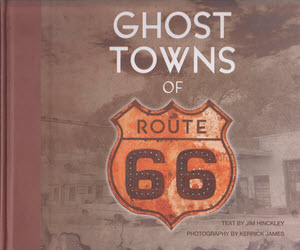
Ghost Towns of Route 66
Jim Hinckley

Last week’s visit to Fort Recovery was triggered by a book. That book, a new one on the 1791 Battle of the Wabash, was available (pre-release) and its author, in addition to autographing copies, gave a presentation on the battle. As I wrote the blog entry about the visit, I was simultaneously struck by the idea of reviewing the book and the realization that book reviews might make good subjects for blog entries. I’ve recently picked up a few new books including some by people I know and to whom I’ve promised some feedback. Reviews, it seemed to me, would be a good way to feed the blog and focus the feedback. So here is the first book review entry. I promise there will be more.

Ghost Towns of Route 66The subject of this review is a book I picked up from the author, Jim Hinckley, when I passed through Kingman, Arizona, in June. Ghost Towns of Route 66, is the second Hinckley product I’ve read. The first was Route 66 Backroadswhere I was at least as impressed with the photography as with the writing. That is true of the newer book as well. …Backroads used photos from Kerrick James and Rick & Nora Bowers along with some from outside sources. James is the only photographer listed on the cover of Ghost Towns… although there are a few by others including Hinckley. My praise for the photos is not intended to diminish Hinckley’s writing but to recognize some wonderful images and acknowledge a huge reason that these books get a second look when spotted on a store shelf or counter.
Ghost towns is a subject where photos and words can truly complement each other. By definition, a ghost town is a place that was once thriving but is no longer. When you visit a ghost town, you look at what remains and try to imagine what once was. James’ pictures let you see what remains and Hinckley’s words help you imagine what was there once upon a time.

Hinkley’s words are the result of some serious research. The man definitely does his home work. Facts about a town’s beginning are usually given and the events and circumstances leading to its rise and fall are discussed. Some of the falls are complete while others are far from it.

A few towns on Sixty-Six do match the far west ghost town image of complete  desolation with nothing moving but tumble weeds. Those that do, like Allanreed in Texas, Endee in New Mexico, and Glen Rio on the state line between them, tend to be a bit to the west themselves. Other towns that Hinckley has included, such as Galena in Kansas and Afton in Oklahoma, ain’t dead yet.

In fact, Galena and Afton are current must-stops on any Route 66 trip through the area. In Galena, 4 Women on the Route has become a major roadside attraction in just a few years and in Afton, Laurel Kane’s Afton Station, established a bit ahead of 4 Women…, is a true Route 66 icon. But Hinckley isn’t to be faulted for including these towns. Both are mere shadows of their boom time selves. The decline has currently ceased and maybe even reversed but there was sure a lot of it and there is no guarantee that it isn’t just paused.

This isn’t the first book one should acquire when planning a drive down Historic Route 66. In my opinion, that spot belongs to Jerry McClanahan’s EZ 66 Guide and there are other route related books offering a broader view of the road and the attractions at its side. But, if you are attracted to clusters of dilapidated buildings and often wonder what a wide spot in the road used to be, Ghost Towns of Route 66 could be just the book you want. You’ll get lots of history and some great photos of many un- and under-populated
settlements along the historic highway.

Ghost Towns of Route 66, Jim Hinckley and Kerrick James, Voyageur Press, June 2011, 10.25 x 8.75 inches, 160 pages, ISBN 978-0760338438
Available through Amazon.


Viva la Mush or rebellion in the heartland. I like fried mush. It reminds me of my childhood. The fact that Bob Evans restaurants served this breakfast staple accounted for many — perhaps even most — of my visits there. Last month, when my local Bob Evans informed me that mush was no longer available, I was heartbroken. When this came up in a conversation with my sister, she told me that, although it was no longer on the menu, fried mush could still be had at the Bob Evans in Greenville, Ohio, if you asked. I stopped in to make sure she wasn’t just teasing me and found that, not only was it available, it had been returned to the menu. I told the cashier how I had been forced to come there because my own Bob Evans had dropped my favorite and she told me they had tried that, too, “but it didn’t go over very well.” After a week or two mush was returned and it reappeared on the menu at the next printing. Viva la mush and viva the small town restaurant manager who keeps her customers happy in spite of corporate directives.

Old Fort and Young Chicken

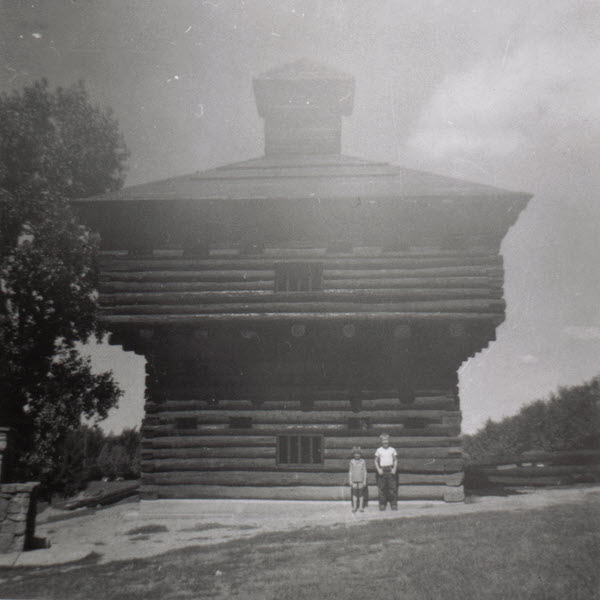
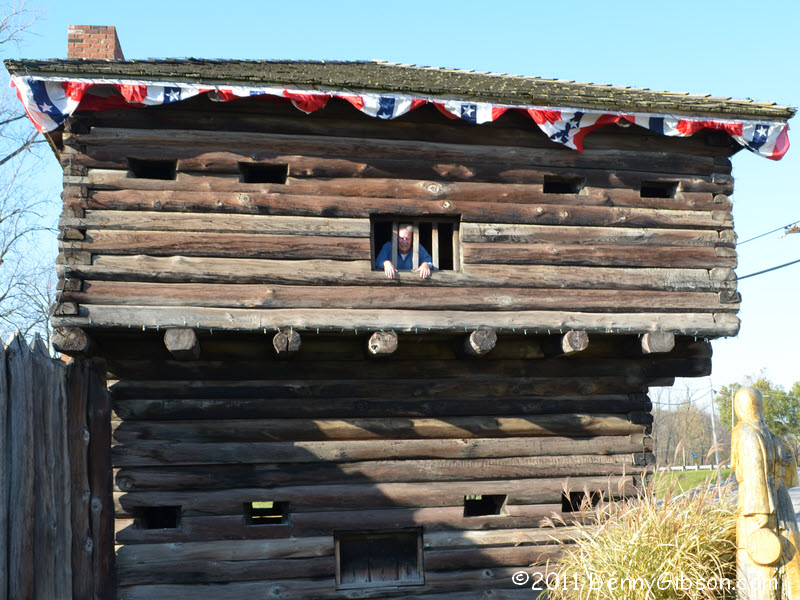
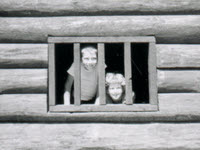
That’s my sister and me in the lock-up at Fort Recovery sometime in the mid-1950s. From about age six to age ten or so, the site of the 18th century fort was my favorite “vacation” spot. During those years, a summer was not complete until I’d talked my parents into taking us to this far away and ancient attraction. In time I learned that the log structures were not the originals from 1794. Those were already long gone when a 1938 WPA project produced the one-third sized replica that was there on my first visit. The building we’re peering out of was part of the replacement constructed toward the end of my fascination. A worker at the museum thought 1957 or ’58. Eventually I even learned that this particular “far away” was something less than fifteen miles north on the very road we lived on. Figuring that out took me awhile since all other travels — school, shopping, relatives, Dad’s job — were in some other direction. I still greatly appreciate my parents taking me there even if the effort wasn’t quite as extreme as I once thought.
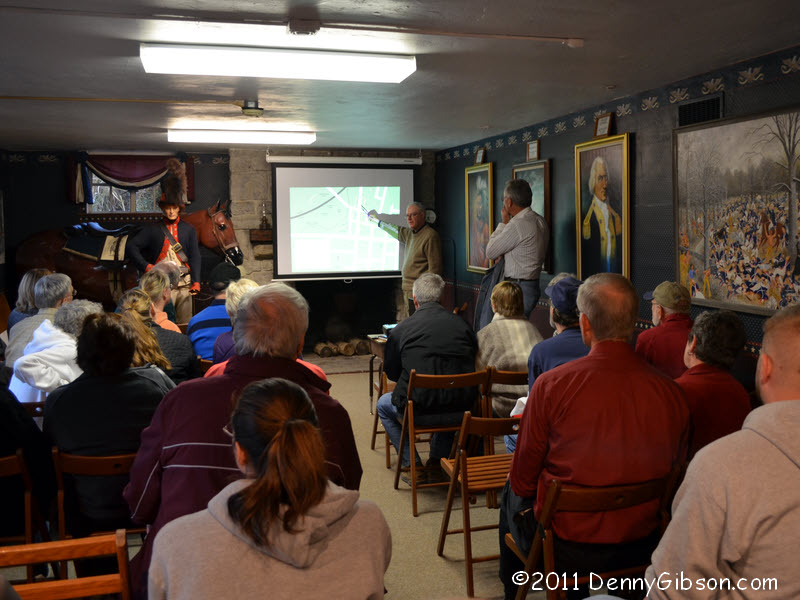
I mention this now because I stopped by the old fort today. I was near my childhood home for other reasons and there were some happenings at the fort centered around a new book titled Wabash 1791: St. Clair’s Defeat. Yesterday John Winkler, the book’s author, led a walk around the site for educators. Today he gave a pair of talks. I was there well ahead of the first talk at 3:00 but didn’t move to the lecture room until it was filled to overflowing. I did get a good seat for the slightly less crowded 4:00 presentation.

St. Clair’s Defeat, a.k.a., The Battle of the Wabash, occurred 220 years ago last Friday. On November 4, 1791, St. Clair’s 920 men were attacked at the future site of Fort Recovery by a slightly larger force of Miami, Shawnee, and Delaware Indians. The result was pretty much a massacre with 632 soldiers and all or nearly all of the approximately 200 camp followers killed. I’ve seen conflicting statements that the dead soldiers represented a quarter of the U.S. Army at that date and that the battle reduced the U.S. Army to around 300 men. I’m guessing that the discrepancy comes from varying counts of deserters and the sick. I picked up a copy of Winkler’s book so maybe I’ll find the accurate numbers there. Regardless of how much Army remained, much clearly didn’t. By several different measures, this battle was the worst defeat in United States history.

Just over two years later, troops under “Mad” Anthony Wayne began construction of what they would name Fort Recovery. It was completed in March of 1794 and in June of that year survived attack by what has been called the largest force of American Indians ever gathered east of the Mississippi. That was followed by Wayne’s victory at Fallen Timbers which was followed by the Treaty of Greenville which was followed by the state of Ohio.

When I did an Oddment page for the 2010 Fair at New Boston which included a reenactment of the Battle of Fallen Timbers, I discovered that a song existed about St Clair’s Defeat. A recording by Roger McQuinn, complete with lyrics, can be heard or downloaded here.

Anthony Wayne was my childhood hero. I imagine part of the reason was the “Mad” in his name but I was really impressed with that cocked hat. When I saw my first picture of a bare-headed “Mad” Anthony, the general came near to losing me as a fan. But I overcame the shock and stuck by my hero and still enjoy knowing that he and I ran up and down the same roads separated by just a couple of centuries.

Of course, sis and I did eventually get out of the frontier hoosegow but it happened again.

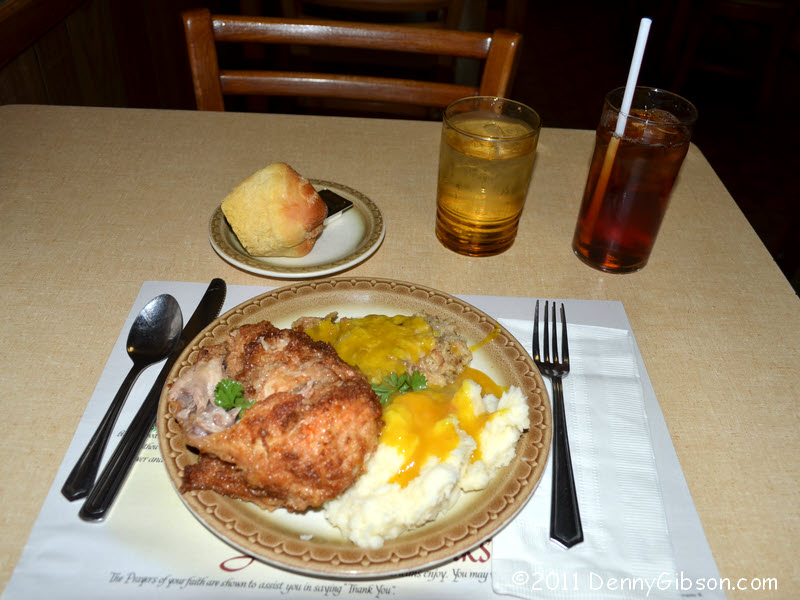
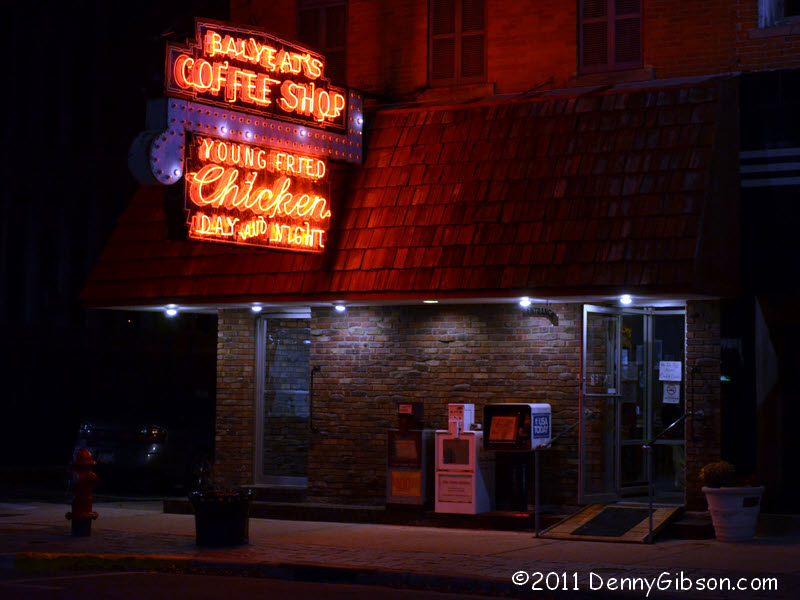
I was alerted to the Fort Recovery doings by a Ohio Historical Society newsletter. Just a couple of days prior, the Lincoln Highway Facebook group had a link to this article on Balyeat’s Coffee Shop in Van Wert, Ohio. I’ve eaten at Balyeat’s multiple times but have never had the “Young Fried Chicken” advertised on their wonderful neon sign. The Facebook post reminded me of that and, since Van Wert and Fort Recovery are only about thirty crow miles (or forty Subaru miles) apart, I decided to correct that gap in my experience. Today the chicken is baked rather than fried but I’m sure it’s still young.


I have now removed the forum that was added in 2010. I said I would do that in the very first entry of this blog but I saw no need to rush. Until this week, it has sat there idle exactly as it had for the seven preceding months. Every now and then some spammer would attempt to set up an account but they were few and far between. But this week there has been a mini-flurry (6) from folks with names like “Okkgeiwk” and “horrhyday” which prompted me to finally delete the thing.