Controversy, Photos, and Inclines

I long ago reserved a seat on a bus tour of Cincinnati incline sites and had in mind that the Saturday outing would be the subject of this Sunday’s blog entry. But not only did Thursday’s visit to the Pumpkin Show result in an unscheduled post, it led to me visiting a couple of exhibits that I think worth mentioning. So, before getting to today’s feature, I’m presenting a couple of short subjects.


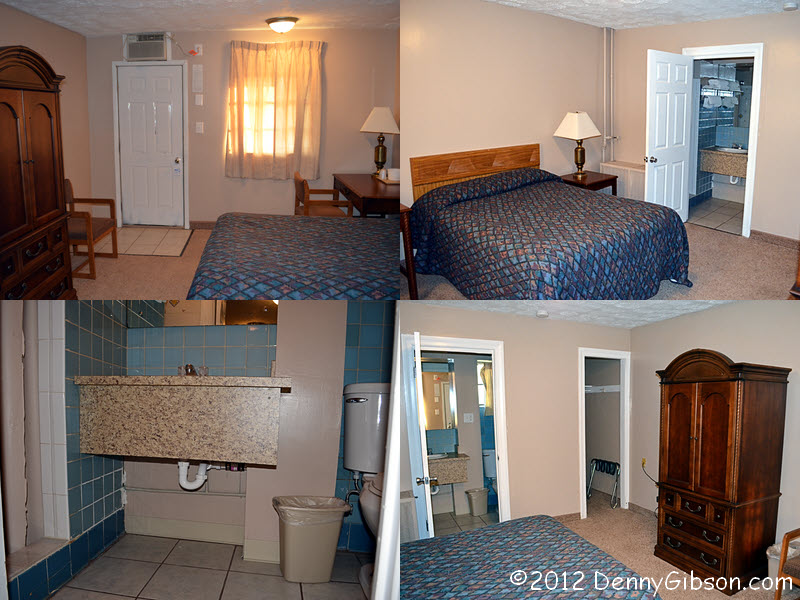
Ohio History Center Controversy 2Short subject one is Controversy 2. Rather than driving home from Circleville in the dark on Thursday, I drove just a few miles toward Columbus and grabbed a motel room then headed on to Ohio’s capital in the morning. My first stop was at the Ohio History Center where the second exhibit of controversial items in the Ohio Historical Society’s collections is in progress. The photo at the right is of an area at the end of the exhibit. Large pads of paper hang next to photos of the five items on display. Presumably the pads were there for comments but they were entirely blank when I saw them. Around the corner, several comments made on smaller cards were displayed. Most were positive regarding the exhibit and thoughtful regarding the items in it but a few were unhappy that the objects have been allowed into the light.

Ohio History Center Controversy 2Ohio History Center Controversy 2The first Controversy exhibit, which I missed, included a hooded KKK costume and a nineteenth century condom. Controversy 2 contains an original Cleveland Indians Chief Wahoo jacket from 1946, children’s toys depicting ethnic stereotypes, degrading racial caricatures, a poem written in dialect, and a Nazi flag. The cloth bowling pins were made sometime before 1914. An adjacent description is here. The prints were published by none other than Currier and Ives between 1882 and 1893. A dozen or so are displayed. Their description is here. The line at the bottom of the print shown here is “De gals all mire me so much dey makes me blush.”


Wexner Center, Columbus, OhioNot surprisingly, no photos were allowed at my next stop, an exhibit of Annie Leibovitz photographs at the Wexner Center. I’m not at all bothered by that since I am not all that fond of taking pictures of pictures and, in this case in particular, doing anything near justice to the subject was clearly out of the question. The exhibit includes all of Master Set and much of Pilgrimage. Master Set consists of 156 images hand picked by Leibovitz to represent four decades of work. Most are from professional assignments but there are some family shots in there, too. Pilgrimage is made up of photos that Annie took for herself. There are no people in these photos but every object and location is firmly associated with an historical figure.

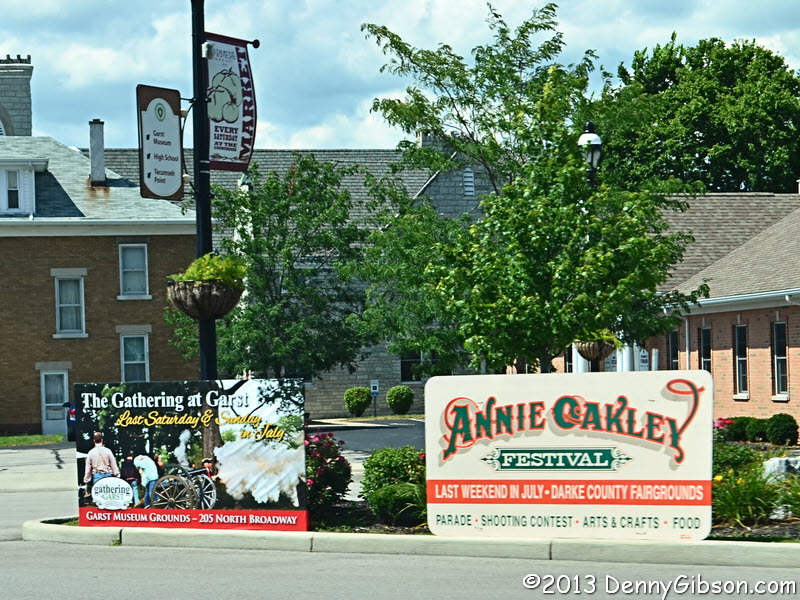
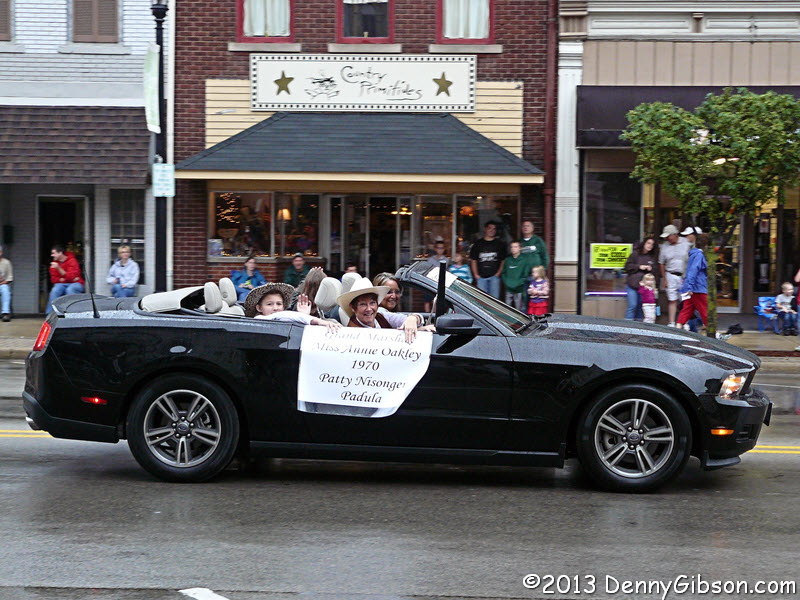
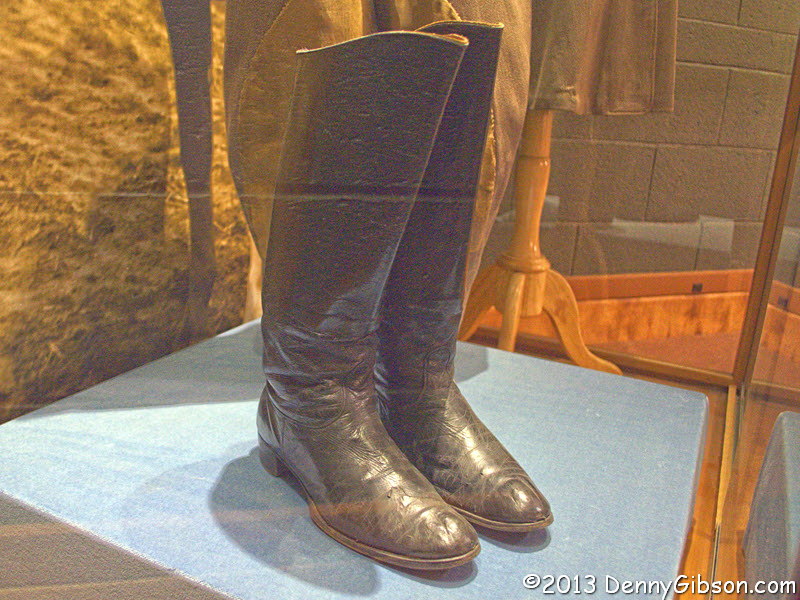
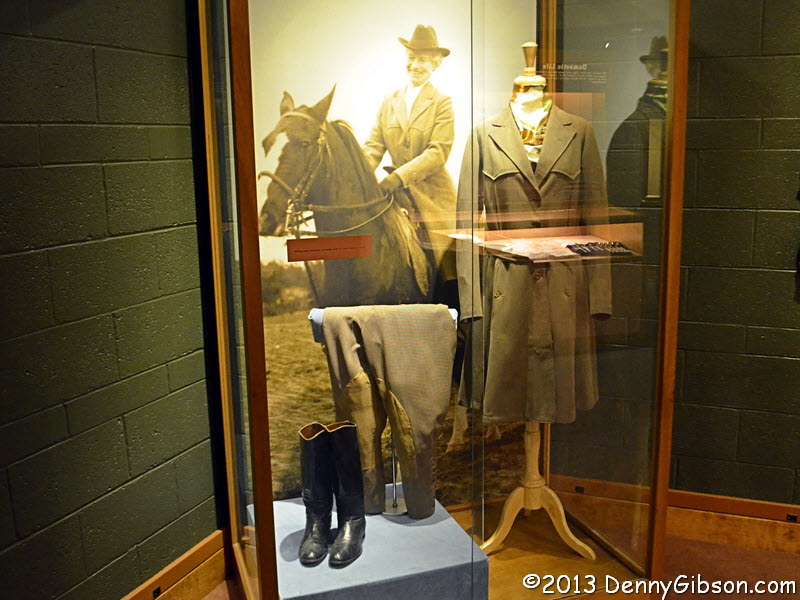
The walls are filled with remarkable images but I’m going to comment on just two. My favorite in Master Set is a 2001 picture of Pete Seeger standing at the edge of the Hudson River wearing hip-high waders and a banjo. It can be found online with a search for Leibovitz and Seeger. I want to grow up to be as happy as Pete Seeger looks in that photo. In Pilgrimage, I was drawn to a picture of Annie Oakley’s boots taken at the museum in my home county. I’ll certainly look at those boots, that I can now connect with two sharpshooting Annies, a bit differently on my next visit.


Inclines and Overlooks Tour, CincinnatiThe Cincinnati Museum Center conducts a number of Heritage Tours each year including several that are repeated every year. One of those is Inclines and Overlooks. I’ve signed up for this in the past but didn’t get to attend because of a schedule overload. This year I made it as the feature event of a busy weekend. Unfortunately, a lot of clouds were also able to attend this year and there was even a little rain but that did little to dampen spirits on the sold out tour.

Inclines and Overlooks Tour, CincinnatiInclines and Overlooks Tour, CincinnatiOur first stop was in Kentucky’s DeVou Park which provides a great view of Cincinnati. From here our guides could point out where the city’s five inclines were and explain why they were needed. There were four guides on the tour; All excellent and all of who’s names I’ve forgotten.

Inclines and Overlooks Tour, CincinnatiInclines and Overlooks Tour, CincinnatiThen it was back to Ohio where we would eventually visit all five incline sites. The first was the Price Hill Incline on the west side of the city. This was the second incline built in Cincinnati and the next to last to die. Constructed in 1874, it operated until 1943. A turn to the right yields a nice view of the Ohio River and the Southern Railroad Bridge.

Inclines and Overlooks Tour, CincinnatiInclines and Overlooks Tour, CincinnatiI make multiple goofs in preparing every blog post and journal entry. Most I can simply ignore but some, like forgetting all the guides’ names and not getting a skyline shot from the Mount Adams overlook are hard to conceal. Instead, I’ve got a shot of some of the piers from Cincinnati’s last incline and an overhead view of one of my favorite taverns. I briefly thought of trying to cover my oversight by claiming that I intentionally omitted a view of the city because I wanted you to visit the City View Tavern so you could experience the view for yourself. I quickly realized that it wouldn’t fly as an excuse but it’s still a great suggestion. The Mount Adams Incline opened in 1876 with two enclosed passenger cars. Three years later the incline was converted to open platforms which would carry horse cars, and eventually electric street cars, to and from down town. The Mount Adams Incline is shown in the picture at the top of this section. It closed in 1948.

Inclines and Overlooks Tour, CincinnatiInclines and Overlooks Tour, CincinnatiInclines and Overlooks Tour, CincinnatiThere was a little rain at the Mount Adams stop and that may have contributed to my failing to get a proper overlook view. It definitely contributed to my failure to get one from the top of the Mount Auburn Incline route. It was also a deterrent to walking the stairs that essentially trace the route but that was outweighed by the fact that the bus would meet all walkers at the bottom. A chance to de-climb 355 steps without also climbing them doesn’t come along every day. The overlook views are from the top of the Bellvue Incline and near the midpoint of the Fairview Incline. Operating between 1871 and 1898, The Mount Auburn Incline was the first and shortest lived of the Cincinnati inclines. It was also the only one with fatalities. In 1889 a car plunged down the track killing six of eight passengers. The Bellvue Incline operated between 1876 and 1926; The Fairview Incline between 1892 and 1923.

I learned quite a few things on this tour including the fact that, while San Francisco was first and last with cable cars, Cincinnati had them, too. Between 1873 and the end of the century, as many as three cable car lines operated here. The power house for one of them still stands and is used for office space. Another surprise was getting a copy of Cincinnati Streetcars No. 2 The Inclines at the end of the tour. This was a gift from the Ohio Book Store and a reminder that it has been entirely too long since I’ve been inside that wonderful place.

This was an extremely well done tour. As I write this, I’m feeling guilty that I didn’t praise it more on the evaluation form. I’m also thinking that I just might try to sign up again next year and hope for better weather.

Great Outhouse Blowout 2012

Penn's StoreThe porch at Penn’s Store has unquestionably been the setting for scenes like the one at right countless times. The majority probably didn’t include electric amplifiers or microphones but I know an awful lot of guitars have been played at the old store; and mandolins and fiddles and other instruments too. On Saturday, I attended the Great Outhouse Blowout at the store for the second time. My first time was in 2004.

Penn's StorePenn's StoreThe Penn family has owned the store since 1850 and it is known to have existed prior to 1845. The place has taken a few beatings over the years. It took one in May of 2010 when flood waters rose well above the floor and the store was forced to close for awhile. That floor has been replaced along with some other bits and the store is again open for business. Penn’s isn’t open around-the-clock like a big city 24/7 kind of place but it’s open enough.

Penn's StoreToday’s event gets its name from the structure at right. The first Great Outhouse Blowout was held in 1992 to celebrate the completion of the first ever outhouse at Penn’s Store and the big step up from “plenty of trees”. Chet Atkins headlined the entertainment at that first GOB.

Great Outhouse BlowoutGreat Outhouse BlowoutGreat Outhouse BlowoutThe Blowout officially got started with a little parade. There are some pretty cool hot rods and customs in there but I thought these two Fords looked like they really belonged.

A centerpiece of the GOB has always been “outhouse” races but not this year. Although I doubt it’s the full story, liability and the signing of waivers had something to do with the lack of racers. To keep the race course from being entirely idle, a three man foot race was organized.

Great Outhouse BlowoutGreat Outhouse BlowoutMy interior pictures of the store included one with and one without people. In the one with people, the fellow at the center is Squirrelman. After taking that picture, I spent some time in front of the store talking to a fellow named Bob. Bob is one of several locals who help the Penn family keep the store going. Squirrelman came out while we were talking and the two exchanged greetings. “That’s Squirrelman,” Bob told me. My complete lack of recognition prompted him to explain that Squirrelman was part of Turtleman’s crew. “You know? Call of the Wildman on TV,” he said in a way that made it clear that not recognizing Turtleman would almost certainly lead to questions of mental competency. “Oh yeah,” I answered. The walking race was between Bob, Squirrelman, and another member of Turtleman’s crew named Muleman. Bob barely beat Muleman to the toilet paper with Squirrelman a distant third.

I’ve since learned that Call of the Wildman is one of the Animal Planet network’s most popular programs and that Turtleman lives less than twenty miles from Penn’s Store. Researching local celebs might be a good move before I return for another Great Outhouse Blowout.

Great Outhouse BlowoutGreat Outhouse BlowoutBefore leaving, I ate some good BBQ, listened to some good music, took a wagon ride with Muleman, and took a look at the festival from inside the famous outhouse.

Greenville Tractor Parade

Lead the Way Tractor Cruise 2012Officially it wasn’t a parade. Its official title is the Lead the Way Tractor Cruise and its purpose is to raise funds for Darke County’s United Way. But the line of classic tractors that rolled down Greenville’s Broadway on Saturday looked a lot like a parade to me and I hope no one gets too mad if I call it that. This was the seventh time it’s been held and I’ve been there for a few of the previous ones. I did an Oddment page for the second annual cruise in 2007 when there were about thirty tractors. There were 38 tractors registered in advance this year and even more showed up. The first announcement I heard said 44 but, as the tractors approached, the announced number was 43. A mechanical problem perhaps.

Lead the Way Tractor Cruise 2012An early announcement also spoke of a participant in last month’s record setting classic tractor parade in Nebraska being present and leading today’s parade. I believe they said his name was Robert. This 1956 Ford was the first tractor behind the police cruiser and its driver was identified as James. Maybe I misunderstood or maybe Robert had mechanical problems. Maybe Robert was tractor forty-four.

Lead the Way Tractor Cruise 2012Lead the Way Tractor Cruise 2012Lead the Way Tractor Cruise 2012It was a great day for a tractor cruise and all the drivers seemed to be having a really good time. These pictures are just a small random sampling of the field.

Lead the Way Tractor Cruise 2012Although I don’t know whether or not one of the tractors was driven by a world record holder or even, for sure, how many there were, I do know that this was the oldest. I’ve heard the word “doodlebug” used for other things but apparently its definition as an automobile converted to off road use is almost official. There were, in fact, conversion kits sold by Sears and others but most doodlebugs were created with whatever was on hand. The ubiquitous Model T Ford was the basis for many conversions but not all. This is a 1928 Chevrolet Doodlebug.

A tractor has to be at least thirty years old to be considered a classic. It’s just a matter of time.


Greenville Prairie Days 2012Greenville Prairie Days 2012Greenville Prairie Days 2012This was also Prairie Days weekend so I stopped by Shawnee Prairie Preserve to check things out.


Harvest MoonWith all that agriculture related stuff going on, the big Harvest Moon at the end of the day seemed just right.

Lincoln Highway Centennial Kickoff

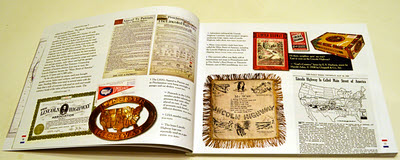
Das Deutsche Haus - IndianapolisThe Lincoln Highway Association was incorporated in Michigan in July of 1913 but the meeting that got things rolling was held in September of 1912 in Indianapolis, Indiana. It was held in the building pictured to the right which was then called Das Deutshe Haus and now known as the Athenaeum. I am now off to a recreation of that meeting in that same building as part of the Indiana LHA centennial kickoff. There will be bus tours before and after the recreation plus I’ve got to get there and back.

The journal for the trip is here.

This blog entry exists as a place for comments on the trip.

Book Review
Fips, Bots, Doggeries, and More
Tracy Lawson

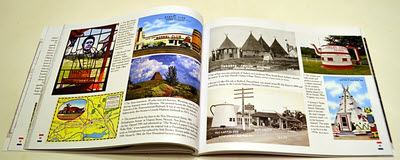
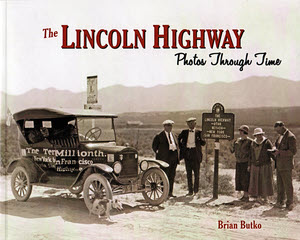
Fips, Bots, Doggeries, and More coverIn 1990, Tracy Lawson’s parents gave her a stack of twenty-one photocopied pages as a Christmas present. Transcribed onto the typewritten pages was the journal of her third great-grandfather’s 1838 trip from a Cincinnati suburb to New York City. In 2012, Lawson is sharing those pages and the experiences they triggered, in Fips, Bots, Doggeries, and More. The book is comprised of two sections. “Section I — 1838” contains the journal along with Lawson’s illuminating comments and notes. “Section II — 2003-2009” contains accounts of the author’s own trips along the route. Both sections are liberally illustrated with black and white photos and drawings.

The writer of the 1838 journal was Henry Rogers, who operated a successful mill in Mount Pleasant (now Mount Healthy), Ohio. Traveling with the 32 year old Henry were his wife and her parents. The miller was both literate and observant and he sets out to record “…all interesting subjects and things that come under my observation”. The journal provides a most interesting look at nineteenth century road-tripping. Henry recorded expenses and named names so we know, for example, that the group spent a night at Winchester’s hotel in Jefferson (now West Jefferson), Ohio and paid $2.50 for the privilege. That $2.50 covered bed and board for four people and two horses. Along the way, he records expenses for tolls, horseshoes, wagon tyres, and “face barbering”, etc..

The travelers picked up the National Road in Jefferson, Ohio, and followed it and its extensions to Hagerstown, Maryland. As a fan of the National Road, I enjoyed reading Henry’s descriptions and found his pre-bridge entry to Wheeling, Virginia, which required a ferry over each of the two Ohio River channels at costs of 25 and 37.5 cents, especially interesting. They passed through Brownsville, Pennsylvania, during construction of the first cast iron bridge in the United States. It doesn’t appear as if Henry realized that the bridge that would soon carry the National Road over Dunlap’s Creek was the first of its kind but he described it as “splendid” while being forced to cross on an “..old narrow bridge that looked as though it would scarcely bear its own weight.” At Hagerstown, the group turned northeast and headed toward Gettysburg, Pennsylvania, then through Abbottstown and York to Lancaster. Roadies will recognize the Gettysburg to Lancaster route as the future path of the Lincoln Highway. From Lancaster, they continued northeast to Trenton, New Jersey, where they spent a little time and made a visit to Philadelphia before moving onto New York City.

The 1838 journal is accompanied by sidebars that explain unfamiliar terms or provide background for certain passages. The journal’s text is cross referenced to a set of end notes. A subsection titled “Expansions” contains short dissertations on subjects that were part of Henry Rogers’ world. These include mills, finances, politics, medicine, fashion, and more.

The author made three trips specifically to experience and research the route her great-great-great-grandparents had followed. Two were driving trips with her daughter and one was a solo fly-and-drive outing. These trips are covered in “Section II” with a blend of genealogy, personal discovery, and general history. It’s fun reading that mirrors Henry’s journal in the sense that both are straight forward reports of some relatively unscripted travel. Henry’s journal held my interest more but there is a good chance that this was because his travel was so much different from today’s. Lawson describes some of the places she stayed and ate much as Henry did and there is even an encounter with a less than savory character that is reminiscent of some of the “scoundrels and topers” encountered by Henry. But Ramada and Cracker Barrel don’t have the same zing as names like Sign of the Bear and Cross Keys Tavern.

Lawson does locate and visit several of the places mentioned in the journal including a few, such as Pennsylvania’s 7 Stars Inn, that are still operating. She also picked up some information at libraries and local historical societies though the trips were not as rich in field research as she had hoped. They were more successful, it seems, on a personal level. She was able to familiarize herself with the path her ancestors traveled and the world they lived in. The mother-daughter time was, as the ads say, priceless.

That personal connection won’t be there for most readers of Fips, Bots, Doggeries, and More, but it is still an entertaining and informative look at a road trip back when thirty-one and a half cents fed a family of four and two horsepower was plenty.

There are some minor errors. Perhaps I’m just sensitized to this sort of thing but referring to US 36 as State Route 36 and saying the Madonna of the Trail Monuments were “erected … on US Route 40 and US Route 66” with no mention of the National Old Trails Road bothered me. Aside from increased knowledge of her own ancestors and the world of 1838, it seems Tracy Lawson gained some insight into heritage road trips. In the Epilogue she says “And if I were driving the National Road again, I would eat at all the restaurants that were once taverns Henry mentioned in his journal!” I hope she makes that happen.

Fips, Bots, Doggeries, and More, Tracy Lawson, The McDonald & Woodward Publishing Company, April 2012, paperback, 9.1 x 7.1 inches, 156 pages, ISBN 978-1935778196
Available through Amazon.

Carillon Park Heritage Fest

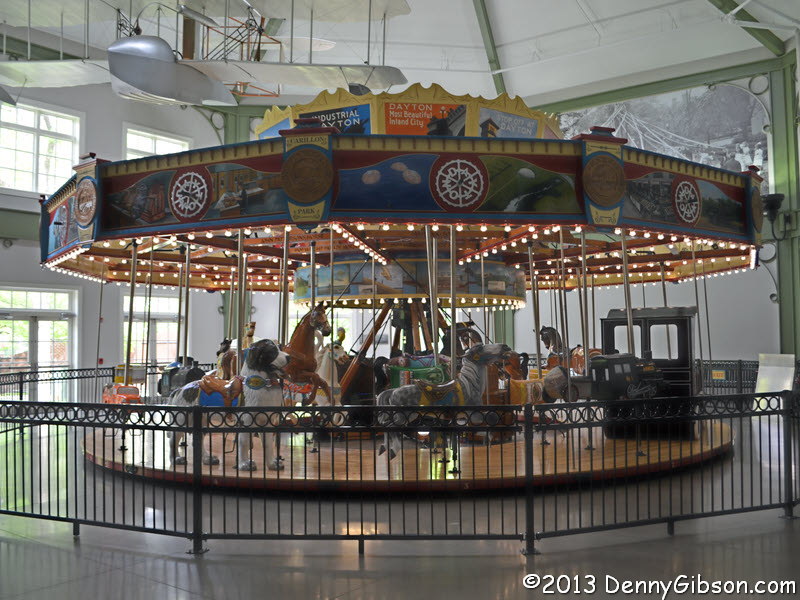
Carillon Park History FestivalOn the south side of Dayton, Ohio, there is what amounts to a small Greenfield Village. It’s now called Carillon Historical Park and is part of the Dayton History organization. Just as Henry Ford was behind the collection of historic buildings that is Greenfield Village, Dayton industrialist Edward Deeds was behind the collection here. I believe the place was actually called Deeds Park once upon a time. In fact, I didn’t realize that Deeds was not part of the official name until I started doing research to write this. At least the carillon that gives the park its name is still called the Deeds Carillon. It was built in 1942 and, at 151 feet tall, is the largest in Ohio.

Carillon Park Heritage FestivalCarillon Park Heritage FestivalToday was the day of the Heritage Festival which meant admission was free (just pay for parking), all the buildings were open and staffed, and there were plenty of food vendors. There was also entertainment scheduled throughout the day with the Dayton Philharmonic Orchestra preceding event ending fireworks.

Carillon Park Heritage FestivalCarillon Park Heritage FestivalQuite a few bicycle manufacturers called Dayton home and that included the Wright Brothers. Two of the five surviving Van Cleves (the Wright’s  , brand name) are in the park but are not part of this display. Both are in a building devoted to the brothers. Huffy originated in Dayton and introduced the Radio Bike in 1955. The three tube radio was built into the “tank” with batteries and antenna on the rear fender. Only a few more years separate the 1890s high-wheels in the first picture from the Radio Bike than separate the Radio Bike from today.

Carillon Park Heritage FestivalCarillon Park Heritage FestivalThere’s some big stuff, like rail cars and buses, in the transportation building. The 1835 B & O engine is the oldest existing locomotive built in the United States. Because of the way the vertical pistons and connecting rods looked when in motion, locomotives of this type got the nickname “grasshoppers”. The horse-drawn steam-powered pumper was built in Cincinnati in 1883 and used in Sidney, Ohio, until 1916.

Carillon Park Heritage FestivalI remember this clock standing beside I-75 just south of Dayton. It marked the Reynolds and Reynolds Company headquarters and I guess I thought it always had. Nope. It started out in downtown Dayton on the Callahan Building. That building was demolished in 1978 and the clock moved to Reynolds and Reynolds. It has been patiently waiting here since 2006.

Carillon Park Heritage FestivalI’m not sure what this fellow’s real name is but he calls himself Wilbur
“…because I can’t grow a mustache”. He is standing in a replica of the Wright’s work shop since Henry Ford took the original to Greenfield Village at the Ford Museum. After doing a wonderful job of telling about the wind tunnel and other experiments that both preceded and followed that first flight in 1903, he tells us that there is a real airplane just down the hall that “…I’ll be flying this afternoon about 3:00.”

Carillon Park Heritage FestivalCarillon Park Heritage FestivalThis is the plane. It is the Wright Flyer III from 1905. With the 1903 flyer, they got off of the ground more or less when they wanted but they returned the the ground when the plane “wanted” and the flight path was essentially straight. With this plane, they learned to fly where they wanted and land on their own, rather than the plane’s, schedule. When Orville gave the pieces of this plane (it’s about 80% original) to Deeds in 1948, he insisted that it be displayed in a pit so that visitors could look down on the plane and see what was involved it operating it. The pilot’s right hand works a horizontal lever that controls the rudder. The left hand works a vertical lever that controls the elevators at the front of the plane. By moving his hips from side to side, the pilot controls the twisting of the wings which the Wrights called “wing warping”. Orville died before the park opened.

I didn’t make it to the fireworks or even to the Philharmonic but, as always, I very much enjoyed a visit to my favorite neighborhood historical village.


Ohio’s Revolutionary War Battle

Bill Smith at George Rogers Clark monumentOhio did not, of course, exist in any official form during the American Revolution, and there were no British troops at the Battle of Picawey, but the conflict that occurred a few miles west of present-day Springfield, Ohio, was between American rebels and British allies and definitely part of the American War of Independence. I knew a little about the battle, but today I learned a whole lot more about it from a fellow wearing a tricorn hat and sitting on a stump.

George Rogers Clark Park is where the “New Boston Fair”, which I attended in 2010, is held, and the group responsible for that, the George Rogers Clark Heritage Association, also conducts a “Spring at New Boston” event. It is a two-day, Saturday & Sunday, affair that seems to be promoted as a plant sale. That didn’t interest me very much, but a “History Walk”, which did, was also mentioned. Today, Sunday, I turned out to be the only participant and, when historian Bill Smith explained that the walk wouldn’t reveal anything he couldn’t point to, it didn’t take long for two men of a certain age to talk each other into finding a pair of comfortable stumps. He and a couple of similarly aged gentlemen had done the same thing yesterday. Of course, if some youngsters show up for one of these, Bill will gladly lead them across the road and just might have a few reenactors pop out of the shadows along the way.

George Rogers Clark MonumentBill handed me a sheet with a few paragraphs on one side and a map on the other. Neither of us ever looked at the text, but the map was a great help in understanding the battle. Before detailing the battle itself, Bill described some of what led to it, and I believe I found that even more interesting. In June of 1780, Captain Henry Bird led a group of Indians and British soldiers into Kentucky, where both Ruddle’s Station and Martin’s Station were overpowered. Both stations surrendered, but Bird could not keep some portion of the Indians from killing a number of what were essentially his prisoners. Although Bird then returned to Detroit with his prisoners, he had certainly frightened the Kentuckians and got the attention of Colonel George Rogers Clark, who raised an army and headed north. Although a British-built stockade stood nearby, there were no British forces at the Indian village of Peckuwe when Clark attacked on August 8, 1780. The Indians were driven from the village, and the battle was a victory for Clark. There were no more raids into Kentucky for the duration of the Revolutionary War.

George Rogers Clark Monument - TecumsehClark is on the front of the 35-foot-tall monument. Tecumseh is on the back. He was at the battle — sort of. He was about twelve years old and was among the women and children who fled the village in advance of the attack. The marker identifies this as his birthplace. It is one of at least three locations identified as such by someone. One of the claims for it being near this marker comes from Thomas Worthington, the future governor of the future Ohio, who is one of two men who say Tecumseh himself identified the nearby river as his birthplace as he passed it in their company.

1812 encampment1812 encampmentThe history lesson on a stump was certainly fun but there was even more fun to be had. There was a small War of 1812 encampment across the way in the field that is filled by the fair on Labor Day weekend. Bill had pointed to it a few times when talking about the 6-pounder cannon that Clark had used at the battle.

1812 encampment1812 encampmentThe cannoneers were clearly enjoying themselves but were nearly as polished as the brass barrel of the big gun. There was no grapeshot or heavy balls loaded into that barrel, but black powder is not something to be sloppy with. They weren’t. They knew their duties and performed them on command.

Cannon shot #4I learned later that the cannon, though present, had not been fired on Saturday. That might explain why the crew seemed to really be enjoying themselves today and why they fired the gun multiple times. Timing is not precise. There might be a second or two between the touching of the match and the actual blast. That’s my excuse for jumping at every boom, even after I knew exactly what to expect. The picture above is of the fourth and final shot, but there are also pictures of the first three: Shot #1, Shot #2, Shot #3.

Seventy Years After

Doolittle Raiders Special DeliveryOn April 18, 1942, sixteen B-25s launched from carriers on a one-way bombing raid over Japan. The physical damage it caused might not have been all that significant but it delivered a much needed lift to moral in the United States and prompted some rethinking and altering of plans by the Japanese commanders. Four of the surviving raiders continue their week-long reunion today and tomorrow in Dayton, Ohio. On Tuesday and Wednesday, airplanes like the ones that made the raid were on hand at the reunion. I was there both days and have an Oddment entry here. Pointing to that entry and providing a place for comments are the primary reasons for this blog entry but…


…I also revisited a couple of interesting eating establishments.

Hasty TastyHasty TastyBreakfast was at the 60 year old Hasty-Tasty Pancake House just a couple of miles from the Air Force Museum. I’ve eaten here before but don’t think I’ve ever mentioned it in either a blog post of a trip journal. A wonderful Dayton eatery where the waitresses that don’t call you “Honey” call you “Sugar”.

Many of the B-25s headed back to Urbana after the flyover and so did I once the memorial service had concluded and traffic cleared a bit. Several of the planes are staying at Grimes Field for a day or two and there is a nice museum that includes a DC3 cargo plane you can climb inside. I took pictures there that could have been included in the Oddment page but I feared that would be overkill.

Crabill's Hamburgers

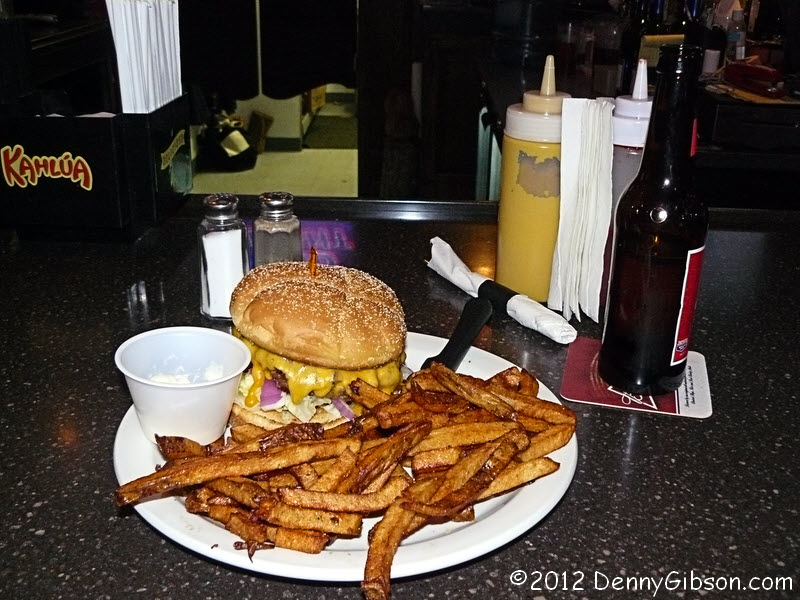
Crabill's HamburgersCrabill’s Hamburgers, at the west edge of Urbana, is even older than the Hasty Tasty although it has moved once. I did mention it when I stopped last summer and none other than David Crabill praised crisp hotdogs. I resolved to try one on my next visit and this was it. Andy cooked the ‘dog just right while I downed my dinner then the friendly but unnamed (Oops, sorry.) waitress obliged me by putting relish on just one half so I could taste it both ways without buying two. The Tootsie Roll is the reward everyone gets for cleaning their plate waxed paper.

Twenty Mile’s Last Stand

Twenty Mile House, Cincinnati, OhioThe first time I entered the Twenty Mile House it was smaller and younger and so was I. I was in my twenties so perhaps could even be considered young in absolute terms. Not so the building. The part on the right was built in 1822. Some or all of a building that stood here in 1804 might even be included in there somewhere. The road was smaller then too. It was small enough that cars parked between it and the building where those shrubs are now. The main entrance was through a street facing door that has long been locked and sealed. Some details of the first time I stepped through that door remain clear. The bar was against the far wall. I’m not entirely sure what was to my left; Probably some tables and chairs. I don’t recall the huge fireplace that I now know fills the east wall so am guessing that it was covered at the time. To my right was a jukebox and a hardwood dance floor that sat on top of the “normal” floor. Les Paul & Mary Ford’s version of How High the Moon was playing. That recording is almost as old as me.

Twenty Mile House, Cincinnati, OhioThe building started out as an inn and stagecoach stop some twenty miles from the center of Cincinnati. It seems to have been successful in that role. And it must have been somewhat successful as some sort of road side stop as the stage route became Montgomery Road and Ohio Route 3 and the 3C Highway and US Route 22. I don’t really know whether the outside of the building changed much during its first century and a half. I do know it hasn’t changed in any material way in the many years since. The inside, however, has changed considerably and additions have been made until the structure I remember from the early 1970s makes up maybe a third of the total. A recent sales flyer includes a diagram of the building in which I believe the area labeled “Bar & Lounge” is the original structure. Perhaps there is a version of the “Peter Principle” that applies to restaurants. Something like: “A successful eating establishment will expand to a size just beyond what the customer base can support.” This was an extremely successful restaurant and night spot through the seventies and eighties. That’s when the additions were made and every occupant since then has had that huge capacity — and overhead — to deal with.

Twenty Mile House, Cincinnati, OhioIn my mind, the sprawling additions have been a factor in the failure of various restaurants to make a go of it but it’s hard to say just how big a factor. The most recent tenant may have actually found all that space attractive. That was a business called Red Rock Tavern and it advertised itself more as a music venue than as a restaurant. It didn’t last long but it left its mark. They painted the building red. Some previous tenant had mounted a scrolling electric sign board on the corner of the building. It’s still there in the picture in the real estate flyer. The Red Rock folks painted around it so that removing it left a scar like stripe. Rumor has it that the kitchen was pretty much stripped at the same time.

The red paint and the grey “scar” provide an ugly building to go along with an ugly situation. Speedway, the gas station chain, found the location, if not the building, attractive. They want to demolish the building and put in a gas station and convenience store. An offer was made but there was a hitch. The property is at the corner of Columbia Road and US 22. There is an entrance on both roads but Speedway stated that it needed an entrance from Columbia much closer to the corner than the existing one. That would be a violation of Warren County access management regulations. The existing entrance is, in fact, closer than current regulations permit but was grandfathered in. This is truly a safety concern in the minds of many and the county engineer has refused to grant an exception.

Beyond this it gets pretty muddled. Apparently the county commissioners and possibly even the Deerfield Township commissioners have the power to overrule the engineer. They haven’t done so and have become the target of a lawsuit by Jeff Black, the building’s owner. They have also become the target of many local residents who feel they should buy the building to preserve it or somehow otherwise firmly block the development. I have no idea how all this fits with the fact that, late last year, Speedway submitted plans that omitted the entrance change.

I’ve come to the game embarrassingly and frighteningly late. I heard of the situation months ago but did nothing other than sign an electronic petition. I marked my calendar for a zoning committee meeting a couple of weeks ago but blew it off for something else. On Tuesday I did attend a township commissioner meeting but it was almost immediately apparent that the meeting was rather meaningless in regards to the fate of the Twenty Mile House. It was a chance for residents to relate how much they liked the old building and tell how its destruction would be a great loss but the commissioners had already come out firmly against buying the property which seemed to be the only method available to them to actually prevent the proposed demolition. For the record, I am not a resident of the county or township involved. I live at the edge of Hamilton County. Warren County and Deerfield Township are two streets and 300 yards from my front door.
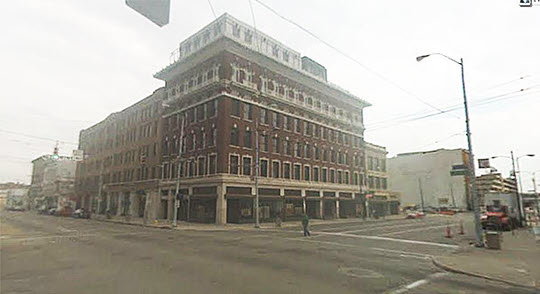
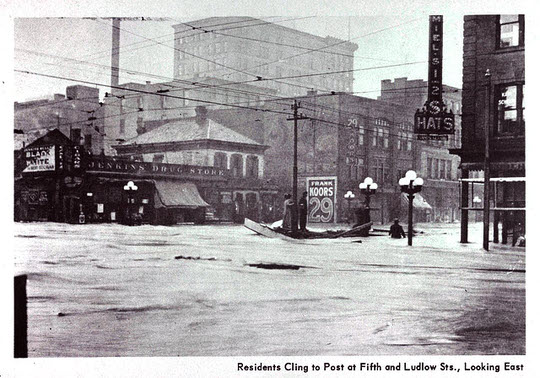
Twenty Mile House, Cincinnati, OhioI can’t even guess at what might happen next. I only know that I’ll be watching. I suppose that part of the reason for making this post is the hope that it might get a few more people watching, too. Several articles here offer glimpses of what has already transpired and the post and replies here offer glimpses of what once was. The petition I mentioned is here though, like almost all online petitions, it has no legal standing. I am aware of two Facebook connections. One is a fan page which may signal its attitude in its title, Save 20 Mile House – Boycott Speedway. The fact that there has so far been only something to be against and nothing to be for can be seen in the name. The other is a group whose name, Friends of 20 mile house, is less abrasive. Fans of the page and members of the group overlap heavily. Hopefully someone will come up with a better plan than lying down in front of bulldozers. On the other hand, I attended that commission meeting with a sixty year old Deerfield Township resident whose mother, knowing his feelings on the matter, cautioned him to “not get arrested”. It could happen.

UPDATE: 27-Mar-2012 – As reported here, Speedway has withdrawn its offer to purchase the 20 Mile House. That is merely a short reprieve as the historic building is still for sale and financial pressures on the current owner have not gone away. Taking advantage of the breather, the previously mentioned Friends of 20 mile house Facebook group has formed a non-profit corporation using the name Friends of The Twenty Mile House. This will allow fund raising and provide focus for locating and assisting preservation minded purchasers.

UPDATE: 1-May-2013 – Time ran out for the Twenty Mile House. The property was sold in March, a demolition permit issued, remaining fixtures were sold in an online auction, and, on April 16, the building was leveled. A blog entry on the demolition was posted here the next day. The order for destruction came from Henkle Schueler & Associates who plan to build a Big Mike’s Gas n Go at the location. In justifying the unpopular action, the company has used silly phrases like “its historical significance can be measured in the physical location, not in its structure” and referred to the gas station as “a place for those traveling through the area to refuel and gather provisions” and called this a continuation of past use. I think they may have invented the phrase “functionally demolished” to describe a building with furniture and fixtures removed. The idea that Henkle Schueler thinks people who cared about the place believe this is insulting. The idea that they may actually believe it themselves is frightening.
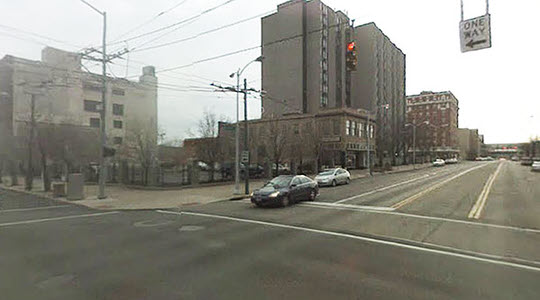
UPDATE: 20-Jan-2018 — Two years after the demolition, a third post (Twenty Mile Stand Two Years On) was written that includes a look at how the new structures relate to what was destroyed.