Dead Sea Scrolls in Cincinnati

Dead Sea Scrolls exhibit at Cincinnati Museum CenterSeveral Dead Sea Scrolls form the centerpiece of and lend their name to a major ongoing exhibit at the Cincinnati Museum Center. The full name of the exhibit, which I attended on Monday and which runs through mid-April, is Dead Sea Scrolls: Life and Faith in Ancient Times. The “scrolls” are in that circular table whose edge is near the center of the photograph at right. They’re not really scrolls, though. Not many of the things comprising what we call the Dead Sea Scrolls are. The first manuscripts pulled from caves near the Dead Sea in 1947 were actual scrolls — seven of them — but not so most of the items found since then. Those first scrolls have been described as “relatively intact”. Subsequent finds have largely been fragments of varying sizes. Pieces of parchment and papyrus containing writing were found in a total of eleven caves in the area, and by 1956, when somebody decided they had found all there was to find, some 15,000 to 30,000 fragments of what are estimated to be more than 900 manuscripts had been retrieved. About 40% of the manuscripts are copies of books in the Hebrew Bible (a.k.a. Old Testament), 30% are religious documents not part of the canonized Bible, and another 30% are secular.

Ten of those manuscripts are represented in that big circular table. To help preserve them, they will be swapped out for a different ten halfway through the exhibit. The actual bits of ancient writing are inside sealed climate-controlled compartments. Enlargements, notes, and English translations are on the table’s surface. Attributed to the period between roughly 250 BCE and 100 CE, most of the Dead Sea Scrolls are written in Hebrew, with a respectable number in Aramaic and a few in Greek or Nabataean. All those in the exhibit are either Hebrew or Aramaic. I can’t read one word. Studying the scrolls doesn’t do much for me in practical terms, but gazing on documents produced two millennia ago is downright awesome.

Dead Sea Scrolls exhibit at Cincinnati Museum CenterDead Sea Scrolls exhibit at Cincinnati Museum CenterThe scrolls are the big draw but by the time most people buy their tickets, they are aware that there is more — a lot more — on display. I regret getting no pictures in the first room of the exhibit, where a museum guide uses three ancient jars and walls filled with changing pictures of the region to illustrate an overview of the scroll’s discovery and a little history. From there, visitors enter a long hall with dates on the floor and some seriously old artifacts displayed along one wall. Some sense of the world that preceded the writing and hiding of the scrolls can be obtained here.

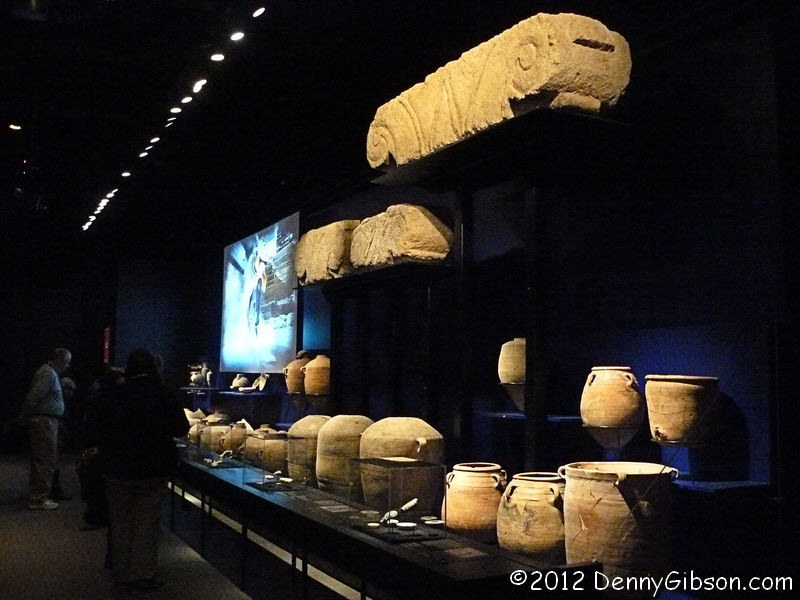
Dead Sea Scrolls exhibit at Cincinnati Museum CenterDead Sea Scrolls exhibit at Cincinnati Museum CenterNext up are some newer and larger artifacts. An accurate count of artifacts displayed is elusive but something above 600 is probably close. This is reportedly the largest exhibit ever mounted in Cincinnati. The 2011 Cleopatra exhibit had about 150 items, and the Pompeii exhibit from earlier this year was just over 250. The rightmost picture is of pottery shards with writing on them. Waste not, want not.

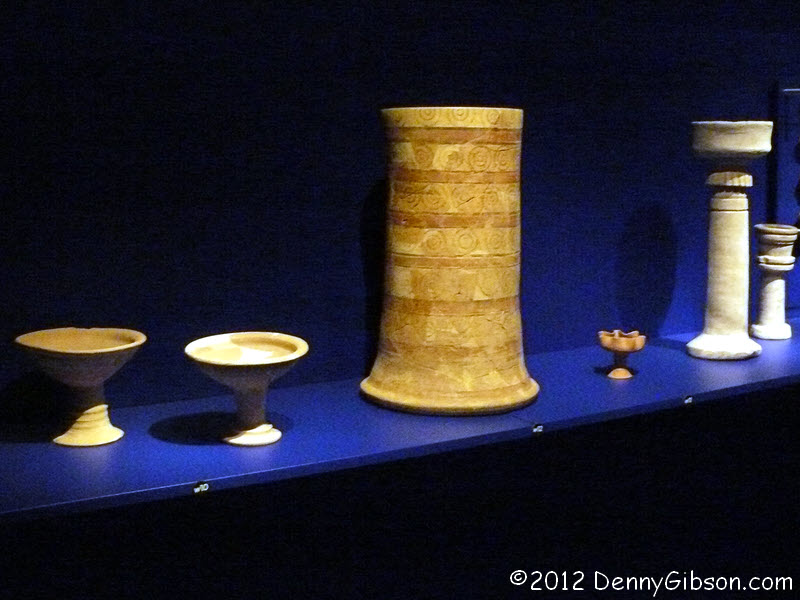
Dead Sea Scrolls exhibit at Cincinnati Museum CenterDead Sea Scrolls exhibit at Cincinnati Museum CenterAs visitors get nearer the scroll display, artifacts seem to become a bit more involved with religion. Holders of incense and offerings are well-represented, and there are hints of a bit more idolatry than I might have suspected. The tall painted cylinder in the second photo is called a cult stand. It’s thought that a bowl with incense or other offerings would have been placed atop it.

Not surprisingly, no photos are permitted in the area where the scrolls are displayed. What was at least a little surprising to me was that the scrolls are not displayed in isolation. They are surrounded by more artifacts, descriptive texts, a short movie, and a stone wall. The movie and texts present some of the facts and theories about who wrote the scrolls, the circumstances of their hiding, and their relationship to the three Abrahamic religions: Judaism, Christianity, and Islam. The wall is basically a replica of a section of the Western/Wailing Wall in Jerusalem, but it frames what is believed to be a stone from the actual wall. The three-ton cube was not ripped from the wall for the exhibit. Roman soldiers of about 70 CE get the blame for that. Touching the stone is permitted, and this can be a very emotional experience for some. Visitors may also insert written prayers into crevices in the replica, just as is done at the real Wailing Wall. These prayers are collected periodically and sent to Israel. A nearby video screen displays a live feed from the real wall.

Dead Sea Scrolls exhibit at Cincinnati Museum CenterThe last part of the exhibit is, I believe, a Cincinnati exclusive. The Hebrew Union College here has been involved with the scrolls from shortly after their discovery. A HUC professor played a key role in the purchase of four of the first seven scrolls in response to a 1954 classified ad in the Wall Street Journal. In the 1970s, HUC secretly stored many photographic negatives of the scrolls for safekeeping. When publication of translations dragged on and on, another HUC professor published his own interpretation of many scrolls in 1991. That exposed him to being sued over copyright violations, and he lost. Any 250 BCE copyright on the actual scrolls had most likely expired, but the suit involved some intermediate translation work. Despite a courtroom defeat, a lot of the scrolls were now out of the bag, and things have been a lot more open since then.

Pnina Shor - The Conservation and Preservation of the Dead Sea ScrollsAnd they’re about to become even more open. The picture at left was taken at a free lecture I attended at the Museum Center in November. The speaker is Pnina Shor of the Israel Antiquities Authority. The screen behind her is demonstrating a digitization project that the IAA has undertaken in partnership with Google. This is not the first time that some Dead Sea Scrolls have been digitized. The scrolls are not all owned by one entity though reporting who and where is way beyond anything I want to deal with. Lots of people have some, and some are already available online. But the IAA has a bunch, and their digitization project is a big one. Estimated completion is 2016, with the first phase, consisting of a few manuscripts, going live in mid-December. The images are being recorded at 1.2 gigapixels. You’re going to need a bigger screen.
Phirst FotoFocus Phinished

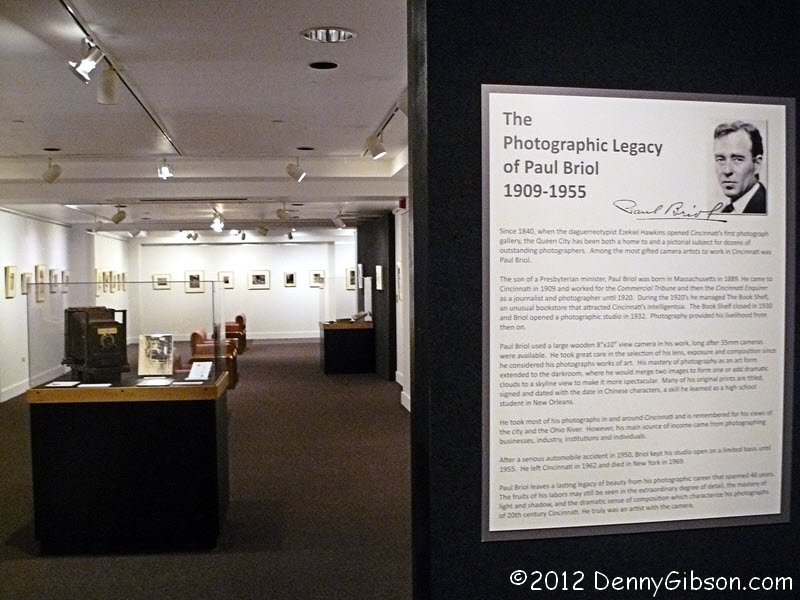
Paul Briol exhibit at FotoFocus 2012It’s officially over and I pretty much missed it. The inaugural FotoFocus festival ended along with October and, despite some good intentions, I barely caught a whiff. Of the over fifty exhibits that were part of the event, the only one I actually saw during regulation time was the “The Photographic Legacy of Paul Briol, 1909-1955” at the Cincinnati Museum Center. Briol’s photographs of Cincinnati in the first half of the last century are both documentation and art. He was a master in the dark room and learned to combine images to enhance the finished product. For example, a blank sky might be turned into a pleasant background by adding a few clouds. That was neither common or easy in those pre-PhotoShop days.
FotoFocus is the name of a a Cincinnati nonprofit that “champions the ubiquity of photography and its important role in contemporary culture.” It is also the name of the just concluded month long series of exhibits, presentations, and lectures. There were a couple of receptions and at least one lecture that I wanted to attend but each of those encountered a conflict. I had a whole month to take a look at the many exhibits but just kept putting it off. When I finally panicked and got serious, it was too late. I managed to get to the Briol show at Cincinnati Museum Center on Monday and two others on Friday. Of course, Friday was November 2 and the majority of exhibits were history. The two I visited on Friday were fairly major productions whose runs extend beyond FotoFocus.

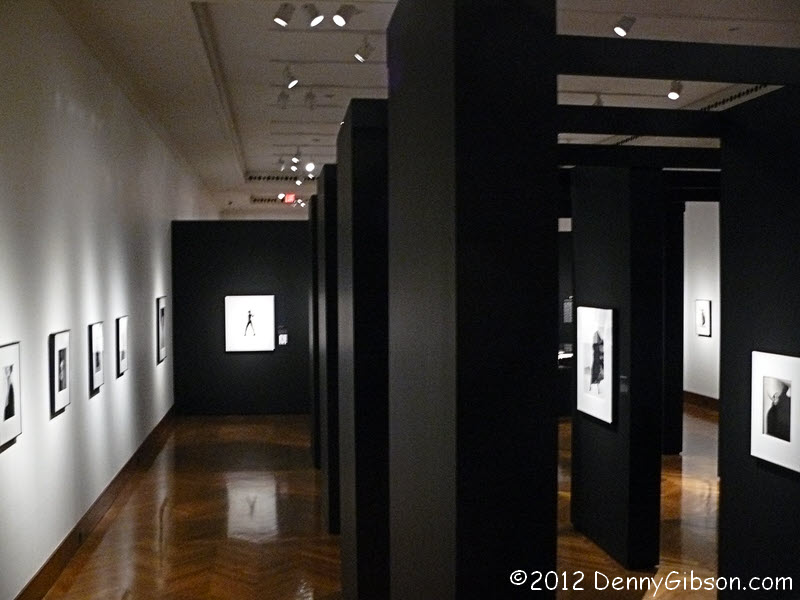
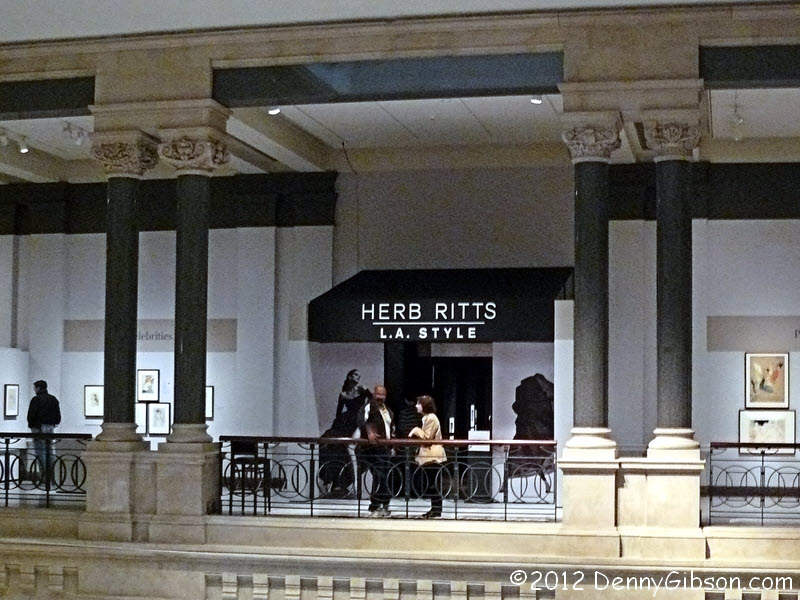
Herb Ritts exhibit at FotoFocus 2012Herb Ritts exhibit at FotoFocus 2012On Friday, I headed first to the Cincinnati Arts Museum in Mount Adams to see “Herb Ritts: L.A. Style”. Since I do stop by here once in a while and wouldn’t feel the need to see all of the permanent displays, I thought my visit would be fairly brief. Though I did essentially limit my viewing to the Ritts exhibit and a traveling Toulouse-Lautrec exhibit at its entrance, it wasn’t exactly a dash in and out. For one thing, Friday was the first of three days of an expanded “Holiday Expressions” gift shop that filled the lobby. Secondly, several bus loads of students were touring the museum in groups of twenty or so. I love seeing kids in museums. They can be a little noisy and can sometimes block an intended path but they deserve to be there a lot more than I do. Kudos to the schools and teachers who get their kids out to see “stuff”. There also happened to be two musical performances going on. In the lobby, a string trio played on a balcony for the benefit of “Holiday Expression” shoppers and two fellows played and discussed some “old timey” music for the benefit of the students in the main hall.

“Herb Ritts: L.A. Style” was curated by Paul Martineau for the J. Paul Getty Museum. Although I was not familiar with Ritts by name, I definitely recognized some of his photos including the cover of Madonna’s True Blue album. Not all of Ritts’ assignments were successful from the client’s point of view. Several examples of his most impressive work came from assignments that were rejected because they matched Ritts’ vision a lot more than the client’s. Ritts’ vision was darned good.

Even now. it seems, Ritts doesn’t please everyone. There are some stunningly beautiful nudes in the exhibit. A sign at the entrance states this and suggests parents check out things and decide for themselves whether their children should see them or not. After I had viewed the exhibit, I stopped for a while just outside the entrance and listened to the musicians below. As I stood there, a fellow I guessed to be about sixteen or seventeen exited the exhibit and approached me. “My male instincts told me to go in there”, he said. “They were wrong.” There are nudes of both genders on display and I’m guessing that this was the teenager’s problem. I doubt he had ever before considered that the word “nude” was not synonymous with “naked woman”. Ah, the insecurity of youth.

“Herb Ritts: L.A. Style” runs through December.

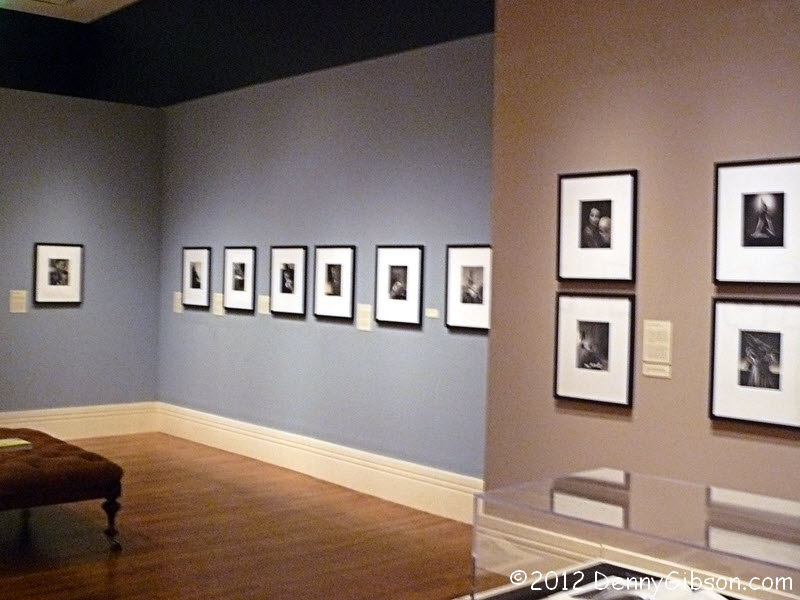
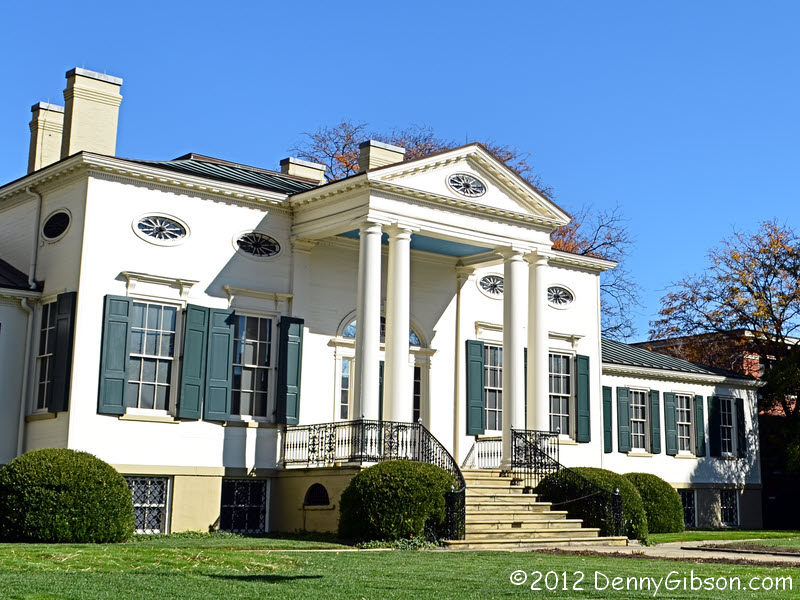
Edward Steichen exhibit at FotoFocus 2012Taft Museum of ArtThe other exhibit I saw on Friday was “Star Power: Edward Steichen’s Glamour Photography” at the Taft Museum of Art. To my shame, this was my first visit to the Taft since its major expansion and renovation in 2004. That meant I needed to look over the whole place and not limit my visit to the Steichen display. Christmas season is starting here also with Friday being the first day of “Antique Christmas”. This consists of a number of decorations, toys, and other Christmas related items from holidays far in the past spread throughout the museum.

Edward Steichen was a name I half recognized but couldn’t connect with anything in particular. It turns out that, had I made any sort of guess, there’s a good chance I’d have been right. He did a lot. He painted, directed movies, and played a key role in the publication of books and magazines and in the running museums. And he was a photographer. In World War I, he commanded the photographic division of the American Expeditionary Forces. In World War II, he was Director of the Naval Aviation Photographic Unit. His many activities between the wars included a fifteen year stint as photographer for Vogue and Vanity Fair magazines. That stint ran from 1923 to 1938 and I believe that most, if not all, of the photographs in this exhibit are from that period.

The title refers to “Glamour Photography” and his work for the world of fashion is well represented. It also mentions “Star Power” and the stars are all there: Greta Garbo, Katherine Hepburn, Joan Crawford, and many others including my fav, Claudette Colbert. The way Steichen handles light in these black and white images is remarkable as is his frequent use of stark high-contrast backgrounds. His lighting often adds a 3-D quality and both it and the composition automatically and consistently focus the viewer right where Steichen wants.

“Star Power: Edward Steichen’s Glamour Photography” runs through January 27.

Even though I missed the majority of FotoFocus exhibits, I did see three of the bigger ones. With the Annie Liebovitz exhibit I visited a couple of weeks back, that means I’ve been exposed to some of the best lens based art of the last century in a fairly short span of time. I’ve never called myself a photographer. In fact, after seeing what can be done, I’m almost embarrassed to even be seen with a camera. I’ll get over it and I won’t stop snapping pictures but it was a clear reminder of just why I never call myself a photographer.


On Friday morning, I wanted to check out something about FotoFocus via my phone but I misspelled FotoFocus. I did it by correctly spelling Photofocus. Photofocus is a long running website that I was aware of though not one I can claim to be familiar with. By coincidence Friday was Photofocus’ fourteenth anniversary. It was also the day that founder Scott Bourne announced his retirement. He is not retiring just yet. That will occur in exactly one year and the website will continue. Scott has already made arrangements to assure that. Accident, coincidence, and the reading of a couple of interesting articles made me think that maybe I should become familiar with Photofocus so I’ve subscribed to its RSS feed.

Controversy, Photos, and Inclines

I long ago reserved a seat on a bus tour of Cincinnati incline sites and had in mind that the Saturday outing would be the subject of this Sunday’s blog entry. But not only did Thursday’s visit to the Pumpkin Show result in an unscheduled post, it led to me visiting a couple of exhibits that I think worth mentioning. So, before getting to today’s feature, I’m presenting a couple of short subjects.


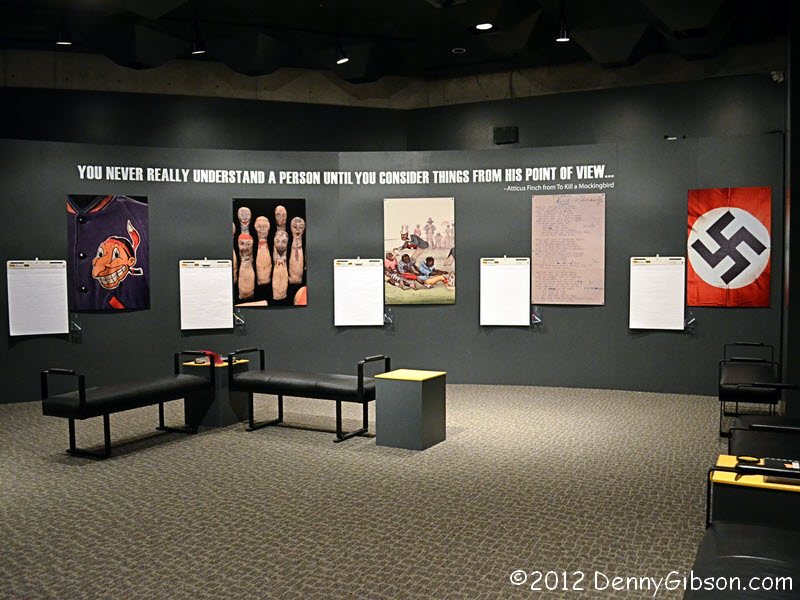
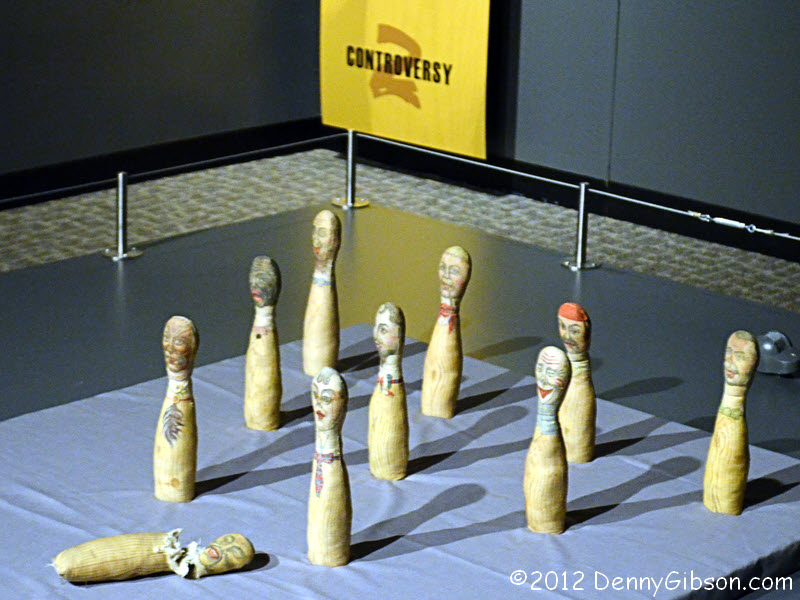
Ohio History Center Controversy 2Short subject one is Controversy 2. Rather than driving home from Circleville in the dark on Thursday, I drove just a few miles toward Columbus and grabbed a motel room then headed on to Ohio’s capital in the morning. My first stop was at the Ohio History Center where the second exhibit of controversial items in the Ohio Historical Society’s collections is in progress. The photo at the right is of an area at the end of the exhibit. Large pads of paper hang next to photos of the five items on display. Presumably the pads were there for comments but they were entirely blank when I saw them. Around the corner, several comments made on smaller cards were displayed. Most were positive regarding the exhibit and thoughtful regarding the items in it but a few were unhappy that the objects have been allowed into the light.

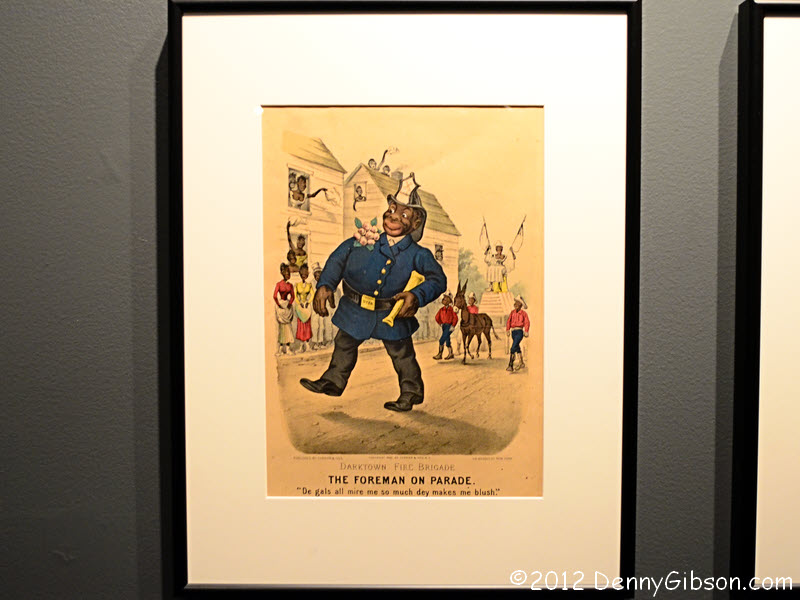
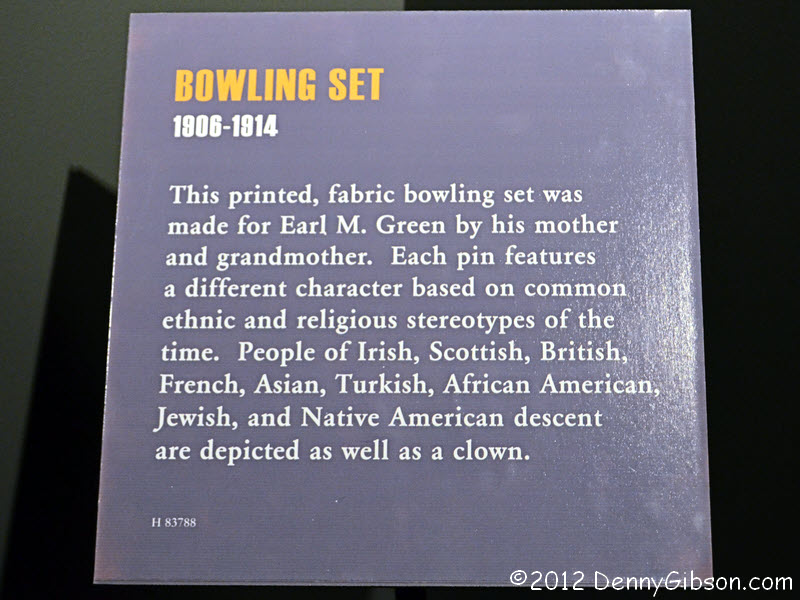
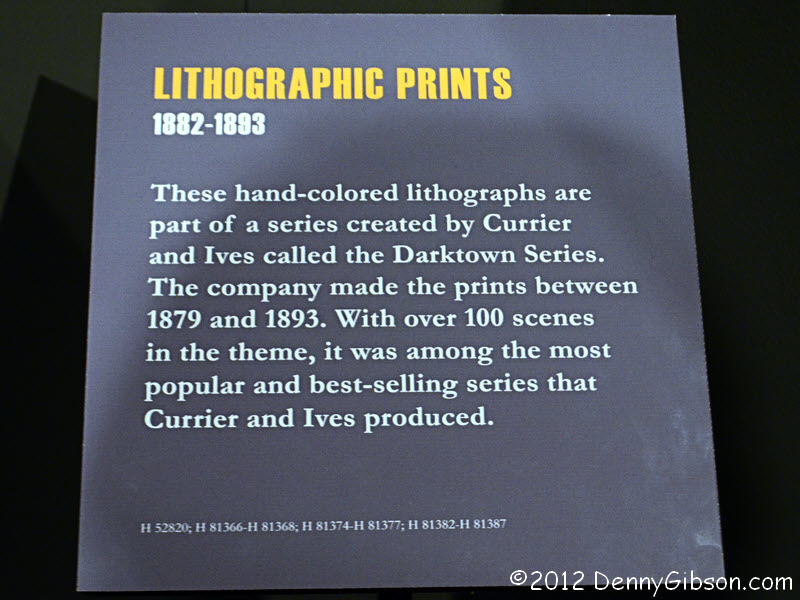
Ohio History Center Controversy 2Ohio History Center Controversy 2The first Controversy exhibit, which I missed, included a hooded KKK costume and a nineteenth century condom. Controversy 2 contains an original Cleveland Indians Chief Wahoo jacket from 1946, children’s toys depicting ethnic stereotypes, degrading racial caricatures, a poem written in dialect, and a Nazi flag. The cloth bowling pins were made sometime before 1914. An adjacent description is here. The prints were published by none other than Currier and Ives between 1882 and 1893. A dozen or so are displayed. Their description is here. The line at the bottom of the print shown here is “De gals all mire me so much dey makes me blush.”


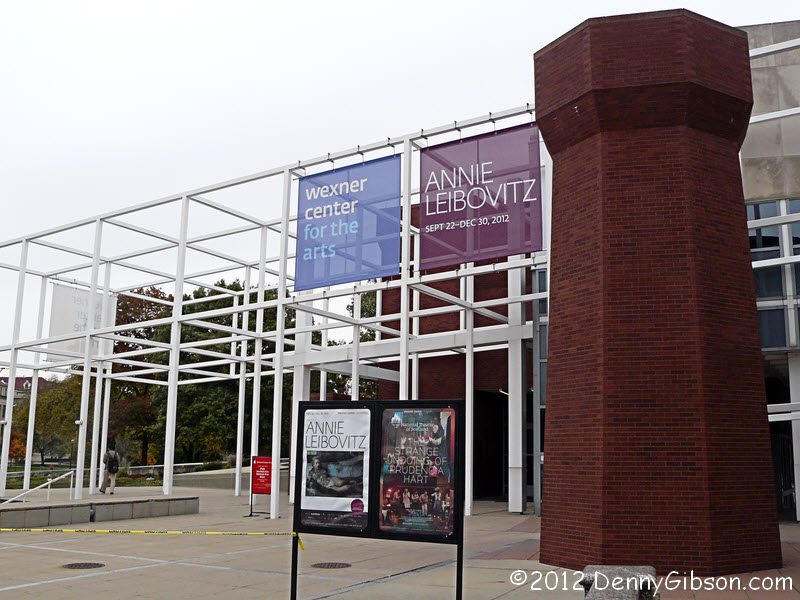
Wexner Center, Columbus, OhioNot surprisingly, no photos were allowed at my next stop, an exhibit of Annie Leibovitz photographs at the Wexner Center. I’m not at all bothered by that since I am not all that fond of taking pictures of pictures and, in this case in particular, doing anything near justice to the subject was clearly out of the question. The exhibit includes all of Master Set and much of Pilgrimage. Master Set consists of 156 images hand picked by Leibovitz to represent four decades of work. Most are from professional assignments but there are some family shots in there, too. Pilgrimage is made up of photos that Annie took for herself. There are no people in these photos but every object and location is firmly associated with an historical figure.

The walls are filled with remarkable images but I’m going to comment on just two. My favorite in Master Set is a 2001 picture of Pete Seeger standing at the edge of the Hudson River wearing hip-high waders and a banjo. It can be found online with a search for Leibovitz and Seeger. I want to grow up to be as happy as Pete Seeger looks in that photo. In Pilgrimage, I was drawn to a picture of Annie Oakley’s boots taken at the museum in my home county. I’ll certainly look at those boots, that I can now connect with two sharpshooting Annies, a bit differently on my next visit.


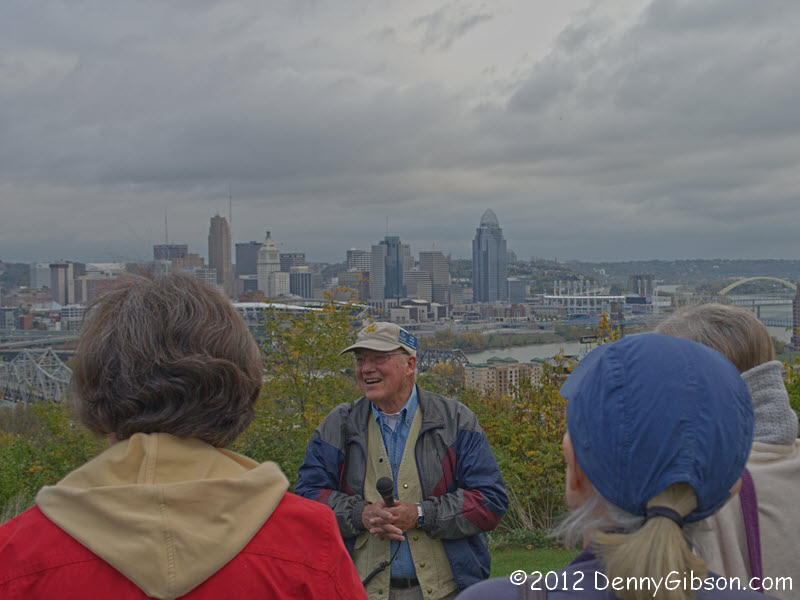
Inclines and Overlooks Tour, CincinnatiThe Cincinnati Museum Center conducts a number of Heritage Tours each year including several that are repeated every year. One of those is Inclines and Overlooks. I’ve signed up for this in the past but didn’t get to attend because of a schedule overload. This year I made it as the feature event of a busy weekend. Unfortunately, a lot of clouds were also able to attend this year and there was even a little rain but that did little to dampen spirits on the sold out tour.

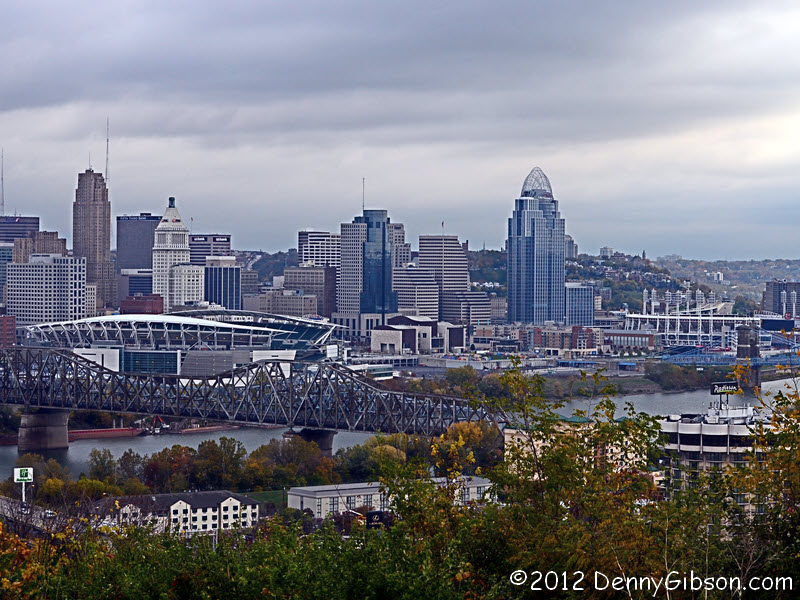
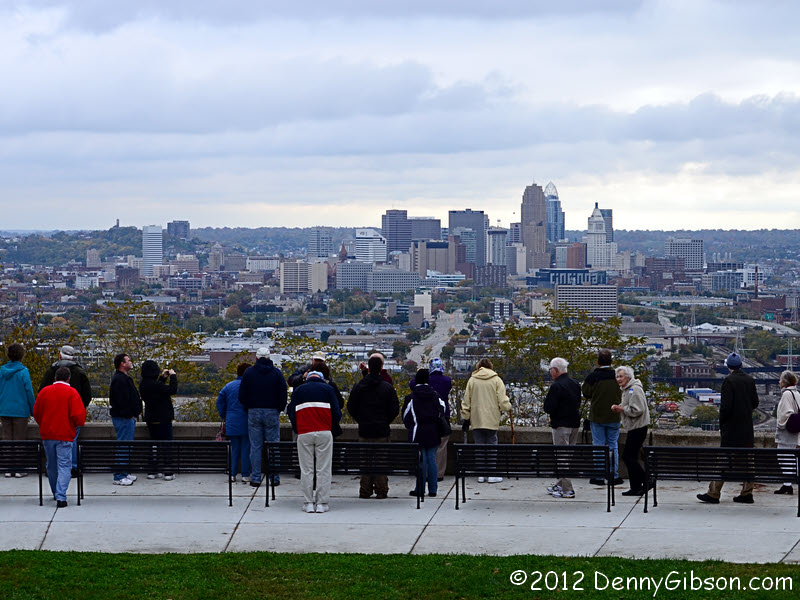
Inclines and Overlooks Tour, CincinnatiInclines and Overlooks Tour, CincinnatiOur first stop was in Kentucky’s DeVou Park which provides a great view of Cincinnati. From here our guides could point out where the city’s five inclines were and explain why they were needed. There were four guides on the tour; All excellent and all of who’s names I’ve forgotten.

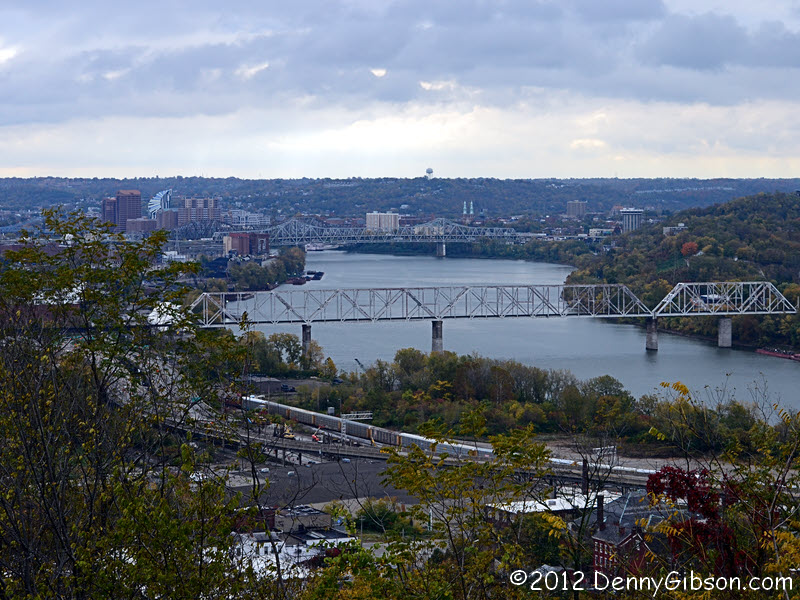
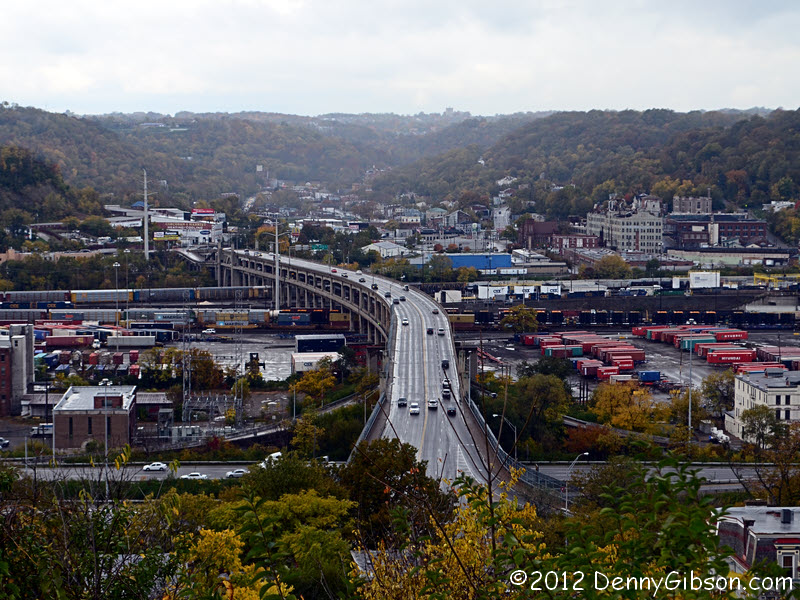
Inclines and Overlooks Tour, CincinnatiInclines and Overlooks Tour, CincinnatiThen it was back to Ohio where we would eventually visit all five incline sites. The first was the Price Hill Incline on the west side of the city. This was the second incline built in Cincinnati and the next to last to die. Constructed in 1874, it operated until 1943. A turn to the right yields a nice view of the Ohio River and the Southern Railroad Bridge.

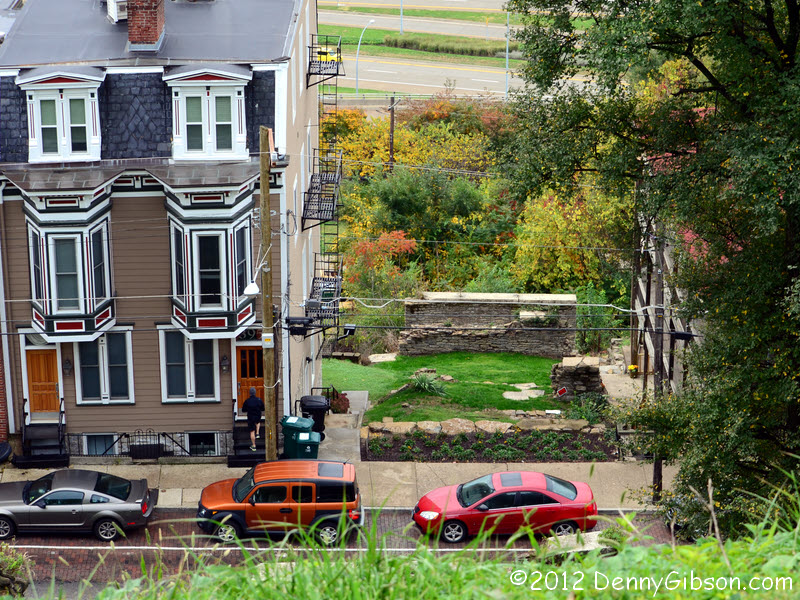
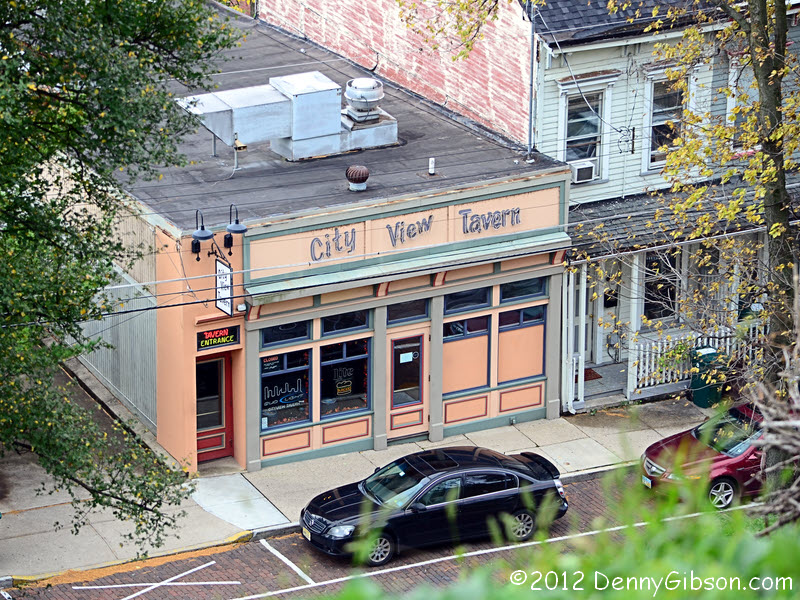
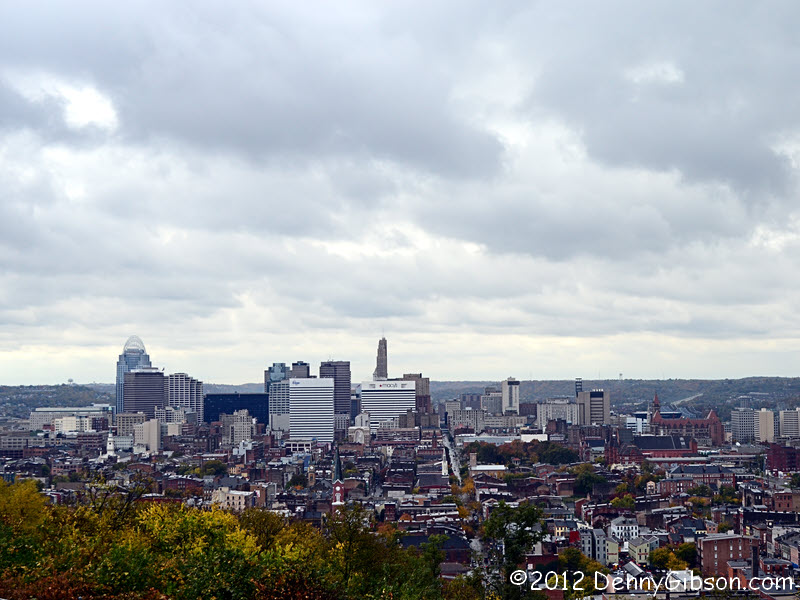
Inclines and Overlooks Tour, CincinnatiInclines and Overlooks Tour, CincinnatiI make multiple goofs in preparing every blog post and journal entry. Most I can simply ignore but some, like forgetting all the guides’ names and not getting a skyline shot from the Mount Adams overlook are hard to conceal. Instead, I’ve got a shot of some of the piers from Cincinnati’s last incline and an overhead view of one of my favorite taverns. I briefly thought of trying to cover my oversight by claiming that I intentionally omitted a view of the city because I wanted you to visit the City View Tavern so you could experience the view for yourself. I quickly realized that it wouldn’t fly as an excuse but it’s still a great suggestion. The Mount Adams Incline opened in 1876 with two enclosed passenger cars. Three years later the incline was converted to open platforms which would carry horse cars, and eventually electric street cars, to and from down town. The Mount Adams Incline is shown in the picture at the top of this section. It closed in 1948.

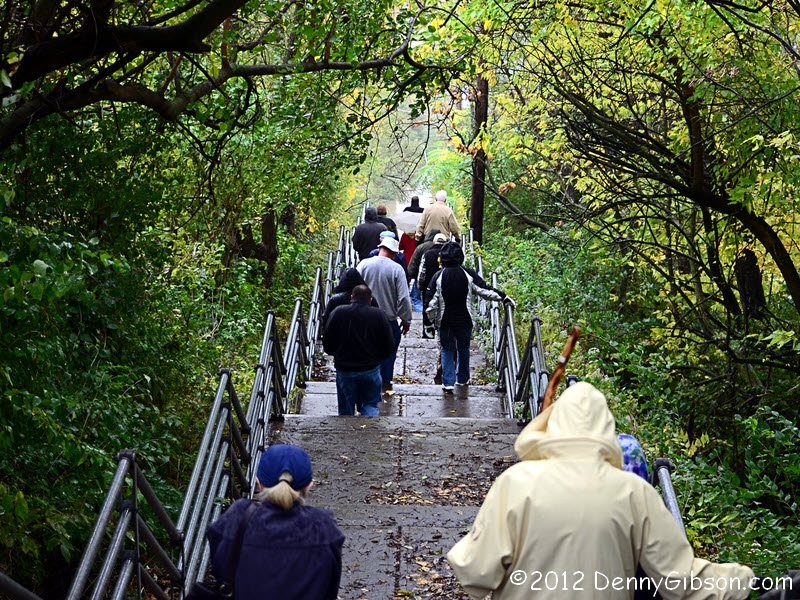
Inclines and Overlooks Tour, CincinnatiInclines and Overlooks Tour, CincinnatiInclines and Overlooks Tour, CincinnatiThere was a little rain at the Mount Adams stop and that may have contributed to my failing to get a proper overlook view. It definitely contributed to my failure to get one from the top of the Mount Auburn Incline route. It was also a deterrent to walking the stairs that essentially trace the route but that was outweighed by the fact that the bus would meet all walkers at the bottom. A chance to de-climb 355 steps without also climbing them doesn’t come along every day. The overlook views are from the top of the Bellvue Incline and near the midpoint of the Fairview Incline. Operating between 1871 and 1898, The Mount Auburn Incline was the first and shortest lived of the Cincinnati inclines. It was also the only one with fatalities. In 1889 a car plunged down the track killing six of eight passengers. The Bellvue Incline operated between 1876 and 1926; The Fairview Incline between 1892 and 1923.

I learned quite a few things on this tour including the fact that, while San Francisco was first and last with cable cars, Cincinnati had them, too. Between 1873 and the end of the century, as many as three cable car lines operated here. The power house for one of them still stands and is used for office space. Another surprise was getting a copy of Cincinnati Streetcars No. 2 The Inclines at the end of the tour. This was a gift from the Ohio Book Store and a reminder that it has been entirely too long since I’ve been inside that wonderful place.

This was an extremely well done tour. As I write this, I’m feeling guilty that I didn’t praise it more on the evaluation form. I’m also thinking that I just might try to sign up again next year and hope for better weather.

RoadDog Day Afternoon

Don Hatch at American Sign MuseumI get to be part of somebody’s road trip again. Don Hatch is a roadie whose nickname and online handle is RoadDog” and that is the source of my not particularly clever title. He stopped in Cincinnati today on his way back from relatives in North Carolina to his home in Illinois. Unlike Fred Zander, whose road trip I got to be part of last month, Don has been to Cincinnati before and even visited the American Sign Museum in its original location. In spite of that, or more likely because of it, seeing the new and improved set up was high on his list of goals for the visit.

American Sign MuseumTo save time and make sure we didn’t miss the four hour (noon-4:00) Sunday window, we met at the museum. We arrived a little after 1:00 and roamed the museum on our own for awhile then hooked up with about a dozen others for the 2:00 tour. This was my first “official” tour of the museum in the new location. Museum founder Tod Swormstedt did his normal excellent job job while RoadDog took notes.

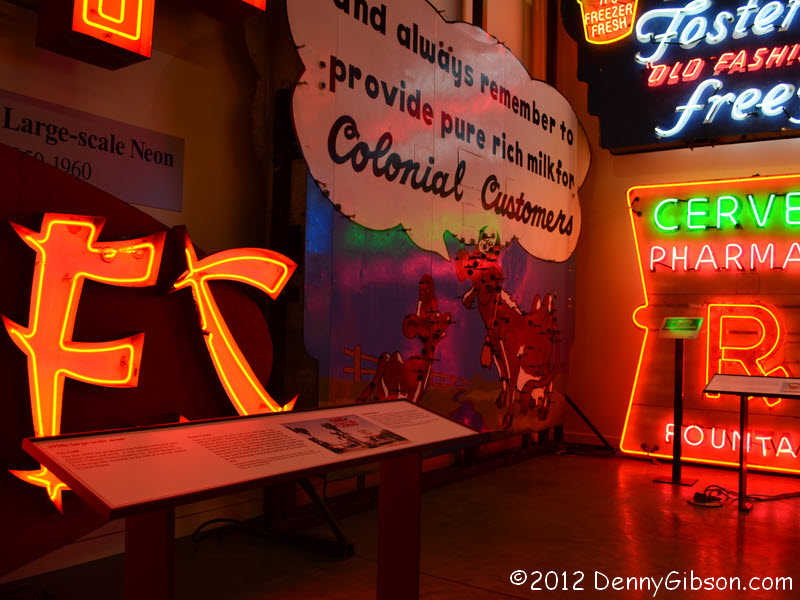
Neonworks at American Sign MuseumNeonworks at American Sign MuseumNeonworks at American Sign MuseumI experienced another first by going inside Neonworks, the independent sign shop that occupies some of the museum’s space. The shop can be seen from the museum proper through large windows but is usually idle on weekends. Today craftsman Tom Wartman showed up near the end of the tour and we were allowed into the shop for an up-close look and a little demonstration. As we watched, Tom sealed and filled then brought to life a length of neon text.

Zip's CafeRoadDog and ZipburgerAnother of Don’s Cincinnati goals was grabbing some chili but, as I’ve noted before, all the independent chili parlors are closed on Sundays. The two big chains, Skyline and Gold Star, have plenty of stores open and both turn out some very fine Cincinnati chili but I talked Don into waiting until Monday for his chili fix and trying out a ‘burger joint today. Probably the currently best-known Cincinnati ‘burger joint is Terry’s Turf Club and that’s where Fred and I went. However, Don has experienced — and loved — Terry’s in the past so I led Don to someplace “new”. That “new” is in quotes because, while Zip’s Cafe may be new to Don, but it has been turning out award-winning “Zip Burgers since 1926.

Aglamesis ice creamAglamesis ice creamFor dessert, we did exactly what Fred and I had done and ate delicious ice cream at one of the 98-year-old marble tables at the Aglamesis Brothers shop on Madison Road. Most people who think of Cincinnati ice cream think of Graeter’s and I don’t want to demean it in anyway. Like Skyline and Gold Star chili, it is an excellent product and I’m proud to live near its source. All three brands are Cincinnati to the bone, if any of them had bones, but they can now be found in other cities in the region. Camp Washington and Blue Ash Chili (which is in tomorrow’s plans) are among a number of independent one-location Cincinnati-only chili dispensaries. Aglamesis does have two stores but all of their ice cream is made on Madison Road. Fred actually had Graeter’s on his list when he arrived but I steered him to Aglamesis. I was happy to learn that he did get to sample their product in Columbus, Ohio, and sent this picture to prove it.

Jake Speed and the FreddiesOver the RhineWe wrapped up the day at Washington Park. The park, which originally opened in 1855, had become a somewhat scary place in recent years but an extensive makeover has just been completed. The ribbon cutting was July 6 and tonight a sort of grand reopening celebration took place with a free concert featuring Jake Speed & the Freddies and Over the Rhine. You can’t get much more Cincinnati than that.

The reverse road trip continues tomorrow with stops planned for Blue Ash Chili, Pompilio’s, and Mansion Hill Tavern.

Reverse Road Trip

American Sign MuseumI was part of a road trip today but it wasn’t mine. Roadie Fred Zander from Topeka, Kansas, is in Ohio visiting family north of Dayton and came down to Cincinnati for the day. Like many others, Fred has wanted to visit the American Sign Museum but its limited hours made him put it off. The ribbon cutting was yesterday. Today was the first “normal” day and Fred was among the first “normal” customers.

Although it was the Sign Museum that prompted the trip and Fred even commented that the museum alone would have made the trip worthwhile, this was also Fred’s first visit to the Queen City and an opportunity for me to do a little boostering. I think I did OK in that regard but really fell down in the picture-taking department. I had good intentions and almost always had a camera nearby but, presumably since everything was familiar to me, whatever it is that makes me want to click rarely appeared. So, while I showed Fred what I believe is some Cincinnati “good stuff”, I’m going to have to tell about it with few visual aids.

Fred Zander at Roebling BridgeI met Fred at an I-75 exit a little north of the city where he could leave his car. We headed directly downtown from there and drove by Music Hall, Fountain Square, P & G headquarters, and Cincinnati’s oldest bar, Arnold’s. On the way to the 1867 Roebling Suspension Bridge, we got a glimpse of the football and baseball stadiums and the National Underground Railroad Freedom Center. On the Kentucky end of the bridge, we pulled into a small lot beneath it that offers a good view of the bridge, the river, and the Cincinnati skyline. I even thought to get a picture of the skyline in addition to the picture of Fred backed by the Roebling Bridge. Before moving on, we took a look at the scenes from area history captured by large murals painted on the flood wall.

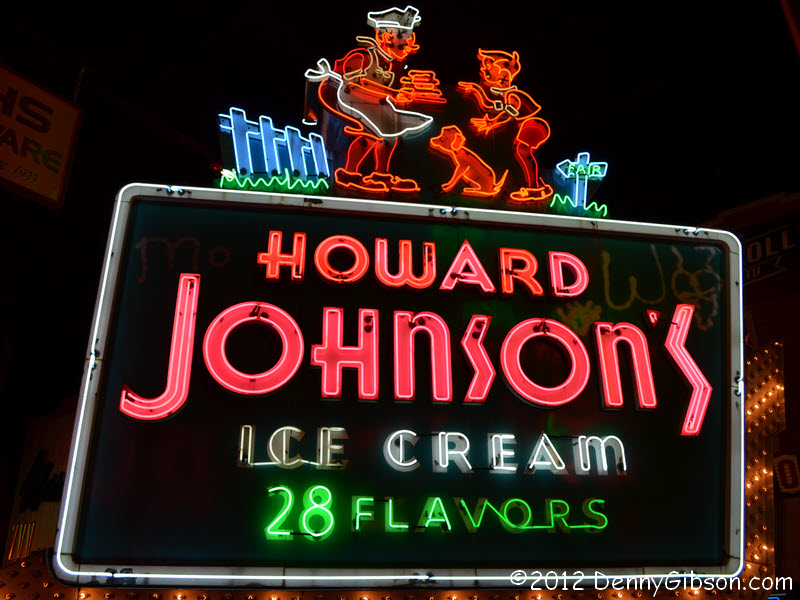
Fred and Tod at American Sign MuseumInformation panel at American Sign MuseumThen it was time for the sign museum to open so we headed back to Ohio. I actually remembered to take some pictures there. One reason may have been that the explanatory panels that stand near most signs were new to me. The text had been ready for the sneak previews but not the stands. I wish I had taken a picture of the face of one of the panels as an example. Tod wrote most or all of these and it’s no surprise that they are quite informative. Sharp eyes may have noticed the American Sign Museum sign at the museum entrance in the photo at the top of this article. That’s also been added since the previews as have some plaques and section signs inside. We were not on an official tour but Tod was always nearby answering questions and pointing out things so it was an “almost tour”.

First Sign Museum tourReal tours, which are free, are given at fixed times. Space permitting, walk-ups are welcome but tours may be scheduled and tickets purchased through the museum’s website. The picture is of the first official tour at the new location. Most of the group is on the other side of the wall.

Fred and his favorite signFred's favorite signI also got a picture of Fred’s favorite sign and a picture of Fred taking a picture of Fred’s favorite sign.

After a couple of hours at the sign museum we drove a couple of miles south to the Cincinnati Museum Center. The museum center is in the 1931 Union Terminal and the art deco building with its murals and other decorative features is something of a museum itself. We did not visit any of the three real museums there.

It was beginning to get a little hungry out so we headed over to Terry’s Turf Club. I had originally wanted to stop at Camp Washington Chili which is just a few blocks from the Sign Museum but it’s closed on Sunday. Terry’s is known for its fantastic hamburgers and huge collection of working neon signs. It’s definitely a fitting place to eat after an American Sign Museum visit. Dessert was ice cream at the 1913 Aglamesis Brothers shop just a few miles north.

Although I didn’t do a very good job of recording the reverse road trip, I did enjoy the chance to show someone a little bit of my town. Fred clearly enjoyed his first visit here and declared his intentions to return. I’m looking forward to it.

American Sign Museum Reopening

American Sign MuseumMark your calendars. On June 23, the American Sign Museum begins full five-days-a-week operation at its new bigger and taller location just a few blocks from Camp Washington Chili. There were previews on Friday & Saturday and I assure you that seeing an entire Mail Pouch barn side in a museum is not the same as seeing pictures. I’ve created an Oddment page for those previews and this blog entry simply points to that page and provides a place for comments.

This way to the Oddment.

Carillon Park Heritage Fest

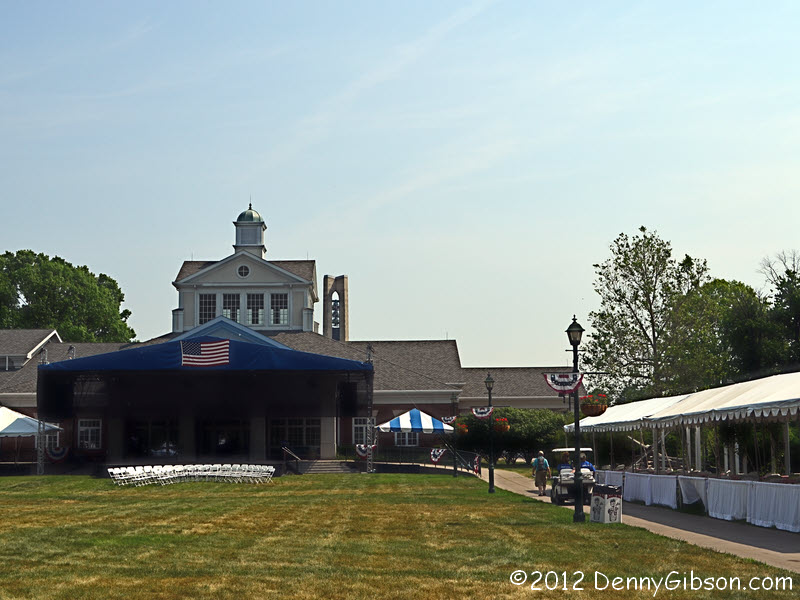
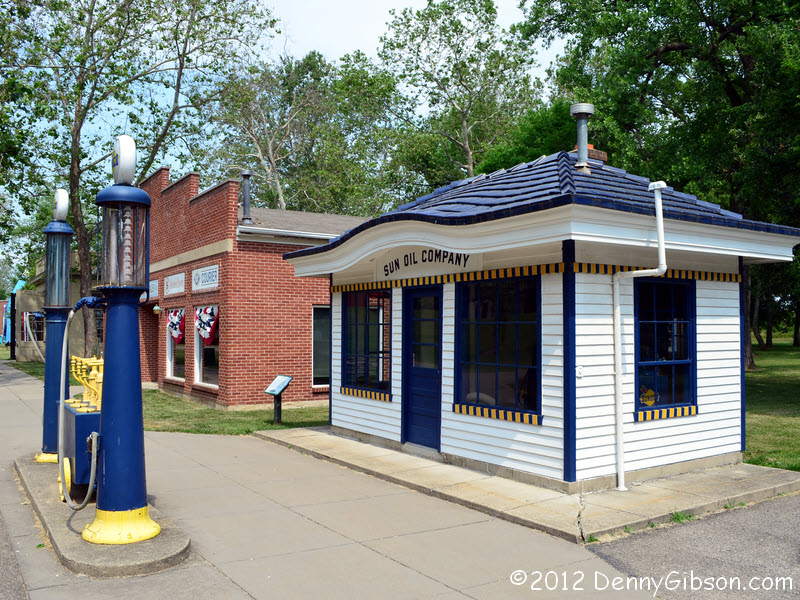
Carillon Park History FestivalOn the south side of Dayton, Ohio, there is what amounts to a small Greenfield Village. It’s now called Carillon Historical Park and is part of the Dayton History organization. Just as Henry Ford was behind the collection of historic buildings that is Greenfield Village, Dayton industrialist Edward Deeds was behind the collection here. I believe the place was actually called Deeds Park once upon a time. In fact, I didn’t realize that Deeds was not part of the official name until I started doing research to write this. At least the carillon that gives the park its name is still called the Deeds Carillon. It was built in 1942 and, at 151 feet tall, is the largest in Ohio.

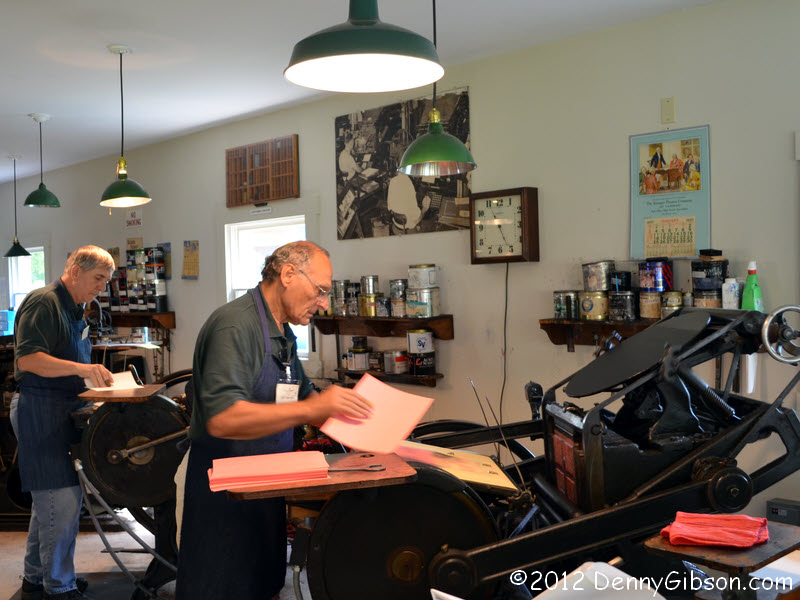
Carillon Park Heritage FestivalCarillon Park Heritage FestivalToday was the day of the Heritage Festival which meant admission was free (just pay for parking), all the buildings were open and staffed, and there were plenty of food vendors. There was also entertainment scheduled throughout the day with the Dayton Philharmonic Orchestra preceding event ending fireworks.

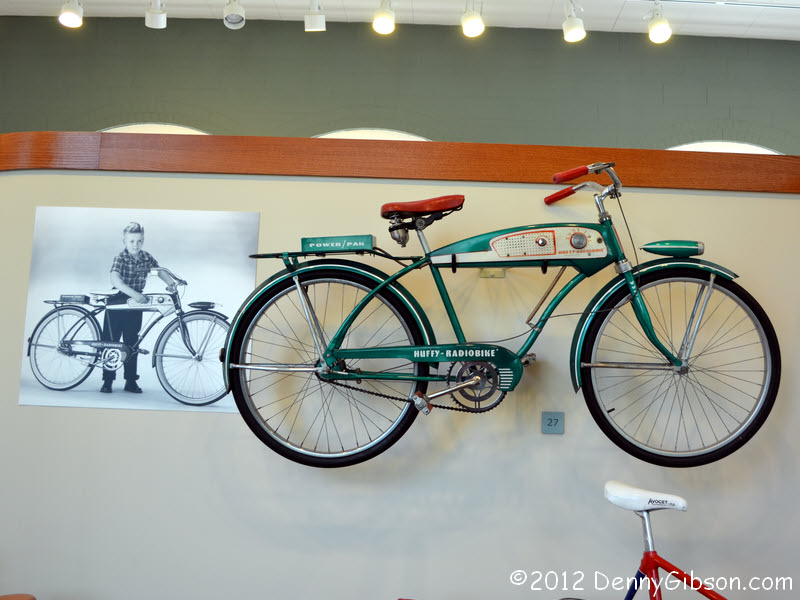
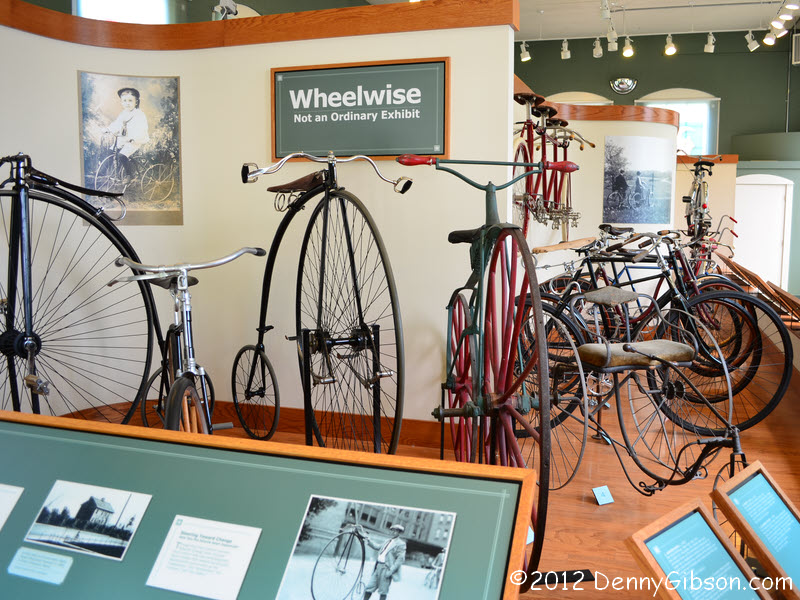
Carillon Park Heritage FestivalCarillon Park Heritage FestivalQuite a few bicycle manufacturers called Dayton home and that included the Wright Brothers. Two of the five surviving Van Cleves (the Wright’s  , brand name) are in the park but are not part of this display. Both are in a building devoted to the brothers. Huffy originated in Dayton and introduced the Radio Bike in 1955. The three tube radio was built into the “tank” with batteries and antenna on the rear fender. Only a few more years separate the 1890s high-wheels in the first picture from the Radio Bike than separate the Radio Bike from today.

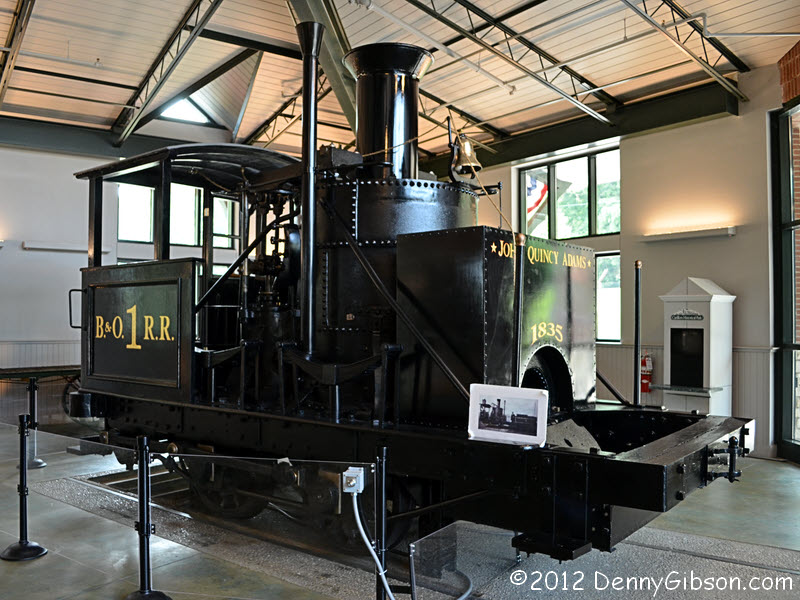
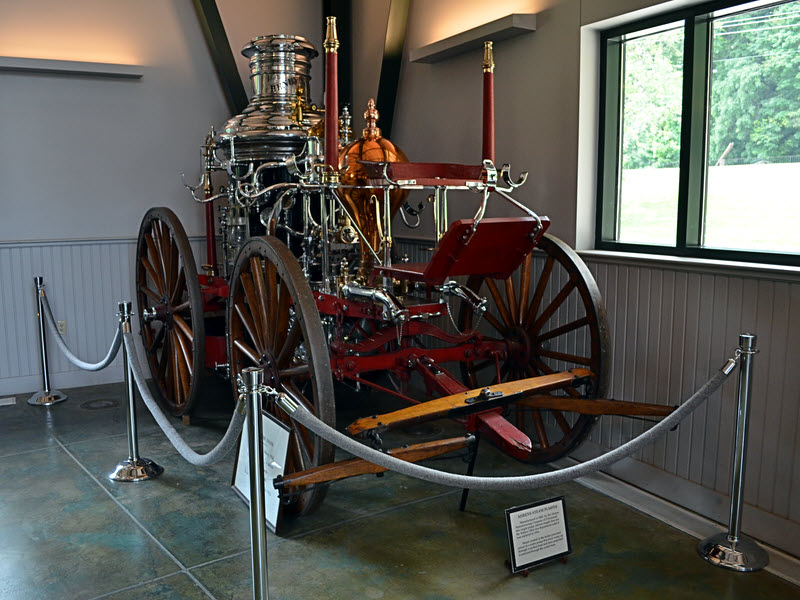
Carillon Park Heritage FestivalCarillon Park Heritage FestivalThere’s some big stuff, like rail cars and buses, in the transportation building. The 1835 B & O engine is the oldest existing locomotive built in the United States. Because of the way the vertical pistons and connecting rods looked when in motion, locomotives of this type got the nickname “grasshoppers”. The horse-drawn steam-powered pumper was built in Cincinnati in 1883 and used in Sidney, Ohio, until 1916.

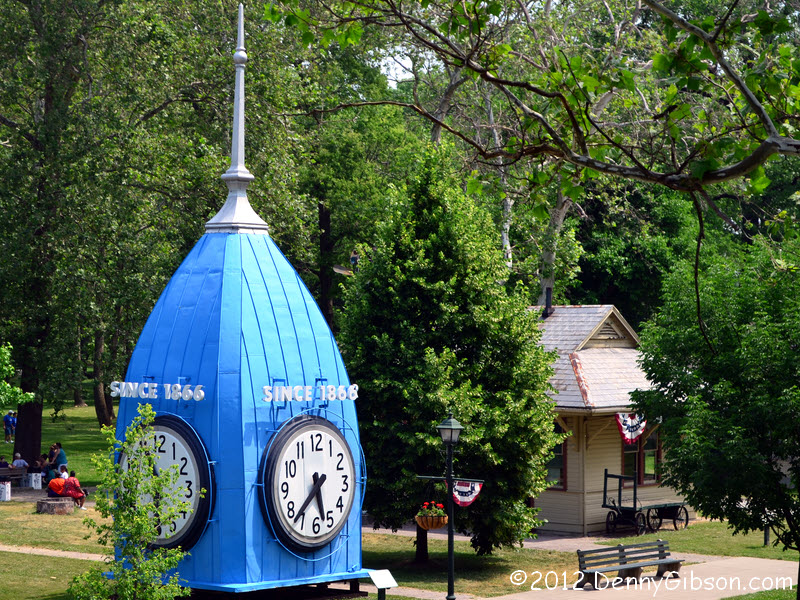
Carillon Park Heritage FestivalI remember this clock standing beside I-75 just south of Dayton. It marked the Reynolds and Reynolds Company headquarters and I guess I thought it always had. Nope. It started out in downtown Dayton on the Callahan Building. That building was demolished in 1978 and the clock moved to Reynolds and Reynolds. It has been patiently waiting here since 2006.

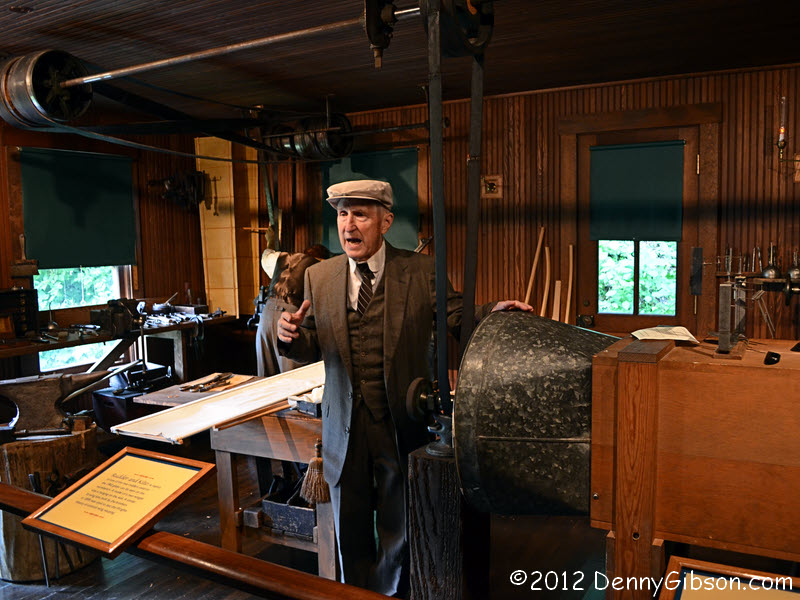
Carillon Park Heritage FestivalI’m not sure what this fellow’s real name is but he calls himself Wilbur
“…because I can’t grow a mustache”. He is standing in a replica of the Wright’s work shop since Henry Ford took the original to Greenfield Village at the Ford Museum. After doing a wonderful job of telling about the wind tunnel and other experiments that both preceded and followed that first flight in 1903, he tells us that there is a real airplane just down the hall that “…I’ll be flying this afternoon about 3:00.”

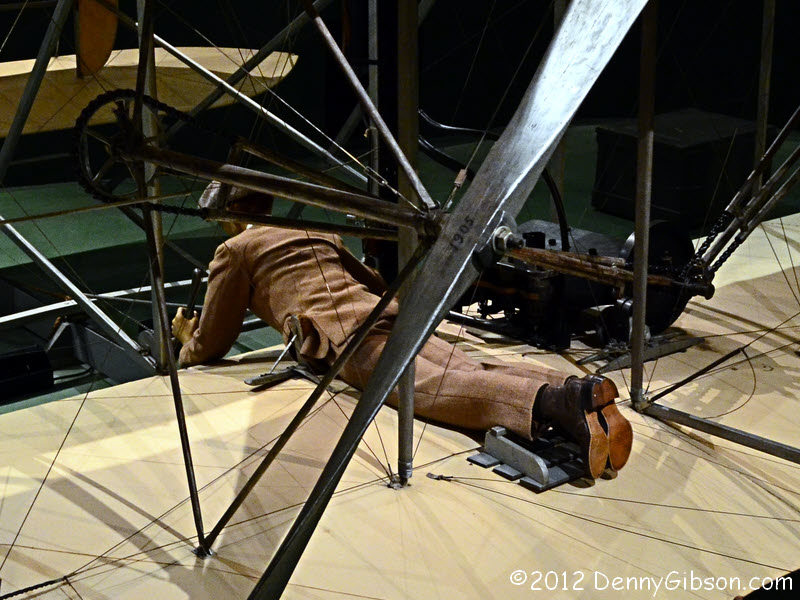
Carillon Park Heritage FestivalCarillon Park Heritage FestivalThis is the plane. It is the Wright Flyer III from 1905. With the 1903 flyer, they got off of the ground more or less when they wanted but they returned the the ground when the plane “wanted” and the flight path was essentially straight. With this plane, they learned to fly where they wanted and land on their own, rather than the plane’s, schedule. When Orville gave the pieces of this plane (it’s about 80% original) to Deeds in 1948, he insisted that it be displayed in a pit so that visitors could look down on the plane and see what was involved it operating it. The pilot’s right hand works a horizontal lever that controls the rudder. The left hand works a vertical lever that controls the elevators at the front of the plane. By moving his hips from side to side, the pilot controls the twisting of the wings which the Wrights called “wing warping”. Orville died before the park opened.

I didn’t make it to the fireworks or even to the Philharmonic but, as always, I very much enjoyed a visit to my favorite neighborhood historical village.


Signs of Summer

Fountain at Cincinnati Museum CenterThe fountain in front of Union Terminal, a.k.a., Cincinnati Museum Center, runs all summer and is turned off all winter. Therefore, one sure sign of summer in Cincinnati is the turning on of the fountain. That happened Friday at 10:30 AM. I had kind of hoped to see the stepped pools below the fountain go from bare concrete to a series of waterfalls right before our eyes but it wasn’t quite that dramatic. Whether the pools were primed in the interest of time or whether the standing water was simply left over from some secret testing I cannot say, but they started the day ready to overflow at the slightest provocation.

Fountain at Cincinnati Museum CenterFountain at Cincinnati Museum CenterFountain at Cincinnati Museum Center


I still think bare concrete morphing to cascading waterfalls would have been cooler but watching the fountain go from zilch to a spurt to a full spray wasn’t bad.

Day in Pompeii CharacterDay in Pompeii CharactersAll the kids, and there were plenty, were properly wowed and they also enjoyed the characters on hand to promote the ongoing A Day in Pompeii exhibit. I’ve seen the exhibit and it’s a duesy. University of Cincinnati Professor Steven Ellis, along with several UC students, has been instrumental in the current excavations in Pompeii and that was instrumental in making Cincinnati one of only four US cities hosting the exhibit. As you can see, security was tight.

The weather was obviously quite nice for the events at the fountain but Friday was just one of several consecutive near-perfect days. Perfect not only for fountains of water but for fountains — or taps — of root beer. I made it to three different root beer stands on three of those near-perfect days.

Jolly's Drive In, Hamilton, OhioJolly's Drive In, Hamilton, OhioOn Thursday it was the Jolly’s on the west side of Hamilton, Ohio. Back in 1938, Vinny Jolivette opened an A&W Root Beer franchise in Hamilton. He built this place in 1967 and, casting off the A&W identity, used the family name to inspire a new one for the restaurant. It’s west of the Great Miami River on Brookwood. Somewhere along the line, they added another on the east side of town on Erie. That one has a cooler sign but this one still makes its own root beer and that trumps the sign. The two remain officially connected (The car side signs carry both telephone numbers.) but are managed somewhat separately by two brothers. There is a third Jolly’s in Tiffin, Ohio, that was started, also as an A&W, in 1947 by Vinny’s brother, Roy, and it seems there was a fourth somewhere in Indiana (possibly Bloomington) but I know very little about it.

The Root Beer Stand, Sharonville, OhioThe Root Beer Stand, Sharonville, OhioI stopped by The Root Beer Stand in Sharonville, Ohio, on Friday afternoon. It started life in 1957 as an A&W then went independent in 1982. It stopped using carhops in 1972. Originally built and operated by the Rideour family, it moved on to its second and current owners, Scott & Jackie Donley, in 1990. The Donleys have kept everything pretty much the same and that definitely includes making the root beer using water from their 280 foot well. Claims that “it’s something in the water” may very well be true here.

Neil's A&W, Union City, OhioNeil's A&W, Union City, OhioI got my Saturday root beer fix at the A&W in Union City, Ohio. Despite this being a place I frequented as a teenager, I know few details of its history. I do recall that is was owned by a fellow named Smith in the 1960s and that he operated a used car lot right next door. I have vivid memories of sipping root beer and drooling over a black 1956 Thunderbird that sat in that lot when I was about seventeen. At some point, it became Neil’s A&W Drive In and so it remains today. Curiously, this place doesn’t show up on the official A&W website nor does it have its own site but it does have a FaceBook page.

All three of these places make their own root beer using at least some of the original A&W equipment. Guess that stuff was made to last. All of them taste great and I’m guessing that the recipes are all the same or similar. The Root Beer Stand has its special water and both it and Jolly’s serve their brew in chilled glass mugs. I love ’em both and I do tend to dislike chains but “real” A&Ws (Not stuffed-into-a-corner-of-a-gas-station A&Ws.) are pretty cool and it’s hard to beat an ice-covered mug.

Neil's A&W, Union City, OhioJolly's Drive In, Hamilton, OhioI’m guessing that some noticed the slightly red convertible in the center of the Root Beer Stand photo. That’s my 1963 Valiant and plans to drive it to Darke County and the A&W at the border led to the warm-up visits to Hamilton and Sharonville. The 200-mile round trip was the car’s longest outing since the cold drive home from Cambridge in early 2011. She done good. These pictures show her at Jolly’s and Neil’s.


Flipdaddys: Burgers & Beers... & BrunchI recently learned that the neighborhood Flipdaddy’s does brunch on Sundays so I walked over this morning to check it out. It was quite good. I’m always dismayed but rarely surprised to find myself alone on a restaurant’s patio. But, with the thermometer at 74 degrees, I was a little bit surprised today. Lots of people just don’t like any temperature I guess. To be fair, one couple and their home from college daughter did venture outside to eat. That was it. The restaurant was fairly busy inside but just one other outside table was ever used all the while I leisurely worked through my bacon & eggs and slowly sipped my Magic Hat dessert.

The Stars: Up Close and Personal

Wolff PlanetariumThis was the first week of the 2012 NCAA basketball tournament. Both local entries, Xavier and the University of Cincinnati, survived their first games and are playing tonight (Sunday). The week also contained Saint Patrick’s Day with temperatures in the 70s and a parade on the actual holiday. However, even amid all the madness, marching, and meteorologic magnificence, the highlight for me was sitting in a folding chair inside a seventy-five year old stone building.

Trailside Nature CenterTrailside Nature CenterThe building was the Trailside Nature Center in Cincinnati’s Burnet Woods. The chair was part of a circle surrounding the oldest planetarium west of the Alleganies. The WPA built the Nature Center in 1939. It didn’t have quite as many walls in those days and there was no planetarium. That arrived around 1950. Planetarium is the name of the precision projector; Not the building. This one, known as the Wolff Planetarium, is a Spitz A-1. The original unit, purchased for about $500, was an A model but somewhere along the line, it was sent in for repairs and came back an A-1. Maybe it was easier to replace rather than repair the broken unit or maybe the update was the best way to fix things or maybe it was a mistake. No one in Cincinnati wanted to chance asking. Another bit of luck seems to be behind the dome. While it is possible that the builders had a planetarium in mind (America’s first planetarium, the Adler Planetarium, opened in 1930.) there is, apparently, no evidence of that. In fact, the dome is just a wee bit short so that some stars get projected on the wall below the “horizon”. The building originally contained even more museum-style displays than it does now and the dome was just part of the ceiling.

I’ve been to a few planetariums but most have been the typical late twentieth century set up with a recorded presentation and automatic/computerized positioning and all had seriously reclined seating that points your eyes to the artificial sky without your neck being involved. There is absolutely nothing wrong with that. Laying back in a nicely padded recliner is one of my favorite “activities” and swiftly stepping through seasons or centuries accompanied by carefully synchronized music and commentary is certainly entertaining and informative. But it’s not interactive and it’s not very intimate and it’s probably not as much fun as I had Friday night.

Trailside Nature CenterA good part of that fun can be directly attributed to Mr. Mike. Mr. Mike does the greeting, reservation list checking, and fee collection. He also pulls the curtain!, operates the projector, delivers the commentary, aims the (definitely not here in 1950) laser pointer, and occasionally punches buttons on a boombox to launch stuff like Also Sprach Zarathustra and Here Comes the Sun. He also encourages and answers questions and prompts attendees to help with sound effects as he tells Greek, Roman, and Native American stories (“…and then the mother bear let out a deep growl.”). Constellations of the Zodiac were a big part of Friday’s show and Mr. Mike shared pointers on how to find several of them.

I don’t know if Friday’s audience was typical but I do know it was one of the most diverse I’ve ever been part of. That this was in a room with a capacity of twenty made it even more impressive. Five of the seats were filled by three rest home residents and their two attendants. They arrived in a lift-equipped van and slowly made their way to the show on walkers. The park borders the University of Cincinnati campus and two seats were filled by a young couple who looked as if they might be students on a date. There was a mom-dad-and-two-kids family. There were two or three mothers with young children. There were black folks, brown folks, and white folks. Everyone was attentive and most contributed comments or questions. The kids did the best sound effects. The people from the rest home showed the most appreciation.

Mr. Mike’s helpfulness continued after the show. Outside, he identified the only star visible in the early evening sky as Sirius. The other two bright spots most of us thought were stars he told us were the planets Venus and Jupiter. You may find information on the internet claiming there are weekly shows with $2.00 admission. At present shows are held once a month and admission is a still bargain $5.00. Call  (513) 751-3679 for the latest information and to reserve your folding chair.


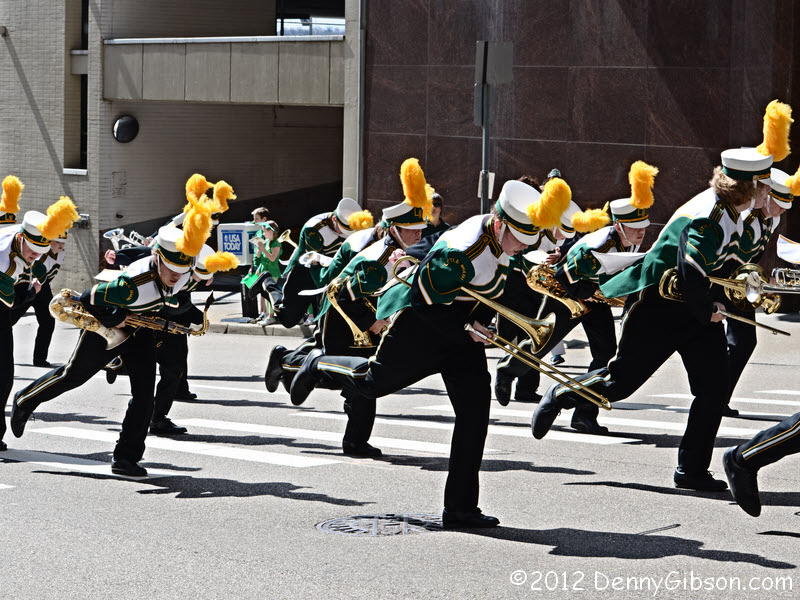
2012 Saint Patrick's Day Parade2012 Saint Patrick's Day ParadeOf course, I can’t just ignore Saturday’s parade. With the temperature at a record-tying 74 degrees, the crowd was huge, and so was the parade. I have not heard attendance estimates or the number of units but getting the parade out of the staging area took well over an hour and a half.

Thomas GriffinFormer Air Force Major Tom Griffin, one of five surviving Doolittle’s Raiders, was the parade’s Honorary Grand Marshall. I’ve always thought that “honorary” meant “not really” and I’ve never figured out what a parade’s Grand Marshall does except ride and wave. In other words, Grand Marshall seems like a rather honorary position so the title Honorary Grand Marshall seems something of a slight. I hope I’m overthinking it. Major Tom was one of the things I was looking for in the parade. I got this so so shot through the crowd at the turn onto Fifth Street then moved ahead in hopes of getting a better picture. After working my way through the crowd at Fountain Square and beyond, I discovered that the car he was in had disappeared and that the real Grand Marshall, whose name I failed to note, had bailed out of his ride. I gave Griffin the benefit of the doubt and thought he might not have felt up to traveling the whole route. But I’ve since seen a photo of him standing at the reviewing stand and I’m guessing that the real GM is there, too. I heard “Where is he?” comments from the crowd beyond the Square so I know that others wanted to see the hero as well. I’ve never studied the subject but this is the first time I’ve been aware of Grand Marshalls of any sort not finishing a parade. If it was Griffin’s decision — if he wanted to see the parade from the front row — I’ve no complaint whatsoever. He has more than earned the right to get out of the car anywhere he pleases. However, if anyone else at all came up with this idea, you should probably apologize for leaving more than half the parade route asking “Where is he?”

Air Force Museum

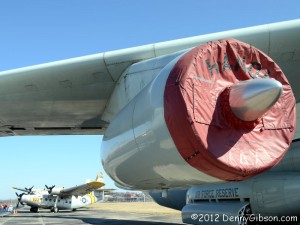
C-141 Starlifter and YC-125B Raider at Air Force MuseumThe National Museum of the US Air Force is about 35 miles away from my home. I drive by it at least a couple of times a year. Almost the instant I retired I told myself I’d get up there soon on a weekday and avoid those weekend crowds. So, over two years after telling myself that and well over two decades after my last visit, I made it to the museum on an unseasonably warm February Friday. I’ve posted an Oddment page here. Comments may be made to this blog entry.