Trip Peek #10
Trip #72
Christmas on the Alafia

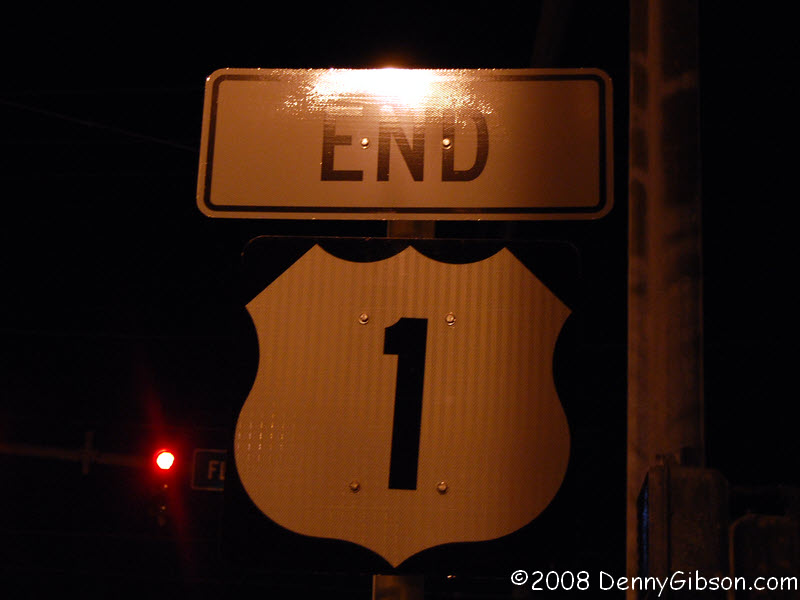
US 1 in Key WestThis picture is from the my 2008 Christmas on the Alafia road trip which was my third “Christmas Escape Run”. The Alafia is a river just south of Tampa, Florida, where my great-grandparents spent Christmas Eve in 1920. By sticking to expressways, I managed to get there on Christmas Eve 2008. I didn’t get to hang out on the river bank as they did but I did get to hang out with some of the wintering circus folk at the Showtown Bar in Gibsonton. I then drove the Tamiami Trail and a lot of Dixie Highway before reaching home on January 3. I slipped into Key West on the 27th but didn’t even spend the night. The END 1 sign was just about the last thing I saw before I started driving north looking for a vacant motel room I could afford. That didn’t happen until I reached Florida City back on the mainland.

Trip Pic Peek #9 — Trip #66 — 2008 Route 66 Festival


Trip Pic Peeks are short articles published when my world is too busy or too boring for a current events piece to be completed in time for the Sunday posting. In addition to a photo thumbnail from a completed road trip, each Peek includes a brief description of that photo plus links to the full sized photo and the trip journal it is from.

Book Review
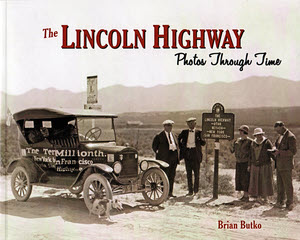
The Lincoln Highway: Photos Through Time
Brian Butko

Lincoln Highway Pictures Through Time - coverI was hesitant to post a review of this book because some of those “Photos Through Time” are mine but I decided that it would be a bad thing only if I rave about how marvelous the book is. No harm in simply describing it, right? So here are the facts.

The Lincoln Highway: Photos Through Time was created for the Lincoln Highway Association as part of its centennial celebration. One of the most visible parts of that celebration was the pair of car tours traveling the Lincoln Highway from its two ends to a meeting in the middle. A copy of the book was part of the tour package and it is also available for sale exclusively through the Lincoln Highway Trading Post.

It’s a sampler. Its purpose is to give an overview of a century of Lincoln Highway. It is not a guide book or a scholarly history book. It does not contain pictures of every scenic spot along the road or every notable building or every key association member. It does, however, contain a whole bunch of each of those.

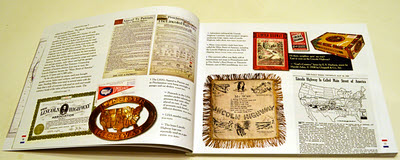
Lincoln Highway Pictures Through Time - sampleIt is organized neither geographically nor chronologically. The first section following the foreword is titled “History”. Here, among pictures of collectibles and artifacts, Butko gives a very brief history of the road’s birth and short life. It is enough to give someone who knows little or nothing about the Lincoln Highway a starting point and someone who knows everything a quick refresher on key dates and events. It is a stripped down but adequate introduction to the pictures that follow.

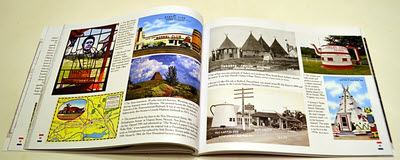
Lincoln Highway Pictures Through Time - sampleThose pictures are organized by their subjects. Butko identifies ten things that comprise the Lincoln Highway and gives each one a chapter. They are “People”, “Gas”, “Food”, “Lodging”, “Vehicles”, “Attractions”, “Signs”, “Markers”, “Bridges”, and “Roads”. The chapters are themselves samplers. Historic images from postcards and other sources are combined with modern photographs. Images of things along the road, which is every chapter other than “People”, are from locations spread over the road’s entire length.

The sources of the photos are pretty diverse, too. Butko lists more than fifty contributors. He supplied a large number of images himself and, at a presentation at the Centennial Celebration in Kearney, Nebraska, he singled out Russell Rein, Jeff Blair, and me as next in number of contributions. Many of the historic images came from Russell’s huge collection. Jeff and I are both amateurs who happened to be the the right place fairly often but our pictures get to appear alongside stuff from real pros like Michael Williamson, Drake Hokanson, Rick Pisio, Shellee Graham, and Jim Ross and Brian has made sure they all look as good as possible.

I described the “History” chapter of having value for two very different audiences. Maybe that’s true of the whole book. Most of its first recipients, members of those centennial tours, are probably somewhat familiar with almost everything in the book. For them and others like them, the book might be a memory booster or a chance to see an image of something they’ve only heard about. On the other hand, there is a large group of people who ask “What’s that?” when hearing of the Lincoln Highway. Flipping through the pages provides glimpses of what’s there today and some of what was there in times long past. Turn the pages slowly and read all the captions for an even better answer to the question.

The Lincoln Highway, Photos Through Time, Brian Butko, Lincoln Highway Association, 2013, paperback, 10 x 8 inches, 136 pages, ISBN 978-0989208000

Available at Lincoln Highway Trading Post.

The Annie Gathering

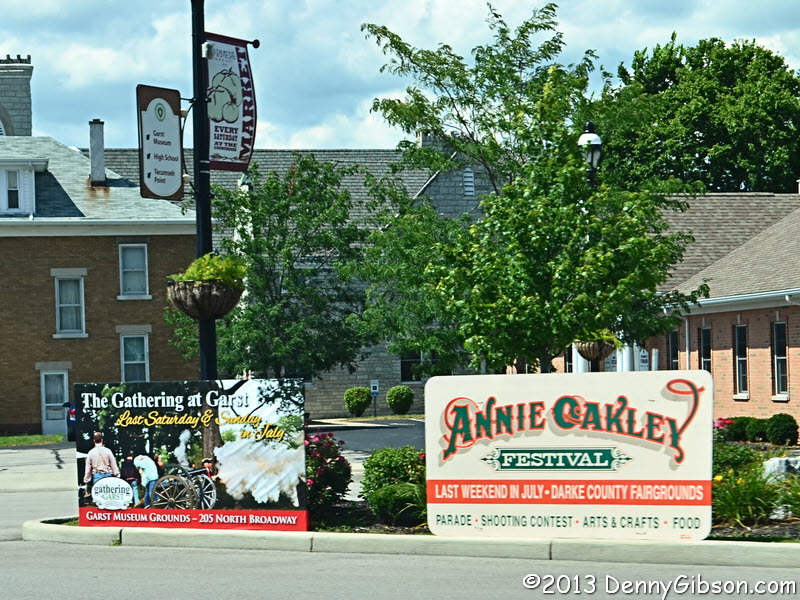
Greenville signsThere are big doings in Greenville, Ohio, this weekend. Some are associated with the Annie Oakley Festival and some are associated with the Gathering at Garst. The Festival includes a parade through downtown but essentially takes place at the Darke County Fairgrounds on the south side of town. The Gathering takes place on the grounds of the Garst Museum towards the north side of town. Since the museum houses something called the National Annie Oakley Center, you might think the Festival and the Gathering are just two aspects of a single event but that’s hardly the case.

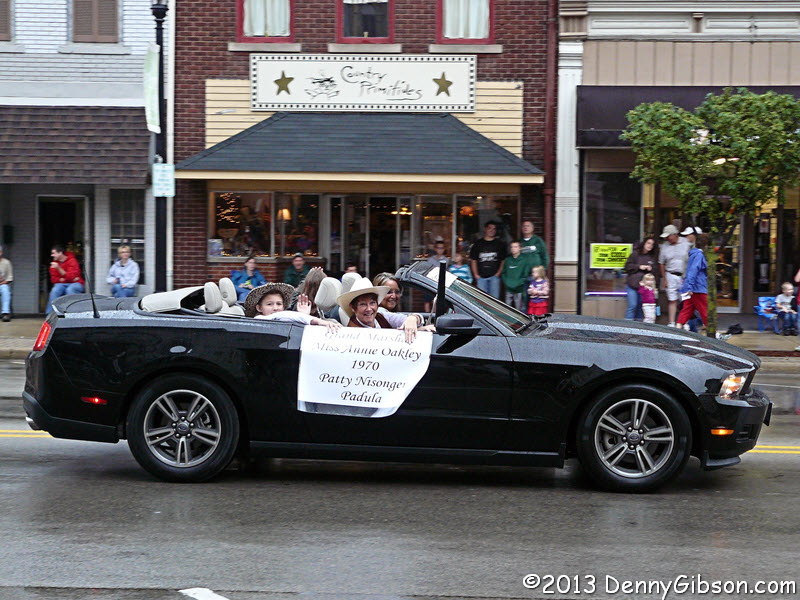
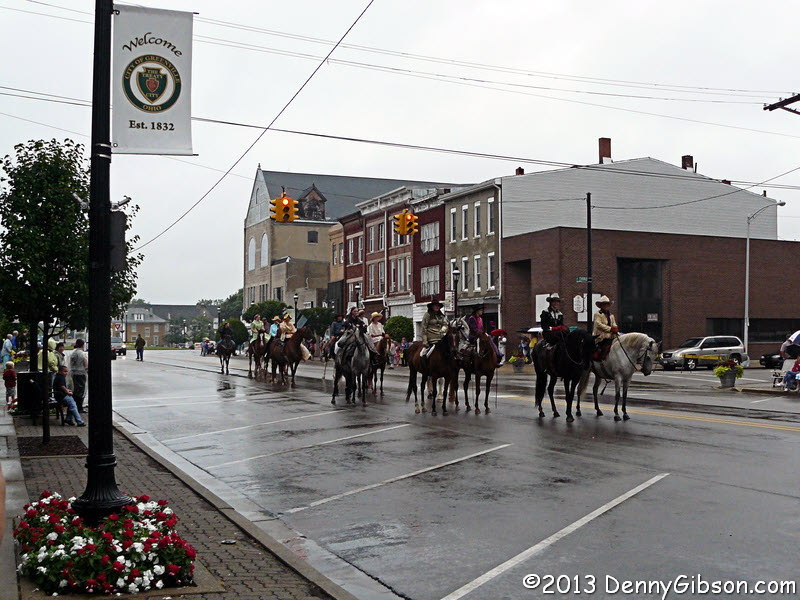
Annie Oakley Days ParadeAnnie Oakley Days ParadeThe parade is completely the responsibility of the Annie Oakley Festival as is a shooting competition, using air rifles, whose winner earns the title Miss Annie Oakley. In the lingering drizzle, I failed to get a picture of this year’s winner, Courtney Osborne, but I did get a picture of the 1970 winner, Patty Nisonger Padula, who was this year’s Grand Marshall. I was watching the parade with my uncle in front of his store and he told me that Patty had been an employee when she won in 1970. He had been her driver in the parade in another black convertible, his 1962 Corvette. The parade included a couple of high school bands, several classic cars, many Shriner units, and much more. A most appropriate entry was the group of female horseback riders most of whom were riding on side saddles.

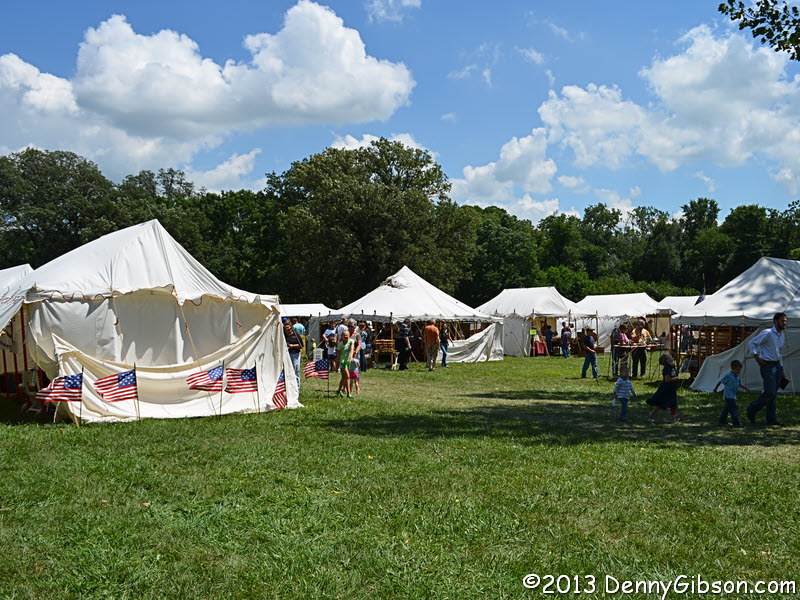
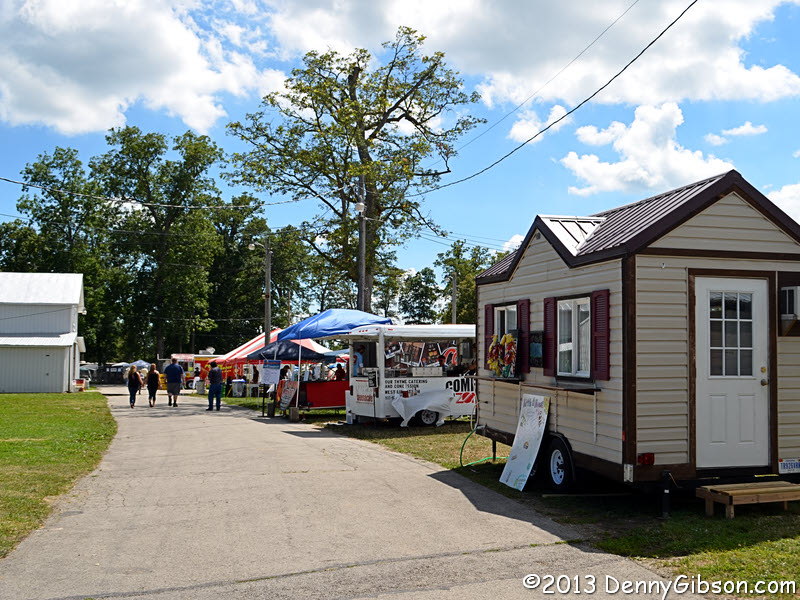
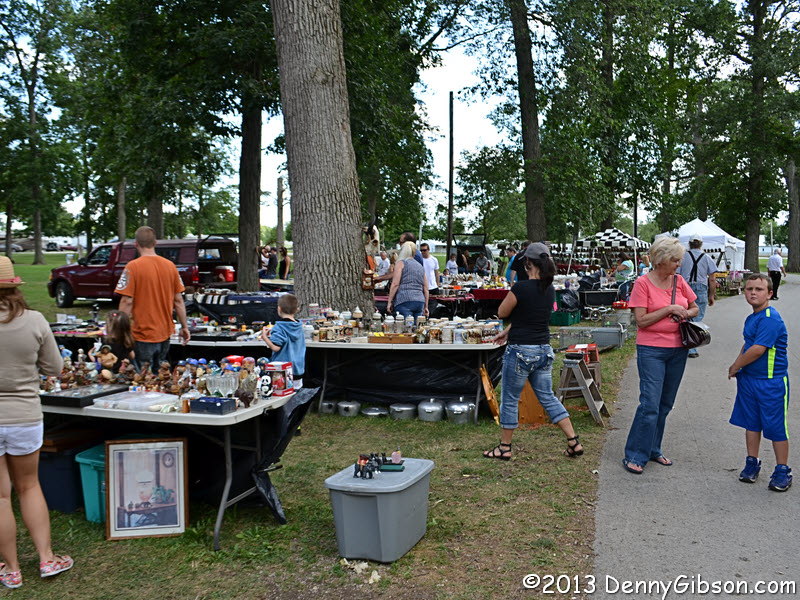
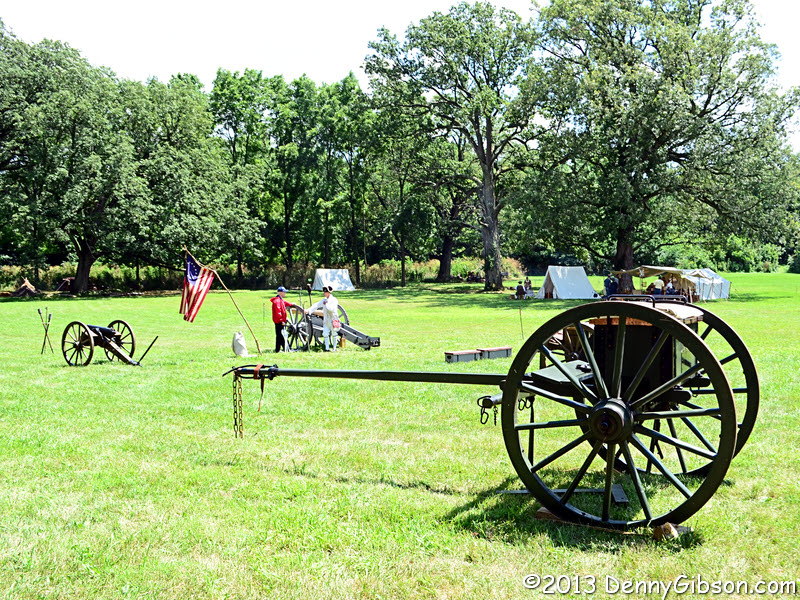
Gathering at GarstGathering at GarstThe rain had moved on and the sun was shining by the time I made it to the Gathering at Garst. The museum was surrounded by tents selling various craft items and small antiques and there were a number of food tents as well. A field across the street was filled with “living history”. It included some additional vendors and some big guns which were fired once in a while.

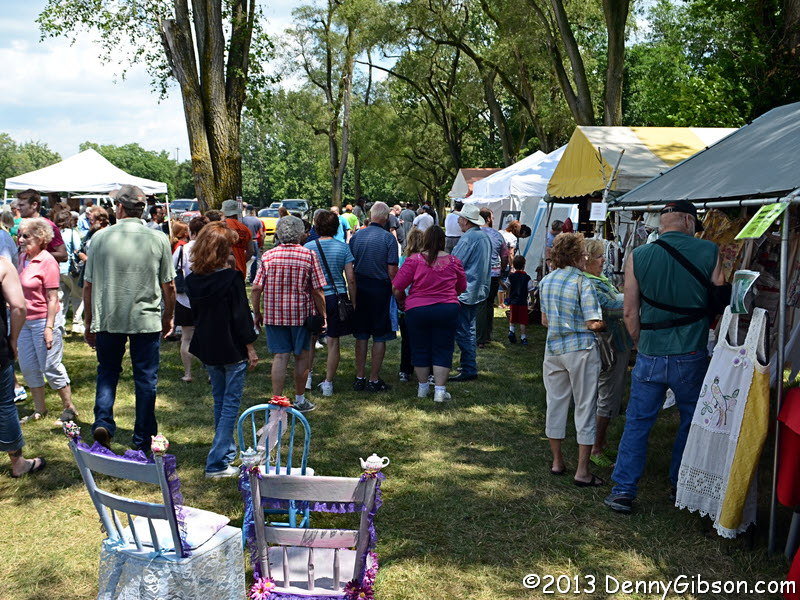
Annie Oakley FestivalAnnie Oakley FestivalI also stopped by the fairgrounds to check out the Annie Oakley Festival. There were vendors selling food and other items including some crafts. There was a small car show and bus tours, included in festival admission, depart from the fairgrounds to visit related sites such as Annie’s grave.

In the beginning (1963), the home of Annie Oakley Days, as the festival is commonly called, was the museum and its grounds. That lasted for thirty-some years until the festival moved to the fairgrounds for a number of reasons including more space and access to electricity. It had the last weekend in July all to itself until the first Gathering was held in 2011. A Bob Robinson article, written shortly after that inaugural Gathering, indicates that, while both were calling themselves successful, neither was completely comfortable with the other.

The Gathering is free but parking is $4. There is a fair amount of parking available on nearby streets so some (like me) avoid the charge by walking a bit. Parking is free at the Festival but admission is $3. Advance $2 passes were available from some area merchants. Both events offer various forms of entertainment including concerts.

I’m guessing that both can call themselves successful again this year. However, as someone who attended the first Gathering and several Festivals, I have little doubt that the Gathering is getting bigger and better attended while the Festival is shrinking along with its crowd. Only time will tell whether both can survive. I hope so. I like that living history stuff but I like even more the parade and the Miss Annie Oakley contest. Is “The Annie Oakley Gathering at the Garst and Darke County Fairgrounds” too long to fit on a tee-shirt?


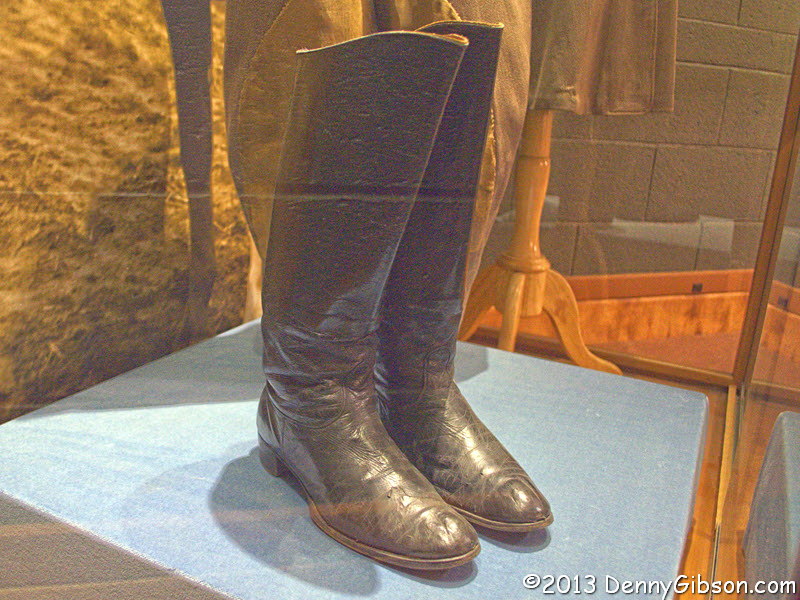
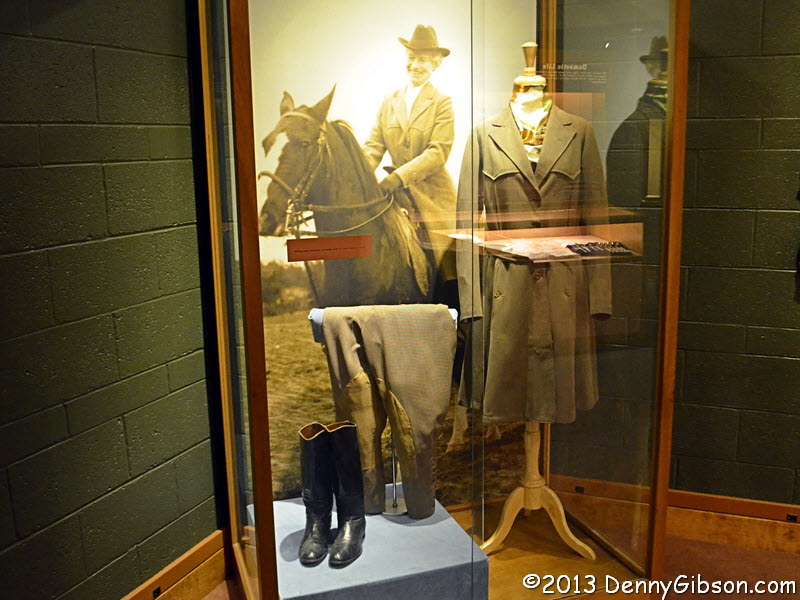
Annie Oakley's BootsAnnie Oakley's BootsEven with its $8 admission fee, the museum gets a lot of traffic during the Gathering and Festival. I’m a member but had not been inside for awhile. In fact, it seems that I’d not been in the museum proper since sometime prior to attending an Annie Leibovitz exhibit in October. That exhibit included a photograph Annie L had taken of a pair of boots at the Garst Museum. I resolved to look at the boots, made for Annie O around 1915, a little closer on my next visit. I expected it to be sooner than this but doing it in the midst of the Gathering/Festival is more than alright. Taking a photo of Annie L’s photo was not permitted but I will admit it’s a wee bit better than mine. Hers was helped by getting the boots out from behind the glass but I think there might be a little more to it than that.

Trip Peek #9
Trip #66
2008 Route 66 Festival

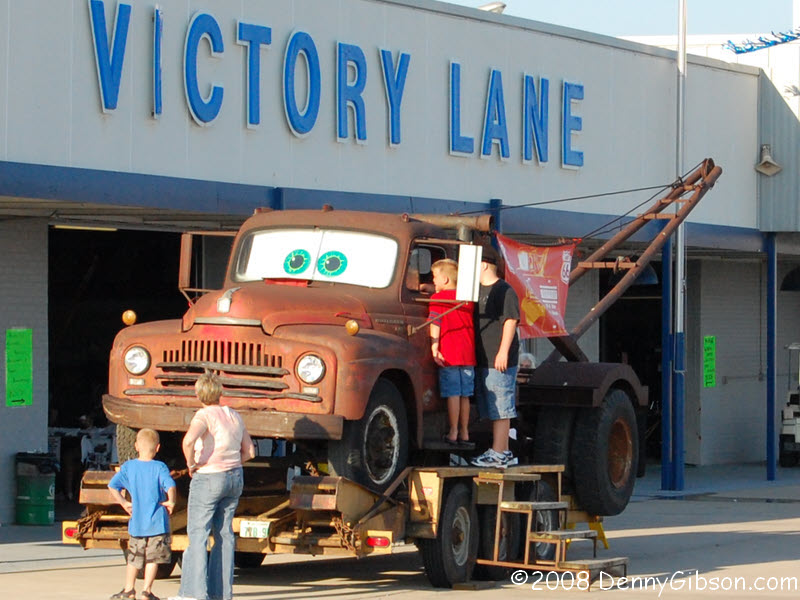
Tow Tater from GalenaThis picture is from the my 2008 Route 66 Festival road trip so it is quite fitting that it was my sixty-sixth documented trip. Because the festival was in Litchfield, Illinois, which is Sixty-Six’s nearest approach to my home, I was able to work the entire festival into a four day trip. There were appearances by both Beatles and Elvis impersonators along with the real celebrity in the picture. That is the actual truck that John Lasseter first saw on Route 66 and used as the model for Tow Mater in the movie Cars. The original in now named Tow Tater and is normally on display at 4 Women on the Route in Galena, Kansas. Tow Tater was trailered to Litchfield for the festival where he was a major hit with kids.

Trip Pic Peek #8 — Trip #85 — 2010 OLHL Meeting


Trip Pic Peeks are short articles published when my world is too busy or too boring for a current events piece to be completed in time for the Sunday posting. In addition to a photo thumbnail from a completed road trip, each Peek includes a brief description of that photo plus links to the full sized photo and the trip journal it is from.

Trip Peek #8
Trip #85
2010 OLHL Meeting

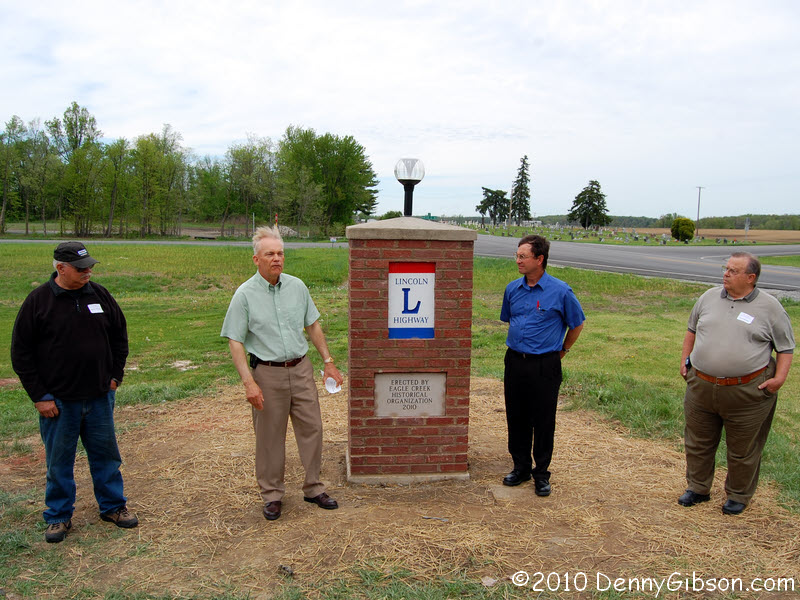
Williamstown Pillar DedicationThis picture is from the my 2010 Ohio Lincoln Highway League Meeting road trip. The meeting was near Findlay so I booked a room there and made a leisurely two day trip out of attending. The first day was spent getting there on US-42 and US-68 and the second involved traveling west on the Lincoln Highway to cross the Dixie Highway and head home through Lima, Ohio. There was sightseeing and an interesting restaurant on each day and a museum visit on the first. The meeting itself had some interesting presentations and was followed by the pictured dedication of a reconstructed brick pillar.

Trip Pic Peek #7 — Trip #59 — Thanksgiving 2007


Trip Pic Peeks are short articles published when my world is too busy or too boring for a current events piece to be completed in time for the Sunday posting. In addition to a photo thumbnail from a completed road trip, each Peek includes a brief description of that photo plus links to the full sized photo and the trip journal it is from.

A Tale of Two “Cities”

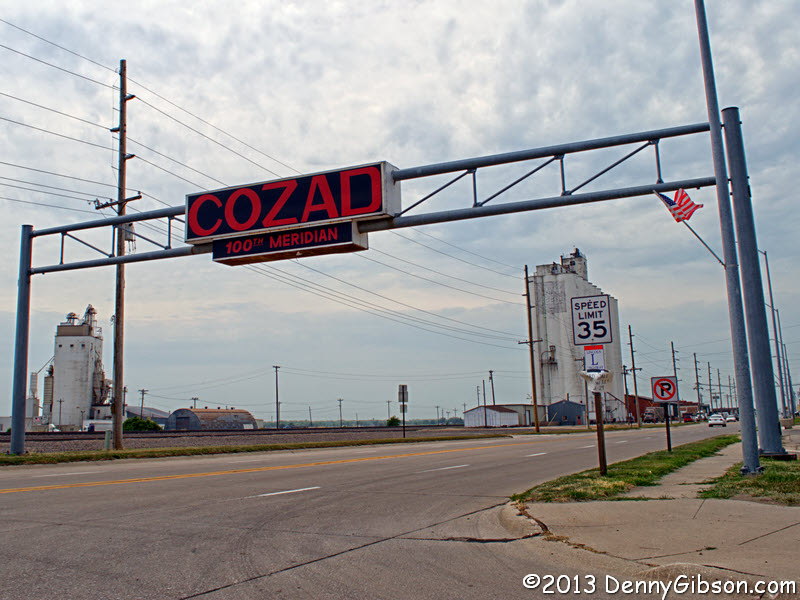
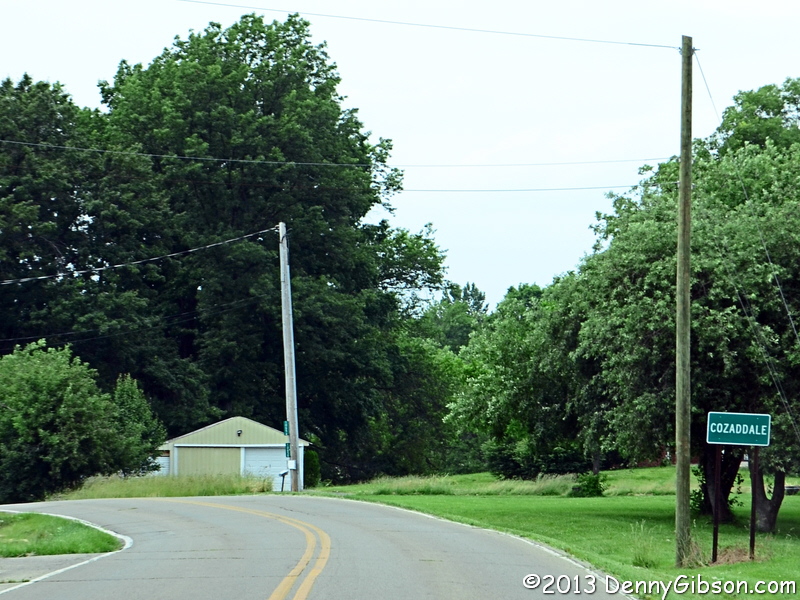
Cozad, NECozaddale OhioI live a little over eight miles from Cozaddale, Ohio, and have driven through it numerous times. The most recent was June 9 when I took the first picture at right. I live a little over eight hundred miles from Cozad, Nebraska, and have driven through it exactly twice. The most recent was Friday when I took the second picture at right. As you might suspect from the names, there is more to connect these two towns than my visits. Both were named for, or more accurately by, the same man.

John Jackson Cozad was born in 1830 near Allensville, Ohio, but he didn’t stick around long. He ran away at the age of twelve and before long found his way onto riverboats plying the Mississippi and Ohio Rivers. He also found his way into a successful career as a faro dealer. I’ve found no indication that his success came from anything other than a carefully developed ability to read the faces of opponents, but I did find a claim that this ability led to him being barred from riverboats and other gambling operations.

Although he never completely gave up cards, Cozad moved into real estate speculation/development around 1870. He laid out an eight street village on land he owned along the Marietta and Cincinnati Railroad and formed a building association. Things began well enough and a few buildings were completed in this place he called Cozaddale before some “trouble” (of which I’ve found no details) brought about the end of the association and Cozad’s development of his first town.

Horace Greeley may or may not have said “go west, young man” a few years earlier but John J Cozad probably didn’t need any such encouragement anyway. Nebraska had become a state in 1867 and, apparently while still postmaster of Cozaddale, Cozad went to look it over in 1872. The way railroad section boss John Cusack tells the story, he was checking track on a handcar headed west when he spotted Cozad, in top hat and tails, walking east. The Ohioan had been on a westbound train when he spotted a 100th meridian sign and left the train at the next stop. Inspired by the sign, Cozad developed an almost instant vision for a town that he described to Cusack. After hitching a ride on the handcar, Cozad returned to Ohio, bought 40,000 acres of Nebraska, then came back with about thirty others to build a namesake town at the 100th meridian.

Cozad, the town, grew and Cozad, the man, became a “hay tycoon”. As a big time farmer in cattle country, Cozad, the man, had his share of conflicts with ranchers. One such conflict was with an Alfred Pearson. Some reports say Pearson pulled a knife and some reports say Cozad thought Pearson reached for a knife. All reports say that Cozad pulled a gun and fired. Pearson died of his wounds a couple of months later and Cozad the man left Cozad the town almost immediately. Teresa Cozad, John’s wife, stayed around long enough to dispose of the family’s holdings then, with their two sons, she too vamoosed.

To most people, the Cozad clan seemed to have simply disappeared then, in the 1950s, a descendant revealed some of the missing bits of the story. Using the name Richard Henry Lee, John Cozad opened a place called Lee’s Pier on the boardwalk of Atlantic City, New Jersey. Son Johnny posed as a brother-in-law using the name Frank Southern and son Robert posed as a nephew or foster son named Robert Henry. Perhaps not surprisingly, Richard Lee managed to stir up things in Atlantic City, too. In a conflict with the city over selling his property, Lee/Cozad built a barricade across the boardwalk that earned his place the name “Fort Lee”. He eventually lost but it took the state legislature to beat him.
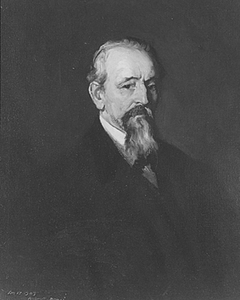
John J Cozad by Robert HenriJohn A. Cozad, a.k.a. Frank Southern, eventually went back to his real first name and became, as Dr. John Southern, a well respected physician in Philadelphia. Robert Henry Cozad retained a slightly modified version of his Atlantic City alias and went on to great fame as an artist. His childhood home in the second town his dad founded is now the Robert Henri Museum. At left is a portrait that Robert Henri painted of his father, John J. Cozad, in 1903.


This is obviously one of those pre-written pieces but, unlike most of the My Gear and My Wheels sorts of things, this one is tied ever so slightly to real-time. I suppose it was sometime after I drove through Cozad, Nebraska, in 2009 that I discovered the connection between there and Cozaddale, Ohio. When I realized that I would be passing through Cozad again this year, I thought it might be cute to get a picture of the Cozaddale limits sign and do something with it in my journal entry when I again reached Cozad. I did a couple of searches hoping to find something interesting to say and the wild stories just kept tumbling out of the internet. It was soon apparent that it would take much more than a journal panel to do the John Cozad story anything near justice. Knowing I would be using several canned entries during the Lincoln Highway drive, I decided that this, with a single new picture, would be one of them. It was primarily constructed with information from here, here (via WayBackMachine), and here. Those three sources don’t agree on everything and there are other, slightly different, versions out there, too. That certainly doesn’t surprise me. I’ve a feeling that John J himself couldn’t get his life story completely right even if he was trying to be entirely honest and I also have a feeling that being entirely honest wouldn’t come easy to him.
My Wheels — Chapter 5
1952 Ford

1952 Ford advertisementThe fellow who drove my Mercury in that demolition derby was named Terry. He lived in the same town as my grandparents and had been a frequent passenger on the J. C. Higgins bicycle with the pseudo-fins on the carrier. When we got a little older, I was a frequent passenger on the back of his Zundapp motorcycle, and we were both frequent passengers in each other’s cars. In Terry’s case, that was a 1952 Ford.

Through much of high school, Terry worked in a filling station pumping gas. He got paid a little money, but we all know that the real reason was so he had a place to work on his car. Unlike me, Terry was meticulous. He rebuilt and repainted the flathead V8. He sanded and taped the car and worked out a deal to get it painted. He installed new seat covers and added seat belts; Not because they were required — they weren’t — but because they were cool and a good idea. He was pretty much at the end of his project list and had his sights on another car when the Mercury started worrying me a little. I don’t recall what it was that Terry replaced the Ford with, but I replaced the Mercury with the Ford. This was the car I drove through my senior year, and I think I may have sold it to the same guy I sold the Whizzer to. I’m not entirely sure of that, but I do know it’s the car I loaned him when I went riding on the Whizzer the summer after graduation.

1952 Ford SedanImagine the car in this picture with dark blue paint and baby moon hub caps and you’ll have something close to what I was driving in the spring of 1965. Besides two doors, it had dual two-barrels on an Offenhauser manifold, dual points in a Mallory distributor, and dual exhausts. It wasn’t particularly fast by 1965 standards, but its description sounded fast.
Previous Wheels: Chapter 4 — 1954 Mercury
Next Wheels: Chapter 6 — 1959 Chevrolet

Trip Peek #7
Trip #59
Thanksgiving 2007

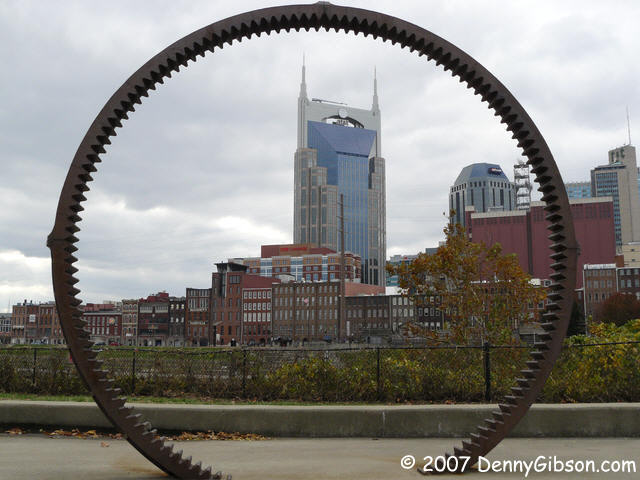
Bellsouth Tower, Nashville, TNThis picture is from the my 2007 Thanksgiving road trip. It was my third Thanksgiving Escape Run and my second in Nashville. For a little variety, I began my trip on Thanksgiving day by heading west then entering Nashville on US-41A after spending a night in Hopkinsville, Kentucky. I had ample time for exploring which included a visit to the unfamiliar east bank of the Cumberland River where this view of the very familiar Bellsouth Tower, a.k.a. Batman Building, caught my eye. Also included in this trip were my first ever visits to Music Row, the Lane Museum, and the Bluebird Cafe.

Trip Pic Peek #6 — Trip #1 — Rt66in99


Trip Pic Peeks are short articles published when my world is too busy or too boring for a current events piece to be completed in time for the Sunday posting. In addition to a photo thumbnail from a completed road trip, each Peek includes a brief description of that photo plus links to the full sized photo and the trip journal it is from.

Lincoln Highway Association
Centennial Tour

lhh100On June 30, two groups of cars will converge on Kearney, Nebraska, to celebrate the 100th anniversary of the founding of the Lincoln Highway Association on July 1. I will be part of the one coming from the east. The launch from Times Square is still two days away on Saturday but I left home Wednesday in order to make it in time. The groups will follow, as close as practical, the original Lincoln Highway route and, if all goes well, I will continue west on the route following the celebration and conference in Kearney.

The journal for the trip is here. This will be the only blog entry related to the trip and will serve to hold any and all comments.

Ye Olde Flex-Master
A My Gear Extra

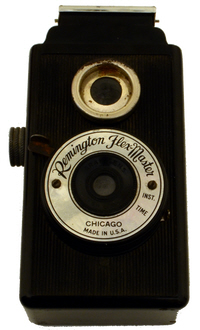
Flex-Master cameraI am not someone who delights in using old film cameras. I can appreciate that others do and I can appreciate the phenomenal engineering and manufacturing accomplishments embodied in high-end film cameras. But I like the convenience and economy of digital photography far too much to spend my own time and money on anything else — with one exception.
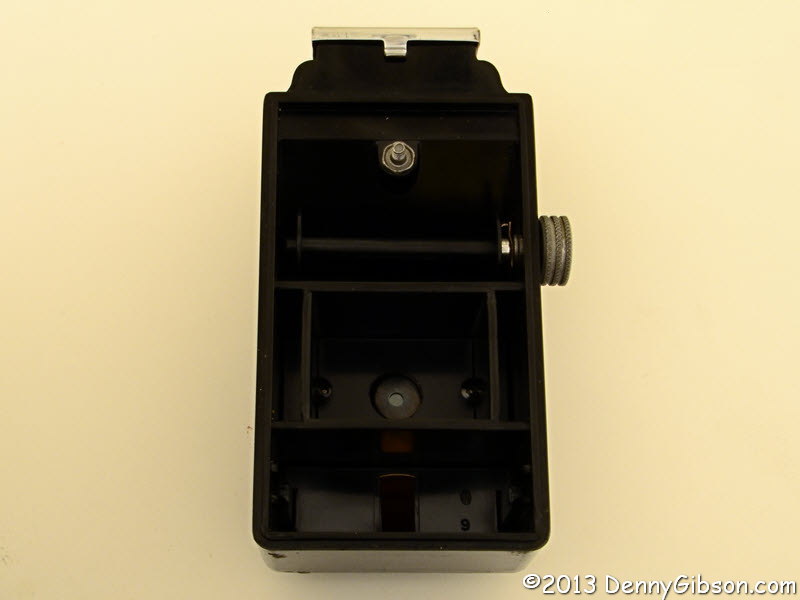
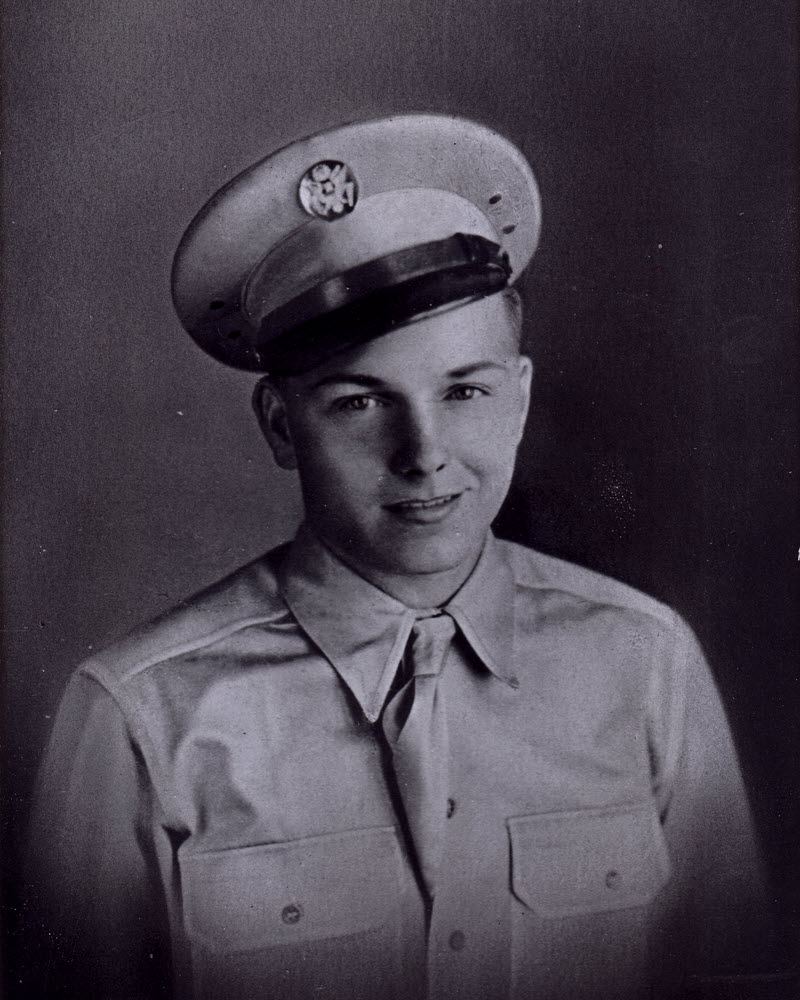
That exception is the camera at right. It’s certainly old and it uses film but it is about as far from high-end as you can get. The exact same camera was sold under a variety of names with prices around three or four dollars. An uncle won this one by investing a quarter in a punch-board in 1940. I never knew him. He went off to war and never came home. My Mom, his sister, ended up with the camera. I remember it being our family camera in the early 1950s.

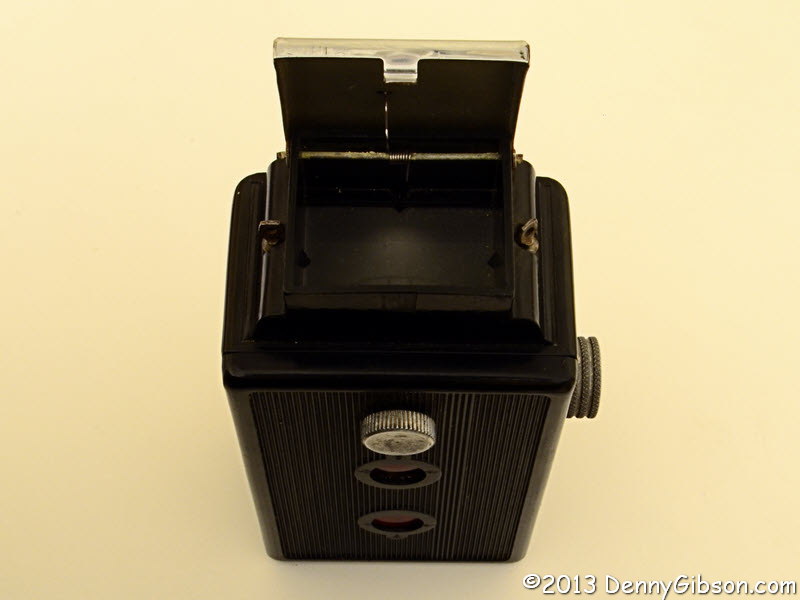
Flex-Master cameraFlex-Master cameraThere’s not much to it. It’s called a pseudo-TLR. TLR stands for twin lens reflex which means one lens for the photo and an identical twin for the viewfinder. I’m not sure that what feeds the viewfinder on this camera can properly be called a lens at all. It does somehow produce a dim right-side-up but reversed left-to-right image on an upward facing screen. There’s no focus or aperture control and not exactly any shutter speed control. There is a shutter release and a little lever that selects “INST.” or “TIME”. The length of an “instant” isn’t specified but I’m guessing it’s somewhere between 1/50 and 1/100 second. As you’d expect, “TIME” holds the shutter open as long as the the release is held down. The back is held in place by a thumbscrew. Remove it to thread the paper backed film onto the relocated empty spool from the previous roll then close it up tight. Turn the knob on the side to move a frame number into first one then the other red window.

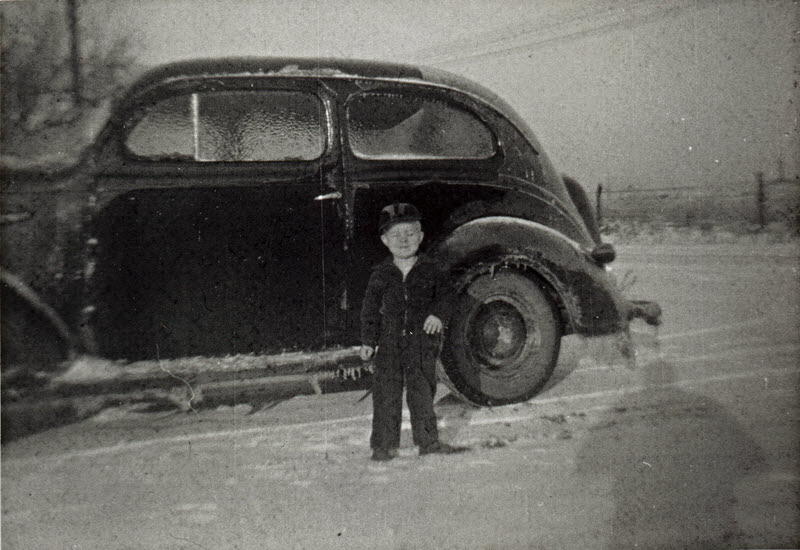
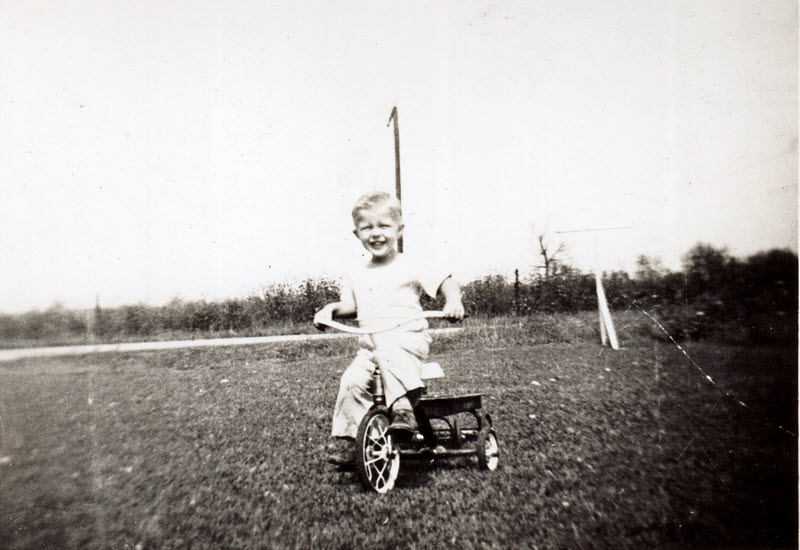
Picture from Flex-Master cameraPicture from Flex-Master cameraI believe both of these pictures were taken with the Flex-Master. The first one is known to be from the winter of 1950. The other is probably from the next spring. It’s one I frequently use as an “on the road” Facebook profile picture.

I said I appreciate folks who work with film cameras and I know some, too. One in particular, Jim Grey, lives close enough that I’ve passed a few junk classic cameras his way. Jim not only gets a lot of pleasure from his cameras, he gets some very nice pictures from them, too. I recently asked Jim about the Flex-Master and he told me where I could buy film for the camera and also where to get it developed. There aren’t many choices. It’s tough enough finding processing for film from a still-in-production Canon or Nikon let alone something out of a seventy-three year old punch-board prize. Nor is it cheap. With postage, two rolls of 127 black & white film came within pennies of twenty-eight dollars. Processing, with postage but without prints (you get jpgs), is $16.50 a roll.

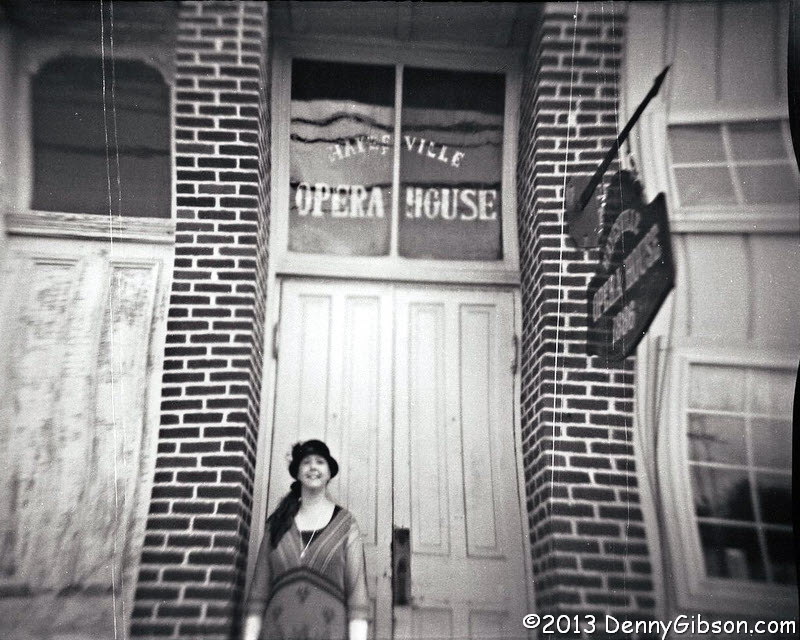
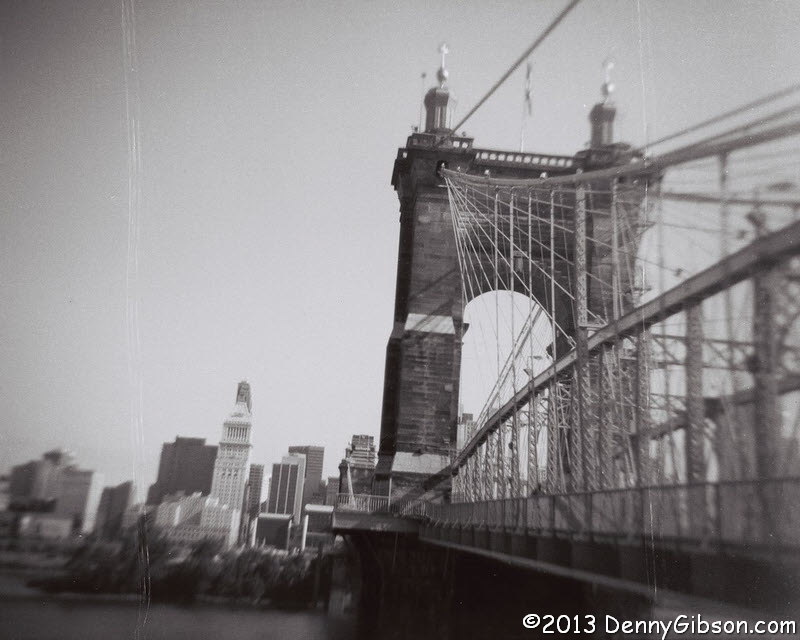
Picture from Flex-Master cameraPicture from Flex-Master cameraOne of the first places I tried the camera was in front of the 1886 Hayesville Opera House after Cece Otto’s American Songline concert. I managed to totally botch two of the three pictures I took of Cece by doing double exposures (Now, there’s something you don’t hear of much in the digital world, Chauncey.) and the one that did kind of turn out has a building that looks like a reflection in a fun-house mirror. I’m guessing that the film wasn’t held flat but I don’t know why. The picture of the Roebling Bridge with Cincinnati in the background doesn’t seen so distorted so maybe the film got pulled tighter later in the roll… or something. Both pictures have a pair of vertical scratches that I think line up with rails molded into the camera back which I’m guessing are there to press the film flat. Matching scratches can be seen in some of the pictures taken with the camera in the ’50s. Just remember that “far from high-end” statement near the beginning  of this article. 

If the first roll had been a complete disaster, I’d have given the other one to a friendly Hoosier camera collector and saved my self $16.50 in processing. Since the disaster was less than complete, I’m going to take the “seventy-three year old punch-board prize” along on my upcoming ride in a fifty year old car on a one hundred year old highway and see what develops.


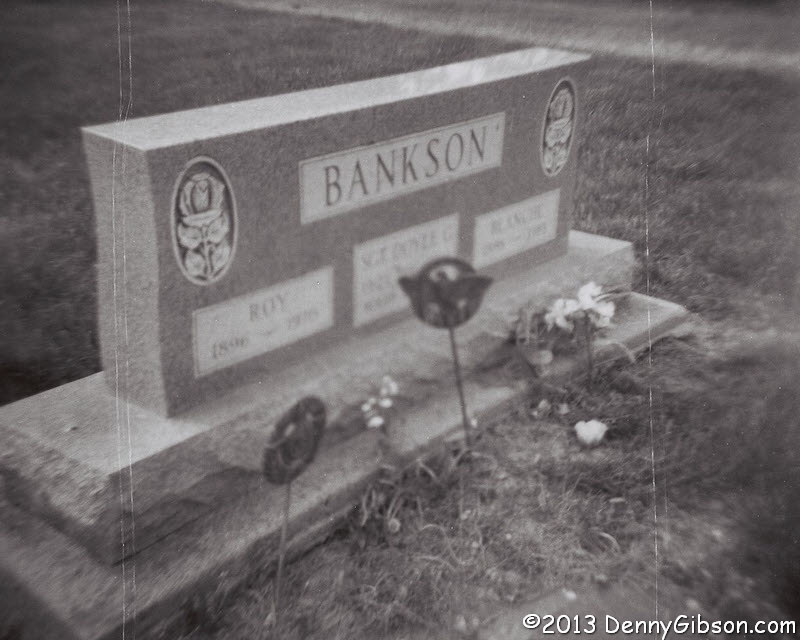
Picture from Flex-Master cameraDoyle Bankson, that camera winning uncle, is buried at Colleville-sur-Mer in France. His parents (my grandparents) placed his name between theirs on this tombstone in Ohio. Part of me felt really silly using the camera he won as a teenager to take a picture of a stone more than four-thousand miles from his grave. Part of me didn’t.


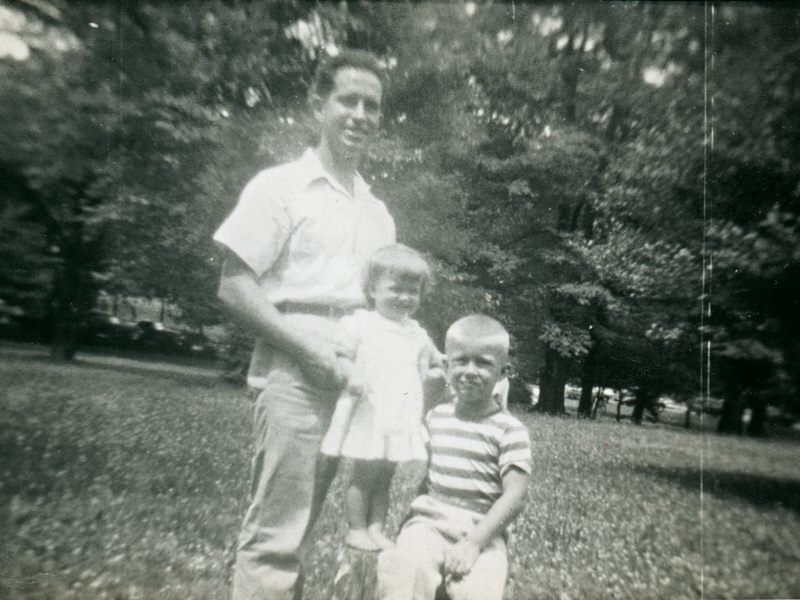
https://dennygibson.com/blog//////wp-content/uploads/2013/06/doyle.jpgThis article is being posted on Father’s Day. That’s somewhat, but not entirely, a coincidence. Dad took quite a few pictures with the Flex-Master. He was in some, too. Here’s a picture of Dad, my sister, and me that was taken with a twelve year old punch-board prize.