My Christmas Squirrel

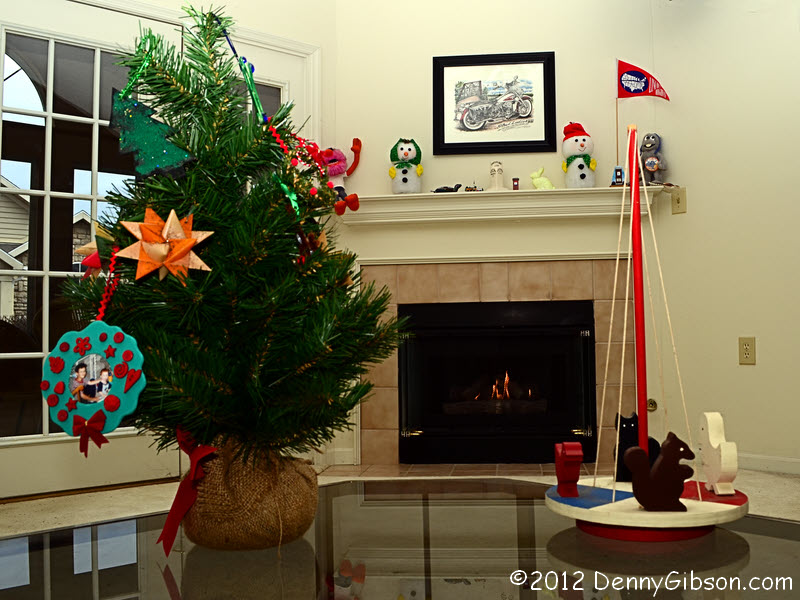
cdecor1I’m not much of a decorator. When there were young’uns in the house, there was always a tree at Christmas and I even strung up a few outdoor lights once or twice but there has been nothing of that sort around my bachelor abodes. When I lived in a one bedroom apartment, I found a couple of red balls that probably came from someone’s tree and hung them from a ceiling beam. I’ve expanded on that just a bit in my current location. At some point after Thanksgiving has passed each year, I take my single armload of holiday trim out of the closet and make things all Christmasy.

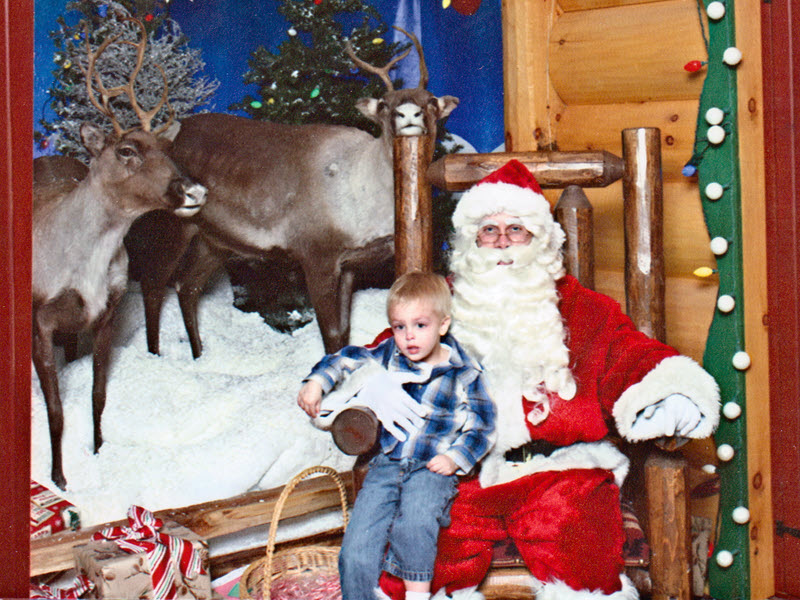
The little tree is store-bought. It’s the only component in my Christmas display not made by a family member’s hand. The snow-couple on the mantle are covered soft drink bottles. My sister dives into various arts and crafts projects on a regular basis and one year she made quite a few of these. I’m guessing that the ornament with the photo of the grandsons was assembled by my daughter-in-law or maybe the oldest boy did it. It arrived just a few days before my first ever Christmas Escape Run in 2006 and I took it with me. It first hung on a tree of sorts in a room above the Under the Hill Saloon in Natchez, Mississippi.

cdecor2The star is one my Mom made of wax-coated paper. My sister and I each have five. I think Mom may have formed the stars then dipped them but I might not be remembering that quite right. She passed away in 1959 so the stars are at least 54 years old. Unlike my current piece of fake shrubbery, there was some store-bought stuff on our trees in those days but not a lot. There was popcorn we had strung while also eating a goodly amount of it and each year we carefully removed the hanging strands of tinsel (icicles) to reuse the next. The tree was definitely not fake.

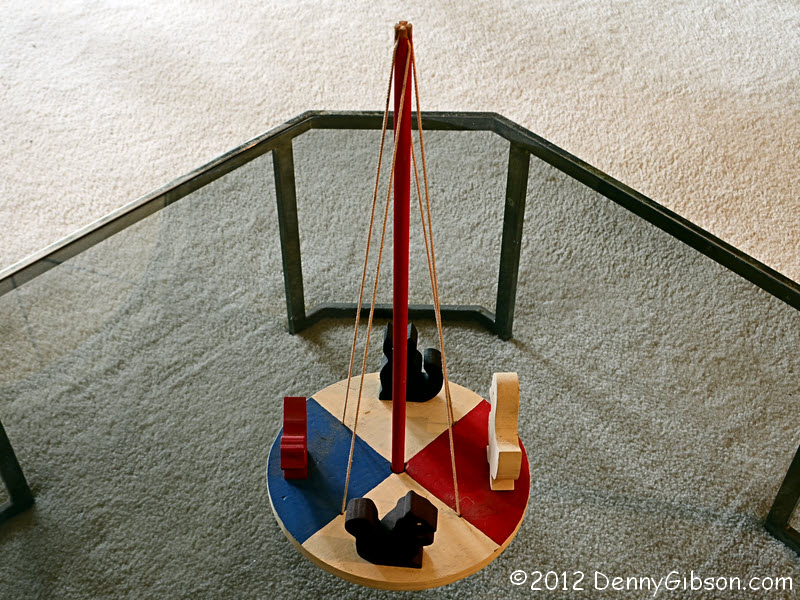
cdecor3The merry-go-round isn’t exactly holiday themed but, like pretty much any toy, seems quite appropriate. I guess Dad ran out of furniture to refinish or chairs to cane or maybe he just wanted a break. Whatever the source of the urge, it resulted in the production of several of these merry-go-rounds some years back. They were populated with a variety of animals. Mine has a chicken, duck, cat, and squirrel.

The sweat of the honest makes the merry-go-round.
Dirk Hamilton, Rainbows in the Night, 1995


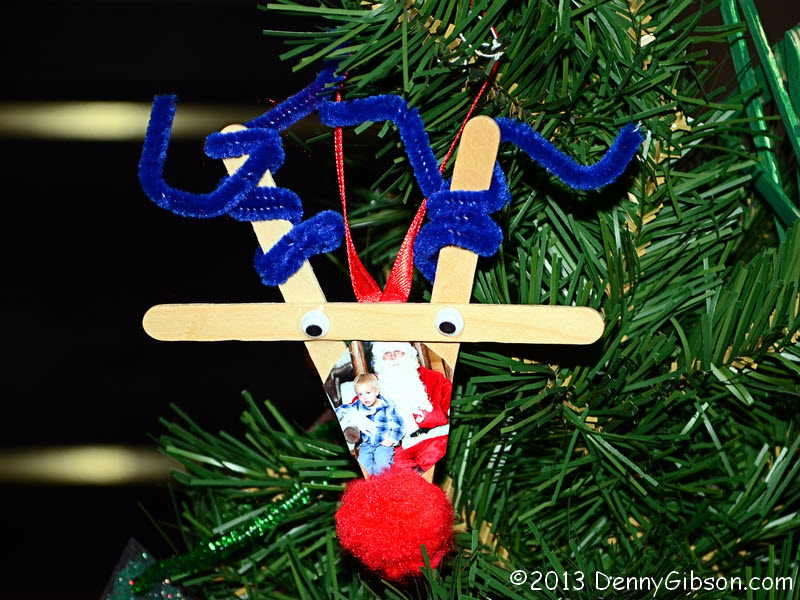
cdecor4I wasn’t able to get an ornament made by my newest grandson in time to include it in this post. Construction is in progress and I’ll update this post with a photo as soon as possible. For the present, I’ll just include this photo so that all three grandsons are represented.


Wesley's ornament UPDATE: January 3, 2013 – I picked up the new ornament on the way home from my Christmas trip. As promised, here it is. I’m all set for Christmas 2013.

Book Review
Route 66 Encyclopedia
Jim Hinckley

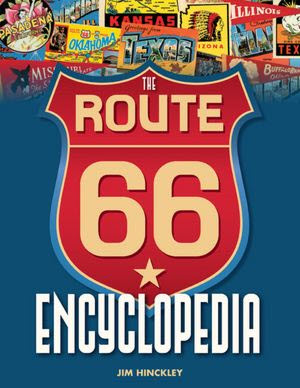
Route 66 Encyclopedia - coverE-N-C-Y-C-L-O-P-E-D-I-A
I can’t look at this book without hearing Jiminy Cricket singing. I’ve never read an entire encyclopedia (Including this one — yet) but thanks to Pinocchio’s little bitty buddy, I can spell the word.

I’ll confess to being a little leery every time I hear of a new Route 66 book. How many books does one road need? I think I was doubly leery of this ambitious project because, as Jiminy says, an encyclopedia contains “everything from A clear down through Z” and that’s a tall order. Well, Jiminy… I mean Jim seems to have done a pretty good job covering the alphabet and I’ve once again discovered that Route 66 needed at least one more book.

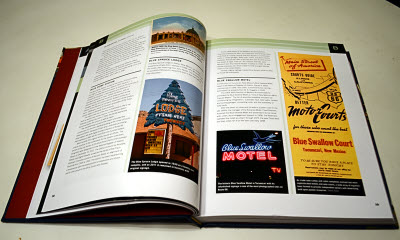
The encyclopedia made a good impression before I ever read a word. It’s a fairly large hardback with full color glossy pages. The book’s first page folds out to present a three panel map of the entire road lined with photos and images from postcards, maps, and brochures. It is well illustrated throughout with modern photographs from Jim and wife Judy and lots of historic images from collectors Joe Sonderman, Steve Rider, and Mike Ward. It looks like Rider, at least, also contributed some modern photos. I probably ought to mention that I personally know all those guys and Jim, too, but I don’t believe I owe any of them money.

As might be expected, the entries are in alphabetical order and the starting page of each letter can be determined from the table of contents. Only ‘X’ is a no-show. ‘Q’ and ‘Z’ get one page each and ‘C’ gets thirty. The rest get something in between. There is a large letter at the outer top corner of each page to further help with locating topics. There is also an index but it is a bit unusual, at least in my experience. Rather than a single alphabetical list, there are sub-lists for people, places (further divided by state), other, and publications. It’s quite usable but it seems like it could get awkward if there were many more divisions or longer lists.

I expected to encounter some new stuff here and I certainly did. The book starts and ends with things I’d not heard of: Missouri’s Abbylee Motel and New Mexico’s Zuzax trading post. There are plenty more in between. Among the many entries that weren’t at all familiar to me are quite a few defunct businesses such as Drumm’s Auto Court in Arizona and the Premiere Motel in New Mexico, several vanished communities including Des Peres, MO, Lela, TX, and Siberia, CA, and at least a few humans. I don’t recall ever hearing of businessman Arthur Nelson and, while it seems like I must have at least read about “father of the good roads movement” Horatio Earle, I sure didn’t recognize the name. On the other hand, a couple searches for folks I did know of came up empty but I believe that, too, is to be expected. It really isn’t possible to include absolutely everything and choices must be made. Every “Best Beatles Songs” list I’ve ever seen has left off at least one of my favs.

Route 66 Encyclopedia - sample 1This is not my first exposure to Hinckley’s work and, as I’ve said before, the man does his homework. Of course, everybody knows about the Gemini Giant and it’s not too tough to learn that it was made by International Fiberglass. But learning how many cowboys the company made for Phillips Petroleum and how they managed to make some giants with beards and some without and that the company’s founder once set a world record in sailing? That takes some digging. And practically any book with 66 on the cover will tell you how Cyrus Avery was instrumental in getting the pair of sixes for the route after the desired Highway 60 designation was assigned elsewhere. Hinckley does that and also tells us quite a bit about some of his other activities such as his prior role in creation of the Albert Pike Highway and his subsequent role in helping form the U.S. 66 Highway Association. Incidentally, although I have not read every article in the encyclopedia, that is the only mention of the U.S. 66 Highway Association I found. Its post-WWII spark plug, Jack Cutberth, was one of the names I thought I might see in the book but didn’t.

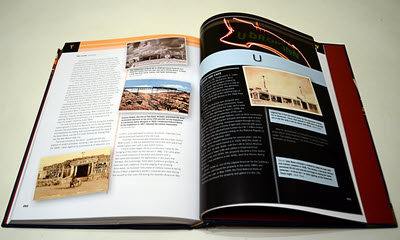
Route 66 Encyclopedia - sample 2Even without Cutberth, the Route 66 Encyclopedia includes an impressive number and range of articles and many of those articles go into significant depth. The writing isn’t flowery but neither is it terse. It’s lean and efficient. The goal is to get as much factual information between the covers as possible and keep it readable. Hinckley does that rather well. Moreover, I think you’d probably still get your money’s worth if you decided to forgo the text altogether and just look at the pictures.

Encyclopedia Britannica always had yearbooks. (To my surprise, I just learned they still do.) The Route 66 Encyclopedia has updates here. They can also be accessed through a QR code on the back of the book.

The Route 66 Encyclopedia, Jim Hinckley, Voyageur Press, 2012, hardback, 11.1 x 8.7 inches, 288 pages, ISBN 978-0760340417
Available through Amazon.

Dead Sea Scrolls in Cincinnati

Dead Sea Scrolls exhibit at Cincinnati Museum CenterSeveral Dead Sea Scrolls form the centerpiece of and lend their name to a major ongoing exhibit at the Cincinnati Museum Center. The full name of the exhibit, which I attended on Monday and which runs through mid-April, is Dead Sea Scrolls: Life and Faith in Ancient Times. The “scrolls” are in that circular table whose edge is near the center of the photograph at right. They’re not really scrolls, though. Not many of the things comprising what we call the Dead Sea Scrolls are. The first manuscripts pulled from caves near the Dead Sea in 1947 were actual scrolls — seven of them — but not so most of the items found since then. Those first scrolls have been described as “relatively intact”. Subsequent finds have largely been fragments of varying sizes. Pieces of parchment and papyrus containing writing were found in a total of eleven caves in the area, and by 1956, when somebody decided they had found all there was to find, some 15,000 to 30,000 fragments of what are estimated to be more than 900 manuscripts had been retrieved. About 40% of the manuscripts are copies of books in the Hebrew Bible (a.k.a. Old Testament), 30% are religious documents not part of the canonized Bible, and another 30% are secular.

Ten of those manuscripts are represented in that big circular table. To help preserve them, they will be swapped out for a different ten halfway through the exhibit. The actual bits of ancient writing are inside sealed climate-controlled compartments. Enlargements, notes, and English translations are on the table’s surface. Attributed to the period between roughly 250 BCE and 100 CE, most of the Dead Sea Scrolls are written in Hebrew, with a respectable number in Aramaic and a few in Greek or Nabataean. All those in the exhibit are either Hebrew or Aramaic. I can’t read one word. Studying the scrolls doesn’t do much for me in practical terms, but gazing on documents produced two millennia ago is downright awesome.

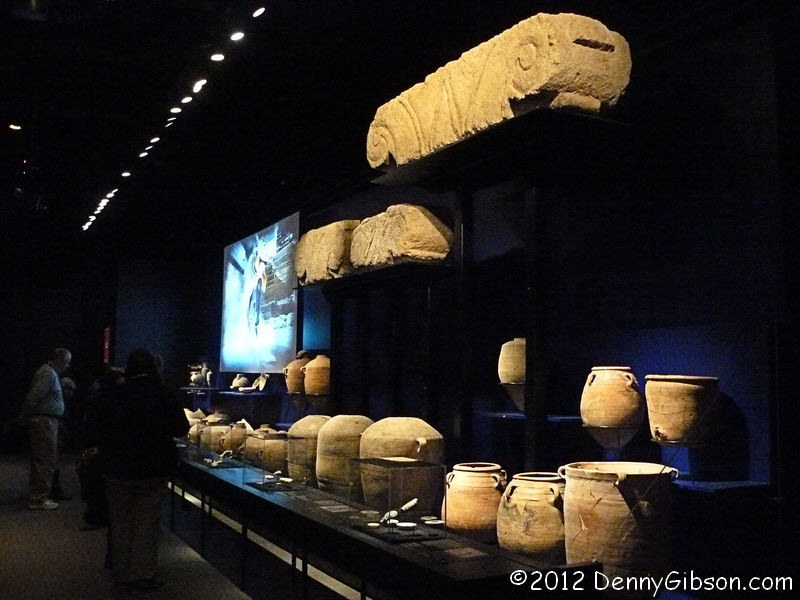
Dead Sea Scrolls exhibit at Cincinnati Museum CenterDead Sea Scrolls exhibit at Cincinnati Museum CenterThe scrolls are the big draw but by the time most people buy their tickets, they are aware that there is more — a lot more — on display. I regret getting no pictures in the first room of the exhibit, where a museum guide uses three ancient jars and walls filled with changing pictures of the region to illustrate an overview of the scroll’s discovery and a little history. From there, visitors enter a long hall with dates on the floor and some seriously old artifacts displayed along one wall. Some sense of the world that preceded the writing and hiding of the scrolls can be obtained here.

Dead Sea Scrolls exhibit at Cincinnati Museum CenterDead Sea Scrolls exhibit at Cincinnati Museum CenterNext up are some newer and larger artifacts. An accurate count of artifacts displayed is elusive but something above 600 is probably close. This is reportedly the largest exhibit ever mounted in Cincinnati. The 2011 Cleopatra exhibit had about 150 items, and the Pompeii exhibit from earlier this year was just over 250. The rightmost picture is of pottery shards with writing on them. Waste not, want not.

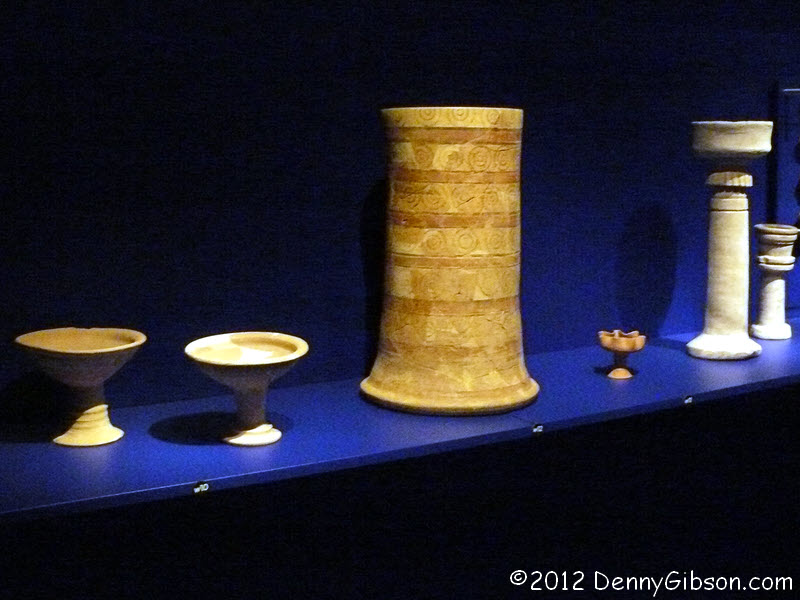
Dead Sea Scrolls exhibit at Cincinnati Museum CenterDead Sea Scrolls exhibit at Cincinnati Museum CenterAs visitors get nearer the scroll display, artifacts seem to become a bit more involved with religion. Holders of incense and offerings are well-represented, and there are hints of a bit more idolatry than I might have suspected. The tall painted cylinder in the second photo is called a cult stand. It’s thought that a bowl with incense or other offerings would have been placed atop it.

Not surprisingly, no photos are permitted in the area where the scrolls are displayed. What was at least a little surprising to me was that the scrolls are not displayed in isolation. They are surrounded by more artifacts, descriptive texts, a short movie, and a stone wall. The movie and texts present some of the facts and theories about who wrote the scrolls, the circumstances of their hiding, and their relationship to the three Abrahamic religions: Judaism, Christianity, and Islam. The wall is basically a replica of a section of the Western/Wailing Wall in Jerusalem, but it frames what is believed to be a stone from the actual wall. The three-ton cube was not ripped from the wall for the exhibit. Roman soldiers of about 70 CE get the blame for that. Touching the stone is permitted, and this can be a very emotional experience for some. Visitors may also insert written prayers into crevices in the replica, just as is done at the real Wailing Wall. These prayers are collected periodically and sent to Israel. A nearby video screen displays a live feed from the real wall.

Dead Sea Scrolls exhibit at Cincinnati Museum CenterThe last part of the exhibit is, I believe, a Cincinnati exclusive. The Hebrew Union College here has been involved with the scrolls from shortly after their discovery. A HUC professor played a key role in the purchase of four of the first seven scrolls in response to a 1954 classified ad in the Wall Street Journal. In the 1970s, HUC secretly stored many photographic negatives of the scrolls for safekeeping. When publication of translations dragged on and on, another HUC professor published his own interpretation of many scrolls in 1991. That exposed him to being sued over copyright violations, and he lost. Any 250 BCE copyright on the actual scrolls had most likely expired, but the suit involved some intermediate translation work. Despite a courtroom defeat, a lot of the scrolls were now out of the bag, and things have been a lot more open since then.

Pnina Shor - The Conservation and Preservation of the Dead Sea ScrollsAnd they’re about to become even more open. The picture at left was taken at a free lecture I attended at the Museum Center in November. The speaker is Pnina Shor of the Israel Antiquities Authority. The screen behind her is demonstrating a digitization project that the IAA has undertaken in partnership with Google. This is not the first time that some Dead Sea Scrolls have been digitized. The scrolls are not all owned by one entity though reporting who and where is way beyond anything I want to deal with. Lots of people have some, and some are already available online. But the IAA has a bunch, and their digitization project is a big one. Estimated completion is 2016, with the first phase, consisting of a few manuscripts, going live in mid-December. The images are being recorded at 1.2 gigapixels. You’re going to need a bigger screen.

Book Review
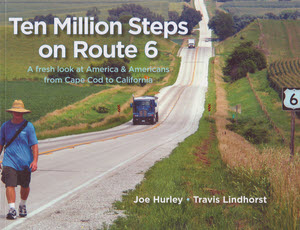
Ten Million Steps on Route 6
Joe Hurley & Travis Lindhorst

Ten Million Steps - cover“It’s not the destination but the journey.”
“Life begins at the off ramp.”
“Getting there is half the fun.”
Most people who visit this website are probably familiar with those and similar quotes. How about “Friends don’t let friends walk the interstate”?

I and a lot of folk I know preach about taking back roads and slowing down. Joe Hurley took that idea a few million steps further and not only stopped to smell the roses, he saw them get watered and watched them grow if only a smidgen. Starting at the east end of the longest US highway that ever existed, Joe spent about eight months walking its full length. He didn’t really count each step or measure each mile but 10,000,000 of one and 3600 of the other are believable round number estimates. While Joe was walking, Travis Lindhorst, his camera wielding partner, was driving. Joe was within hailing range of sixty and Travis was twenty-seven. Perhaps that saying about wisdom coming with age is not universally true.

This is not a guide book. There are some maps but they are not of a scale suitable for navigation. They’ll show you that US 6 goes through the north part of Indiana and the south part of Nebraska but that’s pretty much the limit of their detail. And Joe does occasionally mention where he slept or ate but the mentions are neither regular nor recommendations. The book resembles a collection of newspaper columns. Some bits that now appear in the book were, in fact, published as stand alone articles during the trip to help finance it but many were composed well after the walk was over.

Hurley retired as a columnist for a Danbury, Connecticut, newspaper shortly before starting his 2004 cross country walk so it is natural that this book is a compilation of column-like articles. As I read Ten Million Steps…, I was reminded of collections I’ve read from another newspaperman, Ernie Pyle. For several years before the start of World War II, Pyle was a popular travel writer. He posted his personal human interest style observations from wherever he happened to be. Joe Hurley’s observations seem a lot like Pyles although they are 70+ years newer and organized in a single line rather than a wild scatter pattern. As presented in this book there is another big difference. Ernie Pyle didn’t have Travis Lindhorst beside him.

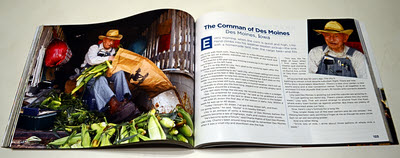
Ten Million Steps - sampleSometimes Lindhorst’s photos are coordinated tightly with Hurley’s text and sometimes they just represent the general area. Either way they are always wonderful additions to the story. Some would be right at home in a super-wide hardback coffee table book but then I probably couldn’t afford it. The fairly large format paperback with glossy pages serves the photos well in an affordable package.

Route 6 goes through big cities like Cleveland and Chicago and Hurley neither bypasses them or ignores them in his writing but most of the stories come from the small towns and open spaces in between. He talks with the manager of a bookstore in Yarmouthport, MA, an auctioneer in Foster, RI, and the manager of a tiny theater in Newtown, CT. He stops by the Harness Racing Hall of Fame in New York and a little league game in Pennsylvania. In Galton, PA, he talks with a women who tells him “I spent 16 years scrimping and saving to get out of here then I spent the next 16 years scrimping and saving to get back.” Out west Hurley looks over the remains of Topaz, a WWII Japanese interment camp and walks through a snow storm while covering the all but empty 160 miles between Ely and Tonopah, NV. In between were a lot more towns, a lot more people, and a lot more country. Two locations that Joe counted among his favorites are the Rialto Theater in the not-all-that-small town of Joiet, IL, and Glenwood Canyon in Colorado. Of the latter, Joe says, “I’ve traveled across the United States and nothing has beguiled me more than Glenwood Canyon.”

Joe and Travis and Route 6 and the Geo Metro that Travis used to drop off and pick up Joe each day all made it to California. Only Joe and Travis made it to the coast. In 1964, Route 6 was truncated and Bishop, CA, became its western terminus. Joe and Travis said goodbye to the work-horse Geo when the brakes pretty much vanished during a side trip to Death Valley. To meet their now firm end date, they left the ten year old car with a junkyard mechanic who promised to repair the car and give it to an elderly gal in need of transportation. After the run of its life, the red Geo just might be fetching groceries at the edge of Death Valley.

The current US Highway 6 may officially end just over the California line but the pavement it once followed west is still there and Joe kept right on walking until he reached the Pacific Ocean at Long Beach. West of Bishop, the former US 6 now goes by names like CA 395 and CA 14.

Back on Cape Cod, the traveling odd couple had dipped their hands in the Atlantic. At the end of the Pine Street Pier, they dipped them in the Pacific then Joe and his wife spent a couple of nights on the Queen Mary. I’m guessing that Joe spent a significant amount of his shipboard time with his feet propped up.

Route 6 is a great road. The few sections I’ve driven (MA, PA, UT) have gone through some mighty pretty country and I’m very glad that Hurley chose it for his walk. But I’ll still risk saying that this book could have been written in large degree on several roads other than US 6. Route 6 took Joe across the whole country and gave him a bigger than average sample size but the the book is not about directions and turns. It’s about people and places and steps and stories and it’s a darned good read. More information at route6walk.com.

Ten Million Steps on Route 6, Joe Hurley and Travis Lindhorst, Arkett Publishing, 2012, paperback, 8.5 x 11 inches, 240 pages, ISBN 978-0981678165

Morristown 2012 Holiday Tour of Homes

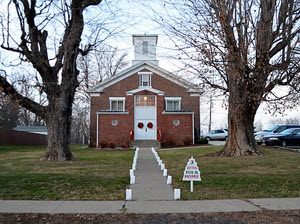
Methodist Church MorristownOn Saturday I toured several nicely restored and decorated homes on the National Road in Morristown, Ohio. An Oddment page on the Holiday Tour of Homes is here.

This entry provides a place for comments on that Oddment as well as covering some “support activities”.

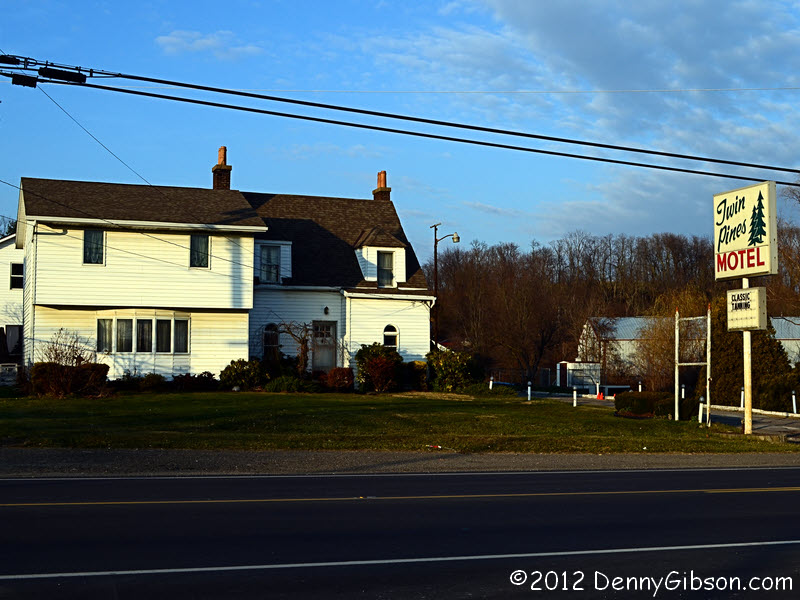
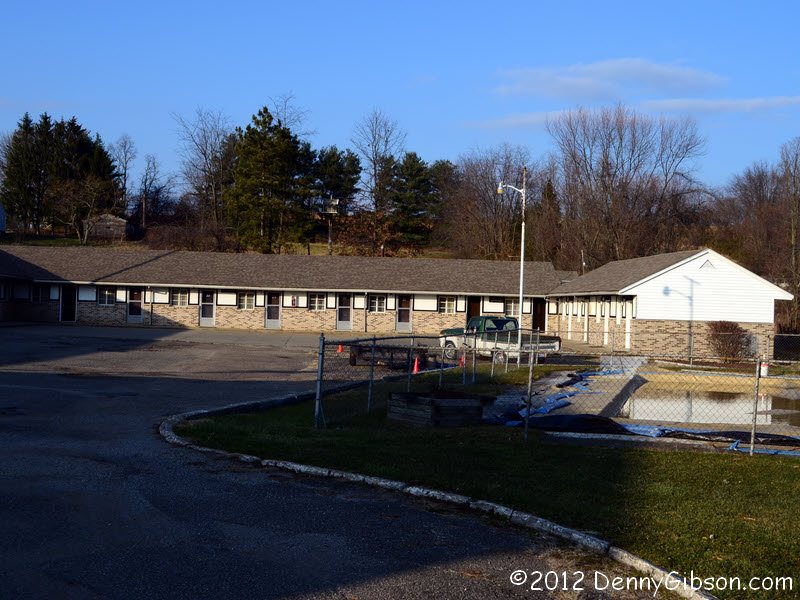
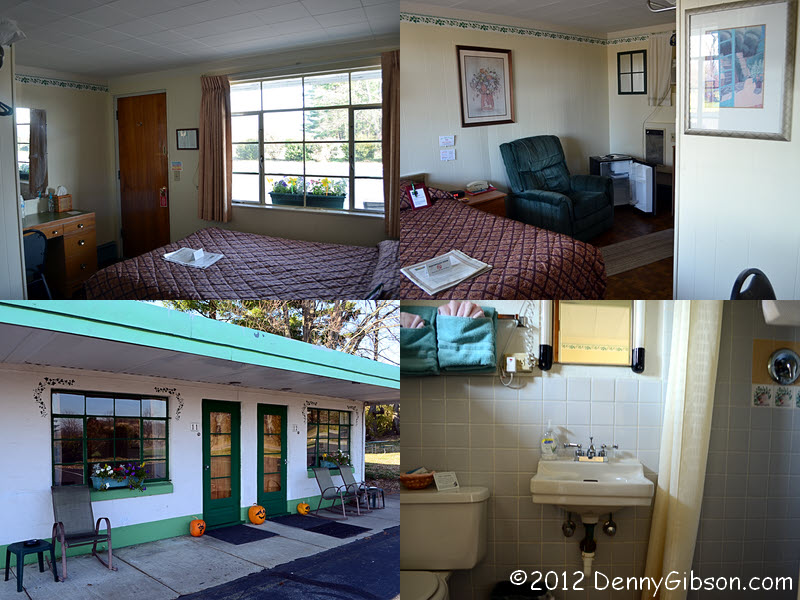
Twin Pines MotelTwin Pines MotelMy bed for the night was at the Twin Pines Motel a few miles east of Morristown. I had read a couple of reviews that made it sound OK and it was. It’s a clean and reasonably maintained older place with no frills but all the necessities including wi-fi. Price was about $50 with tax. There is a look at my room here.

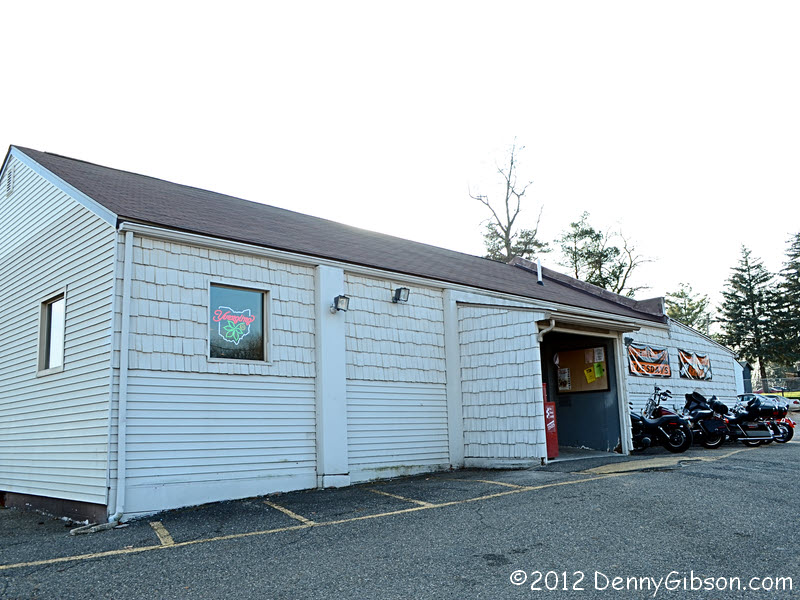
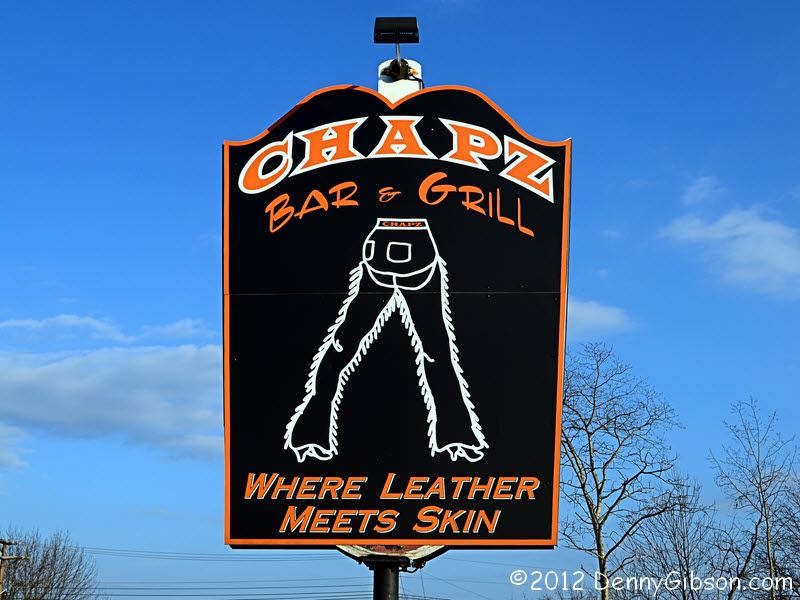
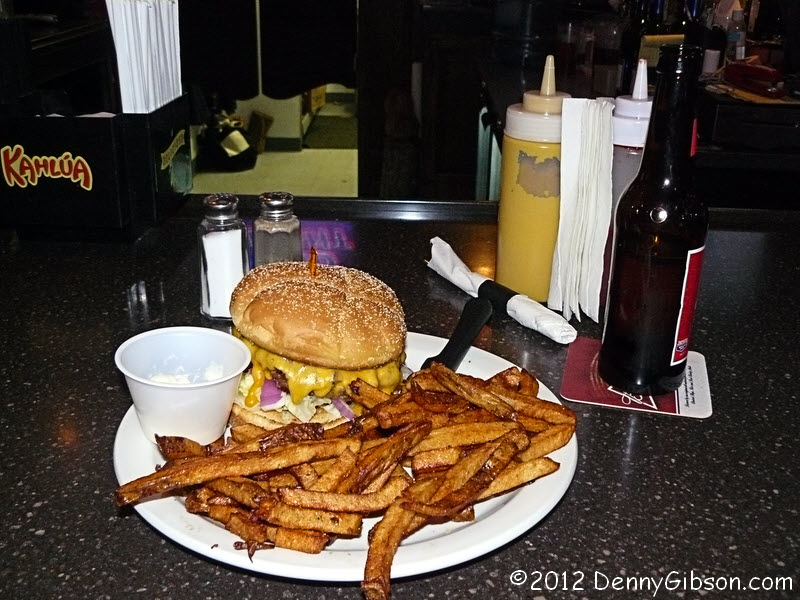
ChapzChapzChapz is on the National Road between Morristown and the Twin Pines. I stopped there for a beer before the home tour and for a ‘burger after. Anything that looks that unhealthy just has to taste great and it did. Just as the sign shows, female bartenders and waitresses wear Daisy Dukes and motorcycle chaps. Depending on age and size that can look really hot… or not.


Music Review
Raise Your Hands
Long Tall Deb

Solid! That word entered my head the instant I heard the snare drum snap that starts of the first track of Raise Your Hands and it stuck with me throughout that first listen. It comes back on every repeat listen and sometimes when I just think about this album. Yep, I’m pretty sure solid is the right word to describe Deb Landolt’s second studio effort.

Thanks to my minor support of the Kickstarter project that helped birth this CD, I got to listen to the finished product a little ahead of its official release. An email arrived on Thanksgiving eve with a link to the MP3 files. The next morning, I took them with me on the drive to a holiday feast with friends. I hit play as I settled onto I-71 and got slapped by that snare before I could set the cruise control. The bass punch came half a second later and we were rolling.

And we kept rolling. There are twelve tracks on the CD; All but two written by Deb and a collaborator or three. When the last one finished, I realized, with a certain amount of surprise, that I had not mentally noted a weak spot. I almost always listen to a new CD straight through but it seems that more often than not a track or two will register as something I just may skip during replays. That didn’t happen here and subsequent listens verified that I had not just slept through a dud. All the tunes are keepers and they offer plenty of the “soul, gospel and swamp” that Long Tall Deb is known for. They’re rarely sharply separated but are, instead, deliciously stirred together. The title track is a bit swampy, tastes a lot like gospel, and is filled with soul. The wonderful “To Find His Home” is gospel of the highest order but even it takes a little stroll through the swamp as it gets cooking. The two covers are well chosen. The closing track is Tom Waits’ “New Coat of Paint”. The other cover, “Muddy Jesus”, is an very cool tune by Austin based guitarist Ian Moore.

There is a solid set of talent to go with that solid set of material. In addition to Deb, I counted twenty-five musicians listed in the credits. Drummer Jan Roll and bassist Melvin Powe provided the snap and punch that got my attention at start up and they form the rhythm section for all original tunes. Guitarists David Clo and Sean Carney also appear on all the originals as does keyboardist John Popivich.

I’ve mentioned just five names which means another twenty of Deb’s friends make guest appearances on Raise Your Hands. Names that I recognized include Colin John, Damon Fowler, Jimmy Thackery, & Reese Wynans and I probably should have recognized a lot more. In the Kickstarter updates that Deb occasionally sent as recording progressed, it was apparent that she was working hard but having fun, too. One look at the list of musicians she shared the studio with makes it obvious that having fun was practically unavoidable.

But it is Deb’s voice that drives the album. It is, of course, like everything else here, solid. It is also powerful. I’ve seen her voice described as powerful but not overpowering. Good description. You never get the feeling that she’s holding back but you always have the feeling that there’s more available. Same with emotion. The celebration of “Train to Tucson” and the relief of “Finally Forgot Your Name” come from different ends of the emotion scale and Deb gets them both just right. I think that’s called soulful.

I’m pretty bummed that I won’t be able to attend the Columbus CD release party on December 8. That should be quite a party. The CD (both real and downloadable) is to be available on December 4 (wrong – see below) at CDBaby, iTunes, and Amazon. You will be able to listen to some samples at those sites or you can listen to it blast out of my car windows as I head up I-71 again this weekend.

UPDATE: November 30, 2012 – Had I waited just a bit, I would have learned that a national release in December is not to be. Distribution negotiations are ongoing and look as if they will lead to general availability around mid-March. The December 8 release party in Columbus is for real and copies of the CD will be available there as well as at other live appearances. It will likely also be available at LongTallDeb.com well in advance of the spring time release. Sorry about the false start.

Hats Off to Larry

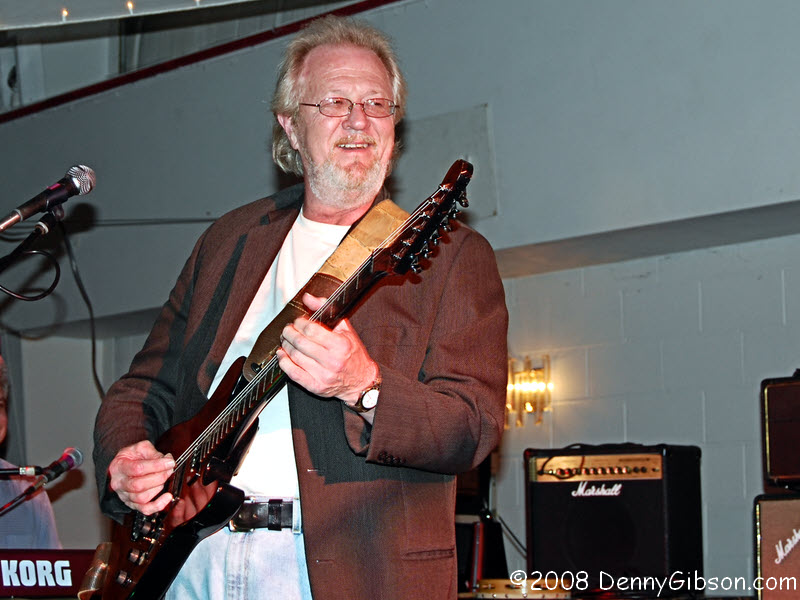
Larry Goshorn Farewell ConcertGuitarist Larry Goshorn “retired” this week. Of course, musicians don’t retire the way some folks do. A guy who retires from Ford will probably never build another car and a retired assassin can be perfectly happy not killing anyone ever again. But no one believes that, just because a musician does his last concert and stops actively looking for gigs in clubs and bars, they quit being a musician. Following Wednesday’s “farewell” concert, Larry may not be as prevalent on the local music scene as he has been but neither will he vanish completely.
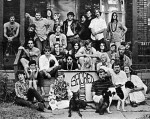
Sacred Mushroom album photoLarry, along with brothers Dan and Tim, has been a big part of Cincinnati’s music for pretty much as long as I’ve been here. I moved to the big city in the fall of 1965 and evolved from visitor to resident over the next couple years. I don’t know when I first became aware of the Sacred Mushroom or even when the Sacred Mushroom first came into existence but I do remember Sunday afternoons in Eden park with the Mushroom in the band shell and nights in a dump called the Mug Club with the Mushroom on stage. Dan Goshorn did most of the singing but Larry also sang a bit along with doing all the lead guitar work. I fondly recall a couple of break time conversations with Larry at the Mug Club. I don’t recall their content; Only that they happened. No reason for Larry to remember them at all.

The Sacred Mushroom was a different sort of band. There was, of course, the Mushroom House and a life style that said “we are musicians, dammit” but their music was different, too. There were other good bands in Cincinnati including several that, like the Sacred Mushroom, did a mix of covers and originals. But the Mushroom’s covers were from guys like Willie Dixon and Paul Butterfield and their bluesy originals (actually Larry Goshorn originals) were not exactly formula top 40.

The peak and the crash were not far apart. In October of 1968, they opened for Big Brother and the Holding Company. I was there in the last row of the last balcony with a ticket I’d bought at the last minute. Their one and only album was released the following summer but the band was already disintegrating. It was kind of like the Beatles and Let It Be minus the long string of million selling albums in front of it.

Larry didn’t stop playing, of course. I may have even seen him a time or two before he went off to help put Pure Prairie League on the charts but I really don’t remember. My memories of his days with PPL are pretty spotty, too. Even though I liked several of their tunes, I never became a big fan. I saw them perform just once.
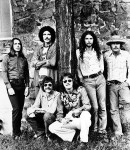
Pure Prairie LeagueLarry didn’t write the song that put Pure Prairie League on the charts. That song, Amie, was written and recorded by Craig Fuller before he left to deal with draft obligations. What Larry did do, after replacing Craig, was sing play (see Tom Sheridan’s informative reply below) Amie in a couple of hundred concerts that got the song enough airplay to make it a hit. He then went on to write a number of the band’s songs including my favorite, Two Lane Highway. As much as I like the song, I don’t dare dwell on the lyrics. Just like Springsteen’s Born in the USA is not (despite what some politicians apparently believe) exactly glorifying the country, Two Lane Highway is not an ode to back roads. I never thought to ask but was there when a friend did and learned that Larry wrote the song in the back of a GMC motor home as the band rolled through a Pennsylvania night and he really did want to “get off this two lane highway”. He’s got a front row spot in the picture at right.

The Pure Prairie League story is a convoluted one and quite a few web pages offer up pieces and variations of it. Today, a four piece group with a couple of original members keeps the name alive. The official Pure Prairie League website makes no mention of Larry at all. A careful scan turned up one tiny uncaptioned picture that has Larry in it but that’s all. The closest the site’s text comes to mentioning him is in an almost comical reference to the “departing Gorshorn [sic] brothers”. Along with ignoring his contributions, they’ve forgotten how to spell his name. Larry’s younger brother, Tim, had joined him in the group around 1977 and they did leave together around 1978. Tim later rejoined for a second stint.

Between PPL and the 1994 opening of a certain bar on Main Street, I have no personal knowledge of Larry’s activities. I heard ads for The Goshorn Brothers Band on radio and I may have even had a beer or two somewhere they were playing but I wasn’t paying attention. When I saw Larry and Tim at what I believe was the opening night for Tommy’s on Main, I was reminded of how much I enjoyed his playing and I’ve not lost sight of him since.

I probably irritated some folks when I said I was never a big fan of PPL. I liked them well enough and I certainly appreciated their talent but they weren’t one of my top tier groups. That tier was filled with the Moody Blues, the E Street Band, Yes, and others. I liked PPL the same way I liked the Eagles and there are more similarities between the two than my level of fandom. Of course, they sound somewhat alike but there was another connection that maybe only I cared about. PPL had sucked up Larry Goshorn; The Eagles had sucked up Joe Walsh. I was much more a fan of the James Gang and Sacred Mushroom than of the Eagles and Pure Prairie League. On one of those very first nights at Tommy’s, I mentioned to Larry that I had thought of his time with PPL as a “day job”. He smiled and said, “Me too.” I don’t know if he meant it the same way I did or if he even meant it at all.

The Tommy’s gig started as an “acoustic” duo then one night ex-PPL drummer Billy Hinds showed up with a snare drum. From there, it wasn’t long until a five piece Goshorn Brothers Band had taken up residency at Tommy’s. Billy was behind a full drum kit with Michael Baney and Steve Schmidt taking care of bass and keyboards. Other top notch musicians would sit in or perform their own shows. Wonderful music poured out of Tommy’s for the next couple of years with GBB typically playing three nights a week and me being there for at least one of those nights more often than not. Tommy’s eventually closed but the Goshorn Brothers rolled on. The lineup wasn’t particularity solid so you were never quite sure who would be backing up the brothers on a band date but you knew they would be good. The two Goshorns could probably make anybody sound good but it’s a plain fact that they attract the best. Many different combinations have appeared as the Goshorn Brothers Band over the years and every one that I’ve heard sounded great.
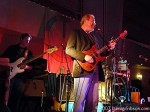
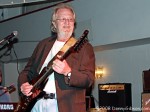
Larry Goshorn - Cincinnati Summer of Love Reunion 2007Larry Goshorn - Cincinnati Summer of Love Reunion 2008I have no pictures from Tommy’s. Those at left are from the 2007 and 2008 Summer of Love Reunions. A big part of celebrating the Cincinnati music scene of four decades ago was the current Goshorn Brothers Band playing the role and the songs of the Sacred Mushroom. Both years, Mushroom bassist Joe Stewart (in the first picture) was coaxed into performing a couple of those tunes with his old bandmate.
Goshorn Brothers Band - Larry Goshorn Farewell ConcertGoshorn Brothers - Larry Goshorn Farewell ConcertThe photo at the top of this post is from Wednesday’s concert as are the two at right. The evening began with a Larry and Tim acoustic set and ended with the brothers fronting a hard hitting five piece. The time between was filled by the same group minus Larry. Larry broke his ankle early in the year and Tim has been performing without him in a quartet sometimes called Whistle Pig and sometimes called Friends of Lee. Members are Lee Everitt on keys, Bam Powell on drums (no, his head doesn’t really look like a cymbal), and Mike Fletcher on bass. This was the group that filled in the middle and by definition became the Goshorn Brothers Band when Larry joined them.

The music was great and the event well attended. The only surprises were things that didn’t happen. I had expected some comments or jokes about retirement and there was absolutely nothing of the sort from the stage. I had also expected something like an all star jam but, despite there being a number of well known and talented musicians in the house, nothing of that sort happened either. I really shouldn’t have been surprised though. The “we’ll never see Larry again” shock of the first announcement had become a more realistic “we’re going to see Larry less”. The shift was made official with an “or is it?” appearing on posters and tickets. It was a great show and it brought a lot of old (in every sense of the word) friends together. But I think we were all rather relieved to realize that Larry is only mostly retired.

Ohio National Road Meetup

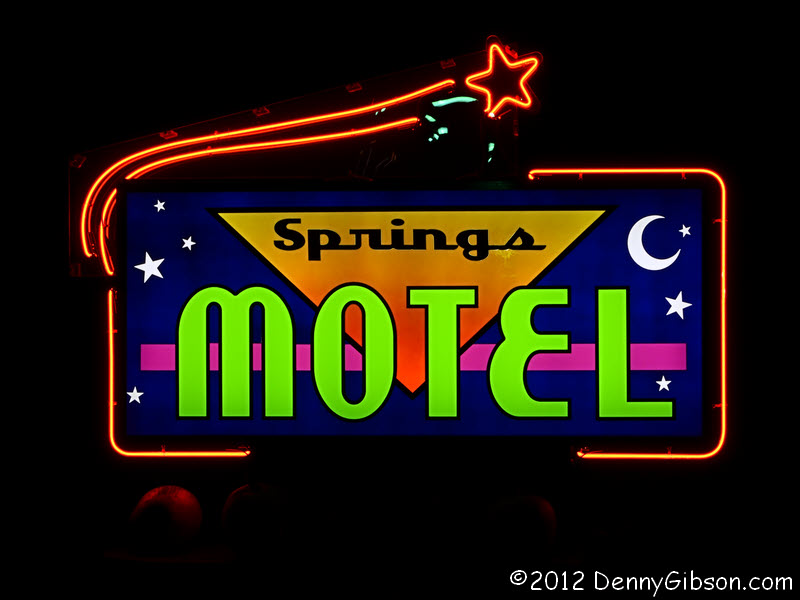
Springs Motel, Yellow Springs, OhioAlthough I did spend a night away from home, it wasn’t really a road trip and, though I did attend an event, it wasn’t the sort of thing that produces a lot of pictures for an Oddment page. Good thing I’ve got a blog, eh?

The focal point of my little outing was Friday’s annual meeting of the Ohio National Road Association. These meetings are held in the Columbus area and, while it would be feasible for me to drive home after one of them, it wouldn’t be all that much fun. In the past, I’ve used them as an excuse to spend a night near Columbus and do Columbusy things. This year’s meeting was in Lafayette, Ohio, about midway between Columbus and Springfield. I thought about using it as an excuse to spend the night in Springfield then had a better idea.

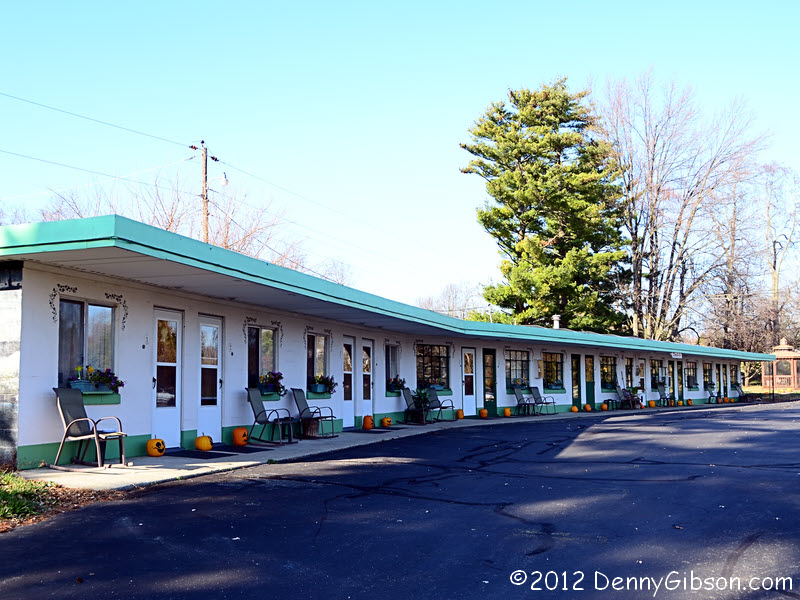
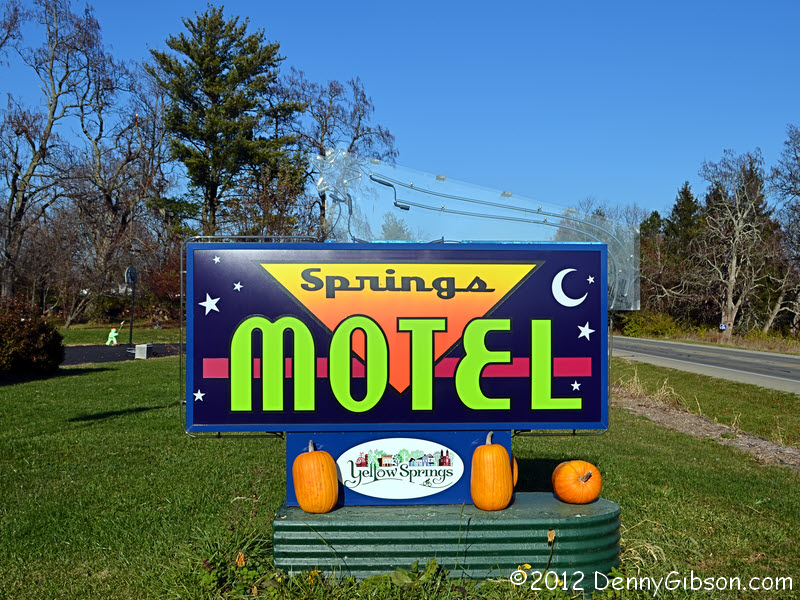
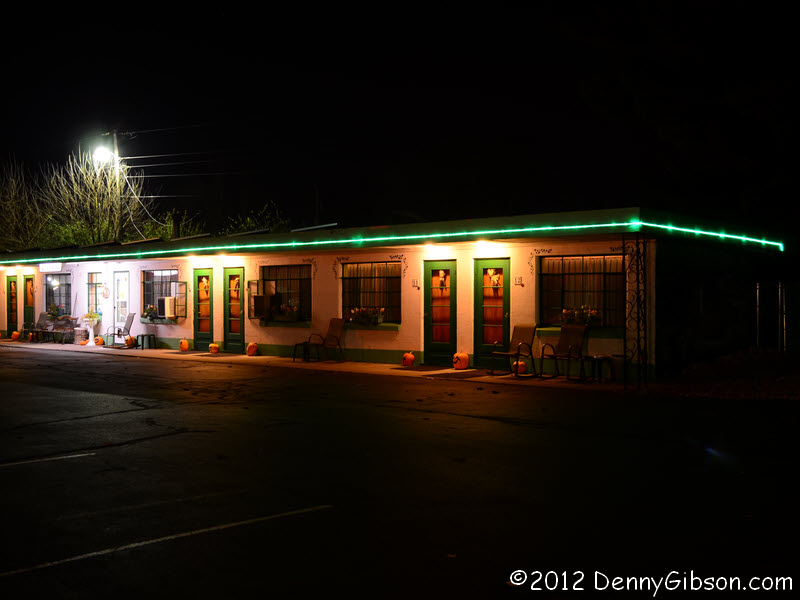
Springs Motel, Yellow Springs, OhioSprings Motel, Yellow Springs, OhioThe Springs Motel is about ten miles south of Springfield near the town of Yellow Springs. I stopped here a few years back to check out the place as a possible overnight on a weekend cruise being planned. It didn’t work out that time but it has remained in my mind as a place I’d like to stay. I had envisioned staying here in the summer when I could sit outside and chat with the neighbors but temperatures in the twenties pretty much eliminated any chance of that happening. I still very much enjoyed my stay, however. The twelve room motel was built in 1956 and refurbished in 2002. It’s reasonably priced, quite comfortable, and operated the way an independent motel should be. Its owner has imprinted it with a personality that comes through on the website and in placards like this. Folks often rent the entire motel for family gatherings or events in Yellow Springs.

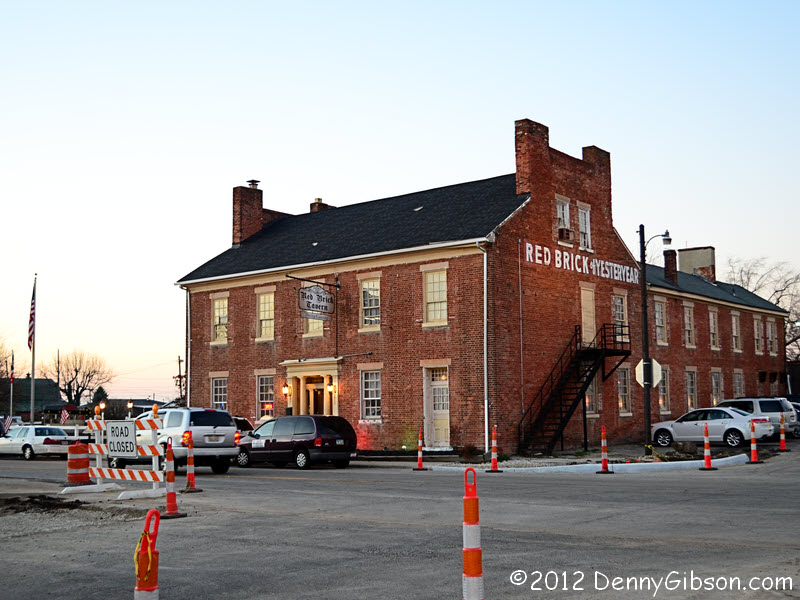
Red Brick Tavern, Lafayette, OhioThe meeting in Lafayette was at the Red Brick Tavern which identifies itself as “A house of hospitality since 1837”. Its construction anticipated completion of the National Road in this area by just a bit but it was soon providing food, refreshments, and lodging to travelers on the new road. What better place for a bunch of National Road fans to meet than in a building that started serving our kind about 175 years ago? The tavern’s fortunes fell with the coming of the railroads, rose with the coming of automobiles, and fell again when I-70 pulled traffic away from the National Road/US 40. It was idle and about to be auctioned when the current owners, Madonna Christy and Cris Cummins brought it back to life. It was sure busy Friday night. Of course, our group of near forty helped but, in addition to the dining room that we occupied, the main dining room seemed just as full and the bar area was overflowing. Partly because of the crowd, I took no pictures inside and barely got this one outside as the sun was setting. I had to deal with on going construction as the road is widened once again. I wonder how may times the Red Brick Tavern has seen that happen.

An excellent meal was immediately followed by the business meeting. Highlights included a report on the ongoing interpretive signs project and the ramping up of a project to replace or repair missing or badly damaged mile markers. Two Milestone Awards are given each year. Mike Peppe received the Leadership Award for his work with the interpretive signs while  Madonna Christy and Cris Cummins received the Preservation Award for their resurrection of the Red Brick Tavern. Dean Ringle will remain on the board as Immediate Past President while Doug Smith ends his possibly record setting run as Vice President to become President. Mary Ellen Weingartner is the new Vice President.

Springs Motel, Yellow Springs, OhioSprings Motel, Yellow Springs, OhioIt was full on dark when I drove back to the motel so the lighted sign and neon bordered building were welcome sights. My room was also quite welcoming. Take a look here.

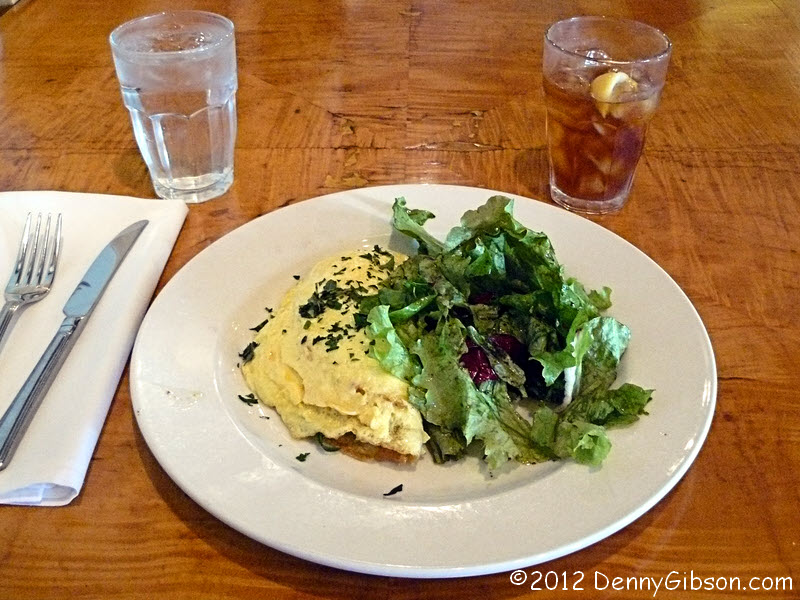
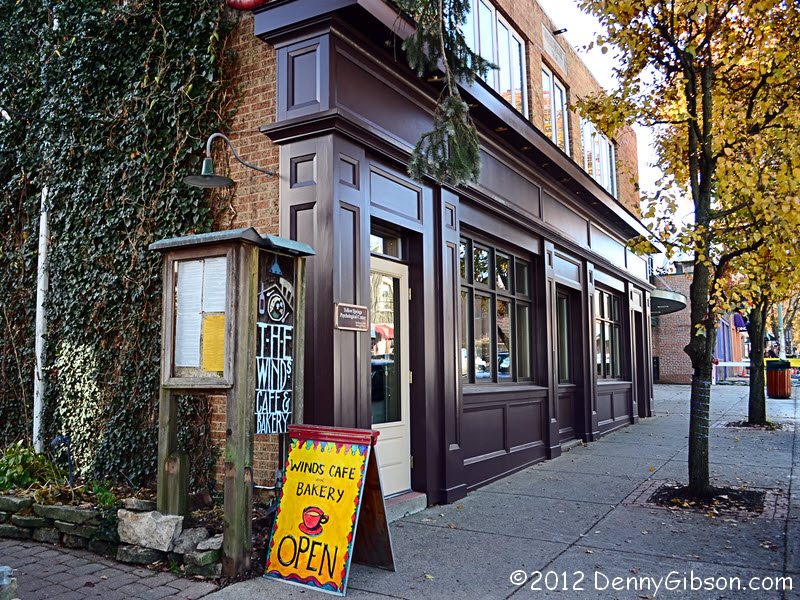
Winds Cafe, Yellow Springs, OhioWinds Cafe, Yellow Springs, OhioOn Saturday, I hung around Yellow Springs long enough to try out the highly acclaimed Winds Cafe. This place gets considerable press and I found it classy but not stuffy. I was there for lunch so it’s possible that dinner time is different but I doubt it. Menus, featuring local ingredients, change seasonally. Today’s offerings included an omelette and, this being my first meal of the day, that was my pick. This was not, however, a ham & cheese omelette from some chain restaurant. This was a smoked trout and Boursin omelette “flipped the traditional way” in a French iron pan and that’s exactly what it tasted like. Excellent!


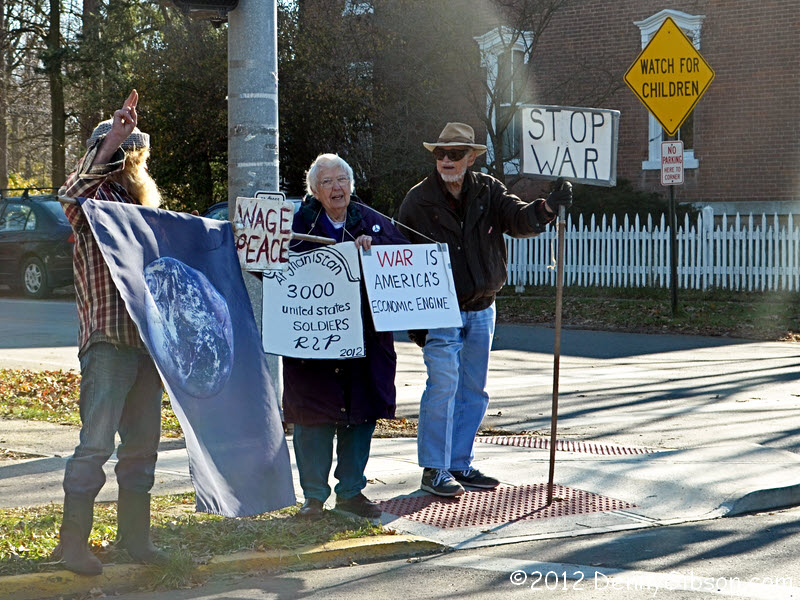
War protestors, Yellow Springs, OhioAs I headed south out of Yellow Springs, I passed something that could have been part of an SNL skit about old hippies. Of course it also looked like something I could probably be a part of so I smiled and waved as I drove by. I get to Yellow Springs a few times each year but I guess I’ve not been there between noon and 1:00 on a Saturday in at least ten years. Since late 2002, a small group of anti-war protesters has been spending the first hour of each Saturday afternoon standing on  a Yellow Springs street corner. A nice article here tells much more. I have immense respect for those people and they’ve got me thinking about digging out my old beads and scrounging up some cardboard.

Book Review
Stay on Route 6
Malerie Yolen-Cohen

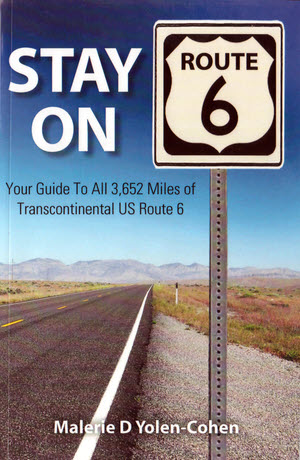
Stay On Route 6 coverMuch like the subject highway, my opinion of Stay on Route 6 has gone “coast to coast”. In the end, I settled slightly inland on the positive side.

I was pretty excited when I first learned that an established travel writer had published a book on US 6. My excitement faded as I read the introduction and it was replaced with disappointment after I’d read a few pages of the “guide” portion. I paused then took a look at the blog the author had launched as she prepared for the cross-country trip that would become this book. This somehow allowed me to let go of my preconceptions and accept the book for what it is. It is not a guide to the bypassed twists and turns of a historic highway. It is a guide to food, lodging, and attractions along the current path of a highway with history.

The seeds for recognizing my preconceptions were planted as I read the book’s introduction. That’s where Yolen-Cohen tells readers that Route 6 is not Route 66 and details some of the differences. The need to do this may be irritating but it is a fact. For many people, the only roads they know of are the interstates, some local streets that lead to jobs and shopping, and a mythic Route 66. It is a wonderful thing that Route 66 has the recognition that it does but it sometimes blurs people’s perception of other roadways. I am quite familiar with the phenomenon. I have had several conversations with folks who expected the Lincoln Highway, the National Road, or the Dixie Highway to be just another Route 66 and were disappointed that they are not. It turns out I was guilty of something similar. I don’t believe it was anything in the actual blog that did it but as I read some of the early entries I realized that my disappointment in the book wasn’t very different from that of those travelers. I wasn’t disappointed in the book because it was a bad guide but because it was not like the guides I was familiar with for Route 66 and other historic highways.

So once I got my own expectations adjusted, I found that the book was pretty good at doing what Yolen-Cohen intended. It covers the entire route, offers some casual commentary on the country along the way, and describes most cities and towns it passes through. Sleeping and eating establishments are noted with a distribution that should ensure no one using this guide goes hungry or has to sleep in their car. The emphasis is on locally owned businesses and the owners are typically identified right along with their bistro or B&B. Yolen-Cohen met these people on her 2011 drive so her recommendations have a personal touch. Nearby attractions are also identified and I very much appreciate the effort to visit and describe local museums. I like local museums. Contact information including, where possible, address, phone number, and website, is included for each restaurant, lodging, and attraction.

I can’t swear to there not being other travel guides created as this one was but I don’t know of any. Guides like the ones I mentioned for faded historic routes are typically put together by someone intimately familiar with the road through years of exploration. On the other hand, my impression is that many dining and lodging guides are put together by someone sitting at a desk using a phone and computer to gather recommendations from chambers of commerce and other boosters. Yolen-Cohen certainly did some recommendation gathering but she did it specifically for her trip. She selected and scheduled almost all of her stops before leaving home then colored things in with a single cross country run.

I like that. I like the idea of a single road trip — even one meticulously planned — giving birth to a travel guide. Yolen-Cohen describes this as a lifelong dream. A little innocence even shines through the possibly jaded view of the experienced travel writer. At least it does in the blog. The blog (stayonroute6.blogspot.com) is part of the whole. The book contains some low-resolution maps and some black-and-white photos. The maps help with mentally placing general locations but a traveler is expected to follow the route with posted signs and modern maps. Similarly, the photos help us understand some of what Yolen-Cohen saw on her trip but little more. This is a black-and-white paperback guidebook, not a full-color photo book. It belongs on a car seat, not on a coffee table. But Yolen-Cohen did take color photos and video, too. Both appear on the blog and are worth checking out.

There are few turn-by-turn directions in the book. They are not needed since it is following an active and signed US highway. That is until it isn’t. US 6 was once truly coast-to-coast and ran from the tip of Massachusetts to Long Beach, California. In 1964 the western end was truncated to Bishop, California. Yolen-Cohen carries on, however, and does provide turn-by-turn instructions for following the former US 6 to the coast.

I don’t know of any significant errors in the book but I do know of two insignificant ones. At least they should be insignificant. It’s even possible they would have gone unnoticed if the author hadn’t gone out of her way to draw attention to them. The first one is in the introduction and is partly responsible for me almost giving up on this book early. Calling an “association” a “society” sets the stage for Yolen-Cohen’s joke about the “unfortunately acronym’d ASSHO”. I’m sure this was a legitimate mistake but the fourteen months between the goof’s appearance in the blog and the book’s publication seems ample time to realize that the organization in question is the American Association of State Highway Officials (AASHO).

The second is when the author berates a Joliet, Illinois, museum that touts US 66 for not also touting US 6. This seems a little off-key since the differences between a historic decommissioned Route 66 and a living breathing Route 6 have been duly stressed. But it turns even more sour with the realization that, despite claims that the museum “occupies the corner of Route 66 and Route 6”. US 6, according to all maps I’ve checked, never gets within half a mile of the museum. A living breathing US 30 does pass by the museum. There isn’t a US 30 section in the museum, either, but a Lincoln Highway (US 30’s predecessor in these parts) display has just been added.

But, even though these errors are quite annoying to me personally, they do not make the book less useful. Anyone looking for a place to eat or sleep anywhere along this long highway can certainly benefit from Stay on Route 6 and the number of museums and other attractions included makes it valuable for sightseeing, too. It’s kind of refreshing to see a guide for a highway that hasn’t been declared dead by someone.

Stay on Route 6, Malerie Yolen-Cohen, CreateSpace, May 2012, paperback, 5.5 x 8.5 inches, 257 pages, ISBN 978-1468049398
Available through Amazon.

Veteran’s Day Eve Concert

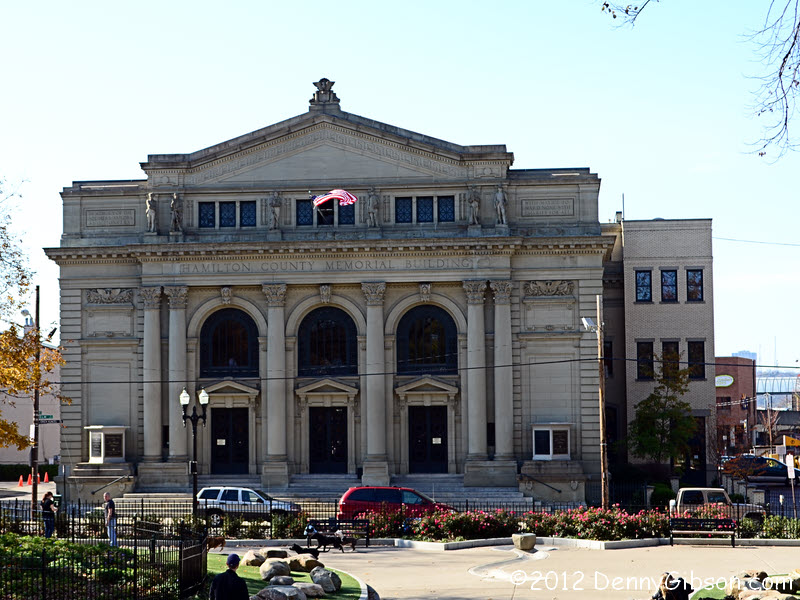
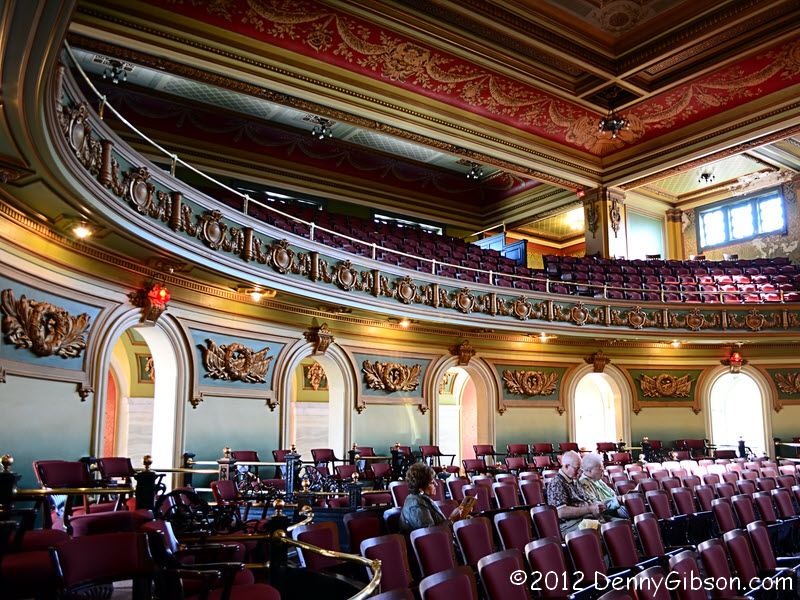
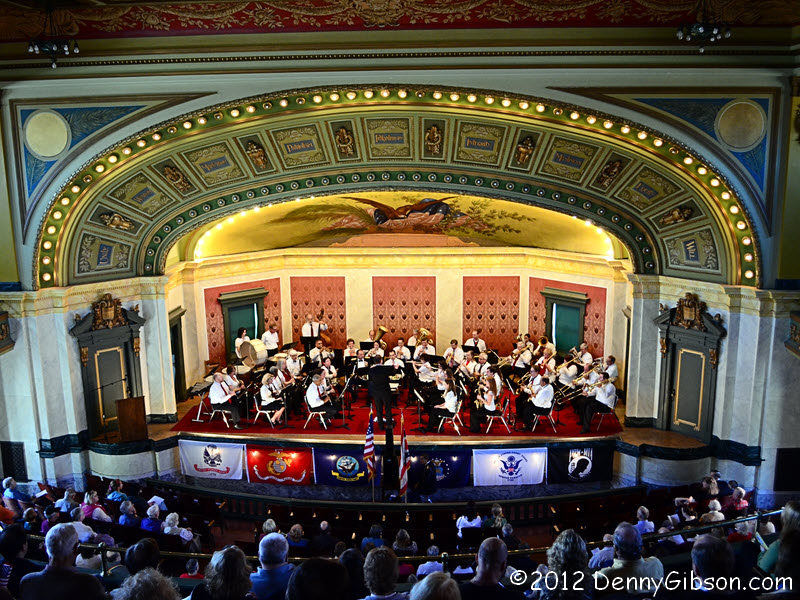
Hamilton County Memorial BuildingI thought I might turn up a parade or two when I went looking for Veteran’s Day events but I found not a one anywhere nearby. What I did find was a concert in a building that seems almost made for the occasional and that I’ve been curious about for some time. On the afternoon before Veteran’s Day, I headed downtown for the Veterans Salute at the Hamilton County Memorial Building.

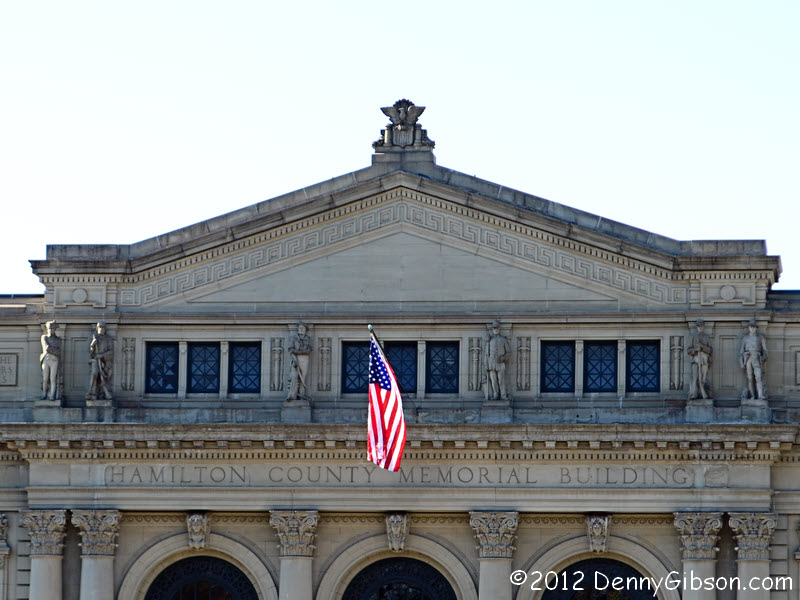
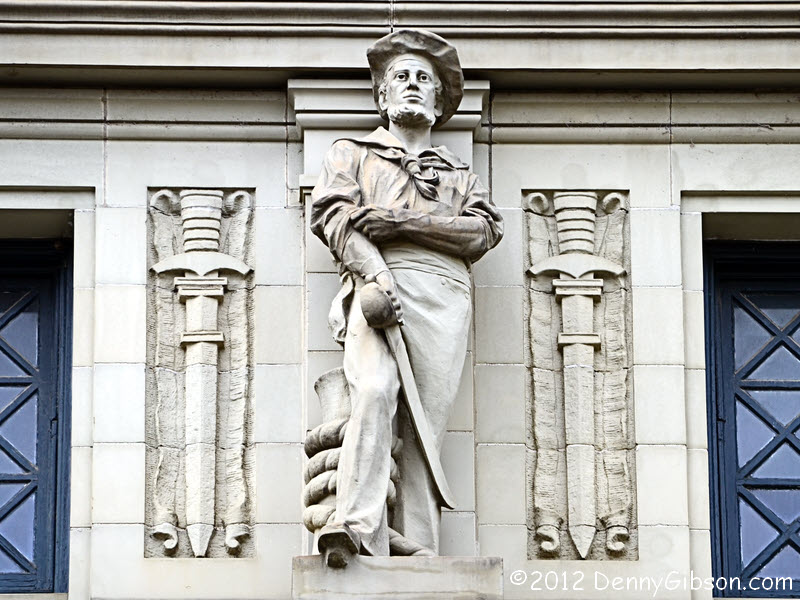
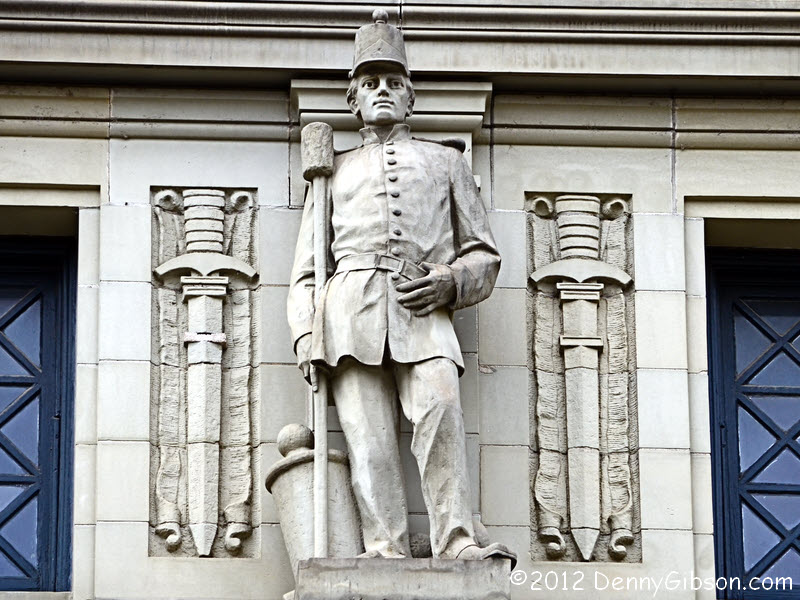
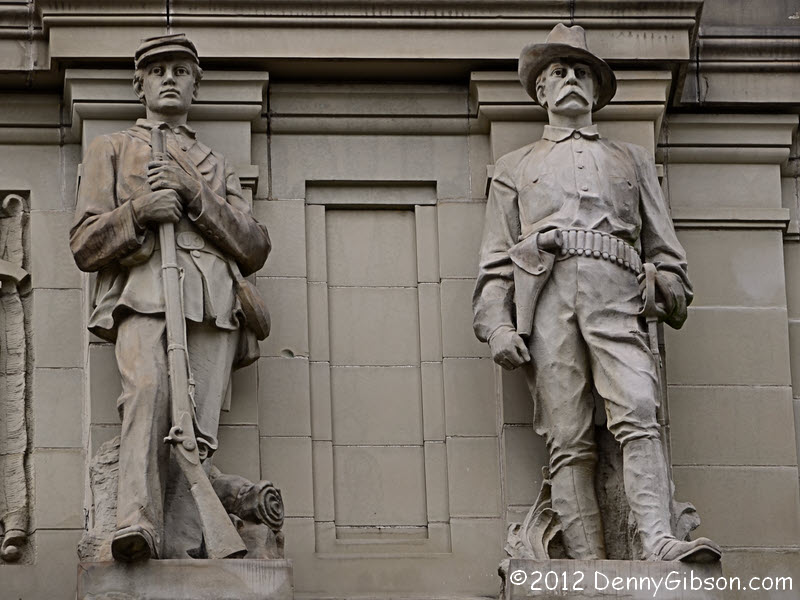
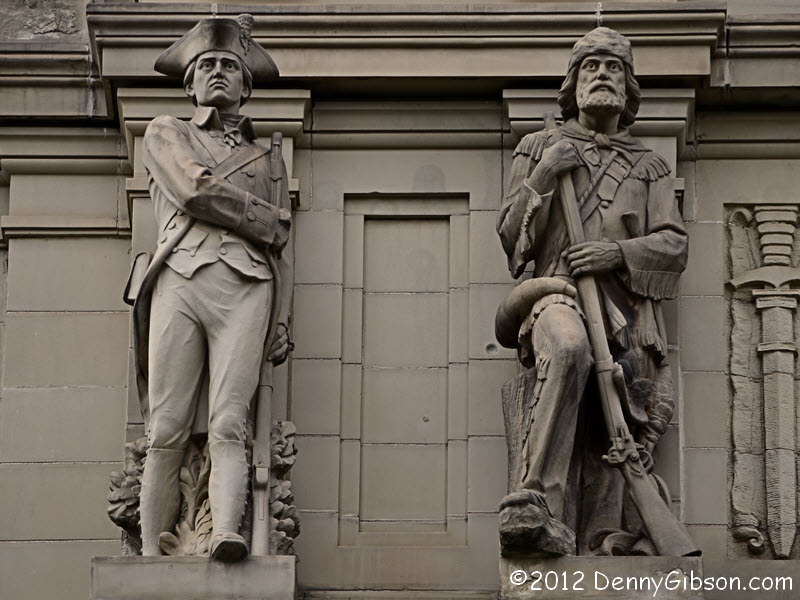
Hamilton County Memorial BuildingThe building, commonly called simply Memorial Hall, was erected in 1908 as something of a joint venture between the county and the Grand Army of the Republic (GAR). It was designed by noted architect Samuel Hannaford. Hannaford designed many buildings in Cincinnati including the nearby Music Hall which tends to overshadow Memorial Hall. Even when the building is noticed, it is easy to miss the six Clement J. Barnhorn statues high above the entrance. Representing each of the nations’s conflicts at the time of construction, they are a soldier from the Revolution with a frontiersman from the Indian conflicts here, a sailor from the War of 1812 here, an artilleryman from the Mexican-American War here,  and an infantryman from the Civil War with a “Rough Rider” sort of fellow from the Spanish-American War here.

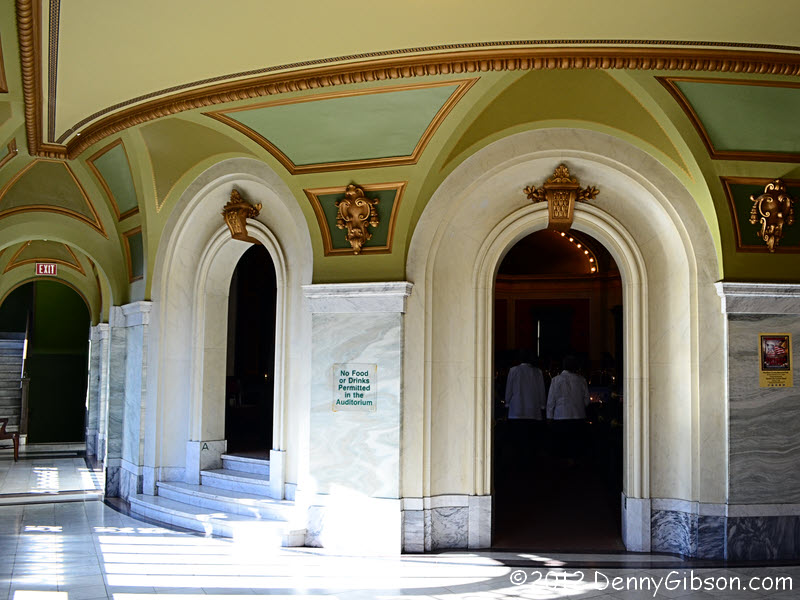
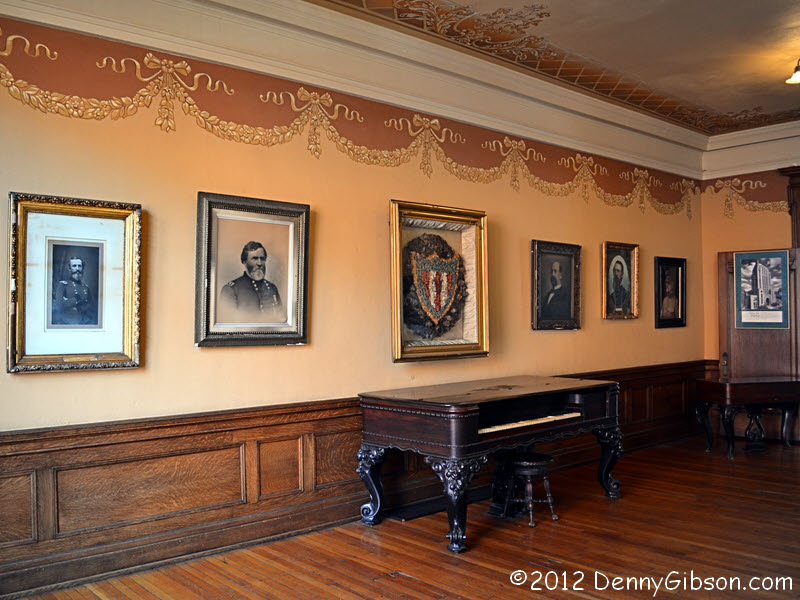
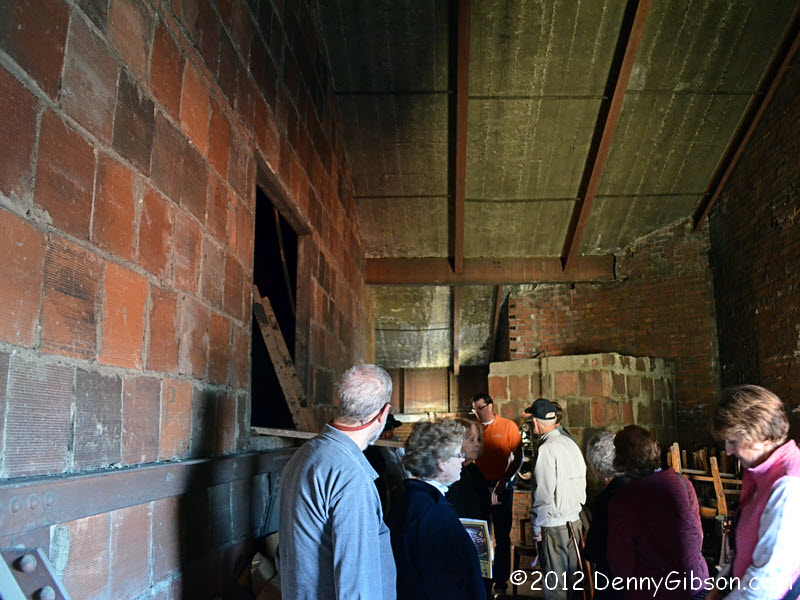
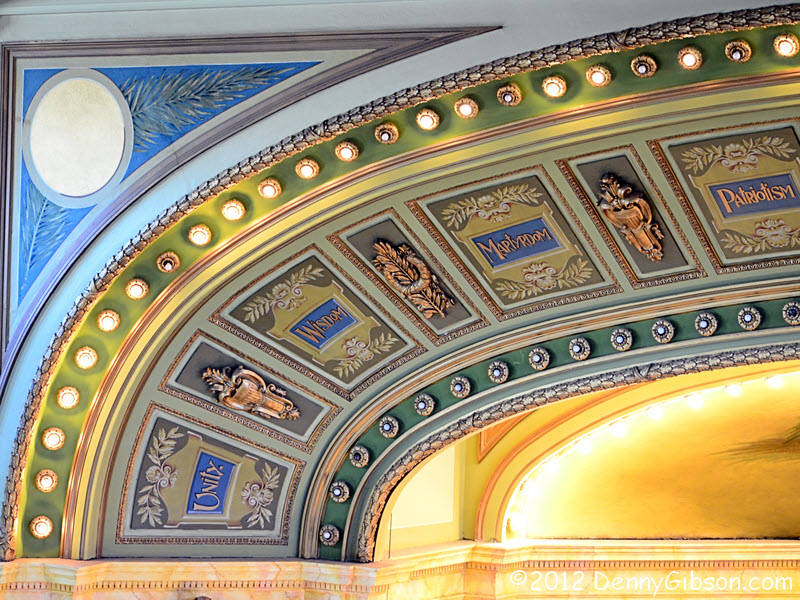
Hamilton County Memorial BuildingHamilton County Memorial BuildingHamilton County Memorial BuildingThe doors opened in time for me to do a little exploring before the concert and that’s just what I did. Although most of the artifacts from the building’s GAR days are gone, many pictures remain. The wreath in the first photo is believed to have been at Lincoln’s funeral. There is lots of marble in the building. The marble arches in the second photo are entrances to the somewhat circular auditorium. After the concert, a pair of fellows from American Legacy Tours led a tour of the building which included the area above and behind the stage. Many of the men who constructed the building were craftsmen from the surrounding area and many of those were Civil War veterans. As the guides pointed out, it would be almost impossible to recreate this building, with extensive hand work like the GAR motto on the proscenium arch, today. Plus a much wider building would be required to hold the additional statues out front.

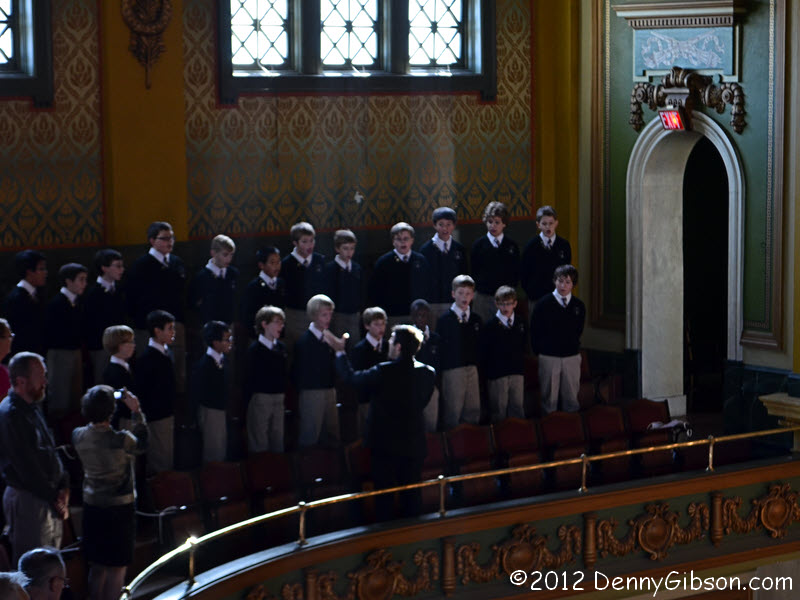
Cincinnati BoychoirAt the start of the concert, I had one miss and a near miss. I was in the balcony so as to get a clear view of the stage and that turned out to be a not so good spot to photograph the Xavier University Honor Guard as they brought in the US and Ohio flags. It did turn out to be a good spot to photograph the Cincinnati Boychoir but I almost blew that. I had not studied the program and expected them to perform at least a few songs. I stood in my spot as they sang the national anthem intending to get a picture from a better location later. Fortunately I grabbed this not so great shot during The Star Spangled Banner since that would be all they sang. It was beautiful.

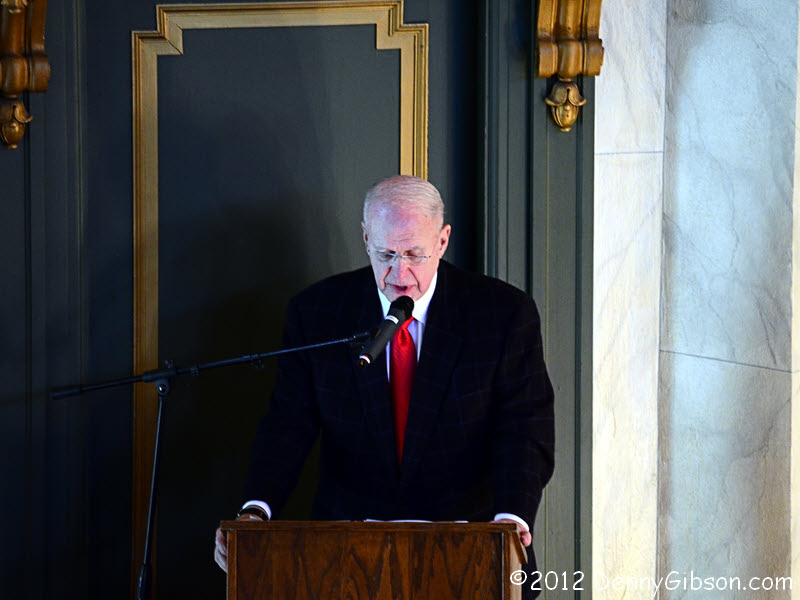
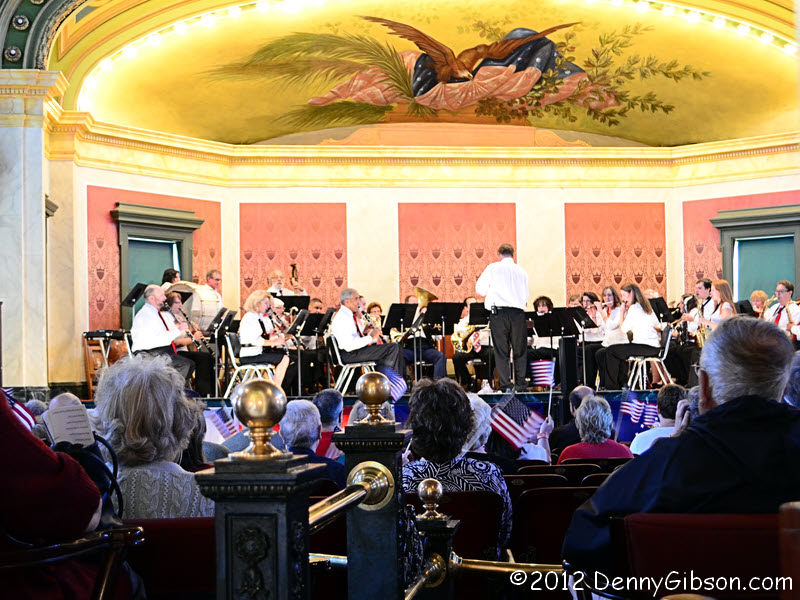
Otto M. Budig, JrQueen City Concert BandThe actual concert was in the capable hands of the Queen City Concert Band with a short speech from retired USAF Captain and all around Cincinnati arts benefactor Otto M Budig, Jr, in the middle. Beginning with the ultra-appropriate Battle Hymn of the Republic, the band performed marches and hymns and a few things in between. I particularly liked the collection of mid-nineteenth century tunes called American Civil War Fantasy and The Armed Forces Salute medley gave veterans an opportunity to stand and be applauded and maybe do a little singing.
Stars and Strips Forever at Hamilton County Memorial BuildingJohn Philip Sousa is among the many musicians who have performed in this building during its long life. A couple of his marches were played here today with Stars and Stripes Forever as the stirring finale. US flags, given to attendees on entry, were waving throughout.

The concert, presented by the Cincinnati Memorial Hall Society, was free. So was the punch and cookie reception provided by Fantasy in Frosting, portraits of veterans by Christopher Lowry, and the previously mentioned tour by American Legacy Tours.


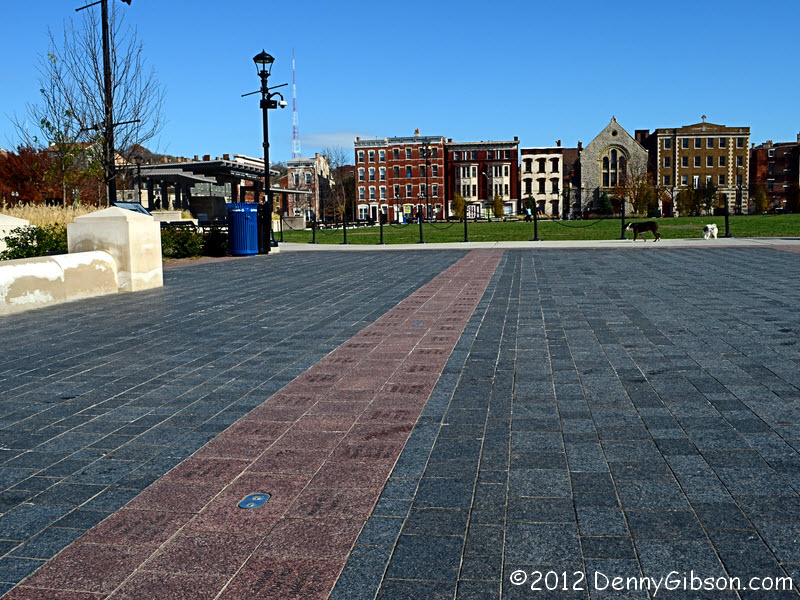
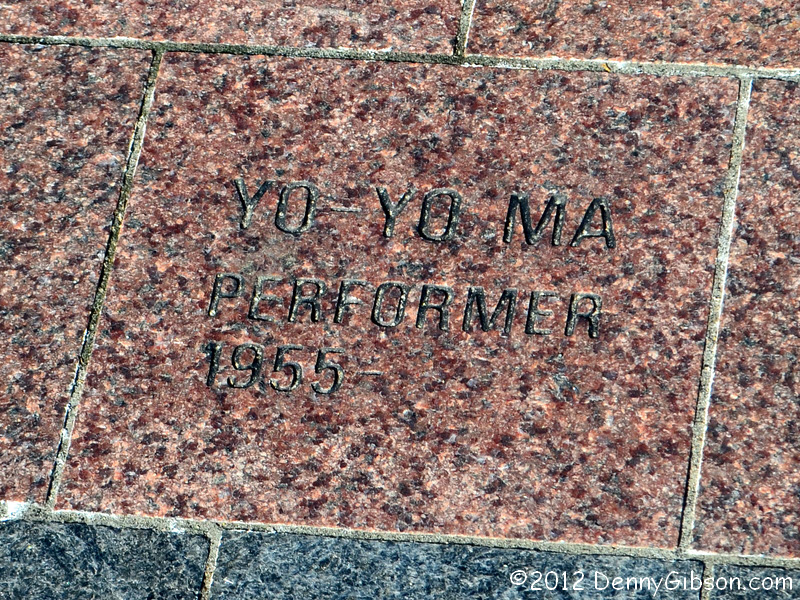
American Classical Music Walk of FameThe Hamilton County Memorial Building houses the American Classical Music Hall of Fame but its modest exhibits were removed today to make room for cookies and cookie eaters. However, just across the street in Washington Park, the associated American Classical Music Walk of Fame is always available. Engraved bricks identify inductees.