My Wheels — Chapter 4 1954 Mercury

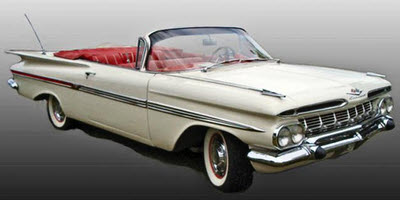
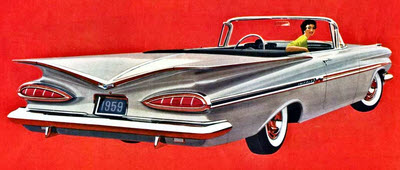
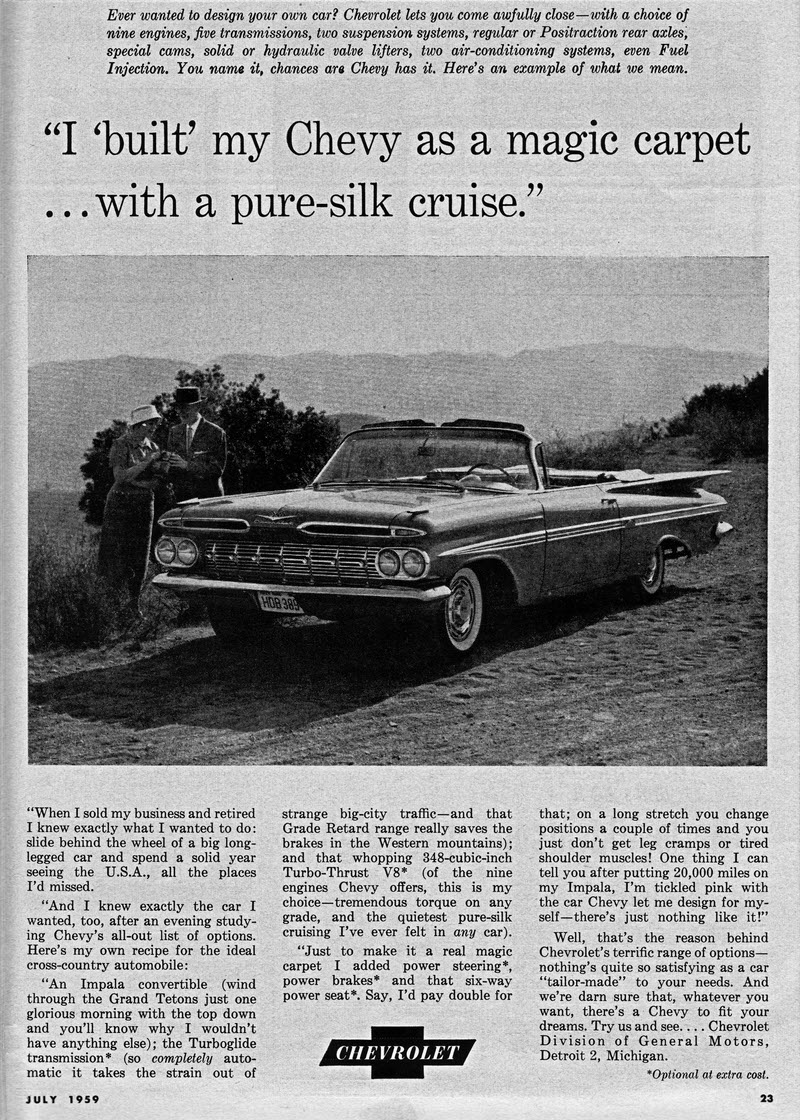
1954 MercuryI have magazine ads for the first four cars I owned hanging on my wall. The ’53 Chevy ad in the previous chapter is one, this ’54 Mercury ad is the second, and there are two more. My second car looked just like those in the ad except that it was a two door sedan rather than a convertible, hardtop, or a cool Sun Valley model with the see through roof, and it wasn’t the color of any of them. Somewhere along the line it had been shaved and painted a dark green. Shaving meant removing chrome trim and such and serious customizers might even remove door handles and replace them with hidden latches or buttons. My car still had door handles but not much else. The bit whose absence was most noticeable was the big chunk of chrome that imitated a large hood scoop. I’ve found plenty of pictures of 1954 Mercurys with shaved doors and a few with the fake scoop turned into something functional but none with the front edge of the bump simply filled in and I’ve found no pictures of my own car..
The mild customizing left the hood with what resembled a large “power bulge”. In a sense, that might not have been entirely misleading. 1954 was the first year for Ford and Mercury overhead valve V8s and the 161 horsepower was a pretty big step up from the previous year’s 125 HP flathead. Of course by the time it reached me, the big bump on the old car wasn’t scaring anybody. The most basic 1964 Mercury produced 250 HP and 425 HP was available if you wanted it.

The transmission was a three speed manual. It came to me with the shift lever on the column but I soon installed a very cheap and very used floor shifter. There wasn’t enough room to install the stock shifter properly so I had to put some pieces in upside down. I eventually cut things down so that I could correct it but I didn’t rush. Driving around with a reversed shift pattern was actually kind of fun.

1954 MercuryWhen new, my car probably resembled the one at left. It never really did look all that bad and, unlike the Chevy before it, its engine just kept on going. But things were different underneath. I owned the car for less than a year and during that time the rear end lowered itself by a couple of inches due to rusting suspension. The floor pans had similar issues and the driver’s seat developed a noticeable rearward rake. I’m certain it was preparing to eject me downward at some point.

The Mercury met its end at an Eldora Speedway demolition derby. My generally permissive but very sensible Dad would not sign a release for me to drive the car so that honor went to a friend who had already turned eighteen. Despite getting stuck in first gear and ending up immobilized, the car’s engine was still running at the end of the day. I even sold it to some guy for $5 to put in another car. But all of the derby cars were hauled away before he had a chance to retrieve it and I had to give him his money back.

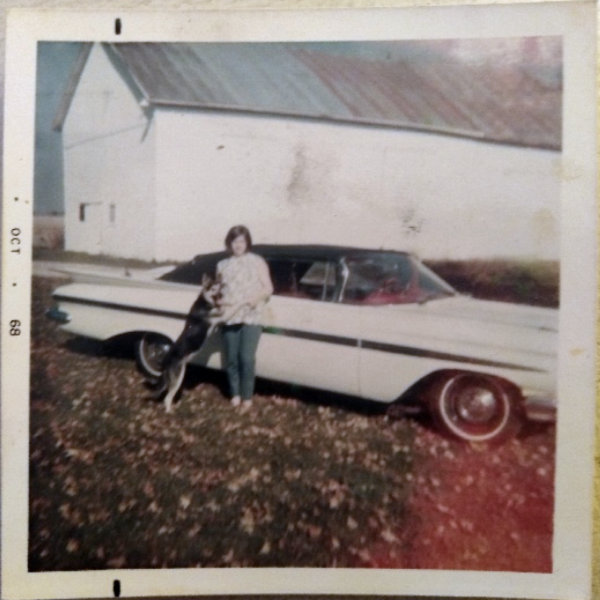
1954 MercuryUPDATE 26-AUG-2013: Eureka! I found a picture of my Merc. It’s dated May 1964 and includes the bonus of my Dad’s 1960 Oldsmobile 2 door hardtop (and one of the best looking cars ever built) in the background.

Previous Wheels: Chapter 3 — 1953 Chevrolet
Next Wheels: Chapter 5 — 1952 Ford

FOLK at NaFF

Nashville Film FestivalI just drove to Nashville to see a movie. There’s actually a film festival going on and I’ll see at least a couple of movies but there is one in particular that brought me here. It’s a documentary named FOLK that focuses on three musicians including singer/songwriter Dirk Hamilton who I’ve long admired. This is its premier showing. The journal for the trip, which will include a little Dixie Highway on the way home, is here. This will be the only blog entry related to this trip and will serve to hold any and all comments.


Roadhouse Down

Twenty Mile House demolitionYes, this post is a bit unusual. It’s not a regularly scheduled Sunday post and, although it is a Wednesday, it’s not one of the reviews that are often posted on that day. Nor is it the “real-time” announcement of the start of a road trip. This post concerns the Tuesday destruction of the 191-year-old Twenty Mile House that was also the subject of a post in early 2012.

Twenty Mile House demolitionTwenty Mile House demolitionThe first of the two pictures at left was actually taken Monday evening. In recent days, there had been reports from Friends of 20 Mile House that demolition was imminent. It was reported on Monday that fence was being erected around the building and I drove by at the end of the day fearing that the tear down had already started. It hadn’t. When I read of the arrival of men and equipment on Tuesday morning, I once again headed toward the old landmark expecting to see mayhem in progress. I arrived with the building still intact but it wouldn’t be for long. The picture at the top of the article was taken at 9:05.

Twenty Mile House demolitionTwenty Mile House demolitionThe demolition proceeded rapidly and, despite the unhappy circumstances, it was impossible not to admire the skill of the operator as he worked his machine through the building. The additions of various ages went down first and, even though I certainly knew better, I kept hoping that something would happen to spare the 1822 heart of the building.

Twenty Mile House demolitionTwenty Mile House demolitionTwenty Mile House demolitionThen, in what looked to be as much accidental as planned, a corner fell away when an attached piece of a newer section was removed. One end of the old stagecoach stop was open and my foolish hopes were gone when the workers broke for lunch.

Twenty Mile House demolitionTwenty Mile House demolitionTwenty Mile House demolitionNot long after the men returned, there was an almost ceremonial toppling of one of the old chimneys and destruction of the original section began in earnest.

Twenty Mile House demolitionTwenty Mile House demolitionA second excavator had been brought in and it played the role of buttress as the oldest parts were brought down. At last there was just one section of wall standing with enough height to warrant attention. It was quickly leveled with a simple shove from the second machine.

Twenty Mile House demolitionRoughly six hours had passed since the first blow; A one hour lunch and five hours of destruction. A little less than two hours were spent leveling the section that had stood for a little less than two centuries. A Big Mike’s Gas N Go is to replace the rubble and I’ve no doubt that it will be constructed with the same level of efficiency as that with which the rubble was created. No one I know has any intention of ever spending a cent there but those people weren’t enough to save the Twenty Mile House and they probably won’t be enough to even get Big Mike’s attention in any significant way. There are more than enough people who don’t know or don’t appreciate history to make Mike some money. Big Mike’s will likely be profitable. It will never be loved.

UPDATE: 20-Jan-2018 — A short time ago, I realized that this post was getting many more visits than is to be expected for a five-year-old post. I eventually determined that the source was a link from a discussion of a picture of the Twenty Mile House in a Facebook group (Old Photos of Cincinnati). This is the second of three posts about the historic building. An update to the first one contains a pointer to here, and the third one contains pointers to both of the preceding posts. This one, however, links to neither of the others. I am correcting that now and intend to also update the first post to link to the third. The first post (Twenty Mile’s Last Stand) was posted while the building was still standing, and there was some hope of saving it. The third (Twenty Mile Stand Two Years On) was written two years after the demolition and takes a look at how the new structures relate to what was destroyed.

5 More 4s

More 4s MapWhen I did my week of 4-ways, I noted that there were a lot more than seven chili parlors in Cincinnati and trimming the list had not been easy. I didn’t pretend that my list contained the best or the most popular or the top of any other particular category but, like just about every list ever made, it left out some places somebody else thought should be there. Leaving out somebody’s favorite was pretty much unavoidable but in this case one of the somebodies whose favorite I left out is a friend who very politely made me aware of that fact. Her favorite had, in fact, been on my semi-final list of nine but didn’t make the final cut. So here is chapter two. It’s shorter than the original and spread over several weeks rather than seven days. It includes the two independents that were on my list of nine, the two biggies that are sprinkled around the area like McDonald’s and Subway, and one slightly spontaneous addition.

Gold Star 4 wayGold Star ChiliFeb 27, 2013: Gold Star was once the number one Cincinnati chili chain but it was passed several years ago in number of stores, gallons served, dollars made or some other thing that bean (and onion) counters count. At the time of writing, the Gold Star website identified 87 restaurants plus their product is available in groceries and online. This particular parlor is about two and a half miles from my home directly in front of my grocery. I once read that you should never go grocery shopping on an empty stomach and, since that meshed perfectly with my belief that you should never do anything on an empty stomach, I embraced the advice. My pre-grocery meal is usually breakfast but, as it was well past noon and well past two weeks since my last 4-way, I decided to kick off phase two of my chili parlor tour en route to a much needed Kroger visit. This stuff is pretty darn good; Better than I thought I remembered and definitely filling enough to fend off that desire to dash to the snack aisle. Gold Star was started in 1965 by the Daoud brothers from Jordan. The first restaurant was called Hamburger Heaven until the brothers realized that their chili was outselling everything else on the menu. Hamburgers are still available but I’ve never had one.

Chili TimeChili Time 4 wayMarch 7, 2013: This is the place that prompted my friend’s “Have you ever tried…?” question. I explained that it was one of the last two to be cut from my list and that I had indeed tried it although it had been a long time ago. When I said that, I was thinking that a long time ago was ten or twelve years. As it turns out, this particular “long time ago” was a wee bit more. There were once two Chili Time parlors; The 1963 original on Vine Street and a somewhat newer one on Reading Road. In 1987, CVS offered something in the neighborhood of a million bucks for the Reading Road location and that paid for this bigger and fancier place across the street from where it all started. Since the only Chili Time I can recall ever being in is the one on Reading, it’s pretty clear that I last visited sometime prior to 1988. There is real flavor here. It’s not super hot spicy but has a tang that stayed with me for awhile.

Gourmet Chili 4-wayGourmet ChiliMarch 13, 2013: The title of this post was supposed to be “4 more 4s” which I thought sounded vaguely poetic but, half way through, I messed it up by stopping at Gourmet Chili. It wasn’t on my original list of nine but it kept popping up in other folk’s online Cincinnati chili chatter to the degree that I knew it would haunt me if I didn’t try it. So, when I was fairly close at the right time of day, I slipped on in. It’s in Newport, Kentucky, just a couple of blocks from the original Dixie Chili. There is a real diner feel here with a counter and grill and a menu of standard short order items in addition to chili. The chili is quite meaty with a middle of the road flavor. It doesn’t look unbalanced but, as I worked through the 4-way, I thought there should have been a little more cheese and a little less spaghetti. Just a minor complaint about a basically good meal.

US ChiliUS Chili 4-wayMarch 21, 2013: I really had to make an effort to eat here. Not because it’s out of the way but because it isn’t. US Chili is right across the street from Camp Washington Chili so I’ve seen the building plenty of times while dining at what I’ve called my favorite. My visits across the street made me aware of the place but it was seeing all the favorable comments in the web that caused me to put it on that original list of nine. The building housed a Provident Bank until 1972 and the big vault door is still there filling one wall of the men’s restroom. The ‘US’ in the name stands for Uncle Steve although the Steve it refers to was the owner’s grandfather rather than uncle. There once was a Steve’s Chili and I was told the location but have forgotten. I’m certainly glad I managed to work in a stop because this was a 4-way I really liked with a meaty and flavorful chili. I’m going to have a tough decision to make on future visits to Camp Washington.

Skyline Chili 4-waySkyline ChiliApril 4, 2013: Skyline is the current Cincy chili champ. I’m not sure when they passed Gold Star but there are now more than 130 Skyline parlors in four states. Most are in the tri-state (Ohio, Indiana, Kentucky) area but four are in Florida so that snowbirds don’t have to go all winter without a chili fix. That means, of course, that a Skyline is statistically more likely to be near a given point than is a Gold Star and that is indeed the case with my home. This one is less than a mile away and I walked there on the first day that it seemed warm enough to walk anywhere. Skyline Chili was started in 1949 by Nicholas Lambrinides, a Greek fellow who first worked at Empress, the granddaddy of Cincinnati chili restaurants. It’s said that the view of downtown Cincinnati from the first location was the inspiration for the name. It’s also said that that first location was at the intersection of Quebec Road and Glenway Avenue on Price Hill. I’ve been to that intersection and, while there are some great views a few blocks away, I couldn’t find one very close. I did find this 4-way, like the one at Gold Star, better than I thought I remembered.

In the end, I’m kind of glad I added that fifth stop to this group because now I can reflect on an even dozen chili parlors sampled over the last couple of months. I’m not at all capable of describing the subtleties of flavor or other characteristics of the various offerings. All I have is my subjective opinions and they are very subjective indeed. That’s made obvious by the fact that some that top other lists would be near the bottom of mine. But even those I like the least I still like. As I said after the first seven, I’d happily scarf down another 4-way at any of them and that includes the big Skyline and Gold Star chains which I’ve unjustifiably snubbed in the past. When I started this, Camp Washington and Blue Ash were my number one and number two choices. I encountered three legitimate challengers while doing the dozen. Dixie, Dehli, and US all impressed me. Guess that means I now have five favorites instead of two.


Forty-eight ways (12 4-ways)Eleven of the twelve chili parlors serve their 4-ways in oval plates with the other using a round one. There was also just one parlor that served those oyster crackers loose in a bowl rather than in a sealed plastic packet. A full twenty-five percent (i.e., 3) of the dozen bravely served their 4-ways without the protection of an underlying safety plate. Name these five standouts (1 round, 1 loose, 3 brave) and I’ll buy you a 4-way at any of the dozen Cincy chili parlors I’ve mentioned. Transportation not included.

Book Review
Long Way Home
Bill Barich

longwh_cvrNot long ago, a friend mentioned a couple of travel related books he had just read and, when I found one of them available at the local library, I decided to give it a read. It’s Bill Barich’s Long Way Home – On the Trail of Steinbeck’s America. The subtitle is a reference to Steinbeck’s Travels with Charlie which Barich cites as an inspiration for his own road trip and book. The books’ basics are certainly similar. Each is the product of a successful American writer of a certain age undertaking a cross country road trip with hopes of learning something of a nation he’s been out of touch with for awhile. Steinbeck did it in 1960; Barich in 2008. Forty-eight years is not the only difference. Steinbeck did it in a custom built camper with unlimited time and, for all practical purposes, an unlimited budget. Barich did it in a rented Ford Focus, with a six week schedule, and a budget he calls “tight”. Steinbeck sort of circled the country, starting and ending at his home in Sag Harbor, New York. Barich makes one more or less straight pass through the center of the nation. But, for me, the biggest difference is that, while I’ve never really cared for Travels with Charlie, I ended up enjoying Long Way Home. Of course, Steinbeck didn’t seem to enjoy his own trip very much; Barich did. I think that rubbed off on me.

I probably also like the fact that Barich describes his route a little better than Steinbeck and that it goes through places much more familiar to me. He drives right through Ohio and tells of eating at a restaurant where I’d eaten just days before reading of his visit. It’s hard to ignore connections like that.

Long Way Home begins with Barich recounting how much he had enjoyed reading Travels with Charlie as a teenager. Stumbling across the book decades later in Dublin, Ireland, triggered plans for his own trip but re-reading it didn’t bring back the pleasure he remembered. I suspect the teenage Barich loved the idea of an unplanned journey across the USA enough to overlook shortcomings in its execution.

Both authors do their “learning” by observing the nation’s countryside, its small towns, and, less frequently, its cities. The story telling is most interesting when it involves some interaction with the locals and that usually happens, as you might expect, in the small towns. Both trips took place during election years and both authors sometimes attempt to get those locals to discuss their political feelings with mixed success. My impression is that Barich is more successful but I can’t back that up with hard facts. Both are pretty successful at getting folks to talk, in general terms, about their and the nation’s financial situation.

Of course, John Steinbeck wasn’t the first person to write a book about driving around the US and Bill Barich won’t be the last. As someone who enjoys writing trip journals, it stands to reason that I enjoy reading them. I enjoyed reading Long Way Home and even Travels with Charlie. Both are, as you would expect, very well written. Trip journals are snapshots. Like photographic snapshots, they record how something appeared to one person at one time. I have little desire to visit the country in Steinbeck’s snapshot while Barich’s is much more inviting. I suspect that On the Trail of Steinbeck’s America subtitle was more of an attention getting device than a description of Barich’s true intentions. I doubt he was really looking for Steinbeck’s America and I’m rather glad he didn’t find it.

Long Way Home: On the Trail of Steinbeck’s America, Bill Barich, Walker & Company, 2010, hardback, 9.4 x 6.4 inches, 256 pages, ISBN 978-0802717542
Available through Amazon.

HBD2Me

Weber's CafeI turned sixty-six on Friday. Had I waited, I would now be eligible for full Social Security benefits. Sixty-six is what the Social Security Administration calls “full retirement age” for folks born between 1943 and 1954. But I started drawing my monthly payment about three years ago so nothing about that changed on Friday. Sixty-six is not a particularly exciting birthday. At sixty-two I became eligible for reduced Social Security and sixty-five brought me Medicare but there are no more birthdays with benefits in my future. There was a period, in the distant past, when every couple of birthdays brought something new and wonderful. Turning thirteen made me a teenager, I could drive when I reached sixteen and buy 3.2% beer at eighteen. Twenty-one brought the possibility of buying whiskey and voting. Twenty-two brought nothing. Thirty, forty, fifty, and sixty were all big deals with the first three being celebrated mightily but not one birthday between twenty-one and sixty-two brought new privileges and neither will any in the future. Sixty-six is like twenty-two with more aches and pains and a much earlier bedtime.

Weber's CafeWeber's CafeOf course the lack of new privileges did not keep me from enjoying the day. I got it started with some phenomenal pecan pancakes at one of my favorite breakfast spots, The Original Pancake House. I hung out at home for a bit then headed out again in the early afternoon. My first stop was at the place pictured to the left and at the top of this post. Not only was it my first stop of the afternoon, it was my first stop ever at Weber’s Cafe and, unless I get back there one of three days next week, it will be my last. Weber’s is closing next Wednesday and it was a news article about the closing that brought the neighborhood bar to my attention. The place couldn’t have been more friendly and welcoming but it really is a place where friends gather. I drank a couple of PBRs and had delightful chats with both George and Nancy (who appear in the article and accompanying video) but in the end I was a tourist who could admire the comradery of the regulars but who was certainly not part of it. Those guys are really going to miss this place. Heck, I’m going to miss the place and I was only there once. There’s a nice blog post from a few years back here.

Next up was a drive to Wilmington to meet buddy John. We met at Daluca’s Dugout and I really should have grabbed some pictures there because Deluca’s (perhaps better known as Sal’s) is a blue collar place with its own set of regulars and its own set of sports memorabilia though its memorabilia isn’t quite in the same class as that at Weber’s. John is a regular and I’m becoming a semi-regular and it’s a very comfortable place to down a few brews. From there we headed to MacD’s Pub with intentions of having one beer and ended up splitting a pitcher while chatting with John’s boss, Norm, who graciously bought a round of Woodford for the three of us. This had developed into a bit more of a celebration than I had anticipated.

My next move was partly, but not entirely, spontaneous. John and I had devoured a couple of baskets of chips at Sal’s but the idea of seeking out some real food seemed a good one. Over the last several days, the thought of a special meal for my birthday had occurred a time or two. One of the places I’d thought of is in Dayton. I can reach Dayton from Wilmington in about the same amount of time as I can reach home. Of course I’d still need to get home from Dayton but I saw that as a detail that could be dealt with later. Dayton was where I headed.

Pine ClubPine ClubThe Pine Club is an old school steakhouse with a mile high reputation. Though the restaurant and I are the same age, I’d eaten there just once. On that one visit, however, I was served what I believe was the best steak I’ve ever eaten. I certainly do intend to enjoy another one someday but that’s not what was on my mind this time. In addition to a variety of steaks, the Pine Club offers a nice seafood selection and some sandwiches including hamburgers. I really was surprised when I first saw Pine Club and hamburger mentioned together but it seems the restaurant has been showing up on best ‘burgers lists for quite awhile. I’ve lusted after one of these babies for a long time. The lust was justified and the drive rewarded. This is a high quality and tasty hamburger that is neither over-priced nor over-hyped. Happy Birthday to me.

Happy Eostre

Eostre Beer, Howard Town BreweryThe Christian holiday called Easter may or may not be named after the Anglo-Saxon goddess Eostre who may or may not be related to the Germanic goddess Ostara. It is not, despite what you may have read, named after the Babylonian goddess Ishtar. Ishtar was, by all accounts, a really fun lady and probably deserves some sort of holiday but Easter isn’t it. It’s not 100% certain that Easter is Eostre’s either but it is certain that this beer was named for her. That’s her picture right there in the middle of the label. Eostre — the beer — is brewed by the Howard Town Brewery in Glossop, England. HTB’s website lists the quantity of each beer currently available and for Eostre that amount is zip. Bummer. No way to have a Happy Eostre just now, I guess.

Ishtar, Babylonian goddess of love and warUntil the folks in Glossop get around to brewing another batch of Eostre, I suggest we work on getting this divine Babylonian her own holiday. We could celebrate it by wearing wings and leaving our hats on.

And Now For Something Completely Different:
A Guest Post on the 1913 Flood

There hasn’t been a lot of requests/offers to do a guest post on this blog but there have been a few. Until the most recent, all were from sites with nothing but contrived and flimsy similarities. They resembled shotgun “link swap” requests more than anything and that, of course, made them easy to ignore. The latest request was different. It came from some fellow Ohioans who call themselves “weekend history buffs”. Their recently launched website looks promising and their initial round of blog posts involves something that’s been on my mind of late. Exactly one hundred years ago today, water started spilling into the streets of Dayton, Ohio, from stressed levees. The flood that followed is the topic of this post from the folks at HistoricNaturalDisasters.com.

ADDENDUM 27-Mar-2022: Obviously my ability to assess new websites leaves much to be desired. HistoricNaturalDisasters may have been promising but it was not delivering. It is now gone and probably has been for quite some time. This nine-year-old guest post may be the only remaining online evidence that it ever existed.


HistoricNaturalDisasters.com Guest Post


The week of March 21st through March 26th marks the 100 year anniversary of one of the greatest natural disasters to ever hit the United States. A series of storms caused flooding and even tornadoes that ravaged the Midwest and parts of New England during this week in 1913 and left hundreds dead and thousands homeless, and caused billions of dollars in damage. One of the cities hit the hardest by the storm’s fury was Dayton, Ohio.

Located along the Great Miami River bend, Dayton had been prone to major flooding events every decade or so since its establishment in 1796. What happened during the storm of 1913, however, was a flood the magnitude of which was unlike anything Dayton had ever seen. Starting on March 21, storms dumped between 8 and 11 inches of rain on the already oversaturated Great Miami River watershed causing all the rivers in the region to swell far beyond their normal banks. At approximately 6 AM on March 25th, the levees holding back the Great Miami River broke and water began to rush into the Dayton streets at speeds approaching 25 miles per hour.

The waters filled the city so rapidly that most of the residents were trapped in their homes and many were quickly forced to take refuge on their roofs as the waters filled the first and second floors of their homes. Many people were faced with essentially camping on their roofs for days on end as they waited for rescue, which proved nearly impossible for relief workers in boats due to the incredibly strong currents of the flood water. The currents were so forceful in fact that many homes and business were literally ripped from their foundations and carried away by the waters, disappearing from the Dayton streets forever.

Downtown Dayton was among the hardest hit areas, with flood waters reaching a high of 20 feet in some spots. Unfortunately, the destruction was just beginning, as fire took hold where the waters receded, fed by natural gas escaping from broken stoves and gas lines and pushed along by strong winds. An entire block of businesses and factories in downtown Dayton was burned down to the water line, with the fire department unable to get men and equipment close enough to help due to the depth of flood waters.

By the end of the flood, March 26th, the damage was widespread. 14 square miles of the Dayton were underwater, and more than 360 people were dead. Some 20,000 homes were completely destroyed, an estimated 65,000 people were left homeless, and all told, the city had suffered close to $100 million ($2 billion in today’s dollars) worth of damage. The cleanup effort took more than a year to complete and Dayton’s economy didn’t make it back to pre-flood levels until more than a decade after the disaster.

1913: Fifth and Ludlow Streets in downtown Dayton during the worst of the flooding

1913: The ruins of the Lowe Brothers Paint Store on the Southeast corner of East Third and Jefferson Street in Dayton

2013: The corner of East Third and Jefferson Streets as it appears today

2013: The corner of East Third and Jefferson Streets as it appears today

1913: Fifth and Ludlow Streets in downtown Dayton during the worst of the flooding

1913: Fifth and Ludlow Streets in downtown Dayton during the worst of the flooding

2013: Fifth and Ludlow Streets in downtown Dayton as it appears today

2013: Fifth and Ludlow Streets in downtown Dayton as it appears today

Thanks so much to Denny Gibson for letting us share a piece of this historical project on DennyGibson.com. We’re humbled by the interest in this project, and we really hope you enjoyed this snippet of history!

We’d also like to thank some of the great archives and archivists who have done so much work to preserve the amazing history of the 1913 flood, including the Dayton Metro Library and historian Trudy Bell. The amount of history compiled at these two websites is amazing. Lastly, thanks to Jason from InsuranceTown.com, who lent us some of the resources we used to help prepare content for the web and publish our blog and inspired our Mapping History Contest.

Don’t forget to check out HistoricNaturalDisasters.com for more images and for information on our Mapping History Contest – help us figure out the locations pictured in historic photos from 1913 and you could win $100!

My Wheels — Chapter 3
1953 Chevrolet

1953 Chevrolet adIn rural Ohio in the middle of the last century, there was no event anticipated with anywhere near the level of intensity as a fifteen year old male’s next birthday. Mine was in the spring of 1963 and I planned for it like a general plans an attack. I’m a little surprised that I’ve forgotten some of the details that I once knew so well but I suppose that the passing of five decades could account for a little memory fade. There was a written test to get a learner’s permit that allowed you to drive with a licensed driver beside you. Then there was a driving test that included parallel parking to get your license. Some amount of time had to pass between the two. I no longer recall what that time was but I do know that I barely exceeded it. I took the test in Dad’s 1961 Comet then, as soon as we got home, pulled back onto the road in my own car. A couple of months before becoming a licensed driver, I had become an automobile owner with the acquisition of a 1953 Chevrolet four door sedan. I’m sixteen, you’re beautiful, and you’re mine.

The Comet was an automatic and a compact. I think it may have had power brakes but not power steering though I’m far from certain about that. In any case, driving it was easy compared to the 3-on-the-tree Chevy. Dad wasn’t fond of riding in the Chevy and, although he was one of the most patient people in the world, I think my lack of skill with the clutch was an irritant to him. Pretty much all of my “learning” had been in the Comet. Armed with my brand new license, I spent that first afternoon starting and stopping on empty country roads near home. I eventually reached the point where I could launch the Chevy on level ground without killing the engine or spinning the tires most of the time. Then I drove to a bridge I’d previously selected for its somewhat steep approaches. I drove back and forth across the bridge several times with a stop and start on the upward slope of the approach on every pass. By the time I returned home I felt there was a chance I could actually drive the Chevy in public without embarrassing myself too much.

1953 ChevroletMy car was a green and white Bel Air that looked a lot like the car at left. Exceptions were that mine was a 4-door and it never looked nearly that shiny while I owned it. Late in the summer I threw a rod and did my first engine swap with something out of a wreck. During the winter, the front got a little wrinkled when I was intentionally doing donuts in the snow and unintentionally found a guard rail in my path. When the rods in my junkyard engine started knocking in the spring, the Chevy was done.

This car was ten years old when I bought it for $150 and it was beat. I don’t recall how many miles were on it but there was a fair amount of rust and other signs of wear to go along with those short lived rod bearings. In those days, pampered garage kept vehicles could somewhat avoid the rust and there were rumors of engines that ran 100,000 miles but most people I knew didn’t believe them. Today there are plenty of good looking ten year old cars on the road and 100,000 is deemed break in mileage. Yep, they sure don’t build ’em like they used to.

Previous Wheels: Chapter 2 — 1948/9 Whizzer
Next Wheels: Chapter 4 — 1954 Mercury

Saint Paddy’s Eve

Guinness at Arnold'sEven though there was lots of rain Friday night and into Saturday morning, the weather guys were claiming it should stop in time for the noon start of Cincinnati’s Saint Patrick’s Day Parade. I believed them enough to head downtown and not only did the rain stop, the sun broke through the clouds more than an hour before step off time and some pretty serious warming got underway. At Arnold’s, the Guinness parade pictured at right was going on long before I got there and would continue throughout the day.

2013 St Patrick parade in Cincinnati

2013 St Patrick parade in CincinnatiThis parade has followed many routes over the years. Once upon a time, it actually started near Arnold’s but had not been very close is several years. Today’s route passed just a half-block away on Sycamore after running north on Eggleston and — quite briefly — west on Central parkway. The parade is always led by the statue of Saint Patrick seen in the first picture passing the recently opened Horseshoe Casino. The casino wasn’t the only “new” thing on the parade route. At the last minute, the Gay, Lesbian and Straight Education Network (GLSEN), which had marched in the parade last year, was booted. Well behaved but very vocal protesters stood at the turn onto Sycamore.

As often happens, I hadn’t been paying attention. The first I’d heard anything about this was back at Arnold’s where I struck up a conversation with a member of the Ancient Order of Hibernians. The parade is organized by the AOH. Yes, he said, he would be marching but it was a “terrible route”. He decried the fact that the parade would not go through “downtown”, by which I assume he meant Fountain Square. Then he seemed to somehow blame this “terrible route” — a phrase he used several times — on the fact that “we won’t allow gays in the parade.” That could hardly be the case since GLSEN’s banishment became known only Friday but the move did not go over well with city officials. As reported by The Huffington Post, several withdrew from the parade in their own protest. I guess I should start paying attention as this clearly is not the end of the subject.

2013 St Patrick parade in Cincinnati2013 St Patrick parade in Cincinnati2013 St Patrick parade in CincinnatiThere was plenty of  normal parade stuff including what must be one of the largest groups of Irish built cars in the world.

2013 St Patrick parade in Cincinnati2013 St Patrick parade in CincinnatiI’d climbed to the upper floor of a parking garage to get that shot of the DeLoreans and, while there, pointed a long lens toward Arnold’s. It obviously remained busy during the parade and was even busier after. The second picture is in Arnold’s courtyard where I managed to find a spot at the back to listen to the Cincinnati Glee Club perform a medley of Irish tunes. Sláinte!


Fifth Street Brewpub, Dayton, OHOn top of the parade, my weekend plans included a Saturday night concert in Oxford and a Sunday afternoon book presentation in Greenville. Between the parade and the concert, I stopped by the open house at Fifth Street Brewpub in Dayton. This is the first co-op brewpub in Ohio and only the second in the nation. I can now honestly tell people I own a brewpub.

Golden Inn, New Paris, OHSouthern Comfort Bar & Grill, New Paris, OHAlthough I could have driven home between each of these events, I made it a little easier by spending Saturday night at one of my favorite independent motels. The Golden Inn is on the National Road near New Paris, Ohio, and more or less half way between Oxford and Greenville. Lea Ann Golden, who runs the place with husband Jeff, mentioned a new restaurant in town and I tried it out. No pictures but the meat loaf and okra were excellent.

Michael Johnathon & Lisa Biales at Big Song Music HouseMichael Johnathon at Big Song Music HouseThe concert was at the home of Marc and Lisa Biales, a.k.a. The Big Song Music House. The performer was Michael Johnathon of WoodSongs Old-Time Radio Hour. I really do need to get to the show in Lexington but this will do for now. Lisa has appeared on the show and tonight she opened and returned near the end for couple of duets. Another great evening of music in the Oxford countryside.