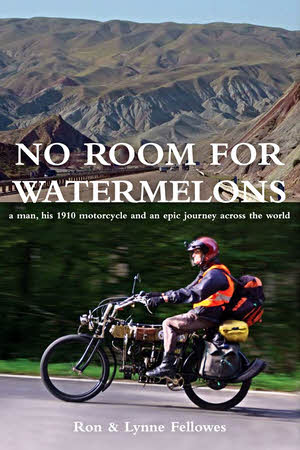
 I don’t recall exactly when or even how I first discovered Ron Fellowes’ blog. It was early on. The trip was just starting and the Old Bloke on a Bike, which is both the name of the blog and Ron’s description of himself, was somewhere in India. I followed him out of India, through Pakistan, and onto Belgium. Just the route was enough to make it an epic journey and that was merely one challenging aspect of a trip few can even imagine let alone consider attempting.
Start with the “old bloke”. It’s an accurate description. Ron was born and raised and is once again living in Australia so is eminently qualified to be called a bloke and, while 68 may not be horribly ancient in these days of increasing lifespans, it is enough to justify being called old. And the bike that the old bloke is on is far older. It was built in 1910 by Fabrique Nationale in Belgium. Ron acquired the bike around 1970 though what he actually acquired was a rusty frame and engine of unknown make and vintage. After identifying the motorcycle’s age and origin, Ron told its former owner “I’m riding the bike back to Belgium for its centenary”. Plans to ride a hundred year old motorcycle to a country half a world away might sound like something born in a bet at the end of a night of drinking but Ron was sober and serious. He had four decades to reconsider his boast but he never did. It became a goal and a dream as he slowly turned the Belgium basket case back into a running motorcycle.
Ron didn’t make it for the centenary but it wasn’t his fault. He and wife Lynne were living in Bali at the time where a convoluted and corrupt bureaucracy made it impossible to get the paperwork for the restored motorcycle together in time. Ron adjusted his schedule by two years and he and Lynne moved back to Australia to make it work. Instead of Bali to Belgium in 2010, it would be Kathmandu to Herstal in 2012.
No Room for Watermelons is the story of that 33 week 14606 kilometer trip. In one sense, Ron Fellowes makes the trip solo. Other motorcyclists may ride with him here and there for a few minutes or a few days but he and the old FN, which he calls Effie, are alone for much of the time and it is just the two of them that cover the entire route. But it doesn’t take much study to realize that the trip is very much a team effort. It is Lynne who does most of the planning and travels around on trains and buses sometimes dragging hard to find parts and supplies. And it is Lynne who, via telephone, frequently provides an outlet for a day’s frustration and injects valuable encouragement for the next day. And it is Lynne, the experienced writer, who forms blog posts, and ultimately this book, from Ron’s reports. Both names are on the book not only because both participated in telling the story but because both participated in making the story happen.
It’s a story of sights and people. Yes, there are serious dangers and insane regulations along the way and crippling problems can crop up with the old motorcycle at any time. He is nearly pushed over a cliff by a truck whose driver is completely oblivious to his presence. He learns what having a gun held to your head feels like. He suffers through hours and even days of delays while incompetent and/or corrupt officials shuffle paper. It takes an uncommon amount of ingenuity and every one of the skills learned during a lifelong career as a diesel mechanic to keep Effie operating. But mixed in with that are sights like the Golden Temple of Amritsar in India, Pakistan’s Bolan Pass, or the Bam Citadel in Iran. Modern technology not only provides that invaluable, but not always reliable, link to Lynne, it enables Ron to capture images of these and many other remarkable sights along the way. The book includes over a hundred color photographs to let the reader see a little of what Ron saw. And then there are the people.
Some of the people Ron sees on his trip were already known to him and their meetings were planned well before he left home. Others learn of the trip through the blog and arrange meetings via comments and email. Meeting each of these friends, both old and new, gave Ron’s morale a boost and often included a chance to relax and recover. Assistance with a repair or locating a needed part were also common contributions. These things often came from complete strangers as well and those were possibly even more appreciated. Food, fuel, and shelter were frequently shared and payment refused almost as frequently. Many times Ron could not even say thanks in any words that would be understood but smiles and hand shakes worked. Near the end of the book, Ron and Lynne make this observation: “Yes, there are bullies and thieves, but they are just as often found in boardrooms, offices and in schools as on the highways of Iran and the back roads of Turkey.”
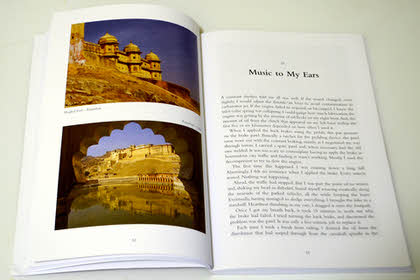 Both paperback and electronic versions of No Room for Watermelons are available through Amazon and I suppose that is the quickest and cheapest way to get a copy of this adventure. On the other hand, if you’d like something a little more personal and meaningful, signed copies can be had directly from the author here.
No Room for Watermelons: A man, his 1910 motorcycle and an epic journey across the world, Ron and Lynne Fellowes, High Horse Books, January 28, 2015, hardcover, 9.2 x 6.2 inches, 238 pages, ISBN 978-0646931418
Available through Amazon.

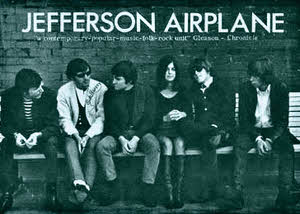 It’s a logical progression. First the Jefferson Highway, then the Jefferson Airplane, and finally the Jefferson Starship. The original Jefferson Highway Association was organized in November of 1915. The current Jefferson Highway Association was organized in 2012. I’m on my way to Muskogee, Oklahoma, where the fourth annual conference of the modern JHA is to take place. I intend to drive part of the Oklahoma portion of the highway on the way to the conference and the remainder after. The centennial of the original JHA will certainly be celebrated during the conference. This is also the year of the Jefferson Airplane’s semicentennial but whether or not there will be a celebration I have not heard. I do know that I’ve not yet received an invitation.
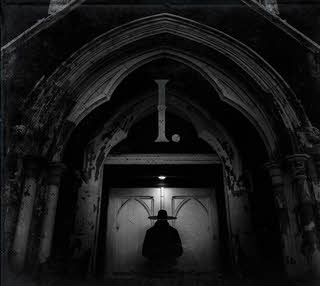 This CD makes me smile. Not laugh. Smile. It’s not funny but it sure is fun. It opens with a scene reminiscent of Michael Jackson walking with his girl in Thriller or Brad and Janet stumbling through the rain in The Rocky Horror Picture Show. Then, instead of dancing ghouls or an invitation to do the Time Warp, the stranded couple encounter the