Dickens of a Christmas

Ohio History Center ControversyI missed it. I missed an exhibit I really wanted to see. From April through November, the Ohio Historical Center had a display entitled Controversy: Pieces You Don’t Normally See. Of the five items it contained, the retired electric chair seemed to be the main attraction with a KKK outfit, a thumb mitt, an adult crib, and a nineteenth century condom rounding out the bill. I’m sure I drove by the building more than once while the exhibit was in place but, as we often do, I assumed there would always be another chance. It wasn’t until I visited the Ohio Historical Society’s website to sign up for Dickens of a Christmas that I realized that I’d blown it.

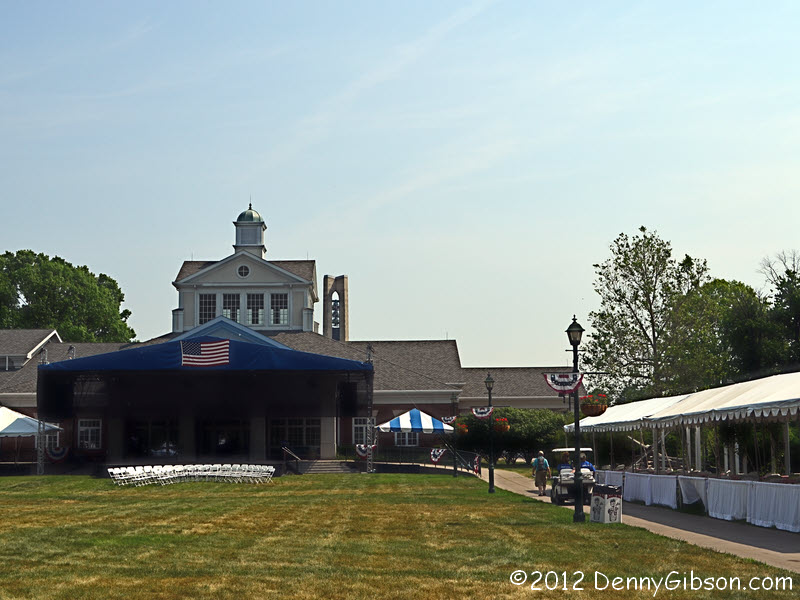
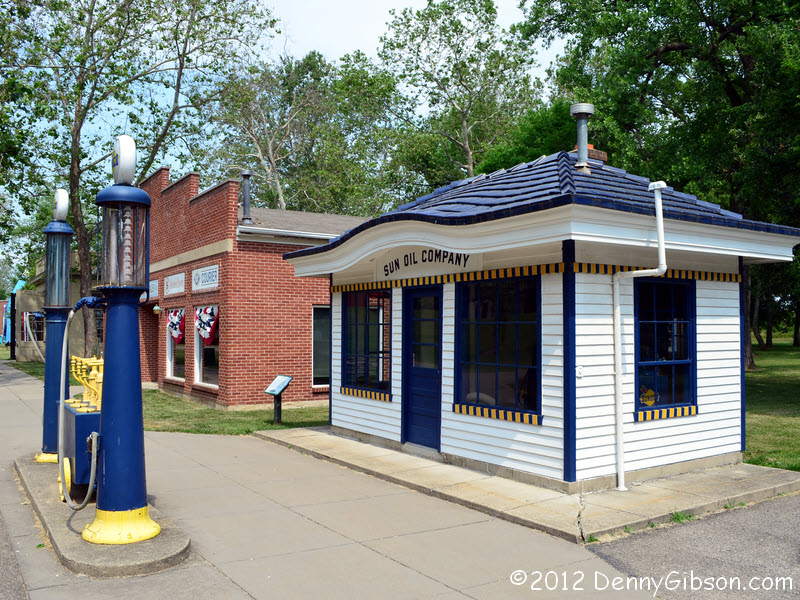
Dickens of a Christmas is an annual festival sort of thing that takes place in the recreated nineteenth century village adjacent to the Historical Center. I registered to attend the first night of Dickens of a Christmas and, even though there was no electric chair or condom to be seen, headed to Columbus in time to visit the Historical Center in the afternoon. That’s how I got the picture of the entrance to the recently closed Controversy exhibit.

The American Soldier Photographic TributeOhio Battle FlagsIn addition to the many worthwhile permanent exhibits, the Center currently has a captivating temporary exhibit called The American Soldier: A Photographic Tribute From The Civil War To Iraq and several of the 434 Civil War battle flags in the museum’s possession are on display. Plus, although it’s a poor substitute for an adult crib from an insane asylum, there was, once upon a time, at least a little controversy associated with the two headed calf.

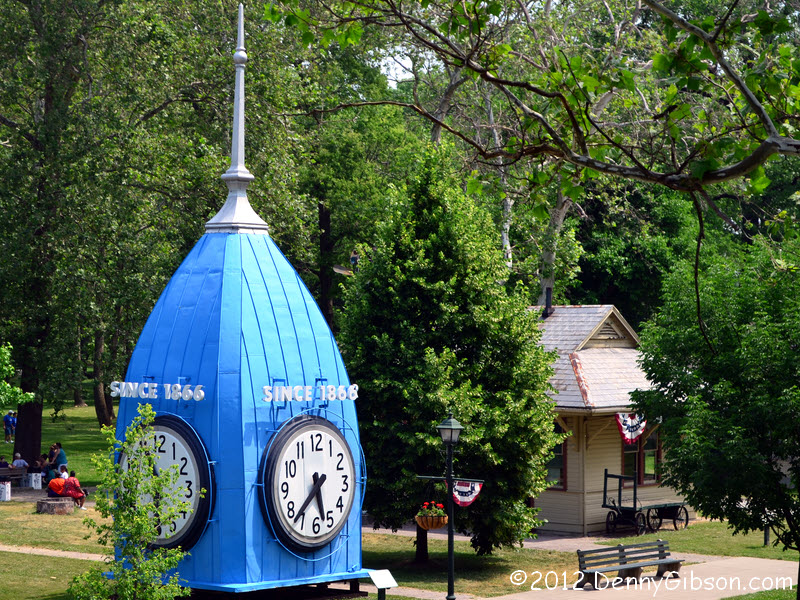
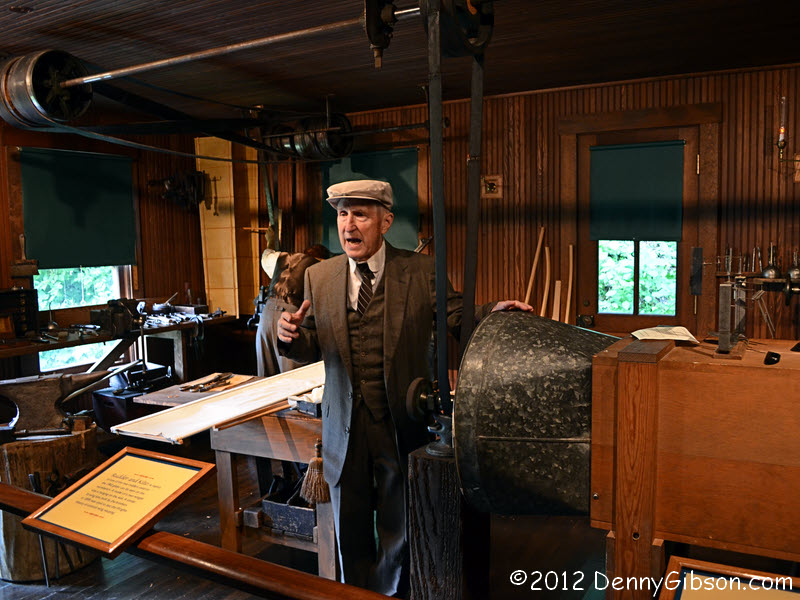
Saint Nicholas at Dickens of a ChristmasThe Ohio Historical Center is certainly a cool place to spend an afternoon but the title of this entry is “Dickens of a Christmas”. My evening at Ohio Village is covered in a separate Oddment page here. It is only the second Oddment page added since the start of this blog. While there is no precise definition of what qualifies one subject for an oddment page and another for a blog entry, it seems likely that I’ve completely covered a subject in a blog entry that might have appeared as an Oddment in pre-blog days and it is all but certain that some of the existing Oddment pages would have instead been blog entries had the blog existed at the time they were created. I believe one of the things that helps decide Oddment or blog is number of pictures. I haven’t posted a huge amount of pictures from Dickens of a Christmas but there are more, sixteen, than I feel comfortable with in a blog entry. Look them over at the Dickens of a Christmas Oddment page.


I know some who see this will have heard of Kickstarter but I’m guessing not all. It’s a method for funding projects with large numbers of small contributions. Learn more about it at the Kickstarter website. Kickstarter depends a lot on word of mouth. Friends tell friends, usually in an indirect Facebook/Twitter/newsletter sort of way, about projects they like and that, in case you haven’t guessed, is what I’m doing here. I’ve contributed to a couple of projects that I liked and blown off a couple more that didn’t quite click with me. I recently learned of a documentary project that I like and, since you’re reading about it here, there’s a chance you will too.

I heard of the project from Dirk Hamilton. It isn’t Dirk’s project but he is in it. I was inclined to give it a couple of bucks ’cause I like the general subject and, of course, I like Dirk but I was hooked for sure when I read the “Part music documentary and part road trip movie…” line. The documentary is called Folk. Check out its Kickstarter page here.

More Horses (and a bit on a madonna)

Last night I completed the trifecta of southwest Ohio horse parades. I just happened to be in Greenville on the occasion of their parade two weeks ago. I blogged about it here. Last week I was again in Greenville and came home through Springfield with a goal of getting some pictures of the recently relocated Madonna of the Trail statue. (More on that later.) I was surprised to see downtown Springfield blocked off and more surprised to learn that it was for the city’s first ever horse parade. I certainly had to stick around for that.

Springfield Horse ParadeCarriage rides were available before the parade and, yes, I took one. Neither the carriage rides nor the parade actually passed the Madonna. The picture at right shows one of the “public” carriages leaving the blocked off area in anticipation of the parade itself. The parade formed behind where I stood to take the picture and turned right to reach the parade route proper.

Springfield Horse ParadeSpringfield Horse ParadeAs mentioned, this was Springfield’s first year for a parade and there were just fourteen entries. All were “hitches”. In other words, there were no horseback riders. The portrayal of the Christmas story in a setting where eighteenth and and nineteenth century covered wagons (albeit with pneumatic rubber tires) was the norm was simultaneously shocking and 100% fitting. I liked it. Future generations of Springfieldians may have a very unique take on the whole Christmas-pioneer-Madonna-covered-wagon thing.

Black Horse Tavern at the Golden LambSo, after attending Springfield’s first and Greenville’s eighth more or less by accident, I felt almost obligated to attend Lebanon’s twenty-third horse parade. It’s not only the oldest of the three but, with 122 entries, far and away the biggest. It’s also the only double header. There is a daylight version at 1:00 and an in-the-dark illuminated-carriage version at 7:00. Other commitments kept me away from Lebanon until something after 1:00 but I headed there anyway thinking I might catch the tail end of the matinee. I couldn’t even get close. I whiled away the afternoon on the far side of town then returned thinking it entirely possible that I would just pass through again and head home. But I found a parking spot about three blocks from the Golden Lamb. In the Lamb’s Black Horse Tavern, I ran into some friends I hadn’t seen in quite awhile and managed to while away another couple of hours until parade time was near.

Lebanon Horse ParadeLebanon Horse ParadeI’ve attended both light and dark versions of the Lebanon parade before but it’s been a long time. Both the parade and attendance have had time to grow and they certainly have. All of downtown Lebanon was pretty much shoulder to shoulder and withers to withers.

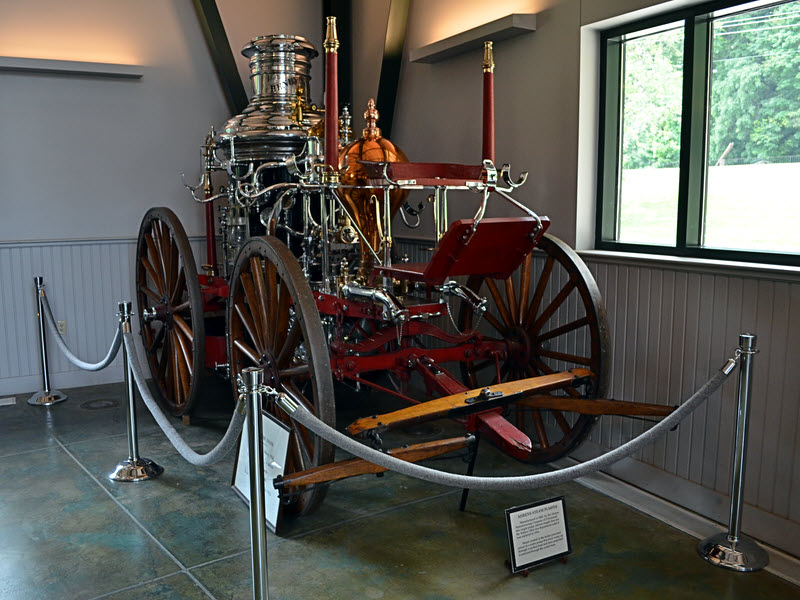
Lebanon Horse Parade ClydesdalesLebanon Horse Parade Fire EngineSeveral of the parade participants had been at Greenville and a few had been at Springfield but with more than eight times Springfied’s entries and nearly double Greenville’s, Lebanon obviously had some exclusives. Foremost among these were a nineteenth century fire engine and a team of Clydesdales. Both of these actually brought cheers from the crowd when they charged down the street.

Golden LambDuring the parade I managed to somehow walk to it’s origin and back. Some of it was pretty awkward but in the end I just stepped into the street and paced the parade. I recall my father once telling me that the secret to getting around a military base is to carry a clipboard and walk briskly. The same technique works with parades using a camera. The friends I had met in the bar told of past success in watching the parade from the balcony at the Golden Lamb. Even though that appeared to be a bit more challenging than in prior years, they were going to give it a try. As the parade wrapped up, I snapped this picture of the hotel’s balcony just in case they were up there. No, I later learned, they had been blocked from the balcony but found an empty third floor dining room where they and another couple watched the parade in relative privacy. The only intruder was a hotel employee who stopped by now and then to take drink orders.


Ohio Madonna of the TrailNow, about that Madonna. In 1928 and ’29, as the era of named auto trails came to an end, the Daughters of the American Revolution placed a Madonna of the Trail statue in each of the twelve states through which the National Old Trails Road passed. The one for Ohio was placed in Springfield. Two of the four sides on each statue’s base were inscribed with information specific to the statue and its placement. On Ohio’s Madonna these concerned the end of federally funded construction, which was quite close to the statue’s original placement, and George Rogers Clark victory at Peckuwe which was about three miles from the original placement as noted in the inscription. In the mid 1950s, highway construction caused the statue to be moved about a half mile east. The inscriptions were no longer as accurate as they had been but they weren’t off too much. A bigger problem with the move was that, once US-40 became four lanes wide, there was no convenient access to the statue. Reaching it involved either pulling over on the busy highway or parking in a safe spot and walking along the busy highway.

Ohio Madonna of the TrailIn September, the statue was again moved. This move was about two miles distance to a park in downtown Springfield. The setting makes the statue much more accessible while making the inscriptions much less accurate. Some consider this a net win; Others don’t. During the hour or so I hung around the statue last Saturday, I saw about twenty people take note of the statue in some way. There was a lot of foot traffic in the area Saturday and the majority seemed oblivious to both the new park and the relocated statue. Of those that noticed it, about half recognized it including one fellow who arrived with camera and tripod to photograph the old gal in her new home. Quite a few of those who had no idea what it was did read at least one panel. Several read them all. Whether or not any of them develop even the slightest interest in any aspect of the history that this Madonna of the Trail represents is anybody’s guess.

A newspaper article about the September 22 move is here. The Madonna can be seen thirteen days before the move here and here.

Old Fort and Young Chicken

That’s my sister and me in the lock-up at Fort Recovery sometime in the mid-1950s. From about age six to age ten or so, the site of the 18th century fort was my favorite “vacation” spot. During those years, a summer was not complete until I’d talked my parents into taking us to this far away and ancient attraction. In time I learned that the log structures were not the originals from 1794. Those were already long gone when a 1938 WPA project produced the one-third sized replica that was there on my first visit. The building we’re peering out of was part of the replacement constructed toward the end of my fascination. A worker at the museum thought 1957 or ’58. Eventually I even learned that this particular “far away” was something less than fifteen miles north on the very road we lived on. Figuring that out took me awhile since all other travels — school, shopping, relatives, Dad’s job — were in some other direction. I still greatly appreciate my parents taking me there even if the effort wasn’t quite as extreme as I once thought.

I mention this now because I stopped by the old fort today. I was near my childhood home for other reasons and there were some happenings at the fort centered around a new book titled Wabash 1791: St. Clair’s Defeat. Yesterday John Winkler, the book’s author, led a walk around the site for educators. Today he gave a pair of talks. I was there well ahead of the first talk at 3:00 but didn’t move to the lecture room until it was filled to overflowing. I did get a good seat for the slightly less crowded 4:00 presentation.

St. Clair’s Defeat, a.k.a., The Battle of the Wabash, occurred 220 years ago last Friday. On November 4, 1791, St. Clair’s 920 men were attacked at the future site of Fort Recovery by a slightly larger force of Miami, Shawnee, and Delaware Indians. The result was pretty much a massacre with 632 soldiers and all or nearly all of the approximately 200 camp followers killed. I’ve seen conflicting statements that the dead soldiers represented a quarter of the U.S. Army at that date and that the battle reduced the U.S. Army to around 300 men. I’m guessing that the discrepancy comes from varying counts of deserters and the sick. I picked up a copy of Winkler’s book so maybe I’ll find the accurate numbers there. Regardless of how much Army remained, much clearly didn’t. By several different measures, this battle was the worst defeat in United States history.

Just over two years later, troops under “Mad” Anthony Wayne began construction of what they would name Fort Recovery. It was completed in March of 1794 and in June of that year survived attack by what has been called the largest force of American Indians ever gathered east of the Mississippi. That was followed by Wayne’s victory at Fallen Timbers which was followed by the Treaty of Greenville which was followed by the state of Ohio.

When I did an Oddment page for the 2010 Fair at New Boston which included a reenactment of the Battle of Fallen Timbers, I discovered that a song existed about St Clair’s Defeat. A recording by Roger McQuinn, complete with lyrics, can be heard or downloaded here.

Anthony Wayne was my childhood hero. I imagine part of the reason was the “Mad” in his name but I was really impressed with that cocked hat. When I saw my first picture of a bare-headed “Mad” Anthony, the general came near to losing me as a fan. But I overcame the shock and stuck by my hero and still enjoy knowing that he and I ran up and down the same roads separated by just a couple of centuries.

Of course, sis and I did eventually get out of the frontier hoosegow but it happened again.

I was alerted to the Fort Recovery doings by a Ohio Historical Society newsletter. Just a couple of days prior, the Lincoln Highway Facebook group had a link to this article on Balyeat’s Coffee Shop in Van Wert, Ohio. I’ve eaten at Balyeat’s multiple times but have never had the “Young Fried Chicken” advertised on their wonderful neon sign. The Facebook post reminded me of that and, since Van Wert and Fort Recovery are only about thirty crow miles (or forty Subaru miles) apart, I decided to correct that gap in my experience. Today the chicken is baked rather than fried but I’m sure it’s still young.


I have now removed the forum that was added in 2010. I said I would do that in the very first entry of this blog but I saw no need to rush. Until this week, it has sat there idle exactly as it had for the seven preceding months. Every now and then some spammer would attempt to set up an account but they were few and far between. But this week there has been a mini-flurry (6) from folks with names like “Okkgeiwk” and “horrhyday” which prompted me to finally delete the thing.

Monroe’s Magnificent Mile

Solid Rock Church, Monroe, OHHustler Hollywood Store, Monroe, OHMonroe, Ohio, is a city of 12,000+ that sits on I-75 about halfway between Cincinnati and Dayton. A little more than a mile of the expressway lies within the city limits. The southern boundary is right where the northbound ramp of exit 29 begins. Turn left from that ramp and you’ll find one of Larry Flynt’s Hustler Hollywood stores doing quite well. Something of an entirely different nature is doing well at the northern edge. There, the Solid Rock Church sits just east of the expressway and east of the Monroe city limits. The huge church with its electronic billboard is definitely hard to miss, but it was even more of an eye catcher when the King of Kings statue stood there. The statue attracted national attention while it stood, and I’m sure the eyes of the world were on Monroe, Ohio, when lightning struck it in June of 2010. A different but similarly sized replacement is due to be completed by the end of this year, and the frame is already in place. Apologies for the dark and crappy picture I took from the expressway.

Treasure Aisles Flea Market, Monroe, OHTreasure Aisles Flea Market, Monroe, OHSo what lies between Monroe’s offerings of sin and salvation? Shopping. Lots and lots of shopping. Facing off across the interstate are two humongous flea markets. Treasure Aisles is on the west side inside the Monroe limits. They say this pirate-themed market is where the barrrgain hunters go. There was live music inside, although it neither looked nor sounded particularly nautical, and there was an optional gun & knife show which I skipped.

Traders World Flea Market, Monroe, OHTo the east and, like the church, just outside the city limits, is Trader’s World. The theme there might be “jungle”, though “Jungle Jim’s” seems even more accurate. Both the area’s one-of-a-kind grocery and Trader’s World have a lot of large animals prominently displayed, plus lots of stuff with no jungle connection at all. Trader’s World has murals inside and out; there’s no shortage of things to look at overhead, and antique cars and wagons are displayed in several of the unoccupied booths. No live music that I found.

I drive this stretch of I-75 a lot, so have often driven by all of these sights. All four have huge signs, and while the Hustler store isn’t visible from the expressway, its tall sign is. For the others, the signs almost seem unnecessary since pirate flags, roofs full of giraffes, and a 62-foot Jesus are all fairly successful attention getters. But despite getting my attention over and over, they never got me to stop until yesterday. I was driving by on Thursday when I was struck by the fact that this is exactly the sort of thing I chide others about: Not stopping at attractions in your own neighborhood. Maybe flea markets, churches, and porn shops aren’t typical roadside attractions, but they are using time-honored tourist trap techniques to make passers-by aware they are there.

So I visited both flea markets on Saturday. I bought some Brita filters at Treasure Aisles and a slice of pizza at Trader’s World. I haven’t decided if I’ll also visit the church and the porn shop, but if I do, I’ll probably hit both of them on the same day to see if I can spot any parishioners picking up DVDs on the way home.


Although they ever so slightly miss the limits of the actual “Magnificent Mile”, two sites just south of the city add to its magnificence. One is the recently opened Cincinnati Premium Outlets, which caters to upper-crust bargain hunters not yet ready to mingle with giraffes or pirates. The other is LB Ranch. LB is Lawrence Bishop, who is not only a very successful horse trader but the founder and Senior Pastor of the Solid Rock Church. Photos of his ranch and his church abound on the Internet, but I’ve always been fond of his silo. Before the big Jesus and the elephants and giraffes came along, the horse-topped cylinder was the biggest attraction along this stretch of interstate. At one time, the horse fell over but remained atop the silo on its side. It was returned to an upright position sometime in the last year or so, but appears to be on its last leg.

Rest Home for Dummies

I’ve decided that one of the circumstances resulting in extra blog posts, is posting to the base website. I won’t make a blog entry for every daily update of a road trip but I will do at least one for every trip and Oddment addition. What happened was I realized that, if I wanted to allow feedback via the blog and I’m the only guy who can start something here, I better do it for trips and such even if they don’t line up very well with the Sunday afternoon schedule. So here’s the first “extra”:

Just south of the border, in Fort Wright, Kentucky, there’s a wonderful but unpretentious looking place where retired ventriloquist dummies go to finish out their days — quietly. Click here to see the page on my first visit to Vent Haven Museum.