A River Roots Cruise (Lagniappe)

The American Roots Festival is not Tall Stacks. It’s similar but not matching. Tall Stacks was a festival that happened six times between 1988 and 2006 on the Ohio River at Cincinnati. Among the reasons given for not reusing the name is a desire to paint the event as something broader than a gathering of riverboats and to associate it with the nation’s upcoming 250th anniversary in 2026. Whether or not that painting and association were necessary and/or successful is not my concern. I definitely enjoyed some of the musical offerings at Tall Stacks, but for me, the boats were always the reason for its existence, and that is even more true for me and the Roots Festival. The fact that I was heading out of town when the festival officially began, but not before a day of “advance cruises” took place, has a lot to do with that. A Wednesday cruise on the Steamboat Natchez from New Orleans is my only personal contact with the American Roots Festival.

I arrived downtown well in advance of the scheduled boarding time and slipped across the river into Kentucky to snap a picture that includes five of the nine boats in town for the event. The boat I would shortly be cruising on is at the far right of that picture, plus I grabbed one of it alone.

Back in Ohio, I parked near the public landing and walked to the river for a closer view of the boats. The Belle of Louisville is at the west end of the line. On the way to the landing, I passed the National Steamboat Monument and was happy to hear the whistles blow as I walked through them. That’s not always, or even often, the case.

I actually took photos of all nine boats, and a couple even came out OK. However, with the low sun, most were atrocious, and I’m reserving them for my own entertainment. I spent the remaining shore time taking some close-ups of the Natchez. This trip is something of a homecoming for the calliope on the left. It was built in Cincinnati between 1900 and 1910 by Thomas J. Nichol for the Steamboat Sidney.

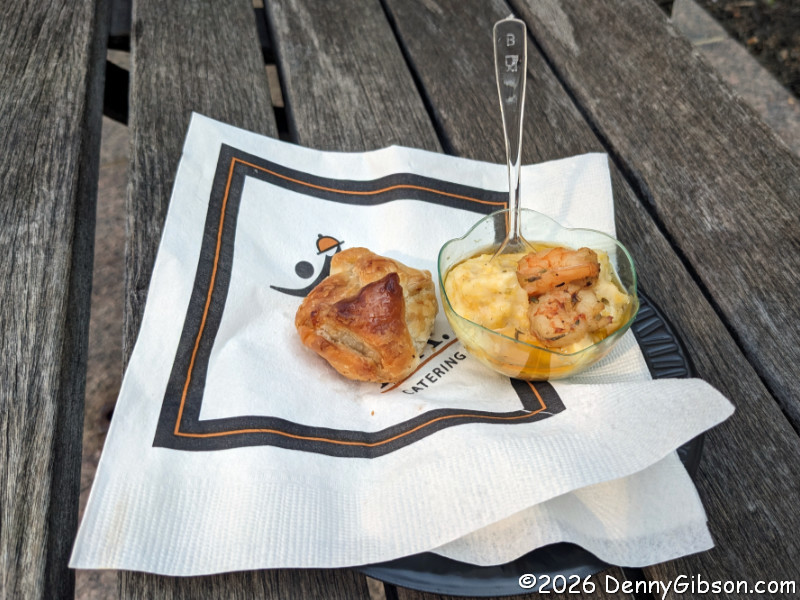
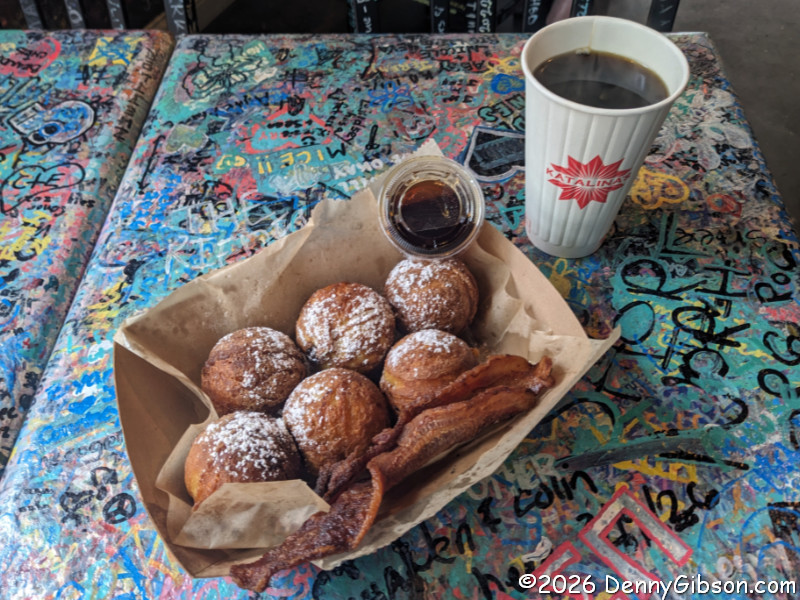
A wide variety of cruises is available during the festival. This was a 90-minute “Beignets & Coffee” cruise. During the half hour allotted between boarding and departure, I listened to the excellent onboard Dixieland trio and downed my beignet.

That left me free to roam around once we were underway.

Built in 1975, the Natchez is pretty new for an authentic sternwheeler. She’s not entirely new, however. For example, the engines were in service aboard the Steamboat Clairton from 1925 until 1962, which means they are celebrating their centennial this year.

With breakfast and onboard exploration out of the way, I used the turnaround point as an excuse for an early lunch of jambalaya and Abita Amber. That container was absolutely stuffed with quite tasty jambalaya, which I completely failed to finish before realizing that we were nearing Cincinnati. About half of it came home to nourish me as I wrote this.

Not too long after I capped the jambalaya and stuffed it into my jacket pocket, we passed under the Big Mac Bridge and were soon facing the Roebling Bridge with the Bengals’ and Reds’ stadiums off to our right. Several other visiting riverboats were in motion on the river as we turned around and pulled into the landing.

Back on shore, I paused at the top of the landing to gaze at the Natchez one more time before heading to my car. Cruising up and down the Ohio on a steam-powered sternwheeler can definitely play havoc with one’s sense of time. That’s no doubt why I didn’t question seeing Mr. Clemens heading toward the very river where he got his pilot training half as much as I might have otherwise.

This blog did not exist during the Tall Stacks period. There was, however, an Oddment section with entries not related to road trips. An entry was made for the final Tall Stacks event in 2006. It is here.


Because of my plans to leave town on Thursday, I finished writing this Wednesday for publication as the regular weekly post on Sunday. But it began to bother me that, although there would still be a day of the festival left at that point, at the moment nearly all of it remained. There was at least a small chance that it might be useful to someone if it appeared on Thursday instead of Sunday. So here it is: a blog post published on a normally silent day of the week. I’ll put up a canned post on Sunday, and this will be, as the folks in NOLA say, lagniappe.

More Cars, More Coffee

There’s a bit of a chain reaction going on here. Last week’s visit to the museum at 4 Speed on 50 was the result of the previous week’s stop for a hamburger at the diner there, and this week’s visit to Horsepower Farm is the direct result of that museum visit. As Steve Ashcraft and I were saying goodbye at the end of my museum tour, we did some name checks on other car collections in the area. As if to demonstrate just how oblivious people can be to attractions in their own neighborhood, Steve mentioned Horsepower Farm, which is less than fifteen miles from my home and which I had never heard of. A check of the Farm’s website revealed that their monthly Cars & Coffee would be taking place on the very next Saturday, so that’s where I headed yesterday morning.

Horsepower Farm came into being as a place for Opie Willis to store his growing car collection. It has become a scenic event center where numerous public events are held, and which can be rented for private events such as weddings and meetings. I believe the first Saturday of every month Cars & Coffee is the only regularly scheduled event open to the public. It is adjacent to a residential area that has lots of these “PLEASE DRIVE SLOWLY AND QUIETLY” signs displayed, and I have no doubt that anyone ignoring the signs would not find a very friendly welcome at the farm.

There were signs pointing in both directions for parking, and I didn’t realize that a more proper area for mundane cars like Subaru Foresters was to the left until after I drove past the garages and the main area for cool cars. It’s a very non-judgmental crowd, and no one complained or even looked at me funny. Even so, rather than immediately driving back through the area, I parked at the far end of a large open space and walked back.

I naturally looked over some of the cars parked outside, but cut my walk short to step inside the main building. These are, I assume, some of the cars in Willis’ personal collection.

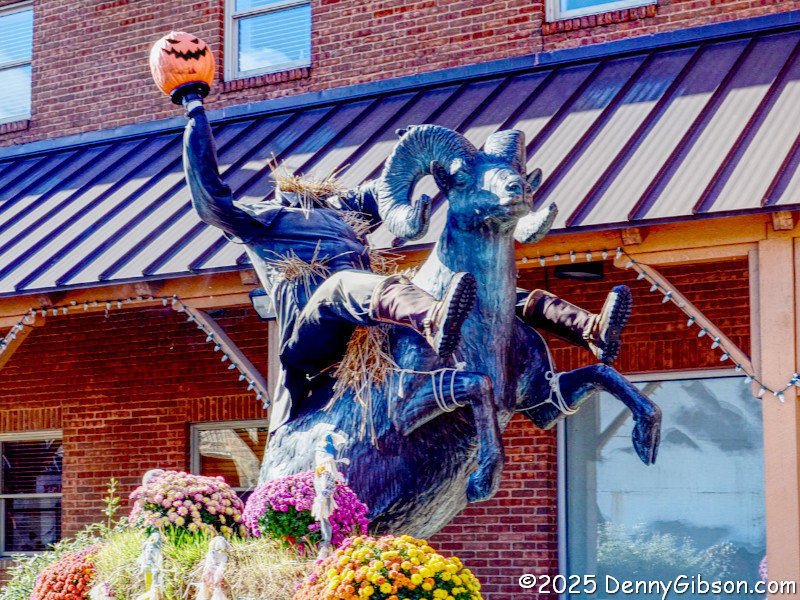
There are several objets d’art mixed in with the cars. Although it’s out of sequence, this seems like a good place to include a full-length shot of that beautiful stainless steel “Horseplay” in the opening photo.

I did not get a car count, but it was way beyond respectable, and the variety was pretty incredible.

Here are a few of my favorites. I think I did mention variety.

When I walked back to my car, I paused to look a little closer at the Hudson “tribute car” parked near the main building. I found the interior, some of which is explained here, especially interesting. I don’t recall ever hearing of holes for on-the-go tire wear checks, but I did some searching online and learned that it was truly a thing in the early days of NASCAR.

So, even though I had to go to Indiana to learn about it, I now know that one of the best Cars & Coffee gatherings in the area is only about half an hour from my home. You can bet your bippy and your VW roof rack that I’ll be back.

Circus Time

When I bought my ticket to the 20th Century Circus, I didn’t realize that it would be held on Renaissance Festival grounds. It wasn’t a secret. The banner on their website’s home page says “at the Ohio Renaissance Festival”, but I just wasn’t paying attention. I saw that the circus would happen in Waynesville, and although I know that is the home of the festival, I just did not make the connection. Only on the day of the show, when I went looking for detailed directions, did I realize what should have been obvious.

The big top is placed in the open field just outside the main entrance to Renaissance Village. The festival associated 1572 Roadhouse Bar-B-Q is open a couple of hours prior to show time, and the empty village (the festiva returns in August) is open if you want to roam around. I splurged and bought a Front Row ticket. Premium Seating and General Admission are also available. Premium, it appears, is row two, and general admission is row three. I’m guessing that if more tickets were sold, more rows would be added.

The 20th Century Circus advertises itself as being set in the 1920s, and some audience members were dressed in period outfits. The acts in a 1920s circus are essentially what I’d expect in a circus of any era. The evening got started with some juggling and tightrope walking, aerial acrobatics, and a little clowning around.

It seems quite possible that I haven’t seen a spinning plates act since Ed Sullivan went off the air, but, as I did then, I enjoyed watching the performer run back and forth to try to add plates while maintaining those already spinning. Although it was only for a few seconds, this guy did get plates spinning on all six sticks, but I missed getting a photo.

Balance and acrobatics are central to a variety of circus acts, and there were several impressive demonstrations of both.

As intermission neared, we were treated to a catchy little tune about that circus and carnival staple, cotton candy. Of course, a little popcorn fits in quite nicely, as well.

There was more juggling in the second half, but flaming hatchets replaced the soft balls. I never did get an in-focus shot of the performers on the rotating ladder, but I did better on the lovely song and dance duo.

The hula hoop competition between volunteers from the audience was close, even if it didn’t last too long. I think the winner made it about 1 1/2 revolutions. The other two competitors were tied at zero. Someone stood up when the knife thrower asked for a volunteer, but cooler heads prevailed. The real winner of the hula hoop contest didn’t even joke about risking an audience member interfering with her swirling balls of fire.

This looks kind of like one of the stunts from the first half of the evening but the chairs are a whole lot bigger and so is the distance to the ground when the handstand is performed. Just assembling and disassembling the tower of chairs is rather nerve wracking to watch.

No troupe members and only a few baloons were harmed during the performance. They will be back every Friday, Saturday, and Sunday for the rest of July and it’s a hoot. The pulled pork (and probably the other stuff) and beer selection at 1572 Roadhouse is pretty good, too.

Herding the Wheel Horses West

Near the end of last summer, my friend Terry, the Wheel Horse collector, sold a tractor to Bill Throckmorten of Grant King Race Shops, and I rode along to deliver it. Bill is Grant King’s nephew. He and his wife Stephanie currently own the shop. Back in the 1960s and ’70s, Wheel Horses were used at the Indianapolis 500 to move race cars in the pits and other areas. There was also a race week event featuring celebrities piloting 33 of the red tractors in a one-lap race known as the Indy 2 1/2. Because of that connection, Bill wanted a Wheel Horse for the museum at what he calls “A Working Race Shop Museum”, and to maybe move a few cars around. There is a pretty good video overview of the shop/museum and the accomplishments of Grant and Bill here.

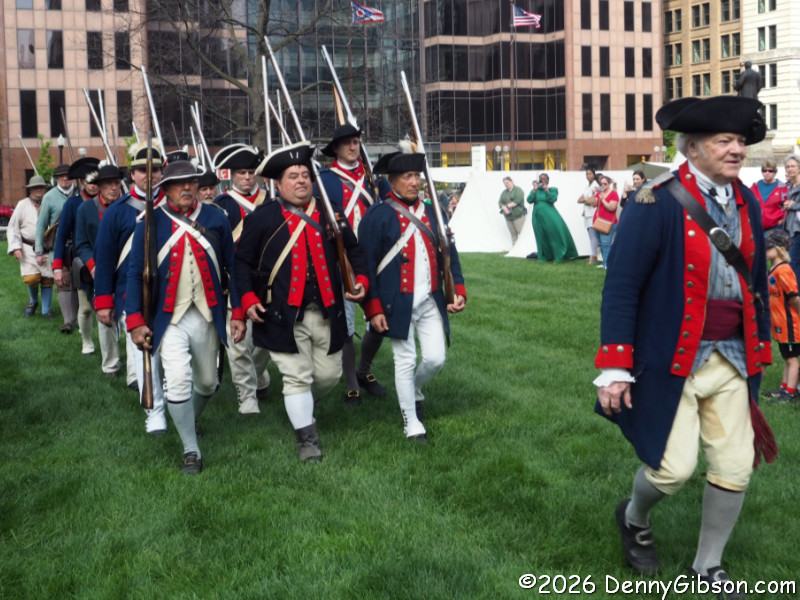
One of Bill’s accomplishments is the cofounding of Indy Legends. After giving us a tour of that really cool museum, he invited Terry to display some of his Wheel Horses at their next event at Indianapolis Raceway Park. That event was last weekend, June 28-29, and I again got to tag along. I snapped the opening photo from where the Wheel Horses were displayed.

Friday was setup day, followed by an evening reception at the Indianapolis Motor Speedway Museum. Stephanie Throckmorten made sure we had wristbands for both the reception and access to IRP. Setting up in ninety degrees was pretty exhausting for old guys like us, although Terry dealt with it better than I did. We both took advantage of the showers at Lion’s Club Park, where we were staying, before heading to the reception.

The museum reopened less than three months ago following a year-and-a-half-long closure and $60 million renovation. One of the first areas inside the entrance is a series of simulated garages holding some very significant cars from the speedway’s history. Eddie Rickenbacker drove this 1914 Duesenberg to a tenth-place finish in 1914. Rickenbacker served as IMS President from 1927 to 1945. Jim Clark put this green Lotus on the pole in 1964, but broken suspension meant a 24th-place finish. Parnelli Jones drove the car to 2nd place in 1965. In 1977, Janet Guthrie broke the Indy 500 gender barrier, then drove this Offenhauser-powered Wildcat to a 9th-place finish in 1978.

An attendant at the entrance to the next section assures entry between presentations of a video shown on a wrap-around vertical screen. Scenes from parades, pit activity, flyovers, and race starts are combined with exhaust sounds from real cars in the area to generate a semblance of race day anticipation.

There is a mind-boggling number of cars and artifacts on display in the museum. Of course, I took a ton of pictures, but there is a lot more going on this weekend, so I am really limiting what I’m posting. Here’s a picture of the Marmon Wasp that Ray Harroun drove to victory in that first Indy 500 in 1911, and one of the Borg-Warner Trophy. Although the trophy was first presented in 1936, the winners of every 500 are represented on it. The Marmon and the Borg-Warner appear together in the photo taken from the new mezzanine.

The reception was a first-class affair with hors d’oeuvres, beverages, and opportunities to chat with museum officials and employees. Terry and I missed the first performance by the Indianapolis 500 Gordon Pipers but were there for their second outing as the reception began to slow down. They would also appear at the race track near the end of the day’s activities on Saturday.

This was the beginning of activities on Saturday. Overnight rain had sounded a lot heavier than it actually was, but some drying out was in order nonetheless. We cleared some water from our canopy, then did a little cruising and car spotting while the track was being dried. Terry posed for a picture with a Mac Tools-sponsored racer and his own “Runt Rod” racer. I believe it is the only non-stock Wheel Horse in his fleet.

All of the cars had informative placards beside them when parked, and I learned a lot by reading many of them. Only when I started writing this post did I realize how little I remembered and what a poor job of recording I did. I can tell you absolutely nothing about the gray #9 in the first picture. #20 is a 1911 National as described here. I also have a shot of #7’s descriptive information. That is almost certainly because my interest was piqued by this on its rear end. Its owners have driven most of the Lincoln Highway, and the Model T racer has been on a short stretch of the Lincoln Highway in Pennsylvania.

The model years I noted ranged from 1911 to 2000. Although I do not know the actual dividing lines, the on-track groups were separated by age, which also meant they were separated by speed. I have even less information to share about these middle-aged race cars than for the older cars in the previous paragraph.

There was ample time to walk around and photograph the many fabulous race cars while they were parked, and if the temperature, the humidity, or my age had been lower, I would certainly have done more of it. Many of the cars were the exact same vehicles that once ran at IMS and other tracks, while some were impressive replicas of famous cars that are probably on display in museums.

Here are a couple of pictures from the campground just before we pulled out Sunday morning. Showers and restrooms are just beyond the picnic shelter. The trailer, which serves as our bedroom, will be filled with Wheel Horses when the day ends.

There was a somewhat surprising amount of interest in the tractors. Some came from people who remembered the days when Wheel Horses roamed the pits at Indianapolis Motor Speedway, and some from folks who had heard or read about it. Of course, some came from kids (and adults) who just like little tractors. The tractors were the “half-time show” for both days of the event. At Bill’s request, Terry and I drove them two-by-two through the infield during the lunch break when the track was empty.

That’s Bill Throckmorten chatting with Terry. Bill was incredibly busy throughout the weekend coordinating action on and off the track, but still managed to stop by several times to say hi and see that all was well. On more than one of those stops, he let Terry know he had an invitation to return next year. Whether that happens is very much a maybe. As we pulled out, I commented that this was one of the most fun weekends I’ve ever had, but it was also one that I was very happy to see end. Terry agreed. Age and temperature are factors, and only time, which doesn’t help with the age thing, will tell.

I have previously been involved in herding the Wheel Horses south and east.

Summer’s Here

Where I live, Friday was the first day of Summer — barely. Summer Solstice, which marks the beginning of astronomical Summer, occurred at 10:52 PM EDT on June 20. Since the 21st was the first full day of Summer, some folks think of that as the first day of the season. But it was the 20th that encompassed the solstice, got Summer started, and counts as the longest day of the year. In Cincinnati, the sun was above the horizon for approximately 916 minutes on Friday versus a little more than 895 minutes on Saturday.

On that 80+ degree first day of Summer, the memory of a recent story about an ice cream stand’s anniversary prompted me to drive to the west side of town, and some sweet coolness. Zip-Dip opened for its 75th season in early March. Regular Summer hours went into effect on May 23. In addition to chocolate and vanilla soft serve, Zip-Dip offers orange sorbet and two rotating flavors of yogurt. I couldn’t have picked a better day for flavor choices.

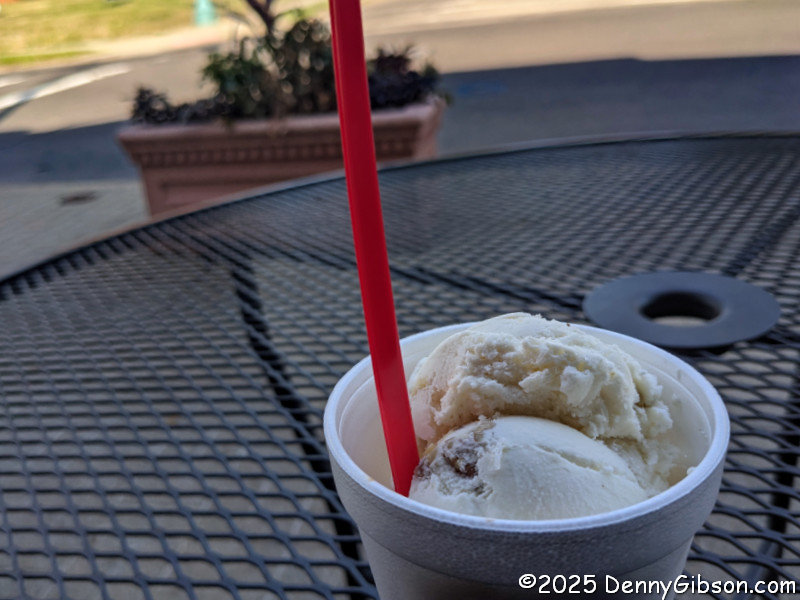
I got my white chocolate macadamia yogurt with granola and a smile, then headed to the attached picnic area to eat it. Yeah, that cute curl had melted by the time I picked my spot, but I could taste the curl in my first bite, along with a smile and summer and a little neon.

Sign Museum Threefer

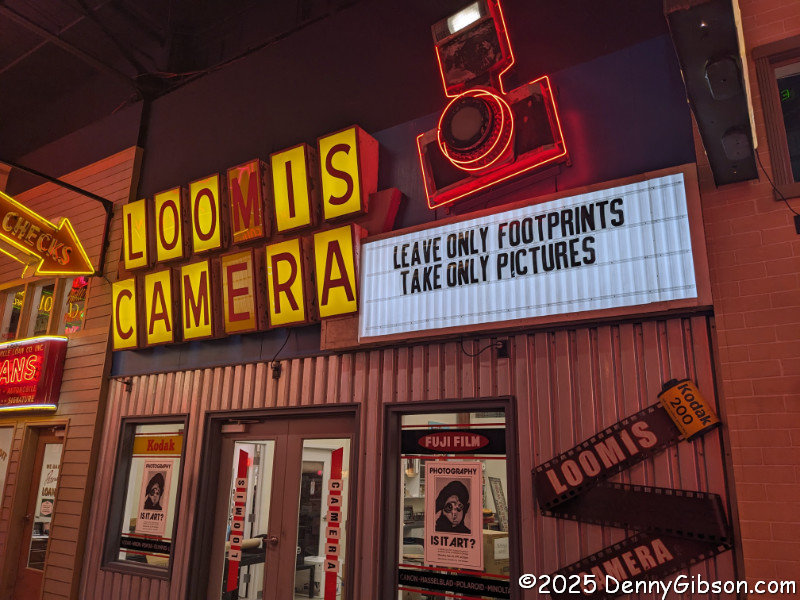
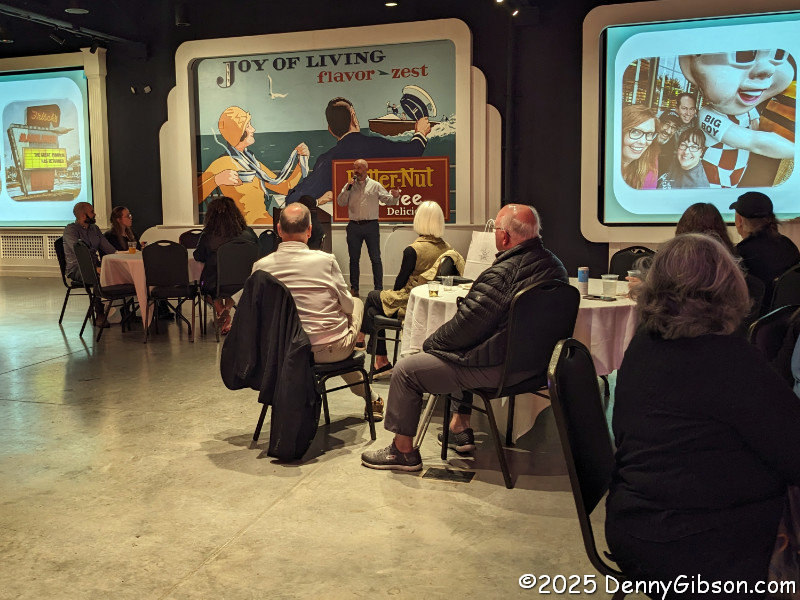
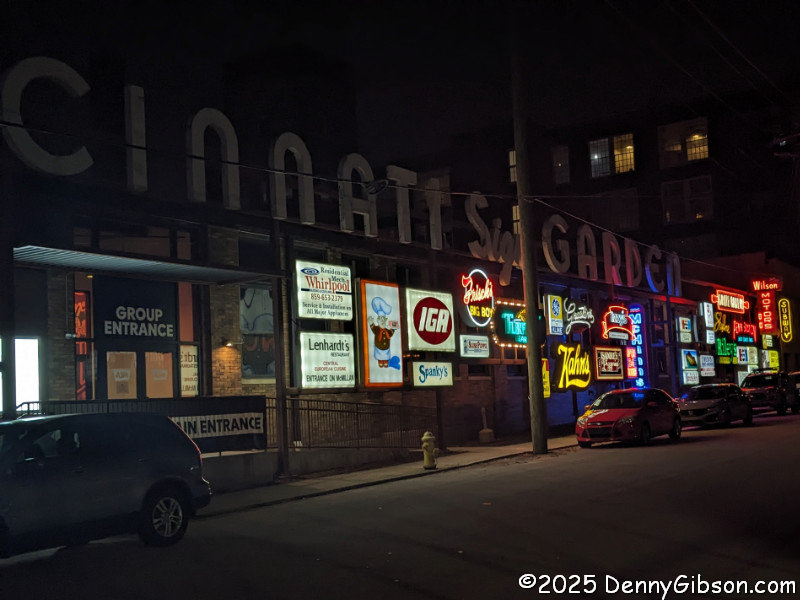
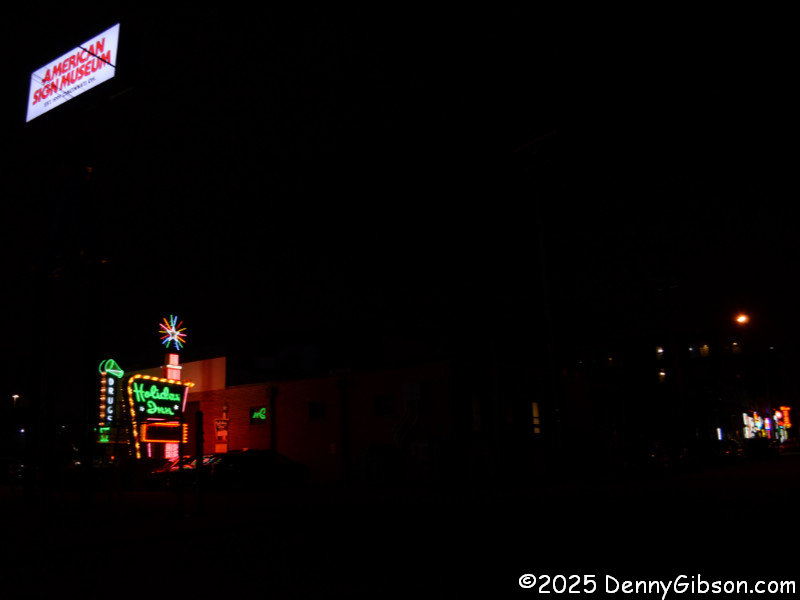
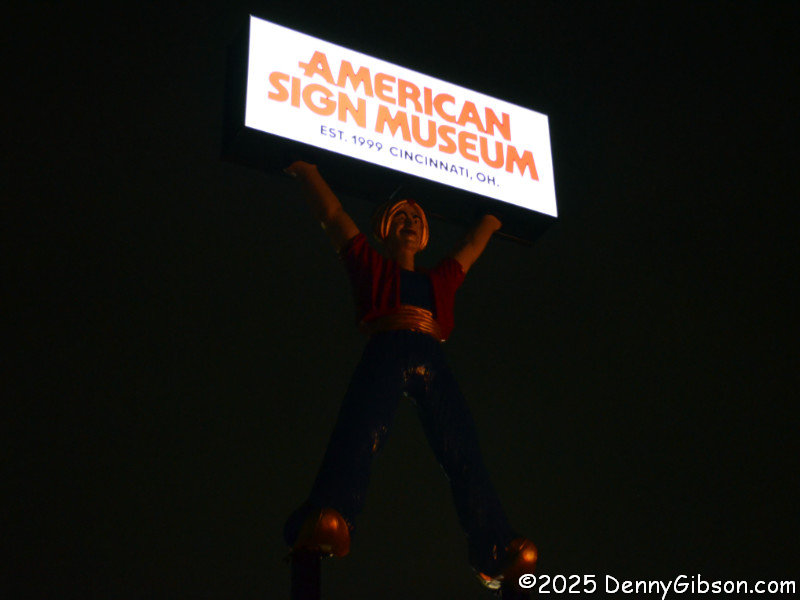
I visited the American Sign Museum on Thursday. Technically, I visited it twice, once during normal hours and once in the evening for a special Tod Talk. The Tod Talk, “Acquiring and Restoring the Frisch’s Mainliner Sign”, was the reason I was there on this particular day, but I also wanted to see the freshly installed genie pictured at right and the museum’s first-ever special display. Ergo, a threefer.

The museum has owned a pair of the giant Carpeteria Genies since 2003, but one was held in off-site storage until last week. Wonderfully restored, it now stands beside the entrance to the museum’s parking lot. I failed to get a picture of the genie at the front door (which is admittedly looking a little faded these days), so I have included one from the museum’s 2012 grand opening at this location.

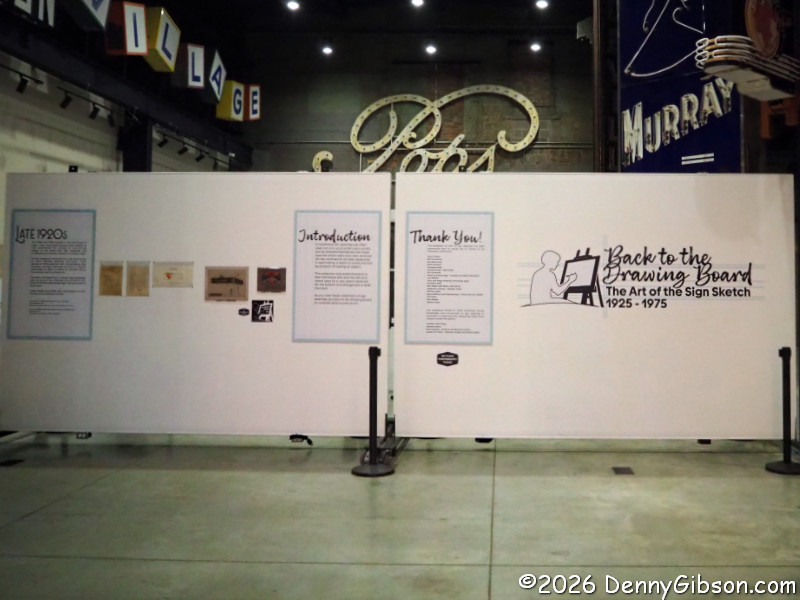
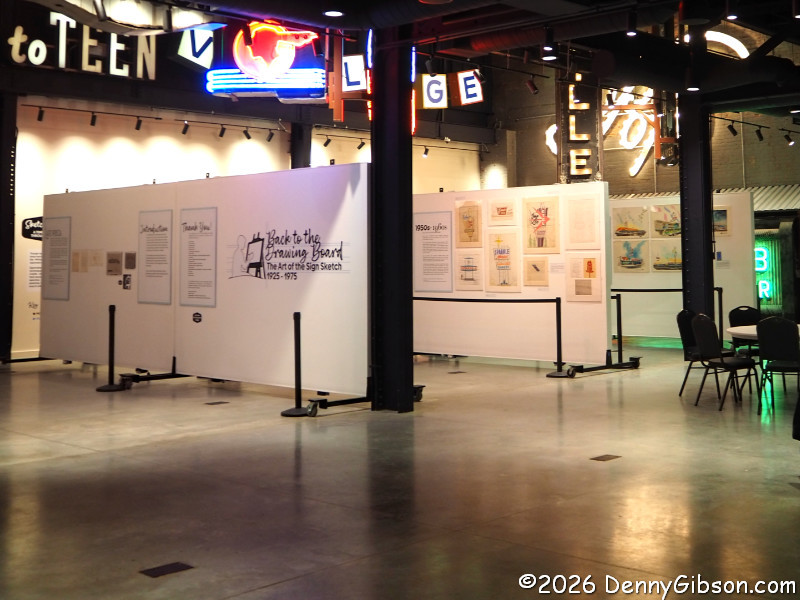
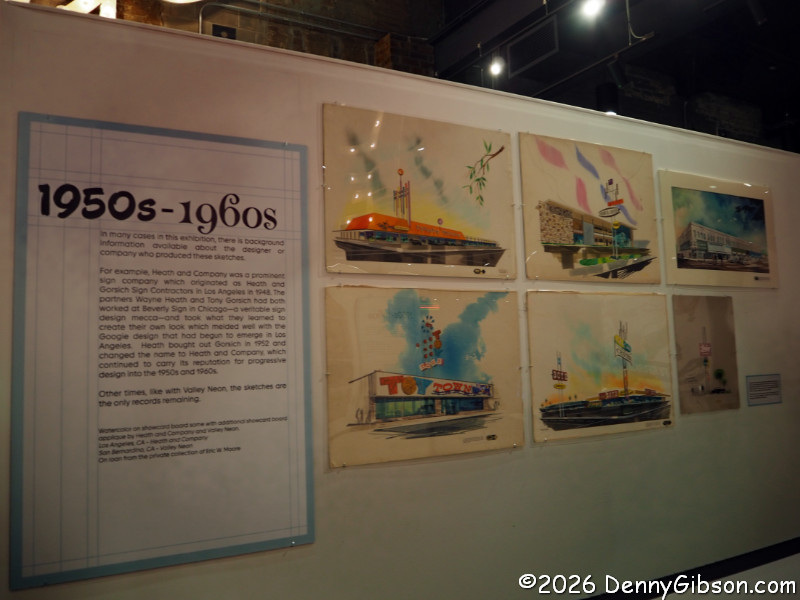
When the museum expanded last year (New Stuff to Look At), it was said that there was now enough space to potentially accommodate some temporary exhibits. The first such exhibit, Glow & Behold: Cincinnati’s Historic LGBTQ+ Bar Signs, is in place now. One panel supplies an introduction. Another notes that “…there were more drag queens and kings, known then as female and male impersonators, working on Vine Street in Cincinnati in the 1880s and 1890s than there are today.”

The exhibit includes photos of several businesses that no longer exist, along with retired signs (Remember where we are.) from both defunct and very active establishments. Saturday night’s “Signs & Spouses: A Sparkling Celebration of Marriage Equality” was inspired by this exhibit.

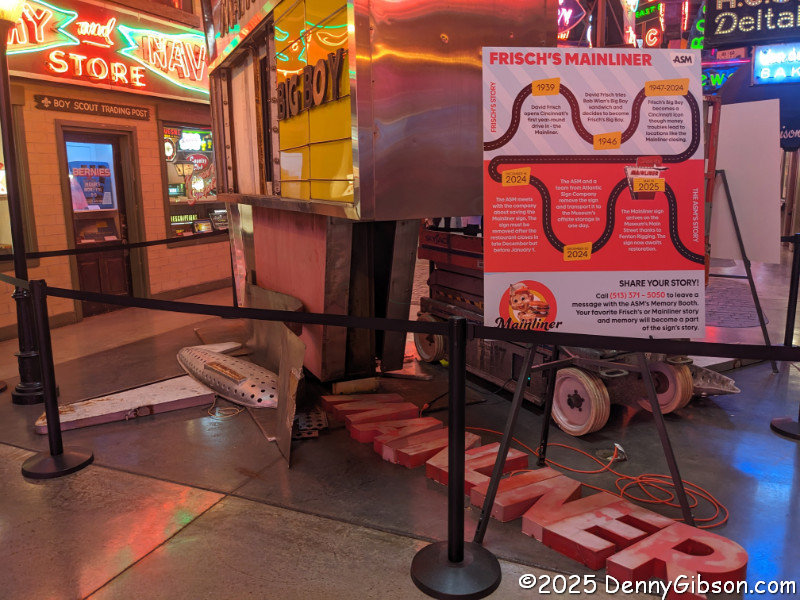
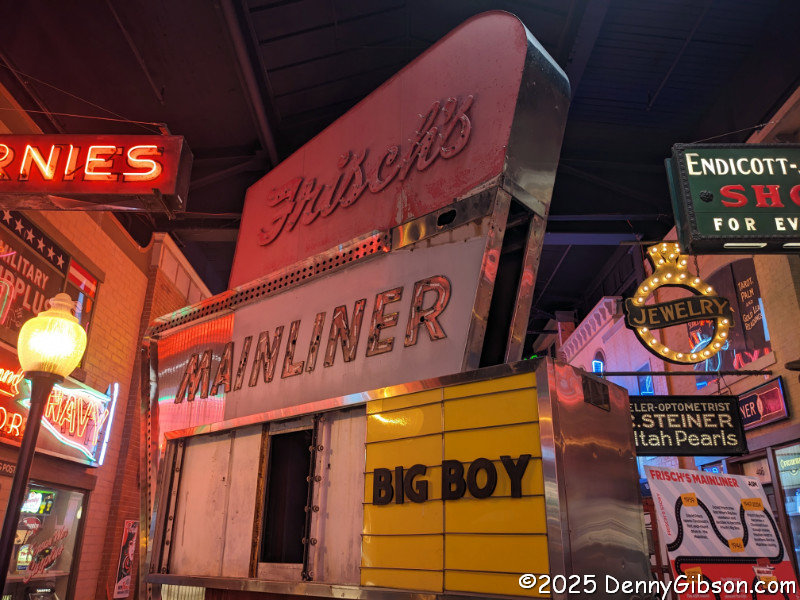
As closing time approached, I took advantage of the relatively empty museum to grab pictures of the Frisch’s Mainliner sign and its flying machine in pieces on the ground without humans milling about. I will be learning a lot more about this sign in a couple of hours.

Between the time that the Tod Talk was announced and when it actually happened, the sign was moved from the storage site to inside the museum, and so was the talk. The email announcing the move let us know that this would allow a cash bar, etc. To my surprise, “etc.” included a genuine Frisch’s hamburger from the still-operating independently owned franchise restaurant in Bellevue, KY. I had eaten during my time away from the museum, but I hadn’t eaten THAT much, and I didn’t want to appear unappreciative, so…

The talk began with Erin Holland, the museum’s Director of Education and Engagement, delivering a greatly abbreviated version of her March presentation on the overall history of Frish’s and its advertising. Then Tod Swormstedt, the museum’s founder and the Tod of Tod Talks, stepped in to share stories about acquiring and taking possession of the Mainliner sign.

The instant that hints of the Mainliner closing began to circulate, the fate of its incredible sign became a topic of concern for many locals and the ASM in particular. As restaurants closed and lawsuits opened, it wasn’t easy to learn just who owned what. It took some creative sleuthing by Erin to contact the owners of the sign. That resulted in a mid-December meeting with three men identified at the time only by their first names. Although they tried to imply that there were others interested in the sign, it was pretty obvious to Tod that not many would actually want a sign of that size, fewer still would have the means to remove it, and no one else could possibly accomplish that by the suggested end-of-year deadline. Even so, there was no additional contact until Christmas Eve, when the museum was told it could have the sign, and yes, that end-of-year deadline was real and very firm. In anticipation of that happening, Tod had sown some seeds in the ASM phenomenal community of helpers. Although the timing could hardly have been worse, the sign was taken down and transported to a museum storage area in a single day.

Every day is a big day at the ASM, but some are bigger than others. The museum is closed on Mondays and Tuesdays, so various projects are often scheduled for those days. Monday, May 19, saw two really big projects completed. The huge genie in the opening photo was erected in front of the museum, and the Frish’s Mainliner sign was moved inside it. Natalie Grilli, photographer for the upcoming book on the museum’s first twenty-five years, was onsite and busy bouncing between the two giants in motion. Natalie was also onsite Thursday evening. Pictures and some of the videos of the moves we saw on Thursday can be seen on the ASM’s Facebook page.

The group then moved out to where the Mainliner sign now stands, and I silently congratulated myself for taking those unblocked photos earlier. Tod now pointed out some of the sign’s features and described some of the plans for its restoration. Those plans are far from complete, but he said restoring the rotating propellers is definitely part of them. A printout of that photo displayed next to the sign was waiting on each chair, and I’ve included a scan of mine here. Note that the original chase lighting was incandescent and ran through the airplane. At some point, this was removed from the plane and converted to neon tubes on the sign body. The plugged holes can be seen in the picture of the airplane interior above. This is also something that Tod hopes to restore. The separate section with the Big Boy has been lost and will likely not be restored.

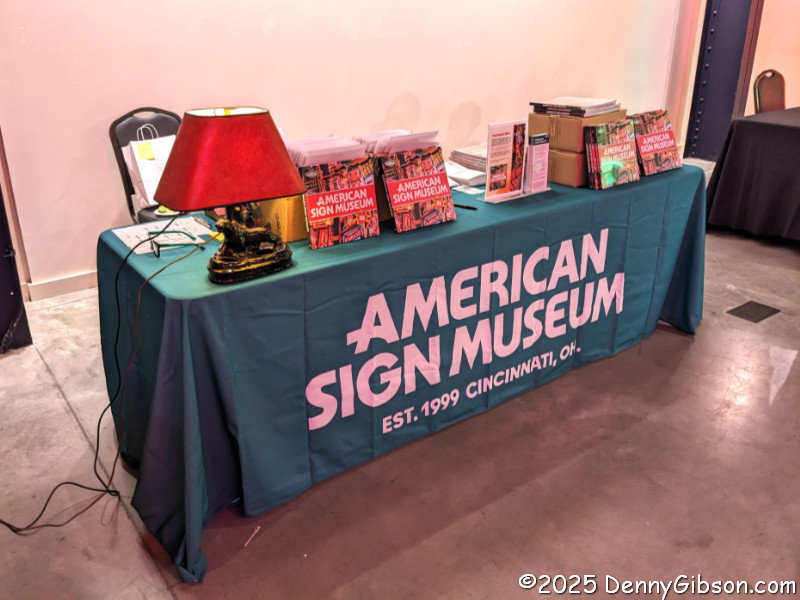
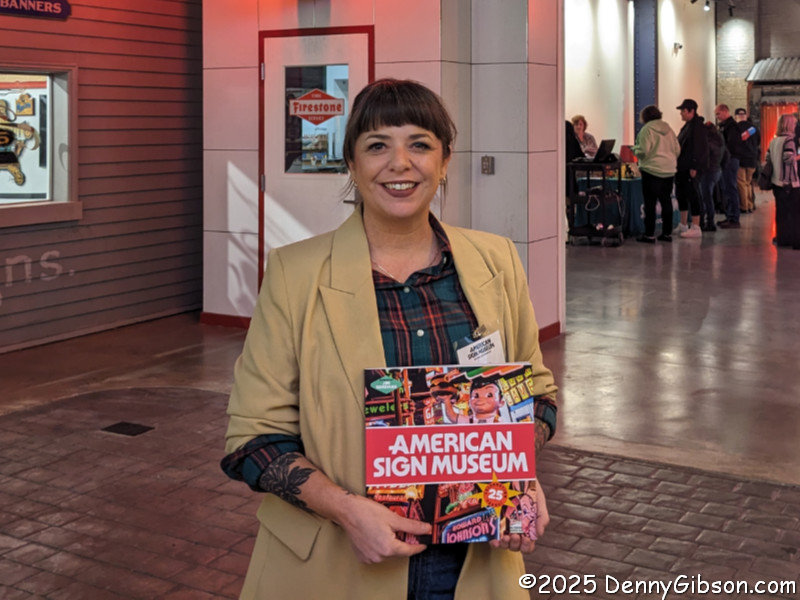
Something that may be obvious but still should be pointed out and cheered is that the restoration of this sign will take place in the middle of the museum in full sight of visitors. This will certainly present some challenges for those doing the restoration, but it is sure exciting for us mere spectators. Also in the realm of spectating, the sign can be seen at its original home during my own final visit to the Mainliner. A link to pre-order that 25th anniversary book I mentioned is on the museum’s support page

Sixty Years After

Ten years ago, on the day following the fiftieth reunion of my high school graduating class, I posted “Fifty Years After“. It ended with a reference to the far-in-the-future sixtieth reunion and the line, “If I can, I will”. I did. So did another seven members of the Ansonia High School class of 1965.

Not surprisingly, that was considerably less than the nineteen who attended the all-alumni banquet in 2015 or the twenty-six who attended the our-class-only gathering the night before. There is a banquet every year that is open to all graduates with emphasis on the “5s”. I have gone to most, if not all, of those, but there wasn’t one for our fifty-fifth. That was the year of the COVID pandemic. The lack of a get-together at the five-and-a-half-decade mark was somewhat disappointing, but it is the class of 2020 that really deserves our sympathy. I thought there might be something a little special for them on their fifth, but there was not. Actually, there was not a single member of the class of 2020 in attendance. It’s hard not to try reading something into that, but it’s just as hard, as an outsider, to know what that something should be.

Ten years ago, I wrote that “We graduated smack dab in the middle of a decade that was about as turbulent and confusing, yet as filled with promise and potential, as any could be.” It feels like we just might be smack dab in the middle of another one. Of course, the decade we were born in held the horrors of World War II and was clearly even more turbulent, but that decade is outside of our personal memories. It is the 1960s and 2020s that more or less bracket our lives as adults.

By coincidence, a blog I follow published a piece a few days ago that makes some comparisons between today and the world of sixty years ago. It is here, and I encourage reading it in its entirety. Among the events of sixty years ago it mentions is the Social Security Act of 1965. That’s the act that established Medicare and Medicaid. Both are facing cuts today. Our generation also benefited from things like the 1965 Voting Rights Act, the Water Quality Act of 1965, and others.

What I have just written makes me aware that my and my classmates’ adulthood more or less aligns with the rise and potential fall of numerous efforts to make life better for the general population. That, in turn, made me think of the cringeworthy idea that “We got ours. Sorry about your bad timing, kids.” Oh, how I hope that’s not true.

Classes celebrating one of the 5s are provided with a room to gather in before meal time. Our room wasn’t overflowing, but everyone there had a good time studying old photos and sharing the memories those photos, and just being together, stirred up.

Of course, classes are seated together at the banquet. Yeah, we took up a lot less room than we did in 2015. I didn’t try very hard to get a picture of the group as a professional took a posed group shot of us, and I’ll share that here as soon as it is available. Most of our class is in the foreground of the second picture, but that’s not the target. The target is every past cheerleader in attendance, lined up to lead us in a spirited singing of the old fight song.

ADDENDUM 23-Jun-2025: Here is that posed picture I promised. Someone must have told me an anti-joke just before it was snapped, or maybe I’m unhappy because I wasn’t let in on the joke that has everyone else smiling. Whatever the reason, I apologize to my classmates for grimming up at exactly the wrong time.

As usual, the banquet was followed by a dance. I always skip the dancing part, but this year I even skipped the going part. In the past, the dance was held at Eldora Ballroom on the Eldora Speedway property. The Ballroom was a weekend hotspot back in the day, and going there on alumni weekend always provided a little glimpse of the past. This year, it was at the American Legion, which would not have fed my nostalgia. It is at the same location I remember, but the building is a newer one. I’ve said I would have gone if it had been at Eldora, but maybe not. Starting the drive home before midnight seems a sensible thing to do these days.

The best information available indicates that we have lost a total of sixteen members of our class of sixty-five. That means that just about three-quarters of us are still around. In that 2015 post, I mentioned that the men who were living had already exceeded their at-birth life expectancy, and that the women were getting close. We are all in overtime now. A study I found online says that anyone turning 78 in 2025 can expect to live another 11.09 years. That would cover a 70th reunion. If I can, I will.

1950s Flashback

The Cincinnati Museum Center has presented a 1940s Day or Weekend annually since 2011. I attended the third in 2013. Saturday was their first-ever 1950s Day. Asked on their Facebook page if this would also be an annual event, the museum said no. It is intended to be a one-time thing to mate up with the ongoing Julia Child and Barbie exhibits. “But,” they added, “it could come back!” I don’t really remember the 1940s, but I do remember the 1950s, and the rain on Saturday looked just like rain did when Ike was in the White House and Waite Hoyt was on the radio.

Individual information tables lined the rotunda. Pictured are King Records Legacy, Casablanca Vintage Clothing, and the American Sign Museum with a genuine 1950 NEON SIGN.

I stepped into the Newsreel Theater intending to watch a few minutes of the Moving Images presentation and ended up staying more than an hour watching clips of “Melody Showcase”, “Midwestern Hayride”, and commercials. I don’t remember “Melody Showcase”, but “Midwestern Hayride” was a staple at our house, and it’s even possible that I saw some of what I saw today when it was broadcast live.

1950s Day included quite a bit of live music. I caught the P&G Big Band, the Queen City Sisters, and Naomi Carman and the Bluecreek Boys. I do intend to check out the Barbie and Julia Child exhibits sometime, but the museum was far too crowded for that on Saturday. I’ll slip them in on a weekday when school’s in session and employed people are doing employee things.  

Living on the Air in Cincinnati

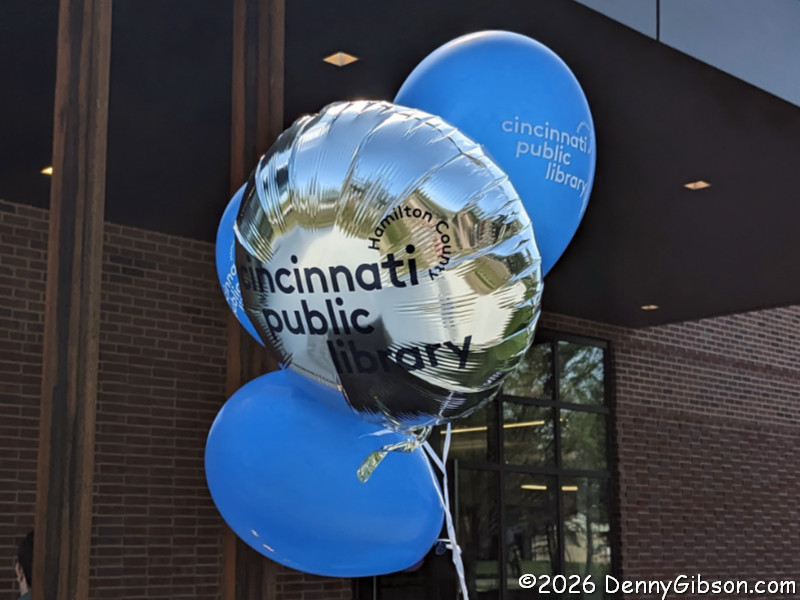
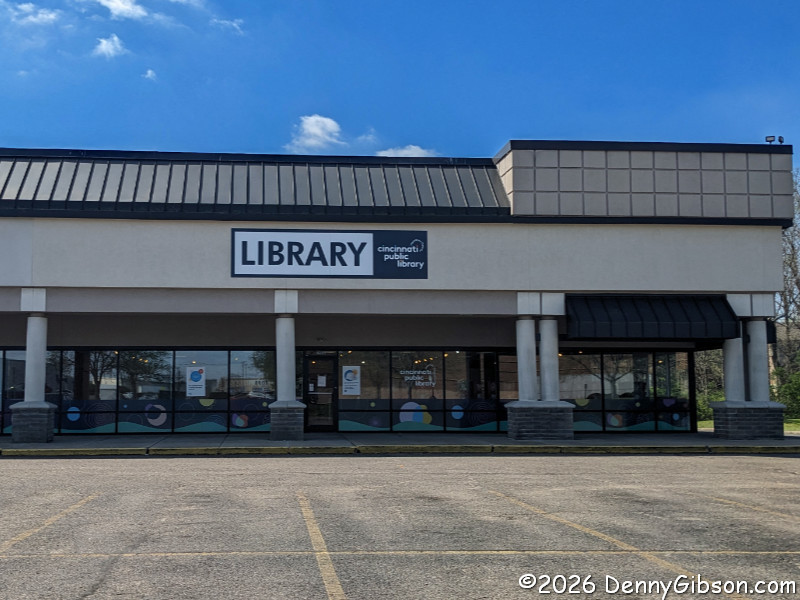
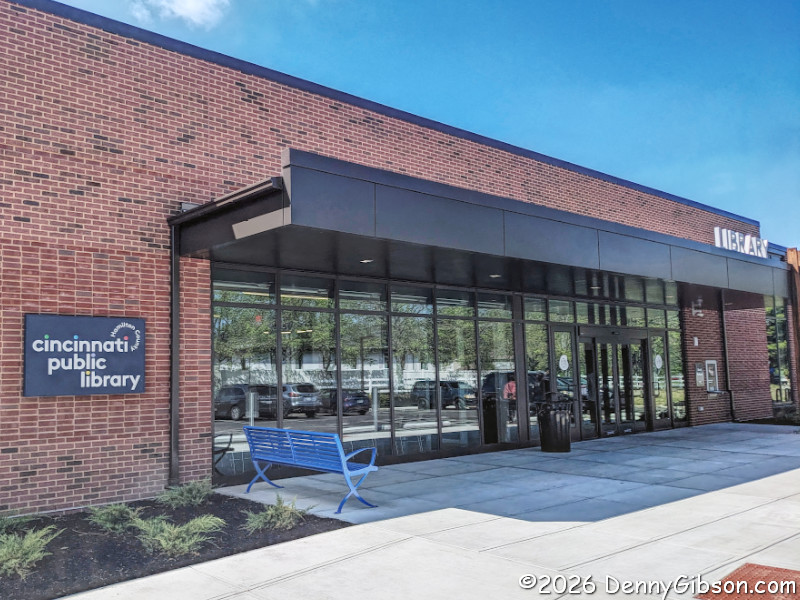
I’m sure everybody is familiar with the joke about someone having “a face for radio.” It’s based on the idea that you do not have to look good to sound good. That’s an idea that often applies doubly to buildings. I’ve not been in a lot of radio stations, but I have been in enough to know that the people behind the microphones are frequently speaking in a dark cubicle far from prying and non-prying eyes, with little for their own eyes to take in as they work. That description has applied to Cincinnati’s WVXU and WGUC, but will no longer. Cincinnati Public Radio is letting the public see its new building this weekend. The bulk of personnel are already operating in the new space, and the plan is to switch broadcasting activity at noon on Tuesday.

I attended Saturday’s open house, which repeats today, April 27, 2025, from 1:00 to 5:00. Directions and other details are here. The cartoon in the opening photo stood not far from the entrance. The distance between speech balloons represents reporter Bill Rinehart’s signature pause when identifying debris on the roadway. I got my first view of the building from a drive by a few weeks ago, but this was my first up-close and stationary look.

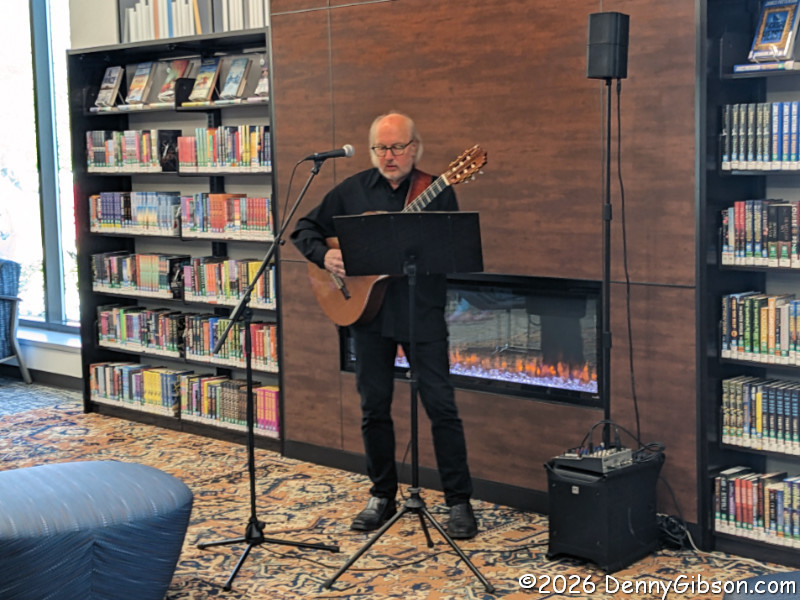
And it was obviously my first look inside. That is the Cincinnati Symphony Orchestra Woodwind Quintet on stage in an area dubbed The Gathering Space. There is also a Performance Studio. With spaces such as this, dare we hope that live music performances — possibly featuring local talent — might be in CPR’s future?

Pictures from the upper floor, including subjects from the preceding paragraph, show how open the building is.

The Instrument Petting Zoo, which seemed to be a big hit, was a new one on me. A more traditional petting zoo was also on the agenda, but the pettees had not yet arrived when I was there. After I walked to my car and worked my way back through the traffic to exit, I saw a Cincinnati Zoo van parked near the front door. I’m pretty sure that meant additional petting was happening or about to.

There are a number of smaller work areas, including some without windows. Most, if not all, of these are mixing and editing stations where a little isolation is a good thing.

As far as I know, the food trucks will not always be there, but they were certainly welcome on Saturday and will be there on Sunday if you want to grab a meal or some Graeter’s ice cream while checking out the building. The CSO quintet was piped outside to a nice park-like area, so I assume Sunday’s Gathering Space performances will be as well. That is where I listened while enjoying some black raspberry chocolate chip. The new place is finished, and the Welcome Weekend is half over. Cincinnati Public Radio is just about done packin’ and unpackin’.

ADDENDUM 29-Apr-2025: Although I was aware of the building’s forward-thinking mass timber construction and actually had it in mind as something to point out when I snapped the picture of the stairway, it completely got away from me during the writing phase. I was reminded of my glaring oversight as I listened to the official throwing of the switch at noon today. The core of this building is not steel or concrete. This is the first mass timber building in Cincinnati. Learn about mass timber here and watch a video about why Cincinnati Public Radio chose it here

Second Secular Season of Fish

Yes, that image at right looks pretty much identical to the opening image in last year’s Lenten wrap-up post (A Secular Season of the Fish). In fact, this entire post looks about the same as that post, as well as every “season of fish” post I have ever done. It is simply a report on the seven fish fries I attended during the season. Six of them are new to me, and the seventh is a repeat I’ve had planned ever since I ate there last year.
The pictured map comes from the Cincinnati Fish Fry app, which I discovered and started using partway through the 2023 season. Anyone checking in at four or more fish fries through the app is entered into a prize drawing. I met the requirements in both years I have used it, but have won no prizes and expect the same this year. That’s not my goal in the least. I use the app to find fish fries, and it does a mighty fine job. I did not record the number of offerings in 2023, so cannot say whether this year’s drop from 87 to 73 is a trend or a blip. My guess is that, for commercial enterprises, it’s a trend. That is where most of the exits occurred. Participating commercial operations went from 16 to 4, while churches and others only dropped by one each, going to 53 and 16, respectively.

The first Friday of Lent coincided with the first day of Bockfest, and I had plans, weather permitting, to attend the Bockfest Parade at 6:00 PM. What could have been a scheduling dilemma was avoided by Pride of the Valley Masonic Lodge 95 and its 10 to 8 serving schedule. The pictured catfish meal, with coleslaw and a piece of cake hiding under the fries, was $12. Soda and water were $1. Some very good eating. And the weather did cooperate in allowing a dry parade. Check it out here.
I acquired the next week’s fish fix at Duwell VFW Post 7570 in Harrison, OH. The cod dinner was $15, and the iced tea was $2. Everything about the meal was good, but the standout to me was the inclusion of a human-sized portion of coleslaw. OK, maybe the amounts of both it and the same-sized mac & cheese were more than I needed, but it was a welcome change from restaurants that apparently think a little cup with a couple forkfuls of slaw is a serving.

I went outside the fish fry app for week three of Lent. I was in Darke County doing some chauffering for my stepmother, which allowed me to take in the fish fry in my old hometown. When I was five years old, we lived directly across the street from Ansonia American Legion Post 353, although the building has been replaced since then. $10 gets all the fish and fixings (there was applesauce, too) you can eat. Soda and bottled water was $1.

Week four saw me back within range of the app, though once again near its far western limits. Miller-Stockum American Legion Post 485, like the VFW of two weeks before, did not skimp on coleslaw.  This was the $12 cod dinner with a $1 bottle of water added.

I definitely got outside the lines on the fifth week of Lent. This is very much not a fundraiser for a non-profit. It won’t bother me at all if you count this as a complete fish fry miss. I was in Jasper, IN, and a search for fish fries revealed that one of the town’s most popular Lenten events was the Friday night seafood buffet at one of the town’s most popular restaurants. The restaurant, Schnitzelbank, was already on my radar, so it became my Friday fish find. It was a feast. At $28, it was decidedly outside the normal Lenten Friday budget, but that plate, which followed one from the well-stocked salad bar and preceded one with a couple pieces of fish and a dab of seafood alfredo, contains fried fish, baked fish, fried shrimp, steamed shrimp, new potatoes, scalloped potatoes, mushrooms, a mini crabcake, and a biscuit with apple butter. The Weihenstephaner Hefeweissbier Dunkel was $5.50.
This was my second out-of-state fish Friday adventure for 2025. Florence, KY, Elks Lodge #314 is on the Dixie Highway, so I can claim a few historic auto trail miles this week. The tasty and filling cod dinner was $15, and the Yuengling was $3.25.

Here is the single repeat from last year. Gailey VFW Post 7340 is actually the only 2025 stop that was not entirely new to me. I was also here on Good Friday in 2024 when I ate beside a lady who had recently turned 100. The place was packed last year, but no more than half full this year. I was there very soon after it opened this time, so maybe it was my timing that made all the difference. Unfortunately, neither of the women I asked knew anything about the centenarian I had met, and one of them worked there as a bartender. The meal looked and cost the same — $12 — as last year. This Yuengling was only $2.