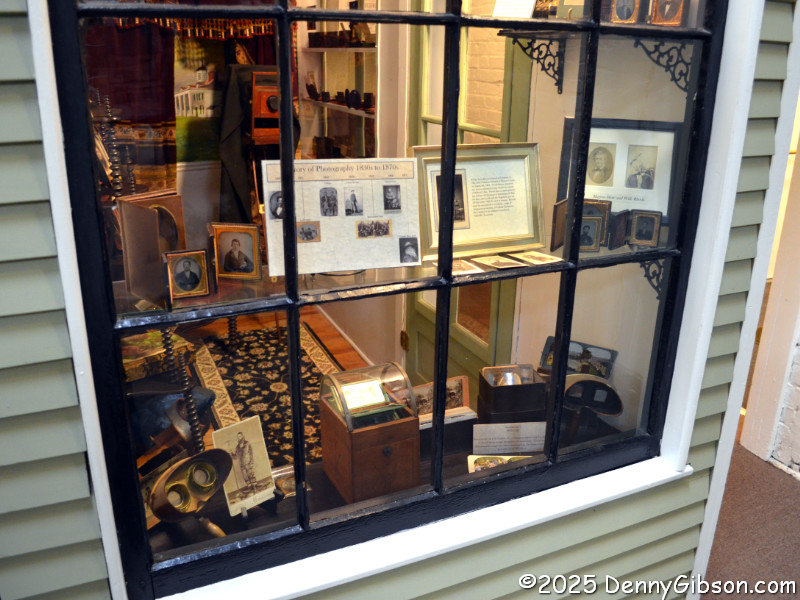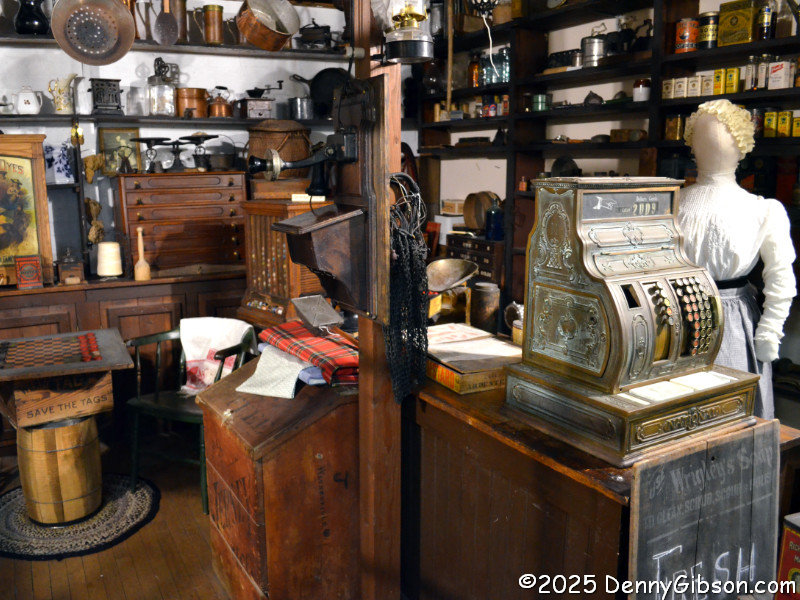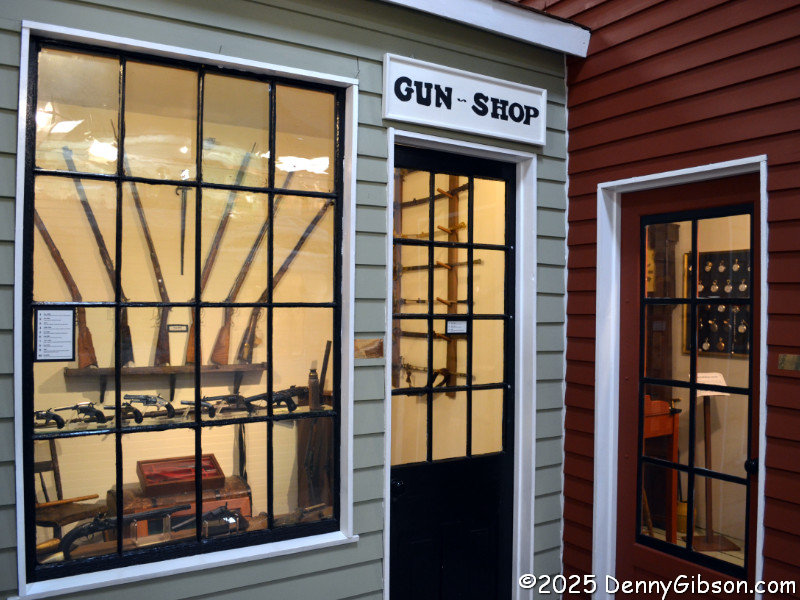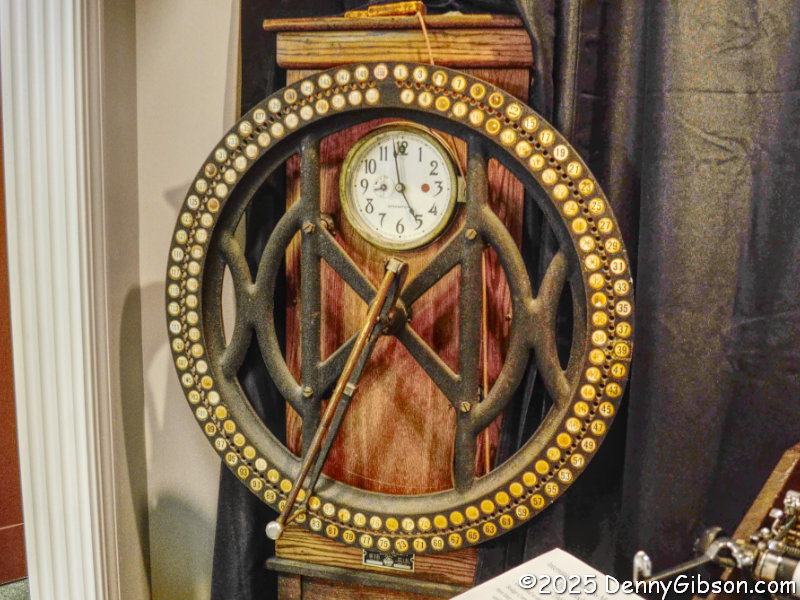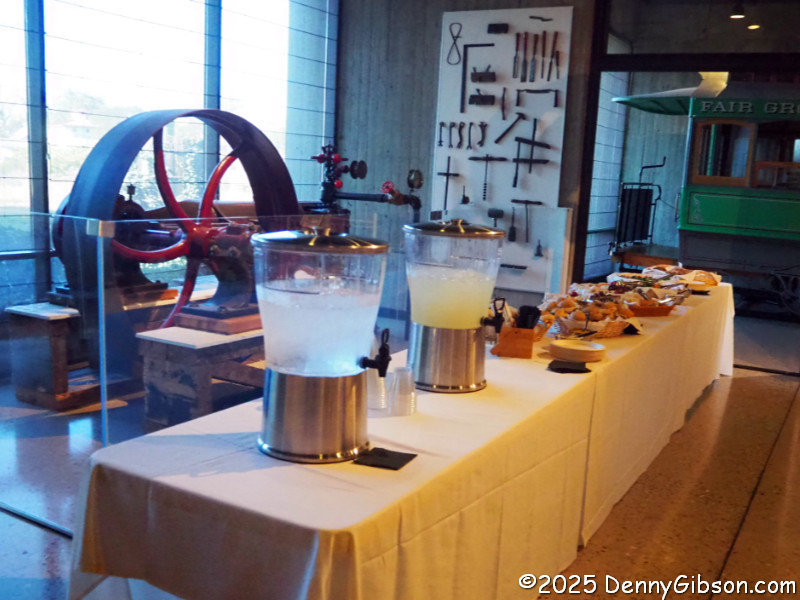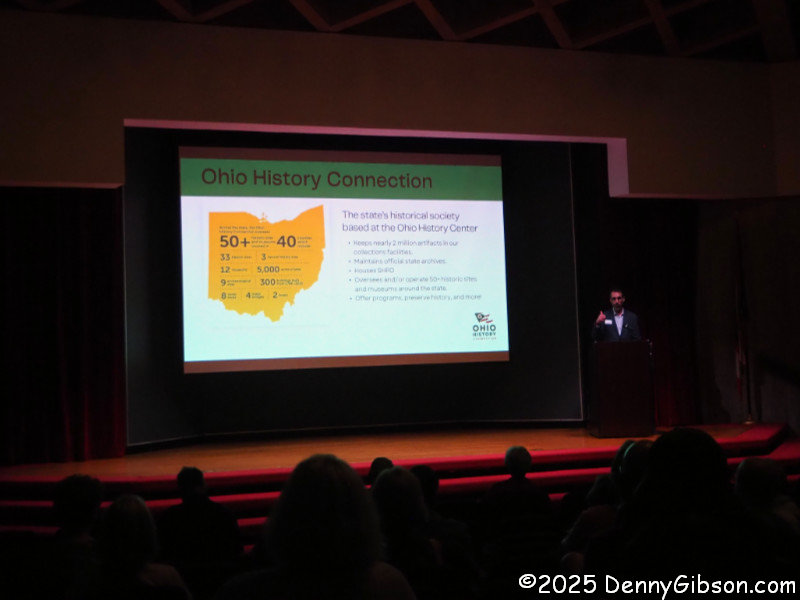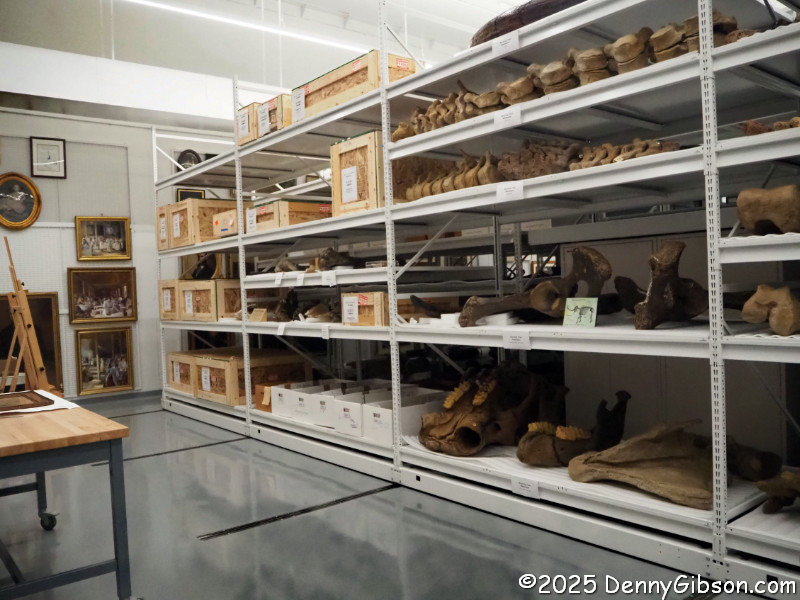
Two for Four in Ohio

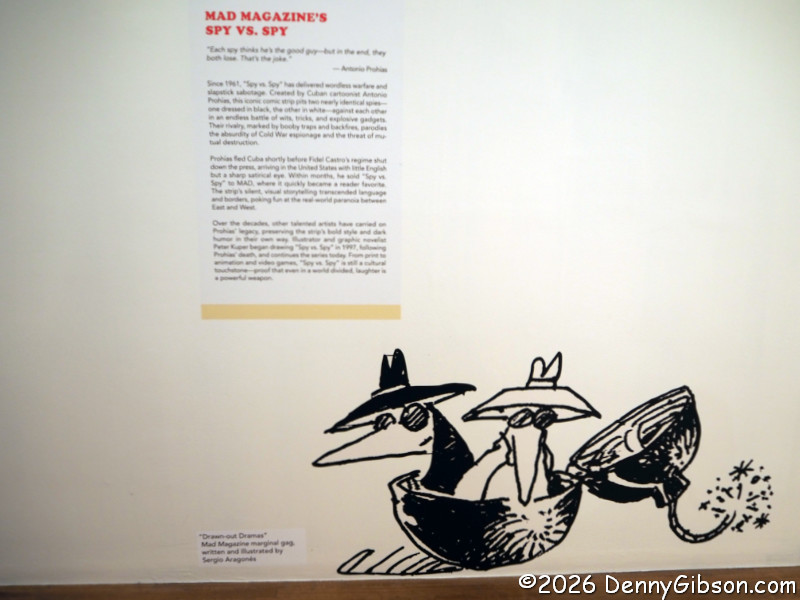
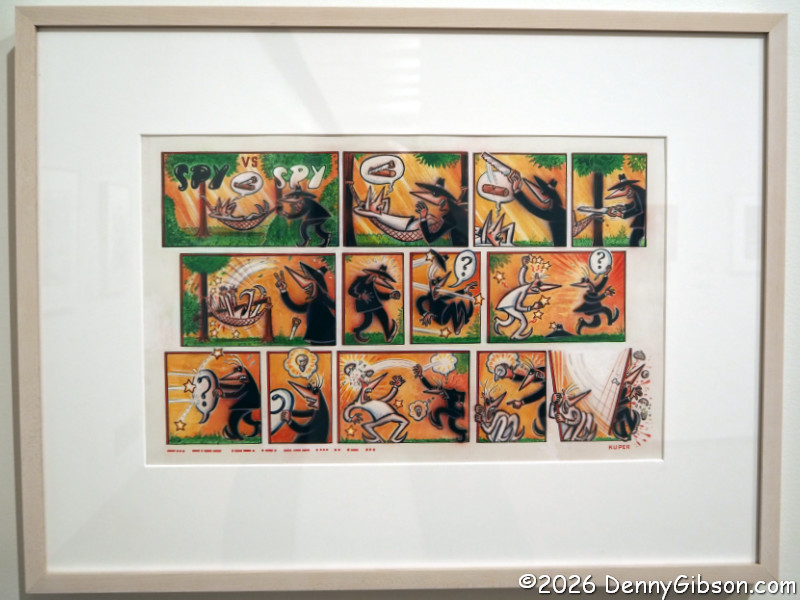
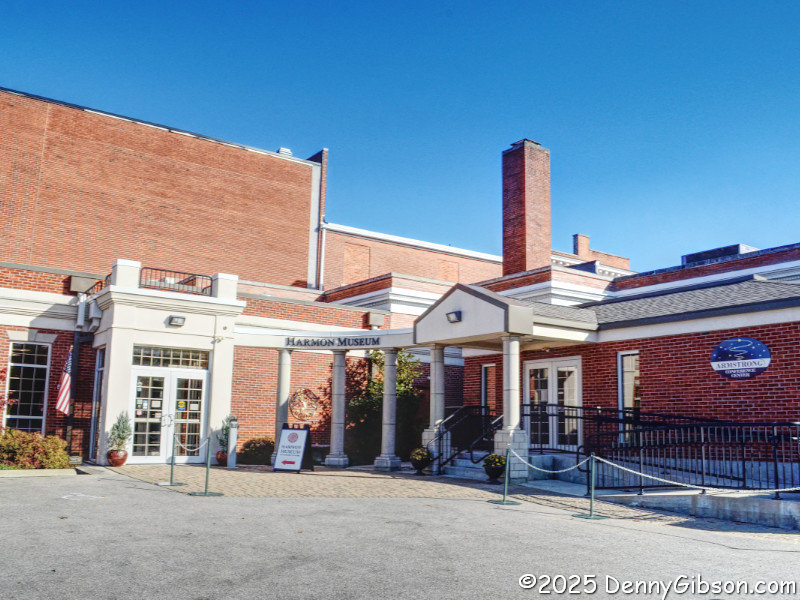
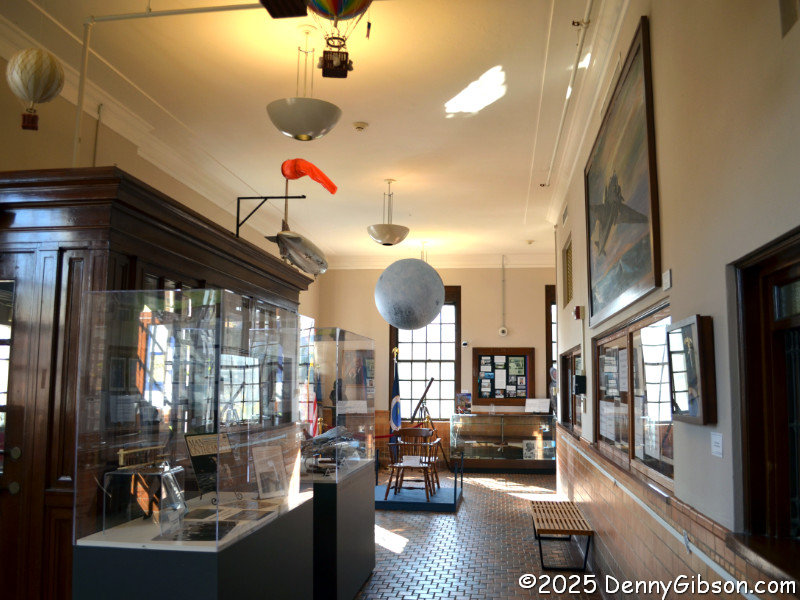
After my return visit to an outstanding Ohio museum last week, my thoughts rather naturally turned to other Ohio museums when considering activities for the mostly open following week. I settled on two I had never visited, then added a sunflower field and a nearly new member of the World’s Biggest club to create a four-stop Friday outing. Although I reached all four, only two can be counted as successful visits.
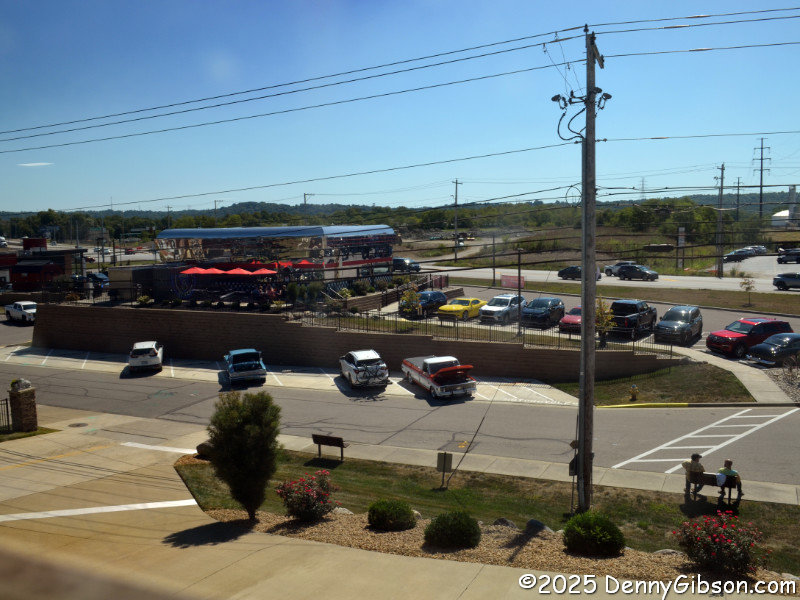
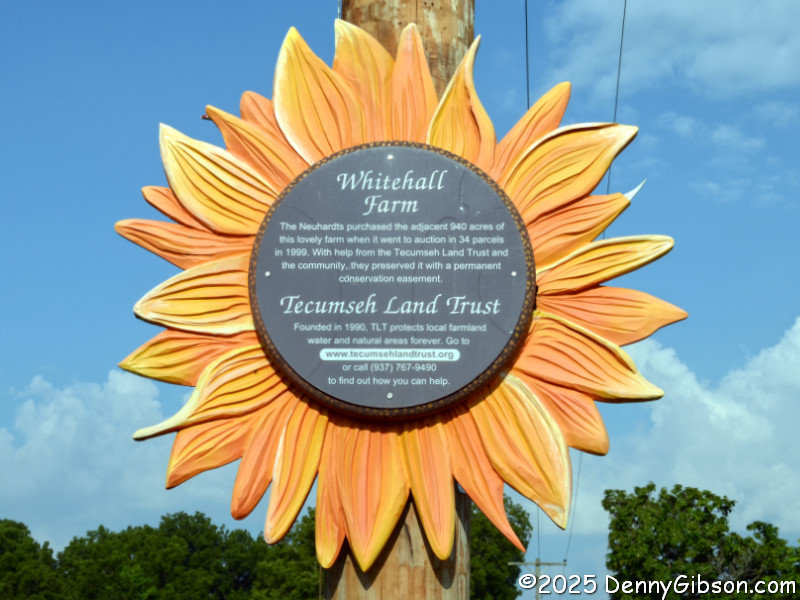
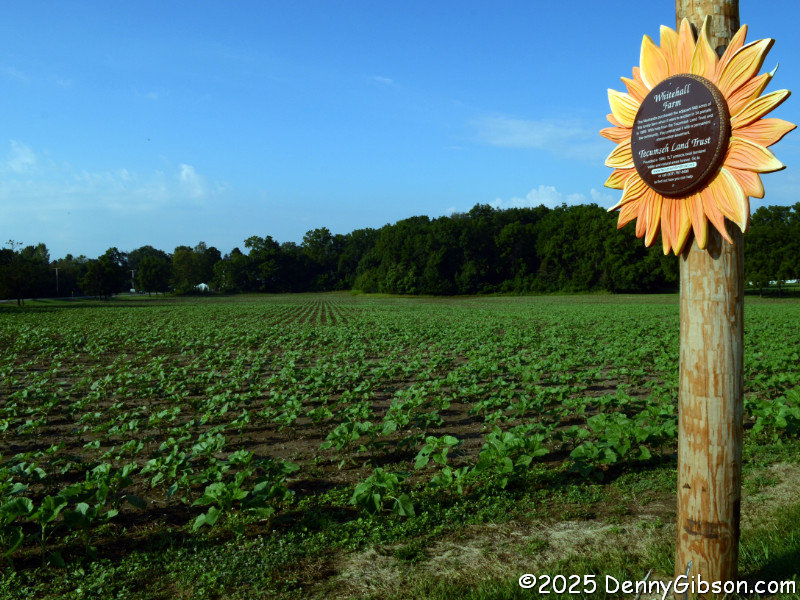
I actually knew there would be no blooming flowers at Tecumseh Land Trust before I left home. When I initially made my plans, I’d found some general information indicating that the field operated in August and September. A few days later, I learned that projected bloom dates for 2025 were near the end of September.

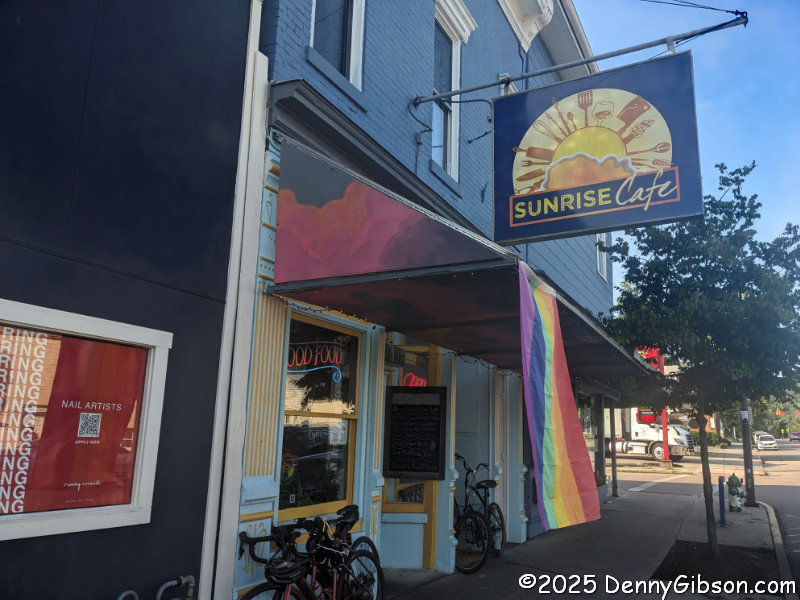
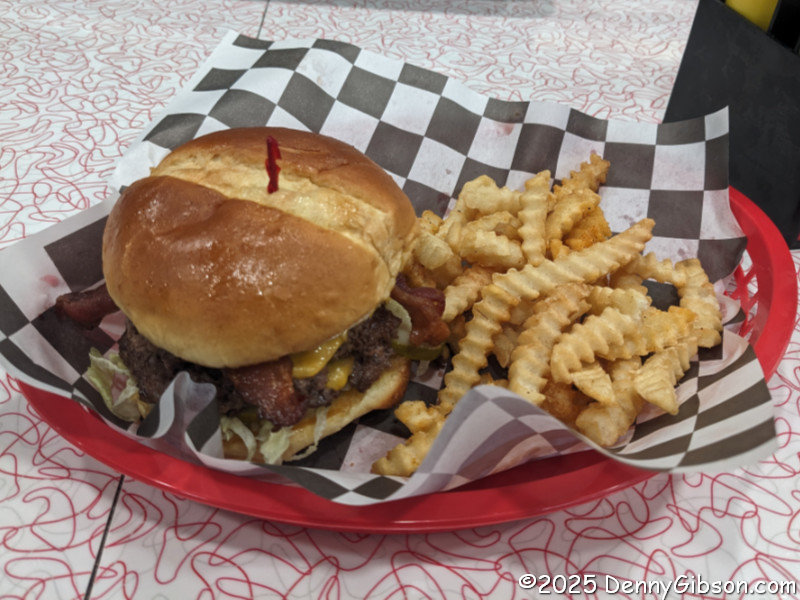
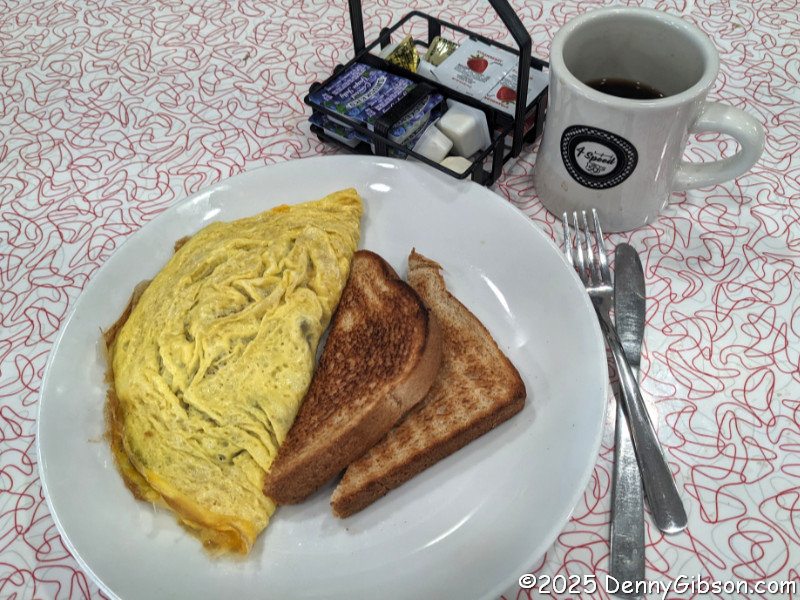
Of course, I considered dropping the field from my agenda, but my appetite was already aimed at one of my favorite restaurants in nearby Yellow Springs. So I stuck with the circuitous two-lane drive and breakfast at Sunrise Cafe rather than the direct but boring expressway route to my second stop. Maybe I’ll come back for a meal — with flowers — next month.

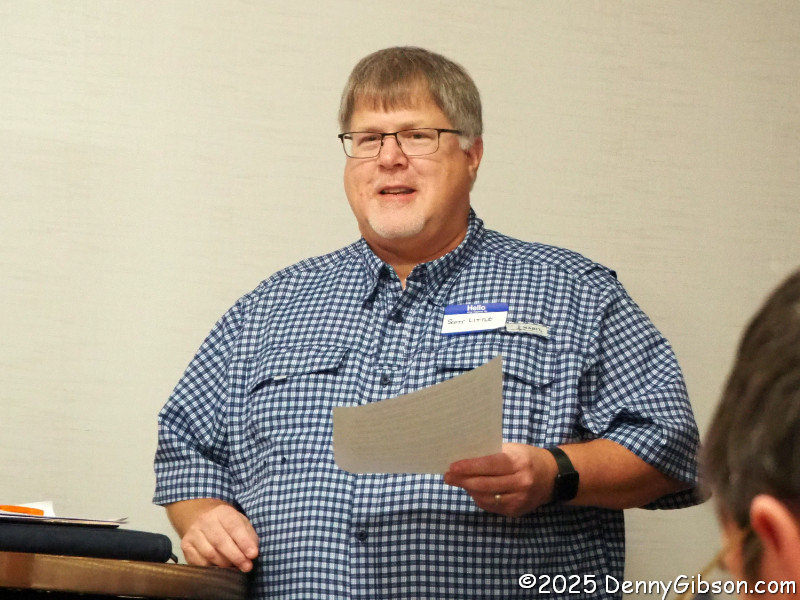
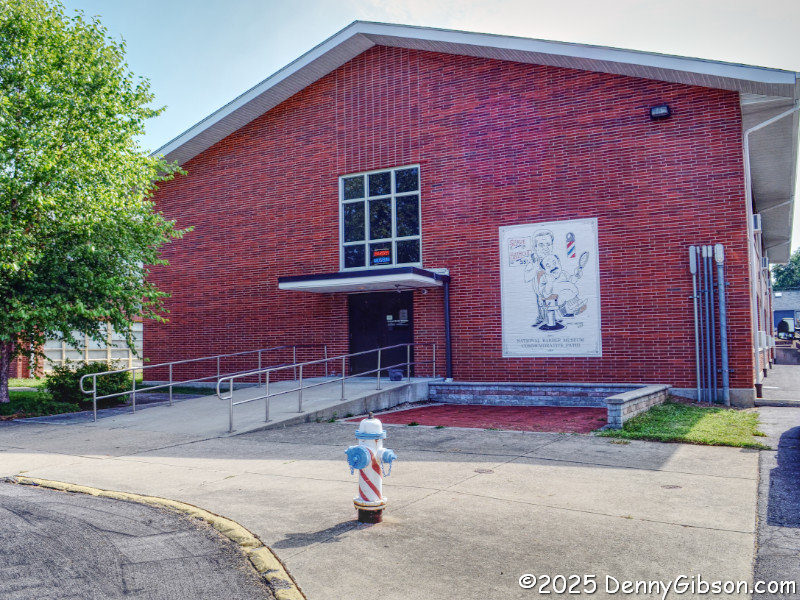
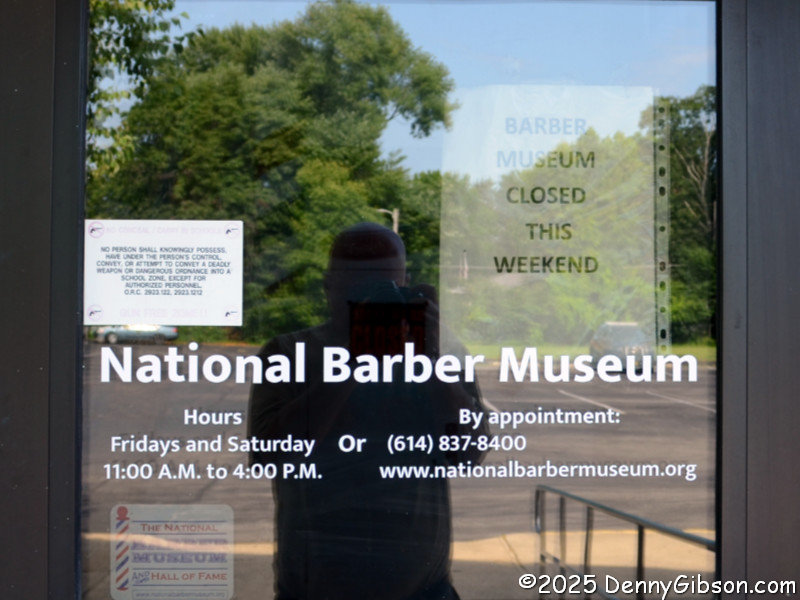
This was what the trip was more or less built around and what I anticipated being the trip’s highlight. Instead, it provided only an accidental selfie. I believe that when I first became aware of the National Barber Museum, all visits were by appointment only. At some point, regular hours on Fridays and Saturdays were added. I was disappointed when I saw the closed notice, but since I was there just a bit before the scheduled opening, I did what I probably should have done earlier. I called. I spoke, I assume, with museum director Mike Ippoliti, who explained that a lack of volunteers and his own recent foot surgery prevented normal operation at present. He expected regular hours to return in a few weeks. I wished Mike well in his recovery and headed to stop number three.

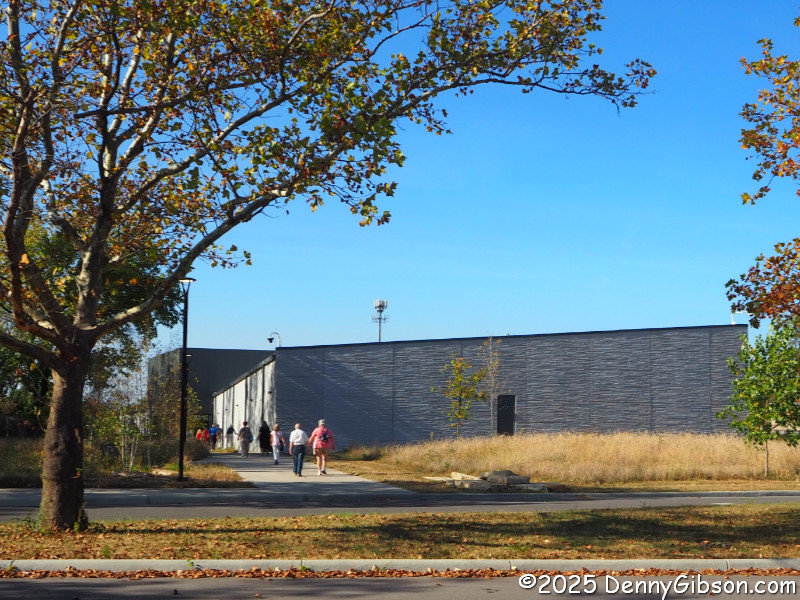
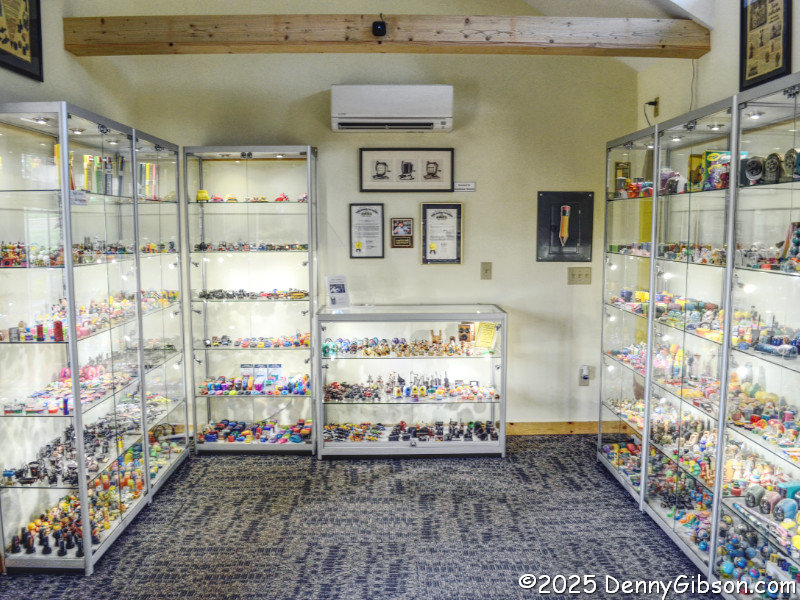
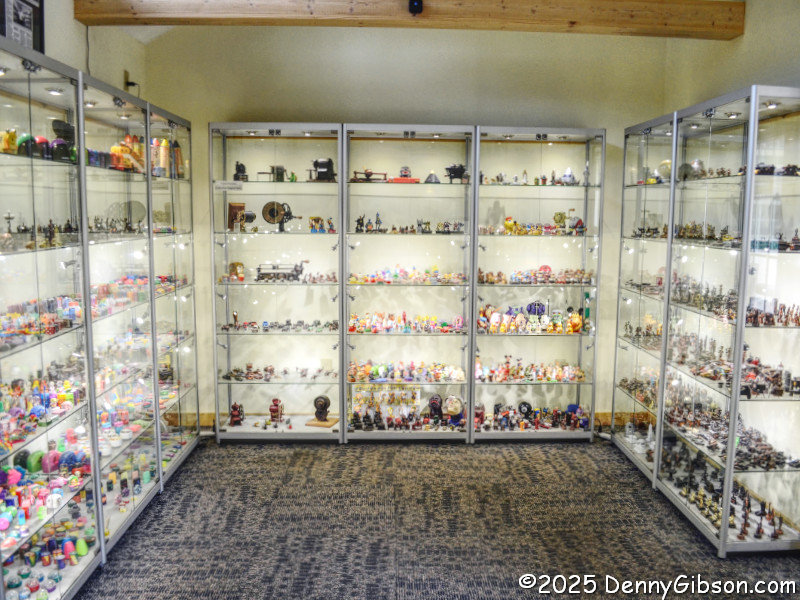
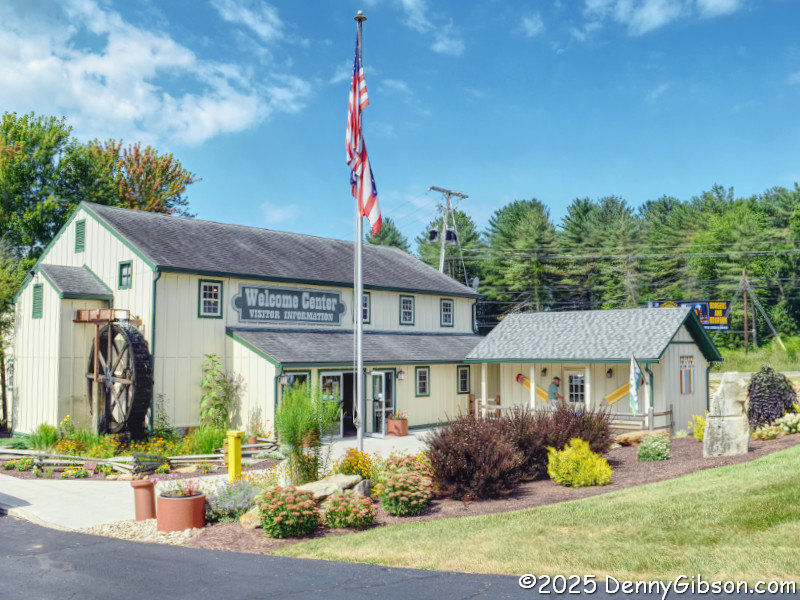
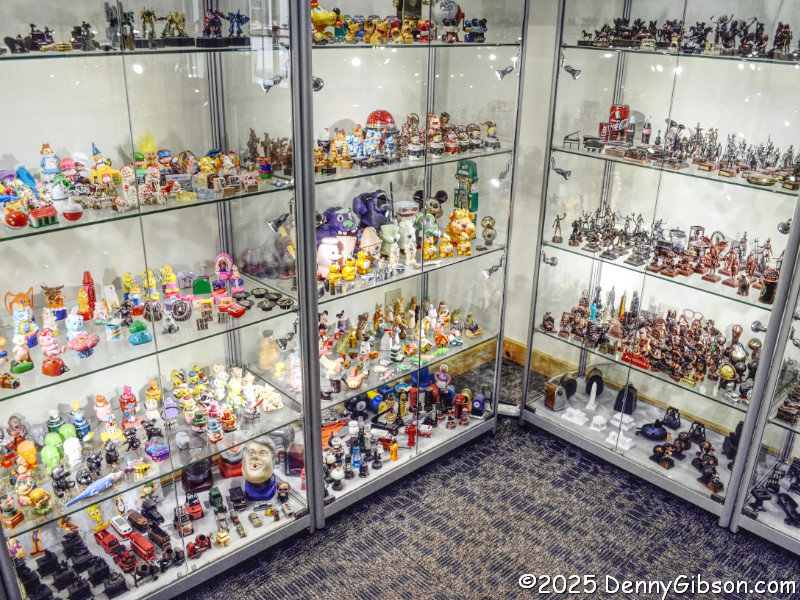
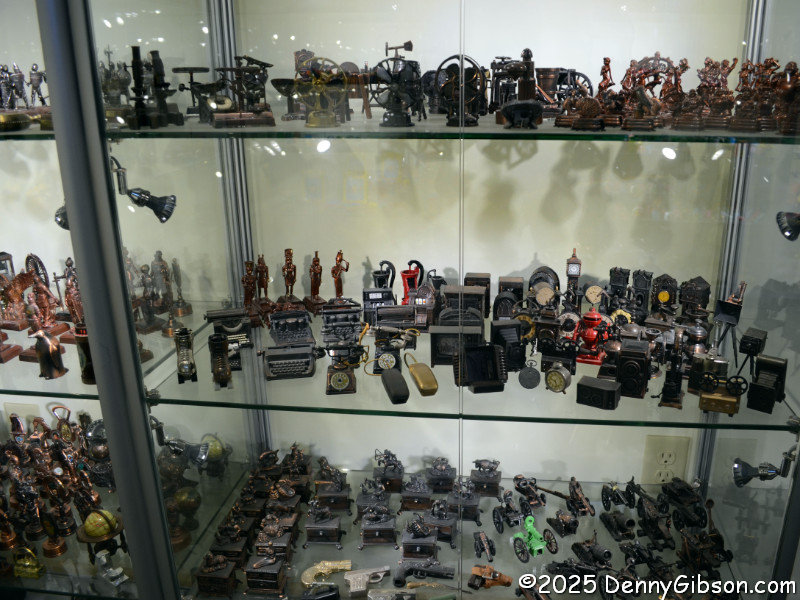
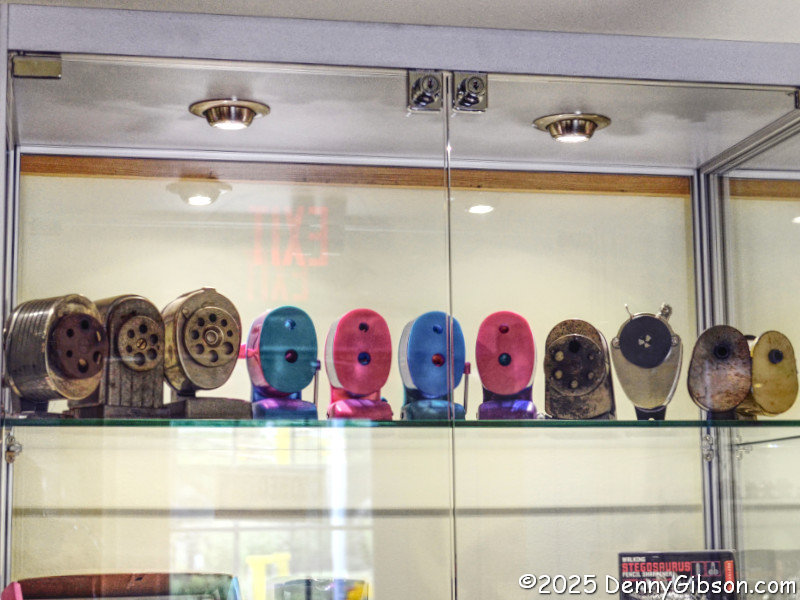
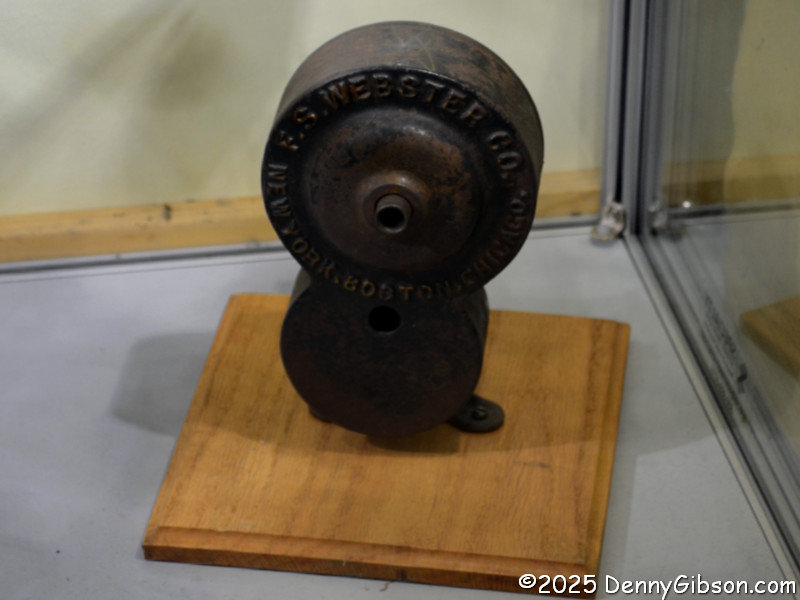
I missed the first two iterations of the Paul A. Johnson Pencil Sharpener Museum. The first iteration was assembled in a shed at Paul A. Johnson’s home. After Johnson’s death in 2010, the nearly 3,500 sharpeners and the shed housing them were moved to the Hocking Hills Regional Welcome Center near Logan, OH. In 2024, the deteriorating shed was replaced by the building on the right side of the first picture. By then, the collection had grown to somewhere around 5,000 sharpeners when the widow of Florida collector Frank Paredes donated all the sharpeners he had amassed to the museum.

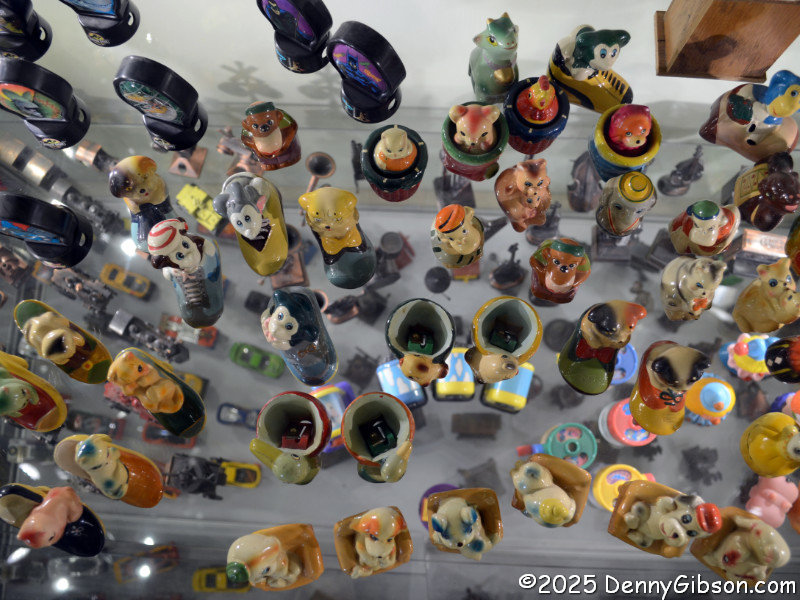
The incredible collection includes sharpeners I remember from my school days, and some even older than that.

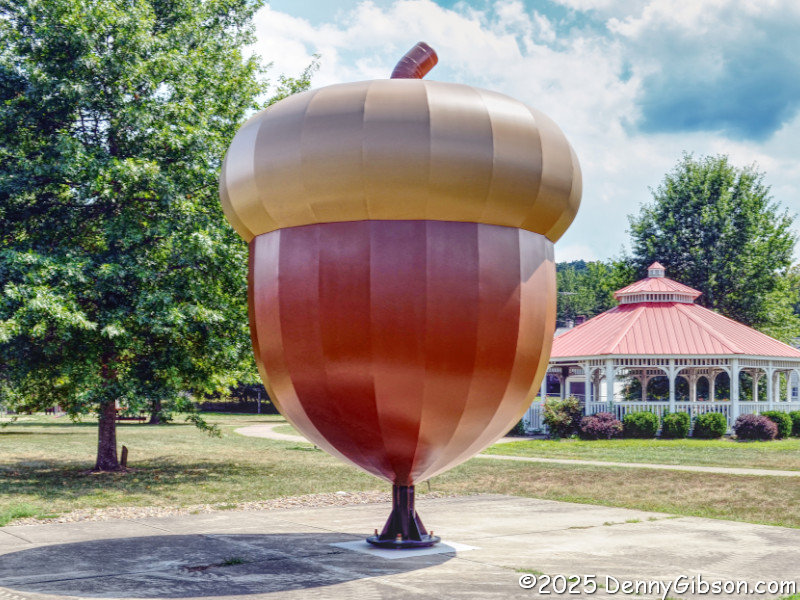
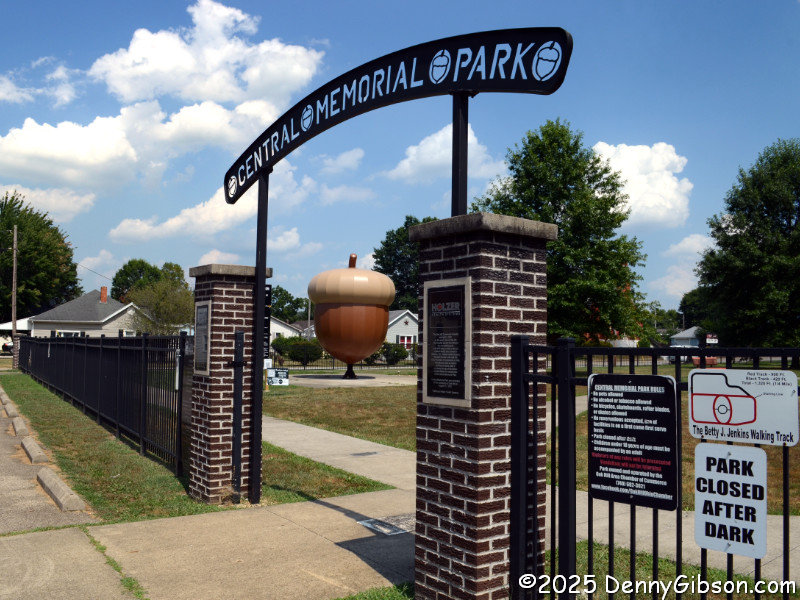
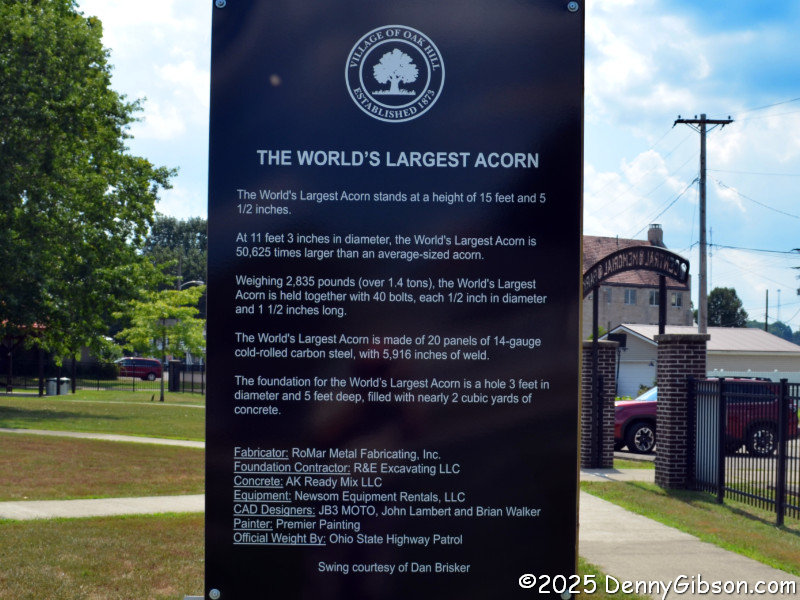
Just over two months before I got there, the town of Oak Hill, OH, erected this giant acorn and declared it the World’s Largest. As far as I know, Raleigh, NC, never claimed that the big nut dropped there on New Year’s Eve was the World’s Largest, but, having some experience with that particular acorn, I was curious about how they compared. It’s not really close. The Raleigh acorn is 10 feet tall, while the height of this one is 15 feet and 5 1/2 inches. That and other statistics are noted on a nearby sign. However, when I went looking for the dimensions of the Carolina nut, I learned that some folks in Silver Springs, MD, may have a legitimate challenge to Oak Hill’s claim. Take a look here. It doesn’t appear that the Guinness record trackers were involved in any of this, so where it all will lead is unclear.

Sunflowers had yet to arrive at the Tehcumseh Land Trust, but I did find some standing tall in the Pioneer Garden at the Hocking Hills Regional Welcome Center, and that lets me end this post on a bright note with a bright bloom.

Back to the Bikes

I have thought of revisiting the Bicycle Museum of America quite a few times in the more than two decades since my first visit. Sometimes it has been when I’m looking for a target for an interesting day trip, and sometimes it has been due to something more specific. The most recent specific event that triggered thoughts of the Ohio museum was my visit to the Cycle Through exhibit at the Cincinnati Art Museum. When I started getting serious about a trip to the bicycle museum, I naturally took a look at the journal for my 2002 visit and noted that I had driven a bit of OH-66 to get there, and that naturally reminded me that I had driven its full length a couple of years later on the first day of a two day trip. The museum visit journal is here. The journal for the OH-66 drive is here.

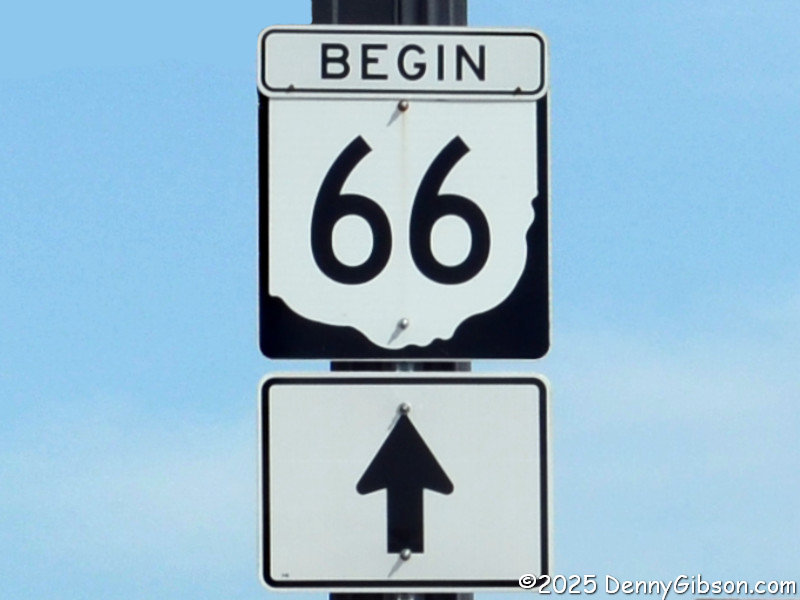
So, I headed to Piqua, OH, and the southern end of OH-66 at US-36. It has become a little fancier over the years and now sports a “BEGIN” tag. That the more famous Route 66 will reach its centennial next year is getting a lot of attention. The centennial of Ohio’s Route 66 was last year, but I missed it. I wished the route a belated 100th as I started my drive. Although I drove all of OH-66, the museum was the trip’s focus, and I did not make a lot of other stops.

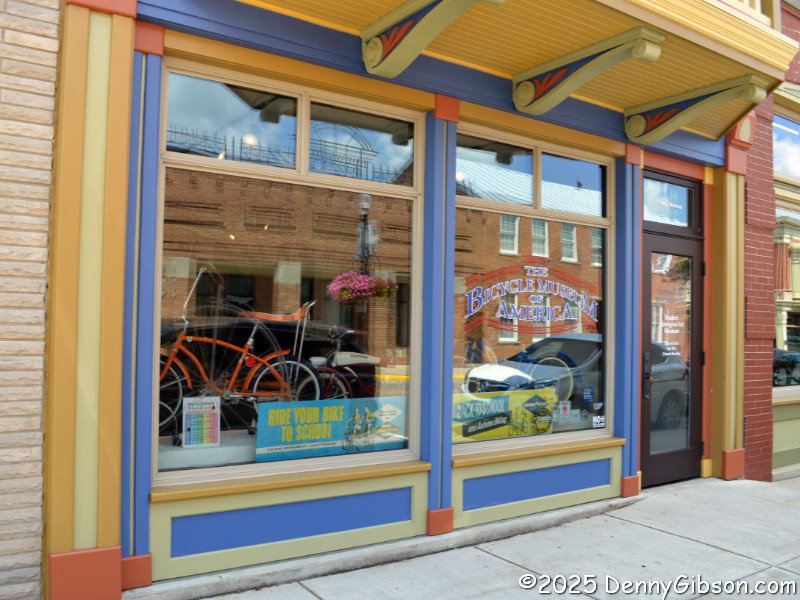
Cars parked on the street in front of the museum kept me from getting a clear picture of the building. It and other older nearby buildings housing restaurants and such are well maintained and picturesque, and make New Bremen quite an attractive town. The attendant, whose name I have absolutely no excuse for not asking, was extremely friendly and helpful. One of the things I learned while planning this trip was that the museum owned one of four surviving Schwinn bicycles from Pee-wee’s Big Adventure. I suspected that this might be the one I had recently seen in Cincinnati, and started to ask. I did not quite get my question fully formed before learning that not only was that customized DX Cruiser on loan from the museum, but so was every other bicycle in the display. I should have known that. The Cycle Thru! description on the Cincinnati Art Museum’s website notes that it is made up of “over 20 bicycles from The Bicycle Museum of America in New Bremen, Ohio”. Just one more thing I missed.

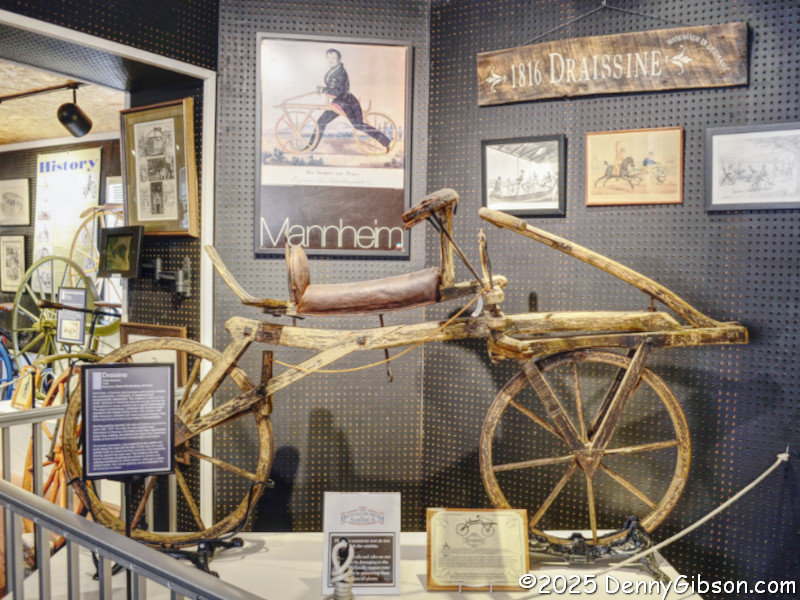
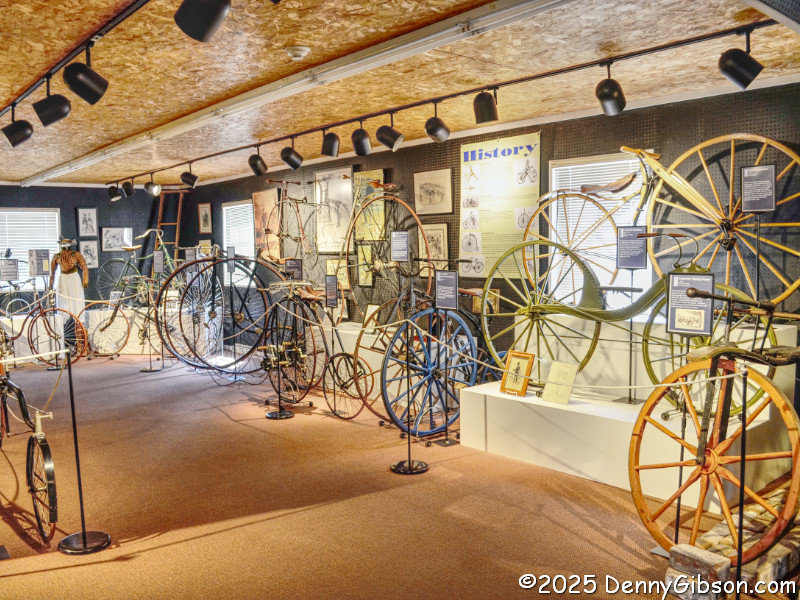
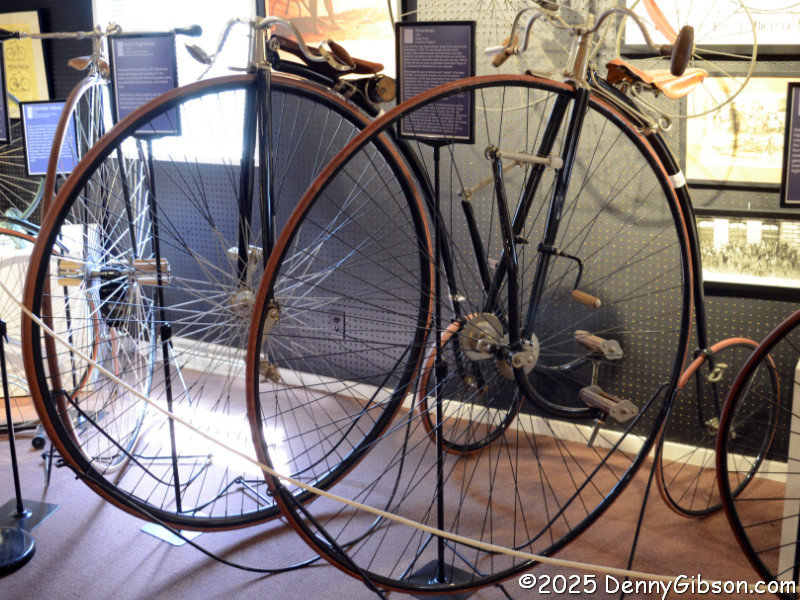
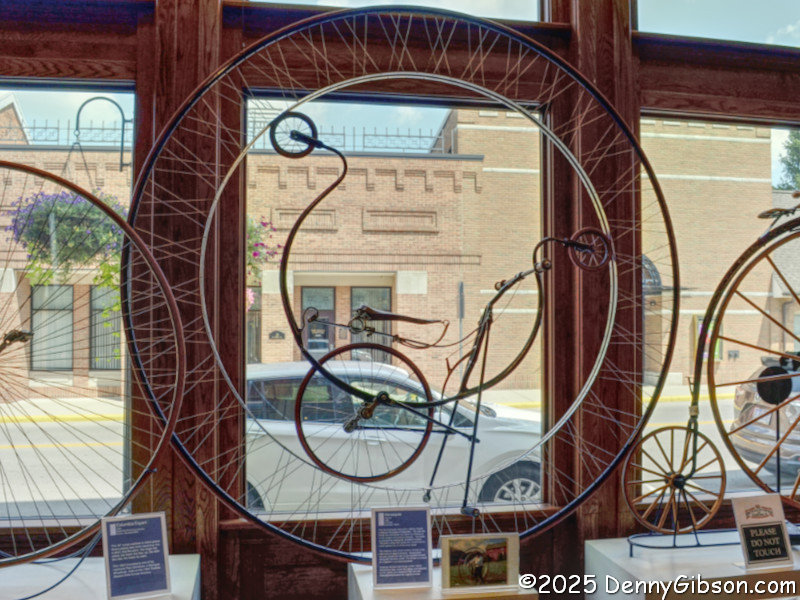
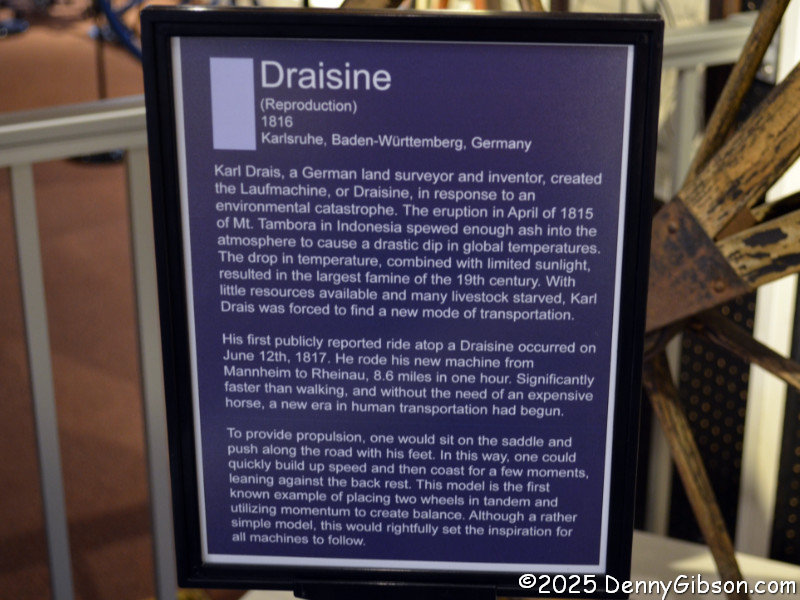
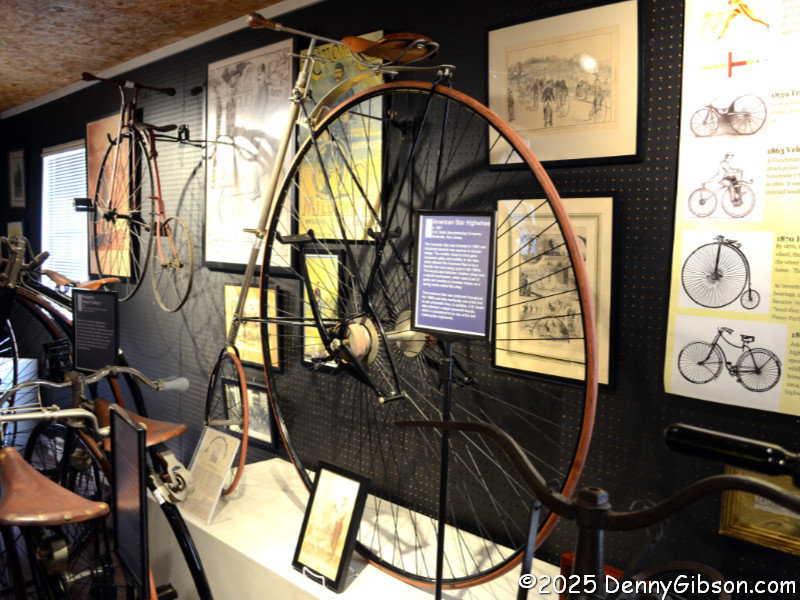
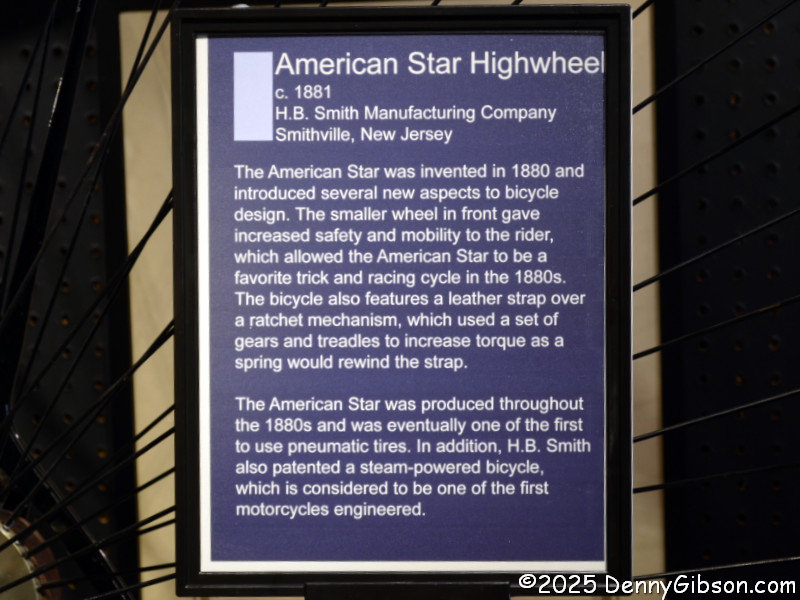
The museum contains a replica of an 1816 Draisine, which is the earliest known use of motion to balance on two tandem wheels. There are, of course, quite a few penny-farthings among the historic vehicles on display. When I first heard that name many years ago, I initially thought it had something to do with cost, but soon learned that it came from the idea that those big-wheeled bicycles looked like a large British penny coin paired with a small farthing coin. In the middle of all those historic bicycles is something that looks more like a farthing-penny. It’s an American Star Highwheel, which tried to make things a little safer by putting the little wheel in front. The H.B. Smith Manufacturing Company, makers of the American Star, also patented a steam-powered bicycle, and yes, I would like to see one of those.

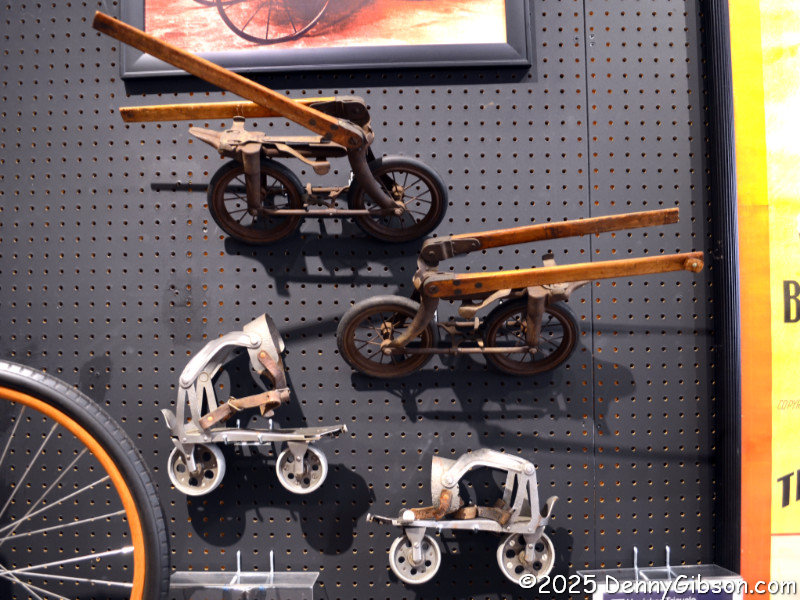
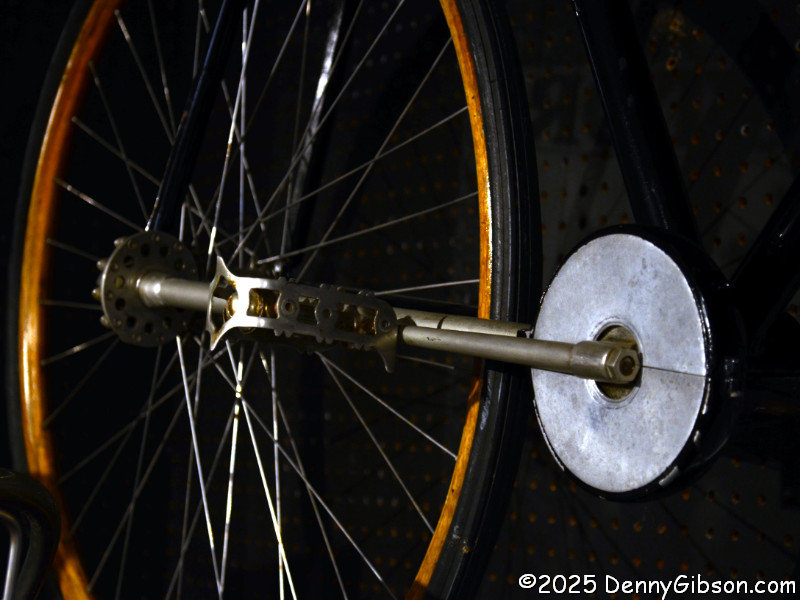
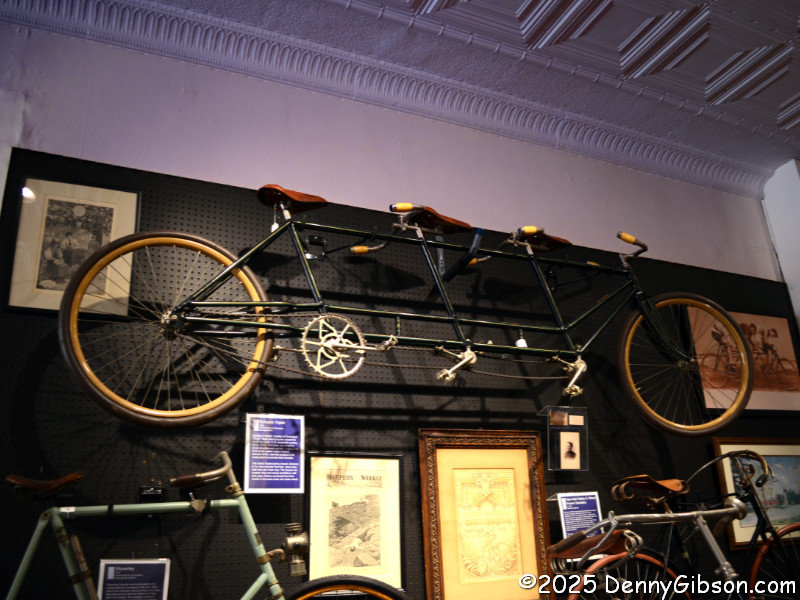
In fairly short order, inventors applied gears, chains, and straps to eliminate the need for a huge wheel to achieve a decent speed, and the penny-farthing became a thing of the past. In addition to those on display, the museum has one on rollers with “trainer steps” for anyone wanting to give it a try. Of course, inventors did not stop inventing. A different way to go riding with your friends can be seen on the wall behind the steps. Bicycles with driveshafts existed before the nineteenth century ended, and inline skates clearly aren’t as new as you might think.

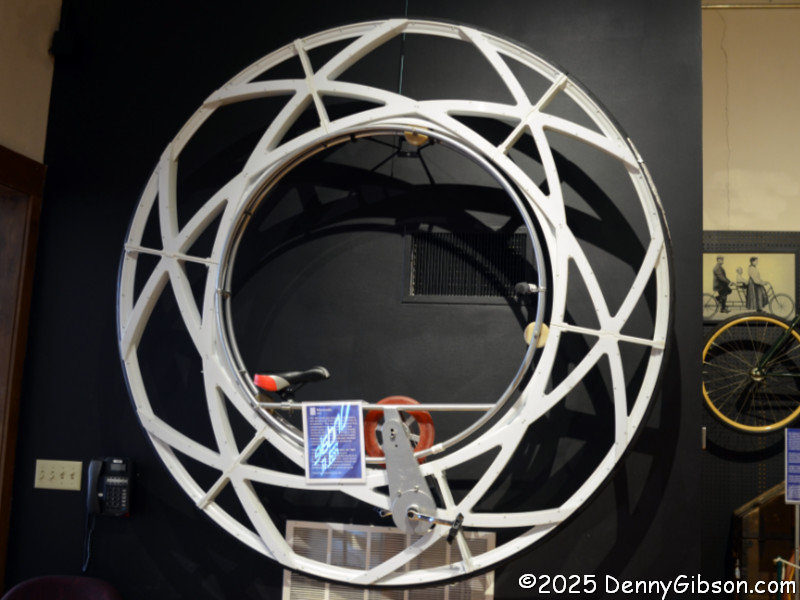
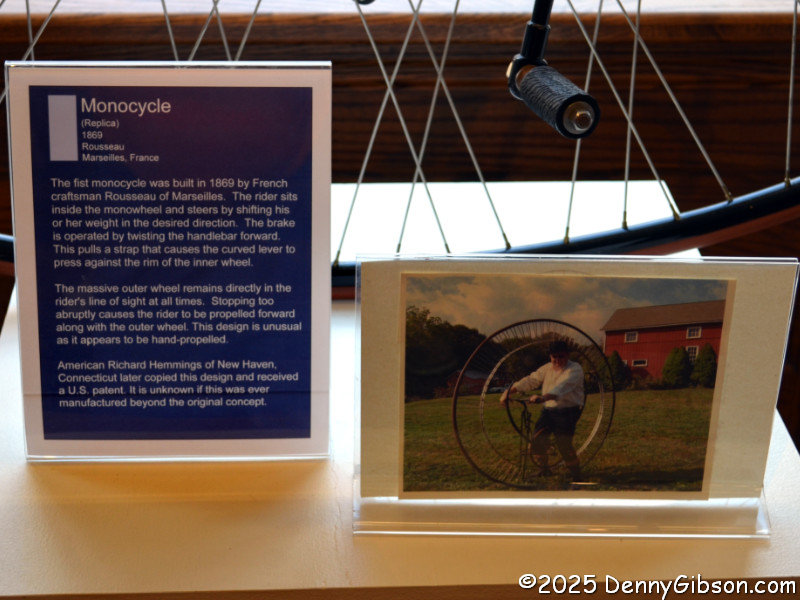
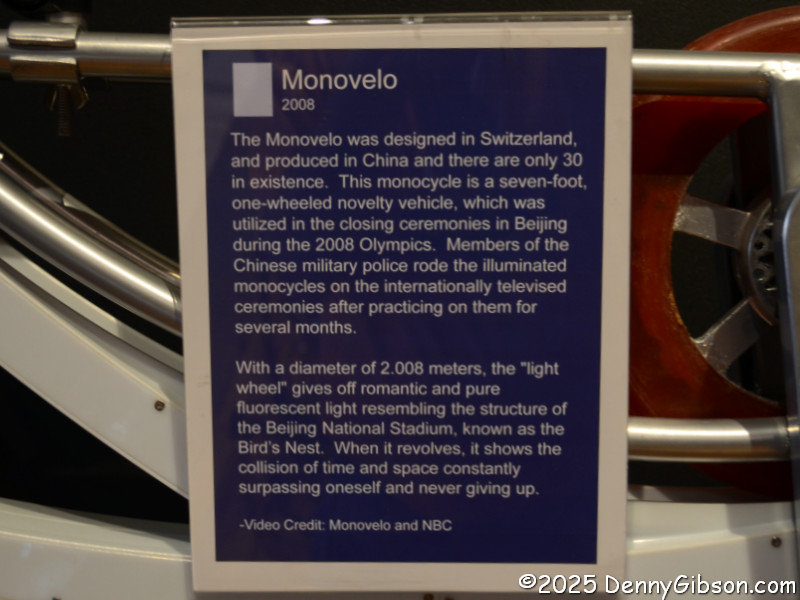
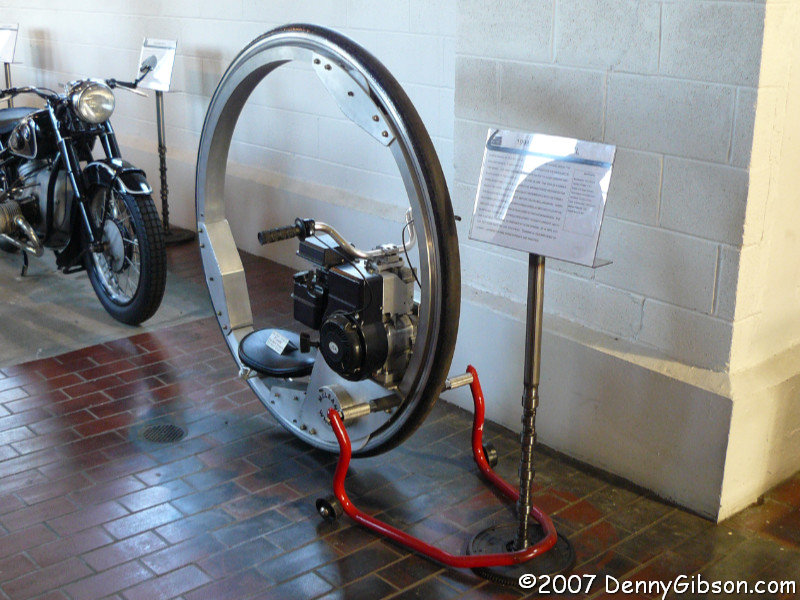
Backed by one of the museum’s windows is a replica of a monocycle from 1869. The museum also has one of just thirty existing Monovelos from 2008. Monocycles are just plain weird. Fitting between these two date-wise is a 1998 motorized version at the Lane Motor Museum in Nashville.

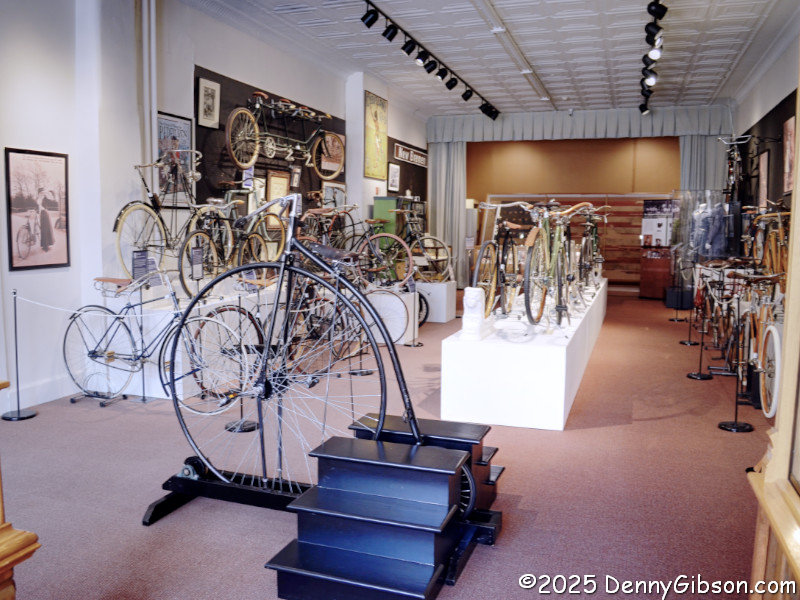
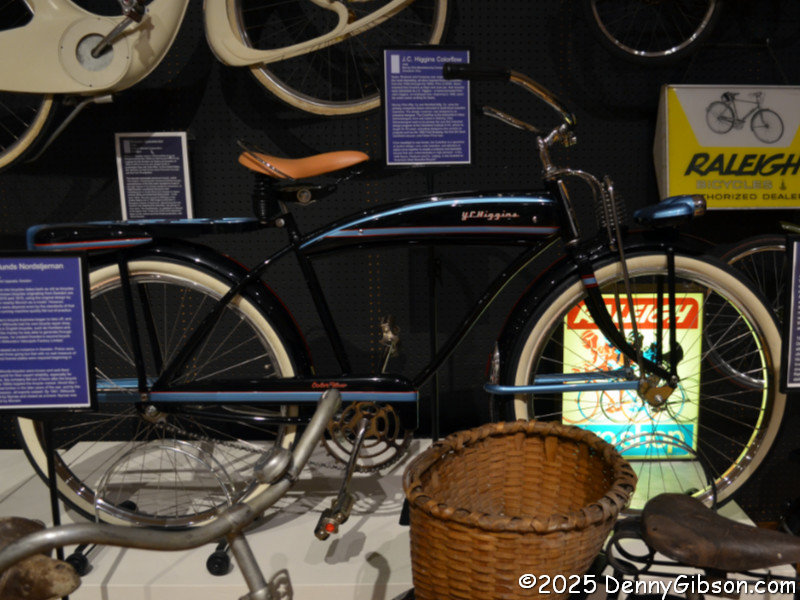
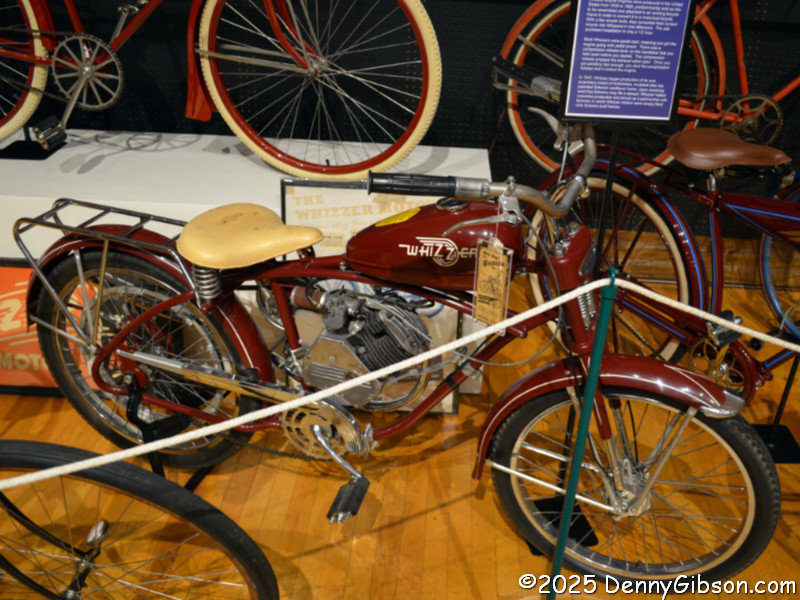
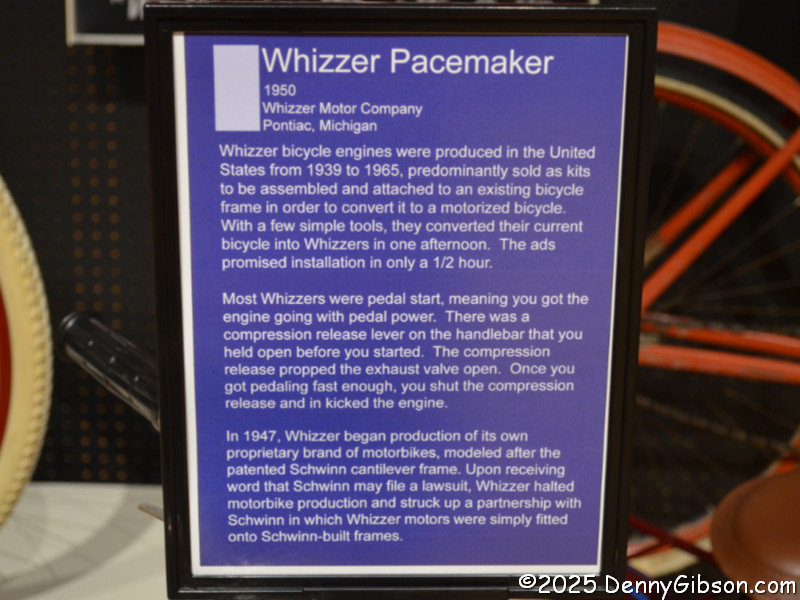
The museum has about 800 bicycles in its collection, so even with twenty on loan in Cincinnati, there is no problem keeping a couple hundred on display. The challenge is picking which ones that will be. That’s the same challenge I have picking which photos to post. I could go on and on, but I’m going to cut it off here with a pair I have at least a tiny personal connection to. My first motorized vehicle was a 1948 or ’49 Whizzer. The one pictured is a 1950. That’s a 1949 J.C. Higgins Colorflow in the other photo. My first new vehicle was a 1960 J.C. Higgins Flightmaster that is the subject of what I believe is the most popular post ever on this blog. The Flightliner post is here. A post on the Whizzer is here. Before leaving, I learned that the museum has a 1960 girl’s Flightliner in storage. Flightliner fans, keep your eyes peeled. It could come out someday.

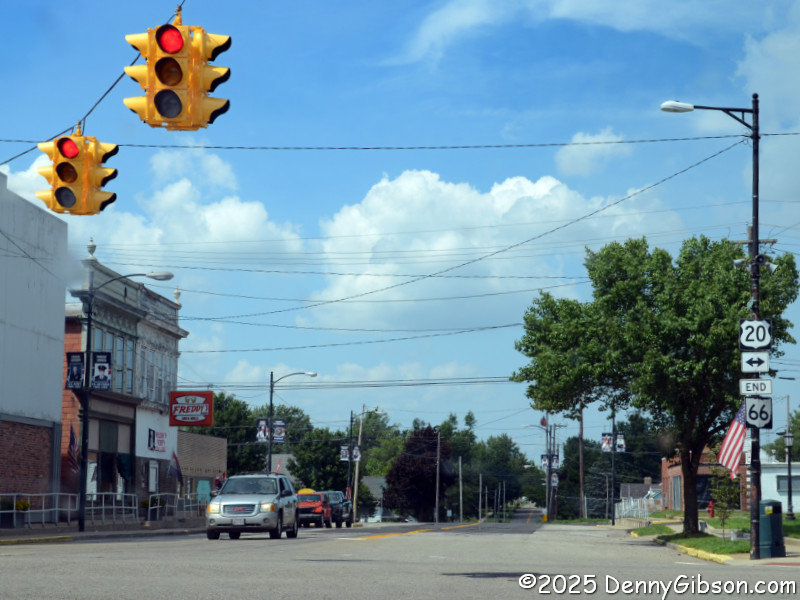
I did make a couple of stops beyond the museum, but they were related to my 2004 OH-66 drive rather than to OH-66 in general. Where the route ends at US-20 in Fayette, I was happy to see an “END” tag that was not there in 2004. I celebrated completing the route with a Budweiser in the same building where I celebrated in the same manner twenty-one years ago, but the name was now Freddy’s Place instead of Harry’s Tavern, and the Bud came in a can instead of a bottle.

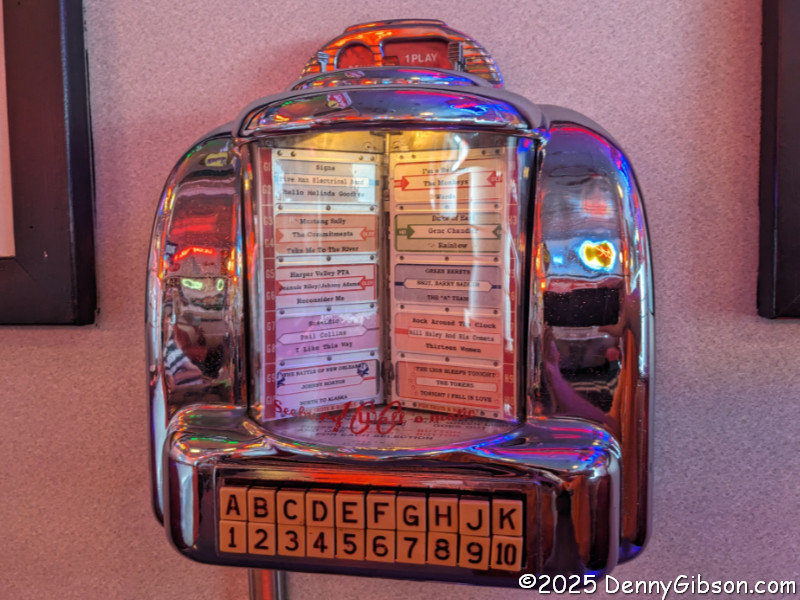
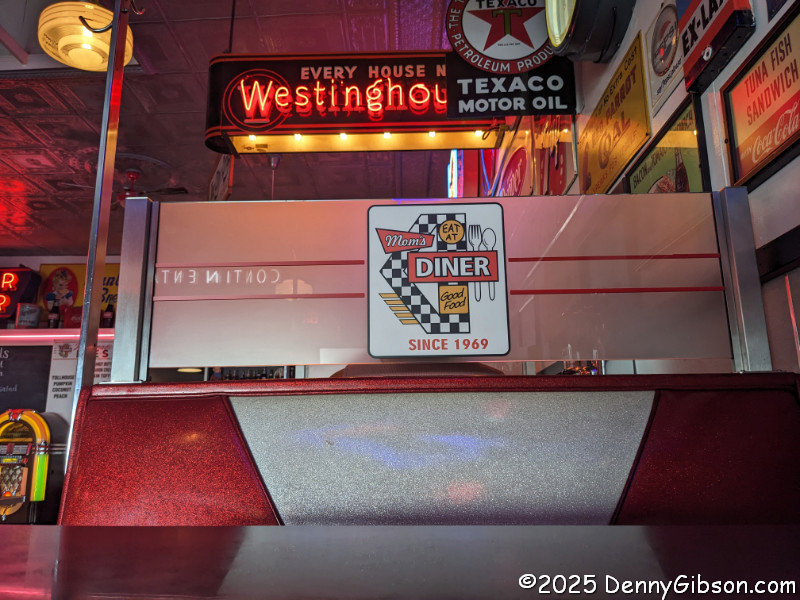
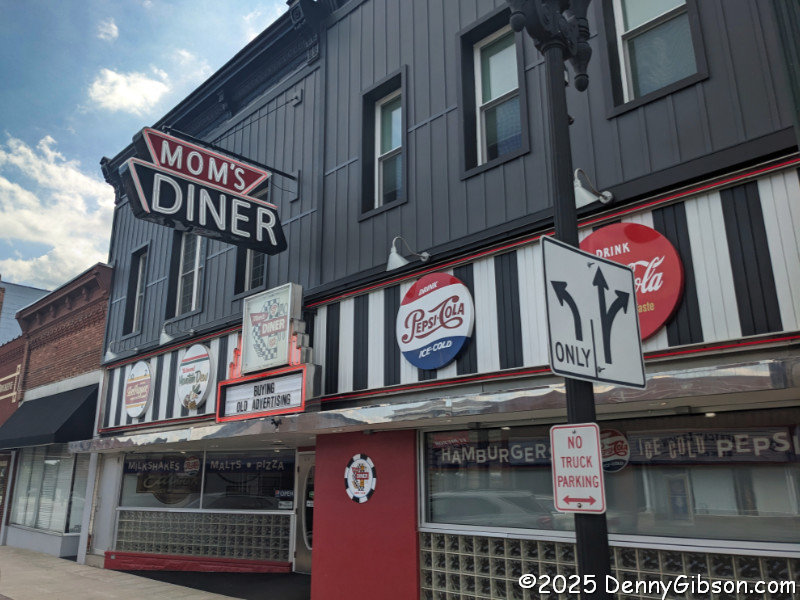
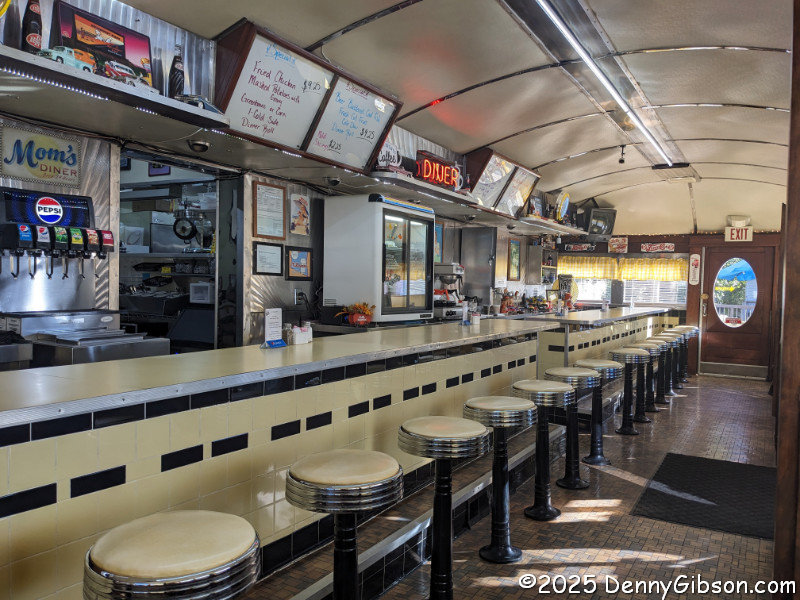
I also repeated my dinner stop in Archbold, where Mom’s Diner was not only still in business but had a new pseudo-neon sign hanging out front. With the exception of a few details, the inside looked essentially the same. I did not record what I ate in 2004, but today I had the fish sandwich special. The place was fairly busy when I arrived and just about full when I left. That not only kept me from taking many photos, but it also interfered with my jukebox playing. In ’04, I played “That’ll Be The Day”, but today it wasn’t an option. In ’04, I had the juke box all to myself, but that wasn’t at all the case today. By the time I settled on “Rock Around the Clock”, someone had beaten me to it. My quarter went for “Mack the Knife” by Louis Armstrong and His All Stars.

Trip Peek #146
Trip #104
Sweetheart Cruise 2012

This picture is from my Sweetheart Cruise 2012 trip. This was my second time participating in a cruise that a group of St. Louis area road fans frequently organized near Valentine’s Day. I spent the first day reaching Mitchell, IL, to check out the recently relit Luna Cafe sign which I used for the trip’s signature photo. The following day was spent cruising in a nine-car caravan from Mitchell to Carlinville, and the next two days were spent trying to follow a straight line home. A real highlight of the cruise was my one and only meeting with Bill Shea and my only time inside his museum in Springfield, IL.


Trip Peeks are short articles published when my world is too busy or too boring for a current events piece to be completed in time for the Sunday posting. In addition to a photo thumbnail from a completed road trip, each Peek includes a brief description of that photo plus links to the full-sized photo and the associated trip journal.

Herding the Wheel Horses West

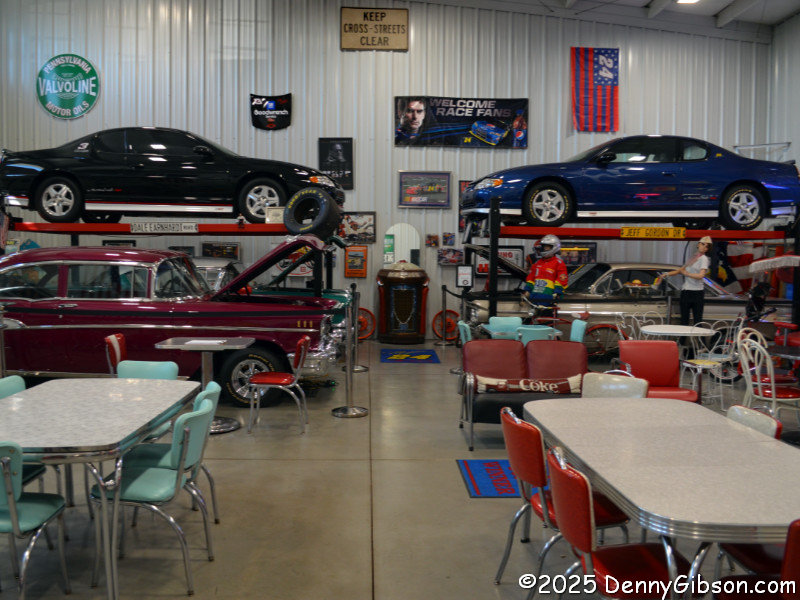
Near the end of last summer, my friend Terry, the Wheel Horse collector, sold a tractor to Bill Throckmorten of Grant King Race Shops, and I rode along to deliver it. Bill is Grant King’s nephew. He and his wife Stephanie currently own the shop. Back in the 1960s and ’70s, Wheel Horses were used at the Indianapolis 500 to move race cars in the pits and other areas. There was also a race week event featuring celebrities piloting 33 of the red tractors in a one-lap race known as the Indy 2 1/2. Because of that connection, Bill wanted a Wheel Horse for the museum at what he calls “A Working Race Shop Museum”, and to maybe move a few cars around. There is a pretty good video overview of the shop/museum and the accomplishments of Grant and Bill here.

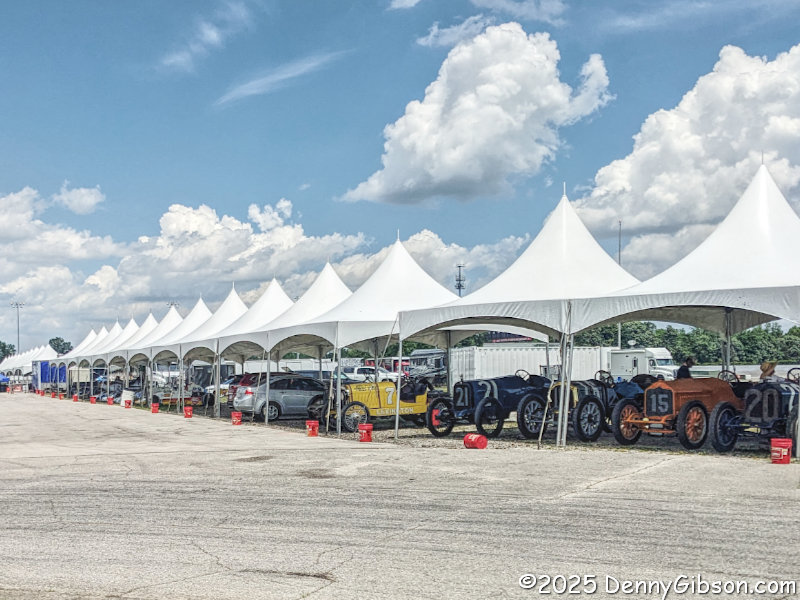
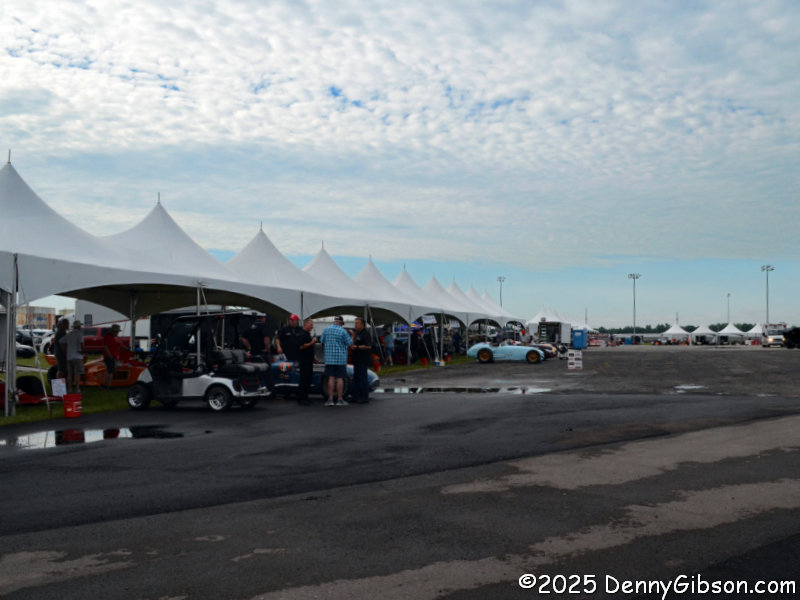
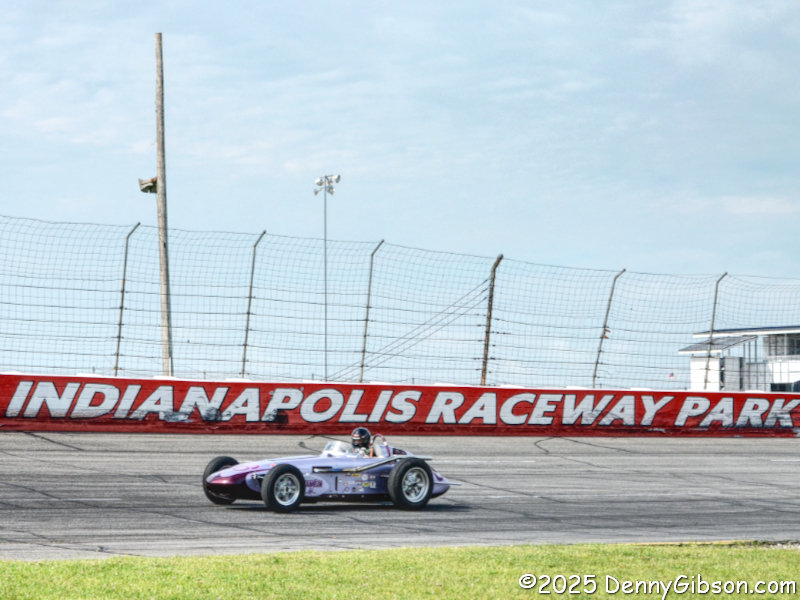
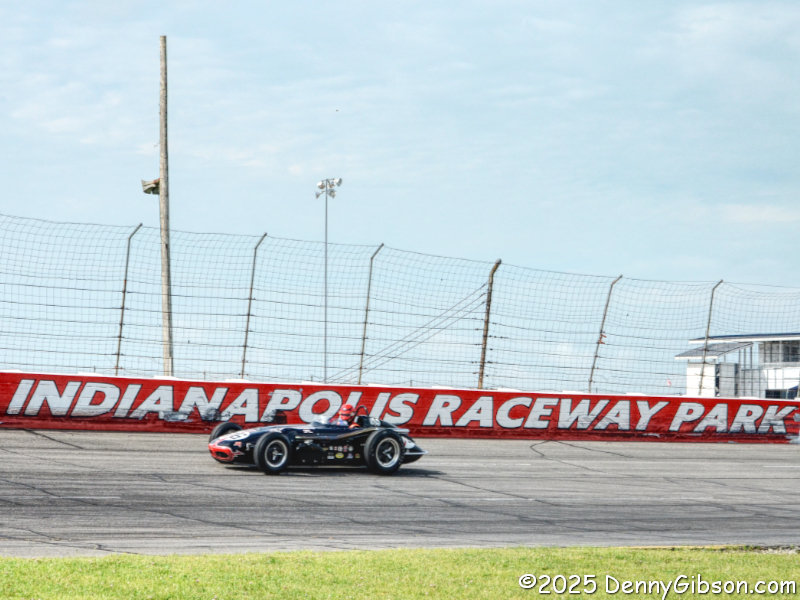
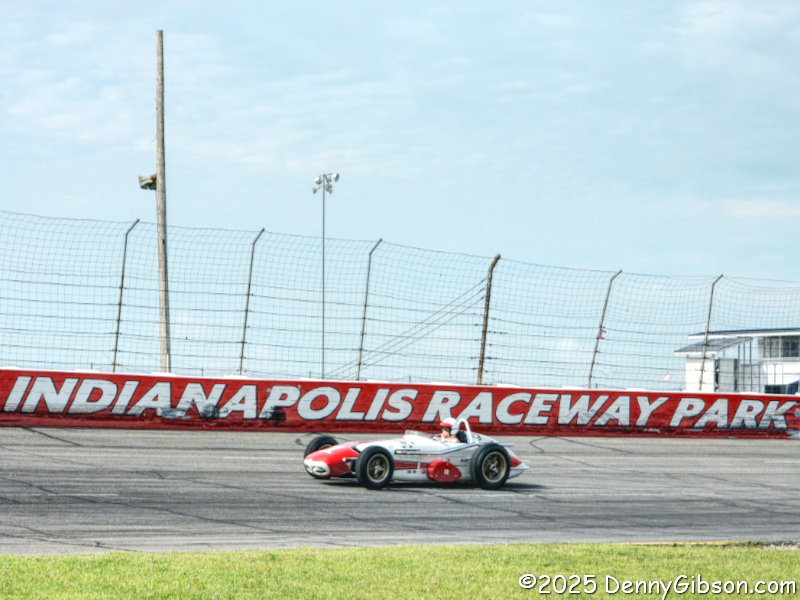
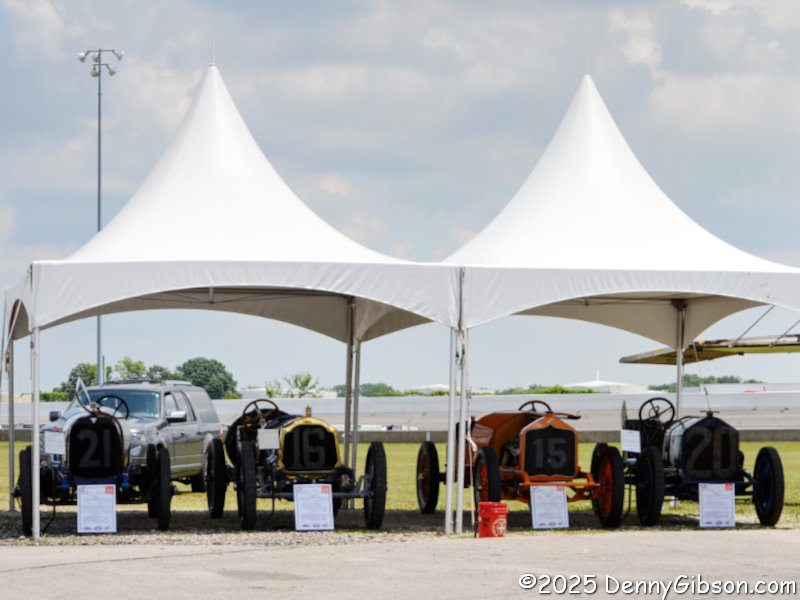
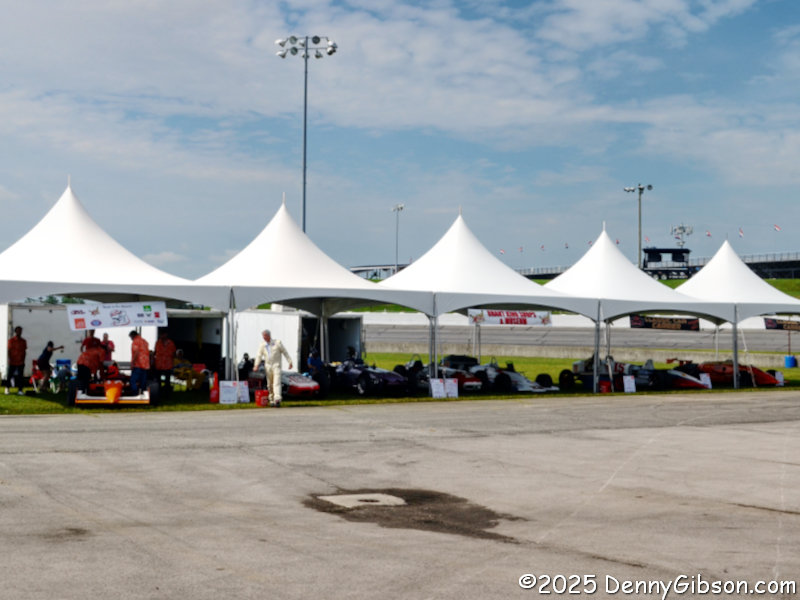
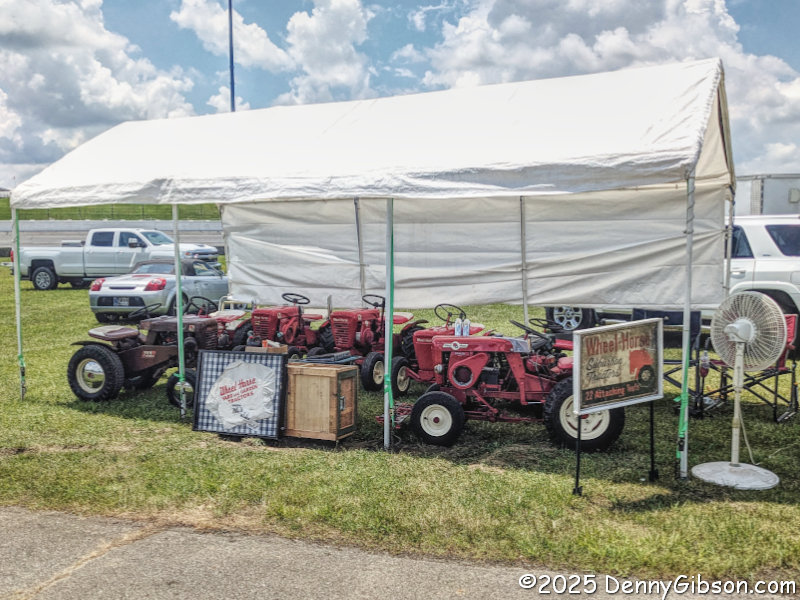
One of Bill’s accomplishments is the cofounding of Indy Legends. After giving us a tour of that really cool museum, he invited Terry to display some of his Wheel Horses at their next event at Indianapolis Raceway Park. That event was last weekend, June 28-29, and I again got to tag along. I snapped the opening photo from where the Wheel Horses were displayed.

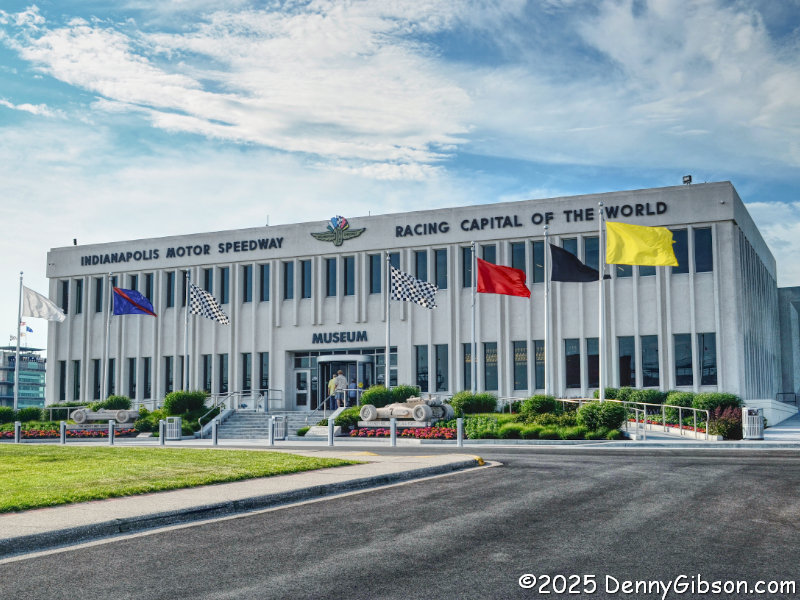
Friday was setup day, followed by an evening reception at the Indianapolis Motor Speedway Museum. Stephanie Throckmorten made sure we had wristbands for both the reception and access to IRP. Setting up in ninety degrees was pretty exhausting for old guys like us, although Terry dealt with it better than I did. We both took advantage of the showers at Lion’s Club Park, where we were staying, before heading to the reception.

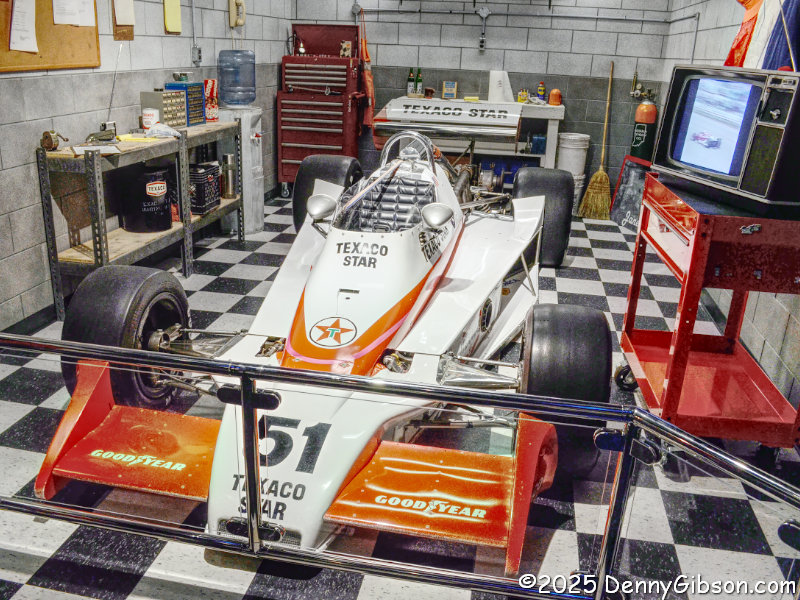
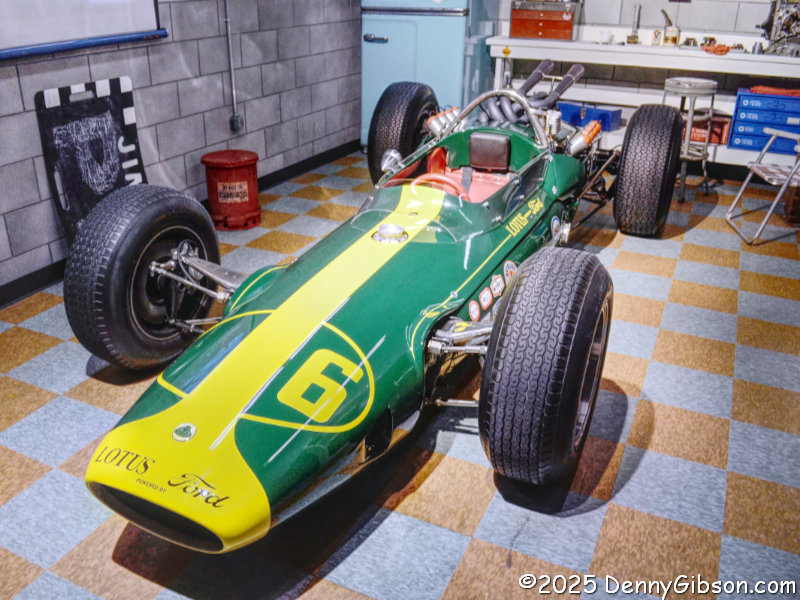
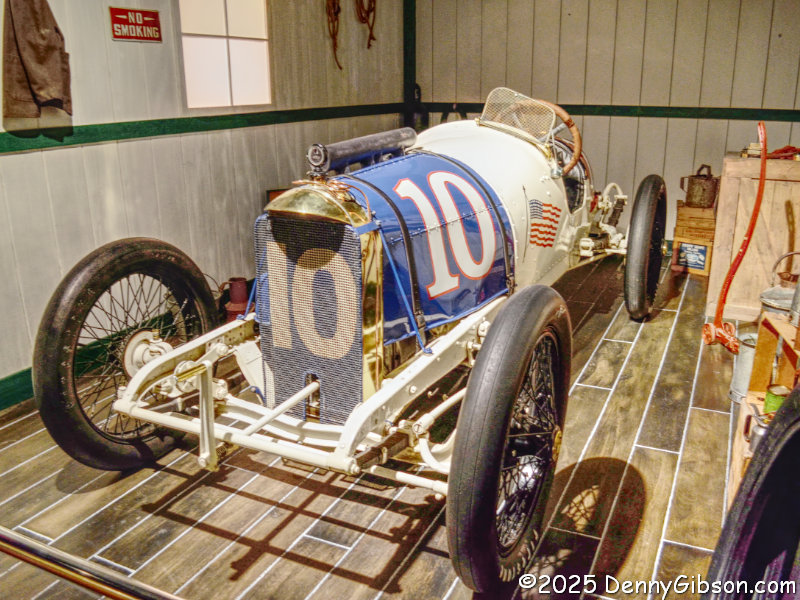
The museum reopened less than three months ago following a year-and-a-half-long closure and $60 million renovation. One of the first areas inside the entrance is a series of simulated garages holding some very significant cars from the speedway’s history. Eddie Rickenbacker drove this 1914 Duesenberg to a tenth-place finish in 1914. Rickenbacker served as IMS President from 1927 to 1945. Jim Clark put this green Lotus on the pole in 1964, but broken suspension meant a 24th-place finish. Parnelli Jones drove the car to 2nd place in 1965. In 1977, Janet Guthrie broke the Indy 500 gender barrier, then drove this Offenhauser-powered Wildcat to a 9th-place finish in 1978.

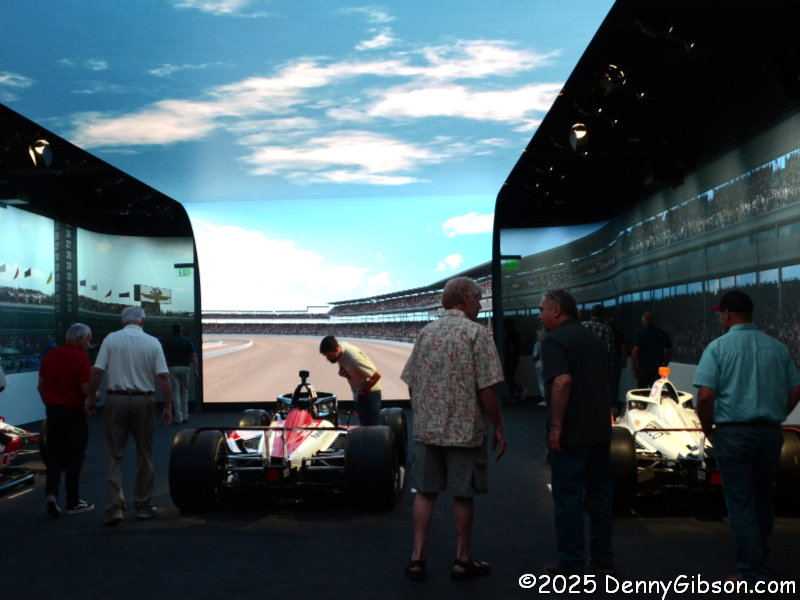
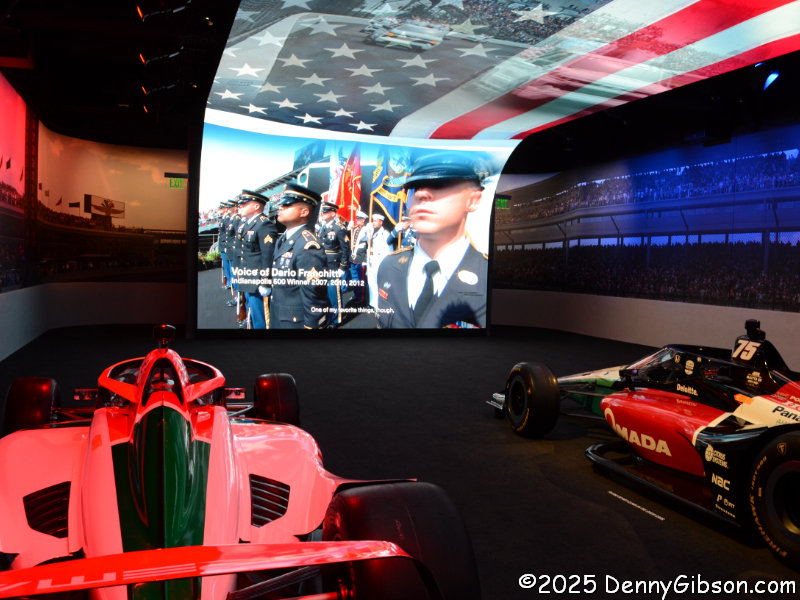
An attendant at the entrance to the next section assures entry between presentations of a video shown on a wrap-around vertical screen. Scenes from parades, pit activity, flyovers, and race starts are combined with exhaust sounds from real cars in the area to generate a semblance of race day anticipation.

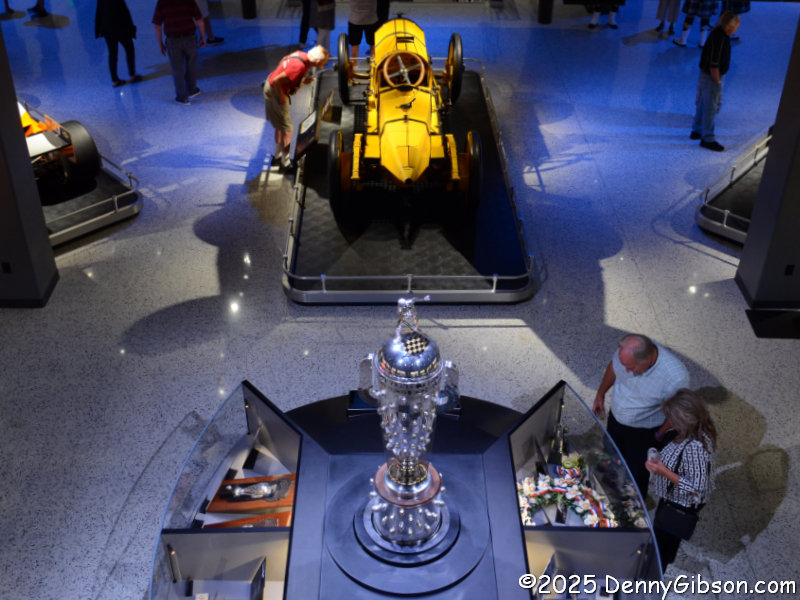
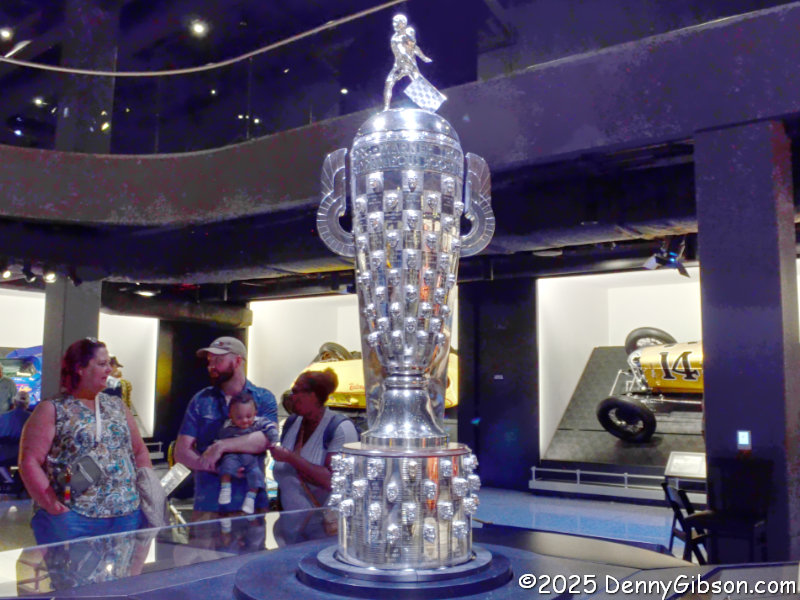
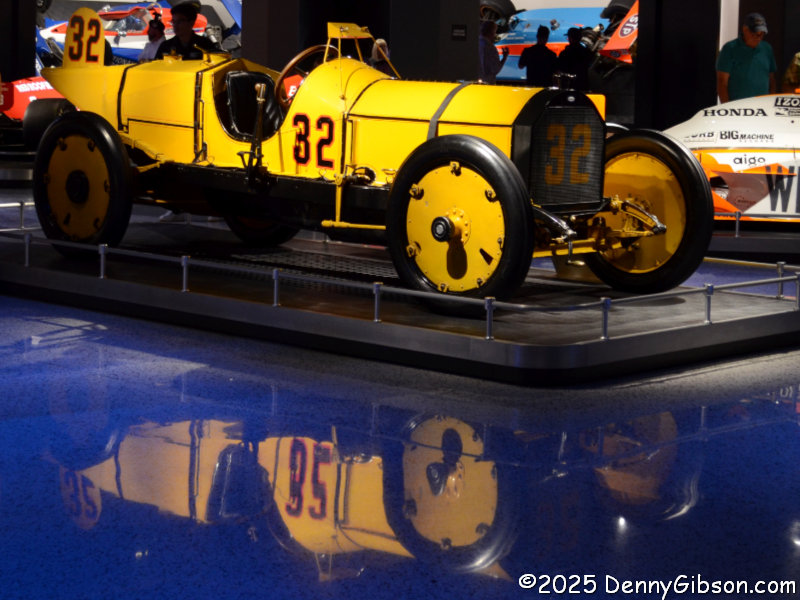
There is a mind-boggling number of cars and artifacts on display in the museum. Of course, I took a ton of pictures, but there is a lot more going on this weekend, so I am really limiting what I’m posting. Here’s a picture of the Marmon Wasp that Ray Harroun drove to victory in that first Indy 500 in 1911, and one of the Borg-Warner Trophy. Although the trophy was first presented in 1936, the winners of every 500 are represented on it. The Marmon and the Borg-Warner appear together in the photo taken from the new mezzanine.

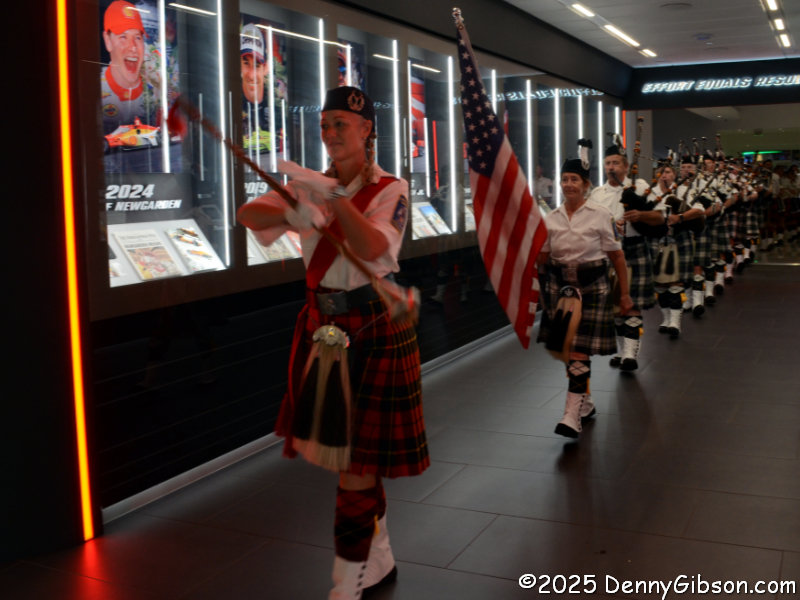
The reception was a first-class affair with hors d’oeuvres, beverages, and opportunities to chat with museum officials and employees. Terry and I missed the first performance by the Indianapolis 500 Gordon Pipers but were there for their second outing as the reception began to slow down. They would also appear at the race track near the end of the day’s activities on Saturday.

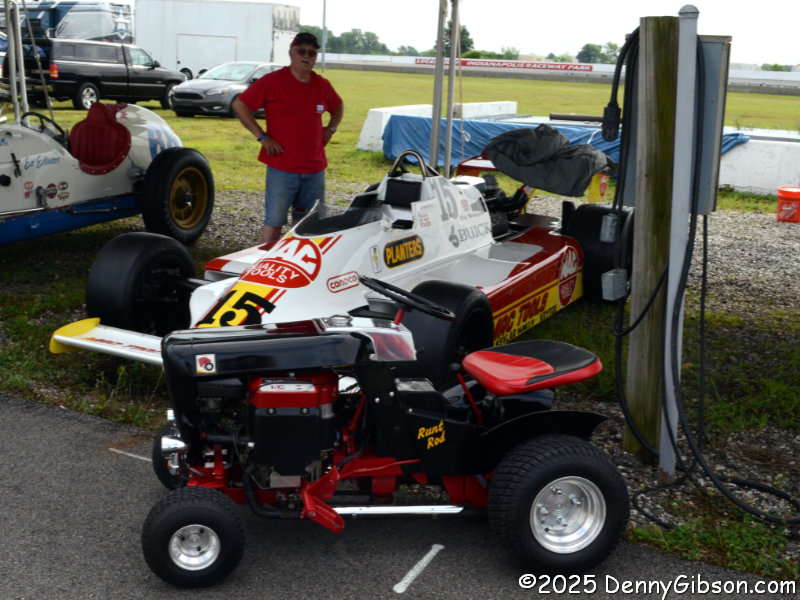
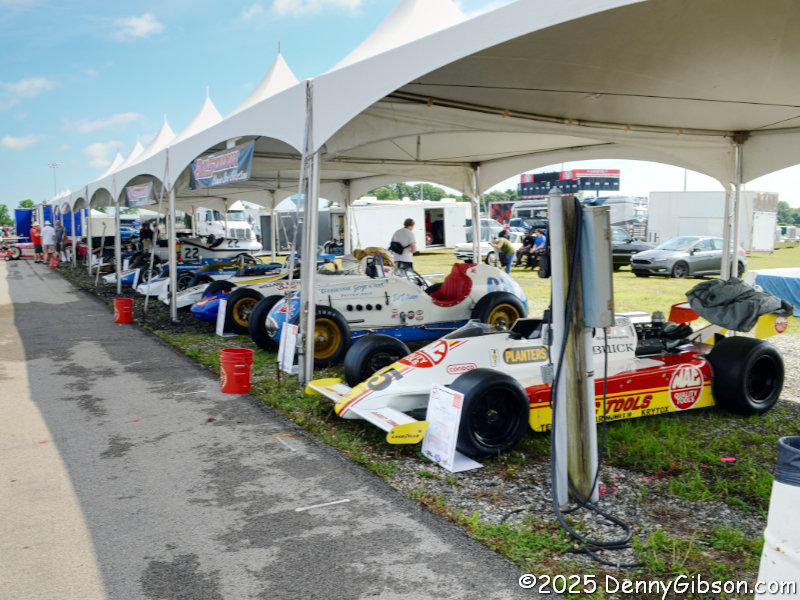
This was the beginning of activities on Saturday. Overnight rain had sounded a lot heavier than it actually was, but some drying out was in order nonetheless. We cleared some water from our canopy, then did a little cruising and car spotting while the track was being dried. Terry posed for a picture with a Mac Tools-sponsored racer and his own “Runt Rod” racer. I believe it is the only non-stock Wheel Horse in his fleet.

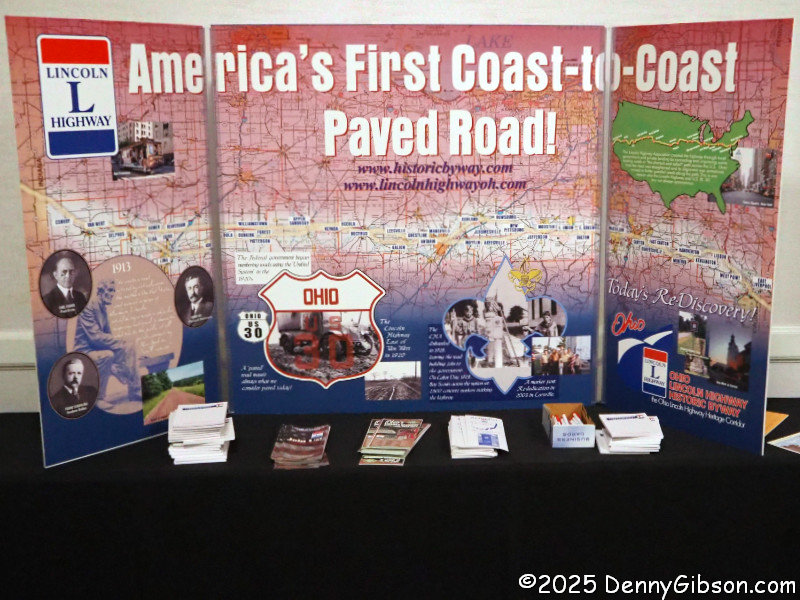
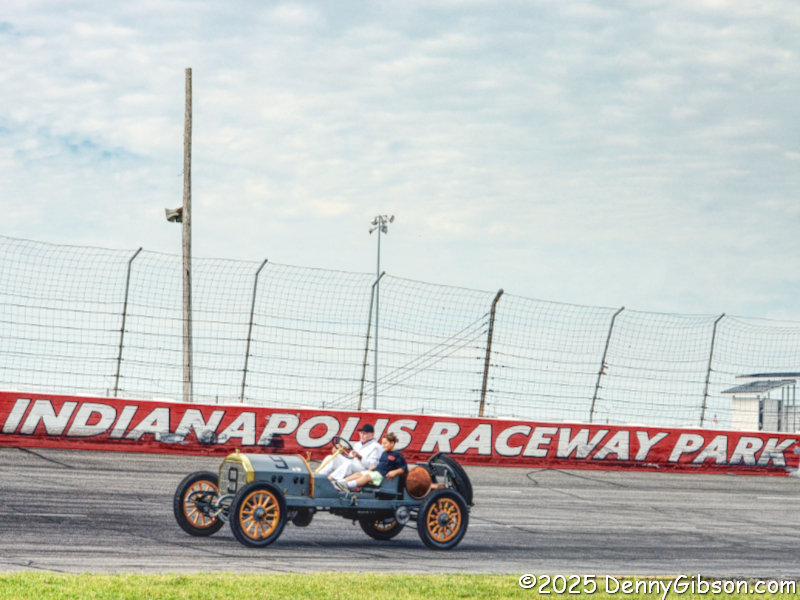
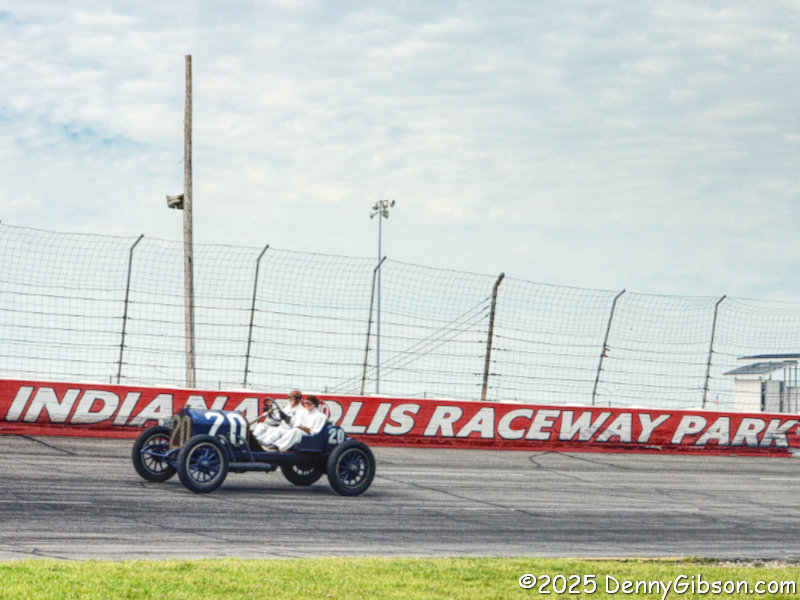
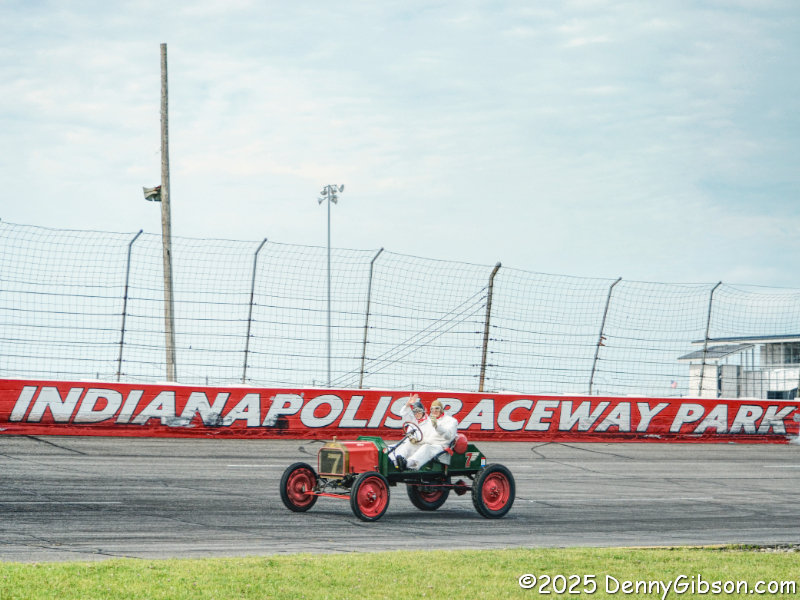
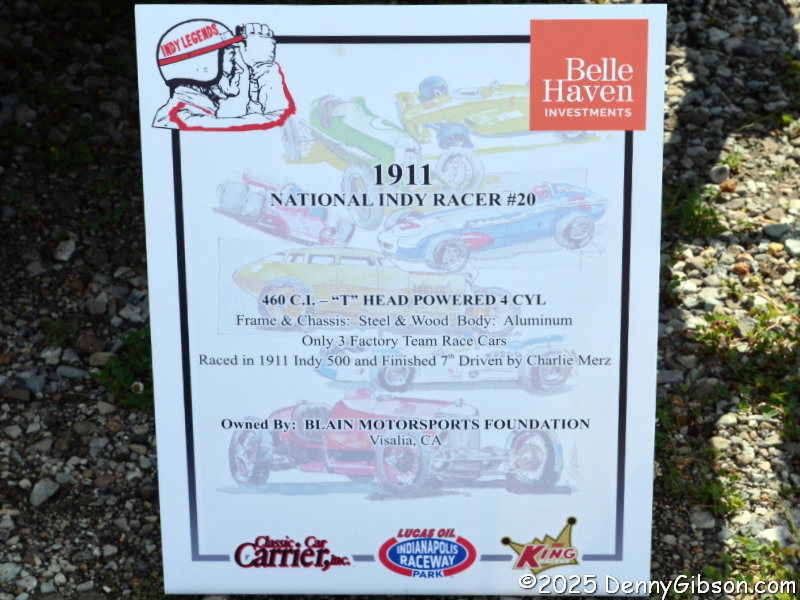
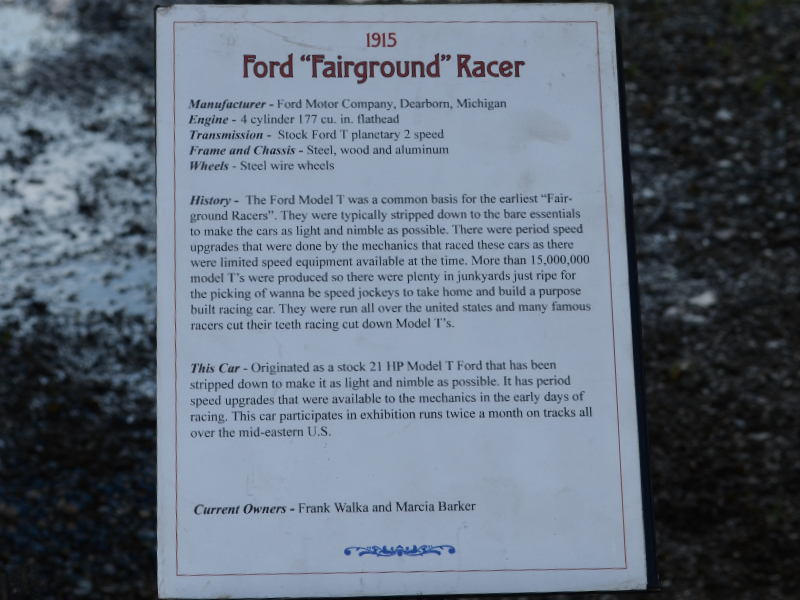
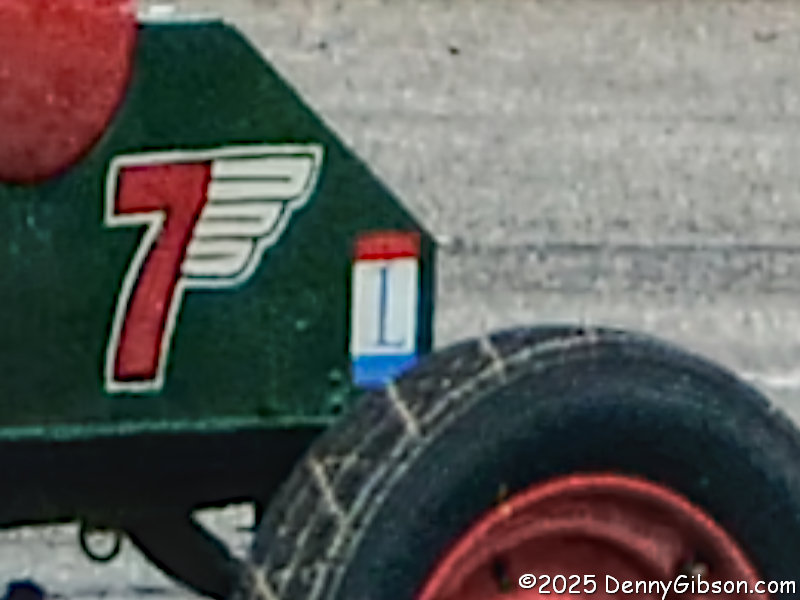
All of the cars had informative placards beside them when parked, and I learned a lot by reading many of them. Only when I started writing this post did I realize how little I remembered and what a poor job of recording I did. I can tell you absolutely nothing about the gray #9 in the first picture. #20 is a 1911 National as described here. I also have a shot of #7’s descriptive information. That is almost certainly because my interest was piqued by this on its rear end. Its owners have driven most of the Lincoln Highway, and the Model T racer has been on a short stretch of the Lincoln Highway in Pennsylvania.

The model years I noted ranged from 1911 to 2000. Although I do not know the actual dividing lines, the on-track groups were separated by age, which also meant they were separated by speed. I have even less information to share about these middle-aged race cars than for the older cars in the previous paragraph.

There was ample time to walk around and photograph the many fabulous race cars while they were parked, and if the temperature, the humidity, or my age had been lower, I would certainly have done more of it. Many of the cars were the exact same vehicles that once ran at IMS and other tracks, while some were impressive replicas of famous cars that are probably on display in museums.

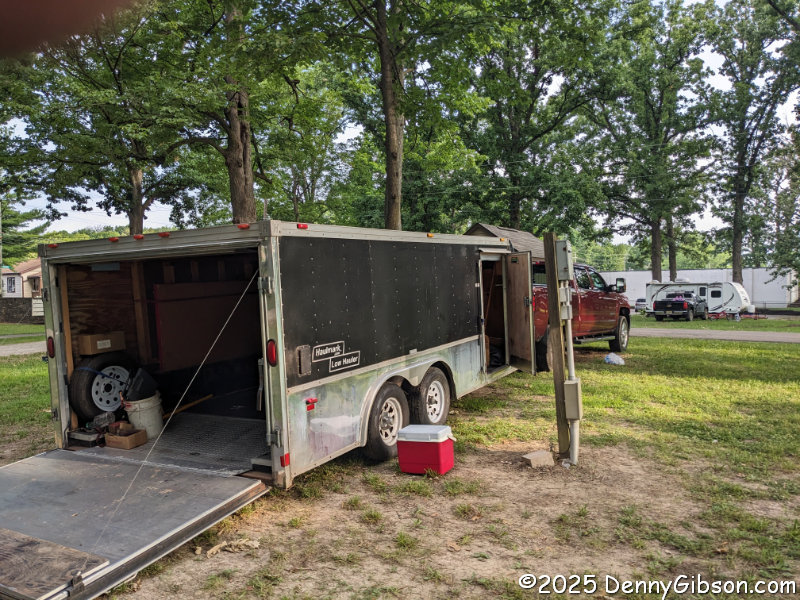
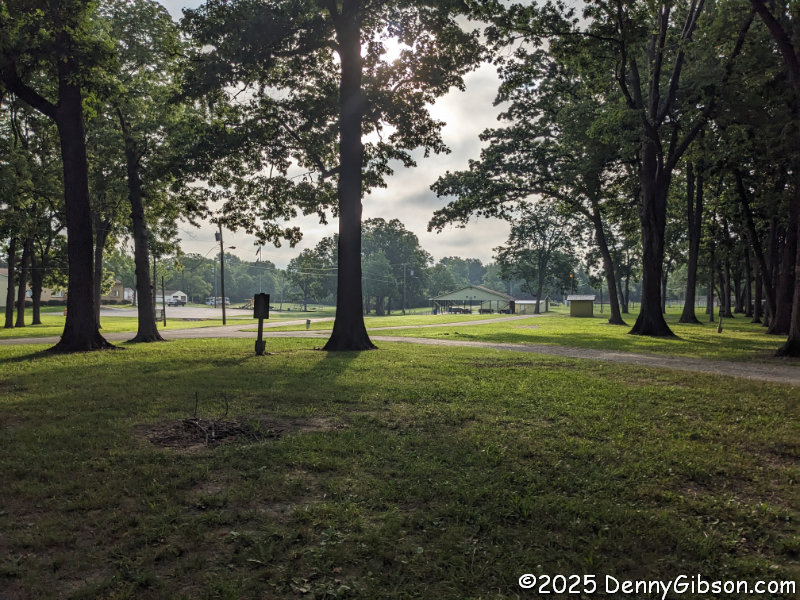
Here are a couple of pictures from the campground just before we pulled out Sunday morning. Showers and restrooms are just beyond the picnic shelter. The trailer, which serves as our bedroom, will be filled with Wheel Horses when the day ends.

There was a somewhat surprising amount of interest in the tractors. Some came from people who remembered the days when Wheel Horses roamed the pits at Indianapolis Motor Speedway, and some from folks who had heard or read about it. Of course, some came from kids (and adults) who just like little tractors. The tractors were the “half-time show” for both days of the event. At Bill’s request, Terry and I drove them two-by-two through the infield during the lunch break when the track was empty.

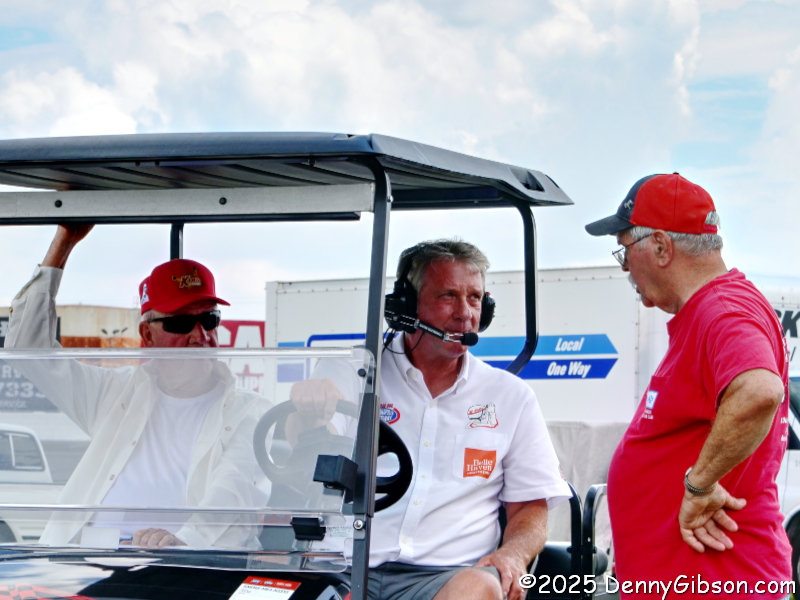
That’s Bill Throckmorten chatting with Terry. Bill was incredibly busy throughout the weekend coordinating action on and off the track, but still managed to stop by several times to say hi and see that all was well. On more than one of those stops, he let Terry know he had an invitation to return next year. Whether that happens is very much a maybe. As we pulled out, I commented that this was one of the most fun weekends I’ve ever had, but it was also one that I was very happy to see end. Terry agreed. Age and temperature are factors, and only time, which doesn’t help with the age thing, will tell.

I have previously been involved in herding the Wheel Horses south and east.

Bones, Butterflies, Bison, Bunnies, and Beavers

I have visited Big Bone Lick State Historic Site a couple of times in the past, but that was many years ago. Since then, I’ve passed it several times, without stopping, on the way to Rabbit Hash. A friend visited both last week, and their description of that visit made me promise myself that I would return. A sunny Thursday almost immediately provided a perfect opportunity.

My first stop at the park was the Visitor Center. In addition to having a gift shop, helpful attendants, and a supply of information and maps, the center houses a small but very interesting museum. A panel just inside the door offers a pretty good overview of the park. That big guy in the foreground of the third photo is a Harlan’s Ground Sloth.

At the rear of the Visitor Center is a life-sized diorama depicting how earlier visitors to the salt springs might become trapped in the bogs and involuntarily leave their bones for future scientists. Big Bone Lick is on the Lewis and Clark National Historic Trail, not because the Corps of Discovery stopped here but because both of its captains did. At the urging of President Jefferson, Meriwether Lewis visited the site in 1803 on his way west to join William Clark. The boat carrying the specimens he collected sank on its way to Jefferson. In 1807, after that famous expedition to the Pacific Ocean, Clark made a stop here to collect and ship specimens that did reach the President.

Although they have absolutely nothing to do with vertebrate paleontology, I found the smallish examples of wildlife flitting about in front of the Visitor Center a lot of fun to watch.

A paved path that begins a short distance from the Visitor Center leads to an elevated bison viewing stand. But no bison presented themselves to be viewed there today. Instead, the small herd was lounging in the grass, just out of sight, a short distance away.

Having noted that I’ve passed Big Bone Lick a number of times while driving to Rabbit Hash, continuing on to the one-of-a-kind river town after my stop was rather natural. Besides, if I hadn’t, I could not have put “bunnies” in the title. I grabbed an ice-cold ginger ale at the general store, then sipped it as I watched the Ohio River flow by.

This intersection, just east of US 42 about two and a half miles east of Big Bone Lick, marks the community of Beaverlick. I believe there used to be limit signs here, but I found none today. If I didn’t imagine them, I’m guessing they are hanging on a college dorm wall somewhere. Until a year or so ago, there was a Beaverlick Trading Post at US 42, but it is now an ice cream stand, and almost all of the signage has been changed. They’ve not yet taken care of a couple of side doors, however. Places like Big Bone Lick and Beaver Lick (now Beaverlick) were salt licks where various animals came to get a little salt in their diet. They were named for the lickers, not the lickees.

To complete what has turned into a survey of the area’s smile-inducing place names, I stopped at an establishment that appears to be the last remaining enterprise acknowledging that the community of Sugartit once existed. It’s just a few miles north of those spots made famous by salt-licking beavers and big boned animals.

Where the Airstream Wheels Start

One reason the Airstream Heritage Center has been on my “someday” list for such a long time is that, while I find travel trailers interesting, they are not something I aspire to, and therefore don’t think about a whole lot. Another is that it’s close enough to my home that I knew it would be a simple day trip when the time came. Early in the week. I briefly followed a long flatbed trailer with three small new Airstreams strapped to it, and that reminded me of just how close to me their point of manufacture is. That reminder, along with an idle Thursday, led to a leisurely drive north. A popular Airstream slogan is “Home Is Where Wheels Stop”. Those Airstream wheels are mounted and start turning in Jackson Center, Ohio.

The Heritage Center is attached to the front of the 750,000-square-foot trailer manufacturing plant. The admissions desk is just out of frame on the right. On the left is a new trailer and a display of Airstream-branded gear. The gift shop, where my museum tour will eventually lead, is on the right. The museum entrance is straight ahead. The online reservations for the factory tour would not let me select a date prior to June 10, so I assumed the tours were full or otherwise not available. Not so, said the girls at the museum desk, and they signed me right up.

First up in the museum is a timeline that begins with the birth of Airstream founder Wally Byam in 1896 and ends with the building of this facility in 2018. Displayed at the timeline’s very beginning is the canteen that Wally’s grandfather, Loren, carried in the Civil War. It is claimed that this whole Airstream thing came to be because Wally really liked to camp, and his wife, Stella, did not like sleeping on the ground.

This is the very first Airstream Clipper ever built. It was hand-delivered by Wally Byam to the President of Mexico in 1936. At some point, it became the property of a traveling circus. It was eventually discovered near Mexico City and, once identified, restored. The placard contains some photos and an abbreviated history.

In the late 1930s, Airstream produced some wooden trailers that resembled large teardrop trailers more closely than the familiar rounded-end models typically associated with the name. The sign explains that this 1938 Airlite “…had an aluminum skin applied over the original Masonite exterior which helped to preserve it”. Airstream halted production during WWII but got the wheels rolling again in May 1947 with the Airstream Liner, which was basically a much improved Clipper. That’s a 1949 Liner pictured. The third photo is of a 1949 double-door Whirlwind model.

Here’s a trio of particularly well-traveled examples. In fact, Oscar and Etta Payne’s 1957 Bubble could be the most travelled Airstream of them all. With a legitimate claim of having gone “Around the World in 859 Days”, it is one of four Airstreams from the 1960 European Caravan to tour Russia in the Soviet Union. Virgil and Grace Golden ordered their 1963 Tradewind specifically for the 1963-64 Around the World Caravan, but it made many more journeys than that. The white 1955 Cruiser was used by Wally and Stella Byam on the 1956 European Caravan. It was painted white to match the Byams’ white Cadillac tow vehicle.

I had driven to Jackson Center thinking I would have no factory tour, and I would have been quite happy with that. Of course, learning that I could tour the factory made me even happier. The picture at right was taken just outside the museum. Corporate offices are upstairs. Trailer manufacturing is through those doors straight ahead. No photos are allowed.

There are approximately 500 employees in this building and about 1200 in all Airstream facilities in Jackson Center. The city’s population is roughly 1450. Our guide, Dan, did an outstanding job of describing every phase of the operation, and the tour does an outstanding job of selling the product. Airstream has a reputation for high quality. That top-tier quality, along with worker safety and satisfaction, is a primary goal is evident throughout the factory. It looked to me like the premium prices these trailers command are justified.

Factory tours are free, and the museum is cheap — $5 or less. Currently, the company’s website (https://www.airstream.com/) appears to be experiencing some issues, including those that prevented me from reserving a tour in advance. Hopefully those are resolved soon. At present, website issues do not interfere with access to a factory tour video that is almost as good as the real thing.

Sign Museum Threefer

I visited the American Sign Museum on Thursday. Technically, I visited it twice, once during normal hours and once in the evening for a special Tod Talk. The Tod Talk, “Acquiring and Restoring the Frisch’s Mainliner Sign”, was the reason I was there on this particular day, but I also wanted to see the freshly installed genie pictured at right and the museum’s first-ever special display. Ergo, a threefer.

The museum has owned a pair of the giant Carpeteria Genies since 2003, but one was held in off-site storage until last week. Wonderfully restored, it now stands beside the entrance to the museum’s parking lot. I failed to get a picture of the genie at the front door (which is admittedly looking a little faded these days), so I have included one from the museum’s 2012 grand opening at this location.

When the museum expanded last year (New Stuff to Look At), it was said that there was now enough space to potentially accommodate some temporary exhibits. The first such exhibit, Glow & Behold: Cincinnati’s Historic LGBTQ+ Bar Signs, is in place now. One panel supplies an introduction. Another notes that “…there were more drag queens and kings, known then as female and male impersonators, working on Vine Street in Cincinnati in the 1880s and 1890s than there are today.”

The exhibit includes photos of several businesses that no longer exist, along with retired signs (Remember where we are.) from both defunct and very active establishments. Saturday night’s “Signs & Spouses: A Sparkling Celebration of Marriage Equality” was inspired by this exhibit.

As closing time approached, I took advantage of the relatively empty museum to grab pictures of the Frisch’s Mainliner sign and its flying machine in pieces on the ground without humans milling about. I will be learning a lot more about this sign in a couple of hours.

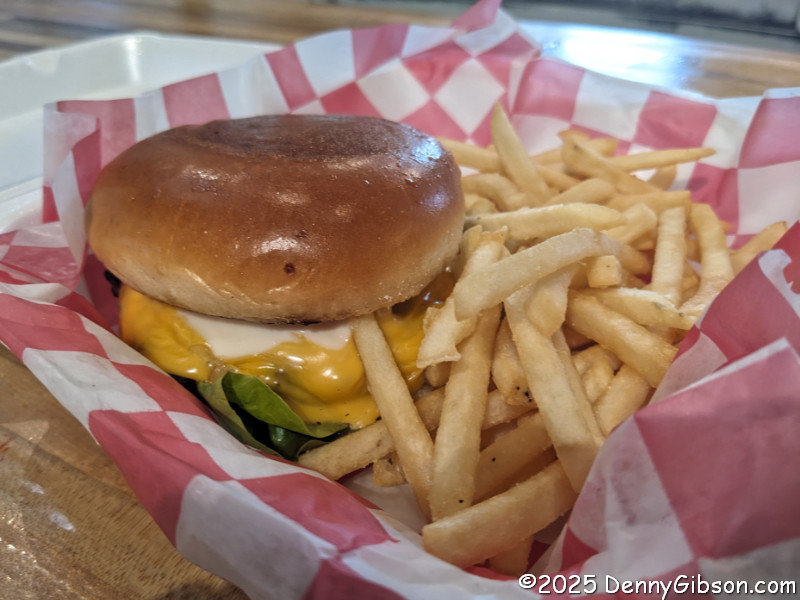
Between the time that the Tod Talk was announced and when it actually happened, the sign was moved from the storage site to inside the museum, and so was the talk. The email announcing the move let us know that this would allow a cash bar, etc. To my surprise, “etc.” included a genuine Frisch’s hamburger from the still-operating independently owned franchise restaurant in Bellevue, KY. I had eaten during my time away from the museum, but I hadn’t eaten THAT much, and I didn’t want to appear unappreciative, so…

The talk began with Erin Holland, the museum’s Director of Education and Engagement, delivering a greatly abbreviated version of her March presentation on the overall history of Frish’s and its advertising. Then Tod Swormstedt, the museum’s founder and the Tod of Tod Talks, stepped in to share stories about acquiring and taking possession of the Mainliner sign.

The instant that hints of the Mainliner closing began to circulate, the fate of its incredible sign became a topic of concern for many locals and the ASM in particular. As restaurants closed and lawsuits opened, it wasn’t easy to learn just who owned what. It took some creative sleuthing by Erin to contact the owners of the sign. That resulted in a mid-December meeting with three men identified at the time only by their first names. Although they tried to imply that there were others interested in the sign, it was pretty obvious to Tod that not many would actually want a sign of that size, fewer still would have the means to remove it, and no one else could possibly accomplish that by the suggested end-of-year deadline. Even so, there was no additional contact until Christmas Eve, when the museum was told it could have the sign, and yes, that end-of-year deadline was real and very firm. In anticipation of that happening, Tod had sown some seeds in the ASM phenomenal community of helpers. Although the timing could hardly have been worse, the sign was taken down and transported to a museum storage area in a single day.

Every day is a big day at the ASM, but some are bigger than others. The museum is closed on Mondays and Tuesdays, so various projects are often scheduled for those days. Monday, May 19, saw two really big projects completed. The huge genie in the opening photo was erected in front of the museum, and the Frish’s Mainliner sign was moved inside it. Natalie Grilli, photographer for the upcoming book on the museum’s first twenty-five years, was onsite and busy bouncing between the two giants in motion. Natalie was also onsite Thursday evening. Pictures and some of the videos of the moves we saw on Thursday can be seen on the ASM’s Facebook page.

The group then moved out to where the Mainliner sign now stands, and I silently congratulated myself for taking those unblocked photos earlier. Tod now pointed out some of the sign’s features and described some of the plans for its restoration. Those plans are far from complete, but he said restoring the rotating propellers is definitely part of them. A printout of that photo displayed next to the sign was waiting on each chair, and I’ve included a scan of mine here. Note that the original chase lighting was incandescent and ran through the airplane. At some point, this was removed from the plane and converted to neon tubes on the sign body. The plugged holes can be seen in the picture of the airplane interior above. This is also something that Tod hopes to restore. The separate section with the Big Boy has been lost and will likely not be restored.

Something that may be obvious but still should be pointed out and cheered is that the restoration of this sign will take place in the middle of the museum in full sight of visitors. This will certainly present some challenges for those doing the restoration, but it is sure exciting for us mere spectators. Also in the realm of spectating, the sign can be seen at its original home during my own final visit to the Mainliner. A link to pre-order that 25th anniversary book I mentioned is on the museum’s support page

Barbie and Julia

In my report on the Cincinnati Museum Center’s 1950s Day, I mentioned that the event was timed to tie in with the museum’s ongoing exhibits on Barbie and Julia Child. I also explained that I intended to see both exhibits but would do so on a day less crowded than 1950s Day. It happened on Thursday. In hindsight, those tie-ins seem a bit of a stretch since the first Barbie, pictured at right, appeared at the very end of the 1950s in 1959, and Julia Child’s first TV show aired in 1963.

Barbie was conceived by Mattel co-founder Ruth Handler to address the disparity she saw in the toys available to her son and daughter. The son had dolls that let him imagine himself as a cowboy, soldier, fireman, and so much more. The daughter had dolls that let her pretend to be a mother. The daughter’s name was Barbara.

Clothes and other accessories have always been an important part of the world of Barbie. There were twenty-two different ensembles available for that very first Barbie, and their display provides an opening for telling about my only personal Barbie experience. My sister would have been nine when Barbie first appeared, so she might have had a Barbie. I just don’t recall. My daughter definitely had some in the 1980s. The pictured “Cruise Stripe Dress” was only made in 1959-62, but the red high heels it was packaged with, or at least a close facsimile, continue to be made today. I understand that there are worse sources of pain, but stepping barefoot on an upturned tiny red stiletto in the darkness does create a memory lasting forty years and beyond.

Gender diversity began to be addressed rather quickly. Racial diversity stayed absent a little longer. Ken (Yes, Ruth’s son was named Kenneth.) appeared in 1961. Barbie’s Black friend Christie came along in 1968.

Barbie has had a lot of vehicles, especially sports cars and campers, during her 60+ years of existence. I was surprised to learn (from the internet, not the exhibit) that her first car was a 1962 Austin-Healey 3000. A pink Corvette is the first car I think of when I think of Barbie, and I believe that is true for many people. This mockup of a 1985 model was one of several photo ops scattered throughout. I saw probably thirty to forty people inside the exhibit while I worked my way through it. Three were males, two guys with their partners, and I. The rest were females in groups of two or three. Many took advantage of this Corvette to grab pictures of each other.

The idea that girls could be anything they wanted to be was an important part of Ruth Handler’s vision for Barbie. Numerous displays showing some of the careers available to Barbie and her playmates during various periods are spread around the exhibit.

1968’s Christie was a powerful “some of my best friends are Black” statement. In 1980, that statement moved onto “and I am too” with the introduction of Hispanic and Black dolls carrying the name Barbie. Today, Barbie can proudly be called the world’s “most diverse doll line”.

The 1959 Barbie in the opening picture retailed for $3. That’s about $33 in 2025. Some estimates place its current value at more than $27,000. The standard “exit through the gift shop” takes you past this rack of Barbies priced at $11.99. Not too bad, I think, for an icon.

The entrance to the Julia Child exhibit is right next to the entrance to the Barbie exhibit. Barbie is a ticketed event; Julia is included with museum admission. Although I did not know much about Barbie, I knew even less about Julia. I have seen her on TV while channel surfing, but don’t believe I have ever watched a full program or interview.

I was even more out of place here than I had been in the Barbie exhibit. Not only did I know very little about Julia Child, I knew less about French cooking and the tools of the trade. Others in attendance knew of various events in Child’s life and specific items in the collection of cooking gear she called “Batterie de Cuisine”.

Apparently, Child had achieved some level of fame before that 1963 television show. This photo of her and her husband, Paul, was used as a Valentine’s Day Card in 1956. I believe this was the only spot in the exhibit set up especially for a photo op. It did not seem as popular as Barbie’s Corvette, but some of the same groups of women who posed in the car also took each other’s pictures in the tub with Julia and Paul in the background.

As with many traveling exhibits at the CMC, a local connection is part of this one. Cincinnati has been home to some well-known French restaurants. I never made it to Pigall’s, but I did have one meal each at the Gourmet Room and the Maisonette. Two out of three ain’t bad.

Barbie: A Cultural Icon is here through September 1. The last day for Julia Child: A Recipe for Life is today, May 18. 

Mystery & Benevolence On Display

When the Mystery & Benevolence exhibition opened at the Taft Museum of Art in February, I tucked it away as something I would like to attend someday. But other things came along, and it eventually became untucked. A post on a blog I follow reminded me of it just in the nick of time. The exhibition closes today, May 11. I saw it on Wednesday.

The exhibition is subtitled “Masonic and Odd Fellows Folk Art”, and most of the items displayed are from either the Freemasons or the Independent Order of Odd Fellows, although there is a smattering of items from some lesser-known groups. The columns in the opening photo are from a Masonic temple and represent those at the entrance to Solomon’s Temple in Jerusalem.  The letters ‘B’ and ‘J’ identify them as the pillars of Boaz and Jachin.

This is a traveling exhibition put together by New York’s American Folk Art Museum, but there are several local touches. One relates to this 1870 “Washington as a Freemason” poster printed by Cincinnati’s Strobridge Lithographing Company, as described by a “local story” placard.

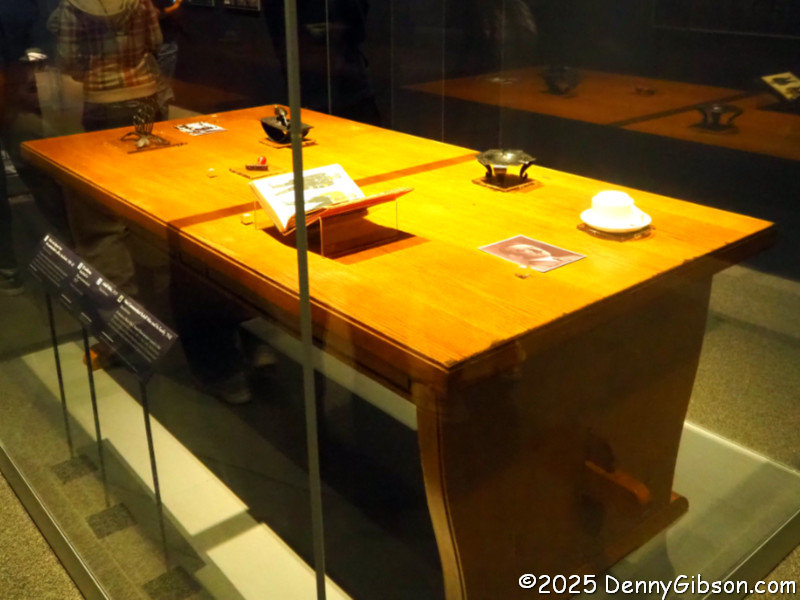
Focusing on the “art” aspect of the exhibit, here are a couple of impressive marquetry works. The plaque contains numerous Masonic symbols, while Independent Order of Odd Fellows symbols fill the folding table. Additional IOOF items are displayed beyond the table.

The Odd Fellow’s “BURY THE DEAD” sign fits in with the “Benevolence” of the exhibit’s title. In the days before life insurance was common, help with burial expenses was a valued benefit of membership for many organizations. Goats appear in the rituals and symbols of several fraternal organizations. The rideable one pictured here belonged to the Modern Woodmen of America. Another item from something other than the Freemasons or Odd Fellows is this 1902 hooked rug. It is labeled as belonging to the Daughters of Pocahontas, although I believe it should be the Degree of Pocahontas, the Women’s Auxiliary of the Improved Order of Red Men.

I knew next to nothing about the internals of fraternal organizations when I entered the exhibition, and not much more when I exited. That’s not because the organizers didn’t try. It is because those internals are usually cryptic and often illogical, and I don’t believe either is by accident. My quite possibly incorrect understanding is that there are three degrees of “regular” Freemasons, but there are systems of degrees (called rites) that extend well beyond that. The Scottish Rite is one of the better-known of these, and the double-headed eagle is one of its better-known symbols. The “local story” displayed by the eagle is about Taft Museum of Art co-founder Charles Phelps Taft, who was a 33rd Degree Scottish Rite member.

The panel in the foreground contains International Order of Oddfellows symbols. The skeleton hanging on the wall is from the Knights Templar division of Freemasons. I was struck by the frequency with which skulls and skeletons show up here. There is a hint at an explanation in references to the Latin phrase “memento mori”. The English translation is “remember you will die”, and it is used as a reminder to do something good before you go. That’s pretty benevolent. The rest is still a mystery.

1950s Flashback

The Cincinnati Museum Center has presented a 1940s Day or Weekend annually since 2011. I attended the third in 2013. Saturday was their first-ever 1950s Day. Asked on their Facebook page if this would also be an annual event, the museum said no. It is intended to be a one-time thing to mate up with the ongoing Julia Child and Barbie exhibits. “But,” they added, “it could come back!” I don’t really remember the 1940s, but I do remember the 1950s, and the rain on Saturday looked just like rain did when Ike was in the White House and Waite Hoyt was on the radio.

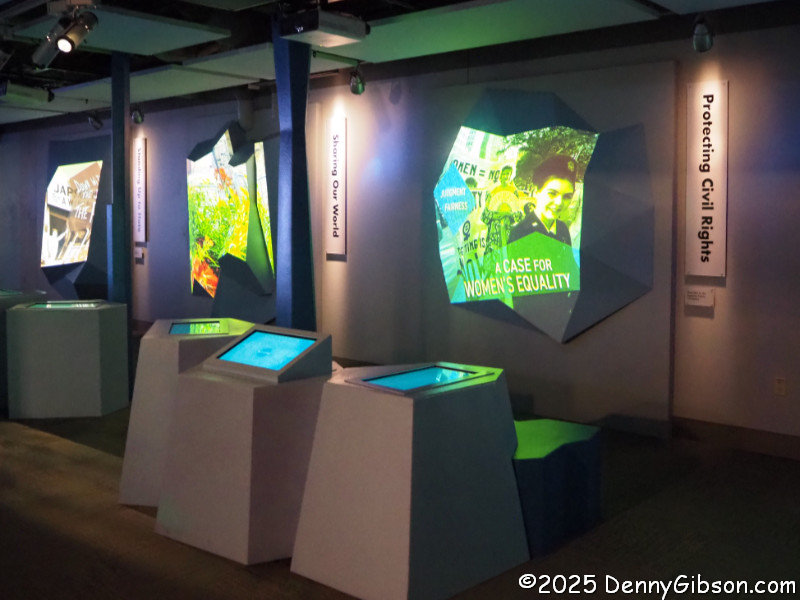
Individual information tables lined the rotunda. Pictured are King Records Legacy, Casablanca Vintage Clothing, and the American Sign Museum with a genuine 1950 NEON SIGN.

I stepped into the Newsreel Theater intending to watch a few minutes of the Moving Images presentation and ended up staying more than an hour watching clips of “Melody Showcase”, “Midwestern Hayride”, and commercials. I don’t remember “Melody Showcase”, but “Midwestern Hayride” was a staple at our house, and it’s even possible that I saw some of what I saw today when it was broadcast live.

1950s Day included quite a bit of live music. I caught the P&G Big Band, the Queen City Sisters, and Naomi Carman and the Bluecreek Boys. I do intend to check out the Barbie and Julia Child exhibits sometime, but the museum was far too crowded for that on Saturday. I’ll slip them in on a weekday when school’s in session and employed people are doing employee things.