Coincidence at Play (Again)

This post originally appeared on April 3, 2016. A few weeks ago I predicted that I would be recycling more blog posts as the ongoing COVID-19 pandemic restricted real-world interaction, but I didn’t think that would be the case this week. I had a pre-canned series post selected when coincidence struck. I was trying to figure out when I had visited a particular museum and resorted to searching this website for some record. The museum is one with many Civil War artifacts so I used those words in the search and this post appeared in the results. I had all but forgotten it but a reread made me think that a repost might be appropriate. As I wrote four years ago, “there’s still plenty of crap going on.” I did, incidentally, read “To Kill a Mocking Bird” within a couple of weeks of seeing the play.
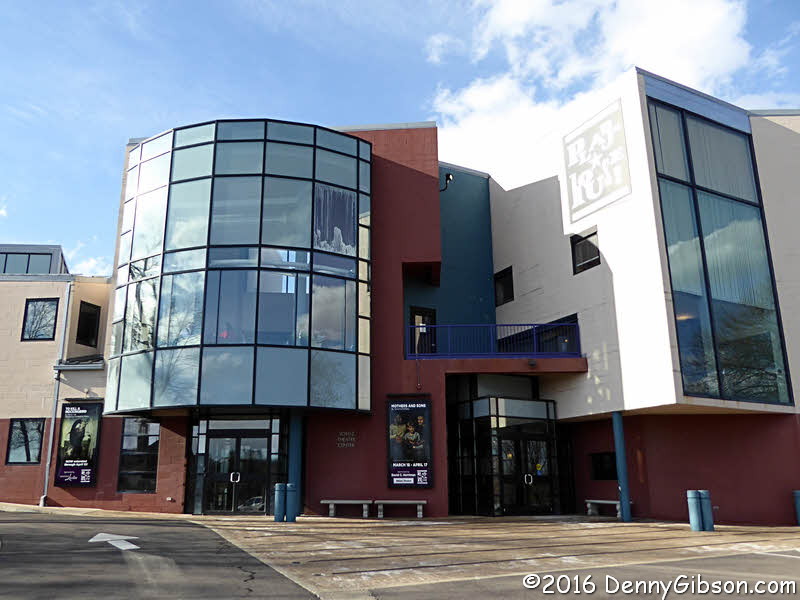
tcamb1I’ve yet to read To Kill a Mockingbird. I have seen the 1962 movie multiple times and now I’ve seen the play. I had hoped to read the book between learning that the play would be performed this season at Cincinnati Playhouse in the Park and actually seeing it but that didn’t work out.

The Friday night performance would be the biggest event of my week but I didn’t expect it to lead to a blog post. I anticipated that a canned Trip Peek would be published this morning. A Friday morning email got me to thinking differently.

The email was the April E-News from the Smithsonian. One of the topics was “The Scottsboro Boys” with this two sentence tease: “The case of the Scottsboro Boys, which lasted more than 80 years, helped to spur the civil rights movement. To Kill a Mockingbird, the Pulitzer Prize-winning novel by Harper Lee, is also loosely based on this case.”

I read the article referenced in the email and could easily see similarities between the 1931 real world incident and the fictional one Harper Lee set just a few years later. Both involved black men accused of imaginary crimes against white women and both occurred in a world where color mattered a whole lot more than truth. Later I read that in 2005 Harper Lee said this was not the incident she had in mind when writing To Kill a Mockingbird but that it served “the same purpose”. Despite there not being an official connection between the Scottsboro Boys and To Kill a Mockingbird, reading about the incident and its repercussions served a purpose for me, too. It provided an unpleasant picture of this country near the midpoint between the Civil War and today. The accuracy of that picture is reinforced by a contemporary pamphlet, They Shall Not Die!, referenced in the Smithsonian article.

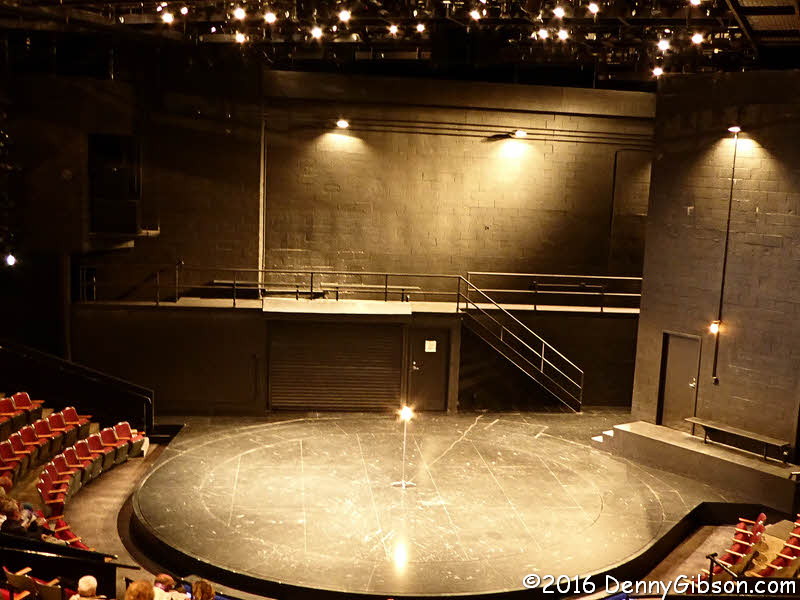
tcamb2I took my seat on Friday with the Scottsboro story fresh in my mind. The stage was bare except for a single light bulb which would actually be removed at the play’s start although it would return later. The stage consists of a large circular center and a surrounding ring both of which rotate. Sometimes they rotate in opposite directions which can seem to expand the distance between actors or the distance they travel. Set Designer Laura Jellinek states that “our main goal was to eliminate any artifice between the audience and the story” and this set certainly accomplishes that. As one audience member observed during the discussion that followed the play, she briefly looked around for the jury during the courtroom scene before realizing that “we were the jury”. At its most crowded, the stage holds nine chairs for the key figures in that courtroom scene.

The discussion I mentioned happens after every performance. Anyone interested moves close to the stage to listen or participate. There were naturally questions about this specific production but there were also questions about the story. There is a sign in the lobby that I now wish I’d taken a picture of. “Don’t read books that think for you. Read books that make you think.” might not be 100% accurate but it’s close. Friday night’s discussion was evidence that this play is prompting some thinking and I’ve no reason to think that discussions following other performances are any different.

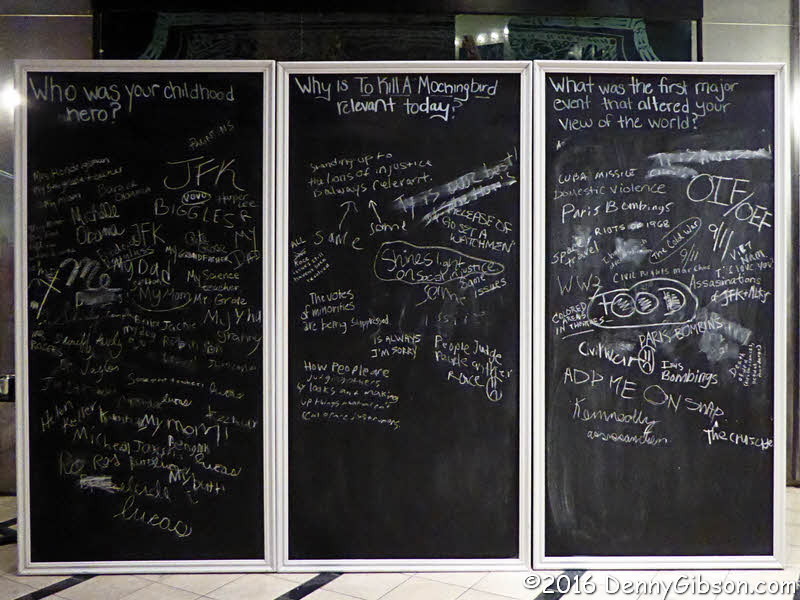
tcamb3There is also a set of blackboards in the lobby. As I assume is true at every performance, the blackboards started out empty except for a question at the top of each. By the time people started heading home, the boards were full. It’s pretty clear that some thinking is going on here, too.

It was the coincidence of the Smithsonian email showing up on the day I was set to see the play that nudged me towards making it a blog entry. There is another coincidence of sorts that I find interesting.  Each week, the blog This Cruel War publishes an article on lynchings. The article is published on Wednesdays but, since I subscribe via RSS and I seem to always be behind in my RSS reading, it is often a day or more after publication before I read a specific article. I read this week’s post the morning after my Playhouse visit. In it, the source of the series’ title, “This Disgraceful Evil”, is given. It comes from a 1918 Woodrow Wilson speech in which he calls upon America “…to make an end of this disgraceful evil.”

We don’t have to deal with actual lynchings now as much as in 1918 but there’s still plenty of crap going on. “It cannot live”, Wilson continues, “where the community does not countenance it.”

Originally scheduled to end today, April 3, To Kill a Mockingbird‘s run a Playhouse in the Park has been extended through April 9.

It’s Easter (Again)

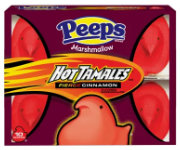
This post first appeared last year. It is being reused due in part to 2020’s reduced mobility and (apparently) creativity. Articles in USA Today and elsewhere, include Root Beer Float in a list of five new Peeps flavors but, as can be seen below and in the original post, the flavor was already around in 2019. Hot Tamales Fierce Cinnamon, on the other hand, really does appear to be making its debut this year.


Today is Easter. I know that because I looked it up on the internet. It was easy. It was easy in the early days, too. Easter was originally simply the Sunday of Passover week. Since most early Christians had once been Jews, they just naturally knew when Passover was. Even those that had converted to Christianity directly from Druidism probably had some Jewish friends they could ask. Easy, peasy. Too easy, it seems, for some.

Things changed in 325 at the First Council of Nicaea. Maybe the priests felt threatened by pretty much everybody knowing when Easter was without asking. Or maybe the astronomers, who might have been the same guys, were feeling left out. Or maybe the priests just weren’t all that happy having a Christian holiday tied so tightly to a Jewish one. So, they tied it, instead, to the moon and the sun.

Their starting point was the vernal equinox when the sun is directly above Earth’s equator and day and night are of equal length. Next was a full moon which occurs when the surface visible to Earth is completely illuminated by the sun. These two events are not synchronized. A vernal equinox happens every 365.24 days; A full moon every 29.53 days. But even the most radical of the Nicaea councilors dared not mess with the idea that Easter was a Sunday thing. That meant that a mostly arbitrary period of seven days and the completely arbitrary selection of one of the seven were overlaid on the two asynchronous sun and moon events. Henceforth, Easter would be celebrated on the first Sunday after the first full moon after the vernal equinox.

That probably sounds a bit involved and confusing to many people today let alone 4th-century peasants. Come spring of 326, priests were no doubt busy letting the laity know when they should hide their eggs and have relatives over for baked ham.

In the centuries since, alternate sources of the information have proliferated. Asking a priest continues to be an option, but one that has been unnecessary since sometime in the 20th century when the majority of refrigerators became covered by calendars — with Easter marked in red — from every merchant and insurance agent in the area. The time saved has been put to good use finding ways to enhance the Easter experience. A Lego bunny and never before seen colored and flavored Peeps are available for 2019. And scheduling egg hunts has become even easier. “Hey Google. When’s Easter?”

Aging in Place

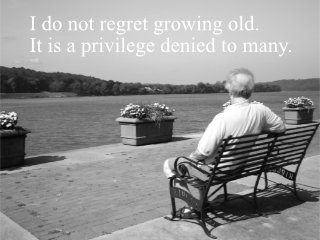
This picture is indeed a repeat. It appeared last November in a post about my first decade of retirement. It is now being used for my birthday. I’m celebrating my seventy-third birthday today in the middle of a pandemic and a statewide stay-at-home order. That is not, however, why I’m reusing the picture. As soon as I made the image, I knew it would be perfect for my next birthday post. Sure, I took the picture with retirement in mind, but once the text was added it became a birthday image. I went ahead and used it in the retirement post because I didn’t have time to think of and produce anything else. Here is where it belongs.
The aforementioned pandemic and the changes it’s brought make me aware of other privileges I have besides growing old. In normal times, having a fixed income is often seen as a negative. Any unexpected expense can be a disaster and the slow creep of inflation can be a major problem over time. But, when restaurants and other businesses are being closed, new layoffs are announced almost daily, and most of the self-employed are left with nothing coming in at all, a fixed income doesn’t sound so bad.

I’ve been living alone for more than twenty years, and I’ve become quite used to it. Quite happy with it, too. Social distancing is easy, and I don’t have to worry about anyone but me contaminating that teetering stack of books on my table. I’m not officially responsible for anyone else. Please don’t read that as a disclaimer intended to shirk responsibility. It’s an observation that there is no one is depending on me for shelter or meals. I do keep an eye on my 94-year-old stepmother but she’s remarkably independent and well prepared with wonderful neighbors who make sure she doesn’t run out of anything. I usually see her every week or two, but when I suggested coming to visit last weekend, she talked me out of it.

Each of my three kids fits the model of what I think about when describing someone being responsible for someone else. Each has a family that they shelter and feed and — with schools closed — educate. I was never a particularly good parent but all three are self-sufficient and caring and I’m pretty happy with that.

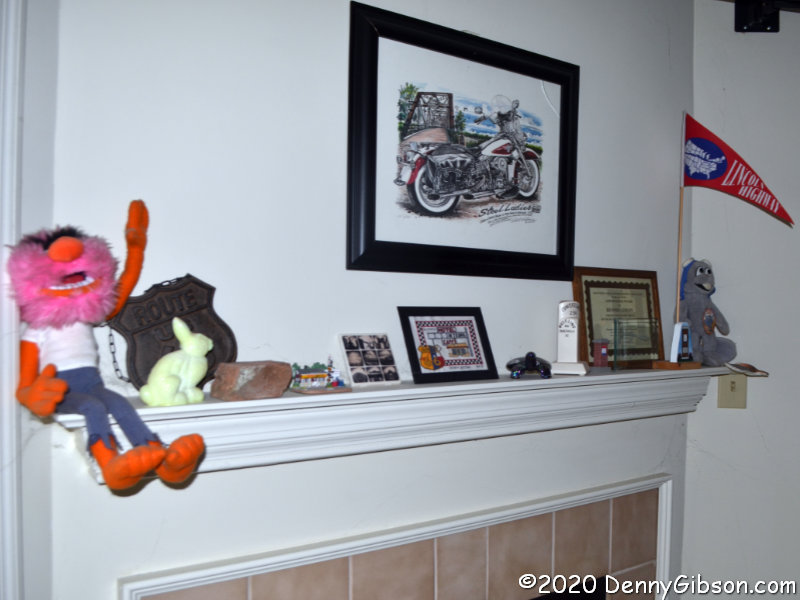
I had planned to be in the middle of a short road trip right now, and celebrating my birthday with dinner at the historic Century Inn in Scenery Hill, Pennsylvania, but the inn is about 250 miles away and only doing carry out anyway. As that affects me personally, it seems to be among the first worldliest of first world problems. It means that the only National Road mile marker I’ll see today is the one on my mantle. I’ve not often done carry out during this quasi-quarantine, but I probably will today. Maybe something from the steakhouse across the street.

Yeah, I’m privileged. Not so much for being old as for growing old. I’ve often said, in reference to road trips, that I enjoy getting there more than being there. I guess life’s kind of like that too. I think I’ll just grow older for a while.

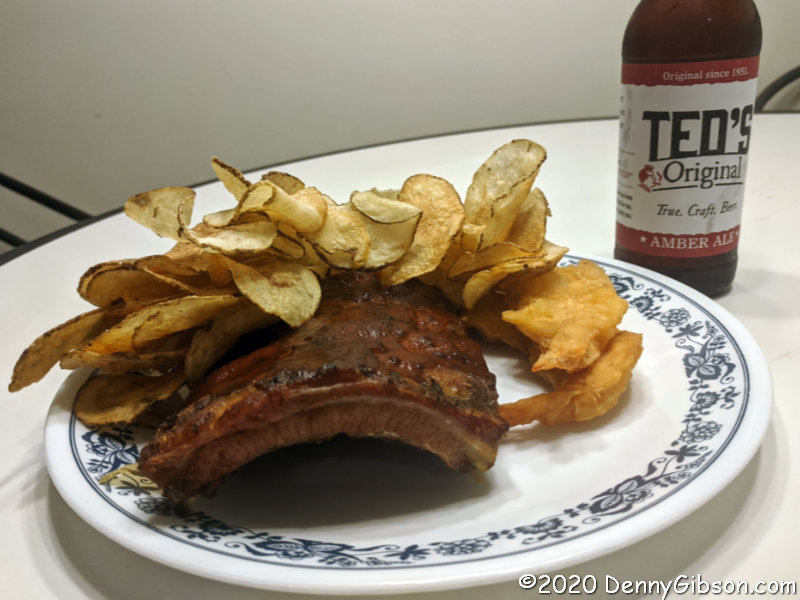
ADDENDUM 5-Apr-2020: In the end, I did not go to the nearby steakhouse. I decided if I was going to venture out, it would be for something special — and local. The steakhouse is a chain and Montgomery Inn, while being a long way from a mom-and-pop restaurant, is independent and locally owned. I did a drive-by for my favorite ribs & shrimp combo and even helped my dwindling beer stash with a six-pack of Ted’s Red (brewed by Mount Carmel).  

Home Learning

Since 2009, depending on your definition of work, I have either always worked at home or never worked at home. But I’ve left home a whole bunch to eat, quite often to sleep, and a respectable number of times to learn something. Of course, I more often than not learn something every time I leave the house but right now I’m talking about those times I’ve headed out to a museum or lecture. At the moment, just like the bars and other music venues I wrote about on Wednesday, museums and lecture halls are closed.

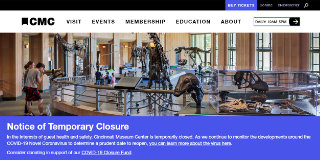
The opening image is a screenshot of the Cincinnati Museum Center’s home page and its “Notice of Temporary Closure”. The Museum Center is a place I get to somewhat frequently for OMNIMAX® movies, the permanent exhibits, and world-class traveling exhibits. A traveling exhibit I was really looking forward to, Maya — The Exhibition, was set to open right when the COVID-19 related closures began. I’ve also attended several lectures there. In particular, I liked a series called Brown Bag Lectures. During the two-year-long renovation project, the lectures moved offsite and have yet to return although the building reopened at the end of 2018. Despite good intentions, I haven’t attended a single Brown Bag Lecture since the start of the renovations.

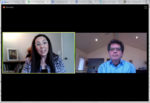
Sometime after the Holocaust and Humanity Center moved into the Museum Center, it began lectures of its own. The Holocaust Speakers Series only recently made it on to my radar and I had not yet attended one. I did, however, once attend a similar talk by the fellow, now deceased, that the HHC’s Coppel Speakers Bureau is named after. Like all other activities, the lectures were canceled when the building closed, but some lectures, like some musical performances, can be adapted to the internet. The HHC has done that with this series with the first “digital lecture” taking place last Wednesday. In the screenshot at left are HHC CEO Sarah Weiss and the presenter of that lecture, Ray Warren. I had expected to simply call up the website and watch a live feed but the lecture was delivered via Zoom which allows questions and other interactions. I’d not used Zoom previously and had to install the application but it was automated and quick.

Ray told the story of his parents who had survived the Holocaust separately then met and married after the war. His slide presentation was set up for use on a large screen in front of a real audience and there were a few glitches early on but problems were solved or worked around. Ray told us not only about his parents’ remarkable experiences but about his own experiences in discovering some aspects of their story. His slides included pictures of friends and family before and after the war. There was a picture of the earrings, now displayed at the HHC, that his mother managed to hide even during her time at the Bergen-Belsen concentration camp. They were the only connection she had with her pre-war life.

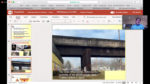
I only took one screenshot during the lecture and it was very near the end. Ray talked about how people made decisions before and during the Holocaust. He spoke not only of how but when. Don’t be late, he said. He mentioned some more recent events that deserved decisions. He mentioned the white supremacist gatherings in Charlottesville and elsewhere and he mentioned the much closer and more recent incident in the photo. Just over two weeks before the lecture and barely ten miles from my home, someone painted “The Jews killed Christ. They are the enemies of the whole human race.” Don’t be late.

My post on the opening of the Holocaust and Humanity Center is here. The one on hearing Werner Coppel is here. For the present, there will be digital lectures each Wednesday at 11:00. Register here.

Burr on Tap

For 2020, the Cincinnati Museum Center is holding a series of after-hour events under the heading Museum on Tap. The first, “Space Gallery Pub Crawl”, was in January and associated with the Apollo 11 exhibit then in place. The second, “Aaron Burr: American Bastard”, happened on Thursday, and I was there.

The “on tap” in the series’ name comes from the fact that adult beverages are available. While there are no actual taps dispensing draft beer, there is beer in cans and bottles along with wine and spirits. These beverages were offered at four different locations including two in the Public Landing area. One reason the cobblestone street was fairly empty when I arrived was that many attendees were standing in lines at the other two service locations I’d passed on the way. Event literature admits that the Public Landing of the 1850s is somewhat more modern than the Cincinnati Mr. Burr would have seen but it’s a better fit than, say, the Hall of Dinosaurs.

The museum’s gathering was set in 1807 and, while Burr was not present himself, several of his friends, acquaintances, and accomplices were. Pictured, from left to right, are boat builder Leonard Armstrong, Senator John Smith, Charlotte Chambers Ludlow (widow of Cincinnati founder Israel Ludlow), and Mayor James Findlay. Smith aided Burr in his schemes, Findlay hindered him, and Armstrong and Ludlow were attentive observers.

This being my first Museum on Tap experience, I wasn’t sure exactly what to expect. I thought there might be some sort of presentation but that wasn’t the case this time. I can’t say whether or not that’s true of other events in the series. A handout supplied some background on Burr’s trial for treason and his relation with Cincinnatian John Smith. This was augmented by several posters that might have appeared on the streets of Cincinnati. Chatting with the folks in period dress added details. In conversation, Senator Smith put a modern twist on things by referring to reports of his wrongdoing as “fake news”. When I asked for a solo photo, there was no question of where he wanted to pose. He smugly stepped over to the poster with his name and the words “NOT GUILTY” while ignoring the question mark and the smaller print as only a practiced politician can.

I also spoke with Mayor Findlay, who was among those calling for Senator Smith to resign, and Mrs. Ludlow, who had met Burr only once and was clearly not impressed. Onboard the Queen of the West, Leonard Armstrong happily shared his knowledge of the flatboats he built for businessmen like Smith. From the forward deck, I could see the street becoming more crowded.

One thing happening on the street was artists from Music Resource Center performing original material. I briefly mentally questioned the presence of hip hop music in 1807 but quickly realized that the hip hop musical Hamilton is responsible for much of the current awareness of Alexander Hamilton and the man who shot him, Aaron Burr. In fact, singing karaoke versions of Hamilton tunes was one of the activities supported by the Music Resource Center but the signup sheet was still empty when I left. An area a little bit away from the landing was designated as dueling grounds and Nerf pistols were provided for anyone wanting to recreate the Hamilton-Burr encounter. Apparently, some did, as I found the pistols in various locations when I peeked in but I never caught an actual duel in progress.

Attendees could also increase their knowledge with trivia flip cards or a scavenger hunt-style bingo game and I saw quite a few people doing both. Questions on the flip cards were not Burr-specific but were generally focused on the early 1800s. Bingo game questions referred to various displays throughout the public landing area. I flipped a few cards but left the bingo competition to others. That’s why I still don’t know how much Hattie Calhoun paid to update her dress. 

Festless in Cincinnati

In last week’s post, I told of becoming a big fan and semi-regular attendee of the annual Bockfest parade. At the time, I had every intention of attending this year’s event but it didn’t work out that way. Despite predicted near-freezing temperatures, those intentions survived until the afternoon of the parade but no further. Predictions of partly cloudy and low chance of precipitation became completely cloud covered with light snow. Recalling my 2013 “I’m too old for this” decision, I gave the parade a miss.

I had, of course, planned on the parade being the subject of this week’s post. Fortunately, there had been an event earlier in the week which makes a very suitable substitute. Narrow Path Brewing, in nearby Loveland, held their own mini-Bockfest on Tuesday. There was no parade but there were genuine goats, imposing monks who may or may not have been genuine, and a genuine ceremonial tapping of a keg of bock beer.

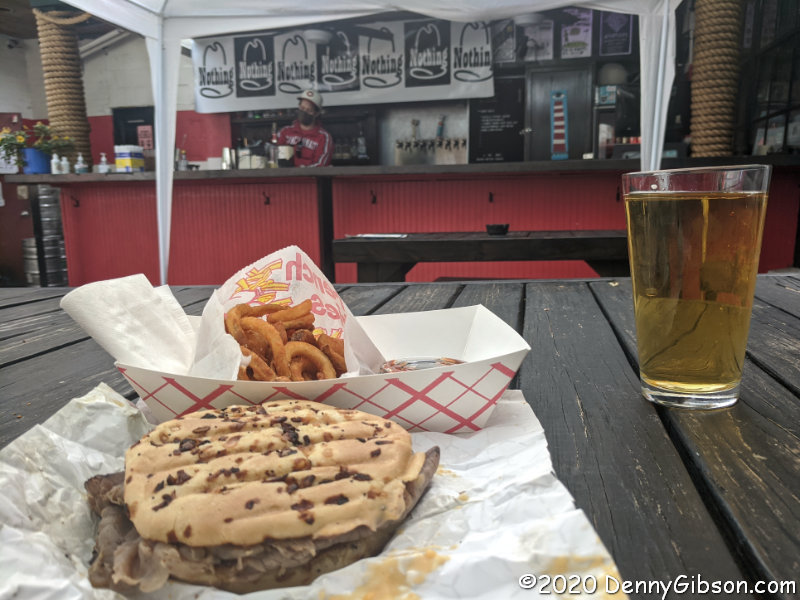
I didn’t make it to Bock Hall or the adjacent tent of many breweries in Cincinnati, but I did get to sample three of the area’s bock offerings. The first was the Sonder Brewing‘s William Goat featured in last week’s post, and the second was Narrow Path Brewing’s Pathinator that I enjoyed on Tuesday. The third was Common Denominator at  The Common Beer Company on Saturday. I met fellow road and beer enthuiast Perry Huntoon there, and his son snapped our picture when there was still a little Common Denominator left in my glass.

Scenes from when I actually made it to the big downtown bash can be found here: 2010, 2011, 2014, 2015, 2016, 2018, 2019.

Royal Competition

I attended my first Bockfest Parade in 2010 and immediately regretted missing the preceding seventeen. My attendance hasn’t been perfect since then but it’s on the plus side: 6 of 10. My attendance at other Bockfest events has been perfect. I haven’t attended a single one and that includes the multiple Sausage Queen competitions that take place each year. One reason was the expectation of crowded spaces which I don’t enjoy nearly as much as I once did but location has also been a factor. To be honest, location could be problematic for a couple of reasons. One, of course, was distance. Most events happen downtown which means a bit of a drive plus dealing with parking. Secondly, many were in places I was unfamiliar with. I presumed that most of the attendees were folks who frequented the various places and the fact that I did not sort of added to the “crowded spaces” aspect. But this year the last of seven qualifying events took place just up the road in a place I’m fairly familiar with.

Sonder Brewing is the brewery closest to my home. It’s less than two crow-miles from my door and about two and a half if I stick to the roads. I arrived more than an hour ahead of the scheduled start of competition and the place was packed. I got a beer and hovered near the bar until a seat miraculously opened. My first beer was a porter. The second was the more appropriate William Goat bock pictured above. I can’t say whether or not the flouting of the “‑ator” bock naming convention was intentional but I can say it was quite good. I happily sipped my brew to the sounds of 99 Luftballon and Beer Barrel Polka — both in German. Then it was La Bamba and Livin’ On A Prayer in Spanish and English respectively.

The competition took place in the far corner. The acoustics were horrible so I had almost no idea of what was going on and the lighting and distance helped me make photos that matched the acoustics. I got no pictures of one of the three entrants and didn’t even learn her name. I was rooting for Ashli, who was assisted by an energetic dance team, only because I’d met her and some of her team before things got rolling. Rhonda also had a little help and both had sizable cheering sections.

Rhonda was the ultimate winner although I don’t know why or how. She will represent Sonder Brewing in the final competition for the 2020 Sausage Queen at Bockfest Hall next Saturday.


So It’s a Little Fishy

It’s no secret that I’m a fan of Groundhog Day. I don’t mean the movie, although I like that well enough. No, I mean Groundhog Day the day. I’ve seen Punxsutawney Phil, Buckeye Chuck, and Rosie the Groundhog perform predictions regarding the nearness of spring. I once had plans to observe Woodstock Willy at work but those got knocked off by a blizzard. I have eaten some sort of pork sausage on the second day of February for several decades. I’m quite taken with the holiday and may get out to see one of the furry forecasters next week, but yesterday I checked in with a popular predictor of a very different sort.

Several years ago, some folks in Buckeye Lake, Ohio, hatched a plan to give their community a little mid-winter boost. Winterfest involves many of the town’s eating and drinking establishments. Special food and drink offers combine with assorted entertainment to make it a fun day and fuel sales. A blatantly groundhog day like event anchors and opens the festival.

By 6:00 AM, a crowd had begun to gather in the park near the lake. Around 6:30 Benny the Bass arrived in his hundred-gallon aquarium. Music, dancing, and some lighthearted speeches helped build the excitement until 7:00 when a bucket of minnows was emptied into the tank. According to the six-year-old legend, if Benny downs a minnow in a minute or less, an early spring is on the way. If not, winter will drag on for another six weeks. I’d read that the official chant was “Take the bait. Spring can’t wait”, but chants of “Eat it Benny” were all I heard today as time ticked away. The thirty-second warning was reached then a countdown of the final seconds and a loud moan of disappointment from the crowd. I wonder if the old “Take the bait” chant would have made a difference. 

It was a short moan that got quickly covered by the boom of fireworks and a blast of Springsteen. “Glory Days”, rockets’ red and white glare, “Born in the USA”, and for many, it was time to go get a beer.

The crowd thinned quickly so I was able to see the whole tank for the first time. I walked around it to photograph the bad news that someone had written on the glass on the opposite side, but before long, the same sad prediction was written on the other side as well.

The opening photo was taken yesterday when I first came into town and stopped by the Buckeye Lake Brewery. That’s where Benny will be displayed for the rest of the weekend. The bartender had suggested parking near the brewery and walking to the park. That’s what I did which gave me an opportunity to stop by Our Lakeside Diner for breakfast on the way back. A Groundhog Day breakfast always includes pork sausage. Today was a lot like Groundhog Day but sausage didn’t seem all that appropriate for the occasion. My problem was solved when I saw perch & eggs on the menu. Walleye was also offered but perch seemed just right.

By the time I finished breakfast and walked on to the brewery, Benny had been moved to an adjacent spot. The finned boat and wood-grained wagon make for a really classy ensemble. I don’t think there was an official minnow count so it’s unknown if any are missing but Benny and most — if not all — of the minnows seem to be getting along reasonably well.

Unlike many of the festival attendees, I wasn’t quite ready for a beer. I paused briefly at the brewery then moved on for a walkabout that let me peek at some of the other businesses in town. I eventually settled down in the tent in front of the brewery to listen to Paper Street Music Company while enjoying one of those multipurpose beers that fans had promoted at Benny’s side. Not every business in town was open but those that were seemed pretty busy. Apparently that wintertime boost Winterfest was created for is a reality and bennyfishal to all participants.

Treasures of the Spanish World

When the Cincinnati Art Museum announced this upcoming exhibit near summer’s end, I was interested but not overly so. In fact, I didn’t put it on my Gotta-See-That list but on my I’ll-See-That-If-It’s-Convenient list. That was a mistake and I’m sure glad there was a day when taking in Treasures of the Spanish World was convenient and it didn’t end up on my Sorry-I-Missed-That list.

First off, it’s big. Its more than 200 objects fill several of the galleries I associate with temporary exhibits. And it’s not just big in terms of space but in time as well. The oldest items in the exhibit are from the middle of the third millennium BCE; The newest are from the twentieth century CE. Most items, including intricately decorated fabrics and ceramics, call for some up-close study. The pictured “books” are letters patent of nobility (cartas ejecutorias de hidalguia) that attest to “the holder’s gentility” and social position. They are wonderfully decorated and often contain images of the holder and/or grantor.

Numerous paintings, including quite a few portraits, are on display. These, showing a wide range of scale, are the work of Domenikos Theotokopoulos (a.k.a, El Greco).

At the beginning of a section named “Golden Age“, visitors are reminded that “In the 1500s Spain was the most powerful country in the western world”. The western world was getting a whole lot bigger in those days and Spain played a huge role in that. The large map, from which the clip of the Americas was taken, was created by Giovanni Vespucci in 1526 as a royal wedding gift. Giovanni inherited the job of maintaining Spain’s master nautical chart from his uncle, Amerigo.

Of course, Christianity was really big in both Old and New Spain. The large wooden relief sculpture was once part of an even larger piece in a Mexican Church. It dates from around 1600.

The exhibit is organized chronologically and physically divided into two parts. The second section is certainly interesting enough  — there are a few Goyas among its several paintings — but I only have one photo from it. I seem to like my history with a side of art more than the other way round. “Advances of the Nineteenth Century” is a set of tiles recounting recent progress from the vantage point of 1903. The bicycle, locomotive, flush toilet, and sewing machine are clearly steps forward. Not so clear is whatever advance the bullfighting tile is touting.

This touring exhibit was made possible by a major renovation project at the Hispanic Society Museum & Library in New York City. That’s where the items in the exhibit normally appear and many of them have never been displayed elsewhere. The exhibit initially appeared in Madrid, Spain, and appeared in Mexico City and Albuquerque before reaching Cincinnati. There’s still time to see it but not much. This is being published when just one week of the fourteen-week run remains. As I said in the opening paragraph, I’m glad Treasures of the Spanish World avoided going on my Sorry-I-Missed-That list. I recommend you keep it off of yours, too, if you can.

A Cosmic Reason for the Season

Calendars come and calendars go and Earth just keeps on turning. And it keeps on orbiting, too. The turning bit creates what we call days. The alternating periods of light and dark impact almost all life on the planet and humans adopted the day as a basic unit of measure pretty early on. What we call years comes from Earth orbiting the Sun. There was plenty of time for early humans to stare at the sky and not a whole lot to keep them from doing it. They couldn’t help but notice that things in the sky moved around. In time, some of the more observant among them realized that not all that movement was random and eventually some patterns were noted. I can’t imagine how exciting it was when some smart guy figured out that the sun popped up at the same point about every 365 days. Of course, that “about” would be very important.

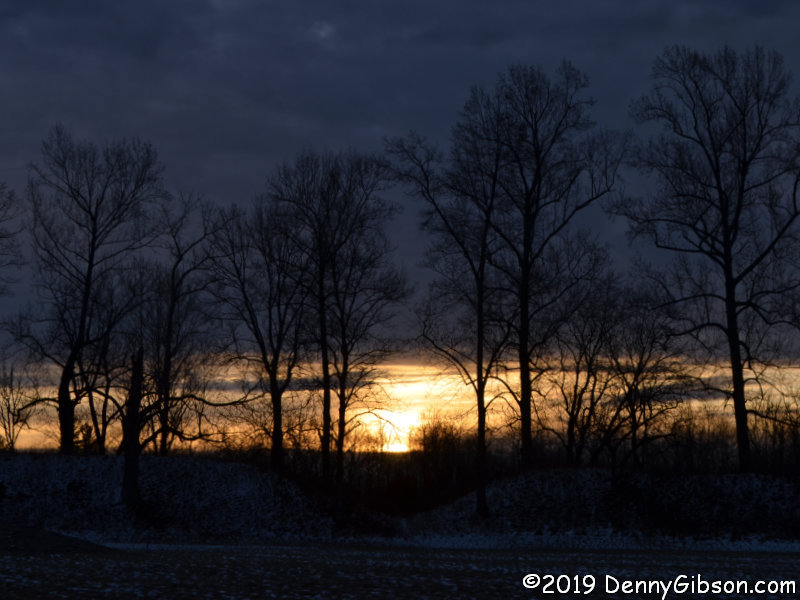
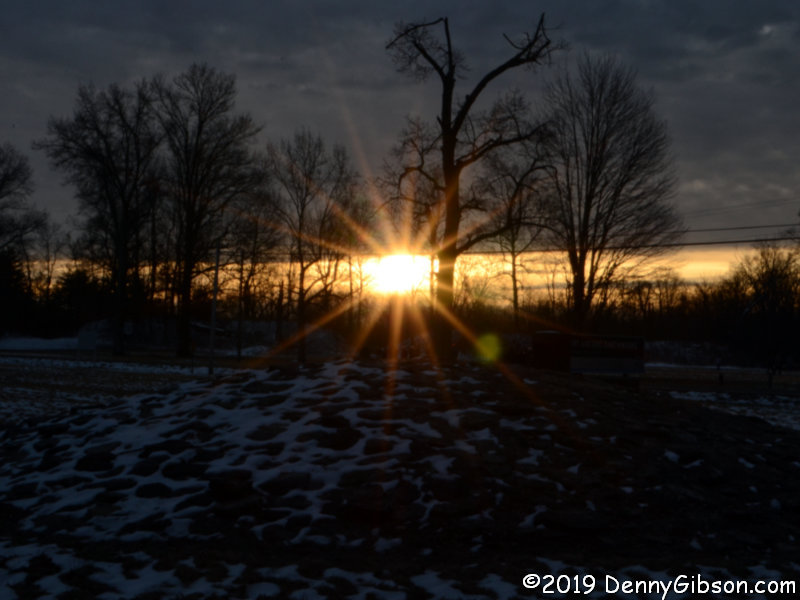
The opening photo shows the sun rising yesterday over a “gateway” in the earthen enclosure at Fort Ancient. The photo at left was taken a bit later and includes a small mound inside the enclosure in the foreground. When the mound, gateway, and sunrise align, sunset will follow sooner than on any other day of the year. This is the northern hemisphere’s Winter Solstice. It is the day when the sun is above the horizon for less time than any other day of the year, and yesterday that amounted to 9 hours, 25 minutes, and 9 seconds. Although we talk about Solstice being a day, it is technically just an instant. It is the moment when the Sun is farthest north or south of Earth’s equator. It happens twice each year and happened yesterday at 23:19 EST.

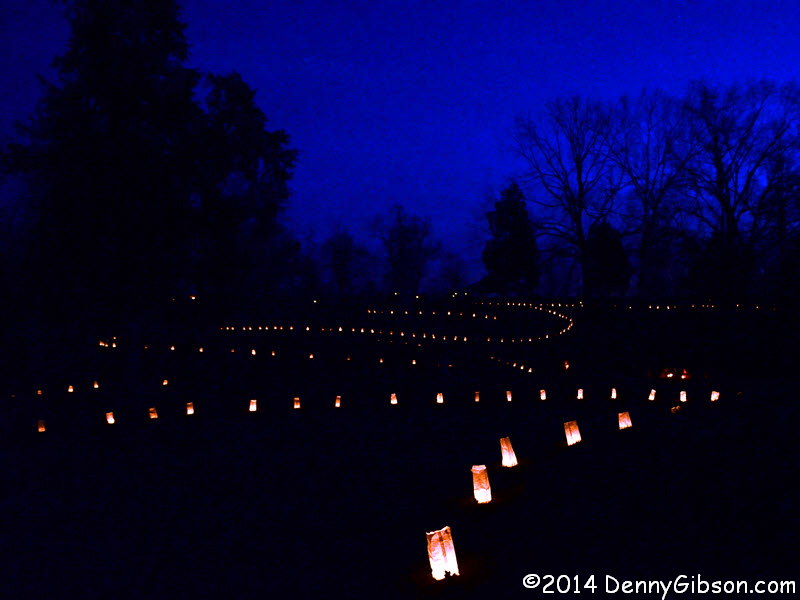
Serpent Mound, another ancient earthen structure containing solar alignments, is a little more than forty miles southeast of Fort Ancient. The serpent’s head is aligned with the Summer Solstice sunset. Body coils align with Summer and Winter Solstice sunrises. For several years, a modern event known as Lighting of the Serpent took place there at Winter Solstice. It was discontinued in 2017. The picture at right is from 2014 which is the only time I attended.

Long before they knew anything about orbits and equators, humans knew the day of Winter Solstice was special. It is the point where each successive day receives more rather than less daylight. It’s the big turnaround that will eventually lead to the warmth of spring and summer. It is clearly a day worth celebrating and it has indeed been celebrated in many different cultures in many different ways.

During their existence, humans have developed a slew of calendar systems. Several actually remain in use today, but the Gregorian calendar is the one most widely accepted. In the late sixteenth century, this started replacing the Julian calendar which had been around for all of those sixteen centuries and then some. The Julian calendar had been created by folks who calculated that a year was 365 and 1/4 days long which was a lot more accurate than an even 365. They came up with the rather clever idea of adding an extra day every four years to balance things out.

We now know that a year is 365.2422 days long. A year is the length of time it takes Earth to orbit the Sun, a day is the length of time it takes Earth to rotate, and neither is adjustable. When the Julian calendar was first adopted, the northern hemisphere’s Winter Solstice fell on December 25 but it slowly drifted away. Someone in authority thought to put an end to this nonsense by declaring December 25 the official solstice. But those non-adjustable orbits and rotations kept doing what they were doing and the official solstice and actual solstice just kept getting farther and farther apart.

The Gregorian calendar, which we have used for roughly 400 years now, put an end to that. Like the Julian calendar, it considers most years to be 365 days long but has a more involved system of “leap years” that add an extra day. The result is that over a long enough period our years will average 365.2422 days in length. Not only did the new calendar eliminate future drift, it tried to correct for some of the previous drift by throwing away ten days. The calendar’s namesake’s full-time job was as Pope of the Catholic Church. Ditching those ten days moved the solstice to December 22 which is where it had been in 325 when the church was founded. Of course, some holidays that had been tied to the official solstice (which hadn’t been anywhere near the actual solstice for some time) would continue to be celebrated on December 25.

Anyone wanting a more complete discussion of calendars, solstices, and holidays will find one here. Additional information on Fort Ancient is available here.