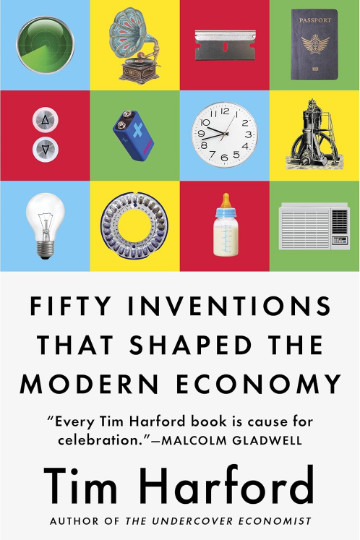
 Although I have since figured it out, when I pulled Fifty Inventions That Shaped the Modern Economy from my to-read list, I wasn’t sure how it got there. I was, however, quite certain that beginning it immediately after reviewing Cities of Gold was a real piece of luck. That’s not because of any overlap in subject matter. There is virtually none. It is because that review had ended with me seriously considering whether or not the invention of the automobile had been a good thing. I guess I was in the mood to think about inventions.
Harford leads us to think about inventions differently than we otherwise might. Of course, just considering their impact on the economy, the focus of this book, is new for some inventions and some readers. But Harford has us thinking about how they came to be, why some took so long to be created or accepted, and yes, good versus bad.
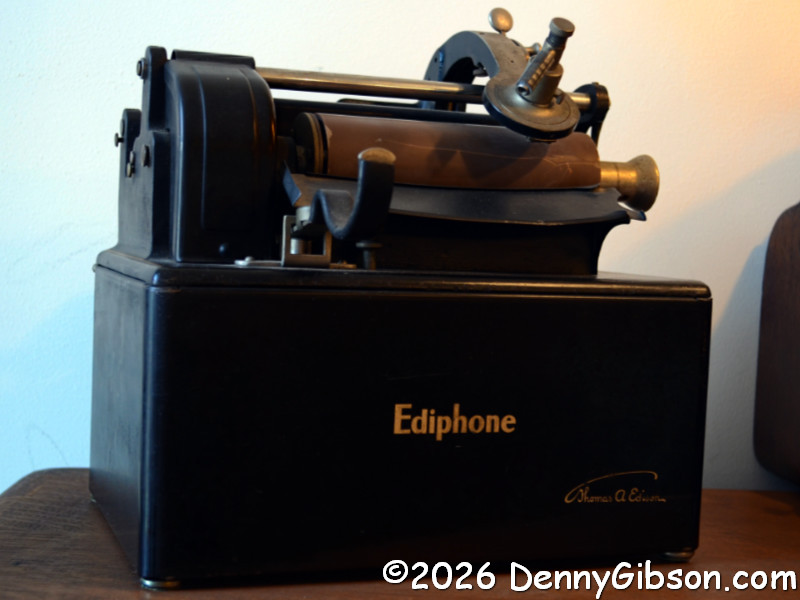
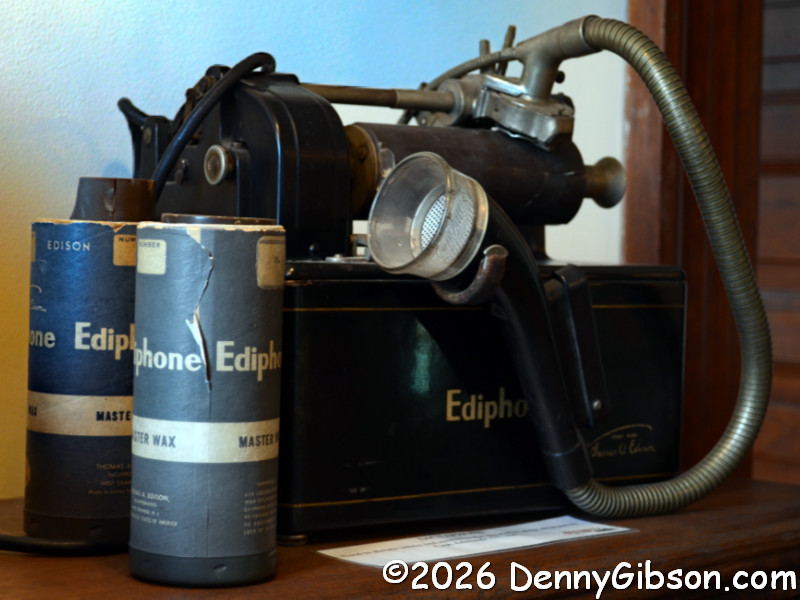
Some inventions create clear winners and losers, and that is the name of the book’s first section. A good example, and the one Harford talks about first, is the gramophone. As he does with all fifty of his chosen inventions, he tells its story through real-world examples that illustrate why it was chosen. In pre-gramophone days, top-tier performers made more money than those who weren’t quite as good, but second- and third-rate performers could do alright since the only way to hear a hit (or any sort of) song was via a live performance. Once it became possible for a star to record a single performance and sell copies, the market for not-quite-star performers dropped dramatically.
Several of the listed inventions require a large array of other inventions to even exist. The premier example of this is the iPhone and the other smartphones that followed. Harford notes that economist Mariana Mazzucato has identified a dozen technologies needed to make this device practical and useful. Several are specialized miniature electronic components, but things like analog-digital conversion, a cellular network, and the World Wide Web are also obviously necessary. I was reminded of those pictures of a guy weighed down by all the devices replaced by a modern smartphone, and made to realize that if all of those functions didn’t already exist, smartphones wouldn’t be very smart at all.
There are other inventions that do not require a bunch of prior breakthroughs but do require a lot of coordination. I have passed harbors filled with ships loaded with identically sized shipping containers and have watched trains carrying the big cubes pass me. It never occurred to me just how much coordination it took to create ships and railcars to hold the containers and cranes and other devices to move them. The story of how that happened is fascinating.
Naturally, a lot of what Harford has to say about an invention concerns its impact. The book’s purpose, after all, is to identify those that shaped the modern economy. Some of that impact is intentional, some is not, and some of the unintentional impact is not good. It was the negative environmental impact of the automobile described in Cities of Gold that got me to consider it differently, and there are plenty of negative unintended consequences described in Fifty Inventions…. But there are also plenty of positive unintended consequences connected with those inventions.
Air-conditioning is a great example. Its invention was driven by the effect of varying humidity on color printing. It solved the problem – but also led to a lot of comfortable and happy people in their cars, homes, and offices. Along with the safety elevator, reinforced glass and concrete, and a few other things, air-conditioning is one of the inventions that allow glass-covered skyscrapers to exist.
That the inventions Harford identifies have overall been good things is reinforced in the Epilogue, when he recounts economist Timothy Taylor asking his students whether they would rather be making $70,000 a year now or in 1900. The answer might seem obvious at first, but it requires just a little thought to realize that while that money would definitely buy more stuff in 1900, much of the stuff that makes life enjoyable today was not available in 1900 at any price.
Fifty Inventions That Shaped the Modern Economy, Tim Harford, Riverhead Books (August 28, 2018), 5.5 x 8.21 inches, 336 pages, ISBN 978-0735216143
Available through Amazon.

 This picture is from my 2023 Tracing a T to Sebring trip. My great-grandparents made two trips to Florida in their Model T Ford. Using letters written by my great-grandmother, I was able to retrace their first trip through to its return home on its centennial in 2020 (Tracing a T to Tampa Again). Only a few letters survive from their second trip from their time in Florida, and none survive from the drive back to their home in Ohio. Nonetheless, I retraced it as best I could on its 2023 centennial. The picture is from Avon Park, where Granddad and Granny spent some time while in Florida. In fact, it is where they were camping when the letters peter out. Sadly, most of the early Avon Park buildings, including at least one that Granddad is known to have worked on, are no longer standing. That makes the bandstand extra special. Originally built in 1897, it was there when my great-grandparents were in town. Among Granny’s mentions of the bandstand is a concert they listened to while seated in their Ford.