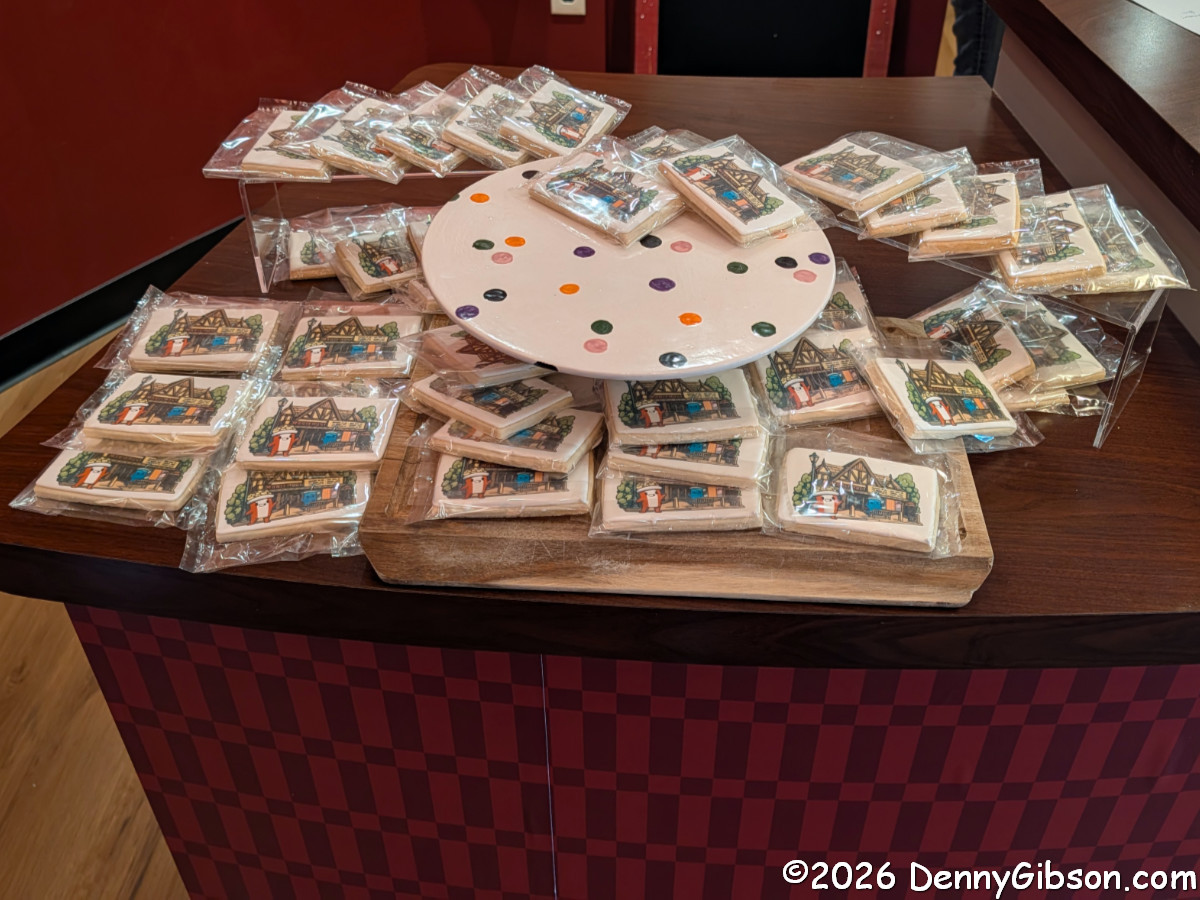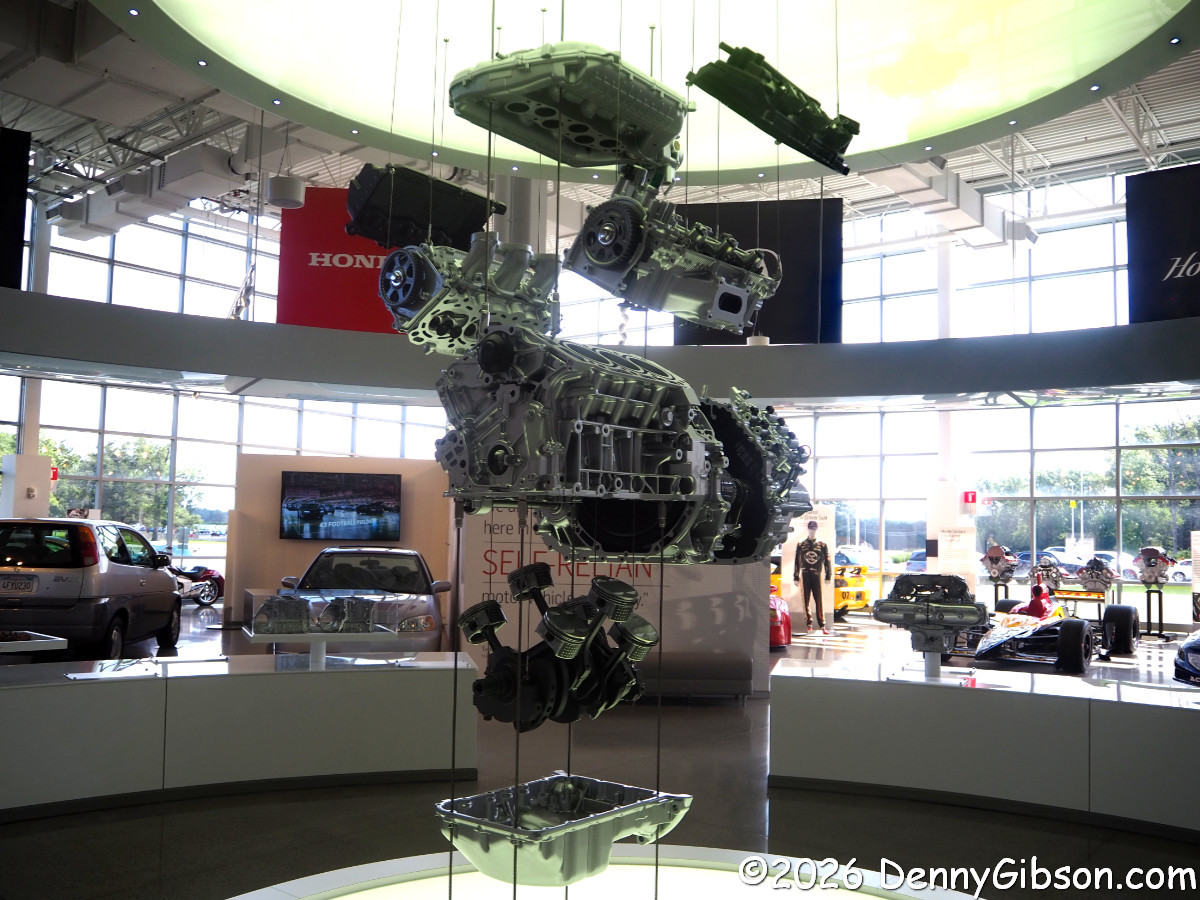
Honda Heritage Center

I’m guessing that many of you have seen plenty of attraction lists filled with places that you’ve already seen, are no longer open, are too far away, are by appointment only, or are so distorted by AI as to be laughable. I know I have. But I recently came across a list of museums in Ohio with several entries I thought useful. Every place on the list is currently operating, and I detected not a whiff of AI. I’d already visited several, and a few were too far away to fit my immediate plans, but that’s my problem. One requires an appointment, and my reluctance to do that is a personal problem, too. The list came from Ever After in the Woods. This is my first time hearing of them, so I’m not ready to give a wholehearted recommendation, but I like what I’ve seen so far.

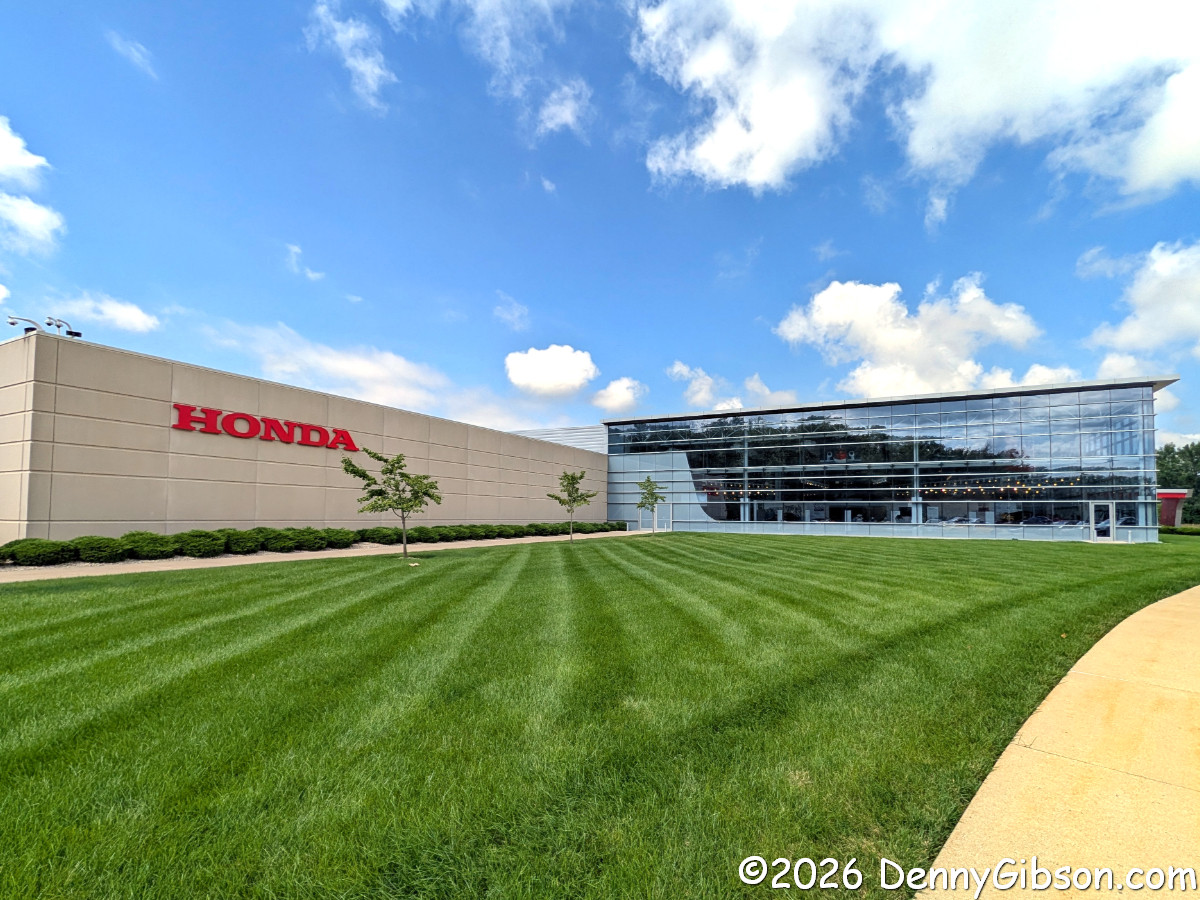
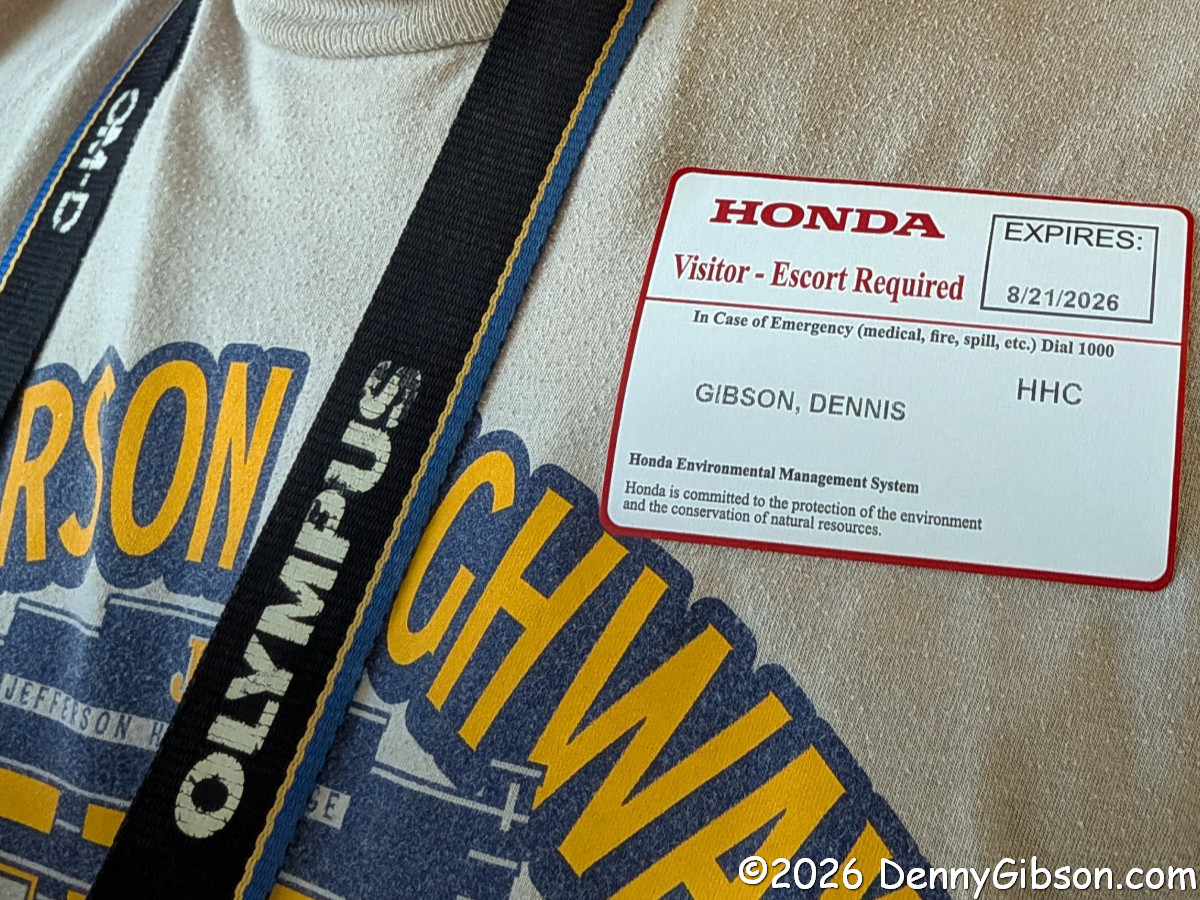
As I’m sure you’ve already guessed, my first selection from the list was the Honda Heritage Center in Marysville, OH. It’s roughly two hours away, open at reasonable hours Monday through Friday, and free. I drove up Friday, registered for my stick on pass, and spent just about an hour roaming through the exhibits.

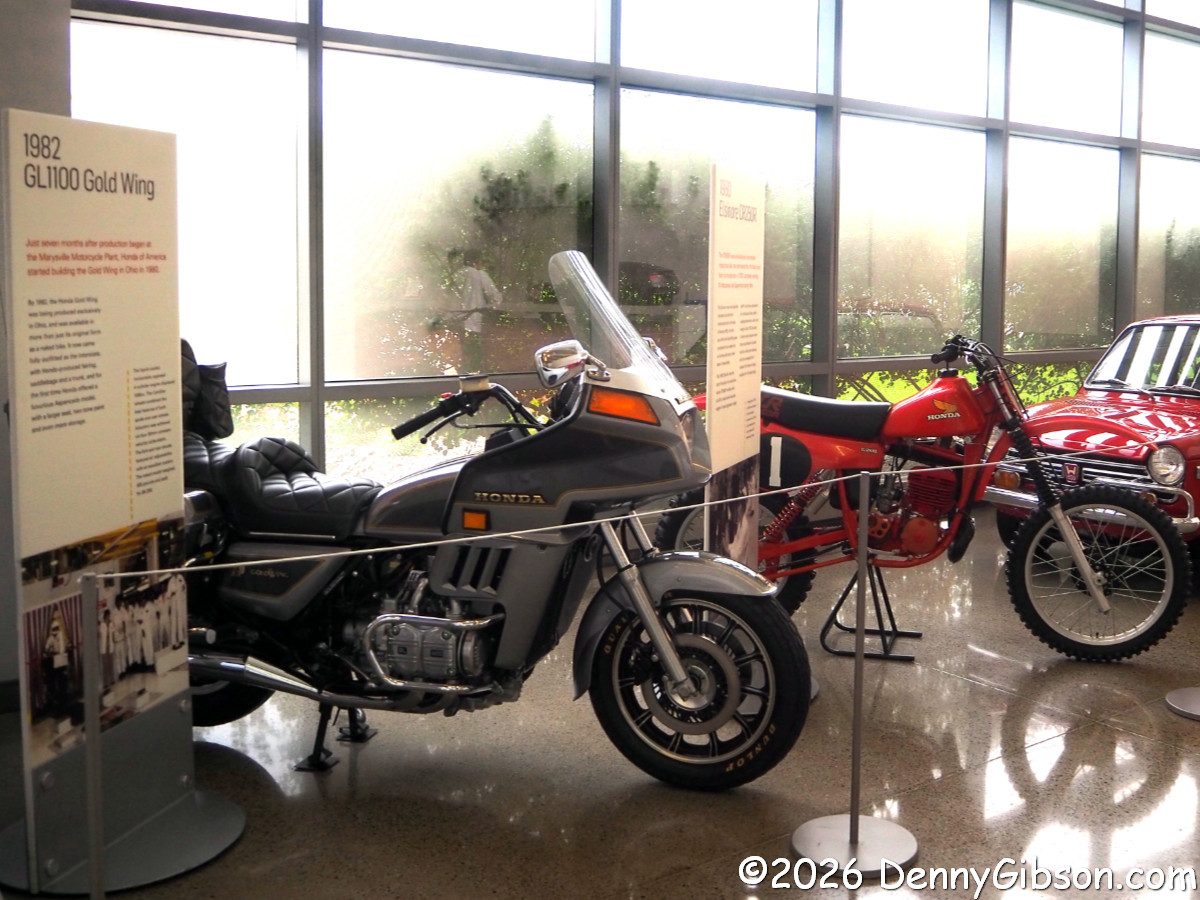
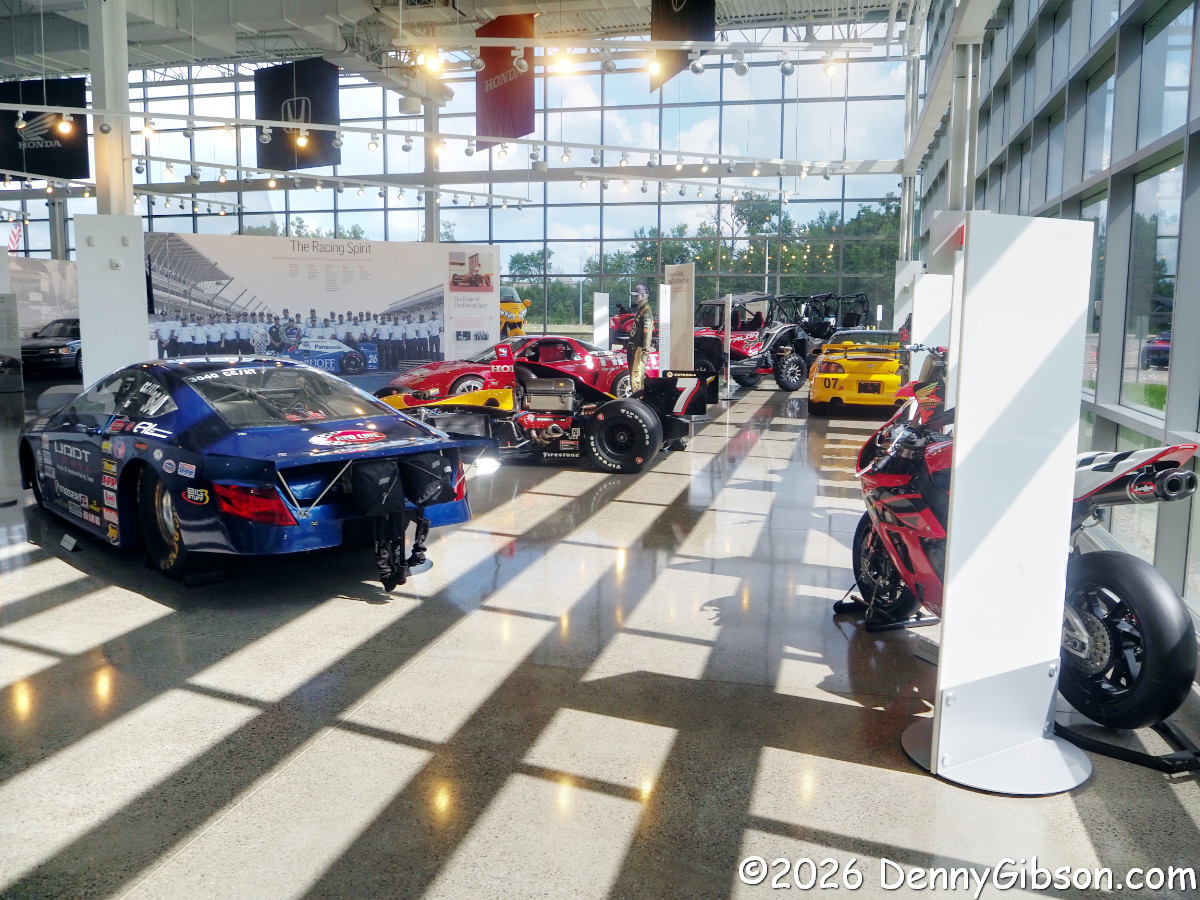
The first Honda plant in Marysville, actually the first in the U.S., was for motorcycles. It opened in 1979 with the intention of building the big Gold Wings. However, that was considered a little too complex for a brand new operation in a brand new country, so production started with the CR250M shown on the right side of the photo. Before too long, the facility was turning out Gold Wings and it turned out a whole lot of them before closing in 2005.

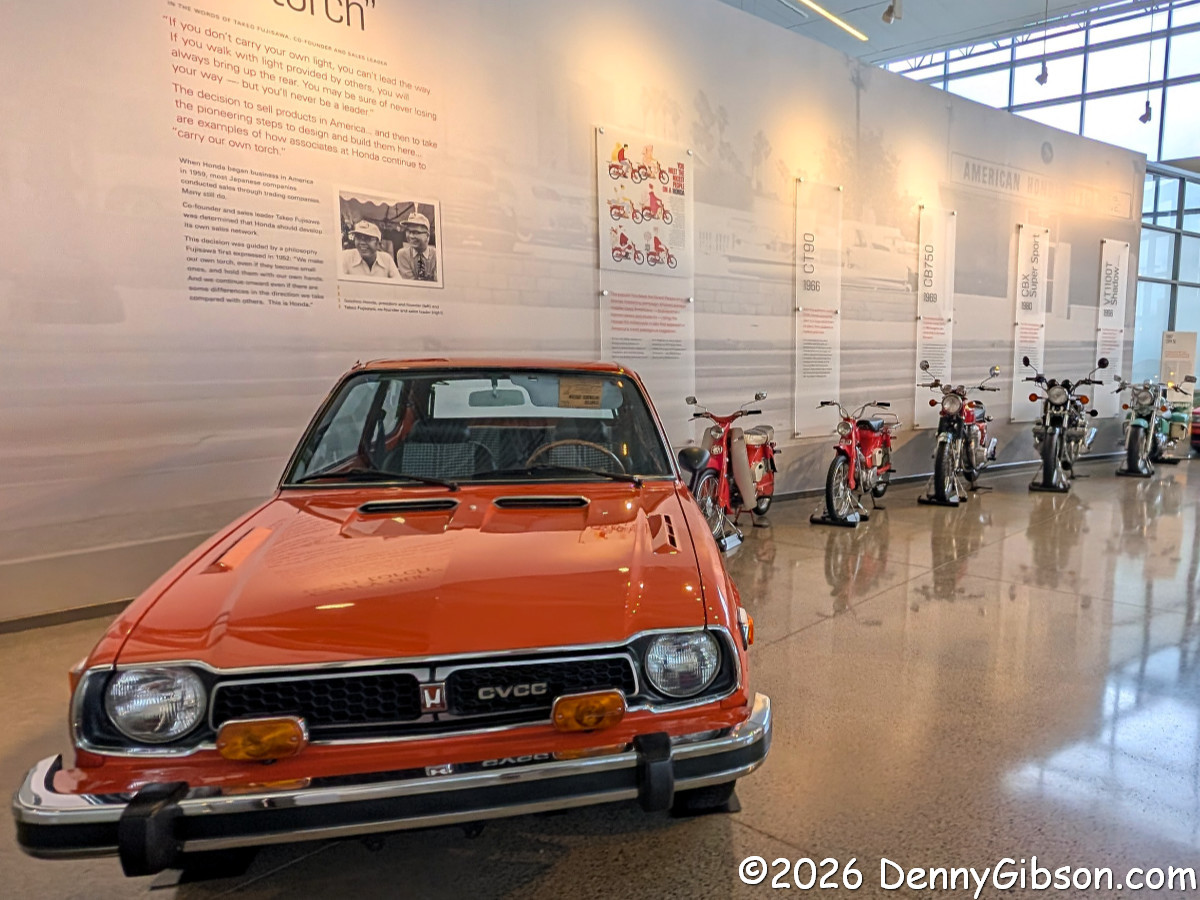
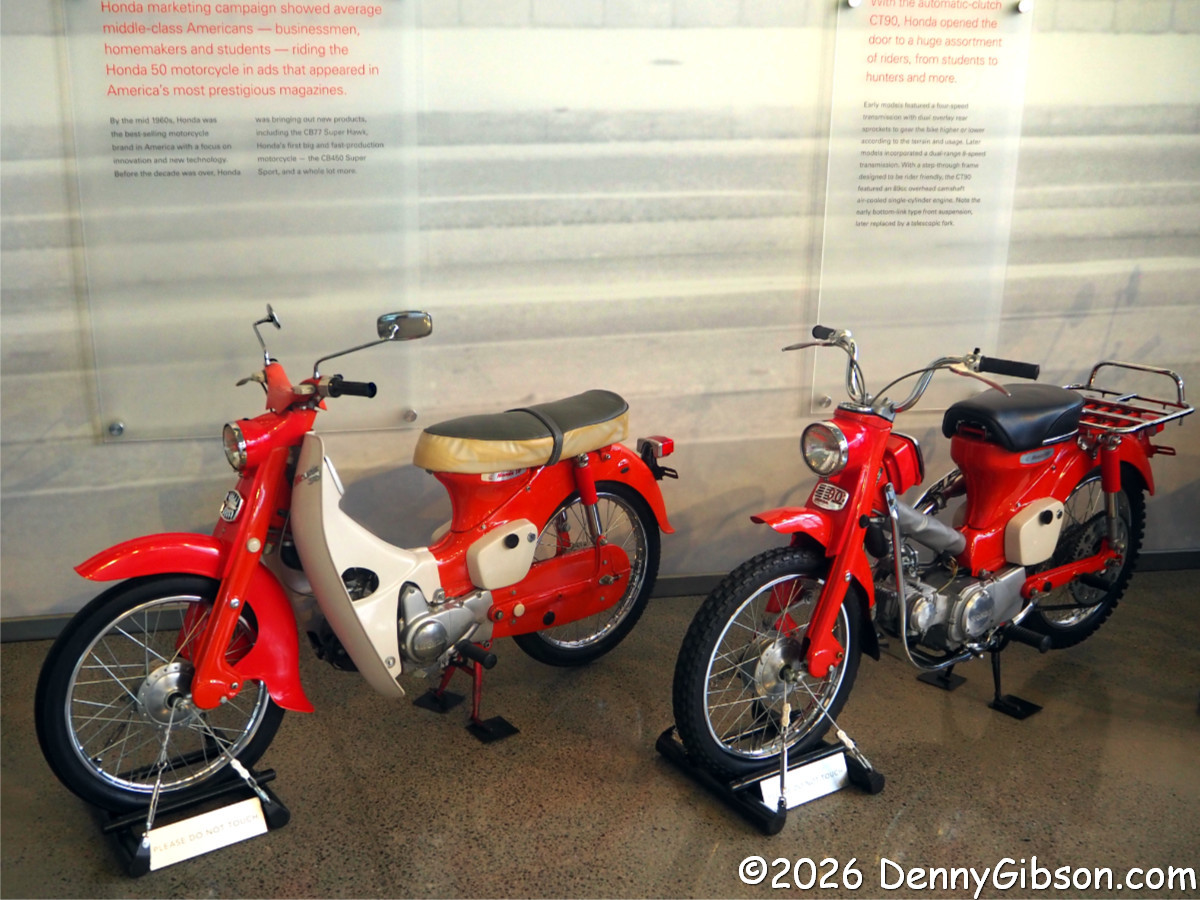
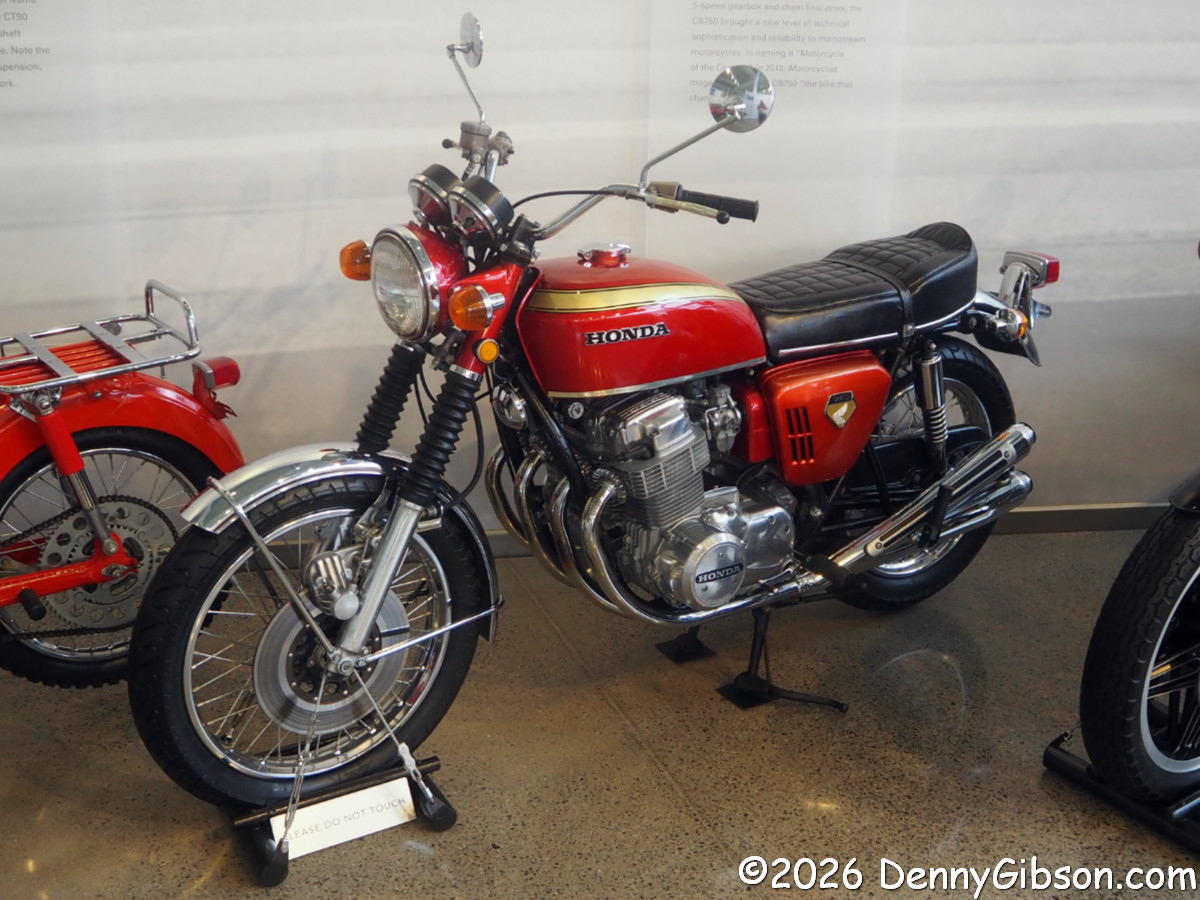
Although I don’t believe any of these were ever made in Marysville, these are the machines that firmly established Honda in the U.S. The Civic was the first Honda automobile to achieve any sort of success here. Next to it are 50cc and 90cc motorbikes. The only vehicle I’ve ever owned with a Honda nameplate fit between these two, at 65cc. The 50cc Honda is the most popular motorized vehicle in the world with more than 85 million sold. I think everybody’s view of two-wheeled Hondas changed when the 4-cylinder CB750 came out. I never owned one, but did ride one when a friend and I swapped bikes for a day. Nice bike.

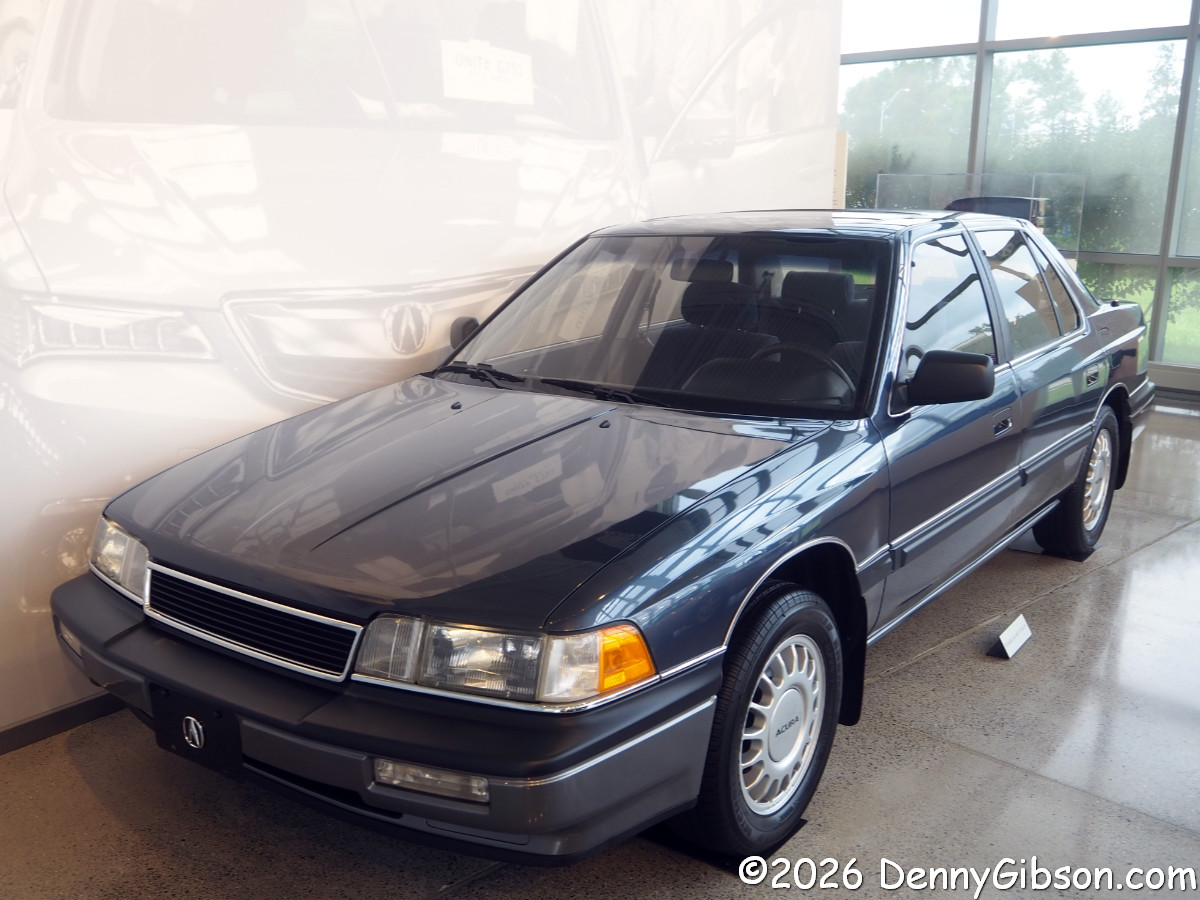
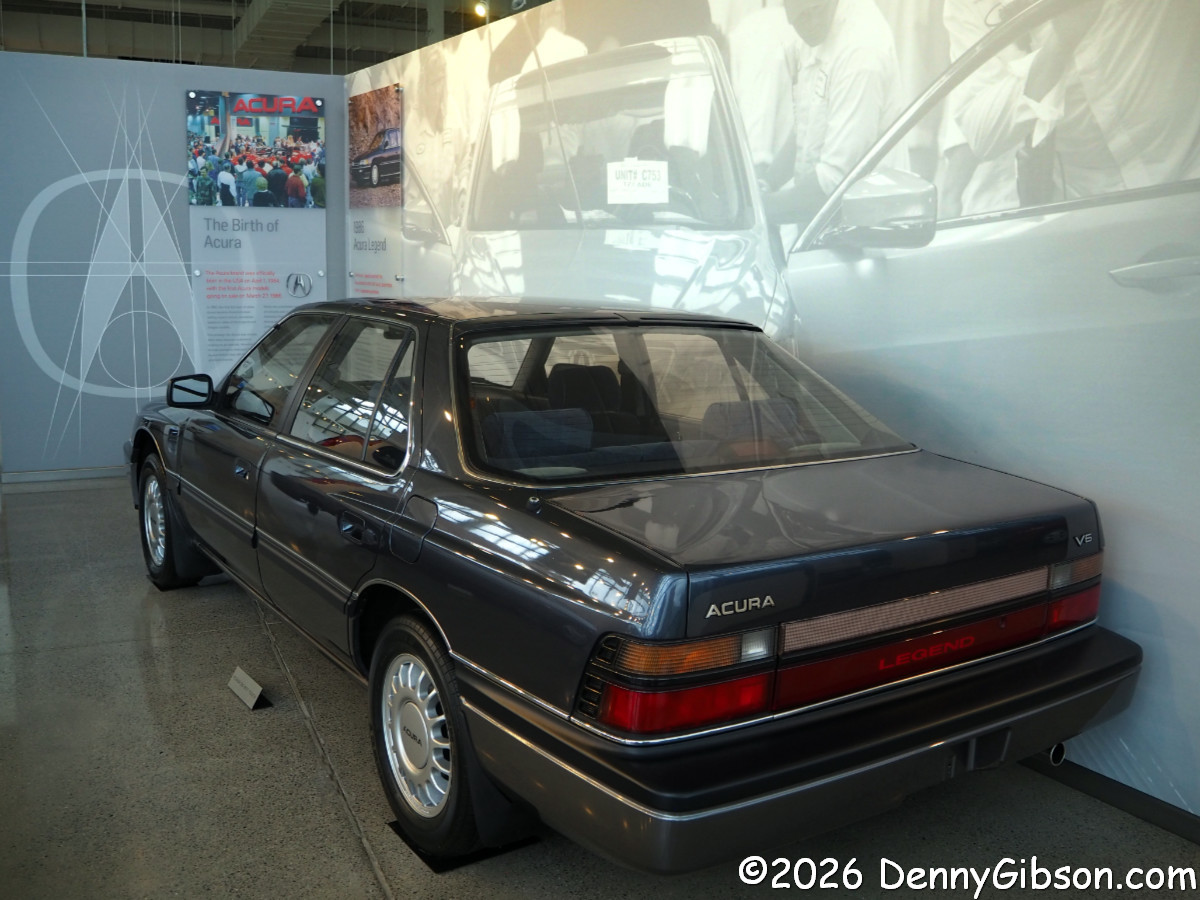
I did have one of these. I just leased it, and it’s an Acura rather than a Honda so there are two technicalities allowing my only-owned-one-Honda claim. Acura was the first upscale brand from a Japanese auto maker and the 1986 Legend was one of their first offerings. I loved the car, but didn’t care for the leasing experience.

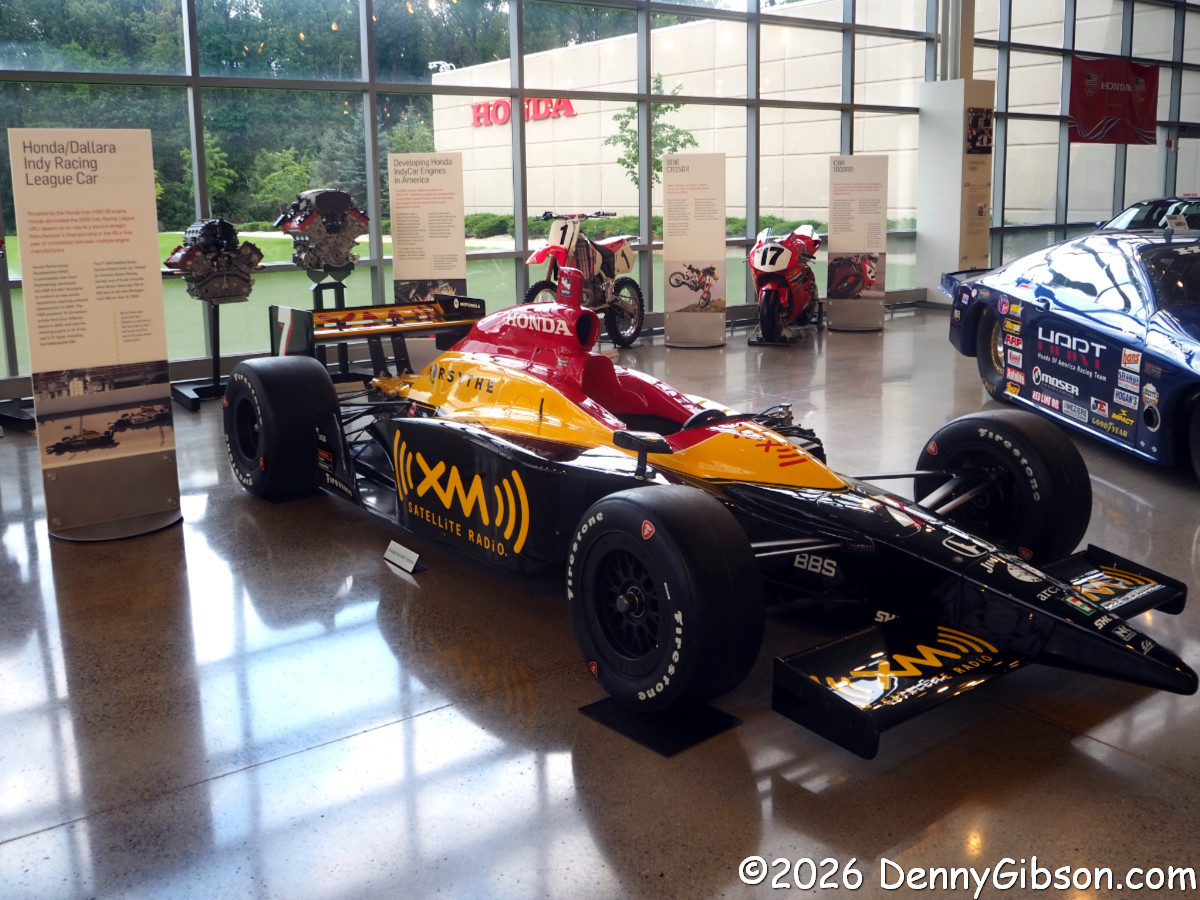
Honda has definitely done some serious racing on both four wheels and two.

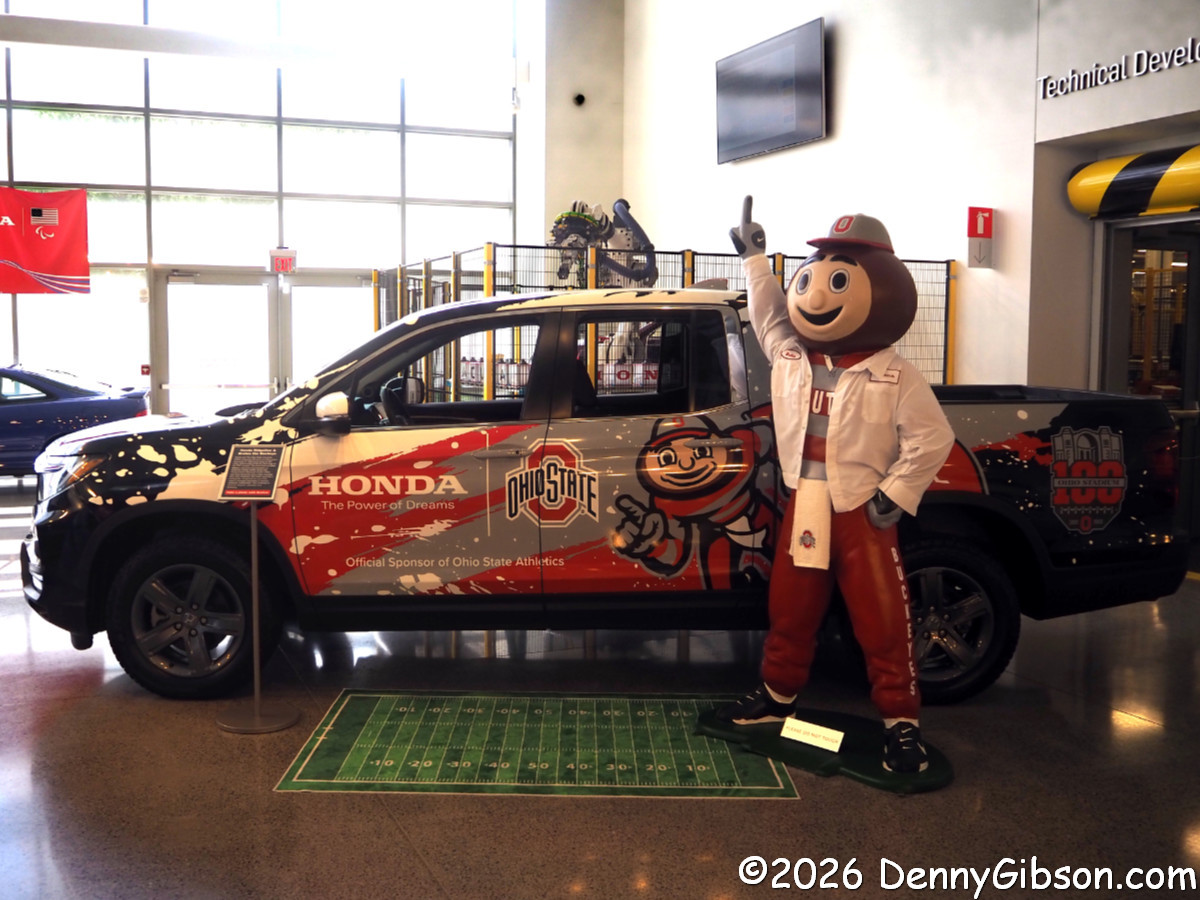
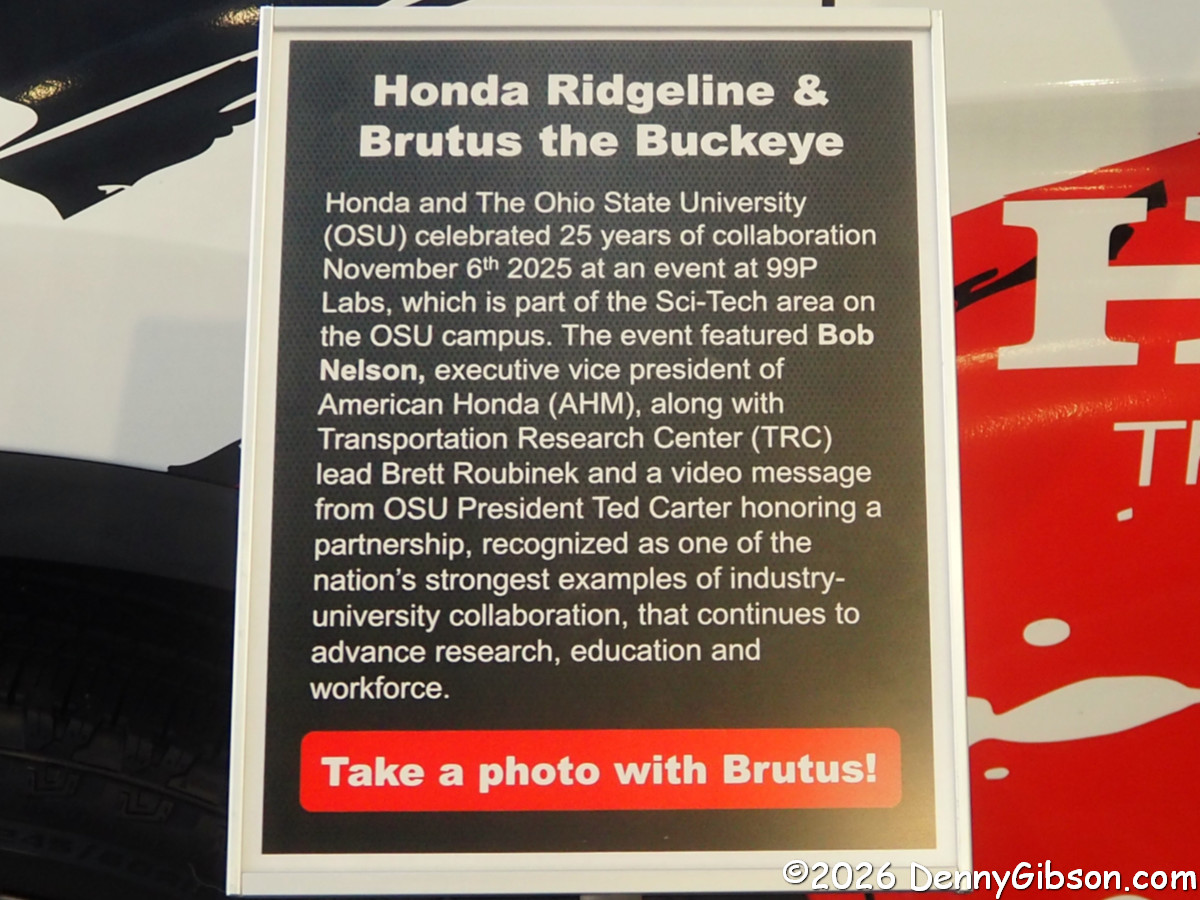
Marysville is only about thirty crow-miles from The Ohio State University campus, so it’s only natural that some long term collaboration would take place between the two. That a Buckeye wrapped pickup truck would result from that partnership was probably inevitable.

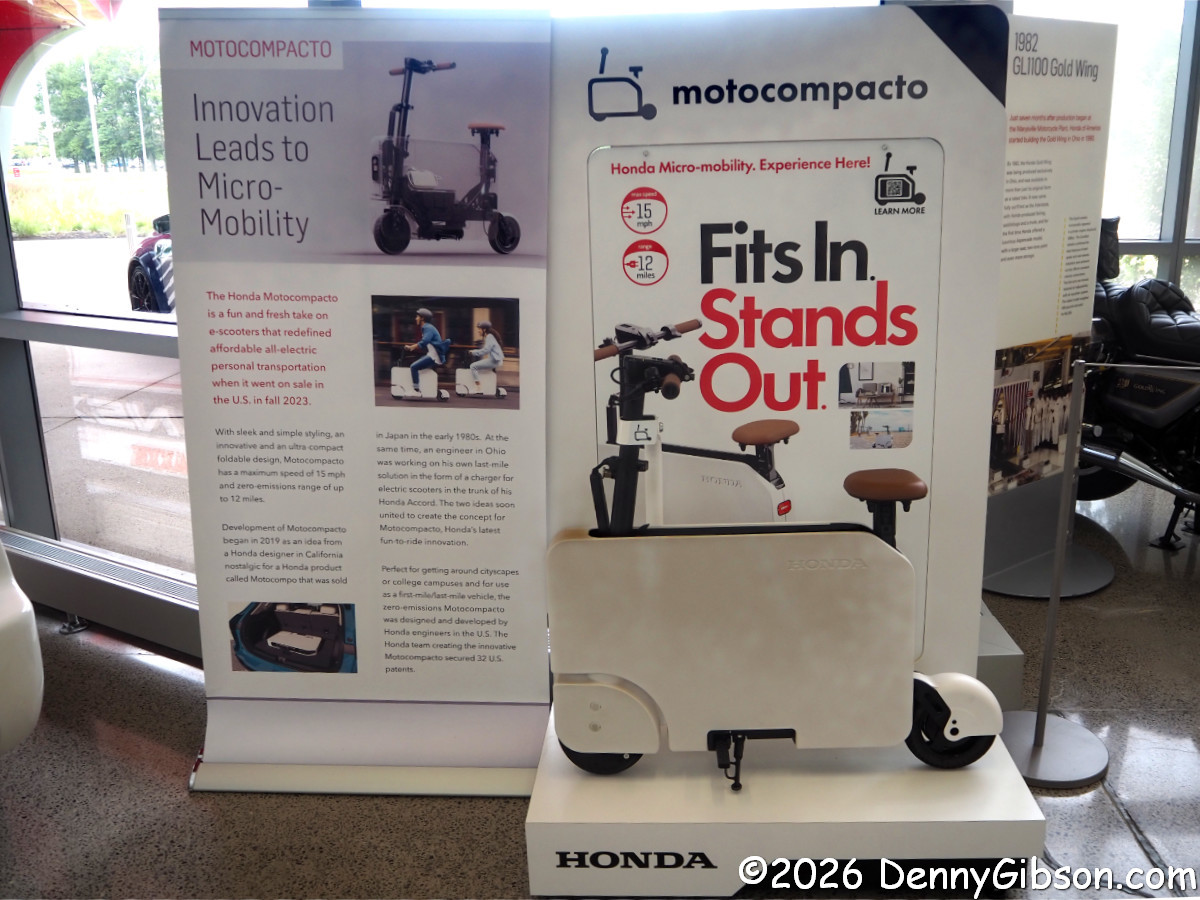
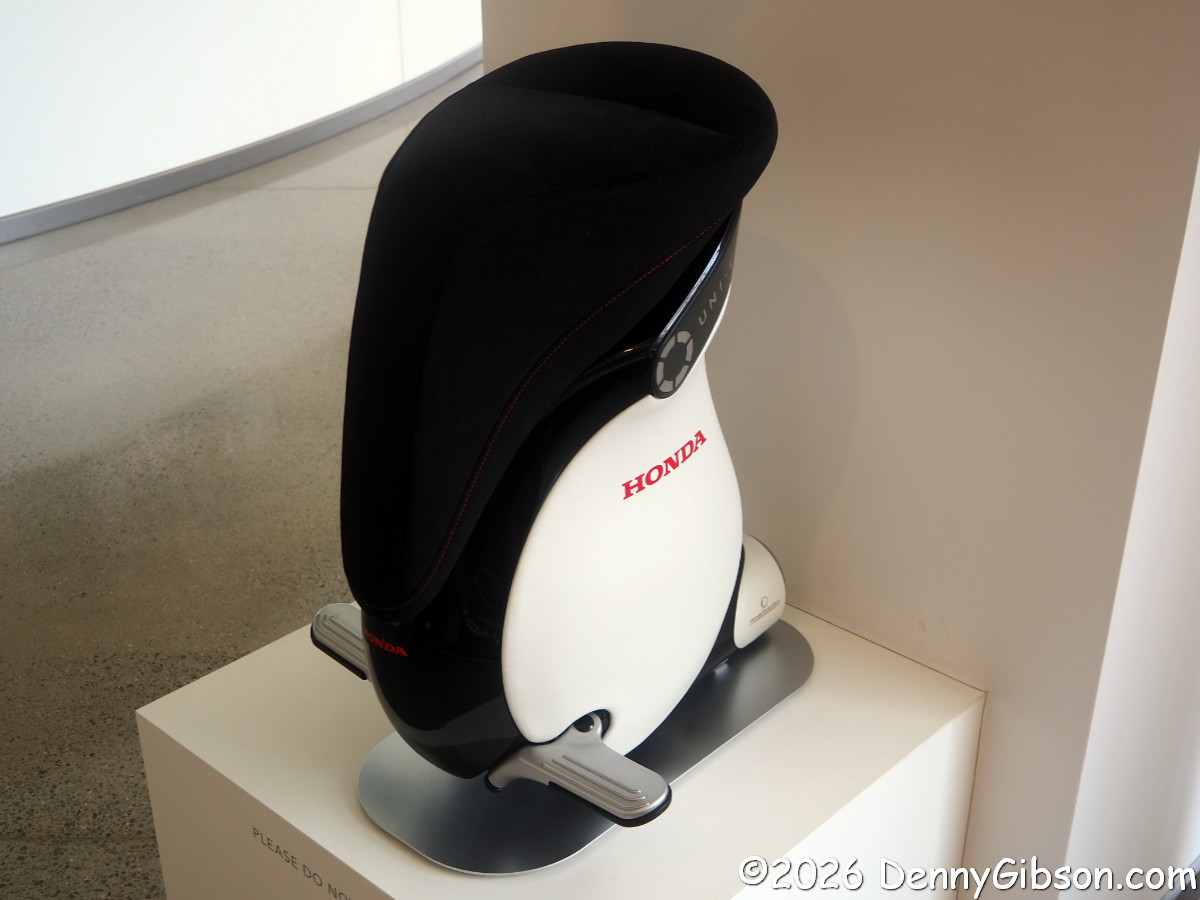
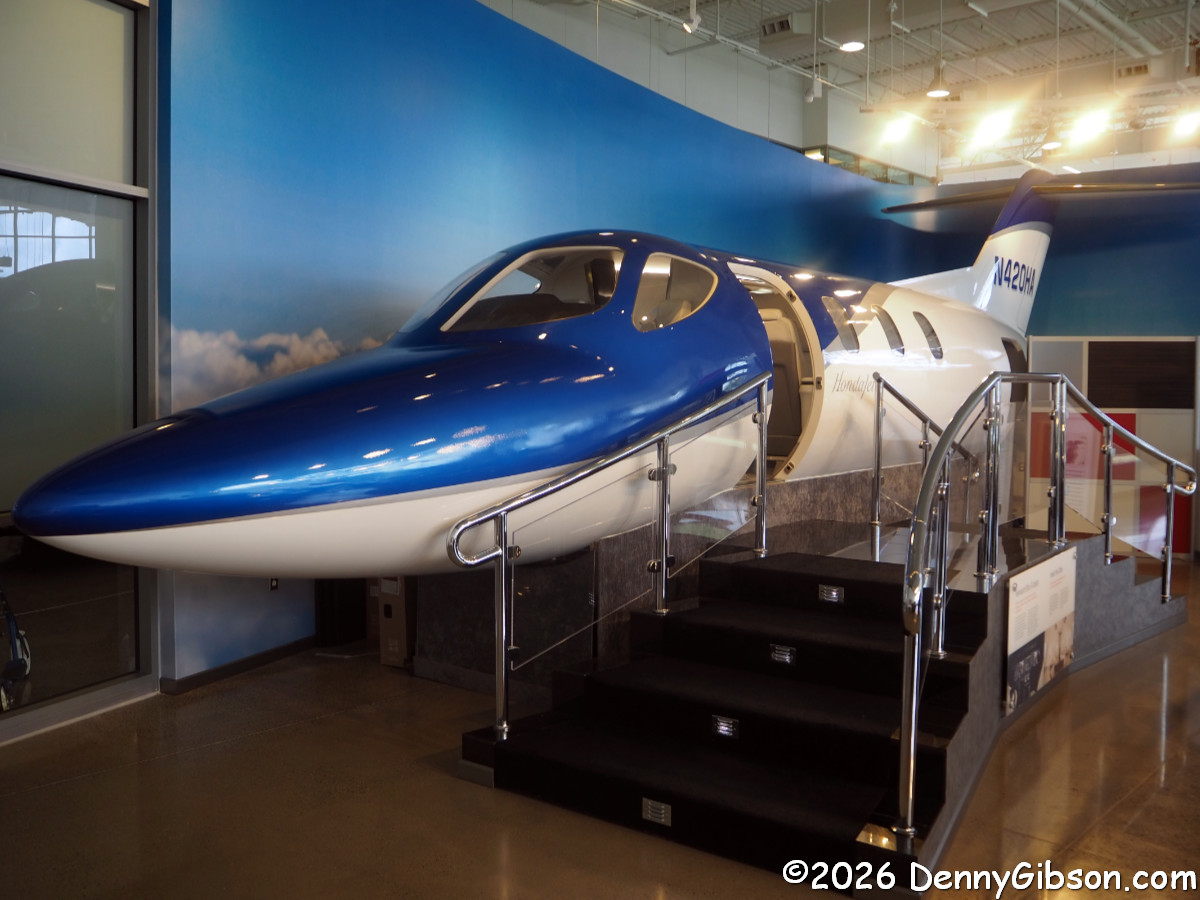
Honda continues to develop other forms of transportation. Here are vehicles with two, one, and zero (Yeah, I know it’s gotta land sometime.) wheels. The two wheeled Motocompacto looks like something Inspector Gadget might use to cover the last mile to a crime scene. The UNI-CUB is controlled by body position. I guess it’s kind of like a Segway with one less wheel.

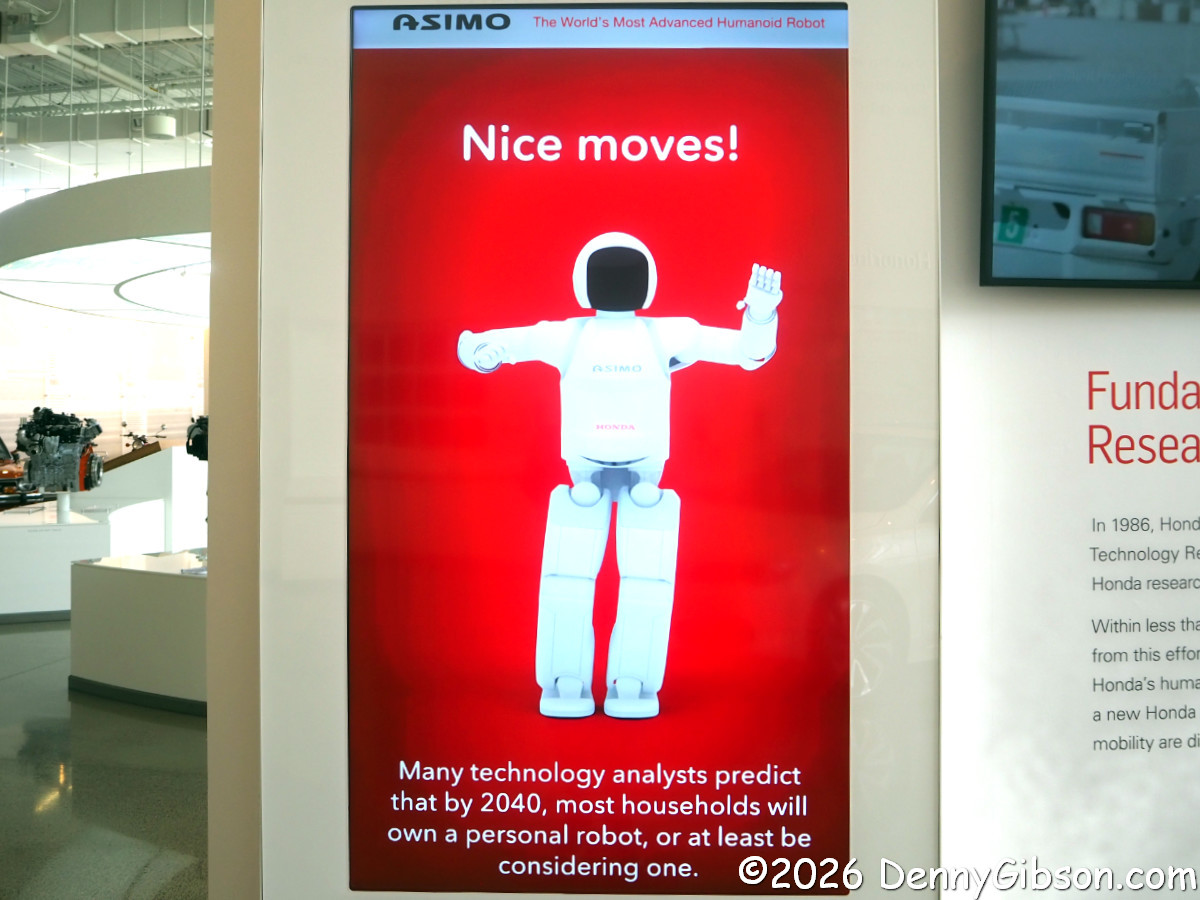
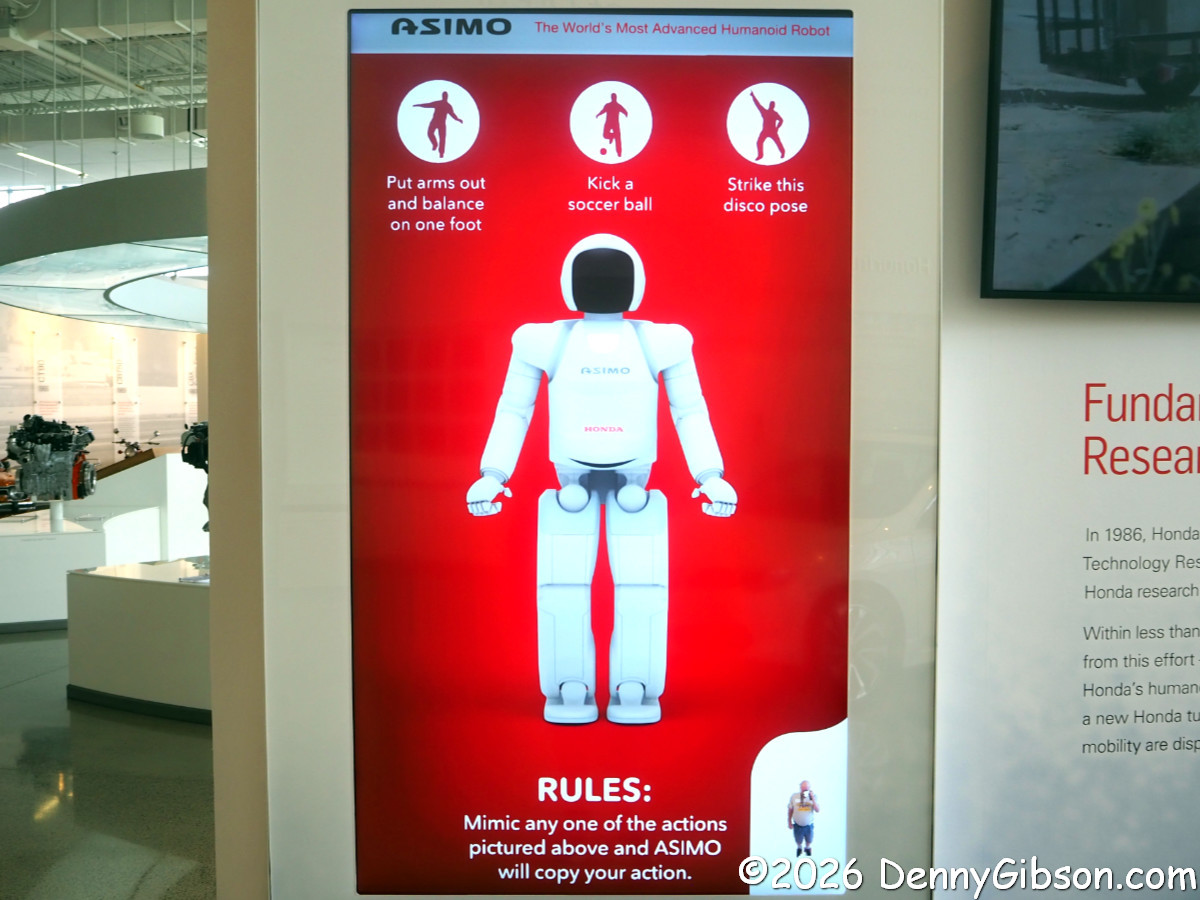
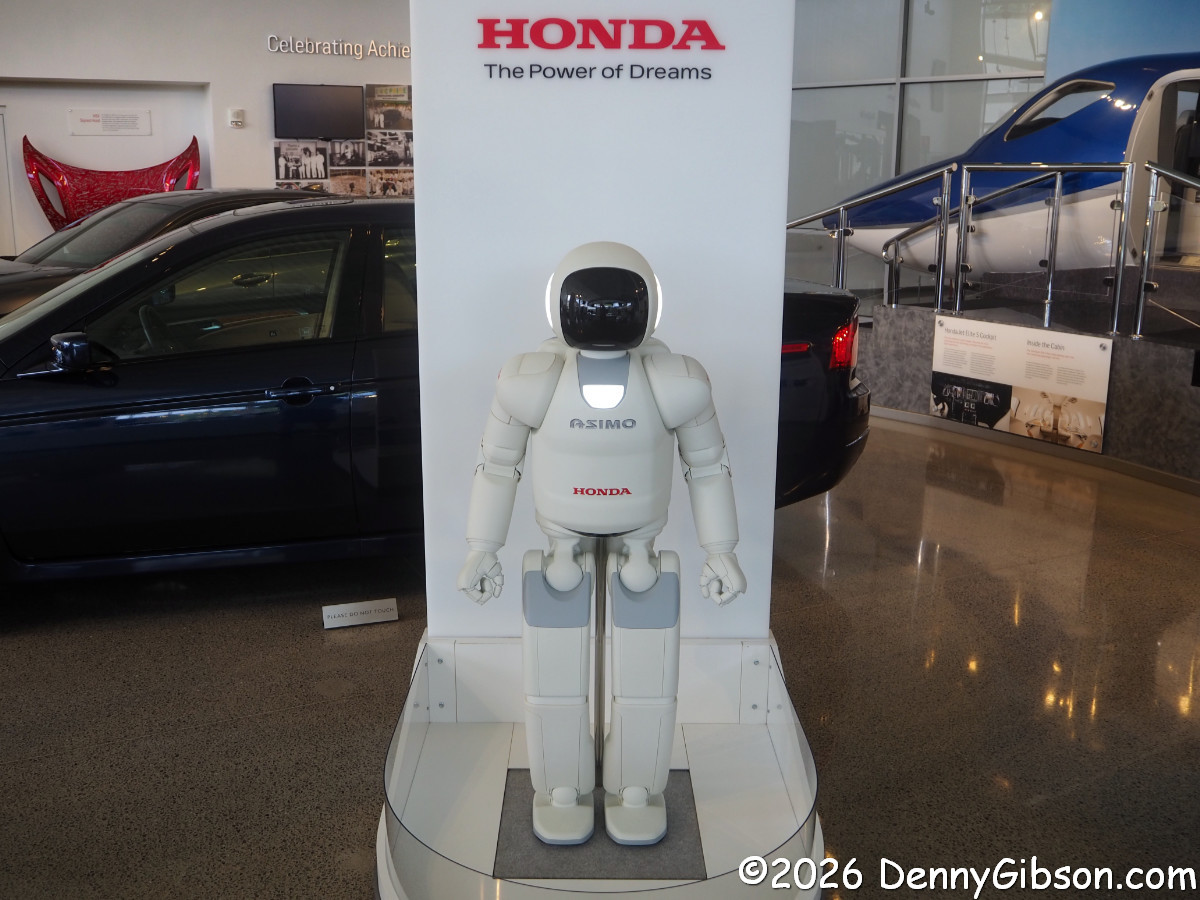
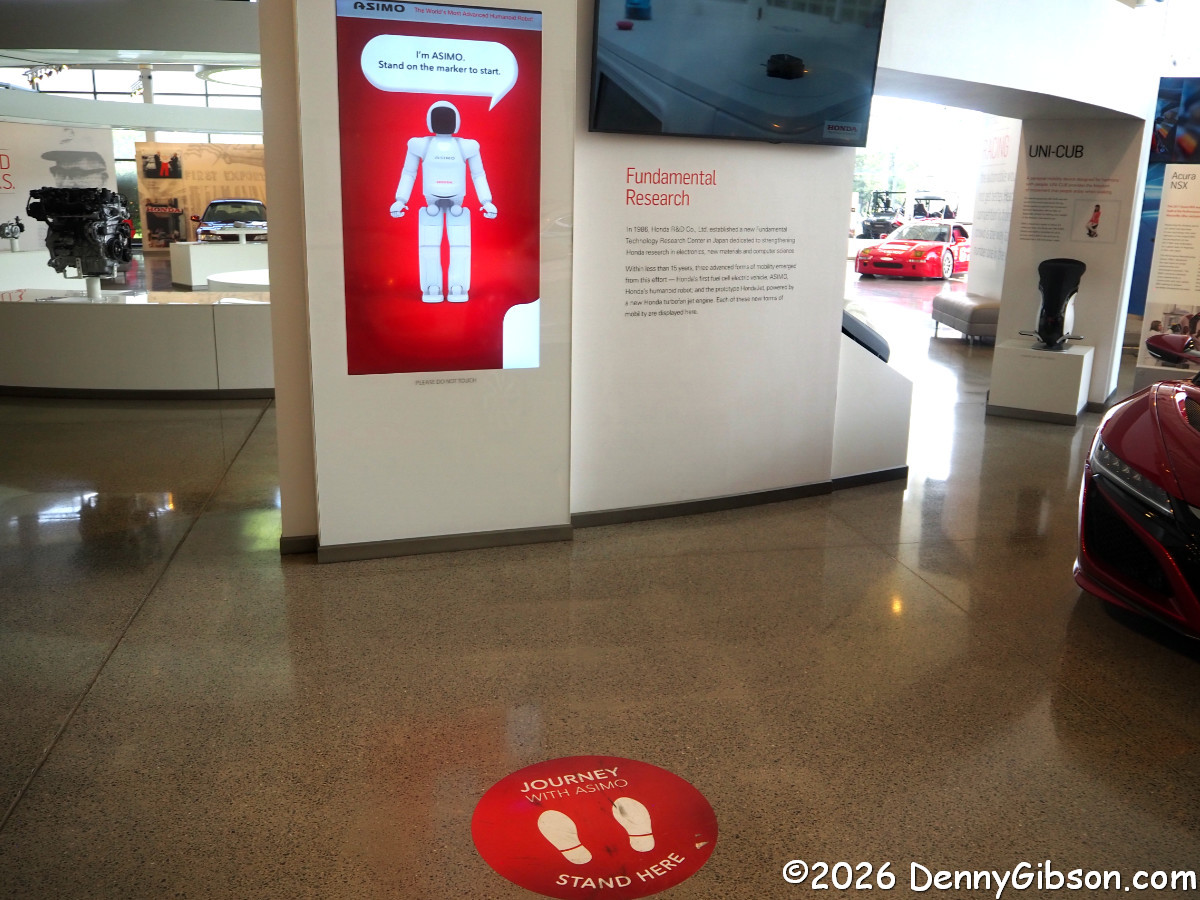
And there are even devices like the Advanced Step in Innovative Mobility that transport themselves. Nearby is an image of ASIMO on a screen (That’s me in the corner.) with a spot marked on the floor where guys like me can stand and make awkward gestures and get undeserved compliments.


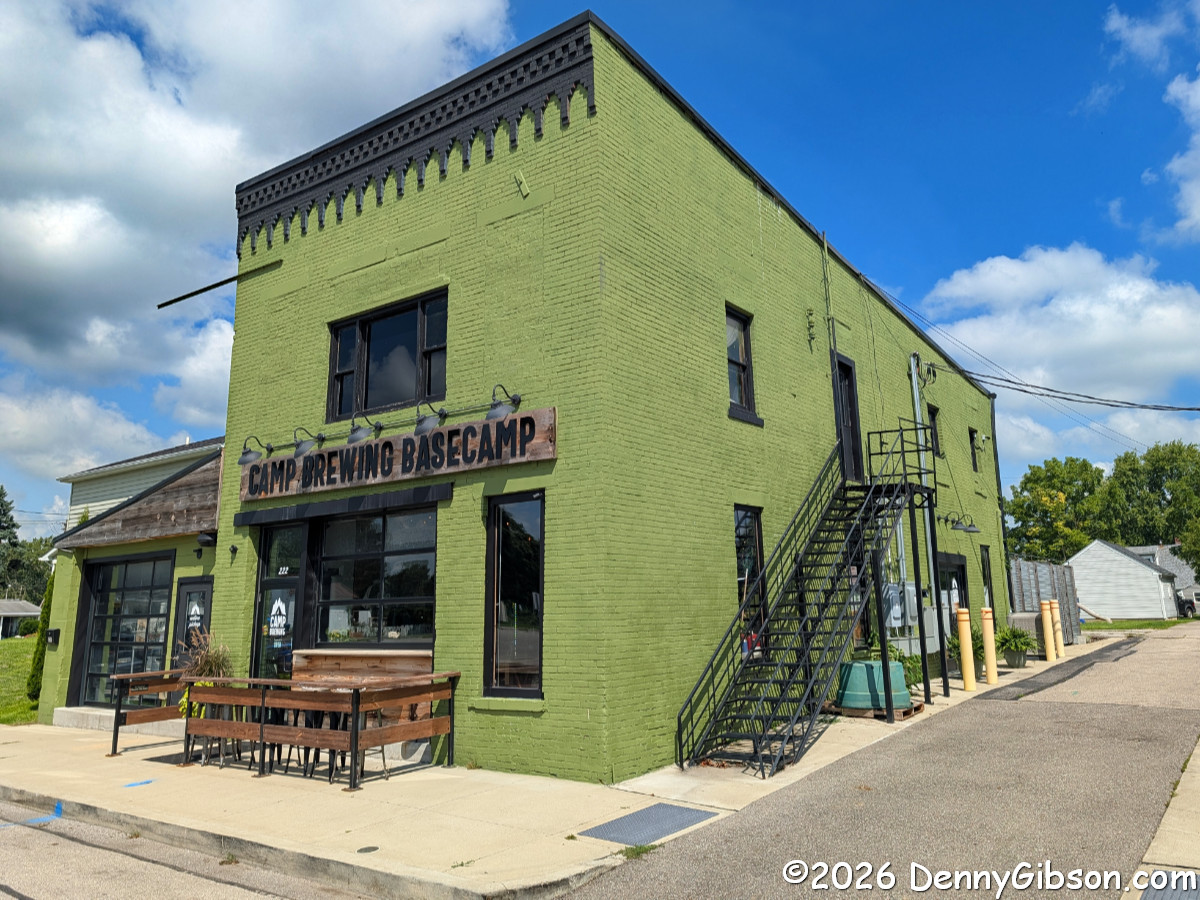
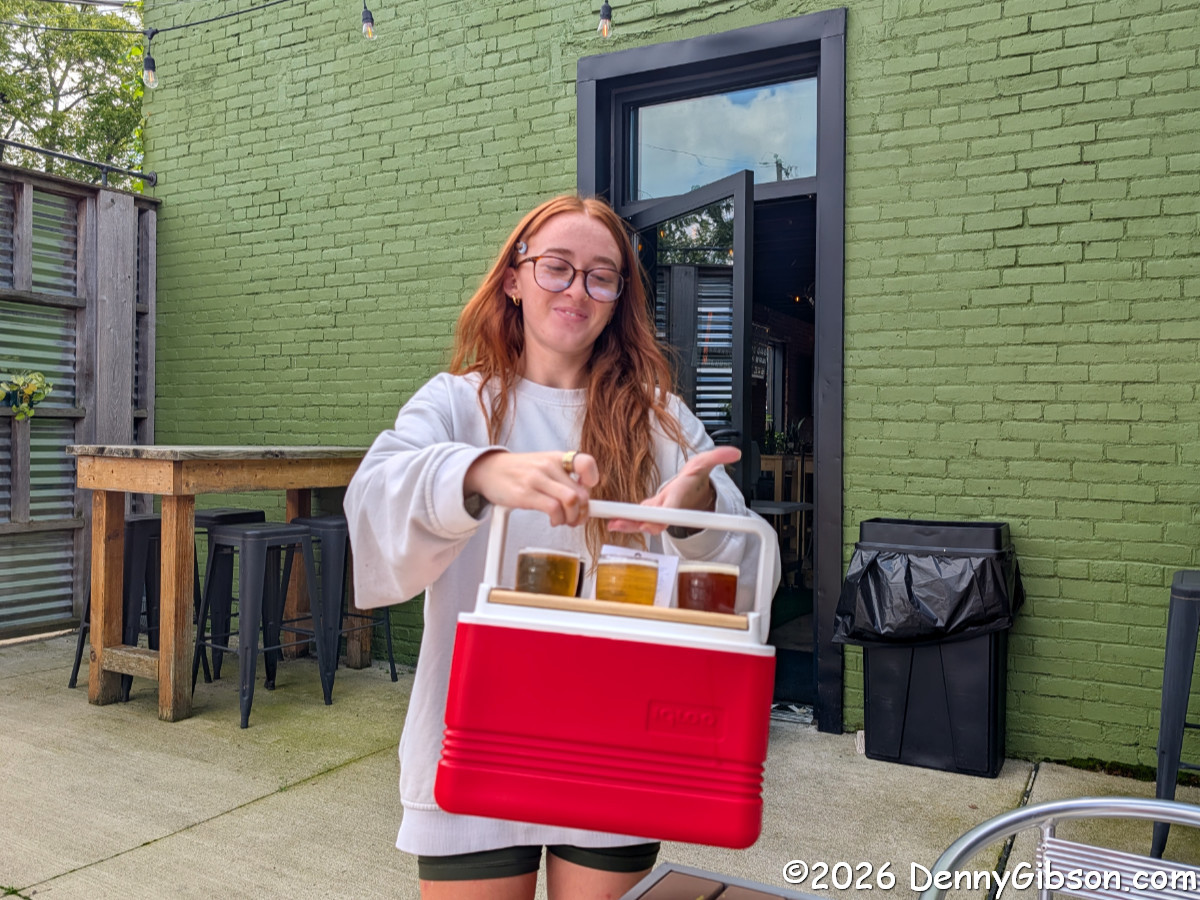
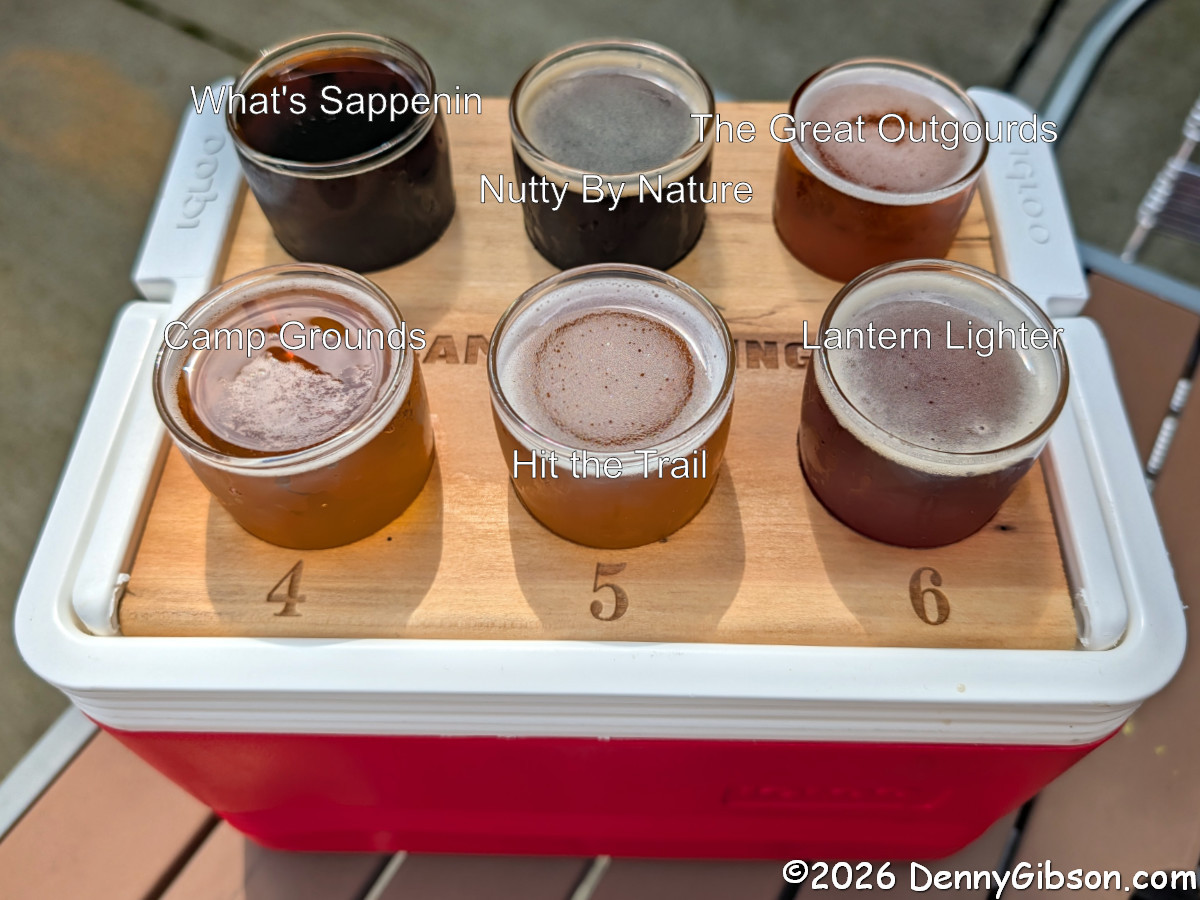
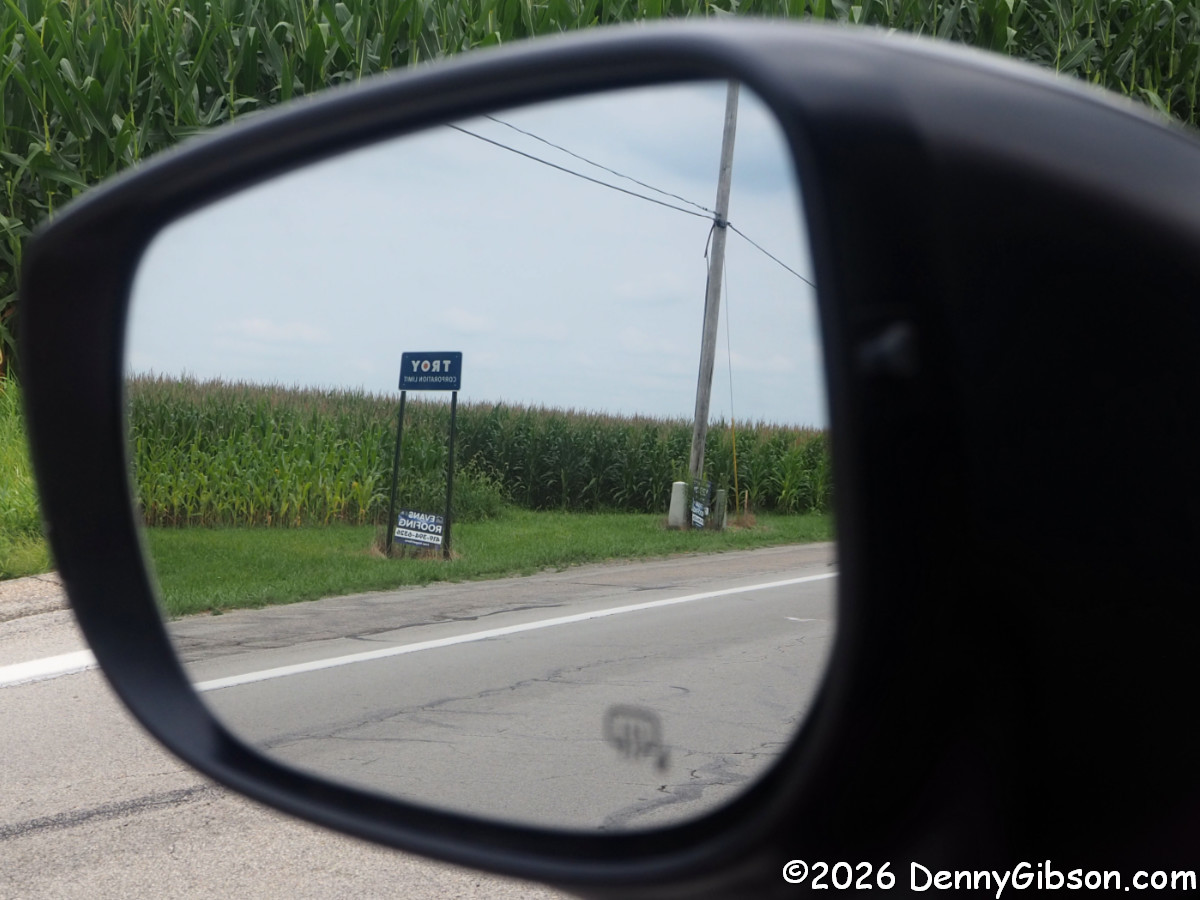
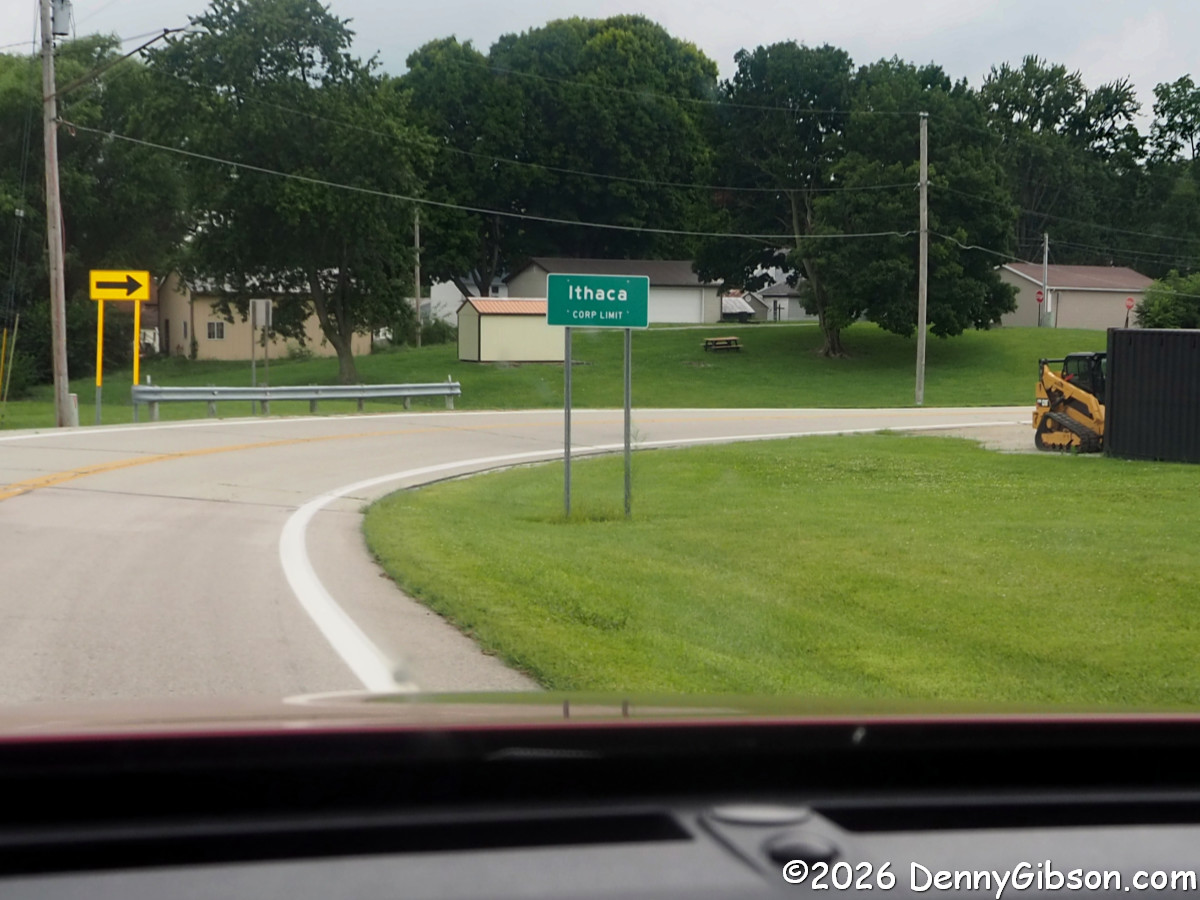
No one will be surprised to hear that I paused in the Heritage Center lobby to check email and search for nearby breweries. You may be surprised to see that once I reached a brewery, I ordered a flight. It’s something I don’t normally do because I think a full pint of a single beer is better. But everything I read about Camp Brewing made a point of mentioning the flights in small Igloo coolers so I decided to go with the flow. The original location really is at a camp near Indian Lake. I went to the second location in Marysville where Markley poured and delivered my flight with a smile.

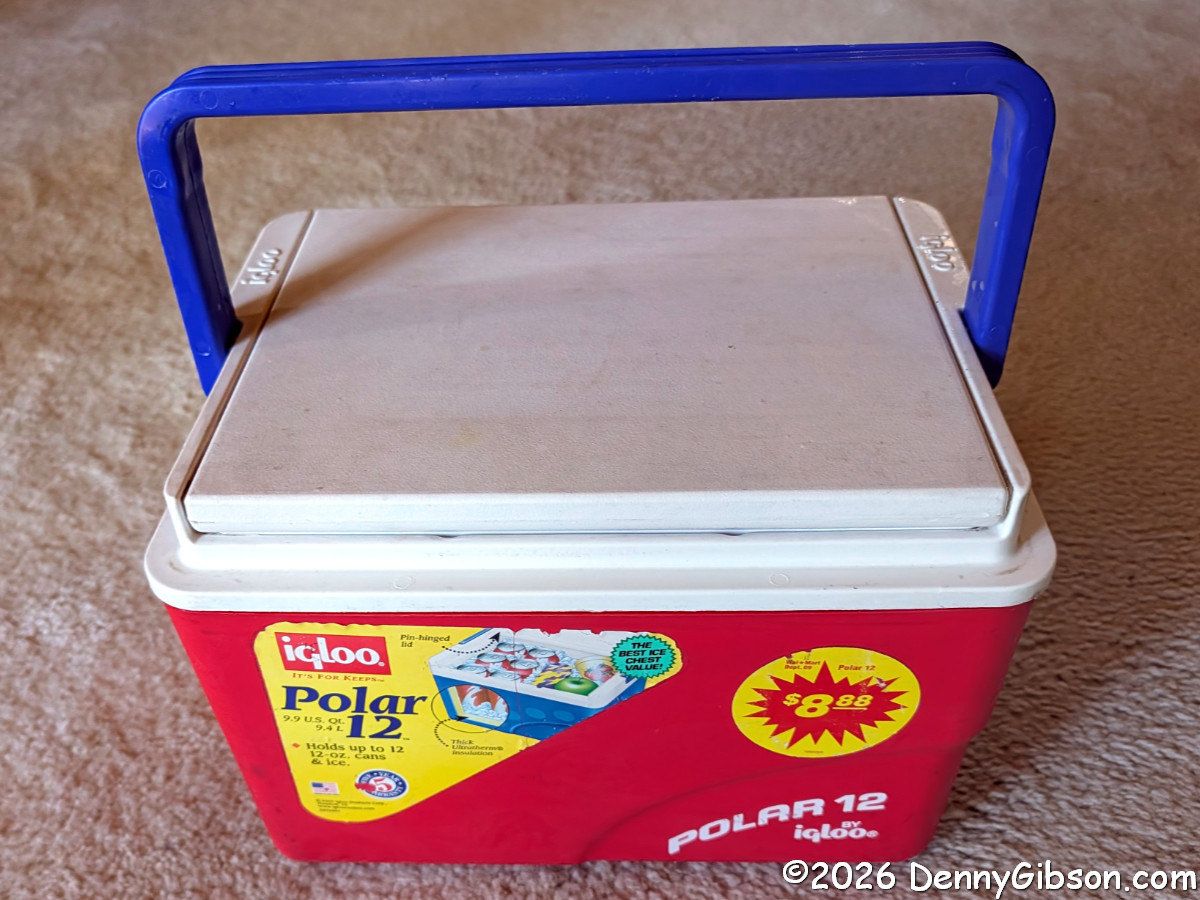
ADDENDUM 23-Aug-2026: There’s a reason Camp Brewing’s flight holders look familiar. One of my long time travel companions could actually be the first piece of gear in my brewery. If I took the stickers off, and if I had a brewery. Walmart now sells what appears to be the modern equivalent of this cooler for $27.99.

Book Review
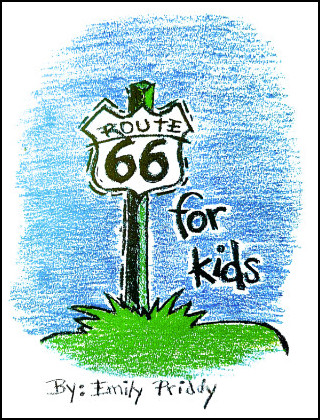
Route 66 for Kids 2026
Emily Priddy

This book first appeared in 2003 as a real paper and ink publication. I got a signed copy in 2004, which, because it was small and easy to stuff between seats or in the glovebox, I kept in the car for quite some time. Based on the copyright dates, it was revised several times, but I never got a newer one, and my copy became increasingly out of date. Prior to February of this year, it looks like the most recent revision was 2016, so even the newer editions might not have been all that trustworthy. The print editions sold for next to nothing (I paid $5 for mine), and when Priddy updated things in February, she went beyond next and made it available for just plain nothing via Google Docs.

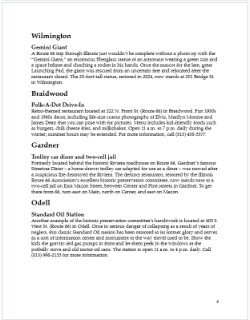
It’s definitely reasonable to ask why someone who is about as far from kidness as it’s possible to get, ever kept this close at hand. I mentioned the size of the hard copy. The size of the entries is another positive, as is their organization. States and the towns within them are listed east to west. The list of attractions associated with each town does not appear to be in any particular sequence. Below each attraction’s identifier is a single paragraph containing a brief description, address, telephone number, and website. The descriptions typically include cost, hours, and any other special considerations. They are not written by AI or someone following a formula who has never been there. Priddy often shares personal insights.

The book is a point of interest guide; not a route guide. It contains no maps or turn-by-turn directions to keep you on the route. However, Priddy offers some suggestions for navigation aids, along with some general road trip advice in a “Planning Your Trip” section at the back of the book. It’s for kids, although kids are not the target readers. Those are adults traveling Historic Route 66 with kids, looking for activities, restaurants, and motels that those kids might enjoy. On the other hand, it’s easy to imagine a pre-teen in the back seat, with a printed copy in hand, telling Mom and Dad exactly what the next stop will be.

Access Route 66 for Kids 2026 through the author’s blog post.

Odyssey Week

I’ve heard plenty about the latest moving picture version of Homer’s Odyssey since its July 17 release. I probably heard plenty about it before its release but wasn’t paying attention. Information was certainly out there. I’ve learned that 95% of the tickets for pre-release screenings of the movie in select theaters were sold within an hour—one year in advance! The movie made it onto my personal wish list last week when some members of my trivia team said they had seen it and were impressed. They echoed what I’d already heard: You want to see this in the theater no matter how big a screen you have in your living room.

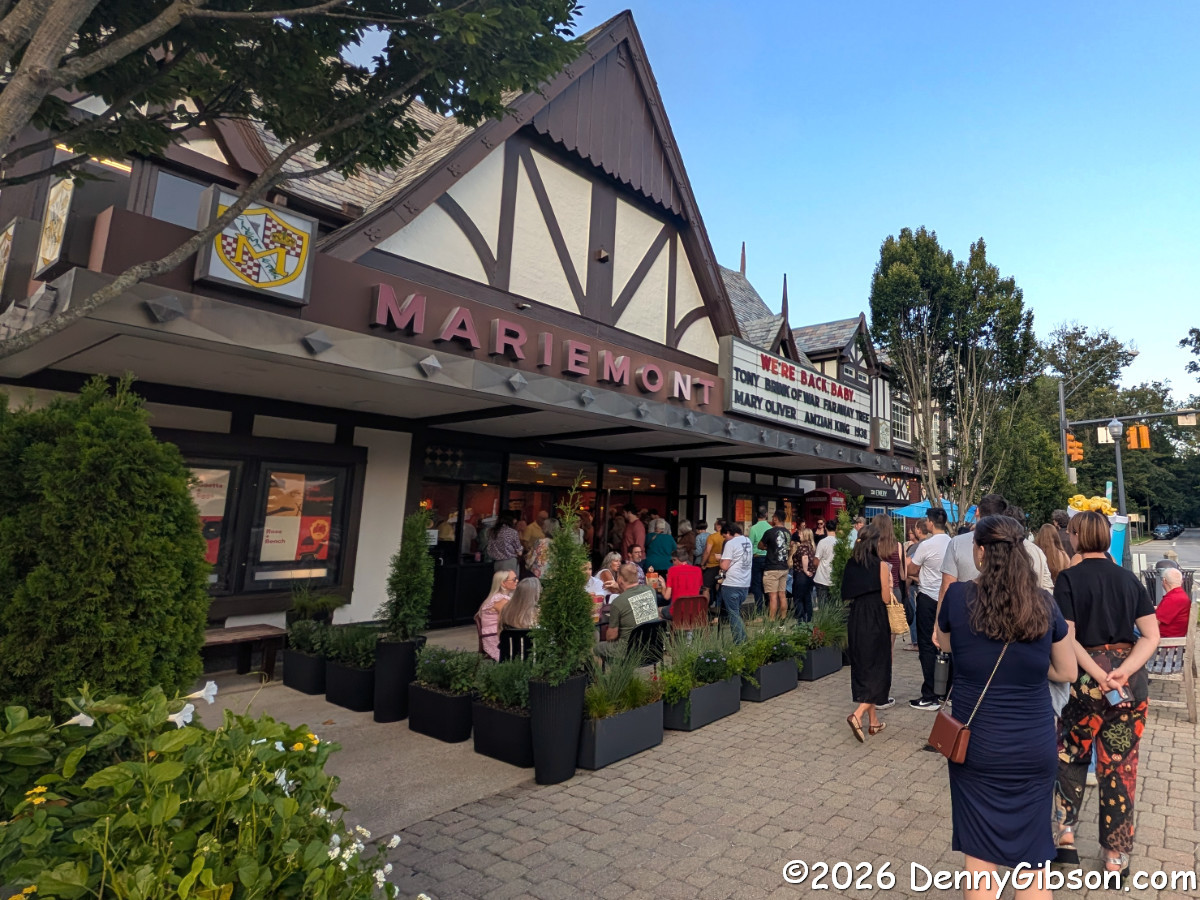
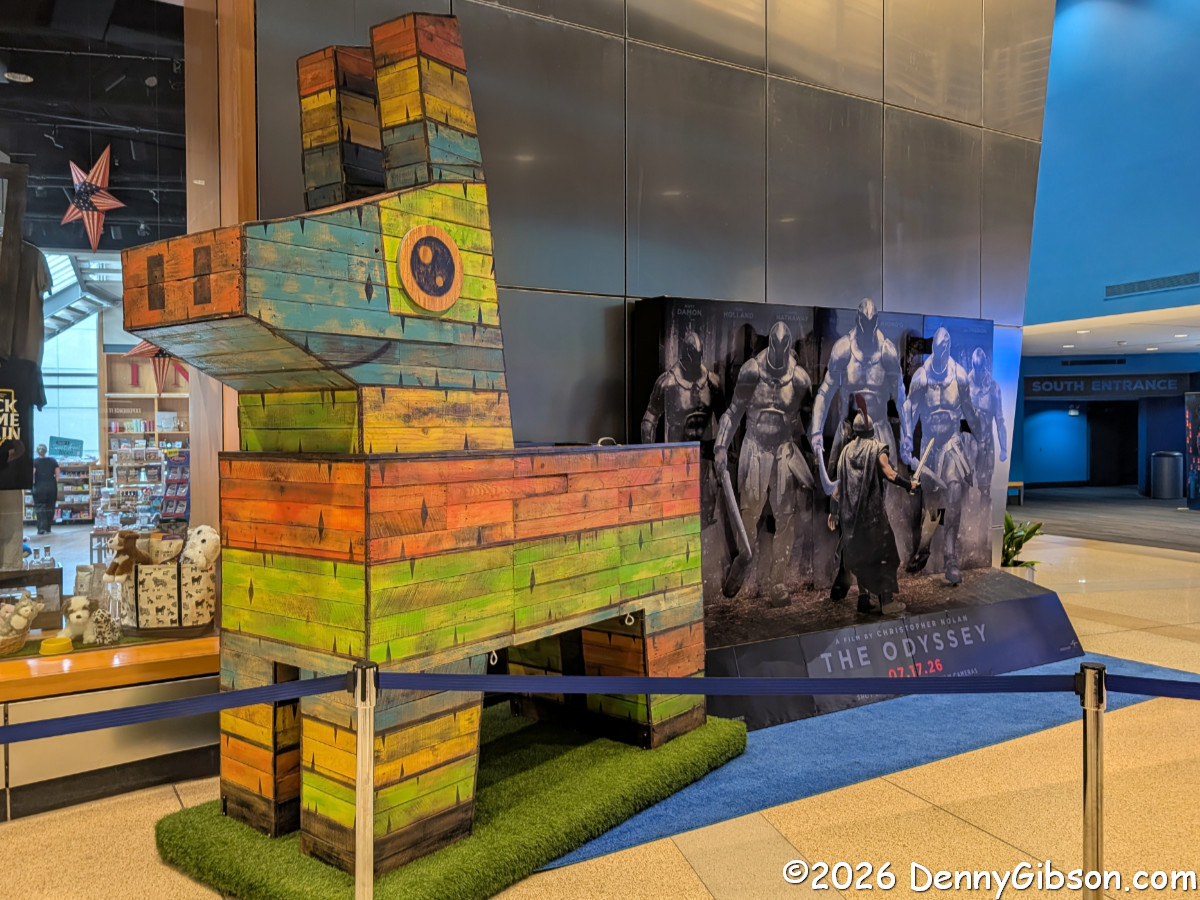
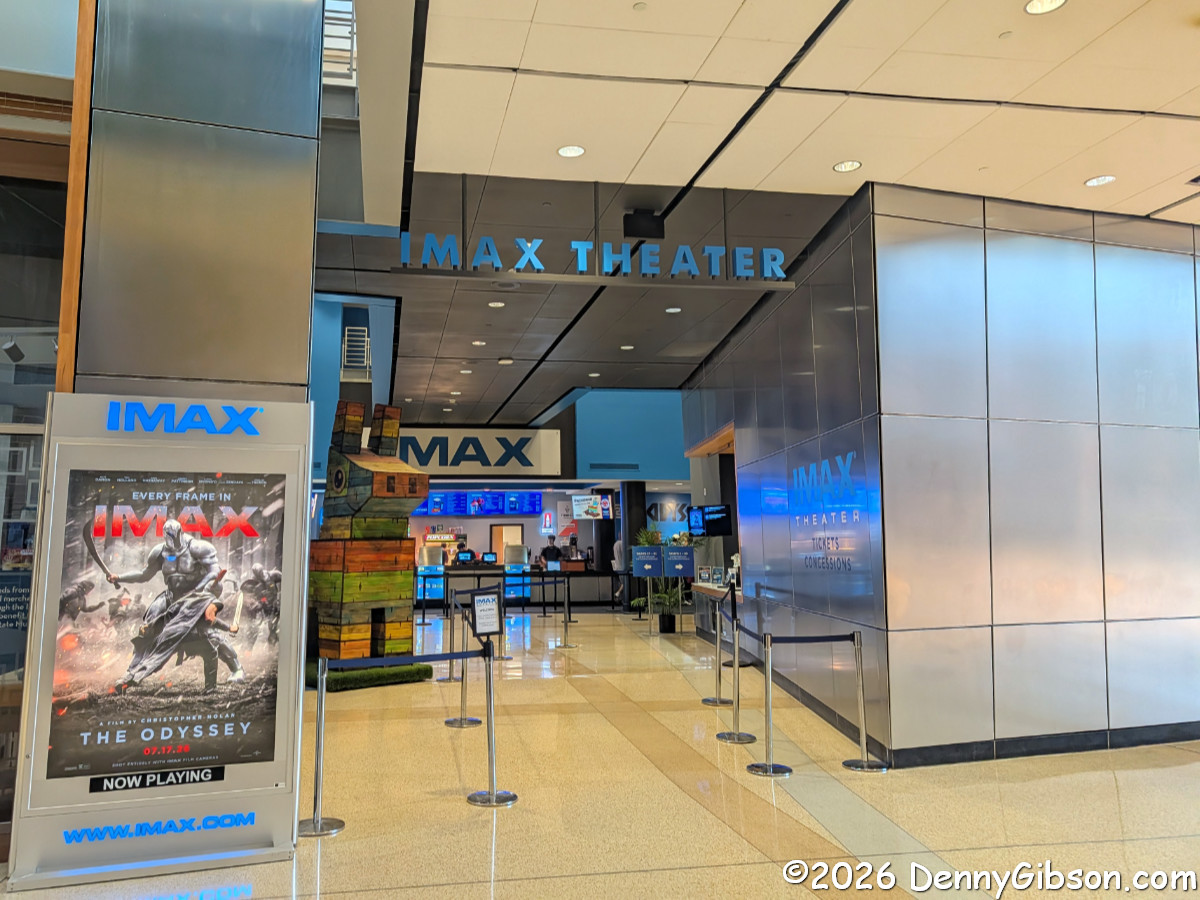
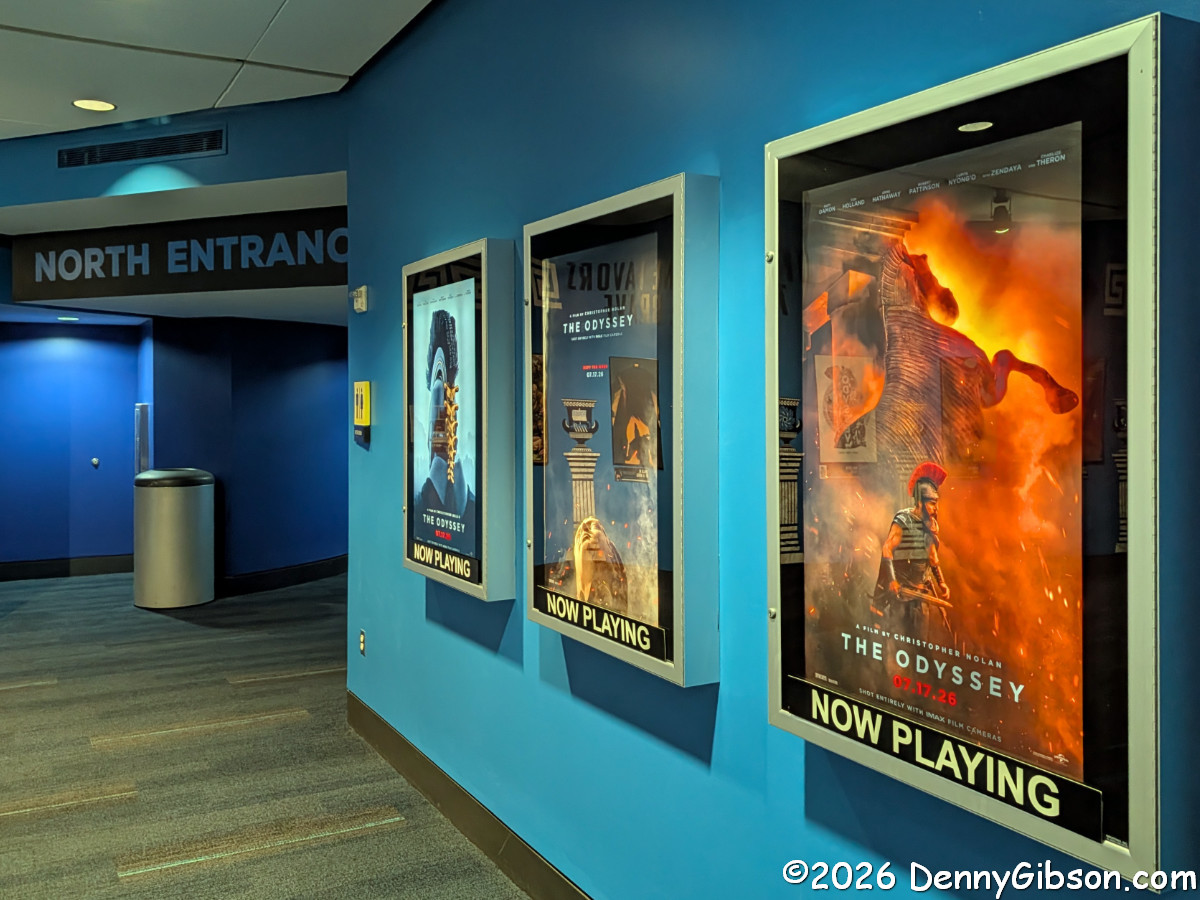
Not to worry. I am not going to attempt to review this movie. There are lots of professionals who have already done that, and many more who will do so far into the future. Although I can’t avoid talking about the movie entirely, I intend just to describe my own experience. Clues in the opening photo suggesting I did not attend a theater showing in my local Ohio neighborhood may not be obvious. Clues in the picture at left are harder to miss.

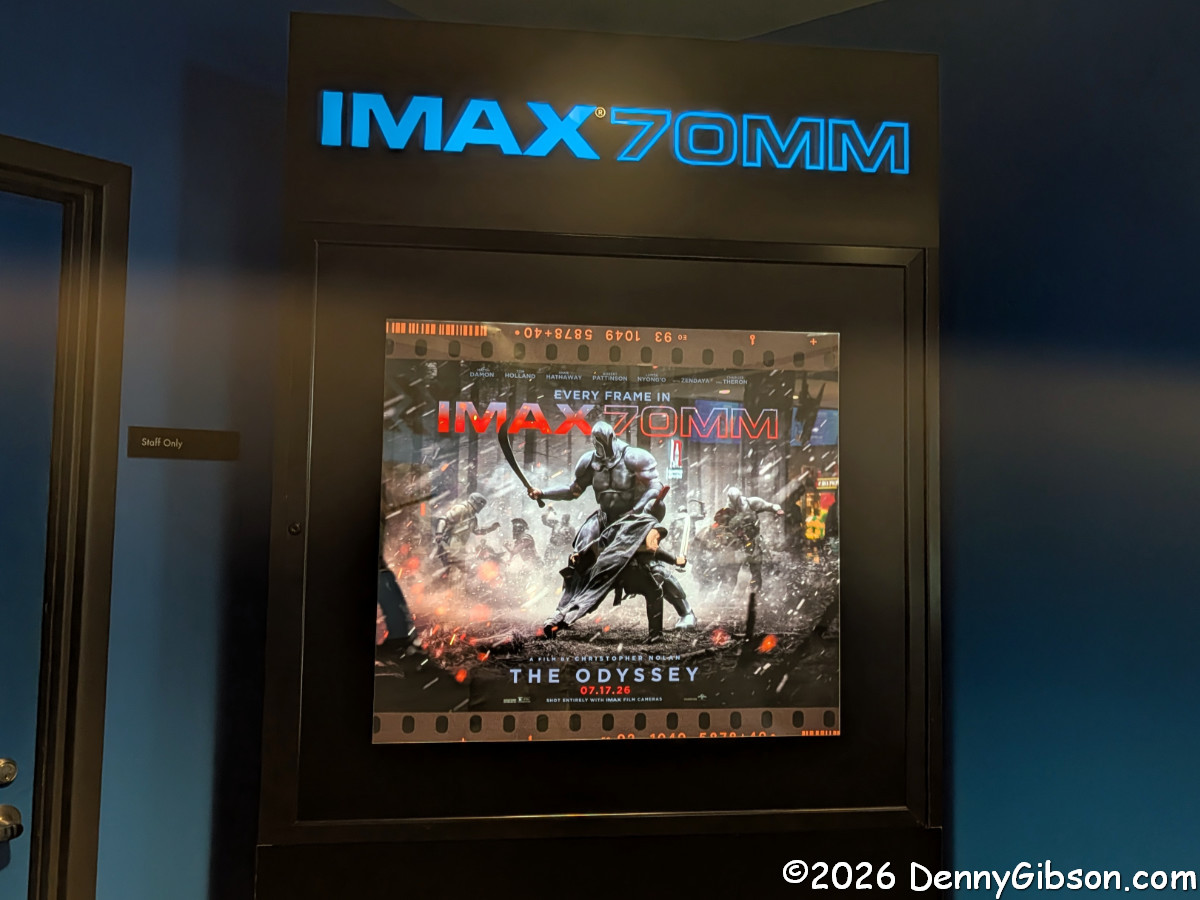
My trivia teammates had seen the movie at a nearby IMAX theater, and thought that was a pretty good choice. Those select theaters hosting the pre-release showings had all been IMAX theaters. But they weren’t just any IMAX. They were all showing 70mm film. I felt that the 70mm to digital switch at the Cincinnati Museum Center’s OMNIMAX Theater had been a big improvement, if for no other reason than it eliminated floaters caused by dust on the film. Now the experts, including the movie’s director, were telling me that this was the ultimate way to watch Odyssey.

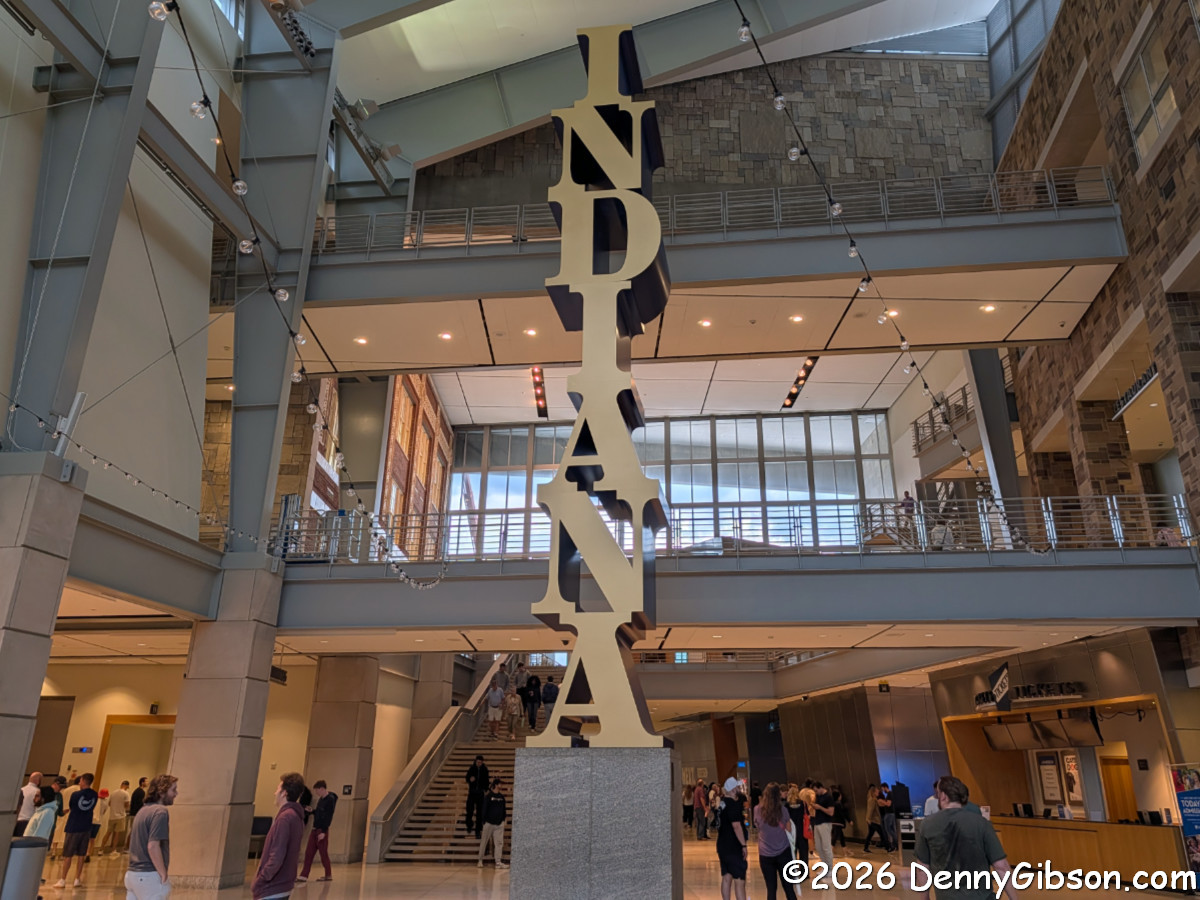
Apparently what they really mean is 70mm film with 15 perforations per frame (a.k.a. 15/70mm IMAX). That produces a 1.43:1 aspect ratio, which gives you a really tall picture. 41 theaters worldwide support this format. There are 25 in the United States; None in Ohio. The closest to me is at the Indiana State Museum in Indianapolis.

News articles that discuss the different formats, particularly those that mention the near-instant sellout of pre-release viewings, usually also note difficulty in getting tickets to 70mm showings. Indeed, if you go to the IMAX website and select the Indiana State Museum Theater, it will show as sold out beyond next week. But for some reason, clicking the IMAX link on the museum’s website might reveal some available seats. At least it did on Monday, when it showed a few front-row seats open for most of the week’s showings, despite appearing to access the same page as the IMAX site. Not long ago I accidentally ended up in the front row of a theater where the reclining seats made it tolerable. I hoped for something similar here and purchased the third-to-last seat for Tuesday’s 11:00 showing.

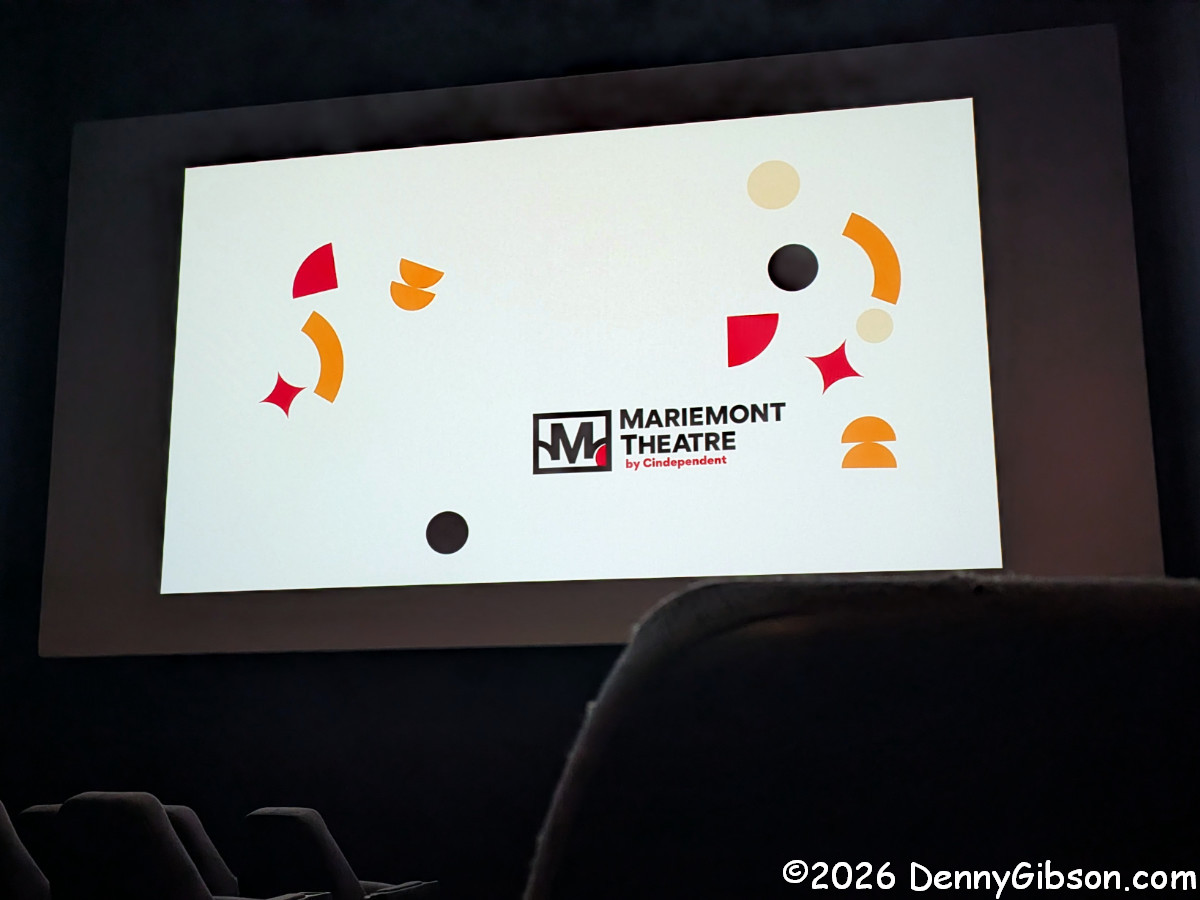
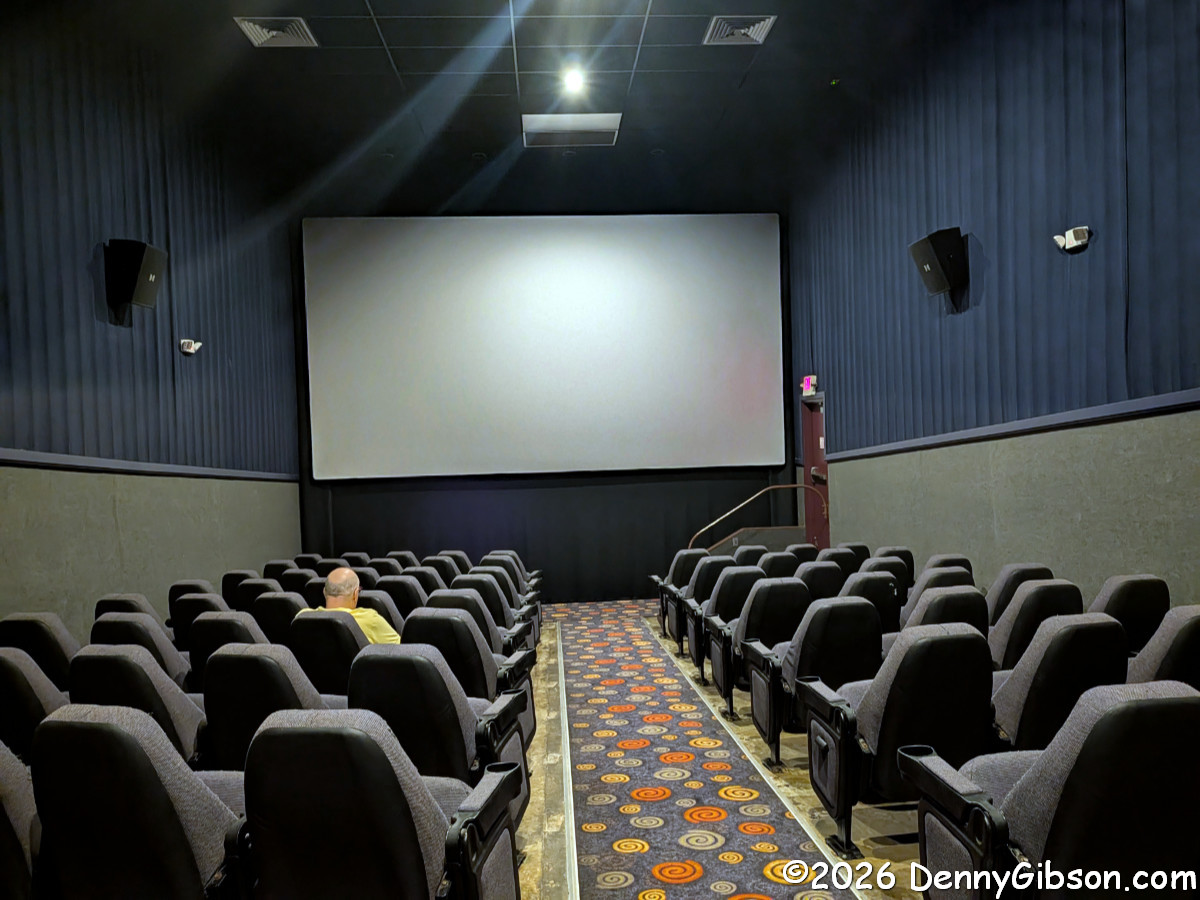
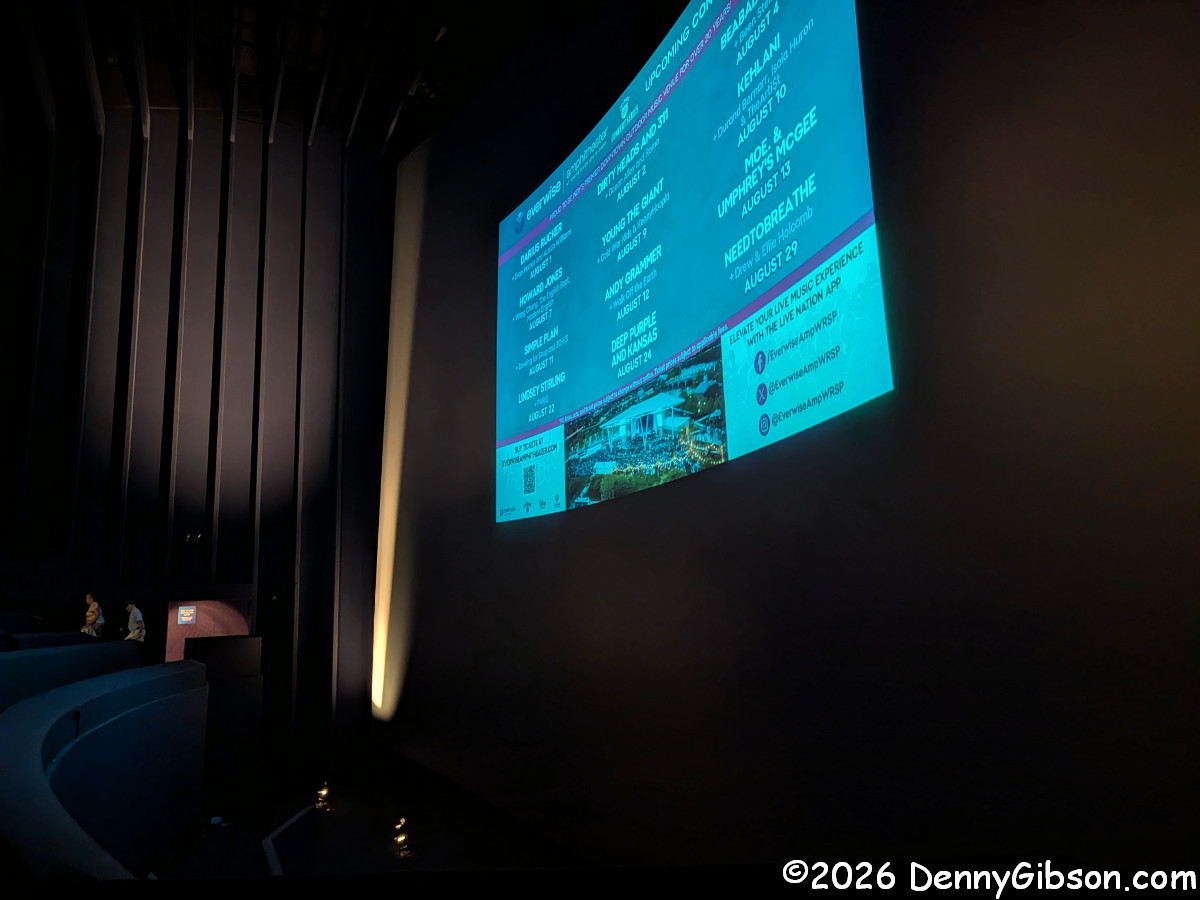
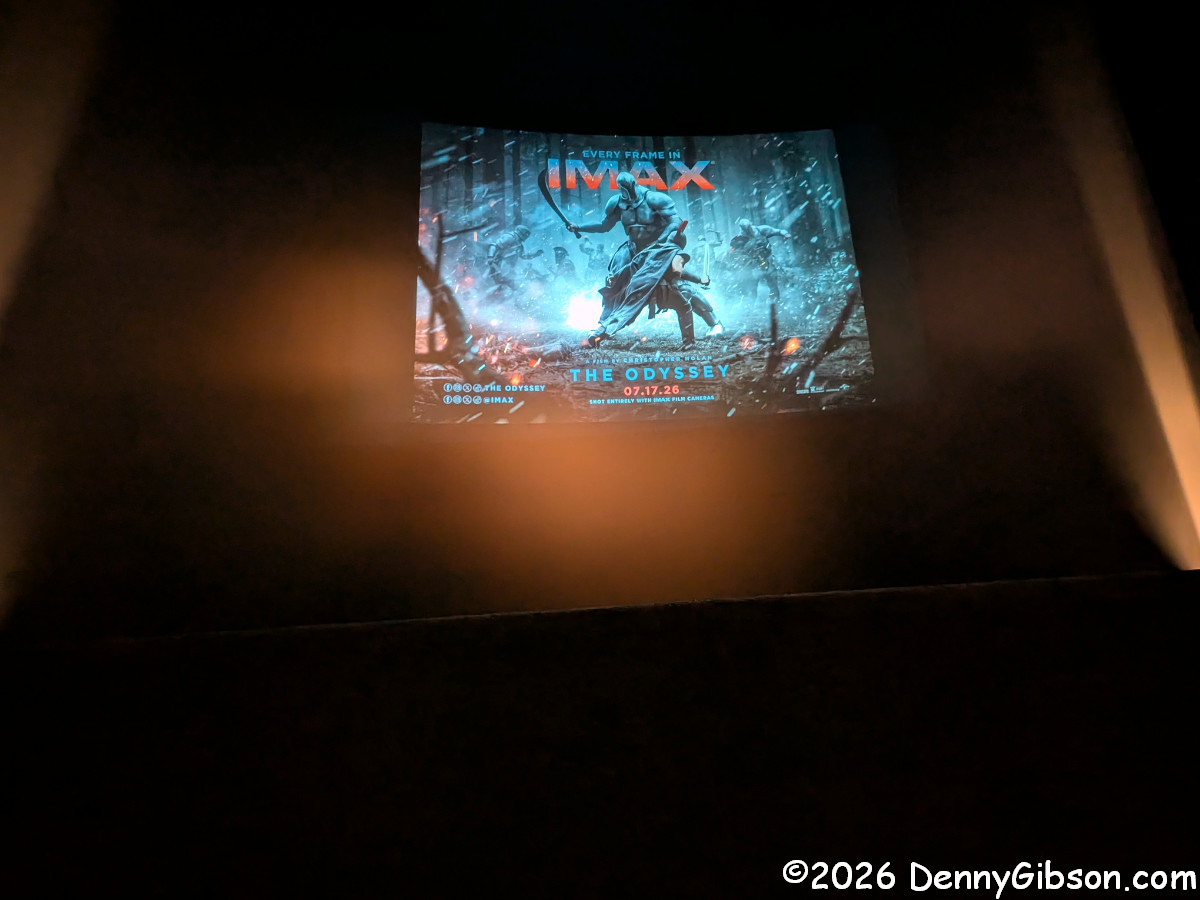
My seat is just beyond the left edge of the picture I snapped when I entered the theater. Not as close as I feared but mighty close. The second picture shows the view from my seat. The projected images in both pictures are just a fraction of the real thing. When the movie starts, it fills that entire wall. Top to bottom; side to side. It was definitely closer than I—and obviously every other ticket purchaser—would prefer, but it was still quite acceptable. The big action that filled the big screen was matched by the big sound that filled the theater. I was more challenged by the seat-shaking rumbling that accompanied most action scenes than by the giant men and beasts projected in front of me. The sudden quiet after a storm or slaughter was always welcome.

After seeing the newest and probably loudest of the many movie adaptations of the Odyssey, I checked out the oldest and almost certainly quietest. L’Odissea is a 1911 Italian silent film. The music used in the YouTube version linked in the image at right has been identified by SoundHound as Edward Elgar’s Symphony No. 1. Brightly colored talking, clanking, and booming movies are nice and all, but some of these 115-year-old special effects are, in my opinion, pretty darned cool and are certainly impressive for a time when movie cameras were cranked by hand. Neither the oldest nor the newest nor any of those in between are completely true to the original poem. Every one of them leaves out something, although it seems that no one wants to leave out the Cyclops scene.

Everybody knows that it took Odysseus ten years to reach home after the war ended. Not everyone realizes that the majority of that time was a very unstressful seven years with Calypso. Still, three years of actual travel time is certainly considerable. To be fair, that was approximately 3,200 years ago. Things have changed. This trip was made just the other day, in a modern vehicle, on a land route that was not available to Odysseus and his companions, and from which sirens, cyclopes, and most other monsters have been cleared, in about half an hour.

Book Review
The Whiskey Rebellion
Brady J. Crytzer

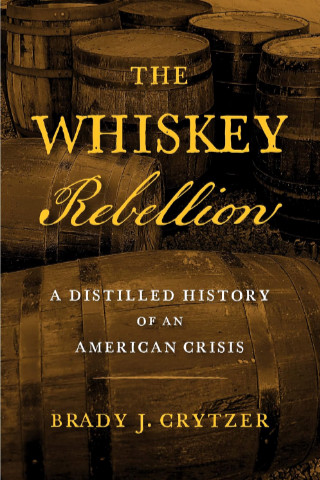
After coming home empty-handed from my recent trip to Greenfield, IN, to hear author Brady J. Crytzer talk about his new book on the National Road, I decided to sample his writing on the cheap by checking out one of his other books from the local library. The Whiskey Rebellion interested me and was available. I had no delusions about knowing the history in detail, but I thought I had a good overview: The government imposed a tax on whiskey; some farmers didn’t want to pay it; George Washington personally led troops to confront the farmers; and the farmers paid up. End of story.

That’s not wrong, but it’s terribly oversimplified. The biggest thing missing from my four-point summary is the extreme risk the uprising posed to a new nation with its first president in his first term. This book also showed me a different, less flattering, view of Alexander Hamilton than I’d previously seen. Hamilton designed the tax and saw its enforcement and the punishment of those who opposed it as something personal.

The first indication of just how little I knew about the book’s subject was when I read that what we now call the Whiskey Rebellion was known in its own time as the Western Insurrection. I don’t believe I’d ever heard that phrase before. I instinctively thought that removing the word “whiskey” from its name made the event seem more sinister and more important. My instincts were validated in the book’s last chapter, where Crytzer writes that when the event was completely over, “Alexander Hamilton and his Federalist allies took to calling it ‘the Whiskey Insurrection’ as a means of trivializing the affair.”
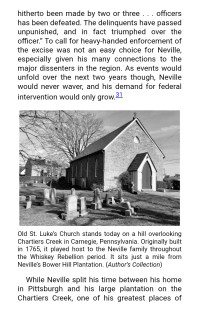
Crytzer does know the details. Like any good historian, he provides dates and names for events before, during, and after the insurrection. More importantly, he places those dates and names in the bigger picture of the times. At its core, the Whiskey Rebellion was a manifestation of the period’s conflict between Federalists (e.g., Hamilton, John Adams) and Anti-Federalists (e.g., Jefferson, George Mason). The most radical of the insurrectionists took steps to establish their own government separate from that of the United States. Had Washington delivered a Gettysburg Address-style speech as he led his troops west, it might have begun “Half a score and eight years ago…”.

Washington personally commanding an army to quell the uprising is part of virtually every description of the Whiskey Rebellion ever made, including my woefully shallow one in the first paragraph. That is deserved. It is the only time that a President of the United States personally led military forces in the field. But Washington returned to Philadelphia after reaching Bedford and turning command over to Henry Lee, the Governor of Virginia. The rebellion was centered in Pennsylvania’s Allegheny, Fayette, Washington, and Westmoreland counties plus Ohio County in Virginia. The 13,000 troops headed west came from Maryland, Pennsylvania, New Jersey, and Virginia, and the governor of each state led their own troops.
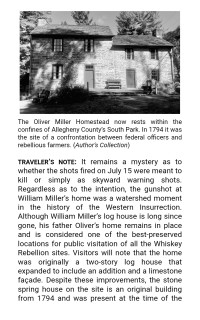
Accompanied by Hamilton, Lee led the army into the heart of the rebellion, but there was no big confrontation or battle. As the insurrection grew, the rebels had organized militia-like forces, and they were active in attacking and terrorizing individuals and families, but they quickly dissolved as the federal forces approached. The army was put to work apprehending targeted individuals, but the targeting was not very precise and the apprehension heavy-handed more often than not. Hamilton wrote a letter to Washington suggesting the elimination of due process. On November 13, 1794, the Pittsburgh area experienced so many of what Crytzer calls “smash-and-grab-style raids” that it became known as “The Dreadful Night”. “The names provided by Hamilton and Lee,” writes Crytzer, “made no distinction between witnesses, dissidents, and cooperators…” Those grabbed were confined in deplorable conditions.

As is all too often the case, almost all of the insurrection’s ringleaders escaped. In those days, exiting the United States was as simple as floating a sufficient distance down the Ohio River. Hamilton never caught the “big fish” he hoped to make an example of, and many of the little fish and those who should not have been fish at all suffered terribly. It was early enough in our nation’s history that it might have been the first time that we behaved so badly on such a scale, but it would not be the last. It might be that the passage of time and the fact that the insurrection was unsuccessful explain what Crytzer calls “a void in scholarship surrounding the event.” Still, I have to wonder if there has been real purpose in our school books extolling Washington gallantly returning to the field while not once mentioning “The Dreadful Night.”
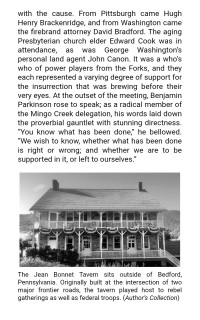
The Whiskey Rebellion includes several images. Some are from historical sources, but Crytzer uses his own photos when possible. These are locations described in the text, and many still have buildings standing today after playing a role in the rebellion. Somewhat related to the pictures is a nice touch that Crytzer calls “Traveler’s Notes”. These appear at the end of some chapters and include notes, such as directions, about a location mentioned in that chapter. The Jean Bonnet Tavern was among the few of these I was familiar with. It served multiple functions for both sides in the Whiskey Rebellion. Established around 1760 and still operating today, it witnessed many significant events before the rebellion and even more after. The most recent significant event that I am aware of is serving me dinner in June.

I don’t know that this old dog can actually be taught any new tricks, but I’m encouraged knowing that I can learn new facts. In The Whiskey Rebellion, Crytzer does a fine job of shining a light on a subject I knew very little about. I don’t doubt he can do the same for one about which I think I know considerably more. I plan to read his National Road book and may acquire it at a future presentation of his. If so, I’ll make an effort to check inventory before driving too far.

The Whiskey Rebellion: A Distilled History of an American Crisis, Brady J. Crytzer, Westholme Publishing (June 14, 2023), 6 x 9 inches, 224 pages, ISBN 978-1594164002
Available through Amazon.
Will the Buc-ee Stop Here?

So, I was relaxing by the bike trail in Loveland, OH, enjoying some fine weather, sipping a beer, and munching on pot stickers when I received a text message, and the next thing I knew, I was sitting in a rush-hour traffic jam on the expressway. The text was from a road-tripping friend in Indiana, and said little more than “[I] decided to make my way to Beavercreek for some snacks.” I immediately knew exactly what he was talking about.

That friend was Pat Bremer (half of the Road Trip Memories team), whose Facebook feed, like mine, had recently been filled with posts about a little store in a suburb of Dayton, OH. I knew enough of the story to understand Pat’s reference, but there was a lot I didn’t know. I’ll start with what I knew before my phone pinged in that trailside bar.

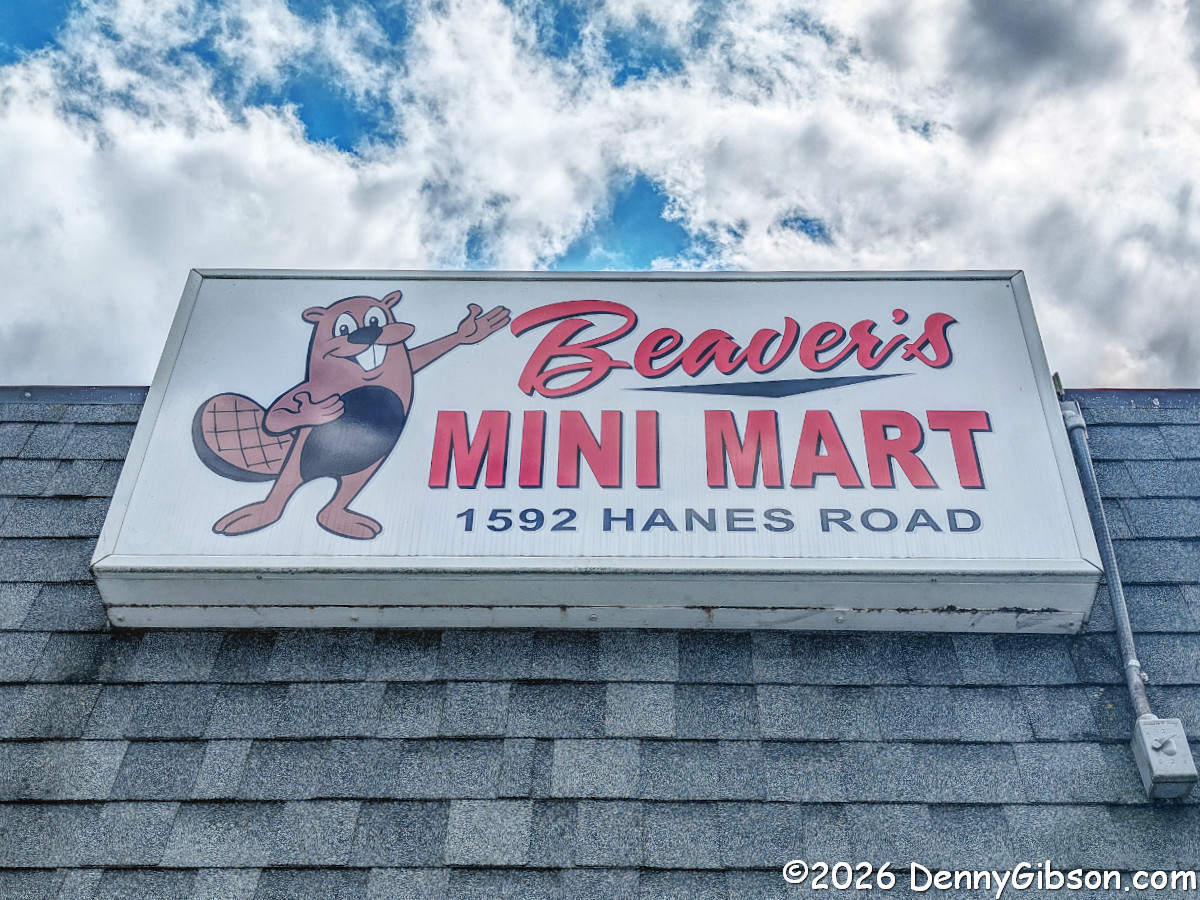
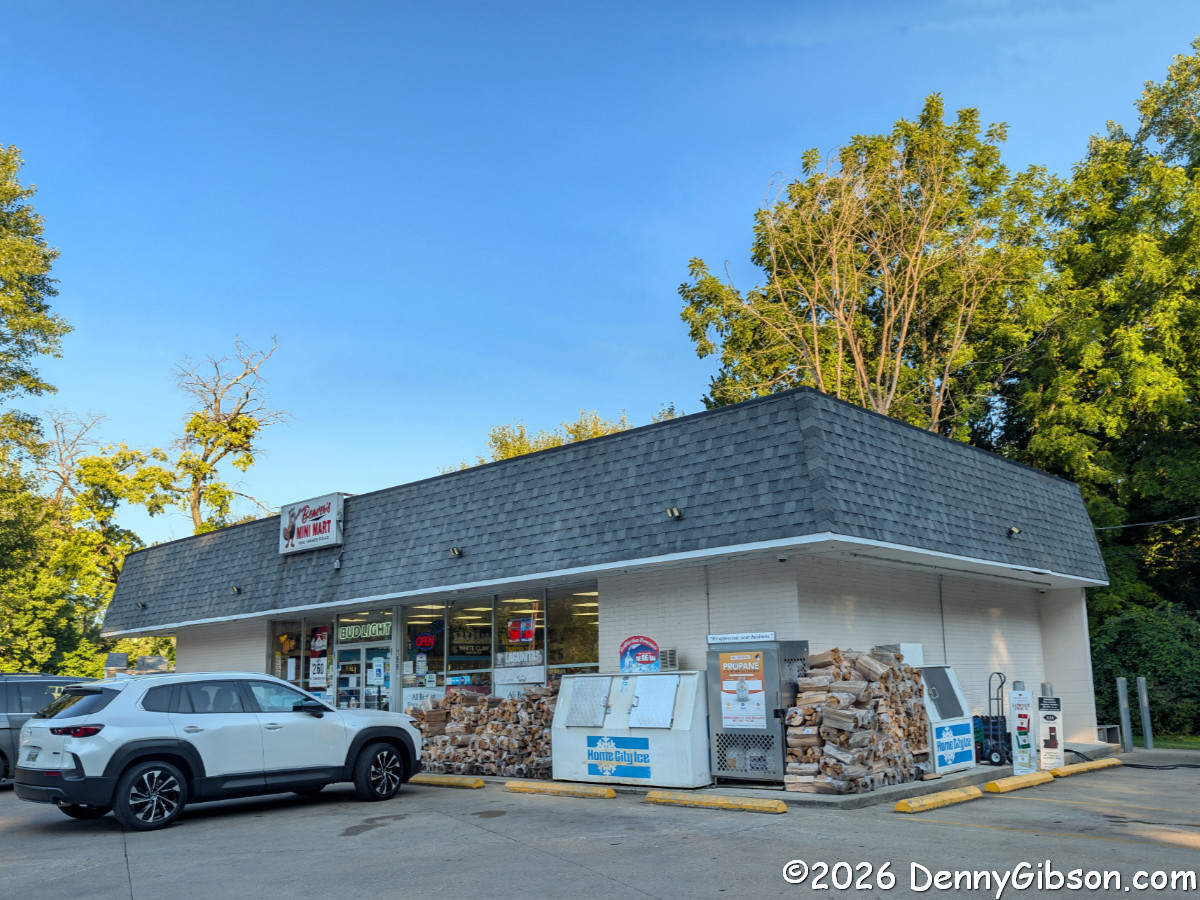
I knew that the travel center Goliath, Buc-ee’s, had sued Davidish Beaver’s Mini Mart for copyright infringement. Note that the Mini Mart doesn’t have a website or even a Facebook page. Nor does it have any gas pumps. Buc-ee’s locations tend to have a hundred or more. Many of the Facebook posts that made me (and presumably Pat) aware of this resembled this one, which identifies several local businesses that have temporarily placed a beaver in their logos in support of their longtime neighbor. The town that is home to the business being sued already had a beaver in its name. Beavercreek, OH, was incorporated as a city in 1980.

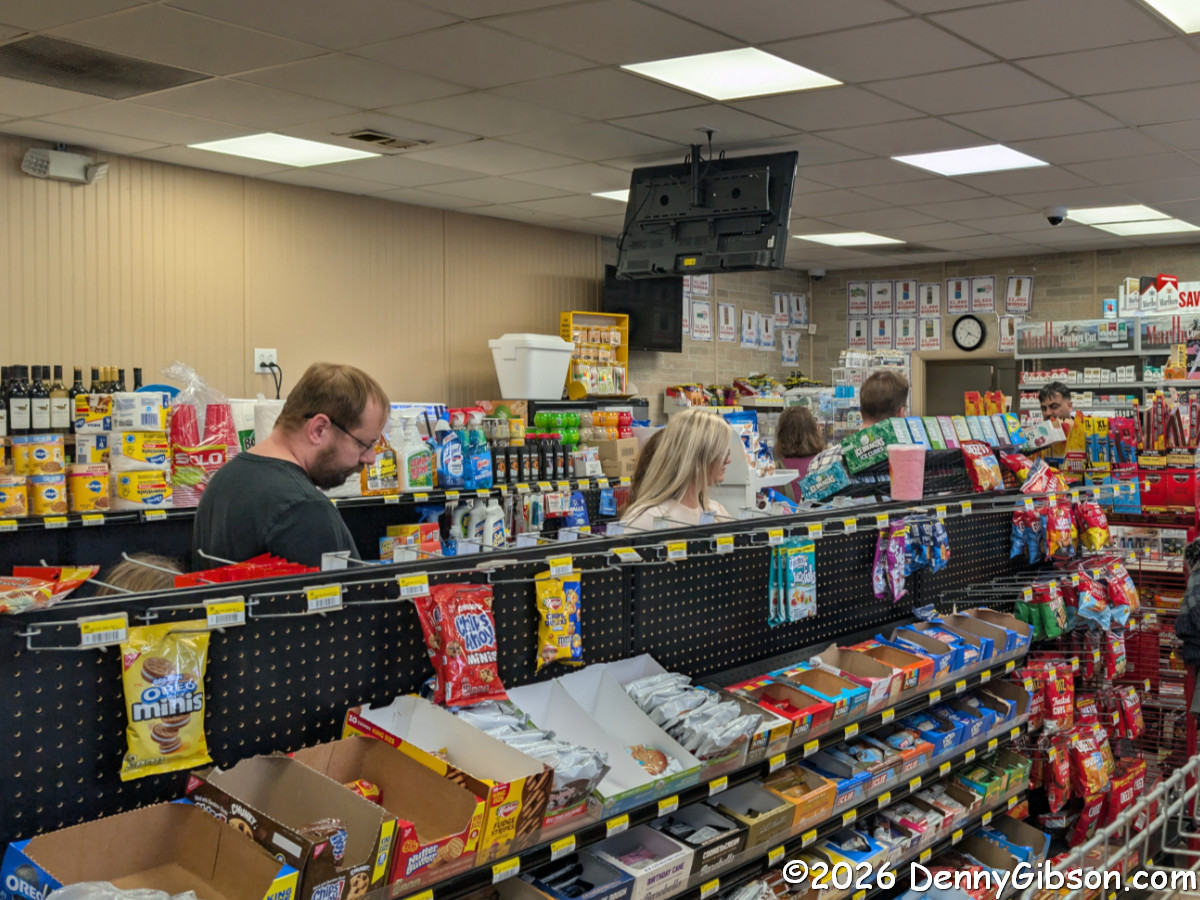
In addition to all those companies posting logos featuring beavers, customers have been showing up in droves. Snacks are being purchased, and donations are being made to a legal defense fund. There is a GoFundMe. Reportedly, lines at least as long as the one in the picture are now nearly constant.

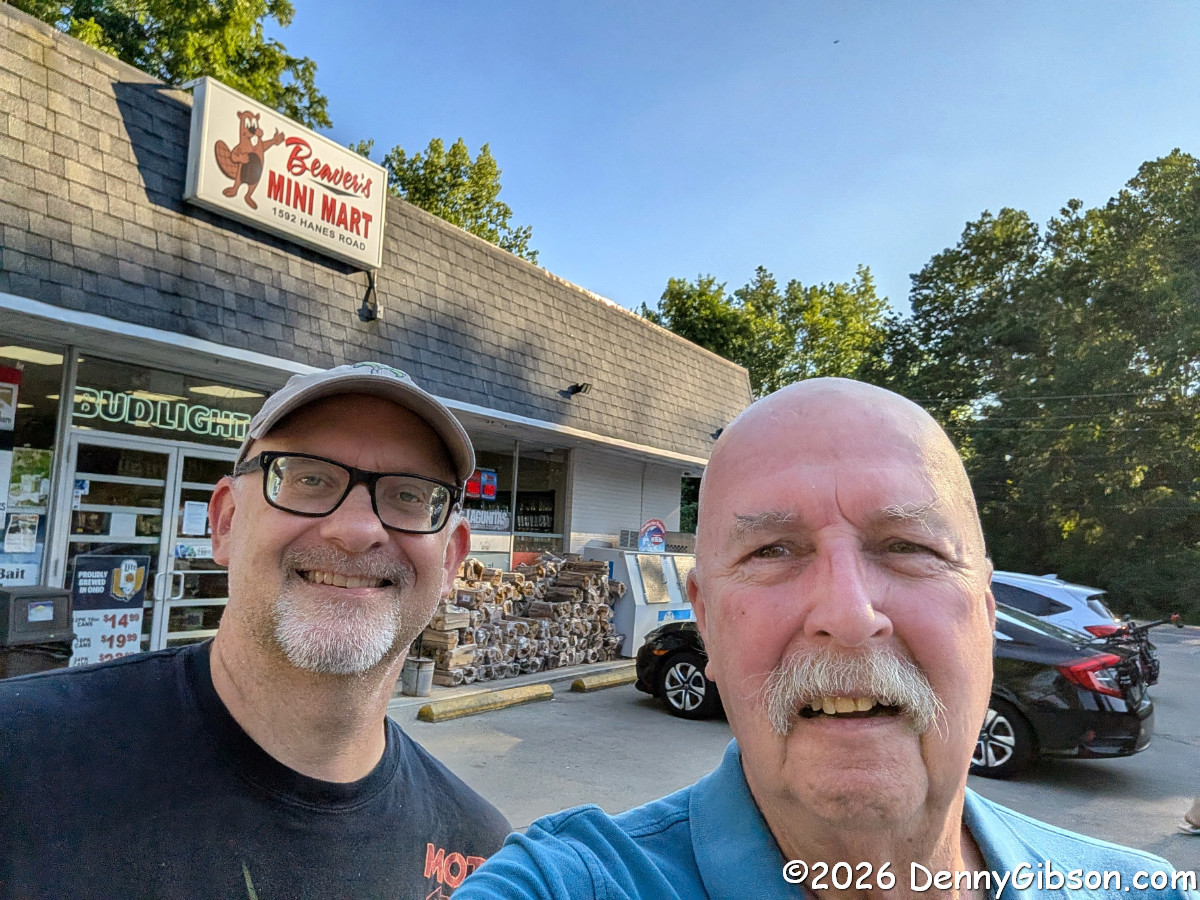
When I met Pat in the store parking lot, I knew of but had not seen John Oliver’s July 26 segment on Buc-ee’s, and didn’t know much about their growing reputation for aggressive trademark activity. In particular, I knew nothing about their attack on Mickey’s. Pat clued me in. Mickey’s is a regional chain of convenience stores with headquarters in Milan, OH. Their stores in northeast northcentral Ohio could legitimately be considered Buc-ee’s competitors, but, as Mickey’s attorneys have astutely observed, “a moose is not a beaver.” I personally have to question whether customers who confuse one for the other are worth pursuing. The same thing could be said of folks who cannot distinguish the rodent with the red hat from the bare-headed fellow on the Mini Mart sign.
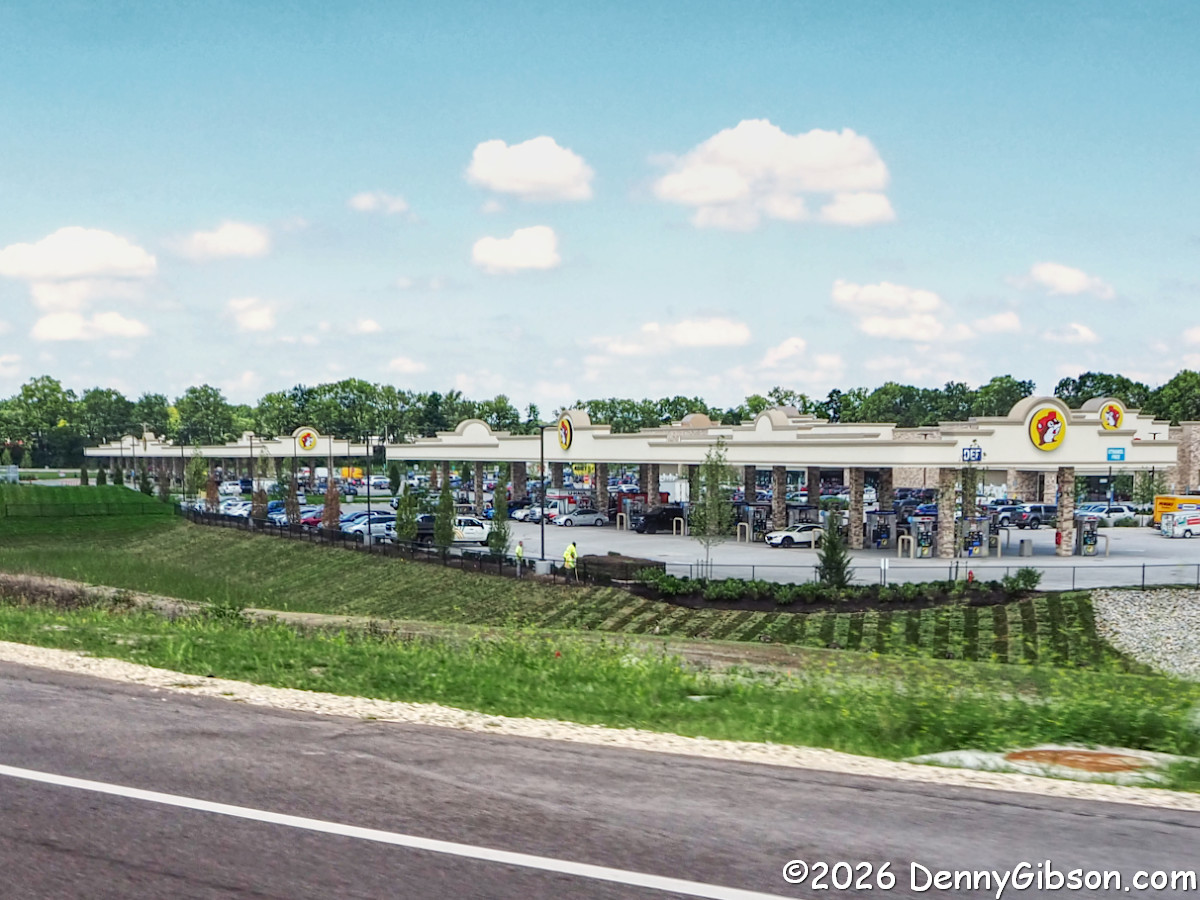
I have never been a Buc-ee’s customer candidate. This photo of the recently opened location, about 10 miles north of Beaver’s Mini Mart, is as close as I have knowingly been to one. Although they are a rapidly vanishing breed, my favorite gas stations are still those where the actual owner steps out of a tiny office or pauses an oil change to fill your tank. The further a station moves from that image, the more my fondness fades. Buc-ee’s seems to be about as far from that image as possible. The pictured location in Huber Heights is the first in Ohio. Another is planned for Mansfield. It’s pretty obvious that these are the triggers for the attacks on Beaver’s and Mickey’s.

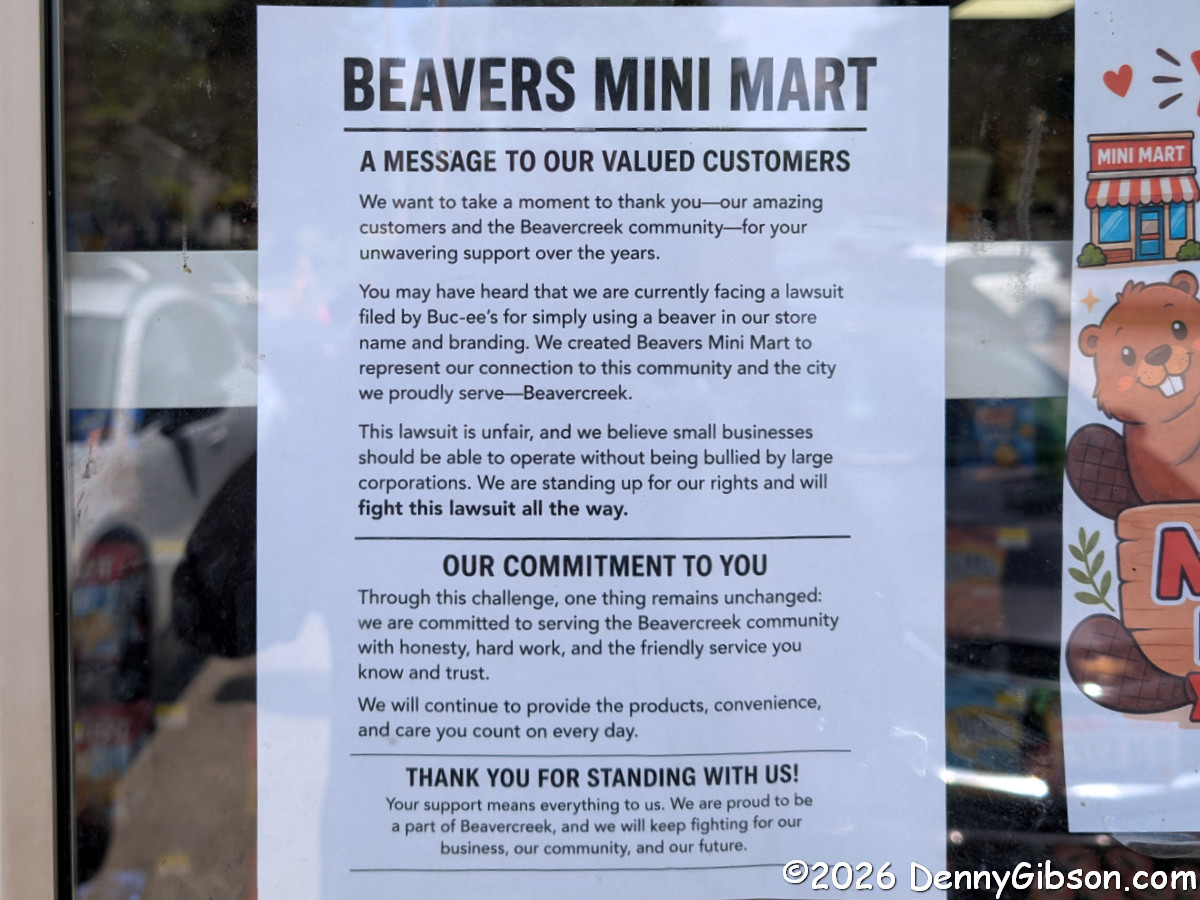
Is the answer to the half-witty question in my title yes or no? Regarding Buc-ee’s vs. Beaver’s Mini Mart, it seems at least possible that the answer is yes. In a statement taped to their door, the little market says it will “fight this lawsuit all the way”. In addition to the surge of flat-tailed and big-toothed logos, donations are being made to support the fight. Ohio’s governor and at least one state senator have made statements condemning the lawsuits. Governor DeWine calls them “ridiculous”. Beavercreek’s city council is about to vote on a resolution “affirming the beaver as a historic symbol of the community”. All that negative publicity can’t be good, and it’s hard for me to see how even the complete disappearance of Beaver’s Mini Mart would benefit the big Texas corporation. It seems reasonable to believe that the big guy just might end the ugly-looking assault on this little guy.

As for the less focused version of that question, the answer is almost certainly no. Buc-ee’s is not at all likely to stop its expansion into Ohio. There is a movement and a petition opposing the planned Mansfield store, but land has been purchased beside I-71, and the Mansfield city council has unanimously approved the plan. The second quarter of 2028 has been floated as a possible opening date. It’s true that the signers of that petition and the people in that line at Beaver’s Mini Mart may never shop at Buc-ee’s, but they are not the company’s target customers. While I don’t doubt that there are Buc-ee’s regulars who live just down the street from one of their stores, I do doubt that they are the chain’s primary patrons. Nor do I believe the chain is depending on folks like me who travel, but do so largely on two-lanes while keeping an eye out for mom-and-pop businesses. No, they are looking for people driving on interstates who might never stop at a particular Buc-ee’s twice but might stop at one down the road and the one after that.  

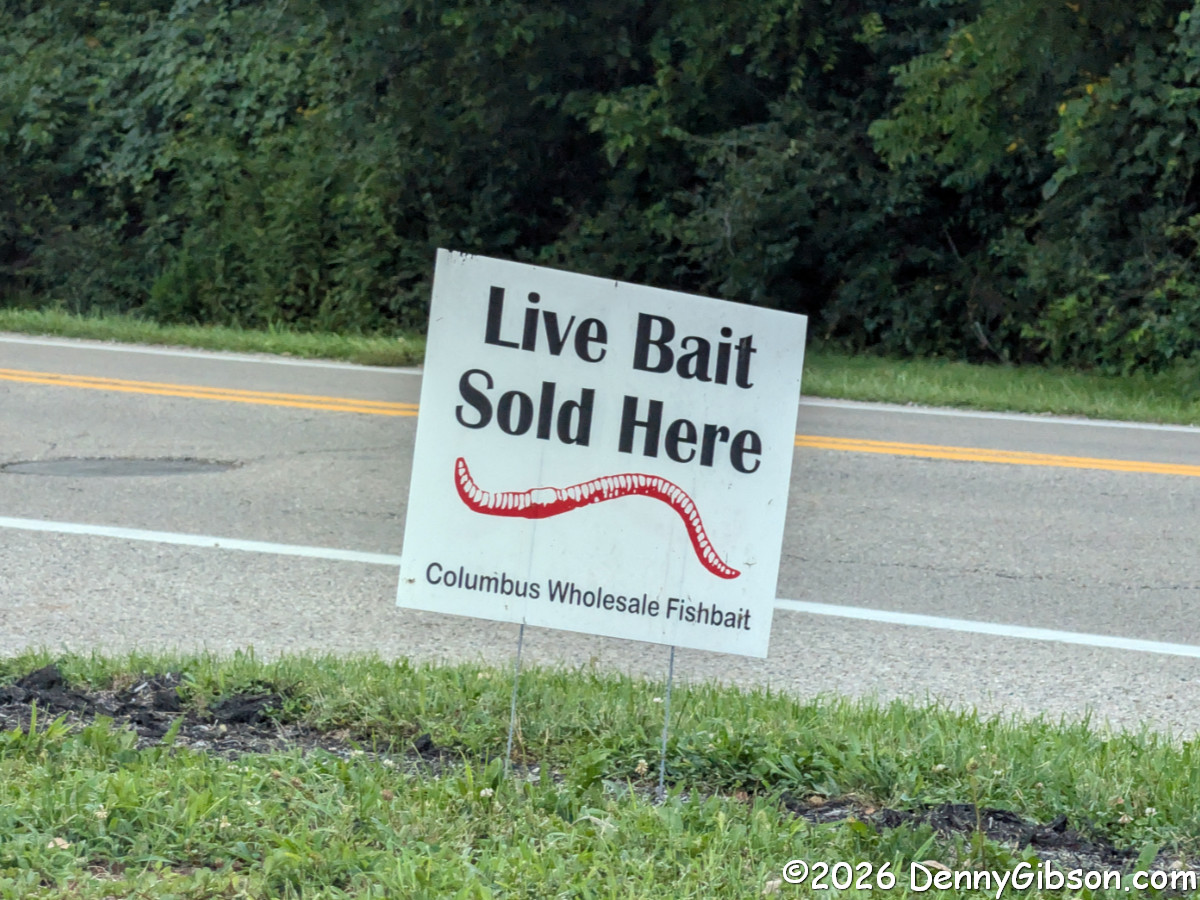
This is a photo I took as I was pulling out of Beaver’s Mini Mart’s parking lot. At the time, my guess was that Buc-ee’s did not sell bait. It turns out they do, but only at some locations, and Huber Heights is not one of them. There is a pretty good overview of the situation in this USA Today article. I considered including links to other bits of news, but items are appearing so frequently that you’re better off searching for the latest yourself. I will mention two things that have appeared since my Tuesday visit. One is that it appears the mini mart’s owner Vikramjit Singh Boparai owns several businesses in Ohio. The other is that Buc-ee’s CEO Arch Aplin called the mayor of Huber Heights (Not Beavercreek!) to tell him that the lawsuit was filed because Boparai filed for a national copyright and failed to respond to their communications. Boparai denies that a national filing exists. This development is summarized in a Cincinnati Enquirer article.

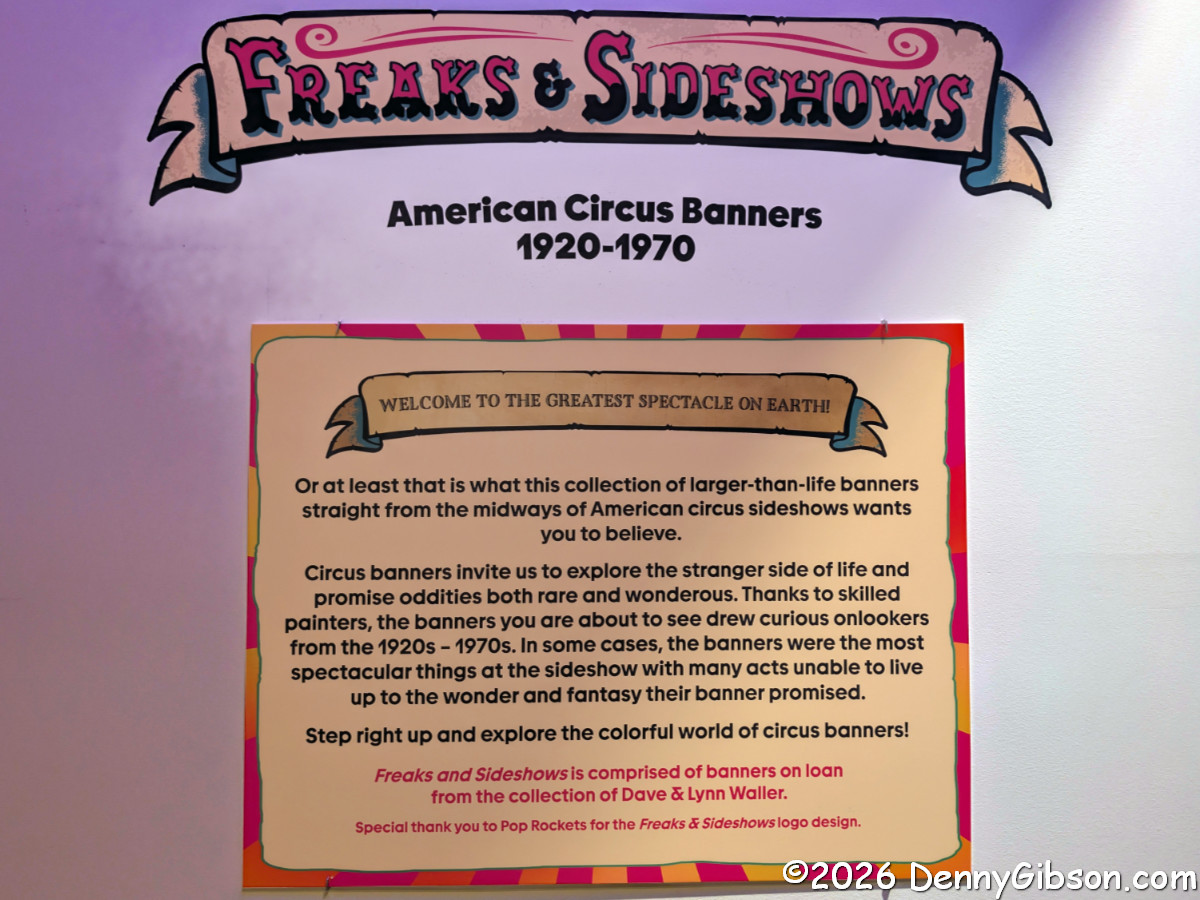
Freaks and Sideshows at the ASM

They’re back. My first exposure to David Waller’s collection of circus sideshow banners was when they appeared as set dressing at The Signmaker’s Circus held to celebrate the American Sign Museum‘s tenth year at its Camp Washington location. That was in 2022. The circus occupied the unfinished half of the building and might be considered a step toward the expansion of the museum into that space, which would be revealed just about two years later (New Stuff to Look At). The banners and the multiple tons of signs hung for the circus were always intended to be temporary. However, some of the signs and all of the banners were still there a few months later when the banners’ owner delivered a presentation on them, which I covered as Sideshow Signage.

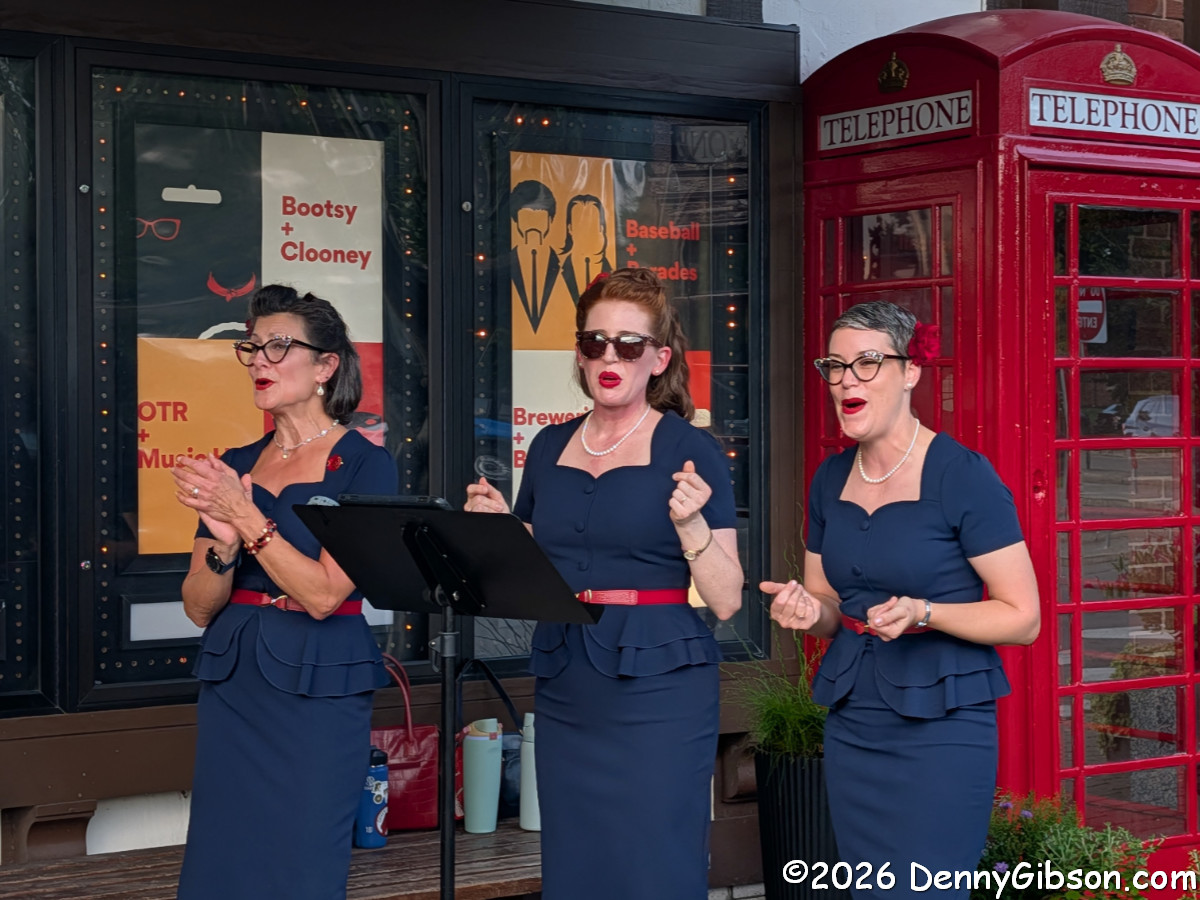
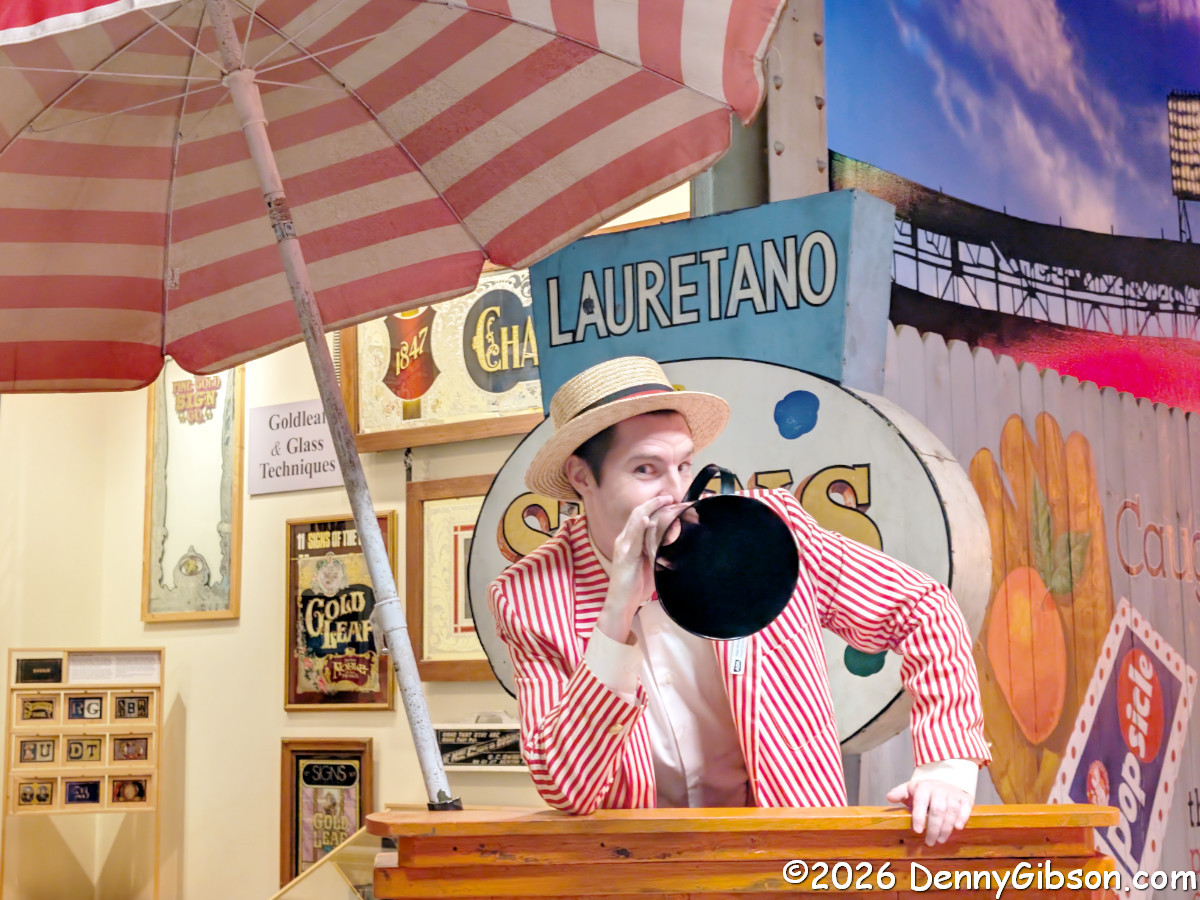
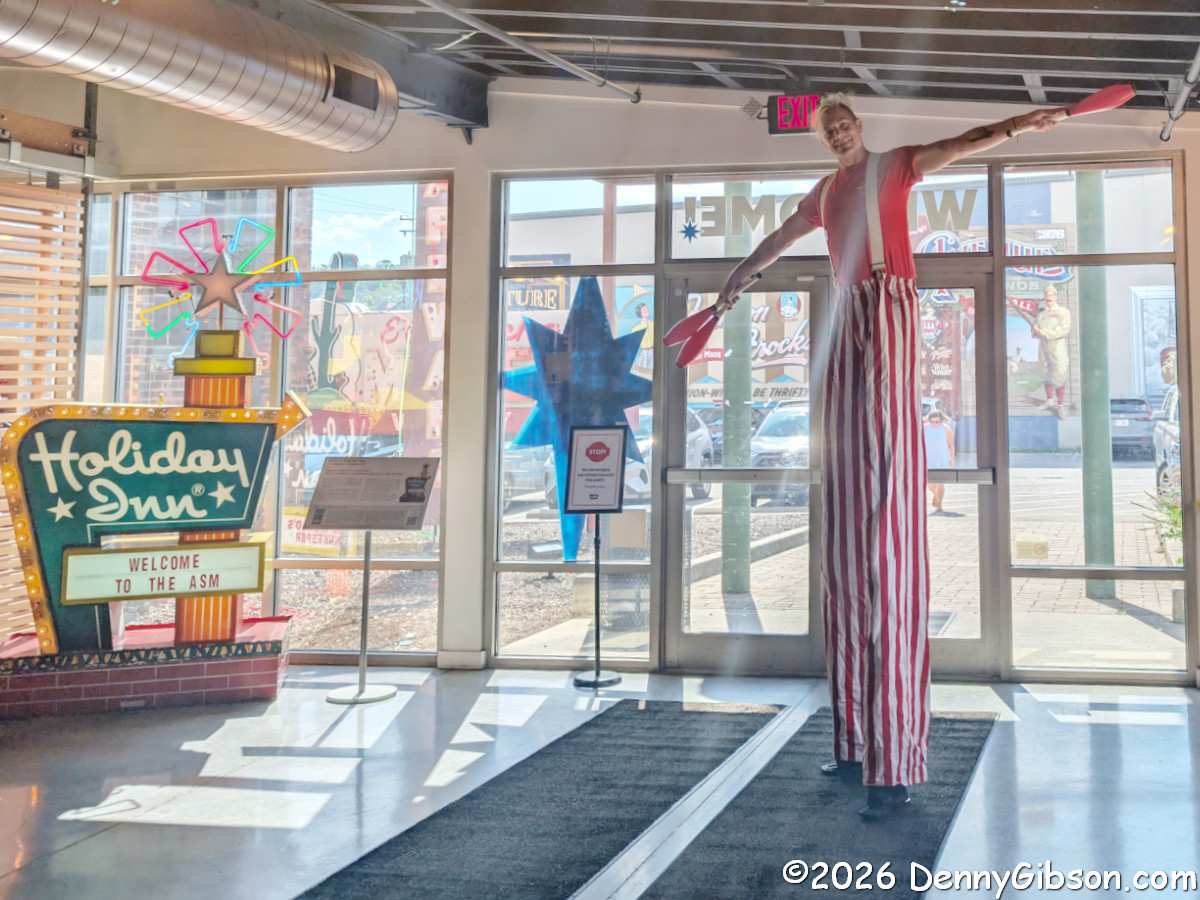
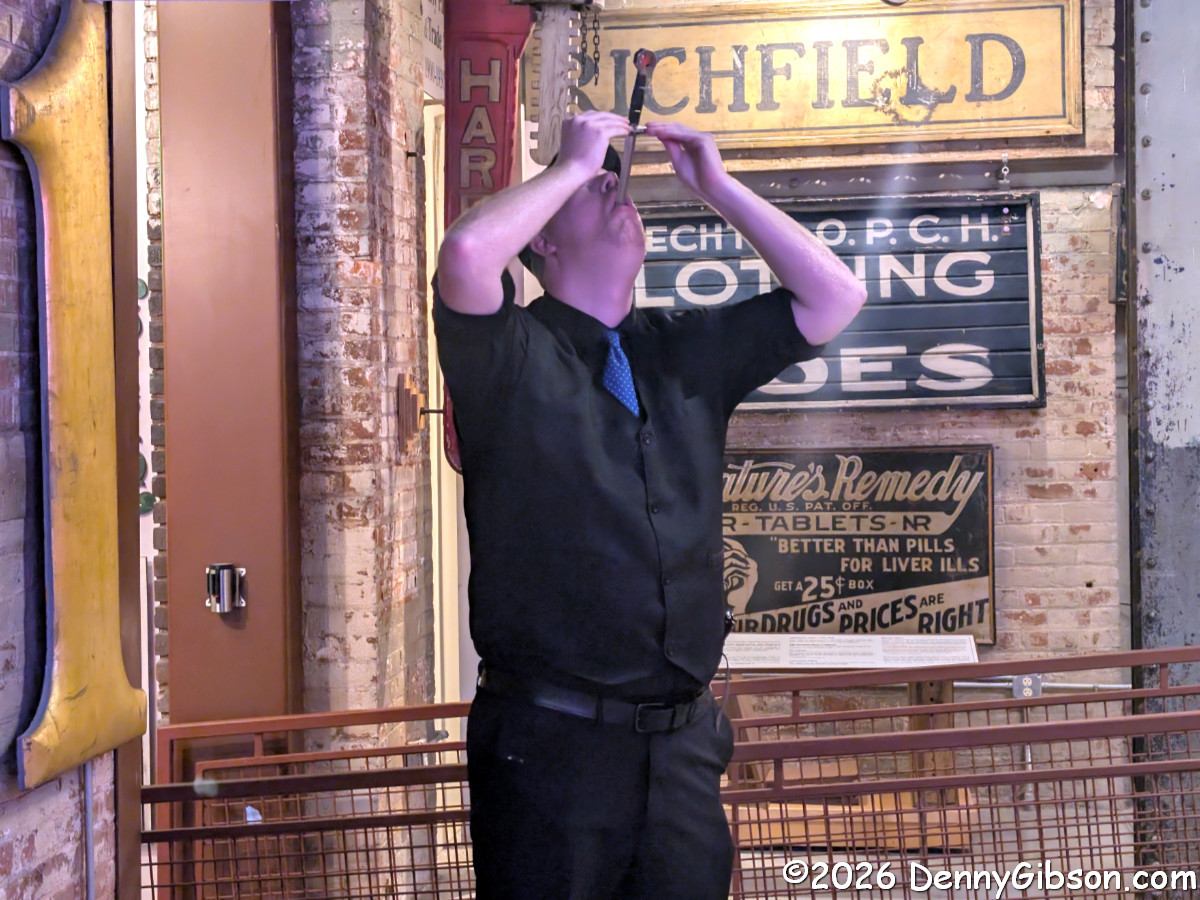
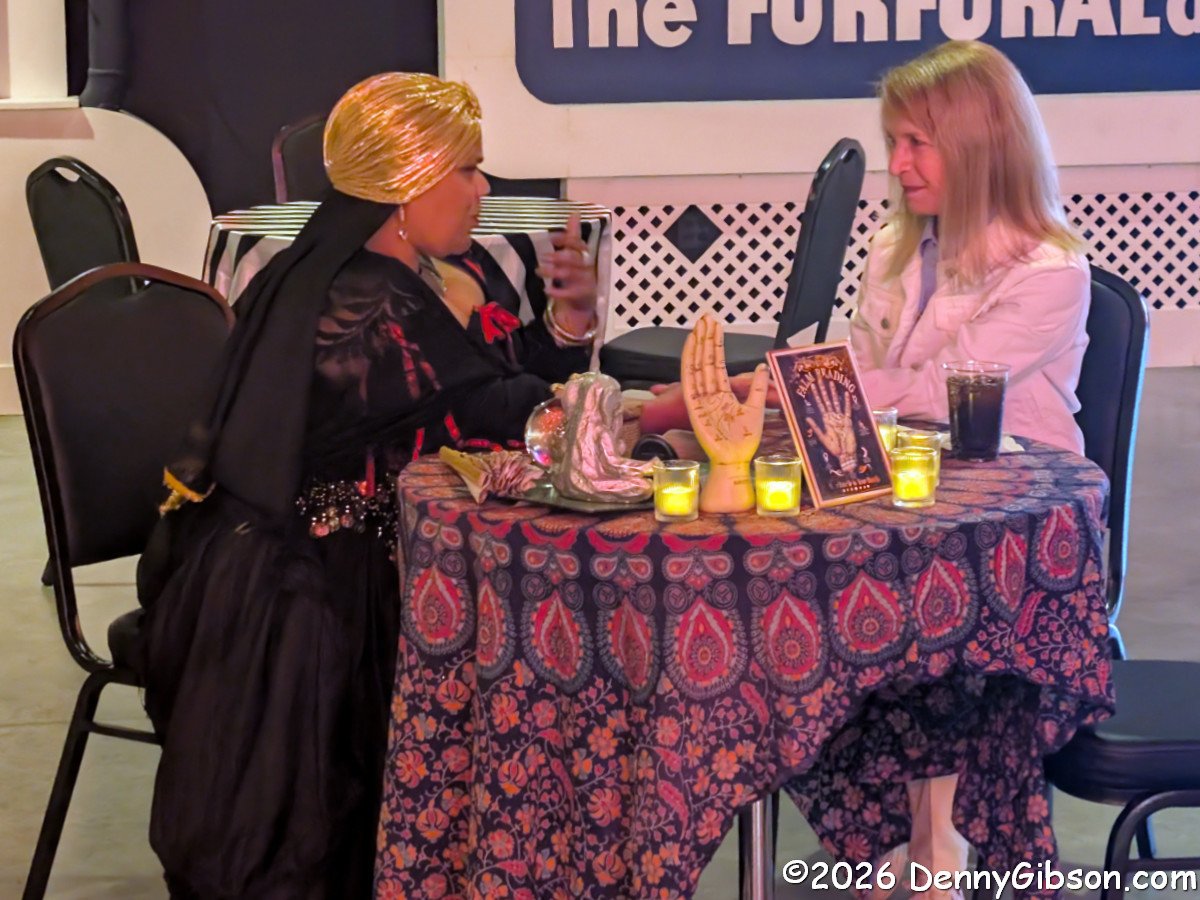
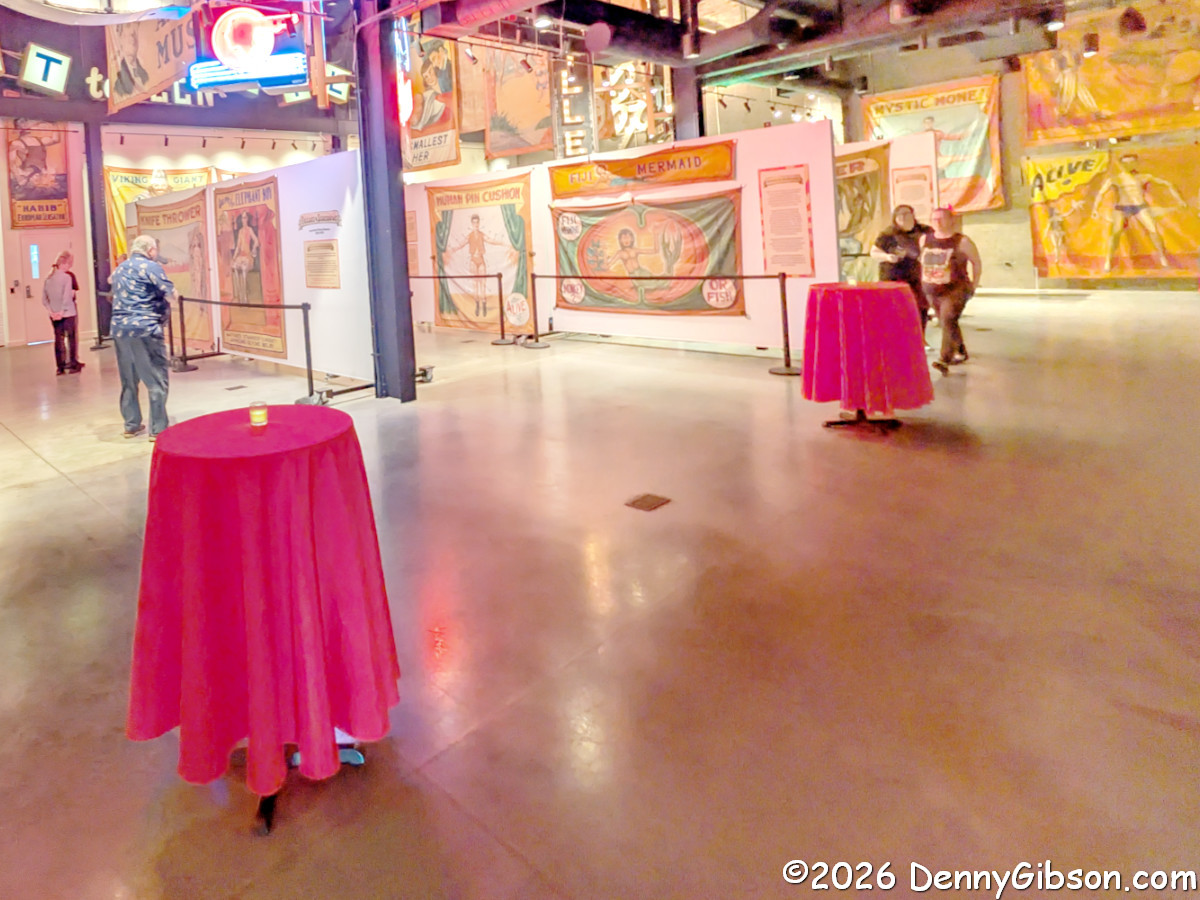
Although the number of circus acts at Thursday’s opening of the Freaks & Sideshows exhibit was considerably reduced from the over-the-top extravaganza that was The Signmaker’s Circus, their presence was still felt. They definitely enhanced the circusy feel of the event.

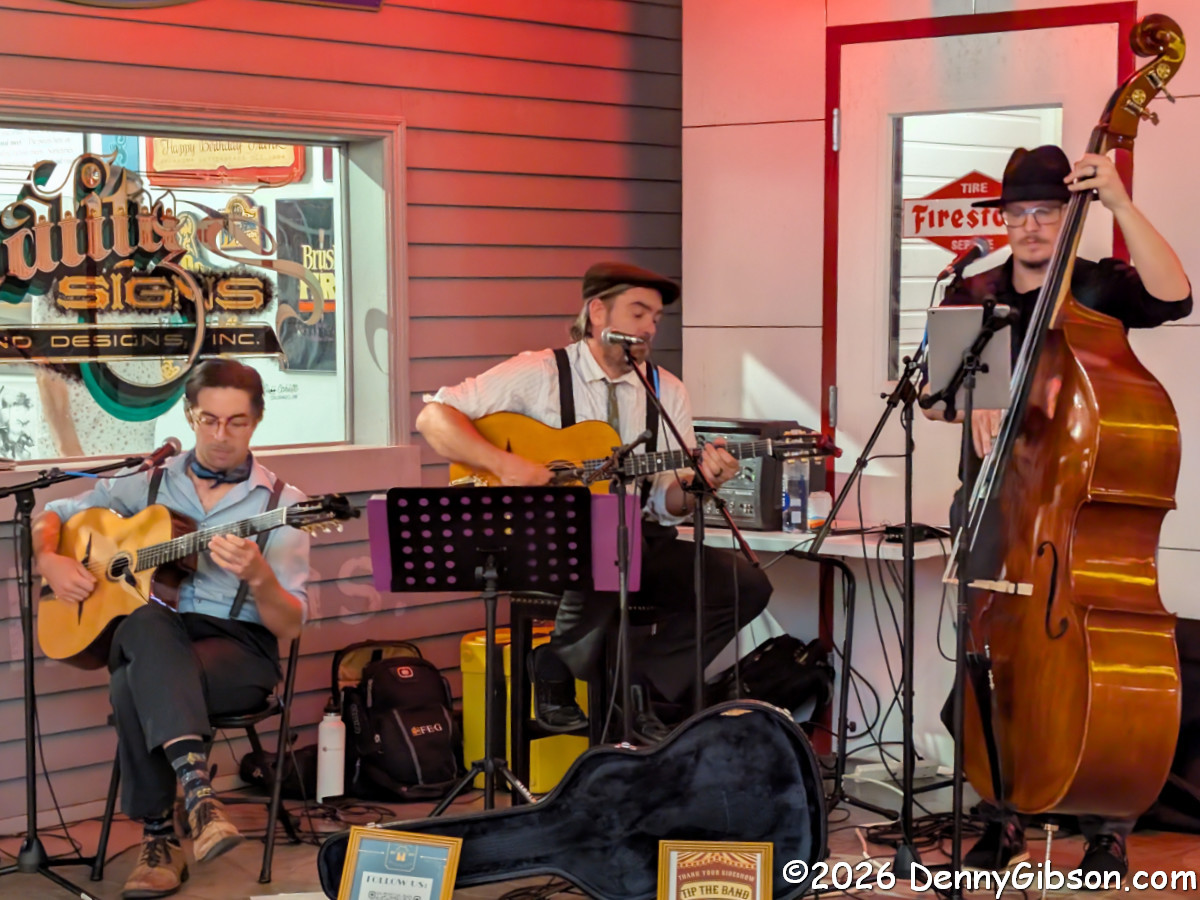
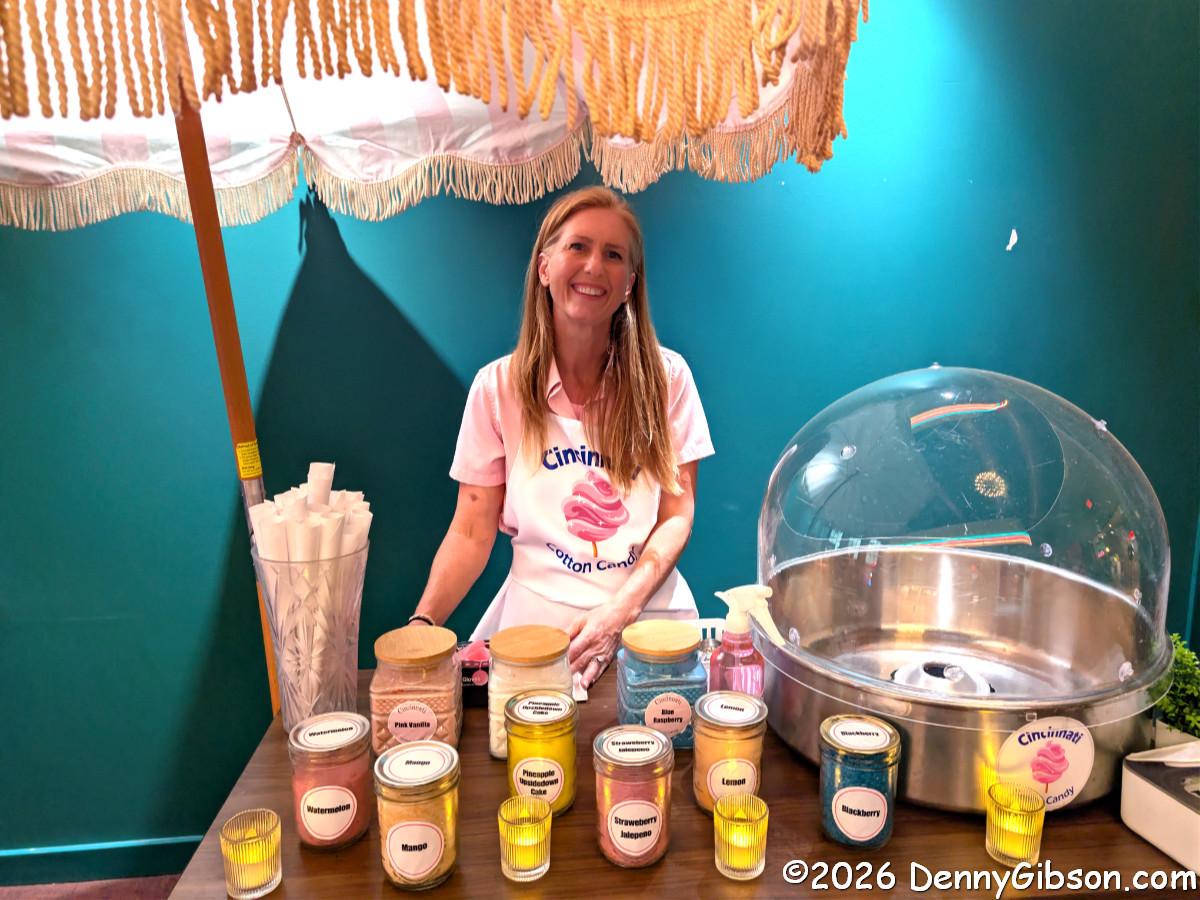
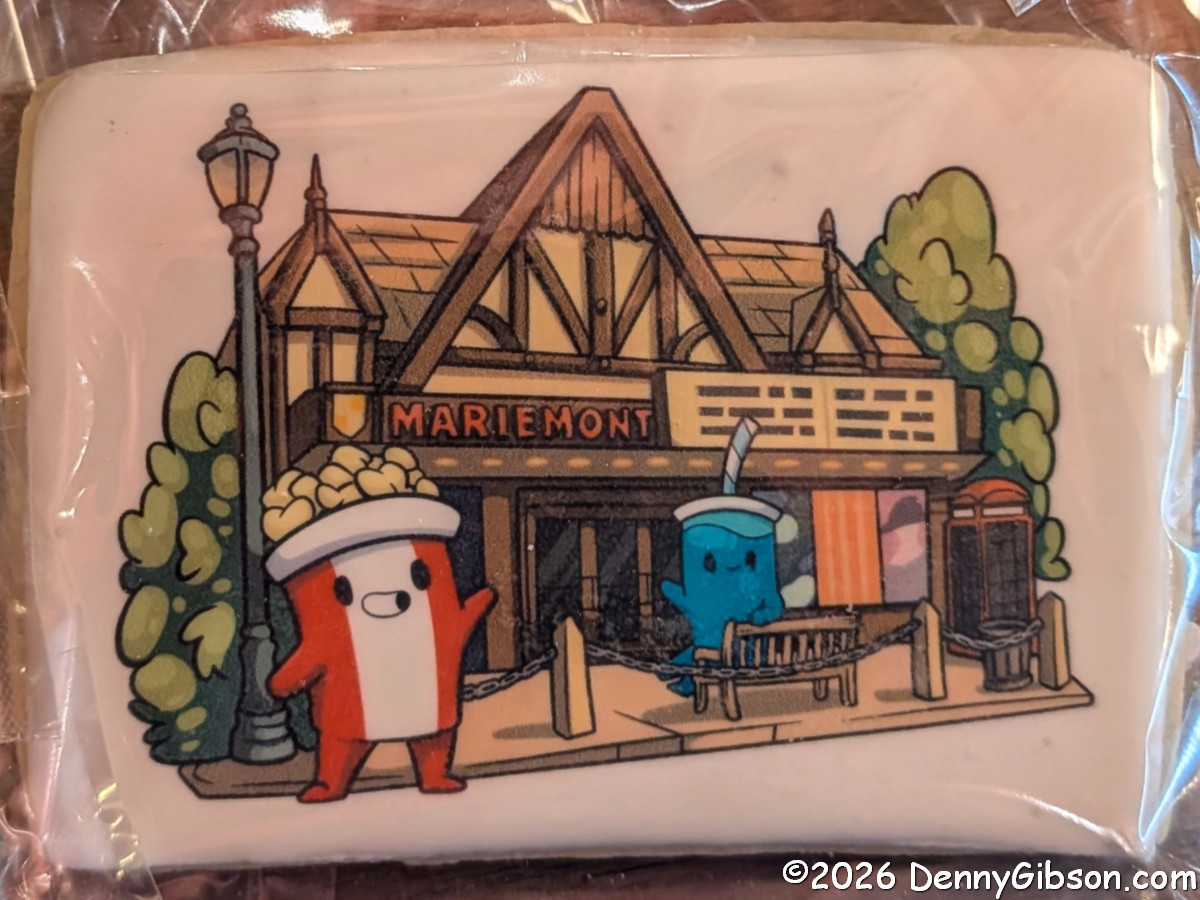
That circus tone was also present in the refreshments. I had a nice chat with the Cincinnati Cotton Candy lady and made her aware of my teenage experience making snow cones at the county fair, in case she ever wants to branch out. I don’t know that The 1936 North American Heat Wave’s music was all that circusy, but it certainly matched the time period of the early banners on display. I’d never heard of the band or the weather event it is named after, so I was simultaneously handed two tangents to head off on.

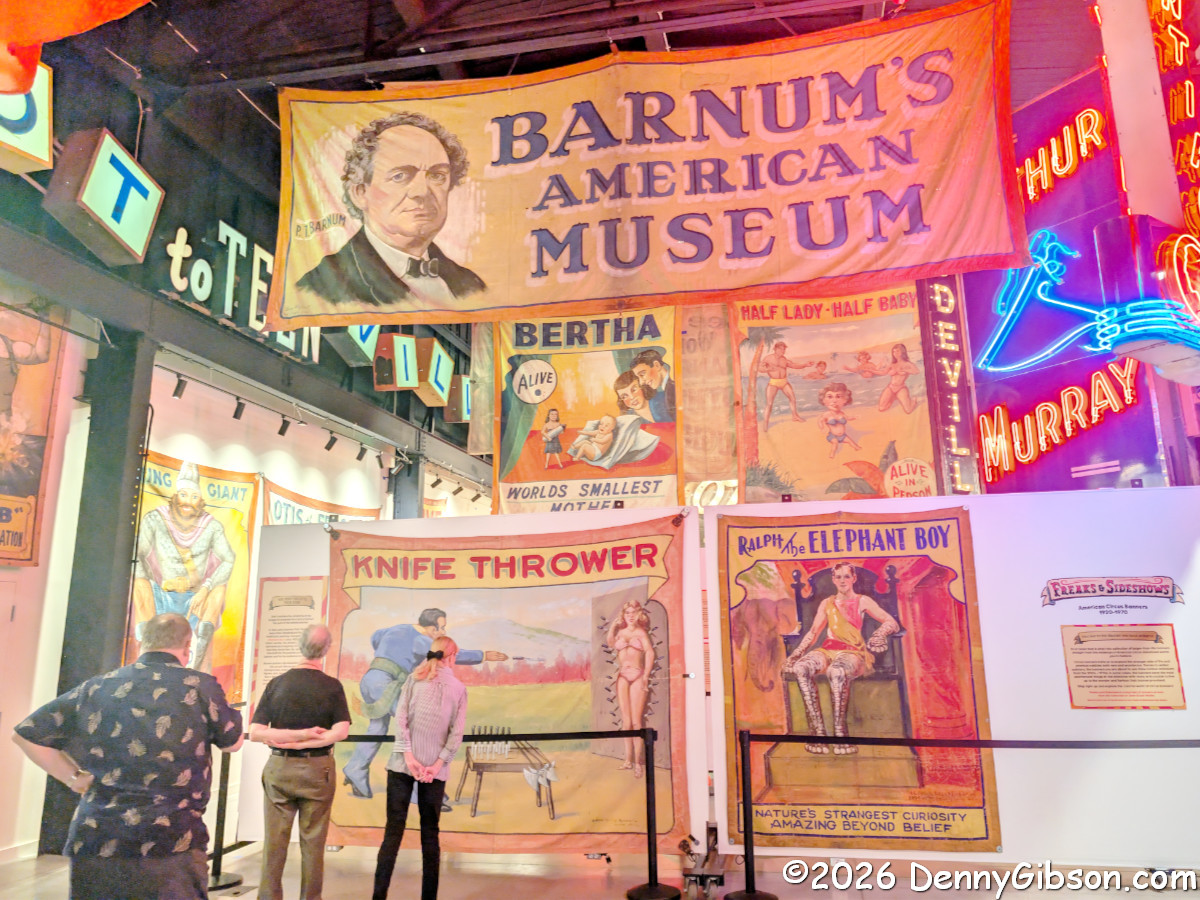
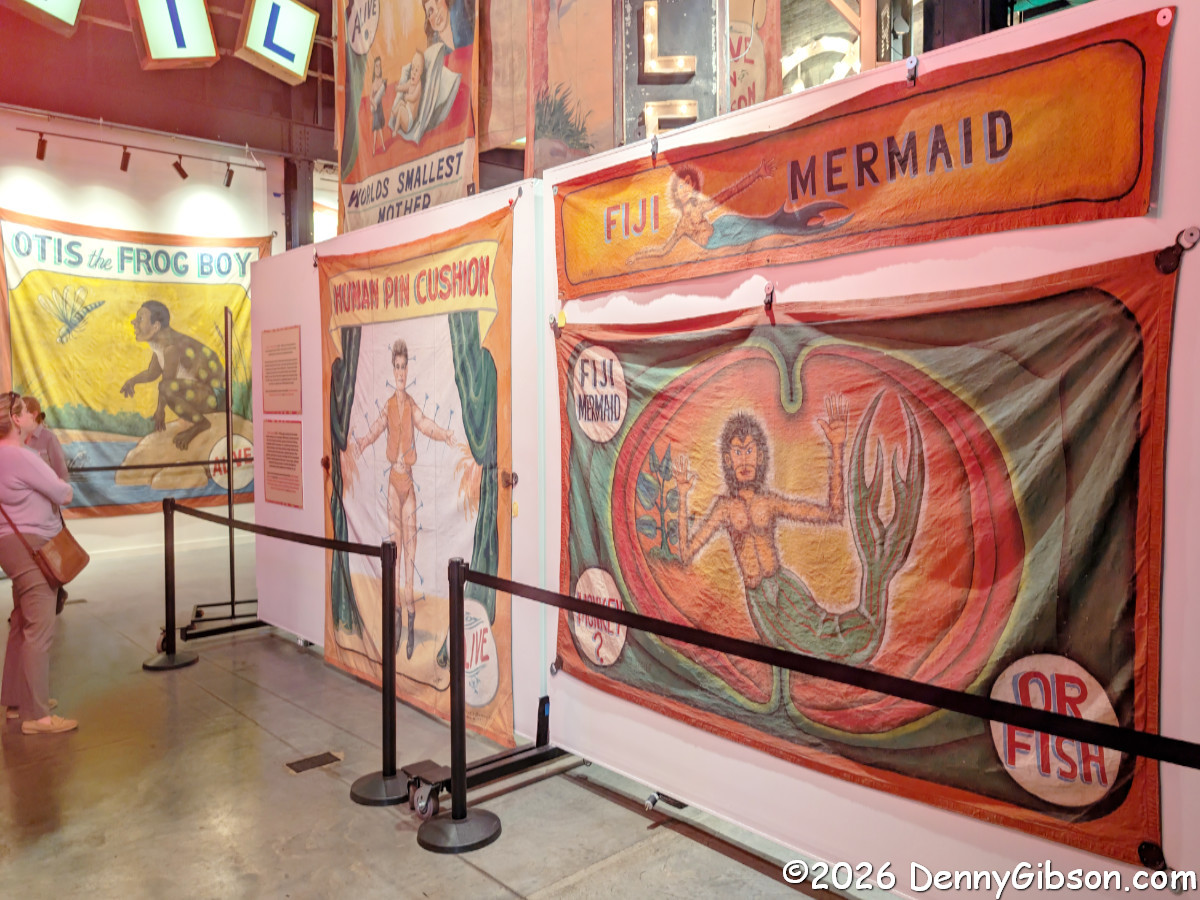
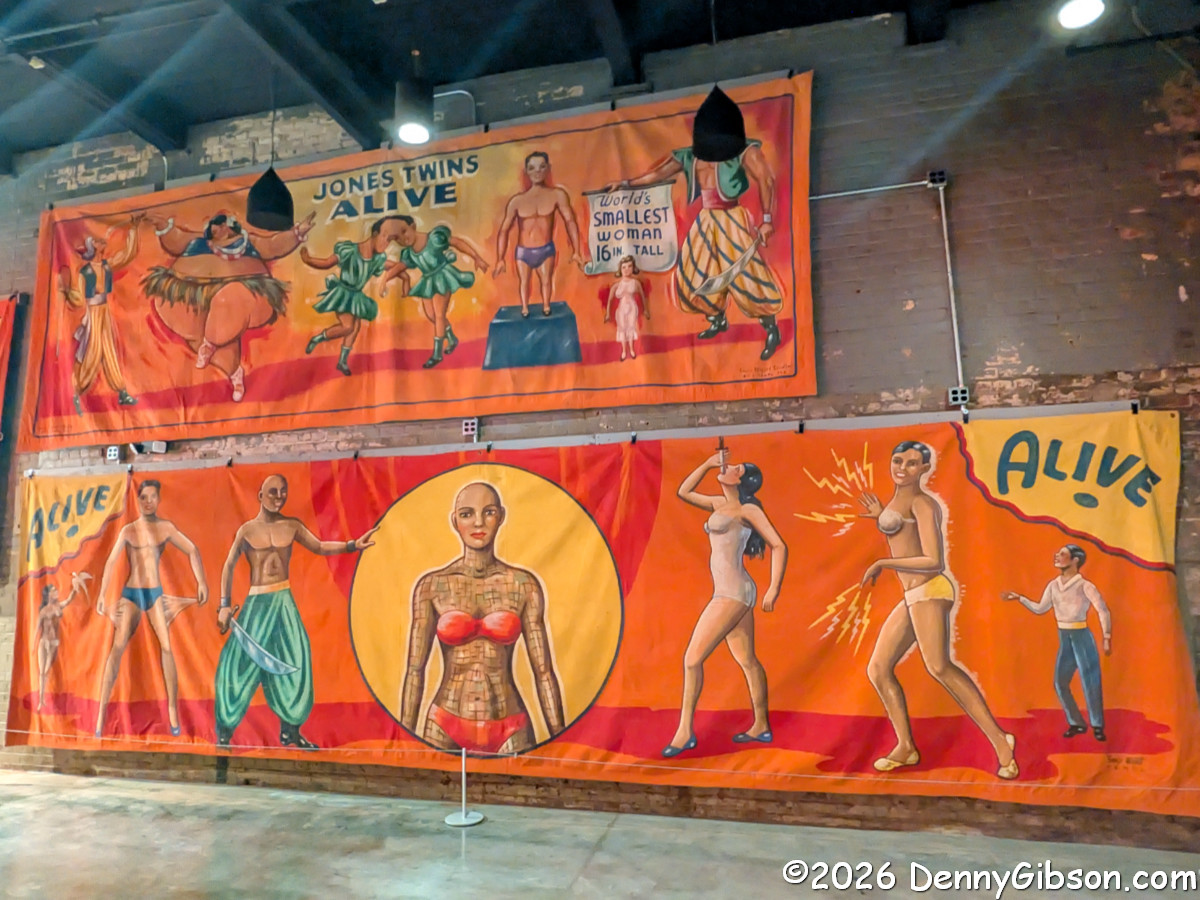
Of course, for the banners, the biggest difference between this exhibit and The Signmaker’s Circus is that they are no longer just decorations hanging in the background. Here they are the stars, with good lighting and informative panels. The Elephant Boy banner in the first picture is the oldest in the exhibit. It is from the 1920s.

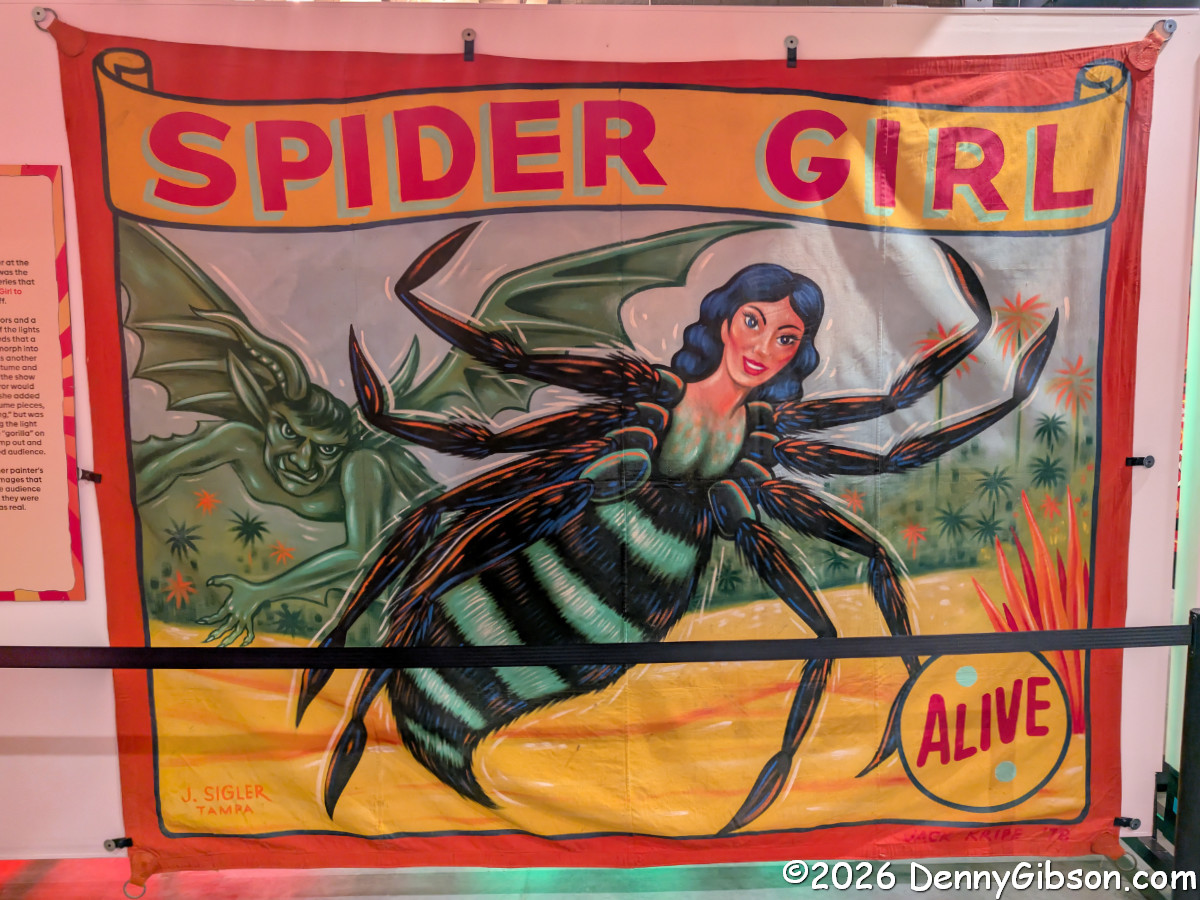
Most of the banners on display were also on display in 2022. That includes what might be my favorite single banner, Spider Girl. A nearby panel explains that a woman whose face was the only thing visible operated the not-exactly-alive arachnid body with hidden strings. I think I like the winged creature in the background nearly as much as I like Spider Girl herself.

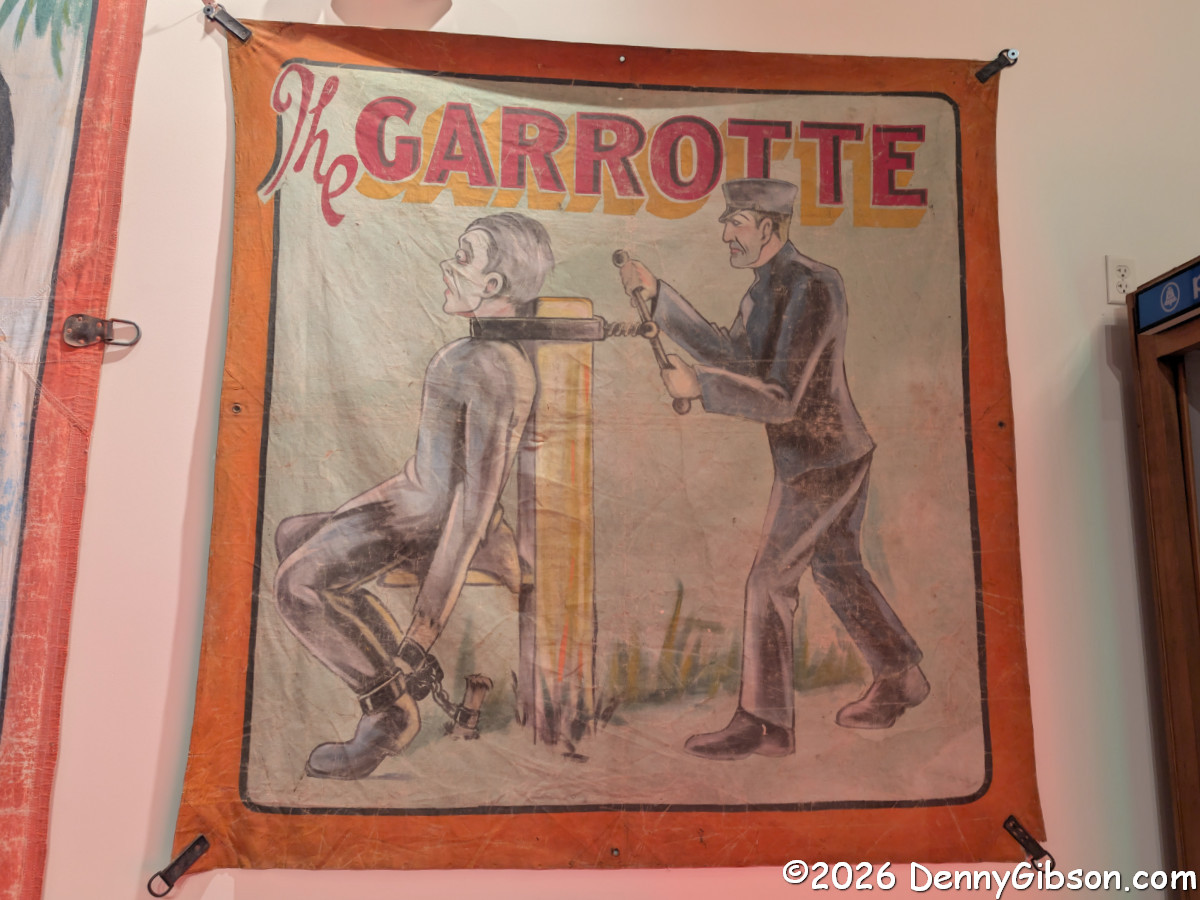
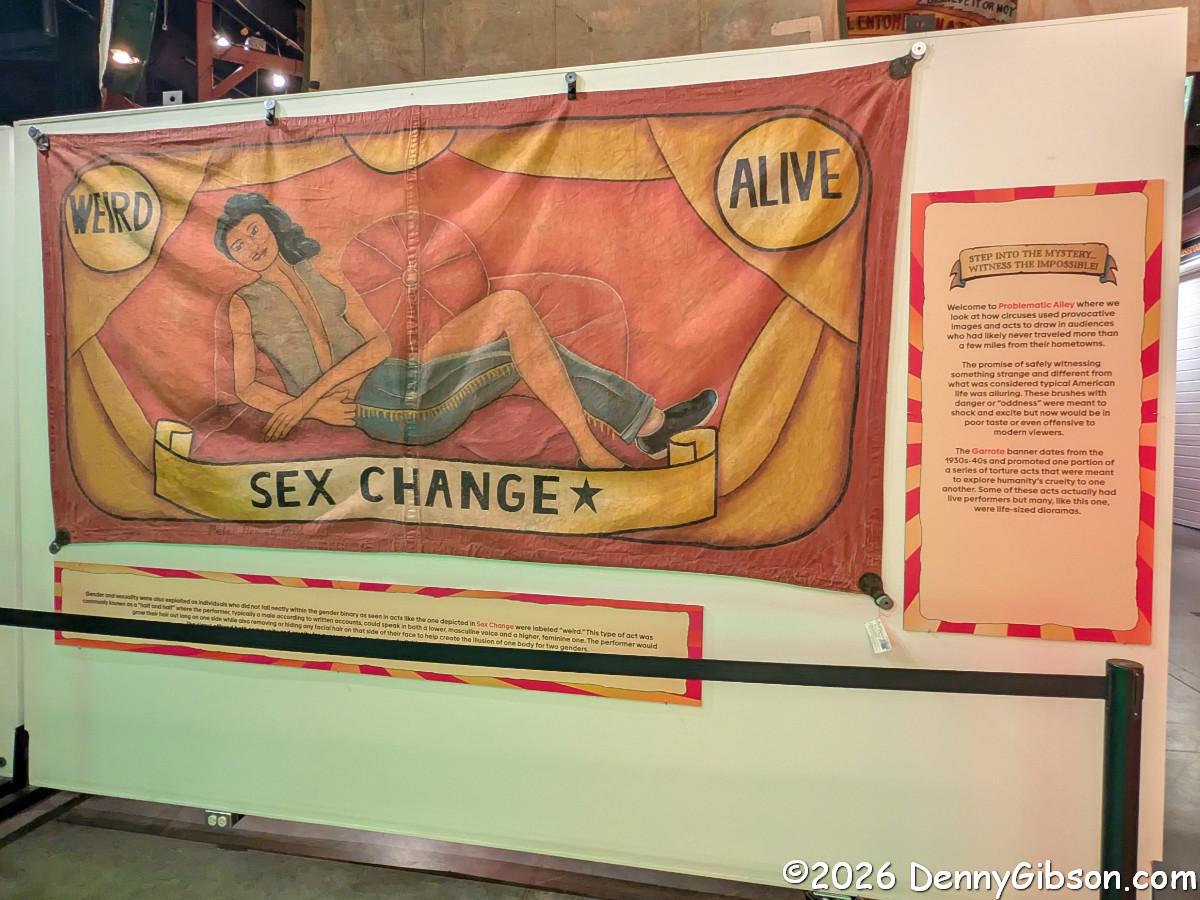
The last row of the exhibition is tagged “Problematic Alley”. The Garrotte banner is part of a series showing scenes of torture. Some were associated with live actors, but sometimes just the depiction was shocking enough. “Half and half” acts like that shown in the Sex Change banner employed actors displaying both male and female characteristics.

Although not every “half and half” actor was truly gender non-binary, many were, and the circus provided a paycheck that might be difficult to obtain elsewhere. Likewise, many sideshow “freaks” were disabled individuals making a living through their handicap at a time when social services were nearly non-existent. In connection with the Freaks and Sideshows exhibit, on August 27 the museum is hosting a presentation (Beyond the Banners: A look at how the circus impacted the disability community) by Jason Harris that will examine both the exploitation and the opportunity connected with the circus.

An August 20 presentation (Collector Talk: Dave Waller) by the owner of these banners is obviously tightly tied to the exhibit. Full Circle: The Golden Era, Decline and Renaissance of the American Carousel isn’t as tightly tied to the circus, but it clearly shares its spirit. It’s August 3.

Freaks & Sideshows runs through October 4.