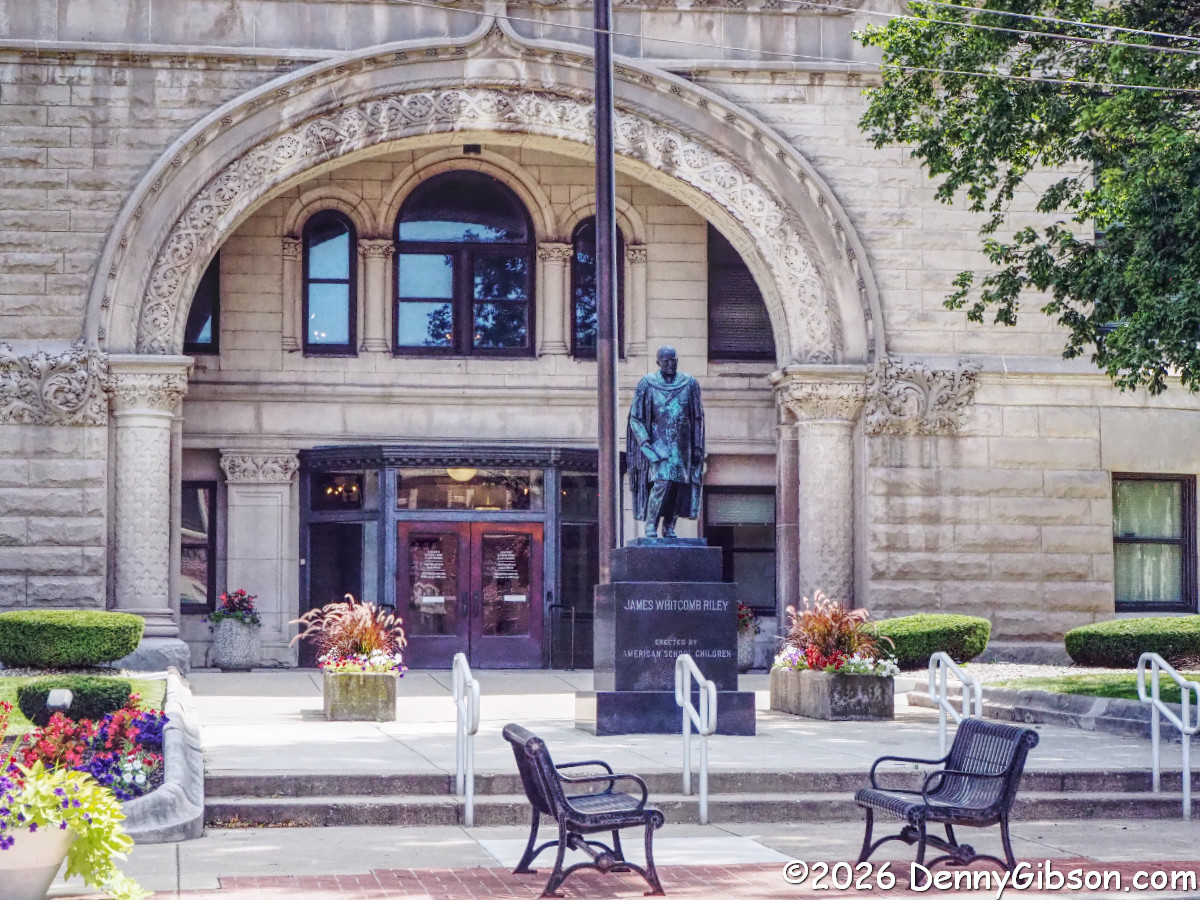
 A little more than a week ago, I saw an announcement in the Indiana National Road Association’s Facebook group about an upcoming road-related event. The author of a new book on the National Road would be presenting a lecture in Greenfield, IN, on Wednesday, and I thought that sounded pretty interesting. Making it more inviting was a list of activities in Greenfield that attendees might like. Near the top of the list was the James Whitcomb Riley Boyhood Home, and that was the nudge I needed. I have driven through Greenfield multiple times and told myself more than once that I ought to visit Riley’s home but had yet to do it. Some other things on the list also sounded interesting, so I decided a drive to the middle of Indiana was justified. Had I known just how perfect the weather was going to be, justification would have been even easier.
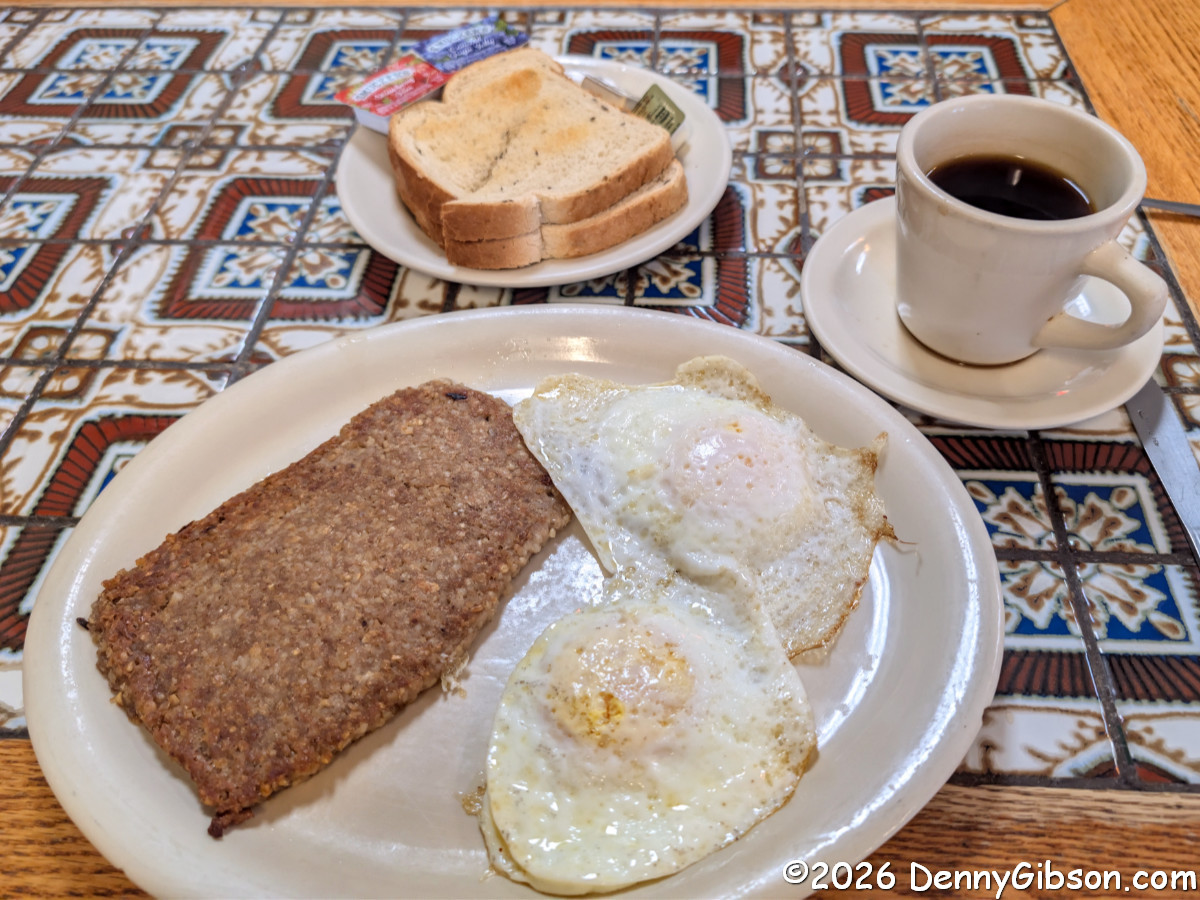
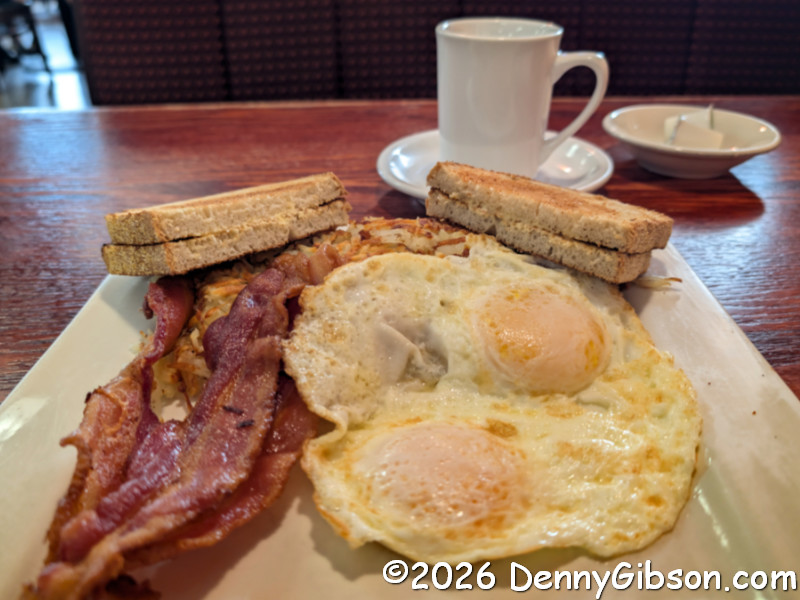
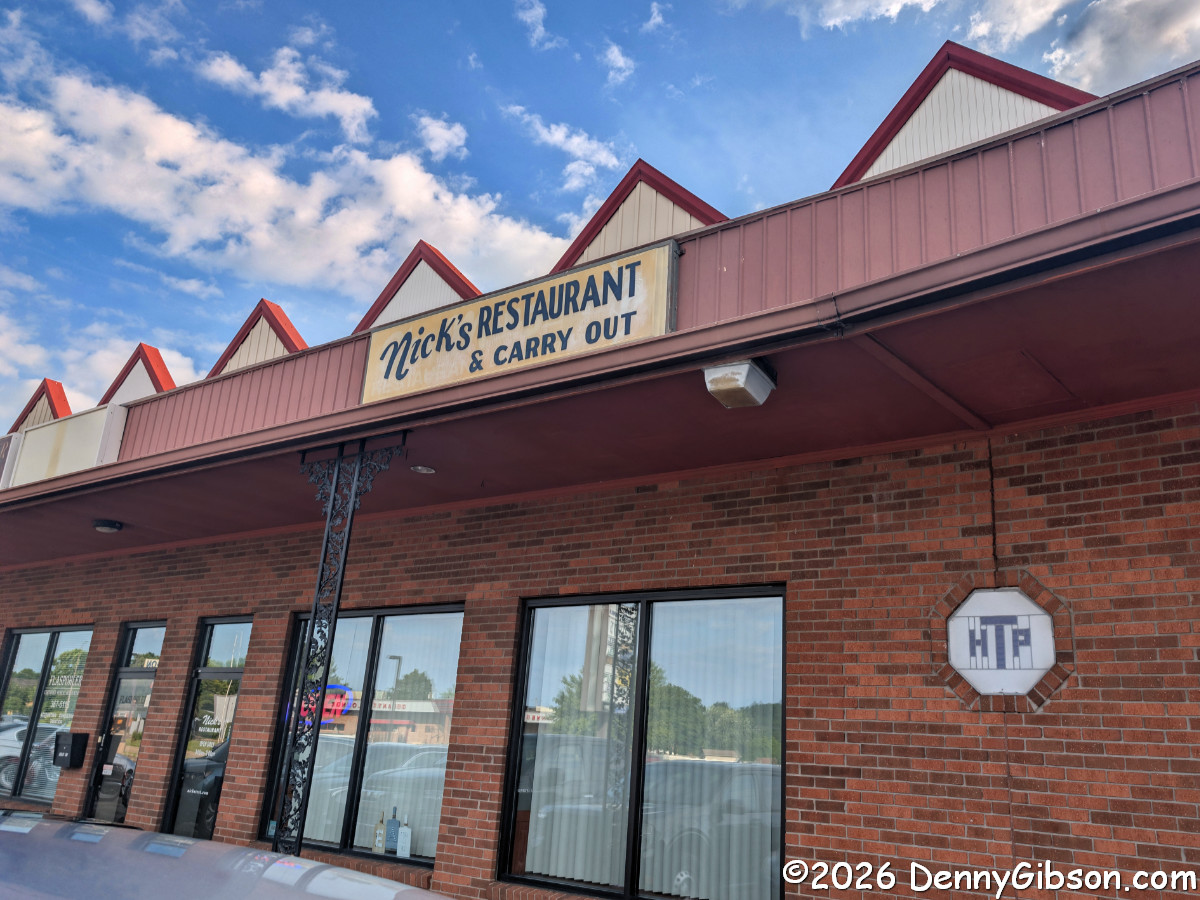 I had plenty of time to make the 6:30 lecture, so I did not push myself to hit the road super early. I did, however, start early enough to feel comfortable trying out a new place for breakfast. That new spot was Nick’s Restaurant in Harrison, OH, and breakfast was goetta and eggs. I do like Glier’s Goetta, which has a near monopoly in the area, but I also like eating at places that go a different way. Nick’s is one of those places. If I recall correctly, their goetta comes from Wassler Meats.
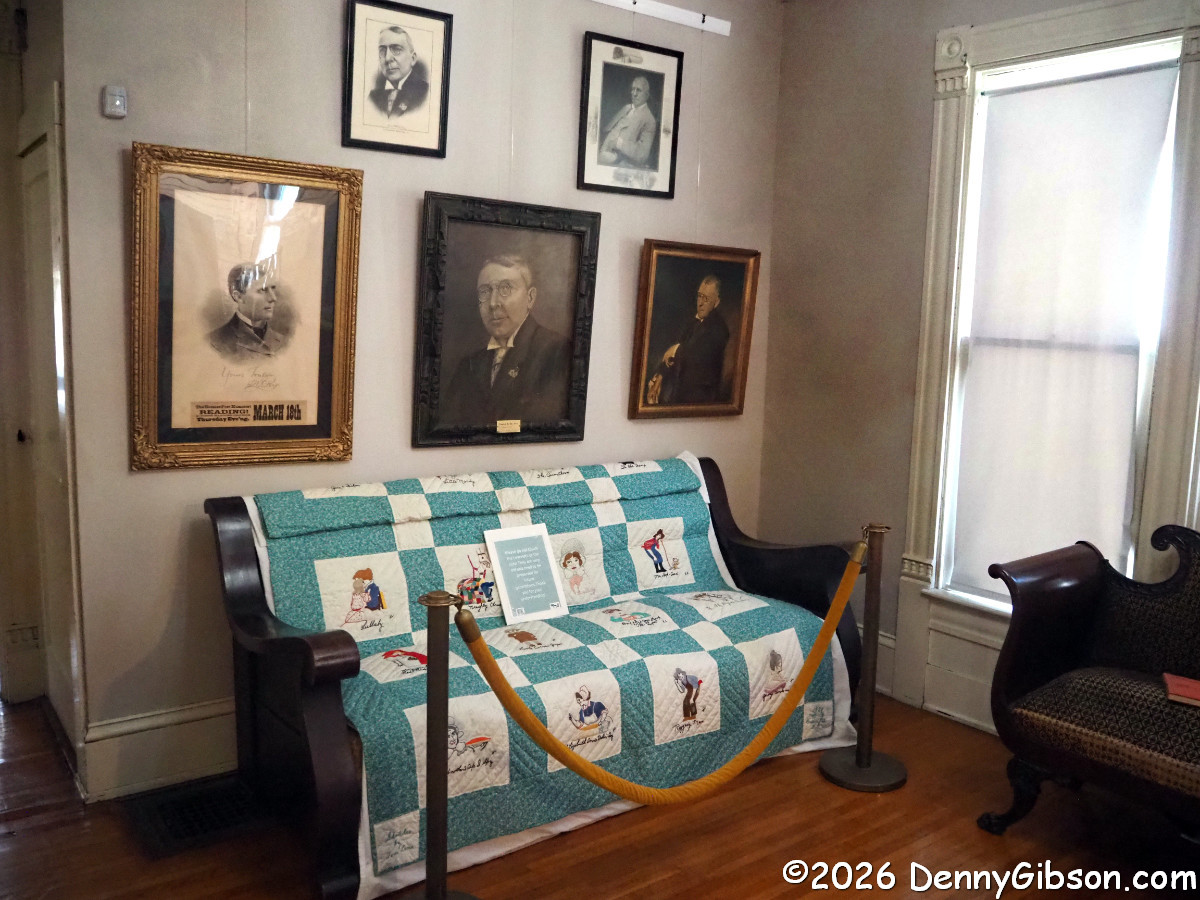
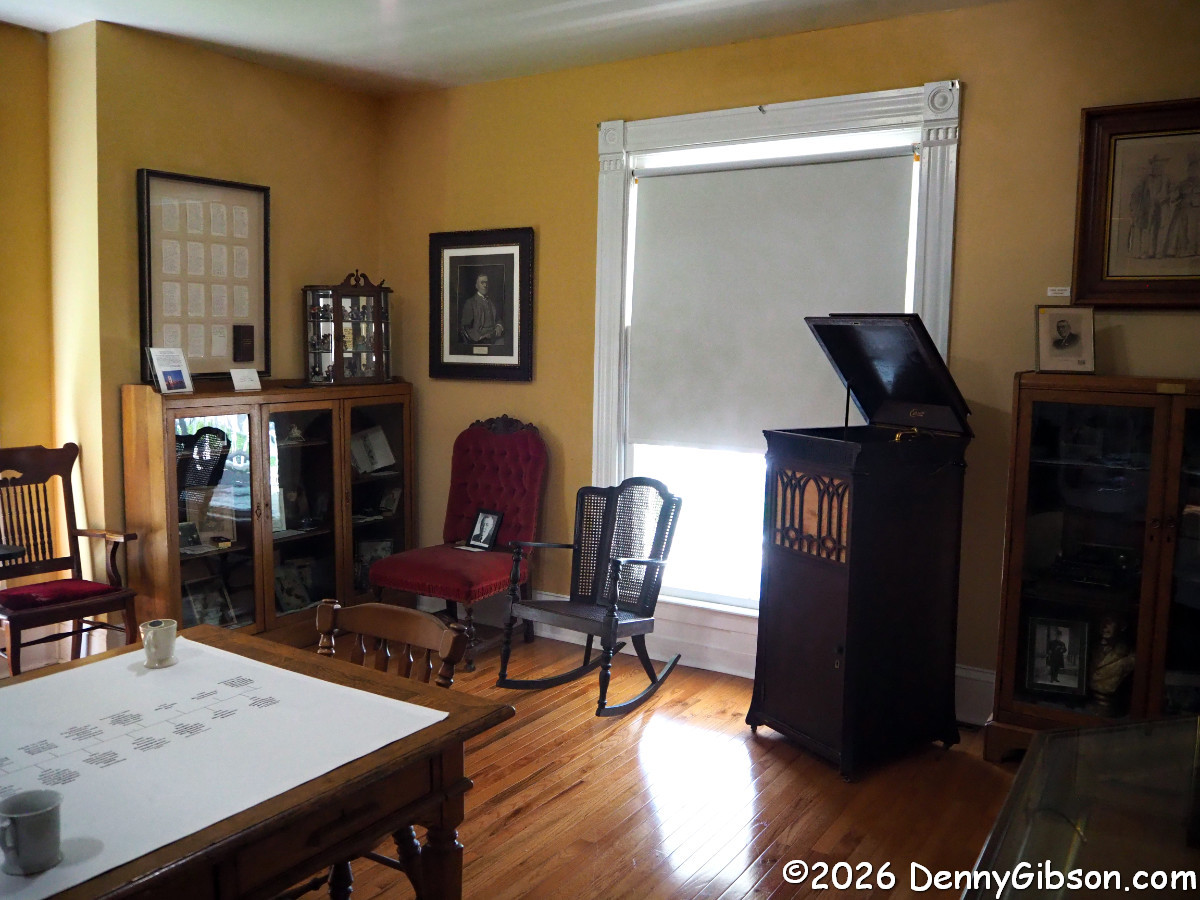
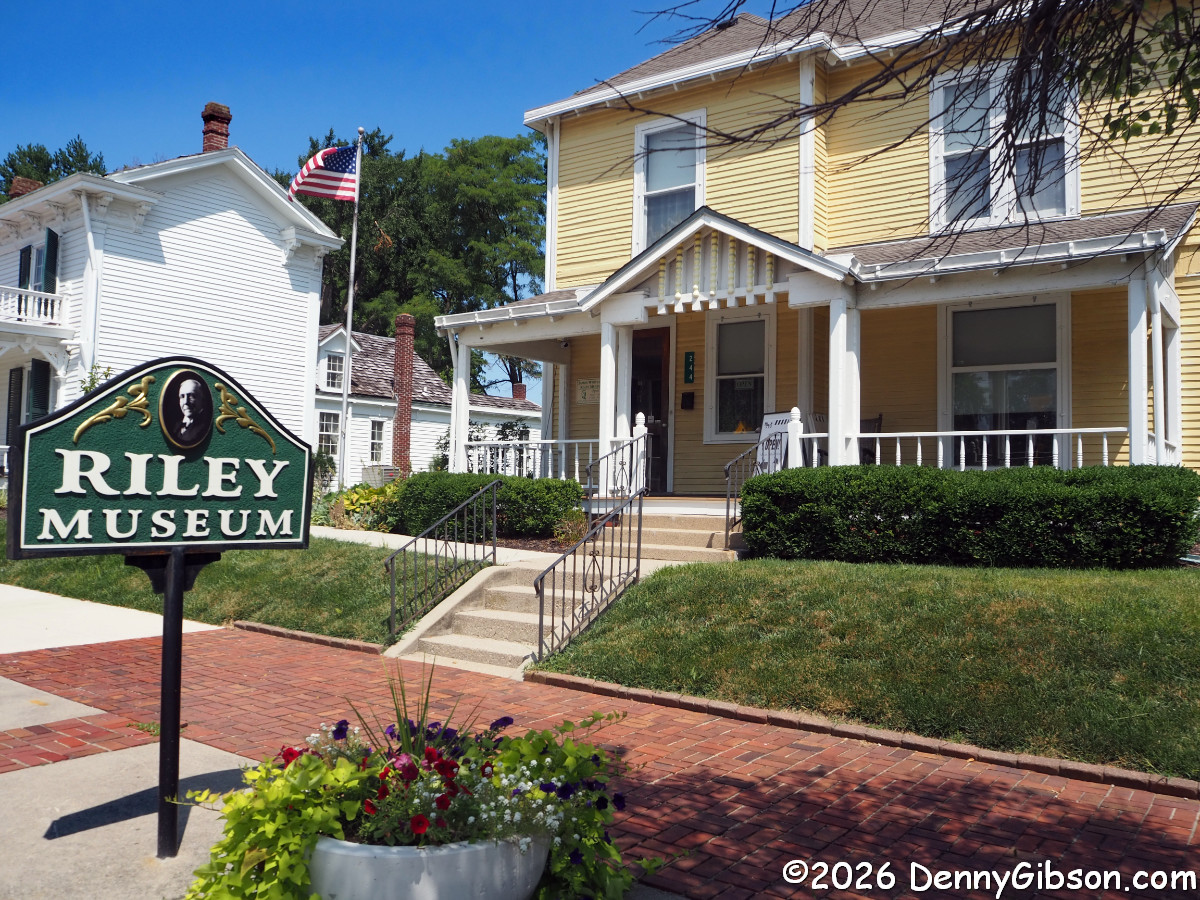 I used US-52 for much of the drive. Besides being extremely pleasant, it helped make sure my arrival was safely beyond the 11:00 opening time for James Whitcomb Riley Boyhood Home and Museum. The white house is the boyhood home. The yellow house is the museum. It contains a gift shop and many Riley-related items, including a couch that James used to nap on. The museum is free. A tour of the boyhood home is $7.00 for adults; less for the old and the young.
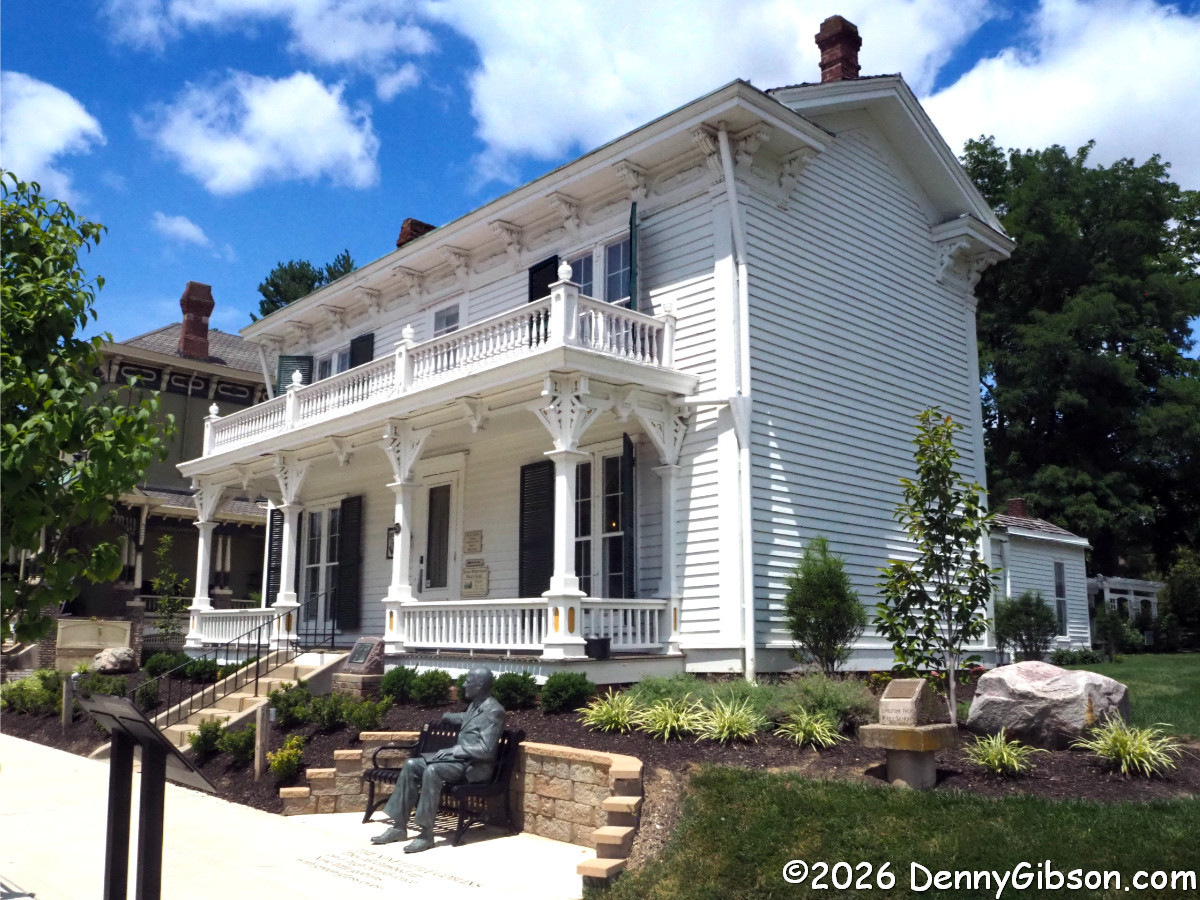
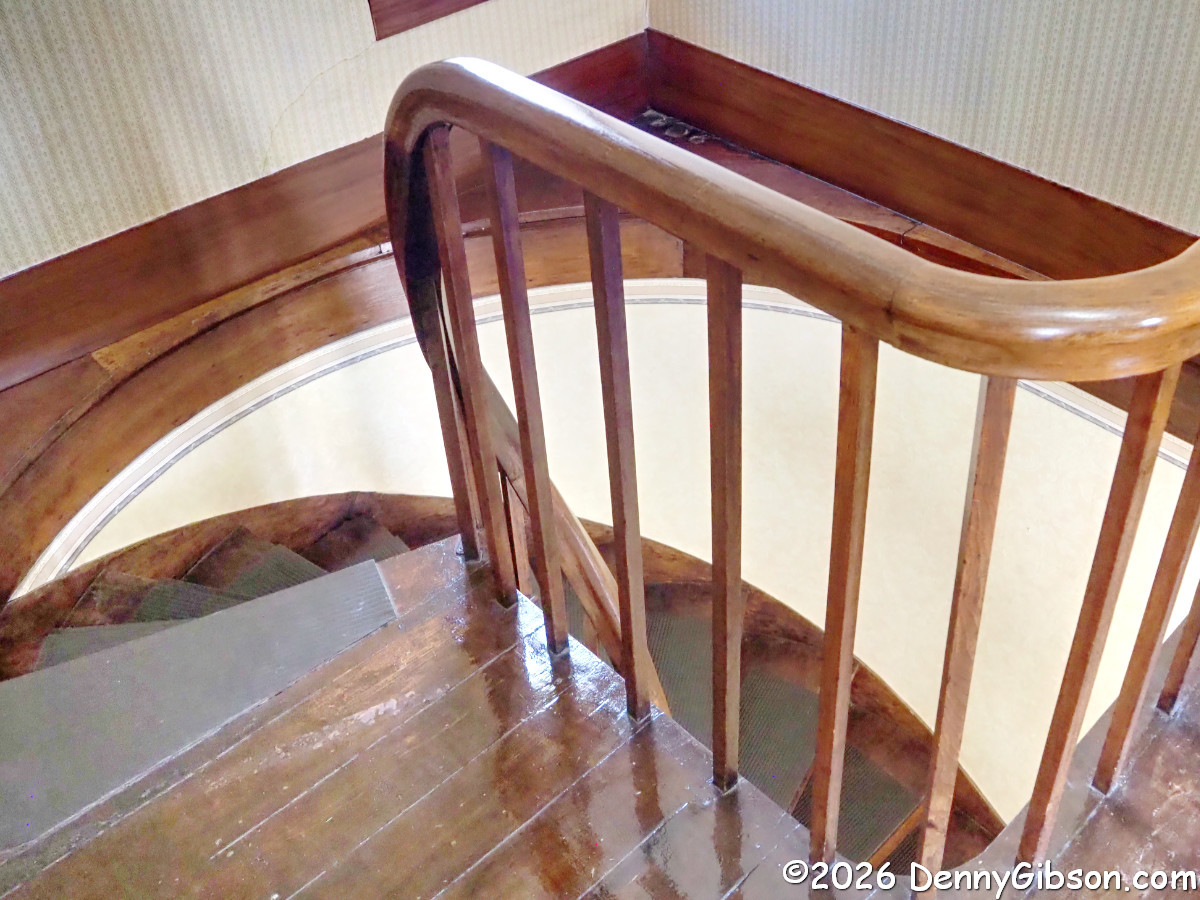
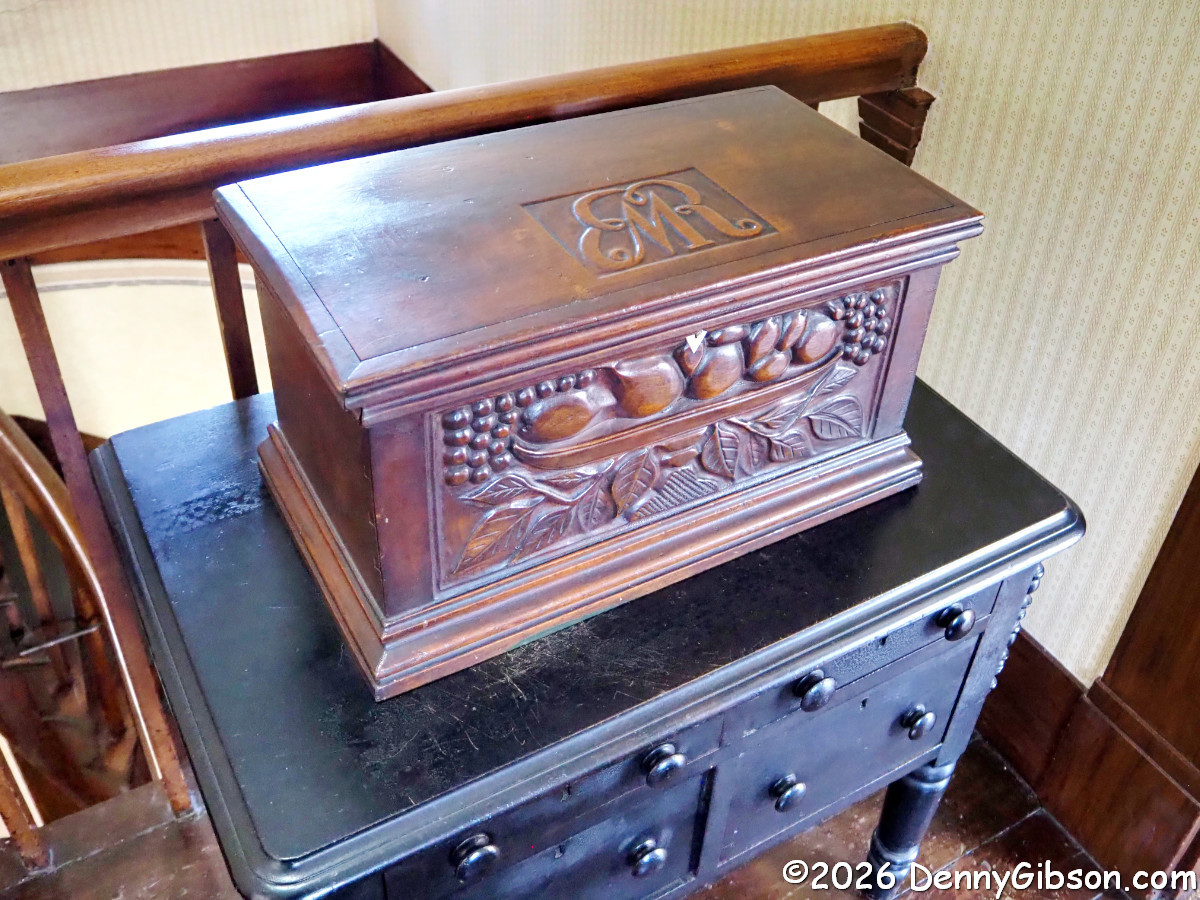 James was raised in this house and got the inspiration for many of his poems here. When Little Orphant Annie (real name Mary Alice Smith) had “come to our house to stay”, this is the house. James and an older brother and sister were born in a log cabin. Three younger siblings were born in this house that their father, Reuben, built. Reuben was a lawyer, politician, and—as evidenced by this house—a talented craftsman. The spiral staircase (backside here) is just one of the building’s impressive features. Just out of frame of the staircase photo is the beautiful storage box Reuben made for his wife, Elizabeth Marine Riley.
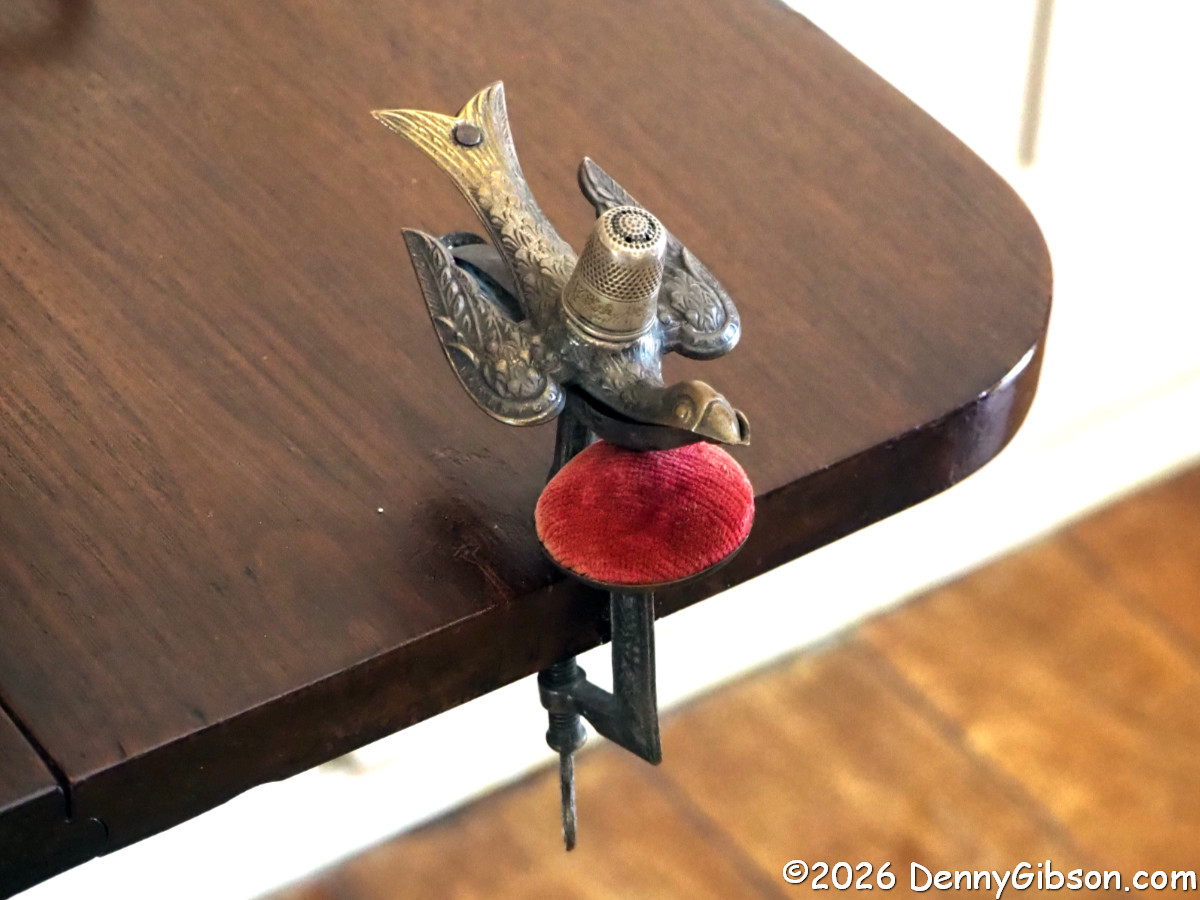
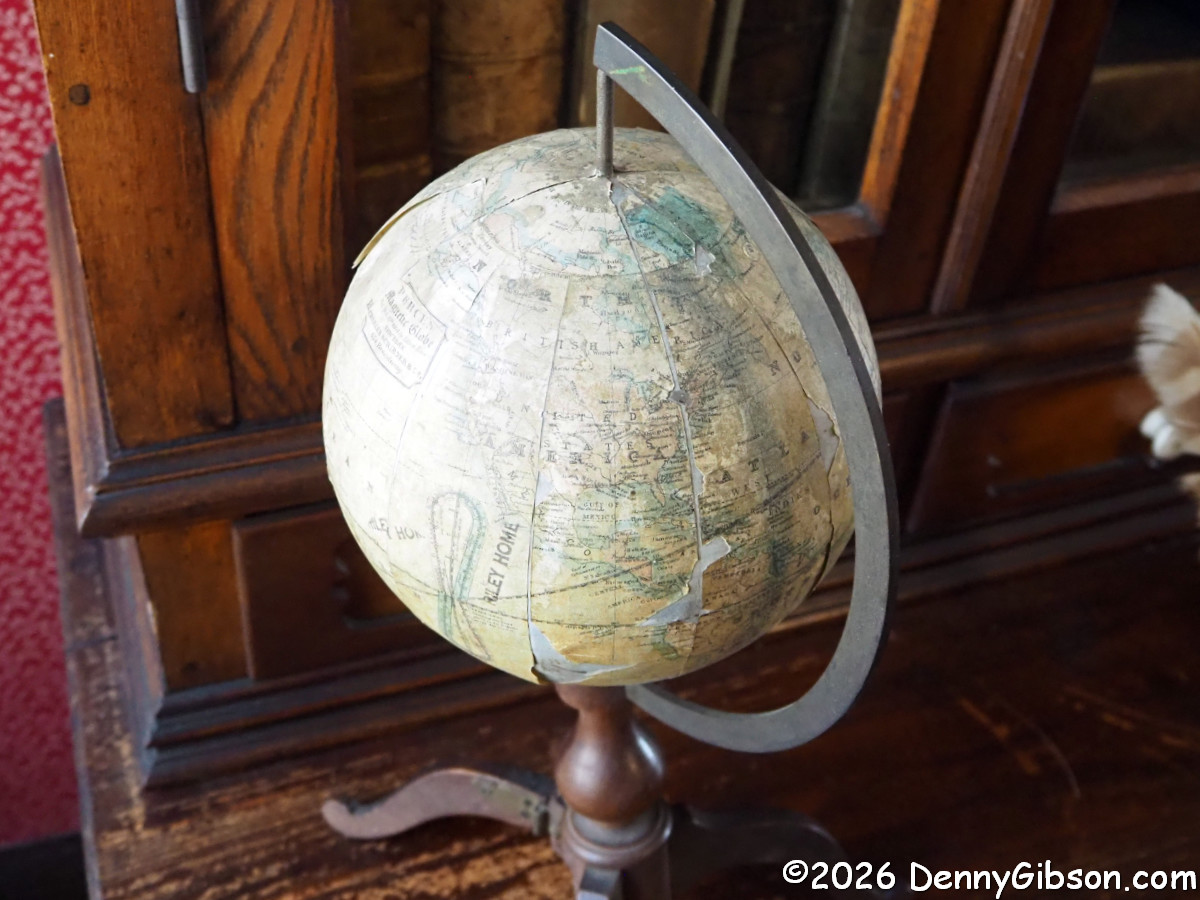
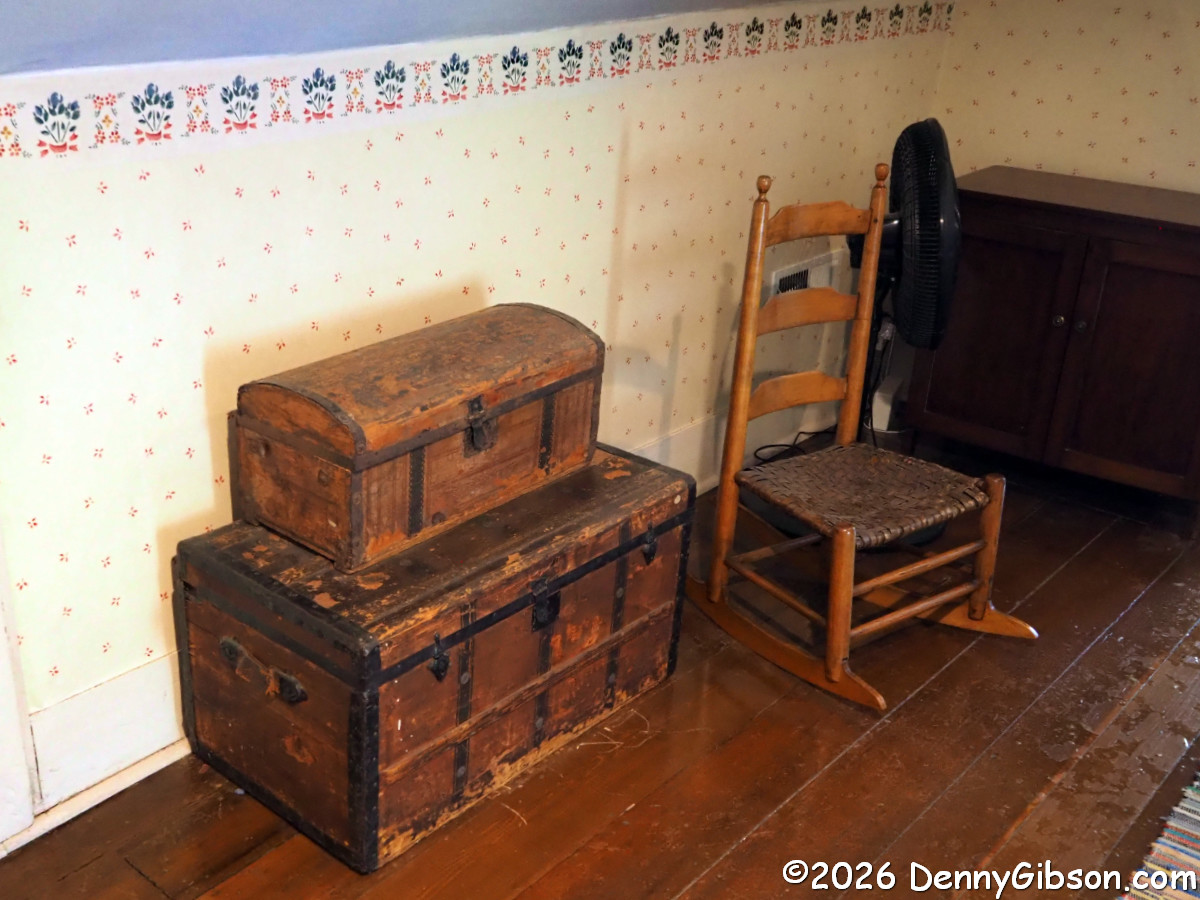 The wear and tear on the trunks is from James’ extensive touring. I don’t recall that the other two items pictured had any Riley connection, but they fascinated me all by themselves.
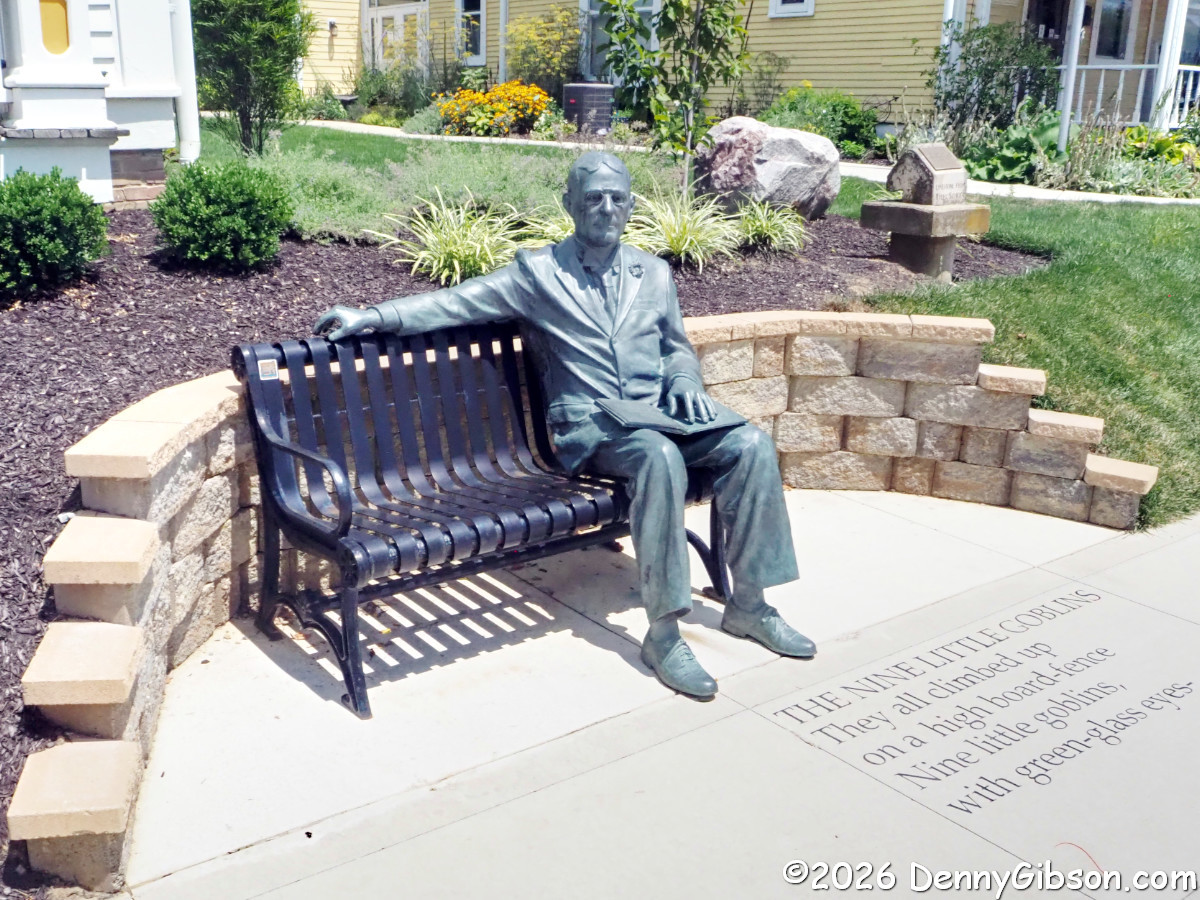 I had a most wonderful guide whose name I learned as we moved from the museum to the house but which, as is way too often the case, I failed to record and have forgotten. Apologies. You did an outstanding job. She not only shared information about the things we were looking at but about when we were looking. My visit just happened to coincide with the 110th anniversary of James Whitcomb Riley’s death, July 22, 1916. A bit more than a year later, he moved into his current home, which I visited some time back.
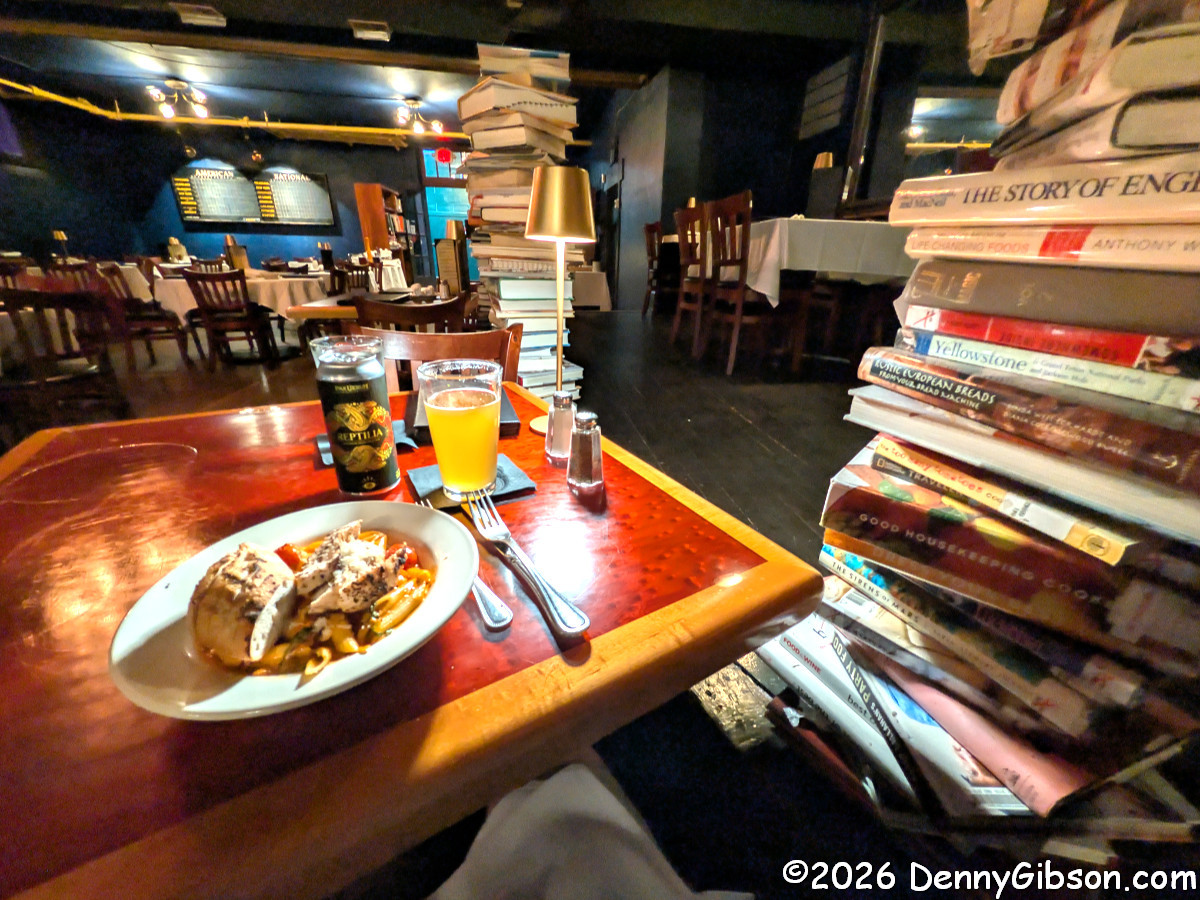
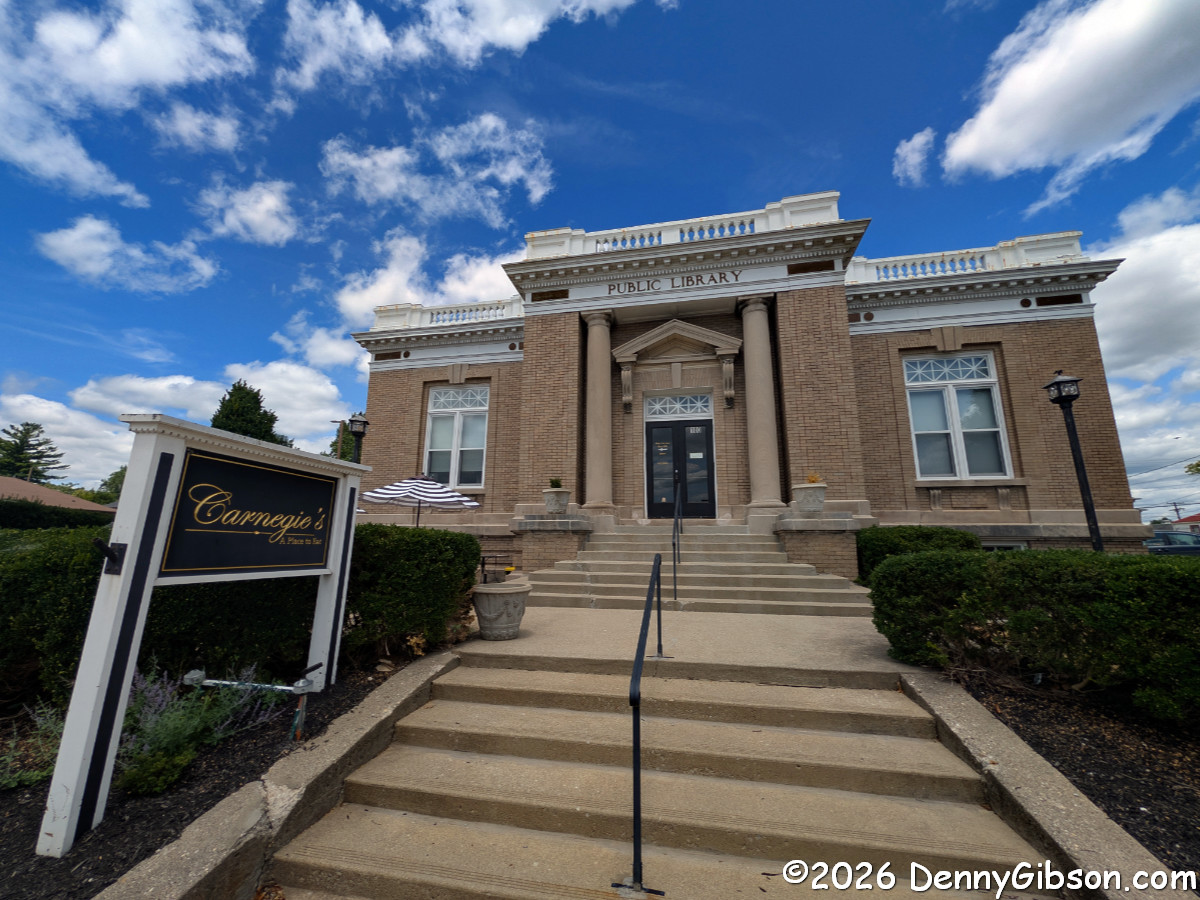 That list of Greenfield attractions in the INRA announcement included a dining suggestion. The menu at Carnegie’s looked pretty good, but to be honest I was more attracted to the building it occupies. The 1909 Carnegie Library has been repurposed with a restaurant downstairs and an event space upstairs. And yes, food and service were excellent.
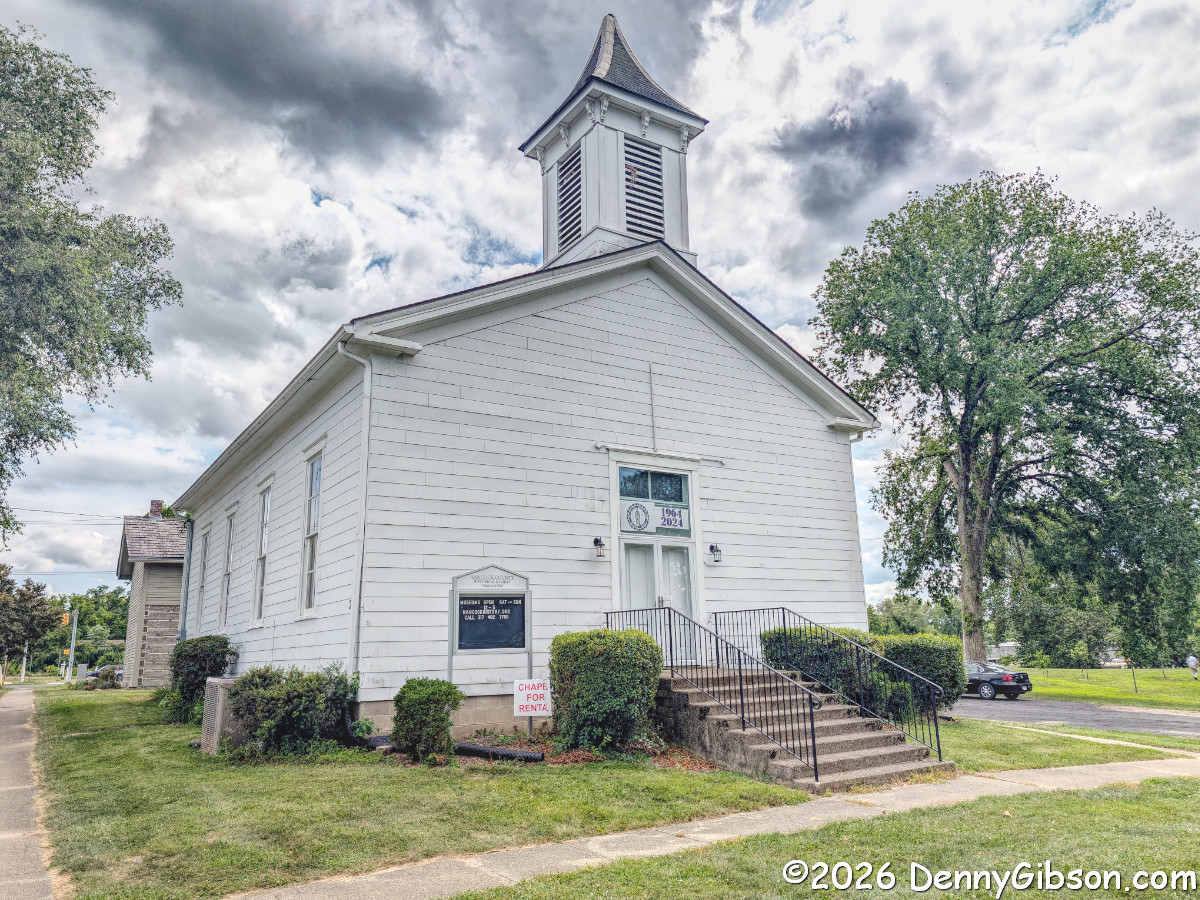
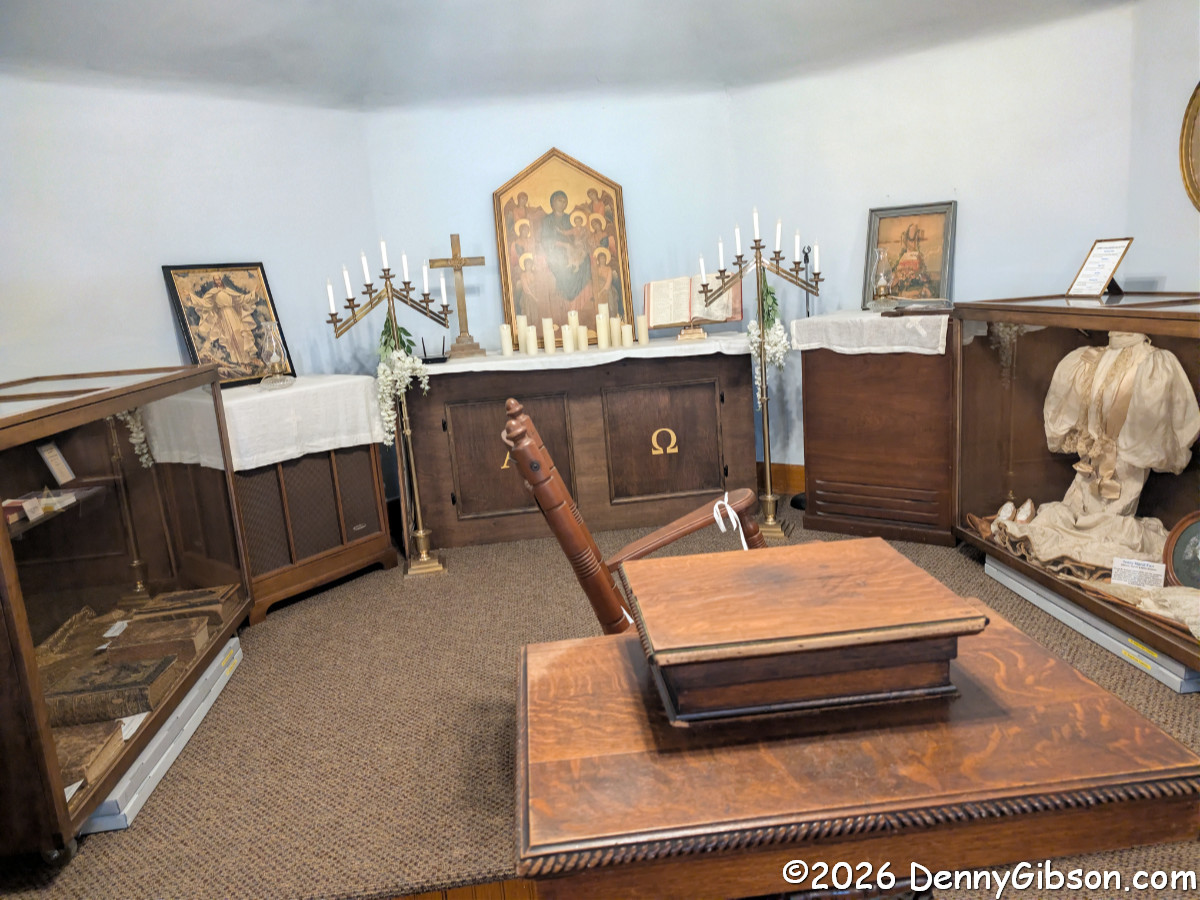
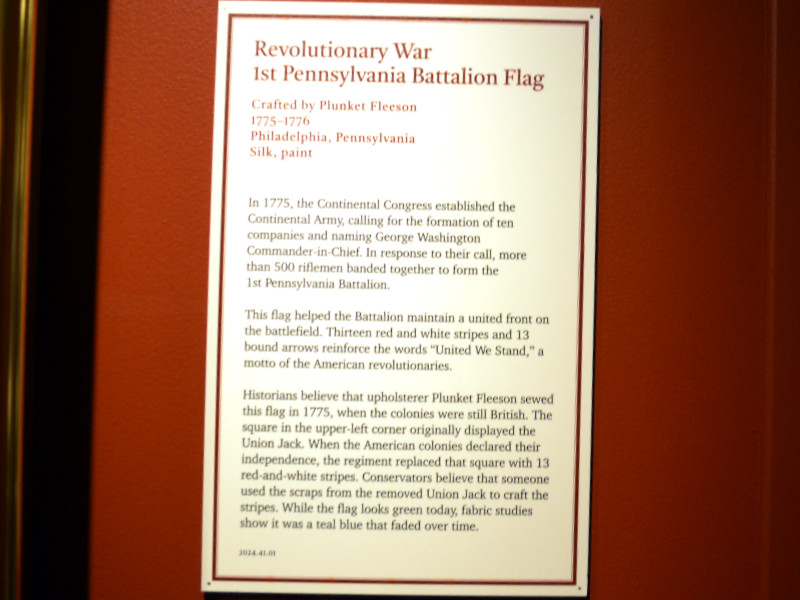
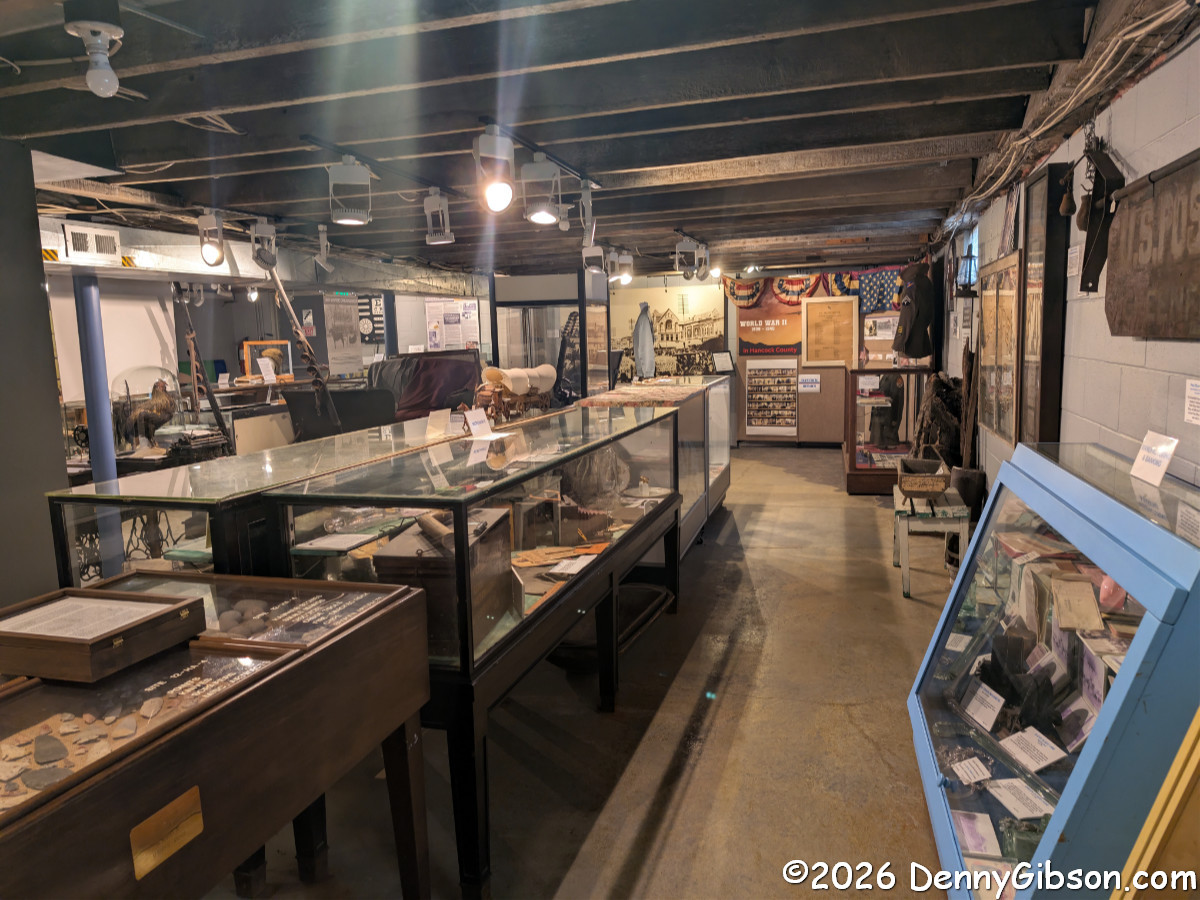 I had picked the Hancock County Historical Society museum from the announcement list as the place to fill part of the afternoon, but when I reached the published address, I missed the word “museum” on the message board and thought I was in the wrong place. Turns out it was just the wrong time. When I parked and did the research I should have already done, I learned that the museum was indeed housed in the church but was only open on weekends. As I started to ponder what I might replace the museum with, a car pulled over in front of me and its driver entered the church. Perhaps, I thought, the museum was being opened. Maybe for no other reason than it had been identified as a place to visit by the National Road group. I walked to the door, entered, and learned that the museum was not being opened and that the door would have automatically locked itself if I’d been a little slower. I also learned that the fellow whom I’d seen enter was society president Michael Kester. He was there specifically to meet someone else a bit later, but when he discovered I was from some distance away, he graciously offered to show me around the museum. There are a few items displayed on the main floor and a lot more downstairs.
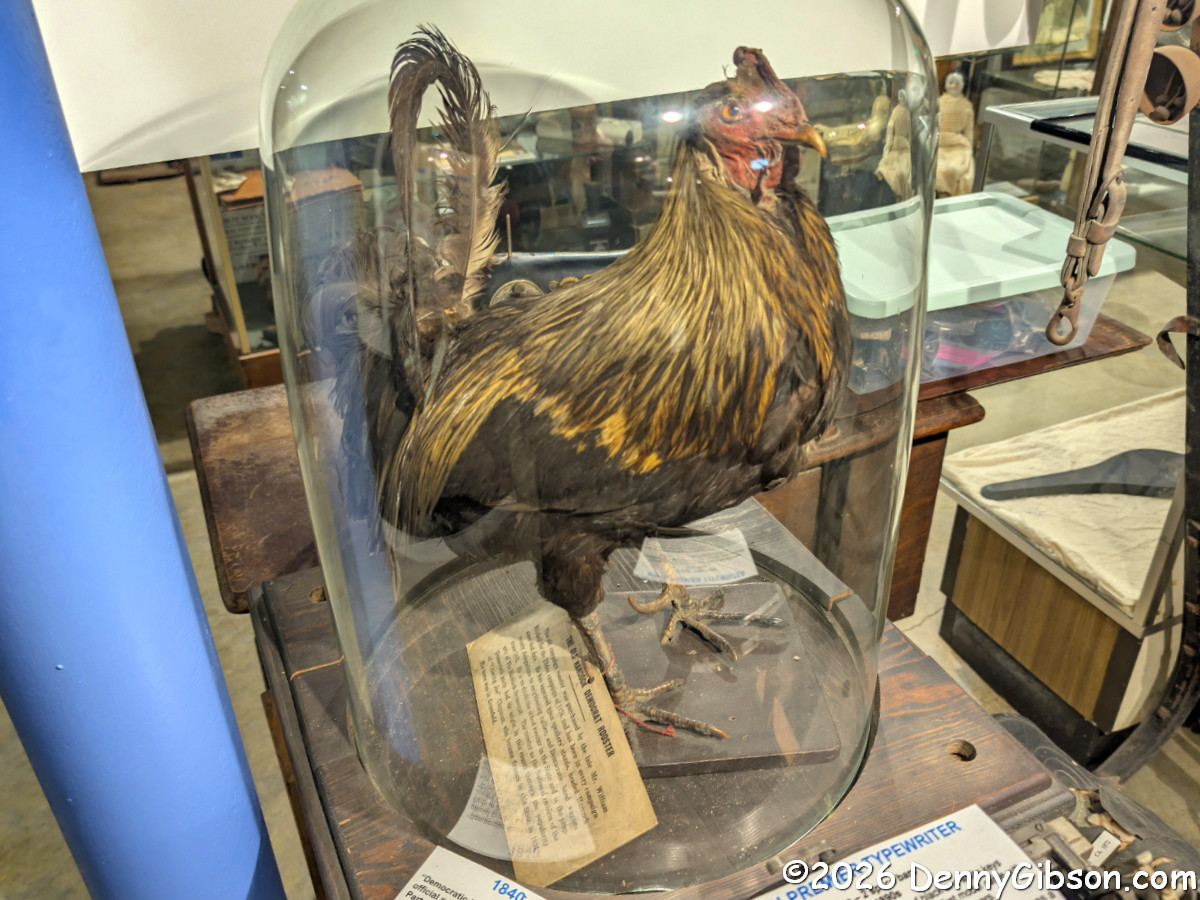
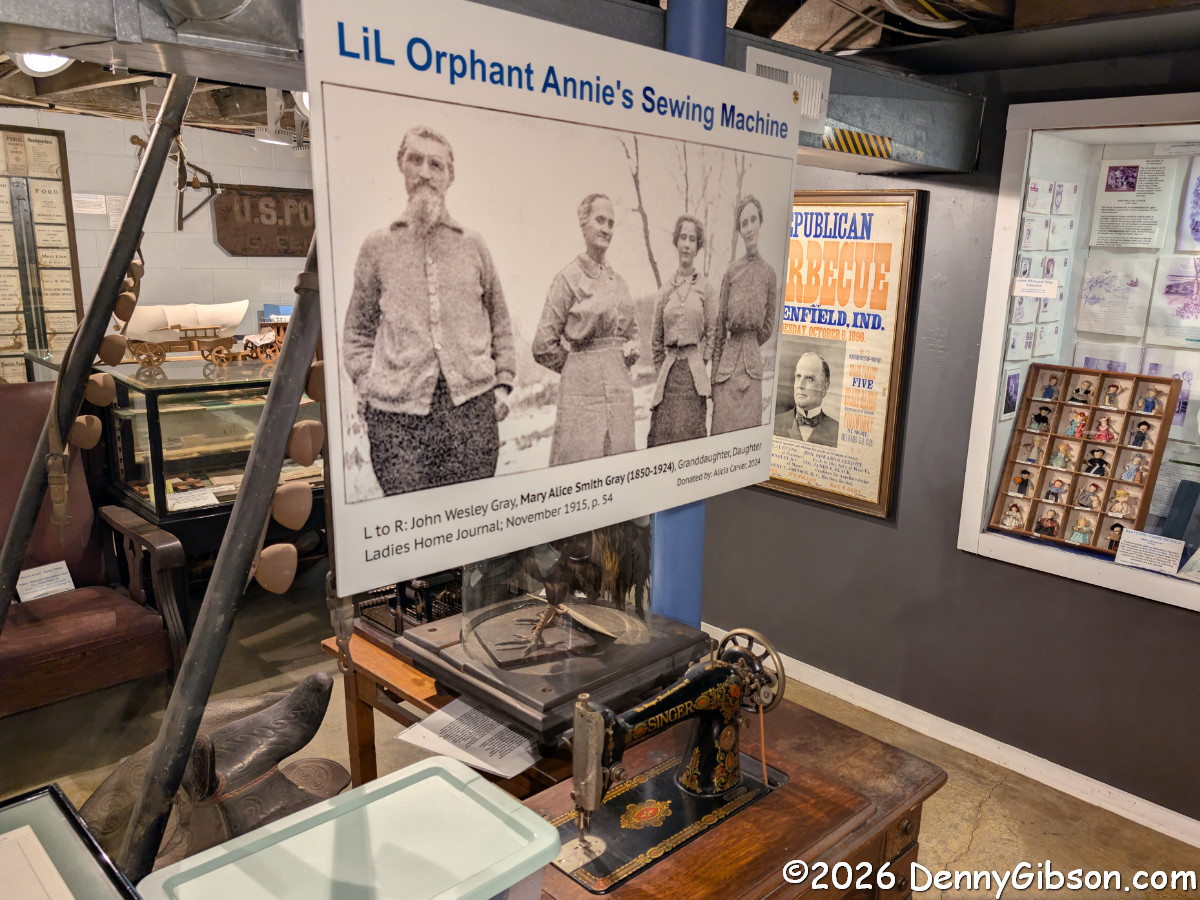
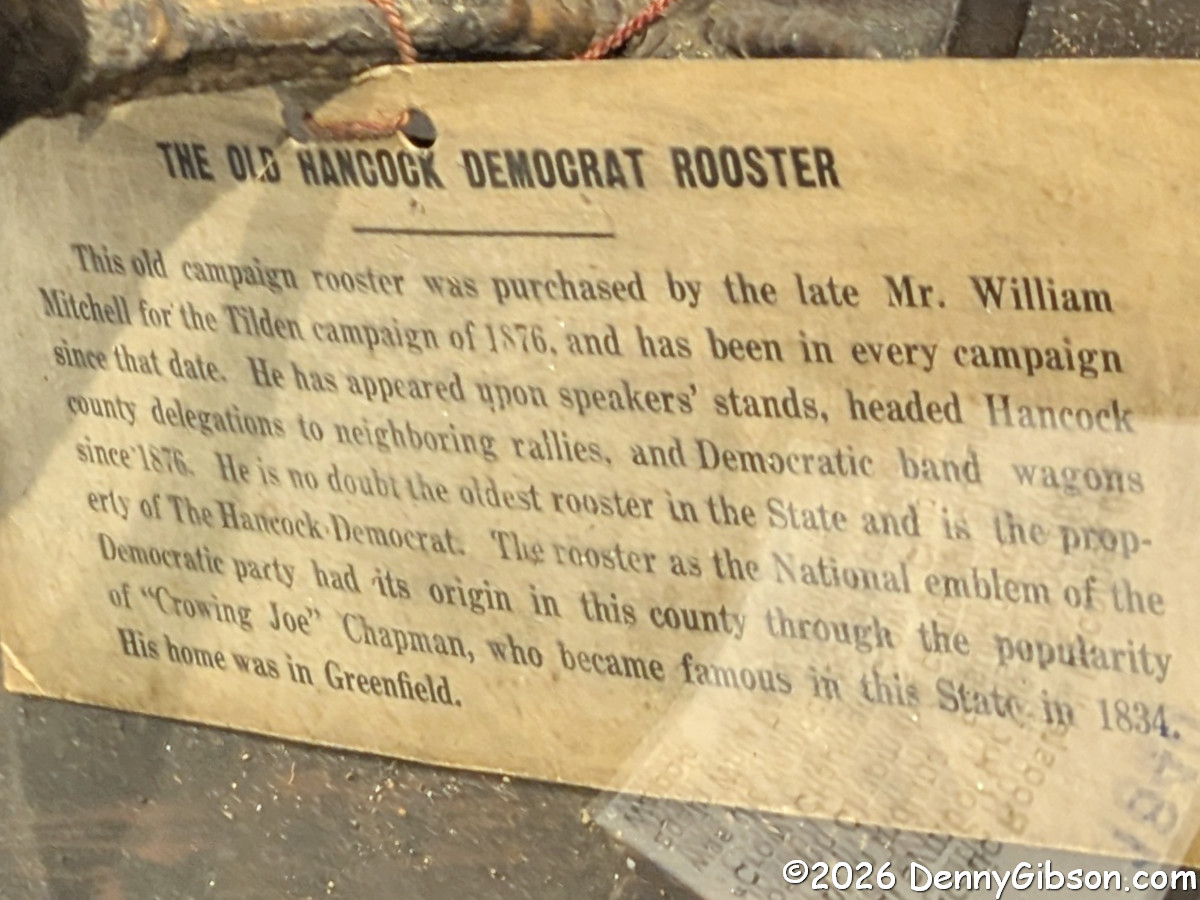
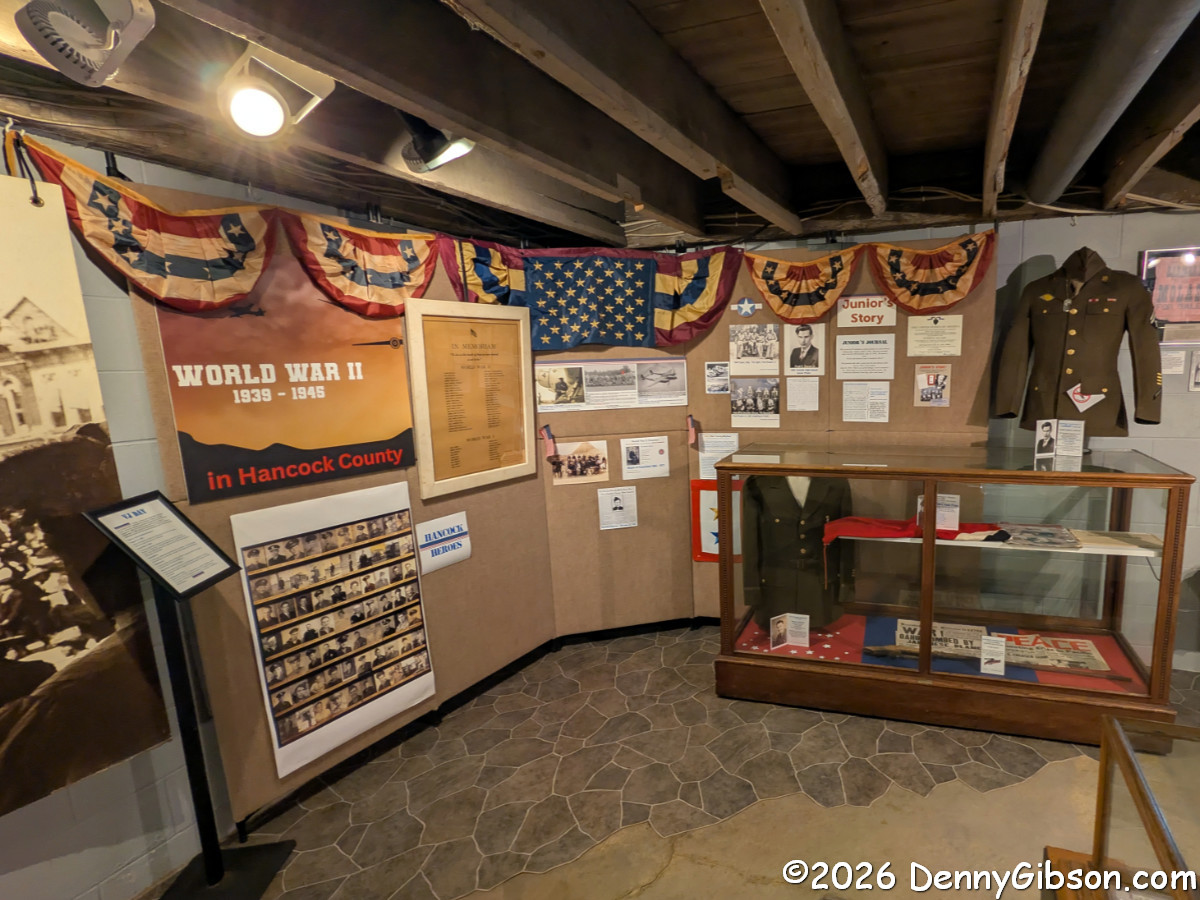 One corner of the main museum area is given to temporary displays and is currently devoted to World War II. An exhibit on a local circus family will replace it sometime this fall. There is a real Riley connection with Little Orphant Annie’s sewing machine. For a time, roosters and donkeys coexisted as Democratic Party symbols, with the use of the rooster originating in Greenfield. Although, as explained here, this particular specimen is from 1876, the rooster-and-Democrat partnership began around 1840. Once Thomas Nast got behind the donkey, the rooster faded and was essentially gone by 1932.
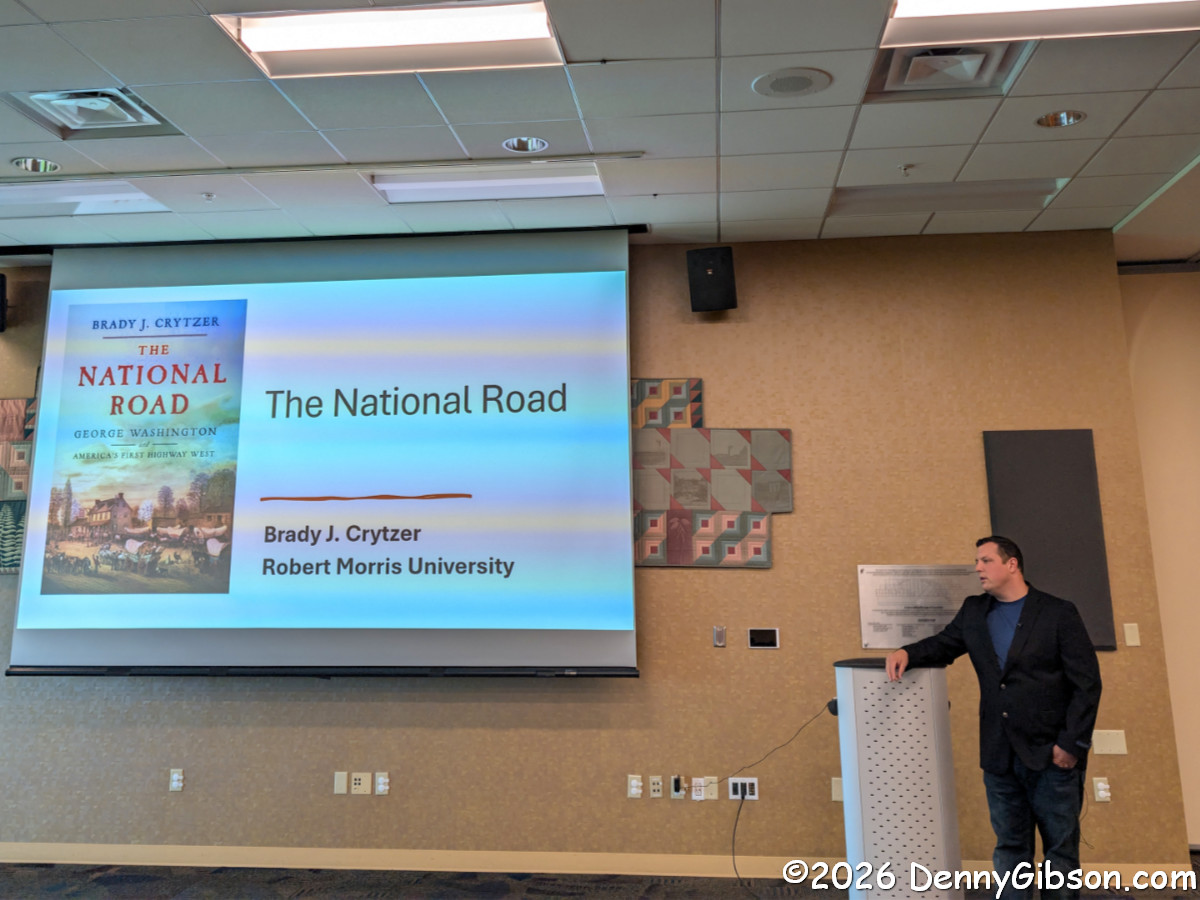 I made it to the Brady J. Crytzer presentation that had been the seed for this trip in plenty of time but was disappointed to learn the author had no copies of the new book with him. The first hardback printing had sold out, and while copies were available from bookstores and other sources that stocked them, the publisher could provide none to the author. That may have been aggravated by the fact that a paperback rollout is approaching. I can’t say for certain that I would have bought a copy, but that was a big part of my reason for attending. The lecture was certainly entertaining, and even though I did not learn anything new of any significance, there were a couple of comments that will influence where I next go digging in National Road information. It turns out that Crytzer made a couple of stops in Ohio recently. In early June, he was at an America 250 event at the Blaine Hill “S” Bridge on the National Road near St. Clairsville, and just a couple of weeks ago he was at the Book Festival in Columbus. St. Clairsville isn’t a whole lot farther away than Greenfield, and Columbus is quite a bit closer. It also seems likely that copies of the new book were available at both events. Of course, if I’d picked one of those over Greenfield, I’d have missed seeing the porch that Little Orphant Annie shooed the chickens off of and the politically inclined rooster that resisted getting shooed for the better part of a century.
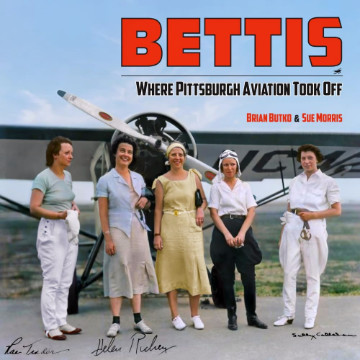 I was aware of this book when it was published, and I was interested in reading it. But not so interested, it seems, to actually order it. My interest in the book came from a general interest in early aviation history that anyone growing up in the land of Wilbur and Orville, as I did, should come by naturally. The lack of urgency came from the fact that its proclaimed subject was an airport in another state. It was a nearby state, but it wasn’t my state. It took a visit by the authors to a nearer and more familiar airport to finally put a copy in my hands.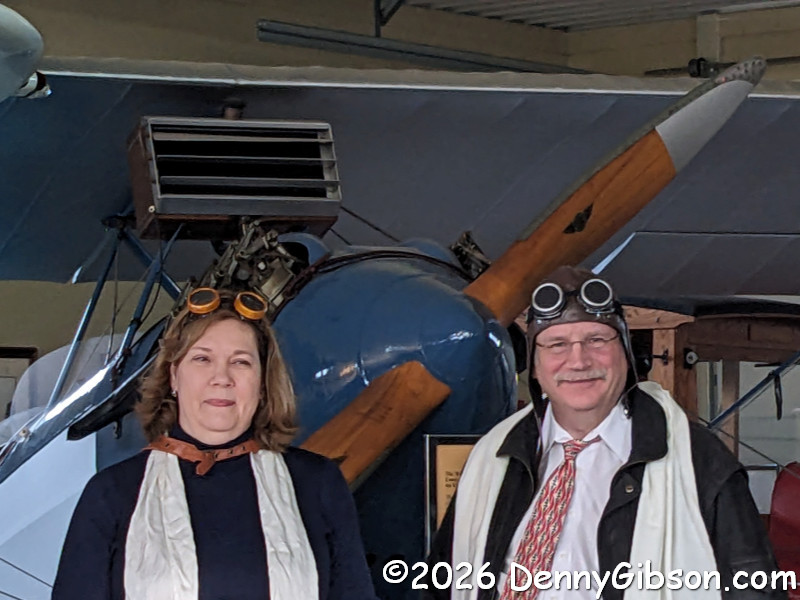
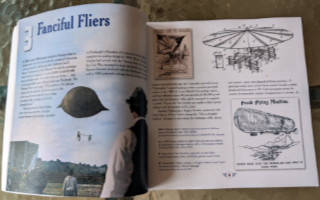 I really was not surprised that Morris and Butkos begin their story long before there were any such things as airports or even airplanes. They do it with a Pittsburgh twist, of course, and tell about early inventors and adventurers connected to the city. I got a chuckle from a quote they share about a 1897 flight by Professor Carl E. Myers and his skycycle. The skycycle appears to be a balloon with a seat and pedals suspended below it. As reported by The Pittsburgh Press, it did fly and eventually floated out of sight while “The professor, if he had any control over the skycycle, did not exercise it.”
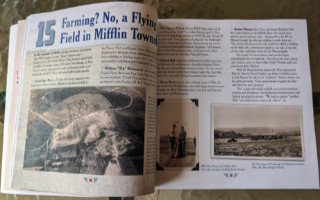 Of course, skycycles and other “Fanciful Fliers” fell out of favor once airplanes came along, and particularly after they were proven practical in World War I. Morris and Butko share the stories of several Pittsburghers involved in wartime aviation and the barnstorming that war-surplus aircraft gave rise to after the hostilities ended. It was a group of Pittsburgh barnstormers that gave birth to the airport that would be named Bettis Field in 1926. One of them, Clifford Ball, provided a slogan that would eventually be modified for a different field and some different dreams: “Build the nests and the birds will come.”
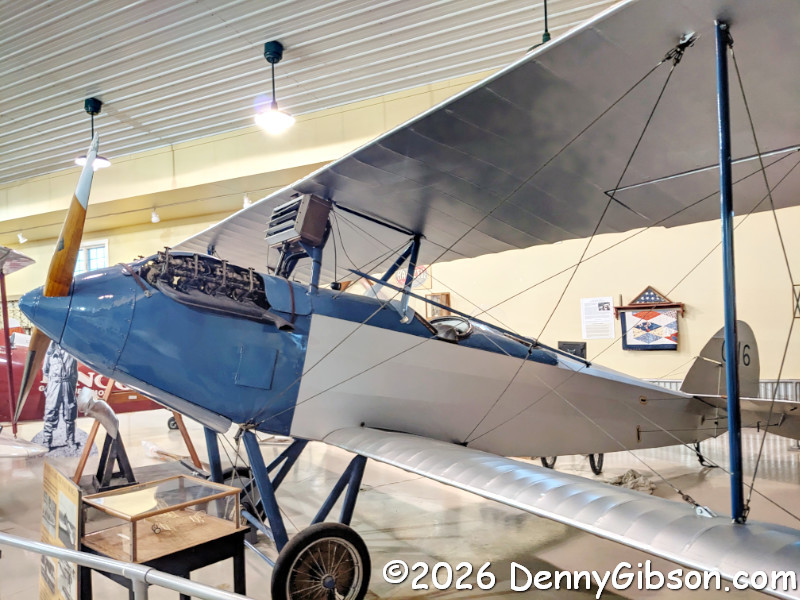
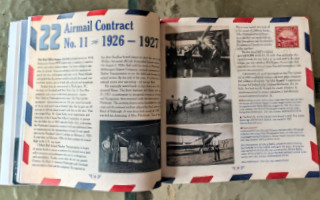 Also in 1926, Ball sold his interest in the airport to form Skyline Transportation to pursue a government airmail contract. He did get the contract and purchased three airplanes to service it. Here’s where that WACO connection mentioned earlier comes in. The three planes were WACOs named Miss Pittsburgh, Miss McKeesport, and Miss Youngstown. Miss Youngstown was destroyed in a wreck; Miss Pittsburgh hangs at the Pittsburgh Airport; and Miss McKeesport is in the WACO Museum, parked behind Sue and Brian in the photograph above. There is another view, sans authors,
 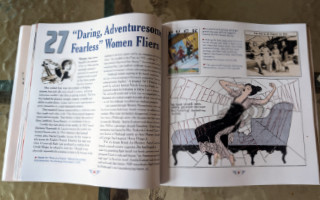 Morris and Butko have uncovered and included an impressive number of stories about people and events connected with Bettis Airfield. It was one of the stops on Charles Lindbergh’s tour following his cross-Atlantic flight, but the Spirit of Saint Louis had to be slid sideways into a hangar because its wings were wider than the door. Quite a few black pilots trained at Bettis, but for a period, had to go to another state to be licensed because the designated federal inspector simply refused to pass them. A fairly large number of female pilots, some of whom were rather famous, were associated with Bettis. Passengers were sometimes flown on airmail flights, sitting on bags of mail; then, in 1929, real passenger service — with seats — was added.