 I can’t really explain how the word Qin got turned into China, but it did. Some oriental linguistic transformations, such as Peking to Beijiing, are fairly recent but Qin has been China for a very long time. During a period actually called the Warring States Period, Qin was merely one of the states that warred. But it was better at it than most. In 221 BCE, under the leadership of Ying Zheng, Qin conquered the last of those other states to unify Qin/China. Although the Qin Dynasty was short lived (221-206 BCE) it gave the world its most populous country, biggest wall, and most mind boggling tomb.
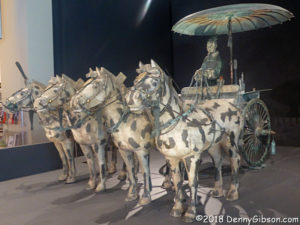
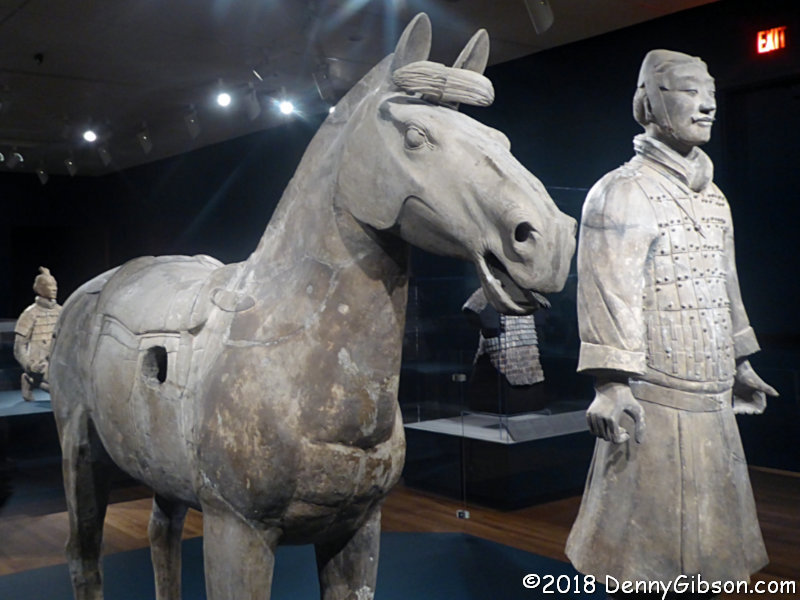
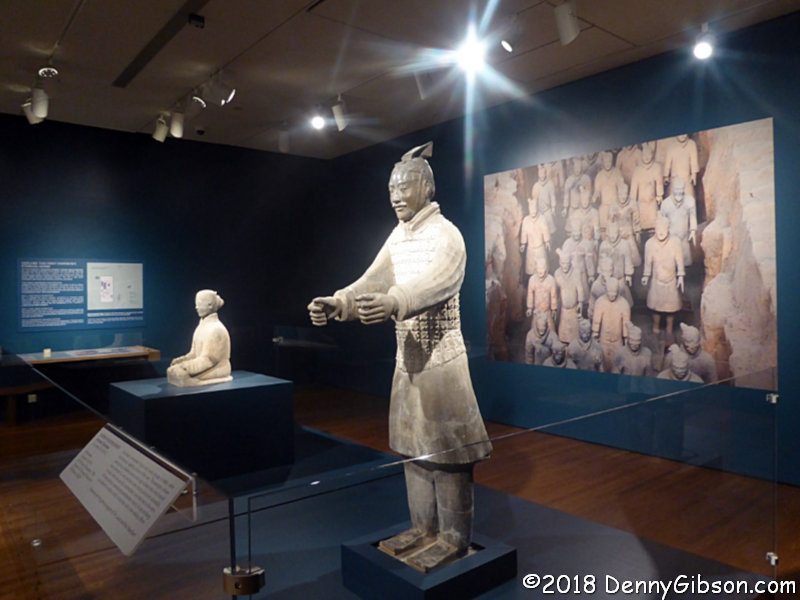
Construction of that tomb, a 38 square mile complex clearly deserving of the name necropolis, began before China’s unification. Ying Zheng launched the project in 246 BCE after becoming ruler of Qin following his father’s death. He was thirteen. One of the best known of the many astounding aspects of the site is the army of nearly 8,000 life sized terracotta figures populating it. Ten of those figures are among the 120 items currently on display at the Cincinnati Art Museum. The chariot in the opening photograph is a replica of one found at the burial site. It is on display near the museum entrance separate from the actual exhibit.
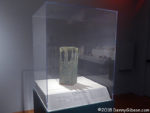
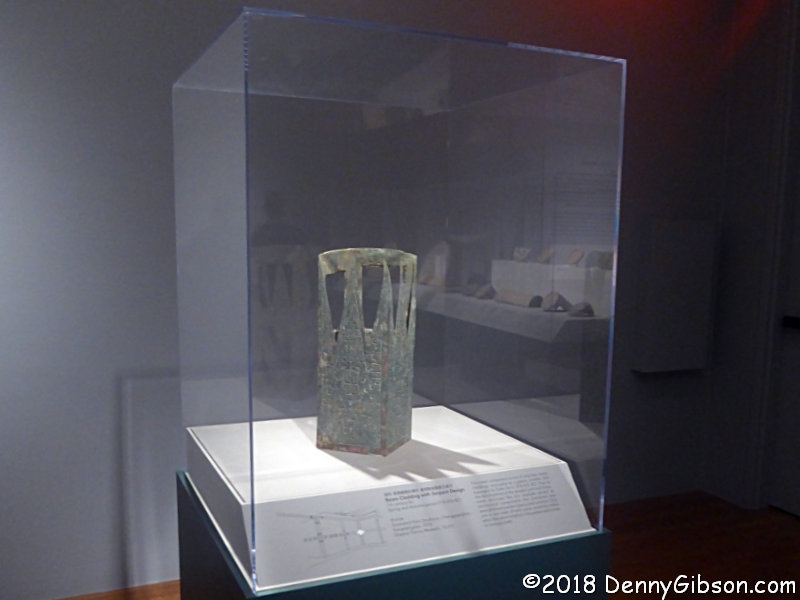
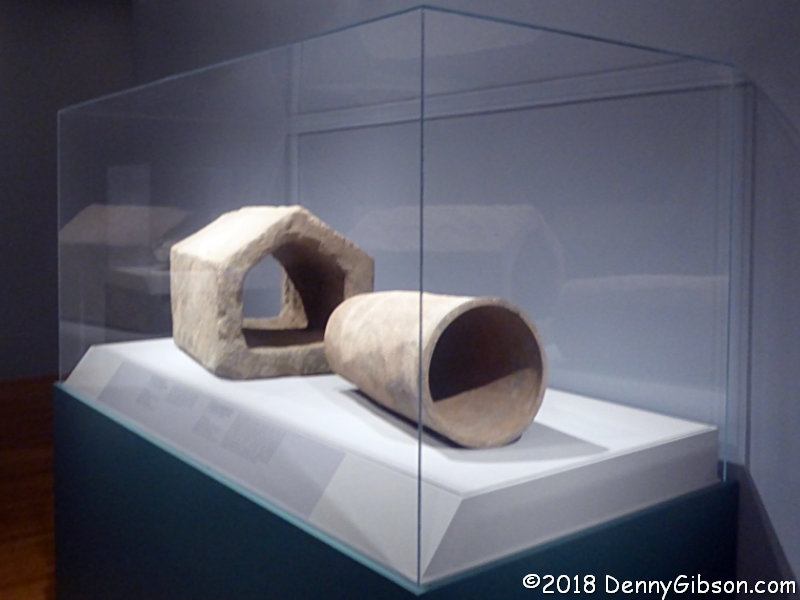
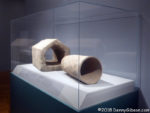 The majority of items in the exhibit are much smaller than those soldiers and some predate the Qin dynasty Many of the smallest are jewelry or other decorative items. A lot of the mid-sized items are more practical. The earthenware mask, believed to have been used by an exorcist, dates from 4000-3000 BCE. The metal cladding in the second picture was used to join construction timbers. The Chinese have long used ceramic tile for roofs and other construction needs. Both items in the third picture are tiles used in water supply systems.
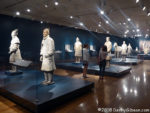 This was the third time I’ve been able to gaze upon some of the twenty-two century old figures. The first was in 1980 at the Field Museum in Chicago; The second just two years later at the 1982 Knoxville World’s Fair. In Chicago, six soldiers and two horses were part of a large “Great Bronze Age of China” exhibit. In Knoxville, two soldiers and a horse accompanied a tiny piece of the Great Wall in China’s first World’s Fair exhibit since 1904. Both were remarkable in that the figures had been discovered just a few years prior in 1976. I find the fact that they were forgotten for more than two millennia as extraordinary as the fact that they existed at all.
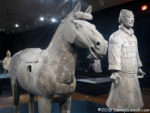
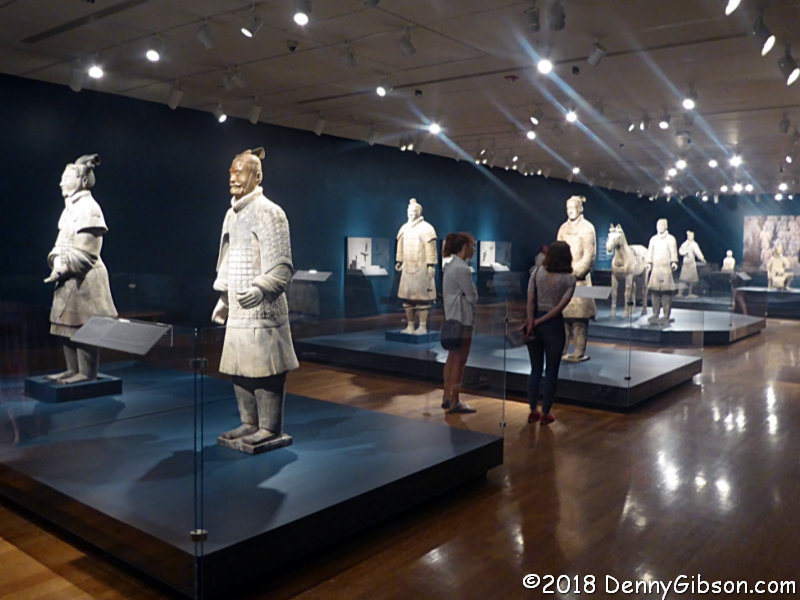
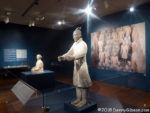 The terracotta army contains a broad range of ranks and duties and every member is unique in some way. This exhibit includes a representative sample ranging from general to stable hand with foot soldiers, a couple of archers, and a charioteer. The cavalryman in the first photo does look like the one whose thumb was broken off in Philadelphia last December by some jerk from Delaware, but it’s not. That set of figures has returned to China. The Cincinnati exhibit was organized by the Cincinnati Art Museum and the Virginia Museum of Fine Arts where it had been displayed until mid-March. Those and other details are found in a press release here.
Terracotta Army: Legacy of the First Emperor of China runs through August 12.
There is another traveling exhibit at the Cincinnati Art Museum currently. It’s one I failed to do any homework on at all and I regret that — maybe. The main part of the exhibit is called The Visitors which is described as a “multi-channel video installation”. It’s the work of Ragnar Kjartansson. His Scenes from Western Culture is also on display. It’s possible to find descriptions of both of these works elsewhere but this is the only place to get a description of how I experienced them. Lucky you.
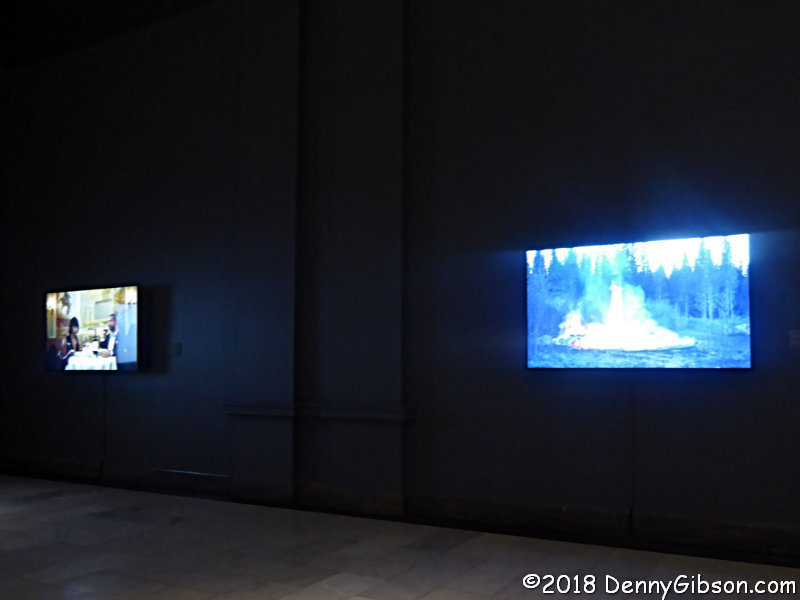
 Ragnar Kjartansson’s name was on the entrance to a fairly large room that often holds traveling exhibits with several large video screens on the walls of the approaching hallway. I’d seen the name when visiting the museum website but I hadn’t been interested enough to do any reading and I really had no idea what to expect. I scanned a blurb on the wall about short movies that set a mood rather than telling a story before watching a couple kissing on a dock by a boat and a group of kids playing almost sedately in a park. A screen with a fire burning in what looked like the foundation of a house triggered a memory. I’d recently seen a similarly framed image of a cabin ablaze and realized it must have been on the museum’s website. The blurb next to the screen mentioned a 32 minute running time. I needed to kill some time and the cabin, if that’s what it was, had completely collapsed so maybe it was near the end. I sat down across from the screen to see if it would cycle to the remembered image of a cabin.
I checked email and Facebook and verified that City View Tavern, where I planned to eat, was open. The fire was still going pretty good within the outline of the building, so I decided to go on into the main room. Even bigger screens lined those walls with little activity on any of them. I studied each of them briefly then went back to the hallway to check on the “fire”. The flames didn’t hold my attention very long this time and I soon decided to walk on through the main room and exit. A couple of the screens were now dark but the others showed the same motionless scenes as before. As I paused near one of the screens, a man appeared and walked toward the camera. The screen went black when he presumably switched it off. I waited long enough for the same thing to happen to another screen. The pause gave me time to rethink things and realize that I still had time to kill and doing it here was probably my best option. I returned to my seat near the fire video.
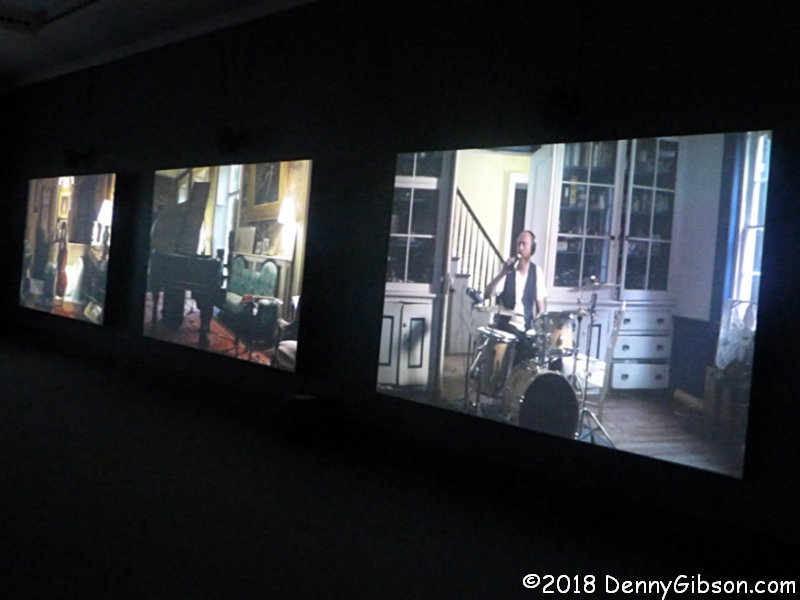
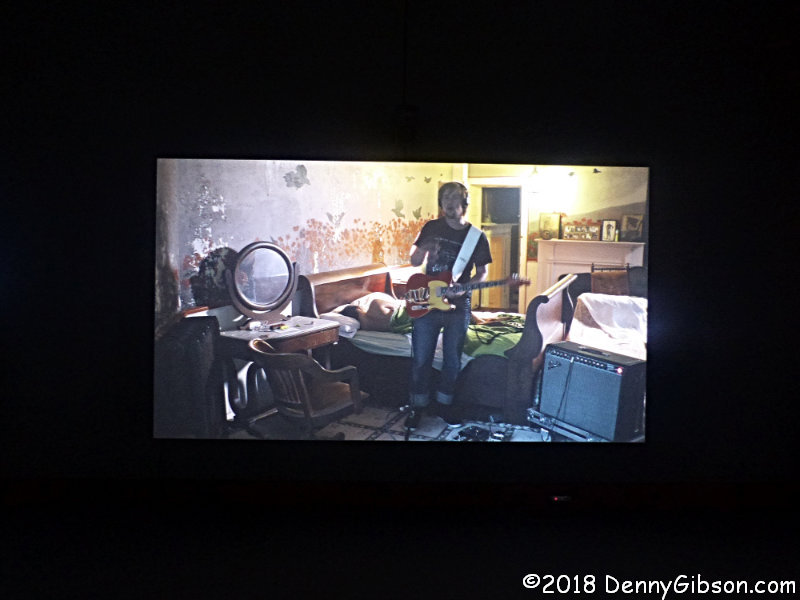
I now noticed a blurb on the side if the door away from the “fire”. I learned that the installation inside, The Visitors, involved musicians, in different rooms of a mansion, playing and singing a song. The fire in the video didn’t seem to be progressing much, so, when I heard voices singing on the other side of the doorway, I went in and, for the first time, considered that Ragnar Kjartansson might not be a full on con-artist.

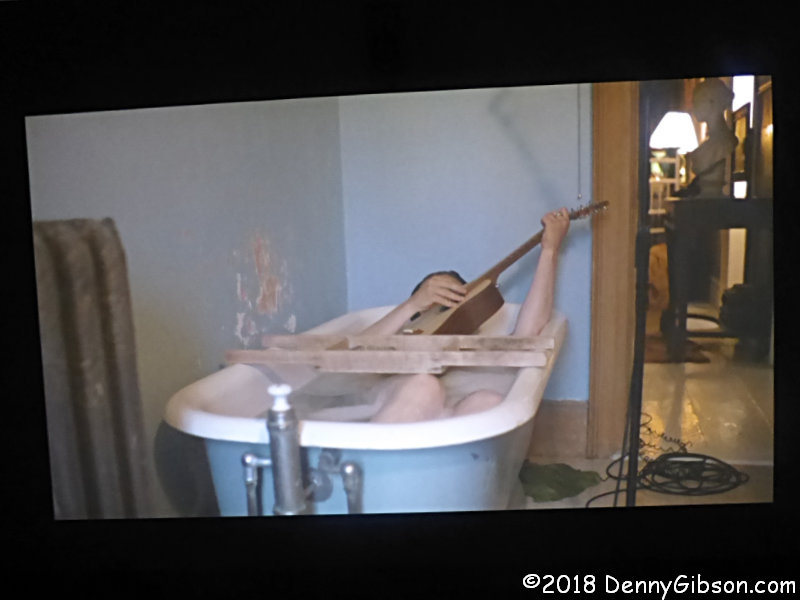
 All the screens were lit and all the rooms occupied: a cello, a couple of grand pianos, an accordion, a banjo, several guitars. The show — I mean installation — had become interesting. Though the music wasn’t gripping, it was quite pleasant. It swelled and softened. In some of the mellowest spots, the drummer sipped a beer. After a while I noticed the bare shoulders of a young woman lying in the bed one of the guitarist sat on. The run time was given as 64 minutes, and, as far as I know, she didn’t move for the entire shoot. If so, that’s almost as impressive as her roommate contributing to the performance guided only by earphones.
 The museum is free and so is this. I’m really thinking of returning to watch the whole thing in the proper sequence now that I know what’s going on. Through some belated homework, I learned that Ragnar’s the guy in the bathtub. A quite remarkable selfie.
The Visitors and Scenes from Western Culture run through June 17.

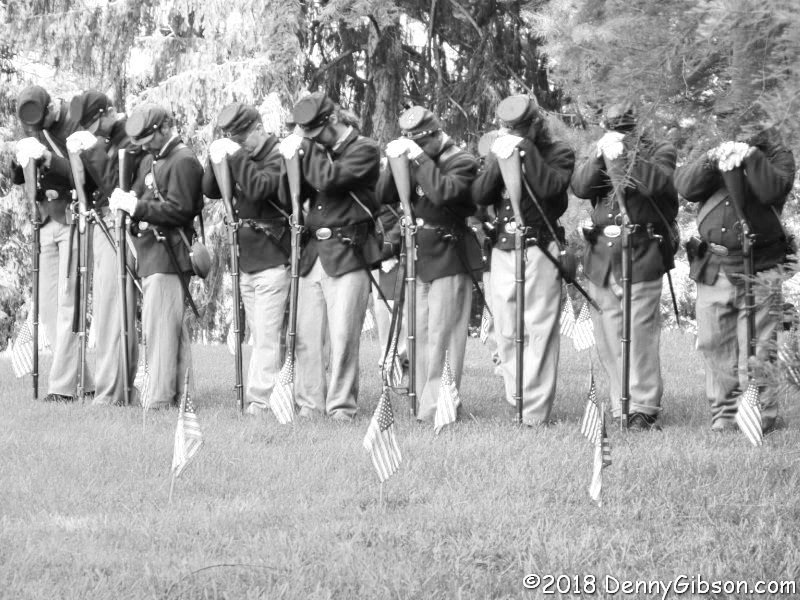 The American Civil War began with the shelling of Fort Sumter on April 12, 1861, and for the last several years we have been commemorating the 150th anniversary of events that led up to it, were part of it, and were precipitated by it. There are many theories about the origin of what we now call Memorial Day, and, while specifics vary, almost all place the roots in that devastating conflict. The most recognized story of a formal beginning places that beginning a hundred and fifty years ago on May 30, 1868.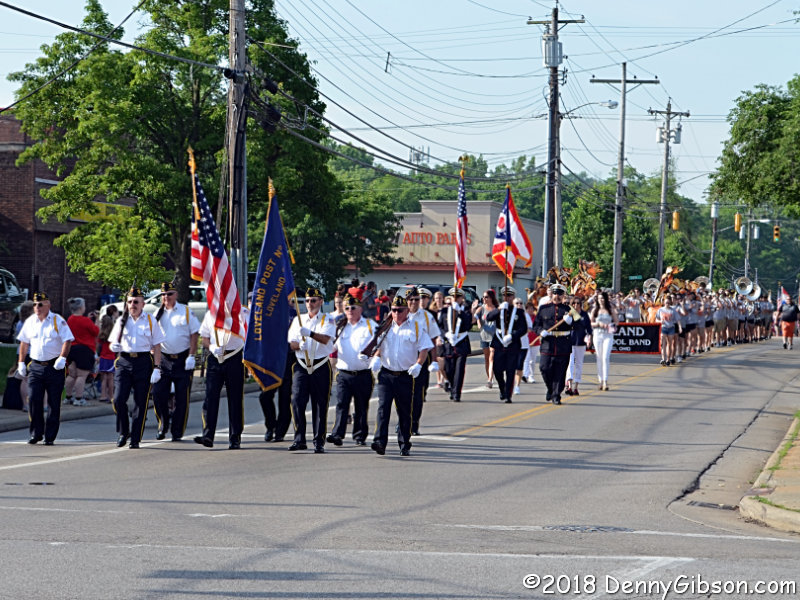
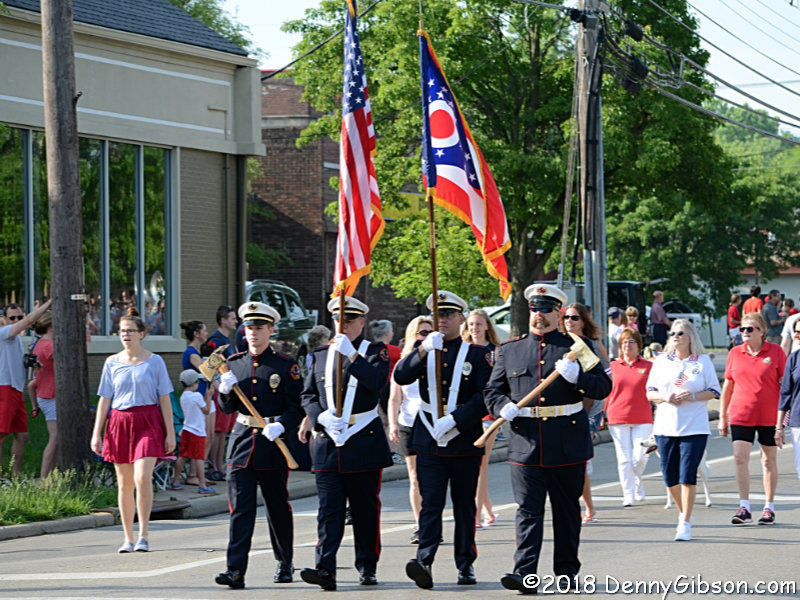 In Loveland, a police cruiser with flashing lights cleared the way with members of the local American Legion Post leading the actual parade. A group of firefighters, looking exactly like I’d want my fire department to look, was close behind. Love the mustache.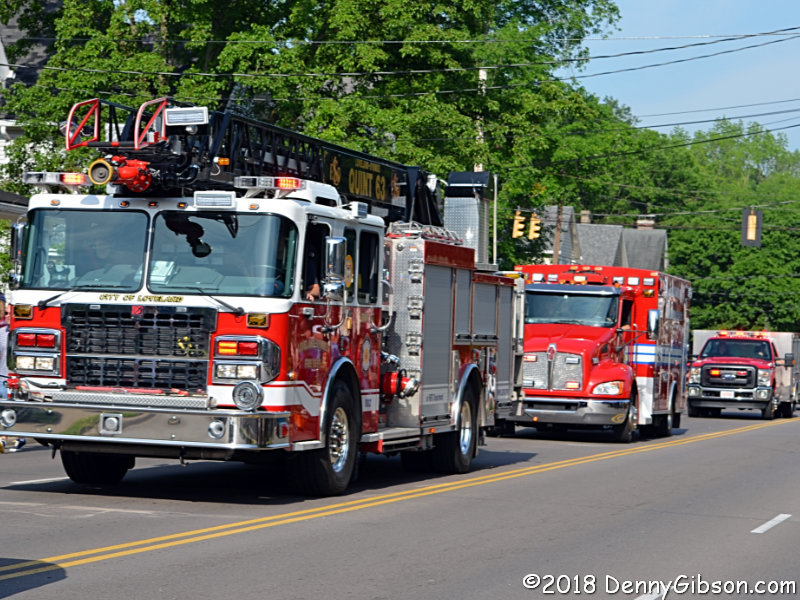
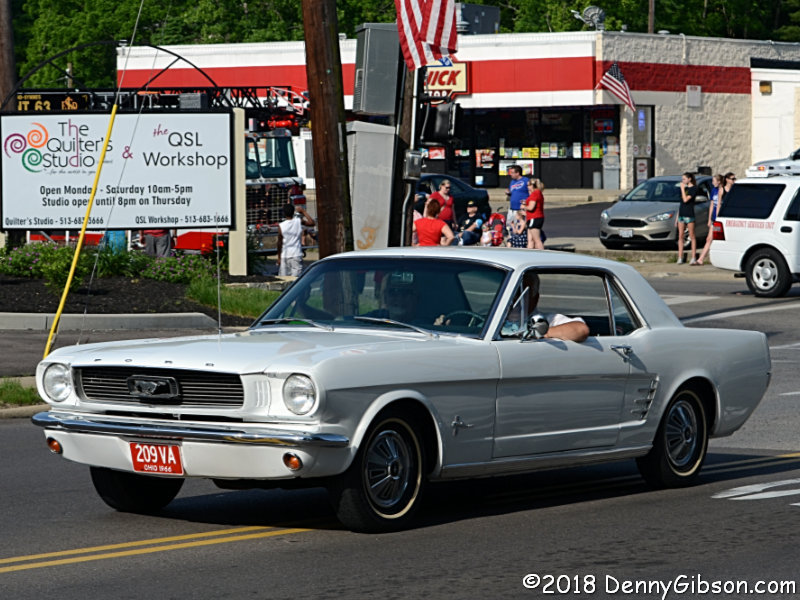
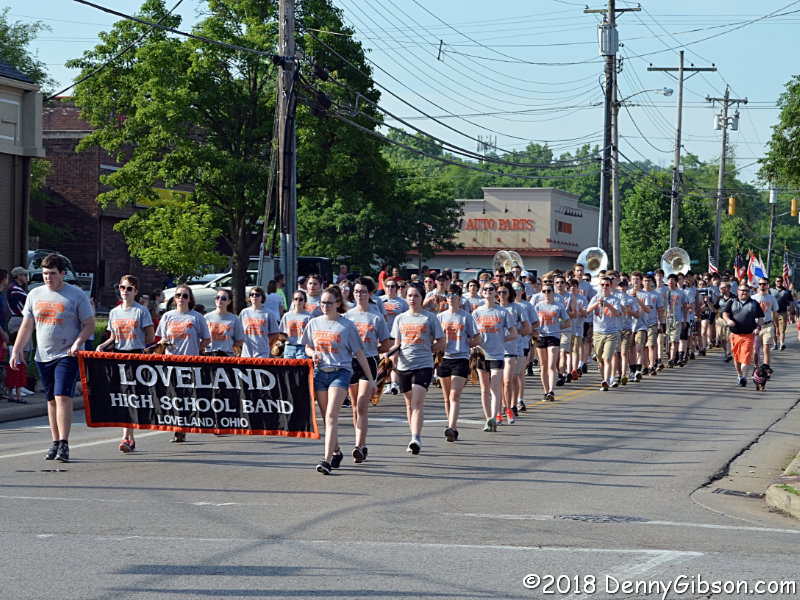 What followed was everything a parade should have: high school marching band, classic cars, and freshly polished fire trucks. The parade ended near Veterans’ Memorial Park where ceremonies were to take place. I was watching the time, however, and left just as they were getting started.
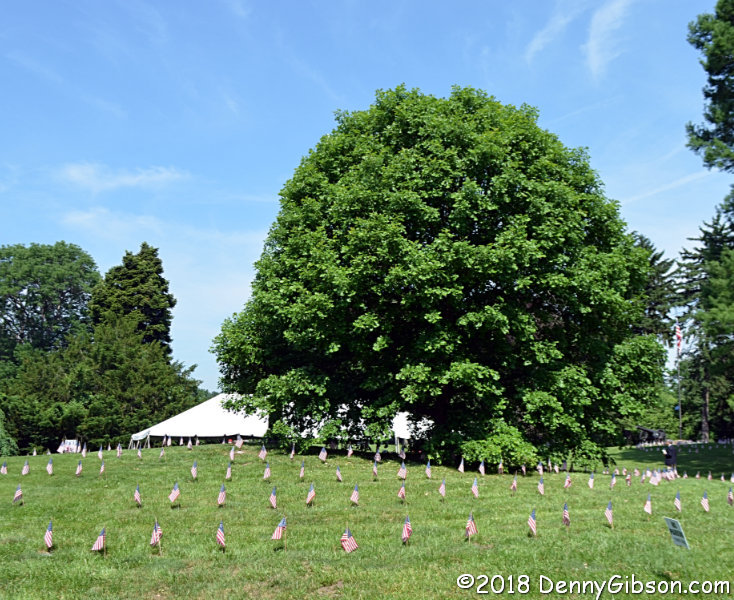 The setting for the Spring Grove ceremonies was the Civil War section where 999 Civil War dead are buried in three circular plots containing 333 graves each. These are not, of course, the only Civil War soldiers buried in the cemetery. There are 41 Civil War generals buried at Spring Grove. For the majority, however, it is an honorary (brevet) title. The cemetery’s website has some words about the war’s impact and a link to a list of those generals here.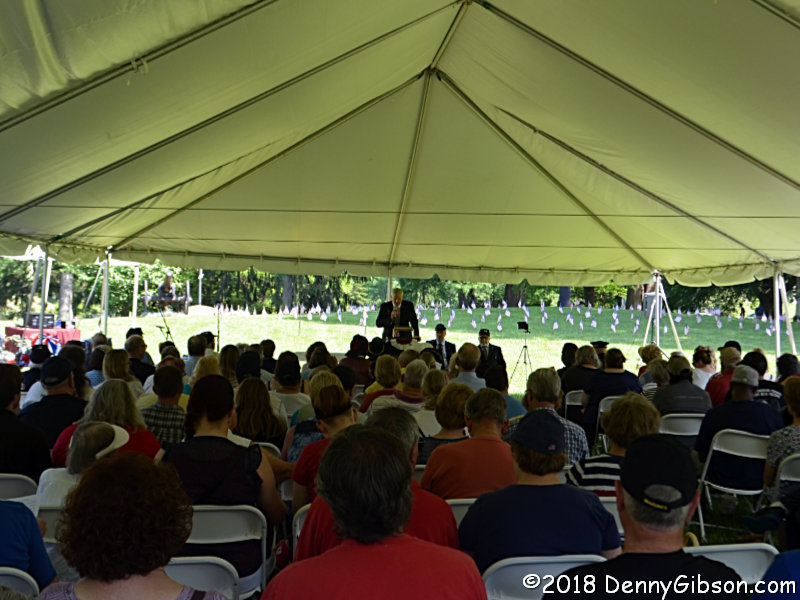
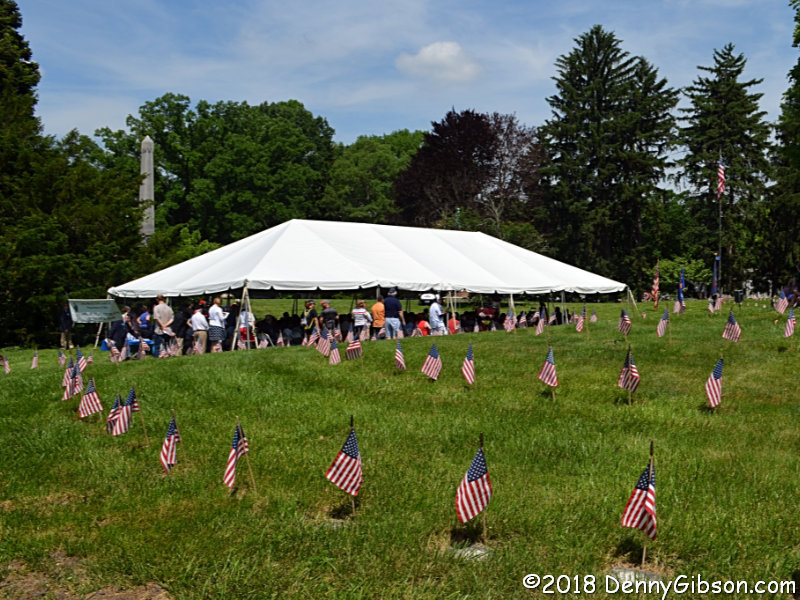 Although individual events were certainly held earlier, 1868 is the year that the observation of Decoration Day was wide spread and coordinated. That was when Grand Army of the Republic Commander, John A. Logan, issued an order calling for gatherings on May 30 “…for the purpose of strewing with flowers or otherwise decorating the graves of comrades…”. Spring Grove was one of 183 cemeteries participating that first year. There were 336 in 1869. Michigan made Decoration Day a state holiday in 1871 and other states were not far behind. It was made a federal holiday in 1888. I was unable to find a date for an official change from Decoration Day to Memorial Day. It seems to have happened somewhat naturally shortly after the first World War.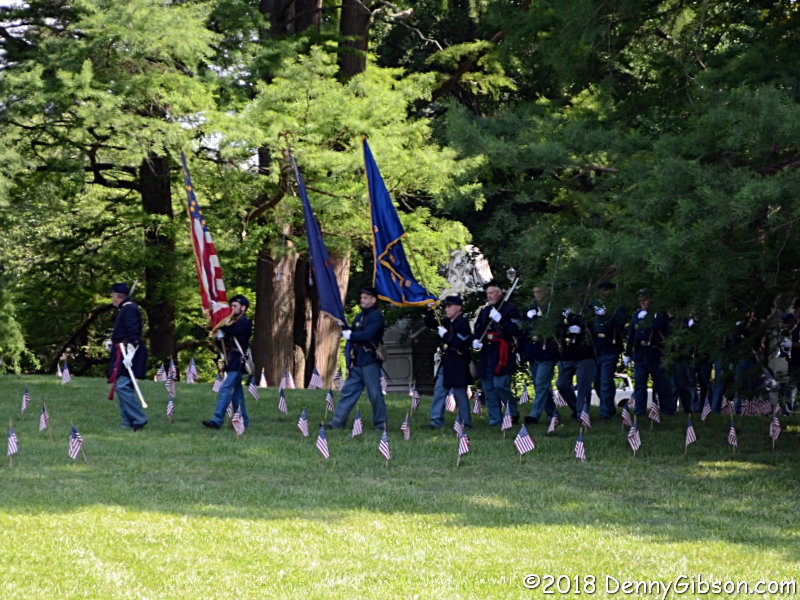
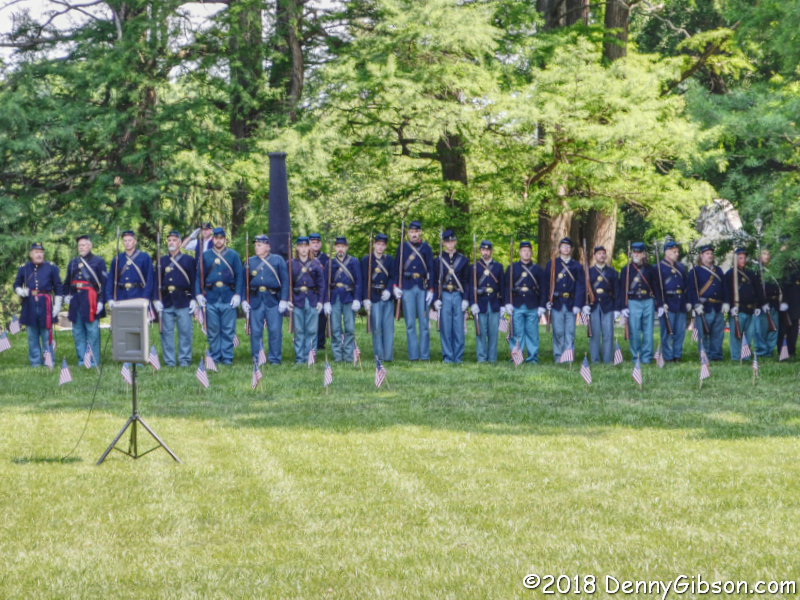
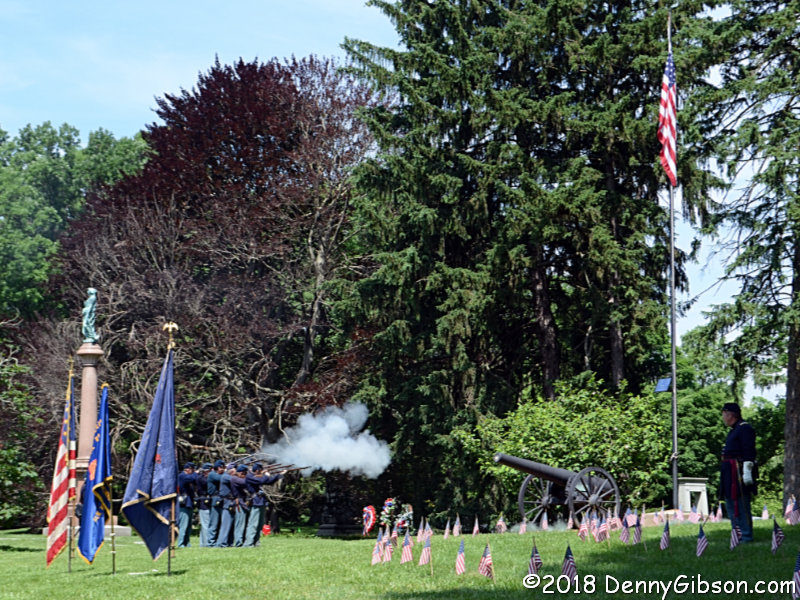 The G.A.R.’s successor, The Sons of Union Veterans of the Civil War, played a major role in the day’s activities and the 6th Ohio Volunteer Infantry helped maintain an awareness of the holiday’s Civil War era roots. They presented the colors at the beginning of the services and fired a twenty-one gun salute near their end.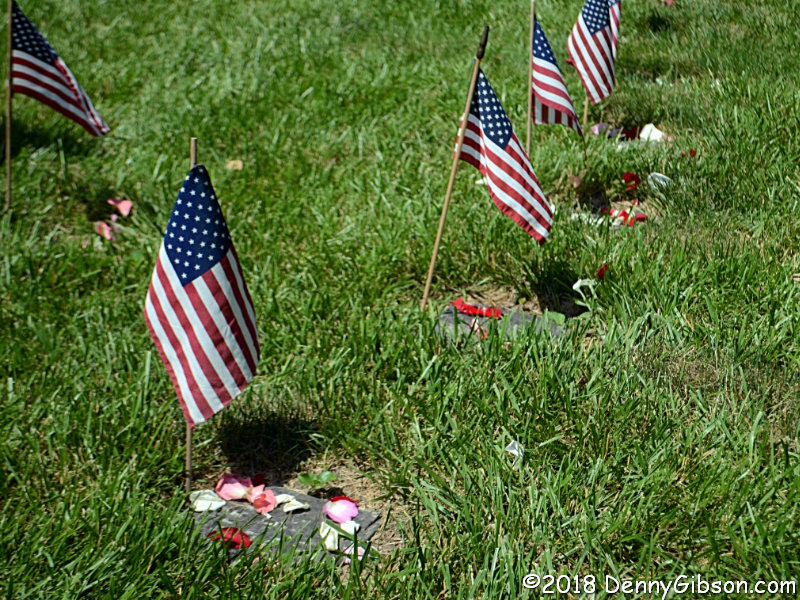
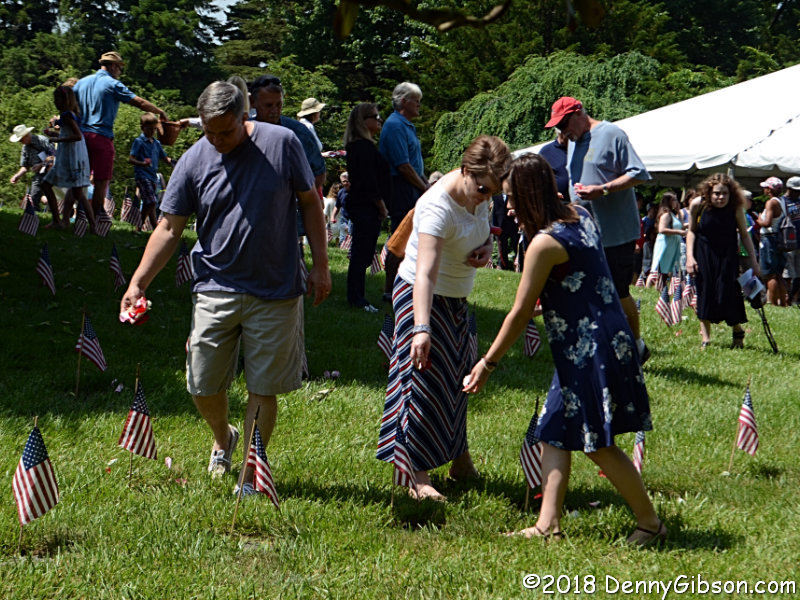
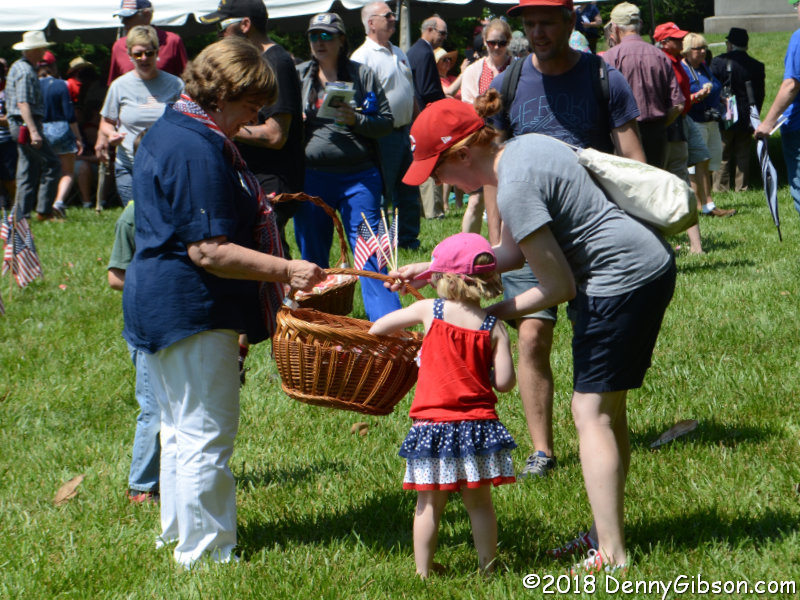 Spring Grove Cemetery was barely sixteen years old when the Civil War broke out. An excerpt from Spring Grove: Celebrating 150 Years talks about the war, the cemetery, and those early Decoration Days. In describing the very first, it states that “To end the program the Ladies of the Floral Committee led the crowds around the mounds of graves, strewing them with flowers.” Today, The Auxiliary to the Sons of Union Veterans of the Civil War filled the role of the Floral Committee in helping everyone present reenact that ritual from 150 years ago.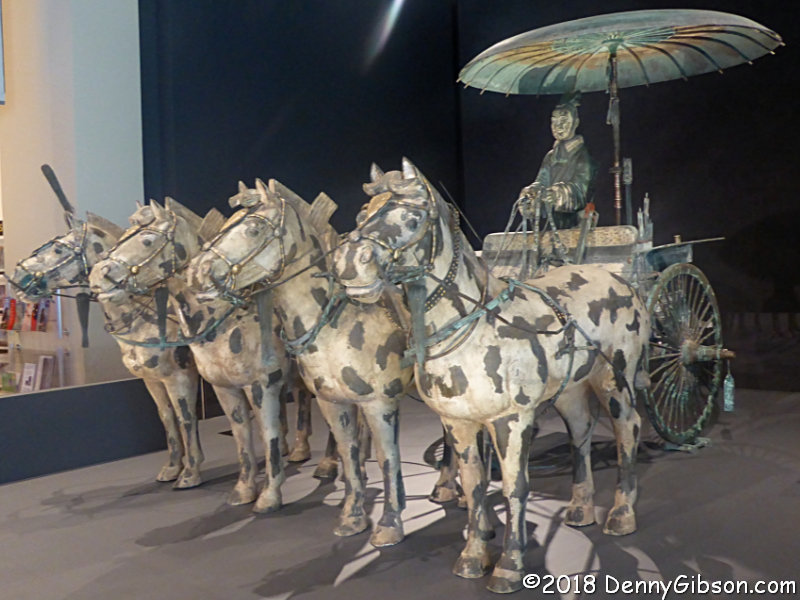












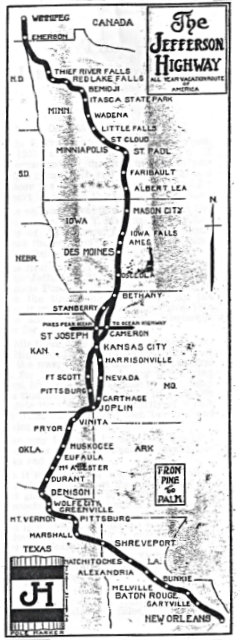 On Monday, the temperature in Cincinnati plummeted into the 30s and there were snowflakes in the air. I took that as a sign to leave town so I did. And headed north. I don’t mean just a few-miles-to-Dayton north but a few-miles-into-Canada north. On the surface, that must appear even more logic defying than my most recent trip to chilly Pittsburgh but it’s really not as dumb as it sounds. My target in Canada is Winnipeg, Manitoba. Almost as soon as I reach there, I’ll start south on my first full length drive of the Jefferson Highway and that will take me to New Orleans and the Gulf of Mexico. “Pine to Palm” as the highway’s nickname promises. Near the midpoint, I’ll pause for a few days to attend the
  Last Sunday’s post was this blog’s 500th. Some blogs I follow have thousands of posts. Some, with multiple contributors, publish more than 500 posts each and every year. Many celebrated their 500th post a long time ago if they bothered to note it at all. Of course there are others that caught my attention and subscription only to fade out after a few articles. They will never reach 500. Then there are the sporadic blogs that may or may not. They start a short series of posts with “Sorry it’s been so long” then, after a return to silence, do it all over again. And I know there are many more that never caught either my attention or subscription. So, even though 500 isn’t a major milestone for everyone, I’m pretty sure that a lot more blogs don’t reach it than do. Therefore, by golly, I’m going to celebrate. And, by celebrate, I mean brag.