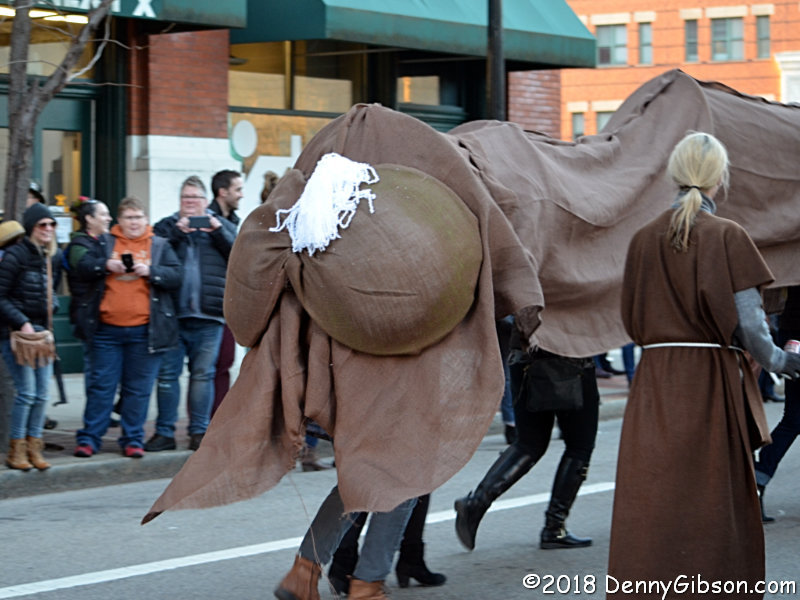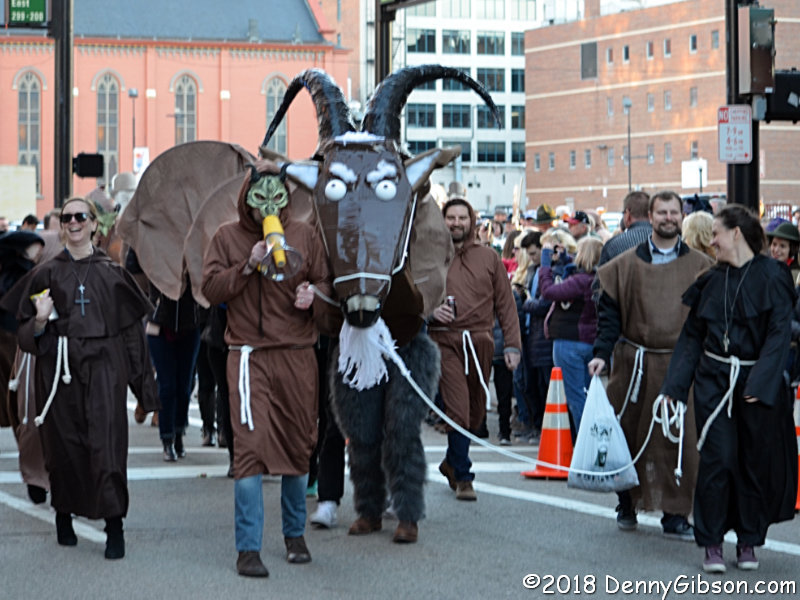
 Sometimes the Findlay Market Opening Day Parade marks an opportunity to forget a less than stellar previous season. People braving Monday’s cold temperatures were trying to not only forget last season’ 68-94 finish but this season’s 0-3 start. You see, to avoid interference with crucial pre-Easter sales at the Market, the parade happened, not on Friday before the Reds’ first game of the season, but on Monday before their fourth.
Actually, that first game wasn’t exactly when it was supposed to be, either. Scheduled for Thursday, it was moved to Friday to avoid predicted severe weather.
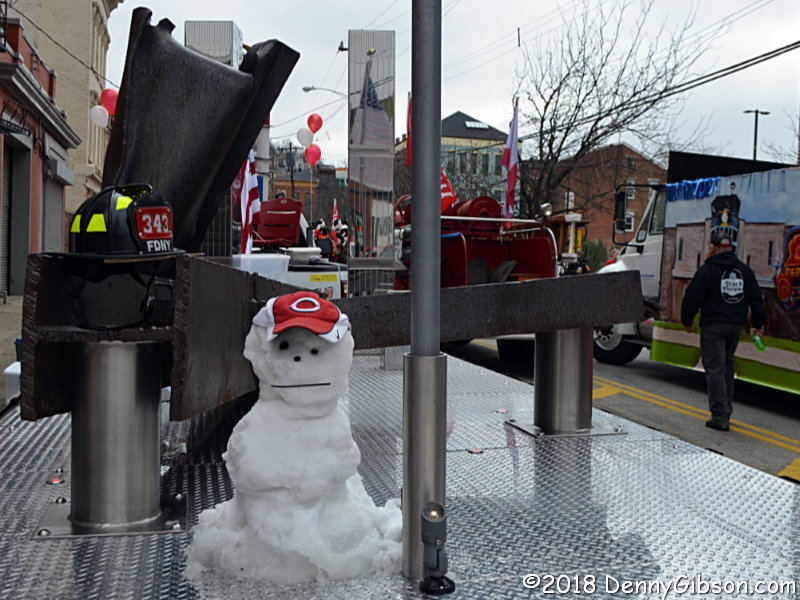
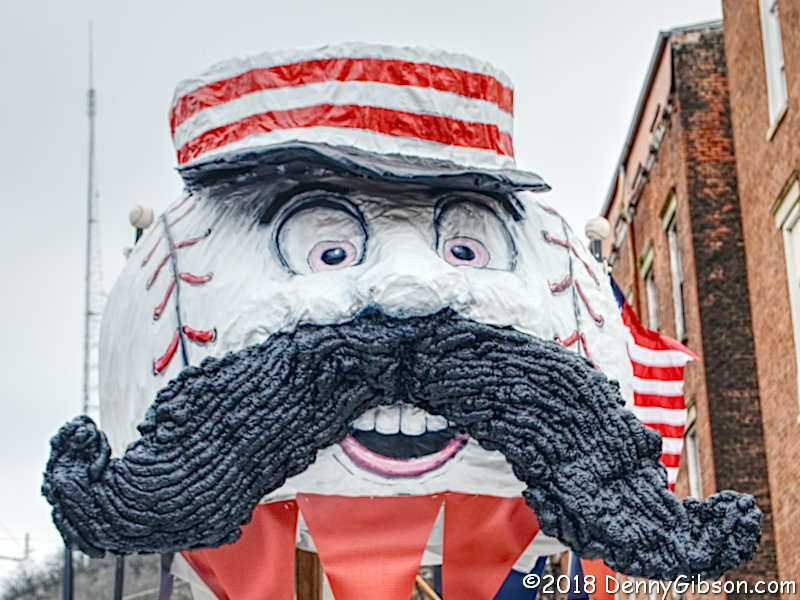
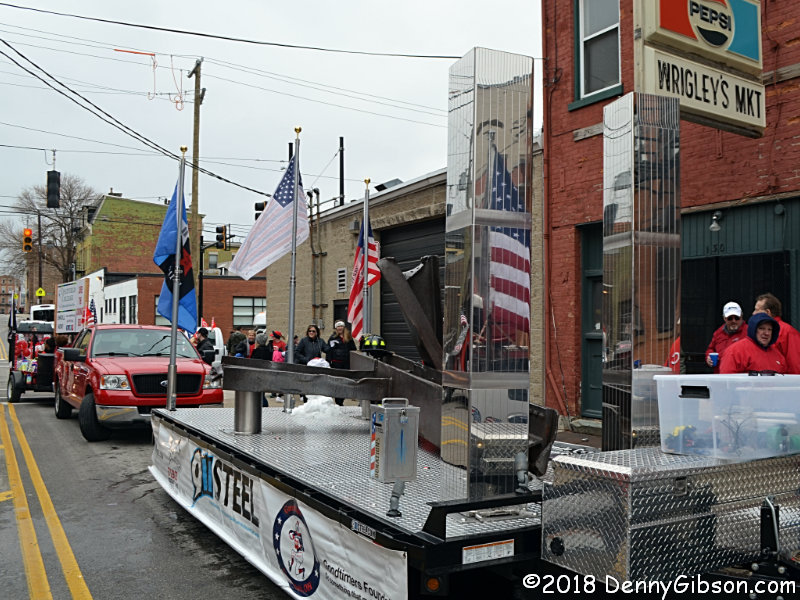 I reached downtown in time to poke around the staging area a little bit before the parade start. The giant Mr. Red at the top of this article belongs to the National Flag Company. The snowman at left, who I believe made it all the way through the parade, is made of real snow. He’s riding on the 911Steel float with a real piece of the World Trade Center and replicas of the twin towers.
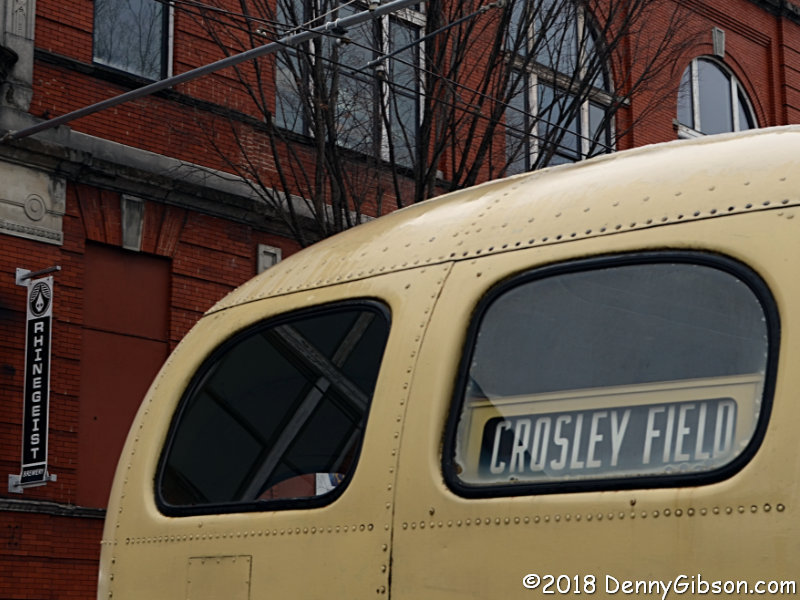
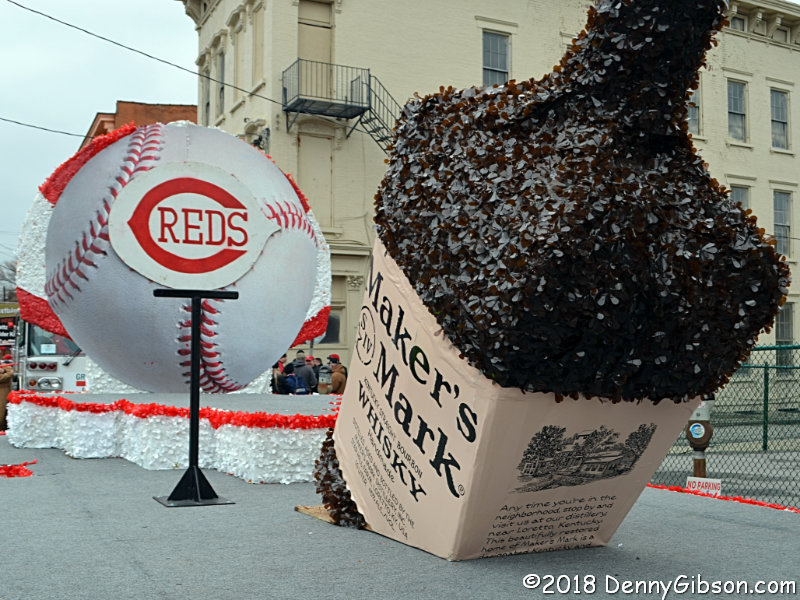
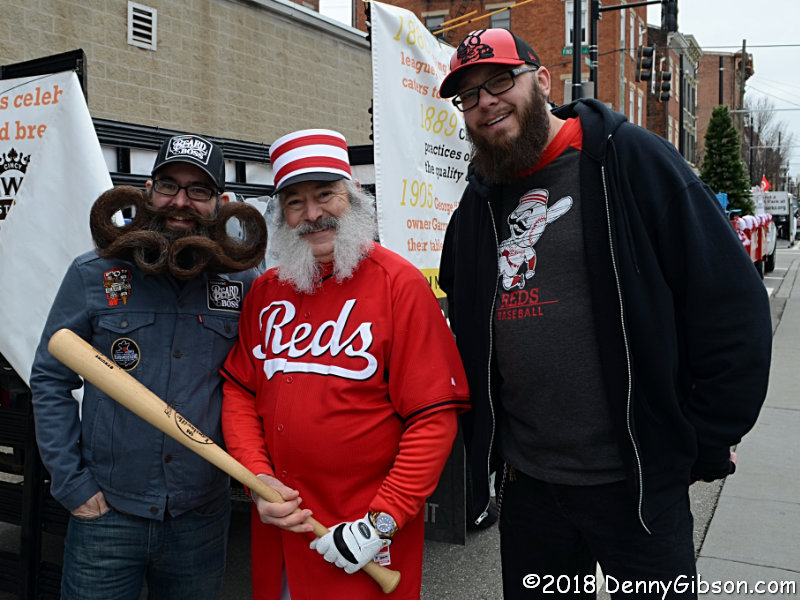 Cincinnati was, and is again becoming, a major brewing center. There are plenty of stories about the city’s pre-prohibition Beer Barons. Beard Barons are a more recent development. Distilling, rather than brewing, is involved in the product shown in the second picture and made a little more than a hundred miles to Cincinnati’s south. Cincinnati brewing does get some notice in the picture of a Crosley Field bound bus in front of Rhinegeist Brewing. Crosley Field was the Reds’ home until 1970.
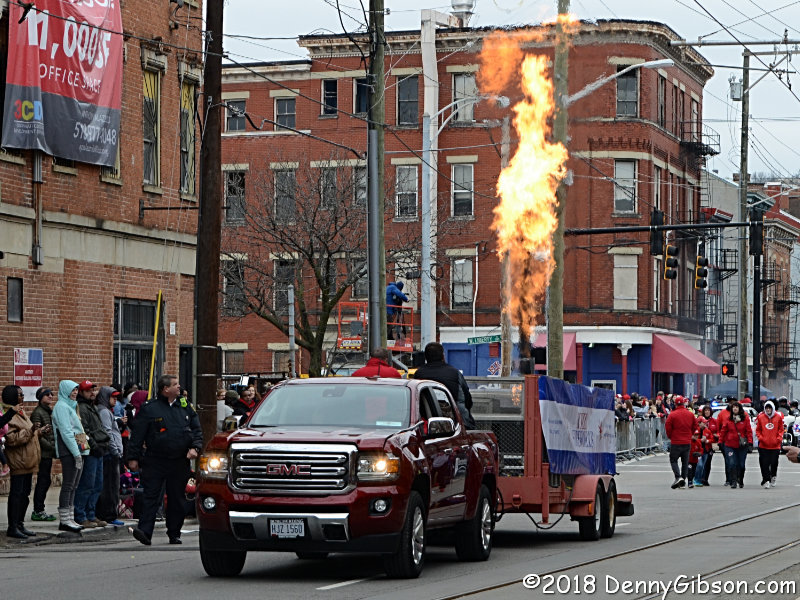
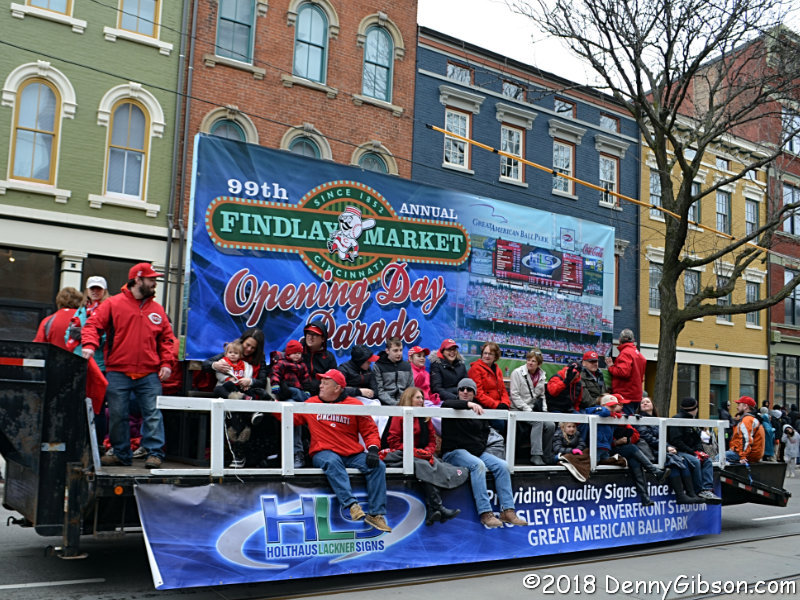
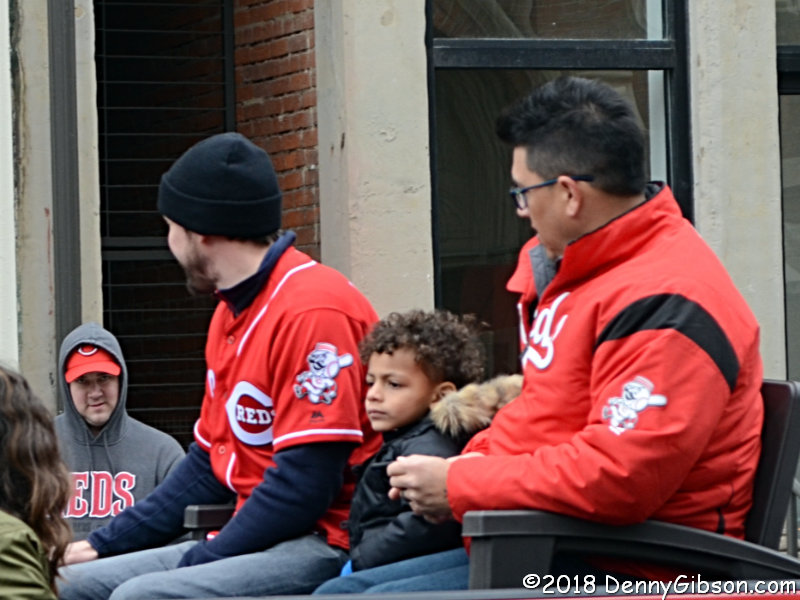 Rozzi Fireworks is certainly capable of starting things off with a bang but they decided on a pillar of fire instead. Maybe they’re saving a big boom for the centennial next year. I guess there’s something pretty cool on the other side of the street because Grand Marshalls Danny Graves and Sam LeCure didn’t look my way even once as they passed.
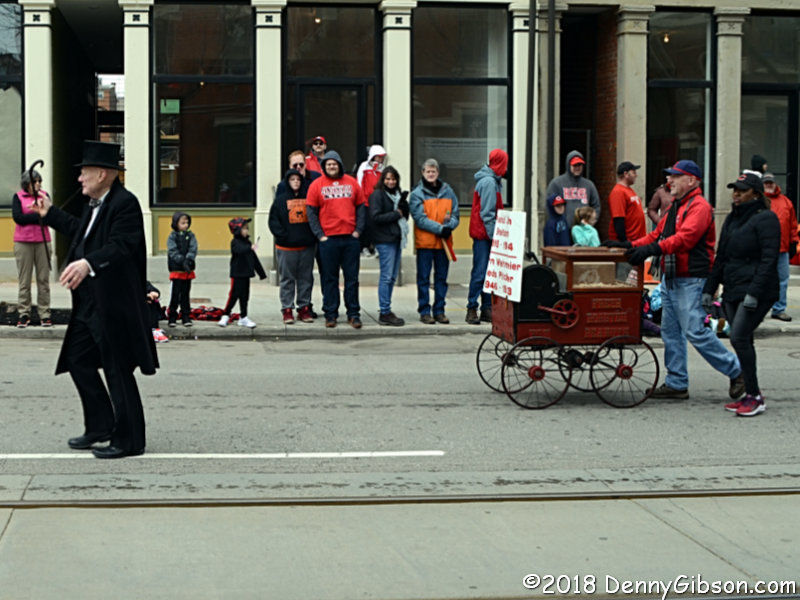
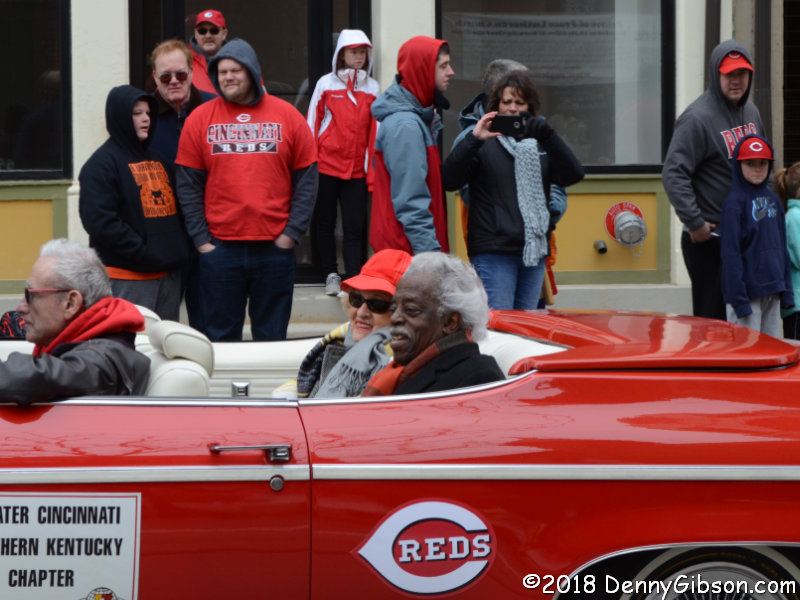 Here are some long time Cincinnati legends. That’s King Records drummer Philip Paul and wife Roberta in the red convertible. The fellow in the top hat is entrepreneur and politician Jim Tarbell dressed as departed legend Peanut Jim Shelton.
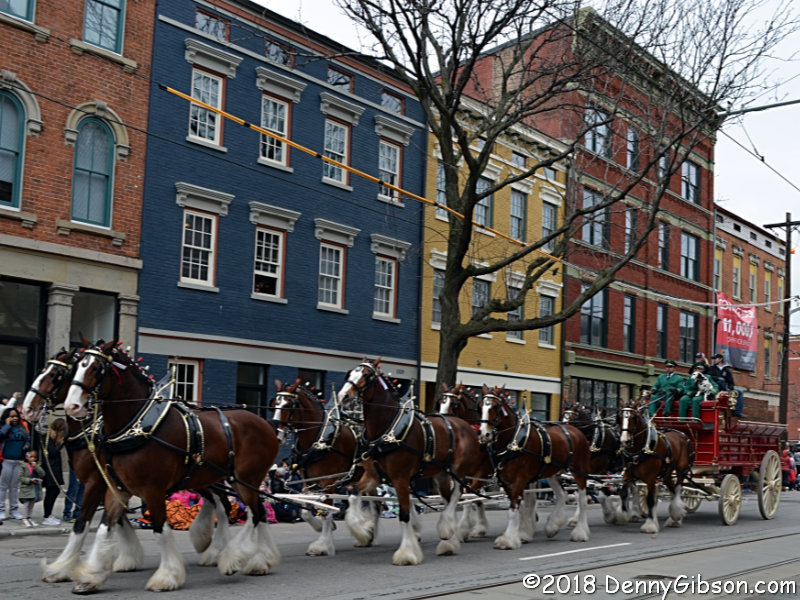
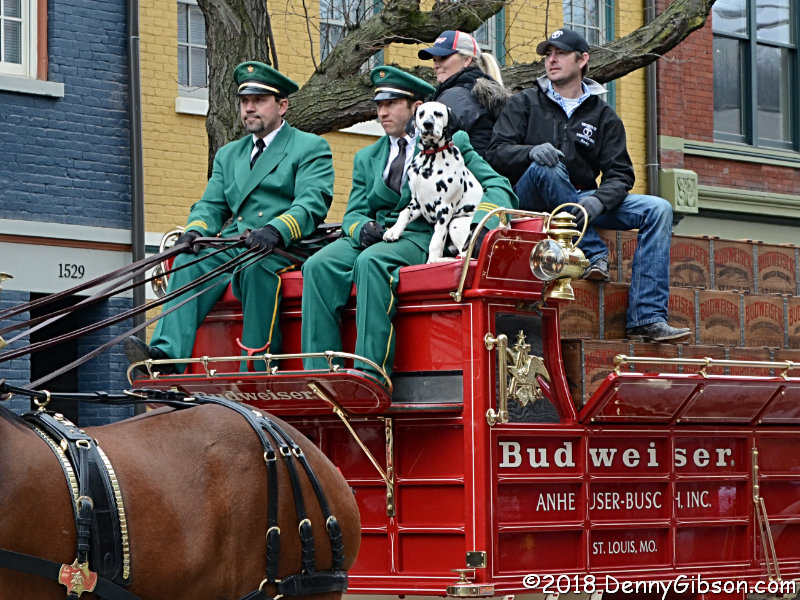 Breaking up all the locals in the parade were some easily recognized out of towners. Budweiser isn’t my favorite beer but these guys are my favorite horses.
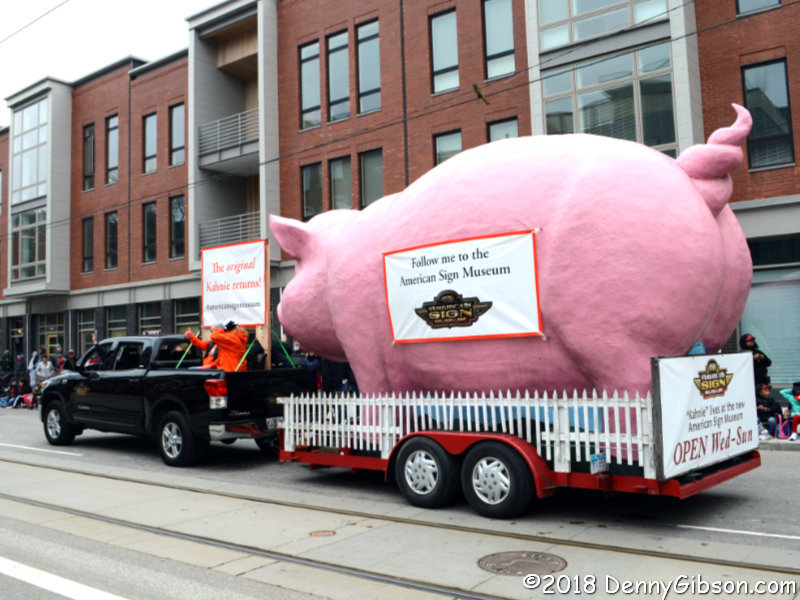
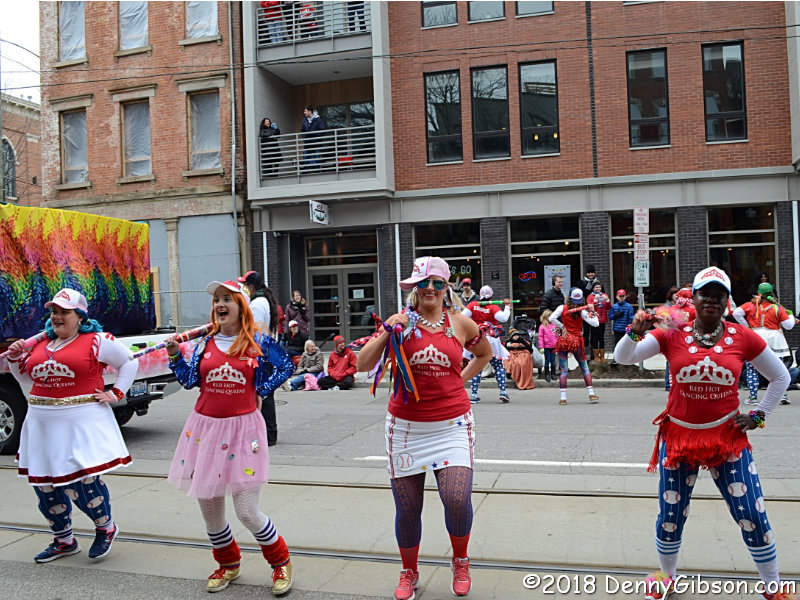
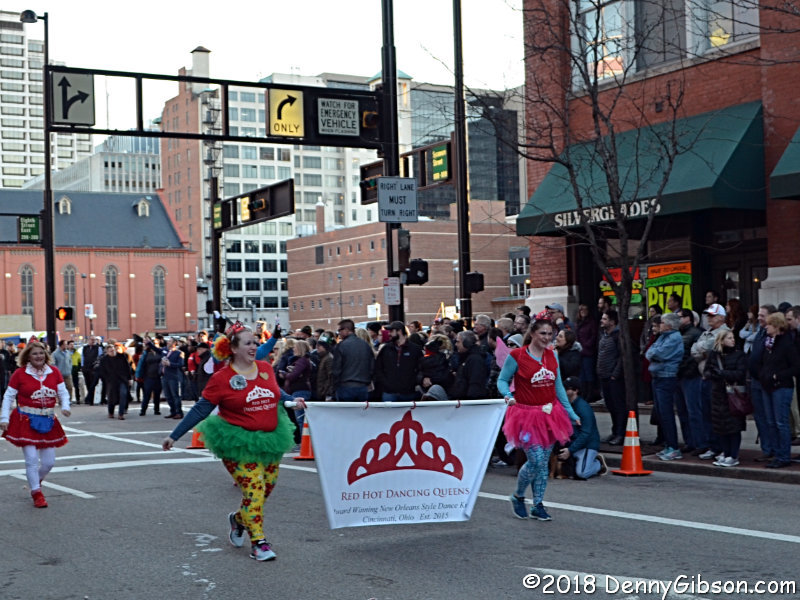
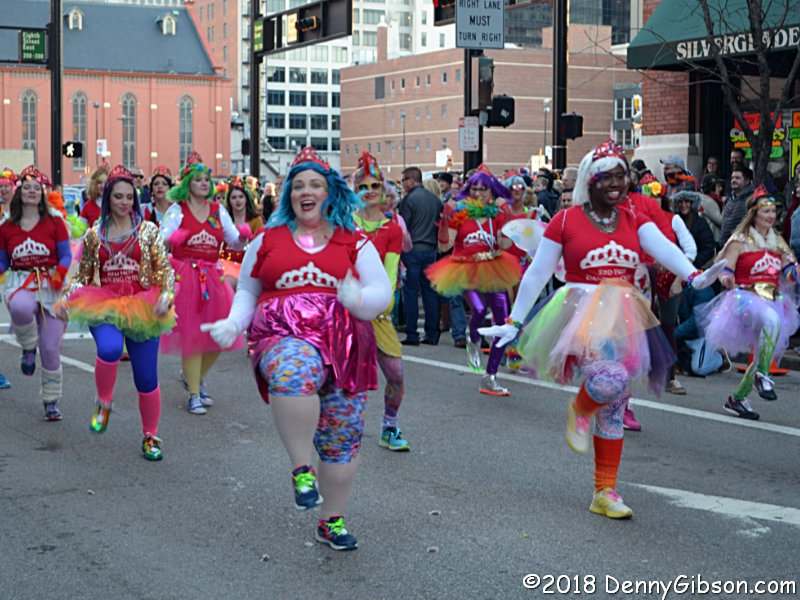
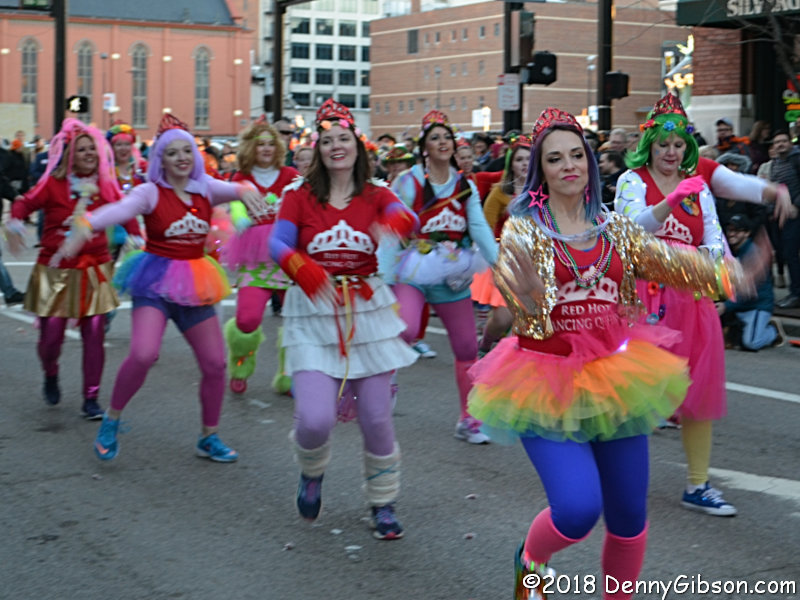
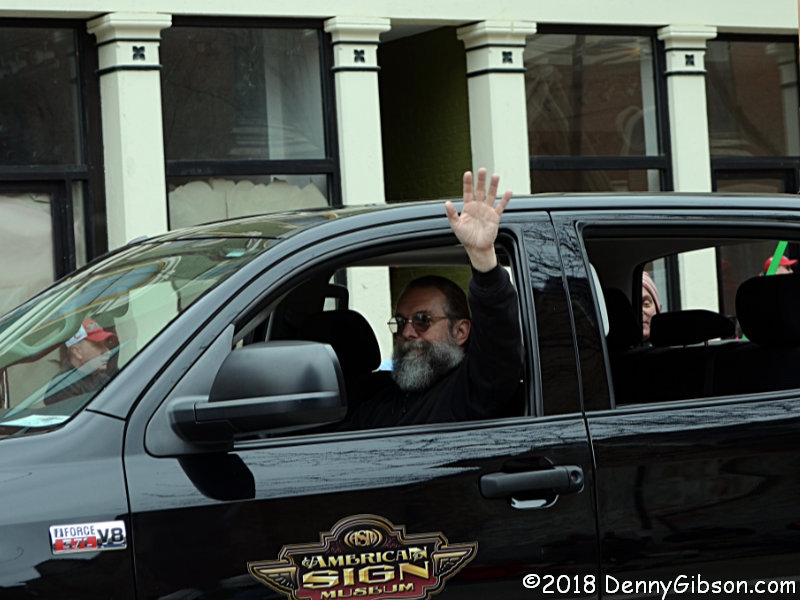
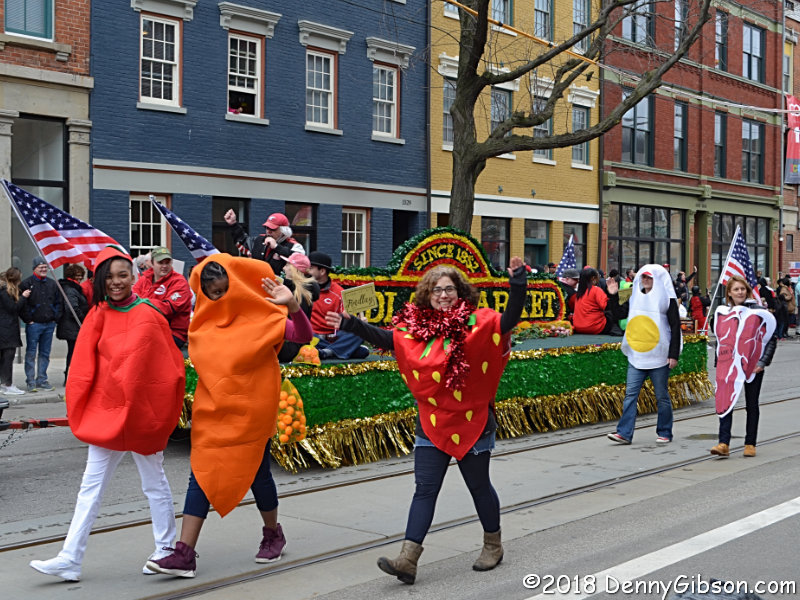 There’ll be nothing but locals from here on out. Like some folks from Findlay Market, the Red Hot Dancing Queens, and Kahnie from the American Sign Museum. I even got a shot of Tod piloting the big black truck.
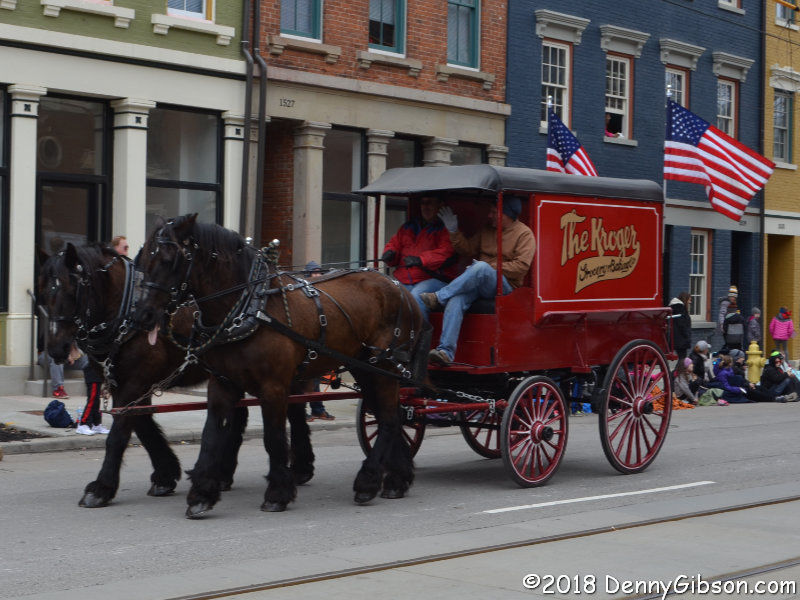
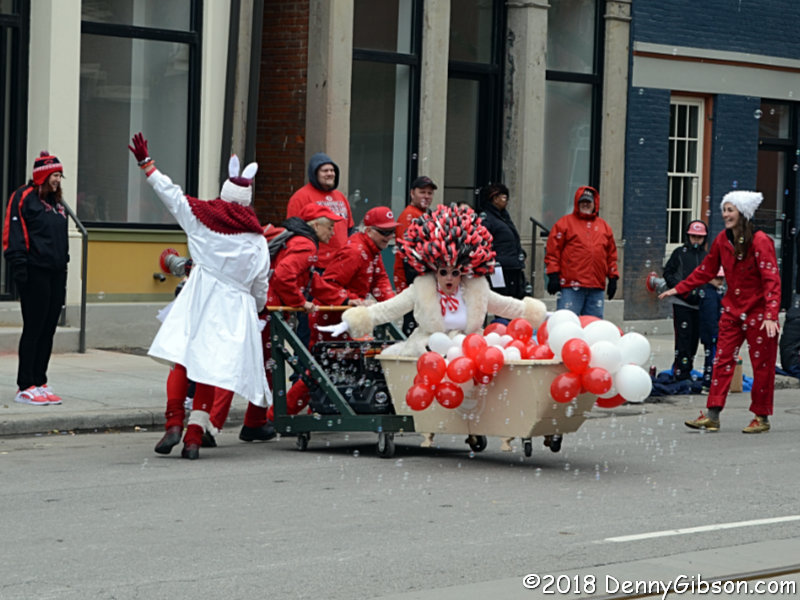
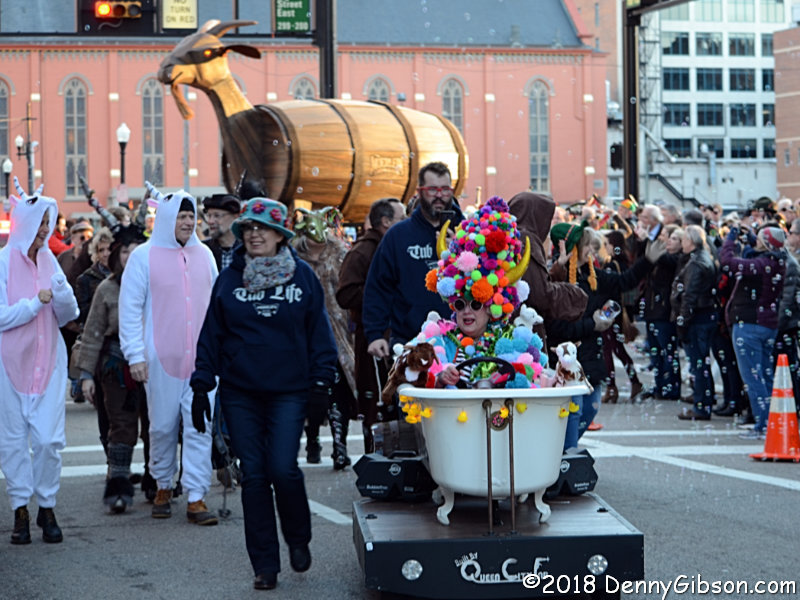
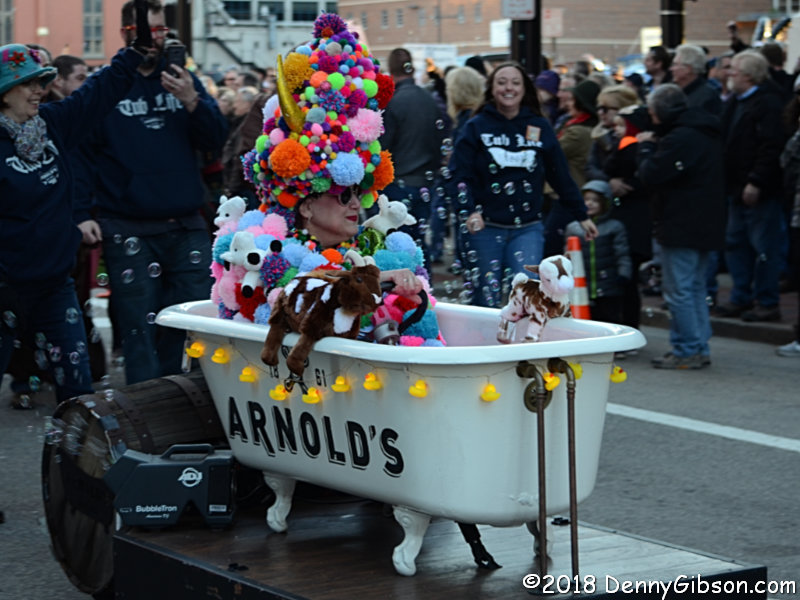
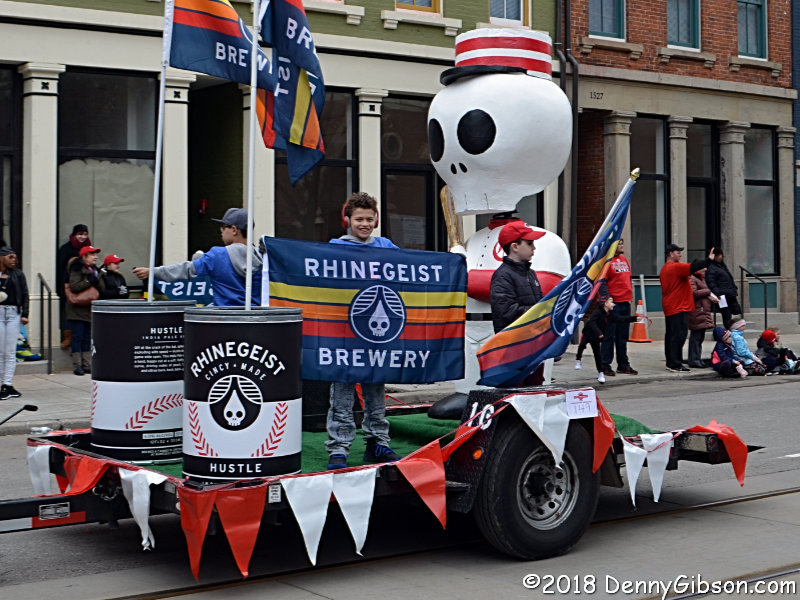 The Kroger Company still has one of Barney Kroger’s delivery wagons from the 1880s and Arnold’s has a passenger bathtub although it’s not one I’m familiar with and it’s not quite self-propelled. On the 25th the bar made a plea for a “go-cart mechanic” and on the 29th there was video evidence that repairs had been successful. However, the tub in the picture is neither of those I’ve seen before, has a rear mounted bubble machine, and is being propelled by a couple of laughing footmen. And it was still way cool. The third picture is of a new-to-me float from Rhinegeist.
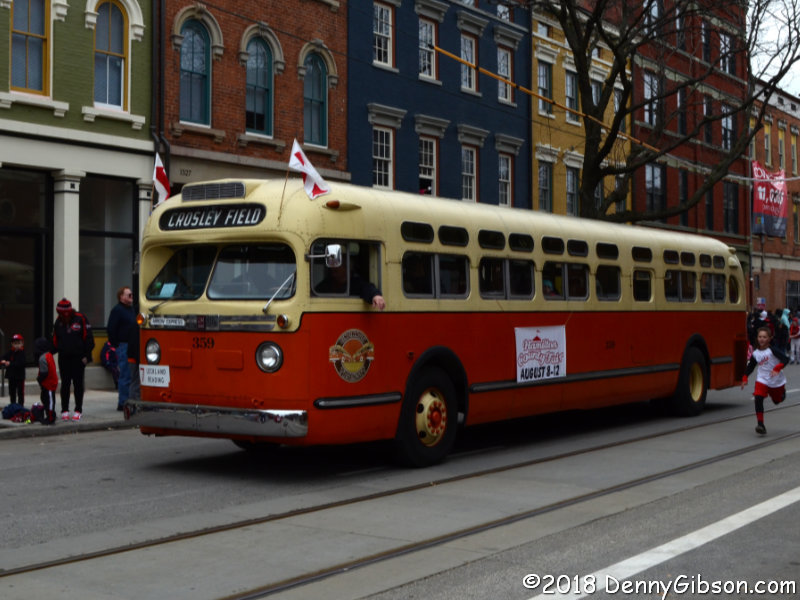 This is the bus I had a pre-parade partial shot of in front of the Rhinegeist Brewery. It wasn’t really the last thing in the parade but I thought it would be an OK thing to use for the closing panel. A few hours after the parade wrapped up, the Reds got their first win of the year by beating the Chicago Cubs 1-0. The three loses were to the Washington Nationals. A second Cubs game scheduled for Tuesday was postponed by rain then, after a pre-planned day off, the team headed to Pittsburgh for a four game stand. They lost the first two, won the third, and one remains to be played. The Reds begin 2018 with a 2-5 record.
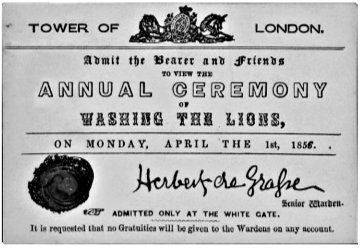 Fool me once, shame on you. Fool me annually, it’s a holiday. This year, Easter and April Fools Day coincide making things like Easter Snipe Hunts something to be on the lookout for. I always post on Sunday and, although the reasons are somewhat different, Easter always happens on Sunday. That means there have been several Easter anchored posts in the past. Despite them all being pretty shallow, I’ll post links at the end of this article.