Book Review
Coast to Coast on a Tandem
Tracy & Peter Flucke

The Fluckes were presenters at last year’s Route 66 Miles of Possibility Conference in Joliet, IL. The primary connection was their 2016 trek along Historic Route 66, which was their third unsupported cross-country trip on a tandem bicycle. This book covers the first of those trips, a 4,300-mile ride from Bellingham, WA, to Bar Harbor, ME, in 2014.

They smoothly alternated lines during the Route 66 presentation like co-anchors on the evening news. Their teamwork in a situation where it was nice but not mandatory hinted at how that team performed on one pair of skinny pedal-powered tires, where it was crucial. That’s also true of their teamwork on the pages of this book. In fact, the form of Coast to Coast on a Tandem seems closely aligned with the realities of tandem bike travel.

There are no passengers on a tandem bicycle. The person in front(captain), in this case Peter, is responsible for steering, which requires constant awareness of what is immediately in front of the bicycle. Bits of debris or small potholes that are no more than inconveniences when traveling on four wheels can be disastrous on two. The front rider is also responsible for gear selection and braking. In the back (stoker), Tracy is responsible for navigation, which means keeping Peter informed of upcoming turns, stops, and such. She also keeps an eye on traffic to the rear and keeps Peter informed of that as well. Both are responsible for powering and balancing their vehicle.

Their views from the saddle are not the same. Peter has a clear view of the landscape ahead, but is mostly focused on the road surface just a few feet away. Tracey has more time to contemplate the scenery, but her view is limited to the left and right. Anything more than short glances to the rear is uncomfortable and potentially unsafe, and the view ahead consists of little more than the back of Peter’s head.

The idea of two different views is carried into the book’s text. Instead of collaborating on a single combined narrative, Tracey and Peter each write their own version of events, and the two versions are interleaved. Sometimes, the pair of synchronized tales differ by no more than the distance between tandem bicycle seats, and sometimes they offer very different takes on a single set of events.

We all know that travel is enhanced at least as much by people as by location. The Fluckes meet and describe people in campgrounds, hostels, restaurants, grocery stores, motels, and through a cyclist-oriented home-sharing organization called Warm Showers. They also meet a few bicycle mechanics as they deal with the wear — especially on tires — and tear of long-distance pedaling. Almost all are friendly and either helpful, curious, or both.

Some of the people they meet are fellow cyclists. The Fluckes are barely twenty miles out of Bellingham when they encounter a cyclist on his way to Boston. Peter and Tracy are following the Adventure Cycling Association’s Northern Tier Route. Peter writes that an estimated 2,000 people travel this route each year. Some do it all, and some do short stretches of a few days or so. Some do it unsupported, like the Fluckes, while some do it as members of packaged tours with a support vehicle tagging along and carrying their gear. Are any of those people on a tandem?. Peter guesses “maybe 1 percent”. The Fluckes encounter none.

The book begins with descriptions of acquiring gear for the trip, physical training, shipping the bike, etc. Preparing their home world for a near three-month absence takes some effort, too. Once the trip is underway, each chapter begins with a map of the area covered in that chapter, and each day’s journal begins with the date, incremental and cumulative miles traveled, and a brief description of conditions. An example from a day in Montana is:

Day 21
June 21 — Havre to Malta, Montana
93 miles (total miles – 1,147
65-75 degrees, sunny with a nice tailwind to push us along

Not every day is sunny, and not every wind pushes them forward.

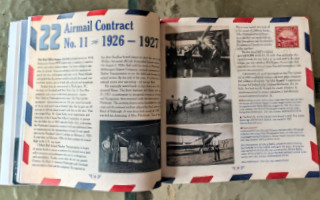
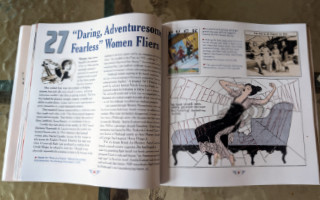
Coast to Coast on a Tandem is not a photo-heavy book, but there are several. All are in color. One is of the couple hoisting the bicycle overhead in Bar Harbour to celebrate completing the trip. Tracy calls it perfect—and lucky. “What were we thinking? Bike all the way across the country and have a complete stranger take only one picture to commemorate the event. Crazy.” Surely she knows better than to think that’s the only crazy thing described in the book.

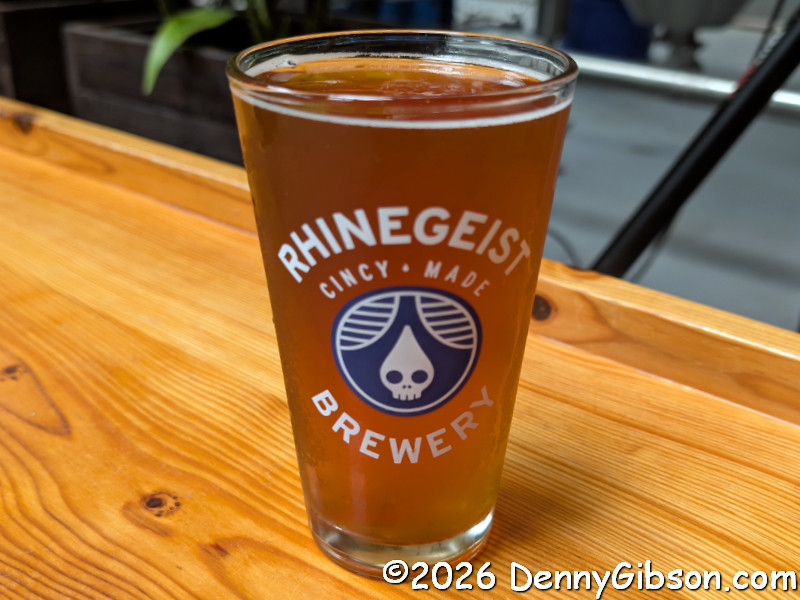
Anyone even slightly familiar with me will know that the chances of me cycling across the country (or surviving if I did) are essentially zero. I assumed that the chances of my having anything in common with the trim and athletic Fluckes other than a love of traveling were also pretty much zero. I was surprised to learn that we share a fondness for craft breweries. Apparently, Peter and I even share a fondness for porters and Scotch ale. Furthermore, we both like to “collect” breweries. I, traveling in a medium-sized SUV, do it by logging them in an app on my phone. The Fluckes, traveling on a vehicle with the storage capacity of a medium-sized hummingbird, do it by purchasing souvenir glasses, which they then mail home fairly often.

Coast to Coast on a Tandem: Our Adventure Crossing the USA on a Bicycle Built for Two, Tracy & Peter Flucke, M&B Global Solutions (November 2, 2017), 6 x 9 inches, 230 pages, ISBN ‎ 978-1942731283
Available through Amazon.

Happy (Actual) Imbolc

Ten years ago, I wished everyone a Happy Imbolc for the first time. In 2023, I reused that post to wish you all Happy Imbolc Again. I’m doing it once more, and this time, it’s for real.

In 2024’s Happy Imbolc (Again/Exact/Maybe) post, I wrote about Imbolc being the instant that marks the halfway point between the winter solstice and the spring equinox, but in the end admitted that it was almost certainly originally seen as a day, and that that is pretty much how it is seen today. Furthermore, almost all Imbolc celebrants have surrendered to the arbitrariness of man-made calendars and tied the holiday to February 1, regardless of the sun’s position. Ask the internet when Imbolc 2026 is, and the most common answer you get will be February 1, although the actual solstice-equinox midpoint occurs on the third. Defining the holiday as sundown on the first until sundown on the second seems quite popular.

The last time February 1 fell on a Sunday was 2015, which was a year before I knew Imbolc existed. With that one year of ignorance as an excuse, I can say with sincerity that this is the first time in my personally recorded history that the widely recognized day of Imbolc coincides with the weekly publication of this blog. Happy Imbolc and Groundhog Day Eve to all.

ADDENDUM Feb 1, 2016: Almost as soon as this was posted, I realized that “actual” was the wrong word to use in the title. February 1 is more accurately called official Imbolc. Actual Imbolc is February 3.

It’s a Mad, Mad, Mad, Mad Exhibition

Almost from the minute the Cincinnati Art Museum announced that What, Me Worry? The Art and Humor of MAD Magazine was on the way; I have been part of a group numbering 2 to 6+ that made and scrapped multiple plans to attend. At last, three of us made it on Friday. We all had Mad Magazine memories. Two of us were almost exactly the same age, with memories from the late 1950s through the 1960s and maybe a little beyond. The third member of the group was some three decades younger with memories correspondingly offset. The exhibit covers Mad from its 1952 beginning, which means we each saw things we remembered, even if we didn’t remember everything.

Of course, one thing that everybody remembers is Alfred E. Neuman. He first appeared in the magazine in 1954 and soon became a near constant presence on the cover. There is definitely a connection with the 1914 “Original Optimist” drawing, but the image goes back even further. The opening “Will worry for food” image is much newer. It is the October 2009 cover, which I don’t believe I had seen previously, but it sure fits what I would expect from Mad in the twenty-first century.


Mad started out as a comic book, then became a magazine with this cover in July 1955. Note that Alfred E. Neuman appears in the banner at the top, although he had not yet been identified by name. Among the changes this brought was the ability to satirize government officials, which was something disallowed by the Comics Code Authority of 1954.

Don Martin was an absolute favorite of mine, and seeing his artwork for the cover of 1962’s Don Martin Steps Out! was a real treat. His “PAY TOLL FIFTY FEET” from the March 1980 magazine back cover is a true classic.

This was the biggest surprise for me, though maybe it should not have been. I know of Frank Frazetta from his outstanding work in fantasy and science fiction, but did not realize that he had ever been connected with Mad. This is one of three back covers he did for the magazine, and he also did one cover. “Early One Morning in the Jungle” was in the October 1966 issue, so it is possibly the first Frank Frazetta piece of art I ever saw.

One of the things Mad Magazine did best was satirizing movies and TV shows. It also had a knack for slipping jokes into comic strips that had nothing to do with the story and which (at least in my case) might not even be caught until the second or third reading. This spoof of “Wonder Woman” is an example of both. Diana Banana (Woman Wonder) and Steve Adore engage in a silhouetted display of affection near signs pointing to “Proving Grounds”, “Inproving Grounds”, “Coffee Grounds”, etc.

A long-running feature that first appeared during my peak Mad infatuation was the fold-in. Presented as the opposite of fold-outs from Playboy and others, fold-ins began appearing in 1964. As I looked over these framed examples, I wondered at the lack of “folded” versions, but was relieved to see a rack of creased pages on the wall. Some of the folding had probably not been all that precise, and certainly wasn’t after a bunch of repeats, but they all worked just fine to reveal the “real” pictures. If you want to do some digital “folding-in” on your own, there are some interactive examples here.

The exhibit is organized in a loose chronological sequence, and I was starting to get concerned about finding something on one of my favorite features. “Spy vs. Spy” came along in 1961, and I was well into the second half of the exhibit before these popped up. It’s pretty fuzzy, but there’s a slightly more readable version of that second image here. Incidentally, small sketches often appeared in the margins of the magazine, and that is sort of mimicked here with sketches on the walls, like the one with both spies in a bomb. Antonio Prohías, a Cuban refugee, originated the strip and drew it until 1987. The first pictured strip is his from March 1983. Peter Kuper picked up the strip full-time in 1997 and switched to color in 2001. The second pictured strip is his from June 2004. That one doesn’t work for me. That’s not in any way a dig on Kuper’s talent. I remember black-and-white drawings of a black character and a white character, each believing they were the good guy, even though it was starkly evident there was no difference between them at all. I suppose that’s still there with colored backgrounds, but it somehow seems less obvious.

What, Me Worry? The Art and Humor of MAD Magazine is here through March 1. It’s even free on Thursday evenings between 5:00 and 8:00..

Trip Peek #152
Trip #180
NOTR and PPOO Part 1

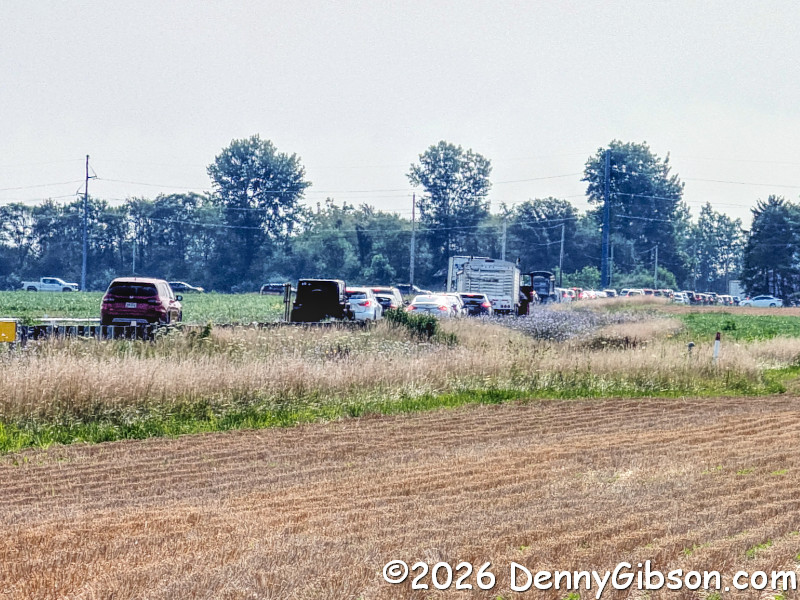
This picture is from my 2024 NOTR and PPOO Part 1 trip. A drive on the National Old Trails Road and the Pikes Peak Ocean to Ocean Highway had originally been conceived as a single trip, but it didn’t work out that way. Shifting schedules and commitments resulted in the parts of these two historic auto trails east of the Ohio-Indiana line being driven in August and the remaining parts being driven in October. This Trip Peek refers to a drive that began by heading east on the NOTR, reversed direction in the general vicinity of the Statue of Liberty, and ended on the PPOO near — but not quite at — the eastern edge of Indiana. In their final forms, both trails connected New York City with Los Angeles but managed to do it via mostly different paths. East of California, the PPOO was generally a bit north of the NOTR. In California, they were mostly one and the same. The selected picture is, of course, The Statue of Liberty. I have no evidence that the statue was a significant feature of either of the targeted trails, but it stands near the eastern terminus of the PPOO, and visiting it while “between trails” seemed a sensible thing to do.

Because I have driven the National Road, a major component of the NOTR, several times, the eastbound portion of this trip was over known territory as far as Washington, DC. East of DC, things were less familiar. Bridge closures and other new roadside items kept all of it from being boring. My oldest son lives a bit north of NYC, so I also worked in a “between-trails” visit with him and his family. Despite never having driven the actual PPOO east of Ohio, I had driven some of its components, so I had some recognition of the many small towns it passed through. But there were new things here also, so it too was not at all boring. The plan was to end Part 1 at the Indiana border, but a flat tire led to ending it about a hundred miles shy of the line, and moving that bit to Part 2.


Trip Peeks are short articles published when my world is too busy or too boring for a current events piece to be completed in time for the Sunday posting. In addition to a photo thumbnail from a completed road trip, each Peek includes a brief description of that photo plus links to the full-sized photo and the associated trip journal.

Trip Peek #151
Trip #113
Lincoln Highway Centennial Caravan

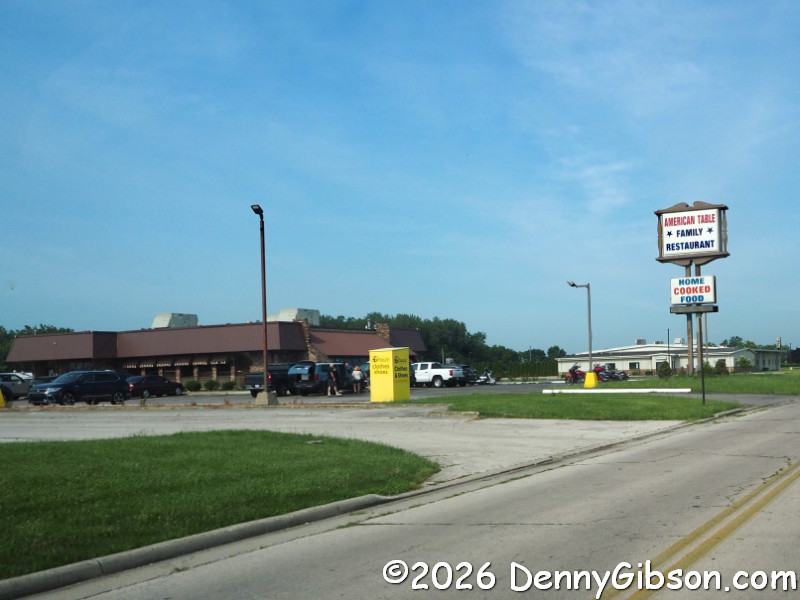
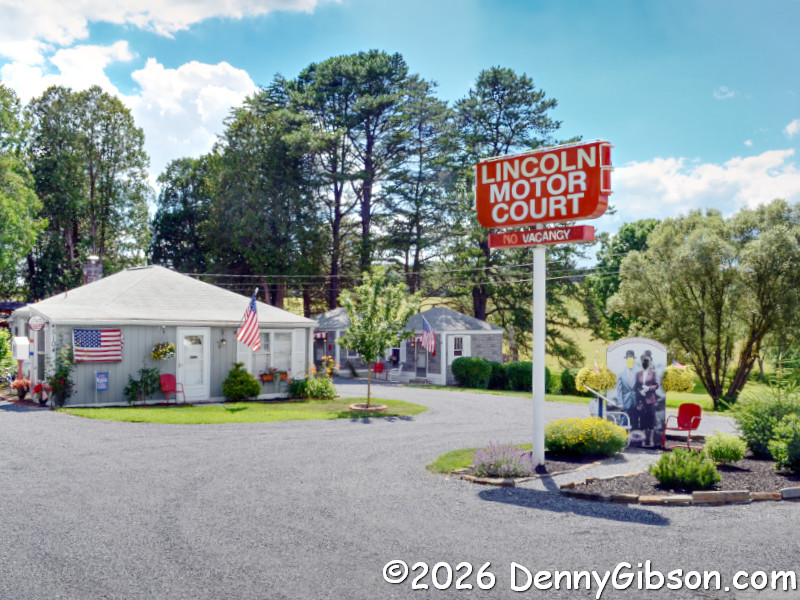
This picture is from my 2013 Lincoln Highway Centennial Caravan trip. This trip was truly epic and one that was unique in multiple ways. It is one of only two trips on which I drove a classic car, or at least a car old enough to be called a classic. The car was a 1963 Plymouth Valiant selected to be half the age of the road it traveled. The other trip happened a year earlier when I drove the same car to the Lincoln Highway Conference in Canton, OH. Of course, that in-state drive to a city around 200 miles away is not in the same class as the full-length Lincoln Highway outing of 2013. The 2013 trip also stands out as the first trip that resulted in a published travelogue. I have now published nine, but “By Mopar to the Golden Gate” was the first, and it’s all about this trip.

The 35-day, 7,300-mile trip began with a drive east to reach the eastern LH terminus in Times Square, NYC. The centennial of the founding of the original Lincoln Highway Association would be celebrated in Kearney, NE, near the road’s midpoint. Caravans from the two ends would meet there for a parade and celebration. My friend John traveled with me from New York to South Bend, IN, but returned home from there. I drove on to Kearney with the caravan, then continued to San Francisco, where I connected with my son, as part of a much smaller group. From there, I drove home through Yosemite National Park and along much of Historic Route 66. Picking a few highlights to list in this Trip Peek would be pretty much impossible. As I said, it was an epic trip. Anyone interested should page through the online journal or read the book. And drive the Lincoln Highway if you possibly can.


Trip Peeks are short articles published when my world is too busy or too boring for a current events piece to be completed in time for the Sunday posting. In addition to a photo thumbnail from a completed road trip, each Peek includes a brief description of that photo plus links to the full-sized photo and the associated trip journal.

2025 in the Rear View

The year in numbers with 2024 values in parentheses:

  • 3 (7) = Road trips reported
  • 69 (68) = Blog posts
  • 20 (72) = Days on the road
  • 1110 (2,491) = Pictures posted — 732 (671) in the blog and 378 (1,820) in road trips

The last three years have certainly been interesting ones to look back on, statistics-wise. In 2023, I wrote that everything went up except interest, and by that I meant traffic. In 2024, traffic joined the other statistics in posting increases. This year, interest/traffic is just about the only thing that has gone up. Scheduling conflicts and other issues kept me essentially off the road for the entire first half of the year, which naturally resulted in fewer road trips, days on the road, and pictures posted. Blog posts did increase by one, and pictures posted in the blog also went up a bit, but the bulk of pictures always comes from road trips, so the total went down, and neither blog posts nor blog pictures equaled the 2023 numbers. Three of the top five blog posts are frequent members of the list, including last year. The other two are not only new to the top five list, but both were also newly published in 2025. Three of the top five non-blog posts are also frequent list members, but only one appeared last year. Both of the newcomers to the non-blog list were published in 2024. That’s quite a shakeup from last year, when both lists contained four repeats from the year before.

Top Blog Posts:

  1. Scoring the Dixie
    This post moves from fifth to first for its ninth top-five finish. It described my tracking of multiple outings on the Dixie High that eventually led to clinching it.
  2. Twenty Mile’s Last Stand
    After two consecutive first-place finishes, this post drops slightly for its eleventh appearance in the top-five list. Its subject is a nineteenth-century stagecoach stop destined for destruction by developers.
  3. My Wheels – Chapter 1 1960 J. C. Higgins Flightliner
    Back for the twelfth time; the only time this post did not appear in the top five was 2022, when it was sixth.
  4. Book Review Route 66: The First 100 Years Jim Ross and Shellee Graham
    This review did OK on its own, and posting a link on my Facebook page helped a little, but there is no doubt that the reason it made this list is that both Jim and Shellee posted links to it on their own Facebook pages. It’s a great book, and I’d like to believe I helped sell a copy or two, but I think it is mostly selling itself.
  5. An Auto Park Turns Two
    This one got plenty of help, too. It’s about my visit to an Indiana diner and associated car museum during its second anniversary celebration. I posted a Facebook link, and the diner shared the post to its own page.

Top Non-Blog Posts:

  1. Alaska
    After a three-year absence, this nearly six-week-long trip makes its sixth top-five appearance with its second first place. 
  2. My Fiftieth: Hawaii
    It’s a little hard for me to believe that this is only the second time that the trip where I celebrated my fiftieth state and my seventieth birthday made the top five. It ranked third in 2018.
  3. NOTR and PPOO Part 2
    In 2024, I drove the full length of the National Old Trails Road and the Pikes Peak Ocens to Ocean Highway. For reasons not worth repeating, the drive was divided into two parts. Part 2 involved the two named auto trails west of the Ohio-Indiana border. Part 1’s traffic placed it well down the list, but the combined total would top it. Of course, that doesn’t mean that an undivided trip would have garnered the same numbers, but I think it does mean NOTR and PPOO Part 1 deserves a shout-out.
  4. Route 66 Miles of Possibility 2024
    This and NOTR and PPOO Part 2 are the newcomers. In real life, the end of the NOTR drive morphed into the start of the drive to the 2024 MOP without a break.
  5. Sixty-Six: E2E & F2F
    The only returnee from the 2024 list is my 2012 end-to-end and friend-to-friend drive of Historic Route 66. It was number one last year, and this makes its ninth top-five appearance.

All three of the main traffic measurements were up again this year. Overall site visits grew from 164,460 to 356,700, blog visits rose from 5,236 to 7,268, and page views went from 815,886 to 2,596,26. I said I didn’t think last year’s increases were anything to get excited about, and the same is true this year, but there’s nothing wrong with being mighty pleased.


If you’re not seeing DennyGibson.com posts on a regular basis and would like to, email lists and RSS feeds are available. Descriptions and links are provided in the website FAQ under How can I keep up with it?

Trip Peek #150
Trip #120
Hail! Hail! Rock ‘n’ Rail

This picture is from my 2014 Hail! Hail! Rock ‘n’ Rail trip. It’s a Veteran’s Honor Flight from New Mexico that I encountered by chance at the World War II Monument in Washington, DC. My own travel to and from DC was neither a flight nor a drive but a train ride. I had once before attempted to reach music in Washington via Amtrak, but that train had been canceled. This train wasn’t canceled, but it was more than four and a half hours late leaving Cincinnati, which toppled the first in a series of dominoes that resulted in a sleepless night in Union Station. I did make it to the concert that the trip was built around, then spent an additional three nights in the city near the National Mall. From there, I attended a play at Ford’s Theater, visited museums and monuments, and watched in awe and appreciation as those New Mexico vets took in their monument. My train home left right on time, but still managed to be over an hour late in reaching Cincinnati.


Trip Peeks are short articles published when my world is too busy or too boring for a current events piece to be completed in time for the Sunday posting. In addition to a photo thumbnail from a completed road trip, each Peek includes a brief description of that photo plus links to the full-sized photo and the associated trip journal.

Cahokia and Beyond

I first ran away for Christmas in 2006, and, with the exception of 2020, have done so every year since. Over time, I have become more conscious of Christmas’ connection with the Winter Solstice and, in recent years, have scheduled my trip at least as much around the natural holiday as around the man-made one. That continues this year with the trip beginning at the Cahokia Mounds World Heritage Site near Collinsville, Illinois. From there, I’ll head west on Historic Route 66 to at least Tulsa. Where I’ll spend Christmas, and what road I’ll be on at the time, will be revealed to me as the day approaches. The journal for the first day (i.e., Winter Solstice 2025) has been posted.

This entry lets blog-only subscribers know about the trip and provides a place for comments. The journal is here.

Merry Solstice to All

Today is the day of the Winter Solstice. Four hours and three minutes from now, at 10:03 AM EST, the sun will be as far from Earth as it ever gets, and the sunlit portion of our days will start becoming longer. I believe that the first time the mention of Winter Solstice appeared on this website was in 2014, when I attended an event at Serpent Mound one day before departing on my Christmas Escape Run and included it in the journal for the trip.

It next appeared in 2019 in a blog post on the day following the Solstice. 2019 was the first year I attended the sunrise gathering at Fort Ancient. The image at right is of a poster I bought that day. It is from a painting by Mary Louise Holt depicting what a Solstice sunrise might have been like back when the Hopewell ran the place we call Fort Ancient.

This blog is published every week on Sunday. That 2014 Serpent Mound Solstice event was on a Sunday, but Solstice wasn’t even mentioned in the day’s blog post. Instead, the post described a quartet of museum visits I had made the preceding week. It is here.

Today is the first time the Winter Solstice has fallen on a Sunday since 2014. I obviously can’t actually report on it since it hasn’t happened yet, and I really don’t have any new thoughts on the event in general since that 2019 blog post: A Cosmic Reason for the Season. I have copied and reused that post twice (2020 and 2021) with new introductions added. This post’s opening image shows what things might have looked like 2000 years ago. The pictures at left show what things actually did look like six years ago.
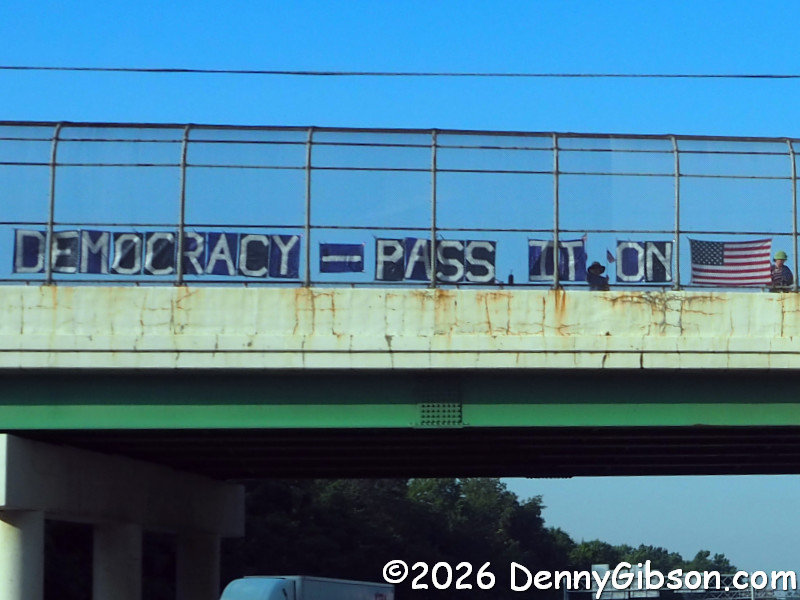
I hope to post photos of a gathering today at a different mound in the journal of the trip just begun.

A New Passport

I received an email in early October telling me that my passport would expire soon and inviting me to look into renewing it online. Much of the federal government had just been shut down, and I assumed that renewing anything it was involved with would be a foolish undertaking. I pretty much ignored the email. Then, as we entered November and the shutdown continued, a friend posted that he had just received his new passport about a week after applying online. So I gave it a go. Four to six weeks was quoted. The passport didn’t arrive in a week, but it did make it in slightly less than two. Pretty impressive.
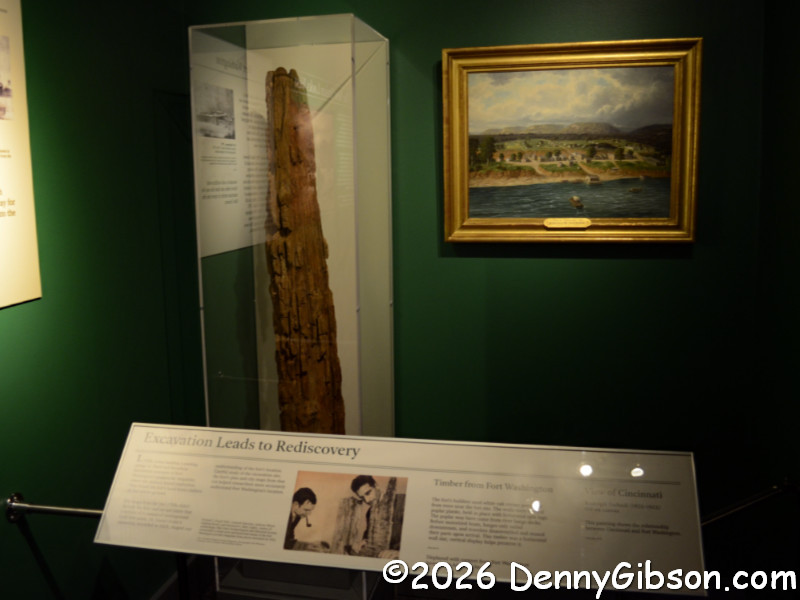
This is my fifth, and most likely my last. Slightly blurred images of the previous four are at left. The dates are 1986, 1996, 2006, and 2016. All are low mileage. Diminishing hair is obvious, but in the actual passport books, diminishing something else is apparent. I have never been one to challenge a passport’s capacity, but that 1986 passport has 15 stamps spread over 7 pages. The 2016 passport has a single stamp.

That single stamp is unique. It is for a 2018 entry to Canada to reach the northern terminus of the Jefferson Highway, and is the only Canadian stamp in any of these four booklets. That is not because it was my only visit to Canada. Prior to June 1, 2009, Canada did not require passports for land travel from the USA. Even after that date, it seems they were not stamped. My 2006 passport has no stamps from anywhere, despite there being at least two documented post-2009 trips to Canada while it was in use.
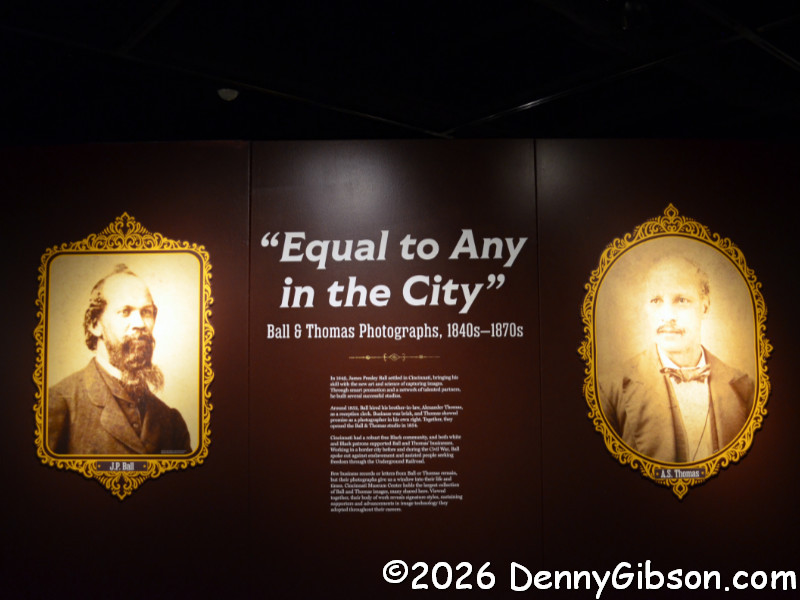
There are two stamps in the 1996 passport. So the counts for the four retired passports are 15, 2, 0, and 1. Passport number one has five times as many stamps as the other three combined. Hair diminished gradually. Foreign travel plummeted.