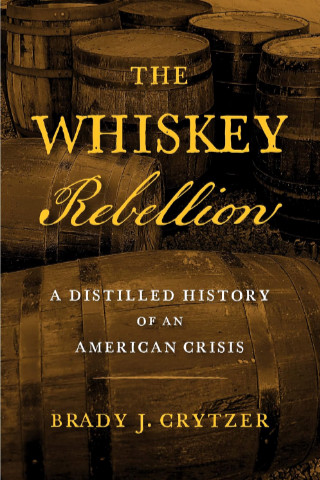
After coming home empty-handed from my recent trip to Greenfield, IN, to hear author Brady J. Crytzer talk about his new book on the National Road, I decided to sample his writing on the cheap by checking out one of his other books from the local library. The Whiskey Rebellion interested me and was available. I had no delusions about knowing the history in detail, but I thought I had a good overview: The government imposed a tax on whiskey; some farmers didn’t want to pay it; George Washington personally led troops to confront the farmers; and the farmers paid up. End of story.
That’s not wrong, but it’s terribly oversimplified. The biggest thing missing from my four-point summary is the extreme risk the uprising posed to a new nation with its first president in his first term. This book also showed me a different, less flattering, view of Alexander Hamilton than I’d previously seen. Hamilton designed the tax and saw its enforcement and the punishment of those who opposed it as something personal.
The first indication of just how little I knew about the book’s subject was when I read that what we now call the Whiskey Rebellion was known in its own time as the Western Insurrection. I don’t believe I’d ever heard that phrase before. I instinctively thought that removing the word “whiskey” from its name made the event seem more sinister and more important. My instincts were validated in the book’s last chapter, where Crytzer writes that when the event was completely over, “Alexander Hamilton and his Federalist allies took to calling it ‘the Whiskey Insurrection’ as a means of trivializing the affair.”
Crytzer does know the details. Like any good historian, he provides dates and names for events before, during, and after the insurrection. More importantly, he places those dates and names in the bigger picture of the times. At its core, the Whiskey Rebellion was a manifestation of the period’s conflict between Federalists (e.g., Hamilton, John Adams) and Anti-Federalists (e.g., Jefferson, George Mason). The most radical of the insurrectionists took steps to establish their own government separate from that of the United States. Had Washington delivered a Gettysburg Address-style speech as he led his troops west, it might have begun “Half a score and eight years ago…”.
Washington personally commanding an army to quell the uprising is part of virtually every description of the Whiskey Rebellion ever made, including my woefully shallow one in the first paragraph. That is deserved. It is the only time that a President of the United States personally led military forces in the field. But Washington returned to Philadelphia after reaching Bedford and turning command over to Henry Lee, the Governor of Virginia. The rebellion was centered in Pennsylvania’s Allegheny, Fayette, Washington, and Westmoreland counties plus Ohio County in Virginia. The 13,000 troops headed west came from Maryland, Pennsylvania, New Jersey, and Virginia, and the governor of each state led their own troops.
Accompanied by Hamilton, Lee led the army into the heart of the rebellion, but there was no big confrontation or battle. As the insurrection grew, the rebels had organized militia-like forces, and they were active in attacking and terrorizing individuals and families, but they quickly dissolved as the federal forces approached. The army was put to work apprehending targeted individuals, but the targeting was not very precise and the apprehension heavy-handed more often than not. Hamilton wrote a letter to Washington suggesting the elimination of due process. On November 13, 1794, the Pittsburgh area experienced so many of what Crytzer calls “smash-and-grab-style raids” that it became known as “The Dreadful Night”. “The names provided by Hamilton and Lee,” writes Crytzer, “made no distinction between witnesses, dissidents, and cooperators…” Those grabbed were confined in deplorable conditions.
As is all too often the case, almost all of the insurrection’s ringleaders escaped. In those days, exiting the United States was as simple as floating a sufficient distance down the Ohio River. Hamilton never caught the “big fish” he hoped to make an example of, and many of the little fish and those who should not have been fish at all suffered terribly. It was early enough in our nation’s history that it might have been the first time that we behaved so badly on such a scale, but it would not be the last. It might be that the passage of time and the fact that the insurrection was unsuccessful explain what Crytzer calls “a void in scholarship surrounding the event.” Still, I have to wonder if there has been real purpose in our school books extolling Washington gallantly returning to the field while not once mentioning “The Dreadful Night.”
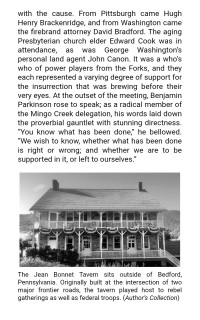
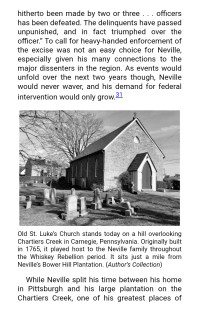
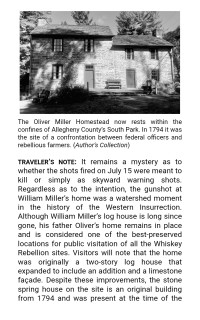
The Whiskey Rebellion includes several images. Some are from historical sources, but Crytzer uses his own photos when possible. These are locations described in the text, and many still have buildings standing today after playing a role in the rebellion. Somewhat related to the pictures is a nice touch that Crytzer calls “Traveler’s Notes”. These appear at the end of some chapters and include notes, such as directions, about a location mentioned in that chapter. The Jean Bonnet Tavern was among the few of these I was familiar with. It served multiple functions for both sides in the Whiskey Rebellion. Established around 1760 and still operating today, it witnessed many significant events before the rebellion and even more after. The most recent significant event that I am aware of is serving me dinner in June.
I don’t know that this old dog can actually be taught any new tricks, but I’m encouraged knowing that I can learn new facts. In The Whiskey Rebellion, Crytzer does a fine job of shining a light on a subject I knew very little about. I don’t doubt he can do the same for one about which I think I know considerably more. I plan to read his National Road book and may acquire it at a future presentation of his. If so, I’ll make an effort to check inventory before driving too far.
The Whiskey Rebellion: A Distilled History of an American Crisis, Brady J. Crytzer, Westholme Publishing (June 14, 2023), 6 x 9 inches, 224 pages, ISBN 978-1594164002
Available through Amazon.
 Nineteen years ago, on the first anniversary of the terrorist attacks that killed so many innocent people in New York City, at the Pentagon, and in a Pennsylvania field, I posted some of my related memories on this site. A standalone web page was used as this blog did not yet exist. The page was accessible for many years through a link on this site’s home page. That link was eventually removed during a site layout change. However, the page itself remained in place for some time even though there was no way to access it other than entering its URL. Early this year, when the site was moved to its current host, the page was among those not making the move, so that even a direct URL became useless. Today, on the twentieth anniversary of those attacks, I have restored the page and am providing access to it here and through the image above, even though the page continues to be much more personally therapeutic than generally informative.

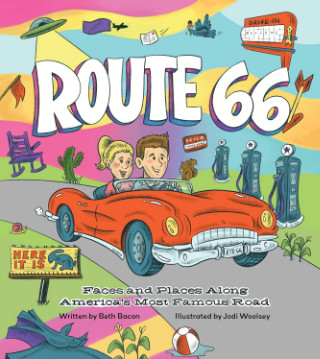 Nearly all the reviews on this blog are organic, meaning they are of things I’ve read, listened to, or attended because I discovered them and chose to review them on my own. This is one of the very few exceptions. The author, Beth Bacon, emailed me and suggested that since my site was about road trips and I did book reviews, I might be interested in reviewing her latest work. Right off the bat, I was impressed that she knew road trips and reviews were involved in the site. Most of the email requests/offers I get seem pretty oblivious to that. Cryptocurrency, miracle medical treatments, and streaming services are popular—the most recent involved ancient coins.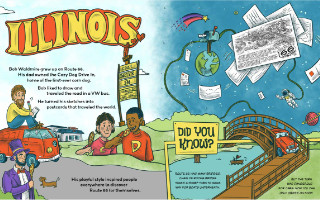
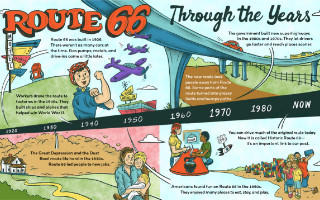
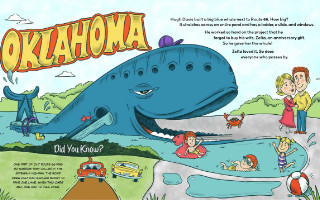 Those names, and the places too, seem carefully chosen. A road that’s 100 years old and nearly 2,500 miles long certainly has plenty of both. It’s easy enough for adults to be swamped and even easier, I imagine, for the 5-10 year olds that are the book’s target readers. Bacon picks subjects likely to interest the 5-10 crowd and doesn’t overwhelm by trying to include everything. The book opens with a few bits of information about the entire road and about Cyrus Avery, who was instrumental in establishing it. That’s followed by one- and two-page sections on each of the route’s eight states. One of the names appearing for Illinois is Bob Waldmire, who traveled the route in a Volkswagen bus. Missouri’s pages include Alberta Ellis, who operated a hotel and other businesses where people of color were welcome at a time when that was often not the case. This brief, casual mention of the topic earns a bonus point from me. The Blue Whale of Catoosa, Oklahoma, is an obvious kid-friendly subject, and Bacon introduces its creator, Hugh Davis, and his wife, Zelta, to her readers. Bacon also identifies more key names and places for these three states, along with a handful for each of the other five. A personal favorite is Bacon’s mention that Snoopy’s brother Spike lives near the Route 66 town of Needles, California.
 I have a hunch that recognizing the publisher had a little bit to do with me wanting to review this book. The list of

 I’ve known Dr.
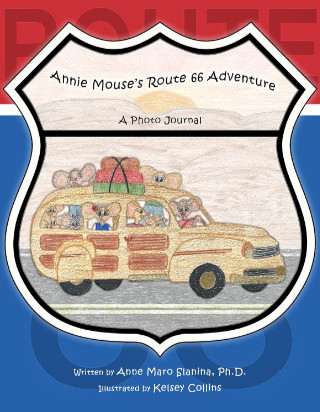
 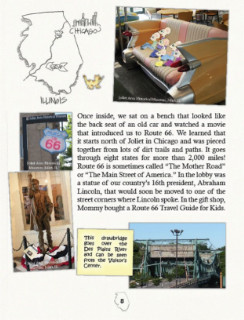 Three of the Annie Mouse books involve Route 66. The author is a big fan of the road and travels it frequently. That is where, of course, I met her. In Annie Mouse’s Route 66 Adventure, she applies not only the road knowledge she gained through her travels, but also photographs she took herself. The book covers a near full-length drive of the historic route from Joliet, IL, to Needles, CA. Making the journey is the Mouse family. There’s Mommy and Daddy, of course. The Mouse children include Annie’s older brothers, Sam and Bobby; older sister Jenny; and some unnamed younger siblings. The trip’s purpose is to visit Mommy Mouse’s cousins in Needles.
 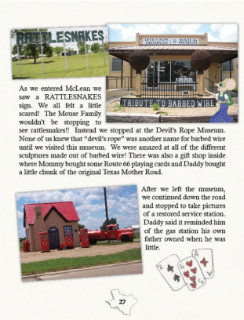 Annie is the journal’s narrator. She is also its photographer. When Annie first learns of the planned trip, her excitement grows even bigger when she is told she would be allowed to take her own pictures. Those pictures appear exactly as you might expect from a young mouse making a scrapbook-style journal of her family vacation. More importantly, they appear exactly as they should to help young humans flesh out the words beside them. Sometimes, with the help of illustrator Kelsey Collins, Mouse family members appear in those pictures just as you would expect in vacation snapshots. There are also plenty of Collins’ delightful drawings in the book outside the frames of the photographs.






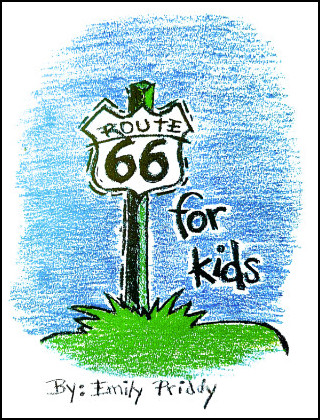 This book first appeared in 2003 as a real paper and ink publication. I got a signed copy in 2004, which, because it was small and easy to stuff between seats or in the glovebox, I kept in the car for quite some time. Based on the copyright dates, it was revised several times, but I never got a newer one, and my copy became increasingly out of date. Prior to February of this year, it looks like the most recent revision was 2016, so even the newer editions might not have been all that trustworthy. The print editions sold for next to nothing (I paid $5 for mine), and when Priddy updated things in February, she went beyond next and made it available for just plain nothing via Google Docs.
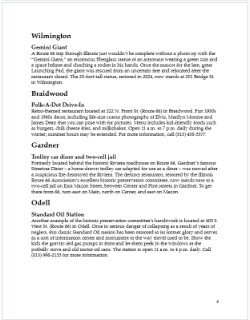 It’s definitely reasonable to ask why someone who is about as far from kidness as it’s possible to get, ever kept this close at hand. I mentioned the size of the hard copy. The size of the entries is another positive, as is their organization. States and the towns within them are listed east to west. The list of attractions associated with each town does not appear to be in any particular sequence. Below each attraction’s identifier is a single paragraph containing a brief description, address, telephone number, and website. The descriptions typically include cost, hours, and any other special considerations. They are not written by AI or someone following a formula who has never been there. Priddy often shares personal insights.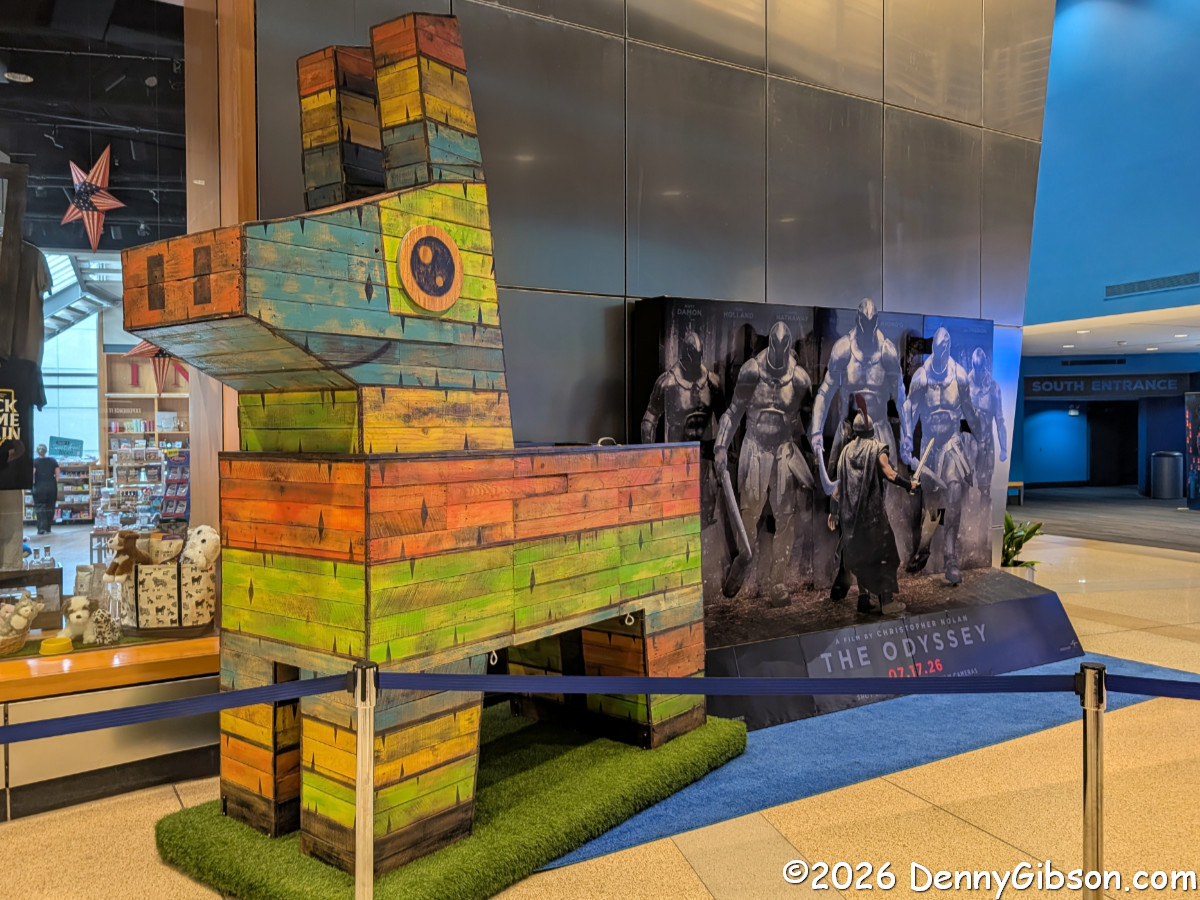
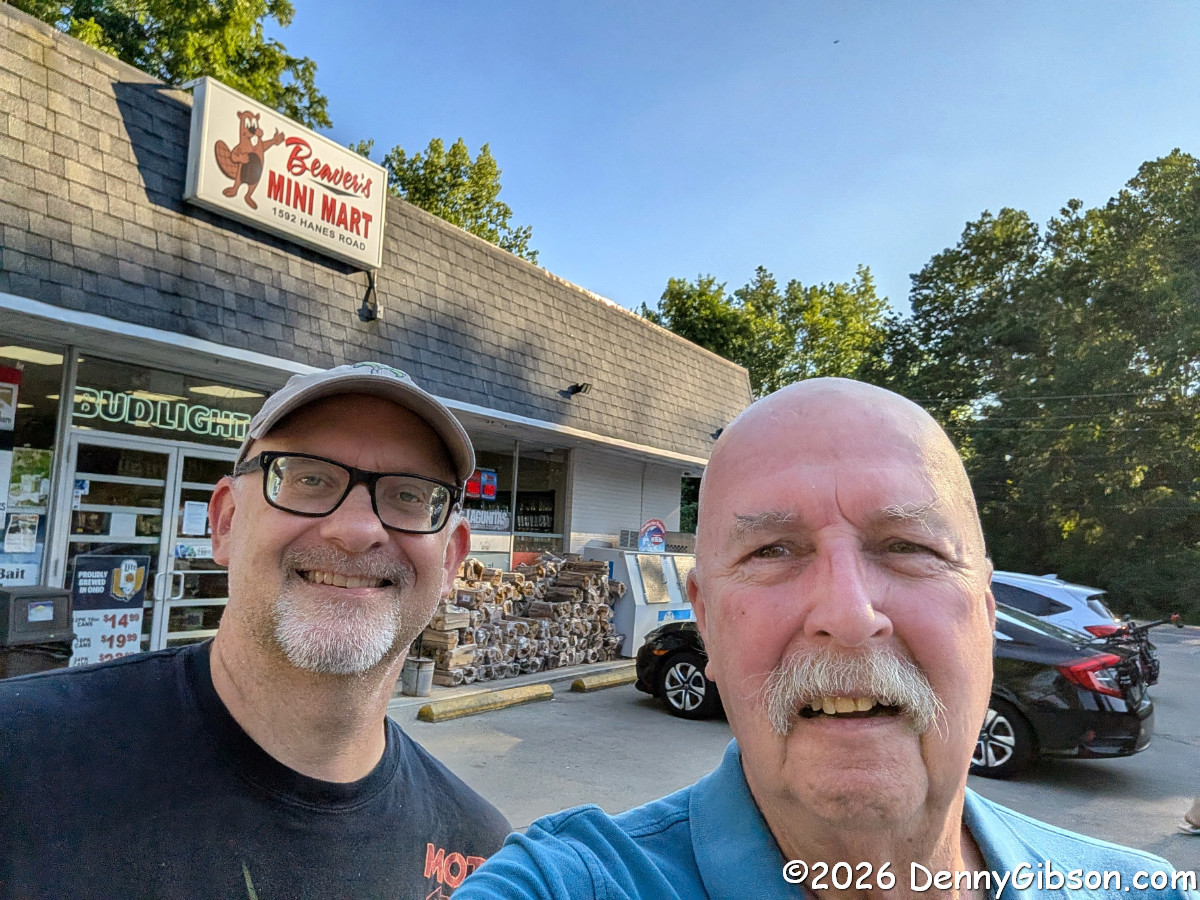

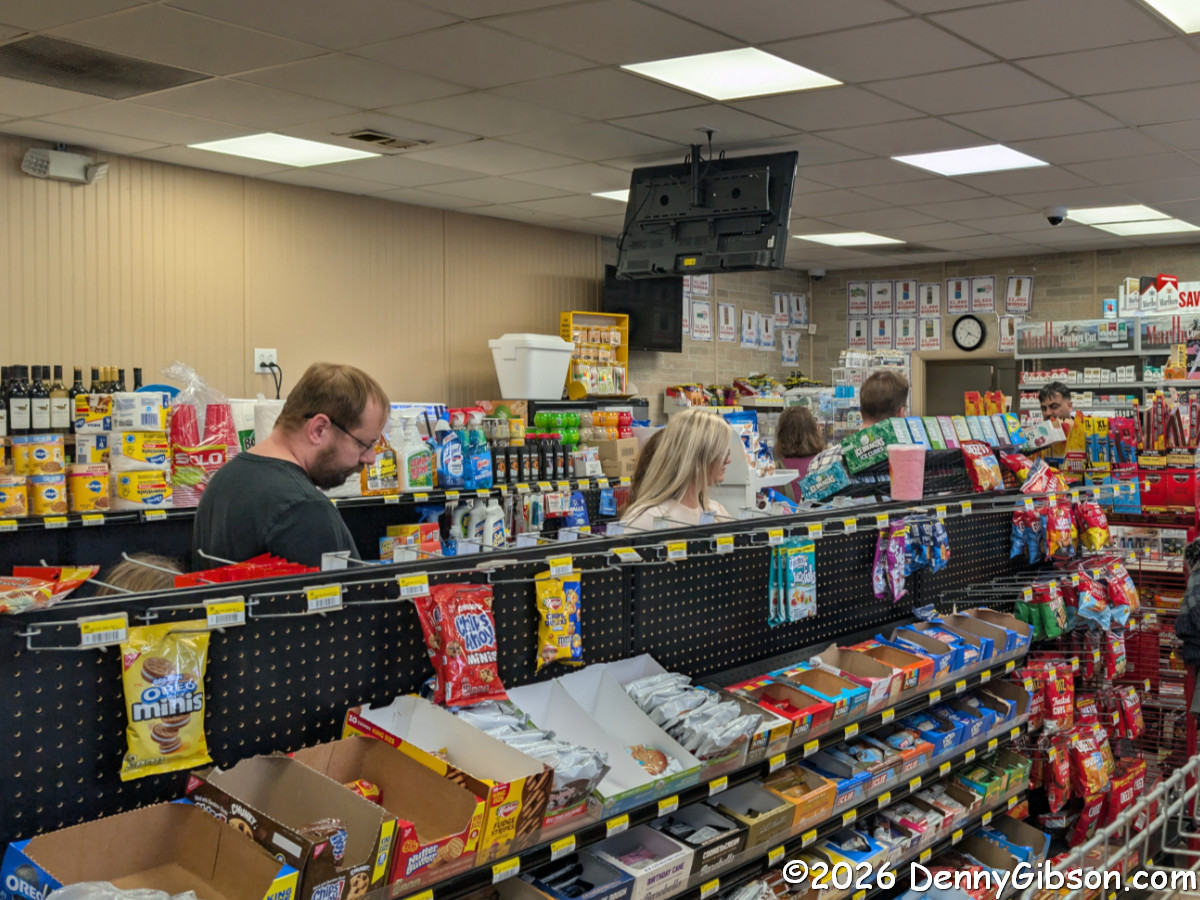
 When I met Pat in the store parking lot, I knew of but had not seen