2013 in the Rear View

The year in numbers with 2012 values in parentheses:

  • 0 (5) = Oddment pages posted
  • 6 (8) = Road trips reported
  • 77 (77) = Blog posts
  • 57 (76) = Days on the road
  • 1437 (2254) = Pictures posted — 406 (388) in the blog, 0 (131) in Oddments, and 1031 (1735) in Road Trips

jch_revClearly, I was quite the slacker last year. It didn’t feel like it but there’s the proof. Less of almost everything. Oddments were added in 2004 as a way to post non-road trip stuff. They felt a little redundant from the minute the blog was added in 2011 and I finally stopped doing them in 2013. There would not, apparently, have been many of them anyway since turning them into blog posts sure didn’t make the number of those shoot up. Total blog posts stayed exactly the same with regular weekly posts accounting for 52, reviews accounting for 12, and the remaining 13 coming from road trips and other asynchronous events. The 2011 and 2012 Rear Views contained rants about how crummy blog traffic statistics are. I’ll skip the rant this year and move onto the top five lists.

Top Blog Posts:

  1. Twenty Mile’s Last Stand
    A 2012 article on an endangered historic building that ranked number one last year, too. This year’s attention was no doubt due to the building being leveled in April. An article on the demolition, Roadhouse Down, actually came in fourth for 2013 but I’m referencing it here rather than as a list entry.
  2. My Wheels – Chapter 1 1960 J. C. Higgins Flightliner
    In 2013, I started a series of articles on all the vehicles I’ve owned and the first post in the series became the most popular new post of the year.
  3. Route 66 Attractions
    This 2012 review of a GPS based product for tracing Route 66 moved to third after ranking fifth last year.
  4. Ohio’s Revolutionary War Battle
    The popularity of this article on the Battle of Picawey probably comes from mentioning George Rogers Clark, Tecumseh, and the War of 1812 all on the same page.
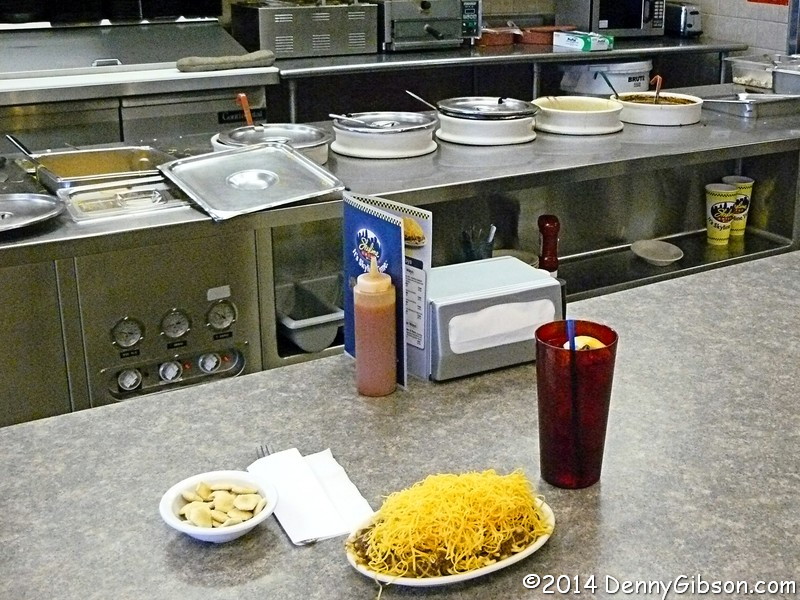
  5. Chili All Week and It’s Cold, Too.
    A report on eating at a different Cincinnati chili parlor each day for a week. A subsequent article, 5 More 4s, covered five additional parlors though those visits were not on consecutive days. Note that this post would have been bumped from the top five if I had allowed both Twenty Mile House items to claim a place. That’s why I did what I did, of course. I like this article and, in this teeny tiny bit of cyberspace, I’m the boss.

Top Non-Blog Posts:

  1. Tadmor
    Oddment page on a 2006 visit to the site of the town of Tadmor that also ranked first in 2011 and second in 2012. I believe traffic is largely from a Wikipedia article on ghost towns but a mention and link on Jim Grey’s Down the Road blog also accounts for quite a few visitors..
  2. Cincinnati Summer of Love Reunion
    Oddment page on a 2007 concert featuring area performers from 1967. The Lemon Pipers, Sacred Mushroom, Tony and the Bandits, and Haymarket Riot were all represented and I suspect each accounts for some of the traffic as do some of the individuals mentioned.
  3. The 2010 Fair at New Boston
    Oddment page on the 2010 version of an annual recreation of the 1790s. It is held at the same site talked about in Ohio’s Revolutionary War Battle, the fourth ranking blog post and the two probably share visitors.
  4. Lincoln Highway Centennial Tour
    The highest ranking non-blog and non-oddment (pseudo-blog) page was the base page for the year’s biggest trip, the 35 day coast-to-coast Lincoln Highway drive. This is also the only item in the non-blog list that was a new post this year.
  5. High Speed Privies
    Oddment page on the 2004 running of the Great Outhouse Race at Penn’s Store in Kentucky. It once contained a clear nude photo taken at the store for Playboy that generated some traffic. The photo has long been obscured but searches related to it are clearly what brought the visitors. I have no idea what triggered the renewed interest.

Visits to the website increased to 170,809 from 91,233 last year and page views rose to 467,084 from 337,996. WordPress’ Jetpack reports 6,863 views (up from 5,965) for the blog in 2013.

I ended last year’s Rear View with a prediction that I would not “get very jiggy in 2013” then proceeded to make the prediction come true. The closest thing to a website change last year was the decision to not add any more Oddment entries and that did not result in any actual alterations. What’s there will remain and it’s possible I could turn to that method again someday if something comes along that doesn’t fit the blog format. .

Meeting Mister Mallory

wlmalloryTwo judges, a state lottery sales representative, a former mayor, a former vice mayor, and a state representative all lost their father recently. William L. Mallory, Sr., died on December 10. The one time high school dropout had an extremely successful career in politics and was obviously pretty good at parenting, too. I met him once.
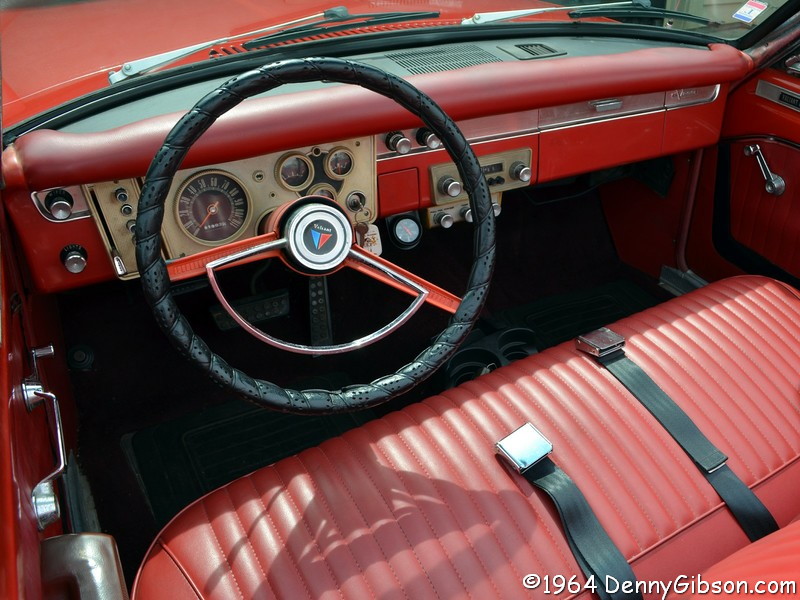
It was Reds Opening Day in 2004. It was also my birthday. As is my habit, I headed downtown for the parade. My friend John came down later to meet me and go to the game. I don’t remember much about the game but know that the Reds lost it to the Chicago Cubs. Afterwards, we found ourselves in La Normandie, the classy but easy going tavern and restaurant beneath the perennial 5-star Maisonette.
We sat at the bar and before long were engaged in conversation with a well dressed fellow sitting just around the bar’s corner. That fellow was, of course, William Mallory. John had met him once at a fundraiser but I had no idea who he was. Even after learning his name and realizing or being told that he had been a state representative, I was ignorant of the full stature of the man I was talking with. I did not and, perhaps to my shame, still do not, follow state politics very closely. Even if I connected the name with the Ohio congress without being told (which may not be the case) that was the extent of my recognition. I see that as a good thing. While it is unlikely that knowing I was chatting with Ohio’s longest serving House of Representatives Majority Leader and the first African-American to hold that position would have turned me into an overawed blatherer, it probably would have made things a lot less natural and casual.

Although I’m not sure it was our intent when we entered, at some point John decided he should buy me dinner for my birthday and I thought that a fine idea. He asked Mr. Mallory to join us and the former congressman graciously accepted. The three of us moved to a booth.

I recall nothing specific about our conversation. I do recall that it was friendly and easy flowing. If there was anything at all political in the conversation, it was light. I’m sure we talked about the Reds and we probably talked about some current events and our families and jobs. We neither solved problems nor created any. High-caliber small-talk seems a pretty good description. I can’t recall whether Mr. Mallory had walked downtown or ridden a Metro bus. It could easily have been either. I would later learn that, as co-chairman of the Citizen’s Transportation Committee, he had been instrumental in the formation of the publicly owned Metro. He accepted our offer of a ride home and, possibly because mine was the closer of our two cars, I was chosen as “chauffeur”. We chatted easily as we walked to my car. The red Corvette convertible I was driving was not the most dignified of vehicles but it did not bother the congressman in the slightest. He settled into the seat and directed me to his home with easy to follow instructions. Once there, he thanked me and headed into the house.

It was the next morning before the internet let me know just who it was that John had bought dinner for and I had driven home. A newspaper article announcing his death and a 2008 Greatest Living Cincinnatians citation contain what are no doubt incomplete lists of his accomplishments and awards. A wonderful StoryCore interview is here. Southwest Ohio lost a great and caring man this month but he left behind a generation of Mallorys well prepared to at least try filling the gap. The memory of that nearly ten year old meeting is one that I am truly fond of and thankful for.


wlmallory_clIn addition to an earlier private service for the family, a public Celebration of Life took place in the rotunda of Union Terminal (a.k.a. Cincinnati Museum Center) on Sunday, December 22. A report of the celebration is here. This building and Mr. Mallory were very important to each other. It was a prominent landmark in the west end neighborhood of his youth and a place where he worked shining shoes and busing tables among other things. When demolition threatened in the 1980s, he played a key role in securing state funding that helped enable the conversion to the museum center and actually delivered the multi-million dollar check to the museum himself. “I often reflect on a shoe shine boy becoming the delivery man for $8 million”, he has said. That’s just one of many things about William L. Mallory, Sr., that’s worth reflecting on.


Cincinnati Christmas Traditions

Among the many interesting pieces of information presented in Cincinnati Museum Center‘s most recent Brown Bag Lecture, “Cincinnati’s Winter Holiday Traditions”, was a listing of the city’s four oldest Christmas traditions.

cintrad014. Duke Energy Holiday Trains – 1946
Duke Energy gave its name to the trains in 2006 when it bought Cinergy Corporation. In 2011, it gave the trains to the museum. Before Cinergy was formed in 1994, the company name was Cincinnati Gas & Electric so these trains spent most of their lives as the CG&E trains and that is still how many people think of them.

cintrad03cintrad02The O gauge layout was originally constructed by the Baltimore & Ohio Railroad as a training tool just prior to World War II. It came to Cincinnati in 1946 and for years was displayed in CG&E’s lobby each Christmas season. Today it is the centerpiece of the Cincinnati Museum Center’s Holiday Junction which includes several other model trains, the “Toys through Time” exhibit, Grif Teller railroad paintings, and more. Kids can ride a train or have a conversation with Patter & Pogie, the talking — and listening — reindeer who were a long time Christmas fixture at Pogue’s department store.

Holiday Junction and the Duke Energy Holiday Trains are are inside the fee required museum but free passes are available to all Duke Energy customers.

cintrad113. Boar’s Head Festival – 1940
I have never attended the Boar’s Head and Yule Log Festival and I won’t again this year. Tickets for the free event go fast and those for this year’s festival have long been gone. The first Boar’s Head Festival took place in Oxford, England, in 1340 which means it had been going on exactly 600 years when Cincinnati’s Christ Church Cathedral held its first. The locals have now added 70+ years of their own traditions to establish a unique event for the city. I confess to not even knowing of the festival before the lecture but, the more I learn about it, the more I want to go. There are three performances on January 4 and 5. Tickets were distributed, first-come, first-served, on December 14. Maybe I can snag one of those hot ducats next year.

cintrad212. W & S Nativity Scene – 1939
Officially known as Western & Southern Financial Group presents the Crib of the Nativity, this Cincinnati tradition has one year on the Boar’s Head Festival. Western & Southern’s President, Charles F. Williams, had the crib built in 1938 for display in the company’s parking lot. It went public and started the tradition during the very next Christmas season. Initially displayed in downtown’s Lytle Park, it was moved to Union Terminal after the country’s entry into World War II in 1941. It stayed there, a welcome sight to the train loads of GIs who passed through the station, until the war was over. It returned to Lytle Park in 1946.

cintrad22cintrad23With the upheaval and shrinking of Lytle Park that came with the construction of I-71, the nativity scene moved to Eden Park in 1967. It remains there, next to Krohn Conservatory, today.

cintrad26cintrad25cintrad24Parking and visiting the outdoor nativity scene is free. Entering the conservatory is not. The conservatory’s Christmas display is not one of Cincinnati’s oldest but it is one of its most beautiful. If you have parked to visit the nativity scene, you should at least consider spending the $7 to see “A Cincinnati Scenic Railway”, a ton of poinsettias, and other holiday themed displays. The railway incorporates “botanical architecture” which uses “locally gathered willow and other natural materials” to build structures such as the Roebling Bridge, the Tyler Davidson Fountain, and the Christian Moerlein Lager House..

cintrad311. Fountain Square Tree – 1913/1924
According to the “Cincinnati’s Winter Holiday Traditions” lecture, Cincinnatians first put a tree on Fountain Square in 1913. A large crowd had gathered for the ceremonial lighting when someone yelled “fire” and the resulting stampede caused enough injuries to keep the city from trying again until 1924. Things went much better that year and, although the fountain and the square have moved around some, a Christmas tree has stood on Fountain Square every year since.

cintrad32cintrad33cintrad34There was a snag this year when the first tree selected snapped in two at a weak spot in its trunk. A replacement was quickly obtained and the 55-foot Norway Spruce was placed on the square after a one week delay.

Trip Peek #13
Trip #56
Indy Sixty-Two

Classic Cars on IN-62This picture is from the my 2007 Indy Sixty-Two day trip. Although the actual trip was rather spontaneous to take advantage of a warn autumn day, driving Indiana State Route 62 had been on my mind for several months. I had sampled a bit in April and the thought of someday driving more of it was made rather firm by the discovery that Car and Driver Magazine had once listed part of the route as one of its “Best Driving Roads in America”. The east end of the C & D designated section was at Corydon which I reached by taking US-42 along the south side of the Ohio River and crossing over at Louisville, Kentucky. IN-62 between Corydon and Dale was just as curvy and scenic as promised and many others, such as the people in these classic cars, were out enjoying it, too.

Trip Pic Peek #12 — Trip #75 — Madonnas and Signs


Trip Pic Peeks are short articles published when my world is too busy or too boring for a current events piece to be completed in time for the Sunday posting. In addition to a photo thumbnail from a completed road trip, each Peek includes a brief description of that photo plus links to the full sized photo and the trip journal it is from.

My Wheels — Chapter 8
1957 Austin Healey

Austin-Healey 100-6Why in the world would a couple of newly weds buy a ten year old British sports car in the middle of winter? I am, at present, as baffled as anyone though I apparently once knew the answer to that question. A month or so after our 1966 Boxing Day wedding, my bride and I purchased a 1957 Austin-Healey 100-6. The one pictured is a 1958 model but looks pretty much like our ’57. This was not a play car to park next to a dependable sedan. This was our only car.

The Renault‘s reliability had steadily decreased until I sold it to a friend who either rebuilt or replaced the engine and drove it for quite awhile. I almost bought a 1959 Plymouth an aunt had recently replaced and actually “test drove” the car for a few weeks before acquiring the Healey. Buying the Plymouth would have been the sensible thing to do. But we were 18 and 19, I was a full time student, she was just out of high school, and we had just gotten married. Why spoil it by doing something sensible?

The Healey lasted more than a year. It was a great summer car and an OK winter car. Climbing snow covered Cincinnati hills was not its strong suit but it got around as good as many other cars of the day and it was reasonably warm in slowish city driving. Things were a little different on the open road. It helped that it had a removable hard top. It was fiberglass and not heavily insulated but was infinitely better than the cloth top. But it was a true roadster with sliding Plexiglas side curtains rather than roll up windows. At highway speed on a cold day, the heater stayed on full blast trying to keep up with the air escaping through the side curtains.

That soft top I mentioned was on the car once while I owned it. Attaching it had much more in common with raising a tent than with raising a convertible top. The hard top came off in the spring and went on in the fall. In between, with the one exception to prove that erecting the canvas top was possible, we made do with a tonneau cover and, yes, we did get wet now and then.

It was called a 2+2 with a pair of padded depressions in a shelf behind the seats. I actually remember carrying someone in those “seats” for a short distance but the shelf was much better at holding a couple bags of groceries than a couple derrieres.

The 100-6 was produced for three years. In 1956 it replaced the four-cylinder 100 which immediately became known as the 100-4. The 100-6 had a 2.6 liter six-cylinder engine and a four-speed transmission with overdrive. In 1959, it was replaced with the 2.9 liter Austin-Healey 3000 which had a rather long run through 1967.

Cars are often remembered for the misadventures they were part of and here is a story that helps me remember the Healey. For reasons not quite remembered, there was no license bracket on the front for awhile. It had been damaged somehow and repairing it had slipped entirely off my schedule. We were driving home after a visit to my parents. On state route 49, near the town of Arcanum, we passed a state trooper headed the other direction. He turned around, turned on his lights, and pulled us over. There was no “serious” issue, like speeding, but there was no front license. After checking a few things, he gave me a written warning and went on his way.

A couple of weeks later, I was back in Darke County. The low slung Healey had suffered a few scrapes and bumps on its crankcase and had developed a minor leak. I arranged to meet a high school buddy who had a welder so we — actually he — could fix the leak. The repair was accomplished and I headed home. At just about the same spot as before, that same state trooper passed the Healey with the same license plate not there. When I saw his brake lights come on, I immediately turned off on a side road and, with a few quick turns on the narrow roads, made my getaway. Satisfied that my evasive maneuvers had worked, I was starting to slow when I saw it. The road ahead was unpaved. It had not been graded for awhile. A fairly tall gravel ridge stood in its center. Before I could stop, I was plowing that gravel. Then I was oiling it.

The gravel had ripped off the recently applied weld and the crankcase was leaking much worse than it ever had before. I lost a lot of oil by the time I made it back to the main road. At a little gas station and grocery store, I bought a five gallon can of used oil. I believe farmers sometimes used used oil in slow reving equipment so it was often available for sale. The leak was not quite as bad as I feared but I still lost close to another gallon getting back to the friend’s house. He had just been visiting from college and was already gone when I got there. His dad let me use the welder and I managed to plug the leak with one of the ugliest welding jobs ever. This was the first and last time anyone ever left me alone with a welder. Then I drove home and fixed the license bracket the very next day.

Although our car must have looked just like the one in the picture when new, when we had it the paint had lost its shine and there was rust. Not major visible rust but hidden and interior rust in floor pans and such. The car was never garaged while we had it and I suspect that was true of much of its life. The rust and mechanical malaise led to the Austin-Healey being replaced before the next summer rolled around.

Previous Wheels: Chapter 7 — 1961 Renault 4CV
Next Wheels: Chapter 9 — Honda 65


Although this post is semi-random (I picked it from two possibilities) it appears during Cincinnati’s first snow event of the year (which is kinda why I picked it) and gives me an excuse to tell a semi-related story.

1959 Plymouth FuryThe 1959 Plymouth Fury at left is a dead ringer for the one I passed up to get the Austin-Healey. A rather spiffy ride, don’t you think? On one snowy night, my new wife and I were out with a friend in my borrowed car. The snow was not deep but the big Plymouth was not doing well on the slick streets. At one point, as we attempted to climb a slight incline, the friend and I got out to push while my wife took over driving. It did not take much to get the car moving but stopping to let us back in would have left the car stuck once again. Instead, my friend and I each grabbed a fin and “skied” alongside the Plymouth to the top of the hill.

My Apps – Chapter 7
FeedForAll

FeedForAllI am a fan of RSS. I subscribe to a number of feeds and I publish a few. I even know what the acronym stands for. Maybe. Unfortunately, the words behind the letters have changed over the years so that discussing the acronym is more involved than discussing either the concept or its application. If you already know — or don’t care — about RSS, feel free to skip to the sentence in bold. If you want to know even more than I am about to tell, go here or here.

Originally, back in 1999, RSS was an acronym wrapped around an acronym. It stood for RDF Site Summary with RDF being an acronym for Resource Description Framework. It identified a standard format for summarizing… something. Within months, Netscape, where RSS originated, simplified the format and called it Rich Site Summary. In 2002 someone else made more changes to the format and called it Really Simple Syndication. To distinguish it from the earlier RSSs, he added a 2.0. The 2.0 doesn’t always get used but almost all references to RSS mean RSS 2.0 and Really Simple Syndication. Knowing the rest of that stuff is pretty useless except for maybe winning a bet — or getting punched — at the local bar.

Really Simple Syndication is an accurate description. Sure, the internals can seem goofy and arbitrary like most stuff designed by geeks for geeks but the concept, and most people’s relationship with it, really is Really Simple. Publishing consists of putting a properly formatted file somewhere on the internet, telling people it’s there, and changing it as the need arises. Subscribing consists of looking at the file from time to time and reading it when it changes.

There are tons of apps, widgits, and other gizmos dealing with the subscribing end. Some are readers or aggregators through which a user subscribes to specific feeds and knows that is what they are doing. Others are embedded in applications or web pages where the user may not even know that the information they see changing now and then is coming through an RSS feed. The point is that you do not need to understand or even be aware of the underlying rules and conventions to subscribe to and read RSS feeds.

The same is true for many forms of publishing. Website content managers and blog generators often produce RSS feeds automatically. Just click a box or two and maybe set a few options and a feed will be updated automatically when the content is changed or a new blog entry or comment is posted. Not only are people reading RSS feeds without realizing, many are unknowingly publishing them as well.

But what if you want to publish an RSS feed that isn’t just a side effect of something else? You can learn all the rules of XML and RSS and edit the posted file directly or you can use something like FeedForAll.

I use FeedForAll to maintain an RSS feed for my trip journal. It was 2007 and I was seeing RSS as something really attractive as a subscriber. I had been offering email notification of journal updates for quite some time. Thinking that there were others who, like me, were more likely to subscribe to an RSS feed than a newsletter, I started looking around for ways to create and maintain a feed. I know I looked at some other tools but I no longer recall what they were or what I liked/disliked about them. I experimented for a bit with the free version of FeedForAll, decided it did exactly what I needed, and purchased the real version. That is one of the few decisions I’ve ever made that I’ve had no second thoughts about over a half-dozen years.

I thought the product was reasonably priced in 2007 and was surprised to see that the price remains the same, $39.95, in 2013. So I guess it’s even more reasonable now than then. I am not a power user. I maintain a single feed with nothing fancy in it. It’s not a podcast and contains no graphics though FeedForAll supports both. Almost all of my posted items are nothing more than some text and a URL or two. When an item is complete and the “Publish” button clicked, FeedForAll makes the connection and transfers the update. FeedForAll does as-you-type spell checking and validates all data before publishing it.

In practice, the journal’s email list and RSS feed get essentially the same daily posts. The cover page for each trip contains a link and blurb for each day and that blurb is usually quite similar to what goes into the email and RSS. A lot of copying and pasting takes place between these three. The RSS feed is the least work of all.

My Apps – Chapter 6 — Easy Thumbnails

Planes and Things

sam26000_extOn Friday, November 22, 2013, a friend and I visited the National Museum of the US Air Force near Dayton, Ohio. Among the many historic items on display is the Boeing VC-137C that carried John F Kennedy to and from Dallas, Texas. The two pictures below were taken of the same general area of the plane just a few hours shy of fifty years apart.

johnsonsisam26000_int

drgobs-2drgobs-1Another museum display recently in the news is associated with the Doolittle Raiders. A “Last Man Standing” pact had been established in which the last surviving Raider would drink a toast to all those who had gone before him.On the most recent anniversary of their 1942 bombing run over Toyko, the last four living Raiders decided not to wait but to have their final public reunion and drink their toast now. That toast took place at the museum on November 9 and can be seen here. Their eighty silver goblets, with the seventy-six belonging to diseased Raiders standing up side down, are displayed at the museum. My report on last year’s 70th reunion is here.

Half Century Gone

Kennedy official photoOn this day fifty years ago I was a high school junior. I do not even remember most of the day and some that I do remember is foggy and questionable. I remember some very small pieces all too well. I remember going to my chemistry class and taking a seat in the second or third row. It was the rightmost seat facing the teacher’s desk and the wall of blackboards. My memory is that the principal, Mr Pawlowski, entered before class actually started and gave us the news though it might have come from Mr Conrad, the instructor. In my memory, Mr Pawlowski quickly moved on to personally deliver his message in other classrooms so that every student heard the same version. It is logical and might indicate how important he thought the message — and its uniform delivery — was but I cannot be certain that my memory is accurate. The message was, of course, “The President has been shot.”

The remainder of the school day is blurred. I believe that no more classes were held and I have a vague memory that students who walked to school were allowed to leave. Maybe we all were. I’m fairly confident that I drove to school that day. I was sixteen with a car and a driver’s license. What else would I do? I do remember that by the time I left school, whenever and however that occurred, the message was no longer that the President had been shot; By then we knew that the President was dead.

The time between hearing that the President was shot and learning for certain that he was dead could not have been long. Other points of uncertainty were not so easily or quickly resolved. Who did it? Was the country under attack? Were we, in our tiny Ohio town far from both Dallas and D.C., safe? With the exception that New York replaced Dallas, those are the exact same questions I had on a September morning nearly thirty-eight years later. The world in which the terrorist attacks of 2001 took place was not, however, at all the same as the world of 1963.

The basement of the school building in which I heard the news had sealed containers of “rations” stacked along the walls. With their Civil Defense markings, they were visible reminders that this was a designated fallout shelter. The first anniversary of the Cuban Missile Crisis was not even a month in the past. I recall learning, only a couple of years before, a new prefix: mega. I didn’t need it to discuss megapixels, or megabaud, or even megabytes. I needed it to try to comprehend the power, in megatons of TNT, of hydrogen bombs being tested in the friggin’ atmosphere. The Cold War was not as nebulous as the War on Terror and I think it was somewhat scarier. Has there ever been a more accurate acronym than the one referring to Mutual Assured Destruction?

I do have some memories of the evening. A buddy and I went driving around because that’s what sixteen year old boys with cars did. The world was closed. Games and dances were canceled; Restaurants shut down. The buddy had a little battery powered tape recorder. This was well before cassettes or even 8-tracks. It used very small reels. It was pretty much a toy which we used to make Dickie Goodman style “break-in” recordings that were even worse than the ones Goodman did. That night, as we drove through the one city (1960 population 10,585) and some of the small towns in the county, we made comments and observations into the recorder. It is long gone, of course, but I’ve often thought of just how interesting it would be to listen to that tape today. It might offer a unique look at rural Ohio on the night of the assassination or it might just be filled with stuff like “Holy cow!. Even Frisch’s is closed.”

The weird uneasiness continued through the weekend as facts and rumors tumbled out. Lee Oswald was arrested. The shooting of a cop, J D Tippit, was somehow related but it was not at all clear how. Then Oswald was shot and things got even more confusing. I’ve convinced myself that I watched Jack Ruby gun down Oswald on live TV but the scene was shown so many times I can’t be sure. Two things helped; The eventual realization that the office of President of the United States had been transferred just like the rule book said and the fact that Walter Cronkite was in the newsroom. I think it a pretty safe bet that I’ll never trust any one the way I trusted Walter.

Ansonia High School 1964 yearbookPresident John F Kennedy was officially pronounced dead at 1:00 PM CST; The same time as the posting of this article. The scan at left is of an introductory page of my high school’s 1964 yearbook. I imagine something similar appeared in the yearbooks of thousands of schools across the country. I believe the picture is a closely cropped version, with the background removed, of the official one at the beginning of this article.

Book Review
Fallen Timbers 1794
John F Winkler

Fallen Timbers coverEveryone loves a winner and, in 1794, the United States Army finally became one. In his earlier work, Wabash 1791, Winkler tells of the new nation’s first military campaign and the disaster that resulted. Fallen Timbers 1794, describes the campaign that led to a victory at Fallen Timbers and ultimately to the Treaty of Greenville.

The 1791 Battle of the Wabash, more commonly known as St Clair’s Defeat, essentially destroyed the United States Army. In 1792, congress created a new one. To lead this new army, The Legion of the United States of America, President Washington chose Revolutionary War veteran Anthony Wayne. Wayne did things quite a bit differently than did St Clair. He made sure his troops were trained and equipped before setting out and he placed a series of defensible forts so as to protect his supply line. Perhaps more importantly, he understood the Indian methods of combat and devised tactics to counter them. Like St Clair, Wayne had difficulties with supplies and contractors but it seems that now it was not only greed and incompetence that fueled them but an actual conspiracy aimed at causing his failure.

As he did in Wabash 1791, Winkler sets the scene for the campaign by describing the “strategic situation” and with chapters on the opposing commanders, armies, and plans. In many respects, the world situation was still much like it was in 1791. The United States was only a few years older and only a tiny bit more stable. Britain’s support and encouragement of the natives may have actually increased and neither France not Spain had vanished from North America. In fact, French elements were very much at play, often for the worse, inside the young nation. Of course, there were also plenty of homegrown problems. That previously mentioned conspiracy was one of them and, in the westernmost reaches, open revolt was a real possibility. These were the days of the Whiskey Rebellion. Less than three weeks before the Battle of Fallen Timbers, a crowd of 7,000 threatened to march on Pittsburgh. It was less than two months after the battle that President Washington personally went into the field to put down the uprising.

Three dimensional maps, like those that helped in understanding the Battle of Wabash, do the same for the Battle of Fallen Timbers. Other maps, along with period portraits and modern photographs, help understand the people and places involved. Peter Dennis’ wonderful paintings, one of which is used for the cover, provide realistic visualizations of specific battle scenes.

Winkler’s book on the Battle of the Wabash had nowhere near the shortcomings of the battle it described but he did manage to improve on it a little with Fallen Timbers 1794. I resorted to the word “scholarly” in describing the front end of Wabash 1791. It was justified, I offered, because it presented a lot of information that made later portions of the book flow more smoothly. But in this latest book, I never did get the feeling of slogging through mounds of dry facts that I had before. I have no way to quantify this and it may be simply that less preliminary facts are required or that they are less dry or that I am better prepared. Any or all of those could be true but my gut feel is that Winkler has refined his language and maybe even the structure to produce something more easily read.

During the last few years, any time that the average person felt like devoting to history was spent, more than likely, on the Civil War sesquicentennial. I have absolutely no disagreement with that but still thought it nice that, here and there, the bicentennial of the War of 1812 got some attention. The territory in dispute in 1812 was not all that different than what was being fought over in 1791 and 1794. Some of the nations and even some of the individuals involved were the very same. To the War of 1812 and especially to the Battle of the Thames, the battles at Wabash and Fallen Timbers were “prequels”.

Fallen Timbers 1794: The US Army’s first victory, John F Winkler, Osprey Publishing, February 2013, paperback, 9.8 x 7.2 inches, 96 pages, ISBN 978-1780963754
Available through Amazon.