
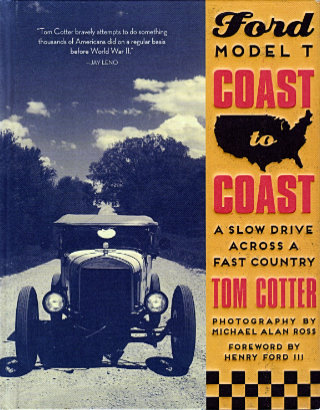
 Old-car guys and old-road guys are hardly one and the same although there is definitely a whole bunch of overlap. With this book, Tom Cotter stakes out a position deep in that overlap. Tom is, however, much more of an old-car guy than an old-road guy so it’s not surprising that his position is closer to the car side than the road side. The story of how plans for the trip came together is telling. The idea that Tom started with was driving an old car across the United States. Over the years, the idea had been refined to involve a particular old car. He called it a dream and admitted that it was unlikely to be realized but the car he really wanted to drive across the country country was a Ford Model T. In his dream the road was secondary.
Before getting too deep, let me point out that this is not my great grandfather’s T. My great grandfather once drove a stock Model T to Florida and back. Granddad’s car might have had a theoretical top speed around 40 MPH but the rugged roads of 1920 kept him running in the 20s when he wasn’t stopped fixing a flat tire, worn out brakes, or something else. The car that took Cotter and company to California had a heavily modified engine, lowered suspension, hydraulic brakes, and other improvements that allowed it to cruise at 50+ — safely.
Most of those improvements had been made by Cotter’s traveling companion who was also the car’s former owner. That was Dave Coleman who had sold the car to Nathan Edwards a few years back. Unable to make the trip himself, Edwards loaned the car to Cotter and Coleman. Photographer Michael Alan Ross, following the T in a modern Ford SUV, completed the team.
Only after an authentic but remarkably capable Model T has been lined up for the trip does Cotter look to the route. Calling it a confession, he notes that “I had not heard of the Lincoln Highway until I began planning for this trip.” The trip starts at the Lincoln Highway eastern terminus in New York City, ends at the western terminus in San Francisco, and most of the miles in between were on or near what was once the Lincoln Highway. It was not, however, a particularly strict following of the old highway. There was occasional streamlining of the route and a few side trips to visit interesting people and places.
So those are the “disclaimers”. The car was not a high-clearance, 20 HP, nearly brakeless, stock Model T. The route did not follow every bend of the Lincoln Highway or even pass by every attraction associated with the historic road. But the car was a very old, extremely basic, and wonderfully historic vehicle, and the route was close enough to the Lincoln Highway to sometimes serve up glimpses of the legendary road and constantly serve up a true view of coast to coast travel. Together they form the foundation for a really cool and extraordinary adventure.
As noted, not every Lincoln Highway icon appears in the book but many do. There’s Dunkle’s Gulf in Bedford, PA, and Lincoln Motor Court in nearby Mann’s Choice. In the midwest, the travelers stopped at the Lincoln Highway Association Headquarters in Illinois and the famous Reed-Niland Corner in Iowa. Farther west they drove through some great scenery and made stops at the Utah’s Bonneville Salt Flats and the historic Hotel Nevada in Ely. Michael Ross snapped great pictures of all these scenes and more.
The Model T that Nathan Edwards generously loaned out for this adventure could be considered a “late model”. It was manufactured in 1926 during the next to last year of T production. It performed flawlessly for the entire 3,707 mile journey. They even had to fake a flat tire to get a “break down” photo. Cotter acknowledges that they were certainly not the first people to cross the United States in a Model T but it seems at least possible that they were the first to do it without something breaking. That’s partly due to the in depth preparation that Edwards and Coleman made before the trip started, but might be due even more to the attention Coleman gave the car during the trip. Daily or more frequent inspections sought out low fluids and loose bolts before they became problems. There’s a lot of work involved in getting a 91 year old car from one coast to the other — but it sure looks like a heap of fun.
Ford Model T Coast to Coast: A Slow Drive Across a Fast Country, Tom Cotter with photography by Michael Alan Ross, Motorbooks, May 15, 2018, 10 x 7.9 inches, 224 pages, ISBN 978-0760359464
Available through Amazon.
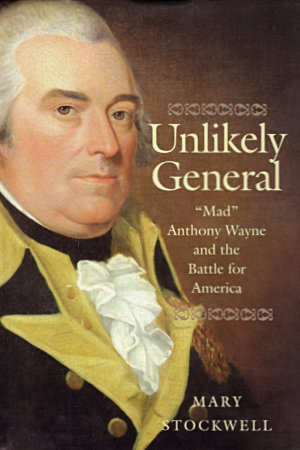 Anthony Wayne gave Fort Greene Ville and Fort Recovery their names. They were significant in both his life and mine although the level of significance is severely tilted toward Wayne. Fort Recovery is where the army led by Arthur St. Clair was nearly annihilated in 1791. It got its name when soldiers under Wayne’s command built a small fort there in 1793. Also built in 1793, Fort Greene Ville stood twenty some miles to the south and was Wayne’s home base during the Northwest Indian War. The treaty ending that war was signed there in 1795. The town that developed on the site of the abandoned fort adopted the shortened name Greenville. I grew up near the midpoint between Greenville and Fort Recovery and adopted Anthony Wayne as a hero at a very early age. I eventually figured out that much of the initial attraction was due the the cool bicorne hat he was commonly shown in, but the fact remains that I’ve known of General “Mad” Anthony Wayne nearly all of my life.
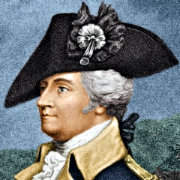 It was probably about sixty-five years ago that I was hooked by that super groovy hat and decided that the dude under it was my hero. It was only a few years later that I saw a painting of a hat-less Wayne and was shocked to learn it was the same person. That painting might even be the same one that appears on the cover of this book. It was at least similar. I recognized that there was more to a man than his hat and Wayne survived as a childhood hero. Inside Unlikely General, Mary Stockwell reveals a lot more than a high forehead. Anthony Wayne was not, as some have interpreted his nickname, insane, but he was a long way from perfect. Perhaps the fact that I’m much older now explains why I was less shocked at learning of the imperfections than I had been at my first sight of Wayne bare-headed.
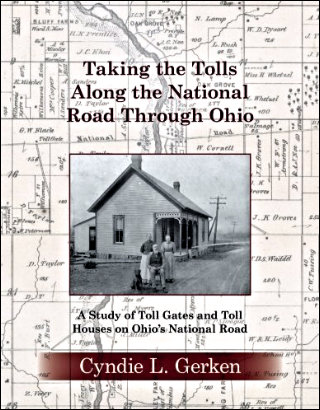 The question was never if there would be another book, just when and what. The answers are “now” (actually February) and “toll gates”. In my review of Cyndie L. Gerken’s first book, Marking the Miles Along the National Road Through Ohio, I noted that the huge amount of information presented in that book was only a portion of what Gerken has collected and that we would probably someday see “a Gerken penned treatise on bridges or taverns or toll houses or something else” which shows that taking three or four guesses really improves one’s chances of being right. Nailed it!
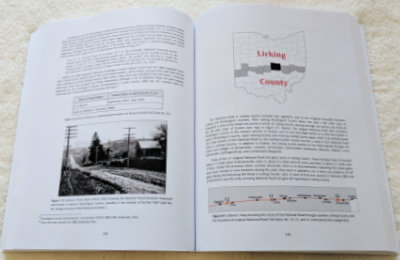 As she did with her first book, Gerken details her subject in a chapter per county moving east to west. However, before that happens, there is an introduction filled with information about the road and toll gates in general, then chapters on vehicles, toll house architecture, and bridges. Each of these, and the county chapters too, contain numerous photos and stories that color in the detailed information and keep things from becoming boring.
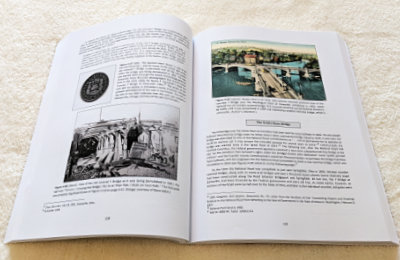 Pictures of gate houses and gate keepers are to be expected, but they are not the only photo subjects presented. This might be the only book available with pictures of the world’s longest bar, grave robbers, a two-headed calf, a Spanish dime, Hopalong Cassidy, and the author’s mother riding in a goat cart. And every one of them belongs.
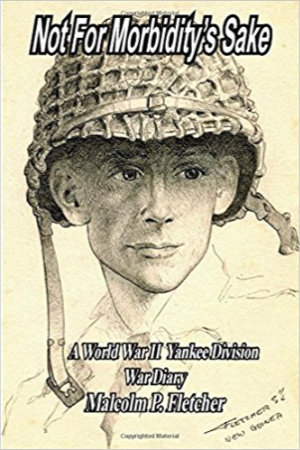 It’s a familiar story I’d never heard before. In no way is use of the word “familiar” meant to be dismissive. It’s just my way of acknowledging that many aspects of Malcolm Fletcher’s story are to be found in the stories of thousands of other World War II soldiers. Of course, each of those stories is also unique in ways both small and large. Large happenings that make Fletcher’s story unique include the actions that earned him a bronze star and the day he watched his brother get shot and captured. Getting coffee and doughnuts from the Red Cross in February and washing clothes and shaving in May are among the not-so-large pieces of the story that make it real. Numerous photographs, maps, and drawings — many by Fletcher himself — really fill things out.
 It’s a great story and well told, but there’s no denying that the mere fact that it is being shared plays a big role in setting this story apart from most of the others. The majority of those soldiers never told their story to anyone. A relative few did write it down or record it but not many saw an audience beyond family, friends, or a veterans organization. That Malcolm Fletcher wanted to share his story is obvious. He expanded his wartime notes and produced a “diary”. The title is his. Not For Morbidity’s Sake came from the fact that, as his son Michael says in the foreword, “…he took no pleasure in telling most of this story”. Malcolm Fletcher died in 1994, and Michael, with help from his brother Mark, made publication of the diary a reality. To a large degree, this meant editing their father’s writings, but they also augmented the story with information gathered from other family members, friends, and even some of the men who served with Malcolm.
 Those observations also fed some slightly philosophical thinking on the horrors of war and the brotherhood of man. He had personal experience with both. Whether the deeper of Fletcher’s thoughts came during his time in Europe or while he subsequently transcribed his notes in safety in the USA is unclear and unimportant. He was in the midst of battles where men destroyed each other with cannons, bombs, rifles, bayonets, and flame-throwers. He saw many and met a few French, Belgian, and German civilians whose world was ravaged beyond comprehension. And he was there at the end of the conflict, interacting with German and Russian soldiers to learn that “These Russies are just like us.”
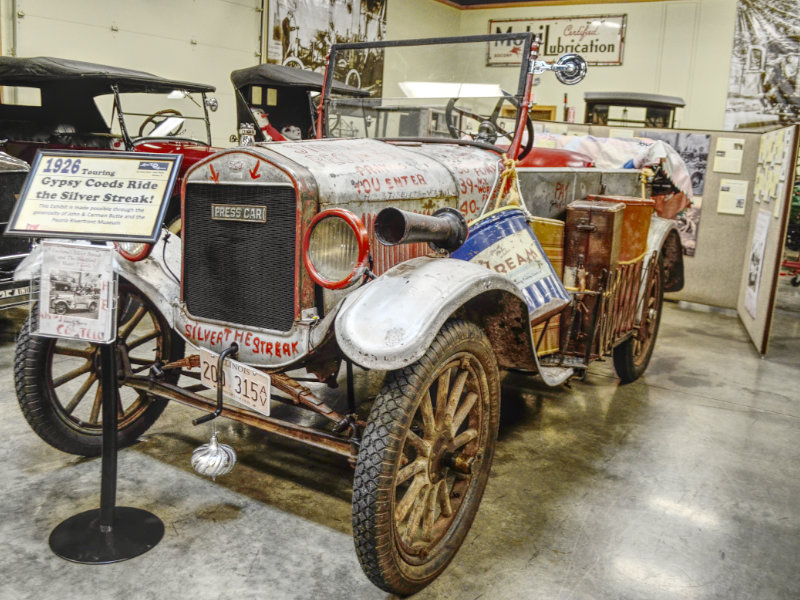
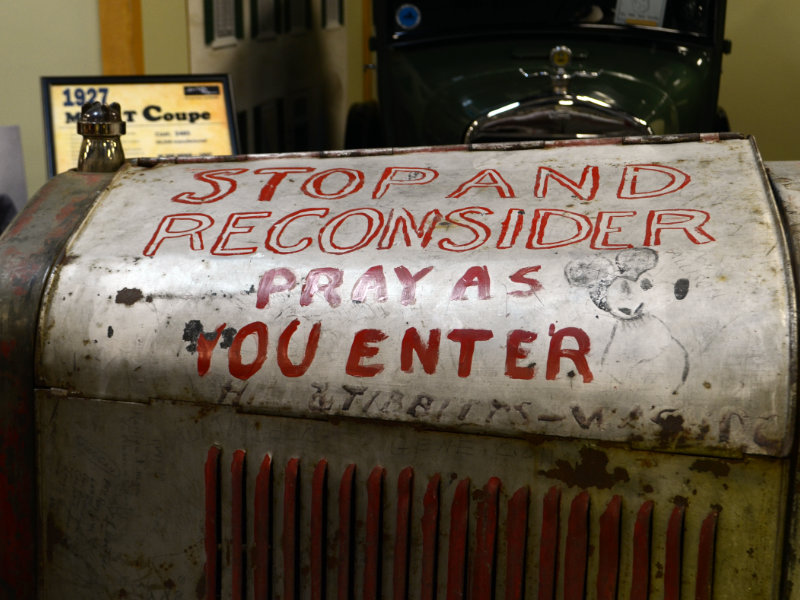
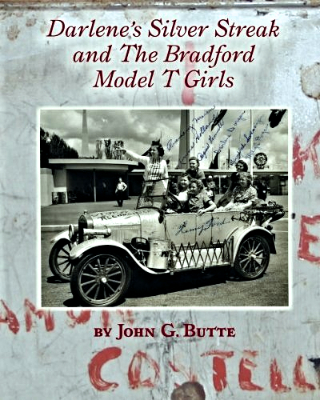 I first heard of Darlene Dorgan and her friends from a presentation on early female travelers at the Lincoln Highway Association in June. Then they were part of a similar presentation at a Route 66 conference in October. This book may have been mentioned in either or both of those presentations but, if so, it didn’t register. What finally got me interested in Darlene’s Silver Streak and The Bradford Model T Girls was when a blog I follow,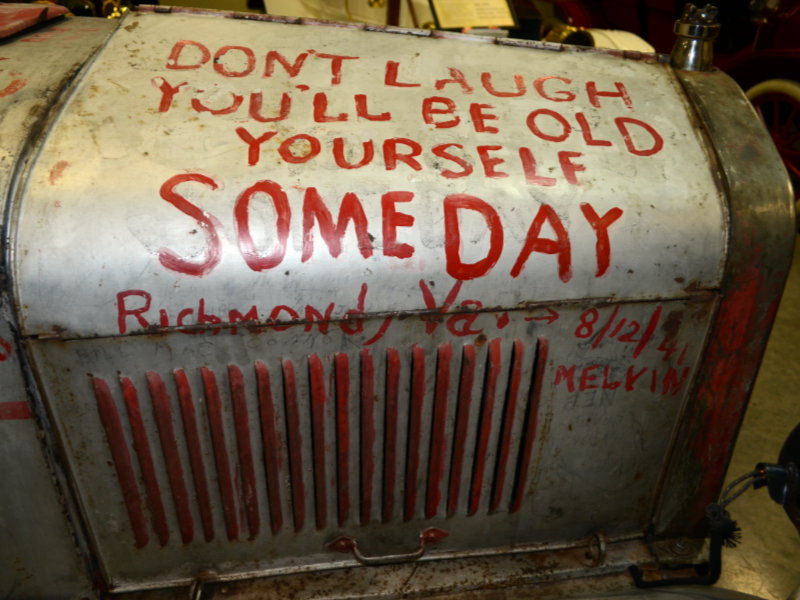
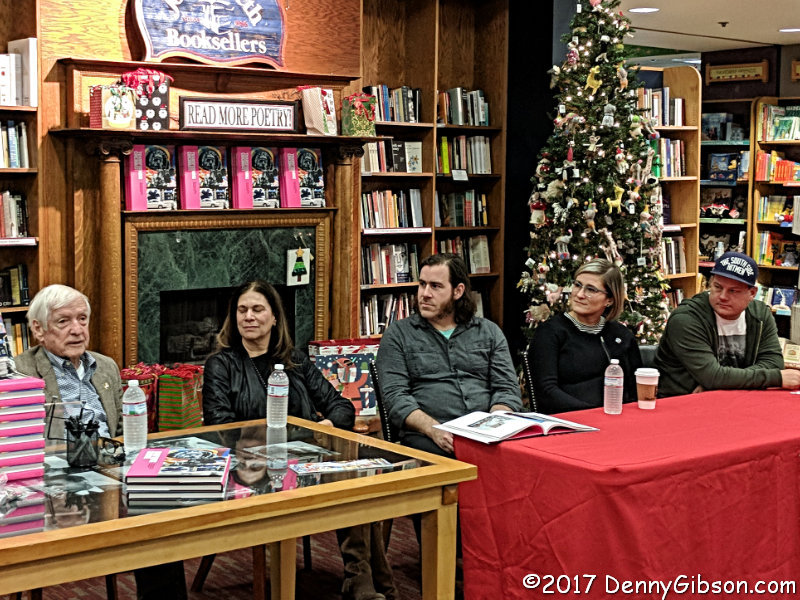
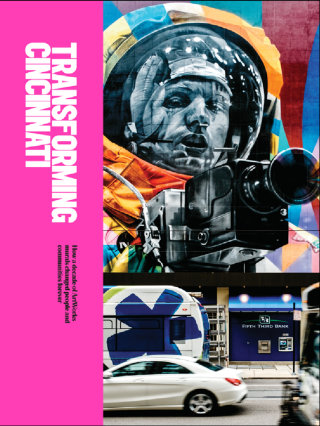 It would be nearly impossible to spend any time at all around Cincinnati and not notice that its mural population has been increasing. I’ve noticed but I didn’t understand. I didn’t understand that ArtWorks Cincinnati, a name I sometimes noticed being associated with a new mural, wasn’t just a company hired to paint some pictures on some walls. I started to understand that aspect of Cincinnati’s murals just a little when ads for Transforming Cincinnati started to appear that included pieces of the back story. At that point I thought I understood the book’s title but, as I learned when I attended the big premier nearly two weeks ago, that was probably what I understood the least. The official launch took place on November 18 at a “Book Premier & Artist Signing” hosted by Joseph-Beth Booksellers. I attended with the idea of getting a copy with a few autographs in it. I got so much more.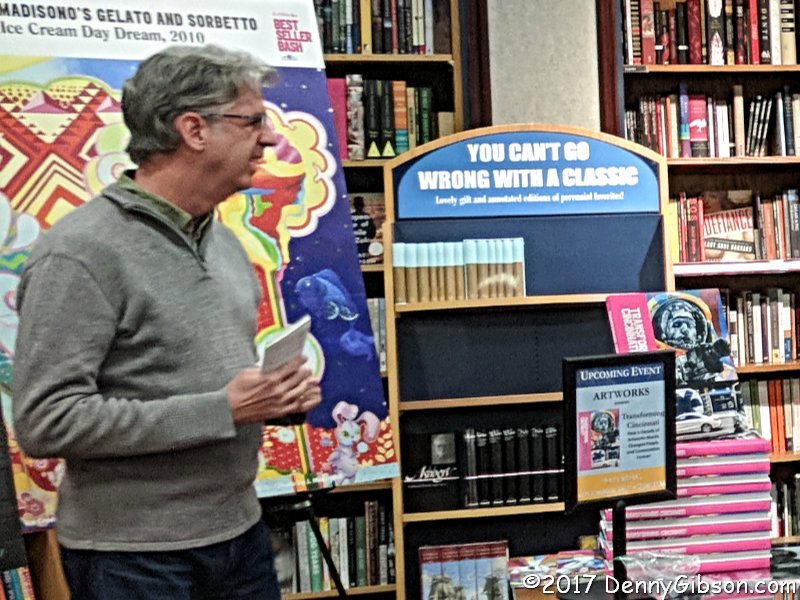
 Wow! This is one of the most captivating books I have ever held in my hands. It is the product of one of the most determined woman I have ever met on one of the most exciting adventures I can imagine. Claiming to have met Anna Grechishkina is actually something of a stretch. At the 2014 Route 66 Festival in Kingman, Arizona, she joined some festival attendees for dinner. Our “meeting” consisted of a second or so of eye contact and a group hello. But I learned of her dream and her plans to fulfill it and I have followed her journey from that point on.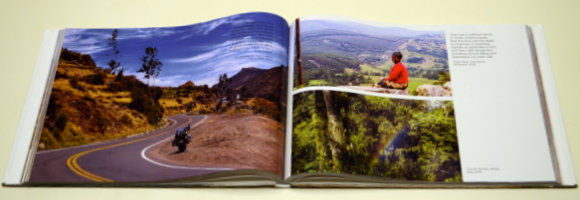
 This could be the charm associated with third attempts, or it could be the out associated with third strikes. Seriously, though, I doubt it is either. Neither of my first two books,