
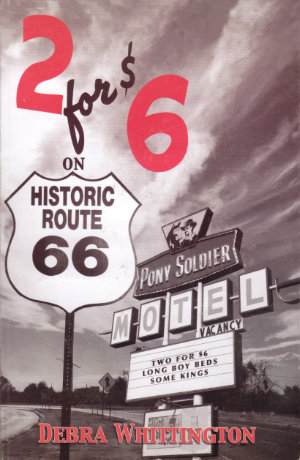
 I wish I had $6 or even 6¢ for every time I’ve stood by an old motel or diner and wished that the aging walls could talk. There are no talking walls here but 2 for $6 on Route 66 does contain the memories of someone who spent a whole lot of time with some very interesting walls. Author Debra Whittington married into the motel business; The man she married was born into it.
In 1954 Mark Whittington’s parents built a motel on the west side of Tucumcari, New Mexico. They sold it after a few years, but before the decade was over they were building another one on the east side of town. Mark went off to college, met Debra, and the two were married just about the time he graduated. Another motel came up for sale just a few days before the wedding and Mark’s dad, thinking it would be a good business for the young couple, bought it. With little notice and less input, Debra found herself more or less in charge of a motel where she would interact with travelers on Historic Route 66 for nearly thirty years.
2 for $6… is divided into two main parts. Whittington calls the first part “History of the Area”. The subject area is centered on Tucumcari and the history includes that of Tumcumcari’s main drag, US-66. Some of what’s written here will be familiar to anyone who has looked at all into the history of Sixty-Six and other early highways but it is necessary background for the local details that Whitting relates. Many of those details she gathered from people who lived in Tucumcari long before she arrived. I personally enjoyed references to the town’s two Ozark Trails markers and descriptions of early cars and campgrounds.
Things get more personal in the book’s second part, “One Family, 50 Years in the Motel Business”. The first few chapters of this section give the history of the Whittington family’s motel experience before Debra arrived. It starts with that first motel, the Golden W, they built in 1954. Then on to the second, the Sahara Sands, built in 1959. The motel’s name and giant sign came from a motel in Amarillo, Texas, that was turning into a Holiday Inn.
The book’s name comes from the Sahara Sands period. A rash of motel construction in the mid-1960s resulted in Tucumcari having more rooms than tourists. During a 1965 price war, a hand-painted “2 for $6” sign went up in front of the Sahara Sands. A photo of the sign, which still exists, is in the book.
The motel that was purchased in 1978 was the Pony Soldier. It was built in 1964. Once Debra has described the extensive work that went into getting it ready to reopen, she proceeds to share lots of stories of her time there. What results is a picture, painted from the inside, of operating an independent motel in one of Historic 66’s hot spots. It’s funny, sad, scary, and heart-warming. It might be similar to pictures that could be painted of many other motels but it’s Debra’s picture and it’s unique. And it exists. the inside story of most of those other motels haven’t been recorded and probably won’t be.
2 for $6 on Route 66, Debra Whittington, 2015, 8.6 x 5.5 inches, 140 pages
I believe the book is available in several shops in Tucumcari. I bought my copy in the coffee shop at the Historic Route 66 Motel. According to a review at Route 66 News, the book is available direct from the author “by sending $10 plus $3 shipping in the U.S. in check or money order to Debra Whittington, Debra Whittington, 923 S. Hawthorne St., Tucumcari, NM 88401″
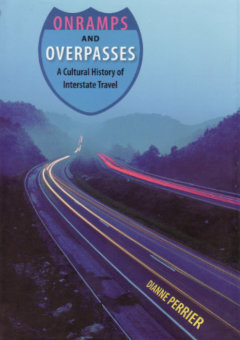 You can’t judge a book by looking at the cover. Or, sometimes, by reading the title. That was the case for me with Onramps and Overpasses and the impression I got from the title and cover pretty much explains why it stayed on the unread pile so long that I don’t remember where it came from or why I have it. The cover is a nicely done long exposure photo of cars on a divided four-lane highway passing through what looks to be a rather scenic area. The title reinforces the image of high-speed limited-access roadways. The subtitle, “A Cultural History of Interstate Travel” does a better job of describing what’s inside but the preconception created by the cover and title led me to overlook the word “cultural” and misinterpret the word “interstate”. In my opinion, Perrier goofed on the cover and even more so on the title. Those are, however, virtually the only mistakes she makes here.


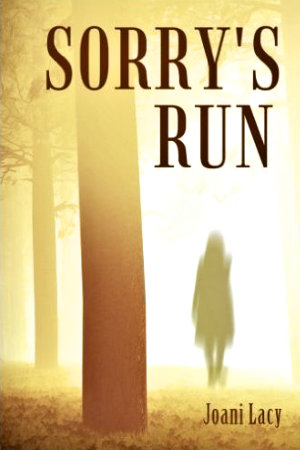 I’ve not read a lot of fiction lately. I used to. There was a time when I sucked down a fair amount of science fiction and historical fiction along with a smattering of aged classics. Sorry’s Run is none of those. It is, however, just about everything else. If pressed to place it under a single heading, I guess I’d call it a mystery. It’s a mystery where learning what was done is at least as much fun as learning who done it. Beneath the book’s central plot is an intriguing layer of occult, a tolerable touch of romance, and frequent and appreciative glimpses of the Ohio River and the country it flows through. It is set in the real world of today although it’s a world whose edges are not always crisply defined.
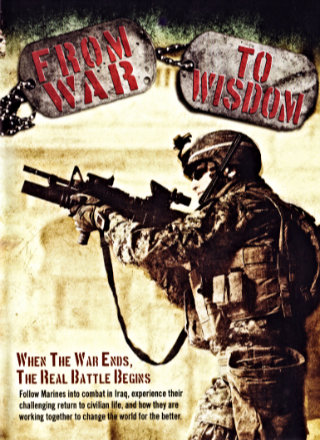 I might not even be aware of this movie’s existence if I didn’t know one of the directors. Maybe someone else will learn of it only because they know me. If so, that’s a good thing. And it’s also a good thing if someone learns of the movie by stumbling onto this blog post without knowing either of us. If either of those things happens and someone watches
 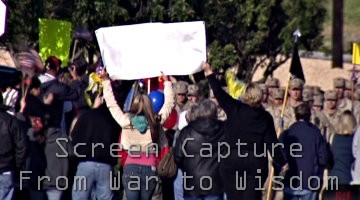 Creating a marker between the halves is a text only shot. In front of the shot we see returning soldiers marching between welcoming signs and banners then being dismissed to reunite with their families while veteran Hans Palmer describes the time as “the proudest I’ve ever felt in my life.” Following the text is a scene with Josh Hisle talking about needing a “place to decompress — every day.” He’s sitting outside his apartment waiting for everyone else in the complex — his “area” — to go to sleep. “It’s not insomnia,” he says. “It’s duty.”
 There are many other examples of veterans helping veterans both in the film and out. They are bright spots and their successes are to be celebrated but they aren’t enough to make From War to Wisdom a feel good movie. It is, however, an encouraging movie and an informative one. Most of the veterans that appear in the film fought in either Afghanistan or Iraq. There is one notable exception. He’s a Vietnam vet who’s legal name is now Ragtime. He is a stained glass artist who teaches at Common Ground and started
 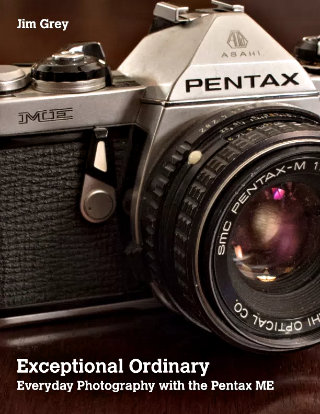 The review of this book published in April 2017 has gone missing. Maybe I accidentally deleted it or maybe a slightly down level backup was restored and I didn’t notice. Whatever happened, I’m confident it was my fault. I’m not going to try to reproduce the whole review. I’m just trying to head off the “not found” errors — and encourage everyone to buy a copy.
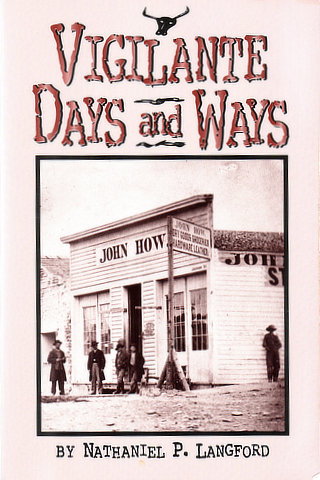 This book was first published in 1890. The link at the end of this article points to a version published barely a month ago. Despite it being well over a century old, some think it worth reading and someone considers it worth republishing. Why others consider the 127 year old writing worth reading I cannot say but I know why I enjoyed it. It’s filled with stories I’ve watched unfold on TV or in a movie theater or read as fiction. Those tales of frightened town folk, evil bullies, crooked sheriffs, and cowardly henchmen that thrilled me in my younger days were all legitimate. The basis of many plots played out in the numerous TV westerns of the 1950s and ’60s can be recognized in the real world events that Langford documents. This book is filled with characters very much like the assorted outlaws encountered by the horse riding heroes of my youth. Men similar to some of those heroes are also present although they don’t stand out quite as clearly. Few real world heroes wear a pair of pearl handled revolvers and a white hat.
 I’ve never met Jaimie Vernon but we’re friends. We’re the kind of friends that didn’t even exist a dozen years ago. Yes, we’re Facebook friends. It’s because of music. Vernon runs Bullseye Records which represented the band Klaatu through part of their career. I’m a Klaatu fan and stumbled onto a related online group in which Vernon played an active role. The e-group eventually became more or less dormant but we remained e-friends in the Facebook world. I’m sharing this, not because it has anything to do with the contents of this book, but to explain how I even know of the book’s existence. I am not in the habit of chasing down either cop books or cemetery stories.
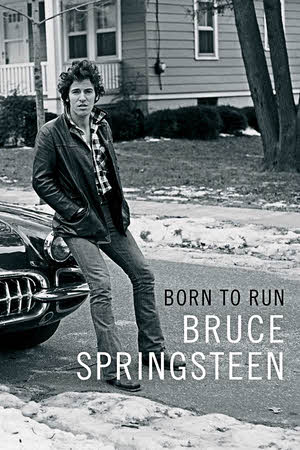 It’s exactly what you’d expect. That’s not to say that there is no new information and no surprises but the sometimes almost poetic writing style is exactly what I expected from a man who has produced some of the most notable English language lyrics of the last four decades. It’s no secret that some of those lyrics were just a bit autobiographical so it’s possible to think of this as sort of a much longer and more detailed version of the story he’s been singing since he first greeted us from Asbury Park.